How Citrus Transformed California

A Look into the Roots and Ripened Impact of the Citrus Industry

You might associate California with Hollywood, Silicon Valley, or even its stunning coastline. However, a significant cornerstone in the Golden State’s development, prosperity, and identity was quite literally golden: zesty, golden orbs of citrus fruit. California’s citrus industry had a profound impact on the state’s economic, labor, and global landscape, particularly within Southern California. 

San Gabriel Mission

The citrus industry in California has surprisingly humble beginnings. Spanish missionaries brought orange seeds to California in 1769. The San Gabriel Mission was established in 1771 and had extensive gardens that included a variety of fruits and vegetables. The seeds for the Mission’s citrus trees are believed to have come from the Spanish missions in Baja California, Mexico, which in turn got them from the Spanish mainland. The original citrus varieties in Spain were likely brought over from Asia, as citrus trees are native to South Asia and the East Indies. 

But the true beginning of what became a multibillion-dollar industry can be attributed to one man. In 1841, William Wolfskill, an American-Mexican pioneer, cowboy, and agronomist in Los Angeles, planted the first commercial orange grove on a 100-acre ranch near what is now downtown Los Angeles. Wolfskill, a frontier entrepreneur, had initially tried his hand at vineyards, but saw potential in the rugged, fertile Californian soil for more than just grapes.

William Wolfskill

Obtaining his initial seeds from the orchards of the San Gabriel Mission, Wolfskill’s citrus venture started small. However, his methodical approach to farming and his adoption of innovative irrigation techniques allowed his grove to flourish in the Mediterranean-like climate of Southern California. Wolfskill’s oranges were renowned for their quality, gaining him a reputation that extended beyond the borders of California.

Known as the father of the California citrus industry, his foresight and innovation set the stage for the development of an industry that became a cornerstone of the state’s economy and identity. Wolfskill’s real legacy lies in his profound impact on California’s agricultural landscape. When William Wolfskill passed away in Los Angeles in 1866, citrus was booming, but it was mostly a local industry. 

Valencia Oranges

The real turning point for the Californian citrus industry was the completion of the transcontinental railroad in 1869. The railroad’s establishment allowed for the efficient transportation of his citrus crops to markets in the east, bringing the sweet, sun-kissed taste of California’s oranges to consumers across the country. This access to nationwide markets transformed local citrus farming into a profitable commercial industry.

The citrus boom in California reached its zenith in the late 19th and early 20th century. It was during this period that the citrus industry became a pivotal part of the state’s economy and helped shape its cultural identity. The industry’s growth was inextricably tied to specific regions, primarily Southern California, including Riverside, Los Angeles, and Orange counties.

Orange groves cover the Southern California landscape early in the 20th century.

Riverside, the city in which the iconic parent Washington navel orange tree still stands, was the epicenter of the navel orange industry. These sweet, seedless fruits were a hit across the nation, revolutionizing the American diet and transforming Riverside from a small town to a thriving city.

Characterized by its bright orange skin, seedless interior, and distinctive “navel” at the blossom end, the navel orange is a variety synonymous with California. But its journey to the Golden State began thousands of miles away, in the far-off city of Bahia, Brazil.

The navel orange is a natural mutation that occurred in a Selecta orange tree, a variety of sweet orange, in the early 19th century in Bahia. This mutation caused a secondary fruit to develop at the base of the primary fruit, giving the appearance of a ‘navel’. The resultant fruit was larger, sweeter, and seedless, distinguishing it from other orange varieties.

Navel Orange

But the navel orange is not the only variety that came to define California citrus. Orange County, aptly named, was a crucial player in the citrus game, its groves sprawling over thousands of acres. At one point, Orange County was the largest producer of Valencia oranges in the world.

Valencia oranges, named for the city of Valencia in Spain, are believed to have originally come from Southeast Asia, just like all other citrus varieties. Citrus trees are native to regions including present-day China, India, Myanmar, and surrounding countries. Over centuries, traders and explorers disseminated citrus fruits across the globe.

The Valencia orange was brought to the United States in the mid-19th century. In California, they found a new home in the perfect growing conditions of Southern California. The peak ripening season of Valencia oranges โ€” late spring through mid-summer โ€” complemented that of the navel oranges, which ripen in the winter. This made Valencia oranges an appealing addition for California citrus growers as they could provide fresh oranges to markets year-round by growing both varieties.

Los Angeles County, although now synonymous with the urban sprawl of the film industry, was once carpeted with citrus groves. The rolling, sun-dappled orchards were integral to the local economy and became an iconic image of the Golden State.

But the growth of the citrus industry brought about significant labor issues. As the demand for citrus surged, so did the need for labor. Initially, much of the work was done by Chinese immigrants. However, with the implementation of the Chinese Exclusion Act of 1882, growers turned to Japanese immigrants, then later to Mexican immigrants.

Working conditions in the citrus fields were often harsh, leading to numerous labor disputes and strikes, notably the Citrus Strike of 1936 by Mexican workers in Tulare County. The citrus industry thus played a significant role in the evolution of labor rights and immigration policy in California and the United States more broadly.

The golden fruits of California did not just revolutionize the state but also had far-reaching global impacts. California’s citrus industry significantly influenced agricultural practices worldwide. Its innovative irrigation systems, pest control methods, and marketing strategies were adopted by many other countries.

However, the industry also faced challenges on the global stage. Competition from other citrus-growing regions, like Florida and countries in the Mediterranean, put pressure on California’s growers. Additionally, changes in international trade policies and global consumer preferences continually shaped the trajectory of the state’s citrus industry.

Today, while the landscape has changed with urbanization and competition, California’s citrus industry remains a significant part of the state’s agriculture, generating billions of dollars annually. Moreover, the citrus industry’s historical and cultural impact is undeniably intertwined with California’s identity. Its echoes can still be seen in the names of places, like Orange County, or tasted in the sweet tang of a California navel orange.

The story of citrus in California is a tale of transformation, from a single orange grove in Los Angeles to a global industry that rippled through the state’s economy, workforce, and identity. It’s a testament to the power of agriculture to shape a region and its people and serves as a vivid reminder of California’s golden past.

California Citrus State Historical Park

Today, California Citrus State Historical Park preserves some of the rapidly vanishing cultural landscape of the citrus industry and tells the story of this industry’s role in the history and development of California. Furthermore, it recaptures the time when “Citrus was King” in California, recognizing the importance of the citrus industry in southern California.

Hey there! If you enjoy California Curated, consider donating the price of a coffee to support its creation!

The return of Lake Tulare – once the largest lake West of the Mississippi

The massive atmospheric snowstorms that pummeled California this year have been a boon to ski slopes throughout the Sierra Nevada mountains. But the rains have had an unusual result: The torrents of rain have drowned thousands of acres of farmland in Californiaโ€™s Central Valley and resuscitated a lake that vanished decades ago. Standing in an area that was dry as a bone just a year ago, right now, as far as the eye can see, water stretches to the horizon. It has covered roads, and crop fields, and submerged homes and buildings.

The lake is called Lake Tulare.

Lake Tulare, once the largest freshwater lake west of the Mississippi River, is a compelling example of the delicate balance between human activity and natural forces. Located east of Interstate 5 from Kettleman City, Lake Tulare was also the second-largest freshwater lake in the United States, based on surface area. At its peak, Lake Tulare covered an area of nearly 700 square miles and was a critical component of the region’s complex hydrological system.

The lake’s disappearance over a century ago can be traced back to multiple factors, including agricultural development, water diversion, and climate. Fed by the Kaweah, Tule, and Kern Rivers, the lake supported a vibrant ecosystem teeming with fish, waterfowl, and other wildlife. Native American tribes, including the Yokuts, relied on the lake’s abundant resources for sustenance and trade.

Lake Tulare began to shrink in the late 19th century as European settlers moved into the area and agriculture took hold. The burgeoning need for water to support the growing agricultural industry led to the construction of canals and dams, which diverted water away from the lake. As a result, the lake’s surface area shrank rapidly, and by the early 20th century, it had disappeared almost entirely.

Spanish captain Pedro Fages led the first excursions to the southern San Joaquin Valley in 1773 and wrote this account:

This plain will exceed one hundred and twenty leagues in length and in parts is twenty, fifteen and even less in width. It is all a labyrinth of lakes and tulares, and the river San Francisco, divided into several branches, winding in the middle of the plain, now enters and now flows out of the lakes, until very near to the place where it enters into the estuary of the river.

Pedro Fages
Fulvous whistling-duck

Today alfalfa is grown on the southern basin and there is invasive saltcedar, a common species that has also impacted regions of the Colorado River Delta. Animal life includes the Buena Vista Lake shrew (Sorex ornatus relictus), the southwestern pond turtle (Actinemys pallida), fulvous whistling-duck (Dendrocygna bicolor), and the California red-legged frog (Rana aurora draytonii). Other species native or present in the area are sandhill cranes and tricolored blackbird.

But what is the future of Lake Tulare?

Last summer, UCLA climate scientist Dan Swain published a paper that predicted more intense weather patterns on a gradually warming planet. He told CNN that the worst-case scenario of relentless atmospheric rivers could actually make Tulare Lake permanent again, turning it into a vast, inland sea.

We’ll have to wait and see.

And in the meantime, check ut this recent before and after satellite image of the central valley and Lake Tulare.

The genius of Luther Burbank, father of the most famous potato in the world

Luther Burbank created some of the world’s most commercially successful fruits and vegetables, all from his Santa Rosa, California farm.

luther burbank - Library of Congress
Luther Burbank in his garden – Credit: Library of Congress

Editor’s note: This article is part of an ongoing series about lesser-known Californians who have made a significant impact on the state. California Characters seeks to bring their stories to light, highlighting voices and achievements that history has often overlooked. Through this series, we aim to celebrate the individuals who have shaped California in ways both big and small, ensuring their contributions are recognized and remembered.

The Los Angeles Times recently ran a review of fast-food french fries that caused a stir because the writer placed fries made at Californiaโ€™s beloved In-N-Out burger somewhere near the bottom. This infuriated the stateโ€™s rabid fan base for what is arguably one of the best burger joints in America. (Raises hand in support). But one interesting side story, the ideal kind of story we cover here, is this: if it were not for the work of one Californian farmer, we would likely not have french fries at all, or at least not as we know them today.ย 

Russet Burbank potato. Credit Wikipedia

That is because most french fries today are made with a particular strain of potato –  the Russet Burbank – that exists largely because of one man: Luther Burbank. Burbank is a little-known Californian (part of an ongoing series) whose contributions to science, in particular botany, have had an outsized impact on much of the fresh produce we consume today. 

Burbank is a towering figure in horticulture, credited with creating the science of modern plant breeding. For decades in the late 19th, early 20th centuries, his experimental farm in Santa Rosa, California, was famous throughout the world for the stunning variety of new fruit and vegetable varieties that emerged from the farmโ€™s fertile soil. 

Luther Burbank - Library of Congress
Luther Burbank. (Library of Congress)

Born in 1849 in Lancaster, Massachusetts, Burbank came to California in 1875, buying a four-acre plot of land to start a nursery and garden in order to breed edible crops. While not a trained scientist, Burbank had a preternatural knack for identifying desirable characteristics in plants, which he selected for through an arduous, time-consuming, and oftentimes brilliantly intuitive series of techniques that led to the creation of some of our most cherished strains of fruits and vegetables. 

Over the course of his 55-year career, Burbank developed more than 800 new strains and varieties of plants, including flowers, grains, grasses, vegetables, cacti, and fruits. These include 113 varieties of plums, 20 of which remain commercially valuable, especially in California and South Africa. He also developed 10 commercial varieties of berries (including the oxymoronically-named white blackberry) as well as more than 50 varieties of lilies

Amazingly, Burbank was able to achieve all this without direct knowledge of plant genetics, pioneered by the Augustinian friar Gregor Mendel in what is now the Czech Republic in the mid-1800s (and whose papers on growing pea plants were brought to light in 1901, long after his death in 1884). Burbankโ€™s lack of precise record-keeping and somewhat unorthodox — some would say sloppy — record-keeping, has led some modern scientists to criticize his credentials. Purdue University professor Jules Janick, wrote that “Burbank cannot be considered a scientist in the academic sense.” 

Luther Burbank with spineless cactus that he developed.
Luther Burbank with spineless cactus that he developed. (Library of Congress)

That said, Burbankโ€™s innovations in Santa Rosa were revolutionary and garnered him worldwide attention, as well as financial support from benefactors like Andrew Carnegie, who supported Burbank because he believed the work was of great potential benefit to humanity. 

Burbank perfected techniques in common use today such as grafting, hybridization, and cross-breeding. At the time, his efforts resulted in large yield increases for numerous edible species in the United States in the early 20th century. 

But perhaps Burbankโ€™s most lasting achievement was the Russet Burbank potato, which first came on the scene around 1902. Burbank bred the new stain from an unusual “seedball” he found on his farm, which came from a strain called Early Rose. Burbank planted the seeds, chose the most select fruits and further hybridized those. Soon, he had a wonderfully robust and hearty potato that he could sell.  

This large, brown-skinned, fleshy-white tuber is now the world’s predominant potato in food processing. The Russet Burbank is ideal for baking, mashing, and french fries. It is now grown predominantly in Idaho, the top potato-growing state in the US, where the variety makes up more than 55% of the stateโ€™s potato production. 

Burbank came up with the Russet Burbank potato to help with the devastating situation in Ireland following the Irish potato famine. His aim was to help “revive the country’s leading crop” due to the fact that it is โ€œLate blight-resistantโ€. Late blight disease destroyed potato crops across Europe and led to a devastating famine in Ireland because the country was so dependent on potatoes as a common foodstuff. Unfortunately, Burbank did not patent the Russet Burbank because plant tubers, of which the potato is one, were not granted patents in the United States. 

But the Russet Burbank was such a hearty strain, and so nutritious and flavorful (though some disagree), that it became the potato of choice for many grocery stores and restaurants. This did not happen automatically, but took about two decades to catch on. In fact, in 1930, the Russet Burbank accounted for just 4% of potatoes in the US. But things would quickly change with the advent of frozen french fries in the 1940s and the subsequent emergence of fast-food restaurants like McDonaldโ€™s in the 1950s. The Russet Burbank was perfectly suited for french fries and remains the worldโ€™s most popular potato by a long shot.  

Unfortunately, Luther Burbank had a dark side, especially by modern mores. He believed in eugenics, the idea that human beings should be selectively bred like produce. He was a member of a national eugenicist group, which promoted anti-miscegenation laws, segregation, involuntary sterilization, and other discrimination by race.

Luther Burbank home in Santa Rosa, California. Credit: Library of Congress

Luther Burbank died after a heart attack and gastrointestinal illness in 1926. His name is known in certain regions of California, in and around Santa Rosa, although if you asked the average person who he was, few would be able to say. The Luther Burbank Home and Gardens, in downtown Santa Rosa, are designated as a National Historic Landmark.

Redwood poachers ruin majestic giants // LA’s air quality is deteriorating // Inhaled: new podcast seriesย ย // California science news roundup

Sign up for the California Science Weekly newsletter. Fresh California science every Friday!

Week of July 5, 2019

Environment

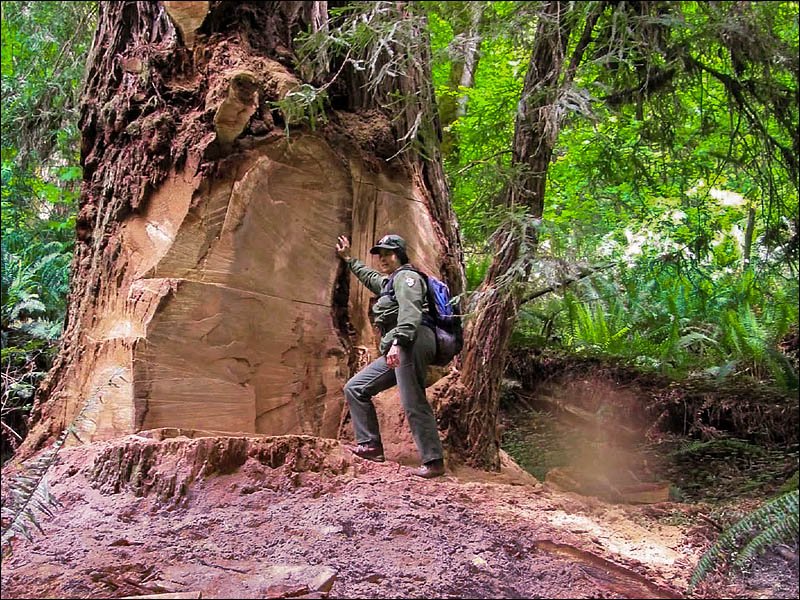
Redwood poachers ruin majestic giants

Credit: National Park Service

Probably our favorite thing we read all week was this story from Bloomberg about the illegal theft of so-called Redwood burls from California’s Redwood National Park. Burls are the massive, swollen, misshapen growths that naturally occur on trees. Basically, the grain has grown from the tree in a deformed manner, a form of cellular misdirection. They look a little bit like tumors or additional appendages. But because of the strange patterns they exhibit when the fresh wood is exposed, burls are extremely valuable around the world. They are used to make tables and countertops and footstools, etc. A quick search online came up with numerous sites selling redwood burl tables for tens of thousands of dollars. Certain rawย burl pieces are also extremely valuable.ย No wonder thieves go after them.ย 

The problem is that choice redwood burls are very rare. They take many years, often hundreds of years, to grow andย become large and complex. And if there’s one place large, ancient redwoods grow in abundance, it’s Redwood National Park in Northern California.ย 

Poachers have been entering Redwood National Park in the night with saws and cutting off the burls to sell for big bucks. The trees usually survive, but they are permanently scarred. Burl removal is legal if the trees areย in private hands and the owner gives the ok. But burl cutting is illegal in the national park, as you can imagine. And since we’re talking Redwoods National Park, we’re talking some of the tallest, finest, rarest, most beautiful trees on the planet, so the thought that criminals are burl poaching in these parks gets pretty infuriating.ย 

Luckily, as the story explains, park rangers likeย Branden Pero are tasked with catching the burl poachers and they’ve brought some high technology to bear (including hidden cameras) to nabย Derek Alwin Hughes, a 35-year old meth user who was charged with six crimes, including Grand Theft.

Bloomberg


Environment

LA’s air quality is deteriorating

If you lived in Los Angeles in the 70s, then you remember the days when schools closed due to poor air quality. With few Federal laws in place mandating controls on car exhaust, the city was often blanketed under a disgusting layer of brown smog. 

We’ve come a long way since then. The 1970 Clean Air Act and the EPA’s strict regulation of exhaust emissions, improved LA’s air and made it breathable again. It’s been called one of the greatest successes in US environmental history. But according to a study published this year by scientists at New York University and the American Thoracic Society, we’ve been taken several steps backward, especially where ozone is concerned. Ozone can damage lungs, trigger asthma attacks and lead to other life-threatening problems.

The problem is particularly bad in Southern California, where researchers found a 10% increase in deaths attributable to ozone pollution from 2010 to 2017. While downtown and the westside have fared somewhat better, inland regions around Riverside and San Bernadino are experiencing the most dangerous levels of pollution. California regulators have been tasked with devising a plan by the end of the year to reduce ozone, and they say it’s going to be expensive, perhaps costing as much as $14 billion.  

Los Angeles Times


Public Health

Inhaled: a new podcast series  

Let’s stick with air quality and health for a moment. A powerful new 5-part podcast series by the Chico Enterprise Record called Inhaled looks at the health impacts of last year’s wildfires, with a particular focus on the Camp Fire, the deadliest, most destructive wildfire in California history. It turns out that the smoke from the Camp Fire, and numerous other fires around the state, has led to lingering health problems for many people. Smoke contains toxic particles that can lodge themselves into lungs and cause permanent health problems. Those health effects are now being felt by many people, many of whom are finding it difficult to get the health care they need. It’s an important story because we tend to think of the impact of wildfires as something immediate, with death and property damage occurring quickly, when the reality is the damage to personal health can linger for years.     

Inhaled


California science news roundup

An interesting update on the Mars InSight lander, which has been experiencing lingering problems with its heat probe, an autonomous hammer thatโ€™s supposed to penetrate five meters down into the Martian soil to get all sorts of never-before-made measurements.  The bad news: they haven’t fixed it. The good news: they HAVE been able to measure small Mars quakes, providing scientists with new data and clues about the planet’s interior. (Planetary Society

A look at the problem of feral horses in California. Wild mustang populations are out of control, competing with cattle and native wildlife for resources. If the federal government doesnโ€™t rein them in, ranchers may take matters into their own hands. (Alta Magazine)

California’s illegal pot farms are killing wild fish. Run-off, water diversion, and pollution from illegal cannabis farms are polluting streams where fish like steelhead and salmon thrive, killing many. (Bitterroot Magazine)  

The tragically failed plan in Modesto to plant 5,000 trees. (Modesto Bee)

Hawthrone-based SpaceX faces challenges in launching thousands of satellites to provide space-based internet service. But the payoff could help finance the company’s bigger space ambitions. (LA Times)

Mothers in California are leading efforts to ban harmful pesticides. (Grist)

Another serial-rape suspect is nabbed (this time in Sacramento) with DNA testing technology. (SacBee)

A compelling argument that the iPhone may be reducing resource consumption rather than increasing it. Think of all the things you no longer own because smartphones have replaced them: calculator, camcorder, clock radio, mobile telephone, and tape recorder. (Wired)

Jupiterโ€˜s moon Io is the most volcanically active body in the solar system. Caltech scientist Katherine de Kleer has been capturing the moon’s volcanic landscape in incredible detail. (New York Times)

Caltech scientists at the Owens Valley Radio Observatory have been able to pinpoint the location of so-called fast radio bursts to a distant galaxy almost 8 billion light-years away. (CalTech)

Some dude went snorkeling in Sausal Creek in Oakland. He saw some fish. Interesting, but kind of gross. (SF Gate)

There’s a new book out about how Californiaโ€™s longstanding role as a center for health, wellness, nutritional fads, and sunshine changed its architecture. (LA Curbed)

That’s it! Have a great week, and please send your friends an invitation to sign up for the California Science Weekly newsletter. 

Design by Luis Ramirez

Blocking offshore drilling // Finding clear skies for stargazing in California // Amazing moon shots // Black abalone recovery // California’s Central Valley as art

Sign up for the California Science Weekly newsletter. Fresh California science every Friday!

Week of June 21, 2019

Environment

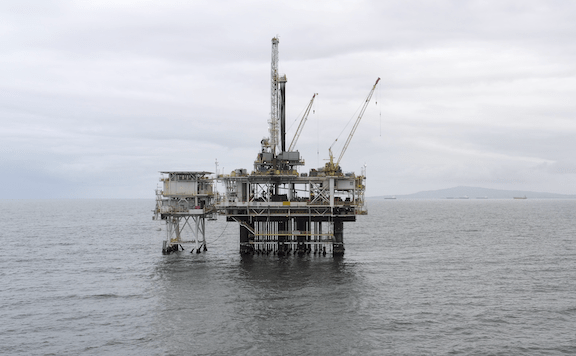
House approves a measure to block offshore drilling for a year

Credit: Erik Olsen

The House passed a spending bill late Thursday that would block offshore drilling along most U.S. shores, including a ban on seismic testing used to find oil and gas reserves. Unfortunately, it only lasts a year. Many groups, particularly in California, have long sought an end to drilling, and there was immense hope that would be the case in 2016 when President Obama permanently ended oil and gas leasing in parts of the Atlantic and Arctic oceans. However, President Trump issued an executive order in April 2017 that would roll back these protections, and in January 2018, now former U.S. Department of the Interior Secretary Ryan Zinke proposing opening up nearly all federal waters to oil and gas extraction. The new measure potentially restores the safeguard that protected Californiaโ€™s coast for more than a quarter century.  

Press-Democrat


Astronomy

Finding clear star-gazing skies in California

Light Pollution Map

It’s not easy to find great places to gaze up into the night sky and take in the grandeur and awe of the universe. Light pollution from cities has obscured the skies in so many places around the state, that you are often lucky, even on a clear night, to see more than a dozen or so points of light. Of course, this is a problem everywhere, not just California. In June 2016, it was estimated that one-third of the world’s population could no longer see the Milky Way. 

For California residents seeking dark spaces to escape with their telescopes or just a blanket to lie on, there is some hope. Many municipalities are installing less light polluting LEDs or passing ordinances to turn off certain lights during the night to reduce light pollution.

There are a few places where you can still go to find clear night skies. The light pollution map offers a very handy resource to find California’s best star viewing opportunities. Not surprisingly, desert areas and sections of Northern California offer some of the best locations. For example, Anza-Borrego Desert State Park in southern California was made a dark park in 2018. Also, two weeks ago, the Grand Canyonwas named an International Dark Sky Park by the International Dark-Sky Association. 

Light Pollution Map


Space

Amazing moon shots

Speaking of dark skies, let’s talk astrophotography. Take a look at Sacramento photographer Andrew McCarthy‘s images of the moon.McCarthy has spent many hours transforming some 50,000 individual images of the night sky into one very large and detailed photo of the moon. It’s breathtakingly beautiful and exquisitely detailed. Each crater and lunar sea on the side facing us looks like it was shot up close, when actually they were taken with McCarthy’s two camera setup 239,000 miles away. His process involves shooting photos and then stacking them at different exposures. He switches between an astronomy camera and a Sony A7II with a 300mm lens. Using Photoshop and special software, he aligns and adjusts the images to create the final product. You can see his marvelous Instagram feed here. 

Andrew McCarthy


Marine Science

California black abalone making a comeback

Credit: Michael Ready

Back in 2017, ride-sharing company Uber held its second Uber Elevate Summit in Los Angeles to push the idea of flying taxis. To most Los Angelenos, the thought of soaring over traffic is almost too good to be true, a Jetsons cartoon fantasy. But it may not be as far fetched as it seems. Numerous companies are working on the idea, and the technology is getting closer and closer to reality. One of the big obstacles at the moment is battery power, since most flying cars will have to be electric and the systems will need to carry a lot of redundancy (flying cars will not be able to glide much), which adds tremendous weight. 

Another obstacle is infrastructure. Where are all these flying cars going to take off and land? Well, Uber has been thinking a lot about this subject and just released plans for various “skyports” that will be built around Los Angeles.  Uber says that both LA and Dallas will be the pilot cities for the new service it calls Uber Air. Uber also unveiled renderings of the vehicles themselves, which include four passenger seats and a small storage space for baggage. The company says we may be riding in flying taxis, perhaps starting with service from LAX to downtown, by 2023. 

Santa Barbara Independent


Agriculture

California’s Central Valley as art

Mitchell Rouse

Aerial Photographer Mitchell Rouse takes aerial photos of agricultural lands in the Central Valley, making works of fine art that are not only lovely, but highlight the incredible diversity of forms and patterns that only an eye in the sky can see. Interestingly, he doesn’t use drones, but rather small planes and helicopters. In particular, he favors the Bell 407 helicopter and shoots with a Shot Over F1 Gimbal housing a Phase 1 Industrial 15oMP pixel camera. His portfolio of the central valley is called Agricultural Project #1.   

Mitchell Rouse


California science news roundup

California officials and seismologists are saying the swarm of small quakes they’ve measured are probably not anything to be worried about. Probably.

California officials are investigating an Oakland-based “biohacker”, accusing him of practicing medicine without a license.  

ABC News did a nice feature on California’s Channel Islands, sometimes called “North America’s Galapagos.”   

NASA has made available a library of 140,000 high definition files filled with photos, videos, and sound clips, all free and available for download. 

Blue states are adopting aggressive climate policies. Red states, not so much.

Research oceanographer Jules Jaffe at Scripps Institute of Oceanography talks about how underwater drones (some of which his lab builds) are changing our understanding of the oceans.

Surfer Kevin Cunningham makes surfboard skags out of plastic trash. 

A new California wildfire fund would put aside $21 billion for damage claims to help those whose property was destroyed.

A Stanford team is developing a privacy-minded alternative to Alexa and Siri. They call it almond.

California based CEO Elon Musk says his company has designed a submarine car like the one from the 1977 James Bond movie, “The Spy Who Loved Me.”

Nestlรฉ, the worldโ€™s largest bottled water company, has been accused of taking millions of gallons of free water from the San Bernardino National Forest 17 months after California regulators told them they had no right to much of what they’d taken in the past.

century-old cypress that may have inspired some of the imagery in Dr. Seuss’ Lorax story has collapsed. Geisel lived in La Jolla from 1948 until his death in 1991 and the tree lies close to his old home.

DOLA has a nice feature on the best opportunities to see exotic animals in California.

Scientists sequenced the almond genome, perhaps opening up a way for growers to cultivate varieties that lack cyanide, a potent poison.

California mental health officials are working with Mountain View-based Mindstrong to test apps for people getting care in CAโ€™s mental health system. The idea is to create an early-warning system to flag the user when an emotional crisis seemed imminent.

Stanford Earth system science professor Kate Maher on how reactive transport modeling is used to better understand the chemical reactions in Earthโ€™s subsurface that impact water supplies, energy waste storage, and climate change.

The heavy snows and deep snowpack have been great for skiers, and will benefit farmers who were coping with a seven-year drought. But researchers are warning that the ample rains and snows might lead to a very serious increase in wildfires. 

That’s it! Have a great week, and please send your friends an invitation to sign up for the California Science Weekly newsletter. 

Design by Luis Ramirez

How California Companies are Leading the Effort to Save the World with Microbes

Synbio startups like NovoNutrients are developing novel products to help feed the world and stop climate change.

Wikipedia – CC BY-SA 3.0

(Sign up for the California Science Weekly newsletter, delivered fresh to your inbox every Friday)

Overfishing is arguably one of the most significant threats to the human food supply on the planet. Approximately three billion people in the world rely on both wild and farmed seafood as their primary source of protein, and ten percent of the world’s population depends on fisheries to make a living.

One the of dirty little secrets of the global commercial fish industry is that it takes fish to make fish. While many people see farmed fish as an ideal solution to meeting our protein needs in the future, the reality is that feeding farmed fish right now requires massive inputs of so-called forage fish, namely small fish like anchovies, herring, menhaden, capelin, anchovy, pilchard, sardines, and mackerel that occur in large numbers in the ocean, particularly the cold Southern and Northern latitudes. A multi-billion dollar industry is dedicated to using large ships that ply the ocean with nets to bring up millions of tons of forage fish every year.

These forage fish go into making fishmeal, essentially powders and pellets made from ground up forage fish. As fish farming increases, which it has for decades, so does the need to harvest more feeder fish. Increasingly, this is done unsustainably, and illegally. Some scientists warn that as the feeder fish industry explodes, entire marine ecosystems, including those that support animals like whales and large pelagic fish stand in danger of collapse.

So is there a way to feed farmed fish that reduces the need to trawl the seas for forage fish? It turns out that one California company is working on a solution, and it involves one of the most abundant organisms on earth: bacteria.

NovoNutrients is a Mountain View, California, startup, whose offices lie close to both Facebook and Google. The company is harnessing new technology of synthetic biology or synbio to get bacteria to do our bidding, creating proteins using the same tiny organisms that curdle milk into yogurt and cause innumerable diseases.

NovoNutrients’ product is called Novomeal, and while it is not yet commercially available (the company says late 2019 or early 2020), it holds the promise to not only reduce overfishing, but to help diminish atmospheric carbon dioxide, one of the main culprits in climate change.

How it is able to do this is about as close to a “killing two birds with one stone” as one can get in science.

At the company’s headquarters, bacteria and other single-celled organisms are incubated in large steel vats called bioreactors and are fed industrial carbon dioxide which they convert into proteins that can be processed into a powder to feed fish grown in aquaculture. It sounds simple and too good to be true. But the company thinks it may hold the key to a sustainable future.

“We take untreated industrial emissions of CO2 and we turn them into protein โ€” initially for animal feed and starting in fish farming,” says the company’s Web site.

Since bacteria can be grown in largely unlimited supply, which is not the case for forage fish, the company’s technology holds the promise of beginning to solve two of humanity’s most pressing current problems: global warming and overfishing.

The promises of synbio go way beyond creating fishmeal. Frances Arnold, the winner of this year’s winner of the Nobel Prize in chemistry, is a professor of chemical engineering at the California Institute of Technology. The award was bestowed upon Arnold (who, by the way, lives in La Canada Flintridge), for developing a technique called directed evolution.

Directed evolution is a form of synbio that generates novel enzymes and other biomolecules by tweaking the genetic machinery of bacteria like E-coli. A wonderful explanation of the process can be read here, but essentially the process mutates genes that encode proteins, getting them to make specific proteins that serve a particular need. Arnold has already created several companies like Provivi, that develop products using the method. Some proteins can be used to consume harmful chemicals after, say, an oil spill. Others perform more mundane, but hardly less useful tasks like removing laundry stains.

A key point here is that all of these companies and individuals call California home. That, of course, is no coincidence, as the state remains on the forefront of innovation in biotechnology. We’ve created this site to bring you exactly these kinds of stories, and hope that you will follow us on Twitter and subscribe to our weekly newsletter.

Netflix’s Our Planet takes on California, Talking with your brain, Banning animal dissection, California’s “King Tides”, Threats to California’s artichokes

Sign up for the California Science Weekly newsletter. Fresh California science every Friday!

Week of May 3, 2019

Here at the California Science Weekly, we are working hard to bring you the most interesting, informative and entertaining stories about science in the state of California. Every week, we pore through hundreds of articles and Web sites to find the top stories that we believe are worthy of your time. We hope you’ll stay with us and share our work with others via Twitter and Facebook. If there is anything you’d be interested in learning more about, send us a note, and let us know.


Marine Science

Netflix’s amazing Our Planet takes a long look at one of California’s iconic coastal ecosystems

For Californians who have not yet had the joyful opportunity to catch Netflix’s new nature show Our Planet, you should click over now and catch episode four, which features long, impossibly beautiful ruminations on California’s coastal environment.

It captures the recovery of the sea otter population around Monterey and features stunning moving images of Monterey kelp forests, one of our most iconic coastal ecosystems. Huge red and black California sheephead (a type of wrasse) gnaw and crush sea urchins, sea lions gambol in huge numbers like playful puppies, and the time-lapses of urchins creeping across the rocky strata are downright terrifying. Given the incredible array of exotic places that the show has been so far, it’s awfully nice to have California recognized as a biological hot spot worthy of such admirable high-definition filmmaking.

California’s kelp beds have been under threat for decades, with some in severe decline. The culprits are purple sea urchins, who consume kelp, preventing them from growing. Years ago, urchins were kept in check by the otter population, which was decimated for the fur trade. The Our Planet episode explains this in some detail.

Kelp is an amazing organism and is a potential ally in the fight against global warming. When free to grow in a healthy environment, kelp grow remarkably fast, up to two feet a day. Kelp absorbs carbon and provides critical habitat and food for more than 800 species of marine animals. Recent warming caused a 60-fold explosion of purple urchins Californiaโ€™s coast, and the kelp was devastated by these ravenous porcupines of the sea. Over the last 100 years, the Palos Verdes Peninsula has lost 75 percent of its kelp forests.

But efforts over the past decade, by organizations like the Santa Monica-based Bay Foundation, are seeking to bring the kelp back by eradicating urchins, often with divers who wield hammers and smash the urchins. So, not exactly pretty, but the efforts have been effective in restoring this incredibly important part of the ecosystem.

Netflix


Medicine

Talking with your brain

UCSF

Scientists at the University of California San Francisco have developed a brain-computer interface to turn brain signals into computer-synthesized speech. It could be a way for people who have lost the ability to speak to communicate.

The so-called ECoG Electrode Array is made up of dozens of electrodes that are implanted on the brain and record brain activity. The computer deciphers the brainโ€™s motor commands and then generates sentences to try to match the speakerโ€™s natural speaking rhythms.

Brain-computer interfaces are not new, not even those that can generate speech. But previous efforts produced about eight words a minute, while this one generates about 150 words a minute, which scientists say is the pace of natural speech.

Here’s the paper in Nature.

New York Times UCSF


Animals

Banning animal dissection from biology class

Flickr

A new California law might outlaw the use of animals like cats and frogs for dissections in science classes. Cats used for dissection tend to be euthanized animals acquired from shelters; frogs and other amphibians are often gathered in the wild.

Those in support of the bill say that killing the animals is cruel and unnecessary. They say kids can get the same or similar educational experience by using models and computer programs. For those who grew up dissecting animals and believe it is an important part of science education, the move is perceived as an attack on time-honored traditions of biology class. Students are allowed under current law allows to opt out of performing dissections if they have a moral objection, but this would be a state-wide ban at public schools.

SacBee Pacific Standard Magazine


Climate Change

California’s King Tides a harbinger of climate change

King tides are a natural phenomenon in California. Every year when there is an alignment of the gravitational pull between sun and moon, tides are literally pulled higher up the shore. Scientists warm, however, that when king tides take place during floods or storms, sea levels can damage the coastline and coastal property. Studies show that California will be greatly impacted by sea level rise, and so the point of the project is to help us visualize future sea level rise by observing the highest high tides of today.

The King Tide Project has a wonderful series of images from earlier this year showing the highest tides around the state.

King Tide Project๏ปฟ


Climate Change / Agriculture

California’s artichokes may be threatened by climate change

Climate change is going to have massive impacts around the world and will impact many facets of our lives. But perhaps few other impacts are as important as how it will affect the world’s food supply. California’s economy is largely built on agriculture, and few products are more representative of our food production than the California artichoke. A 2018 report by Agronomy, a peer-reviewed, open access scientific journal, laid out a stark future for California agriculture. The classic California artichoke faces particular threats. A warming ocean and changing the marine layer, which the artichoke depends on, not to mention the spread of pests like the artichoke plume moth, could devastate the state’s artichoke crops.

Similarly, the New York Times looks at various products around the nation and what problems various states may face. As one of the top producers of agricultural products in the world, California faces particular challenges.

New York Times Capital and Main


MORE

A map of “wicked weather and deadly disasters” from the Washington Post shows California faring well against tornadoes and hurricanes, but not, alas, against wildfires.

California Sierra’s snowpack is 2.5 times larger than last year. Using Lidar and a spectrometer, this is how NASA’s JPL figures that out.

In case you missed it, the New York Times reports that California’s raisin industry is controlled by a “raisin mafia”.  

Fifty years ago, an oil spill off Santa Barbara became a galvanizing moment for the US environmental movement.

The Golden State Killer case was just the beginning. How DNA will continue to solve crimes.

How palm trees came to define Los Angeles, and why it’s all a myth.

A fantastic story in Wired about the discovery of a new earthquake fault in California.

Fifty years ago, an oil spill off Santa Barbara became a galvanizing moment for the US environmental movement.

The Golden State Killer case was just the beginning. How DNA will continue to solve crimes.

How palm trees came to define Los Angeles, and why it’s all a myth.

A fantastic story in Wired about the discovery of a new earthquake fault in California.

Design by Luis Ramirez