Using California reservoirs like a battery // NASA’s Mars Helicopter // A gazillion ladybugs fill the sky // The fish with Dragonglass teeth // Lighter than air metal

Sign up for the California Science Weekly newsletter. Fresh California science every Friday!

Week of June 7, 2019

Environment

California uses reservoirs and pumps to tackle climate change

PG&E Corp.

California has some of the most aggressive renewable energy goals in the country. The state is required to obtain at least 33% of its electricity from renewable resources by 2020, and 100% from carbon-free sources by 2045. That’s going to take a lot of energy storage, and the fact is that Lithium-ion batteries, like Elon Musk’s Powerwall, produce a few hundred megawatts of electricity at most and will not be up to the task.

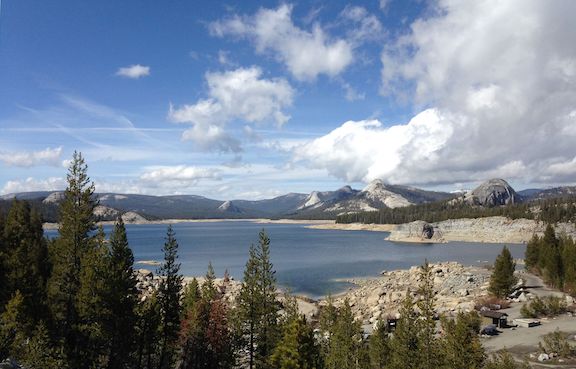
Up in the Sierras, 50 miles east of Fresno, there is a natural battery of sorts that harnesses the power of gravity and has been around for over 20 years. Bloomberg writes about PG&E Corp.’s Helms Pumped Storage plant, which delivers over 1,200 megawatts every day, enough to power 900,000 homes, and it does so cleanly. It is kind of an amazing project.

The facility uses so-called “pumped-hydro storage”, basically turning existing reservoirs at different altitudes into a kind of battery. The idea is simple. Take two reservoirs at different elevations, connected by pipes or tunnels. When electricity is abundant, pump water from the lower reservoir to the one uphill. When the grid needs power, let the water flow back down through turbines.

Helms relies on energy from Diablo Canyon to power the pumps during the reverse cycle at night, but the amount of power generated when the water flows down during the day more than compensates for the power used at night, making the plant both environmentally friendly and economical. 

It’s century-old technology, but it works. There are seven in California alone. Unfortunately, they are very expensive (the projects can cost more than $1 billion to build), and there aren’t that many reservoirs around that meet the specifications to make pumped hydro work. That said, Nine projects are proposed in California. One proposed project by NextEra Energy Inc. would go near Joshua Tree National Park, but construction hasn’t started yet. 

Bloomberg


Space

NASA’s Mars Helicopter getting ready for its close-up 

The next big mission to Mars will carry more than the landers and rovers that we all know and love. In fact, the Mars 2020 mission will carry an actual helicopter. The advantages of a flying vehicle are obvious: you can go much farther and cross terrain that would be impossible for a ground-based system to traverse. But there’s a hitch: 

“Nobody’s built a Mars Helicopter before, so we are continuously entering new territory,” said MiMi Aung, project manager for the Mars Helicopter at NASA’s Jet Propulsion Laboratory in Pasadena, California.

It’s not like building a copter for Earth. The tenuous Martian atmosphere has 1% the density of Earth, so all the flight systems have to be engineered differently. And what about controlling the vehicle from Earth over large interplanetary distances? The dynamics are significantly more complicated than when driving a rover over the surface.

None of that is deterring the folks at NASA’s Jet Propulsion Laboratory in La Canada Flintridge, who have been testing the Mars Helicopter for the Mars 2020 launch.  It may be hovering above the red Martian landscape in 2021. However, the craft will carry no instruments. Its purpose is to prove that powered flight on Mars is possible.   

JPL


Animals

It’s a bird. It’s a plane. It’s a gazillion ladybugs!

There were no clouds in the sky the other day over San Bernardino County when a weather satellite picked up a large blob hovering in the air. Instead, the 80-mile by 80-mile mass was a massive cloud of ladybugs flying at between 5,000 and 9,000 feet. That’s a crazy amount of ladybugs. 

California is home to about 200 species of ladybugs, but scientists have not yet identified which species were seen in the radar image, but they say it’s likely they are Hippodamia convergens, known as the convergent lady beetle.

Los Angeles Times    NPR


Animals

The fish with Dragonglass teeth

Credit: Scripps Institution of Oceanography

The Dragonfish is a crazy-looking animal. Part of its allure is a set of dagger pointed teeth that happen to be transparent and amazingly strong. 

In fact, the teeth of the species Aristostomias scintillans are made of nanoscale-size crystal particles that make them much stronger than the teeth of other sea animals like sharks and other fish. The fish’s teeth caught the attention of scientists at Scripps Institution of Oceanography in San Diego, and led them to consider how new materials might be developed to take advantage of the crystal structures. Perhaps, like Dragonglass, they can be forged into objects with magical properties.  

New York Times


Materials Science

Lighter than air metal

Lawrence Livermore National Laboratory

Scientists at the Lawrence Livermore National Laboratory have developed a type of metal foam that is strong, but so light it can ride on a mosquito’s back. 

It’s not really foam, though. It’s called “porous metal monolith” or ultra-low density metal, and is really a spaghetti-like web of randomly connected nanometer-sized wires made of gold, silver and copper. They take the shape of miniature marshmallows and contain the same or fewer number of atoms as air. Exactly what the material might be used for is still an open question. Perhaps Patagonia will someday use the material to make backpacks for mosquitos. 

Lawrence Livermore National Laboratory


MORE

The ocean microplastics problem is even worse than we thought. Way worse, say scientists at MBARI. 

Three South Koreans were nabbed poaching $600,000 worth of succulent plants. The Dudleya plants are hugely popular in Asia. 

How might California use recent winter storm to replenish aquifers? It’s harder than it might seem

Can empathy be cultivated? One Stanford scientist thinks so. 

Cal Berkeley has its own experimental forest, and it may help us better understand wildfires. 

Could California seaweed become the biofuel of the future? 

150 lakes in the Tahoe Basin are still frozen, and it’s June.

Apple’s new “Spaceship” HQ is surprisingly earthquake ready.

There’s a town in California that was built to survive wildfires.

California says coffee may not be so bad for you after all.

A huge graveyard of strange fossilized worms was discovered off the coast of California.

Astronomers aren’t happy with SpaceX’s new array of Starlink satellites.   

Drones will replace fireworks at the California state fair. 

That’s it! Have a great week, and please send your friends an invitation to sign up for the California Science Weekly newsletter. 

Design by Luis Ramirez

Lithium in Death Valley, Frogs making comeback, JPL’s Climate Elvis, Science of traffic jams, Mono Lake’s gulls, Amazing scallop eyes, Cow burps, Bee thieves

Sign up for the California Science Weekly newsletter. Fresh California science every Friday!

Week of May 10, 2019


Editor’s note: We’re heading to Indonesia next week on an assignment, so we’ll miss an issue of California Science Weekly. But keep an eye on our Twitter feed for posts.

A war is brewing over lithium mining near Death Valley

Lithium. It is one of the world’s most valuable elements, allowing batteries to be more powerful and longer-lasting than ever before. Right now, most lithium is mined in the high deserts of South America, but a new battle is being waged between battery companies and environmentalists over whether to mine lithium in Panamint Valley in California, right on the edge of Death Valley. There are strong arguments to be made that having a large domestic source of lithium is key to a carbon-free future, but some are saying that mining would potentially despoil one of California’s most treasured natural areas.

The LA Times has a story on how Australia-based firm Battery Mineral Resources Ltd. is seeking permission to drill four exploratory wells beneath the valley floor to see if enough lithium is there to make a mine economically viable. 


Environment / Animals

The comeback of Mark Twain’s frogs

Red-Legged Frog Release.

The California red-legged frog is said to be the species featured in Twain’s short story “The Celebrated Jumping Frog of Calaveras County.”

They began to disappear decades ago due to disease and habitat destruction, but a recent program to reintroduce them back in Yosemite Valley is seeing some progress. The program reintroduced about 4,000 California red-legged frog eggs and tadpoles and 500 adult frogs, into Yosemite and near the Merced River. For the first time, biologists have found eggs from the reintroduced frogs. That’s great news, given the rapidly declining state of frogs around the globe. The recent IPBES UN report says that more than 40 percent of amphibian species around the world are threatened with extinction.

KQED 


Space / Climate Change

Climate Elvis at JPL

Josh Willis works at the Jet Propulsion Laboratory in La Canada Flintridge, California. He’s a scientist studying the change in ocean temperatures and how they impact Greenland’s melting glaciers. He’s also an Elvis impersonator and a comedian, who hopes to make people aware of the perils we face if we don’t change our behavior towards the changing climate, but getting a laugh along the way. Laughter is, after all, the best medicine. That said, we won’t be laughing much if climate change gets as bad as many scientists say. See the UN report referenced above.  

Grist


Infrastructure

Science of traffic jams

Credit: Erik Olsen

Traffic jams. They are the bane of California drivers. But what causes them, and is there any way to lessen their severity? Mathematicians have developed all sorts of models to better understand how traffic forms, and some of them has been helpful to improve flow. For example, extra-long freeway entry lanes (take a drive on Highway 110, the old Route 66, which has very short entry lanes, to see what I’m talking about.) An interesting story in Nautilus examines how fluid models are being used to better predict and reduce traffic jams. It’s complicated, but you will learn about the jamiton. And we’re not holding our breath that things will improve in places like LA anytime soon. 

Nautilus


Animals

Gulls of Mono Lake

Kristie Nelson studies seagulls at Mono Lake, home to massive colonies of gulls. Her Mono Lake Gull Project examines how gulls serve as an indicator of ecosystem health. The gulls spend most of their time at the coast, but during breeding season they make fly to saline places like Mono Lake where the population can reach up to 65,000 birds. 

A video at Science Friday looks at her work and has some great scenes of the voracious birds going after the lake’s insanely numerous Alkali Flies, moving across the bazillions of them, beaks open, like a lawnmower.

Science Friday


Marine science / Animals

Scallop eyes surprise scientists

Wikipedia

Many people know that scallops have eyes, blue ones, in fact. But their eyes function a bit differently than our own. As light enters into the scallop eye, it goes through the pupil and then a lens. Interestingly, the scallop has two retinas, and when the light hits them it strikes a crystal mirror made of guanine at the back of the eye. 

A study in Current Biology looks at two species: the bay scallop Argopecten irradians and the sea scallop Placopecten magellanicus, and reveals that scallops have a novel way of focusing light. They have no irises like ours and so they use their pupils to dilate and contract, and this, along with changes to the curvature of the cornea, improves resolution and forms crisper images. Vision is such an amazingly complex ability, yet it has likely evolved 50 times among animals, a process called convergent evolution. There are several scallop species in California, and the next time you are diving and see one, remember that it probably sees you right back.

Current Biology Smithsonian


Climate Change

Reducing cow burps with seaweed

UC Davis

You’ve seen Harris Ranch on I5? Did you know that California is a major producer of beef and dairy. Cows produce prodigious amounts of methane, one of the most potent greenhouse gases. In fact, methane is 30 times worse than CO2. Meanwhile, more than half of all methane emissions in California come from the burps, farts, and exhalations of livestock. And belches are the worst, accounting for roughly 95% of the methane released into the environment. Worldwide, livestock accounts for 16% of our greenhouse gas emissions. A fascinating new approach at Scripps Institution of Oceanography proposes using seaweed as cow feed. Scripps notes that “just a small amount of Asparagopsis seaweed to cattle feed can dramatically reduce methane emissions from dairy cows by more than 50 percent”.


Agriculture

Bee thieves in California

National Geographic

It’s no longer cattle rustling and horse stealing. Bee thieves are threatening almond growers in California. A lucrative bee rental industry has surged.


MORE

Scientists have identified 67 marine species in California moving north from their commonly known habitat due to severe marine heatwaves from 2014-2016.

The Keeling Curve has been called one of the most important scientific works of the 20th century. Developed by Charles Keeling at the Scripps Institute of Oceanography in San Diego, California, it is a measurement of the concentration of carbon dioxide in the atmosphere from Hawaii’s Mauna Loa since 1958. Here’s why it’s so important.   

Thanks to the rains the areas where the Woolsey burned outdoor areas, scorched an Old West film set and Jewish summer camps in the Santa Monica Mountains, there is lush green and wildflowers.

Once a Gold Rush boomtown, Bodie, California, is now an isolated ghost town. Meet one of the five people who still live there in the winter.

Lovely pictures of a sunrise. On Mars.

HUGE Basking sharks are swimming around and feeding right off the coast of California.

Design by Luis Ramirez

Netflix’s Our Planet takes on California, Talking with your brain, Banning animal dissection, California’s “King Tides”, Threats to California’s artichokes

Sign up for the California Science Weekly newsletter. Fresh California science every Friday!

Week of May 3, 2019

Here at the California Science Weekly, we are working hard to bring you the most interesting, informative and entertaining stories about science in the state of California. Every week, we pore through hundreds of articles and Web sites to find the top stories that we believe are worthy of your time. We hope you’ll stay with us and share our work with others via Twitter and Facebook. If there is anything you’d be interested in learning more about, send us a note, and let us know.


Marine Science

Netflix’s amazing Our Planet takes a long look at one of California’s iconic coastal ecosystems

For Californians who have not yet had the joyful opportunity to catch Netflix’s new nature show Our Planet, you should click over now and catch episode four, which features long, impossibly beautiful ruminations on California’s coastal environment.

It captures the recovery of the sea otter population around Monterey and features stunning moving images of Monterey kelp forests, one of our most iconic coastal ecosystems. Huge red and black California sheephead (a type of wrasse) gnaw and crush sea urchins, sea lions gambol in huge numbers like playful puppies, and the time-lapses of urchins creeping across the rocky strata are downright terrifying. Given the incredible array of exotic places that the show has been so far, it’s awfully nice to have California recognized as a biological hot spot worthy of such admirable high-definition filmmaking.

California’s kelp beds have been under threat for decades, with some in severe decline. The culprits are purple sea urchins, who consume kelp, preventing them from growing. Years ago, urchins were kept in check by the otter population, which was decimated for the fur trade. The Our Planet episode explains this in some detail.

Kelp is an amazing organism and is a potential ally in the fight against global warming. When free to grow in a healthy environment, kelp grow remarkably fast, up to two feet a day. Kelp absorbs carbon and provides critical habitat and food for more than 800 species of marine animals. Recent warming caused a 60-fold explosion of purple urchins California’s coast, and the kelp was devastated by these ravenous porcupines of the sea. Over the last 100 years, the Palos Verdes Peninsula has lost 75 percent of its kelp forests.

But efforts over the past decade, by organizations like the Santa Monica-based Bay Foundation, are seeking to bring the kelp back by eradicating urchins, often with divers who wield hammers and smash the urchins. So, not exactly pretty, but the efforts have been effective in restoring this incredibly important part of the ecosystem.

Netflix


Medicine

Talking with your brain

UCSF

Scientists at the University of California San Francisco have developed a brain-computer interface to turn brain signals into computer-synthesized speech. It could be a way for people who have lost the ability to speak to communicate.

The so-called ECoG Electrode Array is made up of dozens of electrodes that are implanted on the brain and record brain activity. The computer deciphers the brain’s motor commands and then generates sentences to try to match the speaker’s natural speaking rhythms.

Brain-computer interfaces are not new, not even those that can generate speech. But previous efforts produced about eight words a minute, while this one generates about 150 words a minute, which scientists say is the pace of natural speech.

Here’s the paper in Nature.

New York Times UCSF


Animals

Banning animal dissection from biology class

Flickr

A new California law might outlaw the use of animals like cats and frogs for dissections in science classes. Cats used for dissection tend to be euthanized animals acquired from shelters; frogs and other amphibians are often gathered in the wild.

Those in support of the bill say that killing the animals is cruel and unnecessary. They say kids can get the same or similar educational experience by using models and computer programs. For those who grew up dissecting animals and believe it is an important part of science education, the move is perceived as an attack on time-honored traditions of biology class. Students are allowed under current law allows to opt out of performing dissections if they have a moral objection, but this would be a state-wide ban at public schools.

SacBee Pacific Standard Magazine


Climate Change

California’s King Tides a harbinger of climate change

King tides are a natural phenomenon in California. Every year when there is an alignment of the gravitational pull between sun and moon, tides are literally pulled higher up the shore. Scientists warm, however, that when king tides take place during floods or storms, sea levels can damage the coastline and coastal property. Studies show that California will be greatly impacted by sea level rise, and so the point of the project is to help us visualize future sea level rise by observing the highest high tides of today.

The King Tide Project has a wonderful series of images from earlier this year showing the highest tides around the state.

King Tide Project


Climate Change / Agriculture

California’s artichokes may be threatened by climate change

Climate change is going to have massive impacts around the world and will impact many facets of our lives. But perhaps few other impacts are as important as how it will affect the world’s food supply. California’s economy is largely built on agriculture, and few products are more representative of our food production than the California artichoke. A 2018 report by Agronomy, a peer-reviewed, open access scientific journal, laid out a stark future for California agriculture. The classic California artichoke faces particular threats. A warming ocean and changing the marine layer, which the artichoke depends on, not to mention the spread of pests like the artichoke plume moth, could devastate the state’s artichoke crops.

Similarly, the New York Times looks at various products around the nation and what problems various states may face. As one of the top producers of agricultural products in the world, California faces particular challenges.

New York Times Capital and Main


MORE

A map of “wicked weather and deadly disasters” from the Washington Post shows California faring well against tornadoes and hurricanes, but not, alas, against wildfires.

California Sierra’s snowpack is 2.5 times larger than last year. Using Lidar and a spectrometer, this is how NASA’s JPL figures that out.

In case you missed it, the New York Times reports that California’s raisin industry is controlled by a “raisin mafia”.  

Fifty years ago, an oil spill off Santa Barbara became a galvanizing moment for the US environmental movement.

The Golden State Killer case was just the beginning. How DNA will continue to solve crimes.

How palm trees came to define Los Angeles, and why it’s all a myth.

A fantastic story in Wired about the discovery of a new earthquake fault in California.

Fifty years ago, an oil spill off Santa Barbara became a galvanizing moment for the US environmental movement.

The Golden State Killer case was just the beginning. How DNA will continue to solve crimes.

How palm trees came to define Los Angeles, and why it’s all a myth.

A fantastic story in Wired about the discovery of a new earthquake fault in California.

Design by Luis Ramirez

Strange new sea life in California, Magnificent murres, Eagle cam at Big Bear, Going to prison for killing a fish, Oral history of the Keck observatory

Sign up for the California Science Weekly newsletter. Fresh California science every Friday!

Week of April 19, 2019

Here at the California Science Weekly, we are working hard to bring you the most interesting, informative and entertaining stories about science in the state of California. Every week, we pore through hundreds of articles and Web sites to find the top stories that we believe are worthy of your time. We hope you’ll stay with us and share our work with others via Twitter and Facebook. If there is anything you’d be interested in learning more about, send us a note, and let us know.


Environment

Something’s happening here. Sea life around California is changing.

Hakai Magazine

This time of year, it is normal to see whales – grays and humpbacks among them – migrating north to cooler climes and nutrient-rich waters in Alaska. But it’s not normal for them to hang around for a long time, nor is it normal to see them frolicking together in San Francisco Bay.

“This was like opening a door temporarily for southern species to move northward,” Eric Sanford, a professor of biological sciences at the University of California at Davis’s Bodega Marine Laboratory told the Washington Post.

Welcome to the new normal. The new hotter normal. As climate change brings floods, higher sea levels, drought and more severe storms, it is also leading to strange behavior in the animal world. Species that once lived much further south around Mexico are now finding their way into California waters, surprising and also concerning scientists who say that these migrations are a sign of bad things to come.

The whales are likely hanging around, say scientists, because they are hungry, meaning that something is happening to their food supplies.

But we’ve also witnessed other species on the coast that are rarely or never before seen. A yellow-bellied sea snake washed up on Newport Beach. A very rare olive Ridley sea turtle was seen near Capistrano Beach. And who can forget the huge hoodwinker sunfish that made headlines last month.

It is likely just the beginning of a massive change in our local ecosystems, and the consequences could be especially severe for the species that already live here, whose habitats are changing. Case in point, the massive die off of starfish caused by an infectious wasting disease that reduces these beautiful creatures to mush. A new report published in the journal Science Advances lays much of the blame on the changing climate. Check out the video by Hakai Magazine.

Science Advances Hakai Magazine


Animals / History of Science

Behold the magnificent murre

Creative Commons: Didier Descouens

During the California gold rush, the rocky volcanic Farallon Islands off the coast of San Francisco became a kind of war zone, as groups of men battled over a precious resource: birds eggs. In particular, the eggs of the common murre, a sharp-beaked black and white bird whose eggs are curiously conical. Scientists speculate the reason for the rather odd shape is that evolution designed them to roll in circles, instead of tumbling into the sea.

The marine science magazine Hakai has a great piece on the common murre and the work being done to better understand their biology and evolutionary history. One recently discovered fact is that common murre females lay eggs with different colors and reflectance, allowing the parent murres to specifically identify it as their own offspring. Wow! Johnny, that IS you!

But back to the so-called eggs wars of the late 1850s. Smithsonian magazine has a wonderful story by Paige Blankenbuehler about the conflict, which arose because so many people had come to California in search of gold, and of course they had to eat. Food production, in some cases, could not keep up with demand. Certain foods, in particular, chicken eggs, became so scarce that enterprising poachers went to the Farallones to collect the eggs for sale to hungry 49ers. The competition to collect them became so fierce that “brawls broke out constantly between rival gangs, ranging in brutality from threats and shell-throwing to stabbings and shootouts.”

Yikes. All over some colorful, conical eggs.

Smithsonian Magazine Hakai Magazine


Animals

Big Bear Lake’s adorable new Eaglets

Eagle cam Friends of Big Bear Valley

Though indigenous to California, bald eagles are not often seen around the state, at least near our big cities. It used to be common to see them, but in the early 1970s, after the bald eagle numbers declined dramatically due to impacts from insecticides, the bird was listed as an endangered species. In fact, in the 80s, there were fewer than 30 nesting pairs in the state. Today, they’ve recovered somewhat and can occasionally be seen at lakes, reservoirs, rivers, and some rangelands and coastal wetlands. 

But now, you can see two baby bald eagles that just hatched at Big Bear Lake. A live cam put up by Friends of Big Bear Valley allows you to ogle them live from the comfort of your computer screen or device.

Eagle Cam


Animals

Going to prison for killing a rare fish

Death Valley National Park

In April 2016, three drunk men broke into a fenced-in limestone cavern at Death Valley National Park, home of the endangered Devils Hole pupfish, one of the rarest fish in the world. The fish has evolved in extreme desert conditions and has been isolated for tens of thousands of years, and this is one of the only places they live. Thinking it was a nice night for a swim, one of the men plunged into the warm pool where, it so happened, the pupfish were breeding. One of the fish died.

The men were caught (an excellent tale told by High Country News), and Trenton Sargent, the guy who jumped into the pool, pleaded guilty to violating the Endangered Species Act, destruction of federal property, and possessing a firearm while a felon. He was sentenced to a year in prison.

Folks, leave endangered species alone. And don’t trespass on or destroy federal property.

High Country News


Space / History of Science

An oral history of the Keck Observatory

Credit: California Institute of Technology

One of the amazing lesser-known repositories of the history of science is the vast oral history project at the California Institute of Technology.

Since 1978, the esteemed scientific school has been collecting the stories of some of its most distinguished names, many of them Nobel Prize winners. Others, hardly known at all, have made huge contributions to human health and they deserve greater attention.

A recent oral history from the archive is actually an edited compendium of interviews that tells the story of the Keck Observatory. The Keck Observatory near the summit of Mauna Kea Hawaii consists of two telescopes peering into the heavens from 13,600 ft. above sea level. A major advance of the telescope (and some of the details of how are covered in the oral history) was the ability to operate using 36 hexagonal segments as a single, contiguous mirror. Each telescope weighs 300 tons and operates with nanometer precision. Scientists using the Keck have made major discoveries about exoplanets, star formation, and dark matter.

There’s a ton of great information about the telescope and the discoveries being made at the Keck site.

Cal Tech


MORE

Keep Fluffy indoors! Growing urban coyote populations are feasting on pets, especially in LA County.

The Red Hot Chili Pepper’s bassist is a bee keeper. Go, Flea, go!

Sand artist makes amazing art. Then it washes away.

Beautiful posters of the Most Endangered Wildlife in Every US State. California? The Point Arena Mountain Beaver.

The magnificent BLDGBLOG looks at the San Andreas Fault.

More on the Lassen County raptor poacher.

Design by Luis Ramirez

Mountain lions could disappear by 2050, Hydraulic mining’s destructive power, an ode to Yosemite’s Lyell glacier, Descanso Gardens’ dinosaur era plants, More mosquitos, LAFD drones

Sign up for the California Science Weekly newsletter. Fresh California science every Friday!

Week of April 12, 2019

Here at the California Science Weekly, we are working hard to bring you the most interesting, informative and entertaining stories about science in the state of California. Every week, we pore through hundreds of articles and Web sites to find the top stories that we believe are worthy of your time. We hope you’ll stay with us and share our work with others via Twitter and Facebook. If there is anything you’d be interested in learning more about, send us a note, and let us know.


Animals

An end to California’s magnificent mountain lions?

Credit: US National Park Service

Two mountain lion populations in Southern California face a real threat of extinction if an effort is not made to protect their environment and create so-called “wildlife corridors” through the city’s developed areas, a new study warns.

Thestudy published in the journal Ecologist Applications that examined DNA from the lion’s blood and tissue samples from the 1990s to 2016, shows that the species could soon experience “inbreeding depression”, a term used to describe when genetic diversity has declined to the point that the species’ future existence is called into question. A similar issue occurred with Florida panthers.

The greatest danger facing the magnificent cats remains being struck by a motor vehicle. Mountain lion advocates are hoping for approval for a $60 million Liberty Canyon Wildlife Crossing over Highway 101 connecting the Santa Monica Mountains to the Sierra Madre Mountain Range. It’s possible construction of the corridor could begin as early as 2022.

Yale Environment 360


Environment

Hydraulic mining’s efficient destruction

Credit: Eastman Collection of the University of California, Davis

When most of us think of the California gold rush, we picture gold panners hunched over a stream, or shoveling dirt into long, wooden sluices, all in an effort to reveal so-called color, shiny pieces of malleable yellow metal that brought thousands of people to California. But in the later years of the gold rush, in the 1860s and 70s, hydraulic mining was the dominant method of extracting gold from the hills.

Hydraulic mining used high-pressure jets of water to dislodge rocky material or move sediment. The jets were so powerful that men were killed by the force of the water from 200 feet away. It was extremely efficient, but also incredibly damaging to the environment. By the time hydraulic mining was banned in 1884, according to John McPhee’s Assembling California, hydraulic mining was responsible for removing 13 billion cubic yards of the Sierras.


Climate Change

The disappearance of Yosemite’s Lyell glacier

Credit: USGS

Greg Stock is a geologist at Yosemite National Park where, for the last decade, he has documented the decline of the park’s Lyell glacier. The glacier sits on Mount Lyell, the tallest peak in Yosemite National Park (13,120 feet). An 1883 photograph (above) shows the glacier spread across 13 million square feet. Current photographs reveal mostly bedrock now, a sad tale of global warming and the rapid loss of glacial ice in California.

Daniel Duane of California Sunday Magazine visited the remains of the glacier and followed along with Stock as he continued a 135-year effort to map and understand the glacier’s decline. It’s a wonderfully well-wrought tale, but like so many stories in these warming days, it’s a depressing one.

California Sunday Magazine


Horticulture

Descanso Gardens’ rare collection of dinosaur-era plants

Cycad plant

In 2014, La Canada Flintridge residents Katia and Frederick Elsea called the city’s Descanso Gardens with an odd proposal: would the famous horticultural center take their collection of over 180 cycads rare cycads, a fern-like plant from the days of the dinosaurs?

The garden said yes, and now those plants are part of Descanso Gardens’ Ancient Forest. Cycads are so old, in fact, they appear in fossils from over 280 million years ago. That makes them far older than flowers. (Flowering plants first appeared in the Jurassic period about 175 million years ago.) In the Ancient Forest, there are also redwoods, tree ferns and ginkgoes, all “living fossils” from a long past era.

Descanso is also the location of North America’s largest collection of Camellias, a genus found in eastern and southern Asia, from the Himalayas to Japan and Indonesia.  At the gardens, there are also some of the oldest oak trees in the city, dating back to Spanish colonial times, beneath which you can take a stroll or simply hang out and enjoy the shade.

If you’d like to learn more about the gardens, check out this episode of Lost LA.

Descanso Gardens Lost LA


Health

As the planet warms, get ready for more mosquitos

Global warming promises to bring more than just sea level rise, more severe storms, and destructive wildfires. According to researchers at Stanford University, a change in the earth’s temperatures is also likely to increase the range and numbers of biting insects like mosquitos, that seek out warmer, wetter climes. California itself could be impacted, with the insects pushing north from tropical climes.

Mosquitoes transmit numerous harmful diseases including malaria, dengue fever, chikungunya and West Nile virus. It’s estimated that they kill about 1 million people a year.

Stanford University


Technology

Los Angeles Fire Department employs drones

Credit: Erik Olsen

The Los Angeles Fire Department (LAFD) has begun a program to use drones to find and respond to fires. It’s potentially a very big deal, given that the 2018 wildfire season was the deadliest and most destructive on record in California. Some 8,527 fires burned across 1,893,913 acres last year. That’s larger than the state of Delaware. It was the largest burned area ever recorded in a fire season, according to the California Department of Forestry and Fire Protection.

The agency is partnering with Chinese drone-maker DJI, in what is being called one of the first partnerships between a drone company and a major fire agency. The LAFD will use drones equipped with both visual and thermal imaging cameras that will provide real-time video and data transmission to incident commanders.

Drone DJ


Technology

Building an ancient sailboat…in Irvine

Credit: The Orthogonal project

UC Irvine professor Simon Penny and his students are building an ancient Micronesian outrigger boat called a proa to get people interested in long lost seafaring traditions and to promote indigenous science. He hopes, too, to support Pacific indigenous groups to reconnect with their historic mastery of the sea and sailing. And he’s also doing it because it’s fun. Instead of balsa, the 30-foot boat called Orthogonal will be made out of wood with a fiberglass skin. Penny told the California Science Weekly in an email that the craft could launch as early as summer 2019.


FOR FUN

Catland: Disneyland is home to a large colony of feral cats. An Instagram account tells their story in photos.

California Underground: a fascinating podcast from the magnificent new California Magazine Alta takes you into the world of urban explorers, bold adventurers who venture into abandoned buildings and structures.

Pretty Fishes: If you feel like chilling out and having something mesmerizing to look at, put on the live Reef Lagoon Cam at the California Academy of Sciences.

One small thing: The Superbloom…by drone

Credit: Erik Olsen

Sure, you’ve seen all the lovely pictures, but have you seen the Superbloom by drone? Here at the California Science Weekly we decided to visit the Superbloom near Lancaster, but rather than simply take pictures, we busted out our drone to bring you a few images of the rare California Superbloom. Enjoy!

Design by Luis Ramirez

CalTech’s famous fly lab, Saving California’s rare fruit, Atomic microscope, Winter snowfall earthquakes, Brain enhancement drugs, Mars copter

Week of April 5, 2019


Here at the California Science Weekly, we are working hard to bring you the most interesting, informative and entertaining stories about science in the state of California. Every week, we pore through hundreds of articles and Web sites to find the top stories that we believe are worthy of your time. We will also be writing feature stories, developing a podcast and producing a video series that will take our content offerings to a whole new level. We hope you’ll stay with us and share our work with others via Twitter and Facebook. If there is anything you’d be interested in learning more about, send us a note, and let us know.

Biology

An homage to Cal Tech’s fly lab

Credit: Sanjay Acharya

Few critters in the history of science have been as important to our understanding of life as the humble fruit fly. The genus Drosophila melanogaster holds a particularly esteemed spot among the dozens of model organisms that provide insight into life’s inner workings. Much of the work has taken place, and is taking place now, right here in California.

CalTech Magazine has a wonderful story by Lori Dajose about the crucial role the fruit fly has played in science and why we should all revere this underappreciated insect.

The story begins in 1906 at Columbia University in the fly lab Thomas Hunt Morgan, whose work with white-eyed mutants established chromosomes as the pathway of inheritance for genes. Morgan made his way to CalTech in 1928 to found the school’s Division of Biology, and ever since then, the school has been a launching pad for ground-breaking research (and a few Nobel Prizes) using fruit flies.

Other notable names involved in fruit fly research include Ed Lewis, who helped standardize fruit fly food, but more importantly discovered how Hox genes control embryonic development (for which he won the 1995 Nobel Prize) and Seymour Benzer, a pioneer the field of neurogenetics and the subject of one of our favorite science books of all time here at the CSW: Jonathan Weiner’s Time, Love, Memory: A Great Biologist and His Quest for the Origins of Behavior. The breakthroughs made in Benzer’s Fly Rooms form the basis of much of our current understanding of genes and behavior.

The essay goes on to describe the great work that continues at CalTech with researchers like Elizabeth Hong, who is investigating how the brain orders and encodes complex odors, David Anderson, who studies emotions and behaviors, and Michael Dickinson, whose lab investigates how the tiny fruit fly brain gives rise to flight. So much to learn from one little insect and one great institution.

CalTech Magazine


Agriculture

Saving California’s fruit

Credit: C. Todd Kennedy

Two hours south of San Francisco, a lawyer turned horticulturalist named C. Todd Kennedy is helping preserve America’s agricultural legacy.  Todd is one of California’s premier experts on fruit. As a co-founder of the Arboreum Company, he has single-handedly saved numerous rare varieties of so-called stone fruit like peaches, plums, and apricots from possibly disappearing forever.

Atlas Obscura


Physics

UCI researchers see life’s vibrations

“Credit: Steve Zylius / UCI

Using a cutting edge new type of microscope, scientists at the University of California, Irvine have for the first time captured images of the way that a molecule vibrates down at the atomic level. These vibrations drive the chemistry of all matter, including the function of living cells. “From structural changes in chemistry to molecular signaling, all dynamical processes in life have to do with molecular vibrations, without which all would be frozen,” said co-author V. Ara Apkarian, a UCI Distinguished Professor of chemistry. 

The breakthrough was published in a paper in the science journal Nature. The advance could open up new ways of seeing and understanding the sub-microscopic/ atomic world. The research was conducted at UCI’s Center for Chemistry at the Space-Time Limit, maybe the coolest name for a lab ever.

UCI


Geology and earthquakes

Could winter storms cause earthquakes?

All the snow we’ve been getting in the high Sierras may cause skiers and farmers to rejoice, but a new study from Emily Montgomery-Brown at the US Geological Survey in Menlo Park, California, suggests a connection between the heavy runoff following record snowfall in the Sierra Nevada and small earthquakes. Using historical records, Montgomery-Brown and others have determined that small earthquakes occur 37 times more often when there is high runoff from melting snowpack. One theory is that the water permeates the ground and changes pressures deep down within faults, leading to small quakes.

Nature


Health

Are we ready for brain enhancement?

You have probably never heard of Klotho, but according to a story by Carl Zimmer in the New York Times, this mysterious hormone could one day lead to a way to prevent, or even enhance, cognitive ability.

Research on mice by Dr. Dena Dubal at the University of California, San Francisco, suggests that Klotho protects mice from cognitive decline, likely due to Alzheimer’s disease. The mice bred to make extra Klotho also performed better running mazes and in other cognitive tests. “Klotho didn’t just protect their brains, the researchers concluded — it enhanced them,” writes Zimmer. Further research suggests that Klotho could also extend life.

In March, Dr. Dubal released a study suggesting that Klotho may also protect people from Alzheimer’s disease. The Alzheimer’s Association says that 5.8 million Americans are currently living with the debilitating disease.

The bigger question that the piece raises is whether Klotho pills or gene manipulation techniques like Crispr that might stimulate Klotho production, could someday be available to humans for cognitive enhancement. In other words, brain boosting. The idea raises numerous ethical questions such as who would get access and how much would it cost? What if you could pass these enhancements on to your children? “If people could raise their SAT scores by taking a pill the night before an exam,” writes Zimmer, “that might not seem fair.”

The New York Times


Space

NASA’s JPL tests new Mars copter

It’s mind-boggling enough that we’ve been able to explore Mars using rovers big and small. But what if the next step is navigating the red planet with a vehicle that can lift off and soar above the dusty surface?

NASA’s Jet Propulsion Laboratory (JPL) is testing a new helicopter, a small, autonomous rotorcraft weighing about four pounds, that will travel with the Mars 2020 rover, one of JPL’s most ambitious projects ever. The 2020 rover is currently scheduled to launch in July 2020 and is expected to reach Mars in February 2021. The vehicle has been in development since August 2013 at JPL’s testing facility in La Canada Flintridge, California.

Flying a copter on Mars is a lot more challenging than doing so on earth. The thin atmosphere means that the copter’s blades will have to spin at almost 3,000 rpm, about 10 times the rate of a helicopter on Earth. Then there is the Martian climate with dust storms and temperatures that can fall as low as minus 130 degrees Fahrenheit.

The copter project is only one small part of the larger Mars 2020 mission, and is considered a high-risk, high-reward project. If it fails, it won’t impact the mission’s larger goals, including answering key questions about the potential for life on Mars.

Last year, JPL released this informative video about the project.

JPL


Design by Luis Ramirez

Oil rigs’ future, turning rigs into reefs, Lake Death Valley, Charles Darwin in California, Huge fossil discovery in LA

Marine Policy

What to do with California’s dying oil rigs?

Credit: Los Angeles Times

A magnificent multimedia story by the Los Angeles Times looks at the fate of the Holly oil platform off the coast of Southern California. Oil rigs have long been a source of controversy in California, especially following the January 28, 1969 oil spill near Santa Barbara, which gushed 80,000 barrels of oil into the ocean. The spill led California, and then Congress, to enact numerous measures to stop the development of new platforms in local and federal waters. A 2015 spill at Holly essentially shut the platform down, and now the state must wrestle with what to do with it. Pull it out? Turn it into an artificial reef? Interestingly, the platform is said to have inspired the Doors’ Jim Morrison to write “The Crystal Ship.”

Los Angeles Times


Marine Science

Turning oil rigs into reefs

On a related note, it turns out that many of the oil rigs off the California coast harbor an unusual diversity and abundance of biological life. Milton Love, a marine biologist at the University of California Santa Barbara, has done several studies of the rigs off the coast and published several papers documenting their extremely high productivity.

A current California law allows oil companies to turn rigs into reefs, but no company has so far taken the steps to do so, largely because the rigs are still producing oil. Maybe, this will hasten the movement to do so.

Quartz


Environment

The (temporary) Lake of Death Valley

Credit: Petapixel

The recent rains across the state have not only helped refill water-starved reservoirs, but they also have led to a few astonishing sights: like a 10-mile wide lake in Death Valley. Petapixel published a series of incredible photos of this rare event. They were taken by fine art landscape and seascape photographer Elliot McGucken.

Petapixeln


History of Science

Charles Darwin in California

Credit: Huntington Library

Although he never paid a visit to the Golden State, Charles Darwin is very much present right here in Southern California. Many people are probably unaware that the Huntington Library houses an impressive collection of Darwin artifacts, including what is likely the last known portrait of the Father of Evolution. The Mohr Darwin Collection holds nearly 1,700 publications by and about Charles Darwin and his circle. The collection continues to grow, in fact. In February 2018, the library acquired 19 original prints, offering a fascinating glimpse into the intimate Darwin family circle.

Huntington Library


Paleontology

LA’s Pleistocene revealed in recent discovery

Credit: Courthouse News

An astonishingly rich trove of fossils has been discovered by crews tunneling a new branch of the Los Angeles subway. The discovery includes more than 500 fossils of Ice Age animals, including saber-toothed cats, giant ground sloths and huge mammoths. The fossils show up at around 15 feet, according to paleontologist Cassidy Sharp. The fossils were found at stations along the Metro’s Purple Line around La Brea Avenue, Fairfax Avenue and La Cienega Boulevard.

Courthouse News