Why Are Dinosaur Fossils So Scarce in California?

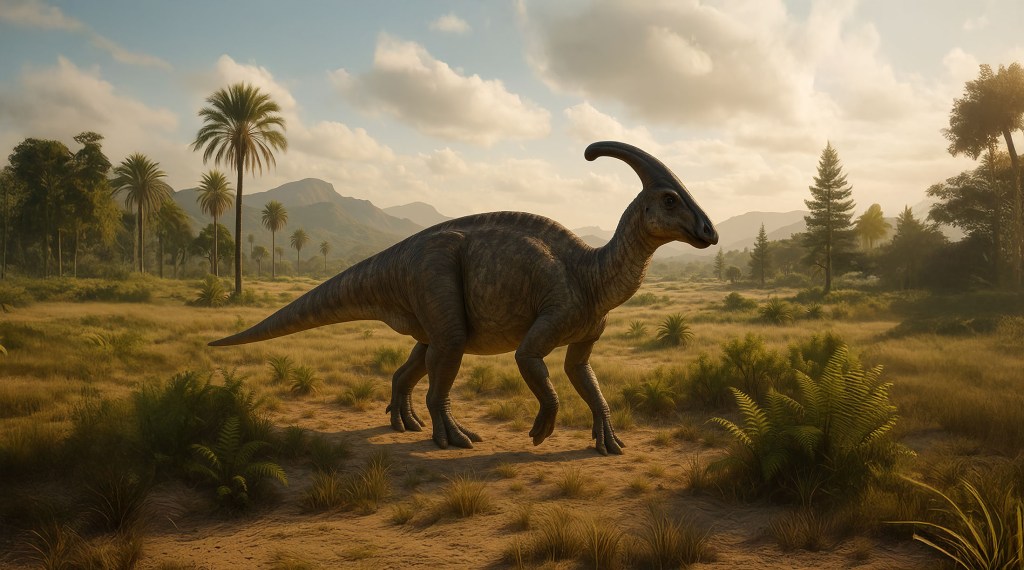
Hadrosaur on ancient California landscape. Hadrosaurs like this AI generated one are among the very few dinosaurs whose fossils have ever been found in California.

You’ve surely seen those dramatic museum displays: fearsome T-Rex skulls, triceratops horns, towering brachiosaur skeletons – tangible reminders of a world with giant animals that roamed our planet millions of years ago. Some states are rich in the fossils of ancient dinosaurs. Montana, Wyoming, Utah all have rich fossil records. But not California. Very few dinosaur fossils have ever been found in the Golden State.

But why? We’ve got Hollywood, Silicon Valley, lots of oil, and the Giant Redwoods, but where are our prehistoric dinosaur residents hiding?

To understand this prehistoric puzzle, we have to venture back into the geologic past, and also consider some unique aspects of California’s geographical and geologic evolution.

Dinosaurs were mostly present during the Mesozoic Era, from about 252 million to 66 million years ago. The Mesozoic is divided into three periods: the Triassic, Jurassic, and Cretaceous. The dinosaurs reign likely ended with a massive meteorite impact that caused a mass extinction, wiping out the dinosaurs and up to 80% of life on Earth.

(There’s a cool California story related to this discovery.)

While dinosaur fossils are found around the globe, their distribution is far from even. Fossilization itself is a relatively rare event that depends on several specific conditions. Generally, fossilization requires rapid burial to protect the remains from scavengers and environmental factors, as well as a lack of oxygen to slow down decay. Over time, minerals gradually replace organic material, preserving the structure and creating a fossil, but only a small fraction of organisms ever undergo this process.
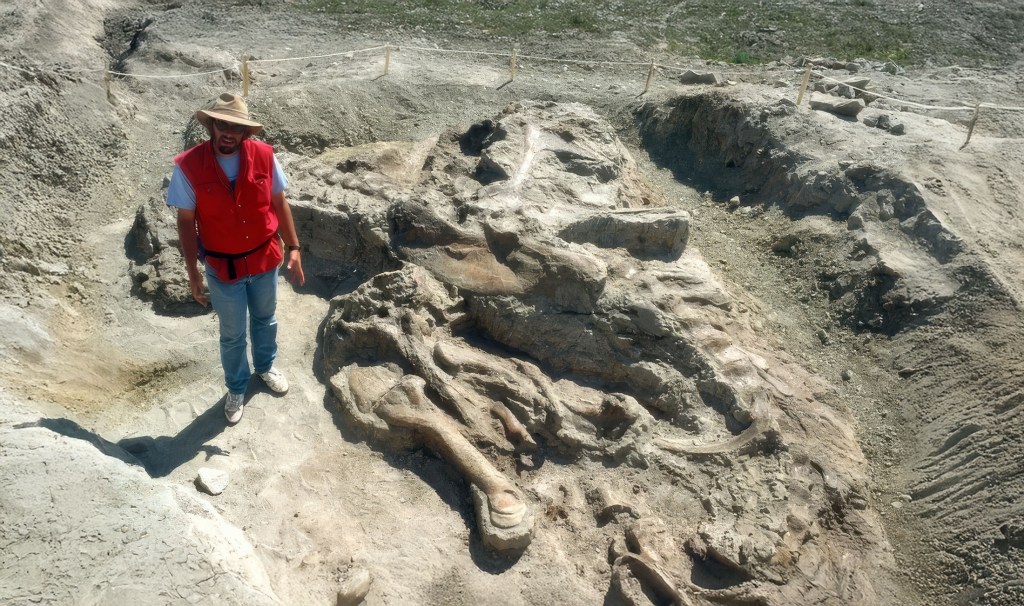
Jack Horner, Curator of Paleontology at Museum of the Rockies, provides scale for Tyrannosaurus rex fossils at excavation site near the Fort Peck Reservoir, Fort Peck, Mont., June 1990. (Photo: courtesy Museum of the Rockies

So, when a dinosaur died, its body needed to be quickly covered by sediment, like sand, mud, or volcanic ash. This prevented the remains from being scavenged or decomposed and allowed for the slow process of mineralization, where bones and teeth gradually turn to stone.

Even if these conditions were met, the resulting fossils had to survive millions of years of geologic processes, such as erosion, plate tectonics, and volcanic activity. To find dinosaur fossils today, the layers of rock in which they are embedded must be exposed at the Earth’s surface.

But now here’s where California’s unique geologic history comes into play. Most of the land we see today in California wasn’t even above sea level during the Mesozoic Era, instead it was submerged beneath the Pacific Ocean. Only small, scattered volcanic islands or bits of uplifted crust occasionally broke the surface, shaped by the intense movement of tectonic plates. That means there were no T. rexes or Stegosaurs ambling through Yosemite Valley…which, by the way, hadn’t even formed yet.

California’s active geology works against fossil preservation. The state sits on the boundary of tectonic plates (the Pacific and North American plates), resulting in significant geological activity including earthquakes, volcanic activity, mountain building, and erosion. These processes tend to destroy fossils rather than preserve them.
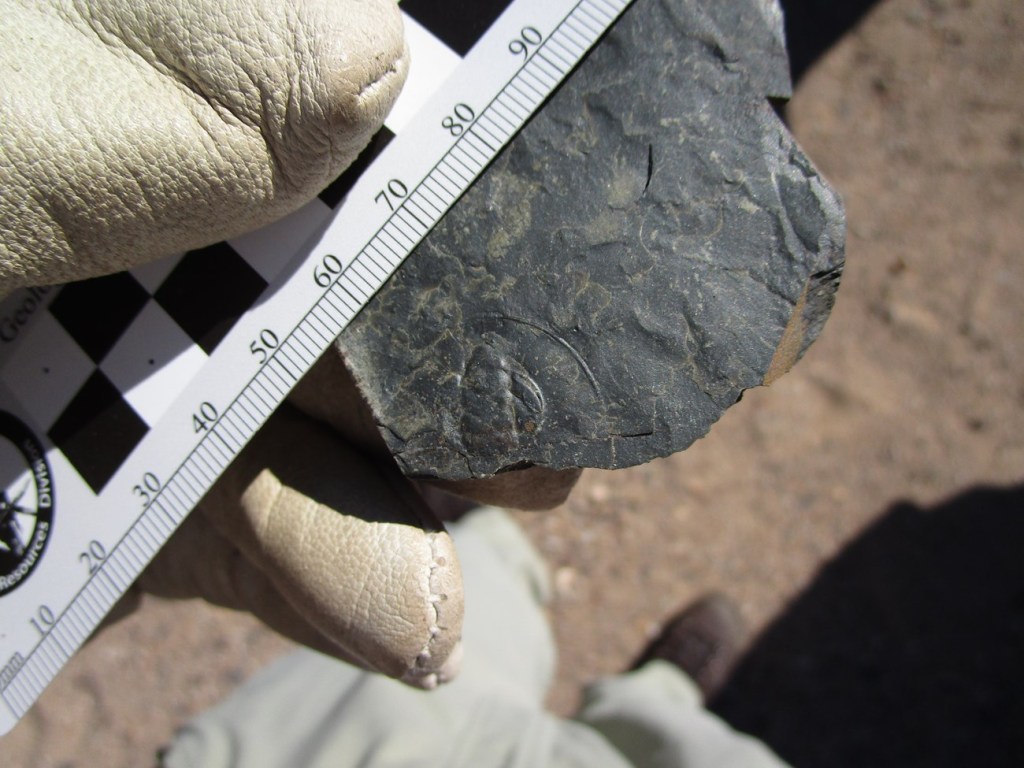
Head section of Olenellid trilobite in a Latham Shale slab. (Credit: National Park Service)

California, in the form we recognize today, is relatively new land that finally began rising out of the ocean near the end of the dinosaur age, as mountain ranges like the Sierra Nevada started to form and ancient sea basins uplifted. While these earlier conditions weren’t favorable for preserving land-dwelling dinosaur fossils, they did leave behind a rich marine fossil record, including ammonites, marine reptiles, and countless microfossils.

That said, there have been several discoveries of particular animals in California, representing animals much later in the dinosaur story. The majority of the dinosaur fossils found in California are the bones of hadrosaurs, duck-billed dinosaurs that lived during the Late Cretaceous period. These herbivorous dinosaurs thrived in what was once a coastal plain environment, and their remains have been uncovered in parts of California like the Point Loma Formation near San Diego, the Panoche Hills area near Fresno, and in Baja California.

Mosasaur artists rendering (Wikipedia)

While much of California was underwater during the Late Cretaceous, it was home to mosasaurs, large carnivorous marine reptiles that lived in oceans all over the world. These fearsome predators had long, streamlined bodies with powerful fins and jaws lined with sharp teeth. They hunted fish, ammonites, and possibly even other mosasaurs. Some species grew as big as modern whales and ruled the seas at the very end of the dinosaur age. Mosasaurs shared the world with creatures like Triceratops and Tyrannosaurus, but they vanished along with the dinosaurs during the mass extinction at the close of the Cretaceous. Today, paleontologists recognize mosasaur fossils by distinctive features on their skeletons, including unique muscle attachment scars and specialized bone knobs.

CALIFORNIA CURATED ART ON ETSY

Purchase stunning art prints of iconic California scenes.
Check out our Etsy store.

Back to hadrosaurs, however. There is the duck-billed plant-eater Augustynolophus, a member of the hadrosaur family, which recently was named the official state dinosaur of California. All known specimens of Augustynolophus have been found only in California, in particular the Moreno Formation in the San Joaquin Valley. Only two specimens have ever been found. The first fossil was uncovered in Fresno County in 1939. The second was discovered nearby in 1941 in San Benito County, according to the Natural History Museum of Los Angeles County website. Named after paleontologist William J. Morris and NHMLA patron Gretchen AugustynAugustynolophus remains one of few dinosaurs that have been discovered in the state.

Artists recreation of the hadrosaur Augustynolophus by the Natural History Museum of Los Angeles County

As mentioned above, the action of plate tectonics, the slow but powerful movements of sections of the Earth’s crust, has significantly affected California’s fossil record. Over millions of years, California has been built from pieces of the Earth’s crust that traveled here aboard tectonic plates.

Much of the rock we see at the surface today, especially along the coast and in the western mountains, arrived during the Cenozoic Era, after the age of dinosaurs. These younger rocks, while not bearing dinosaur fossils, have yielded rich caches of mammal fossils, including creatures like saber-toothed cats, mammoths, and dire wolves, which roamed California long after the dinosaurs.

In recent years, paleontologists have begun to find more dinosaur fossils in California, albeit still far fewer than in states like Utah, Montana, or Wyoming. These discoveries, often of marine animals or those who lived near the coast, are expanding our understanding the ancient Californian landscape.

Saber-toothed cat (State of California Capitol Museum)

In 2022, a remarkable fossil discovery was made during a construction project at San Pedro High School in Los Angeles. The excavation revealed a massive trove of marine fossils from the Miocene Epoch, dating back around 5 to 23 million years (so, not technically dinosaur fossils). Among the finds were the remains of ancient whales, sharks, fish, and mollusks, offering a rare glimpse into Southern California’s prehistoric past when the region was submerged under a warm, shallow sea. This discovery provided paleontologists with valuable insights into the marine ecosystems that once thrived in the area.

Among the fossils found under San Pedro High School are juvenile megalodon teeth, right, the great white shark’s ancestor; those from mako sharks, center; and from smaller sharks.
 (Wayne Bischoff / Envicom Corp.)

In addition to the marine fossils, a few terrestrial remains were also uncovered, hinting at a nearby coastline that once supported a variety of land animals. The discovery of such well-preserved fossils captured the attention of scientists and the local community alike, briefly turning the San Pedro High School campus into an unexpected center of scientific excitement. For students and residents, the find offered a cool reminder of the ancient worlds buried just beneath their everyday lives.

While California’s record of dinosaur fossils is relatively sparse, its mammal fossil record is nothing short of astonishing. Sites like the La Brea Tar Pits in Los Angeles preserve an incredible array of Ice Age mammals, from saber-toothed cats and mammoths to giant ground sloths. These fossils provide an unparalleled window into the vibrant ecosystems that thrived long after the age of dinosaurs ended, showcasing California’s rich and varied prehistoric past.

saber toothed cat
Saber-toothed cat fossil skeleton at the La Brea Tar Pits in Los Angeles (Photo: Erik Olsen)

While it might be tempting to feel a little disappointed that California doesn’t have an abundance of dinosaur fossils, that’s simply the way the landscape evolved. But there’s still plenty to celebrate. California’s unique geologic past has produced a vibrant fossil record of other ancient life — from towering prehistoric sequoias to tiny, long-lost plankton. Every fossil, big or small, offers a glimpse into the rich, complicated, and ever-changing story of this remarkable place we call California.

Genetic Guardians: The Asilomar Conference and its DNA Diplomacy

How a gathering of the world’s top genetic scientists helped create a roadmap for responsible biology.

Asilomar Conference Grounds Interior

In 1975, amidst the California coastal dunes of Asilomar near Monterey, a groundbreaking conference was held that would influence the direction of biotechnology and the course of scientific research for decades to come. This was the Asilomar Conference on Recombinant DNA, an assembly marked by both controversy and consensus. Its aim was not just to debate the scientific merits of a new and potentially groundbreaking technology but also to discuss its potential impacts on society and the environment. (Berg and others had met as Asilomar before in 1973, but that initial meeting resulted in little more than a realization there would have to be more discussion).

DNA

Among the seventy-five participants from sixteen countries were Paul Berg, a Nobel laureate, Maxine Singer, a prominent molecular biologist, and many others, each bringing their own perspective and expertise to the table. They recognized the vast potential that recombinant DNA (rDNA) technology, the process of combining DNA from different species, had to offer but were equally cognizant of the potential risks involved.

Berg was awarded the Nobel Prize in Chemistry for his work on nucleic acids, with a focus on recombinant DNA. Berg had first-hand experience with the transformative potential and risks of the technology. His ground-breaking experiments with recombinant DNA in 1972 and subsequent calls for a moratorium on such work had spurred the idea of the conference.

Maxine Singer, another significant contributor, was known for her advocacy for scientific responsibility and ethical considerations. She played a crucial role in drafting the initial letter to the journal “Science” advocating for a voluntary halt on certain types of rDNA research until its potential risks could be better understood. In 2002, Discover magazine recognized her as one of the 50 most important women in science.

CALIFORNIA CURATED ON ETSY

Purchase stunning art prints of iconic California scenes.
Check out our Etsy store.

The conference was the outcome of dramatic advances in molecular biology that took place mid-century. In the atomic age of the 1950s and ’60s, biology was not left behind in the wave of transformation. A pioneering blend of structural analysis, biochemical investigation, and informational decoding began to crack open the mystery of classical genetics. Central to this exploration was the realization that genes were crafted from DNA, and that this intricate molecular masterpiece held the blueprints for replication and protein synthesis.

Paul Berg (Photo: Stanford University)

This was a truth beautifully crystallized in the DNA model, a triumph of scientific collaboration that arose from the minds of James Watson, Francis Crick, and the often under-appreciated Rosalind Franklin. Their collective genius propelled a cascade of theoretical breakthroughs that nudged our understanding from mere observation to the brink of manipulation.

The crowning achievement of this era was the advent of recombinant DNA technology – a tool with the potential to rearrange life’s building blocks at our will. As the curtain lifted on this new stage of biological exploration, the promise and peril of our increasing control over life’s code started to unfurl.

Asilomar Conference Building

The ability to manipulate genes marked nothing less than a seismic shift in the realm of genetics. We had deciphered a new language. Now, it was incumbent upon us to assure ourselves and all others that we possessed the requisite responsibility to utilize it.

As Siddhartha Mukherjee put it in his excellent book The Gene: An Intimate History, “There is an illuminated moment in the development of a child when she grasps the recursiveness of language: just as thoughts can be used to generate words, she realizes, words can be used to generate thoughts. Recombinant DNA had made the language of genetics recursive.”

The conference served as a forum to deliberate the safety measures that would be needed to prevent accidental release of genetically modified organisms (GMOs) into the environment, the ethical considerations of manipulating the genetic code, and the potential implications for biological warfare. It was as much about the science as it was about its potential impact on society, mirroring aspects of the Pugwash Conferences that discussed nuclear arms control during the Cold War.

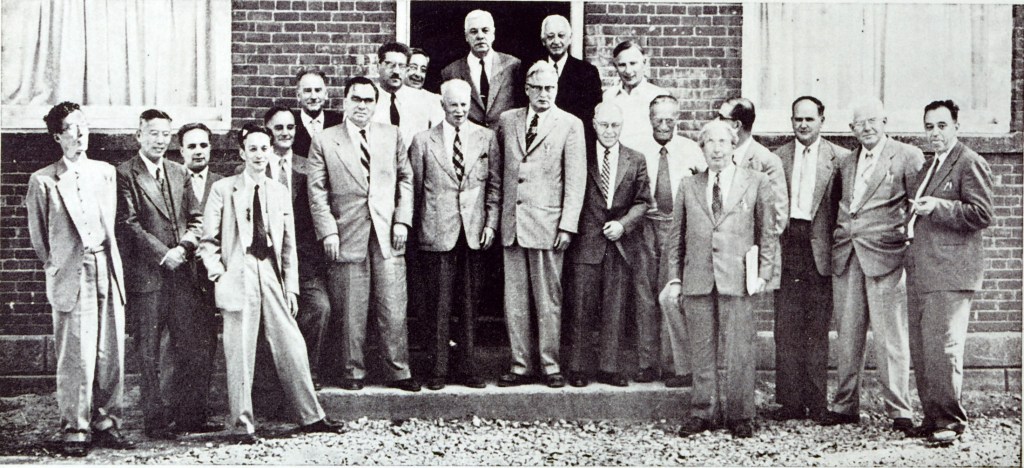
Participants in the First Pugwash Conference in 1957 in Pugwash, Nova Scotia, Canada. Notable figures included Joseph Rotblat, Bertrand Russell, Leo Szilard, Igor Tamm (pugwash.org)

Much like the Pugwash Conferences in Pugwash, Nova Scotia, Canada, brought together scientists from both sides of the Iron Curtain to discuss the implications of nuclear technology, the Asilomar Conference sought to bridge the divide between the proponents and critics of genetic engineering. Just as nuclear technology held the promise of unlimited power and the threat of unparalleled destruction, recombinant DNA offered the allure of potential solutions for numerous diseases and the specter of unforeseen consequences.

Another analogy might be the two-page letter written in August 1939 by Albert Einstein and Leo Szilard to alert President Roosevelt to the alarming possibility of a powerful war weapon in the making. A “new and important source of energy” had been discovered, Einstein wrote, through which “vast amounts of power . . . might be generated.” “This new phenomenon would also lead to the construction of bombs, and it is conceivable . . . that extremely powerful bombs of a new type may thus be constructed. A single bomb of this type, carried by boat and exploded in a port, might very well destroy the whole port.” 

The Einstein–Szilard letter

The Asilomar Conference reached a consensus that with proper containment measures, most rDNA experiments could be conducted safely. This resulted in a set of guidelines that differentiated experiments based on their potential biohazards and suggested appropriate containment measures. This framework, later adopted by the National Institutes of Health (NIH) in the United States, provided the bedrock for the safe and ethical use of rDNA technology.

The decisions made at Asilomar had far-reaching implications for both science and society. By promoting a culture of responsibility and precaution, the conference effectively prevented a public backlash against the nascent field of genetic engineering, allowing it to flourish. Moreover, it set a precedent for scientists to take an active role in the ethical and societal implications of their work.

“The most important lesson of Asilomar,” Berg said, “was to demonstrate that scientists were capable of self-governance.” Those accustomed to the “unfettered pursuit of research” would have to learn to fetter themselves.

CRISPR

Today, the spirit of Asilomar lives on in the field of synthetic biology and discussions around emerging technologies such as CRISPR and gene drives. It underscores the importance of scientific self-regulation, public dialogue, and transparent communication in navigating the ethical minefields that technological advancements often present.

The Asilomar Conference was a milestone in scientific history, a demonstration that scientists are not merely the creators of knowledge but also its stewards. It showed that with open dialogue, proactive self-regulation, and a deep sense of responsibility, we can both harness the promise of scientific breakthroughs and mitigate their potential risks.

Ghost of the West: The Tragic Story of the California Grizzly Bear’s Journey from Wilderness to State Flag

In the expansive and diverse landscape of California, many iconic animals are an integral part of the state’s reputation for natural beauty and untamed wilderness. Yet, one particular creature looms larger in the Californian narrative than many others – a species that has been extinct for nearly a century, but lives on as a powerful symbol: the California Grizzly Bear (Ursus arctos californicus).

The California Grizzly Bear, a subspecies of the Grizzly Bear, was a formidable presence in the wild terrains of California. This remarkable beast could grow up to 8 feet tall when standing on its hind legs, and adult males often weighed in excess of 2000 pounds. They sported a lustrous fur coat that varied in color from blond to dark brown, making them a striking, and sometimes terrifying, sight in the California wilderness.

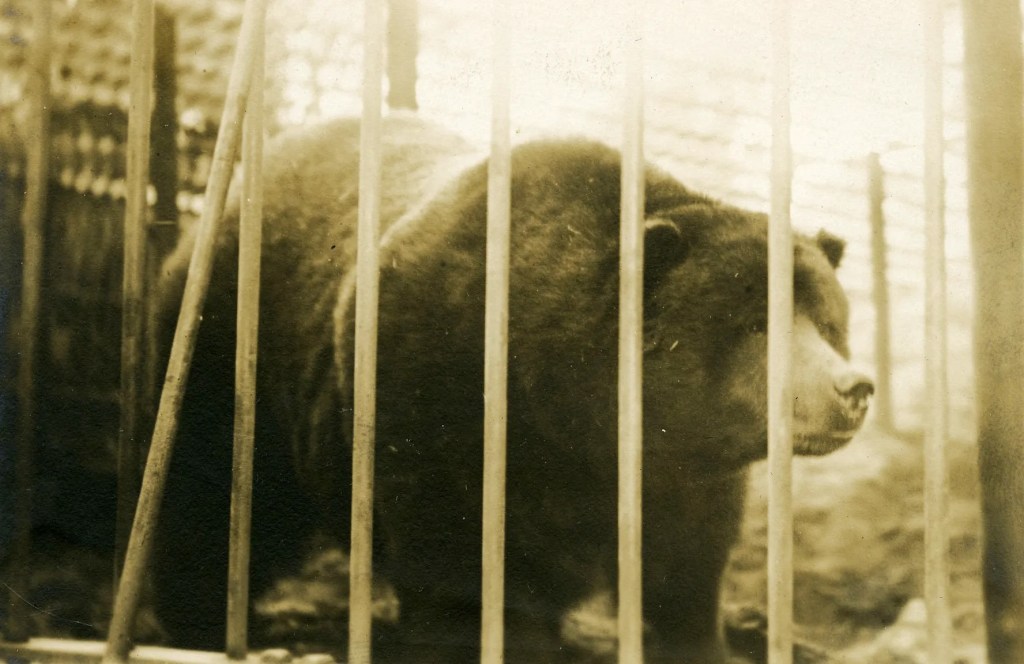
The famous California Grizzly “Monarch” was housed in an enclosure at Golden Gate Park around 1910.
It passed away the following year. (California State Archives)

The name “Grizzly” could have meant “grizzled,” a term referring to the animal’s golden and grey tips of hair. Or quite possibly it meant “fear-inspiring” (as a phonetic spelling of “grisly”). The naturalist George Ord formally classified it in 1815 as Ursus horribilis (“terrifying bear”).

This giant was an omnivore with a varied diet that changed with the seasons. The bear’s dietary staples included seeds, berries, roots, fish, and small mammals. But the California Grizzly was also known to take down larger prey, such as deer and elk, when the opportunity presented itself. The first recorded encounters with California grizzly bears are found in diaries kept by several members of the 1769 Portola expedition, the first European land exploration of the southern stretch of the West Coast. Several place names that include the Spanish word for bear (oso) trace their origins back to that first overland expedition. For example, the city of Los Osos

Prior to Spanish settlement in the second half of the 1700s, it is estimated that 10,000 grizzly bears inhabited what is today considered modern-day California.

CALIFORNIA CURATED ON ETSY

Purchase stunning art prints of iconic California scenes.
Check out our Etsy store.

Stories about the California Grizzly Bear echo throughout the annals of California’s history and literature. In his book “The Mountains of California,” renowned naturalist John Muir recounted his encounters with these awe-inspiring creatures, stating, “When I discovered him, he was standing in a narrow strip of meadow, and I was concealed behind a tree on the side of it.”

California State Flag featuring the California Grizzly

As enduring as any mountain or redwood forest, the legacy of the California Grizzly Bear persists in the emblem of the state flag.

The inclusion of the grizzly bear on the California flag traces its roots back to a revolt in 1846, before California was a part of the United States. At the time, California was under Mexican rule and a group of American settlers staged a revolt known as the Bear Flag Revolt, in which they declared California to be an independent republic.

The settlers needed a flag to represent their new republic, so they designed a simple flag that included a grizzly bear, a single red star (inspired by the lone star of Texas), and the words “California Republic.” The grizzly bear was chosen because it was seen as a powerful and formidable creature, much like the settlers saw themselves. It was intended to represent strength, unyielding resistance, and independence. The republic was short-lived, however, because soon after the Bear Flag was raised, the U.S. military began occupying California, which went on to join the union in 1850.

The man who drew the bear on the original flag, William L. Todd, was a cousin of Mary Todd Lincoln, the wife of Abraham Lincoln. Unfortunately, Todd was not a great artist, and his bear looked more like a pig, which led to some ridicule and a new design.

The original California state flag, as designed by William L. Todd

In 1911, the design of the flag was standardized, and the grizzly bear became the central figure that we recognize today. The bear depicted on the flag is named “Monarch” after the last California grizzly bear captured and held in captivity. Monarch was captured in 1889 by newspaper reporter Allan Kelly, at the behest of William Randolph Hearst. Monarch’s remaining life was not pleasant. He spent his remaining 22 years in captivity, and was moved to Woodwards Gardens in San Francisco, and then to the zoo at Golden Gate Park. After the bear’s death in 1911, it was mounted and preserved (ahem, poorly) at the Academy of Sciences at Golden Gate Park.

Monarch on display. (Wikipedia)

Despite its iconic status, the California Grizzly Bear could not withstand the pressures of expanding human civilization. The arrival of settlers during the California Gold Rush in the mid-19th century marked the beginning of the end for the bear. As the human population exploded, the bears’ natural habitats were destroyed to make way for towns and agriculture. Additionally, the bear, seen as a threat to livestock and a danger to humans, was hunted extensively.

By the early 20th century, the California Grizzly Bear was on the brink of extinction. The last confirmed sighting of a California grizzly bear occurred in 1924 within Sequoia National Park. This marked the end of the species’ presence in the state, following decades of hunting and habitat loss. Prior to this, the last known grizzly in Southern California was killed in 1916 near Sunland, in the San Fernando Valley. The California grizzly, once abundant throughout the region, was declared extinct in the wild by the mid-1920s. The California Grizzly was declared extinct in 1924.

In recent years, discussions have emerged about the feasibility of reintroducing grizzly bears to California. Research indicates that the state possesses substantial suitable habitat for grizzlies, particularly in the Sierra Nevada and other mountainous regions. Some studies suggest that California could support a population of approximately 500 grizzly bears. ​

In 2014, the Center for Biological Diversity filed a legal petition urging the U.S. Fish and Wildlife Service to expand grizzly bear recovery efforts across the American West, including California. The petition identified 110,000 square miles of potential grizzly habitat in areas such as the Sierra Nevada. However, the U.S. Fish and Wildlife Service rejected this petition, citing concerns about habitat suitability and potential human-bear conflicts. ​

California grizzly taxidermy specimen at the Santa Barbara Museum of Natural History (Vahe Martirosyan)

The following year, in 2015, the Center for Biological Diversity initiated a petition directed at the California state legislature to reintroduce grizzly bears to the state. This effort aimed to raise public awareness and encourage state officials to explore the possibility of reintroduction. Despite these initiatives, the California Department of Fish and Wildlife has expressed reservations, emphasizing the significant changes in the state’s landscape and human population density since the grizzly’s extirpation. Officials have highlighted the potential challenges of human-bear interactions, given California’s current population of nearly 40 million people.

The debate over reintroducing grizzly bears to California continues, balancing ecological restoration goals with concerns about human safety and land use. While the state retains areas that could potentially support grizzlies, the complexities of modern coexistence present significant challenges to reintroduction efforts.

A Deep Dive into the World of California’s Orcas: Majestic Ocean Predators

The marine ecosystem of California is both vibrant and diverse, boasting an array of majestic creatures, from the smallest microorganisms to the most massive marine mammals. One of the ocean’s most iconic inhabitants, the orca or killer whale (Orcinus orca), has attracted a significant amount of fascination and intrigue due to its striking appearance, formidable hunting abilities, complex social structure, and enduring presence in human culture.

In May, an uncommonly large grouping of orcas for Northern California — around 20 to 24 animals — was spotted by a whale-watching tour off the coast of San Francisco, likely gathered together to celebrate a successful hunt for sea lions or seals.

“I screamed ‘orca!’” Michael Pierson, an Oceanic Society naturalist leading the tour, told KTLA “those distinct dorsal finds poking out of the water.”

“It was really, really special,” Pierson said.

In June, a crowd of 30 killer whales met for a whale party in California’s Monterey Bay. Observers said they did belly flops into the water, slapped the waves with their flukes and spumed water from their blowholes, surprising marine biologists who had never seen the animals engage in such playful behavior for such a long period.

“Just like kids that are in a park, they get excited and play with the other kids and may be more active,” said Nancy Black, a marine biologist with Monterey Bay Whale Watch and the director of the California Killer Whale Project. “The little ones were wrestling and rolling like a bunch of puppies.”

An astonishing video last May showed a group of 30 orcas attacking two grey whales near Monterey. “We were able to observe the unique hunting strategies of the pods and the rarely seen defensive strategies of the two Grays,” Monterey Bay Whale Watch said. “The battered gray whales eventually made it to shallow water, and the orcas broke off.”

Black’s California Killer Whale Project has spent thirty years cataloging the killer whales that spend time in Monterey Bay. The group is able to recognize many of the whales by their spotted markings and the common tail notches.

The whales are rarely seen further south of Monterey, but another whale-watching tour off the coast of Southern California spotted a pod of killer whales last April, just off Newport Beach. The viewing included a rare glimpse of a three-year-old albino calf named Frosty due to its white appearance. (The white skin of the whale may not be albinism, per see. Several known conditions cause certain animals, including orcas, to look white. One condition is the extremely rare leucism, which is a genetic condition that causes the unusual coloring and the pigmentation of the skin to be paler. The other is Chediak-Higashi syndrome, an inheritable immune deficiency that can cause partial albinism.)

Jumping Orca

The term “killer whale” is a bit of a misnomer. Killer whales are actually dolphins and the largest species of the family Delphinidae. An adult male can typically grow up to 26 feet long and weigh up to 6 tons, while females are typically smaller. That said, The largest recorded male killer whale was 9.8 m (32 ft.) in length and weighed 10,000 kg (22,000 lbs.) The largest recorded female was 8.5 m (28 ft.) and weighed 7,500 kg (16,500 lbs.). They are known for their distinctive black and white coloration, with a dark dorsal side and a lighter ventral side. The tall, triangular dorsal fin of a male orca, which can reach heights of up to 6 feet, is a distinguishing characteristic.

Orcas are warm-blooded mammals, with an impressive ability to regulate their body temperature even in the cold waters off California’s coast. Their thick layer of blubber not only insulates them but also acts as a reservoir of energy when food is scarce.

Killer whales are top predators and display a diverse diet, although their food preference varies depending on the population. They are known to feed on fish, squids, seals, sea lions, and even other whales. In California waters, salmon, particularly Chinook, is a crucial part of their diet, but they also consume marine mammals such as sea lions and seals.

In orca societies, females generally choose the mates. Gestation lasts for about 17 months, with females giving birth every 3 to 10 years. The mother-calf bond in orcas is remarkably strong, often lasting for a lifetime. Orcas are known for their complex social structures, including matrilineal groups comprising grandmothers, mothers, and their offspring.

Killer whales are found in oceans worldwide, from the frigid Arctic and Antarctic regions to tropical seas. In California, they are most frequently sighted in Monterey Bay, the Gulf of the Farallones, and along the northern coast near the Oregon border. They migrate following their prey, and their appearance in California waters often aligns with the migration of gray whales, a favorite prey species.

Orcas have been popular in human culture, depicted in indigenous art, folklore, and mythology. Their image was catapulted into the modern mainstream by the 1993 film “Free Willy.” Yet, their captive display in marine parks like SeaWorld has sparked controversy and fueled a significant shift in public perception towards marine mammal captivity. The 2013 documentary “Blackfish” shed light on the stressors faced by these magnificent creatures in captivity, leading to policy changes and declining popularity of such exhibits.

Orcas are not typically dangerous to humans in the wild, and there are very few documented cases of wild orcas attacking people. However, tragic incidents involving captive orcas and their trainers have occurred, which some attribute to the psychological stress of captivity.

Despite their wide range and lack of natural predators, orcas face significant threats due to human activities. These include pollution, overfishing of their prey, habitat degradation, and noise disturbances. In some parts of the world, orcas are hunted for their meat and blubber.

A female resident orca whale breaches while swimming in Puget Sound near Bainbridge Island, Wash., as seen from a federally permitted research vessel. The National Marine Fisheries Service has finalized rules to expand the Southern Resident orca’s critical habitat from the Canadian border down to Point Sur, Calif., adding 15,910 square miles, (41,207 square kilometers) of foraging areas, river mouths and migratory pathways. (AP Photo/Elaine Thompson, File)

All killer whales are protected under the Marine Mammal Protection Act (MMPA) and the Southern Resident population is listed as an endangered species under the Endangered Species Act (ESA).

The majesty and power of the orca have undeniably earned it a special place in human imagination and culture. Yet, it’s crucial to understand and respect these creatures in their natural habitat, to learn from them, and to work towards preserving the marine ecosystems they call home. California’s orcas are a testament to the incredible life thriving in our oceans, a life we must commit to protecting.

The Desert Tortoise: A Resilient Survivor of the Mojave

a close-up of a desert tortoise

The Mojave Desert, a harsh yet strikingly beautiful landscape that extends across four western U.S. states, is home to an equally fascinating and resilient creature: the desert tortoise (Gopherus agassizii). This fascinating reptile has evolved to survive in one of the world’s most inhospitable environments, but today, it faces numerous threats that are jeopardizing its existence.

The desert tortoise is a tortoise species in the family Testudinidae native to the Mojave and Sonoran deserts. They are specially adapted to withstand the extreme conditions of their desert habitat. Desert tortoises can tolerate water, salt, and energy imbalances on a daily basis, which increases their lifespans. On average, adult desert tortoises measure between 10 to 14 inches in shell length and weigh from 8 to 15 pounds. They have a high-domed shell, typically brownish in color, which serves as protection from predators. Their strong, stocky limbs are adapted for digging, an essential behavior for both foraging and creating burrows for shelter.

One of the desert tortoise’s most fascinating adaptations is its ability to store water. They have a large urinary bladder that can store over 40% of the tortoise’s body weight in water, urea, uric acid, and nitrogenous wastes. During the hot, dry summer months, this stored water can be reabsorbed back into the tortoise’s system, effectively allowing them to survive up to a year without access to fresh water.

a close-up of a desert tortoise

Desert tortoises are a testament to survival, with their lineage dating back 15 to 20 million years. They are primarily herbivorous, with a diet consisting of a variety of desert grasses, herbs, and wildflowers, along with the occasional consumption of insects and new growth of cacti.

Tortoises spend much of their lives in burrows, which provide refuge from extreme heat, cold, and predators. They are most active during the cooler hours of the day, and their activity pattern shifts with the changing seasons. Mating typically occurs in the spring and fall, with females laying a clutch of up to 15 eggs, though the survival rate of these hatchlings is low due to predation and harsh environmental conditions.

In 2011, on the basis of DNA, geographic, and behavioral differences between desert tortoises east and west of the Colorado River, it was decided that two species of desert tortoises exist: Agassiz’s desert tortoise (Gopherus agassizii) and Morafka’s desert tortoise (Gopherus morafkai). The new species name is in honor of the late Professor David Joseph Morafka of California State University, Dominguez Hills.

Desert tortoises spend 95% of their lives in their burrow. Seeing them on the landscape is a rare treat.

Estimates suggest that the population of desert tortoises has plummeted by as much as 90% since the mid-20th century. This decline is due to a variety of factors, including habitat loss from urban development and agriculture, road mortality, predation by dogs and other introduced species, and disease. In particular, upper respiratory tract disease (URTD), caused by the bacterium Mycoplasma agassizii, has been responsible for significant mortality.

Recognizing the threats faced by the desert tortoise, the U.S. Fish and Wildlife Service listed the species as threatened under the Endangered Species Act in 1990. This has led to numerous conservation efforts aimed at preserving the desert tortoise and its habitat.

Habitat conservation is a key focus, with several Desert Wildlife Management Areas established to protect crucial tortoise habitats. Efforts are also being made to reduce the impact of roads and highways on tortoise populations, such as the construction of underpasses and fencing along known tortoise crossing areas.

Education and public engagement are also critical components of conservation efforts. Initiatives are underway to educate the public about the desert tortoise and the importance of not removing them from their natural environment, a practice that can lead to population decline and the spread of disease.

Over the past few decades, desert tortoise populations have declined significantly, with estimates suggesting a staggering 90% reduction in some areas of the Mojave Desert. This decline has led to the desert tortoise being listed as “threatened” under the U.S. Endangered Species Act.

Desert tortoise facts
Lifespan: 30-50 years, but some can live to be over 80 years old
Weight: 8-15 pounds (3.5-7 kilograms)
Length: 9-15 inches (23-38 centimeters)
Range: Only found in the Mojave Desert in California, Nevada, Arizona, and Utah
Conservation status: Listed as threatened under the Endangered Species Act

Nature Conservancy

Numerous factors contribute to this decline, including habitat loss due to urbanization, off-road vehicle use, and livestock grazing. Additionally, the introduction of non-native predators, such as the common raven, has led to increased predation on juvenile tortoises.

Conservation organizations, government agencies, and local communities have come together to implement various strategies aimed at protecting and preserving the desert tortoise. These efforts include habitat restoration, fencing off sensitive areas, and developing educational programs to raise awareness about the species.

One such initiative is the “Adopt-a-Tortoise” program, which allows individuals and organizations to symbolically adopt a tortoise, with the proceeds going towards conservation efforts. Another important initiative is the “Head Start” program, which raises hatchlings in captivity until they reach a size less vulnerable to predators before releasing them into the wild.

California’s Common, but Lovely, Birds: the House Finch

House Finch

California is home to an impressive number of bird species, with over 700 recorded throughout the state. From the rocky shores of the Pacific coast to the towering peaks of the Sierra Nevada, California’s diverse landscapes provide habitats for a wide range of birdlife. Many of these species are endemic to California, meaning they are found nowhere else in the world. The state’s unique geography and climate, as well as its location on the Pacific Flyway migration route, make it a haven for birdwatchers and ornithologists alike.

One of the most common birds in California, probably familiar to anyone whether a backyard enthusiast or committed ornithologist is the house finch. The house finch (Haemorhous mexicanus) is a small passerine (perching) bird that is native to western North America, including California. This bird is widely known for its vibrant red plumage and melodic song, making it a beloved sight and sound in backyards across the state.

House finches are a member of the finch family, Fringillidae, which includes all true finches. They are thought to have originated from the deserts of Mexico and the southwestern United States. Their range has since expanded to cover much of North America.

Finches are famously associated with Charles Darwin and his theory of evolution by natural selection. During his voyage on the HMS Beagle, Darwin observed finches on the Galápagos Islands, noting the significant variations in their beak shapes and sizes. These differences were adaptations to the specific diets available on their respective islands. Darwin’s study of these finches helped him develop the concept that species evolve over time through natural selection, where advantageous traits become more common in a population. This observation provided crucial evidence for his groundbreaking work, “On the Origin of Species.”

House finches are small birds, measuring about 5-6 inches in length and weighing between 0.6-1.0 ounces. They have a stout, conical beak that is adapted for cracking open seeds, their primary source of food. The male house finch is easily recognizable by its bright red head and breast, while the female has a duller brownish-gray coloration. However, in some areas, there are color variations in the males, such as yellow, orange, or even a rose-pink color.

House finches primarily feed on seeds, including those from sunflowers, dandelions, thistles, and various grasses. They are also known to eat some fruits and insects, particularly during the breeding season when protein is essential for the growth of their young. House finches have a unique feeding habit in that they use their tongue to extract seeds from the seed capsules, which they then crush with their beaks.

House finches are monogamous and form pair bonds during the breeding season, which typically starts in late winter and lasts through early summer. The male house finch will sing and perform courtship displays to attract a mate, often presenting the female with a gift of food. Once the pair has formed, they will work together to build a small nest using grass, twigs, and other plant materials.

House finches are a common sight in backyards, parks, and other areas with ample vegetation. They are often seen perched on wires, branches, or feeders, where they will socialize with other birds, including other finches, sparrows, and juncos. House finches are also known for their acrobatic abilities, often clinging to branches and twigs while feeding.

In addition to their acrobatics, house finches are known for their melodic song. Males will sing throughout the day, particularly during the breeding season, to attract mates and establish territories. The song of the house finch is a warbling melody that can be heard from a considerable distance.

House finch (Erik Olsen)

Research has shown that male house finches learn their songs from adult males, typically their fathers, during a critical period in their early life. This learning process is akin to how humans acquire language, involving both genetic predisposition and environmental influences. A study published in the journal “Animal Behaviour” found that house finch songs are composed of a variety of syllables that can be combined in numerous ways, leading to a wide range of unique songs within populations.

Interestingly, these songs play a crucial role in mate attraction and territorial defense. Females tend to prefer males with more complex and diverse songs, which are indicative of the male’s overall health and genetic fitness. Moreover, regional dialects have been observed, with finches in different geographic locations exhibiting distinct song patterns. This geographic variation is believed to result from both cultural transmission and genetic drift, making the house finch’s song an excellent model for studying the evolution of communication and social behavior in birds.

House finch painting

In California, house finches are a common sight and have adapted well to urban and suburban environments. They are often attracted to bird feeders, particularly those filled with sunflower seeds, which they can easily crack open with their beaks.

The house finch’s vibrant plumage, melodic song, and acrobatic abilities make it a joy to observe in the wild or in our own backyards. As with many bird species, it is essential that we continue to protect their habitats and ensure that they have access to adequate food sources to thrive.

Ten Little-Known Facts About California

Giant Sequoia

California is known for its sunny beaches, bustling cities, and iconic landmarks such as the Golden Gate Bridge and Hollywood sign. However, the state is also home to a wealth of scientific discoveries and phenomena that are not as well-known. From ancient fossils to cutting-edge research, California has a lot to offer in the realm of science. In this list, we’ll explore ten of the most fascinating scientific things that you probably didn’t know about California. Get ready to be amazed by the natural wonders and innovative research that make this state such a unique and exciting place for science enthusiasts.

  1. California is home to the tallest tree in the world, a coastal redwood named Hyperion that measures 379.7 feet (115.7 meters) in height. The state is also home to the largest (by volume) tree, named General Sherman in Sequoia National Park. General Sherman is 274.9 feet high and has a diameter at its base of 36 feet, giving it a circumference of 113 feet. General Sherman’s estimated volume is around 52,508 cubic feet (1,487 cubic meters), which would correspond to an estimated weight of around 2.7 million pounds.
  2. The Salton Sea, a large inland lake in southern California, is actually an accidental body of water that was created by a flood in 1905 when Colorado River floodwater breached an irrigation canal being constructed in the Imperial Valley and flowed into the Salton Sink.
  3. The San Andreas Fault, the state’s best-known and most dangerous fault that runs through the middle of California and to the coast, moves about 2 inches (5 centimeters) per year (or, so they say, the speed that a fingernail grows).
  4. The state of California has more national parks than any other state in the US, with nine in total. Among them is one of the crown jewels of the National Park system: Yosemite National Park.
  5. California is one of the only places in the world where you can find naturally occurring asphalt, at the La Brea Tar Pits in Los Angeles. 
  6. The oldest living organism on Earth, a bristlecone pine tree named Methuselah, can be found in the White Mountains of California and is over 4,800 years old.
  7. The Monterey Bay Aquarium in Monterey, California was the first aquarium to successfully keep a great white shark in captivity for more than 16 days. The first great white that the aquarium tried to display died after 11 days in 1984 because it would not eat.
  8. The Joshua Tree, a type of yucca plant (NOT a tree) found in the Mojave Desert, is named after the biblical figure Joshua because of its outstretched branches that resemble a person reaching up to the sky in prayer.
  9. The California grizzly bear, which appears on the state flag, went extinct in the early 1900s due to hunting and habitat loss. The last California grizzly was seen near Yosemite in 1924, going extinct after decades of hunting. Fossils of the California grizzly can be seen at the La Brea tar Pits.  
  10. The California Institute of Technology, also known as Caltech, is one of the world’s leading scientific research institutions and has produced 39 Nobel laureates, more than any other university in the world.