How Citrus Transformed California

A Look into the Roots and Ripened Impact of the Citrus Industry

You might associate California with Hollywood, Silicon Valley, or even its stunning coastline. However, a significant cornerstone in the Golden State’s development, prosperity, and identity was quite literally golden: zesty, golden orbs of citrus fruit. California’s citrus industry had a profound impact on the state’s economic, labor, and global landscape, particularly within Southern California. 

San Gabriel Mission

The citrus industry in California has surprisingly humble beginnings. Spanish missionaries brought orange seeds to California in 1769. The San Gabriel Mission was established in 1771 and had extensive gardens that included a variety of fruits and vegetables. The seeds for the Mission’s citrus trees are believed to have come from the Spanish missions in Baja California, Mexico, which in turn got them from the Spanish mainland. The original citrus varieties in Spain were likely brought over from Asia, as citrus trees are native to South Asia and the East Indies. 

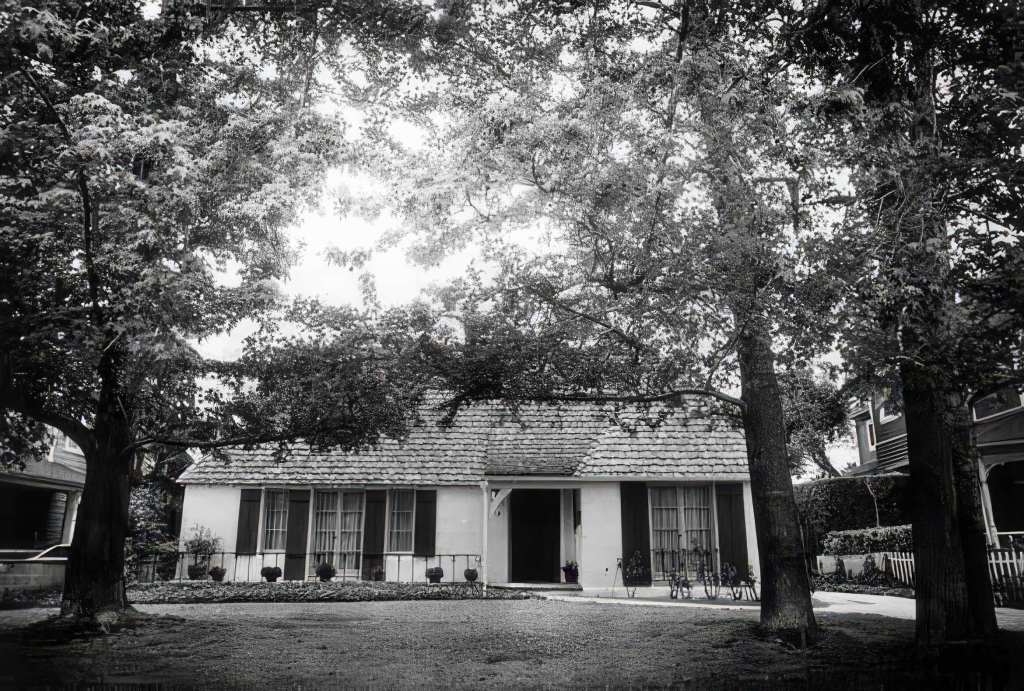
But the true beginning of what became a multibillion-dollar industry can be attributed to one man. In 1841, William Wolfskill, an American-Mexican pioneer, cowboy, and agronomist in Los Angeles, planted the first commercial orange grove on a 100-acre ranch near what is now downtown Los Angeles. Wolfskill, a frontier entrepreneur, had initially tried his hand at vineyards, but saw potential in the rugged, fertile Californian soil for more than just grapes.

William Wolfskill

Obtaining his initial seeds from the orchards of the San Gabriel Mission, Wolfskill’s citrus venture started small. However, his methodical approach to farming and his adoption of innovative irrigation techniques allowed his grove to flourish in the Mediterranean-like climate of Southern California. Wolfskill’s oranges were renowned for their quality, gaining him a reputation that extended beyond the borders of California.

Known as the father of the California citrus industry, his foresight and innovation set the stage for the development of an industry that became a cornerstone of the state’s economy and identity. Wolfskill’s real legacy lies in his profound impact on California’s agricultural landscape. When William Wolfskill passed away in Los Angeles in 1866, citrus was booming, but it was mostly a local industry. 

Valencia Oranges

The real turning point for the Californian citrus industry was the completion of the transcontinental railroad in 1869. The railroad’s establishment allowed for the efficient transportation of his citrus crops to markets in the east, bringing the sweet, sun-kissed taste of California’s oranges to consumers across the country. This access to nationwide markets transformed local citrus farming into a profitable commercial industry.

The citrus boom in California reached its zenith in the late 19th and early 20th century. It was during this period that the citrus industry became a pivotal part of the state’s economy and helped shape its cultural identity. The industry’s growth was inextricably tied to specific regions, primarily Southern California, including Riverside, Los Angeles, and Orange counties.

Orange groves cover the Southern California landscape early in the 20th century.

Riverside, the city in which the iconic parent Washington navel orange tree still stands, was the epicenter of the navel orange industry. These sweet, seedless fruits were a hit across the nation, revolutionizing the American diet and transforming Riverside from a small town to a thriving city.

Characterized by its bright orange skin, seedless interior, and distinctive “navel” at the blossom end, the navel orange is a variety synonymous with California. But its journey to the Golden State began thousands of miles away, in the far-off city of Bahia, Brazil.

The navel orange is a natural mutation that occurred in a Selecta orange tree, a variety of sweet orange, in the early 19th century in Bahia. This mutation caused a secondary fruit to develop at the base of the primary fruit, giving the appearance of a ‘navel’. The resultant fruit was larger, sweeter, and seedless, distinguishing it from other orange varieties.

Navel Orange

But the navel orange is not the only variety that came to define California citrus. Orange County, aptly named, was a crucial player in the citrus game, its groves sprawling over thousands of acres. At one point, Orange County was the largest producer of Valencia oranges in the world.

Valencia oranges, named for the city of Valencia in Spain, are believed to have originally come from Southeast Asia, just like all other citrus varieties. Citrus trees are native to regions including present-day China, India, Myanmar, and surrounding countries. Over centuries, traders and explorers disseminated citrus fruits across the globe.

The Valencia orange was brought to the United States in the mid-19th century. In California, they found a new home in the perfect growing conditions of Southern California. The peak ripening season of Valencia oranges โ€” late spring through mid-summer โ€” complemented that of the navel oranges, which ripen in the winter. This made Valencia oranges an appealing addition for California citrus growers as they could provide fresh oranges to markets year-round by growing both varieties.

Los Angeles County, although now synonymous with the urban sprawl of the film industry, was once carpeted with citrus groves. The rolling, sun-dappled orchards were integral to the local economy and became an iconic image of the Golden State.

But the growth of the citrus industry brought about significant labor issues. As the demand for citrus surged, so did the need for labor. Initially, much of the work was done by Chinese immigrants. However, with the implementation of the Chinese Exclusion Act of 1882, growers turned to Japanese immigrants, then later to Mexican immigrants.

Working conditions in the citrus fields were often harsh, leading to numerous labor disputes and strikes, notably the Citrus Strike of 1936 by Mexican workers in Tulare County. The citrus industry thus played a significant role in the evolution of labor rights and immigration policy in California and the United States more broadly.

The golden fruits of California did not just revolutionize the state but also had far-reaching global impacts. California’s citrus industry significantly influenced agricultural practices worldwide. Its innovative irrigation systems, pest control methods, and marketing strategies were adopted by many other countries.

However, the industry also faced challenges on the global stage. Competition from other citrus-growing regions, like Florida and countries in the Mediterranean, put pressure on California’s growers. Additionally, changes in international trade policies and global consumer preferences continually shaped the trajectory of the state’s citrus industry.

Today, while the landscape has changed with urbanization and competition, California’s citrus industry remains a significant part of the state’s agriculture, generating billions of dollars annually. Moreover, the citrus industry’s historical and cultural impact is undeniably intertwined with California’s identity. Its echoes can still be seen in the names of places, like Orange County, or tasted in the sweet tang of a California navel orange.

The story of citrus in California is a tale of transformation, from a single orange grove in Los Angeles to a global industry that rippled through the state’s economy, workforce, and identity. It’s a testament to the power of agriculture to shape a region and its people and serves as a vivid reminder of California’s golden past.

California Citrus State Historical Park

Today, California Citrus State Historical Park preserves some of the rapidly vanishing cultural landscape of the citrus industry and tells the story of this industry’s role in the history and development of California. Furthermore, it recaptures the time when “Citrus was King” in California, recognizing the importance of the citrus industry in southern California.

Hey there! If you enjoy California Curated, consider donating the price of a coffee to support its creation!

The Enduring Legacy of Hydraulic Mining in California

While the gold rush was an incredible boon for California, hydraulic miningโ€™s environmental tollโ€”eroded hillsides and choked riversโ€”remains a stark reminder of the cost of progress.

โ€œEarth provides enough to satisfy every manโ€™s needs, but not every manโ€™s greed.โ€ โ€” Mahatma Gandhi

โ€œGreed is a bottomless pit which exhausts the person in an endless effort to satisfy the need without ever reaching satisfaction.โ€ โ€” Erich Fromm

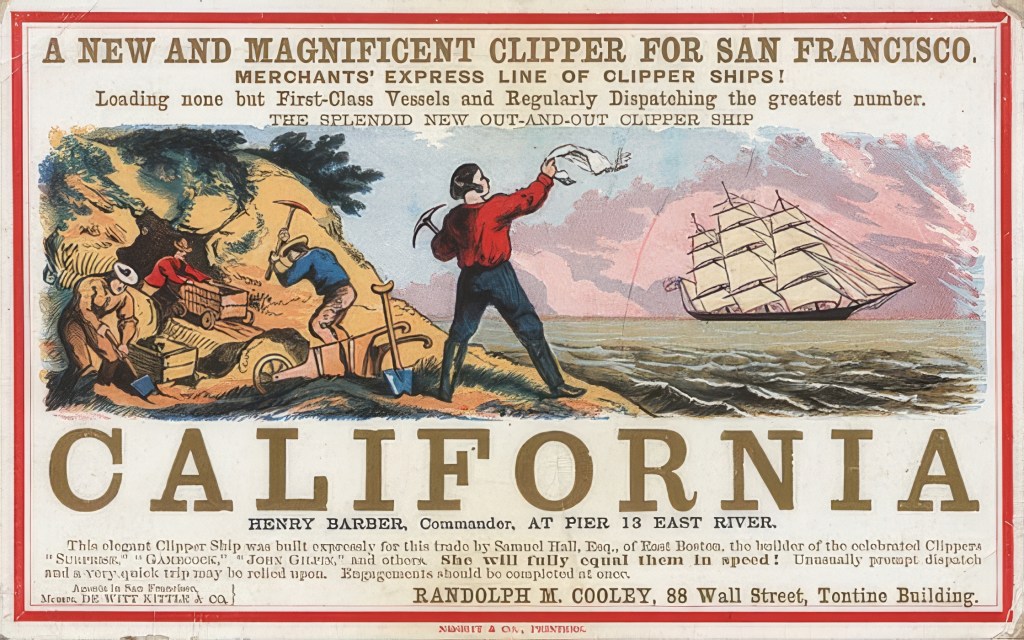
It was the tail end of the 19th century, a time of gunslingers and gold-diggers, of pioneers venturing forth into the vast expanse of the American West. The year was 1853, and the place was California. From the bustling seaports of San Francisco to the rugged mining towns dotting the Sierra Nevada foothills, the Golden State was witnessing an unprecedented phenomenon. This was the era of the California Gold Rush, a frenzy of ambition, adventure, and avarice that transformed the state and the nation.

The Gold Rush began in 1848 when gold nuggets were discovered at Sutter’s Mill in Coloma, near Sacramento. Soon after, miners from around the world rushed to California, lured by the promise of riches. But as the easily accessible placer deposits in river beds were quickly exhausted, the miners were forced to develop new, more efficient methods of extraction to mine the deeper and harder-to-reach gold seams. Thus, hydraulic mining – a form of mining that utilized high-pressure water jets to wash away soil and rock, revealing the precious metal underneath – was born.

CALIFORNIA CURATED ART ON ETSY

Purchase stunning art prints of iconic California scenes.
Check out our Etsy store.

Enter: The Innovators

Hydraulic mining in California is inextricably linked with two significant figures: Edward E. Matteson, an entrepreneurial miner, and Anthony Chabot, a young businessman turned water systems innovator. Matteson is credited as the originator of hydraulic mining in 1853, having invented the process out of necessity while trying to extract gold from the gravels of Nevada County, in a site later known as “Blue Tent.”

Matteson’s invention involved directing a powerful stream of water from a makeshift canvas hose onto a hillside, effectively washing away the dirt and gravel to expose the gold underneath. This crude but effective method marked a turning point in gold mining, facilitating the extraction of gold from areas previously deemed unprofitable or inaccessible.

University of California

However, it was Anthony Chabot who took Matteson’s idea and turned it into an industrial-scale operation. Chabot, known as the “Water King,” was a successful entrepreneur who had established multiple water systems in California. Intrigued by Matteson’s invention, he developed the hydraulic nozzle, or “monitor,” in 1855. With this high-pressure water cannon, miners could erode whole mountainsides in their search for gold, making hydraulic mining the most effective and popular method of gold extraction at that time.

The profits from hydraulic mining were enormous. As a result, the state economy boomed and many jobs were created. From 1860 to 1880, California’s mining operations yielded $170 million. San Francisco had more millionaires than New York or Boston. 

The Scourge of the Sierra

From the mid-1850s to the mid-1880s, hydraulic mining reigned supreme in California, especially in the counties of Nevada, Placer, and Yuba, where extensive networks of canals, reservoirs, and sluices were constructed to support the practice. Hydraulic mines became colossal operations, employing hundreds of workers and dislodging millions of tons of earth annually. But this progress came at a tremendous cost to the environment.

California State Library

The enormous water pressure used in hydraulic mining dislodged vast quantities of soil, rock, and debris, collectively referred to as “slickens.” These slickens were often laden with mercury, a neurotoxin used extensively in gold amalgamation processes. Water cannons, such as the one above, were used to wash away earth and mountains to access gold. In the early days of the gold rush, these cannons were small with canvas hoses, but more force was eventually needed. By the 1870s these cannons were anywhere from 13 to 18 feet long and could blast water 500 feet. The rivers of Northern California became choked with these toxic tailings, devastating local ecosystems.

 “I am at a loss to illustrate the tremendous force with which the water is projected from the pipes. The miners assert that they can throw a stream four hundred feet into the air. … Those streams directed upon an ordinary wooden building would speedily unroof and demolish it,” wrote a reporter for the San Francisco Daily Alta.

One notable example is the Yuba River. In its heyday, hydraulic mining along the Yuba generated approximately 685 million cubic yards of debris, enough to bury Manhattan under ten feet of waste. Much of this sediment still remains, hindering river navigation and threatening local wildlife to this day. The Feather and American rivers also bear the scars of this destructive practice.

The Aftermath and Lingering Effects

By the 1870s, the catastrophic consequences of hydraulic mining were impossible to ignore. Downstream communities, most notably Marysville and Sacramento, suffered frequent and devastating floods exacerbated by mining debris. Agricultural lands were rendered useless by layers of sterile slickens, and fish populations in rivers dwindled alarmingly. The long-term health impacts of widespread mercury contamination are still being understood today.

The tension between the mining industry and the downstream farming communities ultimately culminated in the landmark case of Woodruff vs. North Bloomfield Gravel Mining Company in 1884. This case, presided over by Judge Lorenzo Sawyer, resulted in the famous “Sawyer Decision,” which effectively banned hydraulic mining due to its destructive environmental impact.

But while the Sawyer Decision marked the end of large-scale hydraulic mining, the scars left on the landscape of Northern California are far from healed. The evidence of this destruction is still visible in the stark, eroded hillsides and vast debris fields of Malakoff Diggins State Historic Park in Nevada County, once the site of California’s largest hydraulic mine.

Wikipedia

Modern research is shedding new light on the enduring impacts of hydraulic mining. A study published in 2022 by the University of California, Davis, found that the mercury used in 19th-century mining operations has had far-reaching effects on the state’s ecosystems. Scientists discovered elevated levels of the neurotoxin in local wildlife, suggesting that the legacy of the Gold Rush continues to impact California’s environment and its inhabitants.

The Sierra Fund has introduced the Resilient Sierra Initiative to address the long-term impacts of mining in the Sierra Nevada. Their research estimates that around 26 million cubic yards of sediment remain trapped in reservoirs, which could be released as the climate changes, potentially increasing the frequency and severity of downstream flooding.

CALIFORNIA CURATED ART ON ETSY

Purchase stunning art prints of iconic California scenes.
Check out our Etsy store.

The advent of hydraulic mining during the California Gold Rush was undoubtedly a milestone in mining technology. It enabled the extraction of enormous amounts of gold and facilitated the growth and development of California. However, this innovation came with a heavy price. The ecological damage caused by hydraulic mining has left indelible marks on the landscape and continues to influence the state’s environment and communities.

Throughout history, humanity has often pursued wealth at the expense of the natural world. While some impacts are minor and fade over time, far too often, we cross a clear line without pausing to reflect on the damage weโ€™re inflicting. Hydraulic mining in California serves as a powerful reminder: that line exists.

More information: KQED Documentary

The return of Lake Tulare – once the largest lake West of the Mississippi

The massive atmospheric snowstorms that pummeled California this year have been a boon to ski slopes throughout the Sierra Nevada mountains. But the rains have had an unusual result: The torrents of rain have drowned thousands of acres of farmland in Californiaโ€™s Central Valley and resuscitated a lake that vanished decades ago. Standing in an area that was dry as a bone just a year ago, right now, as far as the eye can see, water stretches to the horizon. It has covered roads, and crop fields, and submerged homes and buildings.

The lake is called Lake Tulare.

Lake Tulare, once the largest freshwater lake west of the Mississippi River, is a compelling example of the delicate balance between human activity and natural forces. Located east of Interstate 5 from Kettleman City, Lake Tulare was also the second-largest freshwater lake in the United States, based on surface area. At its peak, Lake Tulare covered an area of nearly 700 square miles and was a critical component of the region’s complex hydrological system.

The lake’s disappearance over a century ago can be traced back to multiple factors, including agricultural development, water diversion, and climate. Fed by the Kaweah, Tule, and Kern Rivers, the lake supported a vibrant ecosystem teeming with fish, waterfowl, and other wildlife. Native American tribes, including the Yokuts, relied on the lake’s abundant resources for sustenance and trade.

Lake Tulare began to shrink in the late 19th century as European settlers moved into the area and agriculture took hold. The burgeoning need for water to support the growing agricultural industry led to the construction of canals and dams, which diverted water away from the lake. As a result, the lake’s surface area shrank rapidly, and by the early 20th century, it had disappeared almost entirely.

Spanish captain Pedro Fages led the first excursions to the southern San Joaquin Valley in 1773 and wrote this account:

This plain will exceed one hundred and twenty leagues in length and in parts is twenty, fifteen and even less in width. It is all a labyrinth of lakes and tulares, and the river San Francisco, divided into several branches, winding in the middle of the plain, now enters and now flows out of the lakes, until very near to the place where it enters into the estuary of the river.

Pedro Fages
Fulvous whistling-duck

Today alfalfa is grown on the southern basin and there is invasive saltcedar, a common species that has also impacted regions of the Colorado River Delta. Animal life includes the Buena Vista Lake shrew (Sorex ornatus relictus), the southwestern pond turtle (Actinemys pallida), fulvous whistling-duck (Dendrocygna bicolor), and the California red-legged frog (Rana aurora draytonii). Other species native or present in the area are sandhill cranes and tricolored blackbird.

But what is the future of Lake Tulare?

Last summer, UCLA climate scientist Dan Swain published a paper that predicted more intense weather patterns on a gradually warming planet. He told CNN that the worst-case scenario of relentless atmospheric rivers could actually make Tulare Lake permanent again, turning it into a vast, inland sea.

We’ll have to wait and see.

And in the meantime, check ut this recent before and after satellite image of the central valley and Lake Tulare.

California’s Common, but Lovely, Birds: the House Finch

House Finch

California is home to an impressive number of bird species, with over 700 recorded throughout the state. From the rocky shores of the Pacific coast to the towering peaks of the Sierra Nevada, California’s diverse landscapes provide habitats for a wide range of birdlife. Many of these species are endemic to California, meaning they are found nowhere else in the world. The state’s unique geography and climate, as well as its location on the Pacific Flyway migration route, make it a haven for birdwatchers and ornithologists alike.

One of the most common birds in California, probably familiar to anyone whether a backyard enthusiast or committed ornithologist is the house finch. The house finch (Haemorhous mexicanus) is a small passerine (perching) bird that is native to western North America, including California. This bird is widely known for its vibrant red plumage and melodic song, making it a beloved sight and sound in backyards across the state.

House finches are a member of the finch family, Fringillidae, which includes all true finches. They are thought to have originated from the deserts of Mexico and the southwestern United States. Their range has since expanded to cover much of North America.

Finches are famously associated with Charles Darwin and his theory of evolution by natural selection. During his voyage on the HMS Beagle, Darwin observed finches on the Galรกpagos Islands, noting the significant variations in their beak shapes and sizes. These differences were adaptations to the specific diets available on their respective islands. Darwin’s study of these finches helped him develop the concept that species evolve over time through natural selection, where advantageous traits become more common in a population. This observation provided crucial evidence for his groundbreaking work, “On the Origin of Species.”

House finches are small birds, measuring about 5-6 inches in length and weighing between 0.6-1.0 ounces. They have a stout, conical beak that is adapted for cracking open seeds, their primary source of food. The male house finch is easily recognizable by its bright red head and breast, while the female has a duller brownish-gray coloration. However, in some areas, there are color variations in the males, such as yellow, orange, or even a rose-pink color.

House finches primarily feed on seeds, including those from sunflowers, dandelions, thistles, and various grasses. They are also known to eat some fruits and insects, particularly during the breeding season when protein is essential for the growth of their young. House finches have a unique feeding habit in that they use their tongue to extract seeds from the seed capsules, which they then crush with their beaks.

House finches are monogamous and form pair bonds during the breeding season, which typically starts in late winter and lasts through early summer. The male house finch will sing and perform courtship displays to attract a mate, often presenting the female with a gift of food. Once the pair has formed, they will work together to build a small nest using grass, twigs, and other plant materials.

House finches are a common sight in backyards, parks, and other areas with ample vegetation. They are often seen perched on wires, branches, or feeders, where they will socialize with other birds, including other finches, sparrows, and juncos. House finches are also known for their acrobatic abilities, often clinging to branches and twigs while feeding.

In addition to their acrobatics, house finches are known for their melodic song. Males will sing throughout the day, particularly during the breeding season, to attract mates and establish territories. The song of the house finch is a warbling melody that can be heard from a considerable distance.

House finch (Erik Olsen)

Research has shown that male house finches learn their songs from adult males, typically their fathers, during a critical period in their early life. This learning process is akin to how humans acquire language, involving both genetic predisposition and environmental influences. A study published in the journal “Animal Behaviour” found that house finch songs are composed of a variety of syllables that can be combined in numerous ways, leading to a wide range of unique songs within populations.

Interestingly, these songs play a crucial role in mate attraction and territorial defense. Females tend to prefer males with more complex and diverse songs, which are indicative of the male’s overall health and genetic fitness. Moreover, regional dialects have been observed, with finches in different geographic locations exhibiting distinct song patterns. This geographic variation is believed to result from both cultural transmission and genetic drift, making the house finch’s song an excellent model for studying the evolution of communication and social behavior in birds.

House finch painting

In California, house finches are a common sight and have adapted well to urban and suburban environments. They are often attracted to bird feeders, particularly those filled with sunflower seeds, which they can easily crack open with their beaks.

The house finch’s vibrant plumage, melodic song, and acrobatic abilities make it a joy to observe in the wild or in our own backyards. As with many bird species, it is essential that we continue to protect their habitats and ensure that they have access to adequate food sources to thrive.

Clair Patterson: The little-known California scientist who may have saved millions of lives.

Clair Patterson. (Courtesy of the Archives, California Institute of Technology)

At Caltech, Clair Patterson’s relentless determination to understand the health impacts of atmospheric lead changed the world for the better.

It started by asking one of the biggest questions of them all: how old is the earth?

One might think that we’ve known the answer to this question for a long time, but the truth is that a definitive age for our planet was not established until 1953, and it happened right here in California.

Some of the earliest estimates of the earth’s age were derived from the Bible. Religious scholars centuries ago did some simple math, synthesizing a number of passages of Biblical scripture and calculated that the time to their present-day from the story of Genesis was around 6,000 years. That must have seemed like a really long time to people back then.

Of course, once science got involved, the estimated age changed dramatically, but even into the 18th century, people’s sense of geologic time was still on human scales, largely incapable of comprehending an age into the billions of years. In 1779, the Comte du Buffon tried to obtain a value for the age of Earth using an experiment: He created a small globe that resembled Earth in composition and then measured its rate of cooling. His conclusion: Earth was about 75,000 years old.

But in 1907, scientists developed the technique of radiometric dating, allowing scientists to compare the amount of uranium in rock with the amount of lead, the radioactive decay byproduct of uranium. If there was more lead in a rock, then there was less uranium, and thus the rock was determined to be older. Using this technique in 1913, British geologist Arthur Holmes put the Earthโ€™s age at about 1.6 billion years, and in 1947, he pushed the age to about 3.4 billion years. Not bad. That was the (mostly) accepted figure when geochemist Clair Patterson arrived at the California Institute of Technology in Pasadena from the University of Chicago in 1952. (Radiometric dating remains today the predominant way geologists measure the age of rocks.)

The Canyon Diablo meteorite was used by Clair Patterson to determine the age of the earth. Credit: Geoffrey Notkin
Canyon Diabloย meteorite. (Photo: Geoffrey Notkin)

By employing a much more precise methodology, and using samples from the Canyon Diablo meteorite, Patterson was able to place the creation of the solar system, and its planetary bodies such as the earth, at around 4.6 billion years. (It is assumed that the meteorite formed at the same time as the rest of the solar system, including Earth). Subsequent studies have confirmed this number and it remains the accepted age of our planet.

Patterson’s discovery and the techniques he developed to extract and measure lead isotopes led one Caltech colleague to call his efforts “one of the most remarkable achievements in the whole field of geochemistry.”

But Patterson was not done.

In the course of his work on lead isotopes, Patterson began to realize that lead was far more prevalent in the environment that people imagined. In the experiments he was doing at Caltech, lead was everywhere.

Image of Clair Patterson in his Caltech lab. Courtesy of the Archives, California Institute of Technology
Clair Patterson at CalTech (Courtesy of the Archives, California Institute of Technology)

โ€œThere was lead there that didnโ€™t belong there,โ€ Patterson recalled in a CalTech oral history. โ€œMore than there was supposed to be. Where did it come from?โ€

Patterson’s discovery was “one of the most remarkable achievements in the whole field of geochemistry.”

Barclay Kamb, California Institute of Technology

Patterson was flummoxed by the large amounts of environmental lead he was seeing in his experiments. It seemed to be everywhere: in the water, air and in people’s hair, skin and blood. Figuring out why this was the case took him the rest of his career.

He found it so hard to get reliable measurements for his earth’s age experiments that he built one of the first scientific “clean rooms”, now an indispensable part of many scientific disciplines, and a precursor to the ultra-clean semiconductor fabrication plants (so-called “fabs”) where microprocessor chips are made. In fact, at that time, Patterson’s lab was the cleanest laboratory in the world.

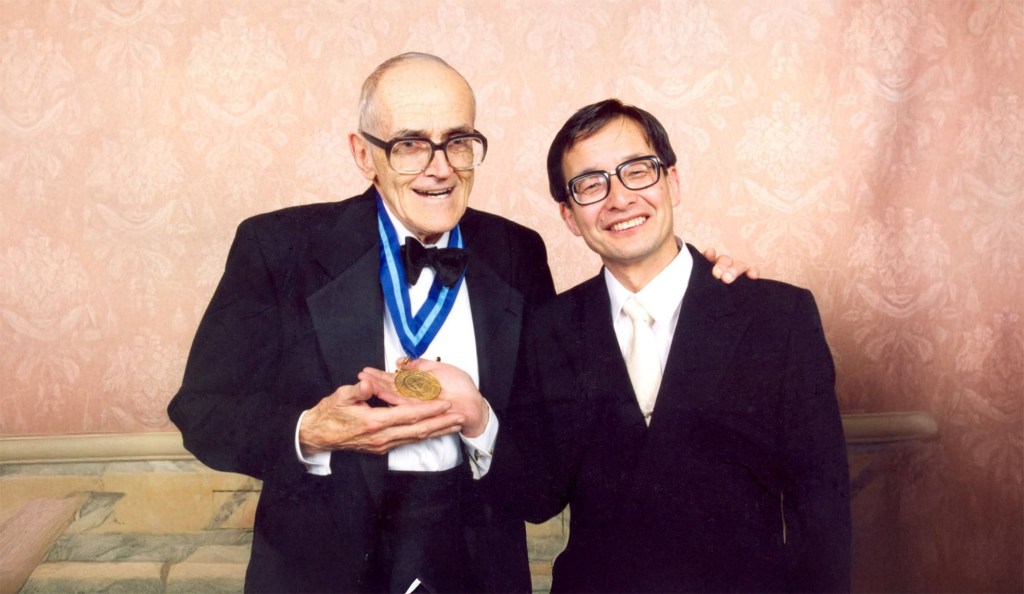
On the occasion of Clair Patterson receiving the Tyler Prize. The Tyler Prize is awarded for environmental achievement.
(Courtesy of the Archives, California Institute of Technology)

To better understand this puzzle, Patterson turned to the oceans, and what he found astonished him. He knew that if he compared the lead levels in shallow and deep water, he could determine how oceanic lead had changed over time. In his experiments, he discovered that in the ocean’s oldest columns of water, down deep, there was little lead, but towards the surface, where younger water circulates, lead values spiked by 20 times.

Then, going back millions of years, he analyzed microscopic plant and animal life from deep sediments and discovered that they contained 1/10 to 1/100th the amount of lead found at the time around the globe.

Smog in Los Angeles in 1970. (Courtesy of UCLA Library Special Collections – Los Angeles Times Photographic Archive)

He decided to look in places far from industrial centers, ice caves in Greenland and Antarctica, where he would be able to see clearly how much lead was in the environment many years ago. He was able to show a dramatic increase in environmental lead beginning with the start of lead smelting in Greek and Roman times. Historians long ago documented the vast amounts of lead that were mined in Rome. Lead pipes connected Roman homes, filled up bathtubs and fountains and carried water from town to town. Many Romans knew of lead’s dangers, but little was done. Rome, we all know, collapsed. Jean David C. Boulakia, writing in the American Journal of Archaeology, said: โ€œThe uses of lead were so extensive that lead poisoning, plumbism, has sometimes been given as one of the causes of the degeneracy of Roman citizens. Perhaps, after contributing to the rise of the Empire, lead helped to precipitate its fall.โ€

In his Greenland work, Patterson’s data showed a โ€œ200- or 300-fold increaseโ€ in lead from the 1700s to the present day; and, most astonishing, the largest concentrations occurred only in the last three decades. Were we, like the Romans, perhaps on the brink of an environmental calamity that could hasten the end of our civilization? Not if Patterson could help it.

Exterior shot of the California Institute of Technology. Credit: Erik Olsen
California Institute of Technology. Credit: Erik Olsen

That may be far too grandiose and speculative, but there was no doubting that there was so much more lead in the modern world, and it seemed to have appeared only recently. But why? And how?

In a Eureka moment, Patterson realized that the time frame of atmospheric lead’s rise he was seeing in his samples seemed to correlate perfectly with the advent of the automobile, and, more specifically, with the advent of leaded gasoline.

CALIFORNIA CURATED ON ETSY

Purchase stunning art prints of iconic California scenes.
Check out our Etsy store.

Leaded gas became a thing in the 1920s. Previously, car engines were plagued by a loud knocking sound made when pockets of air and fuel prematurely exploded inside an internal combustion engine. The effect also dramatically reduced the engine’s efficiency. Automobile companies, seeking to get rid of the noise, discovered that by adding tetraethyl lead to gasoline, they could stop the knocking sound, and so-called Ethyl gasoline was born. “Fill her up with Ethyl,” people used to say when pulling up to the pump.

Despite what the Romans may have known about lead, it was still an immensely popular material. It was widely used in plumbing well into the 20th century as well as in paints and various industrial products. But there was little action taken to remove lead from our daily lives. The lead in a pipe or wall paint is one thing (hey, don’t eat it!), but pervasive lead in our air and water is something different.

After World War I, every household wanted a car and the auto sales began to explode. Cars were perhaps the most practical invention of the early 20th century. They changed everything: roads, cities, work-life and travel. And no one wanted their cars to make that infernal racket. So the lead additive industry boomed, too. By the 1960s, leaded gasoline accounted for 90% of all fuel sold worldwide.

But there signs even then that something was wrong with lead.

A New York Times story going back to 1924 documented how one man was killed and another driven insane by inhaling gases released in the production of the tetraethyl lead at the Bayway plant of the Standard Oil Company at Elizabeth, N.J. Many more cases of lead poisoning were documented in ensuing years, with studies showing that it not only leads to physical illness but also to serious mental problems and lower IQs. No one, however, was drawing the connection between all the lead being pumped into the air by automobiles and the potential health impacts. Patterson saw the connection.

Ford Model T. Credit: Harry Shipler

When Patterson published his findings in 1963, he was met with both applause and derision. The billion-dollar oil and gas industry fought his ideas vigorously, trying to impugn his methods and his character. They even tried to pay him off to study something else. But it soon became apparent that Patterson was right. Patterson and other health officials realized that If nothing was done, the result could be a global health crisis that could end up causing millions of human deaths. Perhaps the decline of civilization itself.

Patterson was called before Congress to testify on his findings, and while his arguments made little traction, they caught the attention of the nascent environmental movement in America, which had largely come into being as a result of Rachel Carson’s explosive 1962 book Silent Spring, which documented the decline in bird and other wildlife as a result of the spraying of DDT for mosquito control. People were now alert to poisons in the environment, and they’d come to realize that some of the industrial giants that were the foundation of our economy were also having serious impacts on the planet’s health.

Downtown Los Angeles today. (Erik Olsen)

Patterson was unrelenting in making his case, but he still faced serious opposition from the Ethyl companies and from Detroit. The government took half-hearted measures to address the problem. The EPA suggested reducing lead in gasoline step by step, to 60 to 65 percent by 1977. This enraged industry, but also Patterson, who felt that wasn’t nearly enough. Industry sued and the case to the courts. Meanwhile, Patterson continued his research, collecting samples around Yosemite, which showed definitely that the large rise in atmospheric lead was new and it was coming from the cities (in this case, nearby San Francisco and Los Angeles). He analyzed human remains from Egyptian mummies and Peruvian graves and found they contained far less lead than modern bones, nearly 600 times less.

Years would pass with more hearings, more experiments, and the question of whether the EPA should regulate leaded gas more heavily went to U.S. Court of Appeals. The EPA won, 5-4. โ€œManโ€™s ability to alter his environment,โ€ the court ruled, โ€œhas developed far more rapidly than his ability to foresee with certainty the effects of his alterations.โ€

The Clean Air Act of 1970 initiated the development of national air-quality standards, including emission controls on cars.

Drone shot of rush-hour traffic over Los Angeles. Credit: Erik Olsen
Drone over Los Angeles. (Credit: Erik Olsen)

In 1976, the EPA’s new rules went into effect and the results were almost immediate: environmental lead plummeted. The numbers continued to plummet as lead was further banned as a gasoline additive and from other products like canned seafood (lead was used as a sealant). Amazingly, there was still tremendous denial within American industry.

Although the use of leaded gas declined dramatically beginning with the Clear Air Act, it wasn’t until 1986, when the EPA called for a near ban of leaded gasoline that we seemed to finally be close to ridding ourselves of the scourge of atmospheric lead. With the amendment of the Clean Air Act four years later, it became unlawful for leaded gasoline to be sold at all at service stations beginning December 31, 1995. Patterson died just three weeks earlier at the age of 73.

Clair Patterson is a name that few people know today, yet his work not only changed our understanding of the earth itself, but also likely saved millions of lives. When Patterson was finally accepted into the National Academy of Science in 1987, Barclay Kamb, a Caltech colleague, summed his career up thusly: “His thinking and imagination are so far ahead of the times that he has often gone misunderstood and unappreciated for years, until his colleagues finally caught up and realized he was right.”

Clair Patterson is one of the most unsung of the great 20th-century scientists, and his name deserves to be better known.


To learn more about Clair Patterson, read the fascinating oral history from Caltech Archives.

How one building survived the San Francisco earthquake and changed the world.

The Bekins Warehouse following the 1906 San Francisco earthquake

When the 1906 earthquake struck San Francisco, most of the buildings at the time in the city were made of wood (like redwood harvested from the once vast stands of coastal redwood that grew in Northern California). This did not bode well for San Franciscans because immediately after the earthquake, a series of fires spread quickly over the city, largely razing to the ground almost every wooden structure that withstood the tremblor.

But curiously, a few structures did survive largely intact. Among them, are the Old United States Mint (also known asย The Granite Lady) and a half-finished warehouse built for the Bekins Van and Storage Company at Mission and Thirteenth. Although the brick facade cracked, the interior steel framing remained intact, according to a U.S. Geographical Report issued in 1907.

Rebar – used for steel reinforced concrete – being used in a high-rise building.

The Bekins warehouse survived because it was made of a relatively new material that had largely been ignored (and vigorously opposed) in California. That material is reinforced concrete, and its use in this instance played a crucial role in demonstrating the practicality and benefits of reinforced concrete in large-scale urban buildings around the world.

A problem with concrete is that it has great compressive strength. It can withstand high pressure without cracking. But it lacks tensile strength, meaning it cannot bend without shattering. Throughout the late 1800s, various builders tried to strengthen concrete with metal, mostly iron. With the advent of steel, which was becoming increasingly cheap to manufacture, and with a new technique based on twisting the metal to allow it to adhere better to the liquid concrete, a new era of construction was born.

US Mint Building in San Francisco

In the years before the 1906 earthquake, the use of concrete was resisted by the legions of bricklayers, masons, and powerful builders’ unions that saw the material as a threat to their survival. Others called the material ugly and not worthy of a great city like San Francisco.

One trade publication at the time wrote: โ€œa city of the dull grayness of concrete would defy all laws of beauty. Concrete does not lend itself architecturally to anything that appeals to the eye. Let us pause a moment before we transform our city into such hideousness as has been suggested by concrete engineers and others interested in its introduction.โ€

The novel shape of the Philips Pavilion built in Brussels for Expo 58 was achieved using reinforced concrete. (Wikipedia)

The resistance against concrete was formidable enough that the material was not used widely in the city. Even after the earthquake, it took a while for people to grasp its value. Despite the overwhelming evidence that this new building material could dramatically help a city not only withstand an earthquake but fire as well, San Francisco building codes still forbade the use of concrete in high, load-bearing walls.

The Bekins Warehouse itself was designed to serve as a storage building and office for the Bekins Van and Storage Company, a firm specializing in moving and storage services. The choice of reinforced concrete was strategic, as warehouses of the era required robust structures that could withstand the heavy loads associated with storage, as well as offer protection against fire, a common hazard in densely packed urban centers.

Moreover, the use of reinforced concrete allowed for the construction of large, open interior spaces without the obstruction of support columns. This architectural freedom not only facilitated the efficient organization and movement of goods within the warehouse but also allowed for the adaptation of the building to various uses over time.

San Francisco today. Unsplash: Jared Erondu

It wasn’t until two years later, in a contentious San Francisco board of supervisors meeting, that the city changed its building codes to allow the widespread use of reinforced concrete. By 1910, the city had issued permits for 132 new reinforced concrete buildings. The science of building advanced hugely in the wake of the disaster.

As urban areas continued to grow and evolve, the principles demonstrated by the construction of the Bekins Warehouseโ€”such as the emphasis on durability, fire safety, and spatial efficiencyโ€”became increasingly central to architectural and urban planning philosophies. The building not only serves as a testament to the innovative use of materials and techniques in early 20th-century architecture but also as a precursor to modern construction practices where reinforced concrete remains a fundamental building block.

Today, most every tall building in the world makes use of steel-reinforced concrete. The survival of the Bekins building was transformational for not only the city of San Francisco but in many ways, it heralded a watershed moment in the history of architecture, construction, and the planet’s cities.