Unraveling the Geology Behind Palos Verdes’ Ongoing Landslide Crisis

A neighborhood threatened by landslides at Portuguese Bend on Palos Verdes (Erik Olsen)

For decades, geologists and engineers have been aware that the Portuguese Bend region of Palos Verdes is prone to landslides. Early maps and aerial surveys from the 1930s show continuous movement from the upper hills towards the high cliffs and bluffs that reach the Pacific Ocean.

Over the years, with a few exceptions, the ground movement was relatively slow, averaging about a foot per year. However, after the intense rains of the past year or two, the land is now shifting much more rapidly—up to 9 to 12 inches per week—plunging neighborhoods and communities built on this unstable terrain into panic and disarray. This accelerated movement has caused irreparable damage to some homes and led California to declare a state of emergency.

Aerial survey from the 1930s showing landslide potential at Portuguese Bend in Palos Verdes (Ranch Palos Verdes city government)

People have been allowed to build homes at Portuguese Bend largely due to a combination of historical oversight, demand for coastal real estate, and limited understanding of the area’s geologic instability when development first began. In the 1950s and 1960s, when much of the residential development in the area took place, there was less awareness and fewer regulations regarding the risks of building on unstable ground. Additionally, the picturesque coastal views and desirable location made Portuguese Bend an attractive area for developers and homeowners. Despite known landslide risks, building permits were often issued because of insufficient geotechnical assessments, political and economic pressures, and a lack of stringent land-use policies at the time. Over the years, as the understanding of the area’s geologic hazards has grown, there have been more restrictions and efforts to mitigate risks, but many homes already exist on land prone to movement.

CALIFORNIA CURATED ON ETSY

Purchase stunning art prints of iconic California scenes.
Check out our Etsy store.

The situation is similar to building homes in fire-prone areas – well-known to Californians, of course – within the so-called Wildland-Urban Interface (WUI), where human development meets and mixes with natural landscapes, creating a high-risk zone for natural disasters.

Small landslide at Portuguese Bend in Palos Verdes (Erik Olsen)

Portuguese Bend is one of the most active landslide zones on the peninsula. Here, the earth moves continuously, almost imperceptibly at times, but the effects are undeniable. The land isn’t just sliding; it’s flowing—like a slow-moving river of rock and dirt—down a natural depression, a sort of bowl or gulch formed by the interplay of tectonic activity and erosion. This gradual yet relentless descent toward the sea is driven by a combination of factors: the underlying geology of ancient marine sediment layers, heavy rainfall, and the constant forces of gravity pulling on the steep slopes. As a result, roads buckle, homes crack, and entire sections of land shift over time.

The geological makeup of Palos Verdes is complex and varied. The most prominent rocks on the Palos Verdes Peninsula, and the most crucial in terms of slope stability, belong to the Miocene Monterey Formation, which we wrote about in a previous article. This formation, over 2,000 feet thick in some areas, has been divided into three distinct members based on their rock types: the Altamira Shale, the Valmonte Diatomite, and the Malaga Mudstone, arranged from oldest to youngest.

Portuguese Bend at Palos Verdes

The Altamira Shale primarily consists of thin-bedded sedimentary rocks formed from layers of clay, interspersed with numerous layers of tuff, or volcanic ash that has largely transformed into weak clays over time. Thick deposits of volcanic ash, laid down millions of years ago, have been compacted into a clay-like material known as bentonite. When bentonite comes into contact with water, it becomes extremely slippery, acting like a natural lubricant. This slippery nature has been a major factor in triggering landslides throughout the Rancho Palos Verdes area, where the land’s stability is continually undermined by these underlying geological conditions.

Another factor contributing to landslides is the region’s tectonic activity. Palos Verdes sits above several active faults, including the Palos Verdes Fault. The movement along these faults exerts stress on the rock formations, leading to fractures and cracks that weaken the slopes. These cracks often become pathways for water to seep into the ground, further destabilizing the already precarious terrain.

The road along the coast at Portuguese Point has been moving for decades, a slow but relentless reminder of the dynamic nature of California’s landscape. (Erik Olsen)

Water plays a crucial role in triggering landslides in this region. Heavy rains, especially those associated with El Niño events like the atmospheric rivers of the last few years, can lead to a rapid increase in groundwater levels. When water infiltrates the ground, it increases the pressure within the soil and rock, reducing the friction that holds everything together. In Palos Verdes, where irrigation, septic systems, and urban development are common, human activities can exacerbate this natural process by altering drainage patterns and increasing water saturation in vulnerable areas. This convergence of natural and human-made factors makes the slopes more prone to sliding, particularly during or after intense rainfall.

To combat this, construction teams have installed a series of dewatering wells and pumps to actively extract groundwater from deep within the hillside. By lowering the water table and reducing the amount of water that saturates the soil, these efforts help to decrease the pressure within the slope and mitigate the risk of further ground movement. This method of dewatering is a crucial element in stabilizing the land, as it helps prevent the soil from becoming too heavy and reduces the lubricating effect that water has on the bentonite clay layers.

Closed road at Portuguese Bend in Palos Verdes (Erik Olsen)

Coastal erosion is another critical factor. The rugged cliffs of Palos Verdes are constantly being eroded by the ocean’s waves, wind, and rain. Over time, wave action undercuts the base of the cliffs, removing the support for the upper layers and leaving them hanging precariously over the ocean. As the base erodes away, the upper cliffs become more susceptible to collapse. When combined with the weakened geology and increased groundwater levels, this coastal erosion sets the stage for dramatic landslides.

Portuguese Point cliffs are part of the constant coastal erosion process at Palos Verdes aerial photo (Erik Olsen)

Recent studies are shedding new light on why landslides in Palos Verdes continue to be a concern. Geologists are now using advanced technologies, such as ground-penetrating radar and satellite imagery, to better understand the underground conditions that contribute to landslides. A study from the University of California, Los Angeles, has explored how even minor shifts in groundwater levels, exacerbated by climate change and increasingly unpredictable weather patterns, can tip the balance and trigger significant slope failures. This research emphasizes that it’s not just the obvious heavy rainfall events that pose a threat; subtle changes in water content due to human irrigation, drought, or even slight variations in precipitation can also destabilize these slopes over time.

CALIFORNIA CURATED ON ETSY

Purchase stunning art prints of iconic California scenes.
Check out our Etsy store.

Moreover, new geological mapping and subsurface studies have provided a clearer picture of the fault lines and the fractured rock layers beneath Palos Verdes. These studies suggest that the interaction between multiple fault zones may be more significant than previously thought, potentially increasing the region’s susceptibility to movement. Understanding these interactions is crucial for predicting future landslides and developing mitigation strategies.

But in the end, nature will likely have the final say.

Portuguese Bend in Palos Verdes (Erik Olsen)

The picture that emerges from these studies is one of a region where natural geological processes and human activities are in a delicate balance. It’s an ongoing fight that really offers a precarious vision of the future for residents and others who use the area for recreation. The weak rock formations, intersecting fault lines, and relentless coastal erosion create an environment where the land is always moving and on the brink of collapse. Add to this the unpredictable impacts of climate change, which can bring more intense storms and alter precipitation patterns, and it becomes clear why Palos Verdes is so prone to landslides.

Efforts to mitigate the risk are ongoing. Local governments and geologists are working to develop more effective monitoring systems and better land-use planning guidelines to manage development in these sensitive areas. Understanding the complex geology and hydrology of Palos Verdes is critical to preventing future disasters and protecting the communities that call this beautiful but unstable coastline home.

Looking back at John McPhee’s Assembling California: A Journey through Geology and Time

Sierra Nevada Mountains and Hot Creek Geological Site (Erik Olsen)

California’s diverse landscapes, rich history, and abundant natural phenomena have inspired many scientific-themed popular books, ranging from John Steinbeck’s “The Log from the Sea of Cortez,” with its focus on marine biology, to Mary Austin’s “The Land of Little Rain,” a lyrical examination of California’s desert environment, not to mention the late Marc Reisner’s Cadillac Desert, an epic history of California’s contentious relationship with water. (I’ve read it twice.)

But when it comes to exploring the state’s geology – its mountains, coastlines, and, most notably, its fault lines – few books can match the prowess and eloquence of John McPhee’s “Assembling California“. Part of his Pulitzer-winning series, “Annals of the Former World,” the book offers a comprehensive and accessible tour through the geological history of California, crafting a fascinating narrative that is as engaging as it is informative.

John McPhee is an acclaimed American writer and pioneer of creative nonfiction, renowned for his deeply researched and beautifully crafted works that often explore topics related to nature, science, and geography. A long-time staff writer for The New Yorker and the author of over 30 books, McPhee is celebrated for his ability to turn seemingly ordinary subjects—such as geology, oranges, or transportation—into compelling narratives. His distinctive style blends meticulous research with accessible, often poetic prose that has been widely immitated. I’ve read several of McPhee’s books and while some of the work can be hard going, I’m usually very satisfied once I’m done. Assembling California is, in my opinion, one of his best.

Here’s an excerpt:

An old VW bus is best off climbing the Sierra from the west. Often likened to a raised trapdoor, the Sierra has a long and planar western slope and—near the state line—a plunging escarpment facing east. The shape of the Sierra is also like an airfoil, or a woodshed, with its long sloping back and its sheer front. The nineteenth-century geologist Clarence King compared it to “a sea-wave”—a crested ocean roller about to break upon Nevada. The image of the trapdoor best serves the tectonics. Hinged somewhere beneath the Great Valley, and sharply faulted on its eastern face, the range began to rise only a very short geologic time ago—perhaps three million years, or four million years—and it is still rising, still active, continually at play with the Richter scale and occasionally driven by great earthquakes (Owens Valley, 1872). In geologic ages just before the uplift, volcanic andesite flows spread themselves over the terrain like butterscotch syrup over ice cream. Successive andesite flows filled in local landscapes and hardened flat upon them. As the trapdoor rises—as this immense crustal block, the Sierra Nevada, tilts upward—the andesite flows tilt with it, and to see them now in the roadcuts of the interstate is to see the angle of the uplift.

John McPhee in Assembling California

The Sierra Nevada, a massive mountain range stretching like a spine nearly the length of California, provides the central geological narrative in “Assembling California”. Known for its stark beauty and dramatic peaks, the Sierras are also a textbook example of the immense forces that shape our planet. (We’ve written and will continue to write about them.) McPhee masterfully explicates how tectonic activity shaped this terrain over millions of years, giving readers a sense of the awe-inspiring age and dynamism of the Earth.

A brief bit about the man: Born in 1931, McPhee studied at Princeton University and Cambridge, and his writing straddles diverse topics from basketball to nuclear energy. His primary strength lies in his ability to seamlessly interweave complex scientific principles with engrossing human stories (there’s always an interesting character and the heart of his work), making the intricate world of science both comprehensible and enjoyable to the lay reader. His skill and prolificacy have earned him numerous accolades, including the Pulitzer Prize.

John McPhee (Wikipedia)

Assembling California stands out for its illuminating journey through California’s intricate geological history. Traveling with the late geologist Eldridge Moores of the University of California Davis, McPhee unpacks the layered story of California’s geology from its seismic activity to its unique rock formations. There is an excellent excerpt in a 1992 issue of the New Yorker.
Moores was a renowned geologist known for his significant contributions to understanding the geological history and structure of the Earth, particularly in relation to plate tectonics. Born in 1938 in Phoenix, Arizona, he spent the bulk of his career as a professor of geology at Davis, where his research significantly advanced the theory of plate tectonics. He was particularly interested in the geology of his adopted home state, California. Moores also held the position of President of the Geological Society of America in 1996. Apart from his boundless energy, Moores’ real gift was his vision: his ability to “see” geologic history in a pile of rocks.  His passionate teaching style and profound knowledge made him a beloved figure in the field of geology. Moores died in a tragic accident in 2018 while on a field trip in Greece, leaving a significant void in the geology world.

Eldridge Moores – UC Davis

Moores explains to McPhee how the Sierra Nevada range didn’t just emerge from the Earth’s crust, as geologists long thought. Instead, the building blocks bubbled up from faraway rifts in the ocean floor called “spreading centers,” then transported thousands of miles on moving plates and piled up onto the North American continent.

Sierra Nevada Mountains and Owens River (Erik Olsen)

The movement of the Earth’s crust along fault lines, as in the well-known San Andreas Fault, is a central theme of the book. By explaining the shifting of tectonic plates, McPhee brings to life the reality of living in California: a landscape that is constantly, if imperceptibly, in motion. His descriptions of earthquakes, both historic and potential future ones, vividly underscore the seismic hazards associated with residing in the state. McPhee’s ability to humanize these impersonal geologic processes is a testament to his storytelling prowess. You will learn a lot about what happens to the California beneath your feet.

San Andreas fault and the Carrizo Plain

However, “Assembling California” is not just a tale of geological forces. McPhee also weaves in fascinating narratives about gold prospectors and vineyard owners, infusing the state’s human history into its ancient geological story. You really can’t tell the story of modern California without delving into the resource-driven economic narratives that are a fundamental part of the state’s history. We try to do a lot of that in this magazine.

For those who want to go beyond McPhee, another fine author is Simon Winchester, whose “Crack at the End of the World” picks up where McPhee left off, both in terms of theme and approach. Winchester, a British author and journalist known for his popular science writing, explores the devastating 1906 San Francisco earthquake. Like McPhee, Winchester expertly merges detailed geological explanations with human stories, providing a compelling account of one of the most significant natural disasters in American history. This is also a very fine book.

San Francisco earthquake

The legacy of “Assembling California” lies not just in its rich storytelling but also in the path it blazed for a new kind of popular science writing – one that’s engaging, comprehensive, and profoundly human. By understanding our planet’s past and the forces that shape it, we are better prepared to navigate its future. As readers, we owe a debt of gratitude to writers like McPhee and Winchester who, through their craft, help us appreciate the intricate dance between the Earth’s geological processes and human civilization.

Since McPhee wrote “Assembling California,” technology has made leaps and bounds in the field of geology. Advancements in technology like LIDAR (Light Detection and Ranging), which uses lasers to measure distances and can create high-resolution maps of the Earth’s surface, and improvements in seismograph technology and satellite imaging, have allowed scientists to study geological phenomena in greater detail and with better accuracy.

Geology, like all scientific disciplines, evolves over time as new techniques and technologies become available. This progress often refines our understanding of geological phenomena and can lead to new theories and models. We’re still learning a lot about how our state literally came together, with new research being done all the time that sheds light on our mountains, coasts and valleys.

More recent studies of the San Andreas Fault, for instance, have allowed us to better understand the fault’s behavior, including how frequently significant earthquakes occur and what triggers them. For example a 2022 study from Lamont-Doherty Earth Observatory suggests that the San Andreas Fault moves slowly in a process called “creep,” which was previously thought to release tectonic stress and reduce earthquake risk. However, this new research suggests that this creeping segment might instead be accumulating stress, potentially leading to larger and more destructive earthquakes than previously anticipated.

Not exactly good news, but it’s always better to know what’s happening and to have science that backs it up, and McvPhee was a master at helping us understand he way the world works.

Buy us a cup of coffee?

Lots of work goes into writing California Curated. We’d appreciate it!

California’s Monterey Formation: Unraveling the Secrets of a Fossil-Rich, Oil-Bearing Geological Wonder

Monterey Formation rocks near Newport Beach (Erik Olsen)

California’s Monterey Formation is one of the most fascinating geological formations in the United States. Stretching along the California coast from San Francisco to Los Angeles, this formation is notable for its incredible diversity of siliceous rocks—rocks rich in silica, such as shale, chert, diatomite, and porcelanite. While these rocks are interesting to geologists, the Monterey Formation is also significant for its potential to explain the origins of petroleum deposits that have fueled California’s economy for over a century. NASA’s Jet Propulsion Laboratory once called it “California’s primary petroleum source rock.”

Fracture network of joints and cross-joints exposed on bedding surface of siliceous shale. Note linked, larger-aperture fracture in center with oxidation rim. Montaña de Oro State Park. (NASA JPL)

At the heart of the Monterey Formation’s geology is the unique composition of many different types of rock that come together in such a way that they create an ideal environment for trapping oil. The intricate layering of organic-rich shales, siliceous rocks, carbonates, and diatomites forms a complex network of porous and permeable spaces, allowing oil to migrate into these reservoirs. Over time, these rocks act like natural sponges, effectively capturing and holding large quantities of oil within their formations, making the Monterey Formation one of California’s most significant petroleum sources. It is estimated that over 38 billion barrels of oil have been produced to date from fields whose source rock is the Monterey.

CALIFORNIA CURATED ON ETSY

Purchase stunning art prints of iconic California scenes.
Check out our Etsy store.

Diatomite, a light, porous rock formed from the fossilized remains of diatoms, is a dominant feature. Diatoms, microscopic algae with silica-based cell walls, thrived in nutrient-rich waters, leading to the thick layers of sediments that later became diatomite. Chert, another key rock type in the formation, is formed from the recrystallization of biogenic silica, adding to the complexity of the geological record. Interspersed with these are organic-rich shales, which contain substantial amounts of organic material called kerogen. Over millions of years, kerogen undergoes a biological transformation becoming the oil and gas that now serve as the backbone of California’s petroleum industry (see our story on the history of the Long Beach oil industry).

Diatoms (Wikipedia)

The Monterey Formation displays a fascinating and unusual mixture of geological deposits, from deep ocean basins to shallow continental shelves. During the Miocene, upwelling currents along the California coast brought nutrient-rich waters to the surface, fostering high biological productivity and depositing vast amounts of biogenic silica, a form of silicon dioxide (SiO₂) that is produced by living organisms. Periods of fluctuating sea levels, driven by climate changes and tectonic shifts, further shaped the environment. During low sea levels, parts of the continental shelf were exposed, allowing for erosion from wind and sun. These would shift to periods of high sea levels, which allowed for denser, deep-water sedimentation. In some layers, the presence of evaporites—minerals that form from the evaporation of water—suggests extensive episodes of arid conditions, similar to what we are experiencing now with California’s recurring periods of drought.

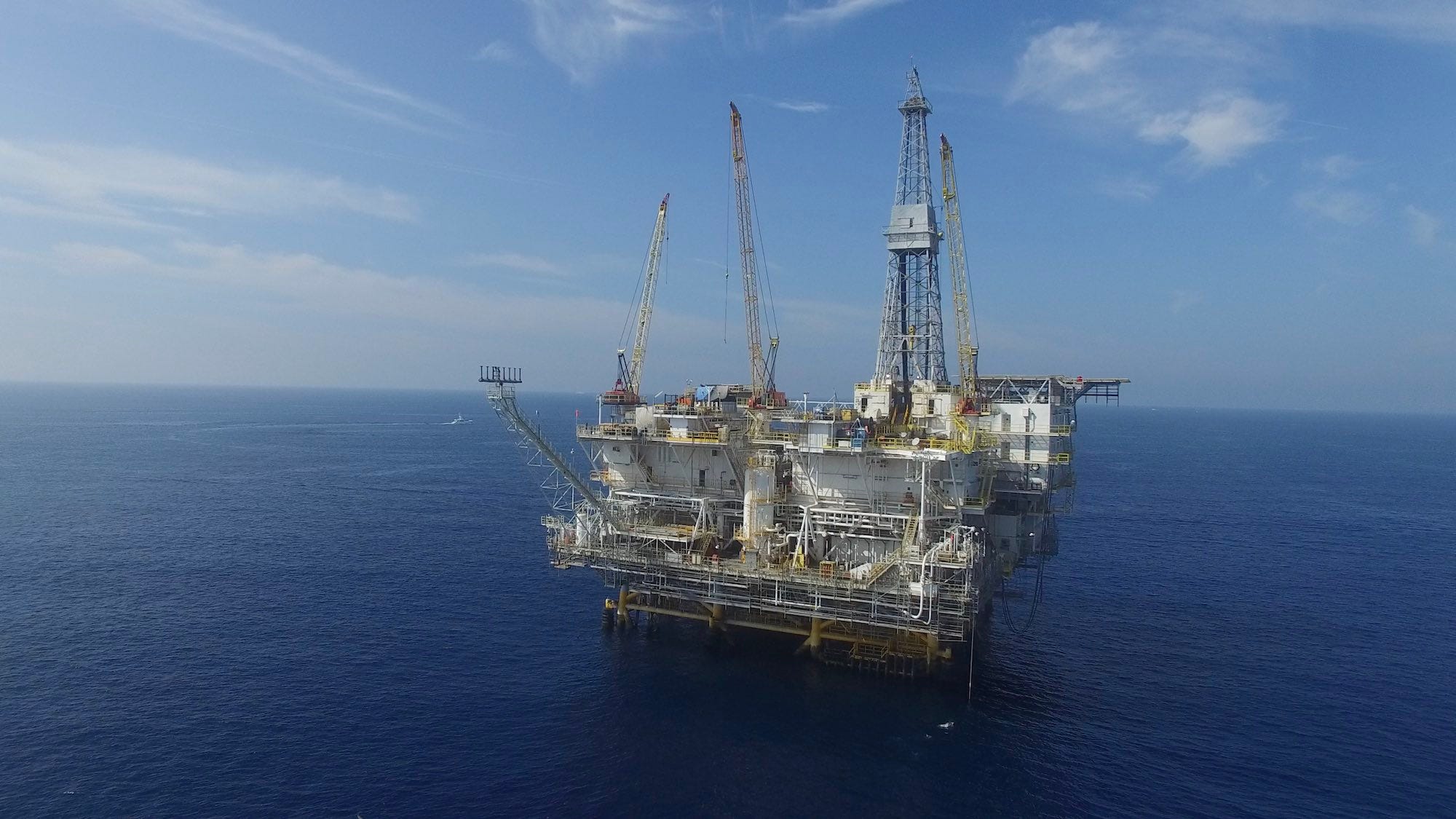
Offshore oil platforms along California’s coast drill into the Monterey Formation, either tapping directly into its fractured shale or extracting oil that has migrated into more porous sandstone reservoirs. (Photo: Erik Olsen)

Much of the pioneering research on the geology, formation, and unique composition of the Monterey Formation was conducted by the late Robert Garrison, a distinguished professor of oceanography at the University of California, Santa Cruz. Garrison was considered the foremost expert on the Monterey Foundation, and his work was instrumental in revealing how the Monterey Formation’s diatomaceous and phosphatic deposits were shaped by a combination of oceanographic upwelling, climatic shifts, and tectonic activity during the Miocene epoch.

Petroleum geologists find the Monterey Formation especially intriguing because it serves as both a source and a reservoir for oil and gas, allowing them to better understand the processes of oil and gas generation, migration, and accumulation, as well as to develop more efficient extraction methods to maximize its economic potential. They are also quite beautiful. Walk along the beach near Crystal Cove in Orange County, for example, and examples of Monterey Formation rocks abound.

Monterey Formation rocks near Little Corona in Newport Beach (Erik Olsen)

Oil is formed from the remains of ancient marine organisms, such as plankton and algae, that were buried under layers of sediment and subjected to heat and pressure over millions of years, transforming them into hydrocarbons. Some of these hydrocarbons migrated into more permeable rocks, creating substantial oil fields that have been exploited for decades in Southern California. Certain layers of the Monterey Formation, particularly the fractured chert and dolomitic sections, also serve as excellent reservoirs due to their porosity and permeability, allowing them to store oil and gas for long periods of time.

Beyond its geological and economic importance, the Monterey Formation is a treasure trove for paleontologists. Its layers preserve a variety of marine fossils, including diatoms, radiolarians, foraminifera, and coccolithophores. These microfossils offer a detailed look at past ocean conditions, helping scientists reconstruct the climatic and oceanographic history of the Miocene epoch. Additionally, the formation contains fossils of larger marine vertebrates, such as whales, seals, and fish, providing further insight into the ecosystems of ancient oceans.

Microscope image of microfossils and organic matter in Monterey rocks. (Cal State Long Beach)

However, the Monterey Formation is not just a source of knowledge and resources; it also presents challenges, particularly in terms of potential environmental harm and geohazards like landslides. The soft, diatomaceous earth layers within the formation are prone to landslides, especially when water-saturated or fractured by tectonic action. This makes some coastal areas of California, where the Monterey Formation is exposed, particularly vulnerable to slope instability, posing risks for construction and development. Many recent news stories have documented the increasing rate at which the California coast is tumbling into the sea. An excellent recent book on the subject is Rosanna Xia’s California Against the Sea: Visions for Our Vanishing Coastline.

California’s geology is a remarkable mosaic that tells a story of immense geological diversity and dynamic processes. Among its many treasures, the Monterey Formation stands out as a geological marvel—its intricate layers, rich fossil beds, and significant economic potential continue to captivate scientists and researchers from around the world. This unique formation is more than just rock; it is a time capsule that preserves millions of years of Earth’s history, from ancient marine ecosystems to dramatic shifts in climate and tectonic activity. As geologists, paleontologists, and environmental scientists delve deeper into its mysteries, the Monterey Formation reveals invaluable clues about the past while shaping our understanding of California’s ever-evolving landscape. It serves as a profound reminder of the powerful forces that have sculpted one of the most geologically varied regions on the planet and continues to inspire exploration and discovery in the fields of Earth science.

Why Parkfield, California is the Nation’s Earthquake Capital

Parkfield, California

When Big Joe Turner sang “Shake, Rattle and Roll,” he probably wasn’t thinking about a dusty little town in Central California, but in Parkfield, it’s practically the town motto.

Parkfield, California, is a quiet, dusty farming town tucked into the rolling hills of the Cholame Valley, just off Highway 46 (worth the drive if you ever have the chance). A few miles down the road lies an historic intersection, the place where James Dean was killed in a near head on collision crash in his Porsche 550 Spyder on September 30, 1955. The collision ended a blazing young career just as it was taking off and cemented Dean’s image as a tragic icon of American cinema. While tourists still visit the nearby memorial, Parkfield itself is better known to scientists than to star-watchers.

Parkfield is an unremarkable town, with one exception: it lies directly atop the San Andreas Fault and is known as the Earthquake Capital of the World. This is not because there are so many earthquakes there, although there are, but because it has one of the highest densities of seismic technology anywhere. In addition to the larger magnitude 6.0 earthquakes that tend to strike about every 22 years, Parkfield also experiences a steady rhythm of smaller quakes. These minor tremors, often below magnitude 1.0, happen with such regularity, that scientists have compared them to “seismic pulsars” for their consistent, almost clock-like behavior. (And for what it’s worth, Petrolia, California actually has the most earthquakes).

Visit the California Curated store on Etsy for original prints showing the beauty and natural wonder of California.

The San Andreas Fault is one of the best known, and most active faults in the world. In the Parkfield area, the San Andreas Fault is constantly shifting—millimeter by millimeter, day by day. This continuous movement is unique to the region, as the fault remains relatively locked in both the northern section around San Francisco and the southern section near Palmdale. While the fault in these other areas stays immobile, the central part near Parkfield steadily creeps, creating a contrast that puts pressure on the locked sections to the north and south.

Parkfield’s main strip, stretching just a quarter mile, hosts a small collection of buildings, including a one-room elementary school, the USGS-Berkeley earthquake monitoring site, a Cal Fire station, and the Parkfield Cafe and Lodge. Outside the cafe, a row of mismatched mailboxes serves the dozen or so homes scattered along a few dirt roads branching off the main street. Parkfield might be a small, obscure town to most Californians, but to geologists fascinated by the workings of the Earth, it’s the epicenter of seismic research.

San Andreas Fault (Wikipedia)

Every hillside and valley, grassy nook and riverbed is home to some kind of instrument that measures earthquakes. Over the years, these instruments have become more sophisticated and expensive, making it necessary in many cases to fence them off with the threat of arrest.  These instruments monitor, hour by hour, or better, millisecond by millisecond, the stirrings of the earth. To geologists, it is ground zero for seismic measurement. 

The town is proud of its reputation. A water tower boasts the tourism slogan: BE HERE WHEN IT HAPPENS (see photo). There is also an iron bridge in the town that has the distinction of standing astride the San Andreas Fault. One one side of the creek that runs beneath the bridge is the North American tectonic plate. On the other is the Pacific tectonic plate. Those two plates are moving south and north respectively at a rate of about 2 inches a year. As we all know, that movement creates immense pressure as the two plates seem otherwise locked in place. That pressure will have to be released at some point. It always has. When that happens, we can expect a potentially devastating earthquake that will rock the state from top to bottom. 

Parkfield, CA (Photo: Wikipedia)

The writer Simon Winchester calls the fault an “ever-evolving giant that slumbers lightly under the earth’s surface and stirs, dangerously and often, according to its own whims and its own rules.” 

Since 1985, a focused earthquake prediction experiment has been in progress in Parkfield. Known as “The Parkfield Experiment“, the project’s stated purpose is to “better understand the physics of earthquakes — what actually happens on the fault and in the surrounding region before, during and after an earthquake.”

Since the mid-1980s, scientists have deployed an array of advanced monitoring devices, including seismometers, strainmeters, creepmeters, and GPS sensors, to capture detailed data on ground movement and strain accumulation. These instruments are designed to measure subtle changes in the Earth’s crust, helping researchers predict seismic events and understand the processes leading up to an earthquake. By continuously collecting data, the experiment has provided valuable insights into the mechanics of fault movement and the potential for earthquake prediction.

An art installation, known as the Parkfield Interventional EQ Fieldwork (PIEQF), used earthquake waves recorded by the USGS seismic network in California to trigger a hydraulic shake table which was installed in an excavated trench.  (USGS)

Experts also once bored a 10,000-foot-deep hole into the ground in Parkfield, into which they placed a large array of sensors to measure the earth’s movements. The goal of the $300 million project, called the San Andreas Fault Observatory at Depth, or SAFOD, was to allow scientists to study how faults work and how earthquakes happen. The drilling stopped in 2007, but Parkfield remains a hot spot for geologic research.

Additionally, the Berkeley Seismological Laboratory operates the High-Resolution Seismic Network (HRSN) in the Parkfield area. This network comprises geophone arrays aimed at monitoring microseismicity along the San Andreas Fault, providing valuable data on the fault’s behavior.

Parkfield remains critical to better understanding seismic dangers in California. The fault zone is poorly understood at depth and so far, the predictability of earthquakes in the near term is pretty limited. But devices like these could help improve prediction, especially if there is a large quake. But that’s the rub, really. We need to experience a large earthquake to get the best data to know how to predict later ones. So it is in California.  

Pasadena: City of Science

How Pasadena Became a Hub of Scientific Endeavor

Pasadena and Colorado Boulevard (Erik Olsen)

Yeah, yeah, you know the Rose Bowl.

But Pasadena isn’t just about pretty streets and historic buildings—it’s also a powerhouse of scientific discovery. Tucked between its tree-lined avenues and old-town charm is a city buzzing with innovation, home to some of the most groundbreaking research and brilliant minds in the world. Ask Einstein.

All right. Let’s keep going. While the climate of Southern California, with its mild weather and clear skies, was advantageous for astronomical observations and outdoor research, the city’s location also played a role in attracting scientists and researchers seeking a desirable living environment. The pleasant climate and natural beauty of the region were significant draws for many. But the city also owes much of its scientific prestige to the Second World War, when the city emerged as a pivotal intellectual and manufacturing hub for aeronautics and space, driven by its strategic location, advanced research institutions like the California Institute of Technology (Caltech), and an influx of skilled labor. The region’s aerospace industry, including companies such as Hughes Aircraft, Douglas Aircraft, Lockheed and North American Aviation, all of which played a crucial role in producing military aircraft and pioneering advancements in aerospace technology. By the end of World War II, 60 to 70 percent of the American aerospace industry was located in Southern California;

Planetary Society Headquarters in Pasadena (Erik Olsen)

The scientific pedigree of Pasadena can be traced back to notable historical figures, among them the great Richard Feynman, a theoretical physicist known for his work in quantum mechanics and his Nobel Prize-winning contributions to quantum electrodynamics. Feynman was a long-time faculty member at the California Institute of Technology (Caltech) and left an indelible mark on both physics and science education. 

Richard Feynman (Caltech Archives)

In engineering, there is Theodore von Kármán, a Hungarian-American mathematician, aerospace engineer, and physicist, who is remembered for his pioneering work in aerodynamics and astronautics. He was responsible for crucial advances in aerodynamics characterizing supersonic and hypersonic airflow. He is best known for the von Kármán vortex street, a pattern of vortices caused by the unsteady separation of flow of a fluid around a cylinder, which has applications in meteorology, oceanography, and engineering. Von Kármán was also a key figure in the establishment of the Jet Propulsion Laboratory (JPL), which is managed by Caltech (see below).

Cal Tech (Erik Olsen)

In the mid-20th century, Albert Einstein spent several winters at CalTech, further solidifying the city’s reputation as a center of scientific thought. During his stays from 1931 to 1933, Einstein delivered lectures and collaborated with some of the brightest minds in physics, which had a lasting impact on the scientific community in Pasadena and beyond.

Albert Einstein in Pasadena (CalTech Archives)

CalTech itself is a cornerstone of Pasadena’s scientific community. As one of the premier science and engineering institutes globally, it has been at the forefront of numerous breakthroughs in various fields including physics, biology, and engineering. The university is not only a powerhouse of innovation but also a nurturing ground for future scientists, evidenced by its association with 39 Nobel laureates.

Similarly, the Jet Propulsion Laboratory (JPL), which is technically located in La Canada Flintridge (geographically), but has a Pasadena mailing address, is a unique collaboration between NASA and CalTech. JPL is the leading US center for the robotic exploration of the solar system. Its engineers and scientists have been behind some of the most successful interplanetary missions, including the Mars Rover landings, the Juno spacecraft currently exploring Jupiter, and the Voyager probes that have ventured beyond our solar system. 

NASA’s Jet Propulsion Laboratory (Erik Olsen)

Further enriching Pasadena’s scientific landscape is the Carnegie Observatories, part of the Carnegie Institution for Science. This establishment has been a pivotal site for astronomical discoveries since the early 20th century. Today, it continues to push the boundaries of astronomical science by managing some of the most advanced telescopes in the world and conducting cutting-edge research in cosmology and astrophysics.

Jupiter as captured by NASA JPL’s Juno spacecraft (NASA/JPL-Caltech/SwRI/MSSS/David Marriott)

Though in the mountains above Pasadena, the Mt. Wilson Observatory, founded by George Ellery Hale, was home to some of the world’s most powerful telescopes in the early 20th century, including the 60-inch and 100-inch Hooker telescopes. (See our feature). These instruments were integral to groundbreaking discoveries, such as Edwin Hubble’s revelation of the expanding universe, which was supported by data from Mt. Wilson’s telescopes.

The Planetary Society, also headquartered in Pasadena, adds to the city’s scientific aura. Co-founded by Carl Sagan, Bruce Murray, and Louis Friedman in 1980, this nonprofit organization advocates for space science and exploration. It engages the public and global community in space missions and the search for extraterrestrial life, demonstrating the city’s commitment to fostering a broader public understanding of science.

Mt. Wilson Observatory (Erik Olsen)

Pasadena’s prowess in scientific innovation is further amplified by the presence of numerous high-tech companies and startups that reside in the city. These range from aerospace giants to biotech firms, many of which collaborate closely with local institutions like CalTech and JPL. Moreover, incubators such as IdeaLab and Honeybee Robotics (there are numerous robotics companies…which I think we will do a stand alone story about in the future) have been instrumental in fostering a culture of innovation and entrepreneurship in the city. Founded in 1996 by Bill Gross, IdeaLab has helped launch companies that have had significant impacts on technology and science, from energy solutions to internet technologies.

Pasadena’s status as a city of science is not just rooted in its institutions but also in its history and the ongoing contributions of its residents and thinkers. The city continues to be a fertile ground for scientific discovery and technological innovation, reflecting a deep-seated culture that celebrates curiosity and the pursuit of knowledge. This environment not only attracts some of the brightest minds from around the globe but also supports them in pushing the boundaries of what is possible, making Pasadena a true city of science.

From Desert Treasures to Resilient Glass: How a California Boron Mine Transformed the World

U.S. Borax borate mine in California (Erik Olsen)

In the late 1800s, as California was emerging and gold fever captivated the public, a significant discovery in the vast, arid desert of modern-day Death Valley led to the development of a mining operation for one of the most versatile and useful materials on earth: borates.

With Hollywood and Silicon Valley dominating California’s identity, it’s easy to overlook the significant role extractive industries have played in shaping the state’s economic and industrial history. However, sites like the Rio Tinto Borax Mine in Boron, California, stand as enduring reminders of this often underappreciated chapter.

Despite the similar-sounding name, borates are far from boring. These indispensable compounds have a wide range of applications that significantly impact our daily lives. Remarkably, the mining operation in the desert of California is still active. In fact, it is one of the largest producers of borates in the world.

The evaporation ponds at the U.S. Borax Mine, used in the extraction of borates, have historically raised environmental concerns, including potential groundwater contamination and the management of hazardous waste byproducts. However, being located in a remote area far from major population centers has helped mitigate some of the risks associated with pollution, as the isolation reduces direct human exposure and minimizes immediate health impacts on surrounding communities. Additionally, the mine’s location in an arid climate helps slow the spread of contaminants in groundwater, though long-term environmental monitoring and mitigation remain critical. Efforts have also been made to manage waste responsibly and comply with environmental regulations to limit potential harm.

Rio Tinto U.S. Borax Mine in Boron, California (Erik Olsen)

U.S. Borax, part of the global mining company Rio Tinto, operates California’s largest open pit mine and the largest borax mine in the world, producing nearly half the world’s borates. It is located near Boron, California, just off California State Route 58 and North of Edwards Air Force Base. While the mine’s economic importance to California has been significant for decades, the critical contributions of borates to modern society remain a largely untold story.

U.S. Borax has roots stretching back to the late 19th century, when the company, then called The Pacific Coast Borax Company emerged as a leader in borate mining and production following the discovery of substantial boron deposits in California. Founded by Francis Marion Smith, known as the “Borax King,” the company initially gained fame for its iconic 20 Mule Team Borax brand. The brand originated from the company’s need for an efficient way to transport borates from the remote mines in Death Valley to the nearest railhead in Mojave, California, covering a distance of about 165 miles.

To accomplish this, the company used large wagons pulled by teams of 20 mules. Each team consisted of 18 mules and 2 horses, and the wagons carried loads of up to 10 tons of borax. These mule teams became legendary for their endurance and reliability, making the long and arduous journey through the harsh desert environment.

Smith’s innovative methods and relentless pursuit of high-quality borates propelled U.S. Borax to the forefront of the industry. Over the decades, U.S. Borax has evolved, focusing on sustainable mining practices and advanced technologies to maintain its status as a key player in the global market, providing essential borate products for various industrial and consumer applications. 

Evaporation pools at US Borax in Boron, California (Erik Olsen)

These versatile minerals are critical in agriculture where borates serve as micronutrients, essential for the healthy growth of crops. They are also key ingredients in detergents, where their stain-fighting power ensures cleaner, brighter clothes. Moreover, borates are used in insulation and fiberglass, contributing to energy efficiency and safety in buildings. The importance of borates extends to pharmaceuticals and cosmetics, where they serve as vital components in various formulations. But perhaps the most impactful use of borates is in the production of borosilicate glass

You’ve likely encountered borosilicate glass before, most recognizably under the brand name Pyrex, produced by Corning. This stable, clear, and robust material can withstand a wide range of temperatures, from the intense heat of a Bunsen burner to the extreme cold of deep space. 

Hale telescope mirror on its way to California

Corning brought the future of borosilicate glass into the present by casting what was, at the time, the world’s largest primary telescope mirror. The primary mirror for the 200-inch Hale Telescope in California was cast out of Pyrex borosilicate glass and delivered to Caltech in the spring of 1936. Since manufacturing the Hale Telescope primary mirror blank, Corning has supplied many mirror blanks for astronomy tools worldwide.

Test tubes made of borosilicate glass

Borosilicate glass is one of the unsung heroes of the modern age. Unlike regular glass, which can leach small particles into liquids when exposed to potent chemicals, borosilicate glass remains chemically inert, making it ideal for test tubes, lab beakers, and medical vials. Almost every medicine or vaccine in history, including those developed for COVID-19, has relied on borosilicate containers for their development, storage, and transport. However, we often overlook the importance of these materials until there’s a shortage. 

This was the case during the COVID-19 pandemic when concerns arose that the primary obstacle to vaccine distribution might not be the pharmaceuticals themselves, but the containers needed for shipping. In response, thousands of workers along a complex supply chain—from mines to refineries to factories—helped avert a crisis. Corning even introduced a new type of glass, made with aluminum, calcium, and magnesium, to meet the high demand for medicinal vials.

Evaporation ponds at the US Borax mine in Boron, California (Erik Olsen)

The invention of borosilicate glass is credited to German chemist Otto Schott in the late 19th century. Schott was driven by the need for a type of glass that could withstand extreme temperatures and resist chemical corrosion. In 1887, he succeeded in creating this revolutionary material by adding boron oxide to traditional silica-based glass, resulting in a product with exceptional thermal and chemical stability. This breakthrough led to the founding of the Jena Glassworks, where Schott’s borosilicate glass was produced and quickly found applications in scientific and industrial settings. Its remarkable properties made it indispensable for laboratory equipment, cookware, and a variety of other uses. The material’s resilience and reliability have ensured its place as a critical component in modern science and technology, solidifying Schott’s legacy as a pioneer in glassmaking. 

Borosilicate glass lenses.

Due to its low coefficient of thermal expansion, borosilicate glass maintains the same optical properties across a range of temperatures, making it an ideal material for scientific lenses and other high-precision optical components, including lenses and mirrors for telescopes and microscopes. 

It is also used in lighting, particularly for high-intensity lamps and projectors. Artists and craftspeople value borosilicate glass for its workability and durability in creating intricate glass sculptures and jewelry. Its robustness extends to the industrial sector, where it is used in chemical processing equipment, tubing, and sight glasses in high-temperature and corrosive environments. Overall, the unique properties of borosilicate glass make it indispensable across a wide range of applications, from everyday household items to specialized scientific and industrial equipment.

CALIFORNIA CURATED ART ON ETSY

Purchase stunning art prints of iconic California scenes.
Check out our Etsy store.

The abundance of boron in the California desert, particularly the Mojave Desert, is due to a combination of geological conditions and historical processes. Volcanic activity in the region has contributed boron-rich rocks, which, along with tectonic activity, has created basins and depressions where water could accumulate and evaporate. These conditions, coupled with the arid climate, led to the evaporation of ancient lakes and the formation of borate minerals in playas—flat, dry lakebeds that form in desert regions when water evaporates completely, leaving behind a layer of minerals. Hydrothermal activity also played a role by depositing borate minerals through fractures in the Earth’s crust. These factors collectively resulted in significant boron deposits, such as those found in the U.S. Borax boron mine, one of the world’s largest sources of boron.

The US Borax mine in Boron, California, is a fine example of some of the little-known places where California’s industrial history is laid out for all to see, even if few people probably visit. The mine highlights the ingenuity and perseverance of those who ventured into the state’s arid deserts to unearth one of the most versatile and indispensable materials known to modern industry.

The Pacific Coast Highway (PCH): Icon of American Scenic Roadways

Pacific Coast Highway near Big Sur (Erik Olsen)

The Pacific Coast Highway (PCH), also known as California State Route 1, is one of the most iconic roads in the United States, renowned for its breathtaking views of the Pacific Ocean and rugged coastline. This scenic highway stretches over 650 miles from Dana Point in Orange County in Southern California to Mendocino County in Northern California, offering travelers unparalleled vistas and a quintessential Californian road trip experience. While some suggest that PCH runs from Mexico to Canada, that is mistaken. U.S. Route 101 continues north from California, running along the coast through Oregon and Washington, up to the Olympic Peninsula. That said, it is still the longest state route in California and the second-longest in the US after Montana Highway 200. The story of its construction is as dramatic and intricate as the landscape it traverses.

CALIFORNIA CURATED ON ETSY

Purchase stunning art prints of iconic California scenes.
Check out our Etsy store.

The origins of the Pacific Coast Highway date back to the early 20th century, when the automobile was becoming an essential part of American life. The idea for a coastal highway was initially conceived to connect the state’s isolated coastal communities and improve access to California’s scenic beauty. The concept gained traction in the 1910s and 1920s, and construction began in earnest in the 1930s, to provide jobs during the Great Depression.

Lovely aerial of Pacific Coast Highway in Central California

“It took decades to get the highway built,” Carina Monica Montoya told the Los Angeles Times. Montoya is the author of, “Pacific Coast Highway In Los Angeles County” (The History Press, 2014). 

The construction of the PCH was an engineering marvel, given the challenging terrain it had to navigate. The road had to be carved out of steep cliffs, cross numerous rivers, and be supported by bridges spanning deep ravines. One of the most significant and iconic portions of the highway, the Big Sur section, presented formidable challenges. This stretch of the road, which runs between San Simeon and Carmel, required extensive blasting and drilling into the rugged coastal mountains. The effort was spearheaded by the California Division of Highways (now CalTrans), with a workforce comprising both state employees and workers from the Civilian Conservation Corps (CCC), a New Deal program.

PCH

Key figures in the design and construction of the PCH included engineers and architects who had to innovate continuously to address the formidable natural obstacles. One notable engineer was John D. Isaacs, a prominent builder who contributed to the design and construction of several key bridges along the PCH, including the famous Bixby Creek Bridge. His innovative approach to bridge engineering helped overcome the difficulties presented by the steep canyons and coastal bluffs.

The Pacific Coast Highway took decades to complete fully, with different sections being opened to the public at various times. The Big Sur segment, for example, was officially completed in 1937 after nearly 18 years of labor. The total cost of constructing the highway is difficult to pinpoint precisely, given its piecemeal development, but it ran into tens of millions of dollars—an immense sum at the time.

The Pacific Coast Highway near Santa Monica, California, circa 1930s.

Several colorful characters also play a role in the highway’s history. The Pacific Coast Highway might not exist today if May Rindge, a resolute landowner, had succeeded in her long battle against the county. Since at least the 1890s, a primitive road, often submerged at high tide, hugged the rocky coast between Santa Monica and Malibu, passing under a natural arch and ending at a locked gate on Rindge’s 17,000-acre ranch.

As the owner of Rancho Topanga Malibu Sequit, Rindge was determined to protect her property. She and her late husband had long fought to keep homesteaders off their land. In 1906, she even forced the Southern Pacific Railroad to divert its Santa Barbara line around Malibu and through the San Fernando Valley.

In 1907, when the county proposed extending the coastal road through Malibu, Rindge posted armed guards at the entrances to her ranch and contested the county’s power of eminent domain in court. A stalemate ensued for years, but the road’s prospects improved in the early 1920s when it was included in the planned Roosevelt Highway. In 1923, the U.S. Supreme Court upheld the county’s right to appropriate the land for the highway, and in 1925, a superior court judge granted the county title to the right-of-way in exchange for $107,289, finally ending the dispute.

The book “The King and Queen of Malibu: The True Story of the Battle for Paradise” by David K. Randall (2016) tells the story of Ringe and a wonderful history of Malibu.

Lexus on PCH

Today, the Pacific Coast Highway is one of the most famous and iconic strips of road in the world. Featured in countless commercials as well as movies and TV shoots, sections of PCH are immediately recognizable. Of course, it helps a lot that the highway in in such close proximity to legions of DPs (Directors of Photography) who live in Los Angeles and work in commercials and film. Shooting on the highway is an easy day trip from LA and Hollywood, although it can be difficult to get permits to film on the highway given it is such a busy working road.

That said, the highway faces significant challenges due to climate change and coastal erosion. Rising sea levels and increased storm activity are accelerating the natural erosion processes along California’s coast. This has led to frequent landslides and road closures, particularly in the Big Sur region. One notable event was the massive landslide in 2017 at Mud Creek, which buried a section of the highway under 40 feet of debris, closing it for over a year and requiring extensive repairs. A timelapse of the landslide produced by the United States Geological Service can be seen here

The Pacific Coast Highway in Newport Beach (Erik Olsen)

The New Yorker ran a piece on the concerns about the highway’s future viability as a means to travel long distances along the coast.

The Washington Post wrote back in 2021, “the engineering folly of a road built on sheer cliffs has meant that closures are annual events — the “whens,” not “ifs” — for the people and the economy it supports.”

The most recent slide to afflict the region took place in April 2024 following heavy rains, when large chunks of the road broke off, tumbling down a cliff and into the ocean near Rock Creek Bridge. Safety officials closed off about 40 miles of road as crews worked to assess the damage and stabilize the road.

Photo: Caltrans District 5

Rosanna Xia, a reporter for the Los Angeles Times, masterfully chronicles the problems facing PCH and the California coast in general due to climate change and erosion in her book California Against the Sea: Visions for Our Vanishing Coastline

Although the Pacific Coast Highway remains one of the greatest road trip routes of all time, the challenges in maintaining its full length are significant for the state and its residents. Despite its enduring popularity, the highway often operates in sections due to frequent closures and repairs caused by natural disasters like landslides, erosion, and wildfires. These ongoing issues demand substantial resources and effort to keep the entire highway operational, making its full-length service a constant struggle.

Still, it remains a pretty excellent place to take a drive. As the Boss once put it, roll down the window and let the wind blow back your hair.

Hey there! If you enjoy California Curated, consider donating the price of a coffee to support its creation!