Netflix’s Our Planet takes on California, Talking with your brain, Banning animal dissection, California’s “King Tides”, Threats to California’s artichokes

Sign up for the California Science Weekly newsletter. Fresh California science every Friday!

Week of May 3, 2019

Here at the California Science Weekly, we are working hard to bring you the most interesting, informative and entertaining stories about science in the state of California. Every week, we pore through hundreds of articles and Web sites to find the top stories that we believe are worthy of your time. We hope you’ll stay with us and share our work with others via Twitter and Facebook. If there is anything you’d be interested in learning more about, send us a note, and let us know.


Marine Science

Netflix’s amazing Our Planet takes a long look at one of California’s iconic coastal ecosystems

For Californians who have not yet had the joyful opportunity to catch Netflix’s new nature show Our Planet, you should click over now and catch episode four, which features long, impossibly beautiful ruminations on California’s coastal environment.

It captures the recovery of the sea otter population around Monterey and features stunning moving images of Monterey kelp forests, one of our most iconic coastal ecosystems. Huge red and black California sheephead (a type of wrasse) gnaw and crush sea urchins, sea lions gambol in huge numbers like playful puppies, and the time-lapses of urchins creeping across the rocky strata are downright terrifying. Given the incredible array of exotic places that the show has been so far, it’s awfully nice to have California recognized as a biological hot spot worthy of such admirable high-definition filmmaking.

California’s kelp beds have been under threat for decades, with some in severe decline. The culprits are purple sea urchins, who consume kelp, preventing them from growing. Years ago, urchins were kept in check by the otter population, which was decimated for the fur trade. The Our Planet episode explains this in some detail.

Kelp is an amazing organism and is a potential ally in the fight against global warming. When free to grow in a healthy environment, kelp grow remarkably fast, up to two feet a day. Kelp absorbs carbon and provides critical habitat and food for more than 800 species of marine animals. Recent warming caused a 60-fold explosion of purple urchins California’s coast, and the kelp was devastated by these ravenous porcupines of the sea. Over the last 100 years, the Palos Verdes Peninsula has lost 75 percent of its kelp forests.

But efforts over the past decade, by organizations like the Santa Monica-based Bay Foundation, are seeking to bring the kelp back by eradicating urchins, often with divers who wield hammers and smash the urchins. So, not exactly pretty, but the efforts have been effective in restoring this incredibly important part of the ecosystem.

Netflix


Medicine

Talking with your brain

UCSF

Scientists at the University of California San Francisco have developed a brain-computer interface to turn brain signals into computer-synthesized speech. It could be a way for people who have lost the ability to speak to communicate.

The so-called ECoG Electrode Array is made up of dozens of electrodes that are implanted on the brain and record brain activity. The computer deciphers the brain’s motor commands and then generates sentences to try to match the speaker’s natural speaking rhythms.

Brain-computer interfaces are not new, not even those that can generate speech. But previous efforts produced about eight words a minute, while this one generates about 150 words a minute, which scientists say is the pace of natural speech.

Here’s the paper in Nature.

New York Times UCSF


Animals

Banning animal dissection from biology class

Flickr

A new California law might outlaw the use of animals like cats and frogs for dissections in science classes. Cats used for dissection tend to be euthanized animals acquired from shelters; frogs and other amphibians are often gathered in the wild.

Those in support of the bill say that killing the animals is cruel and unnecessary. They say kids can get the same or similar educational experience by using models and computer programs. For those who grew up dissecting animals and believe it is an important part of science education, the move is perceived as an attack on time-honored traditions of biology class. Students are allowed under current law allows to opt out of performing dissections if they have a moral objection, but this would be a state-wide ban at public schools.

SacBee Pacific Standard Magazine


Climate Change

California’s King Tides a harbinger of climate change

King tides are a natural phenomenon in California. Every year when there is an alignment of the gravitational pull between sun and moon, tides are literally pulled higher up the shore. Scientists warm, however, that when king tides take place during floods or storms, sea levels can damage the coastline and coastal property. Studies show that California will be greatly impacted by sea level rise, and so the point of the project is to help us visualize future sea level rise by observing the highest high tides of today.

The King Tide Project has a wonderful series of images from earlier this year showing the highest tides around the state.

King Tide Project


Climate Change / Agriculture

California’s artichokes may be threatened by climate change

Climate change is going to have massive impacts around the world and will impact many facets of our lives. But perhaps few other impacts are as important as how it will affect the world’s food supply. California’s economy is largely built on agriculture, and few products are more representative of our food production than the California artichoke. A 2018 report by Agronomy, a peer-reviewed, open access scientific journal, laid out a stark future for California agriculture. The classic California artichoke faces particular threats. A warming ocean and changing the marine layer, which the artichoke depends on, not to mention the spread of pests like the artichoke plume moth, could devastate the state’s artichoke crops.

Similarly, the New York Times looks at various products around the nation and what problems various states may face. As one of the top producers of agricultural products in the world, California faces particular challenges.

New York Times Capital and Main


MORE

A map of “wicked weather and deadly disasters” from the Washington Post shows California faring well against tornadoes and hurricanes, but not, alas, against wildfires.

California Sierra’s snowpack is 2.5 times larger than last year. Using Lidar and a spectrometer, this is how NASA’s JPL figures that out.

In case you missed it, the New York Times reports that California’s raisin industry is controlled by a “raisin mafia”.  

Fifty years ago, an oil spill off Santa Barbara became a galvanizing moment for the US environmental movement.

The Golden State Killer case was just the beginning. How DNA will continue to solve crimes.

How palm trees came to define Los Angeles, and why it’s all a myth.

A fantastic story in Wired about the discovery of a new earthquake fault in California.

Fifty years ago, an oil spill off Santa Barbara became a galvanizing moment for the US environmental movement.

The Golden State Killer case was just the beginning. How DNA will continue to solve crimes.

How palm trees came to define Los Angeles, and why it’s all a myth.

A fantastic story in Wired about the discovery of a new earthquake fault in California.

Design by Luis Ramirez

Mountain lions could disappear by 2050, Hydraulic mining’s destructive power, an ode to Yosemite’s Lyell glacier, Descanso Gardens’ dinosaur era plants, More mosquitos, LAFD drones

Sign up for the California Science Weekly newsletter. Fresh California science every Friday!

Week of April 12, 2019

Here at the California Science Weekly, we are working hard to bring you the most interesting, informative and entertaining stories about science in the state of California. Every week, we pore through hundreds of articles and Web sites to find the top stories that we believe are worthy of your time. We hope you’ll stay with us and share our work with others via Twitter and Facebook. If there is anything you’d be interested in learning more about, send us a note, and let us know.


Animals

An end to California’s magnificent mountain lions?

Credit: US National Park Service

Two mountain lion populations in Southern California face a real threat of extinction if an effort is not made to protect their environment and create so-called “wildlife corridors” through the city’s developed areas, a new study warns.

Thestudy published in the journal Ecologist Applications that examined DNA from the lion’s blood and tissue samples from the 1990s to 2016, shows that the species could soon experience “inbreeding depression”, a term used to describe when genetic diversity has declined to the point that the species’ future existence is called into question. A similar issue occurred with Florida panthers.

The greatest danger facing the magnificent cats remains being struck by a motor vehicle. Mountain lion advocates are hoping for approval for a $60 million Liberty Canyon Wildlife Crossing over Highway 101 connecting the Santa Monica Mountains to the Sierra Madre Mountain Range. It’s possible construction of the corridor could begin as early as 2022.

Yale Environment 360


Environment

Hydraulic mining’s efficient destruction

Credit: Eastman Collection of the University of California, Davis

When most of us think of the California gold rush, we picture gold panners hunched over a stream, or shoveling dirt into long, wooden sluices, all in an effort to reveal so-called color, shiny pieces of malleable yellow metal that brought thousands of people to California. But in the later years of the gold rush, in the 1860s and 70s, hydraulic mining was the dominant method of extracting gold from the hills.

Hydraulic mining used high-pressure jets of water to dislodge rocky material or move sediment. The jets were so powerful that men were killed by the force of the water from 200 feet away. It was extremely efficient, but also incredibly damaging to the environment. By the time hydraulic mining was banned in 1884, according to John McPhee’s Assembling California, hydraulic mining was responsible for removing 13 billion cubic yards of the Sierras.


Climate Change

The disappearance of Yosemite’s Lyell glacier

Credit: USGS

Greg Stock is a geologist at Yosemite National Park where, for the last decade, he has documented the decline of the park’s Lyell glacier. The glacier sits on Mount Lyell, the tallest peak in Yosemite National Park (13,120 feet). An 1883 photograph (above) shows the glacier spread across 13 million square feet. Current photographs reveal mostly bedrock now, a sad tale of global warming and the rapid loss of glacial ice in California.

Daniel Duane of California Sunday Magazine visited the remains of the glacier and followed along with Stock as he continued a 135-year effort to map and understand the glacier’s decline. It’s a wonderfully well-wrought tale, but like so many stories in these warming days, it’s a depressing one.

California Sunday Magazine


Horticulture

Descanso Gardens’ rare collection of dinosaur-era plants

Cycad plant

In 2014, La Canada Flintridge residents Katia and Frederick Elsea called the city’s Descanso Gardens with an odd proposal: would the famous horticultural center take their collection of over 180 cycads rare cycads, a fern-like plant from the days of the dinosaurs?

The garden said yes, and now those plants are part of Descanso Gardens’ Ancient Forest. Cycads are so old, in fact, they appear in fossils from over 280 million years ago. That makes them far older than flowers. (Flowering plants first appeared in the Jurassic period about 175 million years ago.) In the Ancient Forest, there are also redwoods, tree ferns and ginkgoes, all “living fossils” from a long past era.

Descanso is also the location of North America’s largest collection of Camellias, a genus found in eastern and southern Asia, from the Himalayas to Japan and Indonesia.  At the gardens, there are also some of the oldest oak trees in the city, dating back to Spanish colonial times, beneath which you can take a stroll or simply hang out and enjoy the shade.

If you’d like to learn more about the gardens, check out this episode of Lost LA.

Descanso Gardens Lost LA


Health

As the planet warms, get ready for more mosquitos

Global warming promises to bring more than just sea level rise, more severe storms, and destructive wildfires. According to researchers at Stanford University, a change in the earth’s temperatures is also likely to increase the range and numbers of biting insects like mosquitos, that seek out warmer, wetter climes. California itself could be impacted, with the insects pushing north from tropical climes.

Mosquitoes transmit numerous harmful diseases including malaria, dengue fever, chikungunya and West Nile virus. It’s estimated that they kill about 1 million people a year.

Stanford University


Technology

Los Angeles Fire Department employs drones

Credit: Erik Olsen

The Los Angeles Fire Department (LAFD) has begun a program to use drones to find and respond to fires. It’s potentially a very big deal, given that the 2018 wildfire season was the deadliest and most destructive on record in California. Some 8,527 fires burned across 1,893,913 acres last year. That’s larger than the state of Delaware. It was the largest burned area ever recorded in a fire season, according to the California Department of Forestry and Fire Protection.

The agency is partnering with Chinese drone-maker DJI, in what is being called one of the first partnerships between a drone company and a major fire agency. The LAFD will use drones equipped with both visual and thermal imaging cameras that will provide real-time video and data transmission to incident commanders.

Drone DJ


Technology

Building an ancient sailboat…in Irvine

Credit: The Orthogonal project

UC Irvine professor Simon Penny and his students are building an ancient Micronesian outrigger boat called a proa to get people interested in long lost seafaring traditions and to promote indigenous science. He hopes, too, to support Pacific indigenous groups to reconnect with their historic mastery of the sea and sailing. And he’s also doing it because it’s fun. Instead of balsa, the 30-foot boat called Orthogonal will be made out of wood with a fiberglass skin. Penny told the California Science Weekly in an email that the craft could launch as early as summer 2019.


FOR FUN

Catland: Disneyland is home to a large colony of feral cats. An Instagram account tells their story in photos.

California Underground: a fascinating podcast from the magnificent new California Magazine Alta takes you into the world of urban explorers, bold adventurers who venture into abandoned buildings and structures.

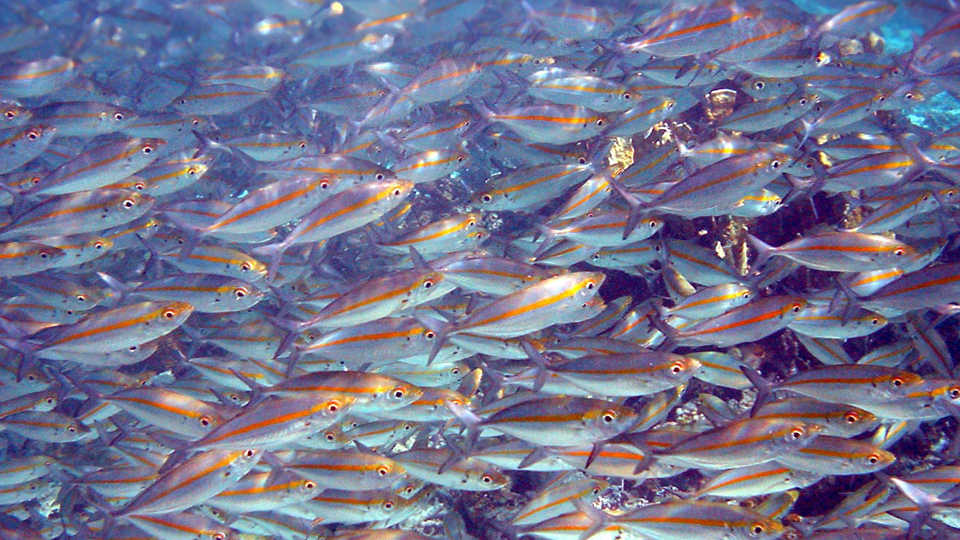
Pretty Fishes: If you feel like chilling out and having something mesmerizing to look at, put on the live Reef Lagoon Cam at the California Academy of Sciences.

One small thing: The Superbloom…by drone

Credit: Erik Olsen

Sure, you’ve seen all the lovely pictures, but have you seen the Superbloom by drone? Here at the California Science Weekly we decided to visit the Superbloom near Lancaster, but rather than simply take pictures, we busted out our drone to bring you a few images of the rare California Superbloom. Enjoy!

Design by Luis Ramirez

CalTech’s famous fly lab, Saving California’s rare fruit, Atomic microscope, Winter snowfall earthquakes, Brain enhancement drugs, Mars copter

Week of April 5, 2019


Here at the California Science Weekly, we are working hard to bring you the most interesting, informative and entertaining stories about science in the state of California. Every week, we pore through hundreds of articles and Web sites to find the top stories that we believe are worthy of your time. We will also be writing feature stories, developing a podcast and producing a video series that will take our content offerings to a whole new level. We hope you’ll stay with us and share our work with others via Twitter and Facebook. If there is anything you’d be interested in learning more about, send us a note, and let us know.

Biology

An homage to Cal Tech’s fly lab

Credit: Sanjay Acharya

Few critters in the history of science have been as important to our understanding of life as the humble fruit fly. The genus Drosophila melanogaster holds a particularly esteemed spot among the dozens of model organisms that provide insight into life’s inner workings. Much of the work has taken place, and is taking place now, right here in California.

CalTech Magazine has a wonderful story by Lori Dajose about the crucial role the fruit fly has played in science and why we should all revere this underappreciated insect.

The story begins in 1906 at Columbia University in the fly lab Thomas Hunt Morgan, whose work with white-eyed mutants established chromosomes as the pathway of inheritance for genes. Morgan made his way to CalTech in 1928 to found the school’s Division of Biology, and ever since then, the school has been a launching pad for ground-breaking research (and a few Nobel Prizes) using fruit flies.

Other notable names involved in fruit fly research include Ed Lewis, who helped standardize fruit fly food, but more importantly discovered how Hox genes control embryonic development (for which he won the 1995 Nobel Prize) and Seymour Benzer, a pioneer the field of neurogenetics and the subject of one of our favorite science books of all time here at the CSW: Jonathan Weiner’s Time, Love, Memory: A Great Biologist and His Quest for the Origins of Behavior. The breakthroughs made in Benzer’s Fly Rooms form the basis of much of our current understanding of genes and behavior.

The essay goes on to describe the great work that continues at CalTech with researchers like Elizabeth Hong, who is investigating how the brain orders and encodes complex odors, David Anderson, who studies emotions and behaviors, and Michael Dickinson, whose lab investigates how the tiny fruit fly brain gives rise to flight. So much to learn from one little insect and one great institution.

CalTech Magazine


Agriculture

Saving California’s fruit

Credit: C. Todd Kennedy

Two hours south of San Francisco, a lawyer turned horticulturalist named C. Todd Kennedy is helping preserve America’s agricultural legacy.  Todd is one of California’s premier experts on fruit. As a co-founder of the Arboreum Company, he has single-handedly saved numerous rare varieties of so-called stone fruit like peaches, plums, and apricots from possibly disappearing forever.

Atlas Obscura


Physics

UCI researchers see life’s vibrations

“Credit: Steve Zylius / UCI

Using a cutting edge new type of microscope, scientists at the University of California, Irvine have for the first time captured images of the way that a molecule vibrates down at the atomic level. These vibrations drive the chemistry of all matter, including the function of living cells. “From structural changes in chemistry to molecular signaling, all dynamical processes in life have to do with molecular vibrations, without which all would be frozen,” said co-author V. Ara Apkarian, a UCI Distinguished Professor of chemistry. 

The breakthrough was published in a paper in the science journal Nature. The advance could open up new ways of seeing and understanding the sub-microscopic/ atomic world. The research was conducted at UCI’s Center for Chemistry at the Space-Time Limit, maybe the coolest name for a lab ever.

UCI


Geology and earthquakes

Could winter storms cause earthquakes?

All the snow we’ve been getting in the high Sierras may cause skiers and farmers to rejoice, but a new study from Emily Montgomery-Brown at the US Geological Survey in Menlo Park, California, suggests a connection between the heavy runoff following record snowfall in the Sierra Nevada and small earthquakes. Using historical records, Montgomery-Brown and others have determined that small earthquakes occur 37 times more often when there is high runoff from melting snowpack. One theory is that the water permeates the ground and changes pressures deep down within faults, leading to small quakes.

Nature


Health

Are we ready for brain enhancement?

You have probably never heard of Klotho, but according to a story by Carl Zimmer in the New York Times, this mysterious hormone could one day lead to a way to prevent, or even enhance, cognitive ability.

Research on mice by Dr. Dena Dubal at the University of California, San Francisco, suggests that Klotho protects mice from cognitive decline, likely due to Alzheimer’s disease. The mice bred to make extra Klotho also performed better running mazes and in other cognitive tests. “Klotho didn’t just protect their brains, the researchers concluded — it enhanced them,” writes Zimmer. Further research suggests that Klotho could also extend life.

In March, Dr. Dubal released a study suggesting that Klotho may also protect people from Alzheimer’s disease. The Alzheimer’s Association says that 5.8 million Americans are currently living with the debilitating disease.

The bigger question that the piece raises is whether Klotho pills or gene manipulation techniques like Crispr that might stimulate Klotho production, could someday be available to humans for cognitive enhancement. In other words, brain boosting. The idea raises numerous ethical questions such as who would get access and how much would it cost? What if you could pass these enhancements on to your children? “If people could raise their SAT scores by taking a pill the night before an exam,” writes Zimmer, “that might not seem fair.”

The New York Times


Space

NASA’s JPL tests new Mars copter

It’s mind-boggling enough that we’ve been able to explore Mars using rovers big and small. But what if the next step is navigating the red planet with a vehicle that can lift off and soar above the dusty surface?

NASA’s Jet Propulsion Laboratory (JPL) is testing a new helicopter, a small, autonomous rotorcraft weighing about four pounds, that will travel with the Mars 2020 rover, one of JPL’s most ambitious projects ever. The 2020 rover is currently scheduled to launch in July 2020 and is expected to reach Mars in February 2021. The vehicle has been in development since August 2013 at JPL’s testing facility in La Canada Flintridge, California.

Flying a copter on Mars is a lot more challenging than doing so on earth. The thin atmosphere means that the copter’s blades will have to spin at almost 3,000 rpm, about 10 times the rate of a helicopter on Earth. Then there is the Martian climate with dust storms and temperatures that can fall as low as minus 130 degrees Fahrenheit.

The copter project is only one small part of the larger Mars 2020 mission, and is considered a high-risk, high-reward project. If it fails, it won’t impact the mission’s larger goals, including answering key questions about the potential for life on Mars.

Last year, JPL released this informative video about the project.

JPL


Design by Luis Ramirez