Transforming California’s Oil Platforms into Marine Sanctuaries

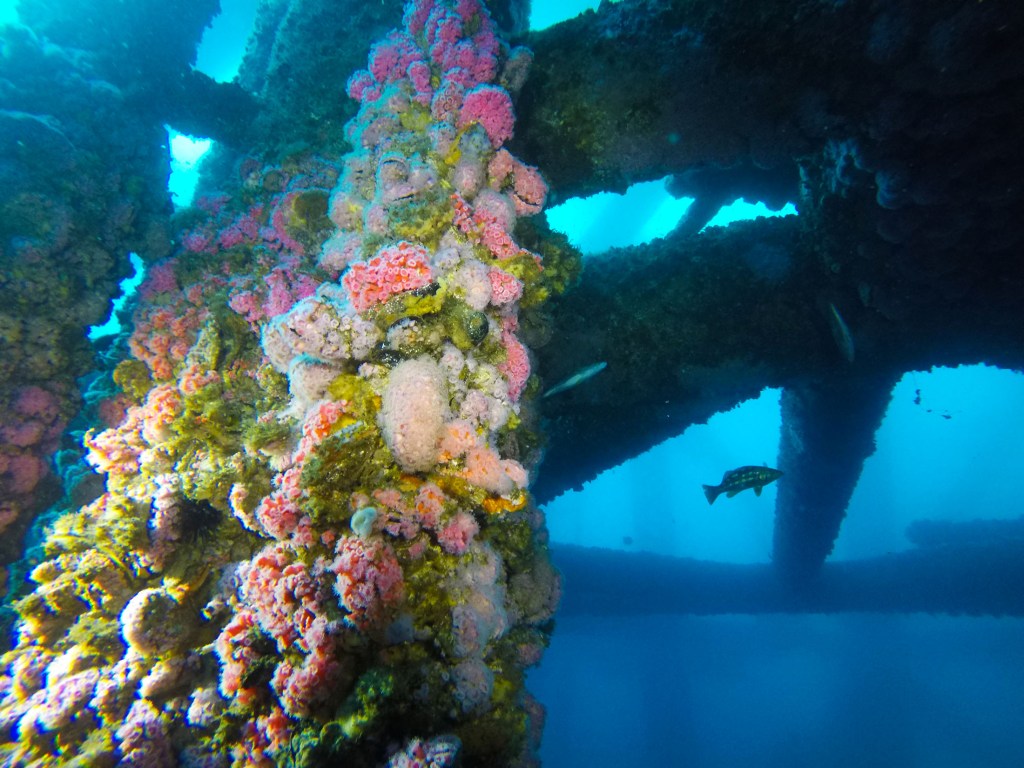
An abundance of sea life is thriving on the substructure beneath the Eureka oil rig in Southern California (Erik Olsen)

If I told you that some of the richest, densest communities of marine life anywhere in the world thrive off California, you might not be surprised. We all know California has a vibrant marine ecosystem offshore. But if I told you that much of that life clings to the submerged steel legs of offshore oil rigs, you might pause, blink, and say: really?

The answer is yes.

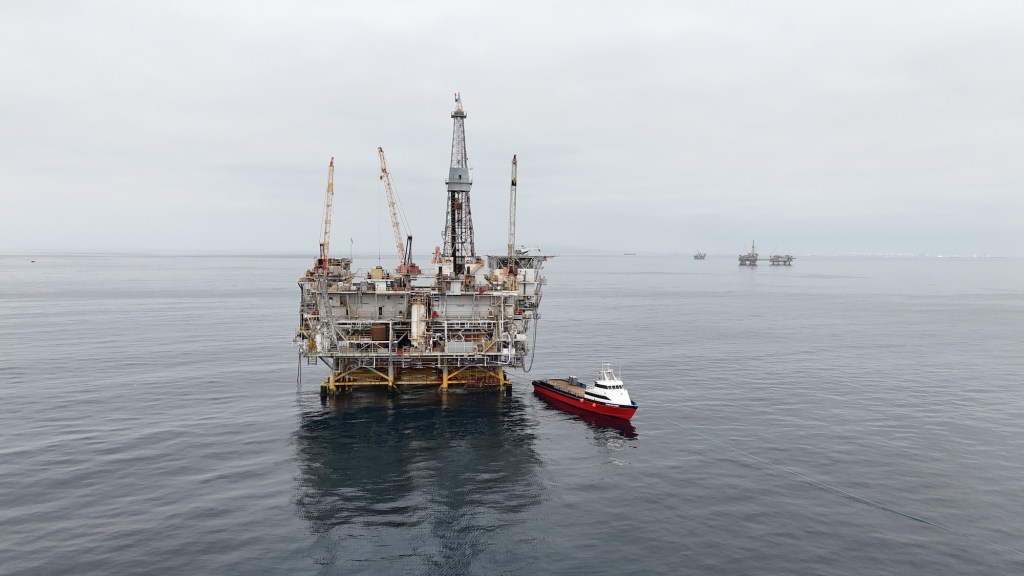
I know because I have dived a few of them several times. Most recently this November, when I took a dive boat called the Giant Stride out of San Pedro and motored 12 miles out to the Eureka platform, which sits in 700 feet of water. From the deck, the rig looms like a floating city of steel and shadow, its massive pylon legs disappearing into the depths below.

The Eureka oil rig off the coast of California from the Giant Stride dive boat. An industrial behemoth above water, beneath, it is home to an immense diversity of sea life. (Photo: Erik Olsen)

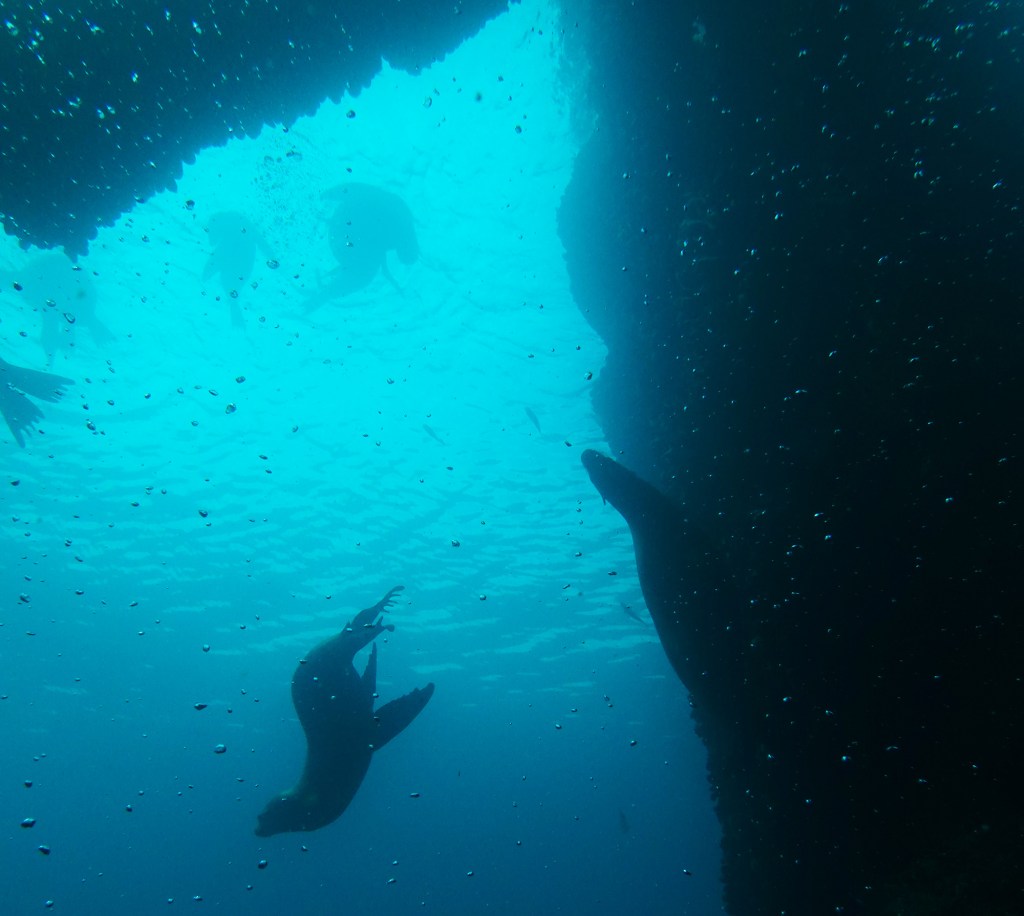
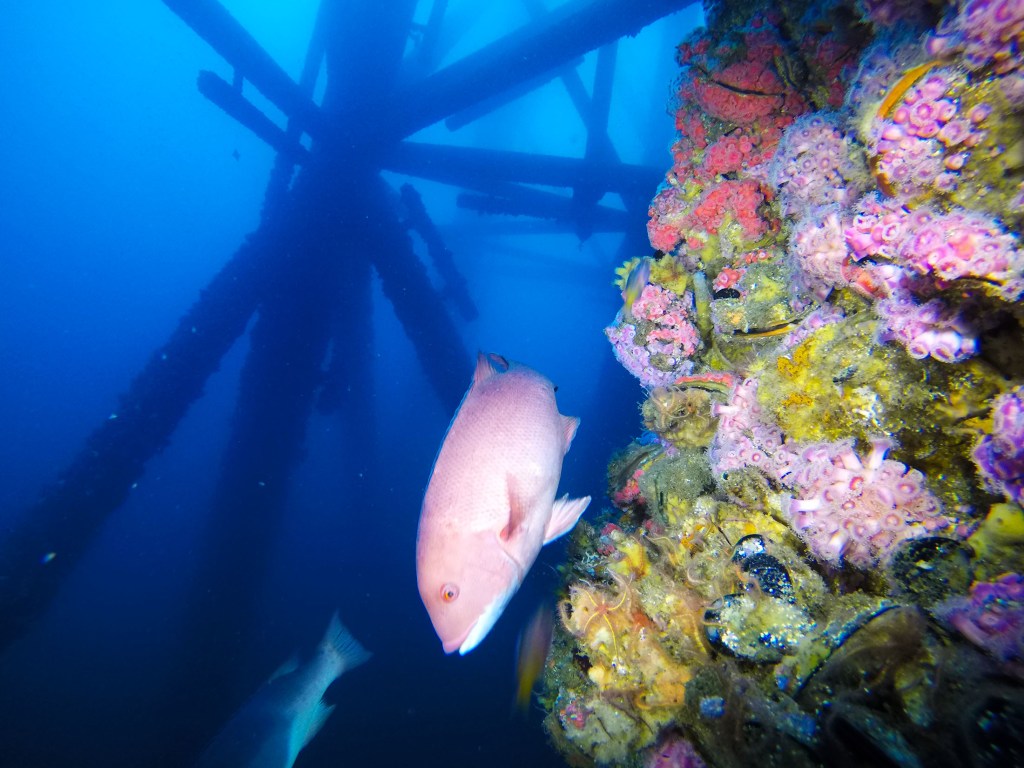
But below the surface is another world, one teeming with millions of colorful fish, including blazing orange garibaldi, schools of dark blue blacksmiths, halfmoons, calico bass, yellowtail, and even the occasional mola mola or sunfish. A few rigs are the playground of scores of jubilant sea lions, many of them precocious youngsters that swoop and spin in the waters beneath the massive structure of the rigs like children let loose in a grassy park.

Playful sea lions frolic around the rigs beneath the surface. (Photo: Erik Olsen)

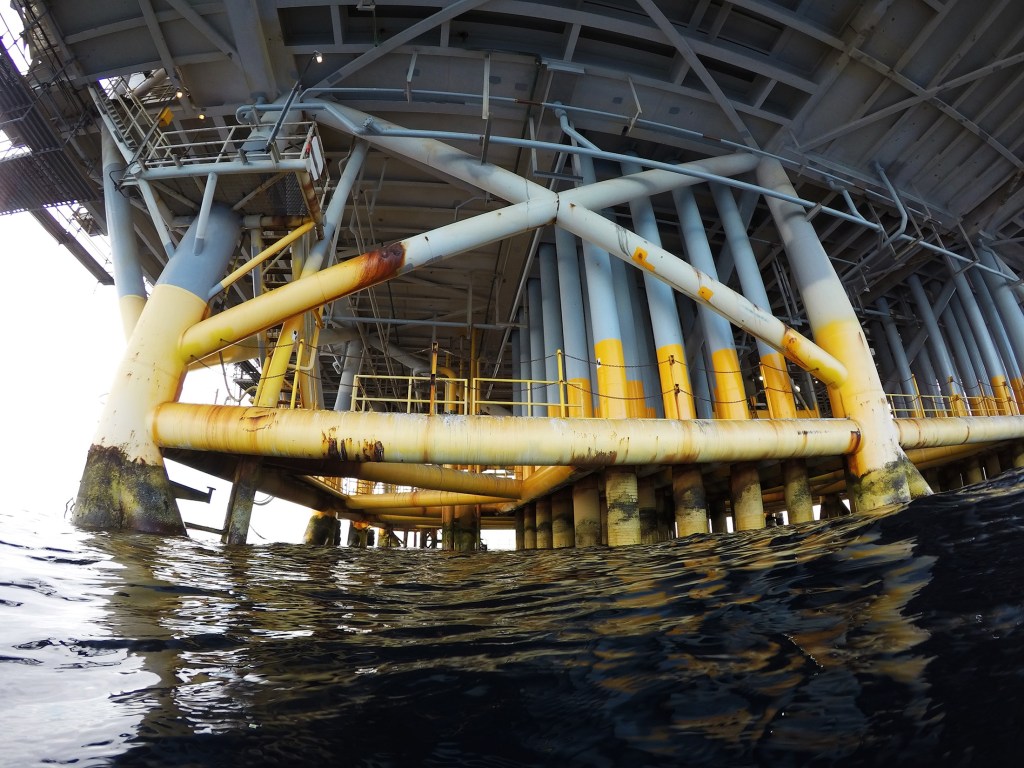
And then there are the pylons themselves and the life they support. Made of welded steel, these massive structures hold the entire oil platform above the water, millions of tons of machinery and deck space, often topped by a helicopter pad, all balanced on the integrity of engineering. Some descend straight down into the darkening waters, while others are reinforced by diagonal braces and horizontal crossbeams, a lattice of intersecting steel that keeps the rig steady against waves and wind.

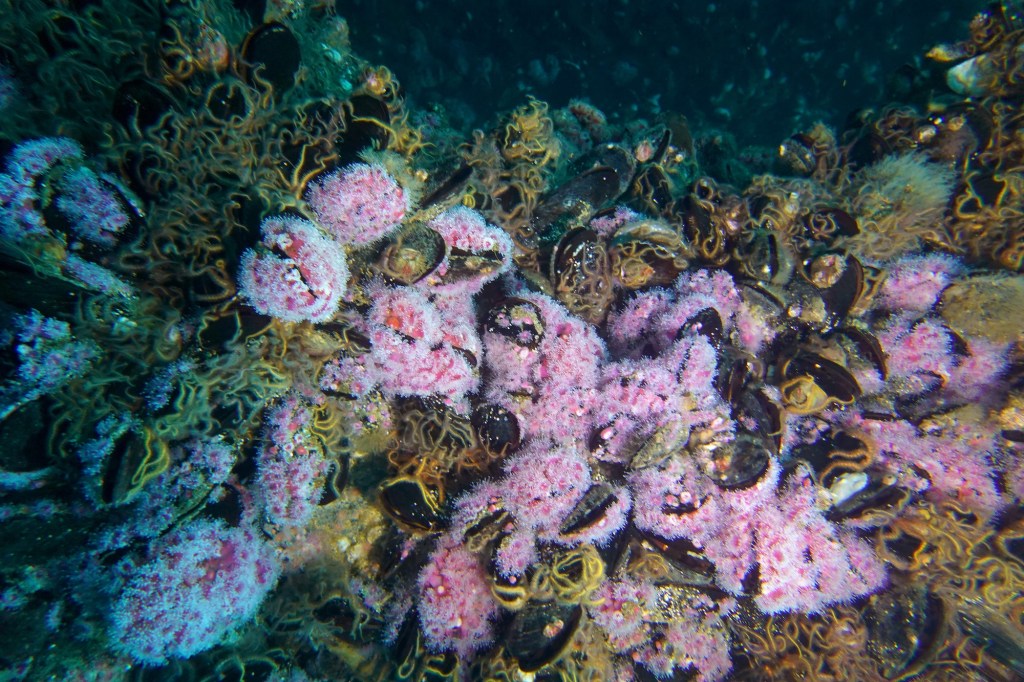
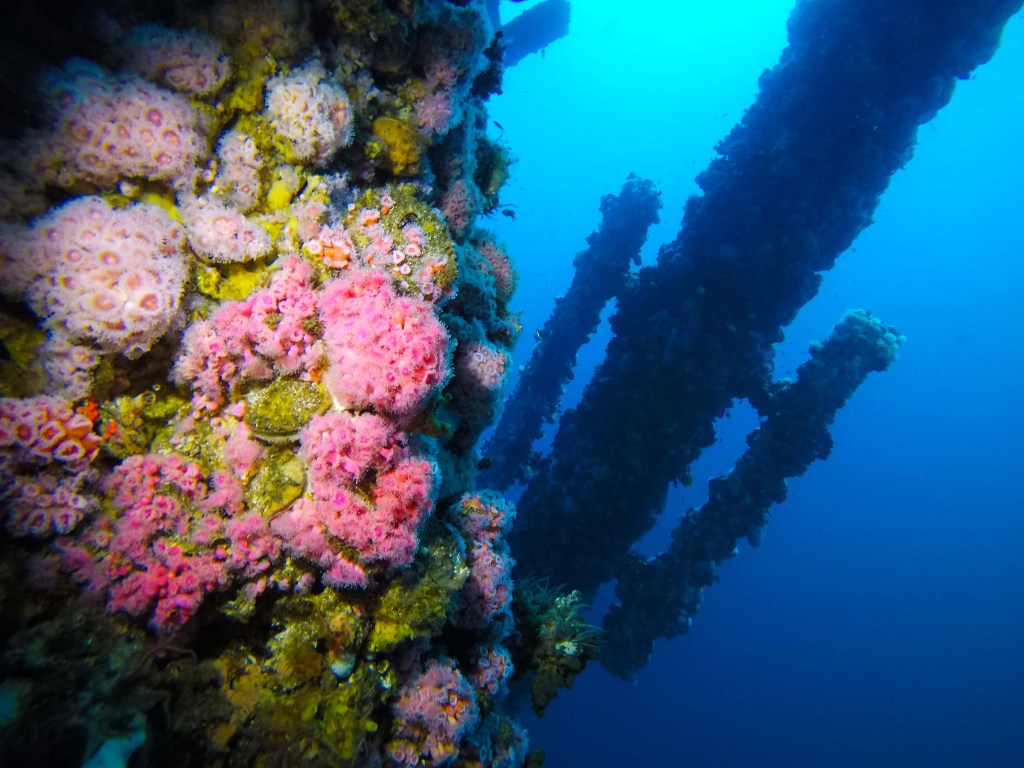
But up close, you can hardly make out the metal. The substructure is so encrusted with life, layers of scallops, brittle stars, mussels, anemones, barnacles, and sponges, that the steel beneath has vanished into a living reef. In some areas, there are thousands of brittle stars clinging to the structure, they lie so thick on it that it’s hard to imagine how they compete for food. But food here is plentiful, and that abundance is one reason these rigs harbor so much life. They stand near the edge of the continental shelf, where the seafloor plunges into deeper water and cold, nutrient-rich currents surge upward toward the light. Those nutrients ignite blooms of plankton, feeding swarms of tiny crustaceans and filter feeders that coat the rig’s pilings. Those smaller creatures, in turn, sustain fish, sea lions, and even passing seabirds, a food web in full expression, built around the steel spine of an oil platform.

Brittle stars, mussels and other oprganisms blanket the rig supports in incredible numbers. (Photo: Erik Olsen)

All of this is not just my observation, however. Numerous studies have been done about the life on the rigs and most of them point to an astonishing fact: these rigs are some of the most productive ecosystems on the planet. In one study, University of California Santa Barbara marine biologist Milton Love and his colleagues found that certain platforms, including Eureka, produced more fish biomass per square meter than even the most productive natural environments in the world. More than mangroves, coral reefs, estuaries, etc.

The Eureka rig off the coast of Southern California. Once built to pump oil, it’s now also home to sea lions, fish, and a reef of life growing on its legs below the waves. (Photo: Erik Olsen)

This is good news for everyone. But there’s more. Other research suggests that the life flourishing on these offshore rigs doesn’t stay confined to them; it drifts, swims, and spawns its way back toward the coast, helping to replenish nearshore habitats. Rockfish are a perfect example. Once severely overfished, several species have made a remarkable comeback in California waters, perhaps due in part to these structures. As we wrote recently, the recovery of rockfish is one of the state’s quiet success stories.

But there’s a hitch.

Pick up some California wildlife gifts at our Etsy store. Seriously, they’re cool.

Several of these rigs are now nearing, or have already reached, the end of their productive lifespan, meaning that they no longer produce much oil. What should be done with them? In California, when offshore oil rigs reach the end of their productive life, state law mandates their decommissioning, which involves safely plugging wells, dismantling structures, and restoring the environment. Traditionally, this has meant full removal of the platform and associated infrastructure: a very expensive proposition, likely costing in the billions of dollars.

Clusters of mussels and strawberry anemones (Corynactis californica) coat the rig’s submerged structure in a dense mosaic of color. They form living carpets over the steel, while mussels, bryozoans, and brittle stars fill the gaps between them. (Photo: Erik Olsen)

However, the California Marine Resources Legacy Act (AB 2503), enacted in 2010, introduced an alternative known as the “rigs-to-reefs” program. This legislation allows oil companies to apply for permits to partially remove decommissioned rigs, essentially shearing off the part of the structure above water and leaving a portion of it underwater to serve as artificial reefs. Obviously they’d do it deep enough, about 80 feet, that the structure would not become a hazard to ship traffic. The goal is to enhance marine habitats by preserving the ecosystems that have developed around these structures over time. Rig removal is a growing billion-dollar-a-year business, and by removing only part of the rig and leaving behind the rest, an oil company can save millions in decommissioning costs.

As of January 2024, there are eight offshore production platforms in various stages of decommissioning; several have had multiple owners and operators. It’s complicated, but the biggest issue is liability. That is, what happens down the line when there is a leak, or if the plugging of the wells was done improperly? Who pays for that? This is all being hashed out, as it has been for some 20 years now. Californians hate oil washing up on their beaches. Many hate the idea of the oil companies getting a financial break after plundering the sea floor for oil. But there is no denying that all that life is there. You can see it. And, as Milton Love said: “If you remove a platform, you may be killing tens of millions of animals because they happened to settle on steel instead of a rock. Which I think is a tragedy.”

Substructure of the Eureka rig above water in California (Erik Olsen)

Oil companies have not used California’s Rigs-to-Reefs law because it leaves them financially and legally burdened. They must keep long-term liability for the structures and give up to 80 percent of their cost savings to the state, which makes full removal simpler and less risky than the complex and politically sensitive reefing process.

And so, as some of these platforms near the end of their productive lives, a significant debate has emerged over their future. Should they be removed entirely, or could they be repurposed into artificial reefs that continue to support marine biodiversity? The discussion is not just about engineering challenges or environmental concerns; it’s about reimagining the relationship between human infrastructure and the natural world.

Amber Sparks led the expedition I took out to the rigs. I’ve dived with her several times before and believe she’s a passionate advocate for sea life and for a healthy offshore California marine ecosystem. She and her co-founder Emily Hazelwood are strong supporters of reefing the rigs, and through their work with Blue Latitudes, they collaborates with scientists, government agencies, and oil companies to explore ways decommissioned platforms could be transformed into permanent marine habitats rather than dismantled and removed.

“The big question is, are these structures good habitat that should be left in place to continue to thrive as reefs, or should they be removed? In my opinion, they would be really valuable to be left in place as reefs.”

A brittle star falls through the water column beneath the Eureka rig (Erik Olsen)

So where do things stand today? A December 2023 Public Environmental Impact Statement (PEIS) from the Bureau of Safety and Environmental Enforcement and Bureau of Ocean Energy Management marks the most recent major development in the offshore rig debate, and it could significantly shape future decommissioning of California’s oil platforms. Though the PEIS identifies partial removal as the environmentally preferable option (italics mine) because it would preserve the habitat of existing biological communities, the agencies involved selected “Alternative 1a”, mandating complete removal of platform jackets and associated infrastructure offshore southern California. The final decision over what to do with the rigs has not yet been made, but the current wisdom suggests that they may have to go. As a diver and novice fisherman, I consider this a shame.

Public opposition to “big oil” remains strong in California, fueling demands among small but vocal groups for the complete removal of oil rigs, despite the potential loss of coral-like ecosystems. Environmental groups like the Natural Resources Defense Council argue that retaining any portion of these structures enables the oil industry to persist as an environmental threat.

Beneath the surface of a California oil rig, a vibrant colony of pink strawberry anemones transforms industrial infrastructure into an underwater oasis. (Erik Olsen)

“People here have been waiting for these oil platforms to go away,” Linda Krop, an environmental lawyer with the Environmental Defense Center, an advocacy group based in Santa Barbara, told the me when I reported on this for the New York Times. Ms. Krop challenged the notion that the science definitively supports the role of rigs in fostering marine life. She argued that leaving the rigs in place would effectively reward polluters by allowing them to avoid the expense of removal.

Globally, the concept of Rigs-to-Reefs has seen success, particularly in the Gulf of Mexico, where over 500 platforms have been converted into artificial reefs. These structures have become magnets for fish and invertebrates, supporting commercial and recreational fishing and diving industries. However, critics argue that not all programs are created equal. In some regions, lax regulations have allowed oil companies to avoid fully addressing environmental risks, leaving behind structures that degrade over time and release pollutants. California’s approach, with its stringent oversight and commitment to environmental benefits, aims to avoid these pitfalls while maximizing ecological gains.

The oil rigs substructure provides a fascinating contrast to the life on large sections of it. (Erik Olsen)

What happens to California’s oil platforms will reveal how the state chooses to balance economic legacy with ecological responsibility. Few would argue that oil companies deserve further rewards after decades of drilling and profits, yet the decision ahead is not so simple, it is about what becomes of the ecosystems that have grown around their steel foundations. There should be a way to move forward responsibly, one that removes the risk and legacy of drilling while preserving the thriving marine life that has made these structures their home.

The Happy Nut: California’s Rise to Pistachio Power

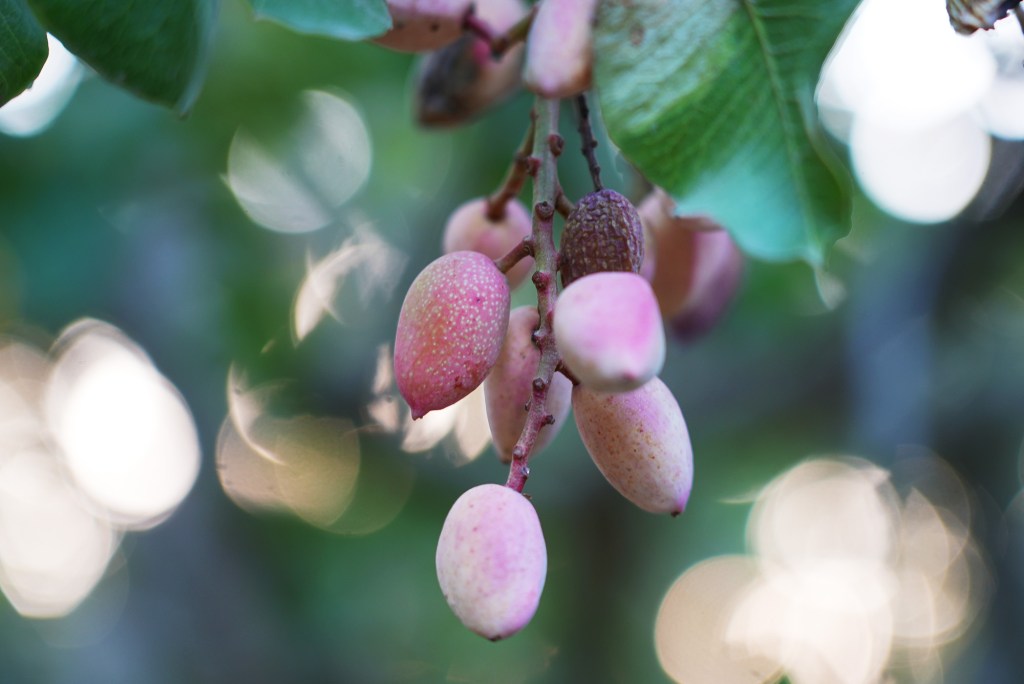
Pistachios grow on a tree in the Central Valley (Photo: Erik Olsen)

I just got back from a filming assignment in California’s Central Valley. That drive up I-5 and Highway 99 is always a strange kind of pleasure. After climbing over the Grapevine, the landscape suddenly flattens and opens into a vast plain where farmland and dry earth stretch endlessly in every direction. A pumpjack. A dairy farm. Bakersfield. There’s a mysterious, almost bleak beauty to it. Then come the long stretches where the view shifts from dust to trees: pistachio trees. Especially through the San Joaquin Valley, miles of low, gray-green orchards extend to the horizon. At various points, I busted out a drone and took a look, and as far as I could see, it was pistachio trees. A colorful cluster of pistachios hung from a branch and I picked on and peeled off the fruity outer layer. There was that familiar nut with the curved cracked opening. The smiling nut.

California now grows more pistachios than any place on Earth, generating nearly $3 billion in economic value in the state. Nearly every nut sold in the United States, and most shipped abroad, comes from orchards in the Central Valley. The state produces about 99 percent of America’s pistachios, and the U.S. itself accounts for roughly two-thirds of the global supply. And that all happened relatively quickly.

When the U.S. Department of Agriculture began searching for crops suited to the arid West in the early 1900s, the pistachio was an obvious choice. In 1929, a USDA plant explorer named William E. Whitehouse traveled through Persia collecting seeds. Most failed to germinate, but one, gathered near the city of Kerman, produced trees that thrived in California’s dry heat. The resulting Kerman cultivar, paired with a compatible male variety named Peters, became the foundation of the modern industry. Every commercial orchard in California today descends from those early seeds.
For decades, pistachios were sold mainly to immigrants from the Middle East and Mediterranean. It wasn’t until the 1970s that California growers, backed by UC Davis researchers and improved irrigation, began planting on a large scale. By the early 1980s, they had found their perfect home in the southern San Joaquin Valley—Kern, Tulare, Kings, Fresno, and Madera Counties—a region with crazy hot summers, crisp winters…according to researchers, the kind of stress the trees need to flourish.

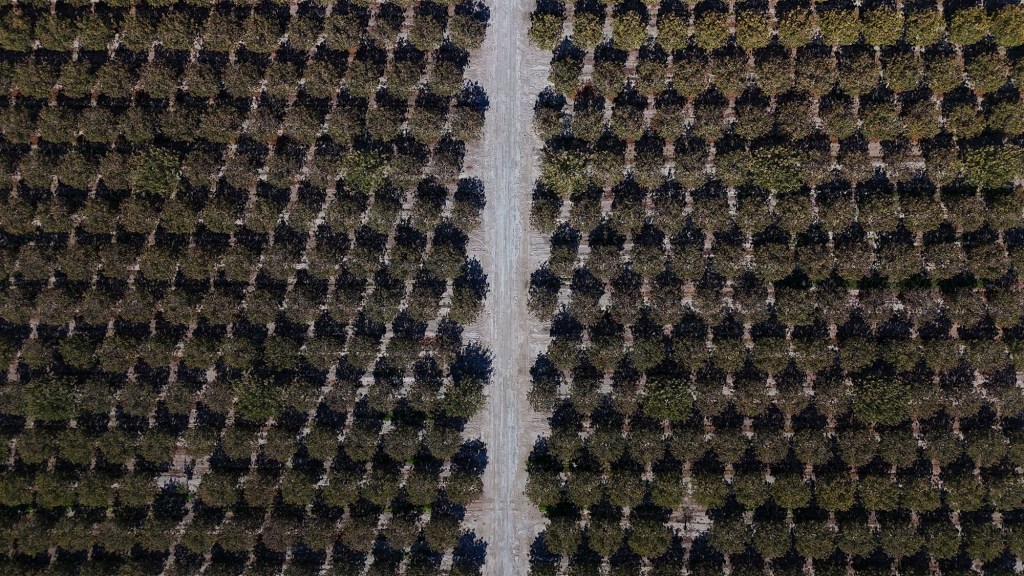
Pistachio trees in the Central Valley of California (Photo: Erik Olsen)

Then came The Wonderful Company, founded in 1979 by Los Angeles billionaires Stewart and Lynda Resnick. From a handful of orchards, they built an empire of more than 125,000 acres, anchored by a vast processing plant in Lost Hills. Their bright-green “Wonderful Pistachios” bags and silly “Get Crackin’” ads turned what was once an exotic import into a billion-dollar staple.

But the company’s success is riddled with controversy. Mark Arax wrote a scathing piece a few years ago about the Resnicks in the (now, sadly defunct) California Sunday Magazine. The Resnicks have been criticized for their immense control over California’s water and agriculture, using their political influence and vast network of wells to secure resources that many see as public goods. Arax described how the couple transformed the arid west side of the San Joaquin Valley into a private agricultural empire, while smaller farmers struggled through droughts and groundwater depletion. “Most everything that can be touched in this corner of California belongs to Wonderful,” Arax writes. (Side note: Arax’s The Dreamt Land made our recent Ten Essential Books About California’s Nature, Science, and Sense of Place.)

And yes, pistachios have been immensely profitable for the Resnicks. Arax write: “All told, 36 men operating six machines will harvest the orchard in six days. Each tree produces 38 pounds of nuts. Typically, each pound sells wholesale for $4.25. The math works out to $162 a tree. The pistachio trees in Wonderful number 6 million. That’s a billion-dollar crop.”

Pistachios at golden hour. (Photo: Erik Olsen)

Alas, California’s pistachio boom carries contradictions. The crop is both water-hungry and drought-tolerant, a paradox in a state defined by water scarcity. Each pound of nuts requires around 1,400 gallons of water, less than almonds, but still a heavy draw from aquifers and canals. Pistachio trees can survive in poor, salty soils and endure dry years better than most crops, yet once established, they can’t be left unwatered without risking long-term damage. Growers call them a “forever crop.” Plant one, and you’re committed for decades.

The pistachio has reshaped the Central Valley’s landscape. Once a patchwork of row crops and grazing land, vast acres are now covered in pistachio orchards, the ones I was recently driving through.

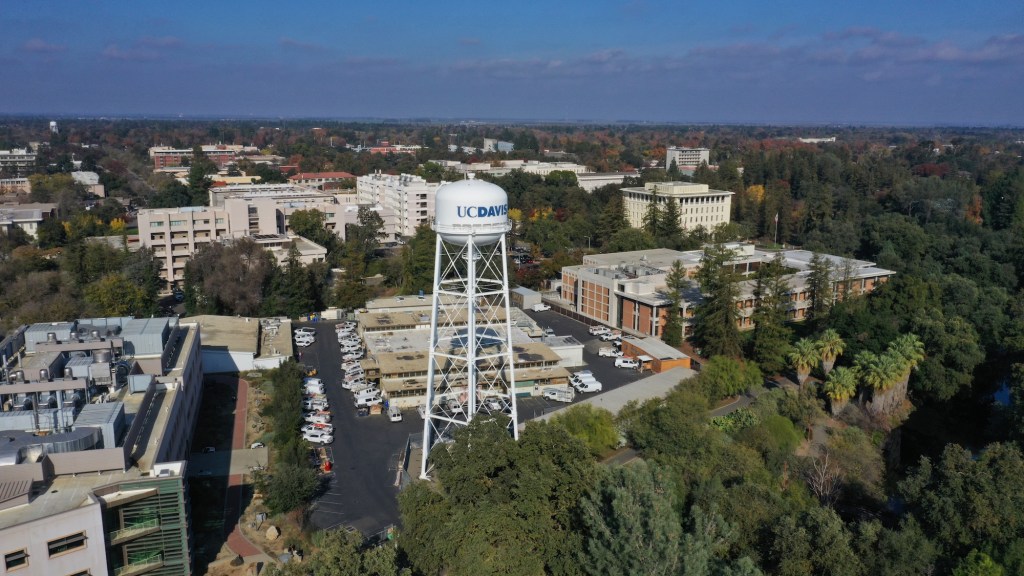
Pretty much everyone growing anything in California – pistachios, almonds, strawberries (especially strawberries) – can thank the University of California at Davis for help in improving their crops and managing problems like climate change and pests. Davis is a HUGE agricultural school and has many programs to help California farmers.

UC Davis is one of the world’s leading research centers for nuts, especially pistachios, almonds, and walnuts. Scientists here study everything from drought-tolerant rootstocks to disease resistance and pollination, making it the quiet engine behind California’s multibillion-dollar nut industry. (Photo: Erik Olsen)

In the case of the pistachio, recent research at UC Davis has shed new light on the tree’s genetic makeup. Scientists there recently completed a detailed DNA map of the Kerman variety, unlocking the genetic controls of kernel size, flavor compounds, shell-splitting behaviour and climate resilience. The idea is to help growers by making pistachios adapt to hotter, drier conditions. UC Davis is now one of the world’s leading centers for pistachio and nut science.
Here’s something I’ll bet you didn’t know: pistachios can spontaneously combust. Pistachios are rich in unsaturated oils that can slowly oxidize, generating enough heat to ignite large piles if ventilation is poor. Shipping manuals classify them as a “spontaneous-combustion hazard”, a rare but real risk for warehouses and freighters hauling tons of California pistachios across the world. Encyclopedia Britannica notes they are often treated as “dangerous cargo” at sea.
Now, some pistachio biology: The pistachio is dioecious, meaning male and female flowers grow on separate trees. Almonds are not. Farmers plant one male for every eight to ten females, relying on wind for pollination. The trees follow an alternate-bearing cycle, heavy one season, light the next. They don’t produce a profitable crop for about seven years, but once mature, they can keep producing for half a century or more.

California grows nearly all of America’s pistachios, and most of them come from the empire built by Lynda and Stewart Resnick, the power couple behind the Wonderful Company. Their orchards stretch across hundreds of thousands of acres in the Central Valley, transforming a desert landscape into one of the most lucrative nut operations in the world.

Another strange quirk of pistachios is that they are green and, if you look closely, streaked with a faint violet hue. The green comes from chlorophyll, the same pigment that gives leaves their color, which in pistachios lingers unusually long into the nut’s maturity. Most seeds lose chlorophyll as they ripen, but pistachios retain it, especially in the outer layers of the kernel. The purple tint, meanwhile, comes from anthocyanins, antioxidant pigments also found in blueberries and grapes.

As I walked among the pistachio trees recently, I marveled at how alone I was on one of the dirt roads off Highway 99. Not a soul in sight, only the hum of irrigation pumps and the rattle of dry leaves in the breeze. I like to write about the things we all see and experience in California but rarely stop to look at closely. Pistachios are one of those things. If you’ve ever driven through the San Joaquin Valley, you’ve seen how the landscape stretches for miles in orderly rows of pistachio trees. It’s easy to forget, amid the fame of Silicon Valley and Hollywood, that so much of California’s wealth still comes from the land itself, from agriculture and other extractive industries. The pistachio boom is a story of astonishing scale, but it’s also riven with the contradictions and complexities of modern California itself, where innovation and exploitation often grow from the same soil.

Get California wildlife gifts at our Etsy store. It helps support us!

Ten Essential Books About California’s Nature, Science, and Sense of Place

You can scroll endlessly through TikTok and Instagram for quick bursts of California’s beauty, but to truly sink into a subject, and to savor the craft of a great writer, you need a book. I’m an avid reader, and over the past decade I’ve dedicated a large section of my bookshelf to books about California: its wild side, its nature, and its scientific wonders.

There are surely many other books that could be included in this top ten list, but these are the finest I’ve come across in the years since returning to live in the state.They capture the extraordinary diversity of California’s landscapes and wildlife, found nowhere else on Earth, and many also explore issues and themes that hold deep importance for the state and its people. Although I’ve read some of these titles digitally, I love having many of them in print, because there are few things more satisfying than settling into a beach, a forest campsite, or a favorite chair at home with a beautifully made book in hand.


California Against the Sea: Visions for Our Vanishing Coastline by Rosanna Xia

I first discovered Rosanna Xia’s work through her stunning exposé on the thousands of DDT barrels found dumped on the seafloor near Catalina Island. It remains one of the most shocking, and yet not technically illegal, environmental scandals in California’s history.

Her recent book, California Against the Sea: Visions for Our Vanishing Coastline, is a beautifully written and deeply reported look at how California’s coastal communities are confronting the realities of climate change and rising seas. Xia travels the length of the state, from Imperial Beach to Pacifica, weaving together science, policy, and personal stories to show how erosion, flooding, and climate change are already reshaping lives. What makes the book stand out is its relative balance; it’s not a screed, nor naïvely hopeful. It nicely captures the tension between human settlement — our love and need to be near the ocean — and the coast’s natural (and unnatural, depending on how you look at it) cycles of change.

Xia is at her best when exploring adaptation and equity. She reminds us that even if emissions stopped today, the ocean will keep rising, and that not all communities have equal means to respond. The stories of engineers, Indigenous leaders, and ordinary residents highlight how resilience and adaptation must be rooted in local realities. I was especially drawn to Xia’s account of the California Coastal Commission, a wildly controversial agency that wields immense power over the future of the shoreline. Yet it was the commission and its early champions, such as Peter Douglas, who ensured that California’s coast remained open and accessible to all, a decision I consider one of the greatest legislative achievements in modern conservation history.

Thoughtful, accessible, and rooted in the coast we all care about, California Against the Sea challenges us to ask a pressing question: how can we live wisely, and with perspective, at the edge of a changing world?

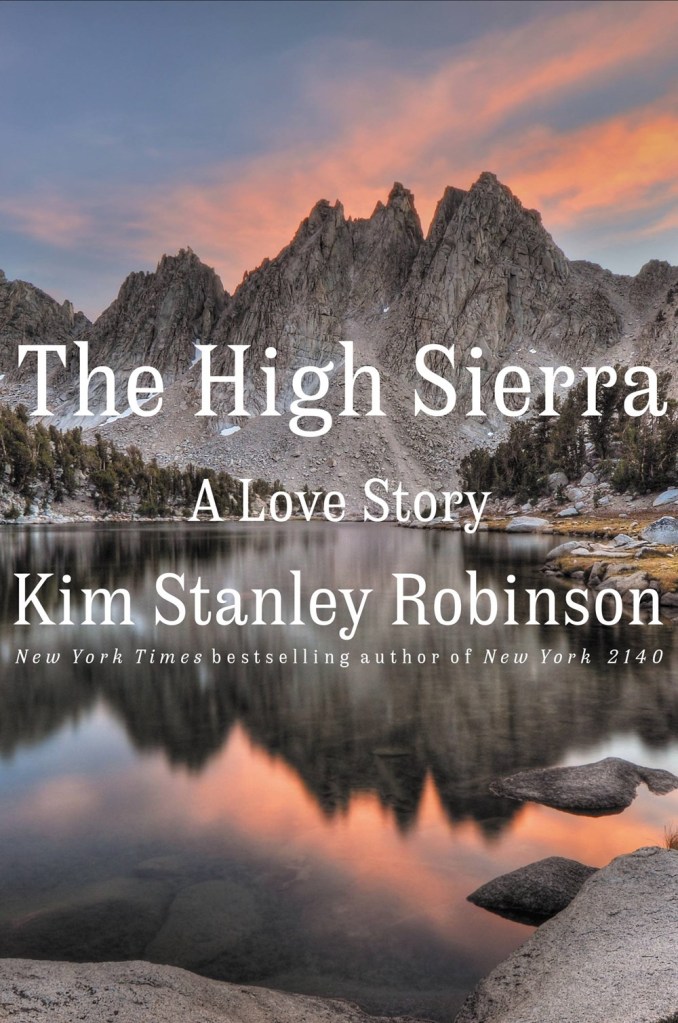
The High Sierra: A Love Story by Kim Stanley Robinson

Kim Stanley Robinson’s The High Sierra: A Love Story is an expansive, heartfelt tribute to California’s most iconic mountain range. Because of the Sierra’s vast internal basins, which are missing from many of the world’s other great mountain ranges, Robinson argues they are among the best mountains on Earth. His point is hard to refute. He makes a convincing case that the Sierra Nevada may be the greatest range in the world, formed from the planet’s largest single block of exposed granite and lifted over millions of years into its dramatic present shape.

Blending memoir, geology (my favorite part of the book), and adventure writing, Robinson chronicles his own decades of exploration in the Sierra Nevada while tracing the forces — glacial, tectonic, and emotional, that shaped both the landscape and his own life.

Considered one of our greatest living science fiction writers (I’ve read Red Mars — long, but superb — and am currently reading The Ministry for the Future — the opening chapter is gripping and terrifying), Robinson might seem an unlikely guide to the granite heights of California. Yet reading The High Sierra: A Love Story reveals how naturally his fascination with imagined worlds extends into this very real one. The drama of the range, with its light, vastness, and sculpted peaks and basins, feels like raw material for his other universes.

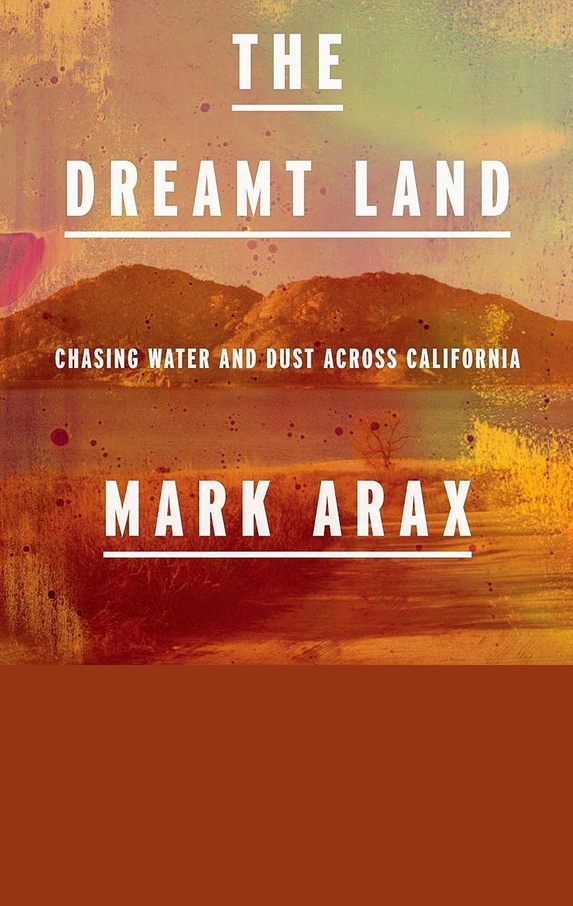
The Dreamt Land by Mark Arax

The Dreamt Land is a portrait of California’s Central Valley, where the control of water has defined everything from landscape to power (power in the form of hydroelectric energy and human control over who gets to shape and profit from the valley’s vast resources). Blending investigative journalism, history, and memoir, Arax explores how the state’s rivers, dams, and aqueducts turned desert into farmland and how that transformation came at immense ecological and social cost.

I’ve read several Arax books, but this one is my favorite. He’s one of the finest writers California has produced. He writes with passion and clarity, grounding his ideas in decades of firsthand experience with California’s land and water. His focus on the fertile Central Valley, where he grew up as a reporter and farmer’s son, gives the book both intimacy and authority, revealing how decisions about water shape not just the landscape but the people who depend on it. There are heroes and villains, plenty of the latter, and all of them unmistakably real. Yet Arax’s prose is so fluid and eloquent that you’ll keep reading not only for the story, but for the sheer pleasure of his writing.

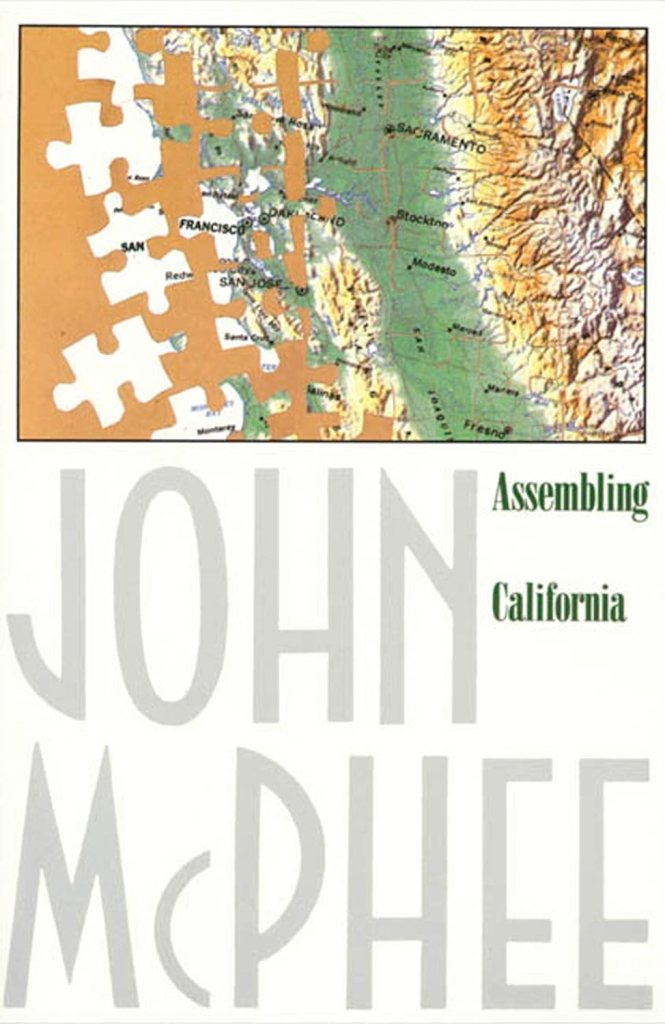
Assembling California by John McPhee (1993)

If you’re at all fascinated by California’s wild geology — and it truly is wild, just ask any geologist — this classic from one of the finest nonfiction writers alive is a must-read. McPhee takes readers on a geological road-trip through California, from the uplifted peaks of the Sierra Nevada to the fault-riven terrain of the San Andreas zone. He teams up with UC Davis geologist Eldridge Moores to explain how oceanic plates, island arcs, and continental blocks collided over millions of years to “assemble” the landmass we now call California. His prose is classic McPhee: clean, vivid, perhaps sometimes overly technical, as he turns terms like “ophiolite” and “batholith” into aspects of a landscape you can picture and feel.

What makes the book especially rewarding, especially for someone interested in earth systems, mapping, and the deep time, is how McPhee seamlessly links everyday places with deep-time events. You’ll read about gold-rush mining camps and vineyard soils, but all of it is rooted in tectonics, uplift, erosion, and transformation. I’ve gotten some of my favorite stories here on California Curated from the pages of this book. It can be ponderous at times, but you’ll not regret giving it a try.

The California Lands Trilogy by Obi Kaufman

The Forests of California (2020)

The Coasts of California (2022)

The Deserts of California (2023)

Obi Kaufman’s California Lands Trilogy is one of the most visually stunning and ambitious projects in California natural history publishing. Beginning with The Forests of California, the first of three volumes that reimagine the state not through its highways or cities but through its living systems, Kaufman invites readers to see California as a vast and interconnected organism, a place defined by its natural rhythms rather than human boundaries. Each book is filled with delicate watercolor maps and diagrams by the author himself. The result is part art book and part ecological manifesto, a celebration of the interconnectedness of California’s natural world. Kaufman’s talents as an artist are breathtaking. If he ever offered his original watercolors for sale, I’d be among the first in line to buy them. Taken together, the series forms a panoramic vision of the state’s natural environments.

That said, Kaufman’s books can be dense, filled with data, maps, and cross-references that reward slow reading more than quick browsing. If I’m honest, I tend to dip in and out of them, picking them up when I’m bored or need a break from the latest political bombshell. Every page offers something to linger over, whether it’s a river system painted like a circulatory map or a meditation on the idea of rewilding. For anyone fascinated by California’s natural systems, all Kaufman’s Field Atlases are invaluable companions endlessly worth revisiting.

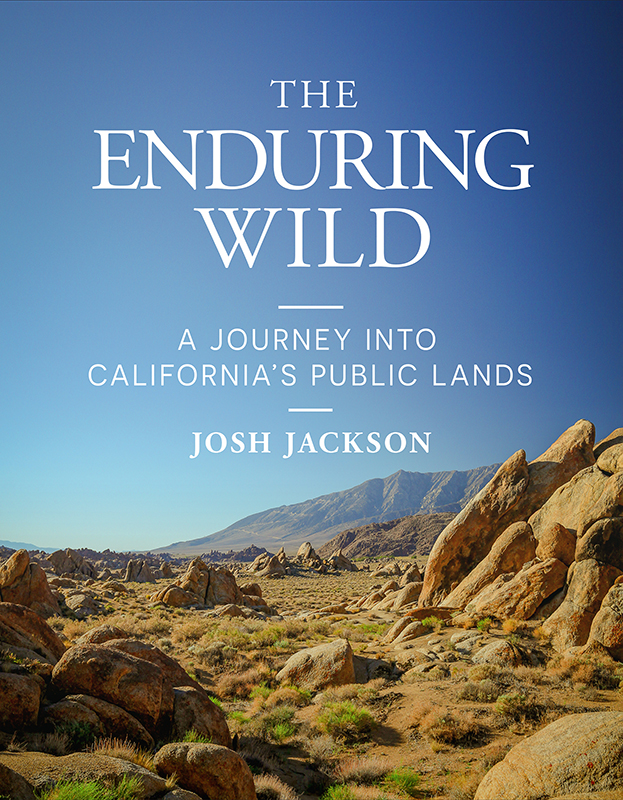
The Enduring Wild: A Journey Into California’s Public Lands by Josh Jackson

My first job out of college was with the Department of the Interior in Washington, D.C., by far by the nation’s largest land management agency. A big part of that work involved traveling to sites managed by Interior across the country. I came to understand just how vast America’s public lands are and how much of that expanse, measured in millions of acres, is under the care of the Bureau of Land Management (BLM).

Josh Jackson takes readers on a road trip across California’s often overlooked public wilderness, focusing on the lands managed by the BLM, an agency once jokingly referred to as the Bureau of Livestock and Mining. He shows how these so-called “leftover lands” hold stories of geology, Indigenous presence, extraction, and conservation.

His prose and photography (he has a wonderful eye for landscapes) together invite the reader to slow down, look closely at the subtleties of desert mesas, sagebrush plains, and coastal bluffs, and reckon with what it means to protect places many people have never heard of. His use of the environmental psychology concept of “place attachment” struck a chord with me. The theory suggests that people form deep emotional and psychological bonds with natural places, connections that shape identity, memory, and a sense of belonging. As a frequent visitor to the Eastern Sierra, especially around Mammoth Lakes and Mono Lake, I was particularly drawn to Jackson’s chapter on that region. His account of the lingering impacts of the Mining Act of 1872, and how its provisions still allow for questionable practices today, driven by high gold prices, was eye-opening. I came away with new insights, which is always something I value in a book.

I should mention that I got my copy of the book directly from Josh, who lives not far from me in Southern California. We spent a few hours at a cafe in Highland Park talking about the value and beauty of public lands, and as I sat there flipping through the book, I couldn’t help but acknowledge how striking it is. Part of that comes from Heyday Books’ exceptional attention to design and production. Heyday also publishes Obi Kaufman’s work and they remain one of California’s great independent publishers. But much my appreciation for the book also comes from from Jackson himself, whose photographs are simply outstanding.

Get California wildlife gifts at our Etsy store. It helps support us!

What makes this book especially compelling is its blend of adventure and stewardship. Jackson doesn’t simply celebrate wildness; he also lays out the human and institutional connections that shape (and threaten) these public lands, from grazing rights to mining to climate-change impacts. Some readers may find the breadth of landscapes and stories a little ambitious for a first book, yet the richness of the journey and the accessibility of the writing make it a strong addition for anyone interested in California’s endless conflict over land use: what should be used for extraction and what should be preserved? While I don’t fully agree with Jackson on the extent to which certain lands should be preserved, I still found the book a wonderful exploration of that question.

The Backyard Bird Chronicles by Amy Tan

Amy Tan’s The Backyard Bird Chronicles is a charming and unexpectedly personal journal of bird-watching, set in the yard of Tan’s Bay Area home. Tan is an excellent writer, as one would expect from a wildly successful novelist (The Joy Luck Club, among others). But she also brings a curiosity and wonder to the simple act of looking across one’s backyard. I loved it. Who among us in California doesn’t marvel at the sheer diversity of birds we see every day? And who hasn’t wondered about the secret lives they lead? A skilled illustrator as well as a writer, she studies the birds she observes by sketching them, using art as a way to closely connect with the natural world around her.

What begins as a peaceful retreat during the Covid catastrophe becomes an immersive odyssey of observation and drawing. Tan captures the comings and goings of more than sixty bird species, sketches their lively antics, as she reflects on how these small winged neighbors helped calm her inner world when the larger world felt unsteady.

My only quibble is that I was hoping for more scientific depth; the book is more of a meditation than a field study. Still, for anyone who loves birds, sketching, or the quiet beauty of everyday nature, it feels like a gentle invitation to slow down and truly look.

“Trees in Paradise” by Jared Farmer

California is the most botanically diverse state in the U.S. (by a long shot), home to more than 6,500 native plant species, about a third of which exist nowhere else on Earth. Jared Farmer’s Trees in Paradise: A California History follows four key tree species in California: the redwood, eucalyptus, orange, and palm. Through these examples, Farmer reveals how Californians have reshaped the state’s landscape and its identity. It’s rich in scientific and historical detail. I have discovered several story ideas in the book for California Curated and learned a great deal about the four trees that we still see everywhere in the California landscape.

In telling the story of these four trees (remember, both the eucalyptus and the palm were largely brought here from other places), Farmer avoids easy sentimentality or harsh judgment, instead exploring how the creation of a “paradise” in California came with ecological costs and profoundly shaped the state’s identity. While the book concentrates on those four tree categories, its detailed research and insight make it a compelling read for anyone interested in the state’s environment, history, and the ways people shape and are shaped by land.

California Is a Nobel Powerhouse

You can keep your Oscars, Emmys, Grammys, and Tonys. Take your Pulitzers, Bookers, and Peabodys, too. Even the Pritzker and the Fields Medal don’t quite measure up. For me, nothing competes with the Nobel Prize as a symbol that someone has truly changed the world.

I’m not a scientist, but my mind lives in that space. Science, more than anything else, runs the world and reshapes it. This newsletter was born out of my fascination with how things work and the quiet mechanics behind the visible world and my love for all that California has to offer in the way of innovation and natural beauty. I love standing in front of something familiar and asking: why? how? what exactly is going on here? And nothing satisfies that intense curiosity more than science.

That said, I’ve never loved the word science. It feels cold and sometimes intimidating, as if it applies to people in lab coats and not to everyone else. I kinda wish there were a better word for that spirit of discovery that lives in all of us. Maybe it’s wonder. Maybe curiosity. I dunno. “Science” turns people off sometimes, unfortunately.

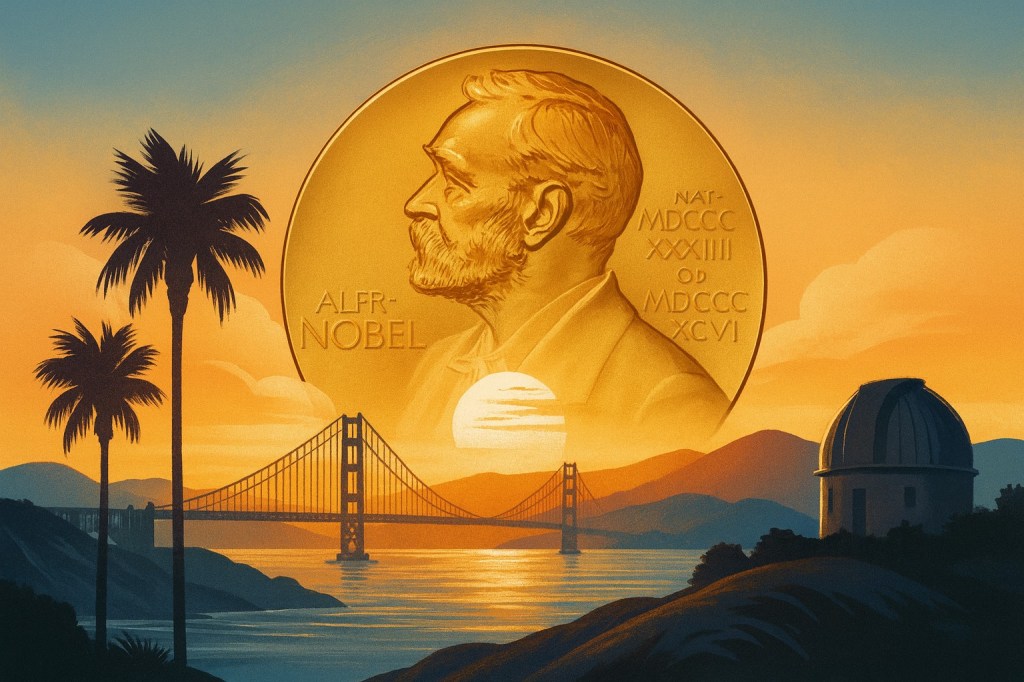
Whatever you call it, the Nobel Prize represents the highest acknowledgment of that pursuit. It is the world’s way of saying: this mattered. This changed something. And there are few places (if any) on Earth that can rival California when it comes to the number of people who have earned that honor.

This year, 2025, was no different. Three of the Nobel Prizes announced this week carried California fingerprints, adding to a tradition that stretches back more than a century.

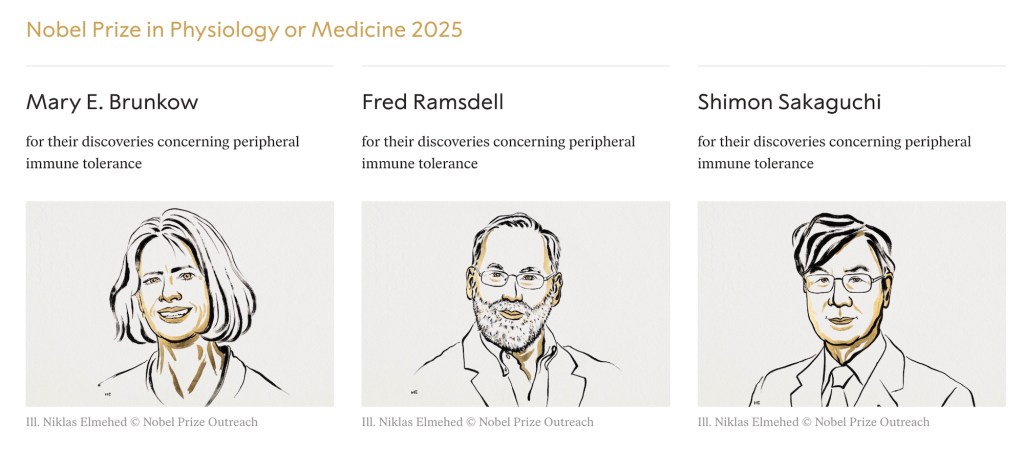
The Nobel Prize in Physiology or Medicine came first. It went to Mary Brunkow, Shimon Sakaguchi, and Fred Ramsdell, the last of whom studied at UCLA and UC San Diego. (In epic California fashion, Ramsdell, who studied at UCLA and UC San Diego, didn’t even learn he’d become a Nobel laureate until after returning from a trip deep into the Wyoming wilderness, where he’d been out of contact with the outside world. What’s more Californian than that?) Their research on regulatory T cells explained how the immune system knows when to attack and when to stand down. Ramsdell’s discovery of a key gene that controls these cells has transformed how scientists think about autoimmune disease and organ transplantation.

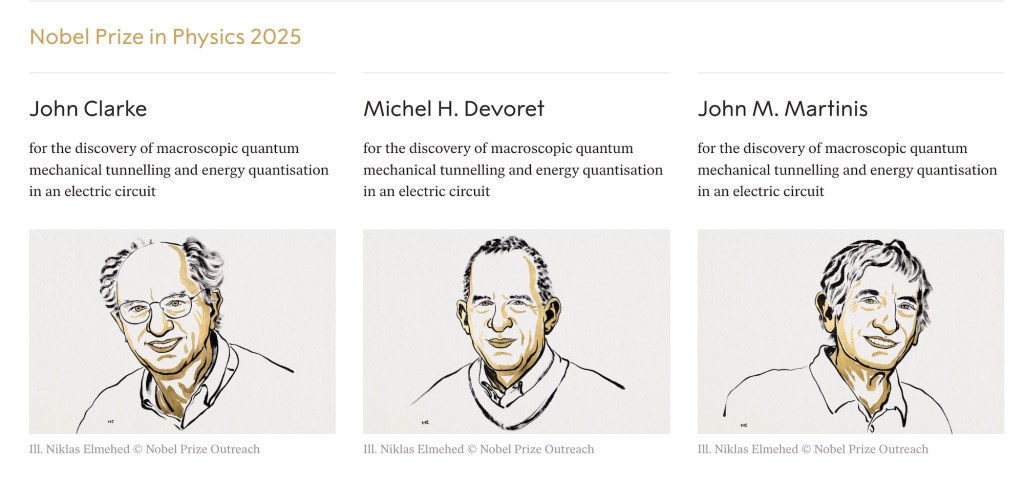
Next came the Nobel Prize in Physics, awarded to John Clarke of UC Berkeley, Michel H. Devoret of UC Santa Barbara and Yale, and John M. Martinis of UC Santa Barbara (big shout out to UCSB!). Their award honored pioneering work that revealed how the strange laws of quantum mechanics can be seen in circuits large enough to hold in your hand. Beginning in Clarke’s Berkeley lab in the 1980s, the trio built superconducting loops that behaved like subatomic particles, “tunneling” and flipping between quantum energy states. Those experiments helped create the foundation for today’s quantum computers.

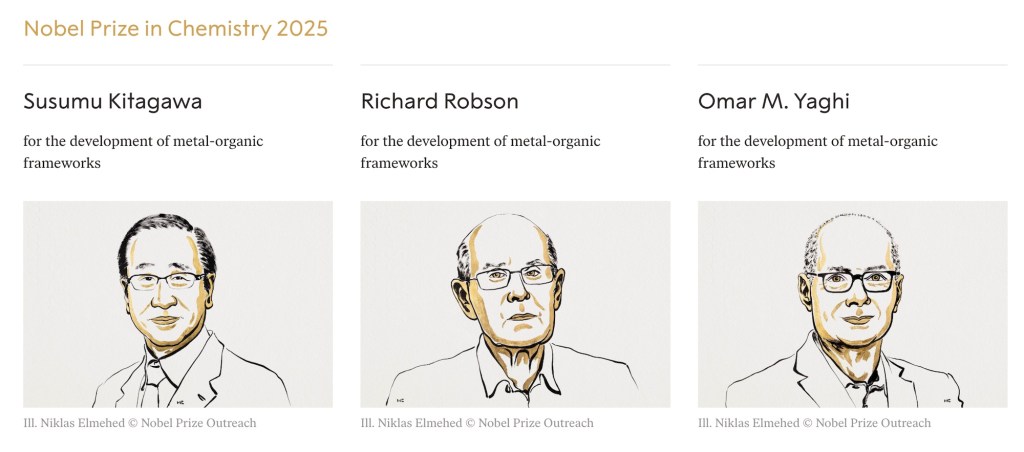
The Chemistry Prize followed a day later, shared by Susumu Kitagawa, Richard Robson, and Omar M. Yaghi of UC Berkeley for discoveries in metal–organic frameworks, or MOFs. These are crystalline materials so porous that a single gram can hold an entire roomful of gas (mind blown). MOFs are now used to capture carbon dioxide, filter water, and even pull drinking water from desert air. Yaghi’s Berkeley lab coined the term “reticular chemistry” to describe this new molecular architecture. His work has become one of California’s most important contributions to the climate sciences.

California Institute of Technology (Photo: Erik Olsen)

Those three announcements in as many days lit up California’s scientific community, has garnered many headlines and carried on a tradition that has made the state one of the world’s most reliable engines of Nobel-level discovery.

The University of California system now counts 74 Nobel Prizes among its faculty and researchers. 23 in physics and 16 in chemistry. Berkeley leads the list, with 26 laureates, followed by UC San Diego, UCLA, UC Santa Barbara, and UC San Francisco. Even smaller campuses, such as UC Riverside, have ties to winners like Barry Barish, who shared the 2017 Nobel in Physics for detecting gravitational waves.

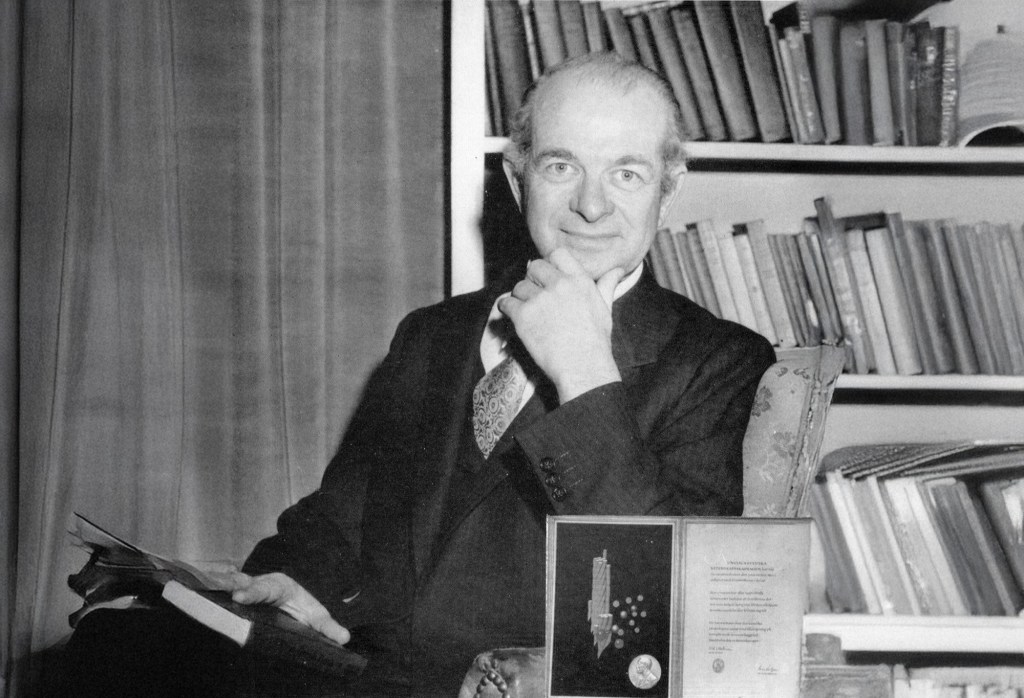
Linus Pauling with an inset of his Nobel Prize in 1955 (Wikipedia – public domain)

Caltech, which I have written about extensively and is quite close to my own home, counts 47 Nobel laureates (faculty, alumni, or postdocs). Its history is the stuff of legend. In 1923, Robert Millikan won for measuring the charge of the electron. In 1954, Linus Pauling received the Chemistry Prize for explaining the nature of the chemical bond. He later won the Peace Prize for his anti-nuclear activism, making him the only person to win two unshared Nobels.

Stanford University sits not far behind, with 36 Nobel winners in its history and about 20 currently active in its community. From the development of transistors and lasers to modern work in medicine and economics, Stanford’s laureates have changed the modern world in ways that is impossible to quantify, but profound in their impact.

These numbers tell a clear story: since the mid-twentieth century, about one in every four Nobel Prizes in the sciences awarded to Americans has gone to researchers based at California institutions, an extraordinary concentration of curiosity, intellect, and ambition within a single state.

University of California Santa Barbara (Photo: Erik Olsen)

California’s Nobel dominance began early. In the 1930s, UC Berkeley’s Ernest Lawrence invented the cyclotron, a device that would transform physics and eventually medicine. Caltech, meanwhile, became a magnet for the world’s brightest physicists and chemists.

Over the decades, California’s universities turned their focus to molecular biology, biochemistry, and genetics. In the 1980s, the state’s physicists and engineers drove advances in lasers, semiconductors, and now, quantum circuits. And as biotechnology rose, San Diego and the Bay Area became ground zero for breakthroughs in medicine and life sciences. One of the great moments in genetics took place in Asilomar on the coast. 

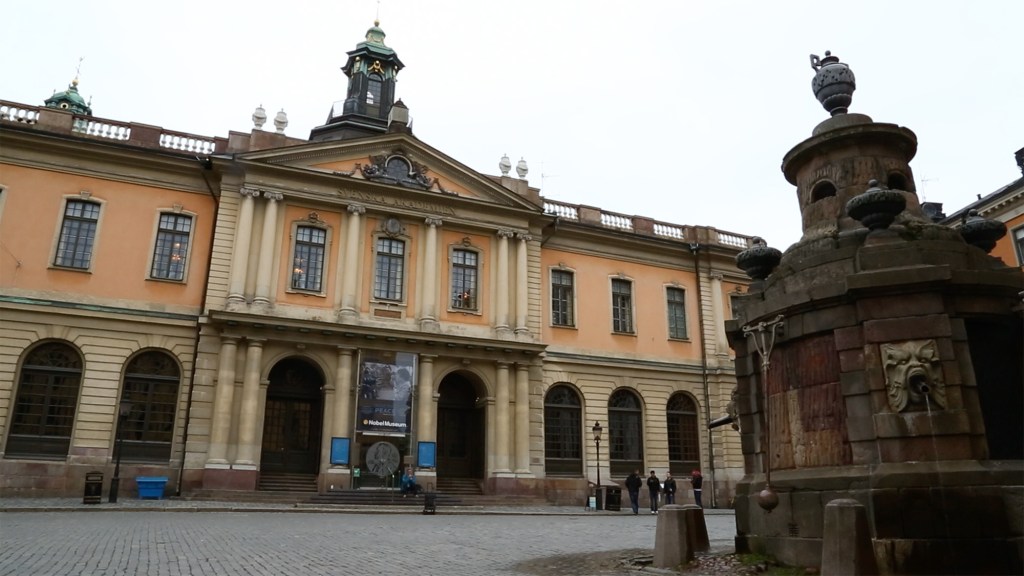
Nobel Museum in Stockholm, Sweden (Photo: Erik Olsen)

This is all about more than geography and climate (although those are a big sell, for sure). California’s research institutions kick ass because they operate as ecosystems rather than islands. Berkeley physicists collaborate with engineers at Stanford. Caltech chemists trade ideas with biotech firms in San Diego. Graduate students drift between labs, startups, and national research centers like Lawrence Livermore and JPL. The boundaries between university and industry blur, with campuses like Stanford turning breakthrough discoveries into thriving commercial ventures (look how many of our big tech brains came out of Stanford). In California, research doesn’t end in the lab, it often turns into companies, technologies, and treatments that generate both knowledge and enormous economic value. Just look at AI today. 

Check out our Etsy store for cool California wildlife swag.

I think the secret is cultural. Over the years, I’ve lived on the East coast for almost two decades, and abroad for several as well, and nothing compares to the California vibe. California has never been afraid of big risks. Its scientists are encouraged to chase questions that might take decades to answer (see our recent story on just this idea). There’s an openness to uncertainty here that works well in the natural sciences, but can also be found in Hollywood, Silicon Valley and, of course, space exploration. 

When next year’s round of early morning calls comes from Stockholm, it is a good bet that someone in California will pick up. Maybe a physicist in Pasadena, a chemist in Berkeley, or a physician in La Jolla. Maybe they’ll pick up the phone in bed, maybe a text from a spouse while camping, or on a morning jog. That’s when a Swedish-accented voice tells them that the world has just caught up to what they’ve been quietly building for years.

Corals Revealed as Never Before Through a Groundbreaking New Microscope in California

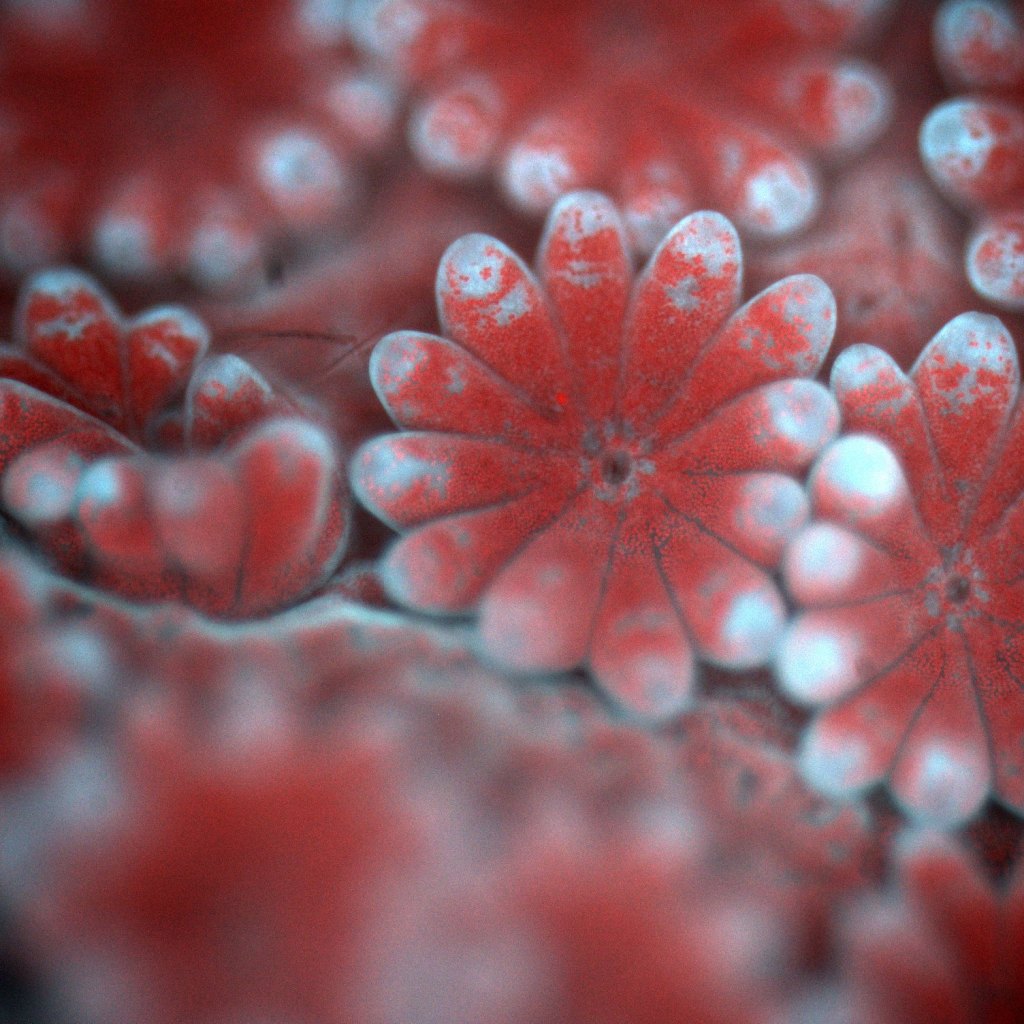
A fluorescence image of a polyp from the coral Stylophora pistillata (side view) taken with the BUMP. (Credit: Or Ben-Zvi)

(We did a video about this story as well. We hope you watch! )

The story of corals in the modern age on this planet is one of near-total despair. I’ve done several stories on corals and have spent many hours diving reefs around the world, from the Mesoamerican Reef in Belize to the unbelievably robust and dazzling reefs in Indonesia. There are still some incredible places where corals survive, but they are becoming fewer and farther between. I don’t want to get too deep into all the statistics, but suffice it to say: scientists estimate that we have already lost about half of the world’s corals since the 1950s, and that number could rise to as much as 90 percent by 2050 if current rates of bleaching and die-offs continue.

What’s crazy is that we still don’t completely understand corals, or exactly why they are dying. We know that corals are symbionts with microscopic algae called zooxanthellae (pronounced zo-zan-THEL-ee). The corals provide cover, a place to live, and nutrients for the algae. In return, the algae provide sugars and oxygen through photosynthesis, fueling coral growth and reef-building. But when the planet warms, or when waters become too acidic, the relationship often collapses. The algae either die or flee the coral. Without that steady food source—what one scientist I interviewed for this story called “a candy store”—corals turn ghostly white in a process known as bleaching. If stressful conditions persist, they starve and die. 

But why? 

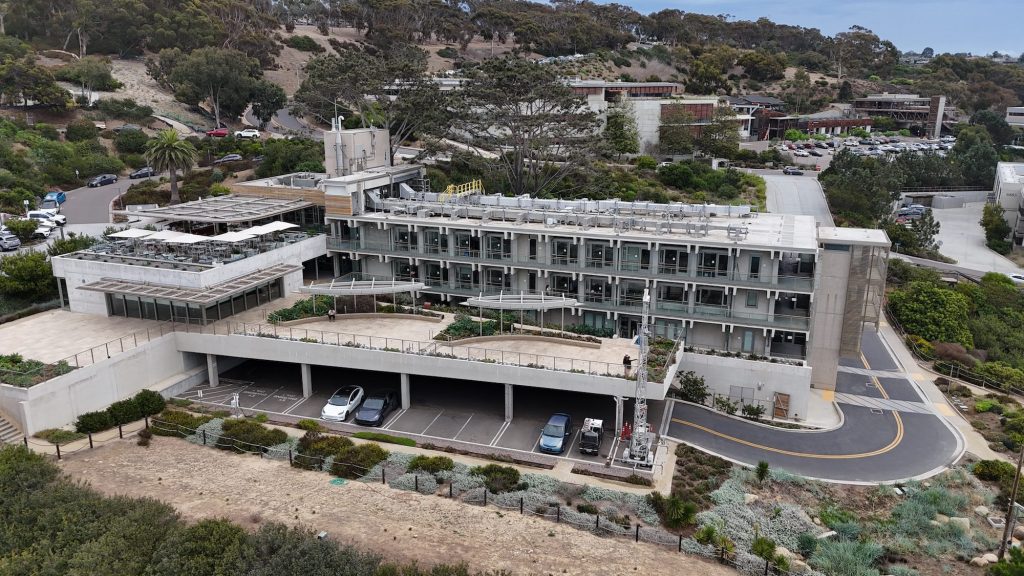
Scripps Institution of Oceanography in La Jolla (Photo: Erik Olsen)

“We still have no idea, physiologically, in the types of environments where bleaching predominates, whether the animal is throwing them out because it’s going to try to survive, or whether the little tiny plants say to the animal, ‘look, we can’t get along in this environment, so we got to go somewhere else’” says Dr. Jules Jaffe, an oceanographer at the Scripps Institution of Oceanography at the University of California, San Diego in La Jolla, California, and the head of the Jaffe Laboratory for Underwater Imaging

The Great Barrier Reef, once Earth’s largest living structure, has suffered five mass bleaching events since 1998, and vast stretches have become little more than graveyards of coral skeletons. The scale of this ecological disaster is almost unimaginable. And so scientists around the world are in a race to figure out what’s happening and how to at least try to slow down the bleaching events sweeping through nearly every major reef system.

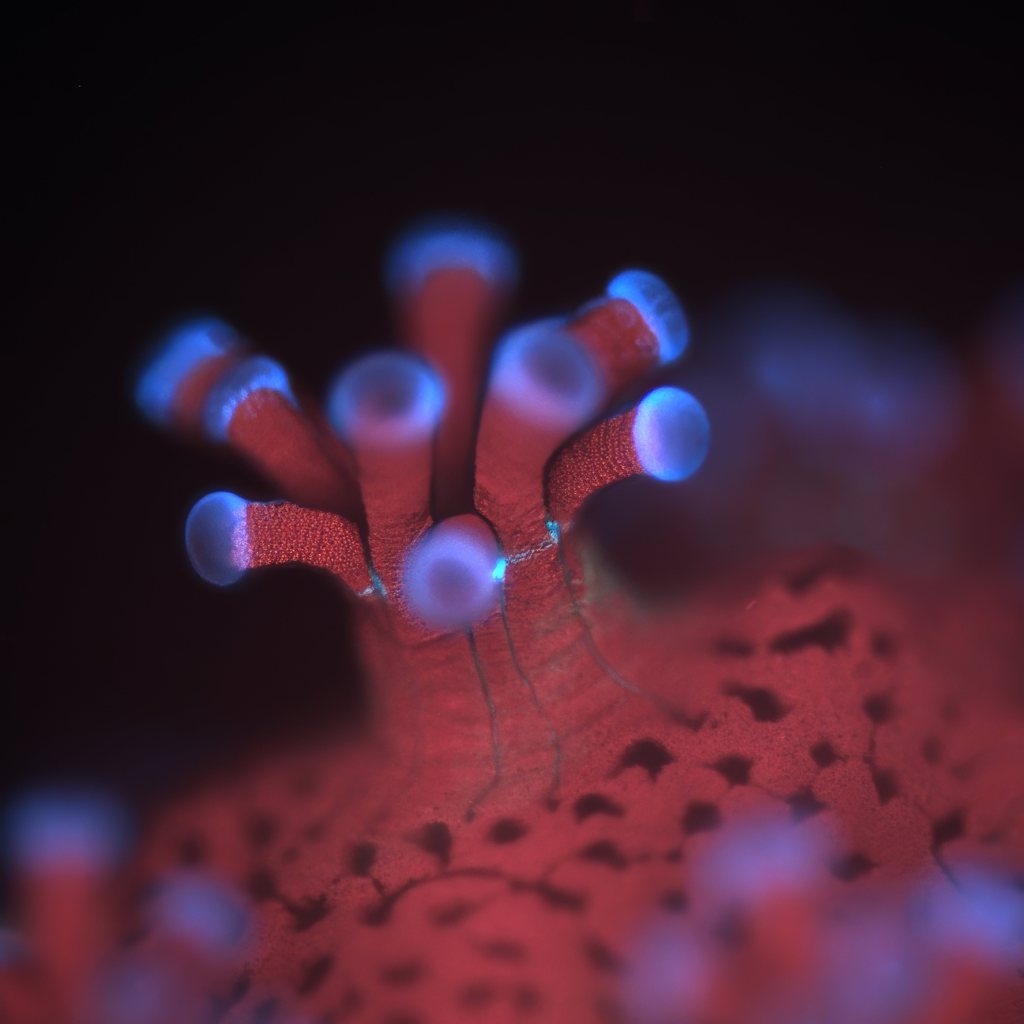
An image of Montipora coral polyps taken with the BUMP. Each polyp has a mouth and a set of tentacles and the red dots are individual microalgae residing inside the coral tissue. (Photo: Or Ben-Zvi)

One place where scientists are making small strides is at the Jaffe Lab, which I visited with my colleague Tod Mesirow and where researchers like Dr. Jaffe and Dr. Or Ben-Zvi have developed a new kind of underwater microscope that allows them to get close enough to corals to actually see the algae in action. 

This is no small feat. Zooxanthellae are only about 5–10 microns across, about one-tenth the width of a human hair, and invisible to the naked eye. With the new microscope and camera system, though, they can be seen in astonishing detail. The lab has captured unprecedented behavior, including corals fighting with each other for space, fusing together, and even responding to invading algae.

When I first reported on this imaging system years ago, it was still in its early stages. At the time, it was known as the BUM for Benthic Underwater Microscope. Since then, the Scripps team has added a powerful new capability: a pulsing blue light that lets them measure photosynthesis in real time. They call it pulse amplitude modulated light or PAM, and so now the system is known as the BUMP. 

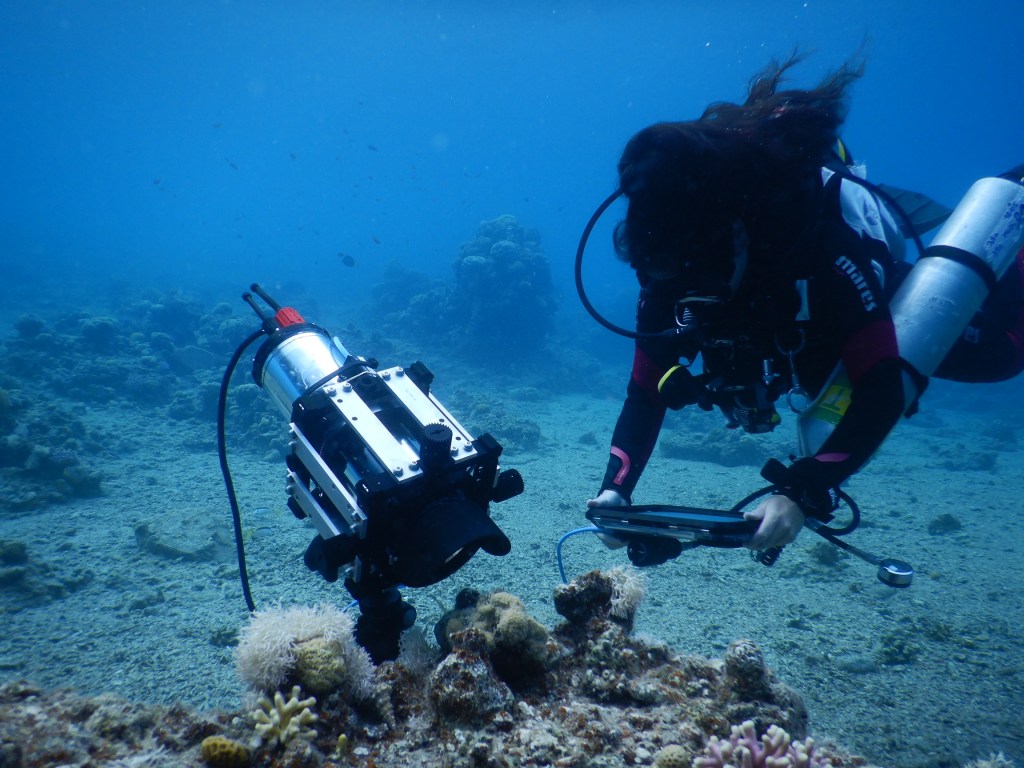
A field deployment of the BUMP in the Red Sea, where local corals were imaged and measured.  (Photo: Or Ben-Zvi)

Here’s how it works: blue excitation light stimulates the algae’s chlorophyll, which then re-emits some of that energy as red fluorescence. By tracking how much of this red fluorescence is produced, researchers can calculate indices of photochemical efficiency, essentially how well the algae are converting light into energy for photosynthesis. This doesn’t give a direct count of sugars or photons consumed, but it does provide a reliable window into the health and productivity of the algae, and by extension, the coral itself.

What’s crucial is that all of this imaging takes place in situ—right in the ocean, on living reefs—rather than in the artificial setting of an aquarium or laboratory.

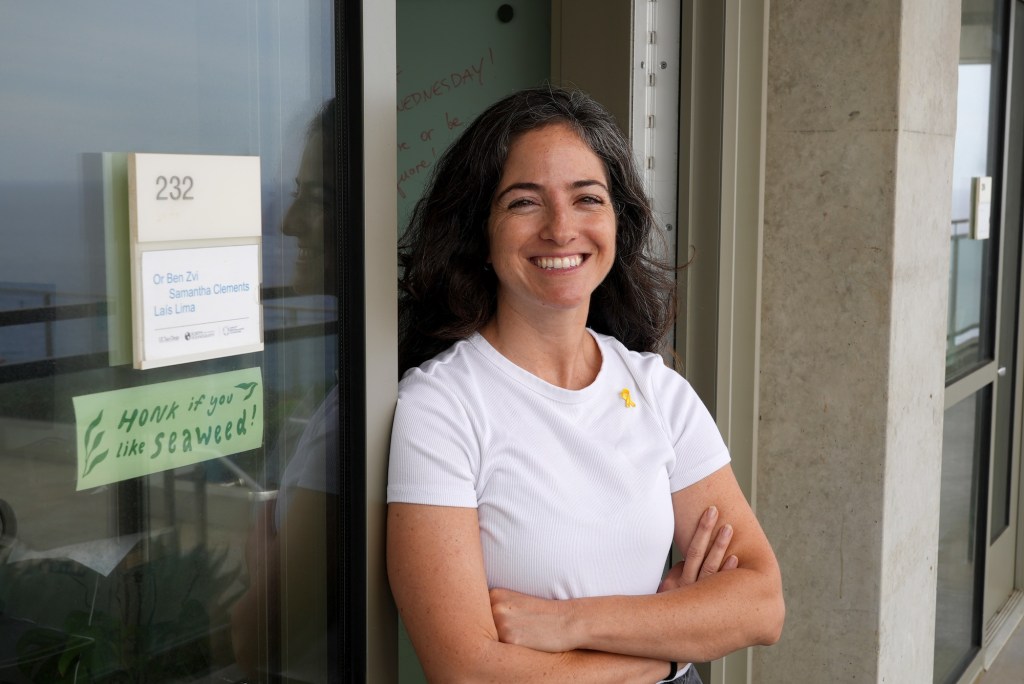
Dr. Or Ben-Zvi, doctoral scholar at Scripps Institution of Oceanography (Photo: Erik Olsen)

New tools are essential if we’re going to solve many of our biggest problems, and it’s at places like Scripps in California where scientists are hard at work creating instruments that help us see the world in entirely new ways. “There’s so much to learn about the ocean and its ecosystems, and my own key to understanding them is really the development of new instrumentation,” says Jaffe.

Dr. Ben-Zvi gave us a demonstration of how the system works in an aquarium holding several species of corals, including Stylophora, a common collector’s coral. She showed us the remarkable capabilities of the camera-microscope, which illuminated and brought into crisp focus the tiny coral polyps along with their algal partners. On the screen we watched them in real time, tentacles waving as they absorbed the flashes of light from the BUMP, appearing, almost, as if they were dancing happily.

The Benthic Underwater Microscope PAM (BUMP) in action in the lab at Scripps Institution of Oceanography in La Jolla.
(Photo: Erik Olsen)

What this new tool allows scientists to do is determine whether corals may be under stress from factors like warming seas, pollution, or disease. Ideally, these warning signs are detected before the corals expel their zooxanthellae and bleach. Researchers are also learning far more about the everyday behavior of corals: something rarely studied in situ, directly in the ocean. 

That in-their-native-environment aspect of the work is crucial, because corals often behave very differently in aquariums than they do on wild reefs. That’s where this microscope promises to be a powerful tool: offering insights into how corals really live, fight, and respond to stress.

The view of La Jolla from the Scripps Institution of Oceanography (Photo: Erik Olsen)

Of course, what we do once we document a reef under stress is another matter. Dr. Ben-Zvi suggests there may be possibilities for remediation, though she admits it’s difficult to know exactly what those are. Perhaps reducing pollution, limiting fishing, or cutting ship traffic in vulnerable areas could help. But given that we seem unable—or unwilling—to stop the warming of the seas, these measures can feel like stopgaps rather than solutions. Still, knowledge is the foundation for any action, and this new tool is a breakthrough for coral imaging. If deployed widely, it could generate an invaluable dataset for researchers around the globe. The scientists behind it even hope to build multiple systems, perhaps commercializing them, to vastly expand the reach of this kind of monitoring.

But even Jaffe concedes it may already be too late: “Could a world exist without corals? Yeah, I think so,” he said. “It would be sad, but it’s going that way.”

All the same, the images the tool produces are breathtaking, and at the very least, they might jolt people into realizing that this is a crisis worth trying to solve. If we can’t, then future generations will be left only with these hauntingly beautiful images to remember the diverse and gorgeous animals that once flourished along the edges of the sea. 

A healthy coral reef in Indonesia (Photo: Erik Olsen)

Is that valuable? Yes, but not nearly as valuable as saving the living reefs themselves. Dr. Jaffe told us,

“I’m on a mission to help people feel empathy toward the creatures of the sea. At the same time, we need to learn just how beautiful they are. For me, the combination of beauty and science has been at the heart of my life’s work.”

His words capture the spirit of this research. The underwater microscope isn’t just a scientific instrument. It’s a lens into a hidden world, one that may inspire people to care enough to act before it’s gone. Too bad the clock is ticking so fast.

(We did a video about this story as well. We hope you watch! )

The Unsung California Labs That Powered the Digital Revolution

Researchers at Lawrence Livermore National Laboratory working with the Big Aperture Thulium (BAT) laser system, part of the laser and plasma research that laid the groundwork for generating the extreme ultraviolet light at the heart of today’s most advanced chipmaking machines. (Photo: Jason Laurea/LLNL)

When I started this Website, my hope was to share California’s astonishing range of landscapes, laboratories, and ideas. This state is overflowing with scientific discovery and natural marvels, and I want readers to understand, and enjoy, how unusually fertile this state is for discovery. If you’re not curious about the world, then this Website is definitely not for you. If you are, then I hope you get something out of it when you step outside and look around. 

I spend a lot of time in the California mountains and at sea, and I am endlessly amazed by the natural world at our doorstep. I am also fascinated by California’s industrial past, the way mining, oil, and agriculture built its wealth, and how it later became a cradle for the technologies and industries now driving human society forward. Of course, some people see technologies like gene editing and AI as existential risks. I’m an optimist. I see tools that, while potentially dangerous, used wisely, expand what is possible.

An aerial view of Lawrence Livermore National Laboratory in 1960, when the Cold War spurred rapid expansion of America’s nuclear and scientific research campus east of San Francisco Bay. (Photo: LLNL Public Domain)

Today’s story turns toward technology, and one breakthrough in particular that has reshaped the modern world. It is not just in the phone in your pocket, but in the computers that train artificial intelligence, in advanced manufacturing, and in the systems that keep the entire digital economy running. The technology is extreme ultraviolet lithography (EUV). And one of the most important points I want to leave you with is that the origins of EUV are not found in Silicon Valley startups or corporate boardrooms but in California’s national laboratories, where government-funded science made the impossible possible.

This article is not a political argument, though it comes at a time when government funding is often questioned or dismissed. My purpose is to underscore how much California’s national labs have accomplished and to affirm their value.

This story begins in the late 1980s and 1990s, when it became clear that if Moore’s Law was going to hold, chipmakers would need shorter and shorter wavelengths of light to keep shrinking transistors. Extreme ultraviolet light, or EUV, sits way beyond the visible spectrum, at a wavelength far shorter than ordinary ultraviolet lamps. That short wavelength makes it possible to draw patterns on silicon at the tiniest scales…and I mean REALLY tiny.

Ernest Orlando Lawrence at the controls of the 37-inch cyclotron in 1938. A Nobel Prize–winning physicist and co-founder of Lawrence Livermore National Laboratory, Lawrence’s legacy in nuclear science and high-energy research paved the way for the laboratory’s later breakthroughs in lasers and plasma physics — work that ultimately fed into the extreme ultraviolet light sources now powering the world’s most advanced chipmaking machines. (LLNL Public Domain)

At Lawrence Berkeley National Laboratory, researchers with expertise in lasers and plasmas were tasked with figuring out how to generate a powerful, reliable source of extreme ultraviolet light for chipmaking. Their solution was to fire high-energy laser pulses at microscopic droplets of tin, creating a superheated plasma that emits at just the right (tiny) wavelength for etching circuits onto silicon.

The movement of light on mirrors in an ASML EUV lithography machine. More on it below.

Generating the light was only the first step. To turn it into a working lithography system required other national labs to solve equally daunting problems. Scientists at Berkeley’s Center for X Ray Optics developed multilayer mirrors that could reflect the right slice of light with surprising efficiency. A branch of Sandia National Laboratories located in Livermore, California, worked on the pieces that translate light into patterns. So, in all: Livermore built and tested exposure systems, Berkeley measured and perfected optics and materials, and Sandia helped prove that the whole chain could run as a single machine.

Each EUV lithography machine is about the size of a bus, costs more than $150 million, and shipping one requires 40 freight containers, three cargo planes, and 20 trucks. (Photo: ASML)

It matters that this happened in public laboratories. The labs had the patient funding and the unusual mix of skills to attempt something that might not pay off for many years. The Department of Energy supported the facilities and the people. DARPA helped connect the labs with industry partners and kept the effort moving when it was still risky. There was no guarantee that the plasma would be bright enough, that the mirrors would reflect cleanly, or that the resists (the light-sensitive materials coated onto silicon wafers) would behave. The national labs could take that on because they are designed to tackle long horizon problems that industry would otherwise avoid.

Only later did private industry scale the laboratory breakthroughs into the giant tools that now anchor modern chip factories. The Dutch company ASML became the central player, building the scanners that move wafers with incredible precision under the fragile EUV light. Those systems are now capable of etching transistor features as small as 5 nanometers…5 billionths of a meter. You really can’t even use the “smaller than a human hair” comparison here since human hair variation is so large at this scale as to render that comparison kind of useless. However, many people still do.

The ASML machines are marvels of tech and engineering. Truly amazing feats human design. And they integrate subsystems from all over the world: Zeiss in Germany manufactures the mirrors, polished to near-atomic perfection, while San Diego’s Cymer (now part of ASML) supplies the laser-driven plasma light sources. The technology is so complex that a single scanner involves hundreds of thousands of components and takes months to assemble.

ASML’s EXE:5000 High-NA EUV lithography machine — a room-sized tool that etches the tiniest features on the world’s most advanced computer chips. (ASML)

It was TSMC and Samsung that then poured billions of dollars into making these tools reliable at scale, building the factories that now turn EUV light into the chips powering AI and smartphones and countless other devices. Trillions of dollars are at stake. Some say the fate of humanity lies in balance should Artificial General Intelligence eventually emerge (again, I don’t say that, but some do). All of this grew from the ingenuity and perseverance, along with the public funding, that sustained these California labs.

It’s disappointing that many of the companies profiting most from these technological breakthroughs are not based in the United States, even though the core science was proven here in California. That is fodder for a much longer essay, and perhaps even for a broader conversation about national industrial policy, something the CHIPS Act is only beginning to deal with.

However, if you look closely at the architecture of those monster machines, you can still see the fingerprints of the California work. A tin plasma for the light. Vacuum chambers that keep the beam alive. Reflective optics that never existed at this level before EUV research made them possible.

A photorealistic rendering of an advanced microprocessor, etched in silicon with extreme ultraviolet light — the kind of breakthrough technology pioneered in U.S. national labs, but now fabricated almost entirely in Taiwan, where the future of digital society is being made.

We often celebrate garages, founders, and the venture playbook. Those are real parts of the California story. This is a different part, just as important. The laboratories in Livermore, Berkeley, and Sandia are public assets. They exist because voters and policymakers chose to fund places where hard problems can be worked on for as long as it takes. The payoff can feel distant at first, then suddenly it is in your pocket. Like EUV. Years of quiet experiments on lasers, mirrors, and materials became the hidden machinery of the digital age.

The Caltech Experiment That Proved How Life Copies Itself

DNA molecule (Midjourney)

I love reading New York Times obituaries, not because of any morbid fascination with death, but because they offer a window into extraordinary lives that might otherwise go unnoticed. These tributes often highlight people whose work had real impact, even if their names were never widely known. Unlike the celebrity coverage that fills so much of the media, these obituaries can be quietly riveting, full of depth, insight, and genuine accomplishment.

For two years I managed the New York Times video obituary series called Last Word. We interviewed people of high accomplishment who had made a difference in the world BEFORE they died, thus giving them a chance, at a latter age (in our case 75 was the youngest, but more often people would be in their 80s) to tell their own stories about their lives. They signed an agreement acknowledging that the interview would not be shown until after their death. Hence the series title: Last Word. Anyway, when I ran the program, I produced video obituaries for people as varied as Neil Simon, Hugh Hefner, Sandra Day O’Connor, Philip Roth, Edward Albee, and my favorite, the great Harvard biologist E.O. Wilson. Spending time and learning about their lives in their own words was a joy.

All of that is to say that obituaries often reveal the lives and accomplishments of people who have changed the world. These are stories that might never be told so thoughtfully or thoroughly anywhere else.

California Institute of Technology (Photo: Erik Olsen)

Which bring us to a quiet lab at Caltech in 1958, where two young biologists performed what some still call “the most beautiful experiment in biology”. Their names were Matthew Meselson and Franklin Stahl, and what they uncovered helped confirm the foundational model of modern genetics. With a simple centrifuge, a dash of heavy nitrogen, and a bold hypothesis, they confirmed how DNA, life’s instruction manual, copies itself. And all of it took place right here in California at one of the world’s preeminent scientific institutions: the California Institute of Technology or CalTech, in Pasadena. The state is blessed to have so many great scientific minds and institutions where people work intensely, often in obscurity, to uncover the secrets of life and the universe.

California Curated Etsy

Franklin Stahl died recently at his home in Oregon, where he had spent much of his career teaching and researching genetics. The New York Times obituary offered a thoughtful account of his life and work, capturing his contributions to science with typical respect. But after reading it, I realized I still didn’t fully grasp the experiment that made him famous, the Meselson-Stahl experiment, the one he conducted with Matthew Meselson at Caltech. It was mentioned, of course, but not explained in a way that brought its brilliance to life. So I decided to dig a little deeper.

Franklin Stahl in an undated photo. (Cold Spring Harbor Laboratory Library and Archives)

The Meselson-Stahl experiment didn’t just prove a point. It told a story about how knowledge is built: carefully, creatively, and with a precision that leaves no room for doubt. It became a model for how science can answer big questions with simple, clean logic and careful experimentation. And it all happened in California.

Let’s back up: When Watson and Crick proposed their now-famous double helix structure of DNA in 1953 (with significant, poorly recognized help from Rosalind Franklin), they also suggested a theory about how it might replicate. Their idea was that DNA separates into two strands, and each strand acts as a template to build a new one. That would mean each new DNA molecule is made of one old strand and one new. It was called the semi-conservative model. But there were other theories too. One proposed that the entire double helix stayed together and served as a model for building an entirely new molecule, leaving the original untouched. Another suggested that DNA might break apart and reassemble in fragments, mixing old and new in chunks. These were all plausible ideas. But only one could be true.

Watson and Crick with their model of the DNA molecule (Photo: A Barrington Brown/Gonville & Caius College/Science Photo Library)

To find out, Meselson and Stahl grew E. coli bacteria in a medium containing heavy nitrogen (nitrogen is a key component of DNA), a stable isotope that made the DNA denser than normal. After several generations, all the bacterial DNA was fully “heavy.” Then they transferred the bacteria into a medium with normal nitrogen and let them divide. After one generation, they spun the DNA in a centrifuge that separated it by weight. If DNA copied itself conservatively, the centrifuge would show two bands: one heavy, one light. If it was semi-conservative, it would show a single band at an intermediate weight. When they performed the experiment, the result was clear. There was only one band, right between the two expected extremes. One generation later, the DNA split into two bands: one light, one intermediate. The semi-conservative model was correct.

Their results were published in Proceedings of the National Academy of Sciences in 1958 and sent shockwaves through the biological sciences.

Meselson and Stahl experiment in diagram.

To me, the experiment brought to mind the work of Gregor Mendel, an Augustinian monk who, in the mid-1800s, quietly conducted his experiments in the garden of a monastery in Brno, now part of the Czech Republic. By breeding pea plants and meticulously tracking their traits over generations, Mendel discovered the basic principles of heredity, dominant and recessive traits, segregation, and independent assortment, decades before the word “gene” even existed. Like Mendel’s experiments, the Meselson-Stahl study was striking in its simplicity and clarity. Mendel revealed the rules; Meselson and Stahl uncovered the mechanism.

There’s a fantastic video where the two men discuss the experiment that is worth watching. It was produced produced by iBiology, part of the nonprofit Science Communication Lab in Berkeley. In it Meselson remembered how the intellectual climate of CalTech at the time was one of taking bold steps, not with the idea of making a profit, but for the sheer joy of discovery: “We could do whatever we wanted,” he says. “It was very unusual for such young guys to do such an important experiment.”

California Institute of Technology (Photo: Erik Olsen)

Most people think of Caltech as a temple of physics. It’s where Einstein lectured, where the Jet Propulsion Laboratory was born (CalTech still runs it), and where the gravitational waves that rippled through spacetime were detected. But Caltech has a quieter legacy in biology. Its biologists were among the first to take on the structure and function of molecules inside cells. The institute helped shape molecular biology as a new discipline at a time when biology was still often considered a descriptive science. Long before Silicon Valley made biotech a household term, breakthroughs in genetics and neurobiology were already happening in Southern California.

Meselson and Stahl in the iBiology video (Screen grab: Science Communication Lab)

The Meselson-Stahl experiment is still taught in biology classrooms (my high school age daughter knew of it) because of how perfectly it answered the question it set out to ask. It was elegant, efficient, and unmistakably clear. And it showed how a well-constructed experiment can illuminate a fundamental truth. Their discovery laid the groundwork for everything from cancer research to forensic DNA analysis to CRISPR gene editing. Any time a scientist edits a gene or maps a mutation, they are relying on that basic understanding of how DNA replicates.

In a time when science often feels far too complex, messy, or inaccessible, the Meselson-Stahl experiment is a reminder that some of the most important discoveries are also the simplest. Think Occam’s Razor. Two young scientists, some nitrogen, a centrifuge, a clever idea, and a result that changed biology forever.

California Curated Etsy