Upwelling, the Ocean’s Engine Beneath California’s Waters

I recently revisited a book I enjoyed: The Blue Machine by physicist, oceanographer, and writer Helen Czerski. It is a beautifully clear exploration of the deep mechanics of the ocean and why those processes are so essential to keeping our planet cool, biodiverse, and stable.

One of the core ideas she returns to is ocean upwelling, a process that is especially important for those of us who live in California. Upwelling is one of those hidden forces that quietly underlies everything around us, and once you read about it, you realize that so much of what we know and love here simply would not exist without it.


Few marine processes are as impactful on the abundance of sea life off the coast of California as upwelling. It may not be a term you’ve heard before, but the natural oceanic process of upwelling is one of the most important engines driving climate, biological diversity, and the ocean’s food web.

It’s time to pay attention.

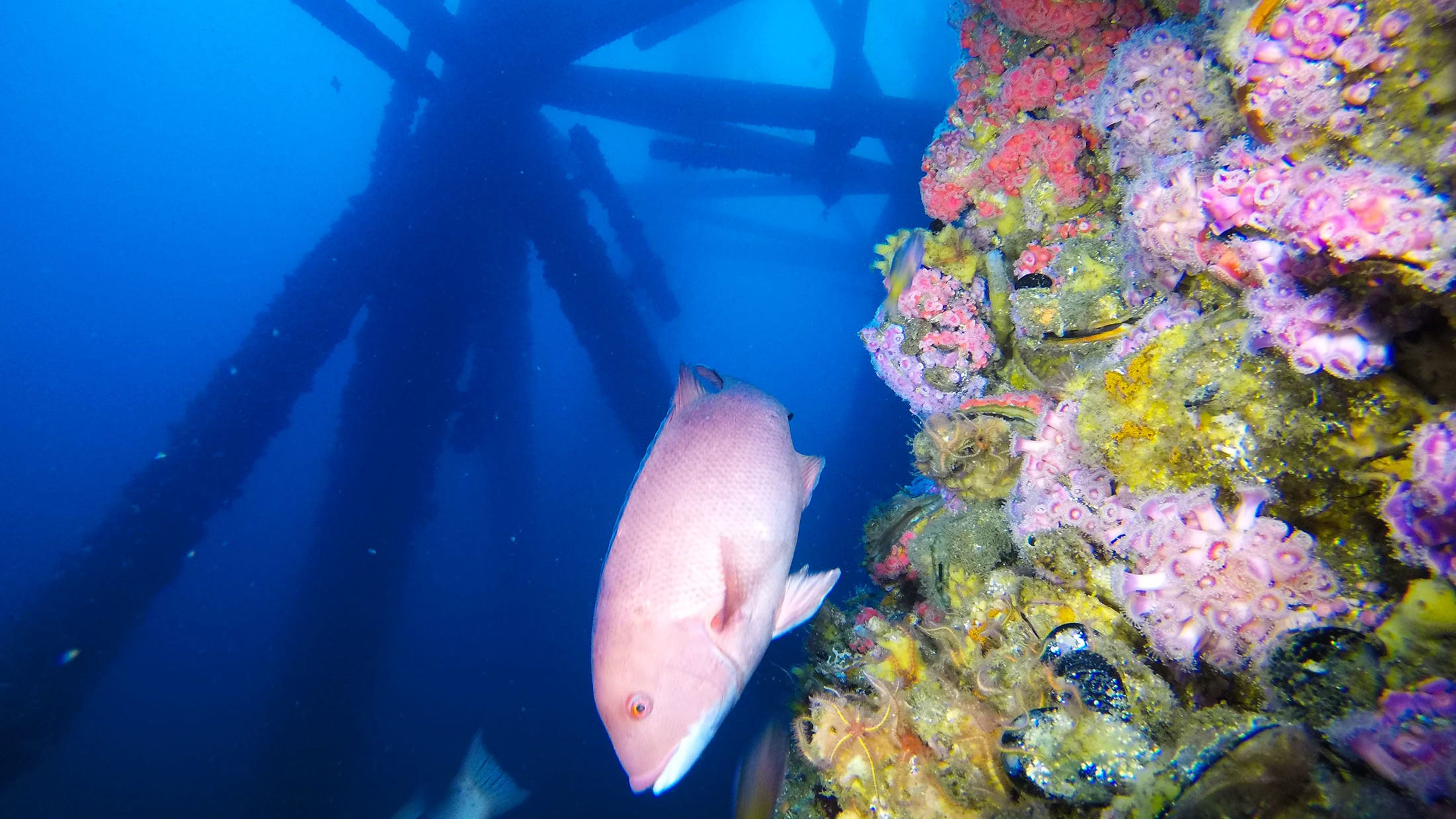
The abundance of sea life around some of California’s oil rigs is due in part to ocean upwelling near the continental shelf. (Photo: Erik Olsen)

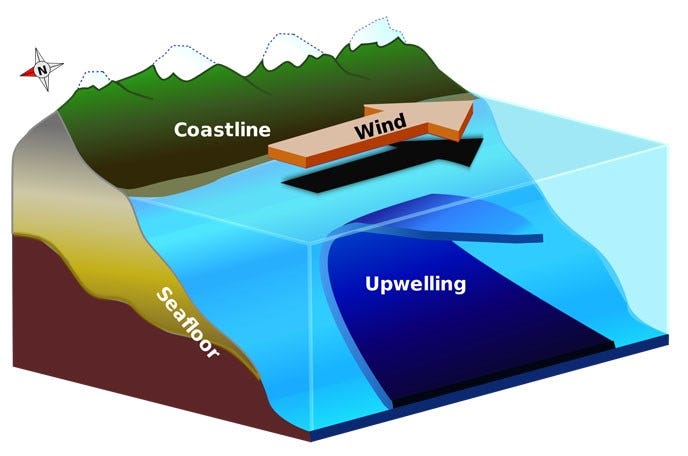
In simple terms, upwelling is when cold, nutrient-rich water from the deep ocean rises to the surface, replacing warmer surface water. A churn. Along the California coast, prevailing northerly winds push surface waters offshore through the Coriolis effect, allowing deeper, colder water to rise in their place. Over the continental shelf off shore California, this upwelled water is rapidly brought into shallower depths, delivering nutrients directly into the photic zone where phytoplankton can grow. This is one reason continental shelves, including areas around offshore oil platforms (which I wrote about a few weeks ago), are biological hotspots.

California’s upwelling system is one of the most intensively studied in the world because it fuels the region’s crazy marine productivity.

In California, upwelling occurs year-round off the northern and central coast. It’s strongest in the spring and summer when northwesterly winds are at their most powerful. Upwelling is reduced in the fall and winter when winds are more variable.

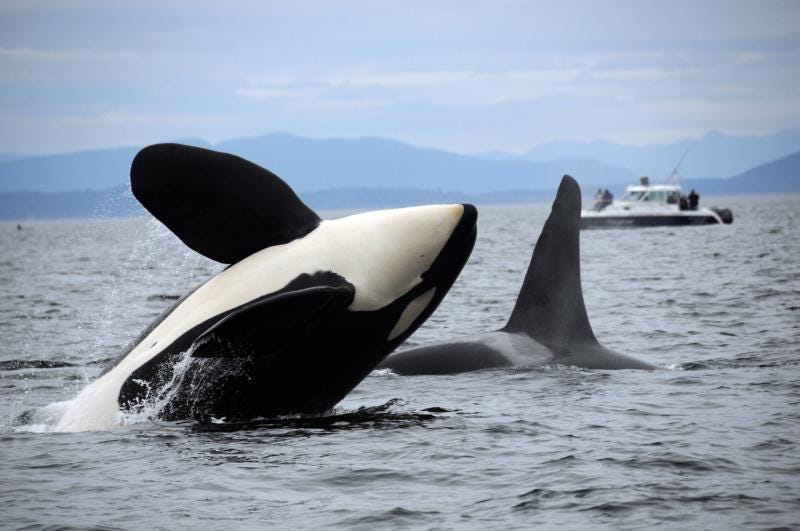
Killer whales benefit from upwelling because the nutrient-rich waters fuel a surge in phytoplankton, which triggers an increase in the populations of smaller prey fish and marine mammals that orcas rely on for sustenance. (Photo: NOAA)

Researchers from institutions like the Scripps Institution of Oceanography and Stanford University have used a variety of methods, including satellite observations and computer modeling, to study upwelling. One of the groundbreaking studies was the CalCOFI program (California Cooperative Oceanic Fisheries Investigations), which began in the late 1940s. It was a joint venture between Scripps and state and federal agencies to investigate the collapse of the sardine fishery. The study showed that the sardine collapse was not just due to overfishing but also large-scale ocean and climate variability, a finding that reshaped fisheries science. Over decades, it has expanded its scope and now provides invaluable long-term datasets that help scientists understand upwelling and its impacts on marine populations.

Deep, cold ocean water is rich in nutrients because organic matter from the surface sinks as it dies or is consumed, and is broken down at depth, releasing nutrients back into the water. When that water is brought to the surface through upwelling, it delivers a fresh supply of nutrients that fuels phytoplankton growth and supports the entire marine food web.

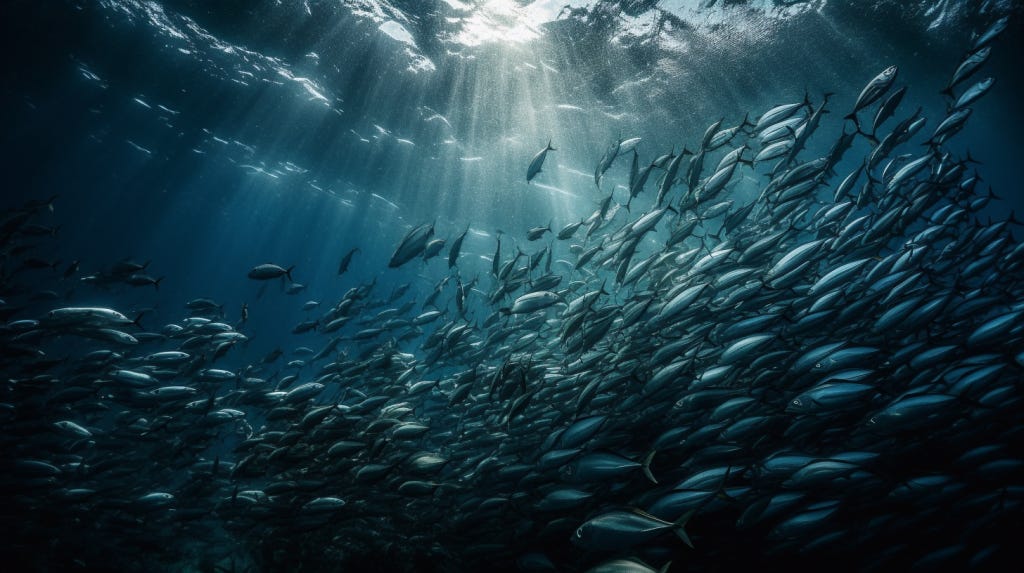
The food web is kind of like a ladder. Or a chain. Nutrient-rich cold waters support blooms of phytoplankton: microscopic, photosynthetic organisms (meaning they are teeming with chlorophyll) that produce oxygen and form the base of marine food webs. When these primary producers flourish, it triggers a chain reaction throughout the ecosystem: zooplankton feed on phytoplankton, small fish feed on zooplankton, and larger predators, including fish, marine mammals, seabirds, (and humans) reap the rewards! So a well functioning upwelling system is pretty important for abundant sea life.

Also, cold water holds more dissolved gases like oxygen compared to warm water (yet another reason that warming seas could be a problem in the future). Oxygen is crucial for marine animals. In cold, oxygen-rich environments, organisms can efficiently carry out metabolic processes, which leads to higher rates of feeding, growth, and reproduction, thereby further boosting biological productivity. Everyone wins!

But there’s a problem.

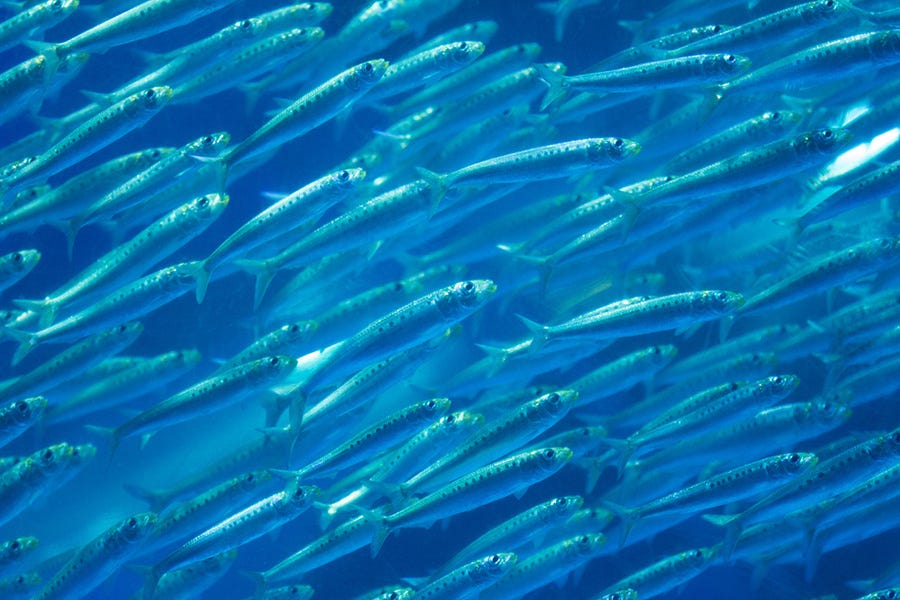
Sardines off the coast of California (Photo: NOAA)

Studies have shown that natural changes in climate, like El Niño and La Niña events have a significant impact on wildlife and the local ocean ecosystem. During El Niño events, warmer waters and weaker upwelling reduce nutrient levels in the California Current, lowering phytoplankton productivity and causing deadly ripples through the food web. La Niña conditions generally strengthen upwelling, bringing nutrient-rich water to the surface and boosting marine productivity.

Pick up some California wildlife gifts at our Etsy store. Seriously, they’re cool.

Climate change adds a potentially dangerous new layer of uncertainty: oceans are warming and growing more acidic, which can disrupt the timing, strength, and benefits of upwelling. While climate change does not necessarily mean more El Niño years, it does mean that El Niño events now play out in a warmer ocean, often amplifying their impacts and increasing stress on marine life, with serious consequences for some organisms.

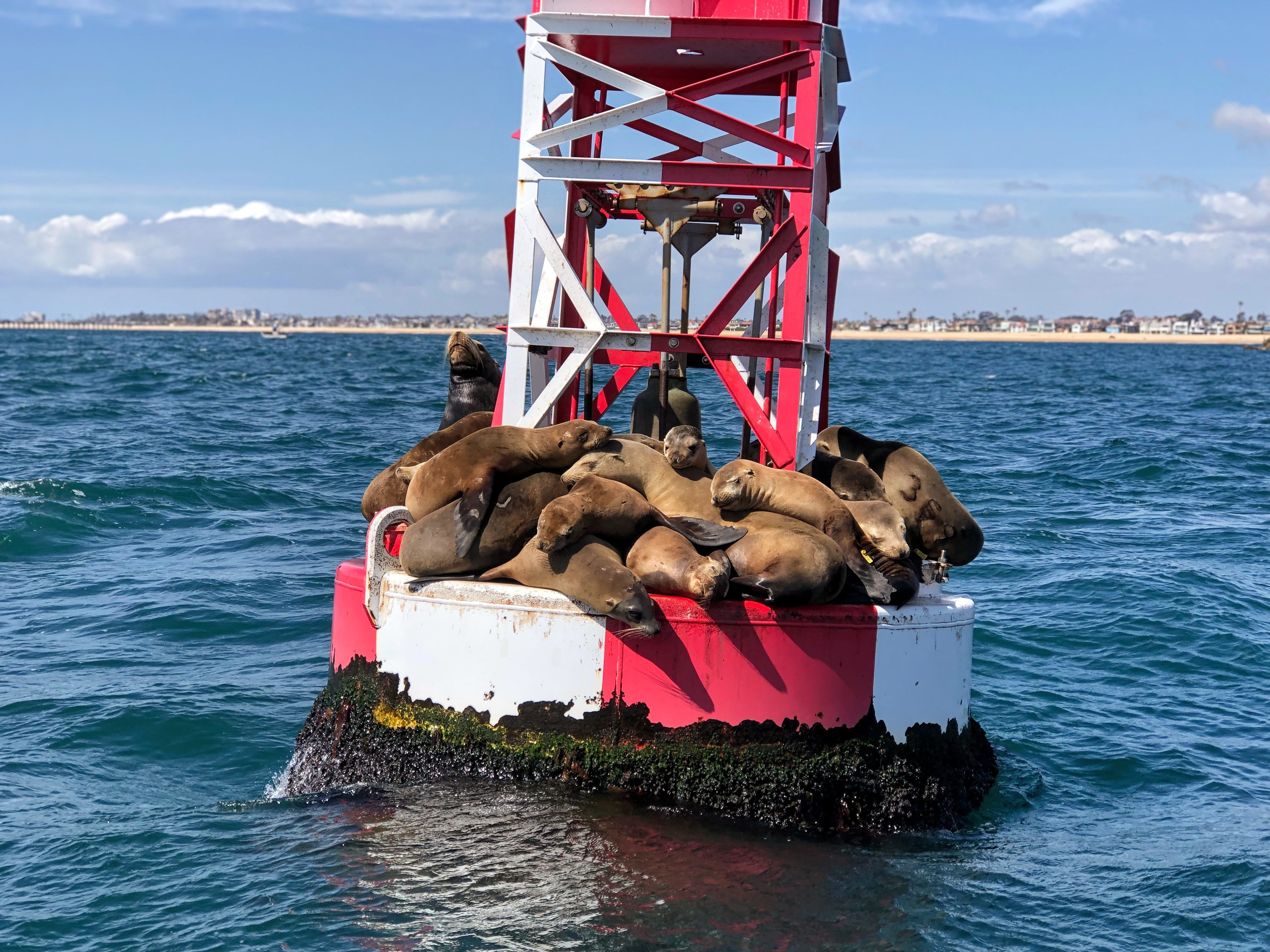
Sea lions off the Southern California coast. (Photo: Erik Olsen)

We’ve been seeing some of these impacts. Take sea lions and large fish populations. In years of strong upwelling, prey is more abundant and closer to shore, allowing California sea lions to forage more efficiently and increasing populations. During weak upwelling years, prey becomes scarcer and more dispersed, forcing sea lions to travel farther for food, increasing stress and reducing reproductive success. Variations like this have been observed in recent years during El Niño periods along the California coast, showing how quickly marine ecosystems respond to shifts in ocean conditions.

Of course, upwelling isn’t just a California thing; it’s a global phenomenon that occurs in various parts of the world, from the coasts of Peru to the Canary Islands. It serves a similar churning life inducing function in these places, too. But California is sort of the poster child for scientists thanks to extensive research here and its vital role in a multi-billion dollar fishing industry that includes species like albacore tuna, swordfish, Dungeness crab, squid, and sardines.

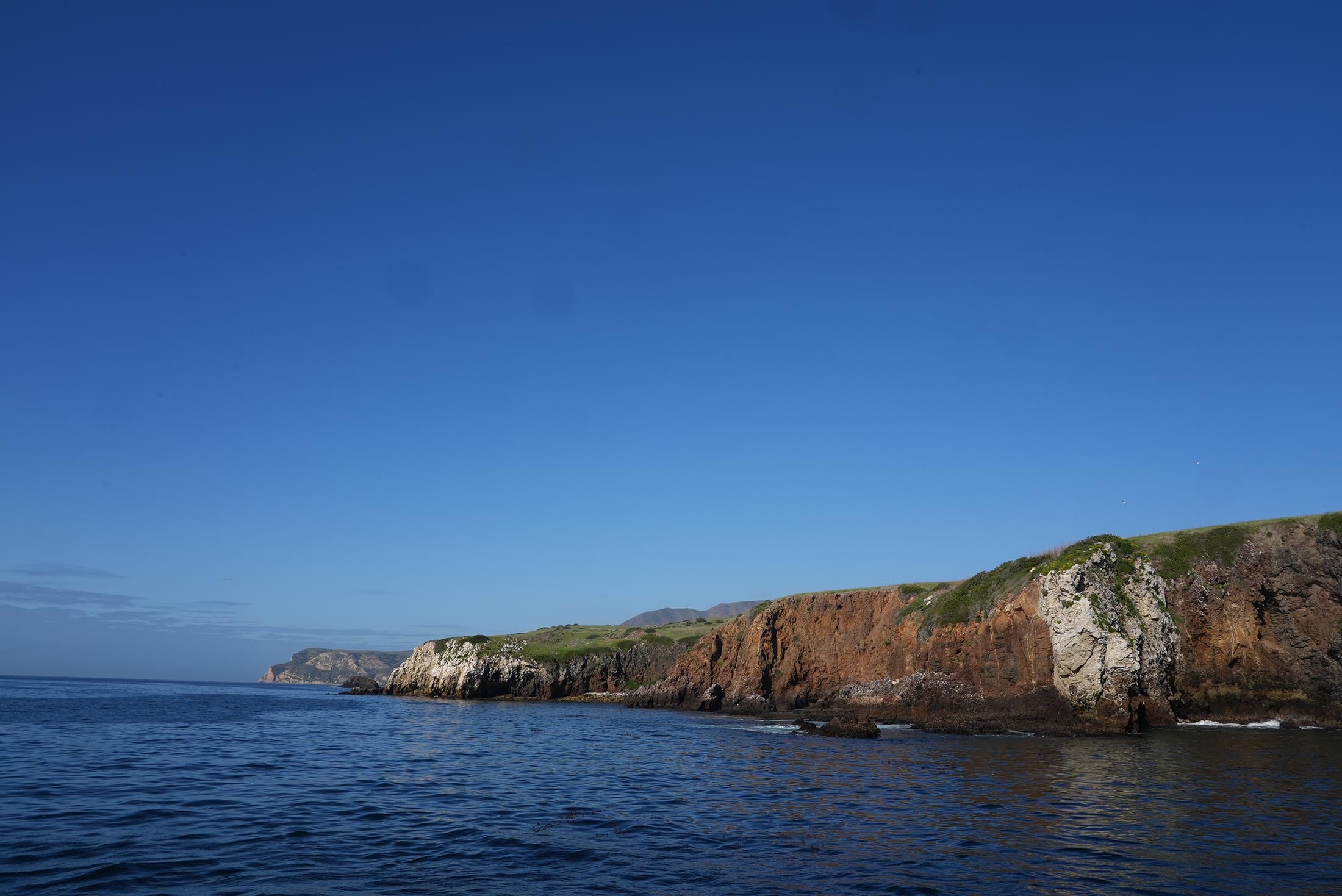
Anacaps Island in California’s Channel Islands (Photo: Erik Olsen)

Upwelling is one of those critical oceanic processes that helps maintain our stable and immensely productive California waters, but warming ocean temperatures and changes in wind patterns could cause big problems, disrupting the timing and intensity of upwelling, putting sea life off California’s coast at risk.

Of course, I do not mean for this piece to be yet another downer about climate change. California’s coastal ecosystem is, in many ways, healthier today than it has been in decades, thanks to policies and practices put in place once we began to understand what was truly at stake. Whenever I get offshore and experience the ocean firsthand, I feel deeply grateful for what we have now, even as I remain aware that it is something we could still damage if we’re stupid and careless…which is not out of the question. The encouraging part is that Californians have shown, again and again, a real capacity to rally when it matters. For now, then, it is worth appreciating what we have and getting out there to experience it whenever you get the chance.

Transforming California’s Oil Platforms into Marine Sanctuaries

An abundance of sea life is thriving on the substructure beneath the Eureka oil rig in Southern California (Erik Olsen)

If I told you that some of the richest, densest communities of marine life anywhere in the world thrive off California, you might not be surprised. We all know California has a vibrant marine ecosystem offshore. But if I told you that much of that life clings to the submerged steel legs of offshore oil rigs, you might pause, blink, and say: really?

The answer is yes.

I know because I have dived a few of them several times. Most recently this November, when I took a dive boat called the Giant Stride out of San Pedro and motored 12 miles out to the Eureka platform, which sits in 700 feet of water. From the deck, the rig looms like a floating city of steel and shadow, its massive pylon legs disappearing into the depths below.

The Eureka oil rig off the coast of California from the Giant Stride dive boat. An industrial behemoth above water, beneath, it is home to an immense diversity of sea life. (Photo: Erik Olsen)

But below the surface is another world, one teeming with millions of colorful fish, including blazing orange garibaldi, schools of dark blue blacksmiths, halfmoons, calico bass, yellowtail, and even the occasional mola mola or sunfish. A few rigs are the playground of scores of jubilant sea lions, many of them precocious youngsters that swoop and spin in the waters beneath the massive structure of the rigs like children let loose in a grassy park.

Playful sea lions frolic around the rigs beneath the surface. (Photo: Erik Olsen)

And then there are the pylons themselves and the life they support. Made of welded steel, these massive structures hold the entire oil platform above the water, millions of tons of machinery and deck space, often topped by a helicopter pad, all balanced on the integrity of engineering. Some descend straight down into the darkening waters, while others are reinforced by diagonal braces and horizontal crossbeams, a lattice of intersecting steel that keeps the rig steady against waves and wind.

But up close, you can hardly make out the metal. The substructure is so encrusted with life, layers of scallops, brittle stars, mussels, anemones, barnacles, and sponges, that the steel beneath has vanished into a living reef. In some areas, there are thousands of brittle stars clinging to the structure, they lie so thick on it that it’s hard to imagine how they compete for food. But food here is plentiful, and that abundance is one reason these rigs harbor so much life. They stand near the edge of the continental shelf, where the seafloor plunges into deeper water and cold, nutrient-rich currents surge upward toward the light. Those nutrients ignite blooms of plankton, feeding swarms of tiny crustaceans and filter feeders that coat the rig’s pilings. Those smaller creatures, in turn, sustain fish, sea lions, and even passing seabirds, a food web in full expression, built around the steel spine of an oil platform.

Brittle stars, mussels and other oprganisms blanket the rig supports in incredible numbers. (Photo: Erik Olsen)

All of this is not just my observation, however. Numerous studies have been done about the life on the rigs and most of them point to an astonishing fact: these rigs are some of the most productive ecosystems on the planet. In one study, University of California Santa Barbara marine biologist Milton Love and his colleagues found that certain platforms, including Eureka, produced more fish biomass per square meter than even the most productive natural environments in the world. More than mangroves, coral reefs, estuaries, etc.

The Eureka rig off the coast of Southern California. Once built to pump oil, it’s now also home to sea lions, fish, and a reef of life growing on its legs below the waves. (Photo: Erik Olsen)

This is good news for everyone. But there’s more. Other research suggests that the life flourishing on these offshore rigs doesn’t stay confined to them; it drifts, swims, and spawns its way back toward the coast, helping to replenish nearshore habitats. Rockfish are a perfect example. Once severely overfished, several species have made a remarkable comeback in California waters, perhaps due in part to these structures. As we wrote recently, the recovery of rockfish is one of the state’s quiet success stories.

But there’s a hitch.

Pick up some California wildlife gifts at our Etsy store. Seriously, they’re cool.

Several of these rigs are now nearing, or have already reached, the end of their productive lifespan, meaning that they no longer produce much oil. What should be done with them? In California, when offshore oil rigs reach the end of their productive life, state law mandates their decommissioning, which involves safely plugging wells, dismantling structures, and restoring the environment. Traditionally, this has meant full removal of the platform and associated infrastructure: a very expensive proposition, likely costing in the billions of dollars.

Clusters of mussels and strawberry anemones (Corynactis californica) coat the rig’s submerged structure in a dense mosaic of color. They form living carpets over the steel, while mussels, bryozoans, and brittle stars fill the gaps between them. (Photo: Erik Olsen)

However, the California Marine Resources Legacy Act (AB 2503), enacted in 2010, introduced an alternative known as the “rigs-to-reefs” program. This legislation allows oil companies to apply for permits to partially remove decommissioned rigs, essentially shearing off the part of the structure above water and leaving a portion of it underwater to serve as artificial reefs. Obviously they’d do it deep enough, about 80 feet, that the structure would not become a hazard to ship traffic. The goal is to enhance marine habitats by preserving the ecosystems that have developed around these structures over time. Rig removal is a growing billion-dollar-a-year business, and by removing only part of the rig and leaving behind the rest, an oil company can save millions in decommissioning costs.

As of January 2024, there are eight offshore production platforms in various stages of decommissioning; several have had multiple owners and operators. It’s complicated, but the biggest issue is liability. That is, what happens down the line when there is a leak, or if the plugging of the wells was done improperly? Who pays for that? This is all being hashed out, as it has been for some 20 years now. Californians hate oil washing up on their beaches. Many hate the idea of the oil companies getting a financial break after plundering the sea floor for oil. But there is no denying that all that life is there. You can see it. And, as Milton Love said: “If you remove a platform, you may be killing tens of millions of animals because they happened to settle on steel instead of a rock. Which I think is a tragedy.”

Substructure of the Eureka rig above water in California (Erik Olsen)

Oil companies have not used California’s Rigs-to-Reefs law because it leaves them financially and legally burdened. They must keep long-term liability for the structures and give up to 80 percent of their cost savings to the state, which makes full removal simpler and less risky than the complex and politically sensitive reefing process.

And so, as some of these platforms near the end of their productive lives, a significant debate has emerged over their future. Should they be removed entirely, or could they be repurposed into artificial reefs that continue to support marine biodiversity? The discussion is not just about engineering challenges or environmental concerns; it’s about reimagining the relationship between human infrastructure and the natural world.

Amber Sparks led the expedition I took out to the rigs. I’ve dived with her several times before and believe she’s a passionate advocate for sea life and for a healthy offshore California marine ecosystem. She and her co-founder Emily Hazelwood are strong supporters of reefing the rigs, and through their work with Blue Latitudes, they collaborates with scientists, government agencies, and oil companies to explore ways decommissioned platforms could be transformed into permanent marine habitats rather than dismantled and removed.

“The big question is, are these structures good habitat that should be left in place to continue to thrive as reefs, or should they be removed? In my opinion, they would be really valuable to be left in place as reefs.”

A brittle star falls through the water column beneath the Eureka rig (Erik Olsen)

So where do things stand today? A December 2023 Public Environmental Impact Statement (PEIS) from the Bureau of Safety and Environmental Enforcement and Bureau of Ocean Energy Management marks the most recent major development in the offshore rig debate, and it could significantly shape future decommissioning of California’s oil platforms. Though the PEIS identifies partial removal as the environmentally preferable option (italics mine) because it would preserve the habitat of existing biological communities, the agencies involved selected “Alternative 1a”, mandating complete removal of platform jackets and associated infrastructure offshore southern California. The final decision over what to do with the rigs has not yet been made, but the current wisdom suggests that they may have to go. As a diver and novice fisherman, I consider this a shame.

Public opposition to “big oil” remains strong in California, fueling demands among small but vocal groups for the complete removal of oil rigs, despite the potential loss of coral-like ecosystems. Environmental groups like the Natural Resources Defense Council argue that retaining any portion of these structures enables the oil industry to persist as an environmental threat.

Beneath the surface of a California oil rig, a vibrant colony of pink strawberry anemones transforms industrial infrastructure into an underwater oasis. (Erik Olsen)

“People here have been waiting for these oil platforms to go away,” Linda Krop, an environmental lawyer with the Environmental Defense Center, an advocacy group based in Santa Barbara, told the me when I reported on this for the New York Times. Ms. Krop challenged the notion that the science definitively supports the role of rigs in fostering marine life. She argued that leaving the rigs in place would effectively reward polluters by allowing them to avoid the expense of removal.

Globally, the concept of Rigs-to-Reefs has seen success, particularly in the Gulf of Mexico, where over 500 platforms have been converted into artificial reefs. These structures have become magnets for fish and invertebrates, supporting commercial and recreational fishing and diving industries. However, critics argue that not all programs are created equal. In some regions, lax regulations have allowed oil companies to avoid fully addressing environmental risks, leaving behind structures that degrade over time and release pollutants. California’s approach, with its stringent oversight and commitment to environmental benefits, aims to avoid these pitfalls while maximizing ecological gains.

The oil rigs substructure provides a fascinating contrast to the life on large sections of it. (Erik Olsen)

What happens to California’s oil platforms will reveal how the state chooses to balance economic legacy with ecological responsibility. Few would argue that oil companies deserve further rewards after decades of drilling and profits, yet the decision ahead is not so simple, it is about what becomes of the ecosystems that have grown around their steel foundations. There should be a way to move forward responsibly, one that removes the risk and legacy of drilling while preserving the thriving marine life that has made these structures their home.

San Clemente Island is Where War Games and Wildlife Coexist

Loggerhead Shrike (Photo: US Fish and Wildlife Service)

A few months ago, I took a fishing trip out to the western side of San Clemente Island. I woke at two in the morning to the rattle of the anchor chain dropping and stepped out onto the deck, expecting darkness all around us. Instead the night was alive with a strange glow. Dozens of squid boats floated offshore, their powerful lights illuminating the water with a bluish, Avatar-like brightness. The lights draw squid toward the surface before the crews scoop them up in nets.

As I knew from earlier research, and from being a long-time California resident, squid are one of California’s top commercial fisheries, a multimillion-dollar industry built around what is known as market squid. They thrive in enormous numbers in the deep waters around the Channel Islands and up toward Santa Barbara, even though the average beachgoer rarely thinks about them. From the rail of the fishing boat I was I could see vast swarms just below the surface.

Squid boat off shore San Clemente Island (Photo: Erik Olsen)

When dawn broke, San Clemente Island emerged ahead of us, and I was struck by how stark and empty it looked. In both directions stretched the same raw, rugged coastline, with almost no sign of human presence (there were what appeared to be radio towers on the top of a peak, but no people).

It felt desolate and otherworldly. But the reality is more complicated.

The island is part of the Channel Islands, a chain that trends east to west rather than the usual north–south pattern of most California ranges. The Channel Islands are often called North America’s Galápagos because they support an extraordinary number of species found nowhere else, shaped by the deep isolation that defines island biogeography (we wrote about this earlier).

San Clemente Island (photo: U.S. Navy)

San Clemente is no exception. The island is abundant in wildlife, with its own collection of rare plants and animals. But what makes it stand apart from the other islands is the scale of the military activity just beyond the barren cliffs. The U.S. Navy conducts constant training here, including missile tests, amphibious landings, and live-fire exercises. The island is considered one of the most important training grounds for the United States military, operating around the clock even as endangered species cling to survival in the canyons and plateaus nearby.

San Clemente Island looks like a long volcanic ridge from offshore, but it has been one of the most important and least visible military landscapes in California for almost a century. It is the southernmost of the Channel Islands and has been owned entirely by the U.S. Navy since the late 1930s. Over time it became a central part of Naval Base Coronado, and today its main airfield supports helicopters, jets, drones, and special operations teams that rotate through the island throughout the year.

It all seemed really interesting. I desperately wanted to go ashore, but if I’d tried, I almost certainly would have been arrested.

Live fire training exercises with mortars on San Clemente Island Photo: (Spc. William Franco Espinosa / U.S. Army National Guard)

The island began shaping military history just before World War II. In 1939, naval engineers brought early versions of the Higgins boat to San Clemente Island to test how they handled surf, wind, and timing with naval gunfire. These flat-bottomed landing craft became essential to Allied victories in places like Normandy and Guadalcanal. The island’s rugged shoreline helped the US military refine the tactics behind the amphibious assaults that defined twentieth century warfare.

During the Cold War, San Clemente Island evolved into one of the Navy’s busiest live fire training sites. The waters around Pyramid Cove hosted decommissioned ships used as targets. Carrier air wings practiced bombing runs across the southern plateau. Marine units rehearsed ship-to-shore landings on isolated beaches, while submarines conducted simulated missions under restricted airspace. We did a short video you can watch here.

Few places on the West Coast allowed sea, air, and land forces to operate together with real weapons, and the island’s remoteness made it ideal for rehearsing missions that couldn’t take place near populated coastlines. Yet all of this is happening just about 60 miles offshore from Los Angeles. (It took us about five hours to get back).

Higgins Boat (Photo: US Navy)

Civilian access has always been extremely limited, which is why the island only reaches the news when something unusual happens. One widely reported event occurred in 2023, when a private pilot illegally landed a small plane on the island’s runway and then stole a Navy truck before being detained. He tried again in 2025. This kind of thing underscores how isolated and tightly controlled the installation is. For the most part, the only people who ever set foot on the island are service members using it as a sophisticated, real world training environment.

Oh, and scientists, too.

That’s because the island’s natural history has been studied intensively. Decades ago, ranching introduced goats, sheep, and invasive plants that stripped vegetation from entire hillsides. Feral cats and rats preyed greedily on ground nesting birds, and live fire exercises fragmented habitat. By the 1970s and 1980s, San Clemente Island held one of the highest concentrations of endangered species in California, but everything was under threat.

San Clemente Island looks otherworldly and barren from a fishing boat (Photo: Erik Olsen)

Enter the U.S. Fish and Wildlife Service, which worked with the military to balance military readiness with the legal requirements of the Endangered Species Act. And it’s been, by many measures, a pretty major success.

No species became more symbolic of the struggle to protect the island than the San Clemente loggerhead shrike, a lovely, black masked songbird that lives nowhere else on Earth. By the late 1990s its wild population had fallen to as few as fourteen individuals. The Navy funded a comprehensive recovery effort that included captive breeding, predator removal, and habitat reconstruction, all with the expertise help of the San Diego Zoo Wildlife Alliance. By restoring vegetation and extensive breeding, scientists released shrikes which eventually began to hunt, build territories, and raise their young. The species is now considered one of the most successful island bird recoveries in North America.

The San Clemente Island fox, once threatened by habitat loss and predation, has rebounded significantly thanks to intensive conservation efforts that stabilized its population and restored its native ecosystem. (Photo: USFWS)

And that wasn’t the only success. Once goats and sheep were removed, native shrubs and herbs began returning to the island. Endemic plants such as the San Clemente Island lotus and San Clemente Island paintbrush, responded quickly once the pressure from grazing disappeared. In 2023, after decades of habitat recovery, the Fish and Wildlife Service announced that five island species were healthy enough to be removed from the endangered species list, a pretty cool milestone that suggested a major ecological turnaround for San Clemente and the Channel Islands as a whole.

San Clemente Island lotus (Photo: USFWS)

Today, San Clemente Island remains one of the most unusual places in California. It is a live fire training range where carrier groups, SEAL teams, and Marines rehearse some of the most complex operations in the Navy. It is also a refuge where rare birds and plants have recovered after hovering near extinction. Conservation biologists and military planners now coordinate schedules, field surveys, and habitat protections to keep both missions intact. There’s an excellent documentary on this recovery effort made by SoCal PBS.

California has become a national leader in restoring damaged ecosystems. And while the state has lost much of its original wildness over the centuries, it also offers some of the most compelling examples of species and habitats recovered from the brink. San Clemente Island is more ecologically stable today than at any point in the past century, and it continues to serve as one of the Navy’s most valuable training grounds.

Get California wildlife gifts at our Etsy store. It helps support us!

The Happy Nut: California’s Rise to Pistachio Power

Pistachios grow on a tree in the Central Valley (Photo: Erik Olsen)

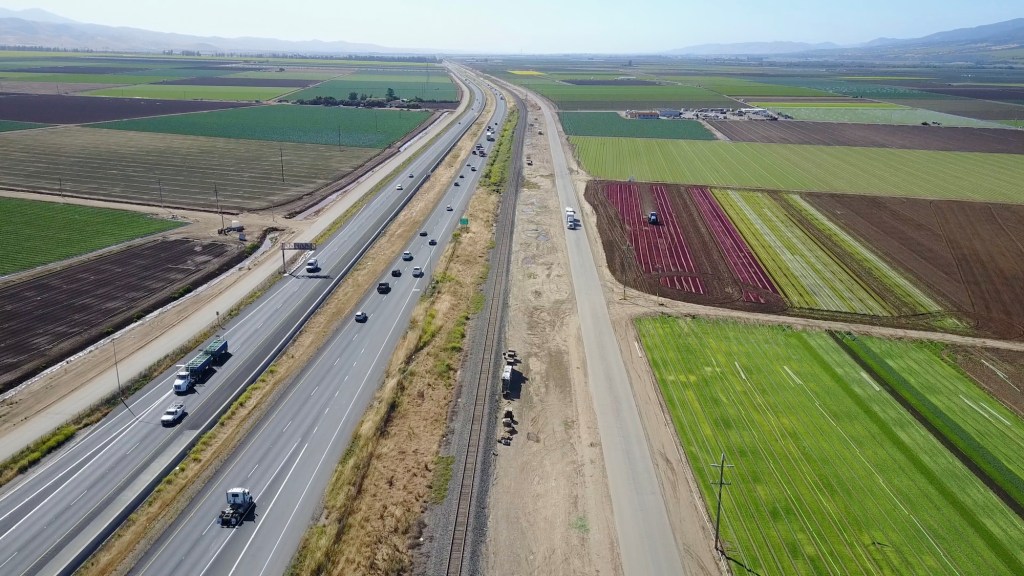
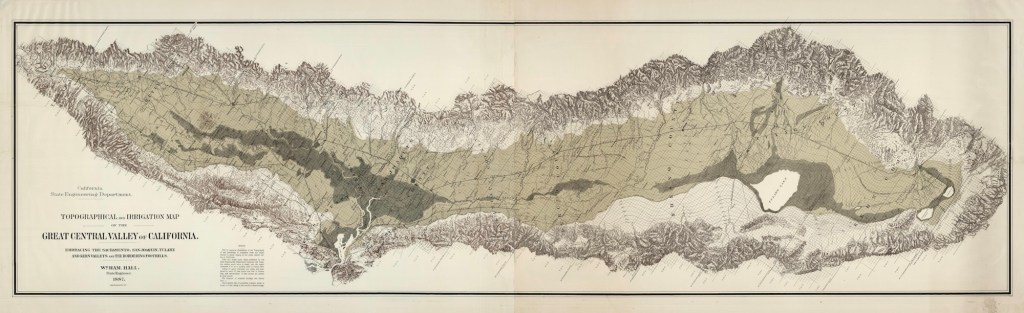
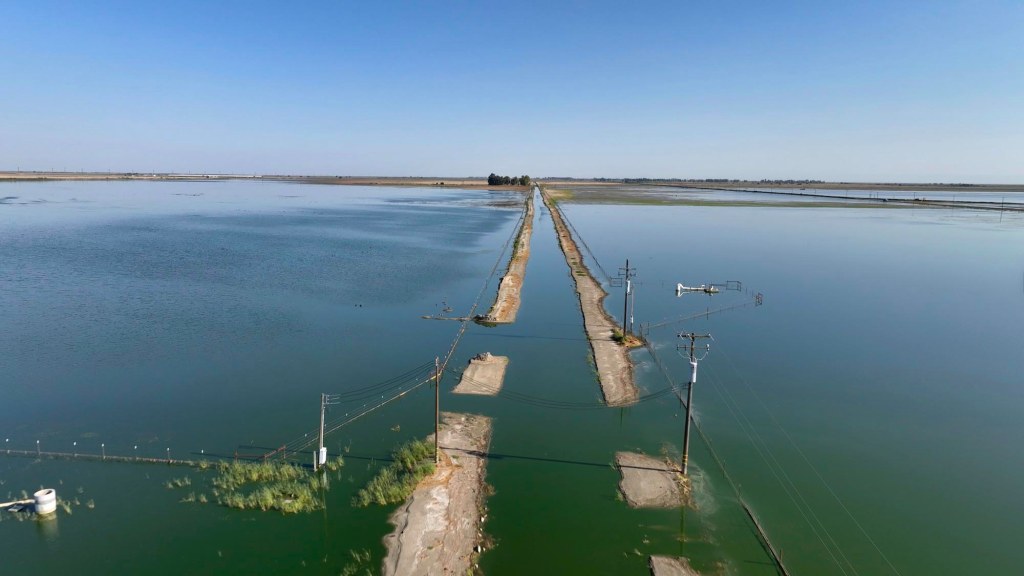
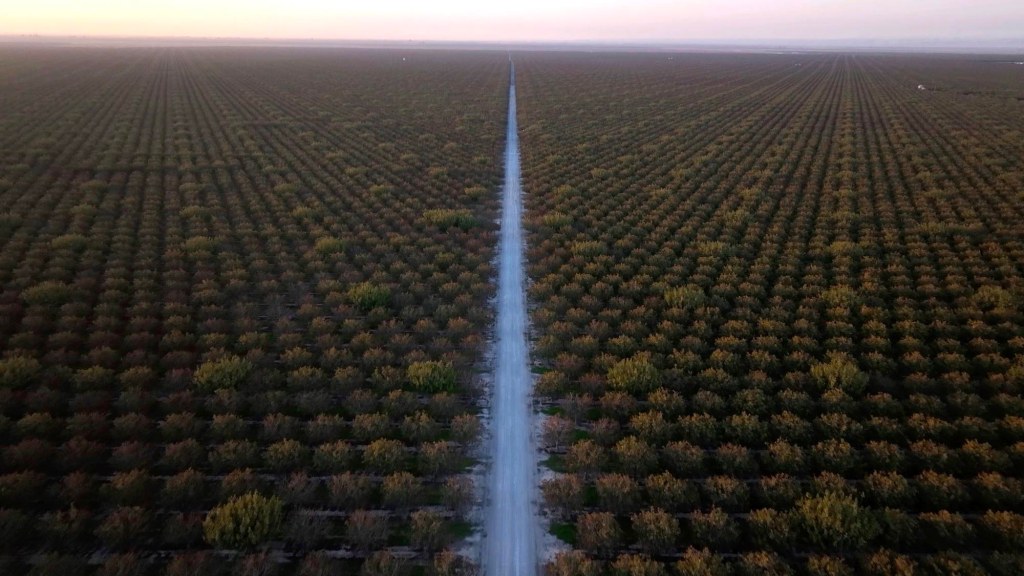
I just got back from a filming assignment in California’s Central Valley. That drive up I-5 and Highway 99 is always a strange kind of pleasure. After climbing over the Grapevine, the landscape suddenly flattens and opens into a vast plain where farmland and dry earth stretch endlessly in every direction. A pumpjack. A dairy farm. Bakersfield. There’s a mysterious, almost bleak beauty to it. Then come the long stretches where the view shifts from dust to trees: pistachio trees. Especially through the San Joaquin Valley, miles of low, gray-green orchards extend to the horizon. At various points, I busted out a drone and took a look, and as far as I could see, it was pistachio trees. A colorful cluster of pistachios hung from a branch and I picked on and peeled off the fruity outer layer. There was that familiar nut with the curved cracked opening. The smiling nut.

California now grows more pistachios than any place on Earth, generating nearly $3 billion in economic value in the state. Nearly every nut sold in the United States, and most shipped abroad, comes from orchards in the Central Valley. The state produces about 99 percent of America’s pistachios, and the U.S. itself accounts for roughly two-thirds of the global supply. And that all happened relatively quickly.

When the U.S. Department of Agriculture began searching for crops suited to the arid West in the early 1900s, the pistachio was an obvious choice. In 1929, a USDA plant explorer named William E. Whitehouse traveled through Persia collecting seeds. Most failed to germinate, but one, gathered near the city of Kerman, produced trees that thrived in California’s dry heat. The resulting Kerman cultivar, paired with a compatible male variety named Peters, became the foundation of the modern industry. Every commercial orchard in California today descends from those early seeds.

For decades, pistachios were sold mainly to immigrants from the Middle East and Mediterranean. It wasn’t until the 1970s that California growers, backed by UC Davis researchers and improved irrigation, began planting on a large scale. By the early 1980s, they had found their perfect home in the southern San Joaquin Valley—Kern, Tulare, Kings, Fresno, and Madera Counties—a region with crazy hot summers, crisp winters…according to researchers, the kind of stress the trees need to flourish.

Pistachio trees in the Central Valley of California (Photo: Erik Olsen)

Then came The Wonderful Company, founded in 1979 by Los Angeles billionaires Stewart and Lynda Resnick. From a handful of orchards, they built an empire of more than 125,000 acres, anchored by a vast processing plant in Lost Hills. Their bright-green “Wonderful Pistachios” bags and silly “Get Crackin’” ads turned what was once an exotic import into a billion-dollar staple.

But the company’s success is riddled with controversy. Mark Arax wrote a scathing piece a few years ago about the Resnicks in the (now, sadly defunct) California Sunday Magazine. The Resnicks have been criticized for their immense control over California’s water and agriculture, using their political influence and vast network of wells to secure resources that many see as public goods. Arax described how the couple transformed the arid west side of the San Joaquin Valley into a private agricultural empire, while smaller farmers struggled through droughts and groundwater depletion. “Most everything that can be touched in this corner of California belongs to Wonderful,” Arax writes. (Side note: Arax’s The Dreamt Land made our recent Ten Essential Books About California’s Nature, Science, and Sense of Place.)

And yes, pistachios have been immensely profitable for the Resnicks. Arax write: “All told, 36 men operating six machines will harvest the orchard in six days. Each tree produces 38 pounds of nuts. Typically, each pound sells wholesale for $4.25. The math works out to $162 a tree. The pistachio trees in Wonderful number 6 million. That’s a billion-dollar crop.”

Pistachios at golden hour. (Photo: Erik Olsen)

Alas, California’s pistachio boom carries contradictions. The crop is both water-hungry and drought-tolerant, a paradox in a state defined by water scarcity. Each pound of nuts requires around 1,400 gallons of water, less than almonds, but still a heavy draw from aquifers and canals. Pistachio trees can survive in poor, salty soils and endure dry years better than most crops, yet once established, they can’t be left unwatered without risking long-term damage. Growers call them a “forever crop.” Plant one, and you’re committed for decades.

The pistachio has reshaped the Central Valley’s landscape. Once a patchwork of row crops and grazing land, vast acres are now covered in pistachio orchards, the ones I was recently driving through.

Pretty much everyone growing anything in California – pistachios, almonds, strawberries (especially strawberries) – can thank the University of California at Davis for help in improving their crops and managing problems like climate change and pests. Davis is a HUGE agricultural school and has many programs to help California farmers.

UC Davis is one of the world’s leading research centers for nuts, especially pistachios, almonds, and walnuts. Scientists here study everything from drought-tolerant rootstocks to disease resistance and pollination, making it the quiet engine behind California’s multibillion-dollar nut industry. (Photo: Erik Olsen)

In the case of the pistachio, recent research at UC Davis has shed new light on the tree’s genetic makeup. Scientists there recently completed a detailed DNA map of the Kerman variety, unlocking the genetic controls of kernel size, flavor compounds, shell-splitting behaviour and climate resilience. The idea is to help growers by making pistachios adapt to hotter, drier conditions. UC Davis is now one of the world’s leading centers for pistachio and nut science.

Here’s something I’ll bet you didn’t know: pistachios can spontaneously combust. Pistachios are rich in unsaturated oils that can slowly oxidize, generating enough heat to ignite large piles if ventilation is poor. Shipping manuals classify them as a “spontaneous-combustion hazard”, a rare but real risk for warehouses and freighters hauling tons of California pistachios across the world. Encyclopedia Britannica notes they are often treated as “dangerous cargo” at sea.

Now, some pistachio biology: The pistachio is dioecious, meaning male and female flowers grow on separate trees. Almonds are not. Farmers plant one male for every eight to ten females, relying on wind for pollination. The trees follow an alternate-bearing cycle, heavy one season, light the next. They don’t produce a profitable crop for about seven years, but once mature, they can keep producing for half a century or more.

California grows nearly all of America’s pistachios, and most of them come from the empire built by Lynda and Stewart Resnick, the power couple behind the Wonderful Company. Their orchards stretch across hundreds of thousands of acres in the Central Valley, transforming a desert landscape into one of the most lucrative nut operations in the world.

Another strange quirk of pistachios is that they are green and, if you look closely, streaked with a faint violet hue. The green comes from chlorophyll, the same pigment that gives leaves their color, which in pistachios lingers unusually long into the nut’s maturity. Most seeds lose chlorophyll as they ripen, but pistachios retain it, especially in the outer layers of the kernel. The purple tint, meanwhile, comes from anthocyanins, antioxidant pigments also found in blueberries and grapes.

As I walked among the pistachio trees recently, I marveled at how alone I was on one of the dirt roads off Highway 99. Not a soul in sight, only the hum of irrigation pumps and the rattle of dry leaves in the breeze. I like to write about the things we all see and experience in California but rarely stop to look at closely. Pistachios are one of those things. If you’ve ever driven through the San Joaquin Valley, you’ve seen how the landscape stretches for miles in orderly rows of pistachio trees. It’s easy to forget, amid the fame of Silicon Valley and Hollywood, that so much of California’s wealth still comes from the land itself, from agriculture and other extractive industries. The pistachio boom is a story of astonishing scale, but it’s also riven with the contradictions and complexities of modern California itself, where innovation and exploitation often grow from the same soil.

Get California wildlife gifts at our Etsy store. It helps support us!

Ten Essential Books About California’s Nature, Science, and Sense of Place

You can scroll endlessly through TikTok and Instagram for quick bursts of California’s beauty, but to truly sink into a subject, and to savor the craft of a great writer, you need a book. I’m an avid reader, and over the past decade I’ve dedicated a large section of my bookshelf to books about California: its wild side, its nature, and its scientific wonders.

There are surely many other books that could be included in this top ten list, but these are the finest I’ve come across in the years since returning to live in the state.They capture the extraordinary diversity of California’s landscapes and wildlife, found nowhere else on Earth, and many also explore issues and themes that hold deep importance for the state and its people. Although I’ve read some of these titles digitally, I love having many of them in print, because there are few things more satisfying than settling into a beach, a forest campsite, or a favorite chair at home with a beautifully made book in hand.


California Against the Sea: Visions for Our Vanishing Coastline by Rosanna Xia

I first discovered Rosanna Xia’s work through her stunning exposé on the thousands of DDT barrels found dumped on the seafloor near Catalina Island. It remains one of the most shocking, and yet not technically illegal, environmental scandals in California’s history.

Her recent book, California Against the Sea: Visions for Our Vanishing Coastline, is a beautifully written and deeply reported look at how California’s coastal communities are confronting the realities of climate change and rising seas. Xia travels the length of the state, from Imperial Beach to Pacifica, weaving together science, policy, and personal stories to show how erosion, flooding, and climate change are already reshaping lives. What makes the book stand out is its relative balance; it’s not a screed, nor naïvely hopeful. It nicely captures the tension between human settlement — our love and need to be near the ocean — and the coast’s natural (and unnatural, depending on how you look at it) cycles of change.

Xia is at her best when exploring adaptation and equity. She reminds us that even if emissions stopped today, the ocean will keep rising, and that not all communities have equal means to respond. The stories of engineers, Indigenous leaders, and ordinary residents highlight how resilience and adaptation must be rooted in local realities. I was especially drawn to Xia’s account of the California Coastal Commission, a wildly controversial agency that wields immense power over the future of the shoreline. Yet it was the commission and its early champions, such as Peter Douglas, who ensured that California’s coast remained open and accessible to all, a decision I consider one of the greatest legislative achievements in modern conservation history.

Thoughtful, accessible, and rooted in the coast we all care about, California Against the Sea challenges us to ask a pressing question: how can we live wisely, and with perspective, at the edge of a changing world?

The High Sierra: A Love Story by Kim Stanley Robinson

Kim Stanley Robinson’s The High Sierra: A Love Story is an expansive, heartfelt tribute to California’s most iconic mountain range. Because of the Sierra’s vast internal basins, which are missing from many of the world’s other great mountain ranges, Robinson argues they are among the best mountains on Earth. His point is hard to refute. He makes a convincing case that the Sierra Nevada may be the greatest range in the world, formed from the planet’s largest single block of exposed granite and lifted over millions of years into its dramatic present shape.

Blending memoir, geology (my favorite part of the book), and adventure writing, Robinson chronicles his own decades of exploration in the Sierra Nevada while tracing the forces — glacial, tectonic, and emotional, that shaped both the landscape and his own life.

Considered one of our greatest living science fiction writers (I’ve read Red Mars — long, but superb — and am currently reading The Ministry for the Future — the opening chapter is gripping and terrifying), Robinson might seem an unlikely guide to the granite heights of California. Yet reading The High Sierra: A Love Story reveals how naturally his fascination with imagined worlds extends into this very real one. The drama of the range, with its light, vastness, and sculpted peaks and basins, feels like raw material for his other universes.
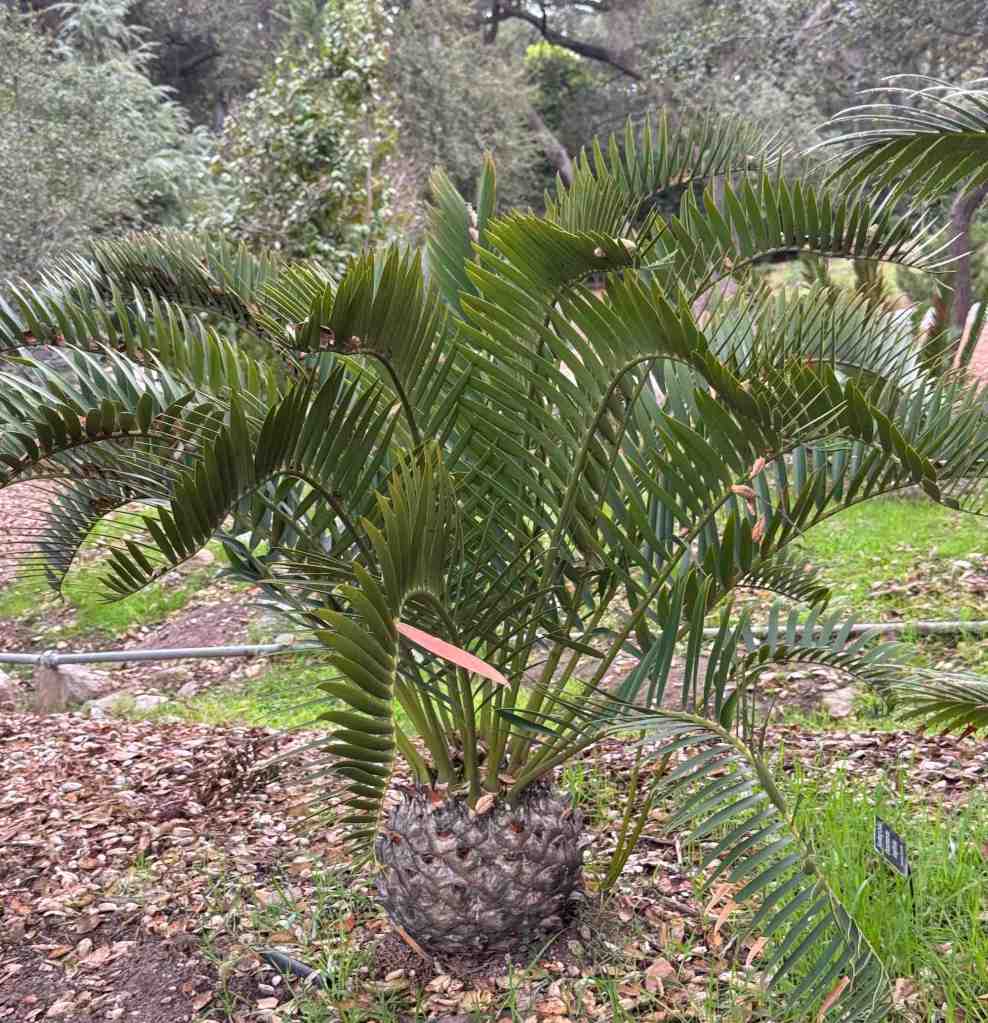
The Dreamt Land by Mark Arax

The Dreamt Land is a portrait of California’s Central Valley, where the control of water has defined everything from landscape to power (power in the form of hydroelectric energy and human control over who gets to shape and profit from the valley’s vast resources). Blending investigative journalism, history, and memoir, Arax explores how the state’s rivers, dams, and aqueducts turned desert into farmland and how that transformation came at immense ecological and social cost.

I’ve read several Arax books, but this one is my favorite. He’s one of the finest writers California has produced. He writes with passion and clarity, grounding his ideas in decades of firsthand experience with California’s land and water. His focus on the fertile Central Valley, where he grew up as a reporter and farmer’s son, gives the book both intimacy and authority, revealing how decisions about water shape not just the landscape but the people who depend on it. There are heroes and villains, plenty of the latter, and all of them unmistakably real. Yet Arax’s prose is so fluid and eloquent that you’ll keep reading not only for the story, but for the sheer pleasure of his writing.

Assembling California by John McPhee (1993)

If you’re at all fascinated by California’s wild geology — and it truly is wild, just ask any geologist — this classic from one of the finest nonfiction writers alive is a must-read. McPhee takes readers on a geological road-trip through California, from the uplifted peaks of the Sierra Nevada to the fault-riven terrain of the San Andreas zone. He teams up with UC Davis geologist Eldridge Moores to explain how oceanic plates, island arcs, and continental blocks collided over millions of years to “assemble” the landmass we now call California. His prose is classic McPhee: clean, vivid, perhaps sometimes overly technical, as he turns terms like “ophiolite” and “batholith” into aspects of a landscape you can picture and feel.

What makes the book especially rewarding, especially for someone interested in earth systems, mapping, and the deep time, is how McPhee seamlessly links everyday places with deep-time events. You’ll read about gold-rush mining camps and vineyard soils, but all of it is rooted in tectonics, uplift, erosion, and transformation. I’ve gotten some of my favorite stories here on California Curated from the pages of this book. It can be ponderous at times, but you’ll not regret giving it a try.

The California Lands Trilogy by Obi Kaufman

The Forests of California (2020)

The Coasts of California (2022)

The Deserts of California (2023)

Obi Kaufman’s California Lands Trilogy is one of the most visually stunning and ambitious projects in California natural history publishing. Beginning with The Forests of California, the first of three volumes that reimagine the state not through its highways or cities but through its living systems, Kaufman invites readers to see California as a vast and interconnected organism, a place defined by its natural rhythms rather than human boundaries. Each book is filled with delicate watercolor maps and diagrams by the author himself. The result is part art book and part ecological manifesto, a celebration of the interconnectedness of California’s natural world. Kaufman’s talents as an artist are breathtaking. If he ever offered his original watercolors for sale, I’d be among the first in line to buy them. Taken together, the series forms a panoramic vision of the state’s natural environments.

That said, Kaufman’s books can be dense, filled with data, maps, and cross-references that reward slow reading more than quick browsing. If I’m honest, I tend to dip in and out of them, picking them up when I’m bored or need a break from the latest political bombshell. Every page offers something to linger over, whether it’s a river system painted like a circulatory map or a meditation on the idea of rewilding. For anyone fascinated by California’s natural systems, all Kaufman’s Field Atlases are invaluable companions endlessly worth revisiting.

The Enduring Wild: A Journey Into California’s Public Lands by Josh Jackson

My first job out of college was with the Department of the Interior in Washington, D.C., by far by the nation’s largest land management agency. A big part of that work involved traveling to sites managed by Interior across the country. I came to understand just how vast America’s public lands are and how much of that expanse, measured in millions of acres, is under the care of the Bureau of Land Management (BLM).

Josh Jackson takes readers on a road trip across California’s often overlooked public wilderness, focusing on the lands managed by the BLM, an agency once jokingly referred to as the Bureau of Livestock and Mining. He shows how these so-called “leftover lands” hold stories of geology, Indigenous presence, extraction, and conservation.

His prose and photography (he has a wonderful eye for landscapes) together invite the reader to slow down, look closely at the subtleties of desert mesas, sagebrush plains, and coastal bluffs, and reckon with what it means to protect places many people have never heard of. His use of the environmental psychology concept of “place attachment” struck a chord with me. The theory suggests that people form deep emotional and psychological bonds with natural places, connections that shape identity, memory, and a sense of belonging. As a frequent visitor to the Eastern Sierra, especially around Mammoth Lakes and Mono Lake, I was particularly drawn to Jackson’s chapter on that region. His account of the lingering impacts of the Mining Act of 1872, and how its provisions still allow for questionable practices today, driven by high gold prices, was eye-opening. I came away with new insights, which is always something I value in a book.

I should mention that I got my copy of the book directly from Josh, who lives not far from me in Southern California. We spent a few hours at a cafe in Highland Park talking about the value and beauty of public lands, and as I sat there flipping through the book, I couldn’t help but acknowledge how striking it is. Part of that comes from Heyday Books’ exceptional attention to design and production. Heyday also publishes Obi Kaufman’s work and they remain one of California’s great independent publishers. But much my appreciation for the book also comes from from Jackson himself, whose photographs are simply outstanding.

Get California wildlife gifts at our Etsy store. It helps support us!

What makes this book especially compelling is its blend of adventure and stewardship. Jackson doesn’t simply celebrate wildness; he also lays out the human and institutional connections that shape (and threaten) these public lands, from grazing rights to mining to climate-change impacts. Some readers may find the breadth of landscapes and stories a little ambitious for a first book, yet the richness of the journey and the accessibility of the writing make it a strong addition for anyone interested in California’s endless conflict over land use: what should be used for extraction and what should be preserved? While I don’t fully agree with Jackson on the extent to which certain lands should be preserved, I still found the book a wonderful exploration of that question.

The Backyard Bird Chronicles by Amy Tan

Amy Tan’s The Backyard Bird Chronicles is a charming and unexpectedly personal journal of bird-watching, set in the yard of Tan’s Bay Area home. Tan is an excellent writer, as one would expect from a wildly successful novelist (The Joy Luck Club, among others). But she also brings a curiosity and wonder to the simple act of looking across one’s backyard. I loved it. Who among us in California doesn’t marvel at the sheer diversity of birds we see every day? And who hasn’t wondered about the secret lives they lead? A skilled illustrator as well as a writer, she studies the birds she observes by sketching them, using art as a way to closely connect with the natural world around her.

What begins as a peaceful retreat during the Covid catastrophe becomes an immersive odyssey of observation and drawing. Tan captures the comings and goings of more than sixty bird species, sketches their lively antics, as she reflects on how these small winged neighbors helped calm her inner world when the larger world felt unsteady.

My only quibble is that I was hoping for more scientific depth; the book is more of a meditation than a field study. Still, for anyone who loves birds, sketching, or the quiet beauty of everyday nature, it feels like a gentle invitation to slow down and truly look.

“Trees in Paradise” by Jared Farmer

California is the most botanically diverse state in the U.S. (by a long shot), home to more than 6,500 native plant species, about a third of which exist nowhere else on Earth. Jared Farmer’s Trees in Paradise: A California History follows four key tree species in California: the redwood, eucalyptus, orange, and palm. Through these examples, Farmer reveals how Californians have reshaped the state’s landscape and its identity. It’s rich in scientific and historical detail. I have discovered several story ideas in the book for California Curated and learned a great deal about the four trees that we still see everywhere in the California landscape.

In telling the story of these four trees (remember, both the eucalyptus and the palm were largely brought here from other places), Farmer avoids easy sentimentality or harsh judgment, instead exploring how the creation of a “paradise” in California came with ecological costs and profoundly shaped the state’s identity. While the book concentrates on those four tree categories, its detailed research and insight make it a compelling read for anyone interested in the state’s environment, history, and the ways people shape and are shaped by land.

One Wilshire: Los Angeles’ Hidden Artery of the Internet

One Wilshire in downtown Los Angeles.

I often discover these stories not from full articles, books, or podcasts, but from a single paragraph, or even a sentence, in them that makes me pause and think, I want to know more. That’s exactly how this week’s story about One Wilshire in downtown Los Angeles began. I was listening to a wonderful podcast called Stepchange, which mentioned One Wilshire in passing during a larger discussion about data centers (it was excellent, I swear). That brief moment sent me down a rabbit hole, uncovering a remarkable chapter in the history of the internet, one that unfolded not in Silicon Valley, like you’d think, but right here in Los Angeles.

When you consider the modern internet, you might think of Silicon Valley campuses, data centers along the Columbia River in Oregon, or snaky undersea cables crossing the Pacific. You probably don’t envision a 1960s office building in downtown Los Angeles. Yet, the seemingly nondescript tower known as One Wilshire is, in fact, one of the most critical pieces of digital real estate on Earth. What does that mean? It is the main connection point for the entire Pacific Rim, acting as a core gateway where great rivers of trans-Pacific data first enter or leave the United States.

If this single facility were to fail, vast swaths of California and potentially parts of the rest of the world could lose the ability to connect to the internet. At the very least it would likely cause major disruption, particularly in California and along Pacific-Asia routes.

Modern data center racks of servers and cables. (Wikipedia)

Built in 1966 by Skidmore Owings and Merrill, One Wilshire was originally an average, blocky corporate address at Wilshire Boulevard and Grand Avenue. It housed law firms and accounting practices. Three decades later, it had transformed into the Internet’s western nerve center. 

The shift began quietly in the late 1980s. Before “data center” was even a thing, telephone companies and early network providers needed places to house switching equipment and to interconnect their lines. One Wilshire was perfect: its roof offered line-of-sight to Mount Lee, home to microwave and radio relays, and it sat beside Pacific Bell’s main switching hub for Los Angeles, now the AT&T Madison Complex. By the early 1990s, the building had become known as the West Coast’s “carrier hotel,” a neutral site where dozens, and eventually hundreds, of companies physically linked their networks. Like a massive bundle of neurons. The heart of all the action was the fourth floor in the Meet-Me Room, a tangle of cables, routers, and blinking lights where data from around the world converged. The building is now also known as CoreSite LA1.

Downtown Los Angeles (Photo: Erik Olsen)

The Wired team that toured the site in 2008 described it as “the world’s most densely populated Meet-Me Room”, home to more than 260 ISPs. The ceiling was so packed with cable trays that wiring spilled from every intersection. Copper wires entering the building were quickly converted to fiber-optic strands for long-haul transmission. And the data they can carry? Oof, that’s a story in and of itself.

The process that takes place, known as peering, lets networks connect and share traffic, again, like a neuron. Without it, users could only reach sites hosted by their own ISP. Before One Wilshire (and similar interconnection hubs) existed, internet service providers (ISPs) were like isolated islands. Users could connect only to sites hosted on their own network (also, remember AOL?). One Wilshire changed that by allowing networks to physically link to each other, creating the backbone of the modern internet. Telecom titans like AT&T, Verizon, China Telecom, Amazon, Google, and Netflix exchange data packets in unimaginable quantities. I tried to find an estimate of the total throughput capacity of One Wilshire and the best answer I could find was hundreds of terabytes per second which, while vague, is still a lot.

One Wilshire in downtown Los Angeles (Photo:

At its peak, One Wilshire carried an estimated one-third of all Internet traffic between North America and Asia. Undersea fiber-optic cables land in places like Hermosa Beach and the Manchester/Point Arena station. From there, terrestrial backhaul lines carry the data inland directly into One Wilshire, where it may be exchanged or forwarded onto international routes like Tokyo, Singapore, Hong Kong, Sydney, etc. All in the matter of milliseconds. It’s amazing.

By the dot-com boom, One Wilshire was less interesting as a basic real estate play and far more valuable for its network density, which was still growing. A single rack of servers or cross-connect could rent for tens of thousands of dollars a month. As its power draw and cooling needs surged, engineers retrofitted entire floors with industrial-grade infrastructure to keep pace with the growth of the internet. Of course, investors took notice. In 2013, GI Partners purchased the building for $437 million, a record $660 per square foot, then the highest price ever paid for any office property in downtown Los Angeles. By then it wasn’t really an office building at all, but a data fortress housing the infrastructure of hundreds of companies connected by thousands of miles of fiber.

Another story to tell at some point is the incredible advance in how much data a single strand of fiber can carry. A technology called dense wavelength division multiplexing (DWDM), allows each fiber to carry dozens of individual light “channels,” each at its own wavelength, dramatically increasing the capacity of a single fiber. Those fibers are bundled a larger cable (usually 12 pairs) that can carry 400–600 terabytes per second. We’re talking 60–90 million Netflix movies per second. Mind-blowing technology.

Today, One Wilshire remains a 664,000-square-foot communications hub, the core exchange center for trans-Pacific data and inter-carrier routing. It’s the West Coast’s counterpart to New York’s 60 Hudson Street, also a nondescript, but vital physical part of the Internet.

So, yeah, the internet, and all the information you doom scroll and the Netflix videos you binge, are not only in reality “a series of tubes,” as Senator Stevens once put it. It’s physical. It’s real infrastructure, built of concrete, cables, and air-conditioned rooms full of servers. And one of the most important pieces of it all sits on a busy, traffic-clogged street in downtown Los Angeles.

California Is a Nobel Powerhouse

You can keep your Oscars, Emmys, Grammys, and Tonys. Take your Pulitzers, Bookers, and Peabodys, too. Even the Pritzker and the Fields Medal don’t quite measure up. For me, nothing competes with the Nobel Prize as a symbol that someone has truly changed the world.

I’m not a scientist, but my mind lives in that space. Science, more than anything else, runs the world and reshapes it. This newsletter was born out of my fascination with how things work and the quiet mechanics behind the visible world and my love for all that California has to offer in the way of innovation and natural beauty. I love standing in front of something familiar and asking: why? how? what exactly is going on here? And nothing satisfies that intense curiosity more than science.

That said, I’ve never loved the word science. It feels cold and sometimes intimidating, as if it applies to people in lab coats and not to everyone else. I kinda wish there were a better word for that spirit of discovery that lives in all of us. Maybe it’s wonder. Maybe curiosity. I dunno. “Science” turns people off sometimes, unfortunately.

Whatever you call it, the Nobel Prize represents the highest acknowledgment of that pursuit. It is the world’s way of saying: this mattered. This changed something. And there are few places (if any) on Earth that can rival California when it comes to the number of people who have earned that honor.

This year, 2025, was no different. Three of the Nobel Prizes announced this week carried California fingerprints, adding to a tradition that stretches back more than a century.

The Nobel Prize in Physiology or Medicine came first. It went to Mary Brunkow, Shimon Sakaguchi, and Fred Ramsdell, the last of whom studied at UCLA and UC San Diego. (In epic California fashion, Ramsdell, who studied at UCLA and UC San Diego, didn’t even learn he’d become a Nobel laureate until after returning from a trip deep into the Wyoming wilderness, where he’d been out of contact with the outside world. What’s more Californian than that?) Their research on regulatory T cells explained how the immune system knows when to attack and when to stand down. Ramsdell’s discovery of a key gene that controls these cells has transformed how scientists think about autoimmune disease and organ transplantation.

Next came the Nobel Prize in Physics, awarded to John Clarke of UC Berkeley, Michel H. Devoret of UC Santa Barbara and Yale, and John M. Martinis of UC Santa Barbara (big shout out to UCSB!). Their award honored pioneering work that revealed how the strange laws of quantum mechanics can be seen in circuits large enough to hold in your hand. Beginning in Clarke’s Berkeley lab in the 1980s, the trio built superconducting loops that behaved like subatomic particles, “tunneling” and flipping between quantum energy states. Those experiments helped create the foundation for today’s quantum computers.

The Chemistry Prize followed a day later, shared by Susumu Kitagawa, Richard Robson, and Omar M. Yaghi of UC Berkeley for discoveries in metal–organic frameworks, or MOFs. These are crystalline materials so porous that a single gram can hold an entire roomful of gas (mind blown). MOFs are now used to capture carbon dioxide, filter water, and even pull drinking water from desert air. Yaghi’s Berkeley lab coined the term “reticular chemistry” to describe this new molecular architecture. His work has become one of California’s most important contributions to the climate sciences.

California Institute of Technology (Photo: Erik Olsen)

Those three announcements in as many days lit up California’s scientific community, has garnered many headlines and carried on a tradition that has made the state one of the world’s most reliable engines of Nobel-level discovery.

The University of California system now counts 74 Nobel Prizes among its faculty and researchers. 23 in physics and 16 in chemistry. Berkeley leads the list, with 26 laureates, followed by UC San Diego, UCLA, UC Santa Barbara, and UC San Francisco. Even smaller campuses, such as UC Riverside, have ties to winners like Barry Barish, who shared the 2017 Nobel in Physics for detecting gravitational waves.

Linus Pauling with an inset of his Nobel Prize in 1955 (Wikipedia – public domain)

Caltech, which I have written about extensively and is quite close to my own home, counts 47 Nobel laureates (faculty, alumni, or postdocs). Its history is the stuff of legend. In 1923, Robert Millikan won for measuring the charge of the electron. In 1954, Linus Pauling received the Chemistry Prize for explaining the nature of the chemical bond. He later won the Peace Prize for his anti-nuclear activism, making him the only person to win two unshared Nobels.

Stanford University sits not far behind, with 36 Nobel winners in its history and about 20 currently active in its community. From the development of transistors and lasers to modern work in medicine and economics, Stanford’s laureates have changed the modern world in ways that is impossible to quantify, but profound in their impact.

These numbers tell a clear story: since the mid-twentieth century, about one in every four Nobel Prizes in the sciences awarded to Americans has gone to researchers based at California institutions, an extraordinary concentration of curiosity, intellect, and ambition within a single state.

University of California Santa Barbara (Photo: Erik Olsen)

California’s Nobel dominance began early. In the 1930s, UC Berkeley’s Ernest Lawrence invented the cyclotron, a device that would transform physics and eventually medicine. Caltech, meanwhile, became a magnet for the world’s brightest physicists and chemists.

Over the decades, California’s universities turned their focus to molecular biology, biochemistry, and genetics. In the 1980s, the state’s physicists and engineers drove advances in lasers, semiconductors, and now, quantum circuits. And as biotechnology rose, San Diego and the Bay Area became ground zero for breakthroughs in medicine and life sciences. One of the great moments in genetics took place in Asilomar on the coast. 

Nobel Museum in Stockholm, Sweden (Photo: Erik Olsen)

This is all about more than geography and climate (although those are a big sell, for sure). California’s research institutions kick ass because they operate as ecosystems rather than islands. Berkeley physicists collaborate with engineers at Stanford. Caltech chemists trade ideas with biotech firms in San Diego. Graduate students drift between labs, startups, and national research centers like Lawrence Livermore and JPL. The boundaries between university and industry blur, with campuses like Stanford turning breakthrough discoveries into thriving commercial ventures (look how many of our big tech brains came out of Stanford). In California, research doesn’t end in the lab, it often turns into companies, technologies, and treatments that generate both knowledge and enormous economic value. Just look at AI today. 

Check out our Etsy store for cool California wildlife swag.

I think the secret is cultural. Over the years, I’ve lived on the East coast for almost two decades, and abroad for several as well, and nothing compares to the California vibe. California has never been afraid of big risks. Its scientists are encouraged to chase questions that might take decades to answer (see our recent story on just this idea). There’s an openness to uncertainty here that works well in the natural sciences, but can also be found in Hollywood, Silicon Valley and, of course, space exploration. 

When next year’s round of early morning calls comes from Stockholm, it is a good bet that someone in California will pick up. Maybe a physicist in Pasadena, a chemist in Berkeley, or a physician in La Jolla. Maybe they’ll pick up the phone in bed, maybe a text from a spouse while camping, or on a morning jog. That’s when a Swedish-accented voice tells them that the world has just caught up to what they’ve been quietly building for years.