I often discover these stories not from full articles, books, or podcasts, but from a single paragraph, or even a sentence, in them that makes me pause and think, I want to know more. That’s exactly how this week’s story about One Wilshire in downtown Los Angeles began. I was listening to a wonderful podcast called Stepchange, which mentioned One Wilshire in passing during a larger discussion about data centers (it was excellent, I swear). That brief moment sent me down a rabbit hole, uncovering a remarkable chapter in the history of the internet, one that unfolded not in Silicon Valley, like you’d think, but right here in Los Angeles.
When you consider the modern internet, you might think of Silicon Valley campuses, data centers along the Columbia River in Oregon, or snaky undersea cables crossing the Pacific. You probably don’t envision a 1960s office building in downtown Los Angeles. Yet, the seemingly nondescript tower known as One Wilshire is, in fact, one of the most critical pieces of digital real estate on Earth. What does that mean? It is the main connection point for the entire Pacific Rim, acting as a core gateway where great rivers of trans-Pacific data first enter or leave the United States.
If this single facility were to fail, vast swaths of California and potentially parts of the rest of the world could lose the ability to connect to the internet. At the very least it would likely cause major disruption, particularly in California and along Pacific-Asia routes.
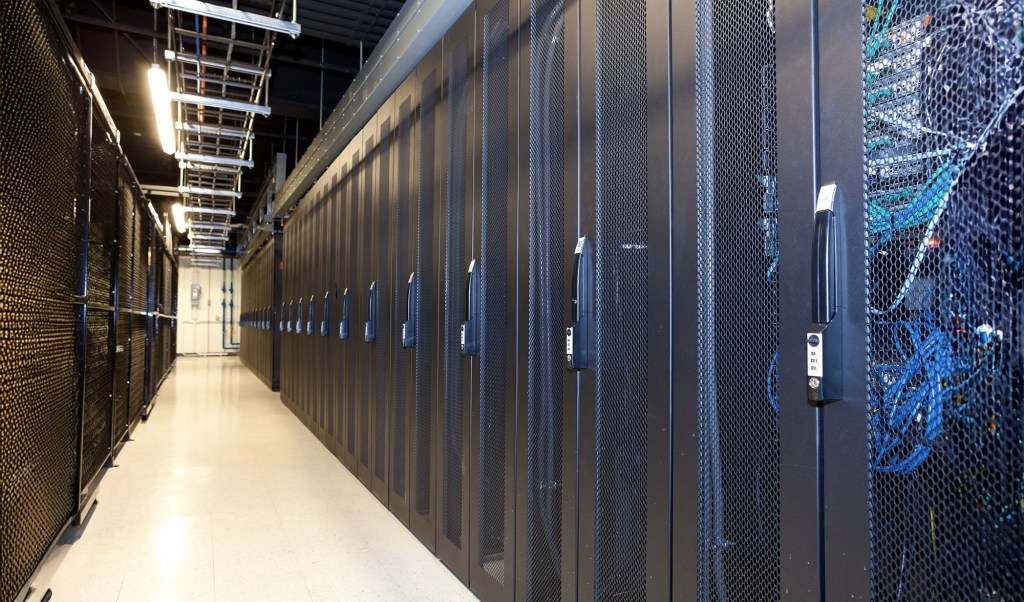
Modern data center racks of servers and cables. (Wikipedia)
Built in 1966 by Skidmore Owings and Merrill, One Wilshire was originally an average, blocky corporate address at Wilshire Boulevard and Grand Avenue. It housed law firms and accounting practices. Three decades later, it had transformed into the Internet’s western nerve center.
The shift began quietly in the late 1980s. Before “data center” was even a thing, telephone companies and early network providers needed places to house switching equipment and to interconnect their lines. One Wilshire was perfect: its roof offered line-of-sight to Mount Lee, home to microwave and radio relays, and it sat beside Pacific Bell’s main switching hub for Los Angeles, now the AT&T Madison Complex. By the early 1990s, the building had become known as the West Coast’s “carrier hotel,” a neutral site where dozens, and eventually hundreds, of companies physically linked their networks. Like a massive bundle of neurons. The heart of all the action was the fourth floor in the Meet-Me Room, a tangle of cables, routers, and blinking lights where data from around the world converged. The building is now also known as CoreSite LA1.
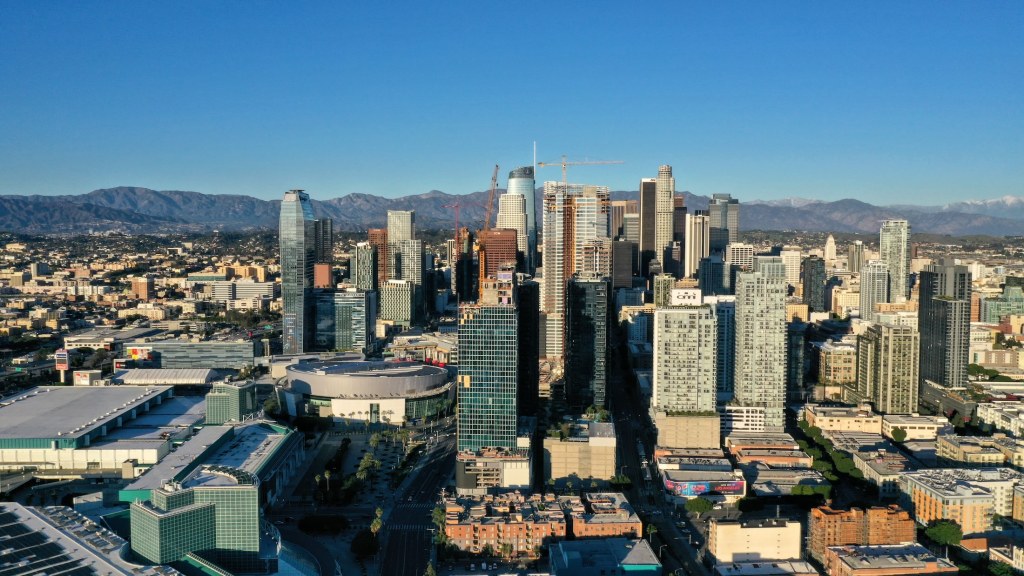
Downtown Los Angeles (Photo: Erik Olsen)
The Wired team that toured the site in 2008 described it as “the world’s most densely populated Meet-Me Room”, home to more than 260 ISPs. The ceiling was so packed with cable trays that wiring spilled from every intersection. Copper wires entering the building were quickly converted to fiber-optic strands for long-haul transmission. And the data they can carry? Oof, that’s a story in and of itself.
The process that takes place, known as peering, lets networks connect and share traffic, again, like a neuron. Without it, users could only reach sites hosted by their own ISP. Before One Wilshire (and similar interconnection hubs) existed, internet service providers (ISPs) were like isolated islands. Users could connect only to sites hosted on their own network (also, remember AOL?). One Wilshire changed that by allowing networks to physically link to each other, creating the backbone of the modern internet. Telecom titans like AT&T, Verizon, China Telecom, Amazon, Google, and Netflix exchange data packets in unimaginable quantities. I tried to find an estimate of the total throughput capacity of One Wilshire and the best answer I could find was hundreds of terabytes per second which, while vague, is still a lot.
One Wilshire in downtown Los Angeles (Photo:
At its peak, One Wilshire carried an estimated one-third of all Internet traffic between North America and Asia. Undersea fiber-optic cables land in places like Hermosa Beach and the Manchester/Point Arena station. From there, terrestrial backhaul lines carry the data inland directly into One Wilshire, where it may be exchanged or forwarded onto international routes like Tokyo, Singapore, Hong Kong, Sydney, etc. All in the matter of milliseconds. It’s amazing.
By the dot-com boom, One Wilshire was less interesting as a basic real estate play and far more valuable for its network density, which was still growing. A single rack of servers or cross-connect could rent for tens of thousands of dollars a month. As its power draw and cooling needs surged, engineers retrofitted entire floors with industrial-grade infrastructure to keep pace with the growth of the internet. Of course, investors took notice. In 2013, GI Partners purchased the building for $437 million, a record $660 per square foot, then the highest price ever paid for any office property in downtown Los Angeles. By then it wasn’t really an office building at all, but a data fortress housing the infrastructure of hundreds of companies connected by thousands of miles of fiber.
Another story to tell at some point is the incredible advance in how much data a single strand of fiber can carry. A technology called dense wavelength division multiplexing (DWDM), allows each fiber to carry dozens of individual light “channels,” each at its own wavelength, dramatically increasing the capacity of a single fiber. Those fibers are bundled a larger cable (usually 12 pairs) that can carry 400–600 terabytes per second. We’re talking 60–90 million Netflix movies per second. Mind-blowing technology.
Today, One Wilshire remains a 664,000-square-foot communications hub, the core exchange center for trans-Pacific data and inter-carrier routing. It’s the West Coast’s counterpart to New York’s 60 Hudson Street, also a nondescript, but vital physical part of the Internet.
So, yeah, the internet, and all the information you doom scroll and the Netflix videos you binge, are not only in reality “a series of tubes,” as Senator Stevens once put it. It’s physical. It’s real infrastructure, built of concrete, cables, and air-conditioned rooms full of servers. And one of the most important pieces of it all sits on a busy, traffic-clogged street in downtown Los Angeles.
You can keep your Oscars, Emmys, Grammys, and Tonys. Take your Pulitzers, Bookers, and Peabodys, too. Even the Pritzker and the Fields Medal don’t quite measure up. For me, nothing competes with the Nobel Prize as a symbol that someone has truly changed the world.
I’m not a scientist, but my mind lives in that space. Science, more than anything else, runs the world and reshapes it. This newsletter was born out of my fascination with how things work and the quiet mechanics behind the visible world and my love for all that California has to offer in the way of innovation and natural beauty. I love standing in front of something familiar and asking: why? how? what exactly is going on here? And nothing satisfies that intense curiosity more than science.
That said, I’ve never loved the word science. It feels cold and sometimes intimidating, as if it applies to people in lab coats and not to everyone else. I kinda wish there were a better word for that spirit of discovery that lives in all of us. Maybe it’s wonder. Maybe curiosity. I dunno. “Science” turns people off sometimes, unfortunately.
Whatever you call it, the Nobel Prize represents the highest acknowledgment of that pursuit. It is the world’s way of saying: this mattered. This changed something. And there are few places (if any) on Earth that can rival California when it comes to the number of people who have earned that honor.
This year, 2025, was no different. Three of the Nobel Prizes announced this week carried California fingerprints, adding to a tradition that stretches back more than a century.
The Nobel Prize in Physiology or Medicine came first. It went to Mary Brunkow, Shimon Sakaguchi, and Fred Ramsdell, the last of whom studied at UCLA and UC San Diego. (In epic California fashion, Ramsdell, who studied at UCLA and UC San Diego, didn’t even learn he’d become a Nobel laureate until after returning from a trip deep into the Wyoming wilderness, where he’d been out of contact with the outside world. What’s more Californian than that?) Their research on regulatory T cells explained how the immune system knows when to attack and when to stand down. Ramsdell’s discovery of a key gene that controls these cells has transformed how scientists think about autoimmune disease and organ transplantation.
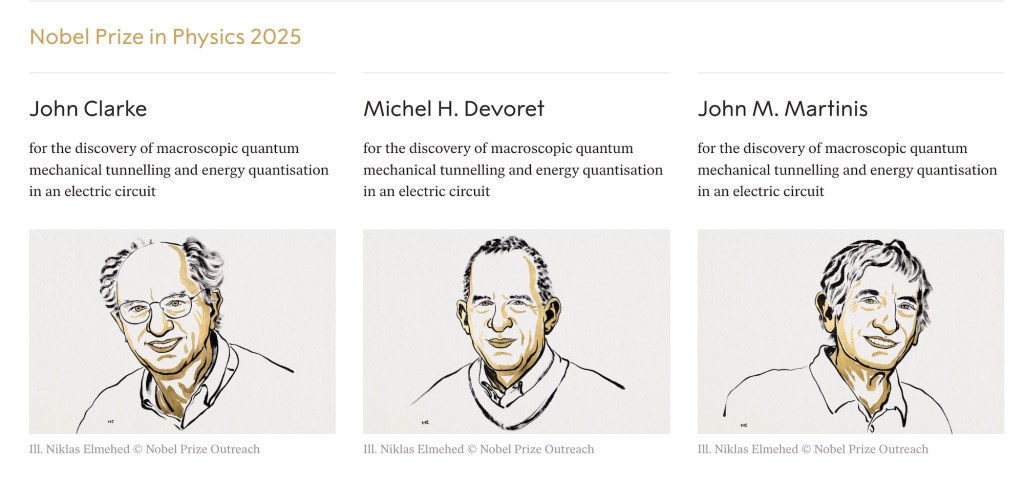
Next came the Nobel Prize in Physics, awarded to John Clarke of UC Berkeley, Michel H. Devoret of UC Santa Barbara and Yale, and John M. Martinis of UC Santa Barbara (big shout out to UCSB!). Their award honored pioneering work that revealed how the strange laws of quantum mechanics can be seen in circuits large enough to hold in your hand. Beginning in Clarke’s Berkeley lab in the 1980s, the trio built superconducting loops that behaved like subatomic particles, “tunneling” and flipping between quantum energy states. Those experiments helped create the foundation for today’s quantum computers.
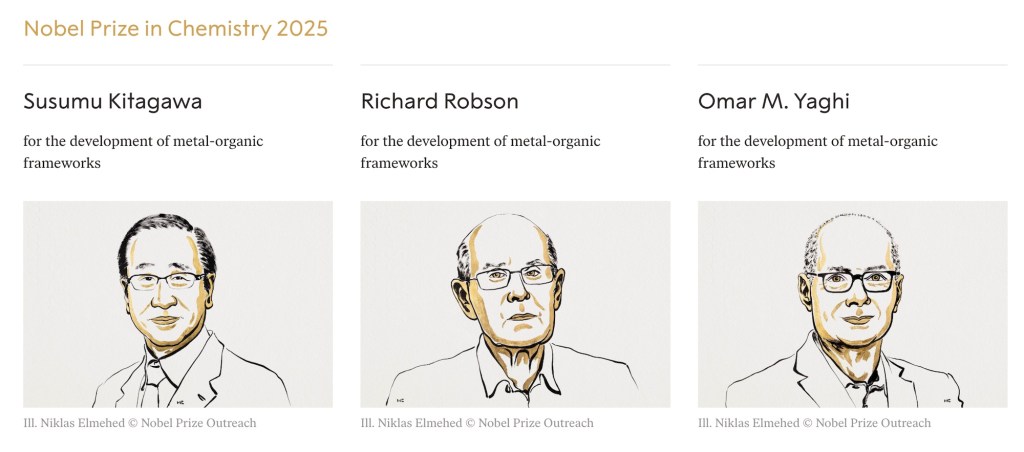
The Chemistry Prize followed a day later, shared by Susumu Kitagawa, Richard Robson, and Omar M. Yaghi of UC Berkeley for discoveries in metal–organic frameworks, or MOFs. These are crystalline materials so porous that a single gram can hold an entire roomful of gas (mind blown). MOFs are now used to capture carbon dioxide, filter water, and even pull drinking water from desert air. Yaghi’s Berkeley lab coined the term “reticular chemistry” to describe this new molecular architecture. His work has become one of California’s most important contributions to the climate sciences.
California Institute of Technology (Photo: Erik Olsen)
Those three announcements in as many days lit up California’s scientific community, has garnered many headlines and carried on a tradition that has made the state one of the world’s most reliable engines of Nobel-level discovery.
The University of California system now counts 74 Nobel Prizes among its faculty and researchers. 23 in physics and 16 in chemistry. Berkeley leads the list, with 26 laureates, followed by UC San Diego, UCLA, UC Santa Barbara, and UC San Francisco. Even smaller campuses, such as UC Riverside, have ties to winners like Barry Barish, who shared the 2017 Nobel in Physics for detecting gravitational waves.
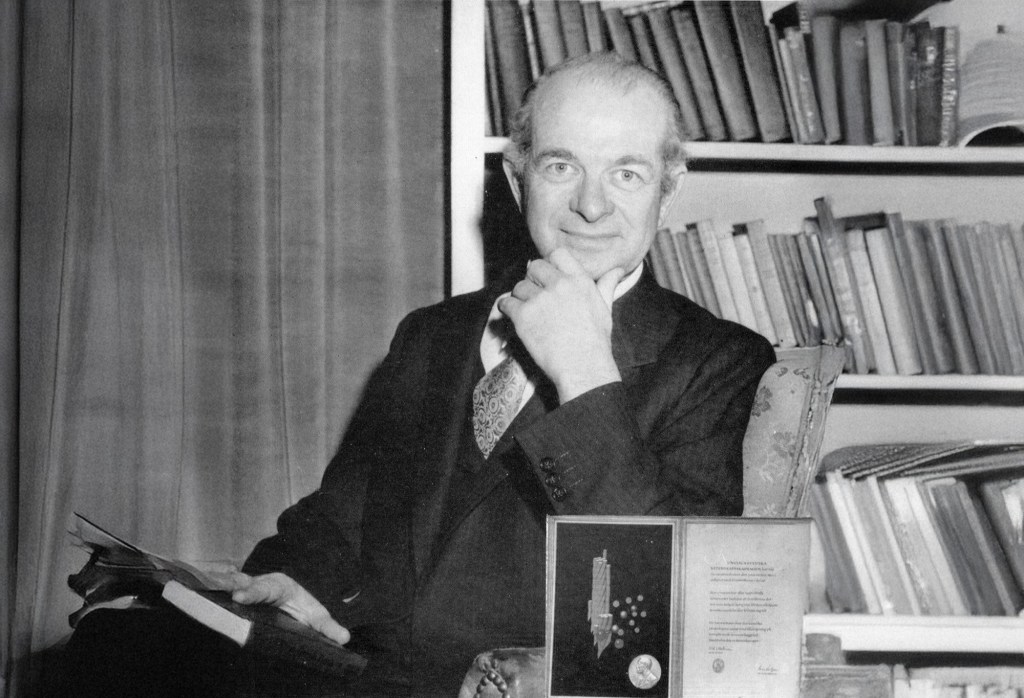
Linus Pauling with an inset of his Nobel Prize in 1955 (Wikipedia – public domain)
Caltech, which I have written about extensively and is quite close to my own home, counts 47 Nobel laureates (faculty, alumni, or postdocs). Its history is the stuff of legend. In 1923, Robert Millikan won for measuring the charge of the electron. In 1954, Linus Pauling received the Chemistry Prize for explaining the nature of the chemical bond. He later won the Peace Prize for his anti-nuclear activism, making him the only person to win two unshared Nobels.
Stanford University sits not far behind, with 36 Nobel winners in its history and about 20 currently active in its community. From the development of transistors and lasers to modern work in medicine and economics, Stanford’s laureates have changed the modern world in ways that is impossible to quantify, but profound in their impact.
These numbers tell a clear story: since the mid-twentieth century, about one in every four Nobel Prizes in the sciences awarded to Americans has gone to researchers based at California institutions, an extraordinary concentration of curiosity, intellect, and ambition within a single state.
University of California Santa Barbara (Photo: Erik Olsen)
California’s Nobel dominance began early. In the 1930s, UC Berkeley’s Ernest Lawrence invented the cyclotron, a device that would transform physics and eventually medicine. Caltech, meanwhile, became a magnet for the world’s brightest physicists and chemists.
Over the decades, California’s universities turned their focus to molecular biology, biochemistry, and genetics. In the 1980s, the state’s physicists and engineers drove advances in lasers, semiconductors, and now, quantum circuits. And as biotechnology rose, San Diego and the Bay Area became ground zero for breakthroughs in medicine and life sciences. One of the great moments in genetics took place in Asilomar on the coast.
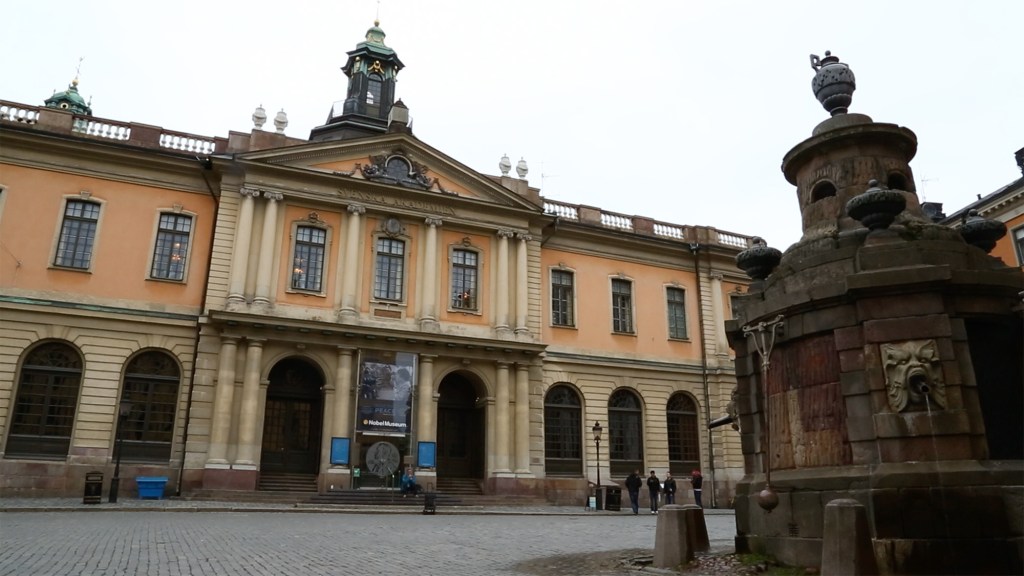
Nobel Museum in Stockholm, Sweden (Photo: Erik Olsen)
This is all about more than geography and climate (although those are a big sell, for sure). California’s research institutions kick ass because they operate as ecosystems rather than islands. Berkeley physicists collaborate with engineers at Stanford. Caltech chemists trade ideas with biotech firms in San Diego. Graduate students drift between labs, startups, and national research centers like Lawrence Livermore and JPL. The boundaries between university and industry blur, with campuses like Stanford turning breakthrough discoveries into thriving commercial ventures (look how many of our big tech brains came out of Stanford). In California, research doesn’t end in the lab, it often turns into companies, technologies, and treatments that generate both knowledge and enormous economic value. Just look at AI today.
Check out our Etsy store for cool California wildlife swag.
I think the secret is cultural. Over the years, I’ve lived on the East coast for almost two decades, and abroad for several as well, and nothing compares to the California vibe. California has never been afraid of big risks. Its scientists are encouraged to chase questions that might take decades to answer (see our recent story on just this idea). There’s an openness to uncertainty here that works well in the natural sciences, but can also be found in Hollywood, Silicon Valley and, of course, space exploration.
When next year’s round of early morning calls comes from Stockholm, it is a good bet that someone in California will pick up. Maybe a physicist in Pasadena, a chemist in Berkeley, or a physician in La Jolla. Maybe they’ll pick up the phone in bed, maybe a text from a spouse while camping, or on a morning jog. That’s when a Swedish-accented voice tells them that the world has just caught up to what they’ve been quietly building for years.
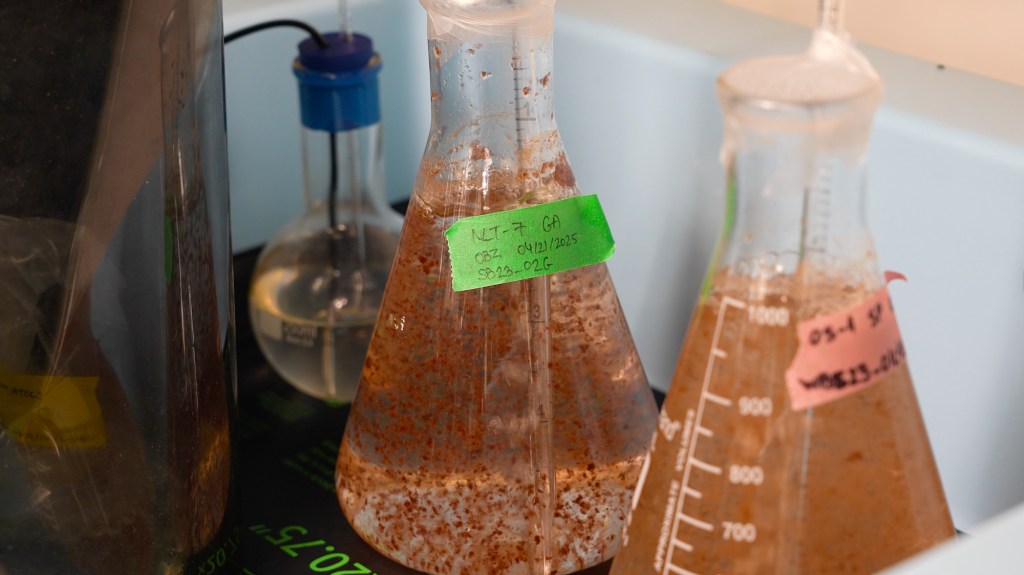
Flasks of Asparagopsis taxiformis growing at Scripps Institution of Oceanography. Researchers are studying this red seaweed for its potential to slash methane emissions from cattle when added in small amounts to their feed. (Photo: Erik Olsen)
Inside a long, brightly lit basement lab at the Scripps Institution of Oceanography at UC San Diego, a large aquarium filled with live corals sits against the wall, the vibrant shapes and colors of the coral standing out against the otherwise plain white surroundings. Nearby, in a side alcove, dozens of glass flasks bubble with aerated water, each holding tiny crimson clusters of seaweed swirling in suspension, resembling miniature lava lamps. These fragile red fragments, born in California and raised under tightly controlled conditions, are part of a global effort to harness seaweed to fight climate change.
Cattle and other ruminant livestock are among the largest contributors to methane emissions worldwide, releasing vast amounts of the gas through digestion and eructation. Burps, not farts. The distinction is not especially important, but it matters because critics of climate science often mock the idea of “cow farts” driving climate change. In reality, the methane comes primarily from cow burps, not flatulence.
But I digress.
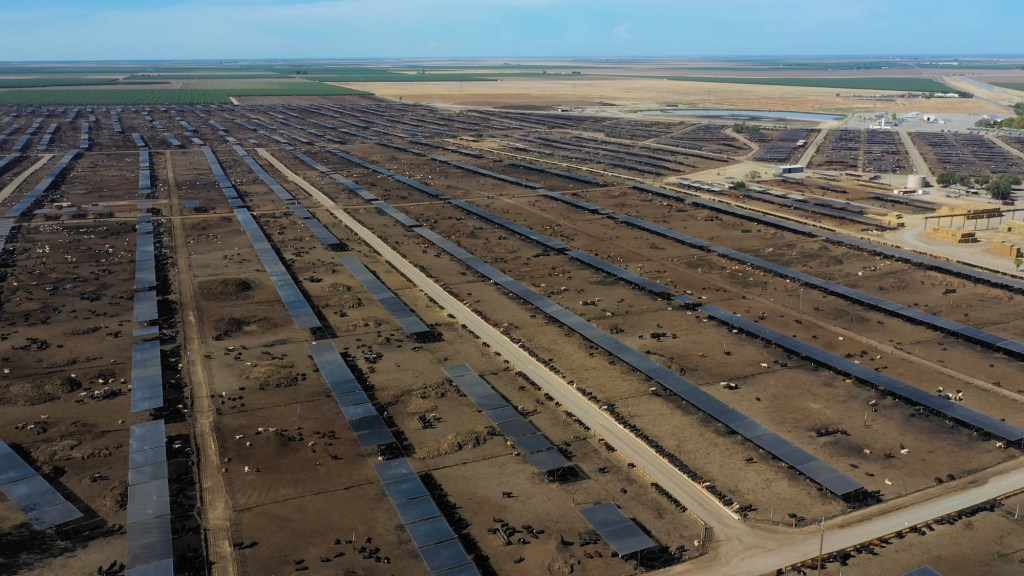
Cattle at Harris Ranch in California’s Central Valley, one of the largest beef producers in the United States. Livestock operations like this are a major source of methane emissions, a greenhouse gas more than 80 times as potent as carbon dioxide over a 20-year period. (Photo: Erik Olsen)
Globally, livestock are responsible for roughly 14 percent of all human-induced greenhouse gases, with methane from cattle making up a significant portion of that total. The beef and dairy industries alone involve more than a billion head of cattle, producing meat and milk that fuel economies but also generating methane on a scale that rivals emissions from major industrial sectors. Because methane is so potent, trapping more than 80 times as much heat as carbon dioxide over a 20-year period, the livestock industry’s footprint has become a central focus for climate scientists searching for solutions.
Enter Jennifer Smith and her colleagues at the Smith Lab at Scripps in beautiful La Jolla, California. Their team is tackling urgent environmental challenges, from understanding coral die-offs to developing strategies that reduce greenhouse gas emissions, among them, the cultivation of seaweed to curb methane from cattle.
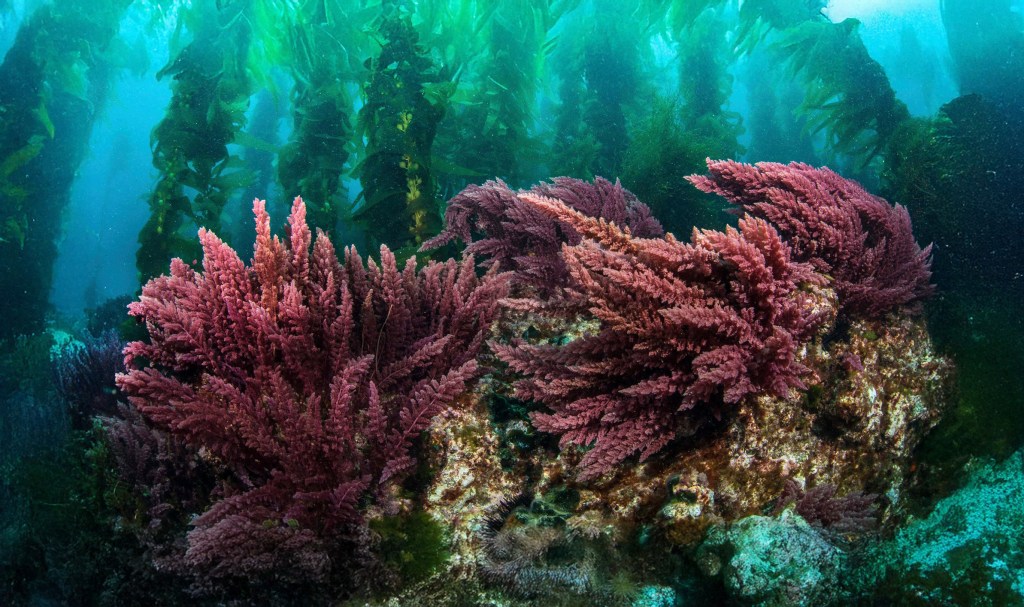
The seaweed species is Asparagopsis taxiformis. Native to tropical and warm temperate seas and found off the coast of California, in fact right here off the coast in San Diego, it produces natural compounds such as bromoform that interfere with the microbes in a cow’s stomach that generate methane gas, significantly reducing the production of methane and, of course, it’s exhalation by the animals we eat. It turns out the seaweed, when added to animal feed can be very effective:
Asparagopsis taxiformis, commonly known as red sea plume, a tropical red algae being studied for its ability to cut methane emissions from cattle. (Photo: Wikipedia)
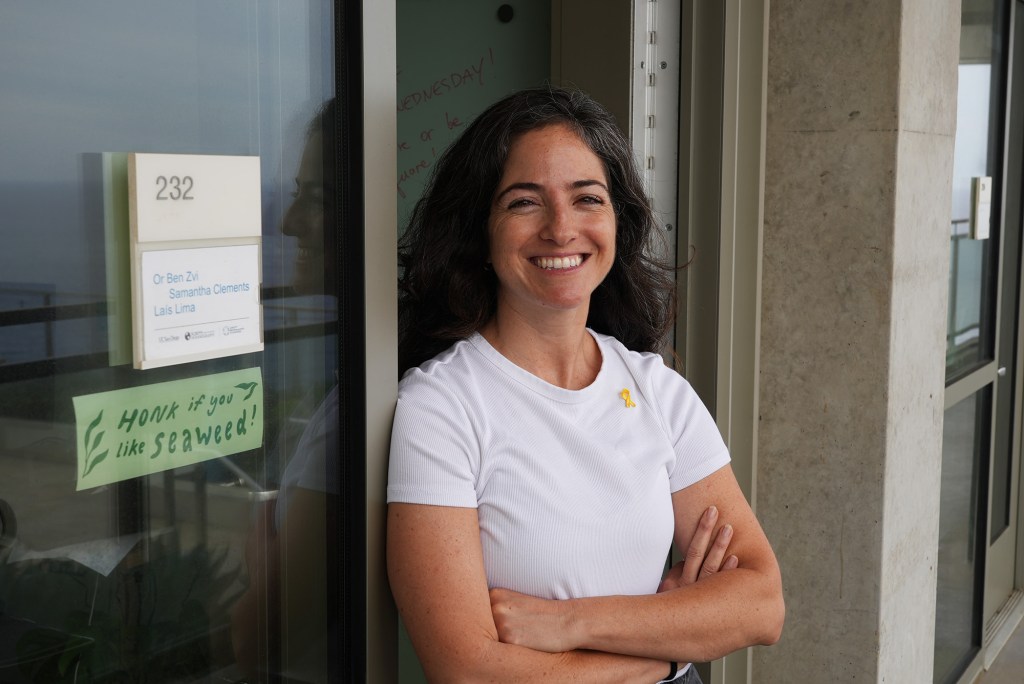
“You need to feed the cows only less than 1% of their diet with this red algae and it can reduce up to 99% of their methane emissions,” said Dr. Or Ben Zvi, an Israeli postdoctoral researcher at Scripps who studies both corals and seaweeds.
Trials in Australia, California, and other regions have shown just how potent this seaweed can be. As Dr. Ben Zvi indicated, even at tiny doses, fractions of a percent of a cow’s feed, other studies have shown that it can reduce methane by 30 to 90 percent, depending on conditions and preparation. Such results suggest enormous potential, but only if enough of the seaweed can be produced consistently and sustainably.
“At the moment it is quite labor intensive,” says Ben Zvi. “We’re developing workflows to create a more streamlined and cost-effective industry.”
Which explains to bubbling flasks around me now.
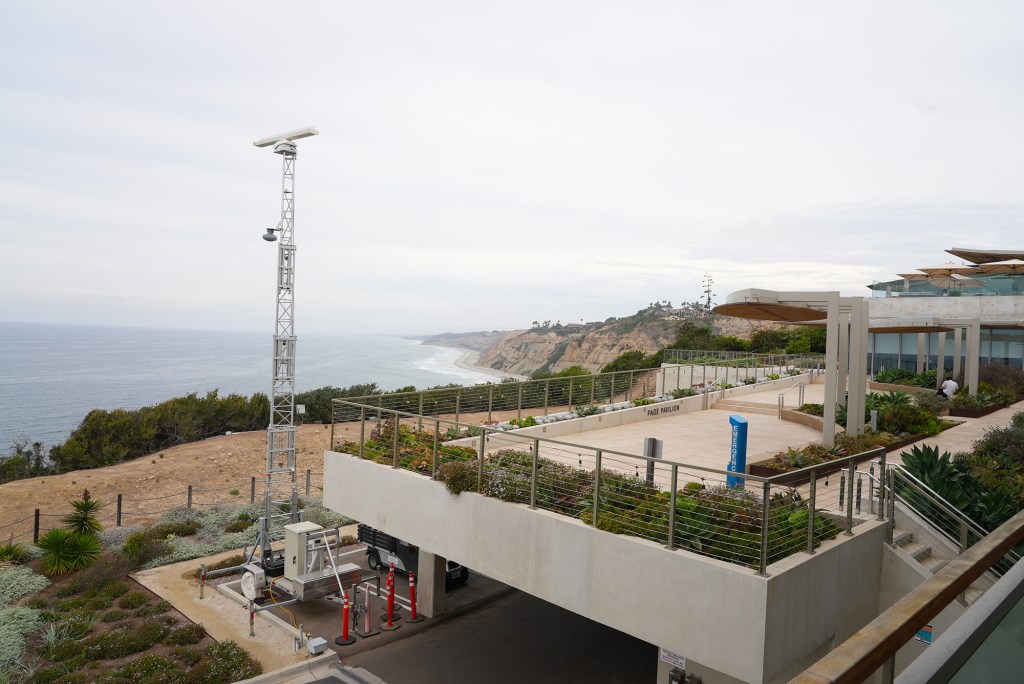
Scripps Institution of Oceanography at UC San Diego (Photo: Erik Olsen)
The Smith lab here at Scripps studies every stage of the process, from identifying which strains of Asparagopsis thrive locally to testing how temperature, light, and carbon dioxide affect growth and bromoform content. Dr. Ben Zvi is focused on the life cycle and photosynthesis of the species, refining culture techniques that could make large-scale cultivation possible. At Scripps, environmental physiology experiments show that local strains grow best at 22 to 26 °C and respond well to elevated CO₂, information that could guide commercial farming in Southern California.
The challenges, however, are considerable. Wild harvesting cannot meet demand, and cultivating seaweed at scale requires reliable methods, stable yields, and affordable costs. Bromoform content varies widely depending on strain and growing conditions, so consistency remains an issue. Some trials have noted side effects such as reduced feed intake or excess mineral uptake, and long-term safety must be established since we’re talking about animals that we breed and raise to eat.
“It’s still a very young area, and we’re working on the legislation of it,” says Ben Zvi. “We need to make it legal to feed to a cow that eventually we either drink their milk or eat their meat. We need for it to be safe for human consumption.”
Dr. Or Ben Zvi (Photo: Erik Olsen)
And, of course, large-scale aquaculture raises ecological questions, from nutrient demands and pollution to the fate of volatile compounds like bromoform.
To overcome these obstacles, collaborations are underway. UC San Diego and UC Davis have launched a pilot project under the UC Carbon Neutrality Initiative to test production methods and carbon benefits. In 2024, CH4 Global, a U.S.-based company with operations in New Zealand and Australia that develops seaweed feed supplements to cut livestock methane, partnered with Scripps to design cultivation systems that are efficient, inexpensive, and scalable. Within the Smith Lab, researchers are continuing to probe the biology of Asparagopsis, mapping its genetics, fine-tuning its culture, and testing ways to maximize both growth and methane-suppressing compounds.
At a time when university-based science faces immense pressures, the Smith Lab at Scripps provides a glimpse of research that is making a real impact. The coral tanks against the wall belong to another project at the lab, and we have another story coming soon about the research that readers will find very interesting, but the bubbling flasks in the alcove reveal how breakthroughs often start with small details. In this case, the discovery that a chemical in a widely available seaweed could have such a dramatic, and apparently harmless, effect on the methane that animals make in their guts. These modest but powerful steps are shaping solutions to global challenges, and California, with its wealth of scientific talent and institutions, remains at the forefront. It is one of many other stories we want to share, from inside the labs to the wide open spaces of the state’s natural landscapes.
Turning the steady motion of the Pacific into clean electricity, Eco Wave Power’s pilot at the Port of Los Angeles tests whether wave energy can become a real piece of California’s renewable future.
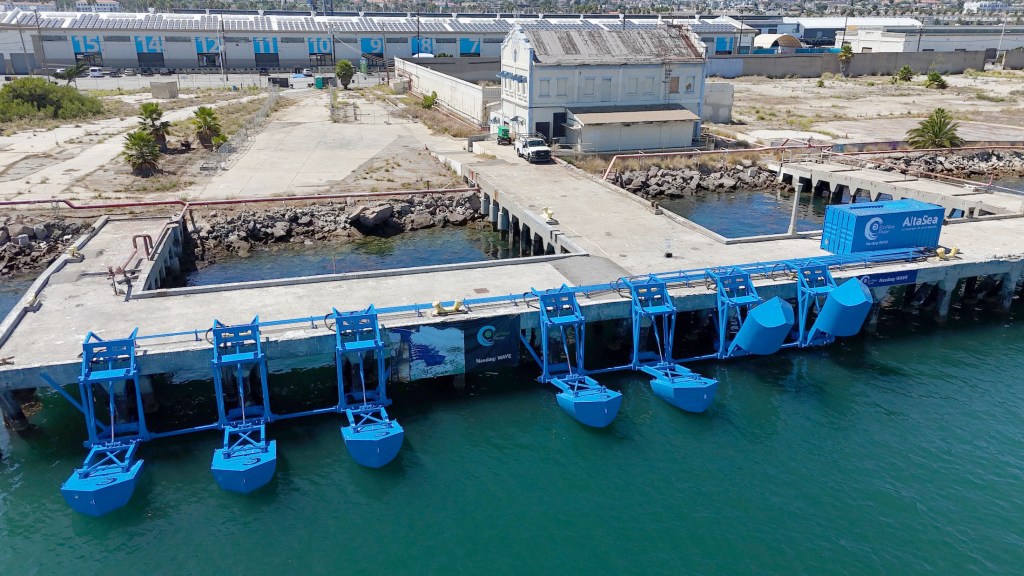
Eco-Wave’s Wave Energy Station at the Port of Los Angeles (Photo: Erik Olsen)
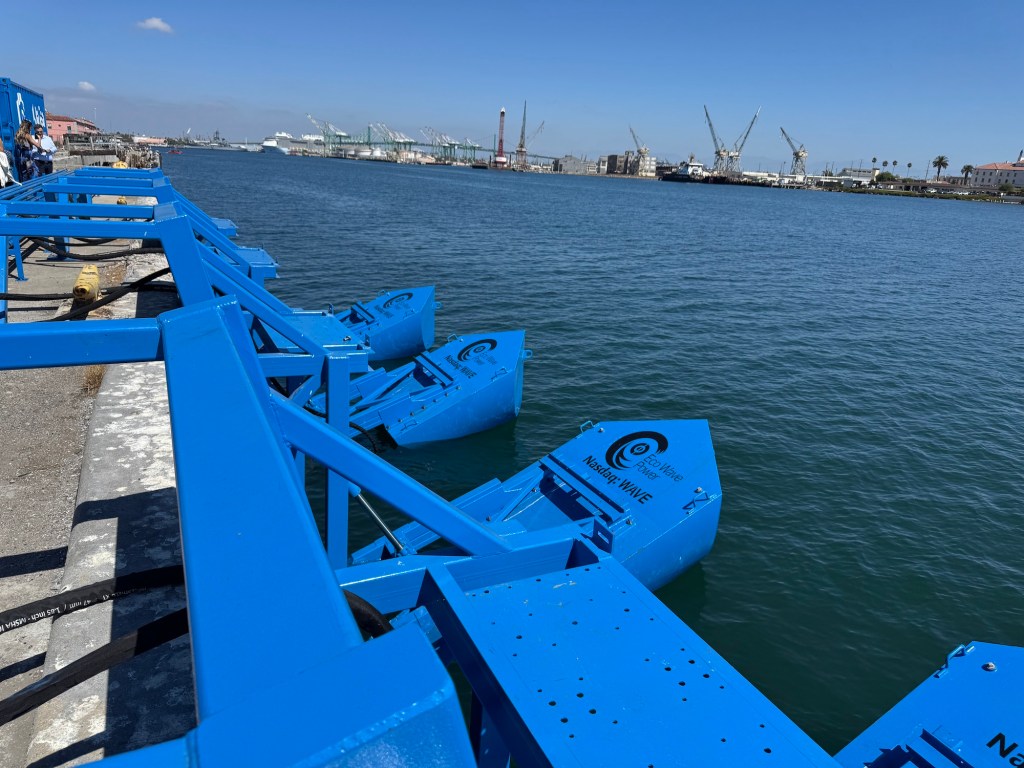
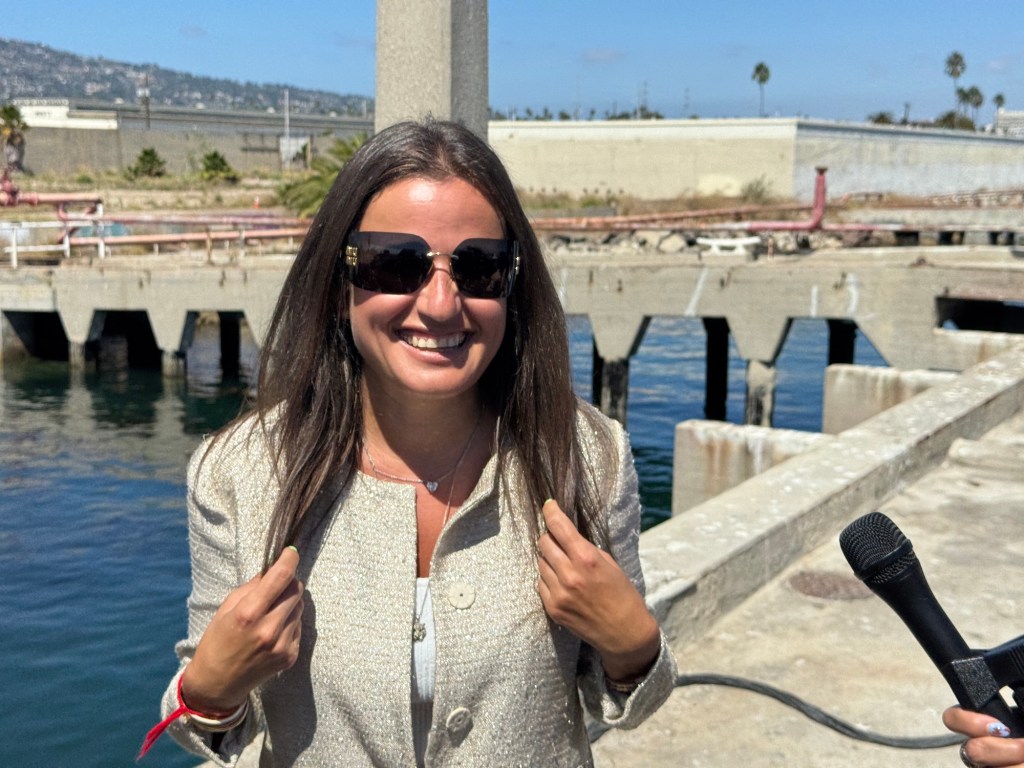
Earlier this week at the Port of Los Angeles, I stood with my colleague Tod Mesirow as a blue ribbon was cut and seven steel floaters dipped into the tide at AltaSea Marine Center in San Pedro. It was a milestone moment: the first onshore wave-energy project in the United States.
Wave energy is the process of converting the up-and-down motion of ocean waves into electricity. Engineers have been experimenting with the idea for decades, with pilot projects around the world, but very little major success. While no country has yet deployed wave power at large scale, efforts like this onshore wave-energy project in the United States aim to prove it can become a reliable part of the renewable mix.
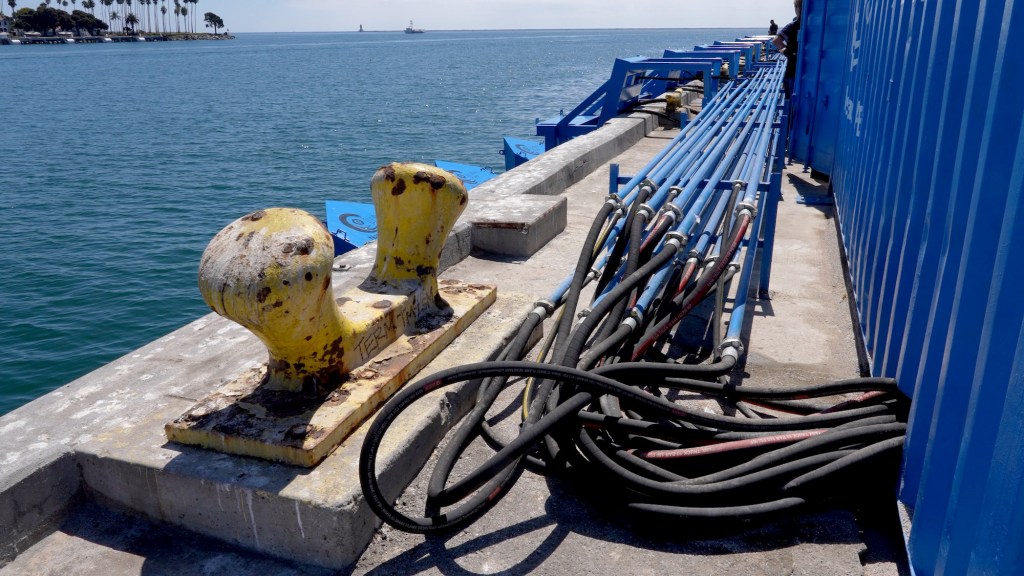
Hydraulic hoses outside the Eco Wave Power container channel pressurized, eco-friendly fluid from the rising and falling floats. This motion drives pistons that power a generator, turning the steady rhythm of small waves along the Port of Los Angeles into clean electricity ready for the grid. (Photo: Erik Olsen)
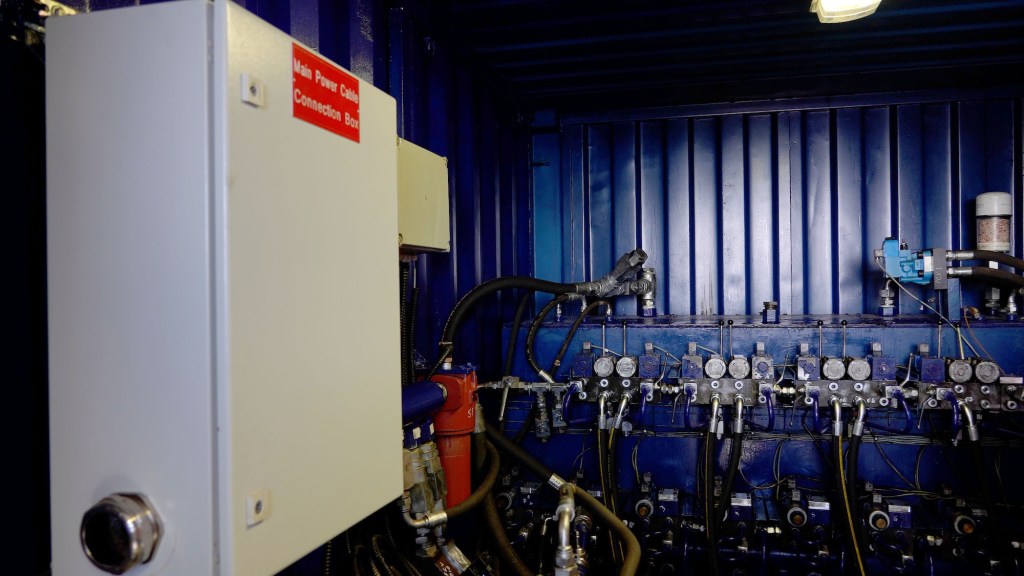
Eco Wave Power, the company behind the technology, framed the event as the beginning of a new chapter in renewable energy, one that could eventually bring the restless motion of the sea onto the grid on a meaningful scale. As my instagram feed will attest, big waves contain a lot of power (the algorithm knows I love big wave surfing). But that’s not what this project is about. Instead, it relies on the small, steady waves that are almost always present along the California coast. Each rise and fall pushes eco-friendly hydraulic fluid through a system of pistons and pipes, building pressure that drives a motor connected to a generator. The process transforms the ocean’s rhythm into electricity, which can then be fed into the nearby grid. This approach doesn’t depend on dramatic swells, but on the reliable pulse of the sea.
Inna Braverman, the CEO of Eco-Wave told me that the pilot project’s small capacity is a proof of concept for a much larger series of installations along the California coast. “The installed capacity of this conversion unit is 100 kilowatts,” Braverman says. “The amount of power actually generated depends on the height and the weight period of the waves. So, 100 kilowatt installed capacity is up to 100 households.”
The choice of location is not incidental. The Port of Los Angeles is one of the busiest harbors in the world, lined with piers, breakwaters, and aging industrial structures that provide ideal platforms for attaching wave-energy devices. Unlike offshore wind, which requires building foundations in open water, Eco Wave Power’s design capitalizes on existing waterfront infrastructure, keeping costs lower and operations more accessible. The port also happens to be surrounded by electrical infrastructure, with substations and transmission lines nearby. That means energy generated by the floaters can be quickly sent into the grid, without the long and costly buildouts often required for renewable projects in remote places. And perhaps most importantly, this demonstration is unfolding at the doorstep of greater Los Angeles, a region of nearly 19 million people where clean energy demand is immense. To test wave power here is to bring it directly into the heart of a major population center, where its success or failure will matter on a national scale.
Harnessing the Pacific’s rhythm, Eco Wave Power’s bright blue floats rise and fall along the Port of Los Angeles breakwater, marking the nation’s first onshore wave-energy project and a new experiment in turning ocean motion into clean electricity. (Photo: Erik Olsen)
Congresswoman Nanette Díaz Barragán called the project “history in the making” and tied it to her proposed $1 billion Marine Energy Technologies Acceleration Act, aimed at scaling up wave and tidal systems nationwide. California has already passed Senate Bill 605, directing the creation of a wave-energy roadmap, and local leaders like Port of Los Angeles officials spoke of the technology as a key tool to help the San Pedro Bay port complex reach its zero-emission goal within the next decade.
For Eco Wave Power, this was not just a ribbon cutting but the opening of a U.S. market that has long been cautious about marine renewables. Braverman announced future projects in Taiwan, India, and Portugal, while partners from Africa described feasibility studies in South Africa and Kenya. Taiwan’s pilot at Suao Port could grow to 400 megawatts, while the Port of Ngqura in South Africa is being studied as a showcase for diversifying away from coal.
Inside the power container at the Port of Los Angeles, hydraulic fluid from the rising and falling floats is pressurized to drive a generator, transforming the steady rhythm of the ocean into clean electricity ready to be fed into the grid. (Photo: Erik Olsen)
The optimism is real, but the facts are more sobering. Wave energy has been tested in several places around the globe, often with promising beginnings but mixed long-term outcomes. The Mutriku plant in Spain has generated steady power for more than a decade, but at modest efficiency. Sweden’s Sotenäs project closed after just a few years of operation. The ocean is brutal on hardware: salt, storms, and marine growth wear down even the best-engineered devices. Costs remain high, and grid-scale capacity is far from proven.
Still, the potential is undeniable. The International Energy Agency estimates that global wave and tidal power could, in theory, supply a significant fraction of the world’s electricity needs. Unlike solar or wind, waves are relatively constant, offering a stable, predictable form of renewable generation. That reliability could make wave energy an important complement to other renewables, especially as grids grow more complex and storage remains expensive.
Inna Braverman, founder and CEO of Eco Wave Power, speaks at the ribbon-cutting ceremony at the Port of Los Angeles, celebrating the launch of the nation’s first onshore wave-energy project and highlighting the technology’s potential to turn the ocean’s motion into clean, renewable electricity (Photo: Erik Olsen)
But honesty requires saying wave power will not, on its own, solve the climate crisis. It is a piece of the puzzle, not the whole picture. The bulk of clean energy in the near term will continue to come from solar and wind, with geothermal, hydropower, and nuclear filling important roles. If wave energy finds its footing, it will likely be as a regional player, most valuable in countries with long, energetic coastlines and strong political will to diversify.
Watching the floaters rise and fall yesterday, we could sense the tension between ambition and reality. This pilot is small, but it demonstrates a willingness to try something new, to take the step from research tank to open water. Braverman called it “opening the door to a new era of clean energy.” That door may open slowly, and perhaps only partway, but the act of trying matters. The ocean is vast and restless, and if we can learn to work with it, wave energy could one day be one of the many forces nudging us toward a sustainable future.
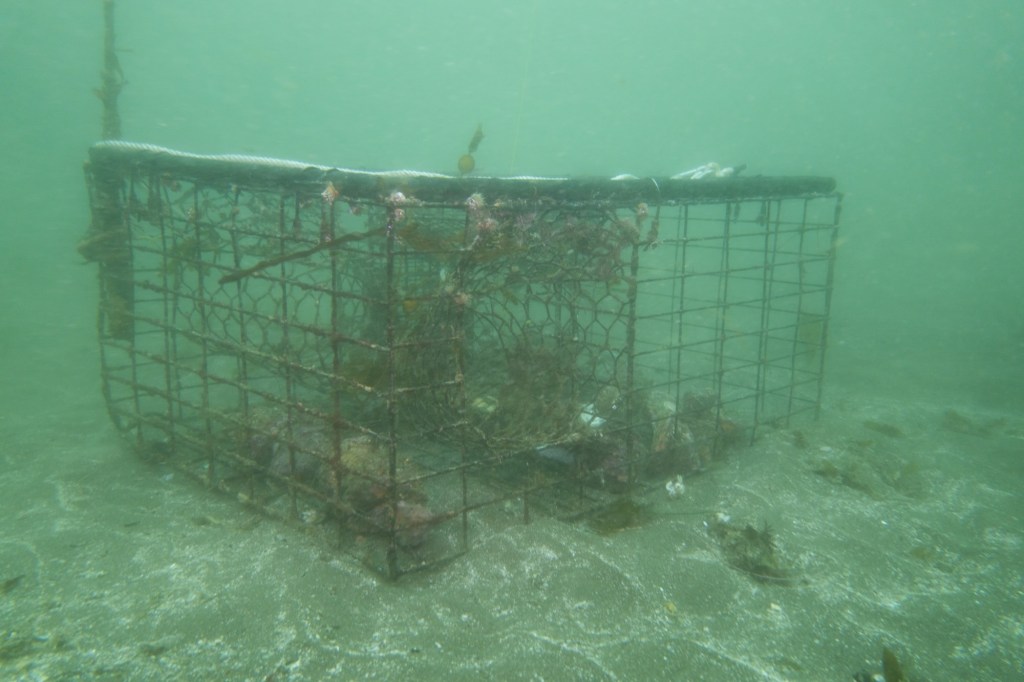
Ghost lobster trap off Santa Cruz Island in California’s Channel Islands (Photo: Erik Olsen)
Lobster is delicious. Let’s just get that out of the way. Yes, I’m sure there are some who either don’t enjoy the taste of this prolific crustacean, or who are allergic, but for my part, lobster (with a small vial of melted butter) is ambrosia from the sea.
But beyond its place on the plate, the California spiny lobster plays a vital ecological role: hunting sea urchins, hiding in rocky reefs, and helping to keep kelp forests in balance. Its value extends far beyond what it fetches at market. But beneath the surface, particularly around the Channel Islands lurks a growing problem that doesn’t just threaten lobsters. It threatens the entire marine ecosystem: ghost traps.
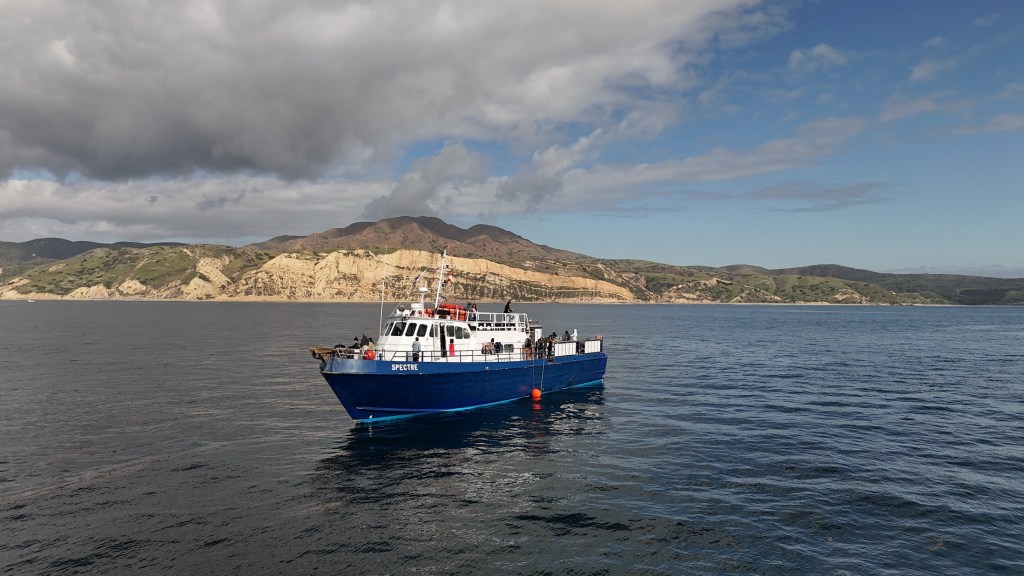
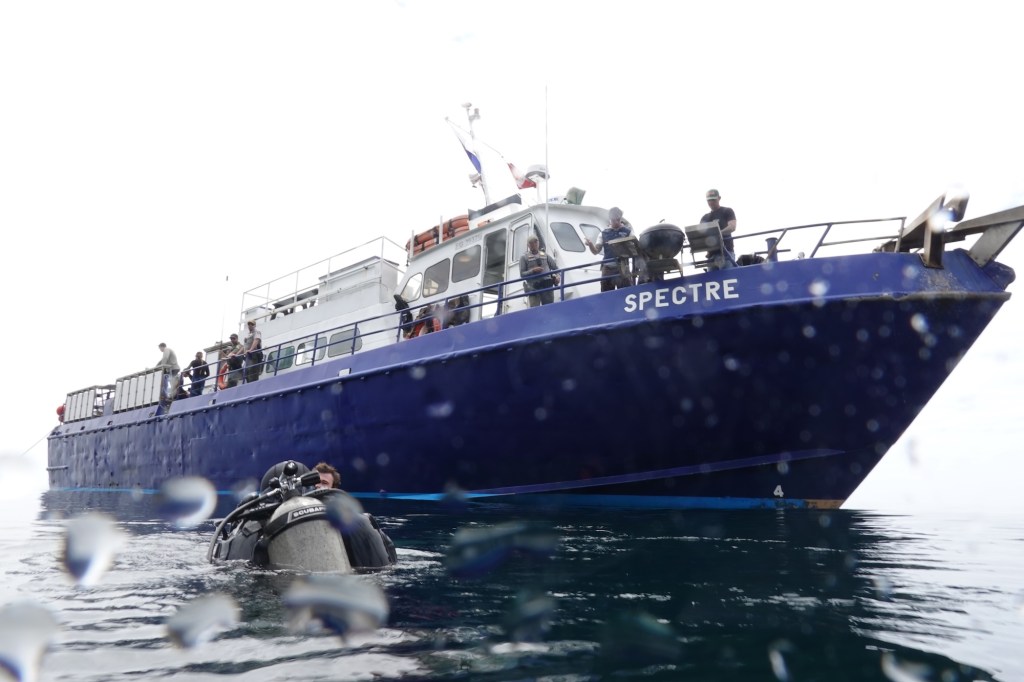
Dive ship Spectre off of Anacapa Island in California’s Channel Islands (Photo: Erik Olsen)
In Southern California, lobster fishing is both a cultural tradition and a thriving industry, worth an estimated $44 million annually to California’s economy from commercial landings as well as recreational fishing, tourism, and seafood markets.
In late April, I traveled to the Channel Islands with my colleague Tod Mesirow to see the problem of ghost lobster traps firsthand. We were aboard the Spectre dive ship and pulled out of Ventura Harbor on an overcast morning, the sky a uniform gray that blurred the line between sea and cloud. The swell was gentle, but the air carried a sense of anticipati on. We were invited by the Benioff Ocean Science Laboratory, which is conducting research and outreach in the area. Our visit took us to Anacapa and Santa Cruz Islands, where I would be diving to observe the traps littering the sea floor. Tod, meanwhile, remained topside, capturing footage and speaking with marine scientists. Even before entering the water, we could see the toll: frayed lines tangled in kelp, buoys adrift, and entire areas where dive teams had marked clusters of lost gear.
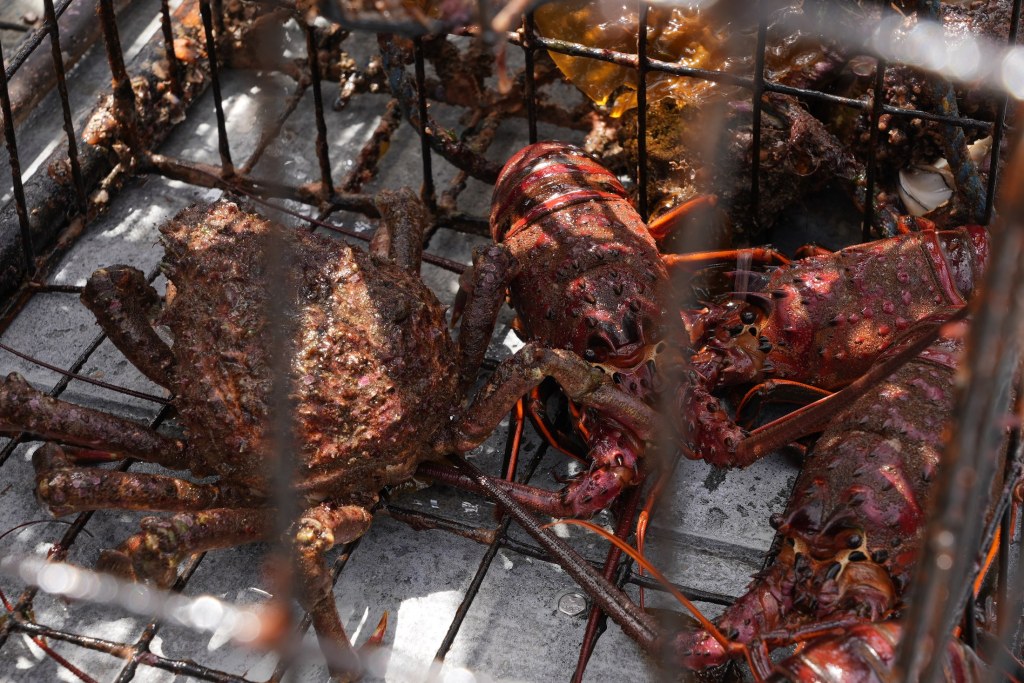
California spiny lobsters alive when the ghost trap was recovered (Photo: Erik Olsen)
Ghost traps are lobster pots that have been lost or abandoned at sea. Made of durable metal mesh and often outfitted with bait containers and strong ropes, these traps are built to last. And they do. For years. Sometimes decades. The problem is, even when their human operators are long gone, these traps keep fishing.
“It’s not uncommon to find multiple animals dead inside a single trap,” said Douglas McCauley, a marine science professor at UC Santa Barbara and director of the Benioff Ocean Science Laboratory who was onboard with us and leading the project. “It’s heartbreaking. These traps are still doing exactly what they were built to do, just without anyone coming back to check them.”
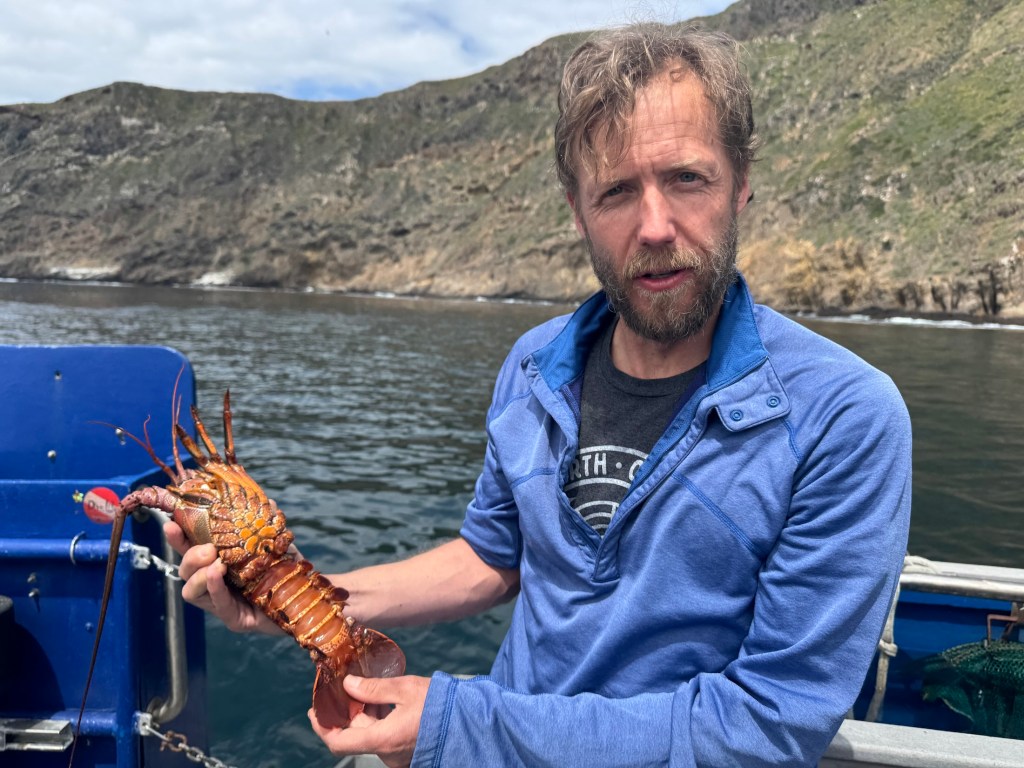
Douglas McCauley, director of the Benioff Ocean Science Laboratory at the University of California Santa Barbara holding a lobster caught in a ghost trap off the coast of the Channel Islands (Photo: Erik Olsen)
Around the Channel Islands National Marine Sanctuary, where fishing pressure is high and waters can be rough, thousands of traps are lost every season. Currents, storms, or boat propellers can sever buoys from their lines, leaving the traps invisible and unrecoverable. Yet they keep doing what they were designed to do: lure lobsters and other sea creatures inside, where they die and become bait for the next unfortunate animal. It’s a vicious cycle known as “ghost fishing.”
“They call them ghost traps because, like a ghost sailing ship, they keep doing their thing. They keep fishing.” said McCauley.
Statewide, the numbers are staggering. Approximately 6,500 traps are reported lost off the California coast each fishing season, according to The California Department of Fish and Wildlife. The folks at the Benioff Ocean Science Laboratory said as many as 6,000 may lie off the coast of the Channel Islands alone. Ocean Divers removing marine debris have found traps stacked three and four high in underwater ravines—rusting, tangled, but still deadly. These ghost traps don’t just catch lobsters; they also trap protected species like sheephead, cabezon, octopuses, and even the occasional sea turtle or diving seabird.
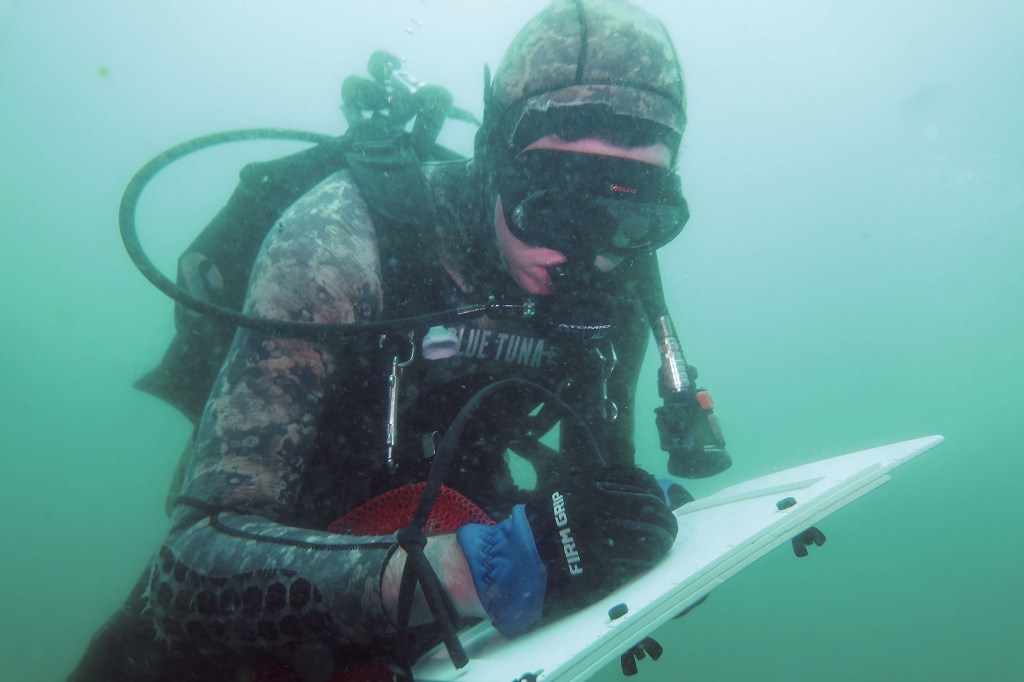
Diver and Project Scientist Chase Brewster of the Benioff Ocean Science Laboratory collecting data on ghost lobster traps near California’s Channel Islands (Photo: Erik Olsen)
Nowhere is this more evident than around the Channel Islands. These rugged islands are home to some of California’s richest kelp forests and underwater canyons. The islands and their surrounding waters are home to over 2,000 plant and animal species, with 145 of them being unique to the islands and found nowhere else on Earth. In fact, the Channel Islands are often referred to as North America’s Galapagos for the immense diversity of species here.
The islands are also the site of the state’s most productive spiny lobster fisheries. Every fall, hundreds of commercial and recreational fishers flood the area, setting thousands of traps in a race to catch California spiny lobsters (Panulirus interruptus). But rough swells and heavy gear mean traps go missing. Boats sometimes cut the lines of traps, making them near impossible to retrieve from the surface. And because this region is a patchwork of state waters, federal waters, and marine protected areas (MPAs), cleanup and regulation are anything but straightforward.
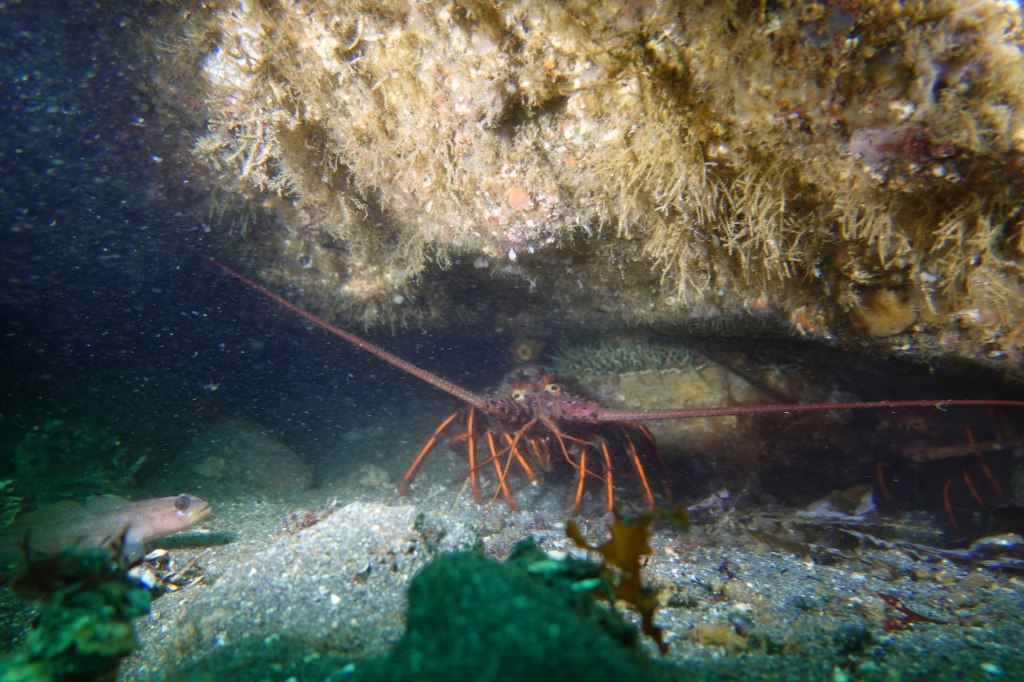
California Spiny Lobster off Anacapa Island (Photo: Erik Olsen)
The traps are often difficult to locate, partly because of their remote placement and the notoriously rough waters around the Channel Islands. But the Benioff Ocean Science Laboratory has a powerful asset: side scan sonar. From the ship, they can scan and map the seafloor, where the ghost traps often appear as dark, rectangular shapes against the sand. Once spotted, the team uses GPS to log their exact location.
“It’s creates a picture made of sound on the seafloor and you see these large lego blocks staring at you in bright yellow on the screen and those are your lobster traps,” sayd McCauley. “There’s nothing else except a ghost trap that looks like that.”
Plunging into the frigid waters off Santa Cruz Island was a jolt to the system. Visibility was limited, just 10 to 15 feet, but I followed two scientists from the Benioff Ocean Science Laboratory down to a depth of 45 feet. Their task: to attach a rope to the trap so it could be hauled up by the boat’s winch.
Dive ship Spectre off the coast of Santa Cruz Island in California’s Channel Islands (Photo: Erik Olsen)
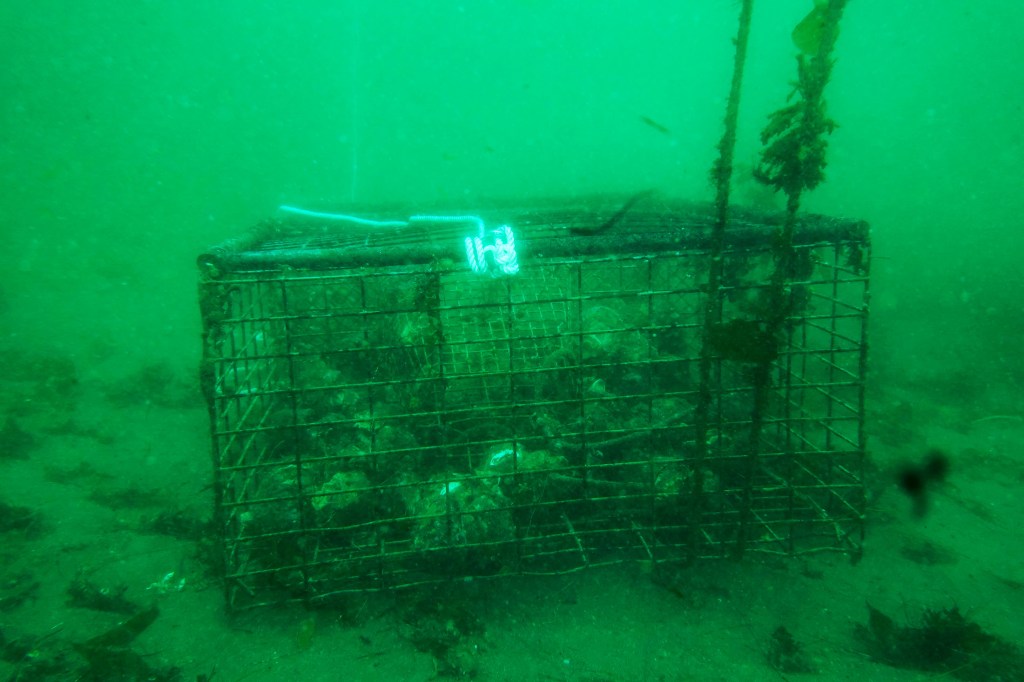
The water was thick with suspended particles, the light dimming quickly as we dropped lower. My 7mm wetsuit was just barely enough to stave off the cold. On the seafloor, the ghost trap emerged, a large rectangular cage resting dark and ominous in the sand. And it was teeming with life. Fish darted around its edges, lobsters clambered along the frame, and inside, several animals moved about, trapped and slowly dying. It was easy to see how a single trap could wreak quiet havoc for years.
California law technically requires all lobster traps to include biodegradable “escape panels” with zinc hinges that degrade over time, eventually allowing trapped animals to escape. But enforcement is tricky, and the panels don’t always work as intended. In practice, many traps, especially older or illegally modified ones, keep fishing long after they should have stopped. That’s what we were out here to find.
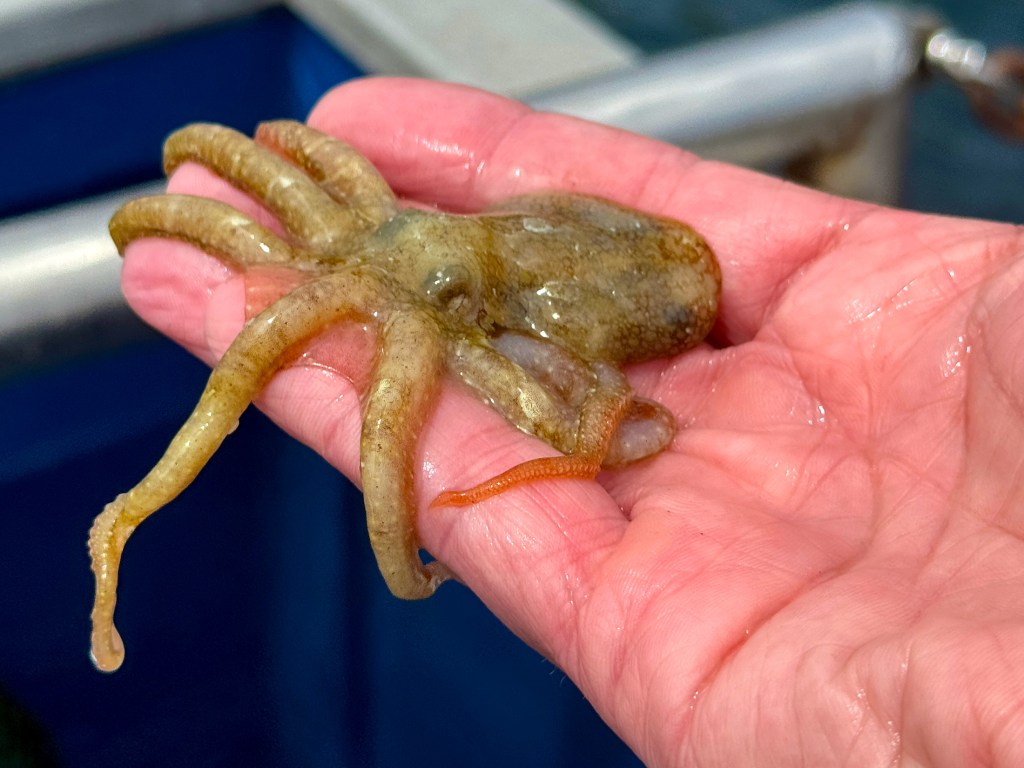
A baby octopus caught in a ghost trap in the waters off California’s Channel Islands (Photo: Erik Olsen)
Complicating matters is the fact that once a trap goes missing, there’s no easy way to retrieve it. Fishers are not legally allowed to touch traps that aren’t theirs, even if they’re obviously abandoned. And while a few small nonprofits and volunteer dive teams conduct periodic ghost gear removal missions, they can’t keep pace with the scale of the problem.
“At this fishery, we can’t get them all,” says McCauley. “But by going through and getting some species out and getting them back in the water, we’re making a difference. But in the process, we’re coming up with new ideas, new technologies, new research methods, which we think could play a role in and actually stopping this problem in the first instance.”
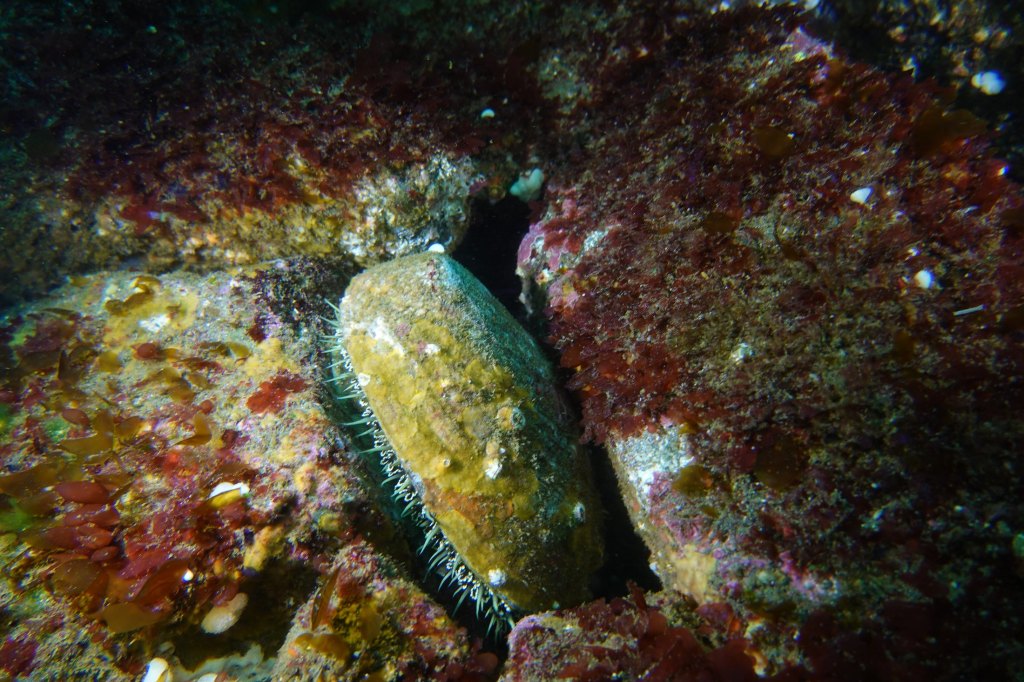
Once abundant along California’s coast, this large abalone spotted off Santa Cruz Island is a rare sight today—a quiet reminder of how overfishing, disease, and environmental change have decimated their populations. (Photo: Erik Olsen)
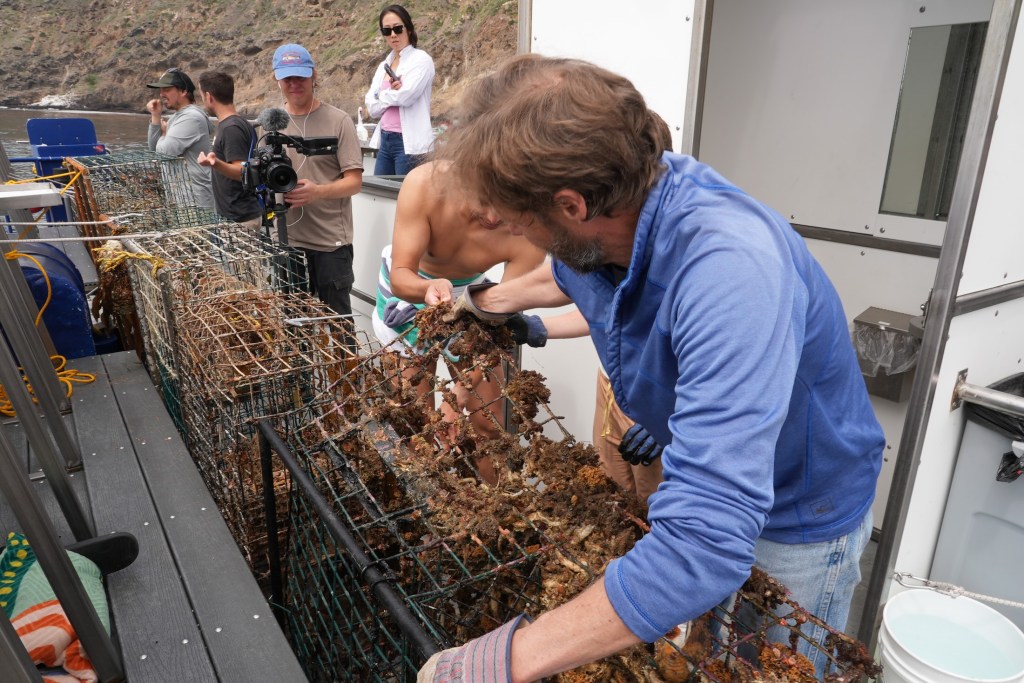
Back topside, the recovery team aboard the Spectre used a powerful hydraulic winch to haul the trap onto the deck. After climbing out of the cold water, still shivering, I joined the others to get a closer look. The trap was heavy and foul-smelling, but what stood out most was what was inside: lobsters, maybe ten or more. Some had perished, but many were alive and thrashed their tails when lifted by the scientists. Females could be identified by their broader, flatter tail fins—adapted to hold eggs. The team carefully measured each one before tossing them back into the sea, the lobsters flipping backward through the air and disappearing into the depths.
There were other animals, too. Large, rounded crabs known as Sheep crabs, common to these waters, scuttled at the bottom of the trap. Sea snails were clustered along the mesh, and in one cage, there were dozens of them, clinging and crawling with slow purpose. Even baby octopuses made appearances, slithering out onto the deck like confused aliens. I picked one up gently, marveling at its strange, intelligent eyes and soft, shifting forms, before tossing it back into the sea in hopes it would have another chance at life.
Ghost lobster trap lies on the seafloor off of Santa Cruz Island in California’s Channel Islands (Photo: Erik Olsen)
By then, the day had brightened and the sun had come out, easing the chill that lingered after the dive. The traps would be taken back to Ventura, where they’d likely be documented and disposed of. But this day wasn’t just about saving individual animals or pulling traps off the seafloor—it was about data. The Benioff team wants to understand just how big of a problem ghost traps really are. It’s not just about the number of traps lost each season, but the broader ecological toll: how many animals get caught, how many die, and how these traps alter the underwater food web. Every recovered trap adds a piece to the puzzle. This trip was about science as much as rescue.
State agencies, including the California Department of Fish and Wildlife (CDFW), have started pilot programs aimed at tackling ghost gear. In 2023, CDFW launched a limited recovery permit program that allows fishers to collect derelict traps at the end of the season, provided they notify the state. But participation is voluntary and poorly funded.
Elsewhere, states like Maine and Florida have created large-scale, state-funded programs to identify and remove ghost traps, often employing fishers in the off-season. California, despite having the nation’s fourth-largest lobster fishery, has yet to make a similar investment.
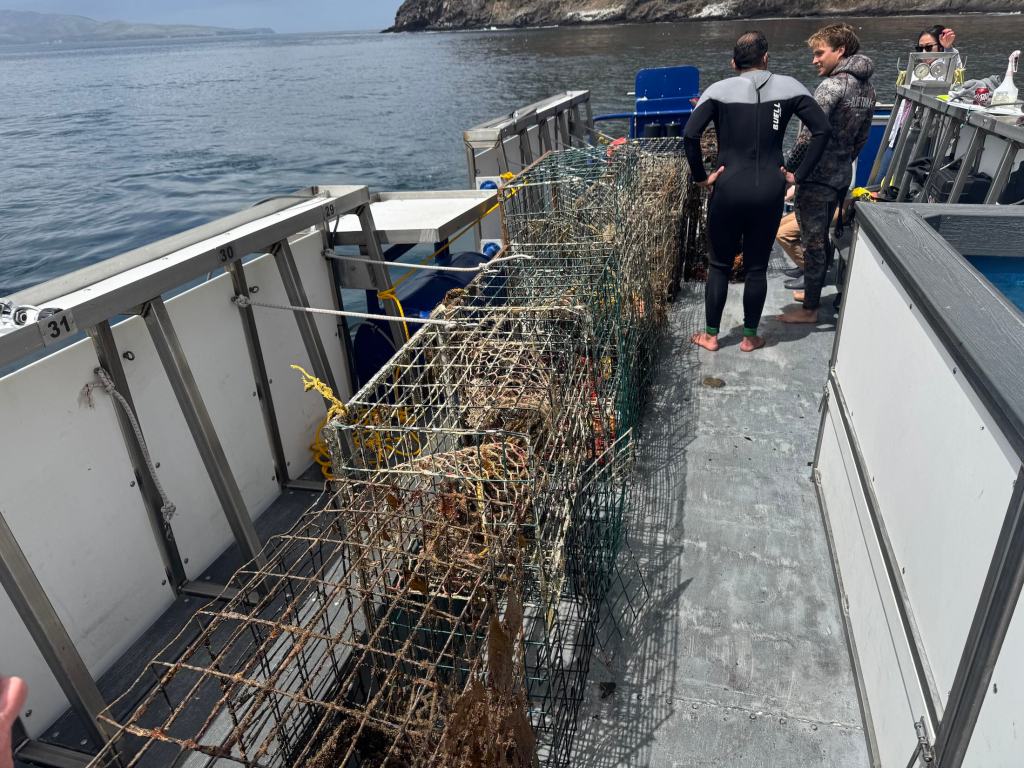
Ghost lobster traps recovered from the seafloor off the coast of California’s Channel Islands (Photo: Erik Olsen)
Some solutions are already within reach. Mandating GPS-equipped buoys for commercial traps could help track and retrieve gear before it’s lost. More robust escape hatch designs, made from materials that dissolve in weeks rather than months, would shorten the lifespan of a lost trap. And expanding retrieval programs with funding from fishing license fees or federal grants could make a big dent in ghost gear accumulation.
But even more powerful than regulation may be public awareness. Ghost traps are out of sight, but their damage is far from invisible. Every trap left behind in the Channel Islands’ waters becomes another threat to biodiversity, another source of plastic and metal waste, and another reminder that marine stewardship doesn’t stop when the fishing season ends.
Key to the whole effort is data:
“Every one of the animals that we put back in the water today, we’ll be taking a measure,” says McCauley. “After a little bit of crunching in the lab, we’ll be able to say, oh, actually, you know, every single trap undercuts the fishery by x percent for every single year that we don’t solve the problem.”
Doug McCauley with a lobster trap retrieved from the seafloor off the coast of California’s Channel Islands (Photo: Erik Olsen)
As we headed back toward Ventura, Tod and I talked with Douglas McCauley and Project Scientist Neil Nathan from the Benioff Ocean Science Laboratory. The team had collected a total of 13 traps that day alone, and 34 over the several days they’d been out. There was a sense of satisfaction on board, quiet but real. Each trap removed was a small win for the ecosystem, a little less pressure on an already strained marine environment.
“I would call today an incredible success, ” said Neil Nathan. “Feeling great about the number of traps we collected.”
California has long been a leader in ocean conservation. If it wants to stay that way, it needs to take ghost fishing seriously, not just around the Channel Islands, but up and down the coast. After all, we owe it to the lobsters, yes, but also to the underwater forests, reef communities, and countless species whose lives are tangled in the nets we leave behind.
As the world pivots toward renewable energy sources, the challenge of energy storage looms ever larger. The sun doesn’t always shine, and the wind doesn’t always blow — but the demand for electricity never stops. Currently, natural gas and coal are the primary ways we generate electricity. These are dirty, pollution-causing industries that will need to be phased out if we are to tackle the problems associated with climate change. Many different solutions to this problem are currently being investigated across the country and the world.
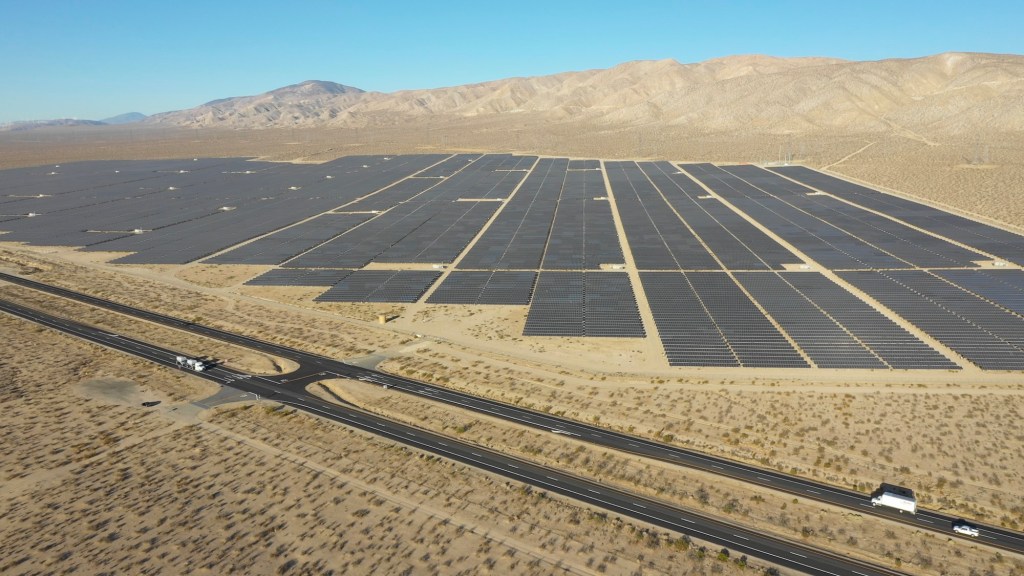
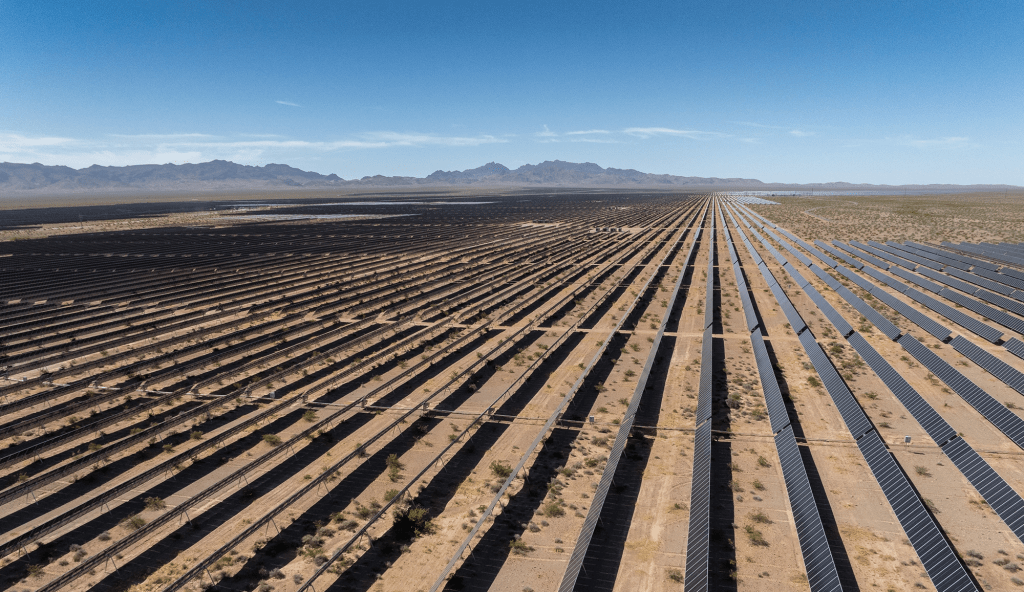
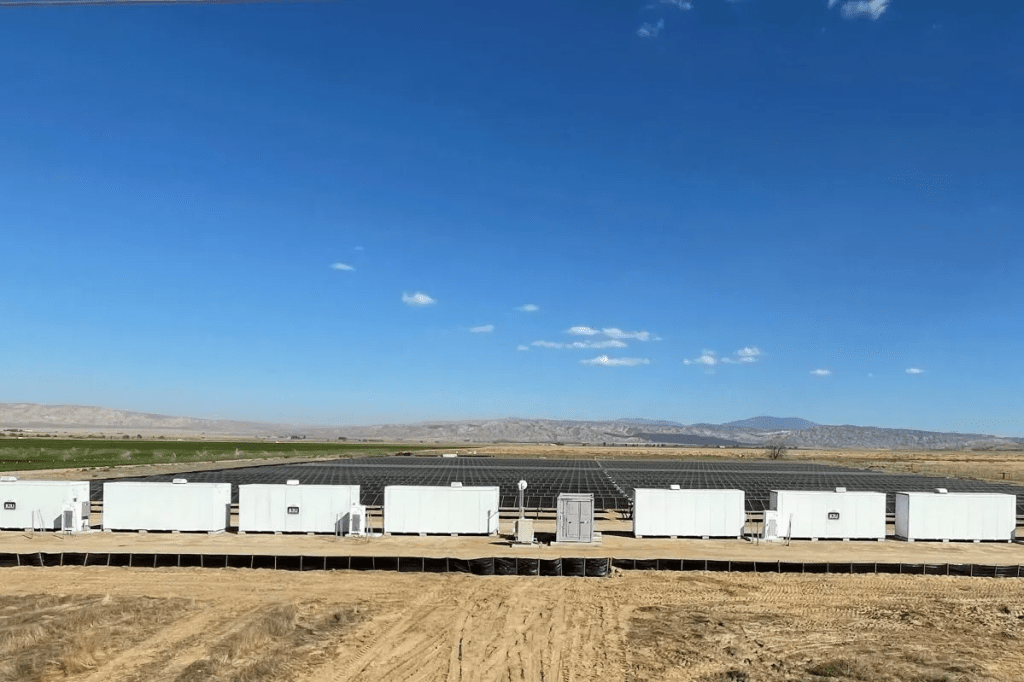
For example, the Gemini Solar + Battery Storage Project, located about 30 miles northeast of Las Vegas, is one of the largest solar battery facilities in the United States, launched in 2023. Spanning approximately 5,000 acres, it combines a 690-megawatt solar photovoltaic array with a 380-megawatt battery storage system, capable of powering about 50,000 homes and providing 10% of Nevada’s peak energy demand. By storing solar energy in massive batteries, the facility ensures a stable and reliable power supply even after the sun sets, addressing the intermittency challenges of renewable energy.
The Gemini Solar + Storage (“Gemini”) project in Clark County, Nevada is now fully operational. It uses lithium ion batteries from China to store solar power (Gemini Solar + Storage)
However, these facilities face significant challenges due to the inherent explosive potential of lithium batteries. The Moss Landing battery facility fire serves as a stark reminder of the challenges associated with large-scale energy storage. Housing one of the world’s largest lithium-ion battery systems, the facility experienced multiple fire incidents, raising concerns about the safety of these technologies. These fires were particularly alarming due to the potential for thermal runaway, a phenomenon where a single battery cell’s failure triggers a chain reaction in neighboring cells, leading to uncontrollable fires and explosions. While no injuries were reported, the incidents caused significant operational disruptions and prompted widespread scrutiny of fire safety protocols in energy storage systems. Investigations have pointed to the need for more robust cooling mechanisms, advanced monitoring systems, and comprehensive emergency response strategies to prevent similar events in the future.
Aside from the potential fire dangers of large battery facilities, building large-scale solar battery projects like Gemini is costly, often exceeding hundreds of millions of dollars, due to the expense of new lithium-ion batteries. A more sustainable and economical solution could involve repurposing old batteries, such as those from retired electric vehicles. These batteries, while unsuitable for cars, still retain enough capacity for energy storage, reducing costs, resource use, and electronic waste.
That’s where B2U Storage Solutions, a California-based company founded by Freeman Hall and Mike Stern, offers an innovative answer to this critical problem. By harnessing the power of old electric vehicle (EV) batteries to store renewable energy, B2U is giving these aging batteries a productive second life and helping enhance the viability of green energy grids. The effort could pave the way for not only improving solar storage but also reusing old batteries that might otherwise end up in landfills or pose environmental hazards.
According to Vincent Beiser in his wonderful new book Power Metal: The Race for the Resources That Will Shape the Future, “by 2030, used electric car batteries could store as much as two hundred gigawatt-hours of power per year. That’s enough to power almost two million Nissan Leafs.”
Founded in 2019, B2U emerged as a spin-off from Solar Electric Solutions (SES), a solar energy development company with a strong track record of success, having developed 100 megawatts across 11 projects in California since 2008. Freeman Hall, a seasoned renewable energy strategist, and Mike Stern, a veteran in solar project development, combined their expertise to address a growing challenge: how to create affordable and sustainable energy storage.
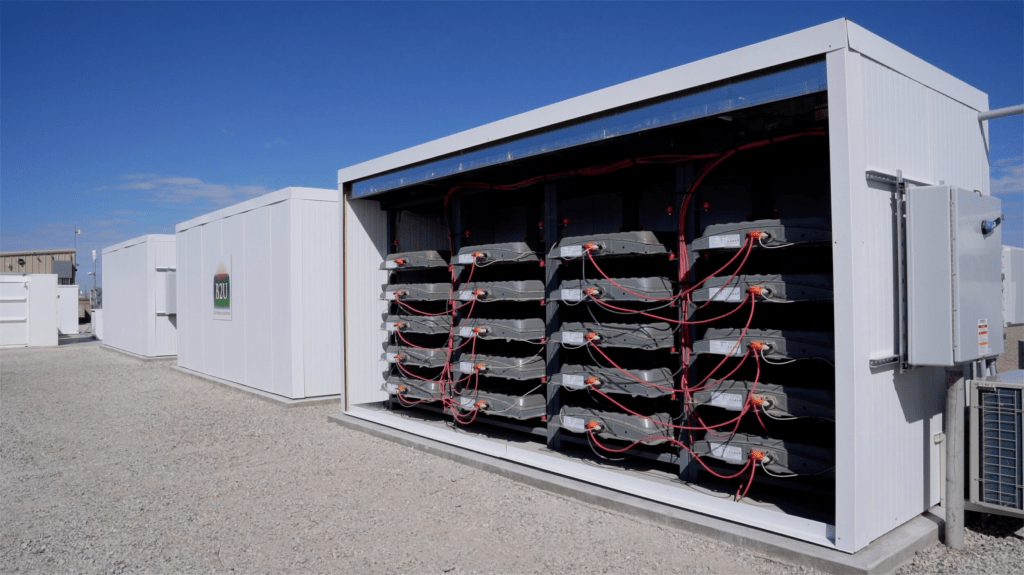
Leveraging their knowledge, B2U developed their patented EV Pack Storage (EPS) technology. This technology allows for the integration of second-life EV batteries without the need for costly repurposing, making large-scale energy storage more economically feasible. Their vision took shape in Lancaster, California, where they established the SEPV Sierra facility in 2020.
At the Lancaster site, B2U uses over 1,300 repurposed EV batteries to form a large-scale battery energy storage system (BESS). When solar farms generate more electricity than the grid can immediately use, the excess power is stored in these second-life batteries. Later, when the sun sets or demand peaks, that stored energy is released back into the grid. This process reduces waste and helps stabilize renewable energy supply.
B2U is not alone. The second-life market for EV batteries is projected to grow to $7 billion by 2033, according to a March report by market research firm IDTechEx. While most EVs rely on lithium-ion batteries, these typically lose viability for vehicle use after about eight to ten years. However, depending on their remaining capacity and “state of health”—a measure of cell aging—they can be repurposed for less demanding applications, such as stationary energy storage, the report notes.
B2U Storage Solutions has launched its second hybrid battery storage facility near New Cuyama in Santa Barbara County, California. This innovative project uses approximately 600 repurposed electric vehicle batteries, primarily from Honda Clarity models, to provide 12 megawatt-hours of storage capacity. Charged by a 1.5-megawatt solar array and supplemental grid power, the facility supplies electricity and grid services to the California energy market. By employing patented technology, the system integrates second-life EV batteries in their original casings, reducing costs and enhancing sustainability. Building on the success of its first facility in Lancaster, this project demonstrates a scalable approach to energy storage while minimizing electronic waste and supporting renewable energy adoption.
2015 Honda Clarity FCV (Wikipedia)
B2U claims its technology enables batteries to be repurposed in a nearly “plug-and-play” manner, eliminating the need for disassembly. The system is compatible with units from multiple manufacturers, including Honda, Nissan, Tesla, GM, and Ford, allowing them to be seamlessly integrated into a single storage system.
Renewable energy is essential to combating climate change, but its intermittent nature poses challenges for maintaining a reliable power grid. Without effective storage, surplus renewable power generated during peak periods is wasted, and fossil fuels must often be burned to cover shortfalls. By using second-life EV batteries, B2U provides a sustainable, cost-effective solution to this problem.
Freeman Hall and Mike Stern’s innovative approach at B2U addresses the pressing need for affordable energy storage while giving EV batteries a second life. Their Lancaster facility and the one in New Cuyama demonstrate how smart storage solutions can make renewable power more reliable and accessible. By extending the lifecycle of EV batteries and supporting a resilient energy grid, B2U is at the forefront of sustainable energy innovation.
As California works toward ambitious renewable energy goals and the world increasingly embraces electric vehicles, companies like B2U could play a crucial role in shaping a cleaner, more sustainable future.
From Battlefront to Atomic Legacy: The Journey of the USS Independence to Its Final Resting Place off Northern California
The U.S. Navy light aircraft carrier USS Independence (CVL-22) in San Francisco Bay (USA) on 15 July 1943. Note that she still carries Douglas SBD Dauntless dive bombers. Before entering combat the air group would only consist of Grumman F6F Hellcat fighters and TBF Avenger torpedo bombers. (Wikipedia)
The waters off California’s coast are scattered with relics of wartime history, each telling its own story of conflict and survival. Among these wrecks is the USS Independence, a WWII aircraft carrier whose journey took it from the heights of naval warfare to the depths of nuclear experimentation. Today, it lies as an underwater monument to both wartime heroics and the nascent atomic age.
Converted from the hull of a Cleveland-class light cruiser, the USS Independence was built by the New York Shipbuilding Corporation and commissioned in January 1943. She quickly became a key player in the Pacific Theater. She took part in early attacks on Rabaul and Tarawa before being torpedoed by Japanese aircraft, necessitating repairs in San Francisco from January to July 1944. After these repairs, the Independence launched strikes against targets in Luzon and Okinawa, and was part of the carrier group that sank remnants of the Japanese Mobile Fleet during the Battle of Leyte Gulf, as well as several other Japanese ships in the Surigao Strait.
It took part in pivotal operations such as those at Tarawa, Kwajalein, and the Marianas, contributing significantly to the success of Allied forces. Until the surrender of Japan, she was assigned to strike duties against targets in the Philippines and Japan, and she completed her operational duty off the coast of Japan, supporting occupation forces until being assigned to be a part of Operation Magic Carpet, an operation by the U.S. War Shipping Administration to repatriate over eight million American military personnel from the European, Pacific, and Asian theaters. The ship’s role in supporting invasions and launching strikes helped secure a strategic advantage in the Pacific, establishing the Independence as an integral part of the U.S. Navy’s war effort.
Aerial view of ex-USS Independence at anchor in San Francisco Bay, California, January 1951. There is visible damage from the atomic bomb tests at Bikini Atoll. (San Francisco Maritime National Historical Park)
After WWII ended, the Independence was not destined for a peaceful decommissioning like many of her sister ships. Instead, it was selected for an unprecedented mission: to test the effects of nuclear explosions on naval vessels. In 1946, the Independence became part of Operation Crossroads at Bikini Atoll, a series of nuclear tests aimed at understanding the power of atomic bombs. Positioned near ground zero for the “Able” and “Baker” detonations, the carrier survived but sustained heavy radioactive contamination. Towed back to the United States, it became the subject of further scientific study, focusing on radiation’s effects on naval ships.
Thermonuclear blast part of Operation Crossroads
Ultimately, in 1951, the Navy decided to scuttle the Independence off the coast of California, within what is now the Monterey Bay National Marine Sanctuary and near the Farallon Islands. The ship was intentionally sunk in deep waters, where it would remain hidden for over sixty years. In 2015, researchers from NOAA, in partnership with Boeing and other organizations, used advanced sonar technology to locate the wreck. Lying nearly 2,600 feet below the surface and approximately 30 miles off the coast of San Francisco, the Independence was found in remarkably good condition. The cold, dark waters of the Pacific had preserved much of its hull and flight deck, leaving a ghostly relic that continued to capture the imagination of historians and marine scientists alike.
The U.S. Navy light aircraft carrier USS Independence (CVL-22) afire aft, soon after the atomic bomb air burst test “Able” at Bikini Atoll on 1 July 1946. (US NAVY)
In 2016, the exploration vessel Nautilus, operated by the Ocean Exploration Trust, conducted detailed dives to study the wreck. The exploration utilized remotely operated vehicles (ROVs), equipped with high-definition cameras and scientific tools, to capture extensive footage and data. The mission was led by a multidisciplinary team of researchers, including marine biologists, archaeologists, and oceanographers from NOAA and the Ocean Exploration Trust, highlighting the collaborative effort necessary for such an in-depth underwater expedition. Remotely operated vehicles (ROVs) provided stunning footage of the carrier, revealing aircraft remnants on the deck and bomb casings that hinted at its atomic test history.
Part of an aircraft on the USS Independence seen during the NOAA / Nautilus expedition off the coast of California. (NOAA)
Despite its radioactive past, the wreck had transformed into a thriving artificial reef. Marine life, including fish, crustaceans, and corals, had made the irradiated structure their home, providing researchers with a valuable opportunity to study how marine ecosystems adapt to and flourish on man-made, contaminated structures. Among the biological discoveries, researchers noted a variety of resilient species that had colonized the wreck, including deep-sea corals that appeared to be unaffected by the radiation levels. Additionally, biologists observed that some fish populations had become more abundant due to the complex structure offered by the wreck, which provided shelter and new breeding grounds. This adaptation indicates that artificial reefs—even those with a history of contamination—can become crucial havens for marine biodiversity. Studies also identified microorganisms capable of thriving in irradiated environments, which could help inform future research into bioremediation and the impact of radiation on biological processes. These findings collectively reveal the remarkable ability of marine life to adapt, demonstrating resilience even in challenging conditions shaped by human activities.
The shipwreck site of the former aircraft carrier, Independence, is located in the northern region of Monterey Bay National Marine Sanctuary.
The ship’s resting place has also become an important case study for understanding the long-term effects of radiation in marine environments. Researchers have found that despite the contamination from the atomic tests, the marine life around the Independence has flourished, suggesting a remarkable resilience in the face of human-induced challenges. This has provided invaluable information on how marine ecosystems can adapt and endure even in seemingly inhospitable conditions, shedding light on ecological processes that could inform conservation efforts in other marine environments.
Guns on the USS Independence off the coast of California. An array of corals sponges and fish life are a remarkable testament to manmade reefs to attract sea life (NOAA)
The exploration of the Independence also stands as a technological achievement. The discovery and study of the wreck required advanced sonar imaging and remotely operated vehicle technology, showcasing the capabilities of modern marine archaeology. The collaboration between NOAA, the Ocean Exploration Trust, and other organizations has underscored the importance of interdisciplinary approaches in uncovering and preserving underwater cultural heritage.
Ultimately, the USS Independence is more than just a sunken warship—it is a chapter of American history frozen in time beneath the waves of the Pacific. As a subject of study, it bridges past conflicts with modern scientific inquiry, providing a rich narrative that combines warfare, innovation, and nature’s adaptability. Its story continues to evolve as researchers uncover more about the vessel and the surrounding ecosystem, making it not only a relic of history but also a symbol of discovery and resilience.