California’s Dark-Eyed Juncos Are Quietly Evolving in Plain Sight

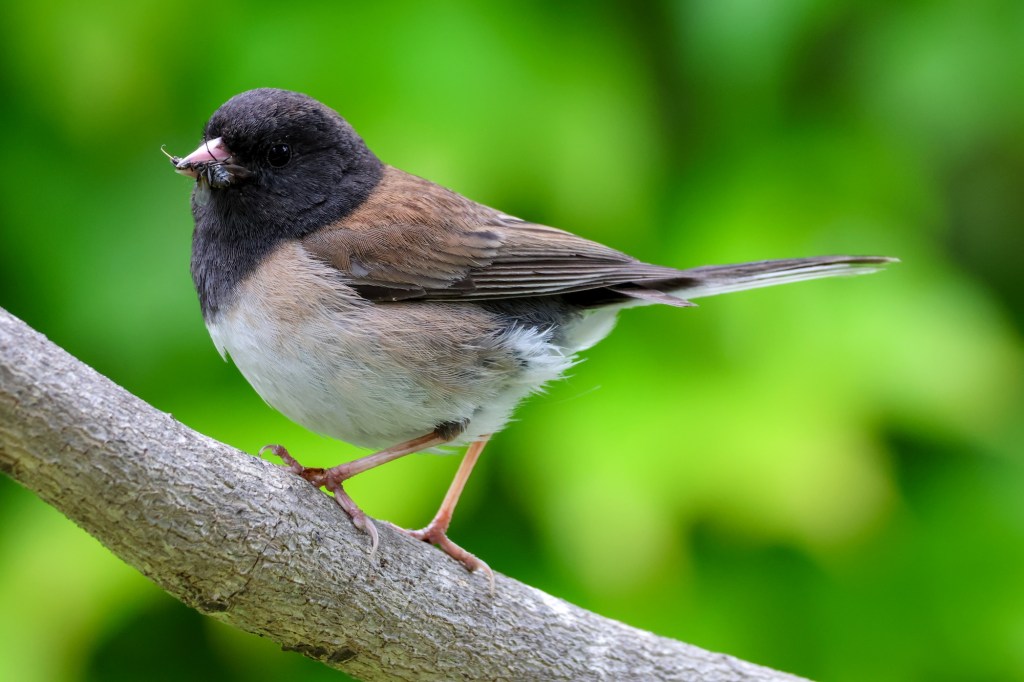
Dark-eyed junco in Southern California (Photo: Alex Fu)

When we step outside and see wildlife, we often think of it as unchanging. A bird on a branch, a crab in a tide pool, a lizard skittering across a sidewalk. It feels timeless. But in truth, these animals are evolving, slowly and steadily, right in front of us. As climates become more unpredictable, habitats shift, food sources change, and nature adapts. This is especially true in our cities. Built over just the past few centuries, these sprawling human environments are reshaping the natural world and pushing wildlife to adjust in new and often surprising ways.

As California’s cities have expanded and encroached upon natural landscapes, it turns out the state’s wildlife is adapting in fascinating ways. Studying these changes is central to urban evolution, or how species adapt over time, both genetically and behaviorally, to the unique pressures of city life. From coyotes navigating traffic to birds adjusting their songs to be heard over city noise, urban evolution reveals how nature is not just surviving in cities, but evolving with them. Darwin believed natural selection was too slow to observe in real time, but today we know evolution can happen rapidly, sometimes within just a few generations.

Thanks for reading California Curated Newsletter! Subscribe for free to receive new posts and support my work.
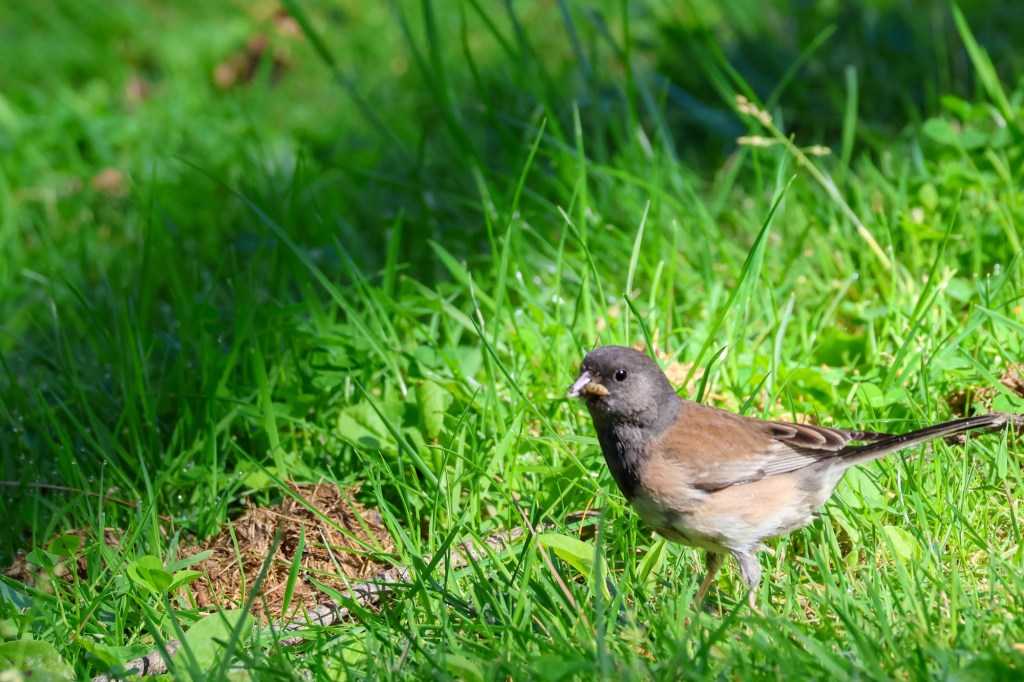
Dark-eyed junco in Southern California (Photo: Alex Fu)

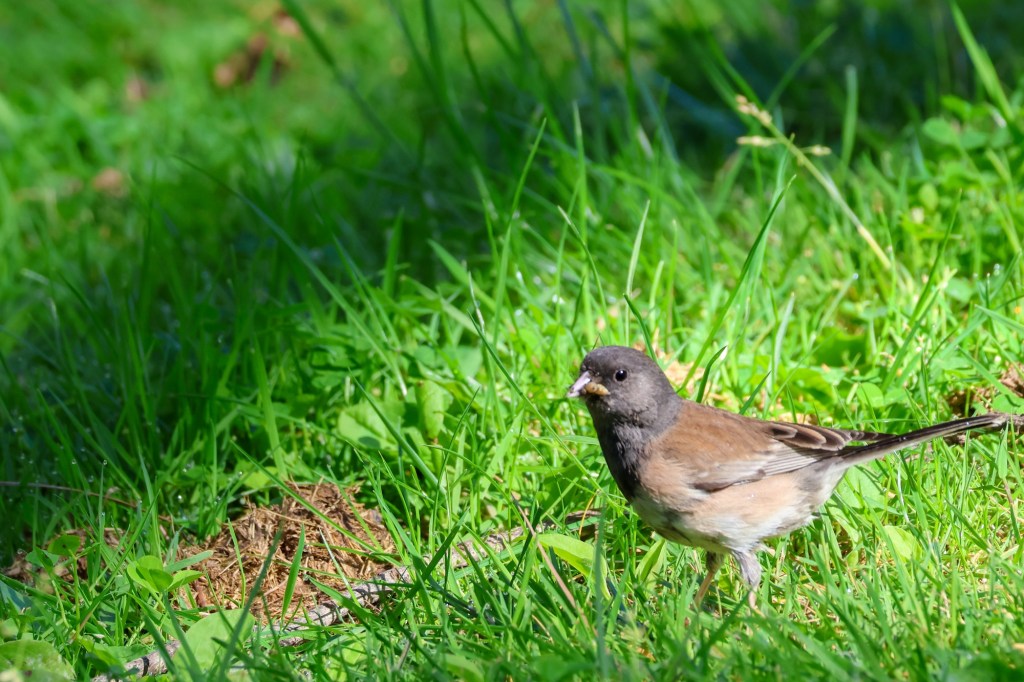
One cool example of urban evolution in California is the story of the dark-eyed junco (Junco hyemalis), a small songbird traditionally found in mountainous forests that is now thriving in urban environments like San Diego and Los Angeles. If you’re a birder or simply someone who enjoys watching the wildlife in your backyard, you’ve almost certainly seen them. Dark-eyed juncos are small songbirds with distinctive dark heads, often spotted hopping around on the ground rather than perching at feeders. I see them all the time, pecking at the spilled seeds beneath my feeder (or, I should say feeders, as I have several…nerd alert!). It turns out they’re classic ground foragers, evolved to search for food by scratching through leaf litter or snow, uncovering seeds, insects, and other hidden bits.

Recent research has revealed that dark-eyed juncos are evolving in direct response to urban life. Traditionally migratory, these birds once spent summers breeding in cool mountain forests and winters at lower elevations. But in the early 1980s, a group of juncos broke from that pattern and settled year-round on the campus of UC San Diego. There, researchers began documenting striking behavioral shifts. The urban juncos were bolder, less fearful of humans, and had even altered their mating and nesting habits. These changes, observed over just a few decades, offer a vivid example of how quickly species can adapt to city environments, a real-time case study in urban evolution unfolding in human-shaped habitats.

University of California San Diego (Photo: Erik Olsen)

Similarly, at the University of California, Los Angeles (UCLA), a junco population has been thriving for decades, with numbers reaching approximately 300. This long-term success has provided the Yeh Lab at UCLA with a unique opportunity to study how urban environments influence the evolution and behavior of these adaptable songbirds. Their research sheds light on how juncos have adjusted to city life, offering broader insights into wildlife resilience in human-altered habitats.

“It’s impressive how rapidly these vertebrate species can evolve. In a matter of a handful of years, we can find some pretty significant changes,” Pamela Yeh, an associate professor in ecology and evolutionary biology at UCLA, told California Curated. Yeh studied the junco population at UC San Diego when she was an undergraduate student there and wanted to expand the research to the population at UCLA. Studying the two different populations may offer insights into how species evolve in urban environments.

“We want to know, does a city make you evolve?” asks Yeh. “Do the different cities make you evolve similarly? Do the birds all become smaller? Do they all become bigger? Do they all have different-sized beaks? Or is each city unique?”
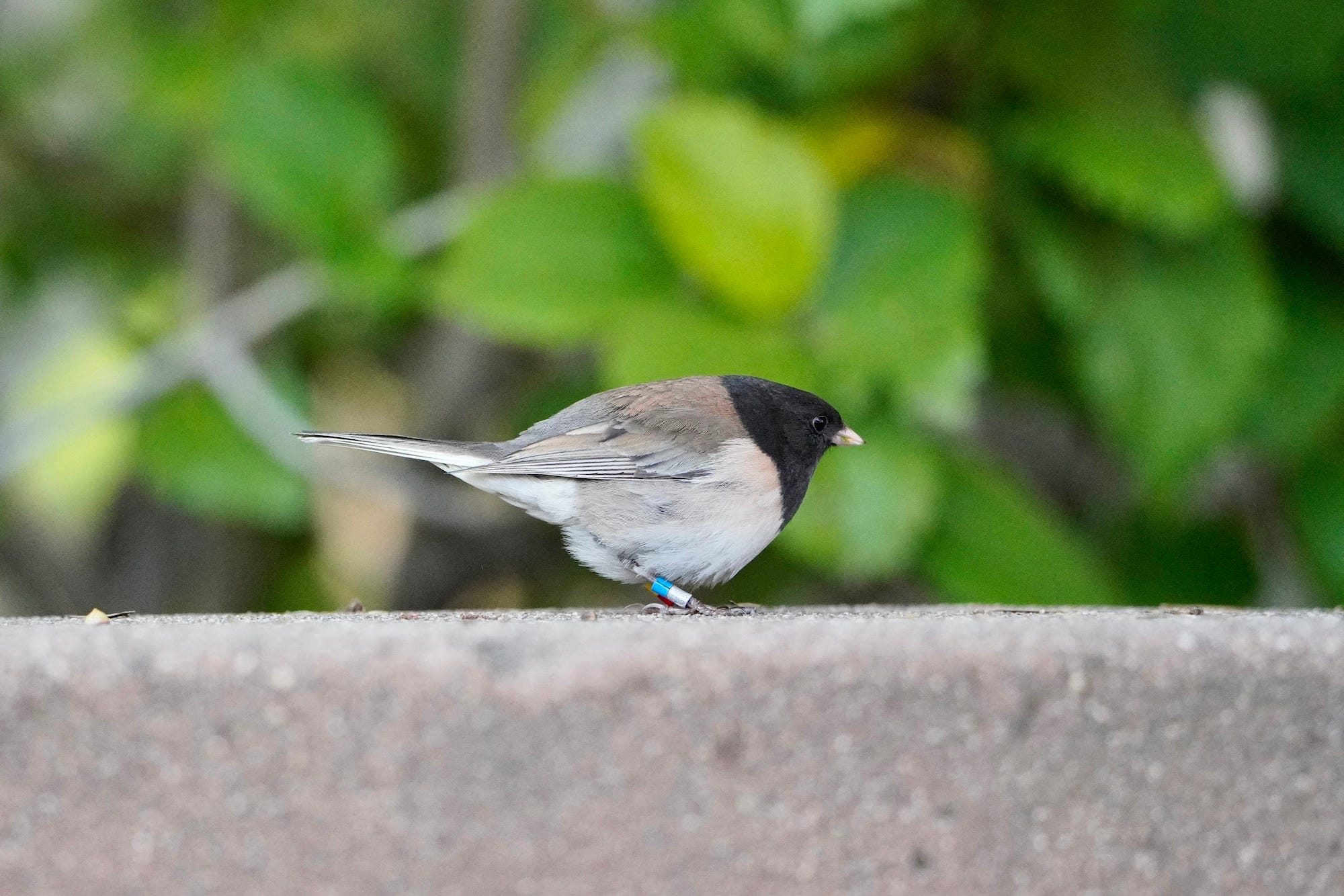
Dark-eyed junco at UCLA (Photo: Sierra Glassman)

With decades of data, the work echoes the groundbreaking research of Princeton scientists Peter and Rosemary Grant, whose studies of Galápagos finches transformed our understanding of how swiftly natural selection can operate. Now, the junco studies are taking that idea further, showing evolution unfolding not on remote islands, but in the heart of our cities.

“I think it’s now really considered a model vertebrate system for urban evolution,” says Yeh.

In their natural forest environments, juncos breed in response to the changing seasons, triggered by increasing daylight hours and rising temperatures. But in urban areas like those around UCSD and UCLA, where food is plentiful year-round, juncos have begun breeding earlier than normal and throughout the year. They build nests higher off the ground, often on artificial structures, and have increased the number of clutches per breeding season. The availability of artificial light, abundant food from human sources, and fewer natural predators in the city all play roles in these behavioral shifts.

Yeh believes it’s no accident that junco populations have surged on college campuses in recent decades. In fact, she sees it as a direct response to the unique conditions these urban environments provide.

“We think it is is partially that [urban university environments] mimic the natural environment, which is a mix of meadows and tall trees. But the other thing that we think could be important is the irrigation in grassy areas that allow the juncos, even when it’s extremely hot, there are still small insects and worms to grab and feed their offspring.”

One of the most striking adaptations among urban juncos is their behavioral shift in regards to people. Unlike their shy mountain counterparts, urban juncos are much more tolerant of human presence. This is not only a matter of convenience; it’s a survival mechanism. In the city, humans are not a threat, and urban birds need to capitalize on the resources provided by their proximity to people. Their lack of fear “allows them to keep eating even when we walk by,” says Yeh.
Dark-eyed junco in Southern California (Photo: Alex Fu)

Studying junco evolution isn’t just a scientific curiosity. It has real conservation stakes. Things haven’t been looking good for birds. An October 2019 study published in Science by the Cornell Lab of Ornithology revealed that North America has lost nearly 3 billion birds over the past 50 years, with dark-eyed juncos alone declining by 168 million. Yet their ability to adapt to urban life suggests they may have the evolutionary tools needed to weather these dramatic changes.

Beyond behavior, there are physical differences between urban and rural populations of dark-eyed juncos. Urban juncos, for example, developed duller black plumage on their heads and showed reduced white markings in their tail feathers. Yeh and her team have also documented that the wings of urban juncos are smaller, an adaptation likely driven by the demands of maneuvering through a dense, built environment rather than long-distance flight.
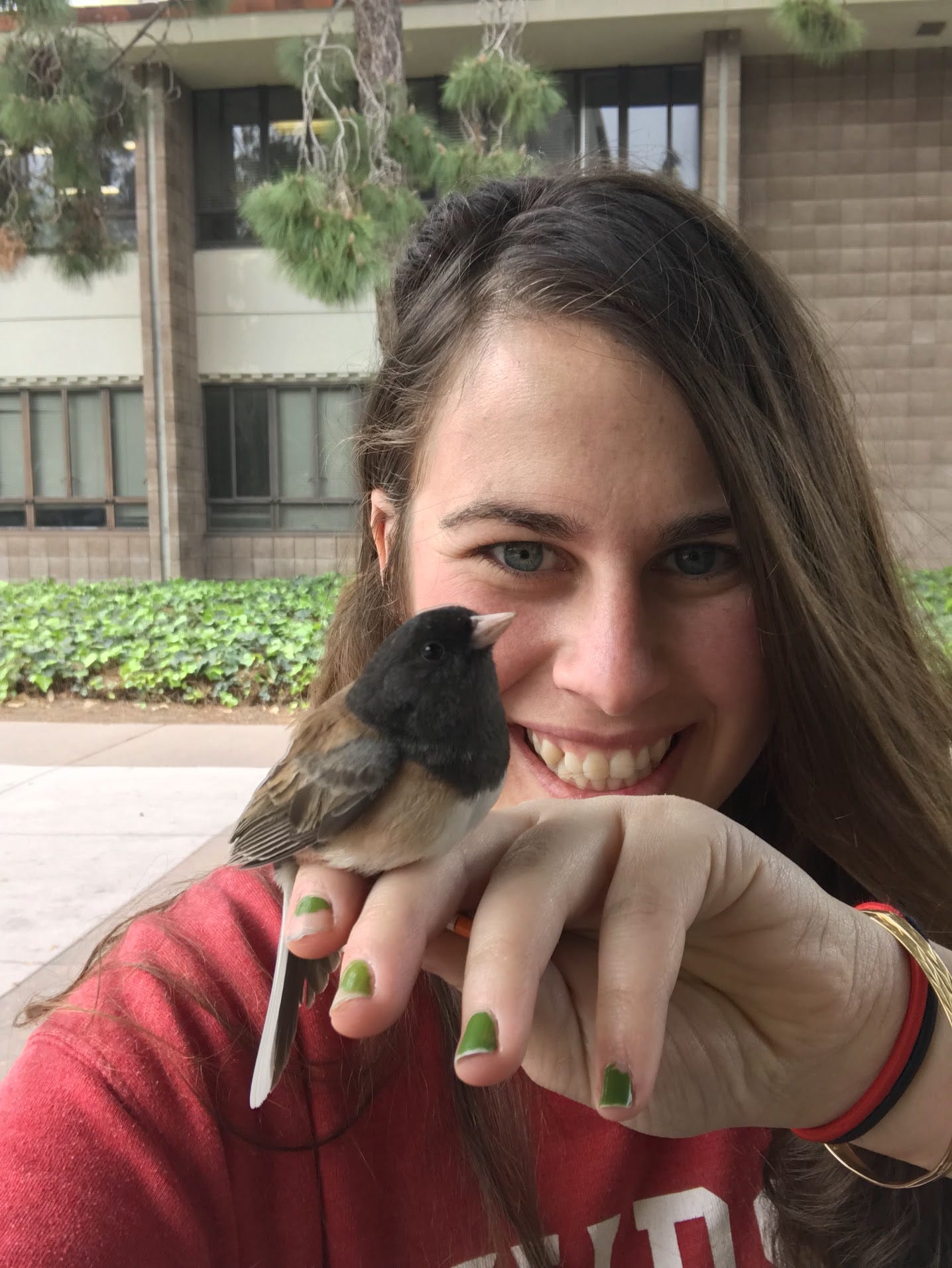
Ellie Diamant, currently a Ph.D. candidate in the Department of Ecology and Evolutionary Biology at UCLA in the Yeh Lab, holding a dark-eyed junco. (Photo: Ellie Diamant)

“Juncos historically were migratory birds. The ones that live in the mountains still are. But in the urban environments, we see them year-round,” says Dr. Ellie Diamant, Visiting Assistant Professor at Bard College. “So the benefits are gone for the longer-distance flight, but there seems to be more benefit for these short wings.” Diamant completed her Ph.D. in the Department of Ecology and Evolutionary Biology at UCLA in the Yeh Lab.

The dark-eyed junco is just one example of the broader phenomenon of urban evolution, where species adjust to the challenges and opportunities posed by city life. In California, this phenomenon extends beyond birds. Coyotes, for example, have become fixtures in cities like Los Angeles, adapting to scavenge food from human waste. Coastal animals like sea lions and pelicans have also made urban waterfronts their home, thriving amid the bustle of human activity. Similarly, the Western Fence Lizard has swiftly adapted to life in an urbanized environment.
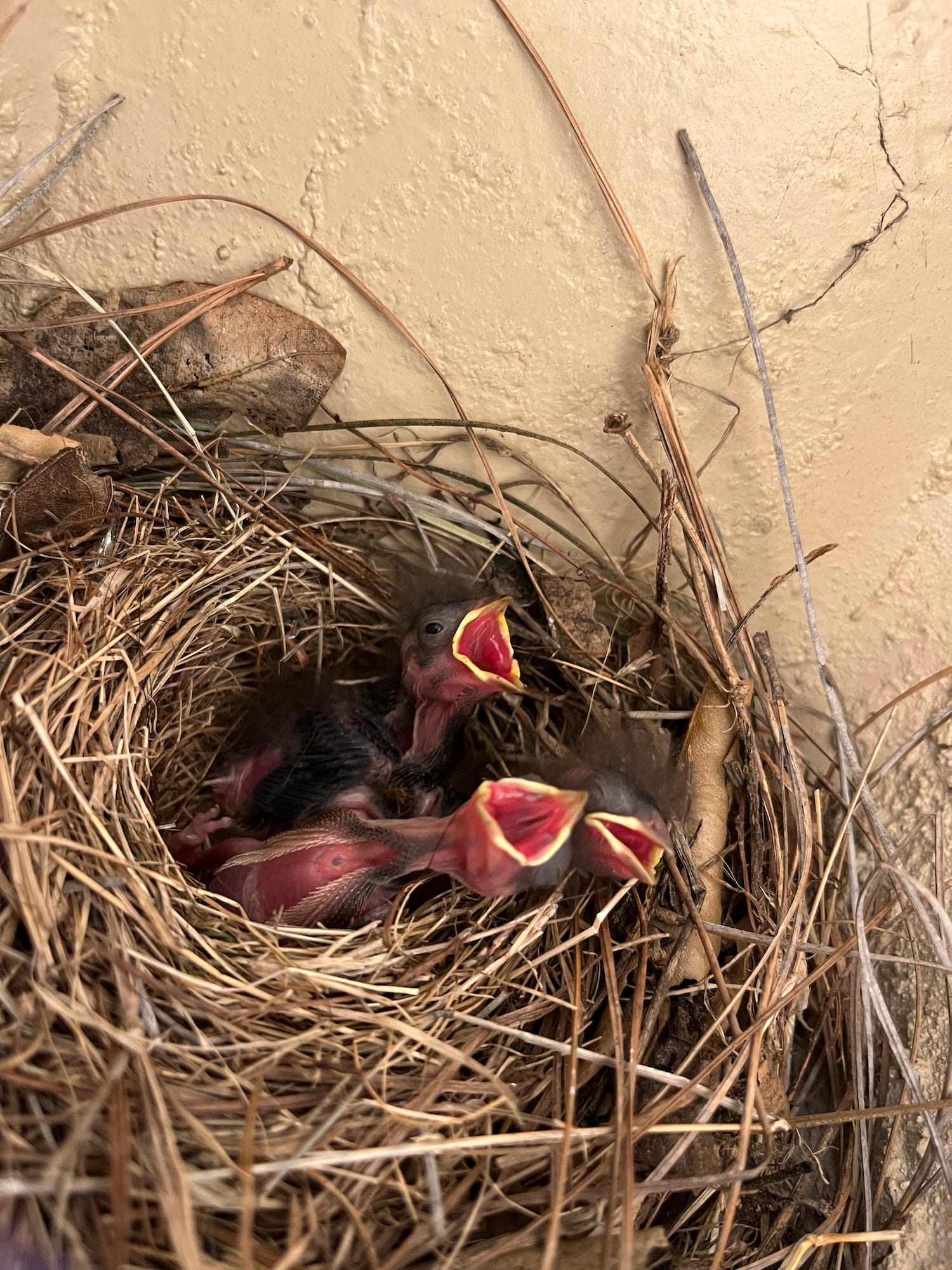
Junco hatchlings at UCLA. (Photo: Sierra Glassman)

In his book Darwin Comes to Town, Dutch evolutionary biologist Menno Schilthuizen highlights the junco as an exemplar of rapid evolution in urban settings, but it also goes much further, documenting how our manmade environments are accelerating and changing the evolution of the animals and plants around us. Of course, it’s not all good news. Not by a long shot.

Studies published in Evolutionary Applications, underscore that urbanization is a double-edged sword, offering opportunities for adaptation but also introducing serious threats. In Los Angeles, for instance, the fragmentation of habitat by highways has led to the deaths of countless animals, a problem now being tackled through the construction of wildlife bridges like the Wallis Annenberg Wildlife Crossing opening in 2026, designed to reconnect critical migration routes.

Wallis Annenberg Wildlife Crossing currently under construction (Photo: State of California)

The dark-eyed junco’s ability to adapt to city life is both encouraging and a bit sobering. It shows how some wildlife can adjust and find ways to thrive even as human development spreads. But it also reflects the growing pressure we’re putting on natural ecosystems. In other words, it’s not all good, and it’s not all bad. As scientists dig deeper into urban ecology in California and elsewhere, the junco stands out as a clear example of how life shifts and changes in response to the world we’re shaping.

For those of us who live in cities, the juncos flitting through parks, pecking in our yards, and hopping across college campuses offer a chance to see evolution happening right in front of us. Nature isn’t some distant thing beyond the city limits. It’s here, threaded into the daily patterns of urban life.

Feathers on the Flyway: Unraveling Avian Mysteries at Bear Divide with the Moore Lab

Western tanager (Ryan Terrill)

“Personally, I really think it’s one of the best birding spots in the world,” Ryan Terrill, science director at the Klamath Bird Observatory.

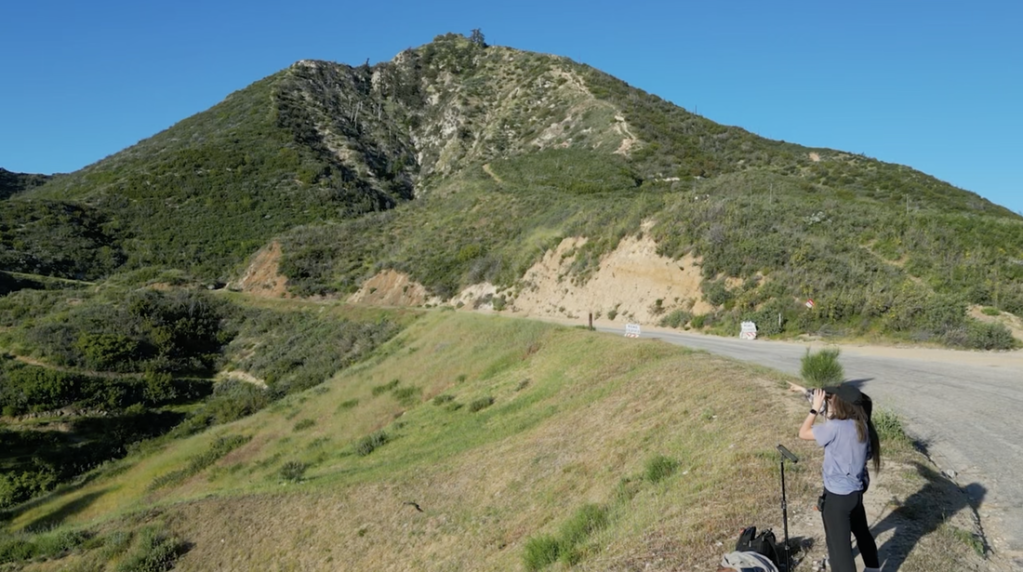
Within a 45 minute drive from the urban chaos of downtown Los Angeles, lies a natural, ornithological marvel: Bear Divide, a vital corridor for the annual migration of numerous bird species. Every year — roughly between March 15 and June 15, with peak migration between April 10 and May 20 — thousands of birds funnel through the narrow pass. The divide is a small dip in the otherwise impregnable San Gabriel mountains, allowing birds in the midst of their migration to pass through safely at relatively low altitudes. This area is not just a haven for bird enthusiasts but also a critical research site, especially for the team from the Moore Lab of Zoology at Occidental College, who have been delving into the intricacies of these migratory patterns.

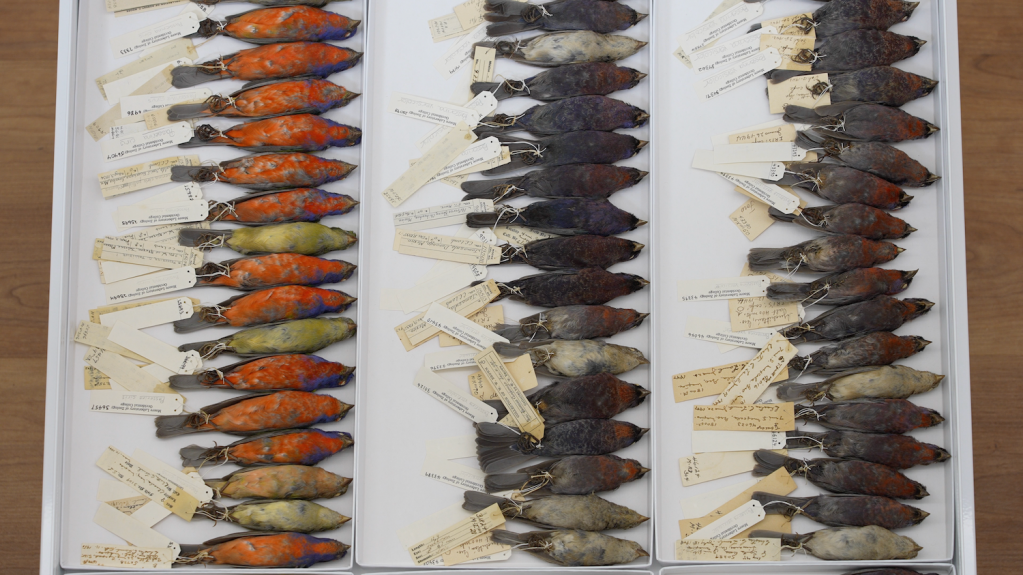
The Moore Lab of Zoology is renowned for its extensive bird specimen collection, one of the largest of its kind in the world for Mexican birds.

Part of the large bird collection at the Moore Lab at Occidental College in Pasadena (Erik Olsen)

Bear Divide is strategically positioned along the Pacific Flyway, a significant north-south migratory route used by birds traveling between Alaska and Patagonia. The geographical features of the San Gabriels provide an ideal resting and feeding ground for these birds, making Bear Divide a crucial stopover during their long journeys. It’s this unique combination of location and topography that makes Bear Divide an essential component of avian migration.

U.S. Fish and Wildlife Service

The discovery of Bear Divide was a lucky happenstance. A bird researcher was conducting overnight monitoring in the spring of 2016, and when morning came, he noticed legions of small songbirds whizzing past his monitoring spot. His report caught the attention of postdoc bird scientist Ryan Terrill at Moore Lab at the time, and he began an effort to monitor the birds. Terrill and his team would ultimately record as many as 20,000 birds in a single morning.

“It really is overwhelming to stand on the road and have 5,000 birds of 80 species fly by your knees in a morning,” Terrill said. The effort has continued to this day with startling results. Terrill has since left and is now the science director at the Klamath Bird Observatory.

CALIFORNIA CURATED ON ETSY

Purchase stunning coffee mugs and art prints of iconic California species.
Check out our Etsy store.

“Last year 2023 we counted 53,511 birds of 140 species from February to May,” said John McCormack, a professor of biology and the Director and Curator of the Moore Laboratory of Zoology. “And of course, we missed many thousands more because most travel at night. It’s easy to say that there are hundreds of thousands of birds passing through Bear Divide.”

Swainson’s Hawk (Marky Mutchler)

As many as 13,000 western tanagers, lazuli buntings, chipping sparrows, hermit warblers, orioles, grosbeaks and warblers pass through Bear Divide on a single day. Why they do so, is not entirely understood. The unusual topography of Bear Divide essentially serves as a funnel for the migrating birds, with many of them shooting through the gap just a meter or two above ground.

“Personally, I really think it’s one of the best birding spots in the world,” Terrill told the LA Times.

McCormack says that the “ultimate goal is to better understand the Pacific Flyway and how it’s used, especially by small terrestrial birds. Little is known about their movements because they are hard to see and usually travel at night.”

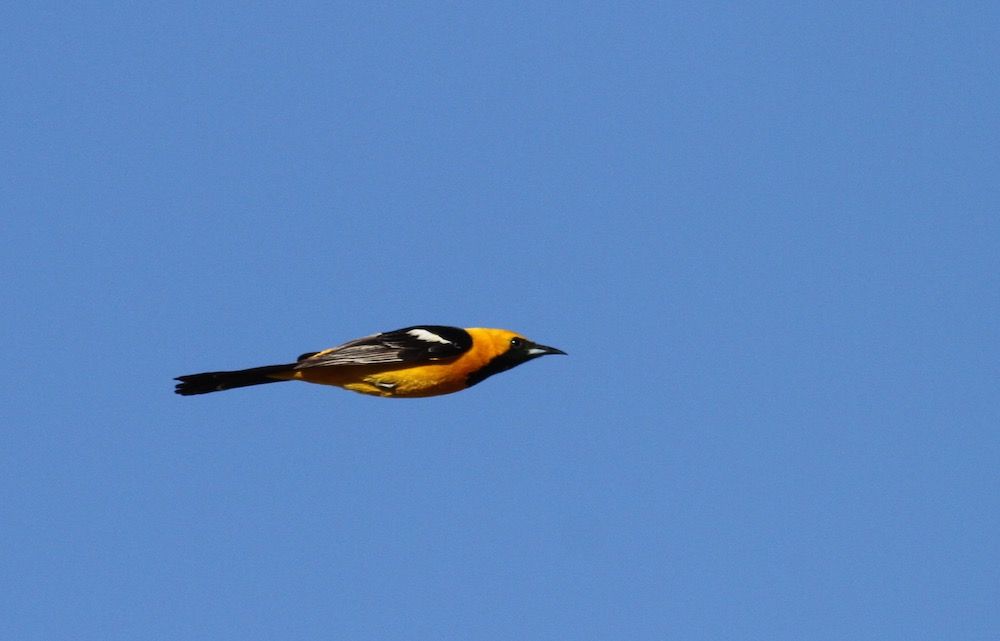
Hooded Oriole (Ryan Terrill)

Because many of the species sighted at Bear Divide are in steep decline. The lab says that year-to-year counts will help set a baseline for future trends that can be associated with weather, climate, and urbanization. “Tracking individual birds will give granular knowledge on how migratory birds use the landscape, which helps individuals and homeowners create corridors for them to travel,” says McCormack.

The best time to catch the show at Bear Divide is late winter early Spring. McCormack says Cliff Swallows and Lawrence’s Goldfinch are some of the early movers in March, and that by May, streaking by are Yellow Warblers, sunset-faced Western Tanagers, and bright blue Lazuli Buntings.

“There is so much we still don’t know about these birds and their world,” Lauren Hill, the site’s lead bird bander, told the Los Angeles Times. “For example, no one knows where they were before showing up here after sunrise.”

Lazuli Bunting zips past the camera at Bear Divide (Ryan Terrill)

The team is counting birds in order to establish a baseline of the populations coming through Bear Divide so they can understand how much we are changing the environment and what effect that may have on bird populations, many of which are in severe decline.

Their research spans a variety of topics, including how climate change is impacting migration routes and the effects of urbanization on bird populations. The lab has recently begun a program to put satellite trackers on birds at Bear Divide to follow individual birds, providing deep insight into their migration and resting patterns. This research is not only pivotal in understanding avian behavior but also crucial in shaping conservation policies.

One of the most fascinating aspects of Bear Divide is the sheer variety of bird species it attracts. From the diminutive hummingbirds to the impressive birds of prey, each species adds a unique dimension to the study of migration. The Moore lab’s findings have shed light on the varied responses of different species to environmental changes, offering a glimpse into the broader ecological shifts occurring across the globe.

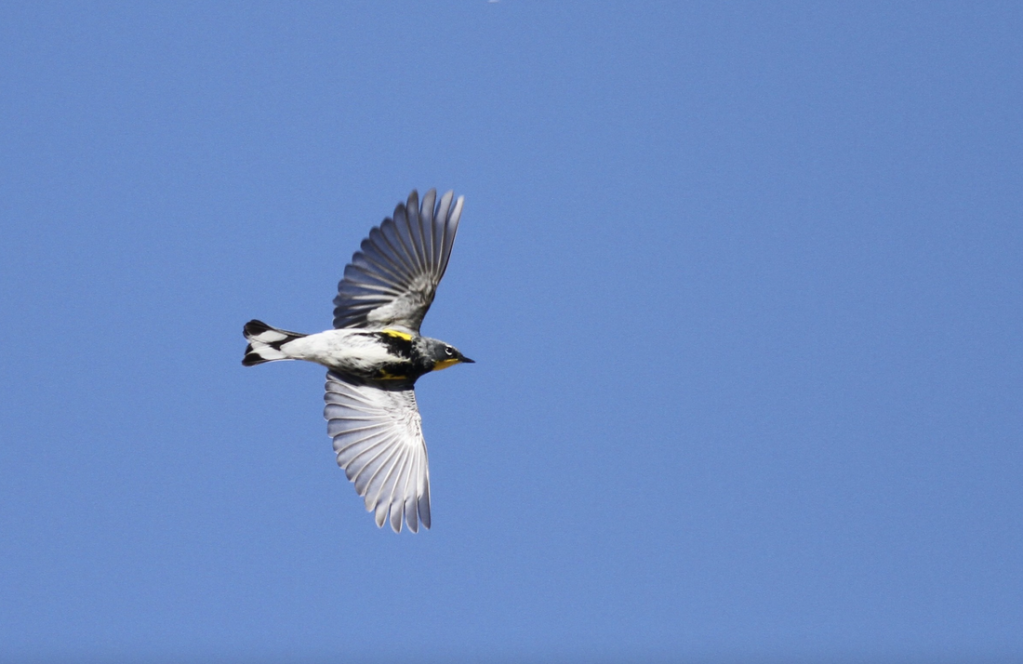
Yellow-rumped Warbler (Ryan Terrill)

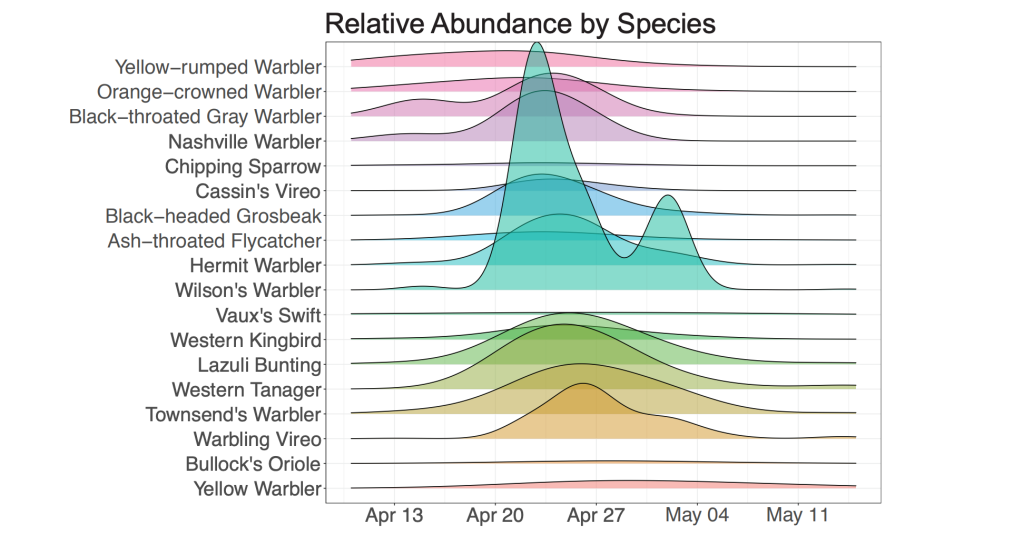
One compelling result of the Moore Lab’s study at Bear Divide suggests that the peak of a particular species’ migration is correlated with the latitude of its breeding site. Species that breed at higher latitudes migrated through Bear Divide at later dates. It’s also unusual in the West for species to migrate during the day. Most species of birds using the Pacific Flyway are known to migrate at night.

The Moore Lab of Zoology

In addition to its scientific contributions, the Moore lab is also known for its involvement in citizen science. Collaborating with local birdwatchers and volunteers, the lab extends its research capabilities and cultivates a community actively engaged in bird conservation. This collaborative approach not only enhances the breadth of their research but also underscores the importance of community involvement in conservation efforts.

Bear Divide is on public land, so anyone with a legitimate research project can get permission to work there. UCLA graduate student Kelsey Reckling, who has worked as a counter at Bear Divide since the beginning, is leading the counting efforts this Spring to understand changes in numbers of birds and species across years. Cal State L.A. graduate student Lauren Hill lea ds the group of bird banders, who catch some of the birds and record data, attaching a lightweight metal band around one leg and releasing them. Her lab mate Tania Romero is putting small, lightweight tracking devices on Yellow Warblers, which send signals to a network of tracking (MOTUS) towers across the continent.

Many bird species are under serious threat around the globe from a number of different impacts, including climate change, pesticides and habitat loss. Birds play a critical role in the health of our planet. They regulate ecosystems by preying on insects, pollinating plants, and spreading seeds. Healthy ecosystems are important for breathable air, food, and a regulated climate.

Bear Divide (Ian Davies)

According to a 2019 study, nearly 3 billion breeding birds have been lost in North America and the European Union since 1970. That’s about 30% of the bird population in North America. The 2022 State of the Birds Report for the United States found that bird declines are continuing in almost every habitat, except wetlands. Protecting birds’ habitats, and migration routes and reducing mortality through conservation efforts are crucial to ensuring the survival of these magnificent creatures.

The research conducted at Bear Divide by the Moore lab transcends academic interests, emphasizing the interconnectivity of ecosystems and underscoring the need to preserve natural migration corridors amid urban expansion. The insights gained here are invaluable to both the scientific community and conservation efforts, highlighting the need for a balanced approach to wildlife preservation and ecological sustainability.

Band-tailed Pigeon (Ryan Terrill)

“What’s magical about Bear Divide is that it’s the first real place to see small, migrating birds at eye level in daylight hours,” says McCormack. “I don’t want to oversell it: it’s still a lot of small birds zinging by in a wide open place and it takes a while to get good at identifying them. But by seeing them out there, struggling against the wind and the cold, but still making progress, it gives you a real sense of how amazing their journeys are–and how we shouldn’t make them harder if there’s anything we can do about it.”

The California Gull is the Unsung Hero of Feathered Adaptability and Ecological Balance

Imagine a bird that’s not only a reliable fixture on both coastal and inland landscapes, but also a winged hero with a knack for saving ecosystems and crops alike. Meet the California gull, a seemingly unassuming creature that’s the avian equivalent of a Toyota Camry: dependable, middle-of-the-road, and surprisingly full of stories. Far from just another seabird scrounging for scraps, this versatile gull is a fascinating study in adaptability, ecological impact, and even historical significance.

Birdwatching might be dismissed as a pedestrian hobby, but when you dive into the details, it’s a riveting blend of science, art, and natural history. Take the task of identifying a gull, for instance. You might think all gulls are created equal, but you’d be sorely mistaken. From the curvature of the bill to the tint of the feathers, each species presents its own unique set of traits. And in this realm, the California gull is the embodiment of middle-of-the-road reliability..

The California gull’s bill is a case study in avian averageness: not too long, not too short, but just right. Then there’s the back—a shade of gray that’s neither too dark nor too light. Size-wise, it’s comfortably nestled between the imposing giants and the pint-sized runts of the gull family. Even its legs are a kind of Goldilocks yellow—nothing too flashy or understated. The same goes for its migration pattern. This bird isn’t setting any long-distance records like the ambitious Arctic terns, nor is it stubbornly clinging to a single geographical point year-round. It moves around a reasonable amount—perhaps 500 to 1,000 miles—but always makes it back to familiar territory in good time.

California gull. (Larus californicus) Image: Wikipedia

And where might you spot this paragon of mediocrity? Well, in winter, they’re pretty much where you’d expect any self-respecting gull to be: on beaches, in harbors, hanging around landfills, playgrounds, and fields, or perhaps looking for morsels in tide pools and kelp beds. Come early summer, many venture inland to breed, but they generally make it back to their stomping grounds before the first school bell rings in September.

Yet for a bird that’s so unassuming, the California gull enjoys a surprising level of fame. Case in point: it’s the state bird of Utah, not California. That honor was bestowed upon it for its historical role during the initial Mormon settlement. The Sea Gull Monument in Salt Lake City honors the gull, who saved the people of Utah by consuming the Rocky Mountain crickets which were destroying all the crops in 1848. Quote from monument:

“The Mormon pioneers planted crops in the spring of 1848, after suffering great hunger during their first winter in the Salt Lake Valley. As the crops ripened, hordes of devouring crickets descended upon them from the foothills east of the valley. The Saints fought them with clubs, fire, and water. As they despaired of saving the next winter’s food, their prayers for deliverance from almost sure starvation were answered when thousands of sea gulls came to feed on the crickets. The Sea Gull Monument commemorates this modern-day miracle. The sea gull is now the Utah State bird.”

Sea Gull Monument in Salt Lake City (Wikipedia)

Moreover, the California gull has been an ecological hero in other ways. At Mono Lake in the Eastern Sierras of California, the gull has had a significant impact on bringing the lake back to life. (The lake is also known for its microbial aliens.) In the early part of the 20th century, Los Angeles’ voracious appetite for water led to shady deals by William Mulholland to secure access to Owens Lake. Declining water levels at Mono Lake threatened the gull population that nested there. But a decisive legal victory by the Save the Mono Lake Committee has ensured the lake is now maintained at healthier water levels, benefiting not just gulls but the entire ecosystem.

Mono Lake Photo: Erik Olsen

However, it’s not all sunny skies for this winged wonder. In the salt pans of South San Francisco Bay, the number of nesting California gulls has exploded—from a mere 24 nests in 1980 to a staggering 45,000 today. It’s a population boom that’s become a double-edged sword. With so many beaks to feed, the California gulls have taken to dining on their neighbors, including baby terns. This poses an ethical conundrum: when is it time to intervene and cull one species to protect another? A tough question—it’s a slippery slope that could eventually loop back to us humans, as we ponder our role in this intricately balanced web of life.

Hey there! If you enjoy California Curated, consider donating the price of a coffee to support its creation!

California’s Common, but Lovely, Birds: the House Finch

House Finch

California is home to an impressive number of bird species, with over 700 recorded throughout the state. From the rocky shores of the Pacific coast to the towering peaks of the Sierra Nevada, California’s diverse landscapes provide habitats for a wide range of birdlife. Many of these species are endemic to California, meaning they are found nowhere else in the world. The state’s unique geography and climate, as well as its location on the Pacific Flyway migration route, make it a haven for birdwatchers and ornithologists alike.

One of the most common birds in California, probably familiar to anyone whether a backyard enthusiast or committed ornithologist is the house finch. The house finch (Haemorhous mexicanus) is a small passerine (perching) bird that is native to western North America, including California. This bird is widely known for its vibrant red plumage and melodic song, making it a beloved sight and sound in backyards across the state.

House finches are a member of the finch family, Fringillidae, which includes all true finches. They are thought to have originated from the deserts of Mexico and the southwestern United States. Their range has since expanded to cover much of North America.

Finches are famously associated with Charles Darwin and his theory of evolution by natural selection. During his voyage on the HMS Beagle, Darwin observed finches on the Galápagos Islands, noting the significant variations in their beak shapes and sizes. These differences were adaptations to the specific diets available on their respective islands. Darwin’s study of these finches helped him develop the concept that species evolve over time through natural selection, where advantageous traits become more common in a population. This observation provided crucial evidence for his groundbreaking work, “On the Origin of Species.”

House finches are small birds, measuring about 5-6 inches in length and weighing between 0.6-1.0 ounces. They have a stout, conical beak that is adapted for cracking open seeds, their primary source of food. The male house finch is easily recognizable by its bright red head and breast, while the female has a duller brownish-gray coloration. However, in some areas, there are color variations in the males, such as yellow, orange, or even a rose-pink color.

House finches primarily feed on seeds, including those from sunflowers, dandelions, thistles, and various grasses. They are also known to eat some fruits and insects, particularly during the breeding season when protein is essential for the growth of their young. House finches have a unique feeding habit in that they use their tongue to extract seeds from the seed capsules, which they then crush with their beaks.

House finches are monogamous and form pair bonds during the breeding season, which typically starts in late winter and lasts through early summer. The male house finch will sing and perform courtship displays to attract a mate, often presenting the female with a gift of food. Once the pair has formed, they will work together to build a small nest using grass, twigs, and other plant materials.

House finches are a common sight in backyards, parks, and other areas with ample vegetation. They are often seen perched on wires, branches, or feeders, where they will socialize with other birds, including other finches, sparrows, and juncos. House finches are also known for their acrobatic abilities, often clinging to branches and twigs while feeding.

In addition to their acrobatics, house finches are known for their melodic song. Males will sing throughout the day, particularly during the breeding season, to attract mates and establish territories. The song of the house finch is a warbling melody that can be heard from a considerable distance.

House finch (Erik Olsen)

Research has shown that male house finches learn their songs from adult males, typically their fathers, during a critical period in their early life. This learning process is akin to how humans acquire language, involving both genetic predisposition and environmental influences. A study published in the journal “Animal Behaviour” found that house finch songs are composed of a variety of syllables that can be combined in numerous ways, leading to a wide range of unique songs within populations.

Interestingly, these songs play a crucial role in mate attraction and territorial defense. Females tend to prefer males with more complex and diverse songs, which are indicative of the male’s overall health and genetic fitness. Moreover, regional dialects have been observed, with finches in different geographic locations exhibiting distinct song patterns. This geographic variation is believed to result from both cultural transmission and genetic drift, making the house finch’s song an excellent model for studying the evolution of communication and social behavior in birds.

House finch painting

In California, house finches are a common sight and have adapted well to urban and suburban environments. They are often attracted to bird feeders, particularly those filled with sunflower seeds, which they can easily crack open with their beaks.

The house finch’s vibrant plumage, melodic song, and acrobatic abilities make it a joy to observe in the wild or in our own backyards. As with many bird species, it is essential that we continue to protect their habitats and ensure that they have access to adequate food sources to thrive.