The Caltech Experiment That Proved How Life Copies Itself

DNA molecule (Midjourney)

I love reading New York Times obituaries, not because of any morbid fascination with death, but because they offer a window into extraordinary lives that might otherwise go unnoticed. These tributes often highlight people whose work had real impact, even if their names were never widely known. Unlike the celebrity coverage that fills so much of the media, these obituaries can be quietly riveting, full of depth, insight, and genuine accomplishment.

For two years I managed the New York Times video obituary series called Last Word. We interviewed people of high accomplishment who had made a difference in the world BEFORE they died, thus giving them a chance, at a latter age (in our case 75 was the youngest, but more often people would be in their 80s) to tell their own stories about their lives. They signed an agreement acknowledging that the interview would not be shown until after their death. Hence the series title: Last Word. Anyway, when I ran the program, I produced video obituaries for people as varied as Neil Simon, Hugh Hefner, Sandra Day O’Connor, Philip Roth, Edward Albee, and my favorite, the great Harvard biologist E.O. Wilson. Spending time and learning about their lives in their own words was a joy.

All of that is to say that obituaries often reveal the lives and accomplishments of people who have changed the world. These are stories that might never be told so thoughtfully or thoroughly anywhere else.

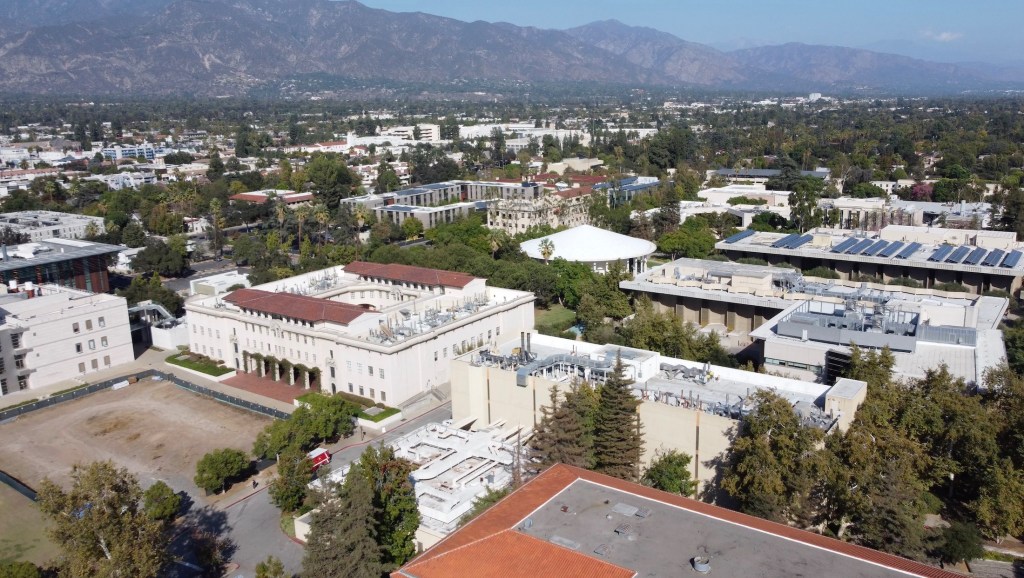
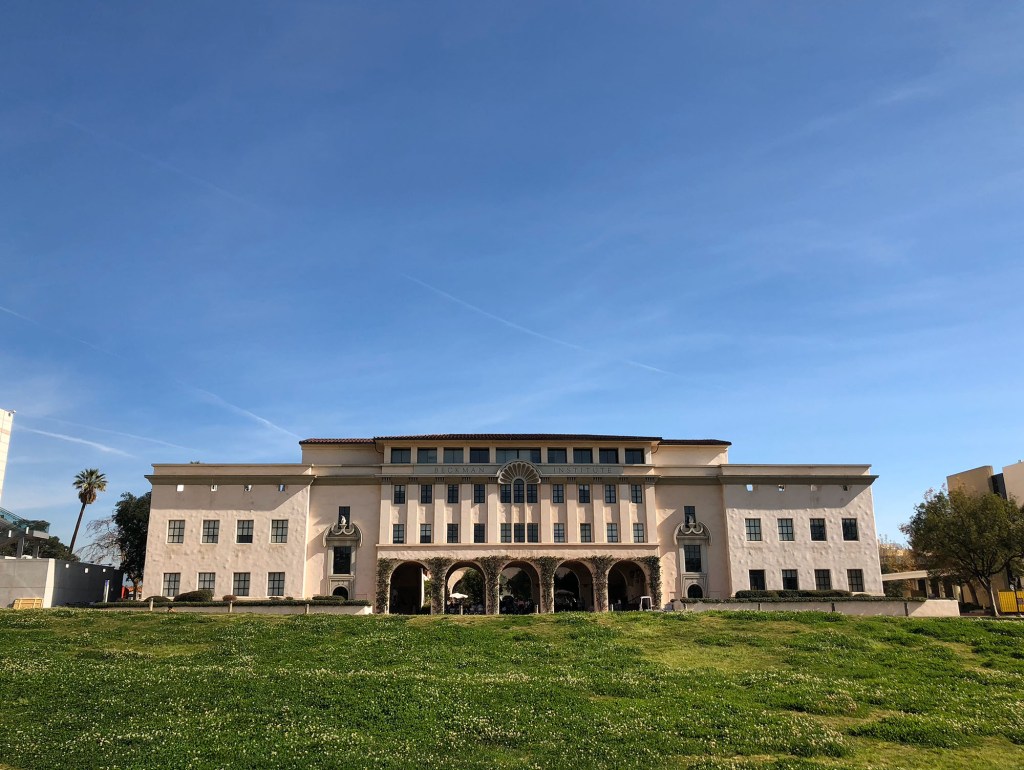
California Institute of Technology (Photo: Erik Olsen)

Which bring us to a quiet lab at Caltech in 1958, where two young biologists performed what some still call “the most beautiful experiment in biology”. Their names were Matthew Meselson and Franklin Stahl, and what they uncovered helped confirm the foundational model of modern genetics. With a simple centrifuge, a dash of heavy nitrogen, and a bold hypothesis, they confirmed how DNA, lifeโ€™s instruction manual, copies itself. And all of it took place right here in California at one of the world’s preeminent scientific institutions: the California Institute of Technology or CalTech, in Pasadena. The state is blessed to have so many great scientific minds and institutions where people work intensely, often in obscurity, to uncover the secrets of life and the universe.

California Curated Etsy

Franklin Stahl died recently at his home in Oregon, where he had spent much of his career teaching and researching genetics. The New York Times obituary offered a thoughtful account of his life and work, capturing his contributions to science with typical respect. But after reading it, I realized I still didnโ€™t fully grasp the experiment that made him famous, the Meselson-Stahl experiment, the one he conducted with Matthew Meselson at Caltech. It was mentioned, of course, but not explained in a way that brought its brilliance to life. So I decided to dig a little deeper.

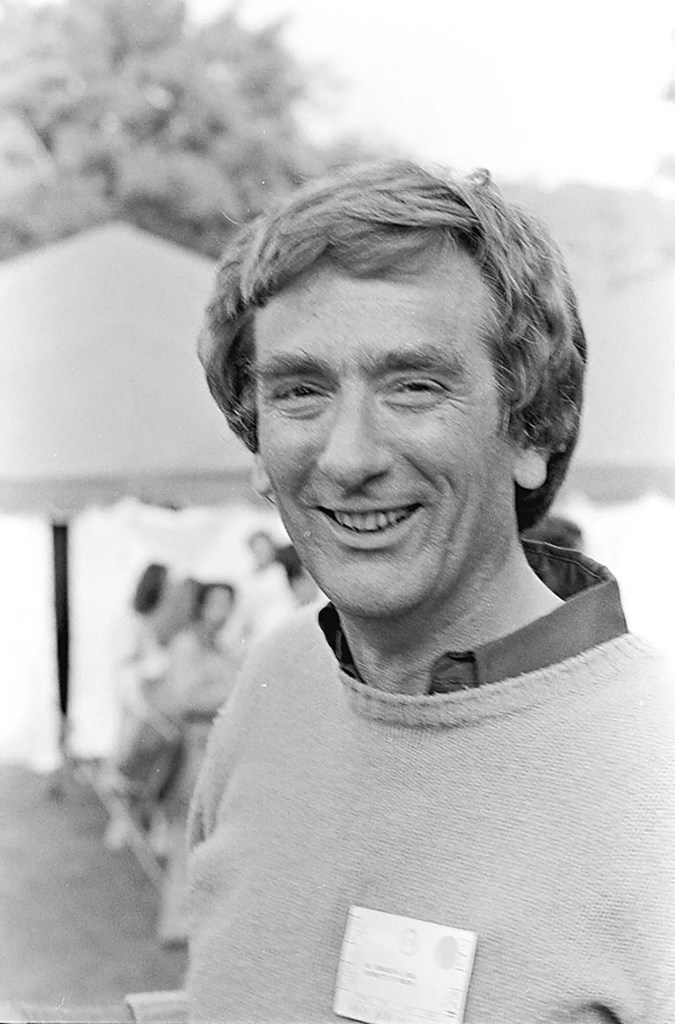
Franklin Stahl in an undated photo. (Cold Spring Harbor Laboratory Library and Archives)

The Meselson-Stahl experiment didnโ€™t just prove a point. It told a story about how knowledge is built: carefully, creatively, and with a precision that leaves no room for doubt. It became a model for how science can answer big questions with simple, clean logic and careful experimentation. And it all happened in California.

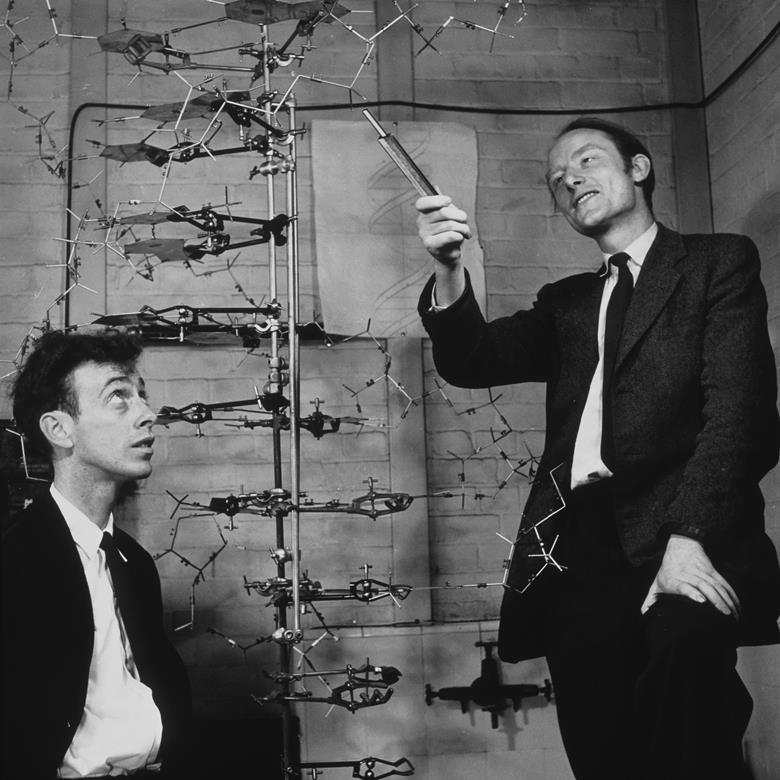
Let’s back up: When Watson and Crick proposed their now-famous double helix structure of DNA in 1953 (with significant, poorly recognized help from Rosalind Franklin), they also suggested a theory about how it might replicate. Their idea was that DNA separates into two strands, and each strand acts as a template to build a new one. That would mean each new DNA molecule is made of one old strand and one new. It was called the semi-conservative model. But there were other theories too. One proposed that the entire double helix stayed together and served as a model for building an entirely new molecule, leaving the original untouched. Another suggested that DNA might break apart and reassemble in fragments, mixing old and new in chunks. These were all plausible ideas. But only one could be true.

Watson and Crick with their model of the DNA molecule (Photo: A Barrington Brown/Gonville & Caius College/Science Photo Library)

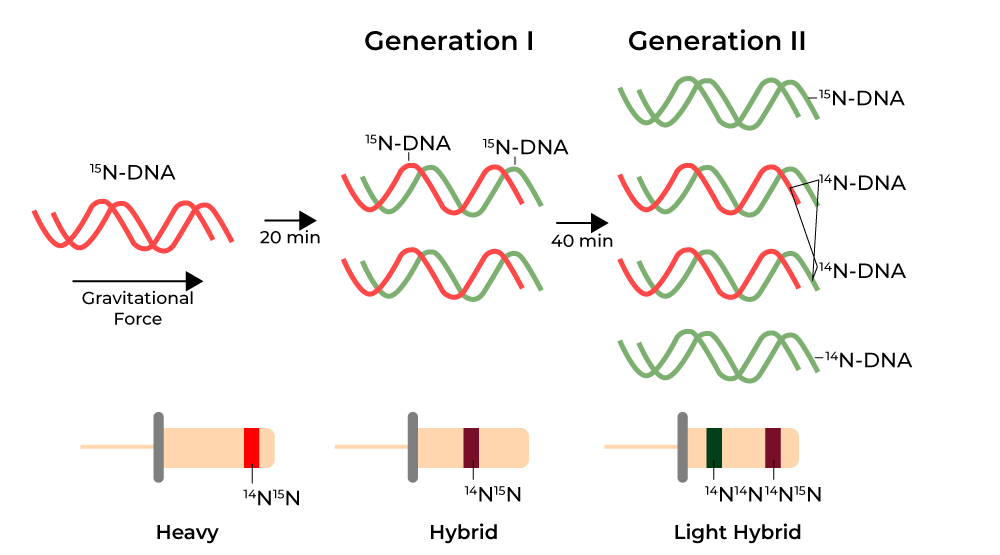
To find out, Meselson and Stahl grew E. coli bacteria in a medium containing heavy nitrogen (nitrogen is a key component of DNA), a stable isotope that made the DNA denser than normal. After several generations, all the bacterial DNA was fully “heavy.” Then they transferred the bacteria into a medium with normal nitrogen and let them divide. After one generation, they spun the DNA in a centrifuge that separated it by weight. If DNA copied itself conservatively, the centrifuge would show two bands: one heavy, one light. If it was semi-conservative, it would show a single band at an intermediate weight. When they performed the experiment, the result was clear. There was only one band, right between the two expected extremes. One generation later, the DNA split into two bands: one light, one intermediate. The semi-conservative model was correct.

Their results were published in Proceedings of the National Academy of Sciences in 1958 and sent shockwaves through the biological sciences.

Meselson and Stahl experiment in diagram.

To me, the experiment brought to mind the work of Gregor Mendel, an Augustinian monk who, in the mid-1800s, quietly conducted his experiments in the garden of a monastery in Brno, now part of the Czech Republic. By breeding pea plants and meticulously tracking their traits over generations, Mendel discovered the basic principles of heredity, dominant and recessive traits, segregation, and independent assortment, decades before the word โ€œgeneโ€ even existed. Like Mendelโ€™s experiments, the Meselson-Stahl study was striking in its simplicity and clarity. Mendel revealed the rules; Meselson and Stahl uncovered the mechanism.

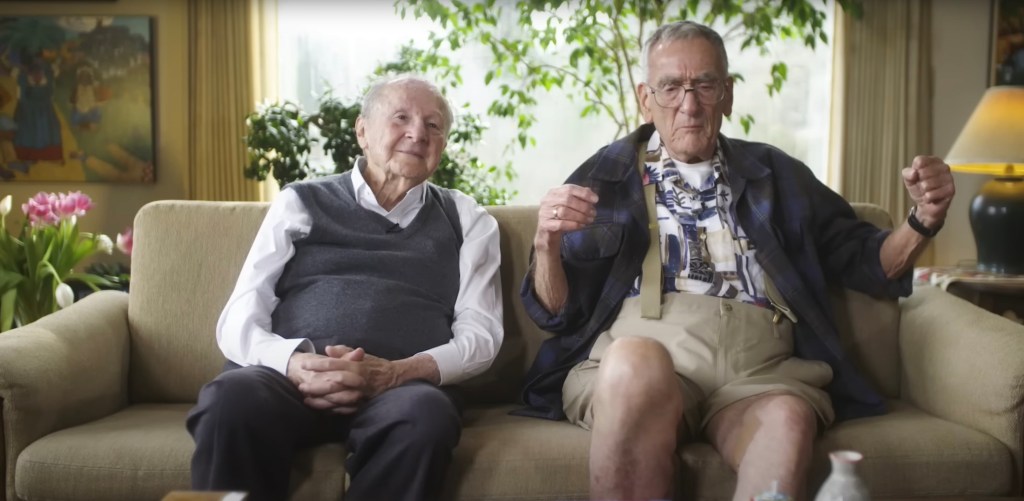
There’s a fantastic video where the two men discuss the experiment that is worth watching. It was produced produced by iBiology, part of the nonprofit Science Communication Lab in Berkeley. In it Meselson remembered how the intellectual climate of CalTech at the time was one of taking bold steps, not with the idea of making a profit, but for the sheer joy of discovery: โ€œWe could do whatever we wanted,” he says. “It was very unusual for such young guys to do such an important experiment.โ€

California Institute of Technology (Photo: Erik Olsen)

Most people think of Caltech as a temple of physics. Itโ€™s where Einstein lectured, where the Jet Propulsion Laboratory was born (CalTech still runs it), and where the gravitational waves that rippled through spacetime were detected. But Caltech has a quieter legacy in biology. Its biologists were among the first to take on the structure and function of molecules inside cells. The institute helped shape molecular biology as a new discipline at a time when biology was still often considered a descriptive science. Long before Silicon Valley made biotech a household term, breakthroughs in genetics and neurobiology were already happening in Southern California.

Meselson and Stahl in the iBiology video (Screen grab: Science Communication Lab)

The Meselson-Stahl experiment is still taught in biology classrooms (my high school age daughter knew of it) because of how perfectly it answered the question it set out to ask. It was elegant, efficient, and unmistakably clear. And it showed how a well-constructed experiment can illuminate a fundamental truth. Their discovery laid the groundwork for everything from cancer research to forensic DNA analysis to CRISPR gene editing. Any time a scientist edits a gene or maps a mutation, they are relying on that basic understanding of how DNA replicates.

In a time when science often feels far too complex, messy, or inaccessible, the Meselson-Stahl experiment is a reminder that some of the most important discoveries are also the simplest. Think Occam’s Razor. Two young scientists, some nitrogen, a centrifuge, a clever idea, and a result that changed biology forever.

California Curated Etsy

Caltech’s Einstein Papers Project is a Window into the Mind of a Genius

Albert Einstein on the beach in Santa Barbara in 1931 (The Caltech Archives)

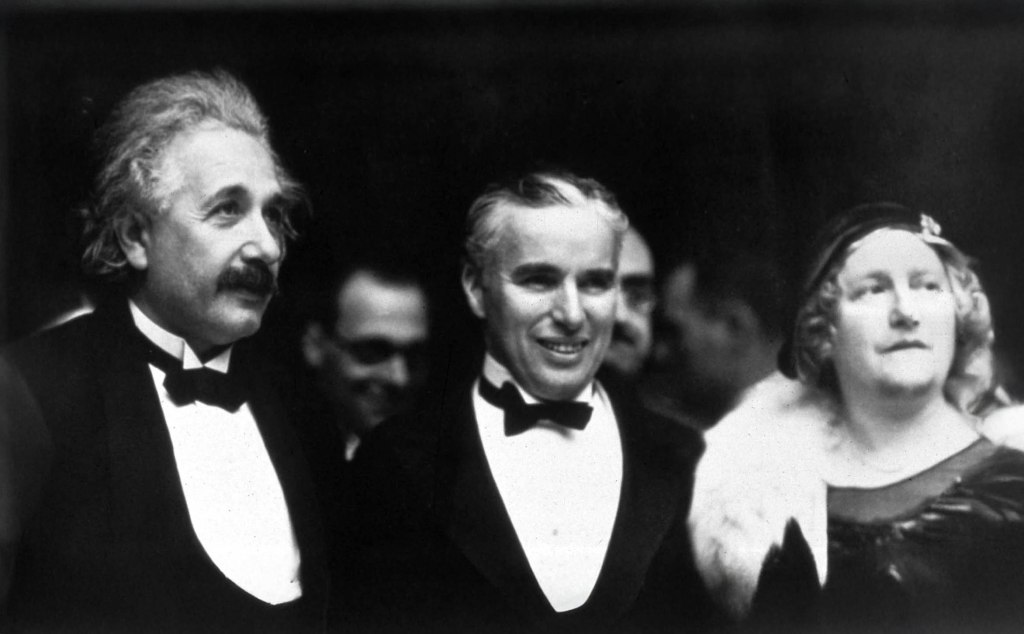
We wrote a piece a while back about the three winters Albert Einstein spent in Pasadena, a little-known chapter in the life of a man who changed how we understand the universe. It was our way of showing how Einstein, often seen as a figure of European academia and global science, formed a real affection for California and for Pasadena in particular. Itโ€™s easy to picture him walking the streets here, lost in thought or sharing a laugh with Charlie Chaplin. The idea of those two geniuses, one transforming physics and the other revolutionizing comedy, striking up a friendship is something worth imagining.

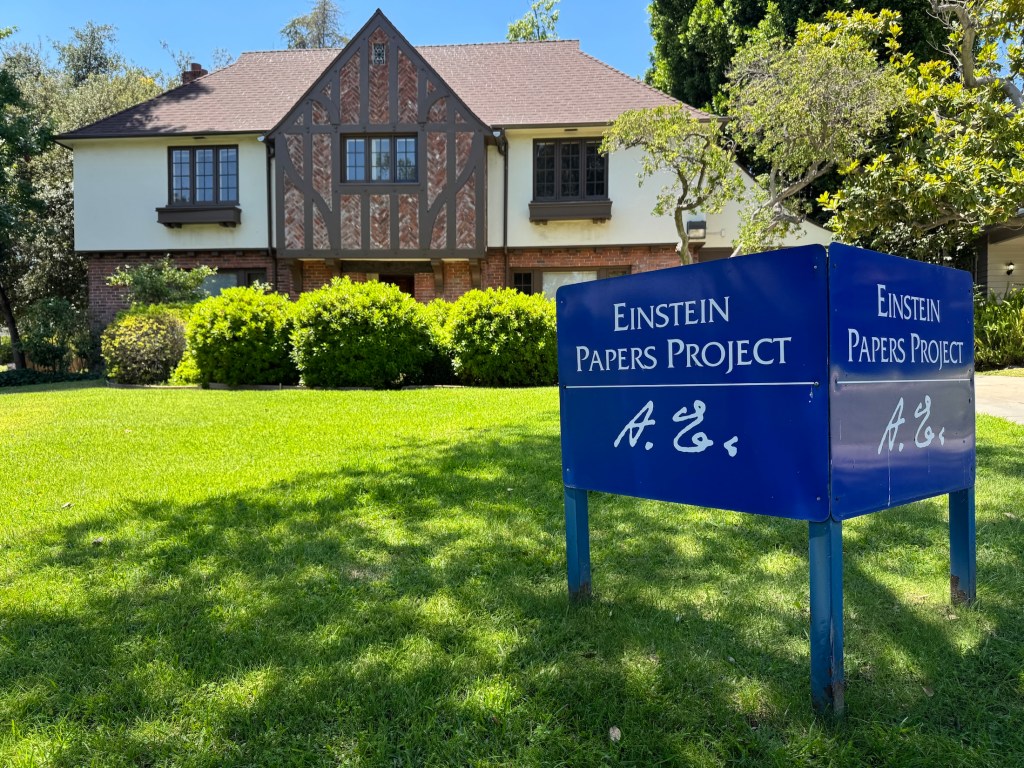
But Einsteinโ€™s connection to Pasadena didnโ€™t end there. It lives on in a small, nondescript building near the Caltech campus, where a group of researchers continues to study and preserve the legacy he left behind.

The Einstein Papers Project (EPP) at Caltech is one of the most ambitious and influential scientific archival efforts of the modern era. Itโ€™s not just about preserving Albert Einsteinโ€™s workโ€”itโ€™s about opening a window into the mind of one of the most brilliant thinkers in history. Since the late 1970s, a dedicated team of scholars has been working to collect, translate, and annotate every significant document Einstein left behind. While the project is headquartered at the California Institute of Technology, it collaborates closely with Princeton University Press and the Hebrew University of Jerusalem, which houses the original manuscripts.

Einstein at the Santa Barbara home of Caltech trustee Ben Meyer on Feb. 6, 1933.
(The Caltech Archives)

The idea began with Harvard physicist and historian Gerald Holton, who saw early on that Einsteinโ€™s vast outputโ€”scientific papers, personal letters, philosophical musingsโ€”deserved a meticulously curated collection. That vision became the Einstein Papers Project, which has since grown into a decades-long effort to publish The Collected Papers of Albert Einstein, now spanning over 15 volumes (and counting). The projectโ€™s goal is as bold as Einstein himself: to assemble a comprehensive record of his life and work, from his earliest student notebooks to the letters he wrote in the final years of his life.

Albert Einstein and Charlie Chaplin during the premiere of the film ‘City Lights’. (Wikipedia)

Rather than being stored in a traditional library, these documents are carefully edited and presented in both print and online editions. And what a treasure trove it is. Youโ€™ll find the famous 1905 “miracle year” papers that revolutionized physics, laying the foundation for both quantum mechanics (which Einstein famously derided) and special relativity. Youโ€™ll also find handwritten drafts, scribbled calculations, and long chains of correspondenceโ€”sometimes with world leaders, sometimes with lifelong friends. These documents donโ€™t just chart the course of scientific discovery; they reveal the very human process behind it: doubt, revision, flashes of inspiration, and stubborn persistence.

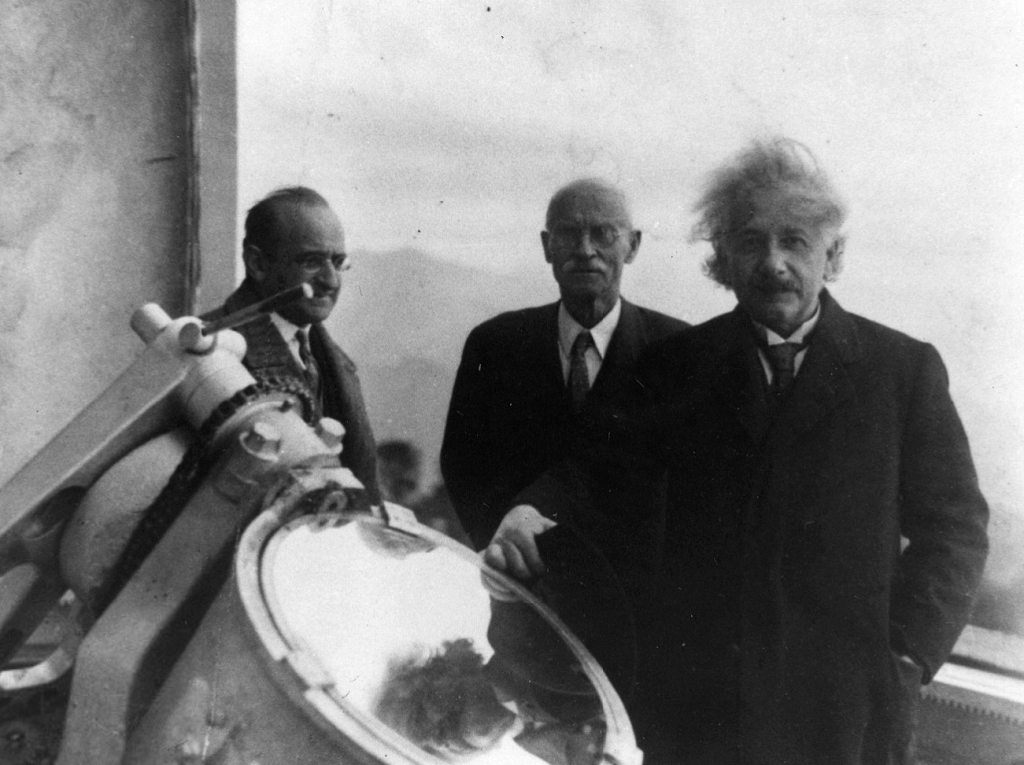
At the Mount Wilson Observatory with the Austrian mathematician Walther Mayer, left, and Charles St. John of the observatory staff. (The Caltech Archives)

Some of the most fascinating material involves Einsteinโ€™s attempts at a unified field theory, an ambitious effort to merge gravity and electromagnetism into one grand framework. He never quite got there, but his notebooks show a mind constantly working, refining, rethinkingโ€”sometimes over decades.

But the project also captures Einstein the person: the political thinker, the pacifist, the refugee, the cultural icon. His letters reflect a deep concern with justice and human rights, from anti-Semitism in Europe to segregation in the United States. He corresponded with Sigmund Freud about the roots of violence, with Mahatma Gandhi about nonviolent resistance, and with presidents and schoolchildren alike. The archive gives us access to the full spectrum of who he was, not just a scientist, but a citizen of the world.

The Einstein Papers Project home near Caltech in Pasadena (Photo: Erik Olsen)

One of the most exciting developments has been the digitization of the archive. Thanks to a collaboration with Princeton University Press, a large portion of the Collected Papers is now freely available online through the Digital Einstein Papers website. Students, teachers, historians, and science nerds around the globe can now browse through Einsteinโ€™s original documents, many of them translated and annotated by experts. The most recent release, Volume 17, spans June 1929 to November 1930, capturing Einsteinโ€™s life primarily in Berlin as he travels across Europe for scientific conferences and to accept honorary degrees. The volume ends just before his departure for the United States. Princeton has a nice story on the significance of that particular volume by EPP Editor Josh Eisenthal.

The California Institute of Technology, CalTech (Photo: Erik Olsen)

For scholars, the project is a goldmine. Itโ€™s not just about Einsteinโ€”itโ€™s about the entire intellectual climate of the 20th century. His collaborations and rivalries, his responses to global upheaval, and his reflections on science, faith, and ethics all provide insight into a remarkable era of discovery and change. His writings also show a playful, curious sideโ€”his love of music, his wit, and his habit of thinking in visual metaphors.

Caltechโ€™s role in all this goes beyond simple stewardship. The Einstein Papers Project is a reflection of the instituteโ€™s broader mission: to explore the frontiers of science and human understanding. For decades, Caltech has been a breeding ground for great minds. As of January 23, 2025, there are 80 Nobel laureates who have been affiliated with Caltech, making it the institution with the highest number of Nobelists per capita in America. By preserving and sharing Einsteinโ€™s legacy, Caltech helps keep alive a conversation about curiosity, responsibility, and the enduring power of ideas.

Clair Patterson: The little-known California scientist who may have saved millions of lives.

Clair Patterson. (Courtesy of the Archives, California Institute of Technology)

At Caltech, Clair Patterson’s relentless determination to understand the health impacts of atmospheric lead changed the world for the better.

It started by asking one of the biggest questions of them all: how old is the earth?

One might think that we’ve known the answer to this question for a long time, but the truth is that a definitive age for our planet was not established until 1953, and it happened right here in California.

Some of the earliest estimates of the earth’s age were derived from the Bible. Religious scholars centuries ago did some simple math, synthesizing a number of passages of Biblical scripture and calculated that the time to their present-day from the story of Genesis was around 6,000 years. That must have seemed like a really long time to people back then.

Of course, once science got involved, the estimated age changed dramatically, but even into the 18th century, people’s sense of geologic time was still on human scales, largely incapable of comprehending an age into the billions of years. In 1779, the Comte du Buffon tried to obtain a value for the age of Earth using an experiment: He created a small globe that resembled Earth in composition and then measured its rate of cooling. His conclusion: Earth was about 75,000 years old.

But in 1907, scientists developed the technique of radiometric dating, allowing scientists to compare the amount of uranium in rock with the amount of lead, the radioactive decay byproduct of uranium. If there was more lead in a rock, then there was less uranium, and thus the rock was determined to be older. Using this technique in 1913, British geologist Arthur Holmes put the Earthโ€™s age at about 1.6 billion years, and in 1947, he pushed the age to about 3.4 billion years. Not bad. That was the (mostly) accepted figure when geochemist Clair Patterson arrived at the California Institute of Technology in Pasadena from the University of Chicago in 1952. (Radiometric dating remains today the predominant way geologists measure the age of rocks.)

The Canyon Diablo meteorite was used by Clair Patterson to determine the age of the earth. Credit: Geoffrey Notkin
Canyon Diabloย meteorite. (Photo: Geoffrey Notkin)

By employing a much more precise methodology, and using samples from the Canyon Diablo meteorite, Patterson was able to place the creation of the solar system, and its planetary bodies such as the earth, at around 4.6 billion years. (It is assumed that the meteorite formed at the same time as the rest of the solar system, including Earth). Subsequent studies have confirmed this number and it remains the accepted age of our planet.

Patterson’s discovery and the techniques he developed to extract and measure lead isotopes led one Caltech colleague to call his efforts “one of the most remarkable achievements in the whole field of geochemistry.”

But Patterson was not done.

In the course of his work on lead isotopes, Patterson began to realize that lead was far more prevalent in the environment that people imagined. In the experiments he was doing at Caltech, lead was everywhere.

Image of Clair Patterson in his Caltech lab. Courtesy of the Archives, California Institute of Technology
Clair Patterson at CalTech (Courtesy of the Archives, California Institute of Technology)

โ€œThere was lead there that didnโ€™t belong there,โ€ Patterson recalled in a CalTech oral history. โ€œMore than there was supposed to be. Where did it come from?โ€

Patterson’s discovery was “one of the most remarkable achievements in the whole field of geochemistry.”

Barclay Kamb, California Institute of Technology

Patterson was flummoxed by the large amounts of environmental lead he was seeing in his experiments. It seemed to be everywhere: in the water, air and in people’s hair, skin and blood. Figuring out why this was the case took him the rest of his career.

He found it so hard to get reliable measurements for his earth’s age experiments that he built one of the first scientific “clean rooms”, now an indispensable part of many scientific disciplines, and a precursor to the ultra-clean semiconductor fabrication plants (so-called “fabs”) where microprocessor chips are made. In fact, at that time, Patterson’s lab was the cleanest laboratory in the world.

On the occasion of Clair Patterson receiving the Tyler Prize. The Tyler Prize is awarded for environmental achievement.
(Courtesy of the Archives, California Institute of Technology)

To better understand this puzzle, Patterson turned to the oceans, and what he found astonished him. He knew that if he compared the lead levels in shallow and deep water, he could determine how oceanic lead had changed over time. In his experiments, he discovered that in the ocean’s oldest columns of water, down deep, there was little lead, but towards the surface, where younger water circulates, lead values spiked by 20 times.

Then, going back millions of years, he analyzed microscopic plant and animal life from deep sediments and discovered that they contained 1/10 to 1/100th the amount of lead found at the time around the globe.

Smog in Los Angeles in 1970. (Courtesy of UCLA Library Special Collections – Los Angeles Times Photographic Archive)

He decided to look in places far from industrial centers, ice caves in Greenland and Antarctica, where he would be able to see clearly how much lead was in the environment many years ago. He was able to show a dramatic increase in environmental lead beginning with the start of lead smelting in Greek and Roman times. Historians long ago documented the vast amounts of lead that were mined in Rome. Lead pipes connected Roman homes, filled up bathtubs and fountains and carried water from town to town. Many Romans knew of lead’s dangers, but little was done. Rome, we all know, collapsed. Jean David C. Boulakia, writing in the American Journal of Archaeology, said: โ€œThe uses of lead were so extensive that lead poisoning, plumbism, has sometimes been given as one of the causes of the degeneracy of Roman citizens. Perhaps, after contributing to the rise of the Empire, lead helped to precipitate its fall.โ€

In his Greenland work, Patterson’s data showed a โ€œ200- or 300-fold increaseโ€ in lead from the 1700s to the present day; and, most astonishing, the largest concentrations occurred only in the last three decades. Were we, like the Romans, perhaps on the brink of an environmental calamity that could hasten the end of our civilization? Not if Patterson could help it.

Exterior shot of the California Institute of Technology. Credit: Erik Olsen
California Institute of Technology. Credit: Erik Olsen

That may be far too grandiose and speculative, but there was no doubting that there was so much more lead in the modern world, and it seemed to have appeared only recently. But why? And how?

In a Eureka moment, Patterson realized that the time frame of atmospheric lead’s rise he was seeing in his samples seemed to correlate perfectly with the advent of the automobile, and, more specifically, with the advent of leaded gasoline.

CALIFORNIA CURATED ON ETSY

Purchase stunning art prints of iconic California scenes.
Check out our Etsy store.

Leaded gas became a thing in the 1920s. Previously, car engines were plagued by a loud knocking sound made when pockets of air and fuel prematurely exploded inside an internal combustion engine. The effect also dramatically reduced the engine’s efficiency. Automobile companies, seeking to get rid of the noise, discovered that by adding tetraethyl lead to gasoline, they could stop the knocking sound, and so-called Ethyl gasoline was born. “Fill her up with Ethyl,” people used to say when pulling up to the pump.

Despite what the Romans may have known about lead, it was still an immensely popular material. It was widely used in plumbing well into the 20th century as well as in paints and various industrial products. But there was little action taken to remove lead from our daily lives. The lead in a pipe or wall paint is one thing (hey, don’t eat it!), but pervasive lead in our air and water is something different.

After World War I, every household wanted a car and the auto sales began to explode. Cars were perhaps the most practical invention of the early 20th century. They changed everything: roads, cities, work-life and travel. And no one wanted their cars to make that infernal racket. So the lead additive industry boomed, too. By the 1960s, leaded gasoline accounted for 90% of all fuel sold worldwide.

But there signs even then that something was wrong with lead.

A New York Times story going back to 1924 documented how one man was killed and another driven insane by inhaling gases released in the production of the tetraethyl lead at the Bayway plant of the Standard Oil Company at Elizabeth, N.J. Many more cases of lead poisoning were documented in ensuing years, with studies showing that it not only leads to physical illness but also to serious mental problems and lower IQs. No one, however, was drawing the connection between all the lead being pumped into the air by automobiles and the potential health impacts. Patterson saw the connection.

Ford Model T. Credit: Harry Shipler

When Patterson published his findings in 1963, he was met with both applause and derision. The billion-dollar oil and gas industry fought his ideas vigorously, trying to impugn his methods and his character. They even tried to pay him off to study something else. But it soon became apparent that Patterson was right. Patterson and other health officials realized that If nothing was done, the result could be a global health crisis that could end up causing millions of human deaths. Perhaps the decline of civilization itself.

Patterson was called before Congress to testify on his findings, and while his arguments made little traction, they caught the attention of the nascent environmental movement in America, which had largely come into being as a result of Rachel Carson’s explosive 1962 book Silent Spring, which documented the decline in bird and other wildlife as a result of the spraying of DDT for mosquito control. People were now alert to poisons in the environment, and they’d come to realize that some of the industrial giants that were the foundation of our economy were also having serious impacts on the planet’s health.

Downtown Los Angeles today. (Erik Olsen)

Patterson was unrelenting in making his case, but he still faced serious opposition from the Ethyl companies and from Detroit. The government took half-hearted measures to address the problem. The EPA suggested reducing lead in gasoline step by step, to 60 to 65 percent by 1977. This enraged industry, but also Patterson, who felt that wasn’t nearly enough. Industry sued and the case to the courts. Meanwhile, Patterson continued his research, collecting samples around Yosemite, which showed definitely that the large rise in atmospheric lead was new and it was coming from the cities (in this case, nearby San Francisco and Los Angeles). He analyzed human remains from Egyptian mummies and Peruvian graves and found they contained far less lead than modern bones, nearly 600 times less.

Years would pass with more hearings, more experiments, and the question of whether the EPA should regulate leaded gas more heavily went to U.S. Court of Appeals. The EPA won, 5-4. โ€œManโ€™s ability to alter his environment,โ€ the court ruled, โ€œhas developed far more rapidly than his ability to foresee with certainty the effects of his alterations.โ€

The Clean Air Act of 1970 initiated the development of national air-quality standards, including emission controls on cars.

Drone shot of rush-hour traffic over Los Angeles. Credit: Erik Olsen
Drone over Los Angeles. (Credit: Erik Olsen)

In 1976, the EPA’s new rules went into effect and the results were almost immediate: environmental lead plummeted. The numbers continued to plummet as lead was further banned as a gasoline additive and from other products like canned seafood (lead was used as a sealant). Amazingly, there was still tremendous denial within American industry.

Although the use of leaded gas declined dramatically beginning with the Clear Air Act, it wasn’t until 1986, when the EPA called for a near ban of leaded gasoline that we seemed to finally be close to ridding ourselves of the scourge of atmospheric lead. With the amendment of the Clean Air Act four years later, it became unlawful for leaded gasoline to be sold at all at service stations beginning December 31, 1995. Patterson died just three weeks earlier at the age of 73.

Clair Patterson is a name that few people know today, yet his work not only changed our understanding of the earth itself, but also likely saved millions of lives. When Patterson was finally accepted into the National Academy of Science in 1987, Barclay Kamb, a Caltech colleague, summed his career up thusly: “His thinking and imagination are so far ahead of the times that he has often gone misunderstood and unappreciated for years, until his colleagues finally caught up and realized he was right.”

Clair Patterson is one of the most unsung of the great 20th-century scientists, and his name deserves to be better known.


To learn more about Clair Patterson, read the fascinating oral history from Caltech Archives.