When Muybridge Made Motion Visible in Palo Alto

Eadweard Muybridge’s ‘Animal Locomotion’ was the first scientific study to use photography. Now, more than 130 years later, Muybridge’s work is seen as both an innovation in photography and the science of movement.
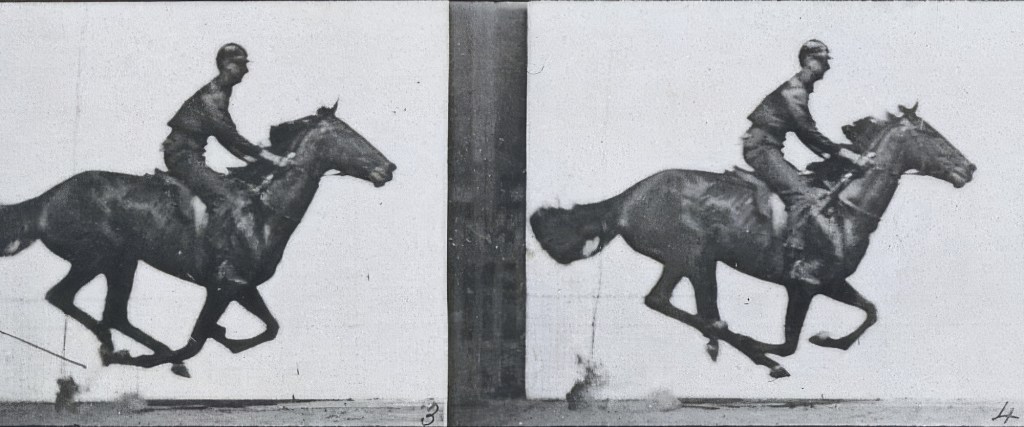
Eadweard Muybridge, detail of ‘Bouquet’, Galloping, 1887. (Source: Rijksmuseum, Amsterdam, Netherlands)

I love digging into California’s technological past. Long before Silicon Valley became the engine we think of today, the state was already a proving ground for industrial innovation. Oil, agriculture, mining, and, perhaps not surprisingly, but significantly for us here, cinema. But I’m not talking about the 1930s or 1950s, not even the 20th century. The technological roots of the movie industry in California go back much further, to a dusty track in Palo Alto.

It was the summer of 1878, and a horse was caught doing something humans had argued over for centuries. For a fraction of a second, all four of its hooves left the ground at once. Not in the way painters had long imagined, legs flung forward and back in an airborne sprawl, but gathered neatly beneath the body. That brief, invisible instant, preserved by a camera, helped give birth to cinema and changed how scientists would come to understand motion in living things.

Let me explain. 
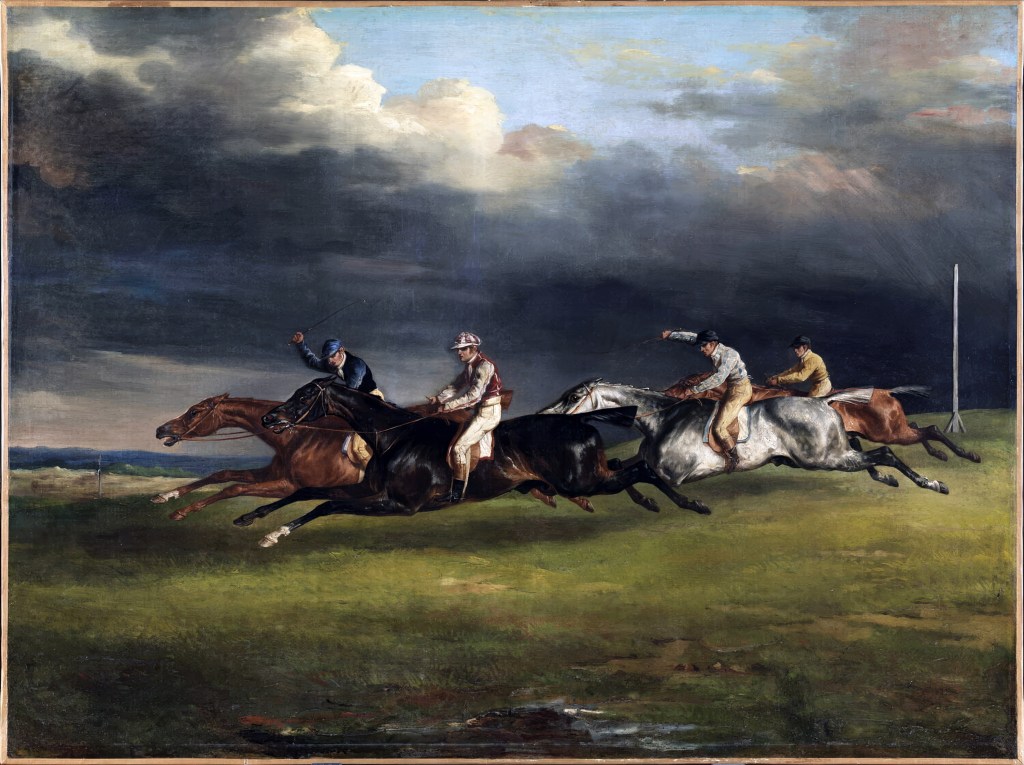
This is how painters used to depict horses at full gallop, with legs spread out above the ground. Derby at Epsom by Théodore Géricault, 1821, oil on canvas, 92 x 116 cm (Musée du Louvre)

The horse was a Thoroughbred mare named Sallie Gardner. The man who wanted the answer was Leland Stanford, a railroad magnate and former California governor. He would, of course, go on to lend his name to one of the great educational institutions in history. But before that, Stanford was fixated on a practical problem. As a serious horse breeder, racer, and betting guy, he wanted to know whether a galloping horse ever had all four hooves off the ground at once. It was a question with real implications for training, speed, injury, and breeding at a time when elite horse racing was big business. 

Artists had painted images of horses at full gallop for centuries, and they often had the horse fully splayed out above the ground. You’ve probably seen those paintings in wealthy people’s homes or at your local country club. Or maybe not. Anyway, it turns out that the gallop is too fast, and beyond the capabilities of human. Stanford wanted the answer, and Muybridge accepted his offer to find out using pioneering new technology. 
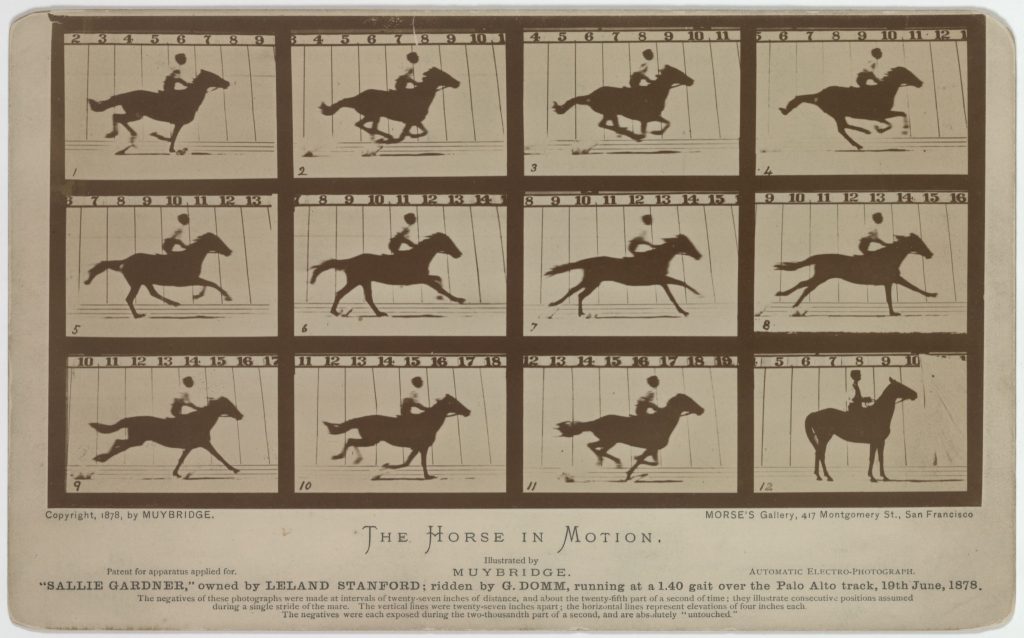
Eadweard Muybridge, The Horse in Motion (“Sallie Gardner,” 1878. (Source: Library of Congress, Washington, D.C.)

Muybridge had been into cameras for a long time. He first drew attention in 1868 for his large historical photographs of Yosemite Valley, California, well before Ansel Adams, who did not begin photographing Yosemite seriously until the 1920s. 

In the case of horse motion, Muybridge’s solution was not a single camera; it was more of an elaborate system. At Stanford’s Palo Alto Stock Farm, which would become Stanford University, he set up a line of cameras along a track, each one triggered by a trip wire as Sallie Gardner ran past. The result was not a blur, but a sequence of sharp, discrete instants, time broken into measurable slices. Muybridge’s images revealed something unexpected: The horse does leave the ground, but not when its legs are fully stretched. The airborne moment comes when the legs are tucked beneath the body, a moment that the human eye hadn’t seen before.

What Muybridge actually demonstrated was that motion itself could be turned into evidence. The camera was no longer just a tool for portraits or landscapes. It became a machine for understanding reality.
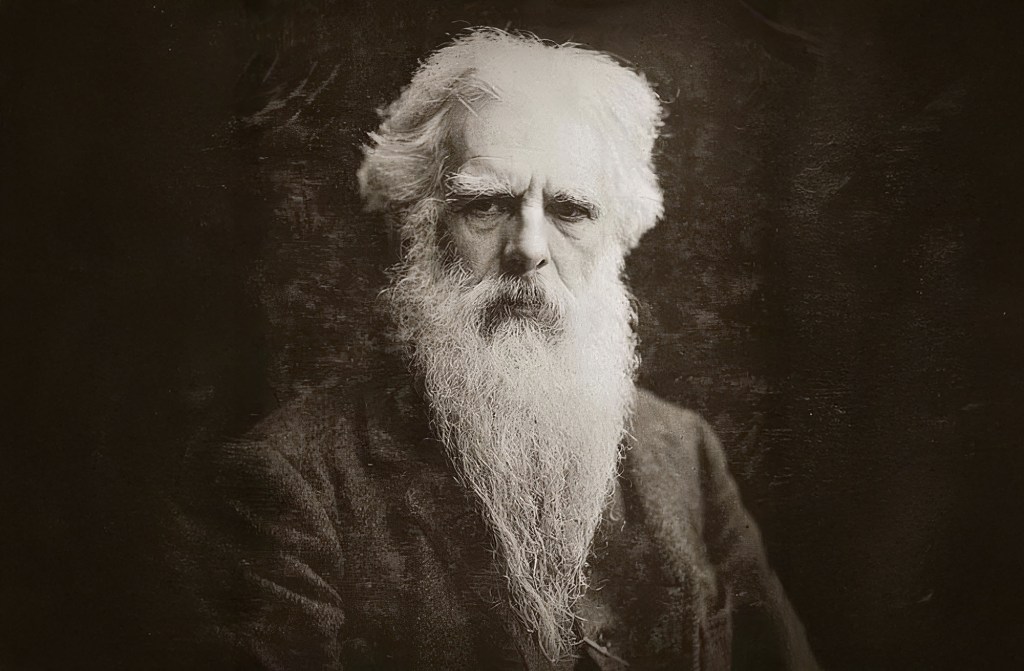
Muybridge in 1899 (Wikipedia)

I guess you could say in a way that Sallie Gardner really was something like the world’s first movie star, though they didn’t call it that. The photographs did show motion on screen, per se, but they allowed you to see movement in stages. Within a year, Muybridge developed the zoopraxiscope, a projection device that animated sequences of motion using images painted or printed on rotating glass discs, often derived from his photographs. 

It wasn’t a modern movie projector, and it didn’t project photographic film in the way later cinema would. But it was among the first devices to project moving images to public audiences, establishing the visual logic that cinema would later put to use. It is believed that the device was one of the primary inspirations for Thomas Edison and William Kennedy Dickson‘s Kinetoscope, the first commercial film exhibition system.
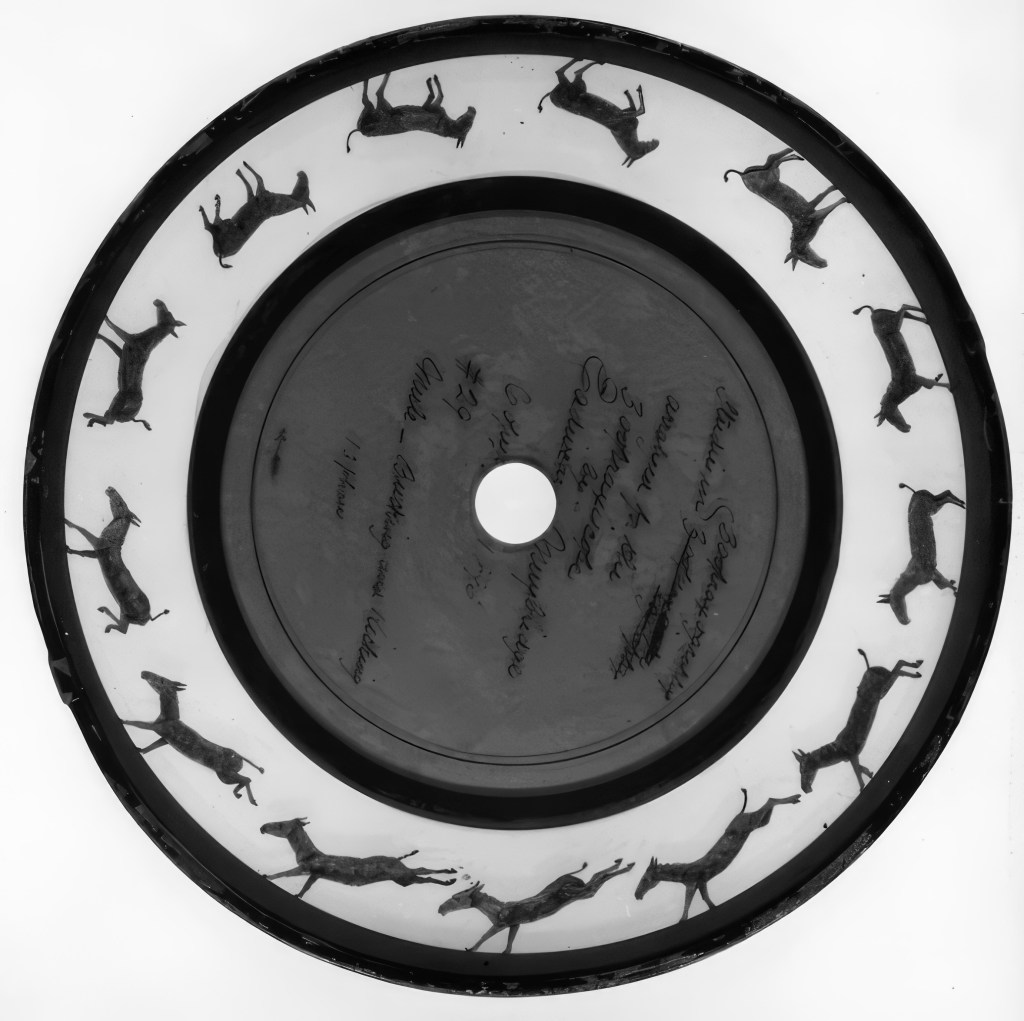
The zoopraxiscope disc, circa 1893 by Eadweard Muybridge, considered an important predecessor of the movie projector.

So, key to the effort was not only that Muybridge kind of overturned centuries of artistic convention, but he also, in a way, laid out the basic grammar of cinema: break time into frames, control the shutter, sequence the images, then reassemble them into motion. Hollywood would later industrialize all of this in Southern California, though the first experiment took place in Northern California.

Muybridge’s technological advances mattered as much as his images (he would go on to do many other animals including humans). He pushed shutter speeds and synchronized multiple cameras. These were a few of the problems early filmmakers confronted decades later. Long before movie studios, California was already solving the physics of film.
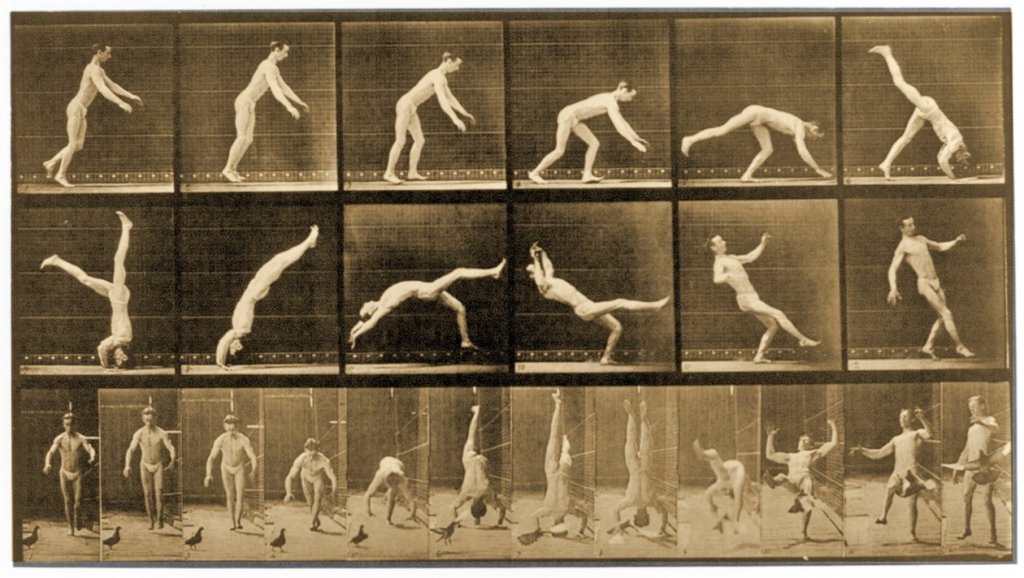
Plate from ‘Animal Locomotion’ Series, 1887 (by Eadweard Muybridge)

There was also a scientific payoff. Muybridge’s sequences transformed the study of animal locomotion. For the first time, biologists and physiologists could see how bodies actually moved, not how they appeared to move. A gait could be compared with another, giving insight into biomechanics. 

Scientists, particularly those in Europe took notice. Physiologists such as Étienne-Jules Marey built on Muybridge’s work, dropping poor cats upside down and making motion photography into a formal tool for studying living systems. It was a way for biology to see life in a new way.
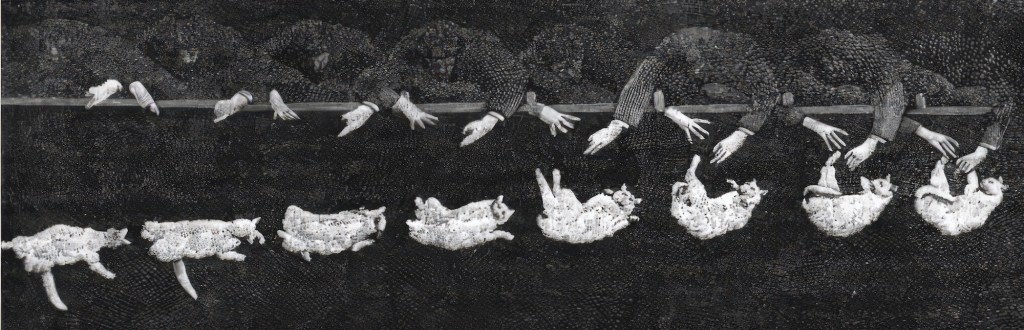
Falling Cat by Étienne-Jules Marey

Of course, today, moving imagery is essential to understanding how bodies move because motion is often too fast and complex for the naked eye. High-speed video and motion capture are used to analyze animal locomotion, study human gait and injury, improve athletic performance, and reveal behaviors in wildlife that would otherwise be invisible. Several institutions in California have been harnessing this power for years. Caltech researchers use high-speed video to fundamentally revise how scientists understand insect flight. Stanford’s Neuromuscular Biomechanics Lab identifies abnormal walking patterns in children, helping, for example, kids with cerebral palsy. At Scripps Institution of Oceanographyscientists found that fish use nearly twice as much energy hovering as they do resting, contradicting previous assumptions.

Hollywood would later perfect illusion, narrative, glamour, let alone bring digital technology to bear to give us aliens and dinosaurs, but it started in Palo Alto with a horse named Sallie Gardner, and yes, a rich guy and a curious, talented inventor. Muybridge went on to produce over 100,000 images of animals and humans in motion between 1884 and 1886.

There is a plaque that marks the site of Muybridge’s experiments. It’s California Historical Landmark No. 834, located at Stanford University on Campus Drive West, near the golf driving range. You might walk past it without knowing. But you could argue that this is one of those nondescript places where movie-making began. And of course, it happened here in California.  
The Unsung California Labs That Powered the Digital Revolution

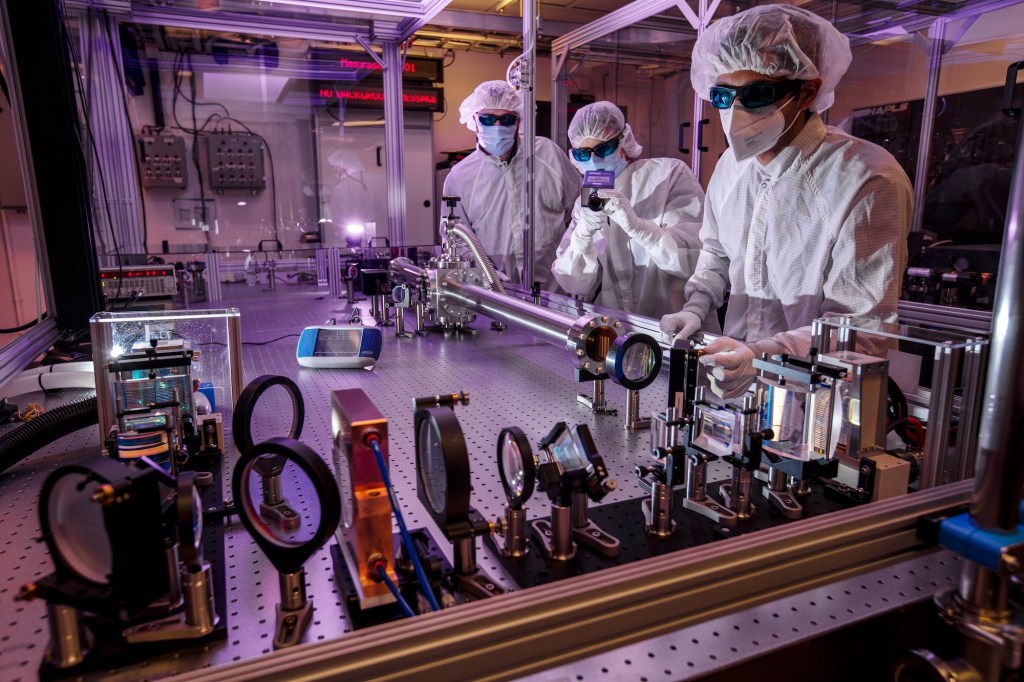
Researchers at Lawrence Livermore National Laboratory working with the Big Aperture Thulium (BAT) laser system, part of the laser and plasma research that laid the groundwork for generating the extreme ultraviolet light at the heart of today’s most advanced chipmaking machines. (Photo: Jason Laurea/LLNL)

When I started this Website, my hope was to share California’s astonishing range of landscapes, laboratories, and ideas. This state is overflowing with scientific discovery and natural marvels, and I want readers to understand, and enjoy, how unusually fertile this state is for discovery. If you’re not curious about the world, then this Website is definitely not for you. If you are, then I hope you get something out of it when you step outside and look around. 

I spend a lot of time in the California mountains and at sea, and I am endlessly amazed by the natural world at our doorstep. I am also fascinated by California’s industrial past, the way mining, oil, and agriculture built its wealth, and how it later became a cradle for the technologies and industries now driving human society forward. Of course, some people see technologies like gene editing and AI as existential risks. I’m an optimist. I see tools that, while potentially dangerous, used wisely, expand what is possible.

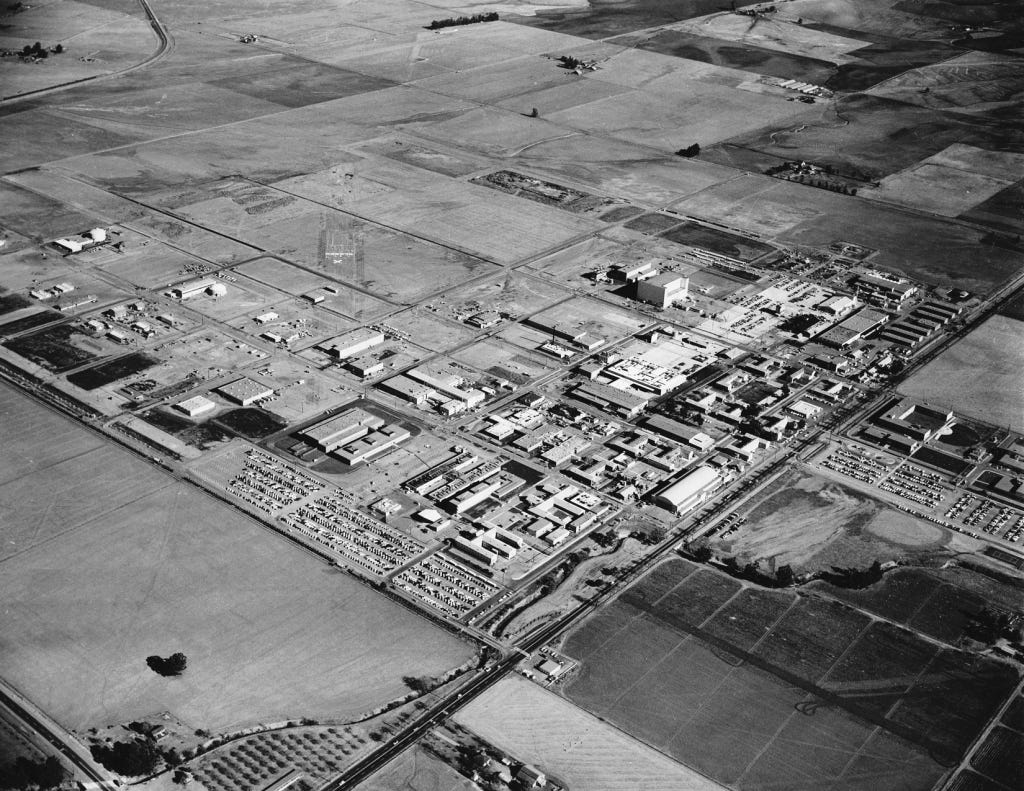
An aerial view of Lawrence Livermore National Laboratory in 1960, when the Cold War spurred rapid expansion of America’s nuclear and scientific research campus east of San Francisco Bay. (Photo: LLNL Public Domain)

Today’s story turns toward technology, and one breakthrough in particular that has reshaped the modern world. It is not just in the phone in your pocket, but in the computers that train artificial intelligence, in advanced manufacturing, and in the systems that keep the entire digital economy running. The technology is extreme ultraviolet lithography (EUV). And one of the most important points I want to leave you with is that the origins of EUV are not found in Silicon Valley startups or corporate boardrooms but in California’s national laboratories, where government-funded science made the impossible possible.

This article is not a political argument, though it comes at a time when government funding is often questioned or dismissed. My purpose is to underscore how much California’s national labs have accomplished and to affirm their value.

This story begins in the late 1980s and 1990s, when it became clear that if Moore’s Law was going to hold, chipmakers would need shorter and shorter wavelengths of light to keep shrinking transistors. Extreme ultraviolet light, or EUV, sits way beyond the visible spectrum, at a wavelength far shorter than ordinary ultraviolet lamps. That short wavelength makes it possible to draw patterns on silicon at the tiniest scales…and I mean REALLY tiny.

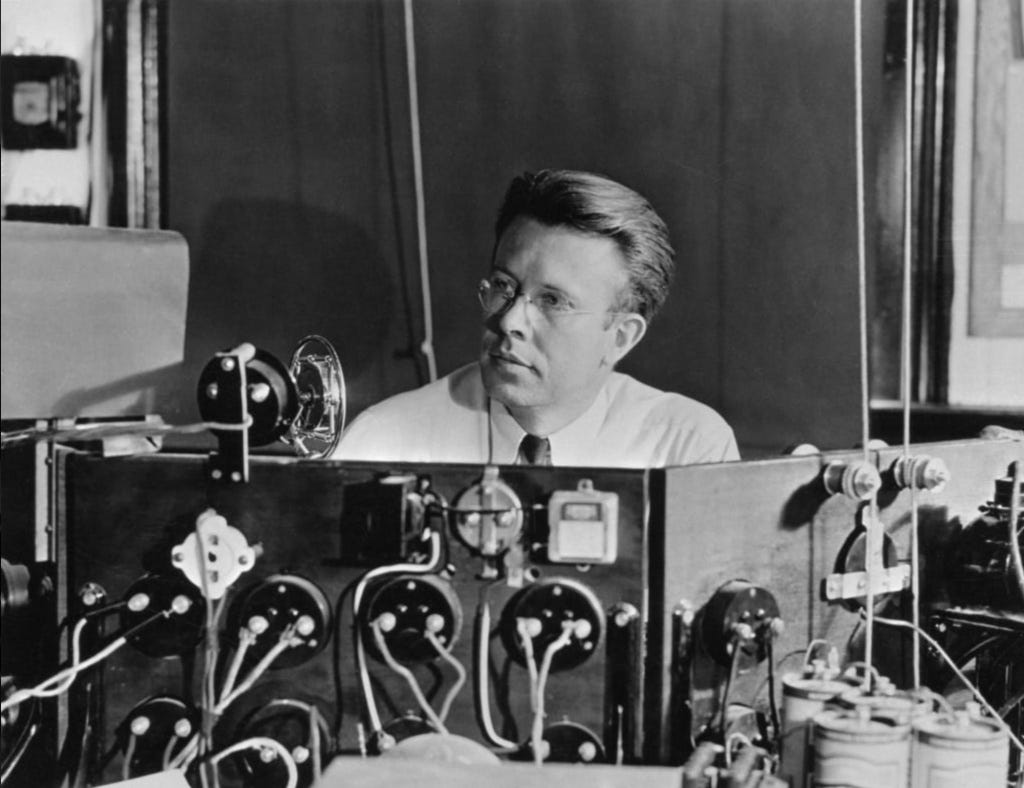
Ernest Orlando Lawrence at the controls of the 37-inch cyclotron in 1938. A Nobel Prize–winning physicist and co-founder of Lawrence Livermore National Laboratory, Lawrence’s legacy in nuclear science and high-energy research paved the way for the laboratory’s later breakthroughs in lasers and plasma physics — work that ultimately fed into the extreme ultraviolet light sources now powering the world’s most advanced chipmaking machines. (LLNL Public Domain)

At Lawrence Berkeley National Laboratory, researchers with expertise in lasers and plasmas were tasked with figuring out how to generate a powerful, reliable source of extreme ultraviolet light for chipmaking. Their solution was to fire high-energy laser pulses at microscopic droplets of tin, creating a superheated plasma that emits at just the right (tiny) wavelength for etching circuits onto silicon.

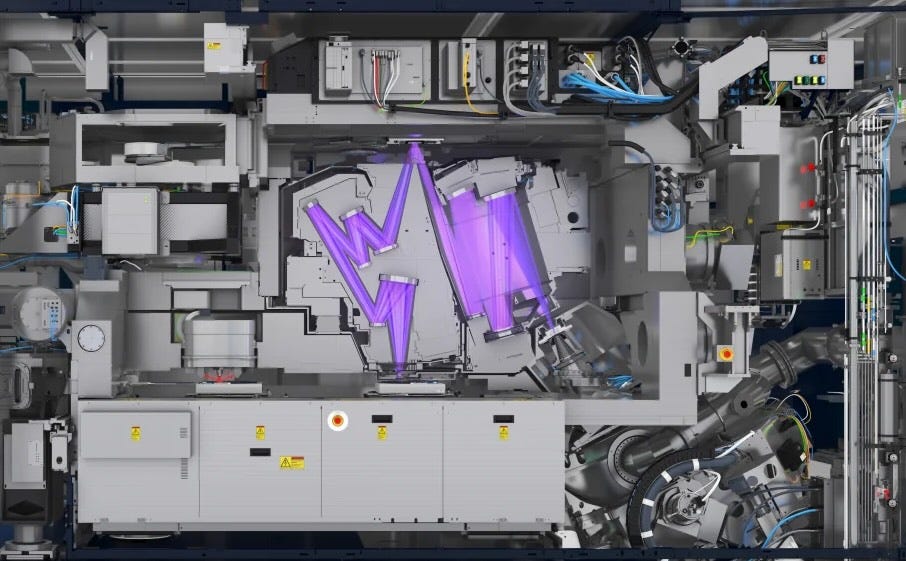
The movement of light on mirrors in an ASML EUV lithography machine. More on it below.

Generating the light was only the first step. To turn it into a working lithography system required other national labs to solve equally daunting problems. Scientists at Berkeley’s Center for X Ray Optics developed multilayer mirrors that could reflect the right slice of light with surprising efficiency. A branch of Sandia National Laboratories located in Livermore, California, worked on the pieces that translate light into patterns. So, in all: Livermore built and tested exposure systems, Berkeley measured and perfected optics and materials, and Sandia helped prove that the whole chain could run as a single machine.

Each EUV lithography machine is about the size of a bus, costs more than $150 million, and shipping one requires 40 freight containers, three cargo planes, and 20 trucks. (Photo: ASML)

It matters that this happened in public laboratories. The labs had the patient funding and the unusual mix of skills to attempt something that might not pay off for many years. The Department of Energy supported the facilities and the people. DARPA helped connect the labs with industry partners and kept the effort moving when it was still risky. There was no guarantee that the plasma would be bright enough, that the mirrors would reflect cleanly, or that the resists (the light-sensitive materials coated onto silicon wafers) would behave. The national labs could take that on because they are designed to tackle long horizon problems that industry would otherwise avoid.

Only later did private industry scale the laboratory breakthroughs into the giant tools that now anchor modern chip factories. The Dutch company ASML became the central player, building the scanners that move wafers with incredible precision under the fragile EUV light. Those systems are now capable of etching transistor features as small as 5 nanometers…5 billionths of a meter. You really can’t even use the “smaller than a human hair” comparison here since human hair variation is so large at this scale as to render that comparison kind of useless. However, many people still do.

The ASML machines are marvels of tech and engineering. Truly amazing feats human design. And they integrate subsystems from all over the world: Zeiss in Germany manufactures the mirrors, polished to near-atomic perfection, while San Diego’s Cymer (now part of ASML) supplies the laser-driven plasma light sources. The technology is so complex that a single scanner involves hundreds of thousands of components and takes months to assemble.

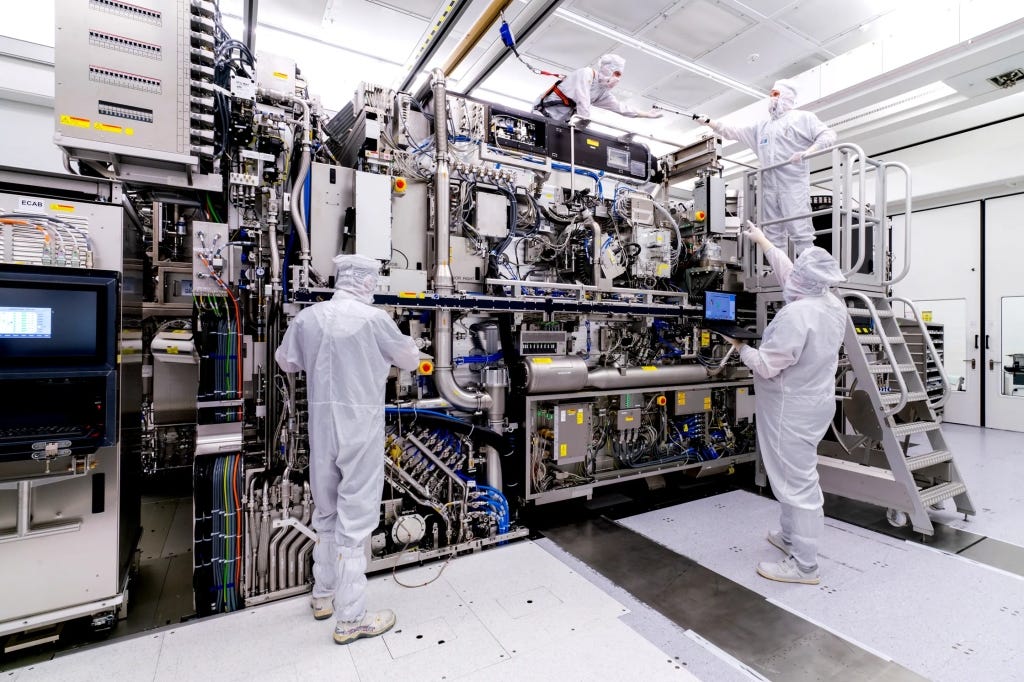
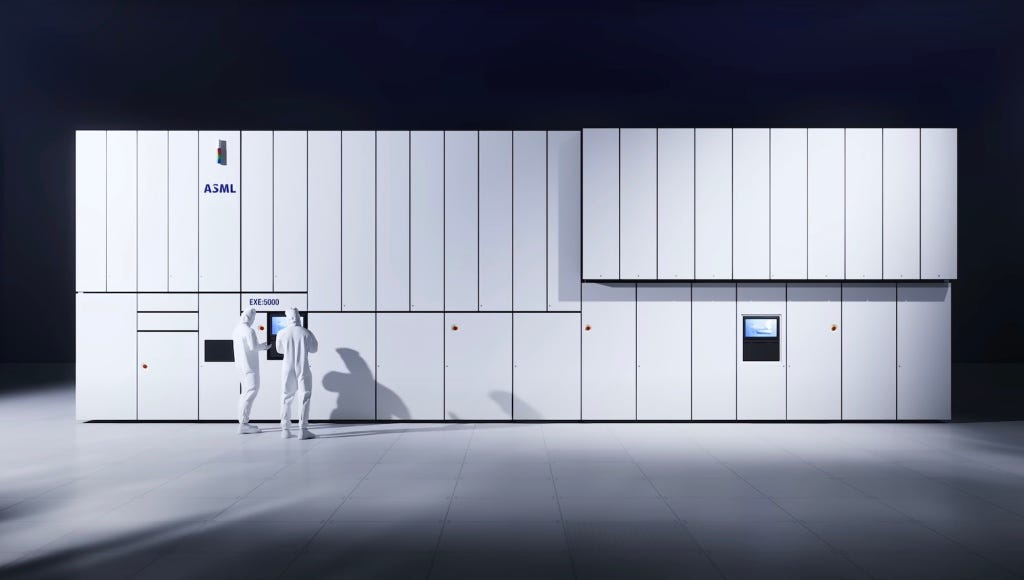
ASML’s EXE:5000 High-NA EUV lithography machine — a room-sized tool that etches the tiniest features on the world’s most advanced computer chips. (ASML)

It was TSMC and Samsung that then poured billions of dollars into making these tools reliable at scale, building the factories that now turn EUV light into the chips powering AI and smartphones and countless other devices. Trillions of dollars are at stake. Some say the fate of humanity lies in balance should Artificial General Intelligence eventually emerge (again, I don’t say that, but some do). All of this grew from the ingenuity and perseverance, along with the public funding, that sustained these California labs.

It’s disappointing that many of the companies profiting most from these technological breakthroughs are not based in the United States, even though the core science was proven here in California. That is fodder for a much longer essay, and perhaps even for a broader conversation about national industrial policy, something the CHIPS Act is only beginning to deal with.

However, if you look closely at the architecture of those monster machines, you can still see the fingerprints of the California work. A tin plasma for the light. Vacuum chambers that keep the beam alive. Reflective optics that never existed at this level before EUV research made them possible.

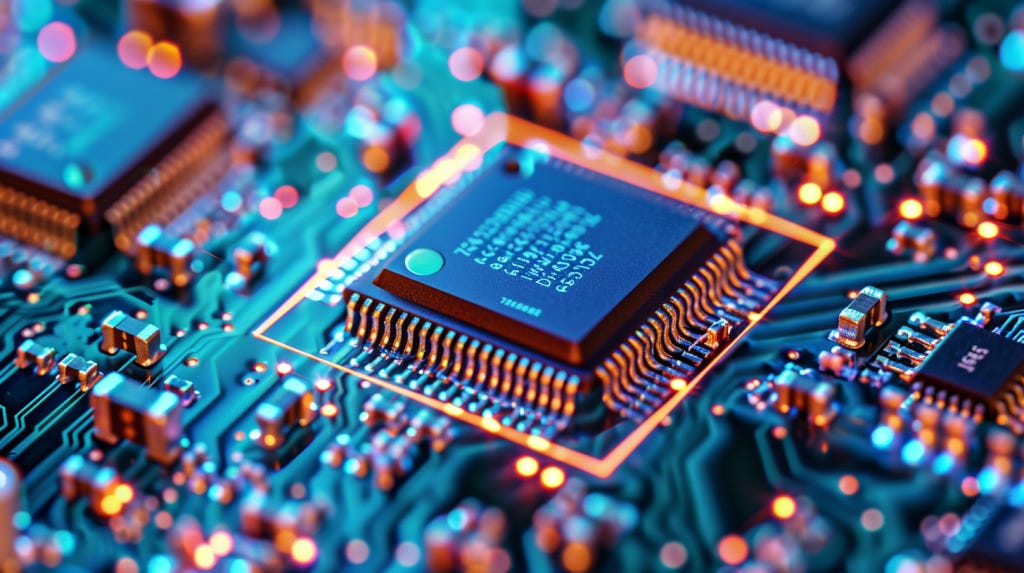
A photorealistic rendering of an advanced microprocessor, etched in silicon with extreme ultraviolet light — the kind of breakthrough technology pioneered in U.S. national labs, but now fabricated almost entirely in Taiwan, where the future of digital society is being made.

We often celebrate garages, founders, and the venture playbook. Those are real parts of the California story. This is a different part, just as important. The laboratories in Livermore, Berkeley, and Sandia are public assets. They exist because voters and policymakers chose to fund places where hard problems can be worked on for as long as it takes. The payoff can feel distant at first, then suddenly it is in your pocket. Like EUV. Years of quiet experiments on lasers, mirrors, and materials became the hidden machinery of the digital age.