New Research Sheds Light on the Saber-Toothed Cats of California, Fierce Predators of the Pleistocene

Charles R. Knight Wikimedia

Around 15,000 to 20,000 years ago, the landscape near present-day Los Angeles was a diverse mix of environments shaped by the end of the Ice Age. Cooler and wetter than today, it was dominated by savannah-like grasslands, wetlands, and patches of dense forests filled with towering oaks and pines. Prehistoric rivers and lakes dotted the landscape, nourishing a rich ecosystem teeming with life. Massive herbivores like mammoths, giant ground sloths, bison, and ancient camels roamed these plains, foraging on abundant grasses and shrubs.

Among these creatures of the Pleistocene Epoch, predators like saber-toothed cats (Smilodon fatalis) ruled, using the cover of forests and brush to ambush their prey. These large cats thrived alongside other carnivores like dire wolves and American lions, each species carving out its niche. However, the landscape was in flux—warming temperatures gradually dried out the environment, increasing the frequency of wildfires and altering the balance of flora and fauna. As human populations expanded and hunted large herbivores, the delicate ecosystem began to unravel, setting the stage for the extinction of many of the region’s iconic megafauna (more on this later).

CALIFORNIA CURATED ON ETSY

Purchase stunning art prints of iconic California scenes.
Check out our Etsy store.

Saber-toothed cats are some of the most iconic prehistoric predators to have roamed California. Known for their distinctive long, blade-like canine teeth, these powerful carnivores thrived during a time when much of North America was covered in ice and the landscape teemed with large herbivores. Fossils of these magnificent creatures have been found across the state, with an impressive concentration in the famous La Brea Tar Pits in Los Angeles, revealing a vast amount of details about their biology, natural history, and the world they lived in. In fact, thousands of skeletons are preserved in the Rancho La Brea Tar Pits, making it the largest and most significant site for studying saber-tooth cats and other Pleistocene-era animals.

Prehistoric California landscape

But first, let’s clear up a few things. The terms “saber-toothed tiger” and “saber-toothed cat” are often used interchangeably, but they refer to different concepts, and the distinction is important for scientific accuracy. “Saber-toothed tiger” is a misnomer because these prehistoric animals were not true tigers, nor were they closely related to them. Instead, they belonged to a now-extinct subfamily of felines called Machairodontinae, with the most famous genus being Smilodon. Modern tigers, on the other hand, belong to the Panthera genus and are part of a completely different evolutionary line. The term “saber-toothed cat” is more accurate because it reflects the broader diversity of species in this group, not just a single “tiger-like” animal. This distinction is crucial because it prevents confusion in understanding the evolutionary history of felines and avoids spreading inaccuracies in the scientific and popular understanding of extinct species.

A great deal of modern research has been conducted on the saber-tooth cat, ranging from genetic studies to isotopic analysis, fossil reconstruction, and insights into their ecological role during the Pleistocene Epoch. In fact, in 2020 researchers from the University of Copenhagen mapped the entire nuclear genome of a sabre-toothed cat known as Homotherium. The genetic study revealed new insights about a socially intelligent pack animal, that specialized in endurance-based hunting over long distances.

The cover of the 1908 October issue of Sunset magazine

When you look at the fossilized skeletons of saber-toothed cats on display at the La Brea Tar Pits, it’s easy to imagine these powerful predators silently stalking their prey through the ancient landscapes, ready to spring with sharp, curved teeth bared and bloody from an earlier meal. Their upper canine teeth were long, sharp, and curved like sabers, often reaching lengths of up to 7 inches (18 cm). Unlike the teeth of modern big cats, which are built for biting and holding prey, the saber teeth were relatively fragile and not ideal for crushing bones. This suggests that these animals had to be precise in how they used their teeth to kill.

Saber toothed cat skull at La Brea Tar Pits (Erik Olsen)

Rather than relying on brute force to clamp down on their prey, saber-toothed cats likely used their teeth to deliver deep, slashing wounds to vulnerable areas, such as the neck, throat, or belly of large herbivores. Some scientists believe that after overpowering their prey with their strong forelimbs, they would deliver a quick, lethal bite, severing major blood vessels or the windpipe. The killing technique of saber-toothed cats was likely specialized for large, slow-moving prey like bison, mammoths, or camels.

Saber-toothed cat (Smilodon fatalis). (Indiana State Museum)

This precision style of hunting contrasts with how modern big cats, like lions, use their teeth to bite and hold, crushing the windpipe or suffocating their prey. The saber-toothed cat’s teeth were well-adapted to slicing, but not to the prolonged grip needed for suffocation.

A recent study on saber-toothed cats from paleontologist Jack Tseng of the University of California, Berkeley, reveals that juvenile cats retained their baby teeth alongside their developing adult fangs, likely as a stabilizing mechanism. This double-fanged stage, lasting up to 30 months, helped protect the growing sabers from breaking as young cats learned to hunt. Through computer simulations and mechanical tests, researchers demonstrated that the baby tooth acted as a buttress, reducing the risk of saber damage during this critical learning phase. This finding offers new insights into the hunting development of these prehistoric predators.

The cranium of a Smilodon with fully-erupted sabers (Jack Tseng)

Modern research is uncovering potential new insights into the saber-tooth cat’s behavior, including possible hunting techniques, social structures, and interactions with other species. Paleontologists have found fossilized throat bones in Smilodon at the La Brea Tar Pits similar to those in modern big cats like lions and tigers, suggesting that these prehistoric predators may have also roared with powerful vocalizations.

One of the most fascinating debates surrounding Smilodon is whether they hunted alone or in groups. Further fossil evidence from the La Brea Tar Pits suggests that these cats may have lived and hunted in social groups, similar to modern lions. Many Smilodon skeletons show evidence of healed injuries, which has led paleontologists to believe that they may have cared for each other in social settings, allowing injured individuals to recover rather than being abandoned. This level of social cooperation would have been an important adaptation in a world full of dangerous megafauna, enabling them to take down larger prey.

Prehistoric scene with saber-toothed cat.

The extinction of saber-toothed cats, specifically Smilodon, in California has been a subject of extensive research. A study from 2023 published in the prestigious journal Science shows just how quickly the largest animals disappeared from the La Brea fossil record. Scientists from the La Brea Tar Pits, including a University of Oregon professor and postdoctoral researcher, employed a computer model to explore how factors like wildfires, climate change, species loss, and human presence interacted. This revealed a far more intricate explanation for the extinctions than earlier theories, which often pinned the blame on a single factor such as human overhunting or climate shifts. According to the study, humans likely played a pivotal role by driving herbivores to extinction, which in turn led to an overgrowth of vegetation, creating fuel for wildfires. At the same time, the climate was becoming drier, compounding the problem, and leaving carnivores without sufficient prey to survive.

Sequence of ecological events as recorded at Rancho La Brea, California. (Natural History Museum of Los Angeles County)

Although most of the existing fossils came from the La Brea Tar Pits in Los Angeles, Smilodon was widely distributed across North America, from coast to coast, reaching as far north as Idaho and Nebraska and extending south into South America. It is most famously associated with California and Florida. The oldest known fossil of Smilodon dates back approximately 500,000 years, while the youngest, discovered during bank construction in Nashville, Tennessee, is just 9,400 years old.

Saber-toothed cat fossil skeleton at La Brea Tar Pits (Erik Olsen)

The La Brea tar pits are a unique and incredibly fruitful outdoor laboratory for understanding animals from 50,000 years of the Pleistocene and the environment in which they lived. Paleontologists have unearthed thousands of Smilodon bones, providing a wealth of information about their anatomy and behavior. The bones show a high rate of injuries, including broken bones and bite marks, which supports the idea that these cats faced significant risks when hunting. In addition to Los Angeles, saber-toothed cat fossils have been found in various parts of California, including San Diego and along the Central Valley, though the La Brea Tar Pits remains the most prolific source.

Imagine that. One of the greatest fossil sites in the world lies amidst the skyscrapers and traffic-clogged streets of Los Angeles. It’s kind of mind-boggling.

Despite their extinction, the legacy of saber-toothed cats endures in the fossil record and in our imagination. Because of it’s ability to capture public interest, ane because the fossil record is so abundant and varied, Smilodon fatalis is now the state fossil of California, symbolizing the state’s rich prehistoric past.

Squid Pro Quo: How the California Market Squid Gives Back to Nature and Economy

California Market Squid. The animal’s skin is covered with thousands of tiny chromatophores that change color and can dramatically transform the squid’s appearance.

The ocean’s depths are filled with mysterious and fascinating creatures, but few have made quite the splash in both nature and culture as the squid. Sleek, swift, and full of surprises, these little cephalopods are not only culinary favorites but also masters of survival in the ever-changing marine world.

The California market squid, scientifically known as Doryteuthis opalescens, is an integral component of the marine ecosystem and significantly contributes to California’s economy. Although these cephalopods may not captivate public imagination as vividly as their larger, more enigmatic cousins like the giant squid, or even California’s charismatic Two-Spotted Octopus, their role is both ecologically and economically invaluable.

In appearance, Doryteuthis opalescens is a relatively small squid, typically measuring up to a foot in length. It is characterized by its elongated tubular body and mantle. It has a set of eight shorter arms and two longer tentacles, all equipped with suckers for prey capture. The skin of the California market squid contains specialized pigment cells called chromatophores, which allow it to change color in mesmerizing ways. This is not just a display of beauty; the capability is used for camouflage from predators and likely communication with other squids. Their complex eyes are especially remarkable. These structures are highly developed and contain a lens that can focus, similar to the optical system in the human eye, allowing the squid to have keen vision—a trait essential for both hunting and avoiding predators.


The squid’s eyes contain a lens that can focus, similar to the optical system in the human eye, allowing the squid to have keen vision. (Wikipedia)

As for their reproductive habits, the mating and spawning of California market squid generally occur from April to November. The male deposits a spermatophore, or sperm packet, into the female’s mantle cavity. Post-fertilization, the female lays between 200 to 300 eggs, encapsulated in clusters, and attaches them to the substrate on the ocean floor. Neither parent plays a role in the post-fertilization life of these eggs. Both males and females often die shortly after mating, leading to a rather short life span for these creatures, usually between six to nine months.

CALIFORNIA CURATED ART ON ETSY

Purchase stunning art prints of iconic California scenes.
Check out our Etsy store.

The feeding behavior of the California market squid is best described as opportunistic. They primarily consume plankton, small fish, and other marine organisms. This diet situates them in a critical role within the food web, serving as both predator to smaller organisms and prey to larger marine animals. Typically, they inhabit depths less than 300 meters and are more active during nighttime, migrating vertically within the water column to follow prey and avoid predators.

Squid vessels at night, lights ablaze, looking for market squid in Monterey Bay. (Photo: CDFW)

Economically, the California market squid has an enormous impact. According to reports, it represents the largest fishery in California by volume. In 2022, commercial landings of market squid totaled 147 million pounds and were valued at $88 million, according to the NOAA Fisheries commercial fishing landings database. The fishery for this particular species accounts for nearly 25% of all commercial fishery landings by weight in the state. The significance of the market squid extends to the international sphere, as a considerable portion of the catch is exported to countries in Europe and Asia. In some years, the squid are abundant, but in other years, they are hard to find. Cyclical changes in ocean conditions can change the productivity of California waters and squid populations plummet. In some particularly bad years, the squid fishing industry suffers.

In California, the Fish and Game Commission collaborates with the Department of Fish and Wildlife to actively manage the market squid fishery in line with federal guidelines and the state’s Market Squid Fishery Management Plan.

California Market Squid (NOAA)

Changes in climate may end up having a major impact on the squid and the fishery. A 2020 paper from Stanford University published in The American Naturalist, details how climate change has likely ushered the squid north in the Gulf of Alaska, perhaps due to rising ocean temperatures causing the squid to move to more suitable habitats. The study highlights how the squid’s migration could impact local ecosystems, where their presence could alter food chains by competing with or preying on native species like young salmon. This research may predict broader marine species shifts in the future​. The squid’s populations are also clearly linked to El Niño cycles.

“As climate change progresses, there are bound to be other species like the California market squid that move to more suitable seas,”  Mark Denny, the John B. and Jean De Nault Professor in Marine Science at Hopkins Marine Station and senior author on the paper told Stanford’s Earth Matters Magazine. “Investigating what happens to this squid and the ecosystems around them right now will help researchers predict what could happen to other marine life later.”

As mentioned above, given its economic and ecological relevance, there are stringent regulations and monitoring programs in place to ensure sustainable fishing practices. Seasonal closures of the fishery, especially during peak spawning seasons, and restrictions on the type of fishing gear used are examples of such management strategies. The squid is considered a “smart seafood choice” by NOAA. These measures aim to minimize bycatch and preserve the squid population, thereby sustaining the ecological balance within the marine environment.

However, the agency notes: “Short- and long-term changes in the market squid population are poorly understood, The stock has not been assessed so there are no reliable estimates of the population size and the overfished and overfishing status are unknown.”

Despite being delicious, particularly when fried, the California market squid is far more than just an item on a seafood menu. It is a linchpin species that not only contributes to biodiversity in California, but also holds substantial economic value. Its role in the food web as both predator and prey, as well as its economic impact on both the local and global scales, positions it as a vital species deserving of ongoing scientific study and responsible management.

Buy us a cup of coffee?

Lots of work goes into writing California Curated. We’d appreciate it!

The Desert Garden at The Huntington is a Sanctuary for Succulents and a Battleground Against Poaching

Golden Barrel cacti in the Desert Garden at The Huntington Library, Art Museum and Botanical Gardens (Erik Olsen)

Plant theft, especially of rare and exotic succulents, has become a significant concern for botanical gardens, nurseries, and natural landscapes worldwide. The growing popularity of these visually striking, low-maintenance plants among collectors and hobbyists has fueled a thriving black market, now worth billions of dollars globally.

From private collections to protected areas, thieves target rare, endangered, or difficult-to-cultivate species, undermining conservation efforts and threatening the survival of these plants in the wild. The scale of this problem is vast; between 2016 and 2020, the illegal global trade in protected plant species was valued at $9.3 billion, nearly five times higher than the value of the illicit animal trade, according to the 2022 World Wildlife Trade Report by the Convention on International Trade in Endangered Species (CITES).

The Huntington Library, Art Museum and Botanical Gardens in San Marino

The Huntington Library, Art Museum and Botanical Gardens in San Marino, California, is one of the institutions on the front lines of this battle against plant theft. The Desert Garden at The Huntington is a place of exquisite charm…if weather permits and the temperatures are below 90 degrees. Spanning over 10 acres, the garden is one of the oldest and largest collections of cacti and succulents in the world, with over 2,000 species on display. Established in 1919 by Henry E. Huntington, it showcases a diverse array of plants from arid regions around the world, including unique specimens from North and South America, Africa, and Madagascar.

CALIFORNIA CURATED ON ETSY

Purchase stunning art prints of iconic California scenes.
Check out our Etsy store.

The Desert Garden at The Huntington features a stunning variety of succulents from arid regions around the world, some of which are rarely seen outside their natural habitats. This expansive collection includes towering cacti, like the iconic saguaro and golden barrel, alongside unique agaves and aloe plants with their spiky rosettes. Smaller, intricate species like Echeveria and Crassula provide a contrast with their colorful, fleshy leaves, ranging from deep greens to vibrant reds. The garden’s layout showcases the amazingly diverse shapes, textures, and growth habits of these hardy plants, creating a landscape that highlights the beauty and adaptability of desert flora. It is a succulent lover’s paradise. Trust me, I’m one of them.

At the upper end of the desert garden, a greenhouse shelters around 3,000 vulnerable succulents that are highly sensitive to excessive water or freezing temperatures. Some of these plants are too small and delicate to compete with more robust species in the outdoor environment. Even larger specimens, like the impressive Astrophytum ornatum, remain fragile despite their size, requiring careful protection to thrive.

Unfortunately, the stunning array of succulent plants in the garden attracts not only those captivated by the diverse and resilient forms these hardy plants can take but also those who seek to add them to their private collections or profit in their illicit trade.

Succulent plants (Sedum rubrotinctum) at The Huntington Library, Art Museum and Botanical Gardens (Erik Olsen)

Succulent theft has become a growing concern both at The Huntington and across California and the world, fueled by the global demand for these visually striking and low-maintenance plants. Between 2016 and 2020, the illegal global trade in protected plant species was valued at $9.3 billion, approximately five times higher than the value of the illicit animal trade, according to the 2022 World Wildlife Trade Report by the Convention on International Trade in Endangered Species.

The report emphasizes that plant poaching is a growing concern that leads to the loss of species, with many threatened or becoming extinct in the wild. Botanic gardens, as repositories for rare and endangered plant species, are uniquely positioned to combat this problem through various means, including raising public awareness, research, and collaboration with law enforcement and other stakeholders.

In response to a series of plant thefts from the Desert Garden in 2021, The Huntington created signage that calls attention to the crime. Photo by Linnea Stephan. | © The Huntington Library, Art Museum, and Botanical Gardens.

The Huntington’s Desert Garden, with its rare and mature specimens, is particularly vulnerable to thieves who recognize the high market value of certain succulents. Theft at the garden has been an ongoing problem, with criminals targeting species that are rare, endangered, or difficult to cultivate. Such thefts not only undermine the conservation efforts of botanical gardens but also pose a threat to the survival of these plants in the wild.

“People don’t think of it as theft when they’re just taking a little piece here or there,” says John Trager, The Huntington’s Bernie and Miyako Storch Curator of the Desert Garden and Collections. “But it’s most annoying, of course, when they take an entire plant, dig it out of the ground. Sometimes those are not that easy to replace.”

Blue echeveria, Echeveria secunda. (Erik Olsen)

Trager reported that the garden recently suffered a significant theft involving a species of succulent called echeveria, a large genus of flowering plants from the Crassulaceae family, native to the semi-desert regions of Central America, Mexico, and northwestern South America. The Huntington had three documented specimens, each with known provenance, making them especially valuable for scientific research. Two of the three specimens were stolen.

“When the second one was taken, we’re left with a lone individual that can’t be self-pollinated and with no chance of being able to propagate that documented collection for perpetuity,” laments Trager.

Nationally, and particularly in California, succulent theft has reached alarming levels in recent years. California’s native dudleya plants have been especially targeted by poachers, who uproot them from coastal cliffs and wilderness areas to sell them on the black market, often overseas. In 2018, California law enforcement agencies seized over 3,500 succulent plants from poachers bound for Asia, where they can fetch high prices among collectors and gardening enthusiasts.

Aloe bussei in the Desert Garden at the The Huntington Library, Art Museum and Botanical Gardens (Erik Olsen)

The illegal succulent trade is now estimated to be worth millions of dollars annually, with plants like Dudleya farinosa (also known as bluff lettuce) selling for as much as $100 each or more, depending on their size and rarity, and poachers often harvest them by the truckload. The damage caused by the theft of these plants may seem modest compared to the illegal wildlife trade in animals, but the impact is devastating.

Wild succulent plants have a special cachet in Asia. “It’s like having a Fendi bag on Rodeo Drive,” a California game warden told a student journalist. “A dudleya farinosa from the wild bluffs of Mendocino, California, especially a five-headed one, is apparently a super cool thing to have.”

More than 65 species and subspecies of Dudleya can be found from Southern Oregon to the southern tip of Baja California, including the Channel Islands and Baja California Islands, the Sierra Nevada and Santa Monica Mountains, and parts of Arizona and Utah. Poaching operations often involve stripping entire landscapes, leaving behind ecological damage that can take decades to repair.

California wildlife officer Pat Freeling replants a Dudleya in Mendocino County, CA
(Travis VanZant/California Department of Fish and Wildlife via AP)

“When you start removing them from the ecosystem, the cascading effects are potentially really significant,” Jared Margulies, an assistant professor at the University of Alabama who studies the illicit succulent trade told Vox.

The environmental damage caused by succulent poaching has become so severe that, in September 2021, California enacted a law prohibiting the harvesting of dudleya from the wild without explicit permission from the landowner or a proper permit. Violating this law is considered a misdemeanor and can result in a prison sentence of up to six months and fines reaching as high as $500,000. But enforcement remains a challenge due to the remote locations where thefts often occur.

Desert Garden at The Huntington Library, Art Museum and Botanical Gardens (Erik Olsen)

To combat this growing threat, The Huntington has implemented a range of measures. The garden’s extensive security protocols include increased surveillance, patrolling guards, and staff vigilance around particularly vulnerable plants. But The Huntington has also taken a more innovative approach by launching a facility dedicated to propagating and selling plants recovered from theft sting operations. This facility operates in partnership with law enforcement and conservation agencies to recover stolen plants and reintroduce them to legal, sustainable markets. The recovered plants, after undergoing health checks and quarantine periods to prevent the spread of pests and diseases, are propagated in controlled environments to ensure their survival and genetic diversity.

Succulent plants available to buy at the annual Cactus and Succulent Show and Sale.
Photo by Sandy Masuo. | © The Huntington Library, Art Museum, and Botanical Gardens.

The Huntington’s unique program, known as International Succulent Introductions (ISI), is designed to encourage the conservation and cultivation of rare and unusual succulents from across the globe. Founded in 1958 at the UC Botanical Garden at Berkeley, the ISI was taken over by the Huntington in 1989, where it has been steadily expanding ever since. The ISI aims to reduce the demand for wild-collected plants by offering collectors, researchers, and enthusiasts an opportunity to acquire ethically propagated succulents.

“The purpose is to distribute new and interesting plants to collectors, institutions, researchers, et cetera, anyone who’s interested,” says Trager. “A lot of them are increasingly endangered, so there’s a conservation component, but we’re interested in both wild species and horticultural entities. So both of them are within our purview.”

The Covid pandemic led to a rise in interest in indoor gardening and houseplants, including succulents, as people spent more time at home and looked for ways to enhance their living spaces and alleviate stress. Succulents, known for their low-maintenance care and unique aesthetic appeal, became particularly popular. The existence of the ISI allowed many people to collect unusual varieties not available at their local nurseries.

“The ISI is fairly unique,” says Trager. “It’s the only plant introduction program of any botanic garden that exclusively focuses on succulent plants.”

Visitors walk through the Desert Garden at The Huntington Library, Art Museum and Botanical Gardens (Erik Olsen)

Each year, the ISI introduces a carefully curated selection of plants, including both new species and cultivated varieties, all grown at The Huntington’s facilities. They offer about 30 plants through mail order each year via an online catalog. The remaining plants are then sold to visitors at the annual Cactus and Succulent Show and Sale, which took place this June at the Huntington. This initiative not only provides access to rare specimens but also supports conservation efforts by raising awareness about the risks of poaching and habitat destruction. The proceeds from the sale of these plants are reinvested into further conservation work, research, and education, making ISI a vital component in the global effort to protect succulent diversity.

Trager points out that since the program moved to the Huntington, the garden has distributed over 1,480 species and cultivars, totaling approximately 74,000 plants. Given that many of these plants are endangered, the program functions as a kind of Noah’s Ark, protecting these rare species and helping to ensure their survival for the future.

By using recovered plants to promote sustainability and education, The Huntington sets a powerful example in the fight against illegal succulent trade. This effort highlights the vital role botanical gardens play in conserving plant diversity while celebrating the stunning beauty and intricate wonder of desert flora, inspiring visitors to cherish and protect these unique organisms.

Buy us a cup of coffee?

Lots of work goes into writing California Curated. We’d appreciate it!

Unraveling the Geology Behind Palos Verdes’ Ongoing Landslide Crisis

A neighborhood threatened by landslides at Portuguese Bend on Palos Verdes (Erik Olsen)

For decades, geologists and engineers have been aware that the Portuguese Bend region of Palos Verdes is prone to landslides. Early maps and aerial surveys from the 1930s show continuous movement from the upper hills towards the high cliffs and bluffs that reach the Pacific Ocean.

Over the years, with a few exceptions, the ground movement was relatively slow, averaging about a foot per year. However, after the intense rains of the past year or two, the land is now shifting much more rapidly—up to 9 to 12 inches per week—plunging neighborhoods and communities built on this unstable terrain into panic and disarray. This accelerated movement has caused irreparable damage to some homes and led California to declare a state of emergency.

Aerial survey from the 1930s showing landslide potential at Portuguese Bend in Palos Verdes (Ranch Palos Verdes city government)

People have been allowed to build homes at Portuguese Bend largely due to a combination of historical oversight, demand for coastal real estate, and limited understanding of the area’s geologic instability when development first began. In the 1950s and 1960s, when much of the residential development in the area took place, there was less awareness and fewer regulations regarding the risks of building on unstable ground. Additionally, the picturesque coastal views and desirable location made Portuguese Bend an attractive area for developers and homeowners. Despite known landslide risks, building permits were often issued because of insufficient geotechnical assessments, political and economic pressures, and a lack of stringent land-use policies at the time. Over the years, as the understanding of the area’s geologic hazards has grown, there have been more restrictions and efforts to mitigate risks, but many homes already exist on land prone to movement.

CALIFORNIA CURATED ON ETSY

Purchase stunning art prints of iconic California scenes.
Check out our Etsy store.

The situation is similar to building homes in fire-prone areas – well-known to Californians, of course – within the so-called Wildland-Urban Interface (WUI), where human development meets and mixes with natural landscapes, creating a high-risk zone for natural disasters.

Small landslide at Portuguese Bend in Palos Verdes (Erik Olsen)

Portuguese Bend is one of the most active landslide zones on the peninsula. Here, the earth moves continuously, almost imperceptibly at times, but the effects are undeniable. The land isn’t just sliding; it’s flowing—like a slow-moving river of rock and dirt—down a natural depression, a sort of bowl or gulch formed by the interplay of tectonic activity and erosion. This gradual yet relentless descent toward the sea is driven by a combination of factors: the underlying geology of ancient marine sediment layers, heavy rainfall, and the constant forces of gravity pulling on the steep slopes. As a result, roads buckle, homes crack, and entire sections of land shift over time.

The geological makeup of Palos Verdes is complex and varied. The most prominent rocks on the Palos Verdes Peninsula, and the most crucial in terms of slope stability, belong to the Miocene Monterey Formation, which we wrote about in a previous article. This formation, over 2,000 feet thick in some areas, has been divided into three distinct members based on their rock types: the Altamira Shale, the Valmonte Diatomite, and the Malaga Mudstone, arranged from oldest to youngest.

Portuguese Bend at Palos Verdes

The Altamira Shale primarily consists of thin-bedded sedimentary rocks formed from layers of clay, interspersed with numerous layers of tuff, or volcanic ash that has largely transformed into weak clays over time. Thick deposits of volcanic ash, laid down millions of years ago, have been compacted into a clay-like material known as bentonite. When bentonite comes into contact with water, it becomes extremely slippery, acting like a natural lubricant. This slippery nature has been a major factor in triggering landslides throughout the Rancho Palos Verdes area, where the land’s stability is continually undermined by these underlying geological conditions.

Another factor contributing to landslides is the region’s tectonic activity. Palos Verdes sits above several active faults, including the Palos Verdes Fault. The movement along these faults exerts stress on the rock formations, leading to fractures and cracks that weaken the slopes. These cracks often become pathways for water to seep into the ground, further destabilizing the already precarious terrain.

The road along the coast at Portuguese Point has been moving for decades, a slow but relentless reminder of the dynamic nature of California’s landscape. (Erik Olsen)

Water plays a crucial role in triggering landslides in this region. Heavy rains, especially those associated with El Niño events like the atmospheric rivers of the last few years, can lead to a rapid increase in groundwater levels. When water infiltrates the ground, it increases the pressure within the soil and rock, reducing the friction that holds everything together. In Palos Verdes, where irrigation, septic systems, and urban development are common, human activities can exacerbate this natural process by altering drainage patterns and increasing water saturation in vulnerable areas. This convergence of natural and human-made factors makes the slopes more prone to sliding, particularly during or after intense rainfall.

To combat this, construction teams have installed a series of dewatering wells and pumps to actively extract groundwater from deep within the hillside. By lowering the water table and reducing the amount of water that saturates the soil, these efforts help to decrease the pressure within the slope and mitigate the risk of further ground movement. This method of dewatering is a crucial element in stabilizing the land, as it helps prevent the soil from becoming too heavy and reduces the lubricating effect that water has on the bentonite clay layers.

Closed road at Portuguese Bend in Palos Verdes (Erik Olsen)

Coastal erosion is another critical factor. The rugged cliffs of Palos Verdes are constantly being eroded by the ocean’s waves, wind, and rain. Over time, wave action undercuts the base of the cliffs, removing the support for the upper layers and leaving them hanging precariously over the ocean. As the base erodes away, the upper cliffs become more susceptible to collapse. When combined with the weakened geology and increased groundwater levels, this coastal erosion sets the stage for dramatic landslides.

Portuguese Point cliffs are part of the constant coastal erosion process at Palos Verdes aerial photo (Erik Olsen)

Recent studies are shedding new light on why landslides in Palos Verdes continue to be a concern. Geologists are now using advanced technologies, such as ground-penetrating radar and satellite imagery, to better understand the underground conditions that contribute to landslides. A study from the University of California, Los Angeles, has explored how even minor shifts in groundwater levels, exacerbated by climate change and increasingly unpredictable weather patterns, can tip the balance and trigger significant slope failures. This research emphasizes that it’s not just the obvious heavy rainfall events that pose a threat; subtle changes in water content due to human irrigation, drought, or even slight variations in precipitation can also destabilize these slopes over time.

CALIFORNIA CURATED ON ETSY

Purchase stunning art prints of iconic California scenes.
Check out our Etsy store.

Moreover, new geological mapping and subsurface studies have provided a clearer picture of the fault lines and the fractured rock layers beneath Palos Verdes. These studies suggest that the interaction between multiple fault zones may be more significant than previously thought, potentially increasing the region’s susceptibility to movement. Understanding these interactions is crucial for predicting future landslides and developing mitigation strategies.

But in the end, nature will likely have the final say.

Portuguese Bend in Palos Verdes (Erik Olsen)

The picture that emerges from these studies is one of a region where natural geological processes and human activities are in a delicate balance. It’s an ongoing fight that really offers a precarious vision of the future for residents and others who use the area for recreation. The weak rock formations, intersecting fault lines, and relentless coastal erosion create an environment where the land is always moving and on the brink of collapse. Add to this the unpredictable impacts of climate change, which can bring more intense storms and alter precipitation patterns, and it becomes clear why Palos Verdes is so prone to landslides.

Efforts to mitigate the risk are ongoing. Local governments and geologists are working to develop more effective monitoring systems and better land-use planning guidelines to manage development in these sensitive areas. Understanding the complex geology and hydrology of Palos Verdes is critical to preventing future disasters and protecting the communities that call this beautiful but unstable coastline home.

California’s Monterey Formation: Unraveling the Secrets of a Fossil-Rich, Oil-Bearing Geological Wonder

Monterey Formation rocks near Newport Beach (Erik Olsen)

California’s Monterey Formation is one of the most fascinating geological formations in the United States. Stretching along the California coast from San Francisco to Los Angeles, this formation is notable for its incredible diversity of siliceous rocks—rocks rich in silica, such as shale, chert, diatomite, and porcelanite. While these rocks are interesting to geologists, the Monterey Formation is also significant for its potential to explain the origins of petroleum deposits that have fueled California’s economy for over a century. NASA’s Jet Propulsion Laboratory once called it “California’s primary petroleum source rock.”

Fracture network of joints and cross-joints exposed on bedding surface of siliceous shale. Note linked, larger-aperture fracture in center with oxidation rim. Montaña de Oro State Park. (NASA JPL)

At the heart of the Monterey Formation’s geology is the unique composition of many different types of rock that come together in such a way that they create an ideal environment for trapping oil. The intricate layering of organic-rich shales, siliceous rocks, carbonates, and diatomites forms a complex network of porous and permeable spaces, allowing oil to migrate into these reservoirs. Over time, these rocks act like natural sponges, effectively capturing and holding large quantities of oil within their formations, making the Monterey Formation one of California’s most significant petroleum sources. It is estimated that over 38 billion barrels of oil have been produced to date from fields whose source rock is the Monterey.

CALIFORNIA CURATED ON ETSY

Purchase stunning art prints of iconic California scenes.
Check out our Etsy store.

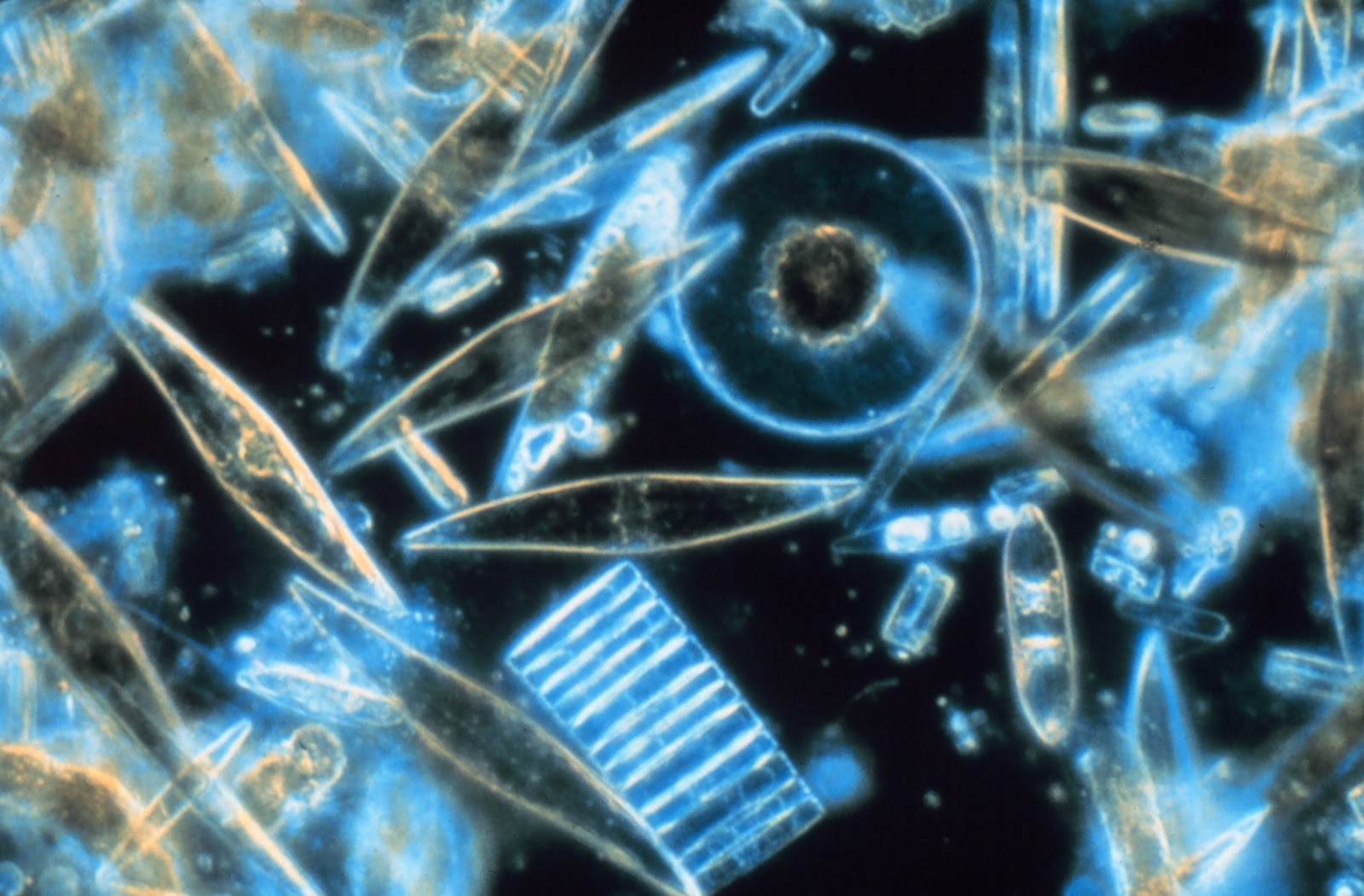
Diatomite, a light, porous rock formed from the fossilized remains of diatoms, is a dominant feature. Diatoms, microscopic algae with silica-based cell walls, thrived in nutrient-rich waters, leading to the thick layers of sediments that later became diatomite. Chert, another key rock type in the formation, is formed from the recrystallization of biogenic silica, adding to the complexity of the geological record. Interspersed with these are organic-rich shales, which contain substantial amounts of organic material called kerogen. Over millions of years, kerogen undergoes a biological transformation becoming the oil and gas that now serve as the backbone of California’s petroleum industry (see our story on the history of the Long Beach oil industry).

Diatoms (Wikipedia)

The Monterey Formation displays a fascinating and unusual mixture of geological deposits, from deep ocean basins to shallow continental shelves. During the Miocene, upwelling currents along the California coast brought nutrient-rich waters to the surface, fostering high biological productivity and depositing vast amounts of biogenic silica, a form of silicon dioxide (SiO₂) that is produced by living organisms. Periods of fluctuating sea levels, driven by climate changes and tectonic shifts, further shaped the environment. During low sea levels, parts of the continental shelf were exposed, allowing for erosion from wind and sun. These would shift to periods of high sea levels, which allowed for denser, deep-water sedimentation. In some layers, the presence of evaporites—minerals that form from the evaporation of water—suggests extensive episodes of arid conditions, similar to what we are experiencing now with California’s recurring periods of drought.

Offshore oil platforms along California’s coast drill into the Monterey Formation, either tapping directly into its fractured shale or extracting oil that has migrated into more porous sandstone reservoirs. (Photo: Erik Olsen)

Much of the pioneering research on the geology, formation, and unique composition of the Monterey Formation was conducted by the late Robert Garrison, a distinguished professor of oceanography at the University of California, Santa Cruz. Garrison was considered the foremost expert on the Monterey Foundation, and his work was instrumental in revealing how the Monterey Formation’s diatomaceous and phosphatic deposits were shaped by a combination of oceanographic upwelling, climatic shifts, and tectonic activity during the Miocene epoch.

Petroleum geologists find the Monterey Formation especially intriguing because it serves as both a source and a reservoir for oil and gas, allowing them to better understand the processes of oil and gas generation, migration, and accumulation, as well as to develop more efficient extraction methods to maximize its economic potential. They are also quite beautiful. Walk along the beach near Crystal Cove in Orange County, for example, and examples of Monterey Formation rocks abound.

Monterey Formation rocks near Little Corona in Newport Beach (Erik Olsen)

Oil is formed from the remains of ancient marine organisms, such as plankton and algae, that were buried under layers of sediment and subjected to heat and pressure over millions of years, transforming them into hydrocarbons. Some of these hydrocarbons migrated into more permeable rocks, creating substantial oil fields that have been exploited for decades in Southern California. Certain layers of the Monterey Formation, particularly the fractured chert and dolomitic sections, also serve as excellent reservoirs due to their porosity and permeability, allowing them to store oil and gas for long periods of time.

Beyond its geological and economic importance, the Monterey Formation is a treasure trove for paleontologists. Its layers preserve a variety of marine fossils, including diatoms, radiolarians, foraminifera, and coccolithophores. These microfossils offer a detailed look at past ocean conditions, helping scientists reconstruct the climatic and oceanographic history of the Miocene epoch. Additionally, the formation contains fossils of larger marine vertebrates, such as whales, seals, and fish, providing further insight into the ecosystems of ancient oceans.

Microscope image of microfossils and organic matter in Monterey rocks. (Cal State Long Beach)

However, the Monterey Formation is not just a source of knowledge and resources; it also presents challenges, particularly in terms of potential environmental harm and geohazards like landslides. The soft, diatomaceous earth layers within the formation are prone to landslides, especially when water-saturated or fractured by tectonic action. This makes some coastal areas of California, where the Monterey Formation is exposed, particularly vulnerable to slope instability, posing risks for construction and development. Many recent news stories have documented the increasing rate at which the California coast is tumbling into the sea. An excellent recent book on the subject is Rosanna Xia’s California Against the Sea: Visions for Our Vanishing Coastline.

California’s geology is a remarkable mosaic that tells a story of immense geological diversity and dynamic processes. Among its many treasures, the Monterey Formation stands out as a geological marvel—its intricate layers, rich fossil beds, and significant economic potential continue to captivate scientists and researchers from around the world. This unique formation is more than just rock; it is a time capsule that preserves millions of years of Earth’s history, from ancient marine ecosystems to dramatic shifts in climate and tectonic activity. As geologists, paleontologists, and environmental scientists delve deeper into its mysteries, the Monterey Formation reveals invaluable clues about the past while shaping our understanding of California’s ever-evolving landscape. It serves as a profound reminder of the powerful forces that have sculpted one of the most geologically varied regions on the planet and continues to inspire exploration and discovery in the fields of Earth science.

The California Sea Lion’s Story of Survival and Conservation

California Sea Lion (Photo: Erik Olsen)

Basking under the sun, barking from buoys, and sometimes tormenting boat owners, the California sea lion (Zalophus californianus) is a familiar, playful marine mammal common up and down the coast. Known for their intelligence, dog-like demeanor, and underwater agility, they are a symbol of the Golden State’s rich coastal biodiversity. Despite occasional years of periodic starvation and decline, the California sea lion has made a remarkable recovery over the last two decades and is now one the most common marine mammals seen along the California coast. It’s hard to go out in one of California’s many harbors and not see at least one prowling about, often poking their heads above water to take a loud breath.

California sea lions are part of the family Otariidae, which includes all eared seals. These agile marine mammals are well adapted for life in the ocean, with streamlined bodies, strong flippers, and a layer of blubber to help regulate body temperature. Male sea lions are larger than females, weighing up to 800 pounds (363 kg) and measuring around 8 feet (2.4 meters) in length. Females are slightly smaller, weighing around 250 pounds (113 kg) and measuring about 6 feet (1.8 meters) long. Although many people refer to them as seals, they are a different species, and it is fairly easy to tell them apart. Unlike true seals, sea lions have visible ear flaps and long front flippers that enable them to “walk” on land.

NOAA

Ranging from the Gulf of California to British Columbia, these marine mammals are a frequent sight around harbors, beaches, and offshore islands. These highly social creatures also congregate in large colonies on rocky shores, such as the Channel Islands off the coast of Southern California. During breeding season, males establish territories and compete fiercely for females, often engaging in vocal displays and physical battles. The females give birth to a single pup each year and provide maternal care for several months until the pup is ready to venture into the water.

California sea lions are opportunistic feeders, primarily preying on fish species such as anchovies, herring, salmon, and squid. With their excellent underwater vision and agile swimming abilities, they can dive to great depths, sometimes reaching over 900 feet (275 meters) to search for their prey. They are capable of consuming significant amounts of food, with adult males consuming up to 5-8% of their body weight each day.

Sea lions on a buoy in Orange County. (Erik Olsen)

Despite their formidable size and agility, California sea lions face predation from their most notorious adversary, the white shark (Carcharodon carcharias). White sharks are highly efficient hunters and occasionally target sea lions, particularly the young as well as inexperienced individuals. While these encounters are relatively rare, they underscore the ongoing struggle for survival that sea lions face in their natural habitat. Because of the resurgence in the sea lion population on the West Coast, white shark populations have also rebounded significantly, with a recent study suggesting that there can be as many as 40 juvenile white sharks just 50 feet from shore at some of the most popular beaches in SoCal. While this rise in the white shark population off California has made many people concerned about the potential for attacks on humans, records show that just 15 people have died by shark attacks in California since the 1950s.

The California sea lion population has experienced both remarkable recoveries and challenging times. In the early 20th century, they faced severe exploitation for their fur, resulting in significant declines in their numbers. However, conservation efforts and legal protection brought about a remarkable turnaround for these marine mammals.

Under the Marine Mammal Protection Act and state regulations, California sea lions are strictly protected, prohibiting hunting and harassment. Additionally, the establishment of marine protected areas and efforts to reduce pollution and fishery interactions have contributed to their recovery. As a result, the population rebounded, with estimates suggesting that there are now around 300,000 individuals along the coast of California.

Sea lions in Newport Beach. Credit Erik Olsen

Despite their resurgence, California sea lions face ongoing challenges, particularly during certain years when large-scale die-offs occur due to starvation. These events are often linked to El Niño weather patterns, which disrupt the marine ecosystem and cause shifts in fish populations. During such periods, the availability of prey may be limited, leading to malnutrition and high mortality rates among sea lion pups.

While California sea lions have made a remarkable recovery, ongoing conservation efforts are crucial to ensuring their long-term survival. Monitoring their populations, protecting their habitats, and addressing climate change impacts are vital steps to safeguarding these charismatic marine mammals. By raising awareness and promoting responsible stewardship of our coastal ecosystems, we can ensure a bright future for the California sea lion and the diverse marine life it represents.

There’s something quietly remarkable about living alongside California sea lions. They slip through the surf with ease, haul out on docks and rocks, and bring a sense of life and motion to the coastline. Like puppies of the sea, they’re curious, playful, and deeply social. But they’re also resilient animals that have weathered challenges and bounced back. Not that threats still don’t exist. But their presence is a reminder of the ocean’s complexity and beauty, and of how lucky we are in California to share our shores with them.

Why Parkfield, California is the Nation’s Earthquake Capital

Parkfield, California

When Big Joe Turner sang “Shake, Rattle and Roll,” he probably wasn’t thinking about a dusty little town in Central California, but in Parkfield, it’s practically the town motto.

Parkfield, California, is a quiet, dusty farming town tucked into the rolling hills of the Cholame Valley, just off Highway 46 (worth the drive if you ever have the chance). A few miles down the road lies an historic intersection, the place where James Dean was killed in a near head on collision crash in his Porsche 550 Spyder on September 30, 1955. The collision ended a blazing young career just as it was taking off and cemented Dean’s image as a tragic icon of American cinema. While tourists still visit the nearby memorial, Parkfield itself is better known to scientists than to star-watchers.

Parkfield is an unremarkable town, with one exception: it lies directly atop the San Andreas Fault and is known as the Earthquake Capital of the World. This is not because there are so many earthquakes there, although there are, but because it has one of the highest densities of seismic technology anywhere. In addition to the larger magnitude 6.0 earthquakes that tend to strike about every 22 years, Parkfield also experiences a steady rhythm of smaller quakes. These minor tremors, often below magnitude 1.0, happen with such regularity, that scientists have compared them to “seismic pulsars” for their consistent, almost clock-like behavior. (And for what it’s worth, Petrolia, California actually has the most earthquakes).

Visit the California Curated store on Etsy for original prints showing the beauty and natural wonder of California.

The San Andreas Fault is one of the best known, and most active faults in the world. In the Parkfield area, the San Andreas Fault is constantly shifting—millimeter by millimeter, day by day. This continuous movement is unique to the region, as the fault remains relatively locked in both the northern section around San Francisco and the southern section near Palmdale. While the fault in these other areas stays immobile, the central part near Parkfield steadily creeps, creating a contrast that puts pressure on the locked sections to the north and south.

Parkfield’s main strip, stretching just a quarter mile, hosts a small collection of buildings, including a one-room elementary school, the USGS-Berkeley earthquake monitoring site, a Cal Fire station, and the Parkfield Cafe and Lodge. Outside the cafe, a row of mismatched mailboxes serves the dozen or so homes scattered along a few dirt roads branching off the main street. Parkfield might be a small, obscure town to most Californians, but to geologists fascinated by the workings of the Earth, it’s the epicenter of seismic research.

San Andreas Fault (Wikipedia)

Every hillside and valley, grassy nook and riverbed is home to some kind of instrument that measures earthquakes. Over the years, these instruments have become more sophisticated and expensive, making it necessary in many cases to fence them off with the threat of arrest.  These instruments monitor, hour by hour, or better, millisecond by millisecond, the stirrings of the earth. To geologists, it is ground zero for seismic measurement. 

The town is proud of its reputation. A water tower boasts the tourism slogan: BE HERE WHEN IT HAPPENS (see photo). There is also an iron bridge in the town that has the distinction of standing astride the San Andreas Fault. One one side of the creek that runs beneath the bridge is the North American tectonic plate. On the other is the Pacific tectonic plate. Those two plates are moving south and north respectively at a rate of about 2 inches a year. As we all know, that movement creates immense pressure as the two plates seem otherwise locked in place. That pressure will have to be released at some point. It always has. When that happens, we can expect a potentially devastating earthquake that will rock the state from top to bottom. 

Parkfield, CA (Photo: Wikipedia)

The writer Simon Winchester calls the fault an “ever-evolving giant that slumbers lightly under the earth’s surface and stirs, dangerously and often, according to its own whims and its own rules.” 

Since 1985, a focused earthquake prediction experiment has been in progress in Parkfield. Known as “The Parkfield Experiment“, the project’s stated purpose is to “better understand the physics of earthquakes — what actually happens on the fault and in the surrounding region before, during and after an earthquake.”

Since the mid-1980s, scientists have deployed an array of advanced monitoring devices, including seismometers, strainmeters, creepmeters, and GPS sensors, to capture detailed data on ground movement and strain accumulation. These instruments are designed to measure subtle changes in the Earth’s crust, helping researchers predict seismic events and understand the processes leading up to an earthquake. By continuously collecting data, the experiment has provided valuable insights into the mechanics of fault movement and the potential for earthquake prediction.

An art installation, known as the Parkfield Interventional EQ Fieldwork (PIEQF), used earthquake waves recorded by the USGS seismic network in California to trigger a hydraulic shake table which was installed in an excavated trench.  (USGS)

Experts also once bored a 10,000-foot-deep hole into the ground in Parkfield, into which they placed a large array of sensors to measure the earth’s movements. The goal of the $300 million project, called the San Andreas Fault Observatory at Depth, or SAFOD, was to allow scientists to study how faults work and how earthquakes happen. The drilling stopped in 2007, but Parkfield remains a hot spot for geologic research.

Additionally, the Berkeley Seismological Laboratory operates the High-Resolution Seismic Network (HRSN) in the Parkfield area. This network comprises geophone arrays aimed at monitoring microseismicity along the San Andreas Fault, providing valuable data on the fault’s behavior.

Parkfield remains critical to better understanding seismic dangers in California. The fault zone is poorly understood at depth and so far, the predictability of earthquakes in the near term is pretty limited. But devices like these could help improve prediction, especially if there is a large quake. But that’s the rub, really. We need to experience a large earthquake to get the best data to know how to predict later ones. So it is in California.