The Caltech Experiment That Proved How Life Copies Itself

DNA molecule (Midjourney)

I love reading New York Times obituaries, not because of any morbid fascination with death, but because they offer a window into extraordinary lives that might otherwise go unnoticed. These tributes often highlight people whose work had real impact, even if their names were never widely known. Unlike the celebrity coverage that fills so much of the media, these obituaries can be quietly riveting, full of depth, insight, and genuine accomplishment.

For two years I managed the New York Times video obituary series called Last Word. We interviewed people of high accomplishment who had made a difference in the world BEFORE they died, thus giving them a chance, at a latter age (in our case 75 was the youngest, but more often people would be in their 80s) to tell their own stories about their lives. They signed an agreement acknowledging that the interview would not be shown until after their death. Hence the series title: Last Word. Anyway, when I ran the program, I produced video obituaries for people as varied as Neil Simon, Hugh Hefner, Sandra Day O’Connor, Philip Roth, Edward Albee, and my favorite, the great Harvard biologist E.O. Wilson. Spending time and learning about their lives in their own words was a joy.

All of that is to say that obituaries often reveal the lives and accomplishments of people who have changed the world. These are stories that might never be told so thoughtfully or thoroughly anywhere else.

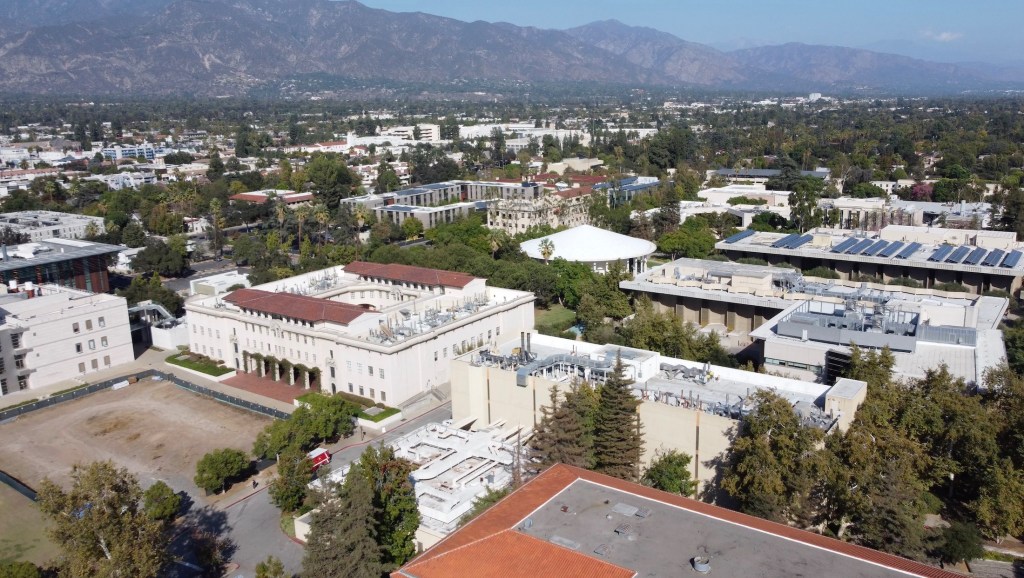
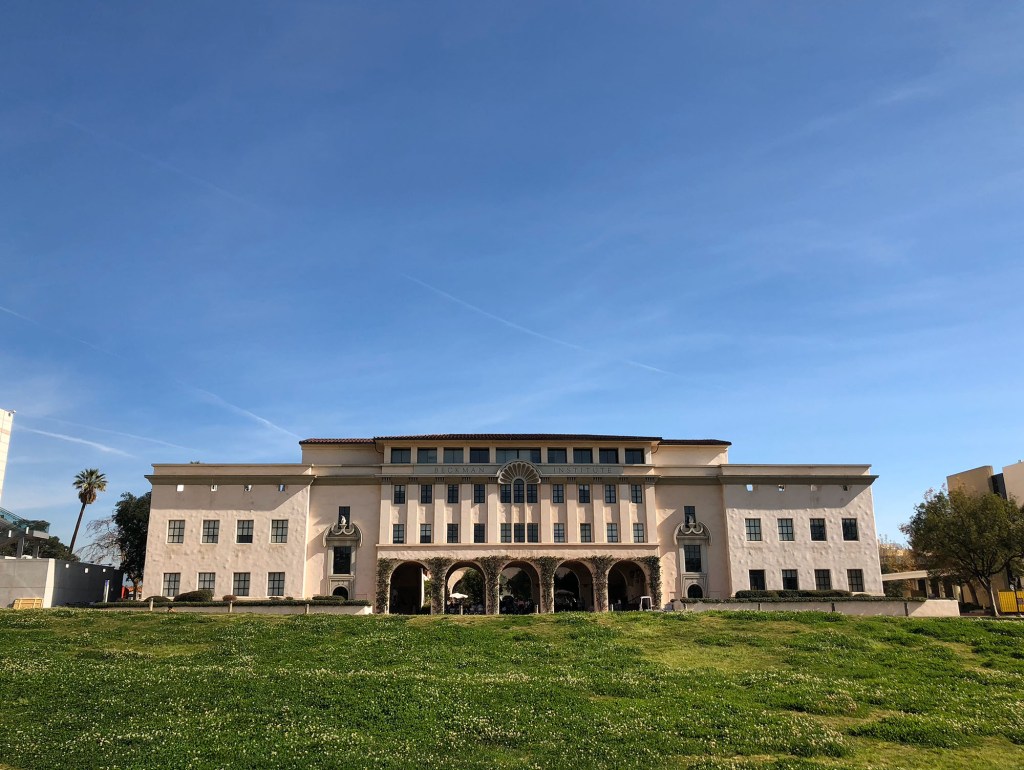
California Institute of Technology (Photo: Erik Olsen)

Which bring us to a quiet lab at Caltech in 1958, where two young biologists performed what some still call “the most beautiful experiment in biology”. Their names were Matthew Meselson and Franklin Stahl, and what they uncovered helped confirm the foundational model of modern genetics. With a simple centrifuge, a dash of heavy nitrogen, and a bold hypothesis, they confirmed how DNA, lifeโ€™s instruction manual, copies itself. And all of it took place right here in California at one of the world’s preeminent scientific institutions: the California Institute of Technology or CalTech, in Pasadena. The state is blessed to have so many great scientific minds and institutions where people work intensely, often in obscurity, to uncover the secrets of life and the universe.

California Curated Etsy

Franklin Stahl died recently at his home in Oregon, where he had spent much of his career teaching and researching genetics. The New York Times obituary offered a thoughtful account of his life and work, capturing his contributions to science with typical respect. But after reading it, I realized I still didnโ€™t fully grasp the experiment that made him famous, the Meselson-Stahl experiment, the one he conducted with Matthew Meselson at Caltech. It was mentioned, of course, but not explained in a way that brought its brilliance to life. So I decided to dig a little deeper.

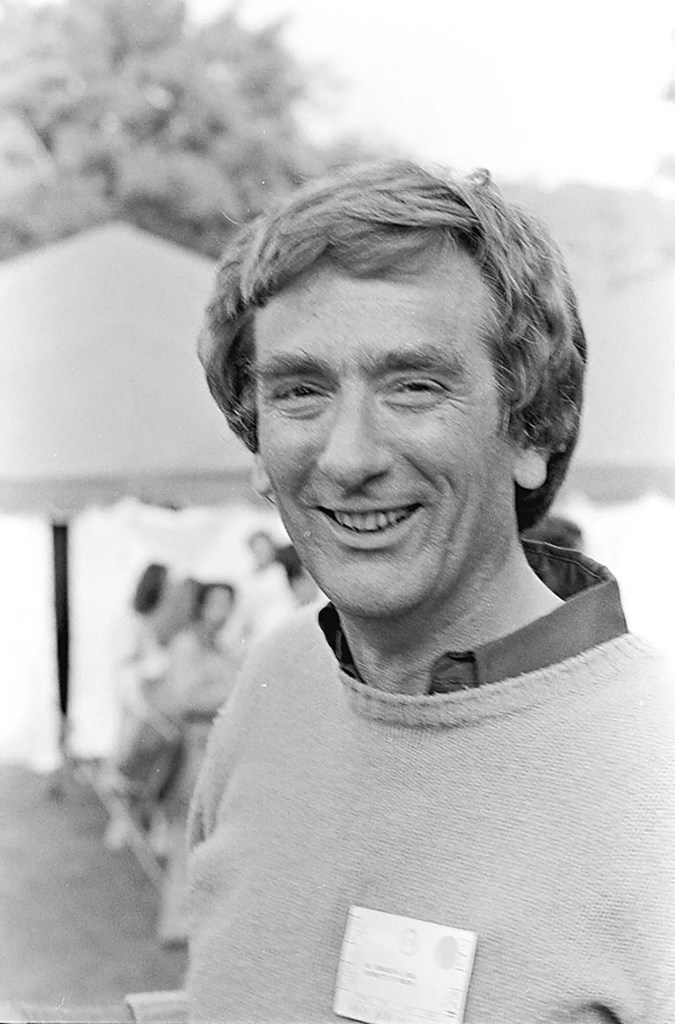
Franklin Stahl in an undated photo. (Cold Spring Harbor Laboratory Library and Archives)

The Meselson-Stahl experiment didnโ€™t just prove a point. It told a story about how knowledge is built: carefully, creatively, and with a precision that leaves no room for doubt. It became a model for how science can answer big questions with simple, clean logic and careful experimentation. And it all happened in California.

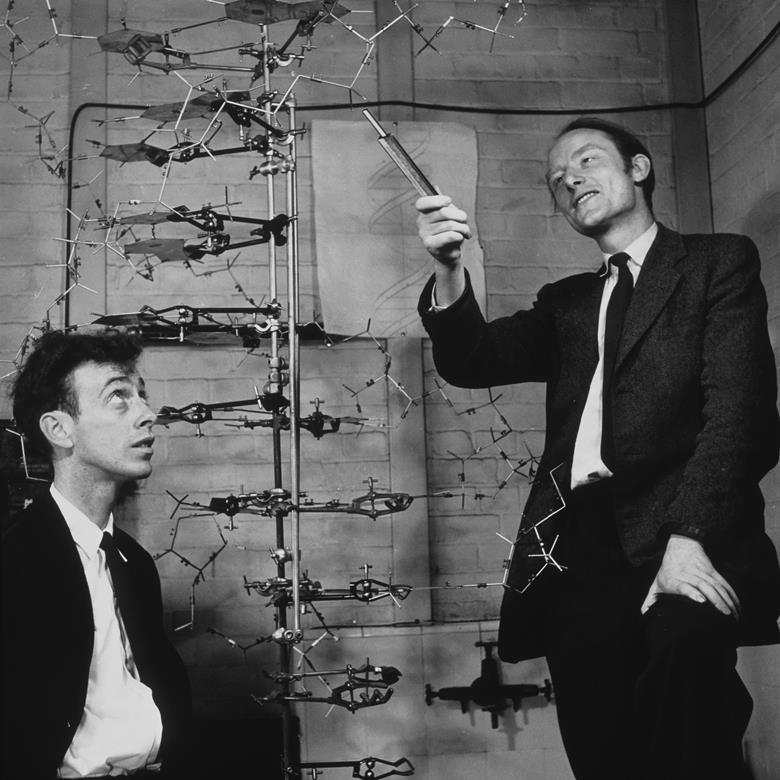
Let’s back up: When Watson and Crick proposed their now-famous double helix structure of DNA in 1953 (with significant, poorly recognized help from Rosalind Franklin), they also suggested a theory about how it might replicate. Their idea was that DNA separates into two strands, and each strand acts as a template to build a new one. That would mean each new DNA molecule is made of one old strand and one new. It was called the semi-conservative model. But there were other theories too. One proposed that the entire double helix stayed together and served as a model for building an entirely new molecule, leaving the original untouched. Another suggested that DNA might break apart and reassemble in fragments, mixing old and new in chunks. These were all plausible ideas. But only one could be true.

Watson and Crick with their model of the DNA molecule (Photo: A Barrington Brown/Gonville & Caius College/Science Photo Library)

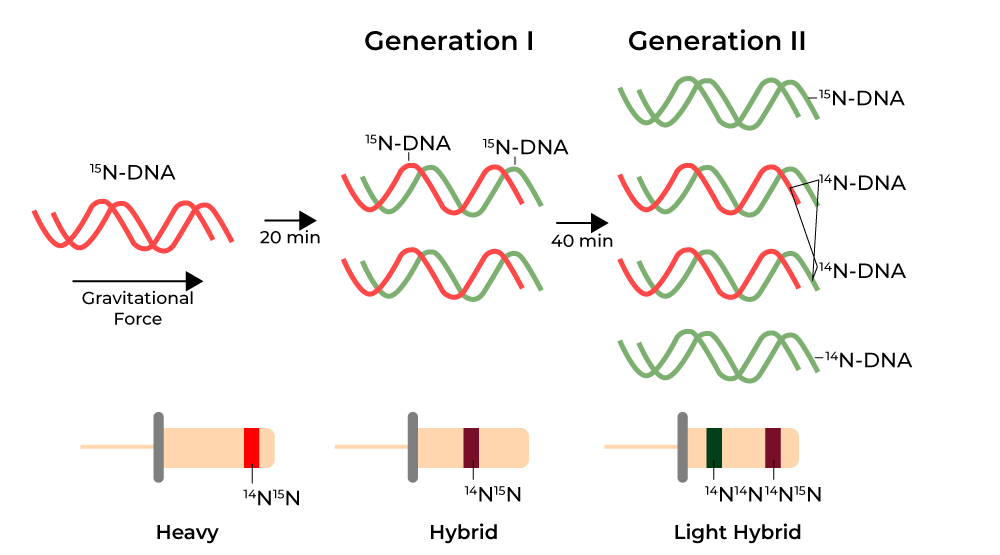
To find out, Meselson and Stahl grew E. coli bacteria in a medium containing heavy nitrogen (nitrogen is a key component of DNA), a stable isotope that made the DNA denser than normal. After several generations, all the bacterial DNA was fully “heavy.” Then they transferred the bacteria into a medium with normal nitrogen and let them divide. After one generation, they spun the DNA in a centrifuge that separated it by weight. If DNA copied itself conservatively, the centrifuge would show two bands: one heavy, one light. If it was semi-conservative, it would show a single band at an intermediate weight. When they performed the experiment, the result was clear. There was only one band, right between the two expected extremes. One generation later, the DNA split into two bands: one light, one intermediate. The semi-conservative model was correct.

Their results were published in Proceedings of the National Academy of Sciences in 1958 and sent shockwaves through the biological sciences.

Meselson and Stahl experiment in diagram.

To me, the experiment brought to mind the work of Gregor Mendel, an Augustinian monk who, in the mid-1800s, quietly conducted his experiments in the garden of a monastery in Brno, now part of the Czech Republic. By breeding pea plants and meticulously tracking their traits over generations, Mendel discovered the basic principles of heredity, dominant and recessive traits, segregation, and independent assortment, decades before the word โ€œgeneโ€ even existed. Like Mendelโ€™s experiments, the Meselson-Stahl study was striking in its simplicity and clarity. Mendel revealed the rules; Meselson and Stahl uncovered the mechanism.

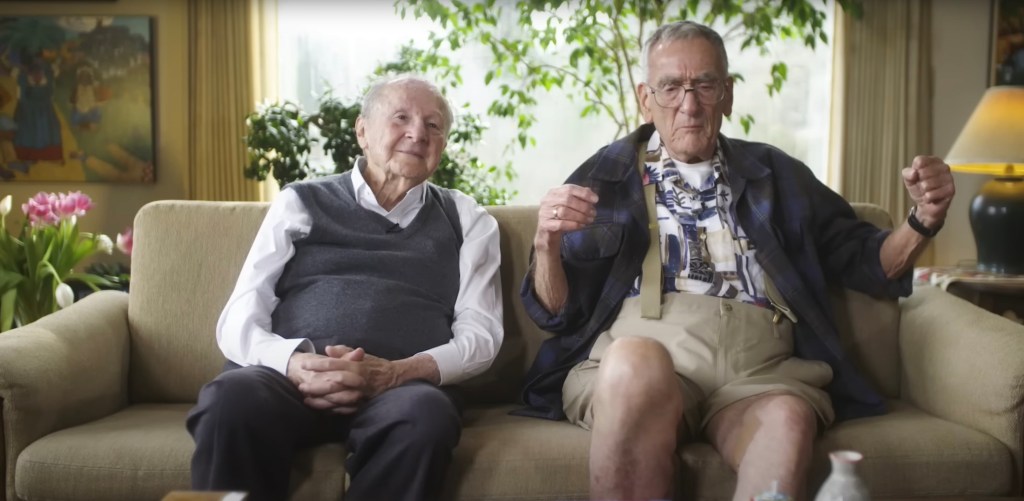
There’s a fantastic video where the two men discuss the experiment that is worth watching. It was produced produced by iBiology, part of the nonprofit Science Communication Lab in Berkeley. In it Meselson remembered how the intellectual climate of CalTech at the time was one of taking bold steps, not with the idea of making a profit, but for the sheer joy of discovery: โ€œWe could do whatever we wanted,” he says. “It was very unusual for such young guys to do such an important experiment.โ€

California Institute of Technology (Photo: Erik Olsen)

Most people think of Caltech as a temple of physics. Itโ€™s where Einstein lectured, where the Jet Propulsion Laboratory was born (CalTech still runs it), and where the gravitational waves that rippled through spacetime were detected. But Caltech has a quieter legacy in biology. Its biologists were among the first to take on the structure and function of molecules inside cells. The institute helped shape molecular biology as a new discipline at a time when biology was still often considered a descriptive science. Long before Silicon Valley made biotech a household term, breakthroughs in genetics and neurobiology were already happening in Southern California.

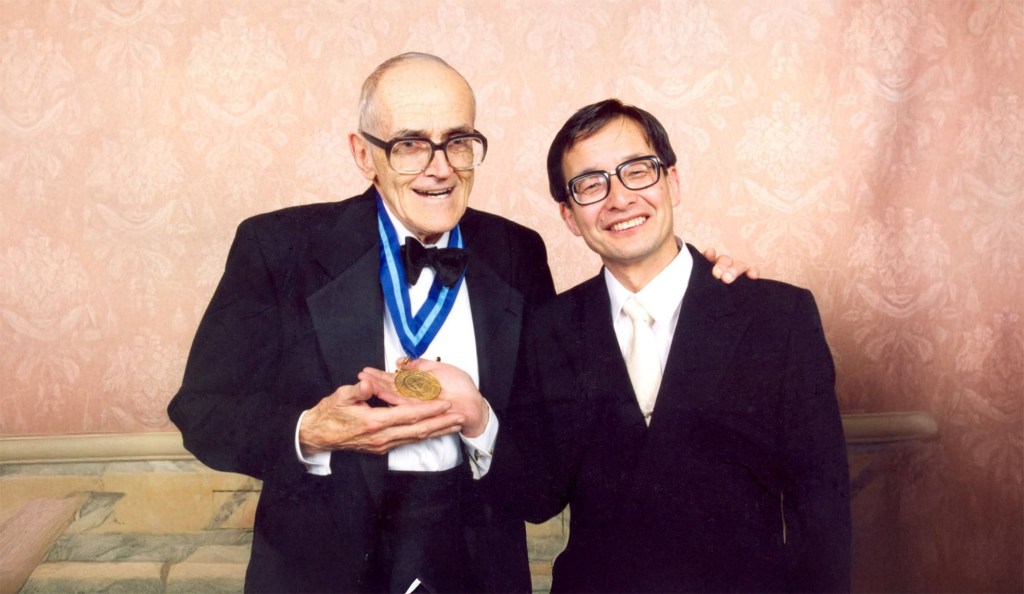
Meselson and Stahl in the iBiology video (Screen grab: Science Communication Lab)

The Meselson-Stahl experiment is still taught in biology classrooms (my high school age daughter knew of it) because of how perfectly it answered the question it set out to ask. It was elegant, efficient, and unmistakably clear. And it showed how a well-constructed experiment can illuminate a fundamental truth. Their discovery laid the groundwork for everything from cancer research to forensic DNA analysis to CRISPR gene editing. Any time a scientist edits a gene or maps a mutation, they are relying on that basic understanding of how DNA replicates.

In a time when science often feels far too complex, messy, or inaccessible, the Meselson-Stahl experiment is a reminder that some of the most important discoveries are also the simplest. Think Occam’s Razor. Two young scientists, some nitrogen, a centrifuge, a clever idea, and a result that changed biology forever.

California Curated Etsy

Caltech’s Einstein Papers Project is a Window into the Mind of a Genius

Albert Einstein on the beach in Santa Barbara in 1931 (The Caltech Archives)

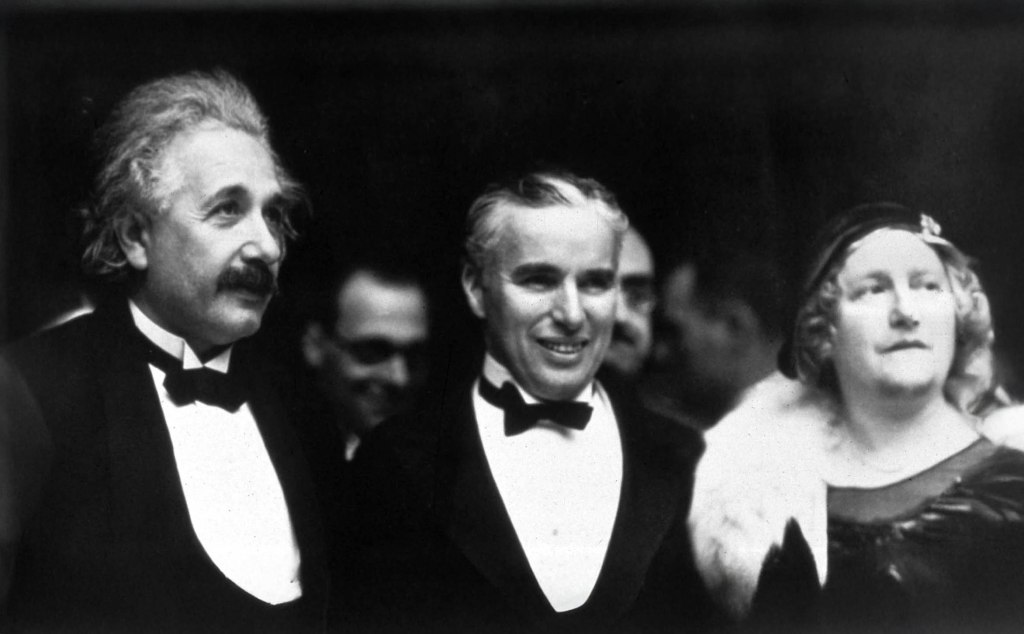
We wrote a piece a while back about the three winters Albert Einstein spent in Pasadena, a little-known chapter in the life of a man who changed how we understand the universe. It was our way of showing how Einstein, often seen as a figure of European academia and global science, formed a real affection for California and for Pasadena in particular. Itโ€™s easy to picture him walking the streets here, lost in thought or sharing a laugh with Charlie Chaplin. The idea of those two geniuses, one transforming physics and the other revolutionizing comedy, striking up a friendship is something worth imagining.
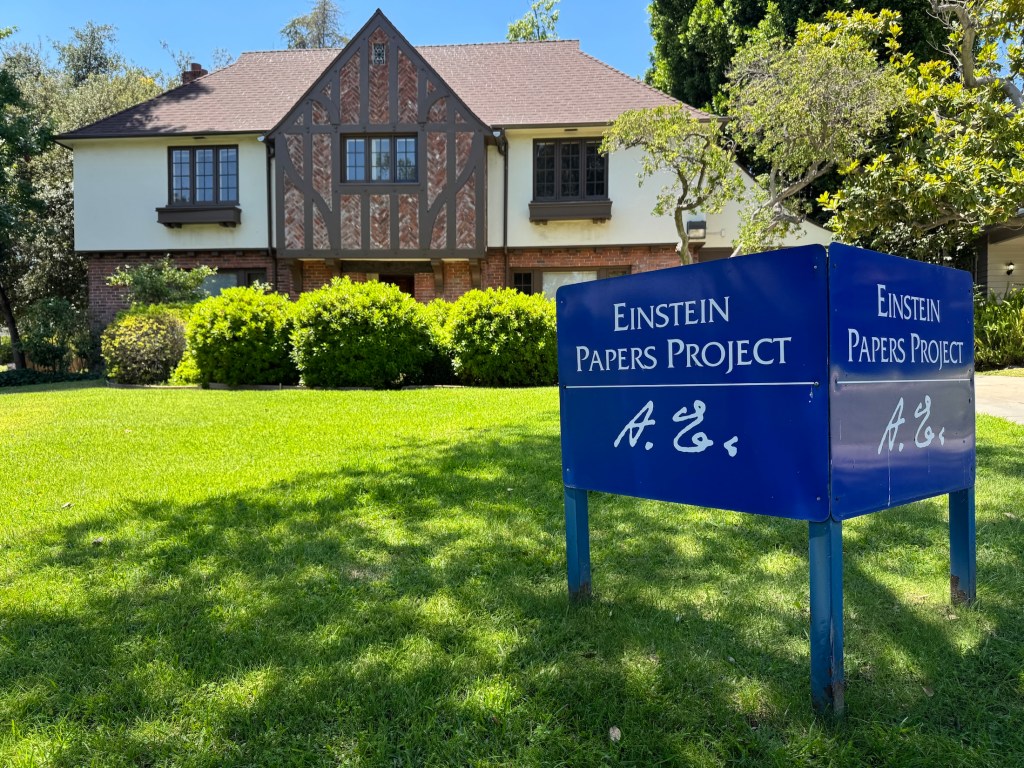
But Einsteinโ€™s connection to Pasadena didnโ€™t end there. It lives on in a small, nondescript building near the Caltech campus, where a group of researchers continues to study and preserve the legacy he left behind.

The Einstein Papers Project (EPP) at Caltech is one of the most ambitious and influential scientific archival efforts of the modern era. Itโ€™s not just about preserving Albert Einsteinโ€™s workโ€”itโ€™s about opening a window into the mind of one of the most brilliant thinkers in history. Since the late 1970s, a dedicated team of scholars has been working to collect, translate, and annotate every significant document Einstein left behind. While the project is headquartered at the California Institute of Technology, it collaborates closely with Princeton University Press and the Hebrew University of Jerusalem, which houses the original manuscripts.

Einstein at the Santa Barbara home of Caltech trustee Ben Meyer on Feb. 6, 1933.
(The Caltech Archives)

The idea began with Harvard physicist and historian Gerald Holton, who saw early on that Einsteinโ€™s vast outputโ€”scientific papers, personal letters, philosophical musingsโ€”deserved a meticulously curated collection. That vision became the Einstein Papers Project, which has since grown into a decades-long effort to publish The Collected Papers of Albert Einstein, now spanning over 15 volumes (and counting). The projectโ€™s goal is as bold as Einstein himself: to assemble a comprehensive record of his life and work, from his earliest student notebooks to the letters he wrote in the final years of his life.

Albert Einstein and Charlie Chaplin during the premiere of the film ‘City Lights’. (Wikipedia)

Rather than being stored in a traditional library, these documents are carefully edited and presented in both print and online editions. And what a treasure trove it is. Youโ€™ll find the famous 1905 “miracle year” papers that revolutionized physics, laying the foundation for both quantum mechanics (which Einstein famously derided) and special relativity. Youโ€™ll also find handwritten drafts, scribbled calculations, and long chains of correspondenceโ€”sometimes with world leaders, sometimes with lifelong friends. These documents donโ€™t just chart the course of scientific discovery; they reveal the very human process behind it: doubt, revision, flashes of inspiration, and stubborn persistence.

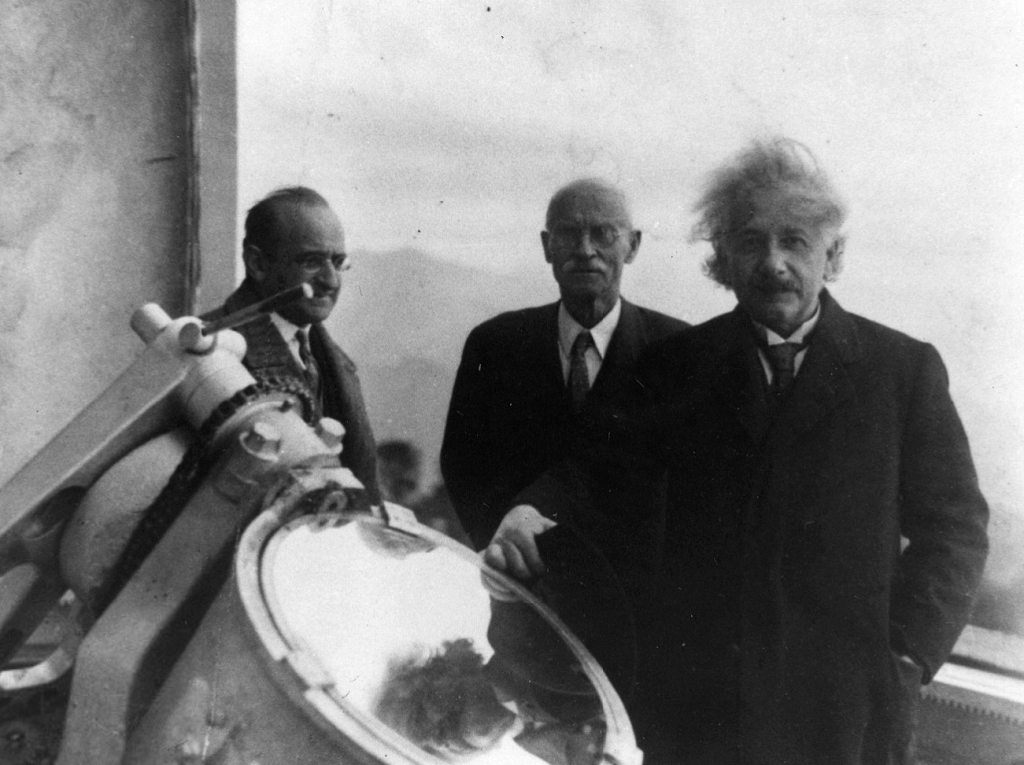
At the Mount Wilson Observatory with the Austrian mathematician Walther Mayer, left, and Charles St. John of the observatory staff. (The Caltech Archives)

Some of the most fascinating material involves Einsteinโ€™s attempts at a unified field theory, an ambitious effort to merge gravity and electromagnetism into one grand framework. He never quite got there, but his notebooks show a mind constantly working, refining, rethinkingโ€”sometimes over decades.

But the project also captures Einstein the person: the political thinker, the pacifist, the refugee, the cultural icon. His letters reflect a deep concern with justice and human rights, from anti-Semitism in Europe to segregation in the United States. He corresponded with Sigmund Freud about the roots of violence, with Mahatma Gandhi about nonviolent resistance, and with presidents and schoolchildren alike. The archive gives us access to the full spectrum of who he was, not just a scientist, but a citizen of the world.

The Einstein Papers Project home near Caltech in Pasadena (Photo: Erik Olsen)

One of the most exciting developments has been the digitization of the archive. Thanks to a collaboration with Princeton University Press, a large portion of the Collected Papers is now freely available online through the Digital Einstein Papers website. Students, teachers, historians, and science nerds around the globe can now browse through Einsteinโ€™s original documents, many of them translated and annotated by experts. The most recent release, Volume 17, spans June 1929 to November 1930, capturing Einsteinโ€™s life primarily in Berlin as he travels across Europe for scientific conferences and to accept honorary degrees. The volume ends just before his departure for the United States. Princeton has a nice story on the significance of that particular volume by EPP Editor Josh Eisenthal.

The California Institute of Technology, CalTech (Photo: Erik Olsen)

For scholars, the project is a goldmine. Itโ€™s not just about Einsteinโ€”itโ€™s about the entire intellectual climate of the 20th century. His collaborations and rivalries, his responses to global upheaval, and his reflections on science, faith, and ethics all provide insight into a remarkable era of discovery and change. His writings also show a playful, curious sideโ€”his love of music, his wit, and his habit of thinking in visual metaphors.

Caltechโ€™s role in all this goes beyond simple stewardship. The Einstein Papers Project is a reflection of the instituteโ€™s broader mission: to explore the frontiers of science and human understanding. For decades, Caltech has been a breeding ground for great minds. As of January 23, 2025, there are 80 Nobel laureates who have been affiliated with Caltech, making it the institution with the highest number of Nobelists per capita in America. By preserving and sharing Einsteinโ€™s legacy, Caltech helps keep alive a conversation about curiosity, responsibility, and the enduring power of ideas.

Caltech Fly Labs and a Century of Genetic Discovery

Fruit fly Drosophila melanogaster

Few organisms in the history of science have been as important to our understanding of life as the humble fruit fly. The genus Drosophila melanogaster holds a particularly esteemed spot among the dozens of model organisms that provide insight into lifeโ€™s inner workings. For more than 100 years, this tiny, but formidable creature has allowed scientists to unwind the infinitesimal mechanisms that make every living creature on the planet what it is.

And much of the work to understand the fruit fly has taken place and is taking place now, right here in California at the Cal Tech fly labs.

CALIFORNIA CURATED ON ETSY

Purchase stunning art prints of iconic California scenes.
Check out our Etsy store.

Over the decades, Drosophila have been key in studying brain, behavior, development, flight mechanics, genetics, and more in many labs across the globe. These tiny, round-bodied, (usually) red-eyed flies might appear irrelevant, but their simplicity makes them ideal models. They’re easy to breedโ€”mix males and females in a test tube, and in 10 days, you have new flies. Their 14,000-gene DNA sequence is relatively short, but extremely well-studied and there are some 8,000 genes which have human analogs. (The fly’s entire genome was fully sequenced in 2000.) Crucially, a century of fruit fly research, much of it led by Caltech, has produced genetic tools for precise genome manipulation and shed light on the act of flight itself.

But how did Drosophila become the darling of genetics?

In the early 20th century, the field of genetics was still in its infancy. Thomas Hunt Morgan, a biologist at Columbia University with a background in embryology and a penchant for skepticism began with an effort to find a simple, cheap, easy-to-breed model organism. At Columbia, he established a laboratory in room 613 of Schermerhorn Hall. This cramped space became famous for groundbreaking research in genetics, with Morgan making innovative use of the common fruit fly.

Thomas Hunt Morgan in the Fly Room at Columbia, 1922 (Cal Tech Archives)

Morgan, who joined Columbia University after teaching at Bryn Mawr College, chose the fruit fly for its ease of breeding and rapid reproduction cycle. Morgan observed a male fly with white eyes instead of the usual red. Curious about this trait’s inheritance, he conducted breeding experiments and discovered that eye color is linked to the X chromosome. He realized a male fly, with one X and one Y chromosome, inherits the white-eye trait from its mother, who provides the X chromosome. This led him to conclude that other traits might also be linked to chromosomes. His extensive experiments in this lab confirmed the chromosomal theory of inheritance, demonstrating that genes are located on chromosomes and that some genes are linked and inherited together.

After his groundbreaking research in genetics at Columbia University, Morgan moved to Pasadena and joined the faculty at CalTech in 1928, where he became the first chairman of its Biology Division and continued his influential work in the field of genetics establishing a strong genetics research program. Morgan’s work, supported by notable students like Alfred Sturtevant and Hermann Muller, laid the foundation for modern genetics and earned him the Nobel Prize in 1933.

CalTech then became a world center for genetics research using the fruit fly. Other notable names involved in fruit fly research at CalTech include Ed Lewis, a student of Morgan, who focused his research on the bithorax complex, a cluster of genes responsible for the development of body segments in Drosophila. His meticulous work over several decades revealed the existence of homeotic and Hox genes, which control the basic body plan of an organism (for which he won the 1995 Nobel Prize).

Novel prize winner Edward Lewis (Nobel Prize.org)

Seymour Benzer, another luminary at CalTech, shifted the focus from genes to behavior. Benzer’s innovative experiments in the 1960s and 1970s sought to understand how genes influence behavior. His work demonstrated that mutations in specific genes could affect circadian rhythms, courtship behaviors, and learning in fruit flies. Benzer’s approach was revolutionary, merging genetics with neurobiology and opening new avenues for exploring the genetic basis of behavior. His contributions are chronicled in Jonathan Weiner’s “Time, Love, Memory: A Great Biologist and His Quest for the Origins of Behavior,” a riveting account of Benzer’s quest to uncover the genetic roots of behavior. Lewis Wolpert in his review for the New York Times wrote, “Benzer has many gifts beyond cleverness. He has that special imagination and view of the world that makes a great scientist.”

Since Benzer’s retirement in 1991, new vanguard in genetics research has taken over at CalTech, which continues to be at the forefront of scientific discovery, driven by a new generation of researchers who are unraveling the complexities of the brain and behavior with unprecedented precision.

Elizabeth Hong is a rising star in biology, with her Hong lab investigating how the brain orders and encodes complex odors. Her research focuses on the olfactory system of Drosophila, which, despite its simplicity, shares many features with the olfactory systems of more complex organisms. Hong’s work involves mapping the synapses and neural circuits that process olfactory information, seeking to understand how different odors are represented in the brain and how these representations influence behavior. Her findings could have profound implications for understanding sensory processing and neural coding in general.

David Anderson, another prominent figure at Caltech, studies the neural mechanisms underlying emotions and behaviors. While much of Anderson’s work now focuses on mice as a model organism, the lab’s research explores how different neural circuits contribute to various emotional states, such as fear, aggression, and pleasure, essentially how emotions are encoded in the circuitry and chemistry of the brain, and how they control animal behavior.ย Using advanced techniques like optogenetics and calcium imaging, Anderson’s lab can manipulate specific neurons and observe the resulting changes in behavior. This work aims to bridge the gap between neural activity and complex emotional behaviors, providing insights into mental health disorders and potential therapeutic targets.

In 2018, the Anderson laboratory identified a cluster of just three neurons in the fly brain that controls a “threat display” โ€” a specific set of behaviors male fruit flies exhibit when facing a male challenger. During a threat display, a fly will extend its wings, make quick, short lunges forward, and continually reorient itself to face the intruder.

California Institute of Technology (Photo: Erik Olsen)

Michael Dickinson is renowned for his studies on the biomechanics and neural control of flight in Drosophila. In the Dickenson Lab, researchers combine behavioral experiments with computational models and robotic simulations, seeking to understand how flies execute complex flight maneuvers with such precision. His work has broader applications in robotics and may inspire new designs for autonomous flying robots.

โ€œHeโ€™s a highly original scientist,โ€ Alexander Borst, a department director at the Max Planck Institute of Neurobiology in Germany, told the New York Times. 

Fruit fly scientific illustration

Dickinson’s investigations also delve into how sensory information is integrated and processed to guide flight behavior, offering insights into the general principles of motor control and sensory integration.

As science advances, Caltech’s Fly Lab’s remind us of the power of curiosity, perseverance, and the endless quest to uncover the mysteries of life. The tiny fruit fly, with its simple elegance, remains a powerful model organism, driving discoveries that illuminate the complexities of biology and behavior. Just recently, scientists (though not at CalTech) unveiled the first fully image of the fruit fly brain. Smaller than a poppy seed, the brain is an astonishingly complex tangle of 140,000 neurons, joined together by more than 490 feet of wiring.

In essence, the fruit fly remains a key to unlocking the wonders and intricacies of life, and in the Fly Labs at Caltech, that spirit of discovery thrives, ensuring that the legacy of Morgan, Lewis, Benzer, and their successors will continue to inspire generations of scientists to come.

Pasadena: City of Science

How Pasadena Became a Hub of Scientific Endeavor

Pasadena and Colorado Boulevard (Erik Olsen)

Yeah, yeah, you know the Rose Bowl.

But Pasadena isnโ€™t just about pretty streets and historic buildingsโ€”itโ€™s also a powerhouse of scientific discovery. Tucked between its tree-lined avenues and old-town charm is a city buzzing with innovation, home to some of the most groundbreaking research and brilliant minds in the world. Ask Einstein.

All right. Let’s keep going. While the climate of Southern California, with its mild weather and clear skies, was advantageous for astronomical observations and outdoor research, the city’s location also played a role in attracting scientists and researchers seeking a desirable living environment. The pleasant climate and natural beauty of the region were significant draws for many. But the city also owes much of its scientific prestige to the Second World War, when the city emerged as a pivotal intellectual and manufacturing hub for aeronautics and space, driven by its strategic location, advanced research institutions like the California Institute of Technology (Caltech), and an influx of skilled labor. The region’s aerospace industry, including companies such as Hughes Aircraft, Douglas Aircraft, Lockheed and North American Aviation, all of which played a crucial role in producing military aircraft and pioneering advancements in aerospace technology. By the end of World War II, 60 to 70 percent of the American aerospace industry was located in Southern California;

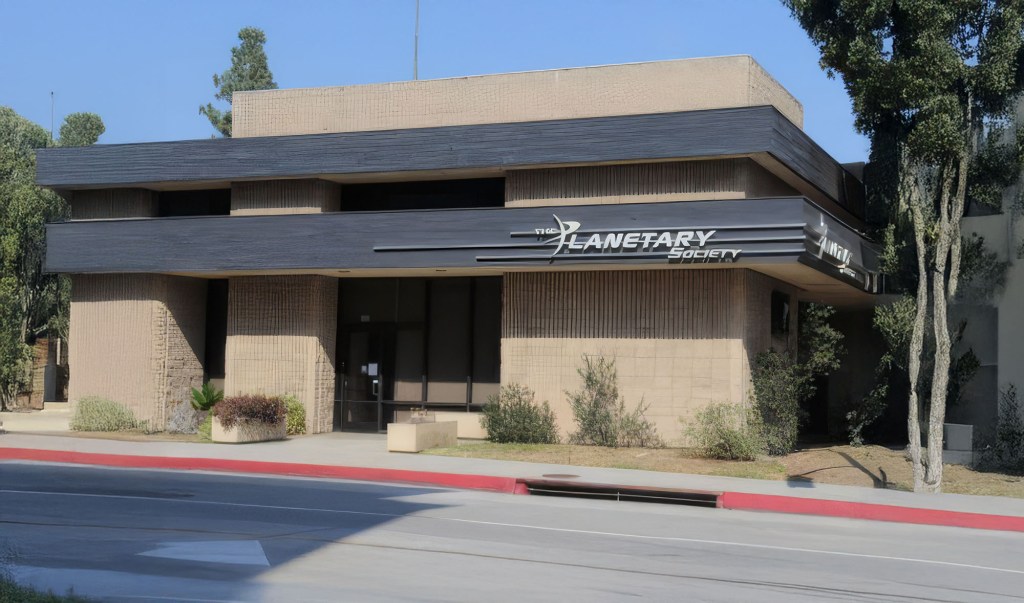
Planetary Society Headquarters in Pasadena (Erik Olsen)

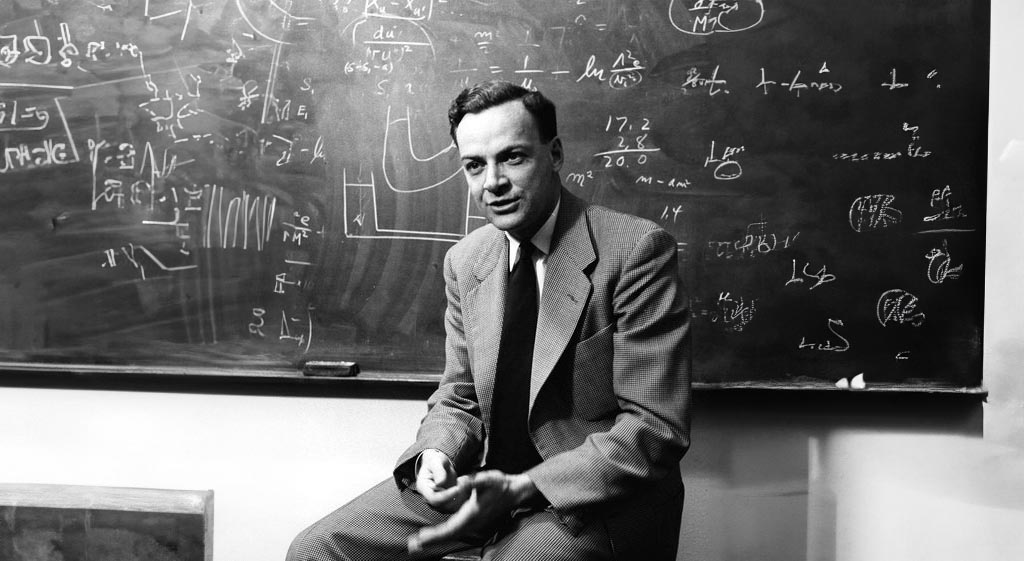
The scientific pedigree of Pasadena can be traced back to notable historical figures, among them the great Richard Feynman, a theoretical physicist known for his work in quantum mechanics and his Nobel Prize-winning contributions to quantum electrodynamics. Feynman was a long-time faculty member at the California Institute of Technology (Caltech) and left an indelible mark on both physics and science education. 

Richard Feynman (Caltech Archives)

In engineering, there is Theodore von Kรกrmรกn, a Hungarian-American mathematician, aerospace engineer, and physicist, who is remembered for his pioneering work in aerodynamics and astronautics. He was responsible for crucial advances in aerodynamics characterizing supersonic and hypersonic airflow. He is best known for the von Kรกrmรกn vortex street, a pattern of vortices caused by the unsteady separation of flow of a fluid around a cylinder, which has applications in meteorology, oceanography, and engineering. Von Kรกrmรกn was also a key figure in the establishment of the Jet Propulsion Laboratory (JPL), which is managed by Caltech (see below).

Cal Tech (Erik Olsen)

In the mid-20th century, Albert Einstein spent several winters at CalTech, further solidifying the cityโ€™s reputation as a center of scientific thought. During his stays from 1931 to 1933, Einstein delivered lectures and collaborated with some of the brightest minds in physics, which had a lasting impact on the scientific community in Pasadena and beyond.

Albert Einstein in Pasadena (CalTech Archives)

CalTech itself is a cornerstone of Pasadenaโ€™s scientific community. As one of the premier science and engineering institutes globally, it has been at the forefront of numerous breakthroughs in various fields including physics, biology, and engineering. The university is not only a powerhouse of innovation but also a nurturing ground for future scientists, evidenced by its association with 39 Nobel laureates.

Similarly, the Jet Propulsion Laboratory (JPL), which is technically located in La Canada Flintridge (geographically), but has a Pasadena mailing address, is a unique collaboration between NASA and CalTech. JPL is the leading US center for the robotic exploration of the solar system. Its engineers and scientists have been behind some of the most successful interplanetary missions, including the Mars Rover landings, the Juno spacecraft currently exploring Jupiter, and the Voyager probes that have ventured beyond our solar system. 

NASA’s Jet Propulsion Laboratory (Erik Olsen)

Further enriching Pasadenaโ€™s scientific landscape is the Carnegie Observatories, part of the Carnegie Institution for Science. This establishment has been a pivotal site for astronomical discoveries since the early 20th century. Today, it continues to push the boundaries of astronomical science by managing some of the most advanced telescopes in the world and conducting cutting-edge research in cosmology and astrophysics.

Jupiter as captured by NASA JPL’s Juno spacecraft (NASA/JPL-Caltech/SwRI/MSSS/David Marriott)

Though in the mountains above Pasadena, the Mt. Wilson Observatory, founded by George Ellery Hale, was home to some of the world’s most powerful telescopes in the early 20th century, including the 60-inch and 100-inch Hooker telescopes. (See our feature). These instruments were integral to groundbreaking discoveries, such as Edwin Hubbleโ€™s revelation of the expanding universe, which was supported by data from Mt. Wilson’s telescopes.

The Planetary Society, also headquartered in Pasadena, adds to the cityโ€™s scientific aura. Co-founded by Carl Sagan, Bruce Murray, and Louis Friedman in 1980, this nonprofit organization advocates for space science and exploration. It engages the public and global community in space missions and the search for extraterrestrial life, demonstrating the cityโ€™s commitment to fostering a broader public understanding of science.

Mt. Wilson Observatory (Erik Olsen)

Pasadenaโ€™s prowess in scientific innovation is further amplified by the presence of numerous high-tech companies and startups that reside in the city. These range from aerospace giants to biotech firms, many of which collaborate closely with local institutions like CalTech and JPL. Moreover, incubators such as IdeaLab and Honeybee Robotics (there are numerous robotics companies…which I think we will do a stand alone story about in the future) have been instrumental in fostering a culture of innovation and entrepreneurship in the city. Founded in 1996 by Bill Gross, IdeaLab has helped launch companies that have had significant impacts on technology and science, from energy solutions to internet technologies.

Pasadena’s status as a city of science is not just rooted in its institutions but also in its history and the ongoing contributions of its residents and thinkers. The city continues to be a fertile ground for scientific discovery and technological innovation, reflecting a deep-seated culture that celebrates curiosity and the pursuit of knowledge. This environment not only attracts some of the brightest minds from around the globe but also supports them in pushing the boundaries of what is possible, making Pasadena a true city of science.

Einstein in Pasadena: Three Wonderful Winters in Paradise

Einstein at the Santa Barbara home of Caltech trustee Ben Meyer on Feb. 6, 1933.
(The Caltech Archives)

“Here in Pasadena, it is like Paradise. Always sunshine and clear air, gardens with palms and pepper trees and friendly people who smile at one and ask for autographs.” – Albert Einstein (U.S. Travel Diary, 1930-31, p. 28)

Albert Einstein is often associated with Princeton, where he spent his later years as a towering intellectual figure, and with Switzerland, where he worked as a young patent clerk in Bern. It was in that spartan, dimly lit office, far from the great universities of the time, that Einstein quietly transformed the world. In 1905, his annus mirabilis or “miracle year,” he published a series of four groundbreaking papers that upended physics and reshaped humanityโ€™s understanding of space, time, and matter. With his insights into the photoelectric effect, Brownian motion, special relativity, and the equivalence of mass and energy (remember E=mc2?), he not only laid the foundation for quantum mechanics and modern physics but also set in motion technological revolutions that continue to shape the future. Pretty good for a guy who was just 26.

Albert Einstein spent his later years as a world-famous scientist traveling the globe and drawing crowds wherever he went. His letters and travel diaries show how much he loved exploring new places, whether it was the mountains of Switzerland, the temples of Japan, or the intellectual circles of his native Germany. In 1922, while on his way to accept the Nobel Prize, he and his wife, Elsa, arrived in Japan for a six-week tour, visiting Tokyo, Kyoto, and Osaka.

But of all the places he visited, one city stood out for him in particular. Pasadena, with its warm weather, lively culture, and, most importantly, its reputation as a scientific hub, had a deep personal appeal to Einstein. โ€‹He visited Pasadena during the winters of 1931, 1932, and 1933, each time staying for approximately two to three months. These stays were longer than many of his other travels, giving him time to fully immerse himself in the city. He spent time at Caltech, exchanging ideas with some of the brightest minds in physics, and fully embraced the California experience, rubbing elbows with Hollywood stars (Charlie Chapman among them), watching the Rose Parade, and even tutoring local kids. Einstein may have only been a visitor, but his time in Pasadena underscores how deeply rooted science was in the city then, and how strongly that legacy endures today. Pasadena remains one of the rare places in the country where scientific inquiry and creative spirit continue to thrive side by side. Pasadena was among the earliest cities to get an Apple Store, with its Old Pasadena location opening in 2003.

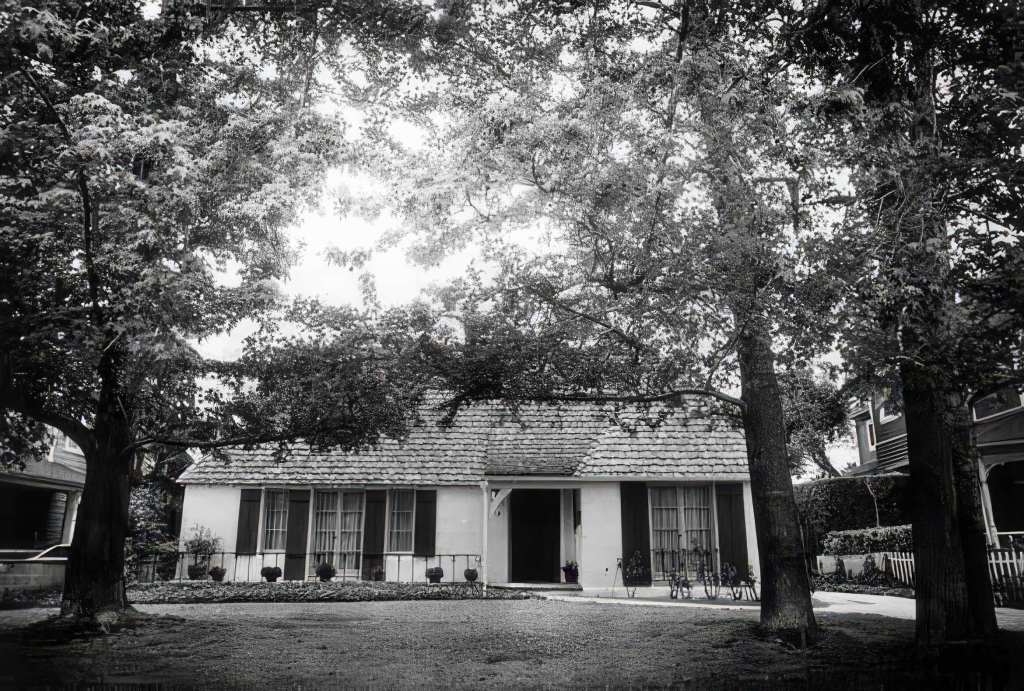
Einstein’s residence at 707 South Oakland Avenue in Pasadena, where he stayed his first winter in California (CalTech Archives)

Few scientists have received the public adulation that Einstein did during his winter stays in Pasadena. As a hobbyist violinist, he engaged in one-on-one performances with the conductor of the Los Angeles Philharmonic. Local artists not only painted his image and cast him in bronze but also transformed him into a puppet figure. Frank J. Callier, a renowned violin craftsman, etched Einstein’s name into a specially carved bow and case.

During his first winter of residence in 1931, Einstein lived in a bungalow at 707 South Oakland Avenue. During the following two winters, he resided at Caltech’s faculty club, the Athenaeum, a faculty and private social club that is still there today.

Yet, the FBI was keeping a watchful eye on Einstein as well. He was one of just four German intellectuals, including Wilhelm Foerster, Georg Nicolai, and Otto Buek, to sign a pacifist manifesto opposing Germanyโ€™s entry into World War I. Later, Einstein aligned himself with Labor Zionism, a movement that supported Jewish cultural and educational development in Palestine, but he opposed the formation of a conventional Jewish state, instead calling for a peaceful, binational arrangement between Jews and Arabs.

In front of the Athenaeum Faculty Club, Caltech, 1932. 
(Courtesy of the Caltech Archives.)

After his annus mirabilis in 1905, Einstein’s influence grew rapidly. In 1919, his theory of relativity was confirmed during a solar eclipse by the English astronomer Sir Arthur Eddington. The announcement to the Royal Society made Einstein an overnight sensation among the general public, and in 1922, he was awarded the 1921 Nobel Prize in Physics. While teaching at the University of Berlin in 1930, Arthur H. Fleming, a lumber magnate and president of Caltech’s board, successfully persuaded him to visit the university during the winter. The visit was intended to remain a secret, but Einstein’s own travel arrangements inadvertently made it public knowledge.

Einstein speaking at the dedication of the Pasadena Junior College (now PCC) astronomy building, February 1931. 
(Courtesy of the Caltech Archives)

After arriving in San Diego on New Year’s Eve 1930, following a month-long journey on the passenger ship Belgenland, Einstein was swarmed by reporters and photographers. He and his second wife, Elsa, were greeted with cheers and Christmas carols. Fleming then drove them to Pasadena, where they settled into the bungalow on S Oakland Ave.

Albert Einstein and his violin (Caltech Archives)

During their first California stay, the Einsteins attended Charlie Chaplin’s film premiere and were guests at his Beverly Hills home. “Here in Pasadena, it is like Paradise,” Einstein wrote in a letter. He also visited the Mt. Wilson Observatory high in the San Gabriel Mountains. Einstein’s intellectual curiosity extended far beyond his scientific endeavors, leading him to explore the Huntington Library in San Marino, delighting in its rich collections. At the Montecito home of fellow scientist Ludwig Kast, he found comfort in being treated more as a tourist than a celebrity, relishing a brief respite from the spotlight.

In Palm Springs, Einstein relaxed at the winter estate of renowned New York attorney and human rights advocate Samuel Untermeyer. He also embarked on a unique adventure to the date ranch of King Gillette, the razor blade tycoon, where he left with a crate of dates and an intriguing observation. He noted that female date trees thrived with nurturing care, while male trees fared better in tough condition: โ€œI discovered that date trees, the female, or negative, flourished under coddling and care, but in adverse conditions the male, or positive trees, succeeded best,โ€ he said in a 1933 interview.

CALIFORNIA CURATED ON ETSY

Purchase stunning coffee mugs and art prints of California icons.
Check out our Etsy store.

Not exactly relativity, but a curiosity-driven insight reflecting his ceaseless fascination with the world.

During his three winters in Pasadena, Einstein’s presence was a source of intrigue and inspiration. Students at Caltech were treated to the sight of the disheveled-haired genius pedaling around campus on a bicycle, launching paper airplanes from balconies, and even engaging in a heated debate with the stern Caltech president and Nobel laureate, Robert A. Millikan, on the steps of Throop Hall. Precisely what they debated remains a mystery. (Maybe something about the dates?)

Einstein with Robert A. Millikan, a prominent physicist who served as the first president of Caltech from 1921 to 1945 and won the Nobel Prize in Physics in 1923.ย (Courtesy of the Caltech Archives.)

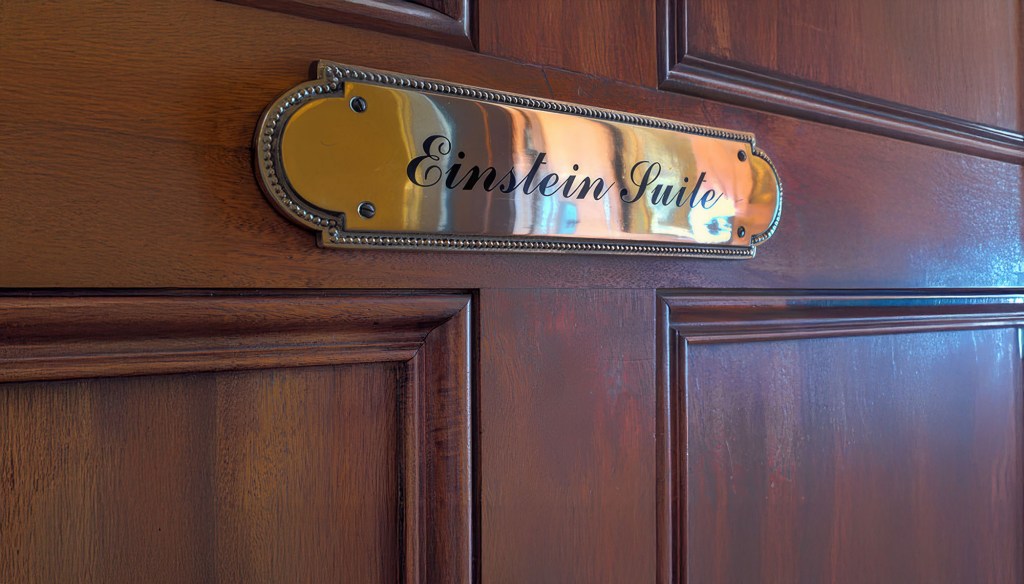
During his final winter in California, a near-accident led the couple to move into Caltech’s Athenaeum. His suite, No. 20, was marked with a distinctive mahogany door, a personal touch from his sponsor, Fleming. In 1933, as Nazi power intensified in Germany, Einstein began searching for a safe place to continue his work. Although Caltech made an offer, it was Princeton University‘s proposal that ultimately won him over. Einstein relocated to Princeton that same year, where he played a significant role in the development of the Institute for Advanced Study and remained there until his death in 1955.

Suite No. 20, Einstein’s mahogany door at the Caltech Athenaeum

Today, a large collection of Einstein’s papers are part of the Einstein Papers Project at Caltech. And Einstein’s suite at Caltech’s Athenaeum, still displaying the mahogany door, serves as a physical reminder of his visits.

During his third and final visit to Caltech in 1933, Hitler rose to power as Chancellor of Germany. Realizing that, as a Jew, he could not safely return home, Einstein lingered in Pasadena a little longer before traveling on to Belgium and eventually Princeton, where he received tenure. He never returned to Germany, or to Pasadena. Yet he often spoke fondly of the California sunshine, which he missed, and in its own way, the sunshine seemed to miss him too.

Clair Patterson: The little-known California scientist who may have saved millions of lives.

Clair Patterson. (Courtesy of the Archives, California Institute of Technology)

At Caltech, Clair Patterson’s relentless determination to understand the health impacts of atmospheric lead changed the world for the better.

It started by asking one of the biggest questions of them all: how old is the earth?

One might think that we’ve known the answer to this question for a long time, but the truth is that a definitive age for our planet was not established until 1953, and it happened right here in California.

Some of the earliest estimates of the earth’s age were derived from the Bible. Religious scholars centuries ago did some simple math, synthesizing a number of passages of Biblical scripture and calculated that the time to their present-day from the story of Genesis was around 6,000 years. That must have seemed like a really long time to people back then.

Of course, once science got involved, the estimated age changed dramatically, but even into the 18th century, people’s sense of geologic time was still on human scales, largely incapable of comprehending an age into the billions of years. In 1779, the Comte du Buffon tried to obtain a value for the age of Earth using an experiment: He created a small globe that resembled Earth in composition and then measured its rate of cooling. His conclusion: Earth was about 75,000 years old.

But in 1907, scientists developed the technique of radiometric dating, allowing scientists to compare the amount of uranium in rock with the amount of lead, the radioactive decay byproduct of uranium. If there was more lead in a rock, then there was less uranium, and thus the rock was determined to be older. Using this technique in 1913, British geologist Arthur Holmes put the Earthโ€™s age at about 1.6 billion years, and in 1947, he pushed the age to about 3.4 billion years. Not bad. That was the (mostly) accepted figure when geochemist Clair Patterson arrived at the California Institute of Technology in Pasadena from the University of Chicago in 1952. (Radiometric dating remains today the predominant way geologists measure the age of rocks.)

The Canyon Diablo meteorite was used by Clair Patterson to determine the age of the earth. Credit: Geoffrey Notkin
Canyon Diabloย meteorite. (Photo: Geoffrey Notkin)

By employing a much more precise methodology, and using samples from the Canyon Diablo meteorite, Patterson was able to place the creation of the solar system, and its planetary bodies such as the earth, at around 4.6 billion years. (It is assumed that the meteorite formed at the same time as the rest of the solar system, including Earth). Subsequent studies have confirmed this number and it remains the accepted age of our planet.

Patterson’s discovery and the techniques he developed to extract and measure lead isotopes led one Caltech colleague to call his efforts “one of the most remarkable achievements in the whole field of geochemistry.”

But Patterson was not done.

In the course of his work on lead isotopes, Patterson began to realize that lead was far more prevalent in the environment that people imagined. In the experiments he was doing at Caltech, lead was everywhere.

Image of Clair Patterson in his Caltech lab. Courtesy of the Archives, California Institute of Technology
Clair Patterson at CalTech (Courtesy of the Archives, California Institute of Technology)

โ€œThere was lead there that didnโ€™t belong there,โ€ Patterson recalled in a CalTech oral history. โ€œMore than there was supposed to be. Where did it come from?โ€

Patterson’s discovery was “one of the most remarkable achievements in the whole field of geochemistry.”

Barclay Kamb, California Institute of Technology

Patterson was flummoxed by the large amounts of environmental lead he was seeing in his experiments. It seemed to be everywhere: in the water, air and in people’s hair, skin and blood. Figuring out why this was the case took him the rest of his career.

He found it so hard to get reliable measurements for his earth’s age experiments that he built one of the first scientific “clean rooms”, now an indispensable part of many scientific disciplines, and a precursor to the ultra-clean semiconductor fabrication plants (so-called “fabs”) where microprocessor chips are made. In fact, at that time, Patterson’s lab was the cleanest laboratory in the world.

On the occasion of Clair Patterson receiving the Tyler Prize. The Tyler Prize is awarded for environmental achievement.
(Courtesy of the Archives, California Institute of Technology)

To better understand this puzzle, Patterson turned to the oceans, and what he found astonished him. He knew that if he compared the lead levels in shallow and deep water, he could determine how oceanic lead had changed over time. In his experiments, he discovered that in the ocean’s oldest columns of water, down deep, there was little lead, but towards the surface, where younger water circulates, lead values spiked by 20 times.

Then, going back millions of years, he analyzed microscopic plant and animal life from deep sediments and discovered that they contained 1/10 to 1/100th the amount of lead found at the time around the globe.

Smog in Los Angeles in 1970. (Courtesy of UCLA Library Special Collections – Los Angeles Times Photographic Archive)

He decided to look in places far from industrial centers, ice caves in Greenland and Antarctica, where he would be able to see clearly how much lead was in the environment many years ago. He was able to show a dramatic increase in environmental lead beginning with the start of lead smelting in Greek and Roman times. Historians long ago documented the vast amounts of lead that were mined in Rome. Lead pipes connected Roman homes, filled up bathtubs and fountains and carried water from town to town. Many Romans knew of lead’s dangers, but little was done. Rome, we all know, collapsed. Jean David C. Boulakia, writing in the American Journal of Archaeology, said: โ€œThe uses of lead were so extensive that lead poisoning, plumbism, has sometimes been given as one of the causes of the degeneracy of Roman citizens. Perhaps, after contributing to the rise of the Empire, lead helped to precipitate its fall.โ€

In his Greenland work, Patterson’s data showed a โ€œ200- or 300-fold increaseโ€ in lead from the 1700s to the present day; and, most astonishing, the largest concentrations occurred only in the last three decades. Were we, like the Romans, perhaps on the brink of an environmental calamity that could hasten the end of our civilization? Not if Patterson could help it.

Exterior shot of the California Institute of Technology. Credit: Erik Olsen
California Institute of Technology. Credit: Erik Olsen

That may be far too grandiose and speculative, but there was no doubting that there was so much more lead in the modern world, and it seemed to have appeared only recently. But why? And how?

In a Eureka moment, Patterson realized that the time frame of atmospheric lead’s rise he was seeing in his samples seemed to correlate perfectly with the advent of the automobile, and, more specifically, with the advent of leaded gasoline.

CALIFORNIA CURATED ON ETSY

Purchase stunning art prints of iconic California scenes.
Check out our Etsy store.

Leaded gas became a thing in the 1920s. Previously, car engines were plagued by a loud knocking sound made when pockets of air and fuel prematurely exploded inside an internal combustion engine. The effect also dramatically reduced the engine’s efficiency. Automobile companies, seeking to get rid of the noise, discovered that by adding tetraethyl lead to gasoline, they could stop the knocking sound, and so-called Ethyl gasoline was born. “Fill her up with Ethyl,” people used to say when pulling up to the pump.

Despite what the Romans may have known about lead, it was still an immensely popular material. It was widely used in plumbing well into the 20th century as well as in paints and various industrial products. But there was little action taken to remove lead from our daily lives. The lead in a pipe or wall paint is one thing (hey, don’t eat it!), but pervasive lead in our air and water is something different.

After World War I, every household wanted a car and the auto sales began to explode. Cars were perhaps the most practical invention of the early 20th century. They changed everything: roads, cities, work-life and travel. And no one wanted their cars to make that infernal racket. So the lead additive industry boomed, too. By the 1960s, leaded gasoline accounted for 90% of all fuel sold worldwide.

But there signs even then that something was wrong with lead.

A New York Times story going back to 1924 documented how one man was killed and another driven insane by inhaling gases released in the production of the tetraethyl lead at the Bayway plant of the Standard Oil Company at Elizabeth, N.J. Many more cases of lead poisoning were documented in ensuing years, with studies showing that it not only leads to physical illness but also to serious mental problems and lower IQs. No one, however, was drawing the connection between all the lead being pumped into the air by automobiles and the potential health impacts. Patterson saw the connection.

Ford Model T. Credit: Harry Shipler

When Patterson published his findings in 1963, he was met with both applause and derision. The billion-dollar oil and gas industry fought his ideas vigorously, trying to impugn his methods and his character. They even tried to pay him off to study something else. But it soon became apparent that Patterson was right. Patterson and other health officials realized that If nothing was done, the result could be a global health crisis that could end up causing millions of human deaths. Perhaps the decline of civilization itself.

Patterson was called before Congress to testify on his findings, and while his arguments made little traction, they caught the attention of the nascent environmental movement in America, which had largely come into being as a result of Rachel Carson’s explosive 1962 book Silent Spring, which documented the decline in bird and other wildlife as a result of the spraying of DDT for mosquito control. People were now alert to poisons in the environment, and they’d come to realize that some of the industrial giants that were the foundation of our economy were also having serious impacts on the planet’s health.

Downtown Los Angeles today. (Erik Olsen)

Patterson was unrelenting in making his case, but he still faced serious opposition from the Ethyl companies and from Detroit. The government took half-hearted measures to address the problem. The EPA suggested reducing lead in gasoline step by step, to 60 to 65 percent by 1977. This enraged industry, but also Patterson, who felt that wasn’t nearly enough. Industry sued and the case to the courts. Meanwhile, Patterson continued his research, collecting samples around Yosemite, which showed definitely that the large rise in atmospheric lead was new and it was coming from the cities (in this case, nearby San Francisco and Los Angeles). He analyzed human remains from Egyptian mummies and Peruvian graves and found they contained far less lead than modern bones, nearly 600 times less.

Years would pass with more hearings, more experiments, and the question of whether the EPA should regulate leaded gas more heavily went to U.S. Court of Appeals. The EPA won, 5-4. โ€œManโ€™s ability to alter his environment,โ€ the court ruled, โ€œhas developed far more rapidly than his ability to foresee with certainty the effects of his alterations.โ€

The Clean Air Act of 1970 initiated the development of national air-quality standards, including emission controls on cars.

Drone shot of rush-hour traffic over Los Angeles. Credit: Erik Olsen
Drone over Los Angeles. (Credit: Erik Olsen)

In 1976, the EPA’s new rules went into effect and the results were almost immediate: environmental lead plummeted. The numbers continued to plummet as lead was further banned as a gasoline additive and from other products like canned seafood (lead was used as a sealant). Amazingly, there was still tremendous denial within American industry.

Although the use of leaded gas declined dramatically beginning with the Clear Air Act, it wasn’t until 1986, when the EPA called for a near ban of leaded gasoline that we seemed to finally be close to ridding ourselves of the scourge of atmospheric lead. With the amendment of the Clean Air Act four years later, it became unlawful for leaded gasoline to be sold at all at service stations beginning December 31, 1995. Patterson died just three weeks earlier at the age of 73.

Clair Patterson is a name that few people know today, yet his work not only changed our understanding of the earth itself, but also likely saved millions of lives. When Patterson was finally accepted into the National Academy of Science in 1987, Barclay Kamb, a Caltech colleague, summed his career up thusly: “His thinking and imagination are so far ahead of the times that he has often gone misunderstood and unappreciated for years, until his colleagues finally caught up and realized he was right.”

Clair Patterson is one of the most unsung of the great 20th-century scientists, and his name deserves to be better known.


To learn more about Clair Patterson, read the fascinating oral history from Caltech Archives.