California’s unheralded role in Apollo 11 // Wildfires, climate change and atmospheric rivers // Marine reserves working even better than thought  // California science news roundup

Sign up for the California Science Weekly newsletter. Fresh California science every Friday!

Week of July 19, 2019

Space

California’s unheralded role in Apollo 11

Buzz Aldrin on the moon - NASA
NASA

When we think about Apollo and attempt to localize it here on earth in our minds, we typically think about Apollo Mission Control Center in Houston, Texas. Who can forget Neil Armstrong’s famous words: “Houston, Tranquillity Base here. The Eagle has landed.”

But there’s more to California’s role in Apollo. In La Canada Flintridge, home of the Jet Propulsion Laboratory, one of the most important experiments of the whole mission was developed, and it changed the way we look at the moon and its relationship to our planet.

The Lunar Laser Ranging Experiment consisted of a reflector that was positioned on the moon by Armstrong and Aldrin. It was aimed back at the earth, where lasers fired pulses of laser light that were then reflected and detected by special receivers here on the ground. 

The reflectors are too small to be seen from Earth, and the task of actually hitting them was a major technical challenge. Even though a laser is a highly concentrated light, by the time the light reaches the moon, the beam is roughly four miles wide. Scientists back then likened the effort to using a rifle to hit a moving dime two miles away.

Here’s more of the story. 

California Science Weekly


Environment

Wildfires, climate change, and atmospheric rivers

Let’s talk about the weather, water and climate change in California. Lots of stories this week on these subjects. First of all, a big report came out in journal Earth’s Future this week, and it says that the state’s wildfire issues are clearly being driven by climate change. It points to the fact that in the past decade, we have experienced half of the state’s 10 largest wildfires and seven of its 10 most destructive fires. That includes last year’s Camp Fire, the state’s deadliest wildfire ever. The study found that the area burned in California’s forest fires – the annual burned area – has increased in size by 500 percent. The cause, says the paper: more heat, more dryness, more fuel. All of these things can be tied to climate change, it says. 

And then there’s this, which seems a bit contradictory, but here you go: another study from Scripps Institution of Oceanography at UC San Diego says that we will also be seeing more of those atmospheric-river storms that deluged the state earlier this year. It looked at 16 global climate models focusing on western North America and found that most of the heavy precipitation that the West will get in the future will come from these so-called atmospheric rivers. That is to say, when we have rain, it will be more intense and more deluge-like. So, start building those arks. The point here seems to be that when it’s wet, it’s going to be really wet. And when it’s dry, it’s going to be really dry. Like the American electorate today, everything is going to the extremes. 

Ok, moving on. While this may seem contradictory, our big winter storms dumped so much snow that safety officials in the state are warning people about using the rivers that carry all that snow melt out of the mountains. The rivers are raging. This may be great for kayakers and rafters, it can also be dangerous. At least six people have died on the Kern River already this year. On a similar note, Mammoth Mountain, which is almost always closed by now, will be open until for skiing until July 28. Earlier the mountain had said August, but they changed their minds. That said, there is still 60 feet of snow at the summit. Wha?

Earth’s Future      Scripps Institution of Oceanography


Ocean Science

Marine reserves are working even better than we thought  

Rockfish

California has one of the largest, most robust marine protected area systems in the world, covering about 18 percent of the state’s waters. The system is vast, stretching down the entire coast from Crescent City to San Diego. It has been phased in over the years, but most of the areas are now firmly in place with severe restrictions on fishing and any kind of “taking”, like rocks shells, etc. And while many studies have been done to show that MPAs work to bring back animals life, there has long been a question whether they lead to a so-called “spillover effect”, that is, whether animals breed and multiply and then move out of the areas, enriching other zones.

Well, a new study shows that there is a spill-over effect. Scientists from the National Oceanic and Atmospheric Administration’s (NOAA) Southwest Fisheries Science Center used genetics to track kelp rockfish, a species in California that tends to remain in the same location their entire adult lives. The key word here is “adult,” because the kids move around. By following counting fish and analyzing DNA, the scientists showed that juvenile kelp rockfish actually do move out of marine reserves sometimes as far as about 20 kilometers away. This suggests that there is, in fact, a spillover effect taking place in the reserves. This is very good news for ecologists, but also for fishermen, who could see more fish showing up in non-restricted areas.  

Hakai


California science news roundup

The cracks left behind by the recent Southern California earthquakes have become tourist attractions. Of course they have. (SF Gate)

There are ten Apollo “moon trees” in California (NatGeo

This very cool video shows what happens when scientists from MBARI shine blue light on the deep-sea squid Histioteuthis. Its green eye glows with fluorescence like something otherworldly. Scientists are not sure why, but think it may have something to do with absorbing light. (YouTube)  

The Mount Wilson Observatory recently opened the doors to its 100-inch telescope to the public for stargazing. Get the kids and go! (Mt. Wilson)

A marine biologist who studies porpoises mating says one of the best places to observe them is…the Golden Gate Bridge. (MEL Magazine)

The U.S. Department of Transportation has selected San Diego as the location for a major drone testing program that will include high-altitude mapping of the U.S.-Mexico border, package deliveries, and first responder operations. (SDNews)

Speaking of cool video, NASA’s Jet Propulsion Laboratory released this very impressively produced piece about their new climbing robot LEMUR, designed to work in extreme terrain. It can scale rock walls. Wow, JPL, keep it up. (YouTube)

A coal plant in Utah has been L.A.’s single-largest power source for three decades. The plant is closing in 2025 and the state will move to natural gas. But that has some clean energy folks upset.  (LA Times)

Valley fever, a dangerous fungal disease, may be striking California farmworkers. Rates of new cases rose 10 percent between 2017 and 2018, according to the California Department of Public Health. https://www.nbcnews.com/news/amp/ncna1017806

We loved this video about the recovery of the Channel Island fox by SkunkBear. (YouTube) 

Lake Tahoe, the second deepest in the U.S., is 7/10 of an inch away from it’s legally allowed capacity. It’s risen 8 feet in 3 years, all thanks to this year’s big winter storms. (NNBN) 

Elon Musk’s Neuralink made a big announcement about its brain-computer interface system, that will dramatically increase the number of electrodes that can connect to a brain. But one of the most interesting goals is that it may allow paraplegic patients to use their thoughts to type at a rate of 40 words per minute. 

California produces the vast majority of the world’s sunflower seeds, but farmers in one county are asking visitors to stop taking selfies in sunflower fields because they are causing damage. (Guardian)

A potential crisis for stem cell research: since 2004, scientists have benefited from a $3 billion state research agency called the California Institute for Regenerative Medicine. But now the agency says it is no longer funding new projects. (ScienceMag)

In a new 440,000-square-foot fulfillment center in Los Angeles, robots are working furiously to get stuff to you faster. (LA Times)

Not news: People are fishing in the LA River. News: they’re eating lots of them

Remember that great story about the guy who killed the endangered fish in Death Valley? Well here’s a video of that same underwater pond called Devils Hole during the earthquake. (NPS)

That’s it! Have a great week, and please send your friends an invitation to sign up for the California Science Weekly newsletter. 

Design by Luis Ramirez

Redwood poachers ruin majestic giants // LA’s air quality is deteriorating // Inhaled: new podcast series  // California science news roundup

Sign up for the California Science Weekly newsletter. Fresh California science every Friday!

Week of July 5, 2019

Environment

Redwood poachers ruin majestic giants

Credit: National Park Service

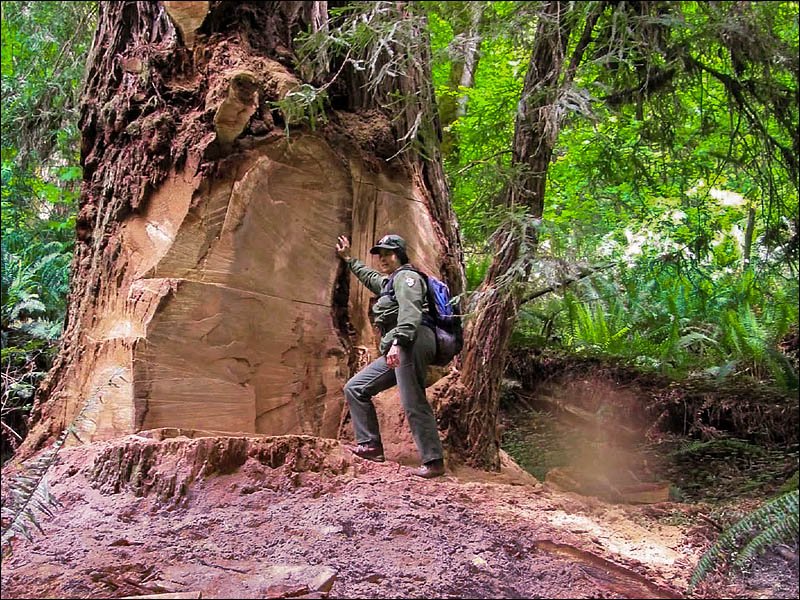
Probably our favorite thing we read all week was this story from Bloomberg about the illegal theft of so-called Redwood burls from California’s Redwood National Park. Burls are the massive, swollen, misshapen growths that naturally occur on trees. Basically, the grain has grown from the tree in a deformed manner, a form of cellular misdirection. They look a little bit like tumors or additional appendages. But because of the strange patterns they exhibit when the fresh wood is exposed, burls are extremely valuable around the world. They are used to make tables and countertops and footstools, etc. A quick search online came up with numerous sites selling redwood burl tables for tens of thousands of dollars. Certain raw burl pieces are also extremely valuable. No wonder thieves go after them. 

The problem is that choice redwood burls are very rare. They take many years, often hundreds of years, to grow and become large and complex. And if there’s one place large, ancient redwoods grow in abundance, it’s Redwood National Park in Northern California

Poachers have been entering Redwood National Park in the night with saws and cutting off the burls to sell for big bucks. The trees usually survive, but they are permanently scarred. Burl removal is legal if the trees are in private hands and the owner gives the ok. But burl cutting is illegal in the national park, as you can imagine. And since we’re talking Redwoods National Park, we’re talking some of the tallest, finest, rarest, most beautiful trees on the planet, so the thought that criminals are burl poaching in these parks gets pretty infuriating. 

Luckily, as the story explains, park rangers like Branden Pero are tasked with catching the burl poachers and they’ve brought some high technology to bear (including hidden cameras) to nab Derek Alwin Hughes, a 35-year old meth user who was charged with six crimes, including Grand Theft.

Bloomberg


Environment

LA’s air quality is deteriorating

If you lived in Los Angeles in the 70s, then you remember the days when schools closed due to poor air quality. With few Federal laws in place mandating controls on car exhaust, the city was often blanketed under a disgusting layer of brown smog. 

We’ve come a long way since then. The 1970 Clean Air Act and the EPA’s strict regulation of exhaust emissions, improved LA’s air and made it breathable again. It’s been called one of the greatest successes in US environmental history. But according to a study published this year by scientists at New York University and the American Thoracic Society, we’ve been taken several steps backward, especially where ozone is concerned. Ozone can damage lungs, trigger asthma attacks and lead to other life-threatening problems.

The problem is particularly bad in Southern California, where researchers found a 10% increase in deaths attributable to ozone pollution from 2010 to 2017. While downtown and the westside have fared somewhat better, inland regions around Riverside and San Bernadino are experiencing the most dangerous levels of pollution. California regulators have been tasked with devising a plan by the end of the year to reduce ozone, and they say it’s going to be expensive, perhaps costing as much as $14 billion.  

Los Angeles Times


Public Health

Inhaled: a new podcast series  

Let’s stick with air quality and health for a moment. A powerful new 5-part podcast series by the Chico Enterprise Record called Inhaled looks at the health impacts of last year’s wildfires, with a particular focus on the Camp Fire, the deadliest, most destructive wildfire in California history. It turns out that the smoke from the Camp Fire, and numerous other fires around the state, has led to lingering health problems for many people. Smoke contains toxic particles that can lodge themselves into lungs and cause permanent health problems. Those health effects are now being felt by many people, many of whom are finding it difficult to get the health care they need. It’s an important story because we tend to think of the impact of wildfires as something immediate, with death and property damage occurring quickly, when the reality is the damage to personal health can linger for years.     

Inhaled


California science news roundup

An interesting update on the Mars InSight lander, which has been experiencing lingering problems with its heat probe, an autonomous hammer that’s supposed to penetrate five meters down into the Martian soil to get all sorts of never-before-made measurements.  The bad news: they haven’t fixed it. The good news: they HAVE been able to measure small Mars quakes, providing scientists with new data and clues about the planet’s interior. (Planetary Society

A look at the problem of feral horses in California. Wild mustang populations are out of control, competing with cattle and native wildlife for resources. If the federal government doesn’t rein them in, ranchers may take matters into their own hands. (Alta Magazine)

California’s illegal pot farms are killing wild fish. Run-off, water diversion, and pollution from illegal cannabis farms are polluting streams where fish like steelhead and salmon thrive, killing many. (Bitterroot Magazine)  

The tragically failed plan in Modesto to plant 5,000 trees. (Modesto Bee)

Hawthrone-based SpaceX faces challenges in launching thousands of satellites to provide space-based internet service. But the payoff could help finance the company’s bigger space ambitions. (LA Times)

Mothers in California are leading efforts to ban harmful pesticides. (Grist)

Another serial-rape suspect is nabbed (this time in Sacramento) with DNA testing technology. (SacBee)

A compelling argument that the iPhone may be reducing resource consumption rather than increasing it. Think of all the things you no longer own because smartphones have replaced them: calculator, camcorder, clock radio, mobile telephone, and tape recorder. (Wired)

Jupiter‘s moon Io is the most volcanically active body in the solar system. Caltech scientist Katherine de Kleer has been capturing the moon’s volcanic landscape in incredible detail. (New York Times)

Caltech scientists at the Owens Valley Radio Observatory have been able to pinpoint the location of so-called fast radio bursts to a distant galaxy almost 8 billion light-years away. (CalTech)

Some dude went snorkeling in Sausal Creek in Oakland. He saw some fish. Interesting, but kind of gross. (SF Gate)

There’s a new book out about how California’s longstanding role as a center for health, wellness, nutritional fads, and sunshine changed its architecture. (LA Curbed)

That’s it! Have a great week, and please send your friends an invitation to sign up for the California Science Weekly newsletter. 
Design by Luis Ramirez

Blocking offshore drilling // Finding clear skies for stargazing in California // Amazing moon shots // Black abalone recovery // California’s Central Valley as art

Sign up for the California Science Weekly newsletter. Fresh California science every Friday!

Week of June 21, 2019

Environment

House approves a measure to block offshore drilling for a year

Credit: Erik Olsen

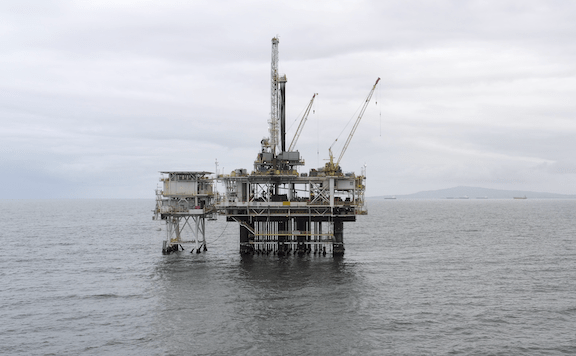
The House passed a spending bill late Thursday that would block offshore drilling along most U.S. shores, including a ban on seismic testing used to find oil and gas reserves. Unfortunately, it only lasts a year. Many groups, particularly in California, have long sought an end to drilling, and there was immense hope that would be the case in 2016 when President Obama permanently ended oil and gas leasing in parts of the Atlantic and Arctic oceans. However, President Trump issued an executive order in April 2017 that would roll back these protections, and in January 2018, now former U.S. Department of the Interior Secretary Ryan Zinke proposing opening up nearly all federal waters to oil and gas extraction. The new measure potentially restores the safeguard that protected California’s coast for more than a quarter century.  

Press-Democrat


Astronomy

Finding clear star-gazing skies in California

Light Pollution Map

It’s not easy to find great places to gaze up into the night sky and take in the grandeur and awe of the universe. Light pollution from cities has obscured the skies in so many places around the state, that you are often lucky, even on a clear night, to see more than a dozen or so points of light. Of course, this is a problem everywhere, not just California. In June 2016, it was estimated that one-third of the world’s population could no longer see the Milky Way. 

For California residents seeking dark spaces to escape with their telescopes or just a blanket to lie on, there is some hope. Many municipalities are installing less light polluting LEDs or passing ordinances to turn off certain lights during the night to reduce light pollution.

There are a few places where you can still go to find clear night skies. The light pollution map offers a very handy resource to find California’s best star viewing opportunities. Not surprisingly, desert areas and sections of Northern California offer some of the best locations. For example, Anza-Borrego Desert State Park in southern California was made a dark park in 2018. Also, two weeks ago, the Grand Canyonwas named an International Dark Sky Park by the International Dark-Sky Association. 

Light Pollution Map


Space

Amazing moon shots

Speaking of dark skies, let’s talk astrophotography. Take a look at Sacramento photographer Andrew McCarthy‘s images of the moon.McCarthy has spent many hours transforming some 50,000 individual images of the night sky into one very large and detailed photo of the moon. It’s breathtakingly beautiful and exquisitely detailed. Each crater and lunar sea on the side facing us looks like it was shot up close, when actually they were taken with McCarthy’s two camera setup 239,000 miles away. His process involves shooting photos and then stacking them at different exposures. He switches between an astronomy camera and a Sony A7II with a 300mm lens. Using Photoshop and special software, he aligns and adjusts the images to create the final product. You can see his marvelous Instagram feed here. 

Andrew McCarthy


Marine Science

California black abalone making a comeback

Credit: Michael Ready

Back in 2017, ride-sharing company Uber held its second Uber Elevate Summit in Los Angeles to push the idea of flying taxis. To most Los Angelenos, the thought of soaring over traffic is almost too good to be true, a Jetsons cartoon fantasy. But it may not be as far fetched as it seems. Numerous companies are working on the idea, and the technology is getting closer and closer to reality. One of the big obstacles at the moment is battery power, since most flying cars will have to be electric and the systems will need to carry a lot of redundancy (flying cars will not be able to glide much), which adds tremendous weight. 

Another obstacle is infrastructure. Where are all these flying cars going to take off and land? Well, Uber has been thinking a lot about this subject and just released plans for various “skyports” that will be built around Los Angeles.  Uber says that both LA and Dallas will be the pilot cities for the new service it calls Uber Air. Uber also unveiled renderings of the vehicles themselves, which include four passenger seats and a small storage space for baggage. The company says we may be riding in flying taxis, perhaps starting with service from LAX to downtown, by 2023. 

Santa Barbara Independent


Agriculture

California’s Central Valley as art

Mitchell Rouse

Aerial Photographer Mitchell Rouse takes aerial photos of agricultural lands in the Central Valley, making works of fine art that are not only lovely, but highlight the incredible diversity of forms and patterns that only an eye in the sky can see. Interestingly, he doesn’t use drones, but rather small planes and helicopters. In particular, he favors the Bell 407 helicopter and shoots with a Shot Over F1 Gimbal housing a Phase 1 Industrial 15oMP pixel camera. His portfolio of the central valley is called Agricultural Project #1.   

Mitchell Rouse


California science news roundup

California officials and seismologists are saying the swarm of small quakes they’ve measured are probably not anything to be worried about. Probably.

California officials are investigating an Oakland-based “biohacker”, accusing him of practicing medicine without a license.  

ABC News did a nice feature on California’s Channel Islands, sometimes called “North America’s Galapagos.”   

NASA has made available a library of 140,000 high definition files filled with photos, videos, and sound clips, all free and available for download. 

Blue states are adopting aggressive climate policies. Red states, not so much.

Research oceanographer Jules Jaffe at Scripps Institute of Oceanography talks about how underwater drones (some of which his lab builds) are changing our understanding of the oceans.

Surfer Kevin Cunningham makes surfboard skags out of plastic trash. 

A new California wildfire fund would put aside $21 billion for damage claims to help those whose property was destroyed.

A Stanford team is developing a privacy-minded alternative to Alexa and Siri. They call it almond.

California based CEO Elon Musk says his company has designed a submarine car like the one from the 1977 James Bond movie, “The Spy Who Loved Me.”

Nestlé, the world’s largest bottled water company, has been accused of taking millions of gallons of free water from the San Bernardino National Forest 17 months after California regulators told them they had no right to much of what they’d taken in the past.

century-old cypress that may have inspired some of the imagery in Dr. Seuss’ Lorax story has collapsed. Geisel lived in La Jolla from 1948 until his death in 1991 and the tree lies close to his old home.

DOLA has a nice feature on the best opportunities to see exotic animals in California.

Scientists sequenced the almond genome, perhaps opening up a way for growers to cultivate varieties that lack cyanide, a potent poison.

California mental health officials are working with Mountain View-based Mindstrong to test apps for people getting care in CA’s mental health system. The idea is to create an early-warning system to flag the user when an emotional crisis seemed imminent.

Stanford Earth system science professor Kate Maher on how reactive transport modeling is used to better understand the chemical reactions in Earth’s subsurface that impact water supplies, energy waste storage, and climate change.

The heavy snows and deep snowpack have been great for skiers, and will benefit farmers who were coping with a seven-year drought. But researchers are warning that the ample rains and snows might lead to a very serious increase in wildfires. 

That’s it! Have a great week, and please send your friends an invitation to sign up for the California Science Weekly newsletter. 

Design by Luis Ramirez

Using California reservoirs like a battery // NASA’s Mars Helicopter // A gazillion ladybugs fill the sky // The fish with Dragonglass teeth // Lighter than air metal

Sign up for the California Science Weekly newsletter. Fresh California science every Friday!

Week of June 7, 2019

Environment

California uses reservoirs and pumps to tackle climate change

PG&E Corp.

California has some of the most aggressive renewable energy goals in the country. The state is required to obtain at least 33% of its electricity from renewable resources by 2020, and 100% from carbon-free sources by 2045. That’s going to take a lot of energy storage, and the fact is that Lithium-ion batteries, like Elon Musk’s Powerwall, produce a few hundred megawatts of electricity at most and will not be up to the task.

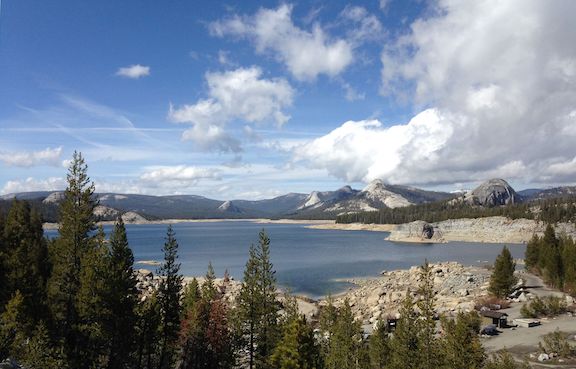
Up in the Sierras, 50 miles east of Fresno, there is a natural battery of sorts that harnesses the power of gravity and has been around for over 20 years. Bloomberg writes about PG&E Corp.’s Helms Pumped Storage plant, which delivers over 1,200 megawatts every day, enough to power 900,000 homes, and it does so cleanly. It is kind of an amazing project.

The facility uses so-called “pumped-hydro storage”, basically turning existing reservoirs at different altitudes into a kind of battery. The idea is simple. Take two reservoirs at different elevations, connected by pipes or tunnels. When electricity is abundant, pump water from the lower reservoir to the one uphill. When the grid needs power, let the water flow back down through turbines.

Helms relies on energy from Diablo Canyon to power the pumps during the reverse cycle at night, but the amount of power generated when the water flows down during the day more than compensates for the power used at night, making the plant both environmentally friendly and economical. 

It’s century-old technology, but it works. There are seven in California alone. Unfortunately, they are very expensive (the projects can cost more than $1 billion to build), and there aren’t that many reservoirs around that meet the specifications to make pumped hydro work. That said, Nine projects are proposed in California. One proposed project by NextEra Energy Inc. would go near Joshua Tree National Park, but construction hasn’t started yet. 

Bloomberg


Space

NASA’s Mars Helicopter getting ready for its close-up 

The next big mission to Mars will carry more than the landers and rovers that we all know and love. In fact, the Mars 2020 mission will carry an actual helicopter. The advantages of a flying vehicle are obvious: you can go much farther and cross terrain that would be impossible for a ground-based system to traverse. But there’s a hitch: 

“Nobody’s built a Mars Helicopter before, so we are continuously entering new territory,” said MiMi Aung, project manager for the Mars Helicopter at NASA’s Jet Propulsion Laboratory in Pasadena, California.

It’s not like building a copter for Earth. The tenuous Martian atmosphere has 1% the density of Earth, so all the flight systems have to be engineered differently. And what about controlling the vehicle from Earth over large interplanetary distances? The dynamics are significantly more complicated than when driving a rover over the surface.

None of that is deterring the folks at NASA’s Jet Propulsion Laboratory in La Canada Flintridge, who have been testing the Mars Helicopter for the Mars 2020 launch.  It may be hovering above the red Martian landscape in 2021. However, the craft will carry no instruments. Its purpose is to prove that powered flight on Mars is possible.   

JPL


Animals

It’s a bird. It’s a plane. It’s a gazillion ladybugs!

There were no clouds in the sky the other day over San Bernardino County when a weather satellite picked up a large blob hovering in the air. Instead, the 80-mile by 80-mile mass was a massive cloud of ladybugs flying at between 5,000 and 9,000 feet. That’s a crazy amount of ladybugs. 

California is home to about 200 species of ladybugs, but scientists have not yet identified which species were seen in the radar image, but they say it’s likely they are Hippodamia convergens, known as the convergent lady beetle.

Los Angeles Times    NPR


Animals

The fish with Dragonglass teeth

Credit: Scripps Institution of Oceanography

The Dragonfish is a crazy-looking animal. Part of its allure is a set of dagger pointed teeth that happen to be transparent and amazingly strong. 

In fact, the teeth of the species Aristostomias scintillans are made of nanoscale-size crystal particles that make them much stronger than the teeth of other sea animals like sharks and other fish. The fish’s teeth caught the attention of scientists at Scripps Institution of Oceanography in San Diego, and led them to consider how new materials might be developed to take advantage of the crystal structures. Perhaps, like Dragonglass, they can be forged into objects with magical properties.  

New York Times


Materials Science

Lighter than air metal

Lawrence Livermore National Laboratory

Scientists at the Lawrence Livermore National Laboratory have developed a type of metal foam that is strong, but so light it can ride on a mosquito’s back. 

It’s not really foam, though. It’s called “porous metal monolith” or ultra-low density metal, and is really a spaghetti-like web of randomly connected nanometer-sized wires made of gold, silver and copper. They take the shape of miniature marshmallows and contain the same or fewer number of atoms as air. Exactly what the material might be used for is still an open question. Perhaps Patagonia will someday use the material to make backpacks for mosquitos. 

Lawrence Livermore National Laboratory


MORE

The ocean microplastics problem is even worse than we thought. Way worse, say scientists at MBARI. 

Three South Koreans were nabbed poaching $600,000 worth of succulent plants. The Dudleya plants are hugely popular in Asia. 

How might California use recent winter storm to replenish aquifers? It’s harder than it might seem

Can empathy be cultivated? One Stanford scientist thinks so. 

Cal Berkeley has its own experimental forest, and it may help us better understand wildfires. 

Could California seaweed become the biofuel of the future? 

150 lakes in the Tahoe Basin are still frozen, and it’s June.

Apple’s new “Spaceship” HQ is surprisingly earthquake ready.

There’s a town in California that was built to survive wildfires.

California says coffee may not be so bad for you after all.

A huge graveyard of strange fossilized worms was discovered off the coast of California.

Astronomers aren’t happy with SpaceX’s new array of Starlink satellites.   

Drones will replace fireworks at the California state fair. 

That’s it! Have a great week, and please send your friends an invitation to sign up for the California Science Weekly newsletter. 

Design by Luis Ramirez