Walter Munk was a Californian Oceanographer Who Changed Our Understanding of the Seas

Photo: Erik Jepsen (UC San Diego)

Walter Munk, often referred to as the “Einstein of the Oceans,” was one of the most influential oceanographers of the 20th century. Over a career that spanned more than 70 years, Munk fundamentally altered how we think about the oceans, contributing to our understanding of everything from wave prediction during World War II to deep-sea drilling in California. His work at the Scripps Institution of Oceanography in La Jolla, California, was groundbreaking and continues to influence scientific thinking to this day.

Walter Heinrich Munk was born in Vienna, Austria, on October 19, 1917. At 14, he moved to New York, where he later pursued physics at Columbia University. He became a U.S. citizen in 1939 and earned a bachelor’s degree in physics from the California Institute of Technology the same year, followed by a master’s in geophysics in 1940. Munk then attended the Scripps Institution of Oceanography and completed his Ph.D. in oceanography from the University of California in 1947.

Dr. Walter Munk in 1952. (Scripps Institution of Oceanography Archives/UC San Diego Libraries)

In the early 1940s, Munk’s career took a defining turn when the United States entered World War II. At the time, predicting ocean conditions was largely guesswork, and this posed a significant challenge for military operations. Munk, a PhD student at Scripps at the time, was recruited by the U.S. Army to solve a problem that could make or break military strategy—accurate wave prediction for amphibious landings.

CALIFORNIA CURATED ART ON ETSY

Purchase stunning art prints of iconic California scenes.
Check out our Etsy store.

One of his most famous contributions during the war came in 1944, ahead of the Allied invasion of Normandy. Alongside fellow oceanographer Harald Sverdrup, Munk developed a method to predict the size and timing of ocean waves, ensuring that troops could land safely during the D-Day invasion. Using their model, the Allied forces delayed the invasion by one day, a move that proved crucial in reducing casualties and securing the beachhead. This same wave prediction work was used again in the Pacific theater, particularly for landings on islands like Iwo Jima and Eniwetok. Munk’s contributions not only helped win the war but also laid the foundation for modern oceanography. Wave forecasting is now a standard tool for naval operations, shipping, and even recreational surfers.

Landing craft pass supporting warships in the Battle of Eniwetok, 19 February 1944. (U.S. Army)

After the war, Munk returned to Scripps, a place that would remain central to his career. Established in 1903, Scripps had been growing into a major center for oceanographic research, and Munk’s work helped elevate it to new heights. Located in La Jolla, just north of San Diego, Scripps was perfectly positioned on the California coastline to be at the forefront of oceanographic studies. Scripps is one of the premier oceanographic institutions in the world.

During the post-war years, Munk helped pioneer several new areas of research, from the study of tides and currents to the mysteries of the deep sea. California, with its rich marine ecosystems and coastal access, became the perfect laboratory. In La Jolla, Munk studied the Southern California Current and waves that originated across the Pacific, bringing new understanding to local coastal erosion and long-term climate patterns like El Niño. His research had a direct impact on California’s relationship with its coastline, from naval operations to public policy concerning marine environments.

Walter Munk in 1963 with a tide capsule. The capsule was dropped to the seafloor to measure deep-sea tides before such measurements became feasible by satellite. Credit Ansel Adams, University of California

While Munk’s contributions to wave forecasting may be his most widely recognized work, one of his boldest projects came in the 1960s with Project Mohole. It was an ambitious scientific initiative to drill into the Earth’s mantle, the layer beneath the Earth’s crust. The project was named after the Mohorovičić Discontinuity (named after the pioneering Croatian seismologist Andrija Mohorovičić), the boundary between the Earth’s crust and mantle. The boundary is often referred to as the “Moho”. The goal was revolutionary: to retrieve a sample from the Earth’s mantle, a feat never before attempted.

The idea was to drill through the ocean floor, where the Earth’s crust is thinner than on land, and reach the mantle, providing geologists with direct insights into the composition and dynamics of our planet. The project was largely conceived by American geologists and oceanographers, including Munk, who saw this as an opportunity to leapfrog the Soviet Union in the ongoing Cold War race for scientific supremacy.

The Glomar Challenger, launched in 1968, was the drill ship for NSF’s Deep Sea Drilling Project. (Public Domain)

California was again the backdrop for this audacious project. The drilling took place off the coast of Guadalupe Island, about 200 miles from the Mexican coast, and Scripps played a key role in organizing and coordinating the scientific work. The project succeeded in drilling deeper into the ocean floor than ever before, reaching 600 feet into the seabed. However, funding issues and technical challenges caused the U.S. Congress to abandon the project before the mantle could be reached. Despite its early end, Project Mohole is considered a precursor to modern deep-sea drilling efforts, and it helped pave the way for initiatives like the Integrated Ocean Drilling Program, which continues to explore the ocean’s depths today. For example, techniques for dynamic positioning for ships at sea were largely developed for the Mohole Project.

Munk’s work was deeply tied to California, a state whose coastlines and oceanography provided a wealth of data and opportunities for study. Scripps itself is perched on a stunning bluff overlooking the Pacific Ocean, a setting that greatly inspired Munk and his colleagues. Throughout his career, Munk worked on understanding the coastal dynamics of California, from studying the erosion patterns of beaches to analyzing how global warming might impact the state’s famous coastal cliffs.

Scripps Institution of Oceanography

His legacy continues to shape how California manages its vast coastline. The methodologies and insights he developed in wave prediction are now used in environmental and civil engineering projects that protect harbors, beaches, and coastal infrastructure from wave damage. As climate change accelerates the rate of sea level rise, Munk’s work on tides, ocean currents, and wave dynamics is more relevant than ever for California’s future.

Walter Munk’s contributions to oceanography stretched well beyond his wartime work and Project Mohole. He was instrumental in shaping how we understand everything from deep-sea currents to climate patterns, earning him numerous awards and accolades. His work at Scripps set the stage for the institution’s current status as a world leader in oceanographic research.

One of the most notable examples of this work was an experiment led by Munk to determine whether acoustics could be used to measure ocean temperatures on a global scale, offering insights into the effects of global warming. In 1991, Munk’s team transmitted low-frequency underwater acoustic signals from a remote site near Heard Island in the southern Indian Ocean. This location was strategically chosen because sound waves could travel along direct paths to listening stations in both the Pacific and Atlantic Oceans. The experiment proved successful, with signals detected as far away as Bermuda, New Zealand, and the U.S. West Coast. The time it took for the sound to travel was influenced by the temperature of the water, confirming the premise of the study.

Walter Munk in 2010 after winning the Crafoord Prize. (Crafoord Prize)

Munk passed away in 2019 at the age of 101, but his influence lives on. His approach to science—marked by curiosity, boldness, and a willingness to take on complex, high-risk projects—remains an inspiration for generations of scientists. He was a giant not only in oceanography but also in shaping California’s role in global scientific innovation. As the state faces the challenges of a changing climate, Munk’s legacy as the “Einstein of the Oceans” continues to be felt along its shores and beyond.

The Remarkable Revival of the Giant Sea Bass in California: Catalina Island’s Growing Giants

National Park Service

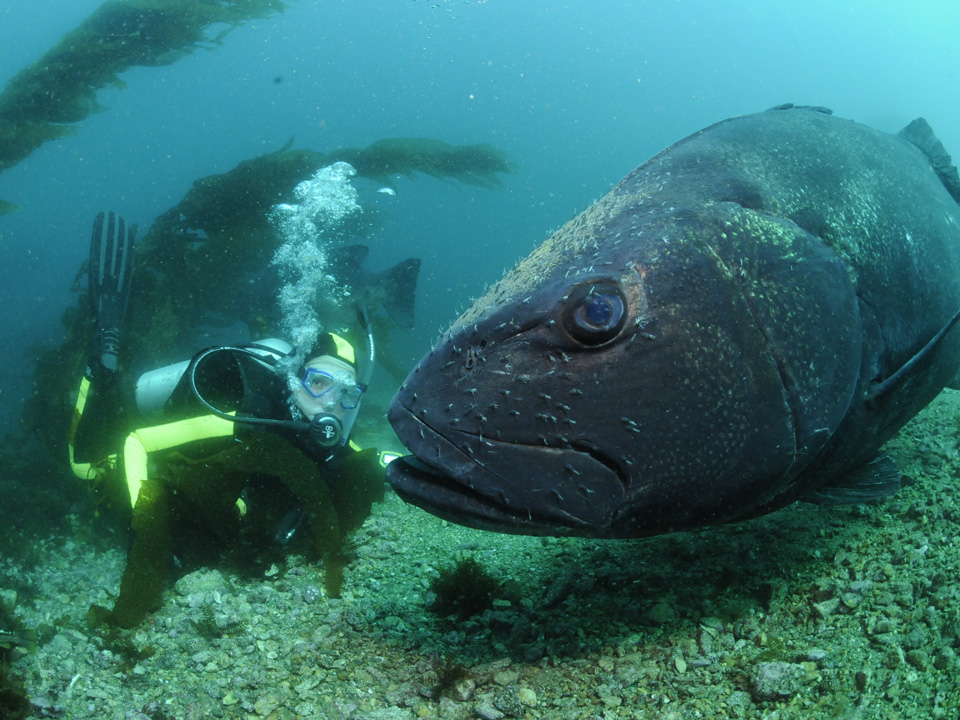
If you’ve ever dived off Casino Point in Catalina, it’s possible you have encountered one of the most magnificent fish ever to ply the cold waters of California. The Giant Sea Bass, also known as Stereolepis gigas, has long been a majestic part of California’s coastal ecosystems. This behemoth of a fish can grow up to nearly 7 and a half feet long, weighing a whopping 560 pounds, and can live to the age of 75. These gigantic, slow-moving sea creatures were once a common sight in the coastal waters of Southern California, particularly around Catalina Island. However, overfishing in the 20th century dramatically reduced their populations to critically low levels. Now, thanks to conservation efforts, these gentle giants are making a triumphant, albeit precarious, return. This is their story of recovery and resilience.

Giant Sea Bass weighing over 400 pounds caught at Catalina in 1906

The plight of the Giant Sea Bass is a familiar story in the annals of marine conservation. Abundant in the early 1900s, they were targeted by both commercial and recreational fishers. Their large size and slow-moving nature made them an easy and attractive target. Overfishing led to a sharp decline in their numbers. By the 1970s, sightings had become rare, sparking concerns about the species’ survival.

However, the Giant Sea Bass was not ready to fade away into history. The California Department of Fish and Wildlife stepped in during the 1980s, implementing measures to protect the species. A ban was placed on commercial and recreational fishing, and a concerted effort was made to restore their habitat around the Southern California coast, especially around Catalina Island.

If you are a diver, Catalina Island is a hotspot to see Giant Sea Bass. (Erik Olsen)

The breeding population of giant sea bass — which is listed as critically endangered by the International Union for Conservation of Nature — is believed to be only about 500 individuals. But since the ban on fishing and the launch of habitat restoration projects, the Giant Sea Bass has been on a steady journey towards recovery. Research groups and marine scientists have been monitoring their numbers around Catalina Island, a critical habitat for the species. Much of the work has been done at the Wrigley Marine Science Center (WMSC), the USC Wrigley Institute for Environmental Studies’ satellite campus on Santa Catalina Island. They’ve been using a variety of methods, including underwater surveys and remotely operated vehicles (ROVs), to track the population.

Their work has yielded promising results. The number of Giant Sea Bass sightings has been steadily increasing over the years. Juvenile Giant Sea Bass have also been spotted, a positive sign that the species is breeding successfully. These observations suggest that their populations are recovering, albeit slowly.

In 2019 California State University, Northridge (CSUN), the Aquarium of the Pacific, and Cabrillo Marine Aquarium announced a successful joint effort involving raising and releasing juvenile giant sea bass into the ocean. For this project, CSUN shared giant sea bass eggs in an attempt to produce offspring. Three juveniles were raised at the Aquarium of the Pacific, and the Cabrillo Marine Aquarium successfully reared hundreds of baby giant sea bass babies from these eggs. In March 2020, 200 baby giant sea bass were released into the murky waters of Santa Monica Bay.

University of California Santa Barbara

Catalina Island, a jewel in Southern California’s marine landscape, is another big part of this conservation success. The island’s surrounding waters offer the perfect habitat for the Giant Sea Bass, with its ample kelp forests and rocky reefs, not to mention the ocean tends to be much cleaner around Catalina than along the mainland coast. The island’s commitment to marine conservation, exemplified by the Catalina Island Conservancy and its partners, has provided the ideal conditions for the species to rebound.

In addition to the protective regulations, the Island’s community has embraced their role as stewards of their marine environment. Local scuba divers often act as citizen scientists, providing valuable data through sightings and photographs of the Giant Sea Bass. We at California Curated have seen several of them while diving, gaping in awe as they hover like zeppelins in the kelp beds of Casino Point.

CALIFORNIA CURATED ART ON ETSY

Purchase stunning art prints of iconic California scenes.
Check out our Etsy store.

Researchers who have been studying large fish in Southern California for decades say persistence is key to successful conservation efforts for giant sea bass. Although their numbers have increased, they are only about 20% of what’s needed for long-term survival. Researchers understands fishers’ frustrations but believe the fishing ban must remain for 20-30 more years to prevent repeating past overfishing. Since giant sea bass take 11-13 years to reach maturity, their recovery is slow, and even a few boats could severely impact the current population.

The return of the Giant Sea Bass is a beacon of hope, reminding us of the resilience of nature when given a chance to recover. But the journey is far from over. While their numbers are increasing, the Giant Sea Bass still faces threats, including pollution, habitat degradation, and the looming challenges of climate change.

The Giant Sea Bass at the California Academy of Sciences.

Conservationists argue that the Giant Sea Bass’s recovery illustrates the importance of a multi-faceted approach to marine conservation. Protective legislation, habitat restoration, scientific research, and community engagement all played critical roles in this success story.

Although the story is far from over and recovery is incomplete, the story of the Giant Sea Bass stands as a testament to the impact of conservation, of thinking hard and acting on the protection of species and fragile environments. Continued research, monitoring, and community engagement will be essential to ensure the long-term survival of the giant sea bass. Their resurgence offers a valuable opportunity to learn from our past mistakes and work together to ensure a brighter future for these gentle giants and the marine ecosystems they call home.

California’s Dark-Eyed Juncos Are Quietly Evolving in Plain Sight

Dark-eyed junco in Southern California (Photo: Alex Fu)

When we step outside and see wildlife, we often think of it as unchanging. A bird on a branch, a crab in a tide pool, a lizard skittering across a sidewalk. It feels timeless. But in truth, these animals are evolving, slowly and steadily, right in front of us. As climates become more unpredictable, habitats shift, food sources change, and nature adapts. This is especially true in our cities. Built over just the past few centuries, these sprawling human environments are reshaping the natural world and pushing wildlife to adjust in new and often surprising ways.

As California’s cities have expanded and encroached upon natural landscapes, it turns out the state’s wildlife is adapting in fascinating ways. Studying these changes is central to urban evolution, or how species adapt over time, both genetically and behaviorally, to the unique pressures of city life. From coyotes navigating traffic to birds adjusting their songs to be heard over city noise, urban evolution reveals how nature is not just surviving in cities, but evolving with them. Darwin believed natural selection was too slow to observe in real time, but today we know evolution can happen rapidly, sometimes within just a few generations.

Thanks for reading California Curated Newsletter! Subscribe for free to receive new posts and support my work.

Dark-eyed junco in Southern California (Photo: Alex Fu)

One cool example of urban evolution in California is the story of the dark-eyed junco (Junco hyemalis), a small songbird traditionally found in mountainous forests that is now thriving in urban environments like San Diego and Los Angeles. If you’re a birder or simply someone who enjoys watching the wildlife in your backyard, you’ve almost certainly seen them. Dark-eyed juncos are small songbirds with distinctive dark heads, often spotted hopping around on the ground rather than perching at feeders. I see them all the time, pecking at the spilled seeds beneath my feeder (or, I should say feeders, as I have several…nerd alert!). It turns out they’re classic ground foragers, evolved to search for food by scratching through leaf litter or snow, uncovering seeds, insects, and other hidden bits.

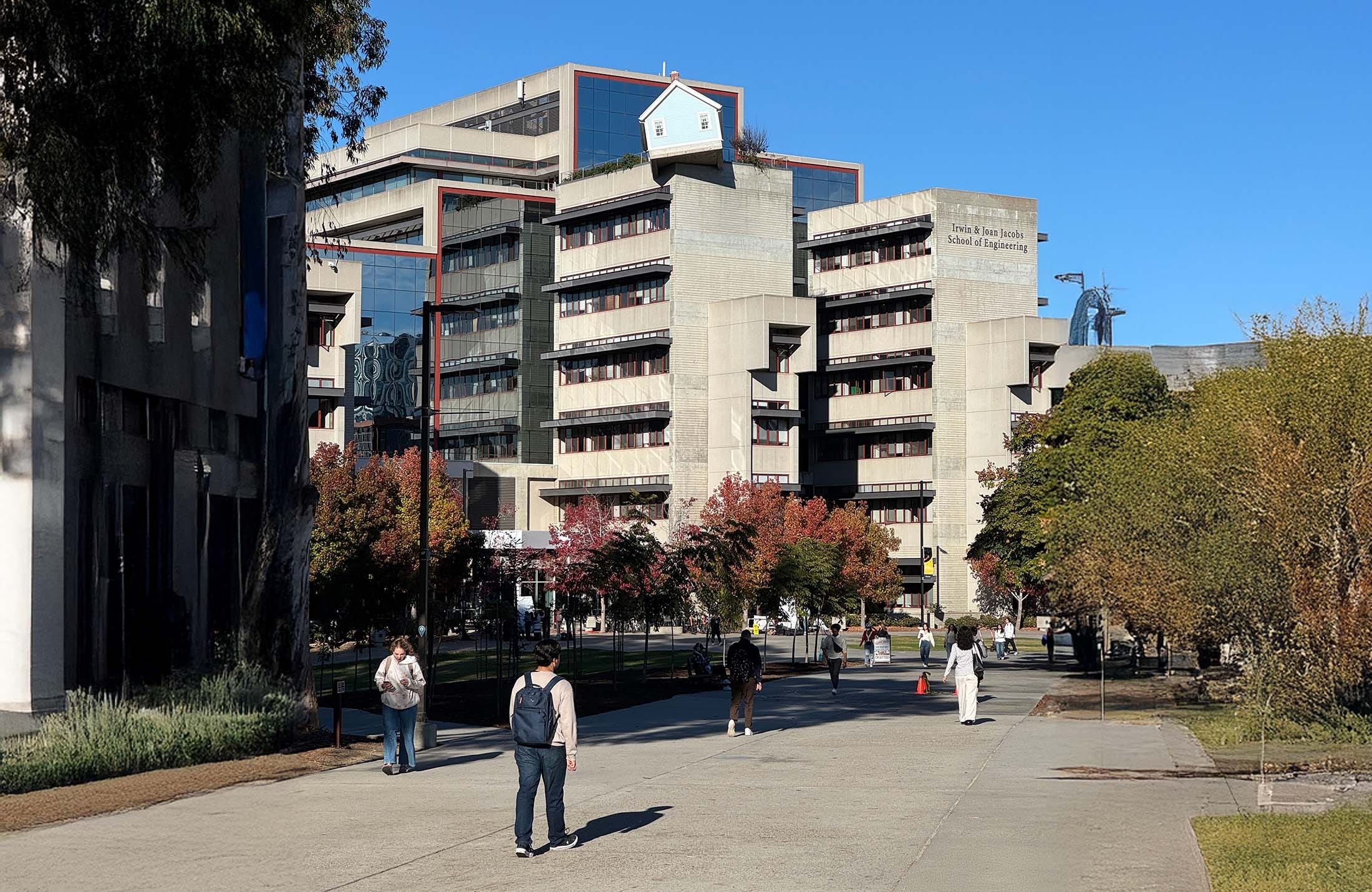
Recent research has revealed that dark-eyed juncos are evolving in direct response to urban life. Traditionally migratory, these birds once spent summers breeding in cool mountain forests and winters at lower elevations. But in the early 1980s, a group of juncos broke from that pattern and settled year-round on the campus of UC San Diego. There, researchers began documenting striking behavioral shifts. The urban juncos were bolder, less fearful of humans, and had even altered their mating and nesting habits. These changes, observed over just a few decades, offer a vivid example of how quickly species can adapt to city environments, a real-time case study in urban evolution unfolding in human-shaped habitats.

University of California San Diego (Photo: Erik Olsen)

Similarly, at the University of California, Los Angeles (UCLA), a junco population has been thriving for decades, with numbers reaching approximately 300. This long-term success has provided the Yeh Lab at UCLA with a unique opportunity to study how urban environments influence the evolution and behavior of these adaptable songbirds. Their research sheds light on how juncos have adjusted to city life, offering broader insights into wildlife resilience in human-altered habitats.

“It’s impressive how rapidly these vertebrate species can evolve. In a matter of a handful of years, we can find some pretty significant changes,” Pamela Yeh, an associate professor in ecology and evolutionary biology at UCLA, told California Curated. Yeh studied the junco population at UC San Diego when she was an undergraduate student there and wanted to expand the research to the population at UCLA. Studying the two different populations may offer insights into how species evolve in urban environments.

“We want to know, does a city make you evolve?” asks Yeh. “Do the different cities make you evolve similarly? Do the birds all become smaller? Do they all become bigger? Do they all have different-sized beaks? Or is each city unique?”

Dark-eyed junco at UCLA (Photo: Sierra Glassman)

With decades of data, the work echoes the groundbreaking research of Princeton scientists Peter and Rosemary Grant, whose studies of Galápagos finches transformed our understanding of how swiftly natural selection can operate. Now, the junco studies are taking that idea further, showing evolution unfolding not on remote islands, but in the heart of our cities.

“I think it’s now really considered a model vertebrate system for urban evolution,” says Yeh.

In their natural forest environments, juncos breed in response to the changing seasons, triggered by increasing daylight hours and rising temperatures. But in urban areas like those around UCSD and UCLA, where food is plentiful year-round, juncos have begun breeding earlier than normal and throughout the year. They build nests higher off the ground, often on artificial structures, and have increased the number of clutches per breeding season. The availability of artificial light, abundant food from human sources, and fewer natural predators in the city all play roles in these behavioral shifts.

Yeh believes it’s no accident that junco populations have surged on college campuses in recent decades. In fact, she sees it as a direct response to the unique conditions these urban environments provide.

“We think it is is partially that [urban university environments] mimic the natural environment, which is a mix of meadows and tall trees. But the other thing that we think could be important is the irrigation in grassy areas that allow the juncos, even when it’s extremely hot, there are still small insects and worms to grab and feed their offspring.”

One of the most striking adaptations among urban juncos is their behavioral shift in regards to people. Unlike their shy mountain counterparts, urban juncos are much more tolerant of human presence. This is not only a matter of convenience; it’s a survival mechanism. In the city, humans are not a threat, and urban birds need to capitalize on the resources provided by their proximity to people. Their lack of fear “allows them to keep eating even when we walk by,” says Yeh.

Dark-eyed junco in Southern California (Photo: Alex Fu)

Studying junco evolution isn’t just a scientific curiosity. It has real conservation stakes. Things haven’t been looking good for birds. An October 2019 study published in Science by the Cornell Lab of Ornithology revealed that North America has lost nearly 3 billion birds over the past 50 years, with dark-eyed juncos alone declining by 168 million. Yet their ability to adapt to urban life suggests they may have the evolutionary tools needed to weather these dramatic changes.

Beyond behavior, there are physical differences between urban and rural populations of dark-eyed juncos. Urban juncos, for example, developed duller black plumage on their heads and showed reduced white markings in their tail feathers. Yeh and her team have also documented that the wings of urban juncos are smaller, an adaptation likely driven by the demands of maneuvering through a dense, built environment rather than long-distance flight.

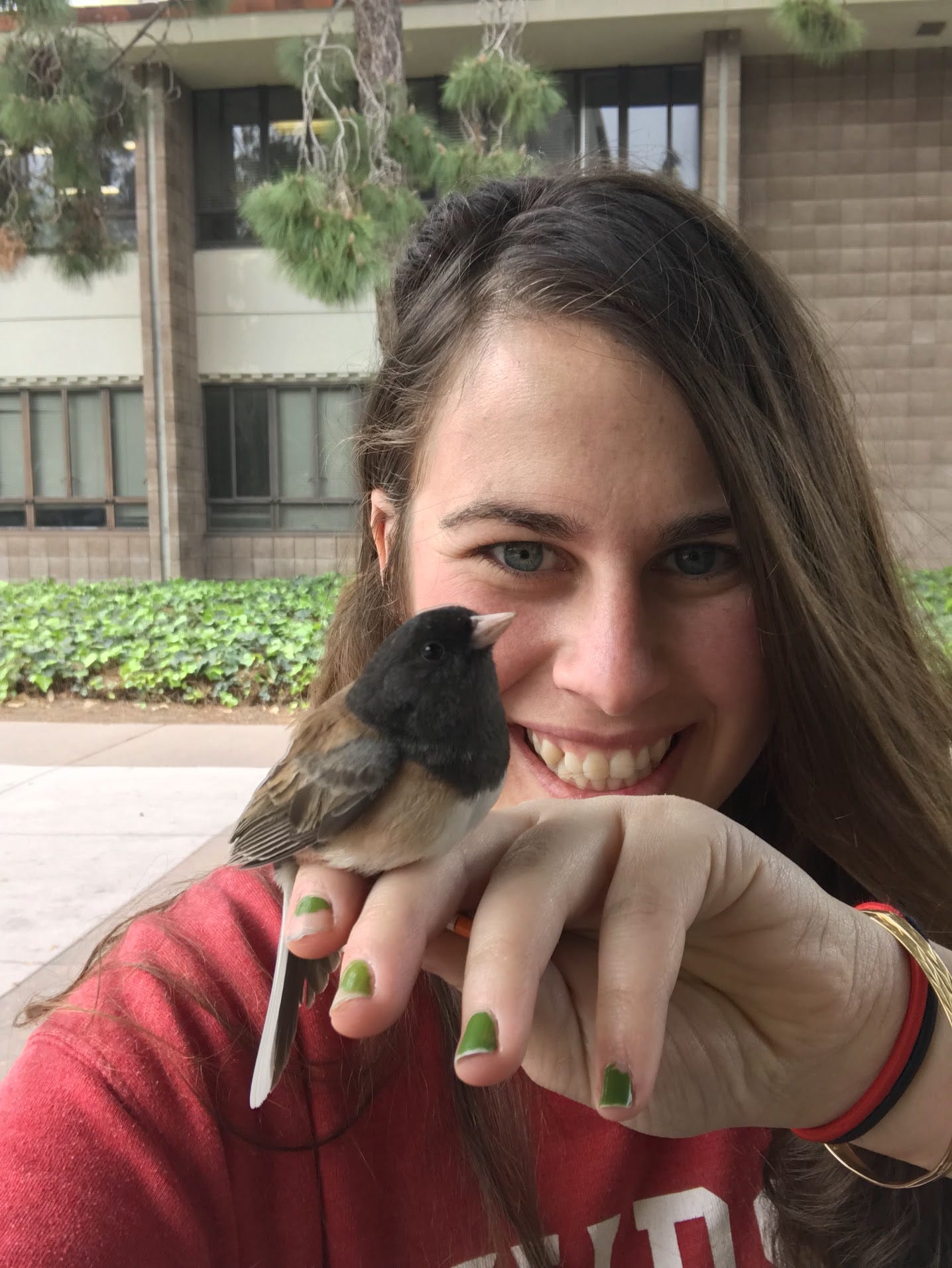
Ellie Diamant, currently a Ph.D. candidate in the Department of Ecology and Evolutionary Biology at UCLA in the Yeh Lab, holding a dark-eyed junco. (Photo: Ellie Diamant)

“Juncos historically were migratory birds. The ones that live in the mountains still are. But in the urban environments, we see them year-round,” says Dr. Ellie Diamant, Visiting Assistant Professor at Bard College. “So the benefits are gone for the longer-distance flight, but there seems to be more benefit for these short wings.” Diamant completed her Ph.D. in the Department of Ecology and Evolutionary Biology at UCLA in the Yeh Lab.

The dark-eyed junco is just one example of the broader phenomenon of urban evolution, where species adjust to the challenges and opportunities posed by city life. In California, this phenomenon extends beyond birds. Coyotes, for example, have become fixtures in cities like Los Angeles, adapting to scavenge food from human waste. Coastal animals like sea lions and pelicans have also made urban waterfronts their home, thriving amid the bustle of human activity. Similarly, the Western Fence Lizard has swiftly adapted to life in an urbanized environment.

Junco hatchlings at UCLA. (Photo: Sierra Glassman)

In his book Darwin Comes to Town, Dutch evolutionary biologist Menno Schilthuizen highlights the junco as an exemplar of rapid evolution in urban settings, but it also goes much further, documenting how our manmade environments are accelerating and changing the evolution of the animals and plants around us. Of course, it’s not all good news. Not by a long shot.

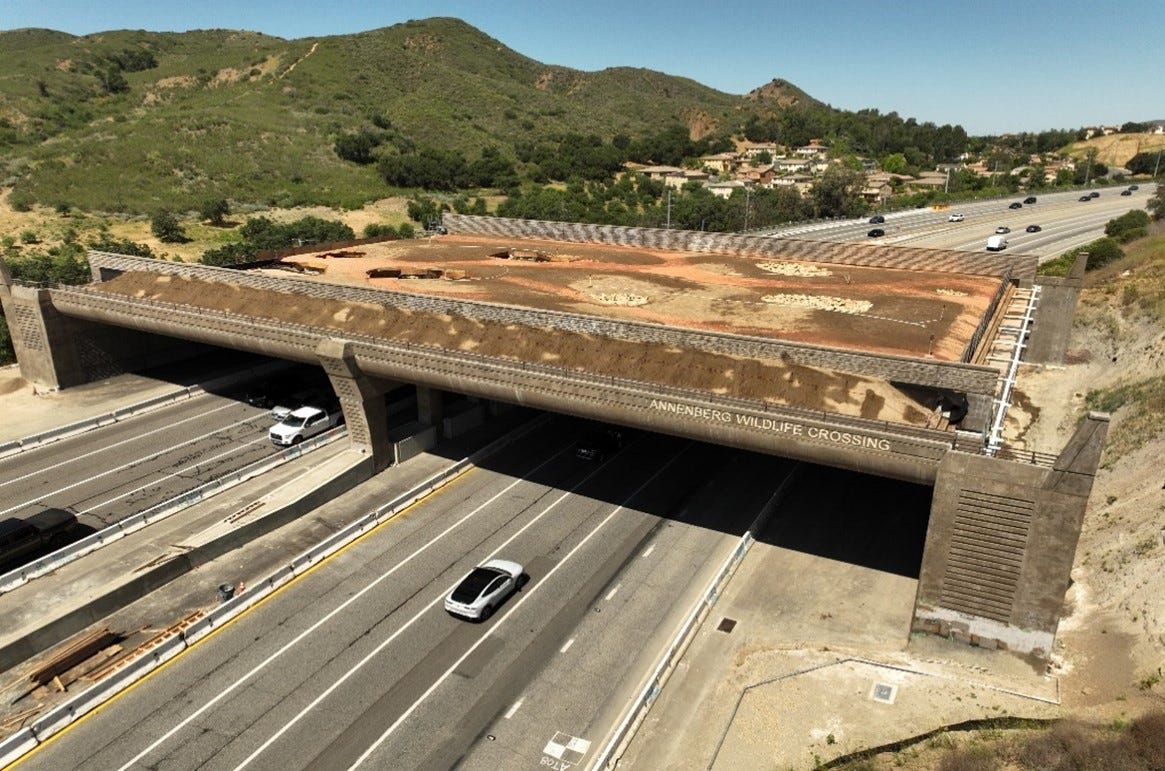
Studies published in Evolutionary Applications, underscore that urbanization is a double-edged sword, offering opportunities for adaptation but also introducing serious threats. In Los Angeles, for instance, the fragmentation of habitat by highways has led to the deaths of countless animals, a problem now being tackled through the construction of wildlife bridges like the Wallis Annenberg Wildlife Crossing opening in 2026, designed to reconnect critical migration routes.

Wallis Annenberg Wildlife Crossing currently under construction (Photo: State of California)

The dark-eyed junco’s ability to adapt to city life is both encouraging and a bit sobering. It shows how some wildlife can adjust and find ways to thrive even as human development spreads. But it also reflects the growing pressure we’re putting on natural ecosystems. In other words, it’s not all good, and it’s not all bad. As scientists dig deeper into urban ecology in California and elsewhere, the junco stands out as a clear example of how life shifts and changes in response to the world we’re shaping.

For those of us who live in cities, the juncos flitting through parks, pecking in our yards, and hopping across college campuses offer a chance to see evolution happening right in front of us. Nature isn’t some distant thing beyond the city limits. It’s here, threaded into the daily patterns of urban life.

John Isaacs, the Maverick Oceanographer Who Wanted to Tow Icebergs to California

An AI rendering of Isaacs’ bold idea (Midjourney)

California’s water crises have always inspired bold solutions, but few ideas rival the sheer audacity of John Isaacs’ proposal to tow a giant Antarctic iceberg to San Diego. A brilliant and unconventional researcher at the Scripps Institution of Oceanography, Isaacs made waves in 1949 with his imaginative, though controversial, plans to quench California’s chronic droughts by harnessing the frozen reservoirs of the polar regions.

Isaacs’ career was defined by his boundary-pushing ideas. A polymath with a keen interest in marine biology, engineering, and climate science, he often operated at the intersections of disciplines, challenging conventional thinking. The iceberg-towing proposal exemplified his knack for blending vision and pragmatism—if one were willing to stretch the definition of “pragmatic.”

Isaacs theorized that large Antarctic icebergs could be wrapped in insulation to slow their melting and then towed by tugboats up the Pacific coast. The journey, spanning thousands of miles, would end with the iceberg positioned off the coast of Southern California, where its meltwater could be harvested to replenish reservoirs. Isaacs estimated that a single large iceberg, some the size of Manhattan, could supply tens of billions of gallons of freshwater—enough to offset drought conditions for millions of people.

John D. Isaacs (Scripps Institution of Oceanography)

The concept wasn’t a fleeting thought. Isaacs expanded on his idea in 1956, suggesting the capture of an eight-billion-ton iceberg—20 miles long, 3,000 feet wide, and 1,000 feet deep—and towing it to San Clemente Island off San Diego in approximately 200 days. He even calculated that a fleet of six ocean-going tugs could accomplish the feat, taking about six months to tow the iceberg from the 65th parallel south to the Californian coast.

In October 1973, the RAND Corporation took Isaacs’ vision further with an extensive report titled “Antarctic Icebergs as a Global Fresh Water Source” for the National Science Foundation. This 96-page document, authored by J.L. Hult and N.C. Ostrander, provided the most detailed scheme to date, transforming the theoretical idea into a more structured and mathematical model. It envisioned the creation of an “iceberg train” and delved into the technicalities and logistics of towing icebergs across the ocean. Hult explained, “Bringing icebergs to where the water is needed was suggested by John Isaacs of Scripps Institute of Oceanography in the 1950s. It is our job to show how practical it is.” However, the plan was not without eccentricities—such as the suggestion of using a floating nuclear power plant to supply the energy needed for the operation. The RAND report exemplified the ambition of its era, though many of its assumptions leaned heavily on theoretical modeling rather than practical viability.

AI rendering of an iceberg being dismantled (Midjourney)

Isaacs wasn’t alone in dreaming big. His proposal came at a time when other researchers and engineers were exploring similarly outlandish ideas, like seeding clouds with silver iodide to induce rain or building massive aqueducts from Alaska. But Isaacs’ iceberg scheme captured imaginations for its sheer romance and its symbolic uniting of Earth’s polar extremes with parched California landscapes.

Isaacs knew his plan faced enormous technical, logistical, and financial hurdles. For one, towing an iceberg would require immense energy and coordination, as well as a fleet of powerful ships. The iceberg’s tendency to melt during transit—especially when entering warmer waters—posed another significant obstacle. To mitigate this, Isaacs suggested covering the iceberg in reflective materials or insulating blankets to slow heat absorption.

Then there was the issue of economics. Calculations revealed that the cost of transporting a single iceberg could run into the billions, far outweighing the price of more conventional water solutions like desalination plants or water recycling programs. Critics also worried about ecological disruption, from changing ocean currents to the impact on marine ecosystems along the iceberg’s route.

While Isaacs’ iceberg idea was never realized, it sparked a wave of creative thinking about unconventional water solutions. Today, some of the principles behind his ideas have resurfaced in modern innovations. Advanced engineering methods, including climate-resilient infrastructure and adaptive water management, owe a debt to the exploratory spirit of Isaacs’ era.

AI rendering of an aqueduct built to carry water from Alaska to California (Midjourney)

The iceberg-towing concept is occasionally revisited, especially as climate change intensifies water scarcity. For example, in recent years, researchers in the United Arab Emirates have considered similar plans to bring freshwater from polar ice to arid regions. Advances in materials science and energy efficiency have made some aspects of Isaacs’ vision more feasible, though the logistics remain daunting.

CALIFORNIA CURATED ART ON ETSY

Purchase stunning art prints of iconic California scenes.
Check out our Etsy store.

John Isaacs’ career extended far beyond icebergs. He contributed to deep-sea exploration, studied the effects of nuclear fallout on marine life, and was an early advocate for understanding the ocean’s role in climate systems. His interdisciplinary approach and willingness to embrace unorthodox solutions left a lasting impact on oceanography and environmental science.

Isaacs’ iceberg proposal remains a testament to his fearless creativity and his deep commitment to solving humanity’s greatest challenges. While the world never saw an iceberg floating past Los Angeles, Isaacs’ bold thinking continues to inspire researchers grappling with the complex interplay of science, technology, and the environment.

All the Fish We Did Not See – The Discovery of the Ocean’s False Bottom off California

A paper nautilus or Argonaut, a group of pelagic octopuses that dwell in the ocean’s twilight zone. (Erik Olsen)

In the summer of 1942, aboard the USS Jasper, a team of scientists embarked on a mission off the coast of San Diego, California, a hub for U.S. Navy operations and other military activities vital for the Pacific Theater of World War II. Their goal was to test a new technology called “long-range active sonar,” developed to detect enemy submarines—specifically Japanese submarines and German U-boats—during World War II. Long-range active sonar is a technology that sends sound waves through the ocean to map and visualize the seafloor across great distances, revealing details of underwater topography and structures that would otherwise remain hidden beneath the waves.

The expedition was led by Carl F. Eyring, an accomplished acoustic physicist known for his pioneering work in sonar technology. Eyring, along with his colleagues Ralph A. Christensen and Russell W. Raitt, played crucial roles in the mission. Their combined expertise in acoustics, naval operations, and marine science made them the perfect team to explore the deep ocean with sound.

The USS Jasper in 1945—just a few years after scientists discovered the first evidence of the Deep Scattering Layer during a research cruise aboard the ship. (Photo: Naval History and Heritage Command)

As they deployed sonar pulses into the depths, they encountered an unexpected anomaly: a persistent, dense layer approximately 300 yards (about 274 meters) below the surface that scattered their acoustic signals. It was almost as if the ocean floor had risen, looming closer with a strange, unyielding presence that defied all explanations.

This new reading was a complete anomaly, contradicting everything they knew about the seafloor’s topology. It was as though a solid mass had somehow materialized in the depths—a mass dense enough to obscure their sonar and make the familiar landscape unrecognizable. At the same time, their signal strength readings spiked erratically, suggesting significant interference in the water.

Carl F. Eyring (Brigham Young University)

The discovery of this peculiar layer presented an intriguing puzzle to the scientists aboard the Jasper. Yet, with a war raging, they couldn’t afford to lose focus. Instead, they concentrated on measuring its dimensions and mitigating the acoustic interference it created. Determining its true nature would have to wait for another time.

It wasn’t until almost three years later, in 1945, that oceanographer Martin Johnson deployed nets into the Pacific and uncovered the truth: the layer was actually a massive cloud of marine animals, most no larger than a human finger, migrating daily from the deep ocean to the surface and back. This dense biological layer, packed with animals capable of reflecting sonar, had created the illusion of a solid mass, effectively “masking” the true depth of the ocean floor by reflecting sonar waves off the swim bladders of the fish and other marine organisms. 

Bristlemouth trawled from the ocean’s twilight zone (Erik Olsen)

This phenomenon, later termed the Deep Scattering Layer (DSL), created a “false bottom” in sonar readings, revealing an unexpectedly dense concentration of biological life in a mid-ocean zone once thought to be relatively sparse. The discovery of the DSL challenged assumptions about life distribution in the ocean, showing that vast numbers of organisms—such as fish, squid, and zooplankton—populate these depths, rising and descending with daily cycles to avoid predators and optimize feeding.

The DSL is situated within the ocean’s mesopelagic zone, commonly referred to as the twilight zone, which extends from about 200 to 1,000 meters below the surface. This region is characterized by minimal sunlight penetration and hosts a diverse array of marine life. Indeed, this huge swath of biomass is exactly what the sonar was picking up. This remarkable behavior observed in this zone is the diurnal vertical migration—the largest daily movement of biomass on Earth, the world’s largest animal migration. Each evening, billions of organisms (some scientists actually believe they number into the quadrillions) including small fish like lanternfish, hatchetfish and bristlemouths, ascend toward the surface to feed under the cover of darkness, retreating to the depths at dawn to evade predators. (Bristlemouths, by the way, are said to be the most numerous vertebrate on the planet.)

Scattering layer seen on sonar (Erik Olsen)

The discovery of the DSL provided significant insights into marine biology and oceanography. The layer’s composition—primarily swarms of marine animals with gas-filled swim bladders—explained the sonar reflections that mimicked the seafloor. This understanding highlighted the abundance and biodiversity of life in the twilight zone and underscored the importance of these organisms in oceanic ecosystems.

The discovery also led over time to an understanding of the role this layer plays in the carbon cycle, the very phenomenon that helps regulate Earth’s climate. The daily migration of marine animals in this layer is not just a remarkable biological spectacle; it is also a key mechanism for transporting carbon from the ocean’s surface to its depths. As these organisms ascend at night to feed and then return to deeper waters during the day, they excrete waste and many of them die, effectively moving carbon downwards, often sequestering it in the deep ocean floor where it can remain for centuries. This process, known as the biological carbon pump, plays a vital role in mitigating the effects of carbon dioxide in the atmosphere, thus contributing to climate stability. Without the existence of the Deep Scattering Layer and its role in the carbon cycle, the Earth’s carbon balance would be significantly different, highlighting just how interconnected marine ecosystems are with global climate regulation.

In the decades following its discovery, the DSL has remained a subject of scientific inquiry. Advancements in sonar technology and deep-sea exploration have revealed the layer’s dynamic nature and its role in global carbon cycling.

Current research into the twilight zone, particularly by scientists at the Woods Hole Oceanographic Institution (WHOI), is uncovering fascinating insights into this enigmatic region of the ocean. The twilight zone remains one of the least explored parts of the ocean, despite being home to an abundance of life and playing a crucial role in global biogeochemical cycles. Woods Hole has been at the forefront of investigating this layer, employing advanced technology like remotely operated vehicles (ROVs), autonomous underwater vehicles (AUVs), submersibles, and cutting-edge acoustic techniques to understand its complex dynamics and ecosystem.

One of the leading researchers at WHOI, Dr. Heidi Sosik, has been focusing on the role that the twilight zone plays in the carbon cycle. Sosik’s work involves the use of automated imaging technologies to analyze the behavior and diversity of the organisms inhabiting this region. By documenting their daily migrations and interactions, Sosik’s team has been able to quantify the extent to which these animals contribute to carbon transport. This research is essential for understanding how much carbon is effectively being sequestered from the atmosphere through these daily migrations.

Bristlemouth fish (Erik Olsen)

Another prominent scientist at WHOI, Dr. Andone Lavery, is working to map the twilight zone’s acoustics in unprecedented detail. Lavery’s expertise in underwater sound technology has helped reveal not only the composition of the Deep Scattering Layer but also the behaviors of its inhabitants. Lavery’s recent findings indicate that the twilight zone’s acoustic properties are far more dynamic than previously thought, and these properties can significantly affect how marine animals detect predators and prey, as well as how researchers measure biomass in this layer.

Dr. Simon Thorrold, also from WHOI, has been studying the food web dynamics within the twilight zone. Thorrold’s research has uncovered surprising insights into predator-prey relationships among mesopelagic species. Using chemical tracers, his team has been able to track the movement of nutrients through the food web, revealing that many animals from the twilight zone are integral to surface ecosystems as well, either through vertical migration or being preyed upon by larger species such as tuna, swordfish, and marine mammals.

Scientists use a Triton submersible to explore the ocean’s twilight zone in the Bahamas. (Erik Olsen)

In addition, WHOI has been collaborating with international partners on the “Twilight Zone Exploration” (TZX) project, which aims to better understand how human activities, such as fishing and climate change, are impacting this critical part of the ocean. The mesopelagic zone is increasingly targeted by commercial fishing due to the sheer biomass it holds. Dr. Sosik and her colleagues are actively studying the potential consequences of harvesting these species, considering their importance in carbon sequestration and as a key link in marine food webs.

CALIFORNIA CURATED ART ON ETSY

Purchase stunning art prints of iconic California scenes.
Check out our Etsy store.

Together, these efforts are gradually revealing the twilight zone’s secrets, emphasizing its importance not only in regulating climate but also in maintaining the health of marine ecosystems. As the pressures of climate change and human exploitation continue to grow, understanding this mysterious part of the ocean has never been more critical.

The USS Jasper‘s encounter with the false bottom off California’s coast stands as a pivotal moment in oceanographic history. It not only unveiled the hidden complexities of the ocean’s twilight zone but also bridged the gap between military technology and marine science, leading to a deeper appreciation of the intricate and interconnected nature of Earth’s marine environments.

Cadillac Desert: How Marc Reisner Changed the Way We See Water

Los Angeles Aqueduct passing through Palmdale, California (Photo: Erik Olsen)

Marc Reisner’s Cadillac Desert: The American West and Its Disappearing Water remains a towering achievement in environmental journalism, decades after its publication in 1986. Chronicling the history, politics, and ecological consequences of water management in the American West, Cadillac Desert is not just an exposé of the past—it’s a cautionary tale that resonates today. With precision and passion, Reisner unraveled the intricacies of an arid region’s improbable transformation into one of the world’s most agriculturally productive and densely populated areas. His work has had a profound and lasting impact on how we understand water politics and environmental sustainability in California and beyond.

Cadillac Desert stands as a fitting successor to Wallace Stegner’s Beyond the Hundredth Meridian, continuing the exploration of water’s defining role in the American West. While Stegner championed the visionary work of John Wesley Powell and exposed the folly of ignoring the region’s arid realities, Reisner picked up the torch decades later to chronicle how those warnings were systematically ignored. Where Stegner painted a historical narrative of ambition and hubris, Reisner delivered a scathing and urgent critique of water politics, detailing the environmental and economic consequences of massive dam-building projects and unsustainable resource exploitation.

Colorado River

Cadillac Desert is, at its core, a gripping investigation into the manipulation of water resources in the American West. Reisner meticulously details how the construction of massive dams, reservoirs, and aqueducts enabled the transformation of a naturally dry landscape into a gargantuan economic powerhouse. From the Colorado River to the Los Angeles Aqueduct to California’s Central Valley, Cadillac Desert paints a vivid picture of engineering triumphs and environmental sacrifices, revealing the cost of this development to natural ecosystems, Indigenous communities, and future generations.

One of Reisner’s central stories is the tale of the Owens Valley. In the early 20th century, this fertile agricultural region was drained dry when the Los Angeles Aqueduct diverted its water to fuel the growing metropolis of Los Angeles. The story, replete with backroom deals, broken promises, and outraged locals, serves as a symbol of the greed and ambition that defined water politics in the West. Reisner weaves this narrative with the larger saga of William Mulholland, the ambitious engineer whose name is synonymous with both the success and hubris of L.A.’s water empire. This saga of water, power, and betrayal would later inspire the dark and iconic tale of Chinatown, the Roman Polanski film that captured the moral ambiguities and human cost of Los Angeles’ relentless thirst for growth.

Marc Reisner (Water Education Foundation)

Another cornerstone of the book is the story of the Colorado River, a waterway Reisner calls the most controlled and litigated river on Earth. He charts the creation of the Hoover Dam and the vast network of canals and reservoirs that distribute its water across seven states. The book reveals how over-allocation of the river’s resources, coupled with decades of drought, have pushed it to the brink of collapse—an issue that has only grown more urgent since Cadillac Desert was published.

Hoover Dam in 1936 (United States Bureau of Reclamation)

Reisner also dissects the Central Valley Project and the State Water Project, two gargantuan efforts to turn California into an agricultural Eden. By moving water from Northern California to the arid south, these projects enabled California’s emergence as a global agricultural leader. But Reisner doesn’t shy away from exposing the social and environmental consequences: drained wetlands, salt buildup in soils, and a system that prioritizes agribusiness over the needs of small farmers and urban residents.

CALIFORNIA CURATED ON ETSY

Purchase stunning art prints of iconic California scenes.
Check out our Etsy store.

What makes Cadillac Desert extraordinary is not just its scope but its style. Reisner’s journalistic rigor is matched by his ability to tell a compelling story. He brings characters like Mulholland and Floyd Dominy, the brash commissioner of the U.S. Bureau of Reclamation (part of the U.S. Department of the Interior), to life with vivid detail. At the same time, his writing is infused with moral urgency, challenging readers to question the sustainability of a society built on unsustainable water use.

Owens River in the Eastern Sierra (Erik Olsen)

The book’s legacy is immense. It galvanized environmentalists and policymakers, inspiring debates about water rights, conservation, and the future of development in the West. Documentaries, academic studies, and even contemporary water management policies owe much to the awareness Cadillac Desert raised. In California, where water battles continue to define politics and development, the book remains as relevant as ever.

As we face a future of intensifying droughts and climate change, Reisner’s insights grow more prescient by the day. California is still grappling with the overuse of groundwater, the challenges of aging infrastructure, and the inequities in water distribution. And while new technologies and policies offer hope, the central question Cadillac Desert poses—how do we balance human ambition with the limits of nature?—remains unanswered.

California Aqueduct (Erik Olsen)

Tragically, Reisner passed away in 2000 at the age of 51 from cancer, cutting short the life of a writer who had so much more to contribute to our understanding of environmental challenges. His death was a significant loss to the fields of journalism and environmental advocacy, but his legacy endures through his groundbreaking work. Cadillac Desert continues to inspire new generations to confront the urgent questions surrounding water use, conservation, and the future of the planet.

Marc Reisner’s Cadillac Desert is not just a history of water in the West; it is a call to rethink our relationship with one of the planet’s most precious resources. At once an epic tale and an urgent warning, it stands as a monumental testament to the price we pay for bending nature to our will.

The Great Los Angeles Flood of 1934 was a Disaster That Shaped California’s Approach to Flood Control

A house in the La Crescenta-Montrose area was swept off its foundation and carried several hundred feet by the
New Year’s Eve floodwaters. (LA Times)

In early 1934, Southern California experienced one of the most tragic and devastating natural disasters in its history as a populated region: the Los Angeles flood of 1934. This flood, largely forgotten today outside of the areas directly affected, struck La Crescenta, Montrose, and other foothill communities with devastating force, reshaping not just the landscape but the way California approached flood management and disaster preparedness. It was one of the deadliest floods in Los Angeles history.

The catastrophe took shape in early January after a period of intense rainfall, likely the product of an atmospheric river, a weather phenomenon that can deliver extreme, concentrated rainfall over a short period. In this case, a series of storms in early 1934 carried moisture from the Pacific Ocean directly into Southern California. The storms brought unusually heavy rain to the region, especially to the steep, fire-scarred San Gabriel Mountains.

Nearly 12 inches of rain poured over the foothills in a span of a few days, saturating the steep slopes of the San Gabriel Mountains. The natural landscape was already vulnerable, scarred by wildfires that had burned through the mountains in recent years, leaving slopes exposed and unable to hold the sudden deluge. At this time, the practice of fire suppression had only just begun, meaning that the region’s dry, chaparral-covered mountainsides were naturally prone to burns, which often created perfect conditions for flash floods in winter. Once the rainfall reached a critical level, water, mud, and debris barreled down the mountains, channeled by steep canyons that funneled the destructive flow toward the communities below.

A worker digs out a car and the remains of a home on Glenada Ave. in Montrose. (LA Times)

La Crescenta and Montrose were hit hardest, with residents astonished by walls of mud and rock rushing down their streets. Homes were swept from their foundations; trees, rocks, and debris clogged roadways, and massive boulders tumbled down, crushing cars, smashing into homes and rolling into the middle of once-busy streets. The disaster destroyed over 400 homes and claimed dozens of lives, and numerous people were injured. The streets were piled with silt and debris, several feet thick, which made rescue efforts nearly impossible at first. Additionally, infrastructure like power lines and bridges was obliterated, leaving the communities isolated and in darkness. The floodwaters, swollen with debris, rushed into homes, sweeping families out into the chaos, while cars and buildings alike were left buried or carried off entirely.

Visit the California Curated store on Etsy for original prints showing the beauty and natural wonder of California.

Believing it to be a secure shelter for the night, a dozen people took refuge in the local American Legion Post 288. Tragically, the building lay squarely in the path of a powerful debris flow that swept down from Pickens Canyon. The force of the flood shattered the hall’s walls, filling it with thick mud that buried everyone inside before surging on its destructive path. Today, a modest memorial honors those lost to the 1934 flood, overlooking the site of the former hall, which has since been converted into part of the flood control infrastructure.

American Legion Hall damaged by flood and mudslide, La Crescenta-Montrose, 1934 (LA Times)

In the aftermath of the tragedy, local and state governments were forced to confront the region’s vulnerability to such floods. At that time, Los Angeles was in the throes of rapid expansion, with more people moving to suburban areas near the San Gabriel Mountains. The flood, along with an even more destructive one in 1938, firmly swayed public opinion toward a comprehensive flood control strategy. The concrete channels that cut through Los Angeles today are part of this system, designed to swiftly carry water past the city and out to the ocean. brought a clear message: these communities needed better protection. As a result, California embarked on an ambitious flood control plan that would shape Los Angeles County’s infrastructure for decades. Engineers and city planners constructed a network of dams, basins, and concrete channels, including structures like the Big Tujunga Dam, to control water flow from the mountains. The Los Angeles River was channeled and paved, transforming it from a meandering, unpredictable river into the hard-lined, brutalist urban waterway we see today. The Arroyo Seco and other channels were also developed as part of this system to divert stormwater, preventing future flood damage in surrounding communities.

People survey the damage to their cars and roads in the aftermath of the flood. (LA Times)

Over the years, this engineering effort proved largely effective in preventing a recurrence of the devastation that struck La Crescenta and Montrose. However, modern critics argue that these concrete channels, while functional, have disconnected Los Angeles from its natural water systems, affecting both wildlife habitats and the local ecosystem. In recent years, the focus has shifted toward exploring more sustainable flood management techniques, with an eye toward revitalizing some of the natural waterways. This includes restoring parts of the Los Angeles River with green spaces, enhancing biodiversity, and creating flood basins that can handle overflow while supporting ecosystems. In this way, the 1934 flood has left a long-lasting impact, as it continues to influence flood control policies and urban planning in the region.

Mud, rocks, and wrecked cars littered Montrose Avenue in Montrose after the New Year’s flooding. (LA Times)

Today, with climate change bringing more extreme weather, Los Angeles is once again reflecting on its flood infrastructure. The LA River Restoration Master Plan is an ambitious project aimed at transforming the Los Angeles River from a concrete flood channel back into a vibrant, naturalized waterway that serves as a green space for local communities. The plan envisions revitalizing the river’s ecosystems, improving water quality, and creating public parks, walking trails, and recreation areas along the river’s 51-mile stretch. By reconnecting neighborhoods and restoring wildlife habitats, it seeks to bring nature back into the urban core. However, the plan comes with significant challenges, including an estimated cost of up to $1.5 billion and complex engineering demands to ensure flood safety while restoring the river’s natural flow and ecology.

Rendering of a section of the LA River part of the Los Angeles River Revitalization Master Plan (Wenk Associates)

The 1934 flood serves as a sobering reminder of the dangers posed by sudden, intense rainfall in fire-prone mountainous regions. As California experiences more intense wildfire seasons, the cycle of fire followed by flood continues to be a significant threat. The legacy of the Los Angeles flood of 1934 underscores the delicate balance required in managing natural landscapes and urban expansion and remains a critical part of understanding how communities can—and must—adapt to an unpredictable climate future.