Caltech’s Einstein Papers Project is a Window into the Mind of a Genius

Albert Einstein on the beach in Santa Barbara in 1931 (The Caltech Archives)

We wrote a piece a while back about the three winters Albert Einstein spent in Pasadena, a little-known chapter in the life of a man who changed how we understand the universe. It was our way of showing how Einstein, often seen as a figure of European academia and global science, formed a real affection for California and for Pasadena in particular. It’s easy to picture him walking the streets here, lost in thought or sharing a laugh with Charlie Chaplin. The idea of those two geniuses, one transforming physics and the other revolutionizing comedy, striking up a friendship is something worth imagining.

But Einstein’s connection to Pasadena didn’t end there. It lives on in a small, nondescript building near the Caltech campus, where a group of researchers continues to study and preserve the legacy he left behind.

The Einstein Papers Project (EPP) at Caltech is one of the most ambitious and influential scientific archival efforts of the modern era. It’s not just about preserving Albert Einstein’s work—it’s about opening a window into the mind of one of the most brilliant thinkers in history. Since the late 1970s, a dedicated team of scholars has been working to collect, translate, and annotate every significant document Einstein left behind. While the project is headquartered at the California Institute of Technology, it collaborates closely with Princeton University Press and the Hebrew University of Jerusalem, which houses the original manuscripts.

Einstein at the Santa Barbara home of Caltech trustee Ben Meyer on Feb. 6, 1933.
(The Caltech Archives)

The idea began with Harvard physicist and historian Gerald Holton, who saw early on that Einstein’s vast output—scientific papers, personal letters, philosophical musings—deserved a meticulously curated collection. That vision became the Einstein Papers Project, which has since grown into a decades-long effort to publish The Collected Papers of Albert Einstein, now spanning over 15 volumes (and counting). The project’s goal is as bold as Einstein himself: to assemble a comprehensive record of his life and work, from his earliest student notebooks to the letters he wrote in the final years of his life.
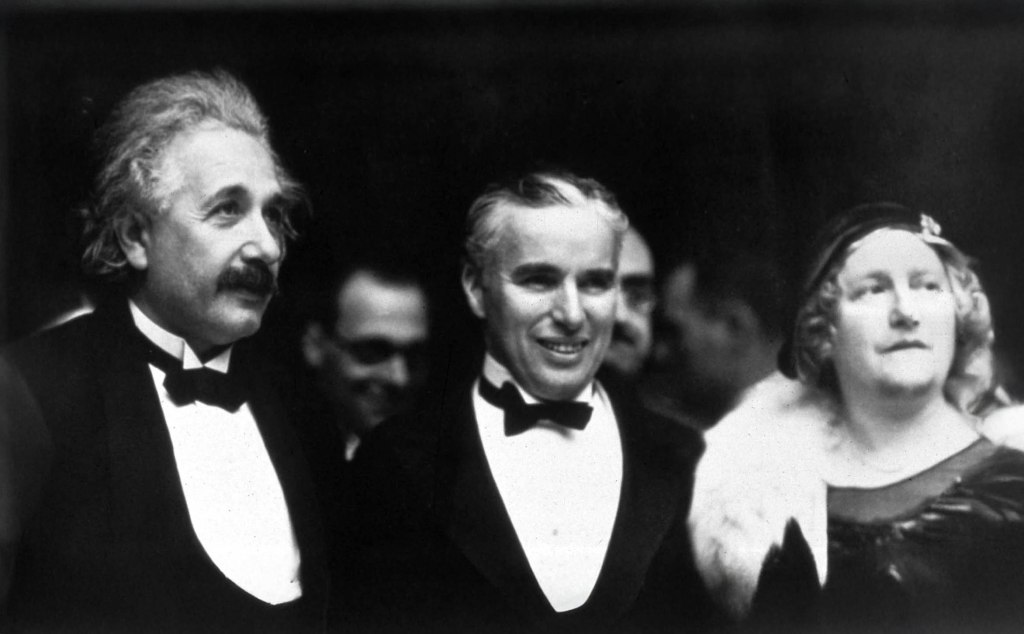
Albert Einstein and Charlie Chaplin during the premiere of the film ‘City Lights’. (Wikipedia)

Rather than being stored in a traditional library, these documents are carefully edited and presented in both print and online editions. And what a treasure trove it is. You’ll find the famous 1905 “miracle year” papers that revolutionized physics, laying the foundation for both quantum mechanics (which Einstein famously derided) and special relativity. You’ll also find handwritten drafts, scribbled calculations, and long chains of correspondence—sometimes with world leaders, sometimes with lifelong friends. These documents don’t just chart the course of scientific discovery; they reveal the very human process behind it: doubt, revision, flashes of inspiration, and stubborn persistence.
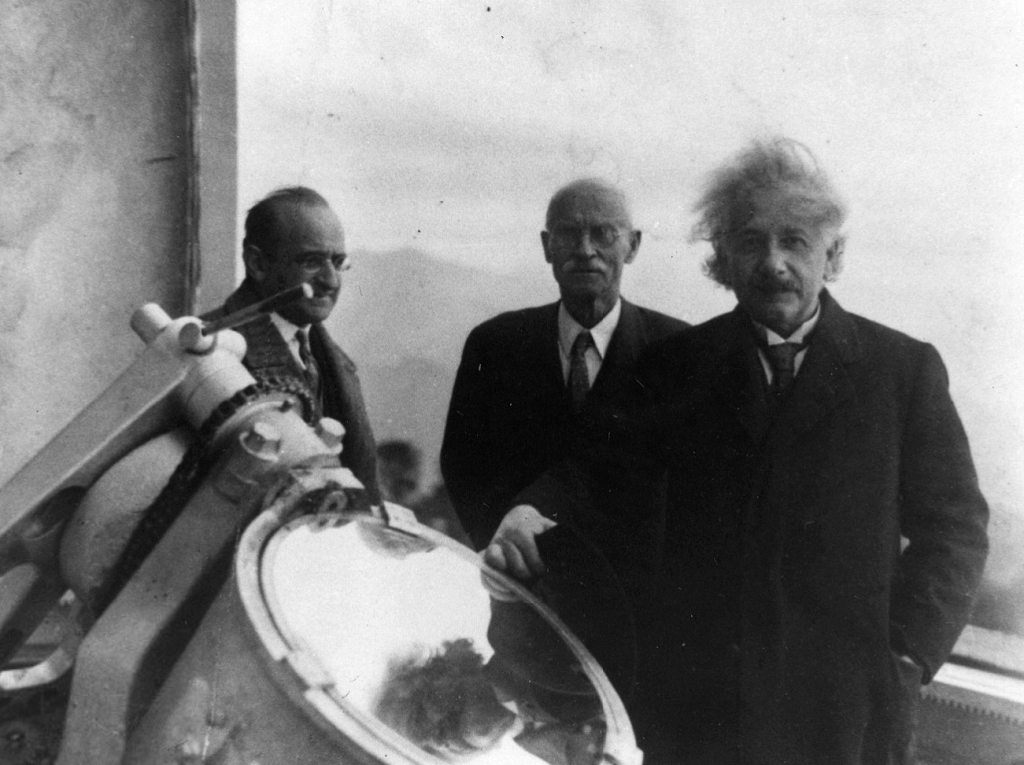
At the Mount Wilson Observatory with the Austrian mathematician Walther Mayer, left, and Charles St. John of the observatory staff. (The Caltech Archives)

Some of the most fascinating material involves Einstein’s attempts at a unified field theory, an ambitious effort to merge gravity and electromagnetism into one grand framework. He never quite got there, but his notebooks show a mind constantly working, refining, rethinking—sometimes over decades.

But the project also captures Einstein the person: the political thinker, the pacifist, the refugee, the cultural icon. His letters reflect a deep concern with justice and human rights, from anti-Semitism in Europe to segregation in the United States. He corresponded with Sigmund Freud about the roots of violence, with Mahatma Gandhi about nonviolent resistance, and with presidents and schoolchildren alike. The archive gives us access to the full spectrum of who he was, not just a scientist, but a citizen of the world.
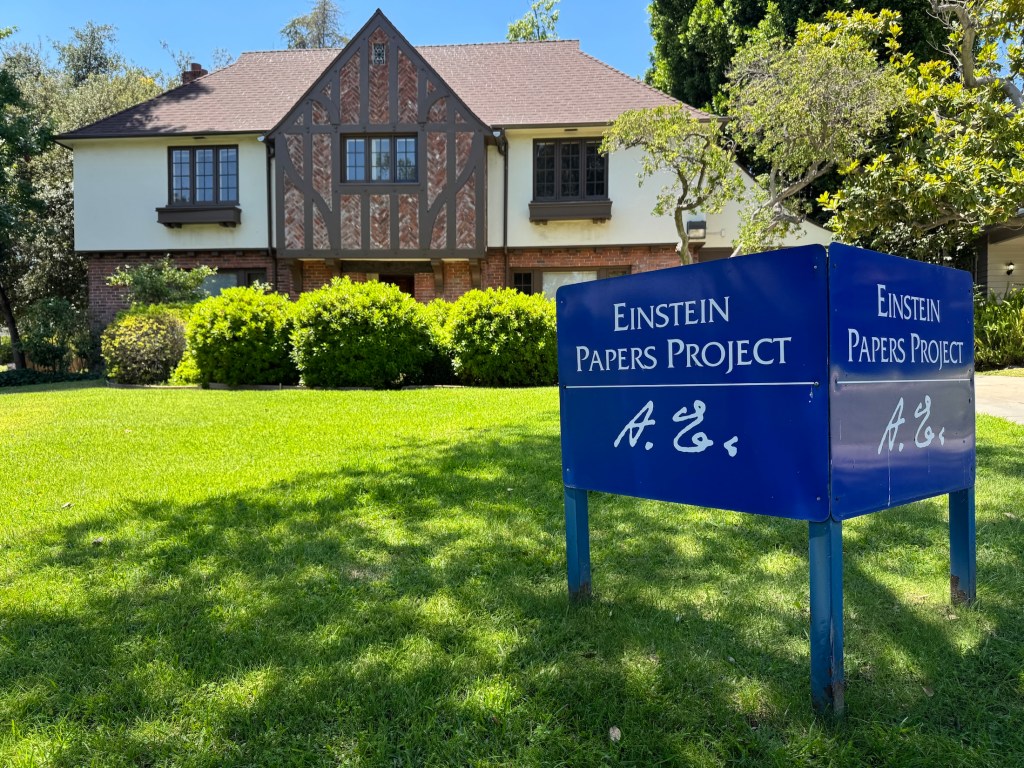
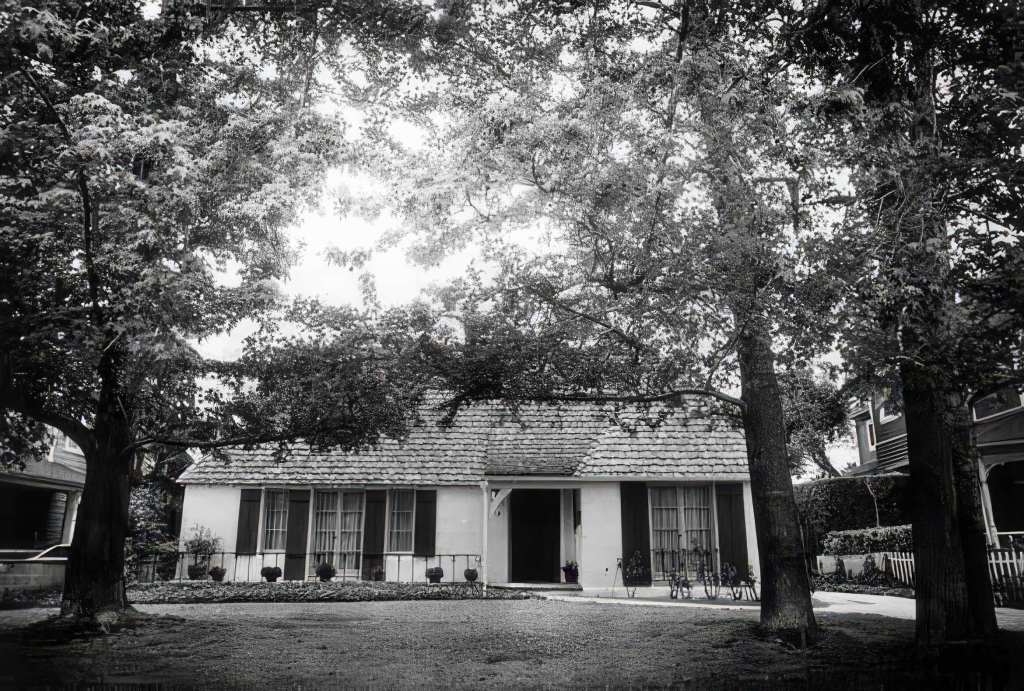
The Einstein Papers Project home near Caltech in Pasadena (Photo: Erik Olsen)

One of the most exciting developments has been the digitization of the archive. Thanks to a collaboration with Princeton University Press, a large portion of the Collected Papers is now freely available online through the Digital Einstein Papers website. Students, teachers, historians, and science nerds around the globe can now browse through Einstein’s original documents, many of them translated and annotated by experts. The most recent release, Volume 17, spans June 1929 to November 1930, capturing Einstein’s life primarily in Berlin as he travels across Europe for scientific conferences and to accept honorary degrees. The volume ends just before his departure for the United States. Princeton has a nice story on the significance of that particular volume by EPP Editor Josh Eisenthal.
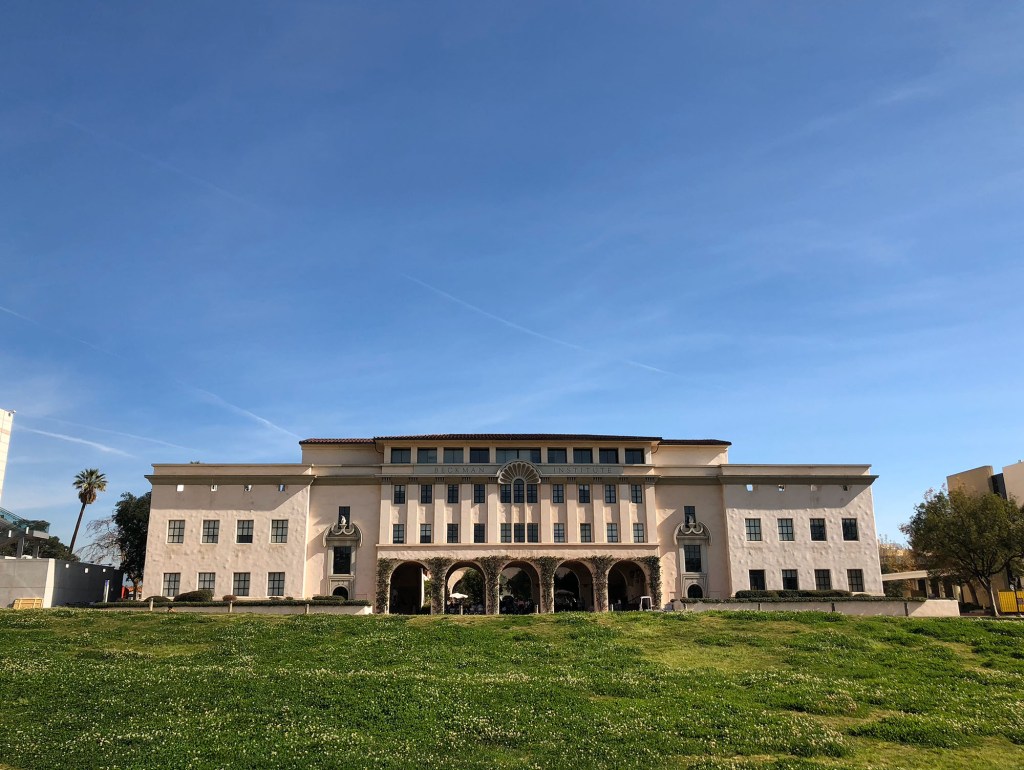
The California Institute of Technology, CalTech (Photo: Erik Olsen)

For scholars, the project is a goldmine. It’s not just about Einstein—it’s about the entire intellectual climate of the 20th century. His collaborations and rivalries, his responses to global upheaval, and his reflections on science, faith, and ethics all provide insight into a remarkable era of discovery and change. His writings also show a playful, curious side—his love of music, his wit, and his habit of thinking in visual metaphors.

Caltech’s role in all this goes beyond simple stewardship. The Einstein Papers Project is a reflection of the institute’s broader mission: to explore the frontiers of science and human understanding. For decades, Caltech has been a breeding ground for great minds. As of January 23, 2025, there are 80 Nobel laureates who have been affiliated with Caltech, making it the institution with the highest number of Nobelists per capita in America. By preserving and sharing Einstein’s legacy, Caltech helps keep alive a conversation about curiosity, responsibility, and the enduring power of ideas.


A Massive Aircraft Carrier called the USS Independence Rests in Deep Waters off the Coast of California

From Battlefront to Atomic Legacy: The Journey of the USS Independence to Its Final Resting Place off Northern California

The U.S. Navy light aircraft carrier USS Independence (CVL-22) in San Francisco Bay (USA) on 15 July 1943. Note that she still carries Douglas SBD Dauntless dive bombers. Before entering combat the air group would only consist of Grumman F6F Hellcat fighters and TBF Avenger torpedo bombers. (Wikipedia)

The waters off California’s coast are scattered with relics of wartime history, each telling its own story of conflict and survival. Among these wrecks is the USS Independence, a WWII aircraft carrier whose journey took it from the heights of naval warfare to the depths of nuclear experimentation. Today, it lies as an underwater monument to both wartime heroics and the nascent atomic age.

Converted from the hull of a Cleveland-class light cruiser, the USS Independence was built by the New York Shipbuilding Corporation and commissioned in January 1943. She quickly became a key player in the Pacific Theater. She took part in early attacks on Rabaul and Tarawa before being torpedoed by Japanese aircraft, necessitating repairs in San Francisco from January to July 1944. After these repairs, the Independence launched strikes against targets in Luzon and Okinawa, and was part of the carrier group that sank remnants of the Japanese Mobile Fleet during the Battle of Leyte Gulf, as well as several other Japanese ships in the Surigao Strait.

Visit the California Curated store on Etsy for original prints showing the beauty and natural wonder of California.

It took part in pivotal operations such as those at Tarawa, Kwajalein, and the Marianas, contributing significantly to the success of Allied forces. Until the surrender of Japan, she was assigned to strike duties against targets in the Philippines and Japan, and she completed her operational duty off the coast of Japan, supporting occupation forces until being assigned to be a part of Operation Magic Carpet, an operation by the U.S. War Shipping Administration to repatriate over eight million American military personnel from the European, Pacific, and Asian theaters. The ship’s role in supporting invasions and launching strikes helped secure a strategic advantage in the Pacific, establishing the Independence as an integral part of the U.S. Navy’s war effort.

Aerial view of ex-USS Independence at anchor in San Francisco Bay, California, January 1951. There is visible damage from the atomic bomb tests at Bikini Atoll. (San Francisco Maritime National Historical Park)

After WWII ended, the Independence was not destined for a peaceful decommissioning like many of her sister ships. Instead, it was selected for an unprecedented mission: to test the effects of nuclear explosions on naval vessels. In 1946, the Independence became part of Operation Crossroads at Bikini Atoll, a series of nuclear tests aimed at understanding the power of atomic bombs. Positioned near ground zero for the “Able” and “Baker” detonations, the carrier survived but sustained heavy radioactive contamination. Towed back to the United States, it became the subject of further scientific study, focusing on radiation’s effects on naval ships.

Thermonuclear blast part of Operation Crossroads

Ultimately, in 1951, the Navy decided to scuttle the Independence off the coast of California, within what is now the Monterey Bay National Marine Sanctuary and near the Farallon Islands. The ship was intentionally sunk in deep waters, where it would remain hidden for over sixty years. In 2015, researchers from NOAA, in partnership with Boeing and other organizations, used advanced sonar technology to locate the wreck. Lying nearly 2,600 feet below the surface and approximately 30 miles off the coast of San Francisco, the Independence was found in remarkably good condition. The cold, dark waters of the Pacific had preserved much of its hull and flight deck, leaving a ghostly relic that continued to capture the imagination of historians and marine scientists alike.

The U.S. Navy light aircraft carrier USS Independence (CVL-22) afire aft, soon after the atomic bomb air burst test “Able”
at Bikini Atoll on 1 July 1946. (US NAVY)

In 2016, the exploration vessel Nautilus, operated by the Ocean Exploration Trust, conducted detailed dives to study the wreck. The exploration utilized remotely operated vehicles (ROVs), equipped with high-definition cameras and scientific tools, to capture extensive footage and data. The mission was led by a multidisciplinary team of researchers, including marine biologists, archaeologists, and oceanographers from NOAA and the Ocean Exploration Trust, highlighting the collaborative effort necessary for such an in-depth underwater expedition. Remotely operated vehicles (ROVs) provided stunning footage of the carrier, revealing aircraft remnants on the deck and bomb casings that hinted at its atomic test history.

Part of an aircraft on the USS Independence seen during the NOAA / Nautilus expedition off the coast of California. (NOAA)

Despite its radioactive past, the wreck had transformed into a thriving artificial reef. Marine life, including fish, crustaceans, and corals, had made the irradiated structure their home, providing researchers with a valuable opportunity to study how marine ecosystems adapt to and flourish on man-made, contaminated structures. Among the biological discoveries, researchers noted a variety of resilient species that had colonized the wreck, including deep-sea corals that appeared to be unaffected by the radiation levels. Additionally, biologists observed that some fish populations had become more abundant due to the complex structure offered by the wreck, which provided shelter and new breeding grounds. This adaptation indicates that artificial reefs—even those with a history of contamination—can become crucial havens for marine biodiversity. Studies also identified microorganisms capable of thriving in irradiated environments, which could help inform future research into bioremediation and the impact of radiation on biological processes. These findings collectively reveal the remarkable ability of marine life to adapt, demonstrating resilience even in challenging conditions shaped by human activities.

The shipwreck site of the former aircraft carrier, Independence, is located in the northern region of Monterey Bay National Marine Sanctuary. 

The ship’s resting place has also become an important case study for understanding the long-term effects of radiation in marine environments. Researchers have found that despite the contamination from the atomic tests, the marine life around the Independence has flourished, suggesting a remarkable resilience in the face of human-induced challenges. This has provided invaluable information on how marine ecosystems can adapt and endure even in seemingly inhospitable conditions, shedding light on ecological processes that could inform conservation efforts in other marine environments.

Guns on the USS Independence off the coast of California. An array of corals sponges and fish life are a remarkable testament to manmade reefs to attract sea life (NOAA)

The exploration of the Independence also stands as a technological achievement. The discovery and study of the wreck required advanced sonar imaging and remotely operated vehicle technology, showcasing the capabilities of modern marine archaeology. The collaboration between NOAA, the Ocean Exploration Trust, and other organizations has underscored the importance of interdisciplinary approaches in uncovering and preserving underwater cultural heritage.

Ultimately, the USS Independence is more than just a sunken warship—it is a chapter of American history frozen in time beneath the waves of the Pacific. As a subject of study, it bridges past conflicts with modern scientific inquiry, providing a rich narrative that combines warfare, innovation, and nature’s adaptability. Its story continues to evolve as researchers uncover more about the vessel and the surrounding ecosystem, making it not only a relic of history but also a symbol of discovery and resilience.

Get Your Nukes on Route 66: The Wild Plan to Use Nuclear Weapons to Blast a Highway Through the California Desert

…and they shall beat their swords into plowshares, and their spears into pruning hooks: nation shall not lift up sword against nation, neither shall they learn war any more. Micah 4:3

Fake rendering of an atomic bomb exploding near road in Mojave Desert.

In the early 1960s, the U.S. government seriously considered using nuclear bombs to solve a civil engineering challenge: building a highway bypass through the rugged terrain of California’s Mojave Desert. Dubbed Project Carryall, the plan would have involved detonating a series of nuclear devices to blast a path for a stretch of highway and railroad intended to reroute Route 66 and ease congestion. The idea sounds absurd today, but at the time, the U.S. was actively exploring ways to use nuclear energy for peaceful purposes.

Project Carryall was part of a broader initiative known as Operation Plowshare, launched by the Atomic Energy Commission (AEC) to explore the potential of using nuclear explosions in constructive ways. Proposed ambitious projects included using nuclear explosions for excavation, mining, and infrastructure development. Ideas included creating artificial harbors, digging new canals like the “Pan-Atomic Canal,” stimulating natural gas production through underground detonations, and creating tunnels or underground reservoirs.

The idea was conceived in 1951 as a way of “beating atomic arms into plowshares.” The underlying logic was that controlled nuclear blasts could do the work of traditional excavation on a much larger and faster scale. Proponents of the project, including argued that using nuclear bombs could reduce the time and cost involved in these types of infrastructure projects, providing a technological leap forward.

Edward Teller, a key figure in the development of the hydrogen bomb, was actively involved in promoting Project Carryall as part of his broader support for Operation Plowshare. His earlier contributions to the successful creation of the H-bomb in 1952 helped cement his reputation as a leading nuclear physicist, and he saw projects like Carryall as a way to repurpose atomic energy for large-scale civil engineering projects​.

Teller was a highly controversial figure due to his staunch advocacy for the use of nuclear technology, both in weapons development and peaceful applications like Project Carryall. His role in the hydrogen bomb’s creation, along with his support for large-scale nuclear projects, earned him both admiration and criticism, particularly after he testified against Robert Oppenheimer, which many viewed as a betrayal of his fellow scientists. Teller, who died in 2003, went to his grave convinced that nuclear geo-engineering was a missed opportunity.

Schematic and map of Project Carryall in the California Desert

The proposal for Project Carryall specifically targeted the construction of a new transportation corridor in Southern California. By the early 1960s, Route 66 had become notorious for traffic bottlenecks, particularly as postwar car ownership and travel boomed. To bypass the tight curves and mountainous terrain of the Cajon Pass area, engineers envisioned a straighter, more efficient route through the Bristol Mountains. The task of carving out such a path would have been an immense undertaking with traditional methods. Enter the nuclear option. Maybe we could dig with the bomb.

A feasibility study conducted by the Atchison, Topeka, and Santa Fe Railway (ATSF) sought assistance from the U.S. Atomic Energy Commission citing the Bristol Mountains as the ideal location for the project. Collaborating with the Commission’s San Francisco office and the Lawrence Radiation Laboratory (now the Lawrence Berkeley National Laboratory and a Department of Energy-funded U.C. Berkeley offshoot), the study concluded that a nuclear-excavated bypass was not only “technically feasible” but also significantly cheaper than traditional excavation methods.

Public domain, via Atomic Skies

Project Carryall aimed to carve a path through the Bristol Mountains, about 11 miles north of Amboy, California, a popular stop along Route 66, using 22 nuclear devices with yields ranging from 20 to 200 kilotons. Engineers planned to drill holes along a 10,940-foot section of the mountainside, each 36 inches in diameter and between 343 to 783 feet deep, reinforced with corrugated metal to house the nuclear explosives. These detonations, which would have been fired in two groups of 11 simultaneously, were expected to remove around 68 million cubic yards of earth, creating a cut up to 360 feet deep and between 600 and 1,300 feet wide. The total yield of the explosions, 1,730 kilotons, was equivalent to about 115 times the explosive power of Little Boy, the atomic bomb dropped on Hiroshima. The blasts would have essentially carved the path through the mountains in seconds​.

Project Storax Sedan shallow underground nuclear test by the United States, used for a cratering experiment. 6 July 1962, Nevada Test Site Yield: 104 kt. The main purpose of the detonation was to asses the non military dimension of a nuclear explosion.

Citing data from 1962’s Project Sedan, the Atomic Energy Commission estimated that work in the area could safely resume just four days after the nuclear detonation. This projection was highlighted in a 2011 report by the Desert Research Institute, affiliated with the University of Nevada, Reno, which examined the feasibility and safety of such operations during the era of nuclear excavation projects. The Sedan nuclear test displaced around 12 million tons of earth with a single 104-kiloton blast. This test created a massive crater and sent radioactive debris into the atmosphere.

The 1962 “Sedan” plowshares shot displaced 12 million tons of earth and created a crater 320 feet deep and 1,280 feet wide.
(National Nuclear Security Administration)

The projected combined costs for the railroad tunnel and highway in Project Carryall were estimated at $21.8 million, equivalent to roughly $216.96 million today. The nuclear excavation method was expected to cost $13.8 million (about $137.34 million in 2023 dollars), excluding the price of the nuclear devices themselves. Traditional excavation was estimated at $50 million, or approximately $497.61 million today. Although the cost of the nuclear devices was classified, it was assumed to be less than the gap between conventional and nuclear methods, making the nuclear approach seem more cost-effective at the time.

Mid-20th century scientists envisioned a new Panama Canal blasted down to sea level with thermonuclear explosives. (Lawrence Livermore National Laboratory)

As wild as this plan seems today, it wasn’t entirely out of place in the context of its time. The Cold War era was marked by an optimistic belief in the power of technology, particularly nuclear technology, to solve big problems. With Operation Plowshare, the U.S. government was looking for ways to demonstrate the peaceful uses of nuclear energy. Proponents of Project Carryall framed the use of nuclear devices for highway construction as a sign of progress, imagining a future where atomic energy could help reshape the American landscape in new and innovative ways.

However, there were significant hurdles to the project’s realization, many of them environmental and logistical. Although the AEC touted the precision of the nuclear blasts, the potential consequences of radiation were harder to dismiss. The detonation of nearly two dozen nuclear devices in the middle of California’s desert would likely have released dangerous levels of radioactive fallout, contaminating the land, air, and possibly even water supplies for nearby communities. Engineers also anticipated “occasional rock missiles” projected as far as 4,000 feet (1,200 m) from the blasts. While the nearby town of Amboy was not expected to experience significant effects, there was greater concern about the impact on a natural gas pipeline in the vicinity, which would require pre-blast testing to assess potential risks​. Further, concerns about the safety of workers, residents, and wildlife made it increasingly difficult to justify the project.

Project Carryall was abandoned due to a combination of environmental, political, and logistical concerns. As public awareness of the dangers of nuclear fallout grew, the potential for radioactive contamination became a significant issue, especially with the predicted large dust cloud and the risk to nearby natural gas pipelines. The signing of the Limited Test Ban Treaty in 1963, which prohibited nuclear tests that produced radioactive debris across borders, further complicated the project’s prospects. Moreover, the environmental movement was gaining traction during the 1960s, leading to increased opposition to nuclear excavation. Traditional construction methods, though more costly and time-consuming, were ultimately deemed safer and more politically feasible. By the mid-1960s, the California Highway Division (Now Caltrans) withdrew from the project, and nuclear excavation was abandoned in favor of conventional approaches. The highway bypass was eventually constructed using traditional methods, without the need for nuclear blasts.

Project Carryall Marker sign in Ludlow, California

While it never came to fruition, Project Carryall remains a striking example of the U.S. government’s audacious postwar optimism and the belief that nuclear technology could solve even the most mundane problems. It serves as a reminder of the tension between technological ambition and environmental responsibility—a lesson that resonates even more today. The story of Project Carryall is one of the stranger chapters in the history of America’s nuclear age, but it highlights how far we’ve come in understanding the limits and dangers of nuclear energy beyond warfare.

Today, the Carryall project is memorialized by a roadside marker in Ludlow, the nearest town to the west of the site.

Einstein in Pasadena: Three Wonderful Winters in Paradise

Einstein at the Santa Barbara home of Caltech trustee Ben Meyer on Feb. 6, 1933.
(The Caltech Archives)

“Here in Pasadena, it is like Paradise. Always sunshine and clear air, gardens with palms and pepper trees and friendly people who smile at one and ask for autographs.” – Albert Einstein (U.S. Travel Diary, 1930-31, p. 28)

Albert Einstein is often associated with Princeton, where he spent his later years as a towering intellectual figure, and with Switzerland, where he worked as a young patent clerk in Bern. It was in that spartan, dimly lit office, far from the great universities of the time, that Einstein quietly transformed the world. In 1905, his annus mirabilis or “miracle year,” he published a series of four groundbreaking papers that upended physics and reshaped humanity’s understanding of space, time, and matter. With his insights into the photoelectric effect, Brownian motion, special relativity, and the equivalence of mass and energy (remember E=mc2?), he not only laid the foundation for quantum mechanics and modern physics but also set in motion technological revolutions that continue to shape the future. Pretty good for a guy who was just 26.

Albert Einstein spent his later years as a world-famous scientist traveling the globe and drawing crowds wherever he went. His letters and travel diaries show how much he loved exploring new places, whether it was the mountains of Switzerland, the temples of Japan, or the intellectual circles of his native Germany. In 1922, while on his way to accept the Nobel Prize, he and his wife, Elsa, arrived in Japan for a six-week tour, visiting Tokyo, Kyoto, and Osaka.

But of all the places he visited, one city stood out for him in particular. Pasadena, with its warm weather, lively culture, and, most importantly, its reputation as a scientific hub, had a deep personal appeal to Einstein. ​He visited Pasadena during the winters of 1931, 1932, and 1933, each time staying for approximately two to three months. These stays were longer than many of his other travels, giving him time to fully immerse himself in the city. He spent time at Caltech, exchanging ideas with some of the brightest minds in physics, and fully embraced the California experience, rubbing elbows with Hollywood stars (Charlie Chapman among them), watching the Rose Parade, and even tutoring local kids. Einstein may have only been a visitor, but his time in Pasadena underscores how deeply rooted science was in the city then, and how strongly that legacy endures today. Pasadena remains one of the rare places in the country where scientific inquiry and creative spirit continue to thrive side by side. Pasadena was among the earliest cities to get an Apple Store, with its Old Pasadena location opening in 2003.

Einstein’s residence at 707 South Oakland Avenue in Pasadena, where he stayed his first winter in California (CalTech Archives)

Few scientists have received the public adulation that Einstein did during his winter stays in Pasadena. As a hobbyist violinist, he engaged in one-on-one performances with the conductor of the Los Angeles Philharmonic. Local artists not only painted his image and cast him in bronze but also transformed him into a puppet figure. Frank J. Callier, a renowned violin craftsman, etched Einstein’s name into a specially carved bow and case.

During his first winter of residence in 1931, Einstein lived in a bungalow at 707 South Oakland Avenue. During the following two winters, he resided at Caltech’s faculty club, the Athenaeum, a faculty and private social club that is still there today.

Yet, the FBI was keeping a watchful eye on Einstein as well. He was one of just four German intellectuals, including Wilhelm Foerster, Georg Nicolai, and Otto Buek, to sign a pacifist manifesto opposing Germany’s entry into World War I. Later, Einstein aligned himself with Labor Zionism, a movement that supported Jewish cultural and educational development in Palestine, but he opposed the formation of a conventional Jewish state, instead calling for a peaceful, binational arrangement between Jews and Arabs.

In front of the Athenaeum Faculty Club, Caltech, 1932. 
(Courtesy of the Caltech Archives.)

After his annus mirabilis in 1905, Einstein’s influence grew rapidly. In 1919, his theory of relativity was confirmed during a solar eclipse by the English astronomer Sir Arthur Eddington. The announcement to the Royal Society made Einstein an overnight sensation among the general public, and in 1922, he was awarded the 1921 Nobel Prize in Physics. While teaching at the University of Berlin in 1930, Arthur H. Fleming, a lumber magnate and president of Caltech’s board, successfully persuaded him to visit the university during the winter. The visit was intended to remain a secret, but Einstein’s own travel arrangements inadvertently made it public knowledge.

Einstein speaking at the dedication of the Pasadena Junior College (now PCC) astronomy building, February 1931. 
(Courtesy of the Caltech Archives)

After arriving in San Diego on New Year’s Eve 1930, following a month-long journey on the passenger ship Belgenland, Einstein was swarmed by reporters and photographers. He and his second wife, Elsa, were greeted with cheers and Christmas carols. Fleming then drove them to Pasadena, where they settled into the bungalow on S Oakland Ave.

Albert Einstein and his violin (Caltech Archives)

During their first California stay, the Einsteins attended Charlie Chaplin’s film premiere and were guests at his Beverly Hills home. “Here in Pasadena, it is like Paradise,” Einstein wrote in a letter. He also visited the Mt. Wilson Observatory high in the San Gabriel Mountains. Einstein’s intellectual curiosity extended far beyond his scientific endeavors, leading him to explore the Huntington Library in San Marino, delighting in its rich collections. At the Montecito home of fellow scientist Ludwig Kast, he found comfort in being treated more as a tourist than a celebrity, relishing a brief respite from the spotlight.

In Palm Springs, Einstein relaxed at the winter estate of renowned New York attorney and human rights advocate Samuel Untermeyer. He also embarked on a unique adventure to the date ranch of King Gillette, the razor blade tycoon, where he left with a crate of dates and an intriguing observation. He noted that female date trees thrived with nurturing care, while male trees fared better in tough condition: “I discovered that date trees, the female, or negative, flourished under coddling and care, but in adverse conditions the male, or positive trees, succeeded best,” he said in a 1933 interview.

CALIFORNIA CURATED ON ETSY

Purchase stunning coffee mugs and art prints of California icons.
Check out our Etsy store.

Not exactly relativity, but a curiosity-driven insight reflecting his ceaseless fascination with the world.

During his three winters in Pasadena, Einstein’s presence was a source of intrigue and inspiration. Students at Caltech were treated to the sight of the disheveled-haired genius pedaling around campus on a bicycle, launching paper airplanes from balconies, and even engaging in a heated debate with the stern Caltech president and Nobel laureate, Robert A. Millikan, on the steps of Throop Hall. Precisely what they debated remains a mystery. (Maybe something about the dates?)

Einstein with Robert A. Millikan, a prominent physicist who served as the first president of Caltech from 1921 to 1945 and won the Nobel Prize in Physics in 1923. (Courtesy of the Caltech Archives.)

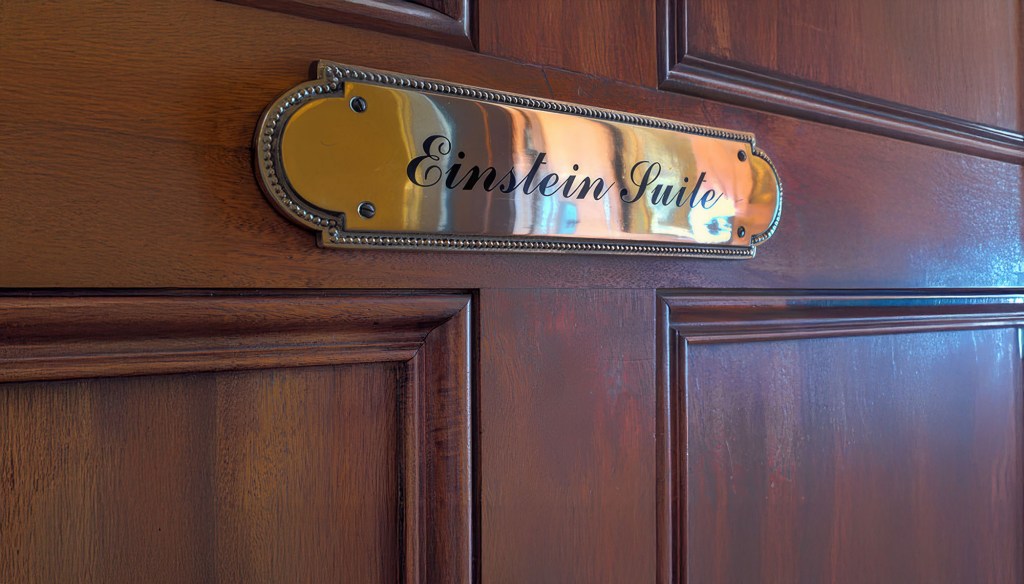
During his final winter in California, a near-accident led the couple to move into Caltech’s Athenaeum. His suite, No. 20, was marked with a distinctive mahogany door, a personal touch from his sponsor, Fleming. In 1933, as Nazi power intensified in Germany, Einstein began searching for a safe place to continue his work. Although Caltech made an offer, it was Princeton University‘s proposal that ultimately won him over. Einstein relocated to Princeton that same year, where he played a significant role in the development of the Institute for Advanced Study and remained there until his death in 1955.

Suite No. 20, Einstein’s mahogany door at the Caltech Athenaeum

Today, a large collection of Einstein’s papers are part of the Einstein Papers Project at Caltech. And Einstein’s suite at Caltech’s Athenaeum, still displaying the mahogany door, serves as a physical reminder of his visits.

During his third and final visit to Caltech in 1933, Hitler rose to power as Chancellor of Germany. Realizing that, as a Jew, he could not safely return home, Einstein lingered in Pasadena a little longer before traveling on to Belgium and eventually Princeton, where he received tenure. He never returned to Germany, or to Pasadena. Yet he often spoke fondly of the California sunshine, which he missed, and in its own way, the sunshine seemed to miss him too.