How a Tiny Beetle Helped Save California

California’s citrus industry confronted a deadly challenge, leading to a groundbreaking innovation in pest control.
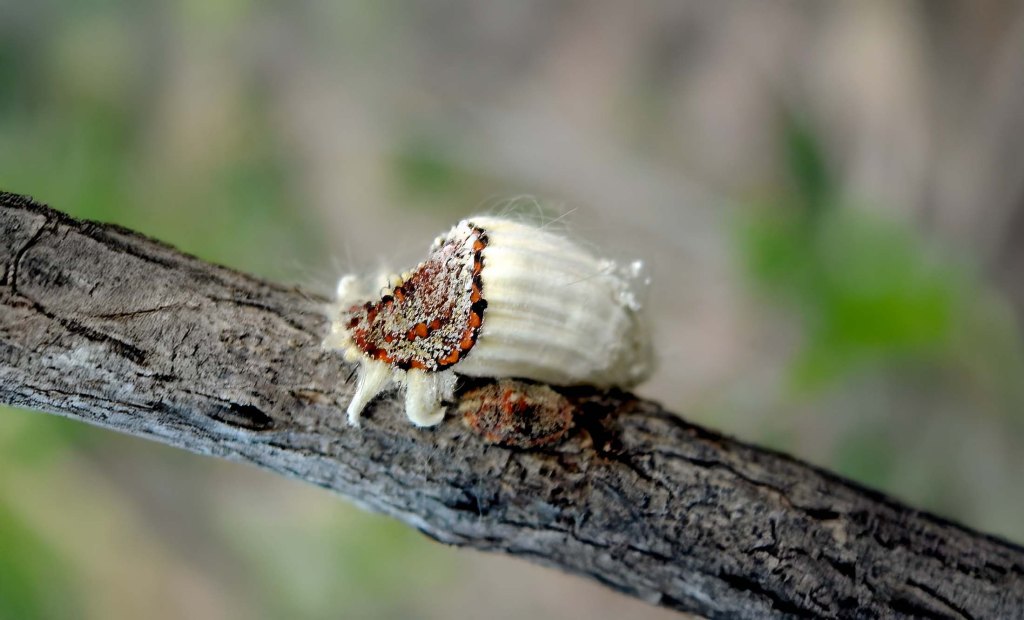
Cottony Cushion Scale (Public Domain)

In the sun-drenched orchards of late 19th-century California, a crisis was unfolding that threatened to decimate the state’s burgeoning citrus industry. The culprit was a small sap-sucking insect native to Australia called the cottony cushion scale (Icerya purchasi). First identified in New Zealand in 1878, this pest had made its way to California by the early 1880s, wreaking havoc on citrus groves. The pest is believed to have arrived in the United States through the global trade of plants, a common vector for invasive species during the 19th century. As horticulture expanded globally, ornamental plants and crops were frequently shipped between countries without the quarantine measures we have today. Once established in the mild climate of California, the cottony cushion scale found ideal conditions to thrive, spreading rapidly and wreaking havoc on the citrus industry.

The cottony cushion scale infested trees with a vengeance, covering branches and leaves with a white, cotton-like secretion. This not only weakened the trees by extracting vital sap but also led to the growth of sooty mold on the honeydew excreted by the insects, further impairing photosynthesis. Growers employed various methods to combat the infestation, including washing trees with whale oil, applying blistering steam, and even detonating gunpowder in the orchards. Despite these efforts, the pest continued its relentless spread, causing citrus exports to plummet from 2,000 boxcars in 1887 to just 400 the following year. This decline translated to millions of dollars in lost revenue, threatening the livelihoods of countless farmers and jeopardizing the state’s citrus economy, which was valued at over $10 million annually (approx. $627 million in today’s dollars) during this period.
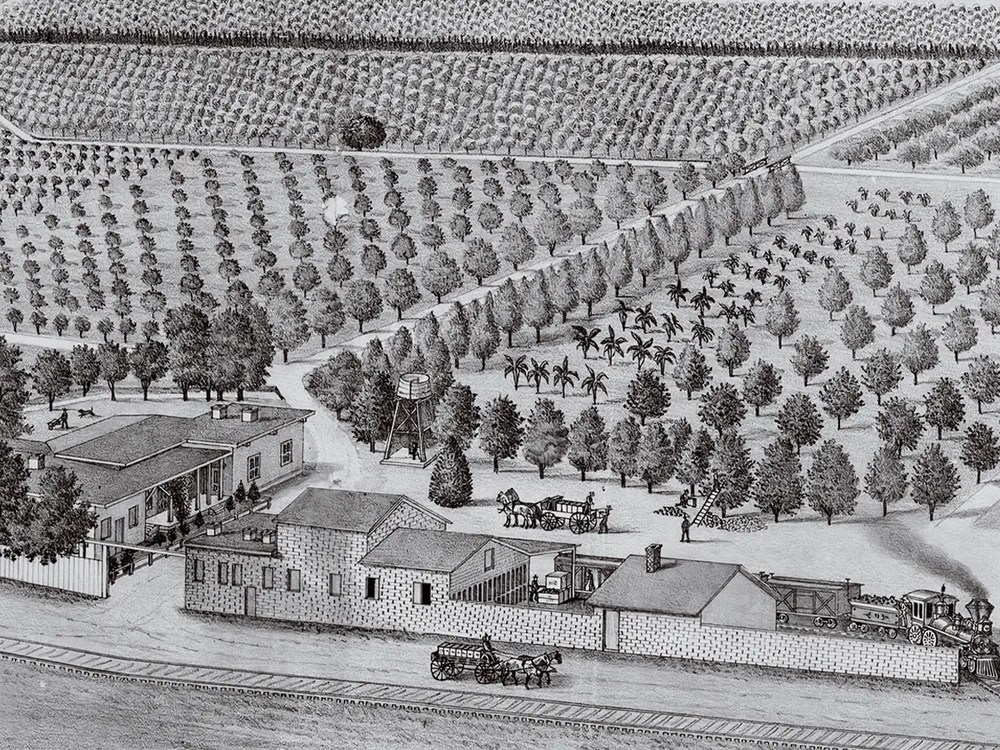
Orange and lemon groves, along with the home of citrus pioneer William Wolfskill, circa 1882. (California Historical Society)

In 1885, the independent growers across Southern California banded together in response to the insect invasion and the broader difficulties facing citrus growers at the time, forming the state’s first fruit cooperative, which would later become Sunkist. Despite their efforts, homemade mixtures of kerosene, acids, and other chemicals failed to halt the relentless spread of Icerya purchasi. The pests, with an endless supply of citrus trees to feed on, continued to multiply unchecked. New laws mandated growers to uproot and burn infected orange trees, but the devastation was widespread. By 1888, real estate values, which had soared by 600 percent since 1877, had plummeted.

Enter Charles Valentine Riley, the Chief Entomologist for the U.S. Department of Agriculture. A visionary in the field of entomology, Riley had previously attempted biological control by introducing predatory mites to combat grape phylloxera in France, albeit with limited success. Undeterred, he proposed a similar strategy for the cottony cushion scale crisis. In 1888, Riley dispatched his trusted colleague, a fellow entomologist named Albert Koebele, to Australia to identify natural enemies of the pest.
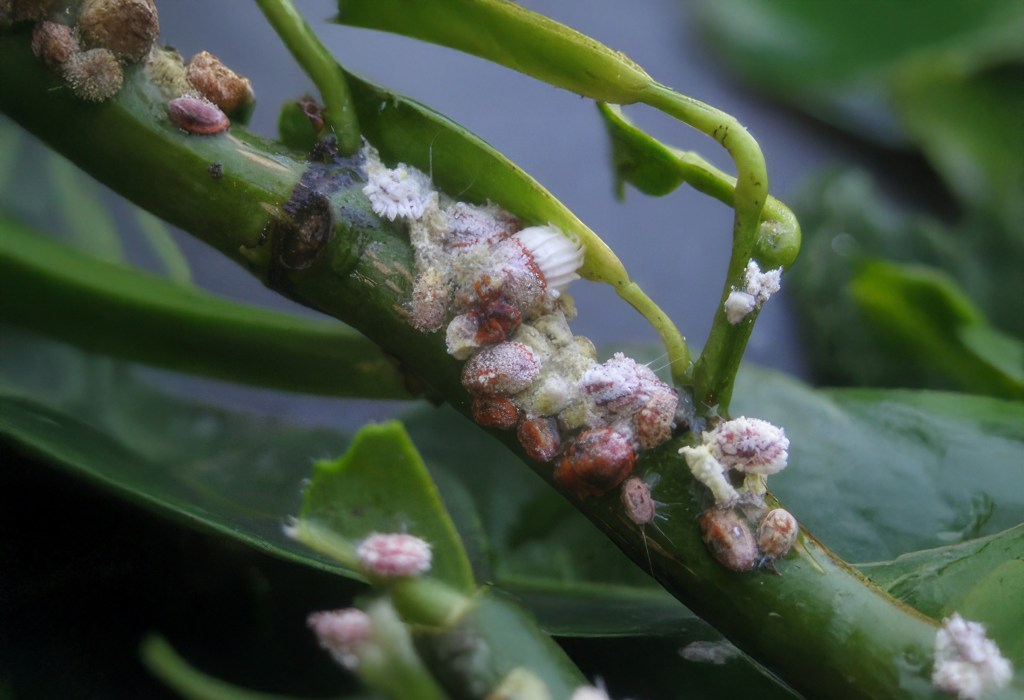
The cottony cushion scale infestations were so severe that citrus trees appeared as though they had been coated with artificial snow, resembling Christmas flocking. Fruit production sharply declined, and many trees succumbed to the damage. (UC Riverside)

Interestingly, Valentine resorted to subterfuge to send an entomologist to Australia despite Congress’s objections. Lawmakers had prohibited foreign travel by the Agriculture Department to curb Riley’s frequent European excursions. However, Riley, well-versed in navigating political obstacles, cleverly arranged for an entomologist to join a State Department delegation heading to an international exposition in Melbourne.
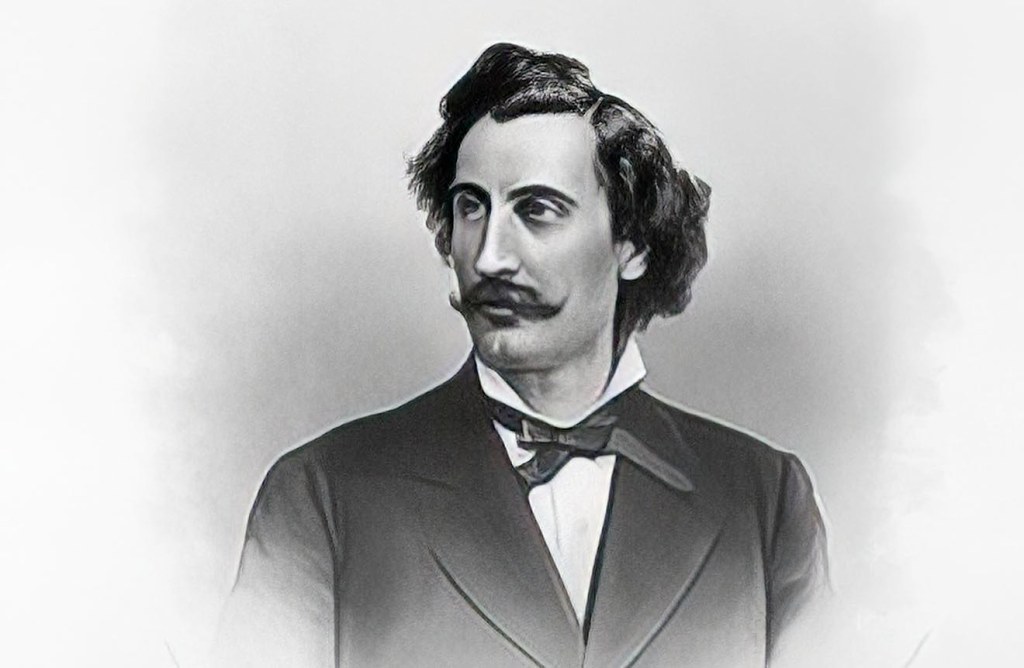
Charles Valentine Riley (Wikipedia)

Koebele’s expedition proved fruitful. He worked with Australian experts to locate the pest in its rare habitats along with its natural enemies, including a parasitic fly and approximately the Vedalia beetle. The vedalia beetle (Rodolia cardinalis) is a small ladybird with a voracious appetite for the cottony cushion scale. Koebele collected and shipped hundreds of these beetles back to California. Upon their release into infested orchards, the vedalia beetles rapidly established themselves, feasting on the scales and reproducing prolifically. Within months, the cottony cushion scale populations had diminished dramatically, and by 1890, the pest was largely under control across the state. This 1888-89 campaign marked the beginning of biological control in the United States, a strategy involving the introduction of natural predators to manage invasive pests.

In her 1962 classic Silent Spring, Rachel Carson described the Novius beetle’s work in California as “the world’s most famous and successful experiment in biological control.”
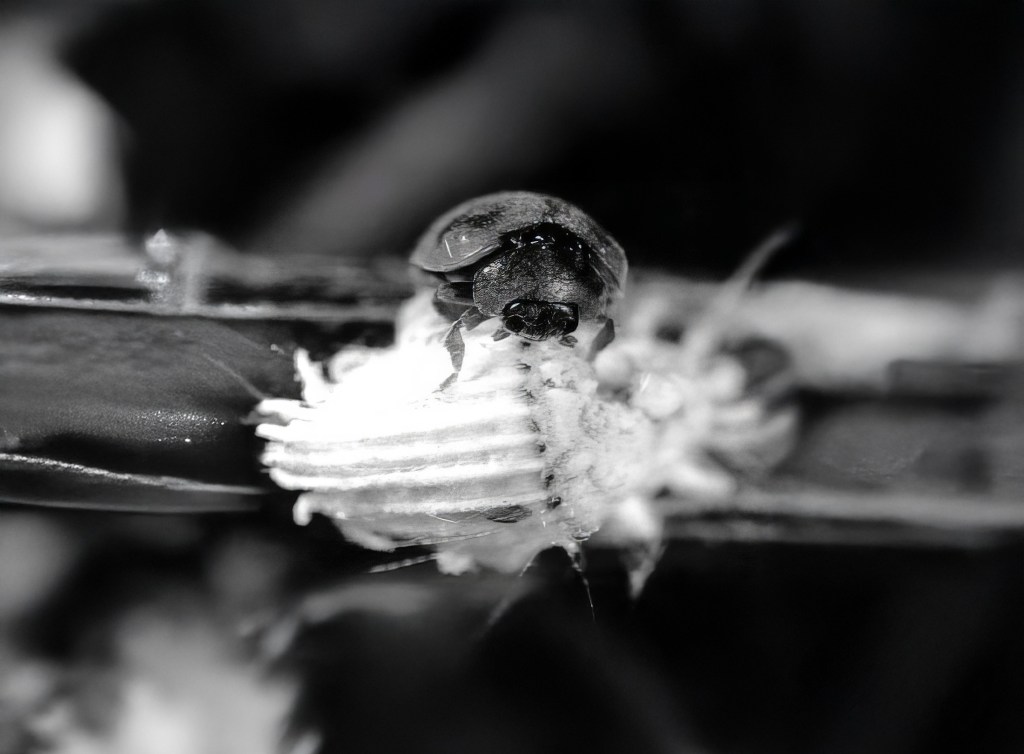
Novius ladybug devours an Icerya.  (UC Riverside)

This was far from the last time California employed such measures. It became a relatively common practice to introduce new species to control those that posed threats to the state’s economically vital crops, but not always successfully.

In the 1940s, California introduced parasitic wasps such as Trioxys pallidus to control the walnut aphid, a pest threatening the state’s walnut orchards. These tiny wasps laid their eggs inside the aphids, killing them and dramatically reducing infestations, saving the industry millions of dollars. Decades later, in the 1990s, the state faced an invasive glassy-winged sharpshooter, a pest that spread Pierce’s disease in grapevines. (Interesting fact: The glassy-winged sharpshooter drinks huge amounts of water and thus pees frequently, expelling as much as 300 times its own body weight in urine every day.) To combat this, scientists introduced Gonatocerus ashmeadi, a parasitic wasp that targets the pest’s eggs. This biological control effort helped protect California’s wine industry from devastating losses.
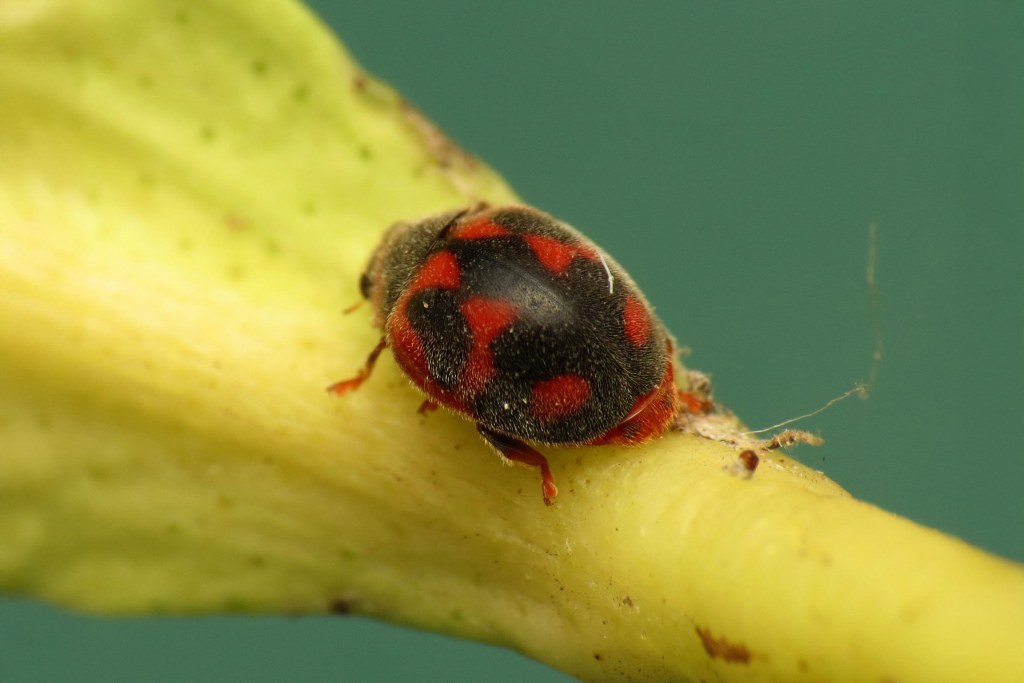
The Vedalia beetle (novius cardinalis) also known as the cardinal ladybird (Katja Schulz Wikipedia)

While the introduction of the vedalia beetle was highly effective and hailed as a groundbreaking success, biological control efforts are not without risks, often falling prey to the law of unintended consequences. Although no major ecological disruptions were recorded in the case of the cottony cushion scale, similar projects have shown how introducing foreign species can sometimes lead to unforeseen negative impacts. For example, the cane toad in Australia, introduced to combat beetles in sugarcane fields, became a notorious ecological disaster as it spread uncontrollably, preying on native species and disrupting ecosystems. Similarly, the mongoose introduced to control rats in sugarcane fields in Hawaii also turned predatory toward native birds. These examples highlight the need for meticulous study and monitoring when implementing biological control strategies. Today, regulatory frameworks require rigorous ecological assessments to minimize such risks.
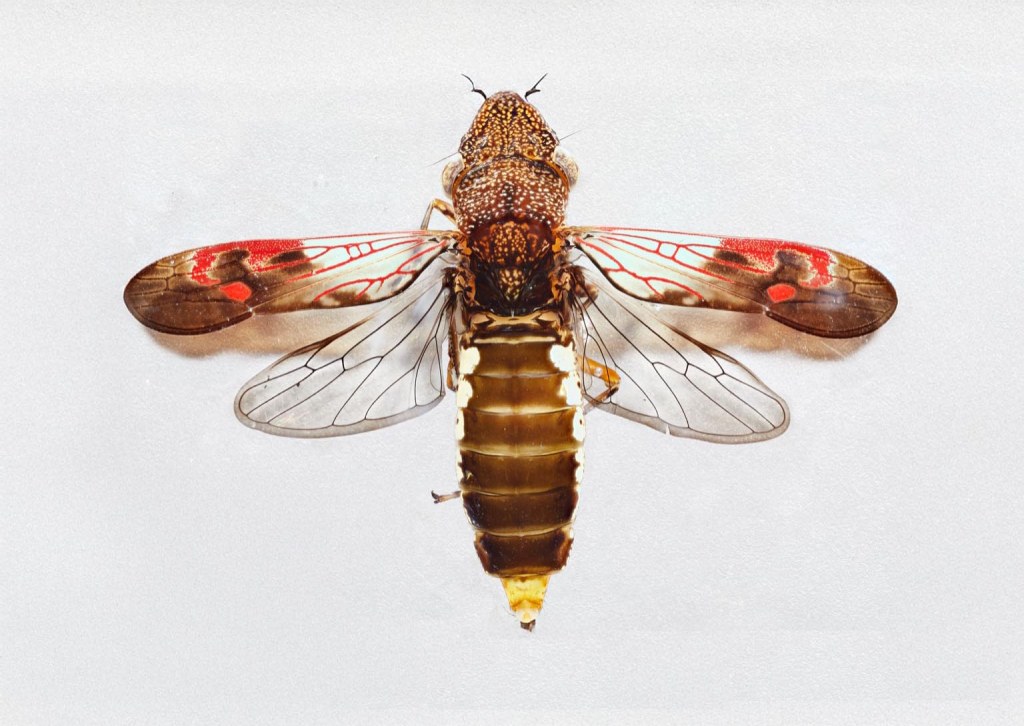
The glassy-winged sharpshooter (Georgia Tech)

In the case of the Vedalia beetle, its precise and targeted predation led to a highly successful outcome in California. Citrus quickly became one of the state’s most dominant and profitable crops, helping to establish California as a leader in agricultural production—a position it continues to hold firmly today.

This groundbreaking use of biological control not only rescued California’s citrus industry but also established a global precedent for environmentally sustainable pest management. The success of the Vedalia beetle’s introduction showcased the power of natural predators in managing agricultural pests, offering an alternative to chemical pesticides. While pesticides remain widely used in California and across the world, this effort underscores the value of understanding ecological relationships, evolutionary biology, and the benefits of international scientific collaboration.

Visit the California Curated store on Etsy for original prints showing the beauty and natural wonder of California.

The story of the Vedalia beetle and the cottony cushion scale highlights human ingenuity and the effectiveness of nature’s own checks and balances. It stands as an early example of integrated pest management, a method that continues to grow and adapt to meet modern agricultural challenges. This successful intervention underscores the importance of sustainable practices in protecting both our food systems and the environment.

Caltech Fly Labs and a Century of Genetic Discovery

Fruit fly Drosophila melanogaster

Few organisms in the history of science have been as important to our understanding of life as the humble fruit fly. The genus Drosophila melanogaster holds a particularly esteemed spot among the dozens of model organisms that provide insight into life’s inner workings. For more than 100 years, this tiny, but formidable creature has allowed scientists to unwind the infinitesimal mechanisms that make every living creature on the planet what it is.

And much of the work to understand the fruit fly has taken place and is taking place now, right here in California at the Cal Tech fly labs.

CALIFORNIA CURATED ON ETSY

Purchase stunning art prints of iconic California scenes.
Check out our Etsy store.

Over the decades, Drosophila have been key in studying brain, behavior, development, flight mechanics, genetics, and more in many labs across the globe. These tiny, round-bodied, (usually) red-eyed flies might appear irrelevant, but their simplicity makes them ideal models. They’re easy to breed—mix males and females in a test tube, and in 10 days, you have new flies. Their 14,000-gene DNA sequence is relatively short, but extremely well-studied and there are some 8,000 genes which have human analogs. (The fly’s entire genome was fully sequenced in 2000.) Crucially, a century of fruit fly research, much of it led by Caltech, has produced genetic tools for precise genome manipulation and shed light on the act of flight itself.

But how did Drosophila become the darling of genetics?

In the early 20th century, the field of genetics was still in its infancy. Thomas Hunt Morgan, a biologist at Columbia University with a background in embryology and a penchant for skepticism began with an effort to find a simple, cheap, easy-to-breed model organism. At Columbia, he established a laboratory in room 613 of Schermerhorn Hall. This cramped space became famous for groundbreaking research in genetics, with Morgan making innovative use of the common fruit fly.

Thomas Hunt Morgan in the Fly Room at Columbia, 1922 (Cal Tech Archives)

Morgan, who joined Columbia University after teaching at Bryn Mawr College, chose the fruit fly for its ease of breeding and rapid reproduction cycle. Morgan observed a male fly with white eyes instead of the usual red. Curious about this trait’s inheritance, he conducted breeding experiments and discovered that eye color is linked to the X chromosome. He realized a male fly, with one X and one Y chromosome, inherits the white-eye trait from its mother, who provides the X chromosome. This led him to conclude that other traits might also be linked to chromosomes. His extensive experiments in this lab confirmed the chromosomal theory of inheritance, demonstrating that genes are located on chromosomes and that some genes are linked and inherited together.

After his groundbreaking research in genetics at Columbia University, Morgan moved to Pasadena and joined the faculty at CalTech in 1928, where he became the first chairman of its Biology Division and continued his influential work in the field of genetics establishing a strong genetics research program. Morgan’s work, supported by notable students like Alfred Sturtevant and Hermann Muller, laid the foundation for modern genetics and earned him the Nobel Prize in 1933.

CalTech then became a world center for genetics research using the fruit fly. Other notable names involved in fruit fly research at CalTech include Ed Lewis, a student of Morgan, who focused his research on the bithorax complex, a cluster of genes responsible for the development of body segments in Drosophila. His meticulous work over several decades revealed the existence of homeotic and Hox genes, which control the basic body plan of an organism (for which he won the 1995 Nobel Prize).

Novel prize winner Edward Lewis (Nobel Prize.org)

Seymour Benzer, another luminary at CalTech, shifted the focus from genes to behavior. Benzer’s innovative experiments in the 1960s and 1970s sought to understand how genes influence behavior. His work demonstrated that mutations in specific genes could affect circadian rhythms, courtship behaviors, and learning in fruit flies. Benzer’s approach was revolutionary, merging genetics with neurobiology and opening new avenues for exploring the genetic basis of behavior. His contributions are chronicled in Jonathan Weiner’s “Time, Love, Memory: A Great Biologist and His Quest for the Origins of Behavior,” a riveting account of Benzer’s quest to uncover the genetic roots of behavior. Lewis Wolpert in his review for the New York Times wrote, “Benzer has many gifts beyond cleverness. He has that special imagination and view of the world that makes a great scientist.”

Since Benzer’s retirement in 1991, new vanguard in genetics research has taken over at CalTech, which continues to be at the forefront of scientific discovery, driven by a new generation of researchers who are unraveling the complexities of the brain and behavior with unprecedented precision.

Elizabeth Hong is a rising star in biology, with her Hong lab investigating how the brain orders and encodes complex odors. Her research focuses on the olfactory system of Drosophila, which, despite its simplicity, shares many features with the olfactory systems of more complex organisms. Hong’s work involves mapping the synapses and neural circuits that process olfactory information, seeking to understand how different odors are represented in the brain and how these representations influence behavior. Her findings could have profound implications for understanding sensory processing and neural coding in general.

David Anderson, another prominent figure at Caltech, studies the neural mechanisms underlying emotions and behaviors. While much of Anderson’s work now focuses on mice as a model organism, the lab’s research explores how different neural circuits contribute to various emotional states, such as fear, aggression, and pleasure, essentially how emotions are encoded in the circuitry and chemistry of the brain, and how they control animal behavior. Using advanced techniques like optogenetics and calcium imaging, Anderson’s lab can manipulate specific neurons and observe the resulting changes in behavior. This work aims to bridge the gap between neural activity and complex emotional behaviors, providing insights into mental health disorders and potential therapeutic targets.

In 2018, the Anderson laboratory identified a cluster of just three neurons in the fly brain that controls a “threat display” — a specific set of behaviors male fruit flies exhibit when facing a male challenger. During a threat display, a fly will extend its wings, make quick, short lunges forward, and continually reorient itself to face the intruder.

California Institute of Technology (Photo: Erik Olsen)

Michael Dickinson is renowned for his studies on the biomechanics and neural control of flight in Drosophila. In the Dickenson Lab, researchers combine behavioral experiments with computational models and robotic simulations, seeking to understand how flies execute complex flight maneuvers with such precision. His work has broader applications in robotics and may inspire new designs for autonomous flying robots.

“He’s a highly original scientist,” Alexander Borst, a department director at the Max Planck Institute of Neurobiology in Germany, told the New York Times. 

Fruit fly scientific illustration

Dickinson’s investigations also delve into how sensory information is integrated and processed to guide flight behavior, offering insights into the general principles of motor control and sensory integration.

As science advances, Caltech’s Fly Lab’s remind us of the power of curiosity, perseverance, and the endless quest to uncover the mysteries of life. The tiny fruit fly, with its simple elegance, remains a powerful model organism, driving discoveries that illuminate the complexities of biology and behavior. Just recently, scientists (though not at CalTech) unveiled the first fully image of the fruit fly brain. Smaller than a poppy seed, the brain is an astonishingly complex tangle of 140,000 neurons, joined together by more than 490 feet of wiring.

In essence, the fruit fly remains a key to unlocking the wonders and intricacies of life, and in the Fly Labs at Caltech, that spirit of discovery thrives, ensuring that the legacy of Morgan, Lewis, Benzer, and their successors will continue to inspire generations of scientists to come.