A Tiny California Seaweed Could Make a Big Dent in Livestock Methane

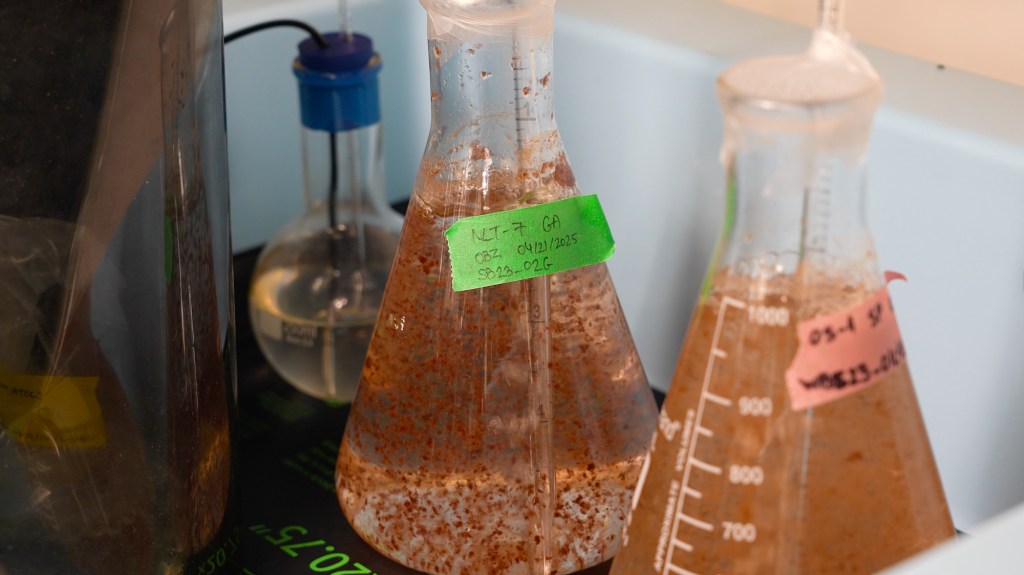
Flasks of Asparagopsis taxiformis growing at Scripps Institution of Oceanography. Researchers are studying this red seaweed for its potential to slash methane emissions from cattle when added in small amounts to their feed. (Photo: Erik Olsen)

Inside a long, brightly lit basement lab at the Scripps Institution of Oceanography at UC San Diego, a large aquarium filled with live corals sits against the wall, the vibrant shapes and colors of the coral standing out against the otherwise plain white surroundings. Nearby, in a side alcove, dozens of glass flasks bubble with aerated water, each holding tiny crimson clusters of seaweed swirling in suspension, resembling miniature lava lamps. These fragile red fragments, born in California and raised under tightly controlled conditions, are part of a global effort to harness seaweed to fight climate change.

Cattle and other ruminant livestock are among the largest contributors to methane emissions worldwide, releasing vast amounts of the gas through digestion and eructation. Burps, not farts. The distinction is not especially important, but it matters because critics of climate science often mock the idea of “cow farts” driving climate change. In reality, the methane comes primarily from cow burps, not flatulence.

But I digress. 
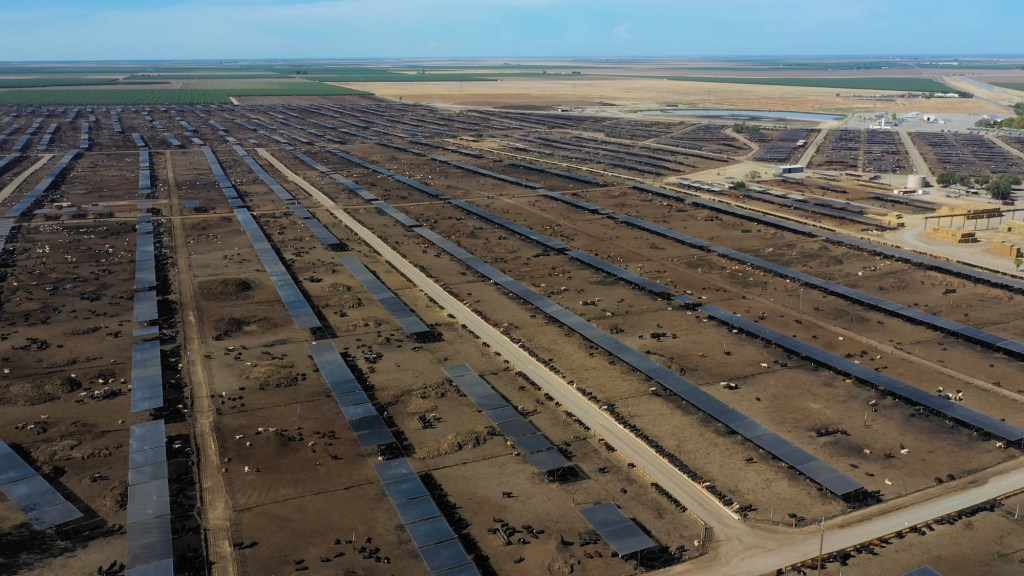
Cattle at Harris Ranch in California’s Central Valley, one of the largest beef producers in the United States. Livestock operations like this are a major source of methane emissions, a greenhouse gas more than 80 times as potent as carbon dioxide over a 20-year period. (Photo: Erik Olsen)

Globally, livestock are responsible for roughly 14 percent of all human-induced greenhouse gases, with methane from cattle making up a significant portion of that total. The beef and dairy industries alone involve more than a billion head of cattle, producing meat and milk that fuel economies but also generating methane on a scale that rivals emissions from major industrial sectors. Because methane is so potent, trapping more than 80 times as much heat as carbon dioxide over a 20-year period, the livestock industry’s footprint has become a central focus for climate scientists searching for solutions. 

Enter Jennifer Smith and her colleagues at the Smith Lab at Scripps in beautiful La Jolla, California. Their team is tackling urgent environmental challenges, from understanding coral die-offs to developing strategies that reduce greenhouse gas emissions, among them, the cultivation of seaweed to curb methane from cattle.  

The seaweed species is Asparagopsis taxiformis. Native to tropical and warm temperate seas and found off the coast of California, in fact right here off the coast in San Diego, it produces natural compounds such as bromoform that interfere with the microbes in a cow’s stomach that generate methane gas, significantly reducing the production of methane and, of course, it’s exhalation by the animals we eat. It turns out the seaweed, when added to animal feed can be very effective:  
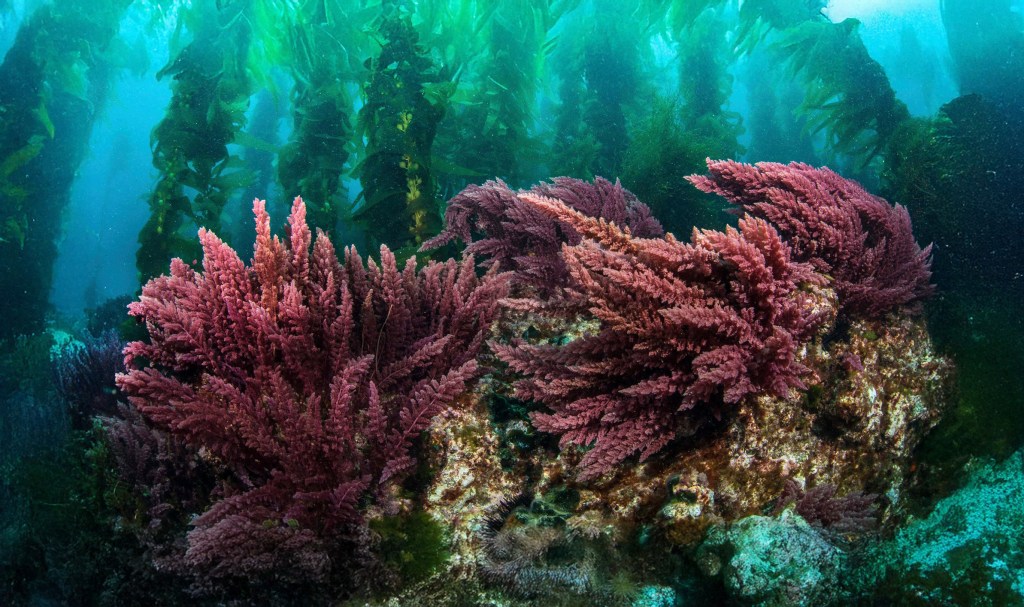
Asparagopsis taxiformis, commonly known as red sea plume, a tropical red algae being studied for its ability to cut methane emissions from cattle. (Photo: Wikipedia)

“You need to feed the cows only less than 1% of their diet with this red algae and it can reduce up to 99% of their methane emissions,” said Dr. Or Ben Zvi, an Israeli postdoctoral researcher at Scripps who studies both corals and seaweeds.

Trials in Australia, California, and other regions have shown just how potent this seaweed can be. As Dr. Ben Zvi indicated, even at tiny doses, fractions of a percent of a cow’s feed, other studies have shown that it can reduce methane by 30 to 90 percent, depending on conditions and preparation. Such results suggest enormous potential, but only if enough of the seaweed can be produced consistently and sustainably.

“At the moment it is quite labor intensive,” says Ben Zvi. “We’re developing workflows to create a more streamlined and cost-effective industry.”

Which explains to bubbling flasks around me now. 
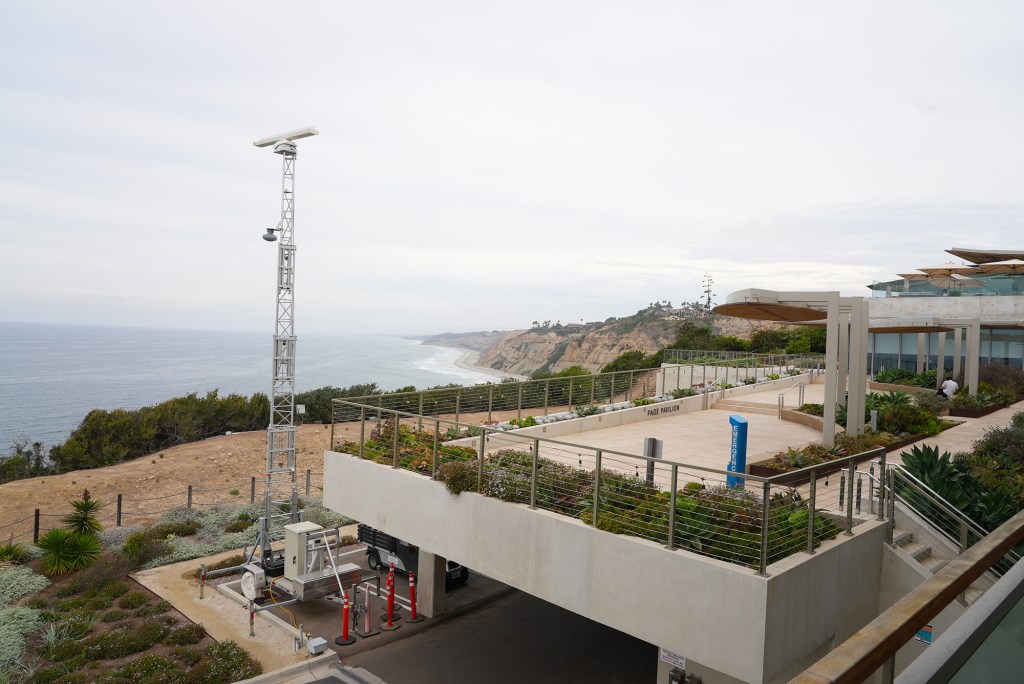
Scripps Institution of Oceanography at UC San Diego (Photo: Erik Olsen)

The Smith lab here at Scripps studies every stage of the process, from identifying which strains of Asparagopsis thrive locally to testing how temperature, light, and carbon dioxide affect growth and bromoform content. Dr. Ben Zvi is focused on the life cycle and photosynthesis of the species, refining culture techniques that could make large-scale cultivation possible. At Scripps, environmental physiology experiments show that local strains grow best at 22 to 26 °C and respond well to elevated COâ‚‚, information that could guide commercial farming in Southern California.

The challenges, however, are considerable. Wild harvesting cannot meet demand, and cultivating seaweed at scale requires reliable methods, stable yields, and affordable costs. Bromoform content varies widely depending on strain and growing conditions, so consistency remains an issue. Some trials have noted side effects such as reduced feed intake or excess mineral uptake, and long-term safety must be established since we’re talking about animals that we breed and raise to eat.

“It’s still a very young area, and we’re working on the legislation of it,” says Ben Zvi. “We need to make it legal to feed to a cow that eventually we either drink their milk or eat their meat. We need for it to be safe for human consumption.” 
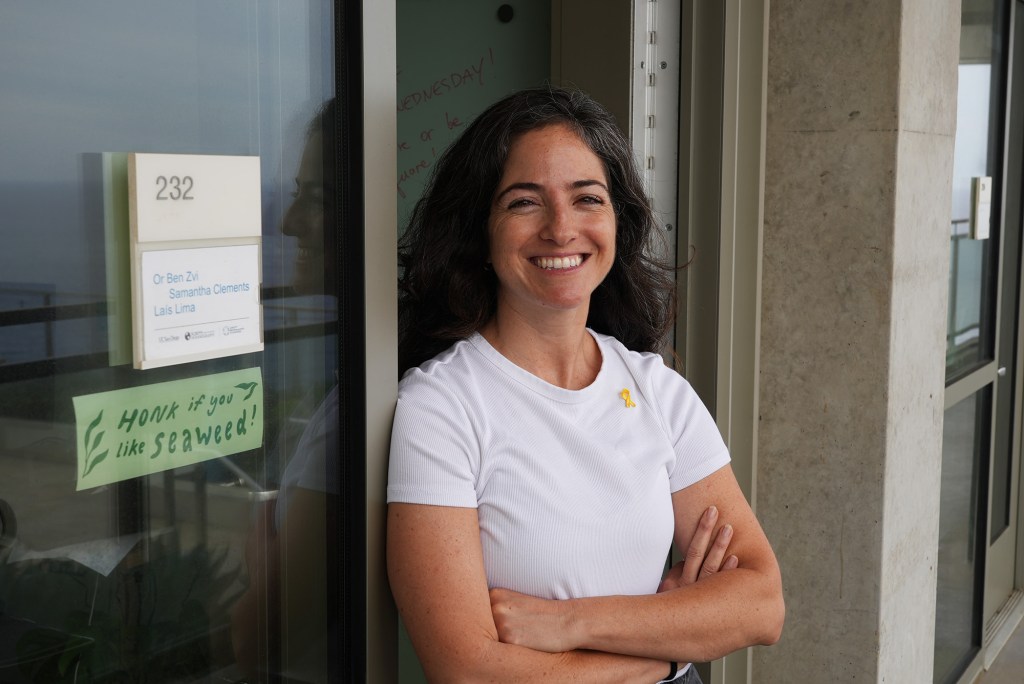
Dr. Or Ben Zvi (Photo: Erik Olsen)

And, of course, large-scale aquaculture raises ecological questions, from nutrient demands and pollution to the fate of volatile compounds like bromoform.

To overcome these obstacles, collaborations are underway. UC San Diego and UC Davis have launched a pilot project under the UC Carbon Neutrality Initiative to test production methods and carbon benefits. In 2024, CH4 Global, a U.S.-based company with operations in New Zealand and Australia that develops seaweed feed supplements to cut livestock methane, partnered with Scripps to design cultivation systems that are efficient, inexpensive, and scalable. Within the Smith Lab, researchers are continuing to probe the biology of Asparagopsis, mapping its genetics, fine-tuning its culture, and testing ways to maximize both growth and methane-suppressing compounds.

At a time when university-based science faces immense pressures, the Smith Lab at Scripps provides a glimpse of research that is making a real impact. The coral tanks against the wall belong to another project at the lab, and we have another story coming soon about the research that readers will find very interesting, but the bubbling flasks in the alcove reveal how breakthroughs often start with small details. In this case, the discovery that a chemical in a widely available seaweed could have such a dramatic, and apparently harmless, effect on the methane that animals make in their guts. These modest but powerful steps are shaping solutions to global challenges, and California, with its wealth of scientific talent and institutions, remains at the forefront. It is one of many other stories we want to share, from inside the labs to the wide open spaces of the state’s natural landscapes. 

Underground Fury: The 1985 Methane Blast That Rocked Los Angeles and Rerouted Its Subways

A 1985 methane explosion in L.A.’s Fairfax district turned a Ross Dress for Less into a disaster scene.
Photo by Dean Musgrove, courtesy of the Herald-Examiner Collection – Los Angeles Public Library.

In the heart of Los Angeles, on a seemingly ordinary spring day in 1985, a sudden explosion tore through the Ross Dress for Less store at the corner of 3rd Street and Fairfax Avenue. This wasn’t an industrial accident nor was it an act of malice—it was a force of nature that had been lurking unseen beneath the city’s streets: methane gas.

The Fairfax District, a bustling area known for its shopping and historic Farmers Market, is also part of the larger Salt Lake Oil Field, a subterranean landscape rich in hydrocarbons. Over millions of years, decaying organic matter trapped in the earth’s crust had transformed into vast reservoirs of oil and methane gas. It was this methane that had stealthily migrated close to the surface, building up in closed spaces, waiting for an ignition source to set off a dramatic release.

On that day, as shoppers browsed through discounted apparel, an explosive mixture of methane, oxygen, and sewer gases found its spark. The blast shattered the storefront windows and caused a partial cave-in of the roof, turning the shop’s interior into a mangled wreck of metal debris. Twenty-three individuals were left with injuries severe enough to necessitate hospital care. In the aftermath, police cordoned off a four-block radius encompassing the bizarre spectacle of gas fires that jetted into the night sky, a haunting tableau that persisted until dawn.

The aftermath of the explosion was a scene of chaos and confusion. Emergency services sprang into action, addressing the immediate humanitarian concerns. But once the dust settled, a more profound issue loomed: the implications for the city’s ambitious underground Metro Rail project.

At the time, Los Angeles was in the throes of planning and constructing the Metro Red Line, a subway system that promised to link various parts of the sprawling city. Wilshire Boulevard, one of the busiest thoroughfares in Los Angeles, was to be a central artery in this new subterranean network. However, the explosion at Ross Dress for Less exposed the heretofore underestimated risk of tunneling through methane-rich zones.

The city of Los Angeles created a methane zone map showing shaded regions of the methane zone and methane buffer zones.

Fears quickly escalated about the potential for similar explosions occurring elsewhere, particularly along the planned subway routes. The public, already wary of the high costs and disruptions associated with the Metro line, grew increasingly concerned about the dangers of tunneling through methane pockets.

In the wake of the explosion, city officials and Metro Rail engineers faced a daunting challenge. They needed to ensure public safety without derailing the critical infrastructure project. This task required a multifaceted approach. First, there was a thorough scientific investigation. Experts from various fields, including geologists, engineers, and safety specialists, were brought in to assess the risks of methane gas in the Fairfax District and along the proposed Metro route.

In a comprehensive regulatory response, the city imposed stringent building codes and established the Methane Zone Ordinance, which required new constructions in certain areas to implement gas detection and venting systems.

But the blast also resulted in a measure of technological innovation. The Metro Rail project incorporated state-of-the-art methane detection systems and emergency ventilation procedures in its design, setting a new standard for subway safety. The process was aided to some extent by significant community engagement. Public meetings and forums were held to address community concerns, offer reassurances, and provide education on the measures being taken to prevent future incidents.

B Line train at Union Station (Wikipedia)

Despite these efforts, the fear of what lay beneath Los Angeles’ streets had a chilling effect on the Metro’s progress. The Red Line faced delays as policymakers and the public grappled with the cost and complexity of making the subway safe. It wasn’t until the early 2000s, with the introduction of advanced tunneling technologies and robust safety protocols, that the Metro expansion regained momentum.

The 1985 methane explosion, while a localized event, reverberated through time to shape the development of Los Angeles in profound ways. It brought to the forefront the invisible risks of urban growth, challenged engineers and city planners to innovate, and ultimately reaffirmed the resilience of a city determined to rise above its subterranean challenges.

1983 rendering for the planned subway station at Wilshire and Fairfax – a casualty of the Ross explosion.
\Courtesy of the Metro Transportation Library and Archive.

The dangers of methane beneath Los Angeles are far from gone. The Porter Ranch leak, also known as the Aliso Canyon gas leak, was a massive methane leak in the Santa Susana Mountains near the neighborhood of Porter Ranch in the northwest section of the San Fernando Valley.. Discovered on October 23, 2015, gas was discovered escaping from a well within the Aliso Canyon underground storage facility. On January 6, 2016, Governor Jerry Brown issued a state of emergency, and numerous media reports suggested that the methane could be dangerous to residents.  On February 11, the gas company reported that it had the leak under control, and finally  on February 18, state officials announced that the leak was permanently plugged. Still, an estimated 97,100 tonnes (95,600 long tons; 107,000 short tons) of methane and 7,300 tonnes (7,200 long tons; 8,000 short tons) of ethane were released into the atmosphere.

Today, as the Los Angeles Metro continues to expand, the lessons learned from that explosive day in 1985 continue to resonate, ensuring that safety remains at the core of the city’s march toward the future.

Hey there! If you enjoy California Curated, consider donating the price of a coffee to support its creation!