Why bringing back California’s kelp is so important

Sea urchins have devastated kelp forests in California.

Two centuries ago, the waters off the California coast were home to a vibrant ecosystem of plants and animals. Vast forests of kelp provided habitat for thousands of species of fish and invertebrates. Some of these kelp forests were so dense that light hardly penetrated to the seafloor. But now, along much of the coastline, the kelp is all but gone.

The tragedy here goes far beyond species loss and a troubling decline in overall biodiversity in our coastal waters. Kelp are also great at taking up carbon dioxide from the atmosphere and they help reduce acidification of the oceans, essentially cleaning the water and bringing balance to the entire ecosystem.
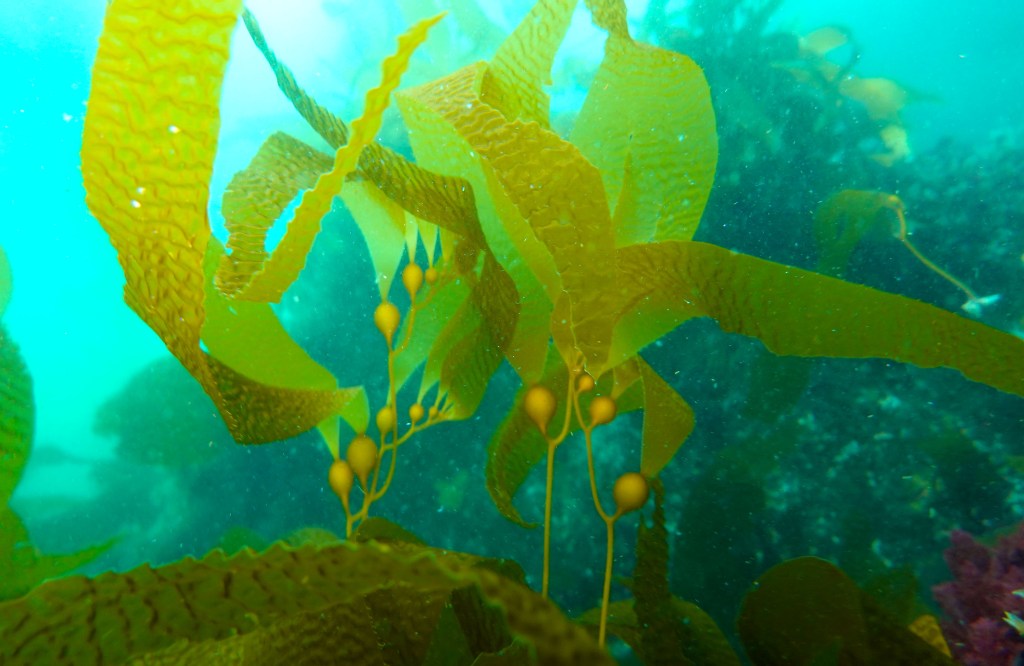
Kelp off the coast of Anacapa Island in California’s Channel Islands (Photo: Erik Olsen)

But now, that balance is has been disrupted. A recent study says that California’s bull kelp (Nereocytis luetkeana) forests (one of several species that are endemic here) have declined by 93% in just the last five years.

It’s difficult to fathom the scale of this loss, and we are only beginning to understand what it will mean for the overall health of our coastal waters. When the kelp disappears, the entire complex web of organisms that rely on it for habitat and food is disturbed. That is to say, large swaths of the near-shore California coastal ecosystem depend upon kelp.

So, what is happening? Well, first a little history.

A healthy kelp forest in Channel Islands National Park (NPS)

Two centuries ago, when kelp forests along the coast were so abundant they stretched for hundreds of miles with thick canopies that could be seen at the surface. At the time, urchins existed, but their populations were held in check by sea otters, which have been known to eat 1/4 of their body weight in urchins in a day. But unrestrained hunting by trappers (often Russian and British) in the early 1800s and into the mid-century brought sea otter populations down so low, at one point they were considered extinct in the wild. With the otters gone, urchins flourished and along certain stretches of coast, the kelp disappeared. Remember, this was 200 years ago, long before California was even a state.

Otters have come back to certain stretches of the California coast, especially near Monterey, and in some cases, the kelp has come back. And, in fact, even now, some places around the state, things aren’t nearly so bad. One-third of southern California’s kelp forests are found within Channel Islands National Park and Channel Islands National Marine Sanctuary, where no-take marine reserves prohibit all take of living, geological, or cultural resources. In the reserve, California sheephead, spiny lobsters, and sunflower stars eat sea urchins and keep their population from exploding.

Bust most other regions are not so lucky. And things have gotten even worse. This is where it gets more complicated.

A diver measures kelp growth (Kate Vylet/California Sea Grant) 

An intense ocean warming period between 2014 and 2017 is the likely culprit in causing a mass die-off of starfish. Starfish prey on native purple urchins, keeping their numbers in check. With mass numbers of sea stars dead, the urchins proliferated, eating their way through the kelp forests. The result: disaster.

“What we’re seeing now are millions and millions of purple sea urchins, and they’re eating absolutely everything,” said Laura Rogers-Bennett, an environmental scientist with UC Davis Karen C. Drayer Wildlife Health Center and California Department of Fish and Wildlife operating out of the UC Davis Bodega Marine Laboratory. “They can eat through all the anemones, the sponge, all the kelp, the fleshy red algae. They’re even eating through calcified alga and sand.”

The loss of kelp forests in California should be immediately recognized as a major ecological problem to solve, and while some projects are underway to do just that, much more needs to be done.

Several organizations, most of them California-based, are trying to reduce the number of urchins in Southern California. For example, UC Davis researchers are working with Bay Area shellfish company Urchinomics to explore “ranching urchins, removing them from the seafloor and fattening them up to be sold as sushi. Urchins are highly valued by Japanese consumers and are even sold in some California sushi restaurants. One problem is that purple urchins tend to be too small to harvest for human consumption, hence the need to increase their size via aquaculture. But will this be enough to stop the urchin’s march towards environmental saturation? Probably not.

The Bay Foundation in Santa Monica launched a program to restore kelp beds around 150 acres of urchin barrens along the rocky reefs off Palos Verdes. Scientists, recreational divers, and fishermen go down and smash the urchins with small hammers. The effort has shown promise, with kelp growing back in 46 acres of restored reef. Again, this is not nearly enough.

Kelp forest off Palos Verdes Peninsula (Erik Olsen)

Other strategies are outlined in the Sonoma-Mendocino Bull Kelp Recovery Plan, released last June by the Greater Farallones Association and California Department of Fish and Wildlife. It includes measures such as creating a kelp oasis to preserve seed stock and repopulate bull kelp when conditions are conducive to restoration.

This may all be too little too late. We believe state, local and federal agencies should redouble their efforts now to mitigate the loss of kelp in California waters. The implications for further, perhaps total, loss of California’s once-flourishing kelp forests are just too dire and action is required now. As the authors of the report write “it may take decades before the complex biological communities, associates, and the ecosystem services provided by macroalgal [seaweed] forests rebound.”
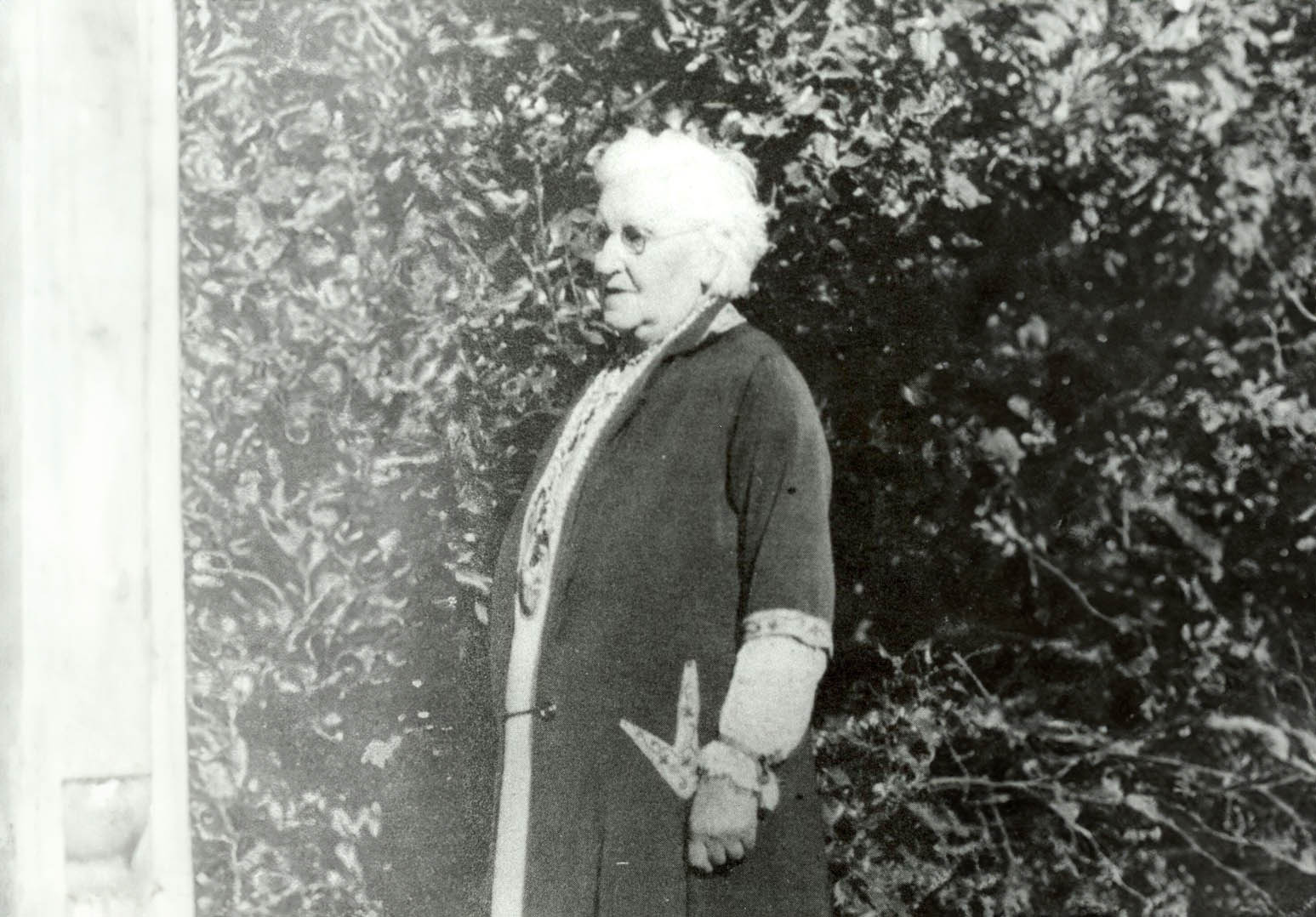
Julia Platt was the Unwavering Force Behind Monterey’s Ecological Conservation

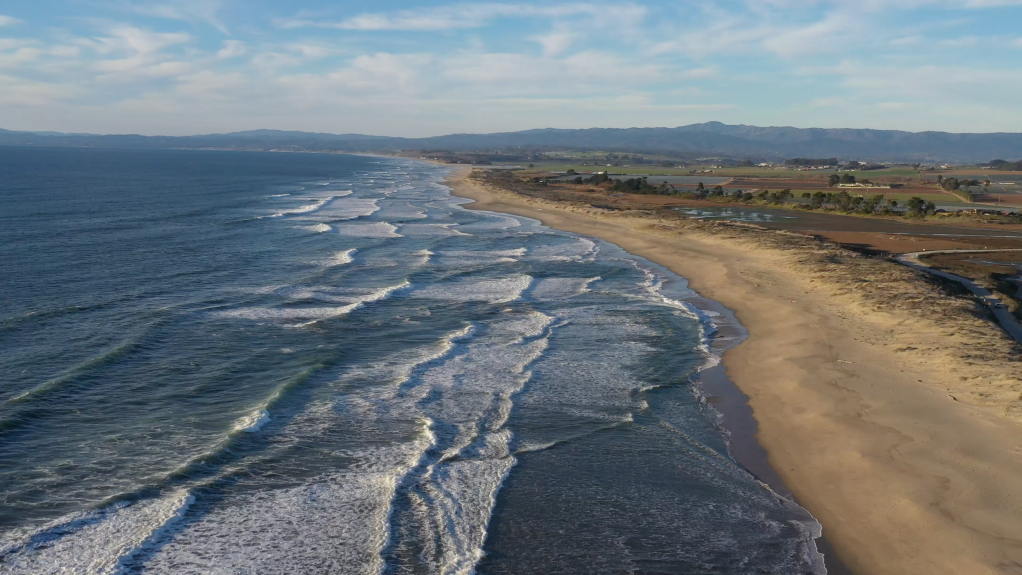
Monterey Bay (Photo: Erik Olsen)

In the 18th century, when Spanish and French explorers ventured along the northern California coast they encountered Monterey Bay and marveled at the astonishing ecological abundance of this 25-mile wide bite mark in the land. The shores buzzed with the lively interactions of sea birds, sea otters played amidst the luxuriant kelp beds, and the waters teemed with many species of whale. 

Yet, by the late 19th and early 20th centuries, this rich tapestry of marine life and biodiversity had largely been erased, replaced by the destructive industrial operations of sardine canneries. These factories, though they brought economic activity and prosperity to a few, also introduced a plague of environmental problems that began a period of staggering ecological decline. 

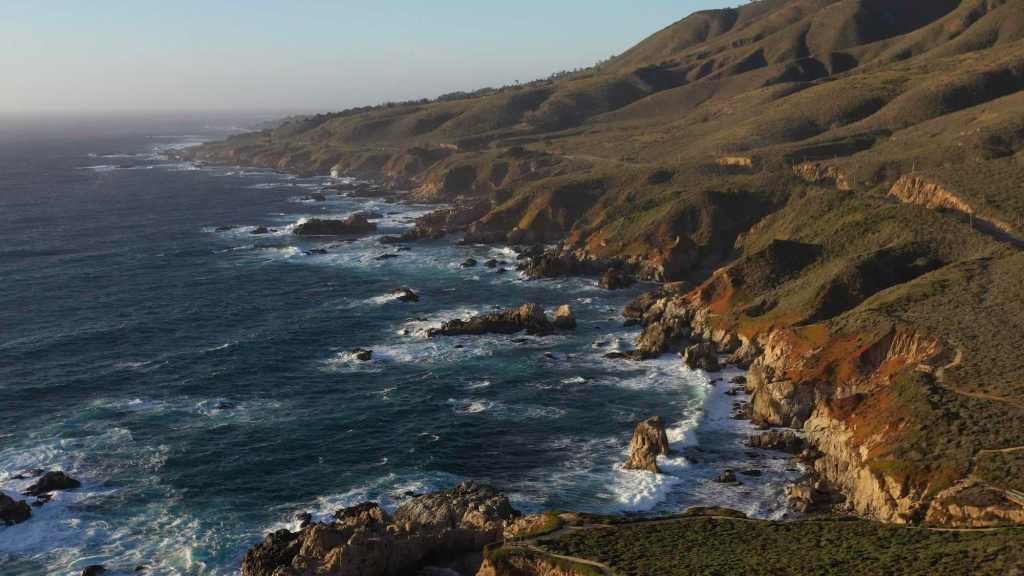
California Coast out of Big Sur (photo: Erik Olsen)

But the tide turned in the early 20th century, in large part due to the efforts of a determined, pioneering woman who took a stand against the sardine industry and began an effort of restoration that helped make Monterey Bay one of the most celebrated shorelines in the world.

CALIFORNIA CURATED ON ETSY

Purchase stunning art prints of iconic California scenes.
Check out our Etsy store.

 This transformational figure was Julia Platt, whose contributions were instrumental in the conservation efforts that led to the revival of Monterey’s natural and economic landscape. As mayor of Pacific Grove and a pioneer in marine conservation, Platt used her authority and vision to establish protected marine areas and implement regulations that curbed overfishing and habitat destruction. Her efforts laid the groundwork for a broader environmental awareness and action within the community.

Julia Platt began her career not in politics, but in science. She was born on September 14, 1857, in San Francisco, California, and later moved to Burlington, Vermont. She studied at the University of Vermont and then at Harvard University for her graduate studies.

During her academic journey, Julia faced the limitations imposed on women in academia at the time. In the late 1800s in the United States, it was nearly impossible for a woman to pursue a Ph.D. in zoology due to prevailing gender biases. However, the University of Freiburg in Baden, Germany, presented her with an opportunity to break through these barriers. She seized this chance and became one of the first women to earn a zoological Ph.D. there, challenging the norms and paving the way for future generations. 

Her academic achievements were significant, and she had already made significant contributions to science, including pioneering research on chick embryo development and identifying a new head segment in shark embryos. 

But upon returning to the US, she once again ran up against the glass ceiling of academia. While she worked with some of the top zoologists of the time, she could not find steady work in science. Admitting defeat, but determined to make her mark, she decided on politics, writing to a friend, “Without work, life isn’t worth living. If I cannot obtain the work I wish, then I must take up with the next best.” 

Cannery Row in Monterey 2023 – (Photo by Erik Olsen)

Monterey Bay’s legendary biodiversity was under serious threat. In 1854, a whale was as valuable as several pounds of pure gold, and J.P. Davenport harvested them using exploding lances, processing the carcasses in shore-based vats of boiling oil. By the late 19th century, the lucrative abalone industry had attracted Chinese fishermen village to the shores of Pacific Grove over-burdening the population. During the Gold Rush, prospectors consumed fourteen million seabird eggs from the Farallon islands, a practice that decimated seabird populations. From the 1910s to the 1940s, Monterey Bay’s sardine population fueled a burgeoning canning industry, reaching unprecedented scales that caused horrific smells in town and rendered the beach useless for recreation. 

Each of these industries ultimately collapsed under the weight of its own exploitation; otters, whales, seabirds, abalone, and sardines were all harvested to the brink of extinction.

Whales at Moss Landing near Monterey

In 1899, as the age of 42, she moved to Pacific Grove, the photogenic seaside hamlet next to Monterey where industrial canning and the environmental destruction wrought by it was at its peak. The pollution from canning operations (romanticized in John Steinbeck’s Cannery Row) made the beaches unusable and the smell wafting from Monterey made conditions almost unlivable. Platt decided to redirect her passion for understanding the intricacies of life into preserving it. 

Photo by Eadweard Muybridge of egg collectors on South Farallon Island
Courtesy of New York Public Library via Wikicommons

Taking matters into her own hands, she ran for public office. In 1931, at the age of 70, she became the mayor of Pacific Grove. Despite facing challenges as one of the few female mayors of her time, she wielded her position with an iron will and a clear vision for the future. She was an ardent advocate for beach access for all people, and wielded crowbars, hammers and her own strong will against the rich beachfront land owners who sought to fence off their properties. In this regard, she was a pioneer, foreshadowing the California Coastal Act of 1976—one of the most treasured aspects of California’s landmark coastal protection system—which protects the state’s iconic coastlines from unchecked development and preserves their natural beauty and accessibility for future generations.

Platt’s most significant and lasting contribution as mayor was the establishment of one of the first marine protected areas in California. She passionately argued for the designation of a marine refuge along the coastline, driven by her belief in the innate value of conserving marine habitats and their inhabitants. With her guidance, what became the Lovers Point-Julia Platt State Marine Reserve (SMR) and Edward F. Ricketts State Marine Conservation Area (SMCA), became two of four marine protected areas (MPAs) located on the Monterey Peninsula between Monterey and Pacific Grove.

Bixby Bridge near Monterey (Photo: Erik Olsen)

Thanks to Platt’s efforts, the region saw a revival in its marine biodiversity. Her initiatives ensured that the delicate balance of the marine ecosystem was maintained and allowed for species that were on the brink of being decimated due to human activities to thrive once more.

Julia Platt was more than just Pacific Grove’s mayor; she was its guardian. Through her vision and determination, she transformed Monterey into a beacon of marine conservation. Even after her tenure as mayor, Platt’s legacy lived on. Her initiatives paved the way for future conservation efforts, including the establishment of the iconic Monterey Bay Aquarium.