Long Valley Caldera Discover the Science and Beauty of California’s Ancient Supervolcano

The Legacy of One of North America’s Largest Volcanic Eruptions

The Long Valley Caldera is one of the most active volcanic sites in the United States.
Here, the Owens River flows through it, winding south through Owens Valley. (Erik Olsen)

Driving up Highway 395 toward Mammoth Lakes is one of the most breathtaking road trips in California. The highway winds through the rugged Eastern Sierra, offering stunning views of snow-capped peaks, alpine meadows, and vast chaparral plains. But beneath this dramatic landscape lurks a hidden danger—an ancient volcanic giant that still stirs beneath the surface.

The Long Valley Caldera in eastern California is an extraordinary geological feature, spanning about 20 miles in length and 11 miles in width. It owes its existence to one of the most dramatic volcanic events in Earth’s history, a supereruption that occurred approximately 760,000 years ago. This event, known as the Bishop Tuff eruption, ejected an estimated 150 cubic miles of molten rock and ash into the atmosphere, far surpassing the 1980 eruption of Mount St. Helens, which released just 0.3 cubic miles of material. The magnitude of the Bishop Tuff eruption resulted in the collapse of the ground above the magma chamber, creating a massive depression known as a caldera. In other words, it’s hard to get your head around how big this eruption was.

The Long Valley Caldera is a striking reminder of Earth’s immense, often hidden, volcanic power and its potential for destruction—located right here in California, near one of the nation’s most popular ski towns, Mammoth Lakes. Geothermal activity, visible in the form of hot springs, fumaroles, and hydrothermal systems, is a constant feature of the landscape. This activity has made the caldera a hub for geothermal energy production, with the Casa Diablo thermal power plant utilizing its subterranean heat to generate electricity. The energy produced at Casa Diablo is enough to power about 36,000 homes, making it an important renewable energy source for the region.
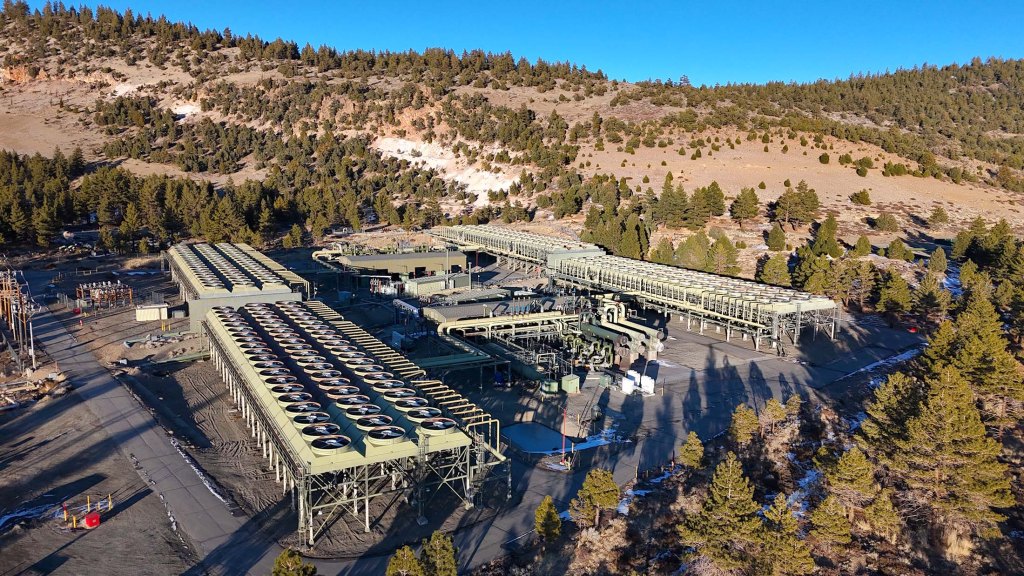
Casa Diablo Geothermal Facility, Long Valley Caldera, California (Erik Olsen)

The surface of the caldera is also marked by the Bishop Tuff, a layer of welded volcanic ash that provides a vivid record of the eruption’s intensity and the pyroclastic flows that reshaped the landscape. Pyroclastic flows are fast-moving, hot clouds of gas and volcanic material that can destroy everything in their path. Often they are considered more dangerous than the lava that pours forth from an erupting volcano. For example, pyroclastic flows killed far more people at Pompeii than lava, as the 79 AD eruption of Mount Vesuvius unleashed fast-moving clouds of superheated gas, ash, and volcanic debris that raced down the slopes at over 100 mph, reaching temperatures above 1,000°F, instantly asphyxiating and incinerating thousands, while the slower-moving lava played a minimal role in fatalities.

Geothermal features at the Long Valley Caldera commonly support microbial communities of thermophilic bacteria and algae, which thrive in the caldera’s hot springs and fumaroles. These organisms not only influence the terrain by contributing to mineral precipitation but also serve as models for studying life in extreme environments, offering analogs for early Earth and potential extraterrestrial ecosystems. Scientists are just beginning to understand how these bacteria live and thrive in deep ocean vent systems. In some areas around the Long Valley Caldera and Mono Lake, mats of thermophilic bacteria and algae thrive around the geothermal features, like the many hot tubs that dot the landscape, forming colorful, textured surfaces. These microbial communities contribute to the unique environment and can even make the ground feel crunchy underfoot, offering a tangible connection to the caldera’s dynamic, living systems.
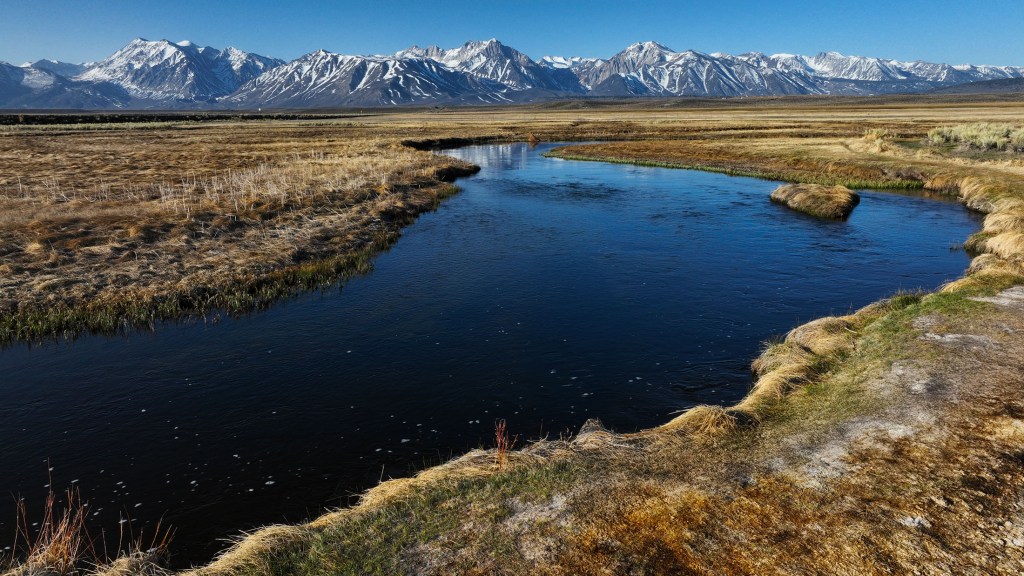
The Owens River flows through the Long Valley Caldera near Mammoth Lakes, California (Erik Olsen)

While the caldera’s formation was sudden and catastrophic, its story stretches back millions of years. Scientific studies at the Long Valley Caldera have advanced our understanding of volcanic processes, crustal dynamics, and geothermal systems. The Long Valley Caldera sits within the Basin and Range Province, an area of North America characterized by extensional tectonics, where the Earth’s crust is being pulled apart, allowing magma to rise to the surface.

Using seismic tomography, researchers have mapped the magma chamber beneath the caldera, revealing a layered structure with a partially molten zone capped by solidified magma. This configuration, as highlighted in a 2023 study published in Science Advances, helps explain the periodic episodes of unrest observed in the caldera and provides a basis for assessing potential future activity. Before the eruption, the region experienced significant volcanic activity, with lava flows and smaller eruptions setting the stage for what was to come. Even after the formation of the caldera, volcanic activity continued in the area. Rhyolitic lava flows emerged within the caldera, and the nearby Mono-Inyo Craters volcanic chain has seen eruptions as recently as 600 years ago, underscoring the region’s enduring geological vitality.
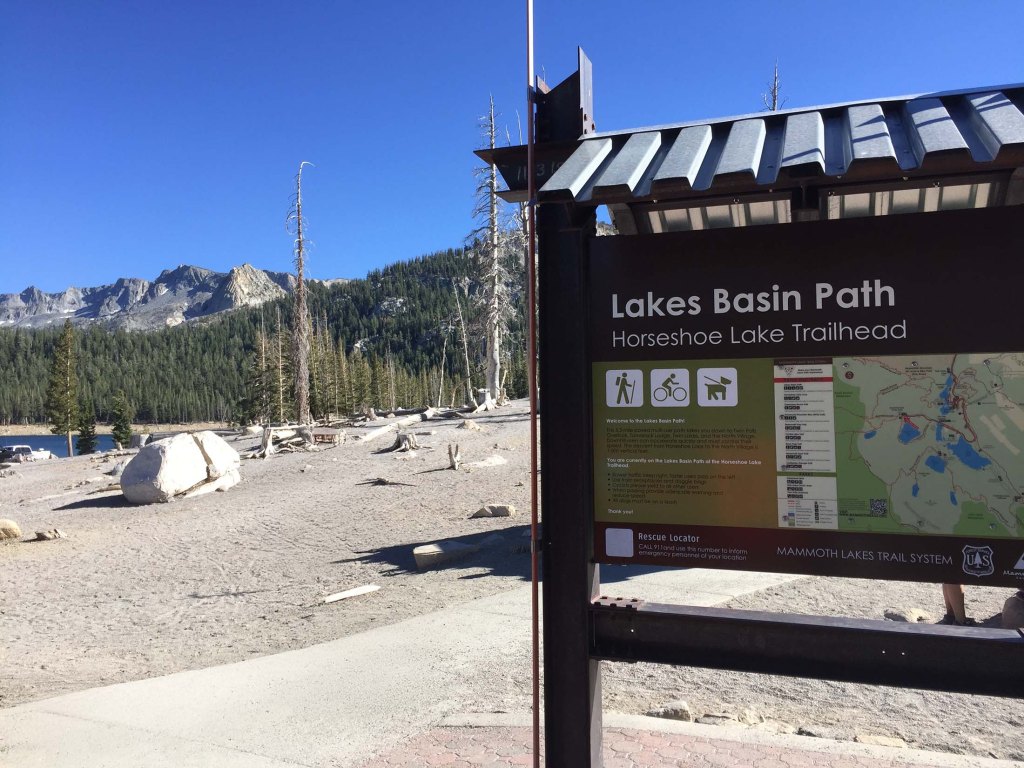
Horseshoe Lake in the Mammoth Lakes area, where underground carbon dioxide emissions have caused widespread tree die-off
(Photo: Erik Olsen)

Another place where the region’s volcanic activity can be experienced firsthand is Horseshoe Lake, where carbon dioxide continuously seeps from the ground, suffocating tree roots and causing a vast die-off of trees. The result is a barren, almost ghostly landscape of skeletal trunks and lifeless ground, a stark reminder that Long Valley’s volcanic system is still active beneath the surface. The area is not just eerie but also hazardous—high concentrations of CO₂ can accumulate in low-lying areas, posing a serious risk to humans and animals. Signs around the site warn visitors of the danger, as pockets of odorless, colorless gas can be lethal if inhaled in high enough doses.

Hot Springs geological site near Mammoth Lakes, California. (Erik Olsen)

The caldera has not been entirely quiet since its dramatic birth. Ground deformation studies, using GPS and InSAR technology (satellites), have tracked uplift in the caldera’s floor, offering critical data on magma movement and hydrothermal activity. In a 2016 study published in Geophysical Research Letters, researchers linked changes in uplift patterns to deeper magmatic processes, reinforcing the importance of continuous monitoring. In 1980, a series of magnitude 6 earthquakes occurred along its southern margin, drawing the attention of volcanologists from USGS. These earthquakes were accompanied by noticeable uplift in the caldera’s floor, a sign of magma movement beneath the surface. Since then, the region has experienced periodic episodes of ground deformation and seismic activity, reminding scientists that the volcanic system beneath Long Valley is far from dormant.

Recent research has provided valuable insights into the caldera’s potential for future activity. While there is currently no indication of an imminent eruption, the area is closely monitored by the United States Geological Survey (USGS). This surveillance includes the measurement of ground deformation, gas emissions, and seismic activity, all of which serve as indicators of changes within the magma chamber. The 1980s unrest heightened awareness of the need for vigilance, particularly in regions where volcanic hazards could affect human populations.
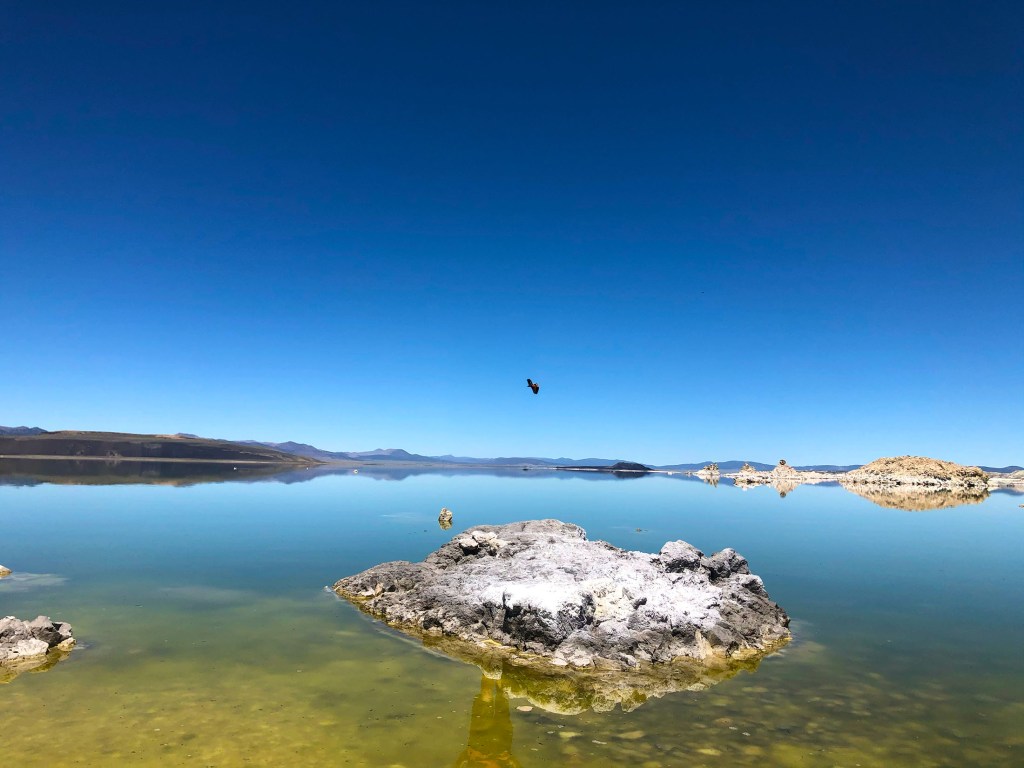
Mono Lake is home to thermophilic (heat-loving) and extremophilic (extreme-condition-loving) bacteria. These microorganisms thrive in the lake’s unusual environment, characterized by high alkalinity, high salinity, and elevated levels of carbonate. (Erik Olsen)

As a result of these studies, the town of Mammoth Lakes took proactive measures to ensure public safety. Local authorities constructed an emergency evacuation route to serve as an escape in the event of a volcanic eruption or other natural disaster stemming from the Long Valley Caldera. After local businesses and residents expressed concerns that the original name implied danger, it was changed to Mammoth Scenic Loop to emphasize the area’s beauty and appeal. The United States Geological Survey (USGS) also intensified its monitoring efforts, implementing a color-coded alert system to communicate volcanic activity risks.

Beyond its scientific significance, the Long Valley Caldera is a destination for outdoor enthusiasts and other researchers. Numerous hot springs dot the landscape and are immensely popular among tourists and residents. Mammoth Lakes is one of California’s top recreational spots, providing amazing opportunities to hike and fish during the summer and excellent skiing in the winter months. For geologists, the caldera serves as a natural laboratory, providing an opportunity to study volcanic processes in a setting shaped by one of the most powerful eruptions in recent geological history.

The eastern Sierra reflected in Little Alkali Lake near the Long Valley Caldera (Erik Olsen)

Of course, there remain certain dangers to all this volcanic activity. On April 6, 2006, three members of the Mammoth Mountain ski patrol tragically lost their lives after falling into a volcanic fumarole near the summit. The incident happened while they were conducting safety operations to secure a snow-covered geothermal vent following an unprecedented snowfall. If you’ve ever skied Mammoth before, there is a distinct sulphurous smell around the Christmas Bowl ski run at Chair 3 near McCoy Station.
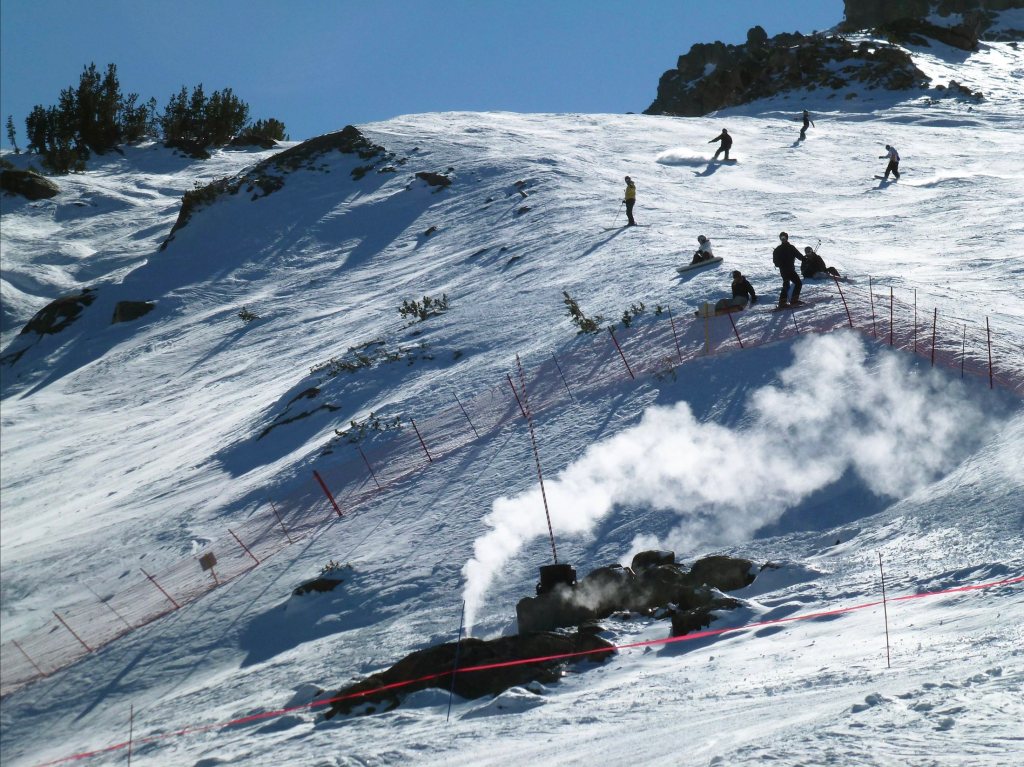
Steam from an active fumarole near McCoy Station on Mammoth Mountain in 2012. (Flickr)

Standing at the center of the Long Valley Caldera, surrounded by the remnants of a prehistoric supereruption, offers a profound sense of scale and wonder. The vastness of the caldera, framed by the Sierra Nevada and dotted with geothermal vents, creates a landscape that feels alive yet ancient. It’s amazing place to be, both during the day and at night when the stars spread out across the gaping Sierra sky. The ground beneath your feet, shaped by cataclysmic forces, whispers of Earth’s power and the quiet persistence of geological time. Yet beneath the surface, the processes that shaped it continue to evolve, as magma slowly shifts and geothermal systems release heat from the planet’s interior. As research continues and technology advances, the Long Valley Caldera will undoubtedly yield further insights into the intricate workings of our planet’s volcanic systems.

Cadillac Desert: How Marc Reisner Changed the Way We See Water

Los Angeles Aqueduct passing through Palmdale, California (Photo: Erik Olsen)

Marc Reisner’s Cadillac Desert: The American West and Its Disappearing Water remains a towering achievement in environmental journalism, decades after its publication in 1986. Chronicling the history, politics, and ecological consequences of water management in the American West, Cadillac Desert is not just an exposé of the past—it’s a cautionary tale that resonates today. With precision and passion, Reisner unraveled the intricacies of an arid region’s improbable transformation into one of the world’s most agriculturally productive and densely populated areas. His work has had a profound and lasting impact on how we understand water politics and environmental sustainability in California and beyond.

Cadillac Desert stands as a fitting successor to Wallace Stegner’s Beyond the Hundredth Meridian, continuing the exploration of water’s defining role in the American West. While Stegner championed the visionary work of John Wesley Powell and exposed the folly of ignoring the region’s arid realities, Reisner picked up the torch decades later to chronicle how those warnings were systematically ignored. Where Stegner painted a historical narrative of ambition and hubris, Reisner delivered a scathing and urgent critique of water politics, detailing the environmental and economic consequences of massive dam-building projects and unsustainable resource exploitation.

Colorado River

Cadillac Desert is, at its core, a gripping investigation into the manipulation of water resources in the American West. Reisner meticulously details how the construction of massive dams, reservoirs, and aqueducts enabled the transformation of a naturally dry landscape into a gargantuan economic powerhouse. From the Colorado River to the Los Angeles Aqueduct to California’s Central Valley, Cadillac Desert paints a vivid picture of engineering triumphs and environmental sacrifices, revealing the cost of this development to natural ecosystems, Indigenous communities, and future generations.

One of Reisner’s central stories is the tale of the Owens Valley. In the early 20th century, this fertile agricultural region was drained dry when the Los Angeles Aqueduct diverted its water to fuel the growing metropolis of Los Angeles. The story, replete with backroom deals, broken promises, and outraged locals, serves as a symbol of the greed and ambition that defined water politics in the West. Reisner weaves this narrative with the larger saga of William Mulholland, the ambitious engineer whose name is synonymous with both the success and hubris of L.A.’s water empire. This saga of water, power, and betrayal would later inspire the dark and iconic tale of Chinatown, the Roman Polanski film that captured the moral ambiguities and human cost of Los Angeles’ relentless thirst for growth.

Marc Reisner (Water Education Foundation)

Another cornerstone of the book is the story of the Colorado River, a waterway Reisner calls the most controlled and litigated river on Earth. He charts the creation of the Hoover Dam and the vast network of canals and reservoirs that distribute its water across seven states. The book reveals how over-allocation of the river’s resources, coupled with decades of drought, have pushed it to the brink of collapse—an issue that has only grown more urgent since Cadillac Desert was published.

Hoover Dam in 1936 (United States Bureau of Reclamation)

Reisner also dissects the Central Valley Project and the State Water Project, two gargantuan efforts to turn California into an agricultural Eden. By moving water from Northern California to the arid south, these projects enabled California’s emergence as a global agricultural leader. But Reisner doesn’t shy away from exposing the social and environmental consequences: drained wetlands, salt buildup in soils, and a system that prioritizes agribusiness over the needs of small farmers and urban residents.

CALIFORNIA CURATED ON ETSY

Purchase stunning art prints of iconic California scenes.
Check out our Etsy store.

What makes Cadillac Desert extraordinary is not just its scope but its style. Reisner’s journalistic rigor is matched by his ability to tell a compelling story. He brings characters like Mulholland and Floyd Dominy, the brash commissioner of the U.S. Bureau of Reclamation (part of the U.S. Department of the Interior), to life with vivid detail. At the same time, his writing is infused with moral urgency, challenging readers to question the sustainability of a society built on unsustainable water use.

Owens River in the Eastern Sierra (Erik Olsen)

The book’s legacy is immense. It galvanized environmentalists and policymakers, inspiring debates about water rights, conservation, and the future of development in the West. Documentaries, academic studies, and even contemporary water management policies owe much to the awareness Cadillac Desert raised. In California, where water battles continue to define politics and development, the book remains as relevant as ever.

As we face a future of intensifying droughts and climate change, Reisner’s insights grow more prescient by the day. California is still grappling with the overuse of groundwater, the challenges of aging infrastructure, and the inequities in water distribution. And while new technologies and policies offer hope, the central question Cadillac Desert poses—how do we balance human ambition with the limits of nature?—remains unanswered.

California Aqueduct (Erik Olsen)

Tragically, Reisner passed away in 2000 at the age of 51 from cancer, cutting short the life of a writer who had so much more to contribute to our understanding of environmental challenges. His death was a significant loss to the fields of journalism and environmental advocacy, but his legacy endures through his groundbreaking work. Cadillac Desert continues to inspire new generations to confront the urgent questions surrounding water use, conservation, and the future of the planet.

Marc Reisner’s Cadillac Desert is not just a history of water in the West; it is a call to rethink our relationship with one of the planet’s most precious resources. At once an epic tale and an urgent warning, it stands as a monumental testament to the price we pay for bending nature to our will.

The Volcanic History of Owens Valley and the Long Valley Caldera

Hot Springs geological site near Mammoth Lakes, California. (Erik Olsen)

Beneath the seemingly calm and serene landscape of the Eastern Sierra in California lies one of the planet’s most explosive features — a volcanic giant that has been slumbering for thousands of years. It’s the Long Valley Caldera, a vast geological structure that stands as a testament to one of the most violent volcanic eruptions in Earth’s recent history.

The caldera sits in the Owens Valley, situated between the towering peaks of the Sierra and the older, but majestic White Mountains. It is renowned globally for its volcanic history. Situated about 3000 miles north of Los Angeles, the Long Valley Caldera was born around 760,000 years ago during a cataclysmic eruption that ejected an estimated 150 cubic miles of material. It was a massive eruption, one of the largest in North American history. To put this into perspective, the 1980 eruption of Mount St. Helens released just about 0.3 cubic miles of material, indicating the colossal magnitude of the Long Valley eruption.

The aftermath of this gigantic eruption formed a vast depression, or caldera, measuring about 200 square miles. This is not a necessarily a unique event in Earth’s history, as there are many similar calderas worldwide, one of the largest in the world being in Yellowstone National Park. What makes the Long Valley Caldera distinctive is the incredible geothermal activity that continues beneath the surface, reminding us of the latent power it holds.

Visit the California Curated store on Etsy for original prints showing the beauty and natural wonder of California.

Inside the caldera, one discovers a geological wonderland that resembles a surreal moonscape, with its otherworldly terrain, bizarre formations, and strikingly barren features. Hot springs and fumaroles, areas where volcanic gases escape from the ground, are scattered across the area. This dynamic geology can be seen at nearby Mammoth Mountain itself, a lava dome complex located on the caldera’s rim. The area also holds an intricate hydrothermal system, with ground temperatures at depth reaching boiling point and more. On April 6, 2006, three members of the Mammoth Mountain ski patrol tragically lost their lives after falling into a volcanic fumarole near the summit. The incident happened while they were conducting safety operations to secure a snow-covered geothermal vent following an unprecedented snowfall.

Over the next several hundred thousand years, the Long Valley Caldera experienced a series of volcanic eruptions, including the formation of several domes and lava flows. The most recent eruption occurred about 600 years ago, creating the Inyo Craters, a group of small cinder cones located on the western edge of the caldera. If you spend much time up in the Eastern Sierra, you will discover that there are fascinating volcanic features everywhere.

One of the most notable features of the Long Valley Caldera is the presence of a magma chamber beneath the caldera floor, located at a depth of about 5 to 10 kilometers (3 to 6 miles), with deeper zones of partially molten rock extending down to 20-30 kilometers (12-18 miles). The magma chamber is responsible for the ongoing geothermal activity in the area, including hot springs and geysers, such as the famous Mono Lake Tufa State Natural Reserve.

The Long Valley Caldera is one of the most active volcanic sites in the United States.
Here, the Owens River flows through it, winding south through Owens Valley.(Erik Olsen)

Volcanism in the region is relatively recent, and it remains extremely active today. Upon entering the town of Mammoth Lakes, there is a small, but steep rise to the East. This area, called the Resurgent Dome, has also uplifted about 80 cm (about 2.5 feet) since 1980.

The current tranquillity of the Long Valley Caldera might deceive the casual observer into thinking that it poses no danger. This assumption is not entirely true. The United States Geological Survey (USGS) closely monitors the caldera due to its high volcanic risk.

In 1980, the region experienced a swarm of strong earthquakes, arousing concern among geologists about possible renewed volcanic activity. Since then, seismic activities have been routinely observed, along with ground deformation — indications that magma might be accumulating underneath. Scientists recently tried to take the temperature of that lava. Here is a more detailed discussion of Long Valley Caldera’s deep and shallow hydrothermal systems.

Sierra reflected in Little Alkali Lake near the Long Valley Caldera (Erik Olsen)

The Long Valley Caldera and Mammoth Mountain are classified as “High Threat” volcanoes by the USGS. The primary concerns are volcanic eruptions and the release of harmful gases, such as carbon dioxide, from the ground. At Horseshoe Lake, near Mammoth Mountain, high concentrations of carbon dioxide escaping from the soil have led to tree die-offs, as the gas displaces oxygen in the root zone. Such an eruption could disrupt local communities, cause significant economic impact due to damaged infrastructure, and affect air travel by releasing ash clouds.

The scenario might seem dire, but it’s crucial to understand that the chances of a massive eruption like the one 760,000 years ago are extremely low. Most potential future eruptions are likely to be smaller events, possibly similar to those experienced at the Mammoth Mountain area.

In addition to its volcanic history, Owens Valley also played an important role in the history of California. In the late 19th and early 20th centuries, the valley was the site of a major water rights dispute between the city of Los Angeles and local farmers and ranchers. The city ultimately won the dispute, and the water from the Owens River was used to fuel the growth of Los Angeles, leading to the displacement of many local residents.

The Long Valley Caldera continues to be a focal point for scientific research and natural wonder. Ongoing studies are uncovering new details about its volcanic past, current geothermal activity, and future potential for eruption. As we deepen our understanding of this dynamic landscape, we also gain valuable insights into the natural processes that shape our world and the potential impacts of climate change. It’s amazing to think that there is so much fascinating geologic activity right here in California, so close to LA. Whether through scientific discovery or personal exploration, the Long Valley Caldera offers a unique window into the powerful forces that govern our planet.

The Man Who Saved the Owens Pupfish

51 years ago today a man named Edwin Philip Pister rescued an entire species from extinction.

Less than 2.5 inches in length, the Owens pupfish is a silvery-blue fish in the family Cyprinodontidae. Endemic to California’s Owens Valley, 200 miles north of Los Angeles, the fish has lived on the planet since the Pleistocene, becoming a new species when its habitat was divided by changing climatic conditions, 60,000 years ago.

For thousands of years, the Owens Valley was largely filled with water, crystal-clear snowmelt that still streams off the jagged, precipitous slab faces of the Sierra Nevada mountains. Pupfish were common, with nine species populating various lakes and streams from Death Valley to an ara just south of Mammoth Lakes. The Paiute people scooped them out of the water and dried them for the winter.

In the late 19th century, Los Angeles was a rapidly growing young metropolis, still in throes of growing pains that would last decades. While considered an ugly younger sibling to the city of San Francisco, Los Angeles had the appeal of near year-round sunshine and sandy beaches whose beauty that rivaled those of the French Riviera.

Owens pupfish (California Department of Fish and Wildlife)

But by the late 1900s, the city began outgrowing its water supply. Fred Eaton, mayor of Los Angeles, and his water czar, William Mulholland, hatched a plan to build an aqueduct from Owens Valley to Los Angeles. Most Californians know the story. Through a series of shady deals, Mulholland and Eaton managed to get control of the water in the Owens Valley and, in 1913, the aqueduct was finished. It was great news for the new city, but terrible news for many of the creatures (not to mention the farmers) who depended on the water flowing into and from the Owens Lake to survive.

So named because they exhibit playful, puppy-like behavior, the Owens pupfish rapidly began to disappear. Pupfish are well-known among scientists for being able to live in extreme and isolated situations. They can tolerate high levels of salinity. Some live in water that exceeds 100° Fahrenheit, and they can even tolerate up to 113° degrees for short periods. They are also known to survive in near-freezing temperatures common in the lower desert.

Owens River in the Eastern Sierra (Erik Olsen)

One of those animals is the Owens pupfish.

But hot or cold are one thing. The disappearance of water altogether is another.

As California has developed, and as climate change has caused temperatures to rise, thus increasing evaporation, all of California’s pupfish populations have come under stress. Add to these conditions, the early 20th-century introduction by the California Department of Fish and Wildlife of exotic species like largemouth bass and rainbow trout to lakes and streams in the eastern Sierras, and you get a recipe for disaster. And disaster is exactly what happened.

Several species of pupfish in the state have been put on the endangered species list. Several species, including the Owens pupfish, the Death Valley Pupfish and the Devils Hole pupfish are some of the rarest species of fish on the planet. The Devils Hole pupfish recently played the lead role in a recent story about a man who accidentally killed one of the fish during a drunken spree. According to news stories, he stomped on the fish when he tried to swim in a fenced-off pool in Death Valley National Park. He went to jail.

The remains of the Owens River flowing through Owens Valley in California. Credit: Erik Olsen

The impact on the Owens pupfish habitat was so severe that in 1948, just after it was scientifically described, it was declared extinct.

That is, until one day in 1964, when researchers discovered a remnant population of Owens pupfish in a desert marshland called Fish Slough, a few miles from Bishop, California. Wildlife officials immediately began a rescue mission to save the fish and reintroduce them into what were considered suitable habitats. Many were not, and by the late 1960s, the only remaining population of Owens pupfish, about 800 individuals, barely hung on in a “room-sized” pond near Bishop.

On August 18, 1969, a series of heavy rains caused foliage to grow and clog the inflow of water into the small pool. It happened so quickly, that when scientists learned of the problem, they realized they had just hours to save the fish from extinction.

Edwin Philip Pister
Edwin Philip Pister

Among the scientists who came to the rescue that day was a stocky, irascible 40-year-old fish biologist named Phil Pister. Pister had worked for the California Department of Fish and Game (now the California Department of Fish and Wildlife) most of his career. An ardent acolyte of Aldo Leopold, regarded as one of the fathers of American conservation, Pister valued nature on par, or even above, human needs. As the Los Angeles Times put it in a 1990 obituary, “The prospect of Pister off the leash was fearsome.”

“I was born on January 15, 1929, the same day as Martin Luther King—perhaps this was a good day for rebels,” he once said.

Pister had few friends among his fellow scientists. Known for being argumentative, disagreeable, and wildly passionate about the protection of California’s abundant, but diminishing, natural resources, Pister realized that immediate action was required to prevent the permanent loss of the Owens pupfish. He rallied several of his underlings and rushed to the disappearing pool with buckets, nets, and aerators.

Within a few hours, the small team was able to capture the entire remaining population of Owens pupfish in two buckets, transporting them to a nearby wetland. However, as Pister himself recalls in an article for Natural History Magazine:

“In our haste to rescue the fish, we had unwisely placed the cages in eddies away from the influence of the main current. Reduced water velocity and accompanying low dissolved oxygen were rapidly taking their toll.”

Los Angeles Aqueduct. Credit: Erik Olsen

As noted earlier, pupfish are amazingly tolerant of extreme conditions, but like many species, they can also be fragile, and within a short amount of time, many of the pupfish Pister had rescued were dying, floating belly up in the cages. Pister realized immediate action was required, lest the species disappear from the planet forever. Working alone, he managed to net the remaining live fish into the buckets and then carefully carried them by foot across an expanse of marsh. “I realized that I literally held within my hands the existence of an entire vertebrate species,” he wrote.

Pister managed to get the fish into cool, moving water where the fish could breathe and move about. He says about half the the population survived, but that was enough.

Today, the Owens pupfish remains in serious danger of extinction. On several occasions over the last few decades, the Owens pupfish have suffered losses by largemouth bass that find their way into the pupfish’s refuges, likely due to illegal releases by anglers. In 2009, the US Fish and Wildlife Service estimated that five populations totaling somewhere between 1,500 and 20,000 Owens pupfish live in various springs, marshes, and sloughs in the Owens Valley, where they are federally protected.

by Erik Olsen

Additional material:

Oral history video featuring Phil Pister recounting his career and that fateful day.

Read previous articles in the California Science Weekly.

https://atomic-temporary-158141606.wpcomstaging.com/2020/03/04/why-are-californias-redwoods-and-sequoias-so-big/