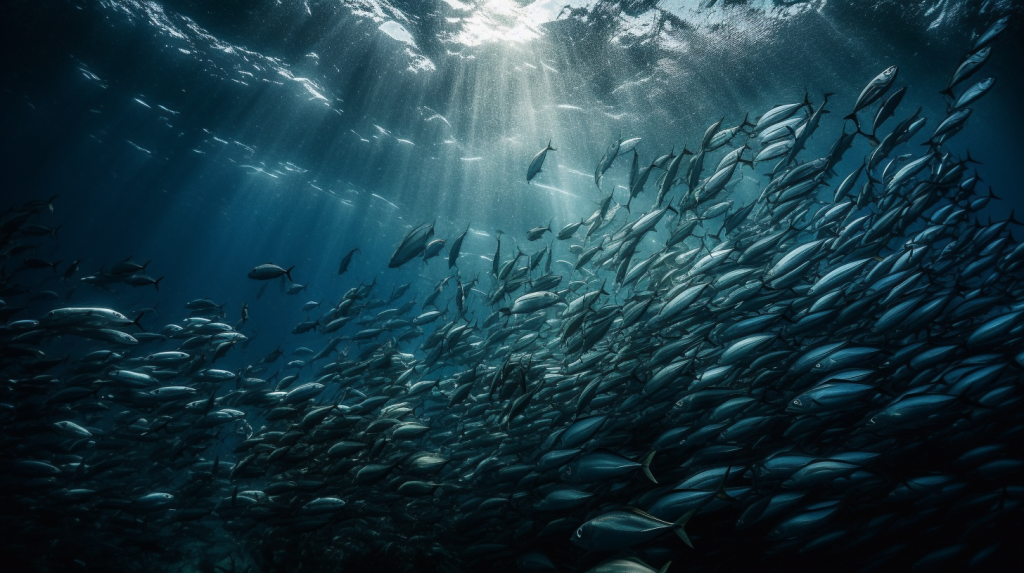
Underwater photos of Californiaโs coast featured in books and magazines almost always showcase a certain fish: the garibaldi. Within the underwater kaleidoscope of California’s coastal waters, the Garibaldi fish stands out with its fiery orange hue. The garibaldi, a member of the damselfish family, is the California State marine fish, and its possession is illegal.
The fish is likely named after the 19th-century Italian revolutionary Giuseppe Garibaldi, whose army wore bright red shirts, or after the โgaribaldiโ, a woman’s red blouse worn in the 1890’s.
Biologically speaking, the Garibaldi fish owe their orange coloring mainly to pigments called carotenoids. These carotenoids are pretty interesting; you’ll find them in many fruits and vegetables, like carrots, for example, where they give off that familiar orange glow. Garibaldi eat a diet rich in crustaceans, such as crabs and shrimps, which are packed with these pigments. When the fish ingest them, the carotenoids are absorbed and deposited into the skin tissues.
Carotenoids can also act as antioxidants, which means they might even play a role in protecting the fish’s cells from damage. This is a bit of a two-for-one deal: not only do they get to look good, but they also get some potential health benefits as well.
Interestingly, there’s a bit of a territorial aspect to the bright orange coloration. Garibaldi fish are known to be quite territorial, and the males are especially flashy. They use their bright coloration to ward off rivals and also to attract mates.
California Garibaldi
The color isn’t just a superficial beauty mark; it plays a significant role in the fish’s survival and reproductive strategies. The orange hue signals strength, dominance, and overall fitness. It’s like a badge of honor they wear to proclaim, “Look at me, I’m strong, healthy, and in charge here!”
The Garibaldi is more than just a pretty face in the crowd. This fish, found from Monterey Bay down to Baja California, displays behaviors and characteristics that make it a subject of intrigue for marine biologists and diving enthusiasts alike.
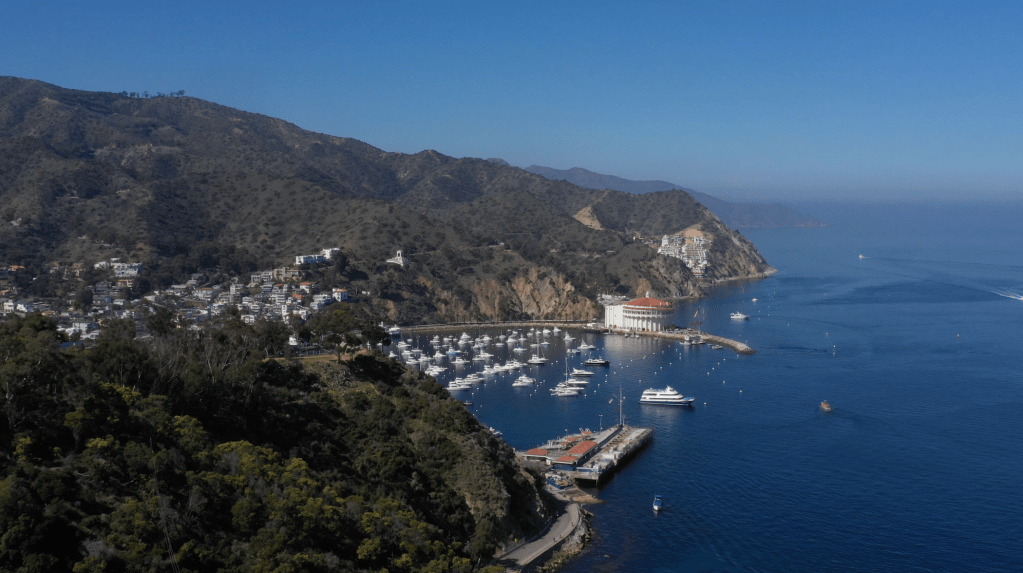
One of the best places to see Garibaldi if you are a diver or enjoy snorkeling is off the coast of Catalina Island, about 20 miles from Long Beach. One particularly popular spot is Casino Point in the city of Avalon on the island.
Known for being highly territorial, the male Garibaldi is an underwater homeowner, meticulously crafting nests from red algae during mating season. This homemaking process is not just about building; it’s about showmanship. The males showcase their algae-laden nests to prospective females in an underwater dance, swimming around their creation with pride, hoping to entice the females to lay their eggs there.
A California Garibaldi protecting its nest.
But the courtship doesn’t end with the dance. Once the female is wooed and the eggs are laid, the male Garibaldi takes on the role of a nurturing parent. He stands guard over the eggs, fanning them with his pectoral fins to ensure they are well-oxygenated. He even goes to the extent of confronting divers or other fish that venture too close to his precious brood.
The Garibaldi’s territorial nature also extends to a curious interaction with humans. Despite their fierceness in protecting their domain, these fish are known to approach divers, examining them with an inquisitive gaze. This friendliness, coupled with their radiant color, makes them a favorite subject among underwater photographers.
โThe only thing that seems to affect their fearless behavior is the color of the animal thatโs approaching them,โ said Cabrillo Marine Aquarium (CMA) Research Curator Dr. Kiersten Darrow. โThey will attack everybody else, but if they see that itโs a garibaldi fish of a certain type then they will back away.โ
Female California Garibaldi
Perhaps even more fascinating is the Garibaldi’s voice โ a distinctive thumping sound that some divers have reported hearing. Though the exact reason for this sound is not entirely understood, it’s believed to be related to their territorial behavior, adding another layer to the mystique of this remarkable fish.
Beyond its engaging behaviors, the Garibaldi’s story carries a note of triumph in conservation. Its popularity led to overfishing in the past, which spurred protective measures. Today, the Garibaldi enjoys protected status in California waters, safeguarding it from harm and allowing it to thrive.
A testament to resilience, the Garibaldi can live for over 20 years, growing slowly and reaching full maturity at about six years of age. This longevity, coupled with its unique characteristics, makes it a symbol of the diverse and vibrant marine life that graces California’s coastline.
Catalina Island and Casino Point (Erik Olsen)
In the world of marine biology, where hidden wonders often lie beneath the waves, the Garibaldi emerges as a charismatic star. With its bold color, intricate courtship rituals, protective parenting, and friendly curiosity, it captures the imagination, not just as a beautiful spectacle but as a complex character in the grand tapestry of ocean life. Whether seen during a dive or behind the glass of an aquarium, the Garibaldi remains a fascinating glimpse into the rich and often surprising world beneath the sea.
In 1962, Swiss physicist and deep-sea diving pioneer Hannes Keller embarked on an ambitious and perilous mission to push the boundaries of human endurance and underwater exploration. California, with its dramatic coastline and history of daring maritime ventures, became the setting for this bold effort to make history in diving. Partnered with British diver and journalist Peter Small, Keller aimed to descend inside a specially designed diving bell named Atlantis to an unprecedented depth of 1,000 feet off the coast of Catalina Island. Their plan involved exiting the pressurized diving bell once it reached the ocean floor, a groundbreaking and dangerous procedure that would allow them to perform tasks outside in the extreme depths. What promised to be a historic achievement, however, took a tragic turn.
Keller’s passion for deep-sea diving had recently garnered international attention, fueled by his record-breaking dives and groundbreaking research into advanced breathing gas mixtures. Working alongside Dr. Albert Bรผhlmann, a renowned physiologist specializing in respiration, Keller employed cutting-edge technology, including an IBM computer, to meticulously design gas formulas that could counteract the dangers of deep diving. Their innovative work addressed the twin challenges of nitrogen narcosis and decompression sickness, promising to revolutionize underwater exploration.
For Keller, diving was initially an unconventional pursuit. He was engaged in teaching mathematics to engineering students in his native town of Winterthur, close to Zurich, and had aspirations to become a pilot. However, the prohibitive cost of flying on a teacher’s salary led him to explore other avenues. Introduced to the burgeoning sport of scuba diving by a friend in the late 1950s, Keller applied his mathematical and scientific acumen to the field. He soon concluded that the existing techniques in deep-sea diving were outdated and ripe for revolutionary advancement.
โIf a man could go, for instance, to 1,000 feet down and do practical work,โ Mr. Keller wrote in The Sydney Morning Herald, โthen all the continental shelf zone could be explored, a total of more than 16 million square miles.โ
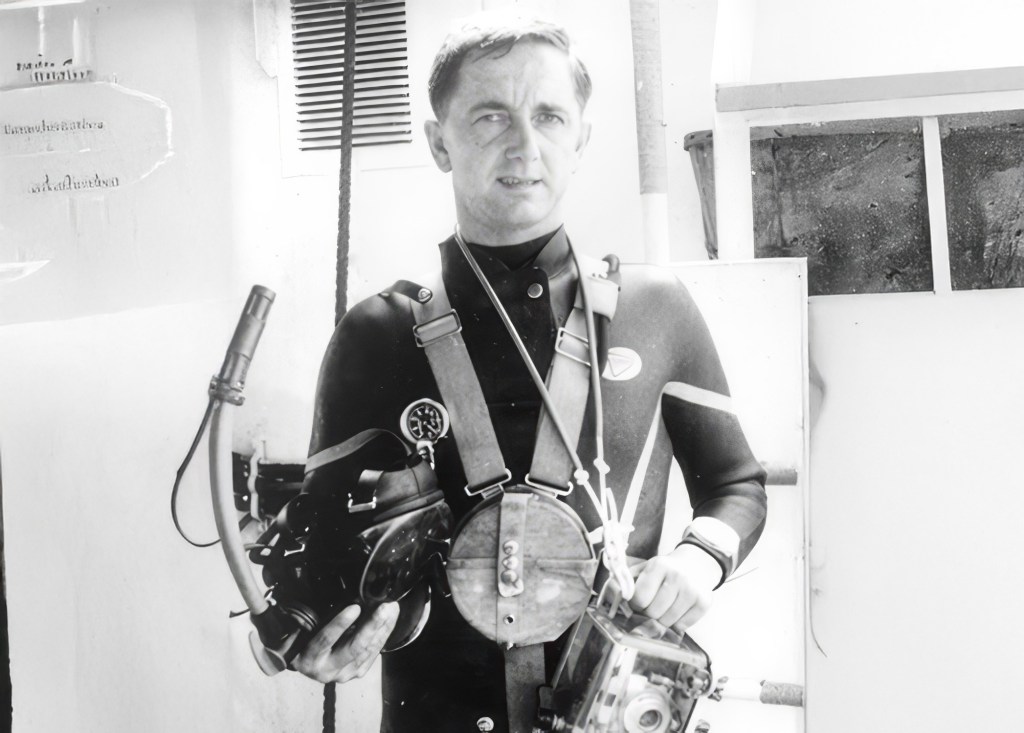
Keller prepares for his May 1961 chamber dive at the United States Navy Experimental Diving Unit (NEDU). Photo: US Navy
Keller and Bรผhlmann worked collaboratively to expand their computerized concoction of breathing gases, ultimately selecting a dive site off near Avalon Bay at Catalina Island in Southern California. This location was chosen due to its dramatic underwater geography, where the ocean floor descends sharply from the coast into the deep ocean.
At the time, it was widely believed that no human being could safely dive to depths beyond three hundred feet. That was because, beginning at a depth of one hundred feet, a diver breathing normal air starts to lose his mind due to nitrogen narcosis.
Partnering with Peter Small, co-founder of the British Sub Aqua Club, Hannes Keller planned their historic descent using a specially designed diving bell named Atlantis. This advanced pressurized chamber, deployed from a surface support vessel, was staffed by a skilled technical crew tasked with monitoring gas levels and maintaining constant communication with the divers through a surface-to-bell phone link. The Atlantis diving bell represented a significant leap in underwater technology, providing a controlled environment that allowed divers to venture into previously unreachable depths. Its design and operational success revolutionized the field of deep-sea exploration, offering invaluable insights into human physiology under extreme pressure and laying the groundwork for future advancements in underwater science and technology.
Keller’s experimental dives piqued the interest of the U.S. Navy, as they saw the potential to revolutionize diving safety and practicality. If proven successful, Keller’s methods could transform existing dive tables and enable safer, more practical deep-sea exploration. Encouraged by the promising outcomes of Keller’s preliminary chamber tests and several less extreme open-sea trials, the Navy allowed him to perform a test dive at their primary experimental facility, adjacent to the Washington dive school. They also became a financial supporter of Keller’s ambitious thousand-foot dive.
To carefully scrutinize the operation, the Navy designated Dr. Robert Workman, one of their foremost decompression specialists, to be present on site. A few days after reaching Catalina in late November, Dr. Workman joined Dr. Bรผhlmann, the rest of Keller’s team, and various onlookers aboard Eureka, an experimental offshore drilling vessel provided by Shell Oil Co. Shell, like other oil and gas enterprises, had a vested interest in innovative techniques that could enhance the productivity of commercial divers. If the dive was successful, the company would receive Kellerโs secret air mixture technology and thereby become an instant frontrunner in offshore oil exploration. Their interest was particularly relevant as offshore drilling initiatives were venturing into deeper waters, both off the California shore and in the Gulf of Mexico.
Resembling a huge can of soup, Atlantis stood seven feet tall and had a diameter slightly greater than four feet. Its structure featured an access hatch at the bottom and was adorned with an array of protruding pipes and valves, adding to its industrial appearance.
British journalist Peter Small (BSAC)
As a journalist, Peter Small intended to pen a first-hand narrative of the groundbreaking dive. On December 1, as part of a final preparatory dive, Small and Keller were lowered inside Atlantis to a depth of three hundred feet, where they spent an hour scuba diving outside the bell. During the decompression process within the bell, both divers experienced relatively mild symptoms of decompression sickness, commonly known as the bends. Keller felt the effects in his belly, while Small was afflicted in his right arm. Decompression sickness is still a relatively poorly understood phenomenon, and it remains unpredictable as to which part of the body it might affect.
Keller’s symptoms abated on their own that night, but Small’s discomfort lingered until he underwent recompression treatment. Despite this warning sign, Keller was determined to continue with the dive as planned, without conducting further incremental tests at increasing depths before the ambitious thousand-foot descent. His decision was likely influenced, at least in part, by the assembled crowd of journalists and other spectators eager to witness the historic dive. The constraints of time, finances, and equipment availability added to the pressure, compelling the team to proceed with the experimental dive as scheduled.
The diving bell Atlantis is lifted out of the water after Keller and the journalist Peter Small descended 1,020 feet to the Pacific Ocean floor in December 1962.
On Monday, December 3, around noon, Atlantis began its descent beneath the surface of the Pacific, enclosing its two divers within. The journey towards the ocean floor took under thirty minutes. Upon reaching the target depth of a thousand feet, a series of dark and chaotic moments ensued. Keller exited the bell to plant a Swiss flag and an American flag on the ocean floor. In the process, his breathing hoses became entangled with the flags, and after clambering back inside Atlantis, he lost consciousness.
The gas mixture had somehow become compromised. Peter Small also blacked out, despite never having left the diving bell. As Atlantis was hastily ascended to within two hundred feet of the surface, several support divers swam down to meet the bell. Tragically, one of these support divers, Christopher Whittaker, a young man of just nineteen, disappeared without a trace.
Pacific Ocean off Catalina Island (Erik Olsen)
Keller came to roughly a half-hour after the incident, and Small regained consciousness, but it took nearly two hours for him to do so. Upon awakening, Small engaged Keller in coherent questions about what had transpired. He reported feeling cold and, although he retained the ability to speak, see, and hear, he could not feel his legs. Despite not experiencing any pain, he was too weak to stand. Leaning against his Swiss counterpart, he drifted off to sleep as their decompression within the bell continued.
Several hours later, as Atlantis was being transported back to shore to Long Beach from the dive site near Catalina, Keller discovered that Small had ceased breathing and had no pulse. Desperate to revive him, Keller administered mouth-to-mouth resuscitation and cardiac massage, but to no avail. Small was cold and pallid. The remaining pressure inside the bell, about two atmospheres, was hastily released in a frantic effort to get Small to a hospital after being trapped inside Atlantis for eight hours. Tragically, upon arrival, he was promptly pronounced dead.
The Atlantis diving bell (Paul Tzimoulis)
The Los Angeles County coroner identified the cause of death as decompression sickness. An examination revealed that Small’s tissues and organs were filled with Nitrogen gas bubbles. However, Keller contended that other factors, such as a potential heart attack and the panic Small displayed upon reaching the thousand-foot mark, contributed to the tragedy.
Regardless of the underlying causes, the catastrophic dive to thirty atmospheres and the loss of two lives led to a rapid waning of interest in Keller’s previously sensational methods. The potential for failure of this magnitude had been a concern to many in the deep diving community and the dayโs events set back research in the emerging field of saturation diving. Even before this event, saturation diving had only tepid support from the Navy, but this made some people loss faith in the technique. Of course, it would not be the end of saturation diving, not by a long shot.
Hannes Keller in his later years. (Credit: Keller, Esther, Niederglatt, Switzerland)
Modern deep-water diving owes much to the groundbreaking experiments of Hannes Keller. His historic dive to 1,020 feet (311 meters) off Catalina Island was a remarkable achievement that captivated the world. Far from being a mere stunt, as some critics claimed, Kellerโs dive was a meticulously planned scientific endeavor designed to push the boundaries of human exploration of the ocean depths. This Swiss adventurerโs pioneering work laid the foundation for advances in deep-sea diving techniques, leaving an enduring legacy in the field.
Christopher Swann, a diving historian, said the dive โwas a milepost in the sense that it was the first time something like that had been done.โ
Keller ended up living a rich and long life, dying on December 1, 2022, at at a nursing home in Wallisellen, Switzerland, near his home in Niederglatt. He was 88.
For decades, the majestic blue whale has been celebrated as the largest animal ever to have existed, with popular claims frequently stating that these marine giants can reach lengths of 100 feet or more. However, no single blue whale has ever been scientifically measured at 100 feet. Mainstream media, in its quest for sensational stories, has perpetuated this myth, overshadowing scientific data that places the average size much lower. This discrepancy not only distorts our understanding of these magnificent creatures but also highlights the broader issue of how media can shape and sometimes mislead public perception of scientific facts.
The perception that blue whales commonly reach lengths of 100 feet or more likely stems from a combination of historical anecdotes, estimation errors, and a tendency to highlight extreme examples.
The blue whale (Balaenoptera musculus) is a truly magnificent creature. Hunted nearly to extinction in the 19th and 19th centuries, the blue whale has staged a hopeful recovery in the last five decades, since commercial whaling was outlawed by the international community in 1966 (although some Soviet whale hunting continued into the early 1970s).
Blue whale tail fluke in Sri Lanka. Credit: Erik Olsen
Before commercial whaling began, it was estimated that there were some 400,000 blue whales on earth. 360,000 were killed in the Antarctic alone. The International Union for Conservation of Nature estimates that there are probably between 10,000 and 25,000 blue whales worldwide today, divided among some five separate populations or groups. One of those groups, the largest in the world, is called the Eastern North Pacific population, consists of some 2,000 animals and makes an annual migration from the warm waters of Baja California to Alaska and back every year. Many swim so close to shore that a lucrative whale-watching industry has emerged in places like Southern California, where numerous fishing vessels have been converted into whale-watching ships.
But hereโs the problem: not a single blue whale has ever been scientifically verified as being 100 feet long. Thatโs right. Not one.
Blue whales were in the news recently with the publication of two papers by Stanfordโs Jeremy Goldbogen at the Hopkins Marine Station in Pacific Grove, California. The first paper recorded a leviathanโs heartbeat at great depths in Monterey Bay, revealing the somewhat astonishing fact that the whalesโ heart rate slows significantly the deeper they go, reaching an average minimum of about four to eight beats per minute, with a low of two beats per minute. That figure was about 30 to 50 percent lower than predicted, said the researchers. The second paper looked at the blue whaleโs size, and attempted to quantify how whales got so big and, well, why they are not bigger.
So letโs talk further about size because there are some misconceptions out there about how big these animals can get.
The blue whale is frequently cited as the largest animal to have ever lived. Thatโs true (so far as we know) if by size we mean weight. The largest dinosaur that weโve ever found fossils for is the Argentinosaurus. The Argentinosaurus lived about 100 million to 93 million years ago during the Cretaceous period in what is now Argentina and is part of a group of dinosaurs known as titanosaurs. Titanosaurs were long-necked sauropods, four-legged, herbivorous animals that often grew to extraordinary sizes. We can only speculate about the actual size of Argentinosaurus since all that we know comes from just 13 bones. Scientists estimate that the Argentinosaurus probably weighed somewhere around 70-80 tons, maybe reaching as much as 90 tons. The Natural History Museum in London suggests the animal may have been as long as 115 feet.
Argentinosaurus: Nobu Tamura
Another contender for the worldโs largest dinosaur is Dreadnoughtus, and in this case, the fossil record is a bit more informative. The fossils for Dreadnoughtus contained 115 bones, representing roughly 70 percent of the dinosaurโs skeleton behind its head. Dreadnoughtus was said to reach lengths of about 85 feet with an estimated mass of about 65 tons.
However, estimates for the top size of blue whales go up to 200 tons. And, as many articles and references about blue whales will tell you, blue whales can reach lengths of up to 100 feet long or more. The number of legitimate science books, articles, Web sites and even esteemed science journals that quote this number is in the thousands. Google it.
But hereโs the problem: not a single blue whale has ever been scientifically verified as being 100 feet long. Thatโs right. Not one.
That said, there are two references in scientific papers of blue whales that are near 100 feet. The first is a measurement dating back to 1937. This was at an Antarctic whaling station where the animal was said to measure 98 feet. But even that figure is shrouded in some suspicion. First of all, 1937 was a long time ago, and while the size of a foot or meter has not changed, a lot of record-keeping during that time is suspect, as whales were not measured using standard zoological measurement techniques. The 98-foot specimen was recorded by Lieut. Quentin R. Walsh of the US Coast Guard, who was acting as a whaling inspector of the factory ship Ulysses. Sadly, there is scant detail available about this measurement and it remains suspect in the scientific community.
The second is from a book and a 1973 paper by the late biologist Dale W. Rice, who references a single female in Antarctica whose โauthenticatedโ measurement was also 98 feet. The measurement was conducted by the late Japanese biologist Masaharu Nishiwaki. Nishiwaki and Rice were friends, and while both are deceased, a record of their correspondence exists in a collection of Riceโs papers held by Sally Mizroch, co-trustee of the Dale W. Rice Research Library in Seattle. Reached by email, Dr. Mizroch said that Nishiwaki, who died in 1984, was a very well-respected scientist and that the figure he cited should be treated as reliable.
According to Mizroch, who has reviewed many of the Antarctic whaling records from the whaling era, whales were often measured in pieces after they were cut up, which greatly introduces the possibility for error. That is likely not the case with the 98-foot measurement, which took place in 1947 at a whaling station in Antarctica where Nishiwaki was stationed as a scientific observer.
Proper scientific measurements, the so-called โstandard methodโ, are taken by using a straight line from the tip of the snout to the notch in the tail flukes. This technique was likely not used until well into the 20th century, said Mizroch. In fact, it wasnโt until the 1940s that the use of a metal tape measure became commonplace. According to Dan Bortolotti, author of Wild Blue: A Natural History of the World’s Largest Animal, many of the larger whales in the whaling records — especially those said to be over 100 feet — were probably measured incorrectly or even deliberately exaggerated because bonus money was paid to whalers based on the size of the animal caught.
So, according to the best records we have, the largest blue whale ever properly measured ws 98 feet long. Granted, 98 feet is close to 100 feet, but itโs not 100 feet and itโs certainly not over 100 feet, as so many otherwise reputable references state.
So setting aside the fact that so many sources say the blue whale has reached 100 feet or more, and that there is no scientific evidence proving this, a key question to ask is how large can whales become. The second scientific paper cited above in Science looked at energetics, the study of how efficiently animals ingest prey and turn the energy it contains into body mass.
National Oceanic and Atmospheric Administration
Most baleen whales are so-called lunge feeders. They open their mouths wide and lunge at prey like krill or copepods, drawing in hundreds of pounds of food at a time. Lunge-feeding baleen whales, it turns out, are wonderfully efficient feeders. The larger they become, the larger their gulps are, and the more food they draw in. But they also migrate vast distances, and oftentimes have to dive deep to find prey, both of which consume a large amount of energy.
Using an ocean-going Fitbit-like tag, the scientists tracked whalesโ foraging patterns, hoping to measure the animals energetic efficiency, or the total amount of energy gained from foraging, relative to the energy expended in finding and consuming prey. Using data from numerous expeditions around the globe that involved tens of thousands of hours of fieldwork at sea on living whales from pole to pole, the team concluded that there are likely ecological limits to how large a whale can become and that they are likely constrained by the amount of food available in their specific habitat.
Whale fall off the California Coast (Ocean Exploration Trust)
John Calambokidis, a Senior Research Biologist and co-founder of Cascadia Research, a non-profit research organization formed in 1979 based in Olympia, Washington, has studied blue whales up and down the West Coast for decades. He told California Curated that the persistent use of the 100-foot figure can be misleading, especially when the number is used as a reference to all blue whales.
The sizes among different blue whale groups differ significantly depending on their location around the globe. Antarctic whales tend to be much bigger, largely due to the amount of available food in cold Southern waters. The blue whales we see off the coast of California, Oregon, Washington and Alaska, are part of a different group from those in the North Pacific. They differ slightly both morphologically and genetically, and they consume different types and quantities of food. North Pacific blue whales tend to be smaller, and likely have always been so. Calambokidis believes that the chances any blue whales off the West Coast of the US ever reaching anything close to 100 feet is โalmost non-existentโ.
We emailed Regina Asmutis-Silvia, Executive Director North America of Whale and Dolphin Conservation, to ask about this discrepancy among so many seemingly authoritative outlets. She wrote: โWhile it appears biologically possible for blue whales to reach or exceed lengths of 100โ, the current (and limited) photogrammetry data suggest that the larger blue whales which have been more recently sampled are under 80 feet.โ (Photogrammetry is the process of using several photos of an object (like a blue whale) to extract a three-dimensional measurement. from two-dimensional data. It is widely used in biology, as well as engineering, architecture and many other disciplines.) Photogrammetry measurements are now often acquired by drones and have proven to be a more accurate means of measuring whale size at sea.
Antarctic whaling station.
Hereโs a key point: In the early part of the 20th century and before, whales were measured by whalers for the purpose of whaling, not measured by scientists for the purpose of science. Again, none of this is to say that blue whales arenโt gargantuan animals. They are massive and magnificent, but if we are striving for precision, it is not accurate to declare, as so many articles do, that blue whales reach lengths of 100 feet or more. This is not to say itโs impossible that whales grew to or above 100 feet, itโs that, according to the scientific records, none ever has.
A relevant point from Dr. Asmutis-Silvia about the early days of Antarctic whaling: โGiven that whales are long-lived and we don’t know at what age each species reaches its maximum length, it is possible that we took some very big, very old whales before we started to measure what we were taking.โ
This seems entirely reasonable, but the fact still remains that we still do not have a single verified completely reliable account of any blue whale, any animal for that matter, ever growing to 100 feet. References to the 100-foot number, which we reiterate are found everywhere, also seem to suggest that blue whales today reach that length, and this is not backed up by a shred of evidence. The largest blue whales measured using the modern photogrammetry techniquesmentioned above have never surpassed 90 feet.
In an email exchange with Jeremy Goldbogen, the scientist at Stanford who authored the two studies above, he says that measurements with drones off California โhave been as high as 26 metersโ or 85 feet.
So, why does nearly every citation online and elsewhere regularly cite the 100-foot number? It probably has to do with our love of superlatives and round numbers. We have a deep visceral NEED to be able to say that such and such animal is the biggest or the heaviest or the smallest or whatever. And, when it comes down to it, 100 feet is a nice round number that rolls easily off the tongue or typing fingers.
All said, blue whales remain incredible and incredibly large animals, and deserve our appreciation and protection. Their impressive rebound over the last half-century is to be widely celebrated, but letโs not, in the spirit of scientific inquiry, overstate their magnificence. They are magnificent enough.