California’s Daily Tidal Wave of Life

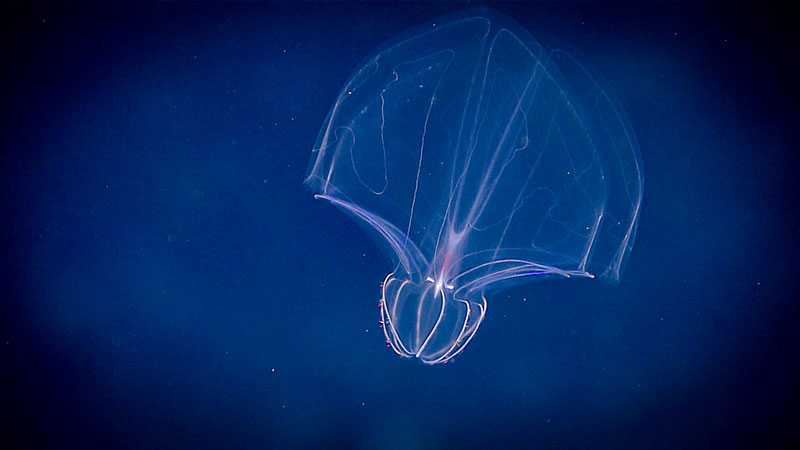
A lobate ctenophore in the ocean twilight zone. (Photo: NOAA)

If you’ve been reading this newsletter for a while, you already know I’m obsessed with submarines and undersea life. I believe we’re at the beginning of a new era of ocean discovery, driven by small personal submersibles, remotely operated vehicles (ROVS), and autonomous explorers (AUVs) that can roam the deep on their own. Add AI into the mix, and our ability to see, map, and understand the ocean is about to expand dramatically.

One phenomenon we are only beginning to fully understand also happens to be one of the most extraordinary animal events on Earth. It unfolds every single night, just a few miles offshore, in a region known as the ocean twilight zone about 650 to 3,300 feet below the ocean surface. Twice a day, billions of tons of marine organisms, from tiny crustaceans to massive schools of squid, traverse the water column in what researchers call the Diel Vertical Migration (DVM), the largest mass migration of animals on Earth. A heaving, planetary-scale pulse of biomass rising and falling through the dark.

Please check out our California wildlife shop for great gifts!

It happens everywhere, in every ocean. But California is special for several reasons. California’s cold, southward-flowing current and seasonal upwelling flood coastal waters with nutrients that feed dense plankton blooms. These blooms provide food for thick layers of migrating animals. California has one of the most robust and productive ocean ecosystems on the planet. (Take a read of the piece I did about life on some of our oil rigs.) When you add Monterey Canyon into the mix, which funnels and concentrates life, this global phenomenon becomes more compressed and visible. In fact, with Monterey Bay Aquarium Research Institute (MBARI) based at Moss Landing near the head of the canyon, Monterey Bay has become one of the most intensively studied midwater ecosystems on the planet.

Monterey Bay Aquarium Research Institute (MBARI) in Moss Landing, perched at the edge of Monterey Canyon, one of the deepest submarine canyons in North America. (Photo: Erik Olsen)

This “tidal cycle of shifting biomass” is not driven by gravity, but by the rising and setting sun. Animals rise by the trillions during the evening to escape predation, then settle during the day, when light would otherwise make them visible to hungry predators.

The discovery of this phenomenon reads like a Tom Clancy novel and took place just off our coast. During World War II, U.S. Navy sonar operators working off San Diego and the Southern California Bight began detecting what looked like a “false seafloor” hovering 300 to 500 meters down during the day, only to sink or vanish each night. The mystery lingered for years, until the late 1940s, when scientist Martin Johnson and others at Scripps Institution of Oceanography showed that the phantom bottom was not seafloor, but vast layers of living animals rising and falling with the sun. We now know this as the Deep Scattering Layer (DSL), so named because the gas-filled swim bladders of millions of small fish, primarily lanternfish which number into the quadrillions around the globe, reflect sonar pings like a solid wall.
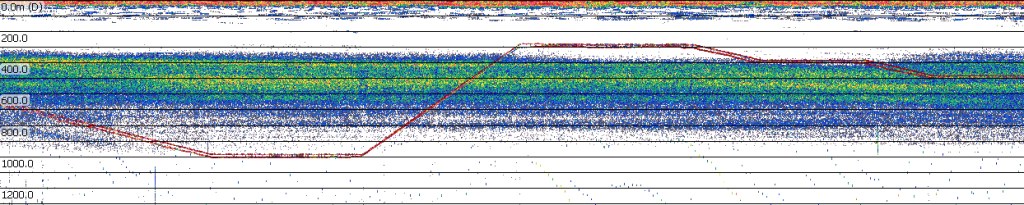
The deep-scattering layer (DSL) graphed as an echogram, or a plot of active acoustic data. Warmer colors indicate more backscatter, meaning that more (or stronger) echoes were received back from the organisms at that depth. The red line indicates the remotely operated vehicle (ROV) trajectory as it performs transects throughout the layer. (Source: NOAA)

So let’s talk about those amazing lanternfish, aka myctophids, a species that many peole have likely never heard of. These small fish may make up as much as 65 percent of all deep-sea fish biomass and are a major food source for whales, dolphins, salmon, and squid. They use tiny light organs called photophores to match faint surface light, a camouflage strategy known as counterillumination that helps hide them from predators below. These are just one of the many different species that inhabit the twilight zone as part of the DVM. 
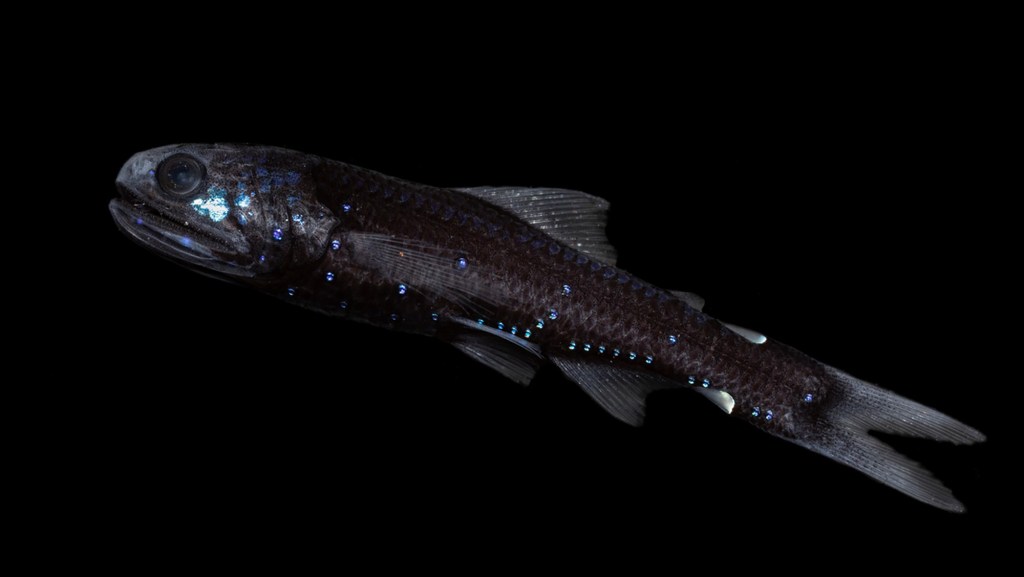
A lanternfish photographed in the ocean twilight zone, its body dotted with tiny light organs called photophores that help it blend into faint surface light as it migrates toward the surface at night. (Photo: NOAA)

Monterey Bay is arguably the world’s most important laboratory for DVM research, thanks to the Monterey Canyon, and several ground-breaking discoveries have come out of MBARI. For example, scientists at MBARI, including the legendary Bruce Robison, have used ROVs to document what they call “running the gauntlet,” when these migrators pass through layers of hungry, waiting predators. They encounter giant siphonophores with stinging tentacles, squids snag lanternfish, and giant larvaceans that build sprawling mucus “houses” that trap smaller animals. It’s like an epic battle scene out of Lord of the Rings, every single day.

This migration is also a key part of the ocean’s carbon cycle, which includes a scientific process known as the biological pump. When larger animals eat carbon-rich plankton at the surface, they eventually defecate all that carbon into the water, aka the “active transport” mechanism. Much of that carbon sinks to the bottom, sequestering it for decades or even centuries. In some regions, DVM accounts for one-third of the total carbon transport to the deep ocean. MBARI has a very interesting, long-term deep-ocean observatory called the Station M research site and observatory located nearly 12,000 feet below the surface off Santa Barbara. This site has been continuously monitored for more than three decades to track how organic matter produced near the surface eventually reaches the abyssal seafloor and feeds deep communities. I did a video about it for MBARI a few years ago.
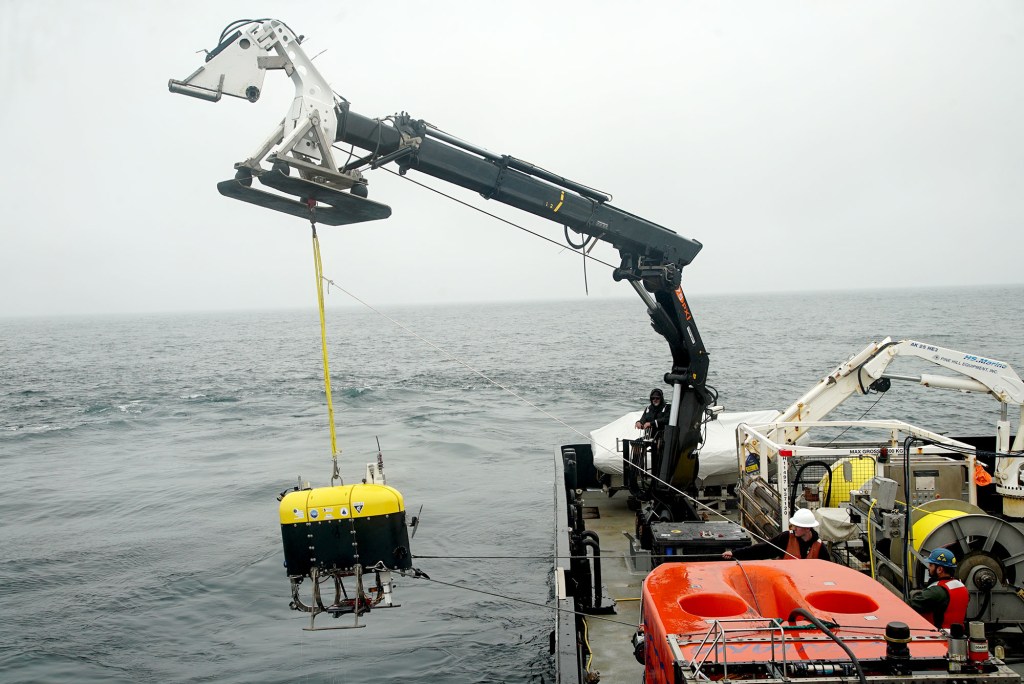
Deployment of Mesobot, an autonomous midwater robot developed by Monterey Bay Aquarium Research Institute and Woods Hole Oceanographic Institution, for exploration of the ocean twilight zone above Monterey Canyon, California. (Photo: Erik Olsen)

Other cutting-edge technology is being brought to bear as well to help us better understand what life exists in the deep waters off California. A UC San Diego study shows that we can now use low-volume environmental DNA (eDNA) to detect the genetic signatures of huge numbers of different animals, even if we can’t see them. This free-floating DNA moves with ocean currents and can be sequenced to identify species ranging from copepods to dolphins, allowing researchers to track who is participating in the migration even when organisms are too small, fragile, or fast for traditional nets.

All of this plays out each day and night off our coast, a vast symphony of animal movement and deadly combat that, until recently, was not only poorly understood but largely invisible to science. And it’s all happening right off our shores

Navigating the Unseen Current: How the California Current System Shapes Our Ocean, Climate, and Future

The stretch of water hugging the western shores of North America is a biological powerhouse, teeming with life and considered one of the most fertile marine environments on the planet. The California Current, originating from the colder regions up near British Columbia, sweeps its way down toward Baja California, extending laterally several hundred miles offshore into deep oceanic waters off the continental shelf. The current brings with it not just frigid waters but also a richness of life. As if choreographed, winds usually gust from the land towards the ocean, nudging surface waters away from the coastline. This displacement makes room for deeper, nutrient-packed waters to ascend, in a phenomenon aptly termed upwelling. Coastal upwelling is the dominant physical forcing affecting production in the California Current System.

This blend of icy waters and nutrient wealth sparks a bloom of marine vegetation, ranging from minuscule phytoplankton to sprawling underwater forests of kelp. These plants, often dubbed the “primary producers,” act as the nucleus of an intricate food web. The bounty includes thriving fisheries, generous populations of marine mammals like whales, seals, and dolphins, as well as a multitude of seabirds. The breadth of this fecund ecosystem can span an astonishing distance—up to 300 miles from the shoreline, enveloping a rich diversity of life within its aquatic embrace.

Phytoplankton are a critical part of the ocean’s food web.

The California Current System (CCS) is one of those natural phenomena that don’t often make headlines but quietly shape life as we know it on the West Coast. It’s like the unsung hero of the Pacific, affecting everything from marine biodiversity to our climate, even having a say in whether you’ll need to pack sunscreen or an umbrella for your beach day.

At its core, the California Current is a cold, southward-flowing oceanic current that starts from the Gulf of Alaska and hugs the western coastline of North America. Picture a river within the ocean, except this river is carrying cold, nutrient-rich water from the North Pacific all the way down to the southern tip of Baja California in Mexico. The California Current is part of a broader gyre system that also includes the North Pacific Current, the California Undercurrent, and the Davidson Current. Together, they create a dynamic dance of currents that provide a lifeline to a host of marine species and play a significant role in weather patterns.

The dynamics of the California Current result in abundant wildlife, like these common dolphins, off the coast of California.

The CCS owes its formation to a combination of factors like Earth’s rotation, the prevailing westerly winds, and the shape of the coastline. These elements work in concert to set up a sort of “conveyor belt” for water, funneling it down from higher latitudes. Over millions of years, this system has become a finely tuned natural mechanism that has shaped the ecology and climate of the region in profound ways.

The cold, nutrient-rich waters of the California Current serve as a veritable buffet for marine life. When we talk about nutrients, we’re primarily talking about nitrates and phosphates that act like fertilizer for phytoplankton, the microscopic plants at the base of the marine food web. As phytoplankton bloom, they become a food source for zooplankton, which in turn are gobbled up by larger fish. This cascade effect supports a rich, biodiverse ecosystem that includes everything from sardines and anchovies to humpback whales and even great white sharks. Even seabirds get in on the action, relying on the abundant marine life for nourishment.

The cold, nutrient-rich waters of the California Current serve as a veritable buffet for marine life.

But the California Current doesn’t stop at influencing marine biology; it’s a key player in regional climate as well. For example, the current helps moderate coastal temperatures by funneling cooler air inland. This has a ripple effect on weather patterns and even contributes to the famous “June Gloom” that Angelenos love to lament. Ever wonder why California’s coastal cities have relatively mild, Mediterranean climates while just a short drive inland can bring you much hotter conditions? Tip your hat to the CCS.

CALIFORNIA CURATED ON ETSY

Purchase stunning coffee mugs and art prints of Californian icons.
Check out our Etsy store.

Climate change is, of course, the elephant in the room. A study published in the journal “Geophysical Research Letters” in 2019 highlighted a gradual weakening of the California Current due to warming ocean temperatures. As the current weakens, there’s potential for less upwelling, which means fewer nutrients reaching the surface. Less nutrient-rich water could be a gut punch to the marine food web, affecting fish populations and, by extension, the larger predators and human industries that rely on them.

The cold, nutrient-rich waters of the California Current serve as a veritable buffet for marine life.

Another concern is ocean acidification. The same cold, nutrient-rich waters that make the CCS a hotspot for marine life also make it more susceptible to acidification as they absorb more CO2 from the atmosphere. According to a 2020 study in the journal “Nature,” this could have far-reaching consequences for shell-forming organisms like mollusks and some types of plankton, which play crucial roles in the ecosystem.

So why is all of this important? Well, the California Current is a vital cog in the machinery of our planet. It supports rich biodiversity, influences climate, and even has economic implications, given the commercial fisheries that rely on its abundant marine life. A healthy CCS is good news for everyone, from the weekend beachgoer to scientists concerned about biodiversity.

But as we confront a changing climate, the CCS is a poignant reminder that even the most stable and established natural systems are not immune to disruption. Therefore, understanding it is not just an academic exercise, but a necessary step in safeguarding the fragile balance of life along the western edge of North America.