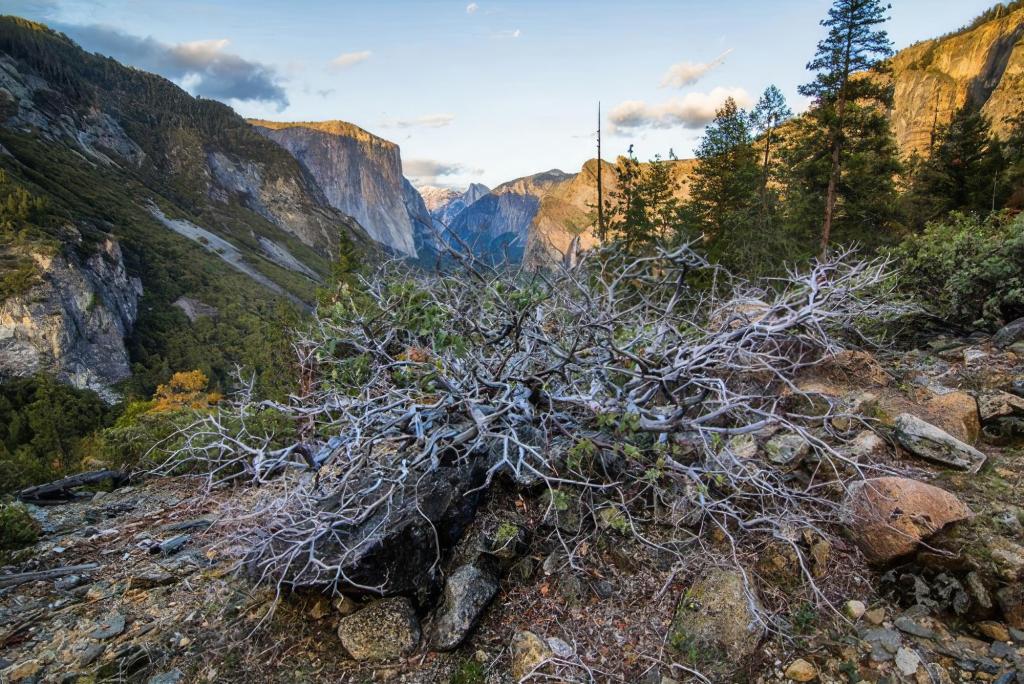
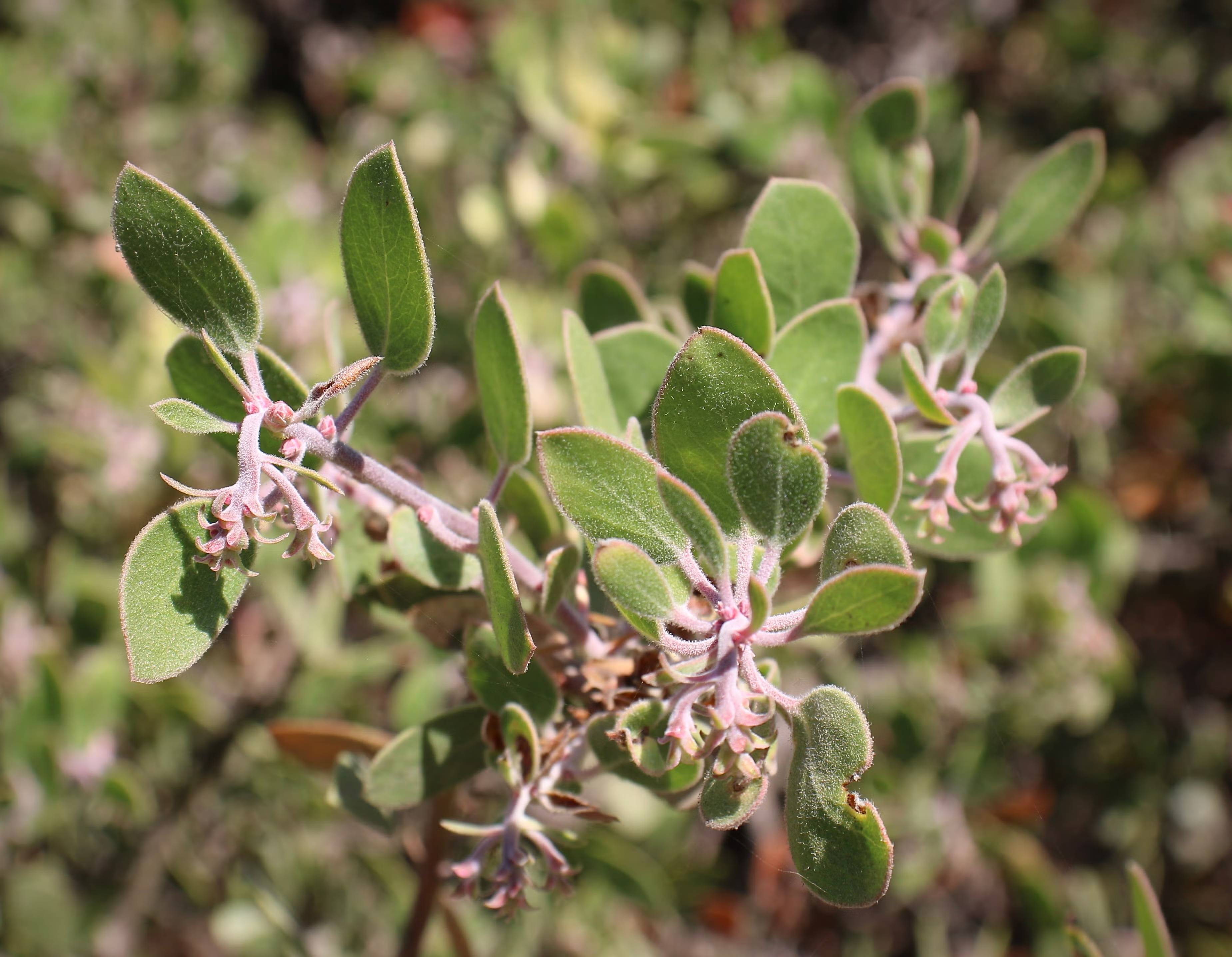
At Inspiration Point, Yosemite, sticky whiteleaf manzanita tends to occupy south slopes, greenleaf manzanita tends to occupy north slopes. (Photo: NPS)
As an avid hiker in Southern California, I’ve become a deep admirer of the chaparral that carpets so many of the hills and mountains in the region. When I was younger, I didn’t think much of these plants. They seemed dry, brittle, and uninviting, and they’d often leave nasty red scrapes on your legs if you ever ventured off-trail.
But I’ve come to respect them, not only because they’ve proven to be remarkably hardy, but because when you look closer, they reveal a kind of beauty I failed to appreciate when I was younger. I’ve written here and elsewhere about a few of them: the fascinating history of the toyon (Heteromeles arbutifolia), also known as California holly, which likely inspired the name Hollywood and is now officially recognized as Los Angeles’ native city plant; the incredible durability of creosote bush, featured in a recent Green Planet episode with David Attenborough; and the laurel sumac, whose taco-shaped leaves help it survive the region’s brutal summer heat.
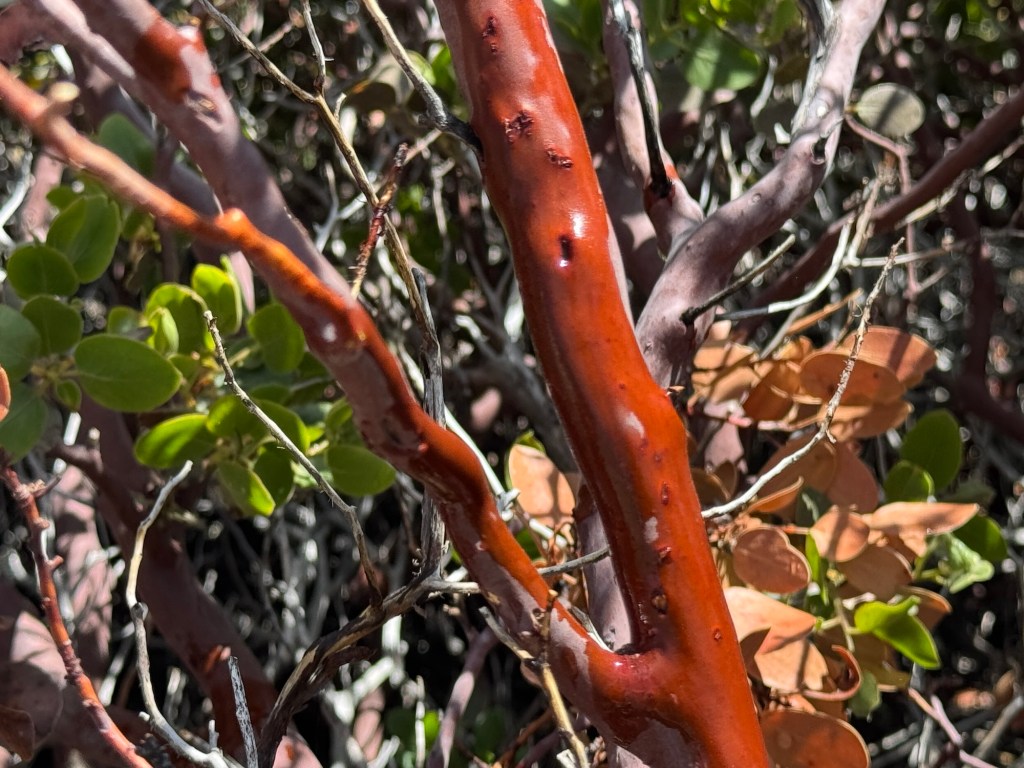
Manzanita branches in the high Sierra. The deep red colored bark enhanced by water. (Photo: Erik Olsen)
But there’s another plant I’ve come to admire, one that stands out not just for its resilience but for its deep red bark and often gnarled, sculptural form. It’s manzanita, sometimes called the Jewel of the Chaparral, and it might be one of the most quietly extraordinary plants in California.
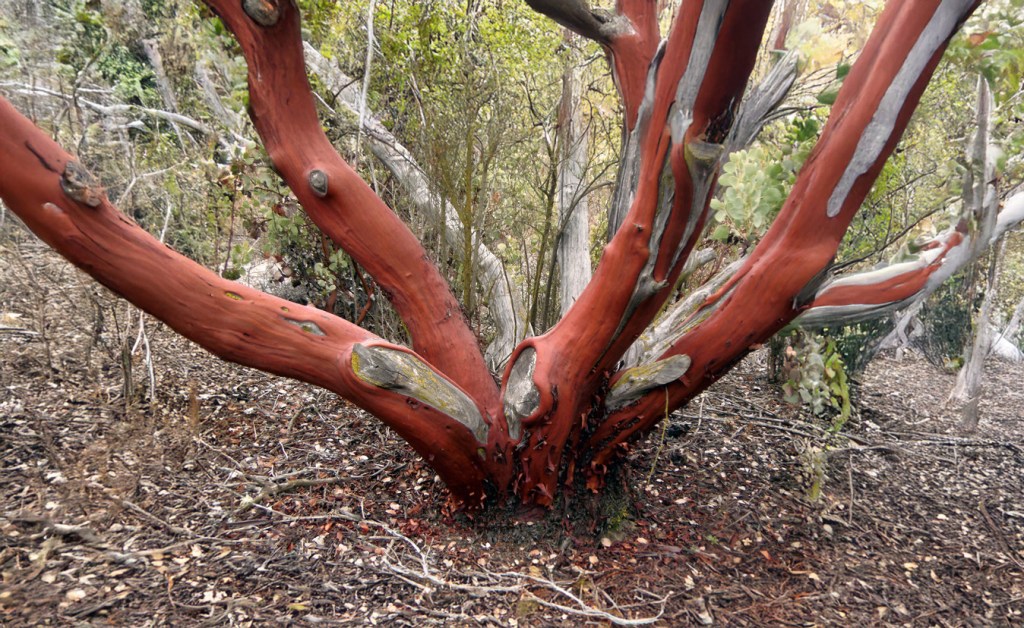
If you’ve ever hiked a sun-baked ridge or wandered a chaparral trail, chances are you’ve brushed past a manzanita. With twisting, muscular limbs the color of stained terra cotta and bark so smooth it looks hand-polished, manzanita doesn’t just grow. It sculpts itself into the landscape, twisting and bending with the contours of hillsides, rocks, and other plants.
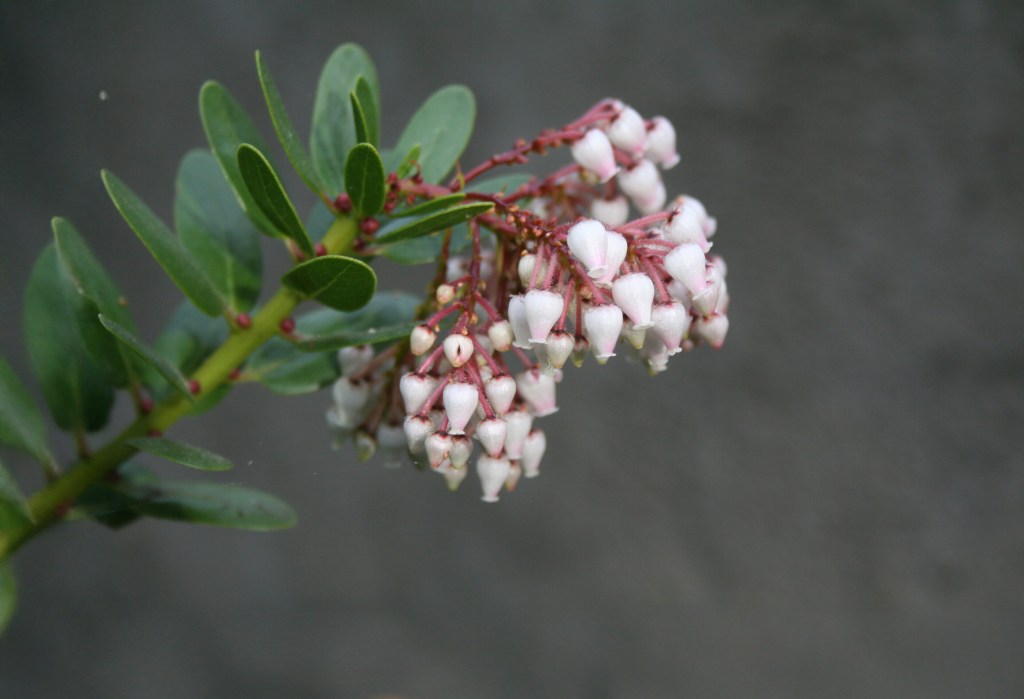
There are more than 60 species and subspecies of manzanita (Arctostaphylos), and most are found only in California. Some stand tall like small trees as much as 30 feet high; others crawl low along rocky slopes. But all of them are masters of survival. Their small, leathery leaves are coated with a waxy film to lock in moisture during the long dry seasons. They bloom in late winter with tiny pink or white bell-shaped flowers, feeding early pollinators when little else is flowering. By springtime, those flowers ripen into red fruits: the “little apples” that give the plant its name.
Manzanita flowers (Santa Barbara Botanical Garden)
One of manzanita’s more fascinating traits is how it deals with dead wood. Instead of dropping old branches, it often retains them, letting new growth seal off or grow around the dead tissue. You’ll see branches striped with gray and red, or dead limbs still anchored to the plant. It’s a survival strategy, conserving water, limiting exposure, and creating the twisted, sculptural forms that make manzanita distinctive.
And fire is key to understanding manzanita’s world. Like many California plants, many manzanita species are fire-adapted: some die in flames but leave behind seeds that only germinate after exposure to heat or smoke. Others resprout from underground burls after burning. Either way, manzanita is often one of the first plants to return to the land after a wildfire, along with laurel sumac, stabilizing the soil, feeding animals (and people), and shading the way for the next wave of regrowth.
Manzanita’s astonishing red bark The reddish color of manzanita bark is primarily due to tannins, naturally occurring compounds that also contribute to the bark’s bitter taste and deter insects and other organisms from feeding on it. (Photo: NPS)
Botanically, manzanitas are a bit of a mystery. They readily hybridize and evolve in isolation, which means there are tiny populations of hyper-local species, some found only on a single hill or canyon slope. That makes them incredibly interesting to scientists and especially vulnerable to development and climate change.
Their red bark is the result of high concentrations of tannins, bitter compounds that serve as a natural defense. Tannins are present in many plants like oaks, walnuts and grapes, and in manzanitas, they make the bark unpalatable to insects and animals and help resist bacteria, fungi, and decay. The bark often peels away in thin sheets, shedding microbes and exposing fresh layers underneath. It’s a protective skin, both chemical and physical, built for survival in the dry, fire-prone landscapes of California.
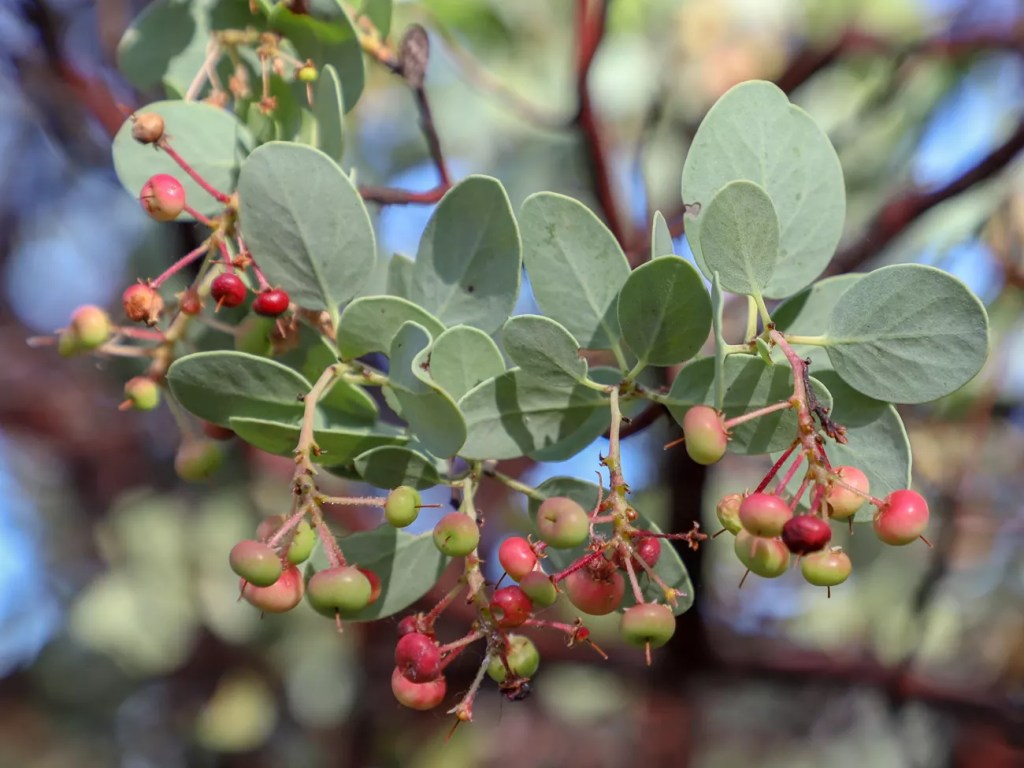
Whiteleaf manzanita leaves and berries (Photo: NPS)
The plants still have mysteries that are being uncovered. For example, a new species of manzanita was only just discovered in early 2024, growing in a rugged canyon in San Diego County. Named Arctostaphylos nipumu to honor the Nipomo Mesa where it was discovered and its indigenous heritage, it had gone unnoticed despite being located just 35 miles from the coast and not far from populated areas. The discovery, announced by botanists at UC Riverside, highlights that unique species localization, as the plants are found sometimes growing only on a single ridge or in a specific type of soil. Unfortunately, this newly identified species is already at risk due to development pressures and habitat loss. According to researchers, only about 50 individuals are known to exist in the wild, making A. nipumu one of California’s rarest native plants, and a reminder that the story of manzanita is still unfolding, even in places we think we know well.
A new species of manzanita – A. nipumu – was discovered in San Diego County last year (2024), surprising reserachers. (Photo: UCR)
For hikers, photographers, and anyone with an eye for the unusual, manzanita is a cool plant to stumble upon. I will often stop and admire a particularly striking plant. I love when its smooth bark peels back in delicate curls, looking like sunburned skin or shavings of polished cinnamon. It’s hard to walk past a manzanita without reaching out to touch that smooth, cool bark. That irresistible texture may not serve any evolutionary purpose for the plant, but it’s one more reason to wander into California’s fragrant chaparral, where more species of manzanita grow than anywhere else on Earth.
Here’s another article exploring some of California’s native plants. With a remarkable abundance of flora, California is home to over 6,500 species that play a vital role in shaping its diverse and iconic landscapes.
While hiking through the chaparral-covered hills of Southern California, from the Santa Monica to the San Bernardino and San Gabriel Mountains, you’ll encounter a rich variety of plants, each adapted to thrive in the harsh, dry conditions. Some of them will inevitably be foreign, as California’s mild Mediterranean climate is a perfect incubator for invasive species. But there are many indigenous plants (aka: endemic) that are touchstones of resilience, survivors that thrive here and help make the California chaparral ecosystem incredibly diverse and hearty. Among these is the laurel sumac, a stalwart of the coastal sage scrub, its waxy, aromatic leaves adapted to withstand the sun-baked hillsides and dry seasons that define so much of California’s natural landscape.
Laurel sumac (Malosma laurina) is a large, rounded evergreen shrub or small tree that can grow up to 20 feet tall and wide. When in bloom (late spring through summer), it gives off a strong, aromatic scent that can be very pleasant. The plant is native to southern California and Baja California, and is also found on the southern Channel Islands.
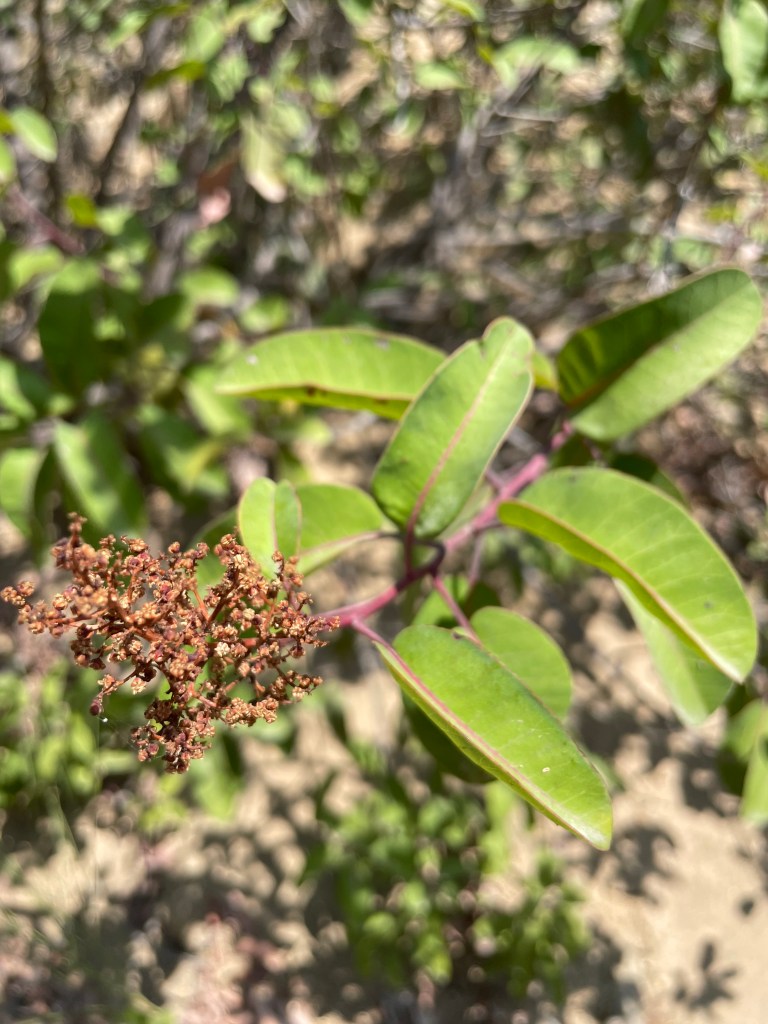
The plant is characterized by lance-shaped leaves with reddish veins and stems, adding a touch of color to the landscape. Laurel sumac has a unique ability to curl its leaves upward when exposed to extreme heat. This reduces the surface area exposed to the sun, minimizing water loss and preventing overheating. This trait has earned the plant the nickname “taco plant,” as its leaves often fold up like a taco shell. The clusters of small white flowers that bloom at the tips of its branches resemble lilac blossoms. After blooming, the small, creamy-white flowers develop into clusters of tiny, reddish-brown, berry-like fruits known as drupes. Each drupe contains a single seed and is covered with a thin, leathery skin.
From a hike in the San Gabriel Mountains. Most of the large clumpy bushes are Laurel sumac (Erik Olsen)
Although named “laurel” for its resemblance to bay laurel, laurel sumac actually belongs to the cashew family (Anacardiaceae). This family includes other well-known plants like poison oak, mango, and pistachio, highlighting the diverse characteristics within this botanical group. Laurel sumac is a vital species in the coastal sage scrub and chaparral ecosystems, offering habitat and food for wildlife. Its berries are particularly enjoyed by songbirds, including warblers. The plant blooms from late spring to early summer, producing clusters of small, white flowers that attract various pollinators, including bees and butterflies.
After flowering, it produces small, reddish-brown fruits that are a food source for birds and other wildlife. Interestingly, the shrub’s ability to thrive in the arid conditions of Southern California, combined with its distinctive red stems and fragrant blooms, make it a key contributor to the region’s natural beauty and biodiversity.
Laurel sumac along a trail in the San Gabriel Mountains (Erik Olsen)
The plant is amazingly drought-tolerant, with deep roots that allow it to access water during dry periods, making it a critical species in fire-prone environments. In fact, its ability to quickly resprout after fire is one reason it’s so prevalent in chaparral communities.
Laurel sumac is also notable for its role in traditional indigenous practices. Native peoples of the region used various parts of the plant for medicinal purposes, including treating skin conditions and respiratory ailments. Known as “ektii” by the Kumeyaay people, Laurel sumac held a prominent place in their traditional practices. The Kumeyaay are indigenous to the region that spans southern California, including San Diego County, and northern Baja California, Mexico. After childbirth, a tea or wash made from the plant was used for its soothing and medicinal properties, demonstrating its role in maternal care.
Laurel sumac with its fragrant white blossoms.
Beyond its medicinal uses, the sturdy wood of laurel sumac was utilized in construction, reflecting its practical value to the Kumeyaay. In a modern twist, the dried flower clusters of the plant have found a niche in model railroading, where enthusiasts often paint them and use them as miniature trees to create realistic landscapes.
Laurel sumac is just one of the many incredible native plant species that contribute to California’s rich biodiversity. Its abundance in some of the southern mountain ranges makes it a quintessential part of the landscape and an essential topic when exploring native flora. Stay tuned as we continue to highlight more species that make California such a unique and extraordinary place.
Plant theft, especially of rare and exotic succulents, has become a significant concern for botanical gardens, nurseries, and natural landscapes worldwide. The growing popularity of these visually striking, low-maintenance plants among collectors and hobbyists has fueled a thriving black market, now worth billions of dollars globally.
From private collections to protected areas, thieves target rare, endangered, or difficult-to-cultivate species, undermining conservation efforts and threatening the survival of these plants in the wild. The scale of this problem is vast; between 2016 and 2020, the illegal global trade in protected plant species was valued at $9.3 billion, nearly five times higher than the value of the illicit animal trade, according to the 2022 World Wildlife Trade Report by the Convention on International Trade in Endangered Species (CITES).
The Huntington Library, Art Museum and Botanical Gardens in San Marino, California, is one of the institutions on the front lines of this battle against plant theft. The Desert Garden at The Huntington is a place of exquisite charm…if weather permits and the temperatures are below 90 degrees. Spanning over 10 acres, the garden is one of the oldest and largest collections of cacti and succulents in the world, with over 2,000 species on display. Established in 1919 by Henry E. Huntington, it showcases a diverse array of plants from arid regions around the world, including unique specimens from North and South America, Africa, and Madagascar.
The Desert Garden at The Huntington features a stunning variety of succulents from arid regions around the world, some of which are rarely seen outside their natural habitats. This expansive collection includes towering cacti, like the iconic saguaro and golden barrel, alongside unique agaves and aloe plants with their spiky rosettes. Smaller, intricate species like Echeveria and Crassula provide a contrast with their colorful, fleshy leaves, ranging from deep greens to vibrant reds. The garden’s layout showcases the amazingly diverse shapes, textures, and growth habits of these hardy plants, creating a landscape that highlights the beauty and adaptability of desert flora. It is a succulent lover’s paradise. Trust me, I’m one of them.
At the upper end of the desert garden, a greenhouse shelters around 3,000 vulnerable succulents that are highly sensitive to excessive water or freezing temperatures. Some of these plants are too small and delicate to compete with more robust species in the outdoor environment. Even larger specimens, like the impressive Astrophytum ornatum, remain fragile despite their size, requiring careful protection to thrive.
Unfortunately, the stunning array of succulent plants in the garden attracts not only those captivated by the diverse and resilient forms these hardy plants can take but also those who seek to add them to their private collections or profit in their illicit trade.
Succulent theft has become a growing concern both at The Huntington and across California and the world, fueled by the global demand for these visually striking and low-maintenance plants. Between 2016 and 2020, the illegal global trade in protected plant species was valued at $9.3 billion, approximately five times higher than the value of the illicit animal trade, according to the 2022 World Wildlife Trade Report by the Convention on International Trade in Endangered Species.
The report emphasizes that plant poaching is a growing concern that leads to the loss of species, with many threatened or becoming extinct in the wild. Botanic gardens, as repositories for rare and endangered plant species, are uniquely positioned to combat this problem through various means, including raising public awareness, research, and collaboration with law enforcement and other stakeholders.
The Huntington’s Desert Garden, with its rare and mature specimens, is particularly vulnerable to thieves who recognize the high market value of certain succulents. Theft at the garden has been an ongoing problem, with criminals targeting species that are rare, endangered, or difficult to cultivate. Such thefts not only undermine the conservation efforts of botanical gardens but also pose a threat to the survival of these plants in the wild.
“People don’t think of it as theft when they’re just taking a little piece here or there,” says John Trager, The Huntington’s Bernie and Miyako Storch Curator of the Desert Garden and Collections. “But it’s most annoying, of course, when they take an entire plant, dig it out of the ground. Sometimes those are not that easy to replace.”
Trager reported that the garden recently suffered a significant theft involving a species of succulent called echeveria, a large genus of flowering plants from the Crassulaceae family, native to the semi-desert regions of Central America, Mexico, and northwestern South America. The Huntington had three documented specimens, each with known provenance, making them especially valuable for scientific research. Two of the three specimens were stolen.
“When the second one was taken, we’re left with a lone individual that can’t be self-pollinated and with no chance of being able to propagate that documented collection for perpetuity,” laments Trager.
Nationally, and particularly in California, succulent theft has reached alarming levels in recent years. California’s native dudleya plants have been especially targeted by poachers, who uproot them from coastal cliffs and wilderness areas to sell them on the black market, often overseas. In 2018, California law enforcement agencies seized over 3,500 succulent plants from poachers bound for Asia, where they can fetch high prices among collectors and gardening enthusiasts.
The illegal succulent trade is now estimated to be worth millions of dollars annually, with plants like Dudleya farinosa (also known as bluff lettuce) selling for as much as $100 each or more, depending on their size and rarity, and poachers often harvest them by the truckload. The damage caused by the theft of these plants may seem modest compared to the illegal wildlife trade in animals, but the impact is devastating.
Wild succulent plants have a special cachet in Asia. “It’s like having a Fendi bag on Rodeo Drive,” a California game warden told a student journalist. “A dudleya farinosa from the wild bluffs of Mendocino, California, especially a five-headed one, is apparently a super cool thing to have.”
More than 65 species and subspecies of Dudleya can be found from Southern Oregon to the southern tip of Baja California, including the Channel Islands and Baja California Islands, the Sierra Nevada and Santa Monica Mountains, and parts of Arizona and Utah. Poaching operations often involve stripping entire landscapes, leaving behind ecological damage that can take decades to repair.
California wildlife officer Pat Freeling replants a Dudleya in Mendocino County, CA (Travis VanZant/California Department of Fish and Wildlife via AP)
“When you start removing them from the ecosystem, the cascading effects are potentially really significant,” Jared Margulies, an assistant professor at the University of Alabama who studies the illicit succulent trade told Vox.
The environmental damage caused by succulent poaching has become so severe that, in September 2021, California enacted a law prohibiting the harvesting of dudleya from the wild without explicit permission from the landowner or a proper permit. Violating this law is considered a misdemeanor and can result in a prison sentence of up to six months and fines reaching as high as $500,000. But enforcement remains a challenge due to the remote locations where thefts often occur.
To combat this growing threat, The Huntington has implemented a range of measures. The garden’s extensive security protocols include increased surveillance, patrolling guards, and staff vigilance around particularly vulnerable plants. But The Huntington has also taken a more innovative approach by launching a facility dedicated to propagating and selling plants recovered from theft sting operations. This facility operates in partnership with law enforcement and conservation agencies to recover stolen plants and reintroduce them to legal, sustainable markets. The recovered plants, after undergoing health checks and quarantine periods to prevent the spread of pests and diseases, are propagated in controlled environments to ensure their survival and genetic diversity.
The Huntington’s unique program, known as International Succulent Introductions (ISI), is designed to encourage the conservation and cultivation of rare and unusual succulents from across the globe. Founded in 1958 at the UC Botanical Garden at Berkeley, the ISI was taken over by the Huntington in 1989, where it has been steadily expanding ever since. The ISI aims to reduce the demand for wild-collected plants by offering collectors, researchers, and enthusiasts an opportunity to acquire ethically propagated succulents.
“The purpose is to distribute new and interesting plants to collectors, institutions, researchers, et cetera, anyone who’s interested,” says Trager. “A lot of them are increasingly endangered, so there’s a conservation component, but we’re interested in both wild species and horticultural entities. So both of them are within our purview.”
The Covid pandemic led to a rise in interest in indoor gardening and houseplants, including succulents, as people spent more time at home and looked for ways to enhance their living spaces and alleviate stress. Succulents, known for their low-maintenance care and unique aesthetic appeal, became particularly popular. The existence of the ISI allowed many people to collect unusual varieties not available at their local nurseries.
“The ISI is fairly unique,” says Trager. “It’s the only plant introduction program of any botanic garden that exclusively focuses on succulent plants.”
Each year, the ISI introduces a carefully curated selection of plants, including both new species and cultivated varieties, all grown at The Huntington’s facilities. They offer about 30 plants through mail order each year via an online catalog. The remaining plants are then sold to visitors at the annual Cactus and Succulent Show and Sale, which took place this June at the Huntington. This initiative not only provides access to rare specimens but also supports conservation efforts by raising awareness about the risks of poaching and habitat destruction. The proceeds from the sale of these plants are reinvested into further conservation work, research, and education, making ISI a vital component in the global effort to protect succulent diversity.
Trager points out that since the program moved to the Huntington, the garden has distributed over 1,480 species and cultivars, totaling approximately 74,000 plants. Given that many of these plants are endangered, the program functions as a kind of Noah’s Ark, protecting these rare species and helping to ensure their survival for the future.
By using recovered plants to promote sustainability and education, The Huntington sets a powerful example in the fight against illegal succulent trade. This effort highlights the vital role botanical gardens play in conserving plant diversity while celebrating the stunning beauty and intricate wonder of desert flora, inspiring visitors to cherish and protect these unique organisms.