John Isaacs, the Maverick Oceanographer Who Wanted to Tow Icebergs to California

An AI rendering of Isaacs’ bold idea (Midjourney)

California’s water crises have always inspired bold solutions, but few ideas rival the sheer audacity of John Isaacs’ proposal to tow a giant Antarctic iceberg to San Diego. A brilliant and unconventional researcher at the Scripps Institution of Oceanography, Isaacs made waves in 1949 with his imaginative, though controversial, plans to quench California’s chronic droughts by harnessing the frozen reservoirs of the polar regions.

Isaacs’ career was defined by his boundary-pushing ideas. A polymath with a keen interest in marine biology, engineering, and climate science, he often operated at the intersections of disciplines, challenging conventional thinking. The iceberg-towing proposal exemplified his knack for blending vision and pragmatism—if one were willing to stretch the definition of “pragmatic.”
Isaacs theorized that large Antarctic icebergs could be wrapped in insulation to slow their melting and then towed by tugboats up the Pacific coast. The journey, spanning thousands of miles, would end with the iceberg positioned off the coast of Southern California, where its meltwater could be harvested to replenish reservoirs. Isaacs estimated that a single large iceberg, some the size of Manhattan, could supply tens of billions of gallons of freshwater—enough to offset drought conditions for millions of people.

John D. Isaacs (Scripps Institution of Oceanography)

The concept wasn’t a fleeting thought. Isaacs expanded on his idea in 1956, suggesting the capture of an eight-billion-ton iceberg—20 miles long, 3,000 feet wide, and 1,000 feet deep—and towing it to San Clemente Island off San Diego in approximately 200 days. He even calculated that a fleet of six ocean-going tugs could accomplish the feat, taking about six months to tow the iceberg from the 65th parallel south to the Californian coast.

In October 1973, the RAND Corporation took Isaacs’ vision further with an extensive report titled “Antarctic Icebergs as a Global Fresh Water Source” for the National Science Foundation. This 96-page document, authored by J.L. Hult and N.C. Ostrander, provided the most detailed scheme to date, transforming the theoretical idea into a more structured and mathematical model. It envisioned the creation of an “iceberg train” and delved into the technicalities and logistics of towing icebergs across the ocean. Hult explained, “Bringing icebergs to where the water is needed was suggested by John Isaacs of Scripps Institute of Oceanography in the 1950s. It is our job to show how practical it is.” However, the plan was not without eccentricities—such as the suggestion of using a floating nuclear power plant to supply the energy needed for the operation. The RAND report exemplified the ambition of its era, though many of its assumptions leaned heavily on theoretical modeling rather than practical viability.

AI rendering of an iceberg being dismantled (Midjourney)

Isaacs wasn’t alone in dreaming big. His proposal came at a time when other researchers and engineers were exploring similarly outlandish ideas, like seeding clouds with silver iodide to induce rain or building massive aqueducts from Alaska. But Isaacs’ iceberg scheme captured imaginations for its sheer romance and its symbolic uniting of Earth’s polar extremes with parched California landscapes.

Isaacs knew his plan faced enormous technical, logistical, and financial hurdles. For one, towing an iceberg would require immense energy and coordination, as well as a fleet of powerful ships. The iceberg’s tendency to melt during transit—especially when entering warmer waters—posed another significant obstacle. To mitigate this, Isaacs suggested covering the iceberg in reflective materials or insulating blankets to slow heat absorption.

Then there was the issue of economics. Calculations revealed that the cost of transporting a single iceberg could run into the billions, far outweighing the price of more conventional water solutions like desalination plants or water recycling programs. Critics also worried about ecological disruption, from changing ocean currents to the impact on marine ecosystems along the iceberg’s route.

While Isaacs’ iceberg idea was never realized, it sparked a wave of creative thinking about unconventional water solutions. Today, some of the principles behind his ideas have resurfaced in modern innovations. Advanced engineering methods, including climate-resilient infrastructure and adaptive water management, owe a debt to the exploratory spirit of Isaacs’ era.

AI rendering of an aqueduct built to carry water from Alaska to California (Midjourney)

The iceberg-towing concept is occasionally revisited, especially as climate change intensifies water scarcity. For example, in recent years, researchers in the United Arab Emirates have considered similar plans to bring freshwater from polar ice to arid regions. Advances in materials science and energy efficiency have made some aspects of Isaacs’ vision more feasible, though the logistics remain daunting.

CALIFORNIA CURATED ART ON ETSY

Purchase stunning art prints of iconic California scenes.
Check out our Etsy store.

John Isaacs’ career extended far beyond icebergs. He contributed to deep-sea exploration, studied the effects of nuclear fallout on marine life, and was an early advocate for understanding the ocean’s role in climate systems. His interdisciplinary approach and willingness to embrace unorthodox solutions left a lasting impact on oceanography and environmental science.

Isaacs’ iceberg proposal remains a testament to his fearless creativity and his deep commitment to solving humanity’s greatest challenges. While the world never saw an iceberg floating past Los Angeles, Isaacs’ bold thinking continues to inspire researchers grappling with the complex interplay of science, technology, and the environment.

All the Fish We Did Not See – The Discovery of the Ocean’s False Bottom off California

A paper nautilus or Argonaut, a group of pelagic octopuses that dwell in the ocean’s twilight zone. (Erik Olsen)

In the summer of 1942, aboard the USS Jasper, a team of scientists embarked on a mission off the coast of San Diego, California, a hub for U.S. Navy operations and other military activities vital for the Pacific Theater of World War II. Their goal was to test a new technology called “long-range active sonar,” developed to detect enemy submarines—specifically Japanese submarines and German U-boats—during World War II. Long-range active sonar is a technology that sends sound waves through the ocean to map and visualize the seafloor across great distances, revealing details of underwater topography and structures that would otherwise remain hidden beneath the waves.

The expedition was led by Carl F. Eyring, an accomplished acoustic physicist known for his pioneering work in sonar technology. Eyring, along with his colleagues Ralph A. Christensen and Russell W. Raitt, played crucial roles in the mission. Their combined expertise in acoustics, naval operations, and marine science made them the perfect team to explore the deep ocean with sound.

The USS Jasper in 1945—just a few years after scientists discovered the first evidence of the Deep Scattering Layer during a research cruise aboard the ship. (Photo: Naval History and Heritage Command)

As they deployed sonar pulses into the depths, they encountered an unexpected anomaly: a persistent, dense layer approximately 300 yards (about 274 meters) below the surface that scattered their acoustic signals. It was almost as if the ocean floor had risen, looming closer with a strange, unyielding presence that defied all explanations.

This new reading was a complete anomaly, contradicting everything they knew about the seafloor’s topology. It was as though a solid mass had somehow materialized in the depths—a mass dense enough to obscure their sonar and make the familiar landscape unrecognizable. At the same time, their signal strength readings spiked erratically, suggesting significant interference in the water.

Carl F. Eyring (Brigham Young University)

The discovery of this peculiar layer presented an intriguing puzzle to the scientists aboard the Jasper. Yet, with a war raging, they couldn’t afford to lose focus. Instead, they concentrated on measuring its dimensions and mitigating the acoustic interference it created. Determining its true nature would have to wait for another time.

It wasn’t until almost three years later, in 1945, that oceanographer Martin Johnson deployed nets into the Pacific and uncovered the truth: the layer was actually a massive cloud of marine animals, most no larger than a human finger, migrating daily from the deep ocean to the surface and back. This dense biological layer, packed with animals capable of reflecting sonar, had created the illusion of a solid mass, effectively “masking” the true depth of the ocean floor by reflecting sonar waves off the swim bladders of the fish and other marine organisms. 

Bristlemouth trawled from the ocean’s twilight zone (Erik Olsen)

This phenomenon, later termed the Deep Scattering Layer (DSL), created a “false bottom” in sonar readings, revealing an unexpectedly dense concentration of biological life in a mid-ocean zone once thought to be relatively sparse. The discovery of the DSL challenged assumptions about life distribution in the ocean, showing that vast numbers of organisms—such as fish, squid, and zooplankton—populate these depths, rising and descending with daily cycles to avoid predators and optimize feeding.

The DSL is situated within the ocean’s mesopelagic zone, commonly referred to as the twilight zone, which extends from about 200 to 1,000 meters below the surface. This region is characterized by minimal sunlight penetration and hosts a diverse array of marine life. Indeed, this huge swath of biomass is exactly what the sonar was picking up. This remarkable behavior observed in this zone is the diurnal vertical migration—the largest daily movement of biomass on Earth, the world’s largest animal migration. Each evening, billions of organisms (some scientists actually believe they number into the quadrillions) including small fish like lanternfish, hatchetfish and bristlemouths, ascend toward the surface to feed under the cover of darkness, retreating to the depths at dawn to evade predators. (Bristlemouths, by the way, are said to be the most numerous vertebrate on the planet.)

Scattering layer seen on sonar (Erik Olsen)

The discovery of the DSL provided significant insights into marine biology and oceanography. The layer’s composition—primarily swarms of marine animals with gas-filled swim bladders—explained the sonar reflections that mimicked the seafloor. This understanding highlighted the abundance and biodiversity of life in the twilight zone and underscored the importance of these organisms in oceanic ecosystems.

The discovery also led over time to an understanding of the role this layer plays in the carbon cycle, the very phenomenon that helps regulate Earth’s climate. The daily migration of marine animals in this layer is not just a remarkable biological spectacle; it is also a key mechanism for transporting carbon from the ocean’s surface to its depths. As these organisms ascend at night to feed and then return to deeper waters during the day, they excrete waste and many of them die, effectively moving carbon downwards, often sequestering it in the deep ocean floor where it can remain for centuries. This process, known as the biological carbon pump, plays a vital role in mitigating the effects of carbon dioxide in the atmosphere, thus contributing to climate stability. Without the existence of the Deep Scattering Layer and its role in the carbon cycle, the Earth’s carbon balance would be significantly different, highlighting just how interconnected marine ecosystems are with global climate regulation.

In the decades following its discovery, the DSL has remained a subject of scientific inquiry. Advancements in sonar technology and deep-sea exploration have revealed the layer’s dynamic nature and its role in global carbon cycling.

Current research into the twilight zone, particularly by scientists at the Woods Hole Oceanographic Institution (WHOI), is uncovering fascinating insights into this enigmatic region of the ocean. The twilight zone remains one of the least explored parts of the ocean, despite being home to an abundance of life and playing a crucial role in global biogeochemical cycles. Woods Hole has been at the forefront of investigating this layer, employing advanced technology like remotely operated vehicles (ROVs), autonomous underwater vehicles (AUVs), submersibles, and cutting-edge acoustic techniques to understand its complex dynamics and ecosystem.

One of the leading researchers at WHOI, Dr. Heidi Sosik, has been focusing on the role that the twilight zone plays in the carbon cycle. Sosik’s work involves the use of automated imaging technologies to analyze the behavior and diversity of the organisms inhabiting this region. By documenting their daily migrations and interactions, Sosik’s team has been able to quantify the extent to which these animals contribute to carbon transport. This research is essential for understanding how much carbon is effectively being sequestered from the atmosphere through these daily migrations.

Bristlemouth fish (Erik Olsen)

Another prominent scientist at WHOI, Dr. Andone Lavery, is working to map the twilight zone’s acoustics in unprecedented detail. Lavery’s expertise in underwater sound technology has helped reveal not only the composition of the Deep Scattering Layer but also the behaviors of its inhabitants. Lavery’s recent findings indicate that the twilight zone’s acoustic properties are far more dynamic than previously thought, and these properties can significantly affect how marine animals detect predators and prey, as well as how researchers measure biomass in this layer.

Dr. Simon Thorrold, also from WHOI, has been studying the food web dynamics within the twilight zone. Thorrold’s research has uncovered surprising insights into predator-prey relationships among mesopelagic species. Using chemical tracers, his team has been able to track the movement of nutrients through the food web, revealing that many animals from the twilight zone are integral to surface ecosystems as well, either through vertical migration or being preyed upon by larger species such as tuna, swordfish, and marine mammals.

Scientists use a Triton submersible to explore the ocean’s twilight zone in the Bahamas. (Erik Olsen)

In addition, WHOI has been collaborating with international partners on the “Twilight Zone Exploration” (TZX) project, which aims to better understand how human activities, such as fishing and climate change, are impacting this critical part of the ocean. The mesopelagic zone is increasingly targeted by commercial fishing due to the sheer biomass it holds. Dr. Sosik and her colleagues are actively studying the potential consequences of harvesting these species, considering their importance in carbon sequestration and as a key link in marine food webs.

CALIFORNIA CURATED ART ON ETSY

Purchase stunning art prints of iconic California scenes.
Check out our Etsy store.

Together, these efforts are gradually revealing the twilight zone’s secrets, emphasizing its importance not only in regulating climate but also in maintaining the health of marine ecosystems. As the pressures of climate change and human exploitation continue to grow, understanding this mysterious part of the ocean has never been more critical.

The USS Jasper‘s encounter with the false bottom off California’s coast stands as a pivotal moment in oceanographic history. It not only unveiled the hidden complexities of the ocean’s twilight zone but also bridged the gap between military technology and marine science, leading to a deeper appreciation of the intricate and interconnected nature of Earth’s marine environments.

Einstein in Pasadena: Three Wonderful Winters in Paradise

Einstein at the Santa Barbara home of Caltech trustee Ben Meyer on Feb. 6, 1933.
(The Caltech Archives)

“Here in Pasadena, it is like Paradise. Always sunshine and clear air, gardens with palms and pepper trees and friendly people who smile at one and ask for autographs.” – Albert Einstein (U.S. Travel Diary, 1930-31, p. 28)

Albert Einstein is often associated with Princeton, where he spent his later years as a towering intellectual figure, and with Switzerland, where he worked as a young patent clerk in Bern. It was in that spartan, dimly lit office, far from the great universities of the time, that Einstein quietly transformed the world. In 1905, his annus mirabilis or “miracle year,” he published a series of four groundbreaking papers that upended physics and reshaped humanity’s understanding of space, time, and matter. With his insights into the photoelectric effect, Brownian motion, special relativity, and the equivalence of mass and energy (remember E=mc2?), he not only laid the foundation for quantum mechanics and modern physics but also set in motion technological revolutions that continue to shape the future. Pretty good for a guy who was just 26.

Albert Einstein spent his later years as a world-famous scientist traveling the globe and drawing crowds wherever he went. His letters and travel diaries show how much he loved exploring new places, whether it was the mountains of Switzerland, the temples of Japan, or the intellectual circles of his native Germany. In 1922, while on his way to accept the Nobel Prize, he and his wife, Elsa, arrived in Japan for a six-week tour, visiting Tokyo, Kyoto, and Osaka.

But of all the places he visited, one city stood out for him in particular. Pasadena, with its warm weather, lively culture, and, most importantly, its reputation as a scientific hub, had a deep personal appeal to Einstein. ​He visited Pasadena during the winters of 1931, 1932, and 1933, each time staying for approximately two to three months. These stays were longer than many of his other travels, giving him time to fully immerse himself in the city. He spent time at Caltech, exchanging ideas with some of the brightest minds in physics, and fully embraced the California experience, rubbing elbows with Hollywood stars (Charlie Chapman among them), watching the Rose Parade, and even tutoring local kids. Einstein may have only been a visitor, but his time in Pasadena underscores how deeply rooted science was in the city then, and how strongly that legacy endures today. Pasadena remains one of the rare places in the country where scientific inquiry and creative spirit continue to thrive side by side. Pasadena was among the earliest cities to get an Apple Store, with its Old Pasadena location opening in 2003.

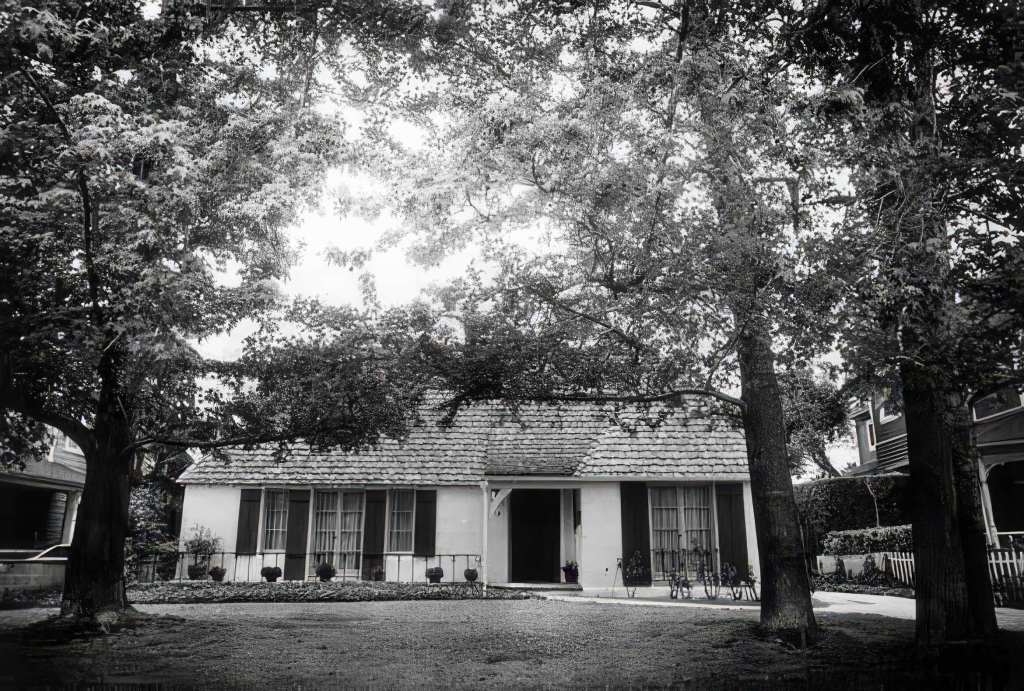
Einstein’s residence at 707 South Oakland Avenue in Pasadena, where he stayed his first winter in California (CalTech Archives)

Few scientists have received the public adulation that Einstein did during his winter stays in Pasadena. As a hobbyist violinist, he engaged in one-on-one performances with the conductor of the Los Angeles Philharmonic. Local artists not only painted his image and cast him in bronze but also transformed him into a puppet figure. Frank J. Callier, a renowned violin craftsman, etched Einstein’s name into a specially carved bow and case.

During his first winter of residence in 1931, Einstein lived in a bungalow at 707 South Oakland Avenue. During the following two winters, he resided at Caltech’s faculty club, the Athenaeum, a faculty and private social club that is still there today.

Yet, the FBI was keeping a watchful eye on Einstein as well. He was one of just four German intellectuals, including Wilhelm Foerster, Georg Nicolai, and Otto Buek, to sign a pacifist manifesto opposing Germany’s entry into World War I. Later, Einstein aligned himself with Labor Zionism, a movement that supported Jewish cultural and educational development in Palestine, but he opposed the formation of a conventional Jewish state, instead calling for a peaceful, binational arrangement between Jews and Arabs.

In front of the Athenaeum Faculty Club, Caltech, 1932. 
(Courtesy of the Caltech Archives.)

After his annus mirabilis in 1905, Einstein’s influence grew rapidly. In 1919, his theory of relativity was confirmed during a solar eclipse by the English astronomer Sir Arthur Eddington. The announcement to the Royal Society made Einstein an overnight sensation among the general public, and in 1922, he was awarded the 1921 Nobel Prize in Physics. While teaching at the University of Berlin in 1930, Arthur H. Fleming, a lumber magnate and president of Caltech’s board, successfully persuaded him to visit the university during the winter. The visit was intended to remain a secret, but Einstein’s own travel arrangements inadvertently made it public knowledge.

Einstein speaking at the dedication of the Pasadena Junior College (now PCC) astronomy building, February 1931. 
(Courtesy of the Caltech Archives)

After arriving in San Diego on New Year’s Eve 1930, following a month-long journey on the passenger ship Belgenland, Einstein was swarmed by reporters and photographers. He and his second wife, Elsa, were greeted with cheers and Christmas carols. Fleming then drove them to Pasadena, where they settled into the bungalow on S Oakland Ave.

Albert Einstein and his violin (Caltech Archives)

During their first California stay, the Einsteins attended Charlie Chaplin’s film premiere and were guests at his Beverly Hills home. “Here in Pasadena, it is like Paradise,” Einstein wrote in a letter. He also visited the Mt. Wilson Observatory high in the San Gabriel Mountains. Einstein’s intellectual curiosity extended far beyond his scientific endeavors, leading him to explore the Huntington Library in San Marino, delighting in its rich collections. At the Montecito home of fellow scientist Ludwig Kast, he found comfort in being treated more as a tourist than a celebrity, relishing a brief respite from the spotlight.

In Palm Springs, Einstein relaxed at the winter estate of renowned New York attorney and human rights advocate Samuel Untermeyer. He also embarked on a unique adventure to the date ranch of King Gillette, the razor blade tycoon, where he left with a crate of dates and an intriguing observation. He noted that female date trees thrived with nurturing care, while male trees fared better in tough condition: “I discovered that date trees, the female, or negative, flourished under coddling and care, but in adverse conditions the male, or positive trees, succeeded best,” he said in a 1933 interview.

CALIFORNIA CURATED ON ETSY

Purchase stunning coffee mugs and art prints of California icons.
Check out our Etsy store.

Not exactly relativity, but a curiosity-driven insight reflecting his ceaseless fascination with the world.

During his three winters in Pasadena, Einstein’s presence was a source of intrigue and inspiration. Students at Caltech were treated to the sight of the disheveled-haired genius pedaling around campus on a bicycle, launching paper airplanes from balconies, and even engaging in a heated debate with the stern Caltech president and Nobel laureate, Robert A. Millikan, on the steps of Throop Hall. Precisely what they debated remains a mystery. (Maybe something about the dates?)

Einstein with Robert A. Millikan, a prominent physicist who served as the first president of Caltech from 1921 to 1945 and won the Nobel Prize in Physics in 1923. (Courtesy of the Caltech Archives.)

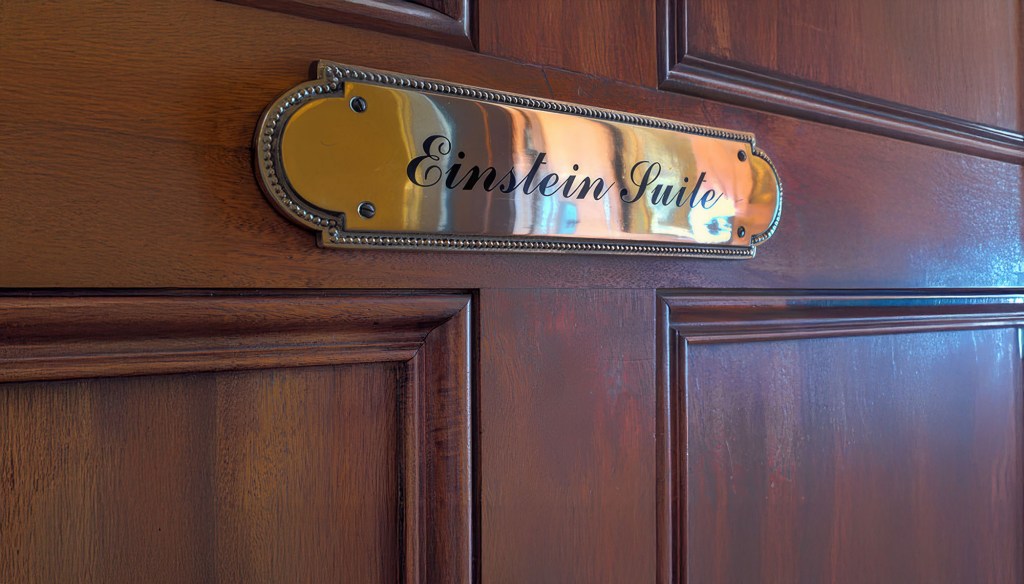
During his final winter in California, a near-accident led the couple to move into Caltech’s Athenaeum. His suite, No. 20, was marked with a distinctive mahogany door, a personal touch from his sponsor, Fleming. In 1933, as Nazi power intensified in Germany, Einstein began searching for a safe place to continue his work. Although Caltech made an offer, it was Princeton University‘s proposal that ultimately won him over. Einstein relocated to Princeton that same year, where he played a significant role in the development of the Institute for Advanced Study and remained there until his death in 1955.

Suite No. 20, Einstein’s mahogany door at the Caltech Athenaeum

Today, a large collection of Einstein’s papers are part of the Einstein Papers Project at Caltech. And Einstein’s suite at Caltech’s Athenaeum, still displaying the mahogany door, serves as a physical reminder of his visits.

During his third and final visit to Caltech in 1933, Hitler rose to power as Chancellor of Germany. Realizing that, as a Jew, he could not safely return home, Einstein lingered in Pasadena a little longer before traveling on to Belgium and eventually Princeton, where he received tenure. He never returned to Germany, or to Pasadena. Yet he often spoke fondly of the California sunshine, which he missed, and in its own way, the sunshine seemed to miss him too.

The Majesty and Mystery of California’s Bristlecone Pines

Bristlecone Pine
Bristlecone Pine in the White Mountains (National Park Service)

Lying east of the Owens Valley and the jagged crags of the Sierra Nevadas, the White Mountains rise high above the valley floor, reaching over 14,000 feet, nearly as high as their far better-known relatives, the Sierra Nevadas. Highway 168 runs perpendicular to Highway 395 out of Big Pine and leads up into the mountains to perhaps the most sacred place in California.

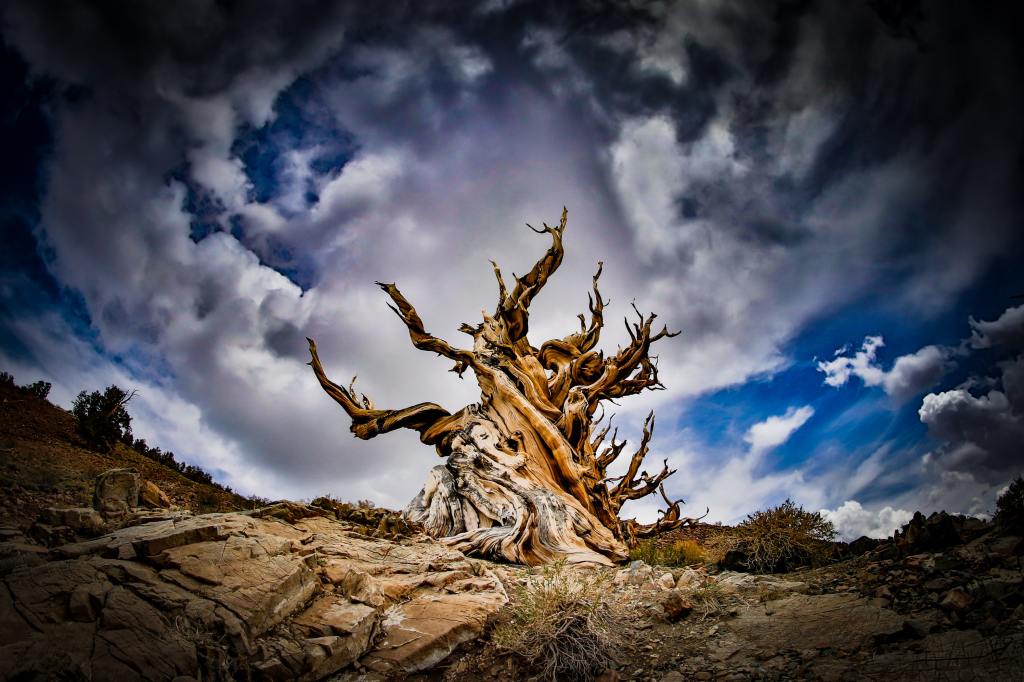
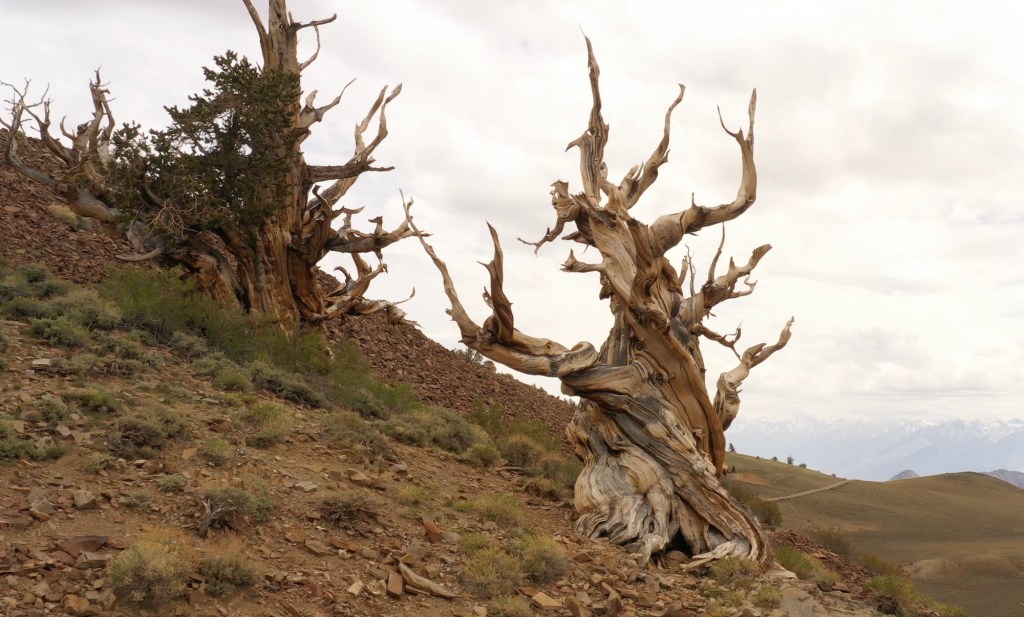
Far above sea level, where the air is thin, live some of the most amazing organisms on the planet: the ancient bristlecone pines. To the untrained eye, the bristlecone seems hardly noteworthy. Gnarled and oftentimes squat, especially when compared to the majestic coastal redwoods and giant sequoias living near the coast further west, they hardly seem like mythical beings. But to scientists, they are a trove of information, offering clues to near immortality and to the many ways that the earth’s climate has changed over the last 5,000 years. 

In the January 20, 2020 edition of the New Yorker, music writer Alex Ross writes about the trees and the scientists who are trying to unlock the secrets of the bristlecone’s unfathomable endurance. The trees, he writes, “seem sentinel-like”.

Video of ancient bristlecone pine that I shot and put together.

Bristlecones are the longest living organism on earth. The tree’s Latin name is Pinus longaeva, and it grows exclusively in subalpine regions of the vast area known to geologists as the Great Basin, which stretches from the eastern Sierra Nevadas to the Wasatch Range, in Utah. Bristlecones grow between 9,800 and 11,000 feet above sea level, where some people get dizzy and there are few other plants or animals that thrive. The greatest abundance of bristlecones can be found just east of the town of Bishop, California in the Ancient Bristlecone Pine Forest. There, a short walk from where you park your car, you can stroll among these antediluvian beings as they imperceptibly twist, gnarl and reach towards the heavens. 

While most of the bristlecones in the national Ancient Bristlecone Pine Forest are mere hundreds of years old, there are many that are far older. Almost ridiculously so. Methuselah, a Great Basin bristlecone, is 4,851 years old, as measured by its rings, taken by scientists decades ago using a drilled core. Consider that for a moment: this tree, a living organism, planted its tentacle-like roots into the soil some 2000 years before the birth of Christ, around the time that the Great Pyramids of Egypt were built. By contrast, the oldest human being we know of lived just 122 years. That’s 242 human generations passing in the lifetime of a single bristlecone that still stands along a well-trodden trail in the high Sierras. 

Bristlecone and starry sky: National Park Service
National Park Service

That said, if you were to try and see Methuselah for yourself, you are out of luck. The Forest Service is so protective of its ancient celebrity that it will not even share its picture. What’s more, it’s probably the case that there are bristlecones that are even older than Methuselah. Scientists think there could be trees in the forest that are over 5,000 years old. 

How the bristlecone has managed this incredible feat of endurance is a mystery to researchers. Many other tree species are prone to insect infestations, wildfires, climate change. In fact, over the last two decades, the vast lodgepole pine forests of the Western United States and British Columbia have been ravaged by the pine beetle. Millions of acres of trees have been lost, including more than 16 million of the 55 million acres of forest in British Columbia.  

But insects don’t seem to be a problem for bristlecones. Bristlecone wood is so dense that mountain-pine beetles and other pests can rarely burrow their way into it. Further, the region where the bristlecones live tends to be sparse with vegetation, and thus far less prone to wildfire. 

Jeff Sullivan
Jeff Sullivan

So how do the trees manage to live so long? 

A recent study by scientists at the University of North Texas looked at the amazing longevity of the ginkgo tree, examining individuals in China and the US that have lived for hundreds, perhaps more than a thousand years. One thing they found is that the trees’ immune systems remain largely intact, even youthful, throughout their lives. It turns out the genes in the cambium, or the cylinder of tissue beneath the bark, contain no “program” for senescence, or death, but continue making defenses even after hundreds of years. Researchers think the same thing might be happening in the bristlecone. This is not the case in most organisms and certainly not humans. Like replicants in the movie Blade Runner, we seem to have a built-in clock in our cells that only allows us to live for so long. (I want more life, f$@$@!

Scientists at the University of Arizona’s Laboratory of Tree-Ring Research (LTRR) have built up the world’s largest collection of bristlecone cross-sections, which they carefully examine under the microscope, looking for clues about how the trees have managed to survive so long, and how they can inform us of the many ways the earth’s climate has changed over the millennia.

The LTRR houses the nation’s only dendrochronology lab (the term for the study of tree rings), and the researchers there have made several discoveries using tree cores that have changed or confirmed climate models. For example, in 1998, the climatologist Michael E. Mann published the “hockey stick graph,” that revealed a steep rise in global mean temperature from about 1850 onward (i.e. the start of the industrial revolution). There was intense debate about this graph, with many scientists and climate change skeptics saying that Mann’s projections were too extreme. But numerous subsequent studies, some using the trees’ rings new models, confirmed the hockey-stick model. 

Bristlecone Pine

The bristlecones will continue to help us understand the way the earth is changing and to see into the deep human past in a way few other living organisms can do. They also improve our understanding of possible future environmental scenarios and the serious consequences of allowing carbon levels in the atmosphere to continue to grow. 

In this sense, they truly are sentinels.

Bristlecone pine in the White Mountains (Unsplash)

Interestingly, it wasn’t until 1953 that we found out just how ancient these trees are. Credit for this breakthrough goes to Edmund Schulman, a dendrochronologist. Schulman and his colleague Frits Went stumbled upon an ancient limber pine while conducting research in Sun Valley, Idaho. This tree, which they found to be around 1,650 years old, got them thinking: could there be even older trees hidden away in the mountains?

Shulman then traveled to the White Mountains and began a long-term exploration of the Bristlecone forest. He took core samples from many trees and made a startling discovery. At night, at his camp, he began counting the annual growth rings on a slender piece of wood. He counted and counted, not daring to believe what was unfolding before his eyes. When he finally put down his magnifying glass in the enveloping darkness, he had counted rings that went back past the year 2046 BCE. Schulman had stumbled upon a tree that had been alive for over four millennia. Not only alive, but continuing to grow!

Schulman had effectively expanded our understanding of how long a single tree can endure—providing key insights into environmental longevity, climate history, and even the resilience of life on Earth.

Bristlecone forest in the White Mountains of California (Erik Olsen)

In tribute to the momentous find, he dubbed the tree “Pine Alpha,” a name that’s as much a testament to the tree’s age as it is to the groundbreaking nature of Schulman’s work. Until then, no one knew a living tree could be that old. The discovery was a pivotal moment that opened up a new frontier in the study of dendrochronology, and it became a cornerstone example of how trees serve as living records of Earth’s history.

It should be said that the trees themselves, in their gnarled, frozen posture, are truly are beautiful. They should be protected and preserved, admired and adulated. Indeed, Federal law prohibits any attempt to damage the trees, including taking a mere splinter from the forest floor. The trees have also become an obsession for photographers, particularly those who favor astrophotography. A quick search on Instagram reveals a stunning collection of images showing the majesty and haunting beauty of these ancient trees. 

So, if you are ever headed up Highway 395 into the Sierras, it is well worth the effort to make the right-hand turn out of Big Pine to visit the Ancient Bristlecone Pine Forest. The air is thin, but the views are spectacular. And where else can you walk among the oldest living things on the planet?

Note: there is a wonderful video produced by Patagonia on the bristlecones and some of the scientists who study them. It’s well worth watching. 

The genius of Luther Burbank, father of the most famous potato in the world

Luther Burbank created some of the world’s most commercially successful fruits and vegetables, all from his Santa Rosa, California farm.

luther burbank - Library of Congress
Luther Burbank in his garden – Credit: Library of Congress

Editor’s note: This article is part of an ongoing series about lesser-known Californians who have made a significant impact on the state. California Characters seeks to bring their stories to light, highlighting voices and achievements that history has often overlooked. Through this series, we aim to celebrate the individuals who have shaped California in ways both big and small, ensuring their contributions are recognized and remembered.

The Los Angeles Times recently ran a review of fast-food french fries that caused a stir because the writer placed fries made at California’s beloved In-N-Out burger somewhere near the bottom. This infuriated the state’s rabid fan base for what is arguably one of the best burger joints in America. (Raises hand in support). But one interesting side story, the ideal kind of story we cover here, is this: if it were not for the work of one Californian farmer, we would likely not have french fries at all, or at least not as we know them today. 

Russet Burbank potato. Credit Wikipedia

That is because most french fries today are made with a particular strain of potato –  the Russet Burbank – that exists largely because of one man: Luther Burbank. Burbank is a little-known Californian (part of an ongoing series) whose contributions to science, in particular botany, have had an outsized impact on much of the fresh produce we consume today. 

Burbank is a towering figure in horticulture, credited with creating the science of modern plant breeding. For decades in the late 19th, early 20th centuries, his experimental farm in Santa Rosa, California, was famous throughout the world for the stunning variety of new fruit and vegetable varieties that emerged from the farm’s fertile soil. 

Luther Burbank - Library of Congress
Luther Burbank. (Library of Congress)

Born in 1849 in Lancaster, Massachusetts, Burbank came to California in 1875, buying a four-acre plot of land to start a nursery and garden in order to breed edible crops. While not a trained scientist, Burbank had a preternatural knack for identifying desirable characteristics in plants, which he selected for through an arduous, time-consuming, and oftentimes brilliantly intuitive series of techniques that led to the creation of some of our most cherished strains of fruits and vegetables. 

Over the course of his 55-year career, Burbank developed more than 800 new strains and varieties of plants, including flowers, grains, grasses, vegetables, cacti, and fruits. These include 113 varieties of plums, 20 of which remain commercially valuable, especially in California and South Africa. He also developed 10 commercial varieties of berries (including the oxymoronically-named white blackberry) as well as more than 50 varieties of lilies

Amazingly, Burbank was able to achieve all this without direct knowledge of plant genetics, pioneered by the Augustinian friar Gregor Mendel in what is now the Czech Republic in the mid-1800s (and whose papers on growing pea plants were brought to light in 1901, long after his death in 1884). Burbank’s lack of precise record-keeping and somewhat unorthodox — some would say sloppy — record-keeping, has led some modern scientists to criticize his credentials. Purdue University professor Jules Janick, wrote that “Burbank cannot be considered a scientist in the academic sense.” 

Luther Burbank with spineless cactus that he developed.
Luther Burbank with spineless cactus that he developed. (Library of Congress)

That said, Burbank’s innovations in Santa Rosa were revolutionary and garnered him worldwide attention, as well as financial support from benefactors like Andrew Carnegie, who supported Burbank because he believed the work was of great potential benefit to humanity. 

Burbank perfected techniques in common use today such as grafting, hybridization, and cross-breeding. At the time, his efforts resulted in large yield increases for numerous edible species in the United States in the early 20th century. 

But perhaps Burbank’s most lasting achievement was the Russet Burbank potato, which first came on the scene around 1902. Burbank bred the new stain from an unusual “seedball” he found on his farm, which came from a strain called Early Rose. Burbank planted the seeds, chose the most select fruits and further hybridized those. Soon, he had a wonderfully robust and hearty potato that he could sell.  

This large, brown-skinned, fleshy-white tuber is now the world’s predominant potato in food processing. The Russet Burbank is ideal for baking, mashing, and french fries. It is now grown predominantly in Idaho, the top potato-growing state in the US, where the variety makes up more than 55% of the state’s potato production. 

Burbank came up with the Russet Burbank potato to help with the devastating situation in Ireland following the Irish potato famine. His aim was to help “revive the country’s leading crop” due to the fact that it is “Late blight-resistant”. Late blight disease destroyed potato crops across Europe and led to a devastating famine in Ireland because the country was so dependent on potatoes as a common foodstuff. Unfortunately, Burbank did not patent the Russet Burbank because plant tubers, of which the potato is one, were not granted patents in the United States. 

But the Russet Burbank was such a hearty strain, and so nutritious and flavorful (though some disagree), that it became the potato of choice for many grocery stores and restaurants. This did not happen automatically, but took about two decades to catch on. In fact, in 1930, the Russet Burbank accounted for just 4% of potatoes in the US. But things would quickly change with the advent of frozen french fries in the 1940s and the subsequent emergence of fast-food restaurants like McDonald’s in the 1950s. The Russet Burbank was perfectly suited for french fries and remains the world’s most popular potato by a long shot.  

Unfortunately, Luther Burbank had a dark side, especially by modern mores. He believed in eugenics, the idea that human beings should be selectively bred like produce. He was a member of a national eugenicist group, which promoted anti-miscegenation laws, segregation, involuntary sterilization, and other discrimination by race.

Luther Burbank home in Santa Rosa, California. Credit: Library of Congress

Luther Burbank died after a heart attack and gastrointestinal illness in 1926. His name is known in certain regions of California, in and around Santa Rosa, although if you asked the average person who he was, few would be able to say. The Luther Burbank Home and Gardens, in downtown Santa Rosa, are designated as a National Historic Landmark.