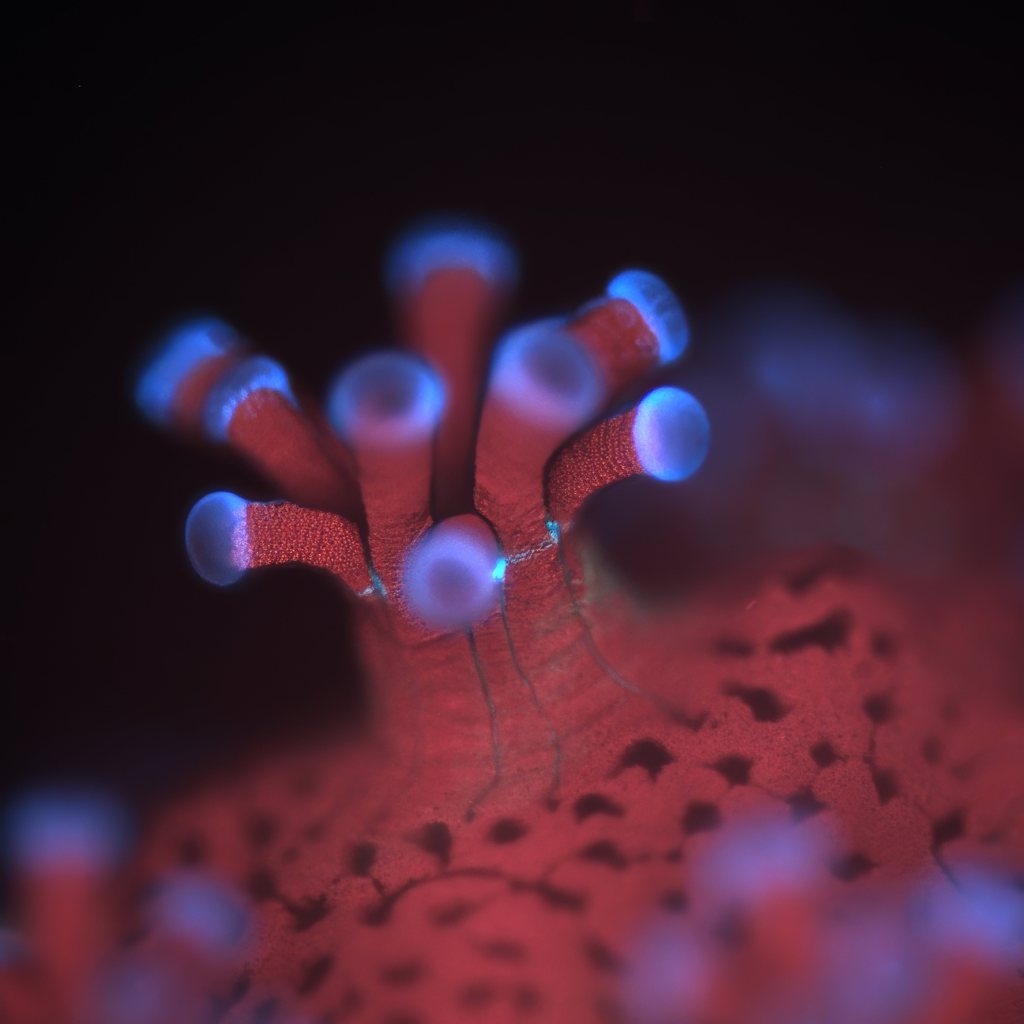
Corals Revealed as Never Before Through a Groundbreaking New Microscope in California

A fluorescence image of a polyp from the coral Stylophora pistillata (side view) taken with the BUMP. (Credit: Or Ben-Zvi)

(We did a video about this story as well. We hope you watch! )

The story of corals in the modern age on this planet is one of near-total despair. I’ve done several stories on corals and have spent many hours diving reefs around the world, from the Mesoamerican Reef in Belize to the unbelievably robust and dazzling reefs in Indonesia. There are still some incredible places where corals survive, but they are becoming fewer and farther between. I don’t want to get too deep into all the statistics, but suffice it to say: scientists estimate that we have already lost about half of the world’s corals since the 1950s, and that number could rise to as much as 90 percent by 2050 if current rates of bleaching and die-offs continue.

What’s crazy is that we still don’t completely understand corals, or exactly why they are dying. We know that corals are symbionts with microscopic algae called zooxanthellae (pronounced zo-zan-THEL-ee). The corals provide cover, a place to live, and nutrients for the algae. In return, the algae provide sugars and oxygen through photosynthesis, fueling coral growth and reef-building. But when the planet warms, or when waters become too acidic, the relationship often collapses. The algae either die or flee the coral. Without that steady food source—what one scientist I interviewed for this story called “a candy store”—corals turn ghostly white in a process known as bleaching. If stressful conditions persist, they starve and die. 

But why? 
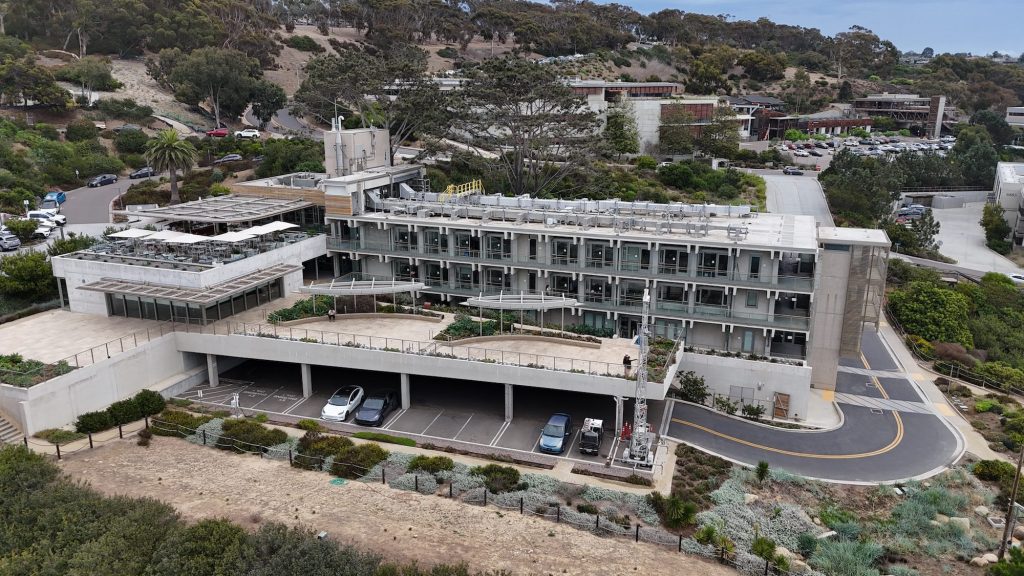
Scripps Institution of Oceanography in La Jolla (Photo: Erik Olsen)

“We still have no idea, physiologically, in the types of environments where bleaching predominates, whether the animal is throwing them out because it’s going to try to survive, or whether the little tiny plants say to the animal, ‘look, we can’t get along in this environment, so we got to go somewhere else’” says Dr. Jules Jaffe, an oceanographer at the Scripps Institution of Oceanography at the University of California, San Diego in La Jolla, California, and the head of the Jaffe Laboratory for Underwater Imaging

The Great Barrier Reef, once Earth’s largest living structure, has suffered five mass bleaching events since 1998, and vast stretches have become little more than graveyards of coral skeletons. The scale of this ecological disaster is almost unimaginable. And so scientists around the world are in a race to figure out what’s happening and how to at least try to slow down the bleaching events sweeping through nearly every major reef system.
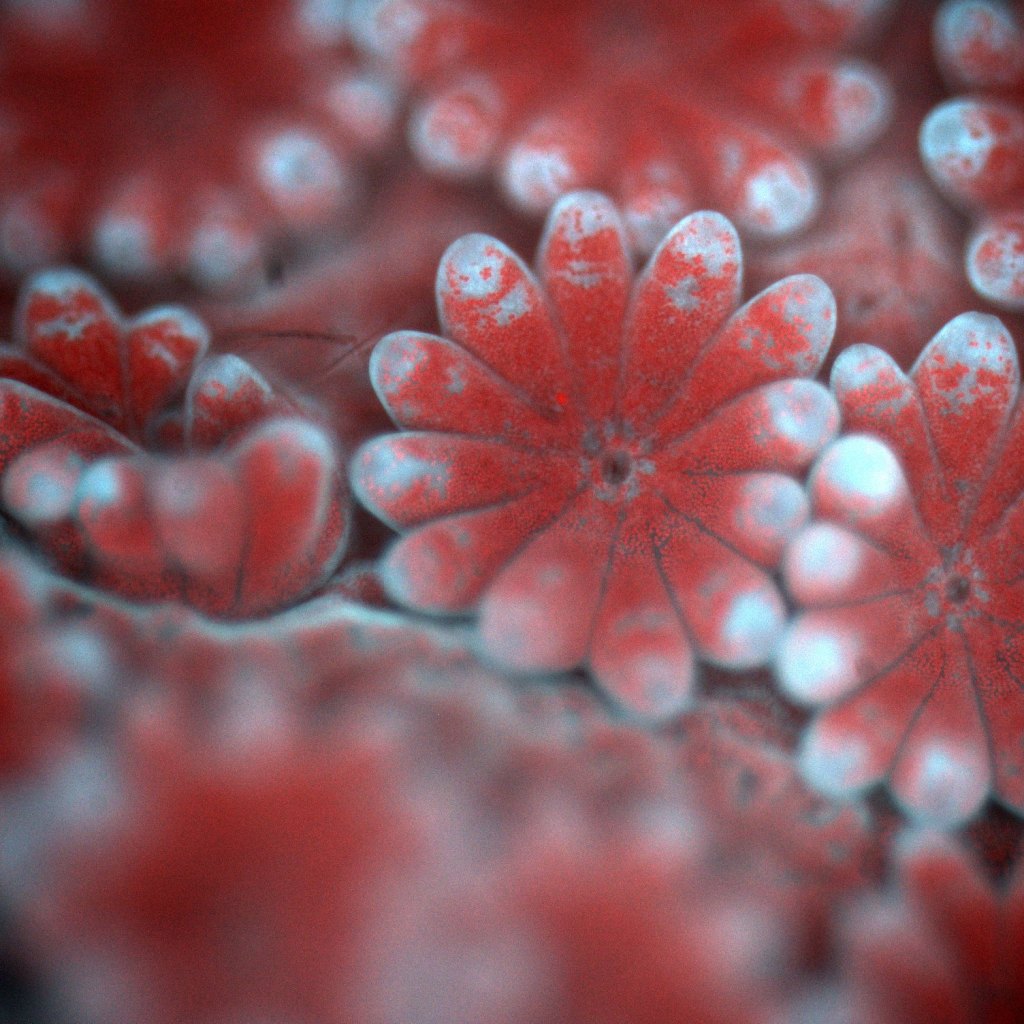
An image of Montipora coral polyps taken with the BUMP. Each polyp has a mouth and a set of tentacles and the red dots are individual microalgae residing inside the coral tissue. (Photo: Or Ben-Zvi)

One place where scientists are making small strides is at the Jaffe Lab, which I visited with my colleague Tod Mesirow and where researchers like Dr. Jaffe and Dr. Or Ben-Zvi have developed a new kind of underwater microscope that allows them to get close enough to corals to actually see the algae in action. 

This is no small feat. Zooxanthellae are only about 5–10 microns across, about one-tenth the width of a human hair, and invisible to the naked eye. With the new microscope and camera system, though, they can be seen in astonishing detail. The lab has captured unprecedented behavior, including corals fighting with each other for space, fusing together, and even responding to invading algae.

When I first reported on this imaging system years ago, it was still in its early stages. At the time, it was known as the BUM for Benthic Underwater Microscope. Since then, the Scripps team has added a powerful new capability: a pulsing blue light that lets them measure photosynthesis in real time. They call it pulse amplitude modulated light or PAM, and so now the system is known as the BUMP. 
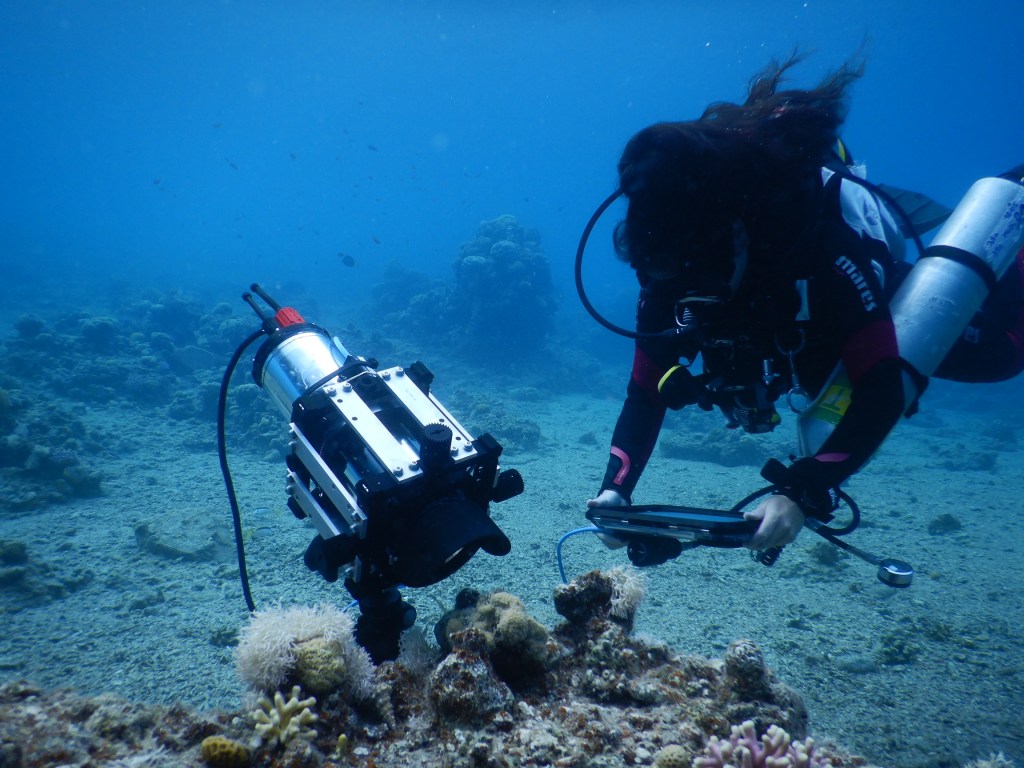
A field deployment of the BUMP in the Red Sea, where local corals were imaged and measured.  (Photo: Or Ben-Zvi)

Here’s how it works: blue excitation light stimulates the algae’s chlorophyll, which then re-emits some of that energy as red fluorescence. By tracking how much of this red fluorescence is produced, researchers can calculate indices of photochemical efficiency, essentially how well the algae are converting light into energy for photosynthesis. This doesn’t give a direct count of sugars or photons consumed, but it does provide a reliable window into the health and productivity of the algae, and by extension, the coral itself.

What’s crucial is that all of this imaging takes place in situ—right in the ocean, on living reefs—rather than in the artificial setting of an aquarium or laboratory.
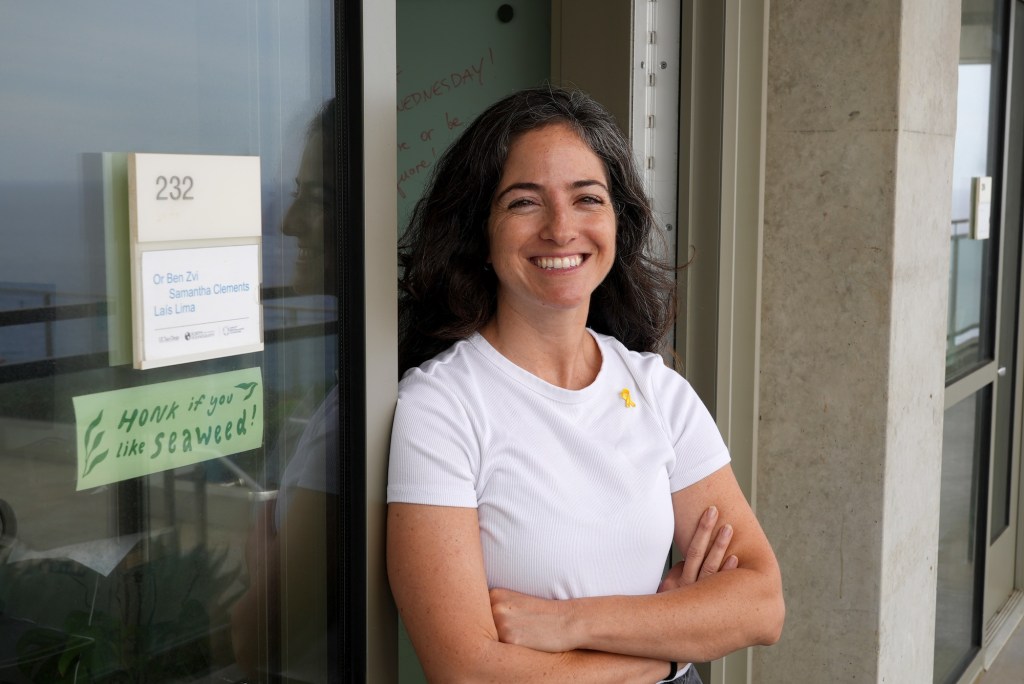
Dr. Or Ben-Zvi, doctoral scholar at Scripps Institution of Oceanography (Photo: Erik Olsen)

New tools are essential if we’re going to solve many of our biggest problems, and it’s at places like Scripps in California where scientists are hard at work creating instruments that help us see the world in entirely new ways. “There’s so much to learn about the ocean and its ecosystems, and my own key to understanding them is really the development of new instrumentation,” says Jaffe.

Dr. Ben-Zvi gave us a demonstration of how the system works in an aquarium holding several species of corals, including Stylophora, a common collector’s coral. She showed us the remarkable capabilities of the camera-microscope, which illuminated and brought into crisp focus the tiny coral polyps along with their algal partners. On the screen we watched them in real time, tentacles waving as they absorbed the flashes of light from the BUMP, appearing, almost, as if they were dancing happily.
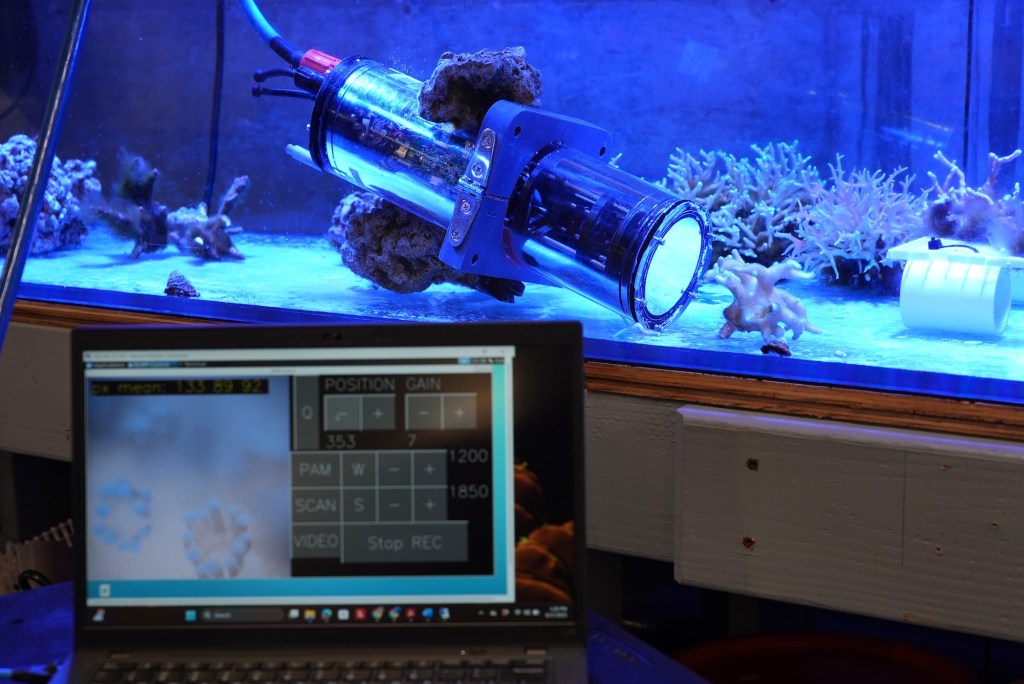
The Benthic Underwater Microscope PAM (BUMP) in action in the lab at Scripps Institution of Oceanography in La Jolla.
(Photo: Erik Olsen)

What this new tool allows scientists to do is determine whether corals may be under stress from factors like warming seas, pollution, or disease. Ideally, these warning signs are detected before the corals expel their zooxanthellae and bleach. Researchers are also learning far more about the everyday behavior of corals: something rarely studied in situ, directly in the ocean. 

That in-their-native-environment aspect of the work is crucial, because corals often behave very differently in aquariums than they do on wild reefs. That’s where this microscope promises to be a powerful tool: offering insights into how corals really live, fight, and respond to stress.
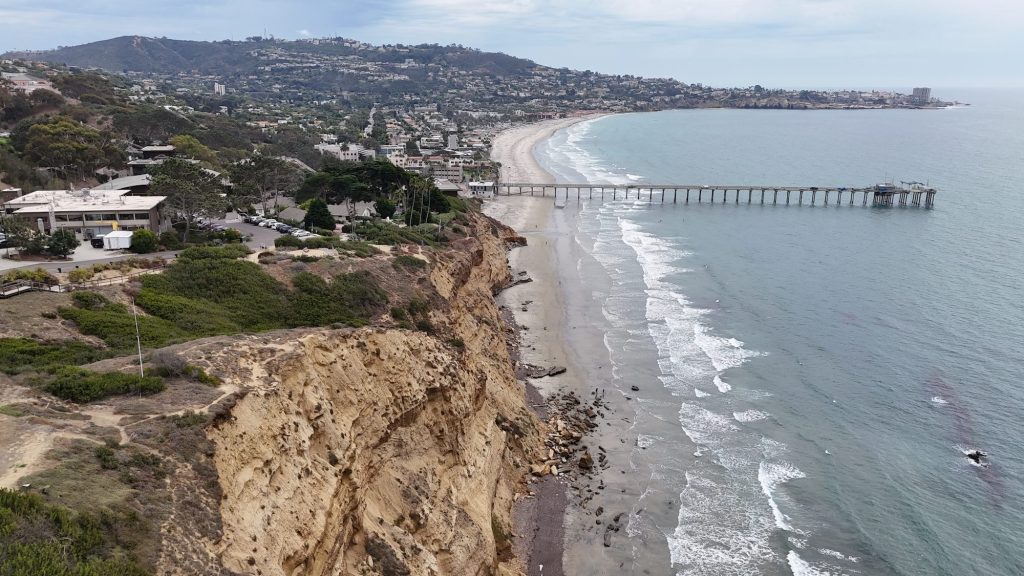
The view of La Jolla from the Scripps Institution of Oceanography (Photo: Erik Olsen)

Of course, what we do once we document a reef under stress is another matter. Dr. Ben-Zvi suggests there may be possibilities for remediation, though she admits it’s difficult to know exactly what those are. Perhaps reducing pollution, limiting fishing, or cutting ship traffic in vulnerable areas could help. But given that we seem unable—or unwilling—to stop the warming of the seas, these measures can feel like stopgaps rather than solutions. Still, knowledge is the foundation for any action, and this new tool is a breakthrough for coral imaging. If deployed widely, it could generate an invaluable dataset for researchers around the globe. The scientists behind it even hope to build multiple systems, perhaps commercializing them, to vastly expand the reach of this kind of monitoring.

But even Jaffe concedes it may already be too late: “Could a world exist without corals? Yeah, I think so,” he said. “It would be sad, but it’s going that way.”

All the same, the images the tool produces are breathtaking, and at the very least, they might jolt people into realizing that this is a crisis worth trying to solve. If we can’t, then future generations will be left only with these hauntingly beautiful images to remember the diverse and gorgeous animals that once flourished along the edges of the sea. 
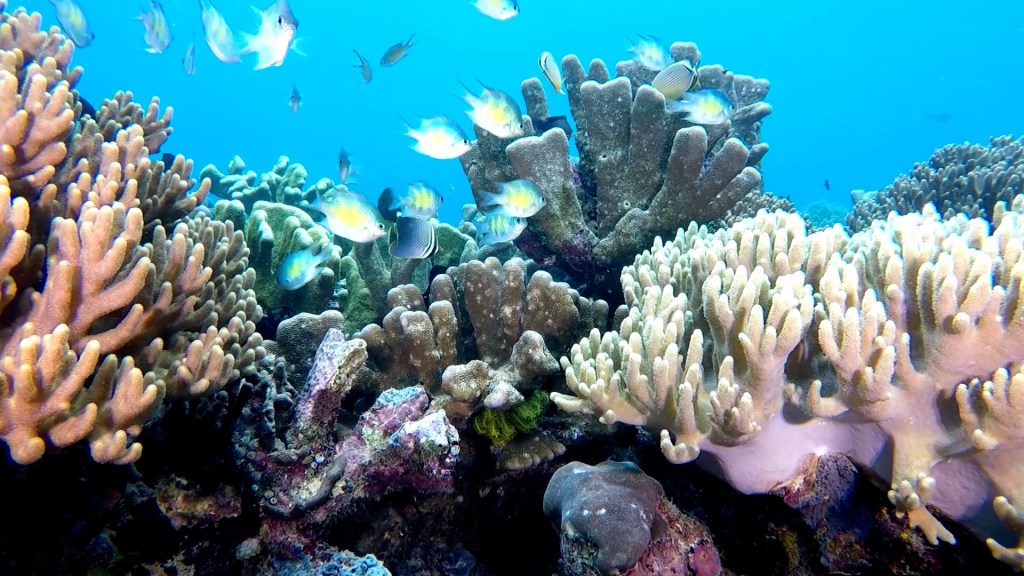
A healthy coral reef in Indonesia (Photo: Erik Olsen)

Is that valuable? Yes, but not nearly as valuable as saving the living reefs themselves. Dr. Jaffe told us,

“I’m on a mission to help people feel empathy toward the creatures of the sea. At the same time, we need to learn just how beautiful they are. For me, the combination of beauty and science has been at the heart of my life’s work.”

His words capture the spirit of this research. The underwater microscope isn’t just a scientific instrument. It’s a lens into a hidden world, one that may inspire people to care enough to act before it’s gone. Too bad the clock is ticking so fast.

(We did a video about this story as well. We hope you watch! )

Walter Munk was a Californian Oceanographer Who Changed Our Understanding of the Seas

Photo: Erik Jepsen (UC San Diego)

Walter Munk, often referred to as the “Einstein of the Oceans,” was one of the most influential oceanographers of the 20th century. Over a career that spanned more than 70 years, Munk fundamentally altered how we think about the oceans, contributing to our understanding of everything from wave prediction during World War II to deep-sea drilling in California. His work at the Scripps Institution of Oceanography in La Jolla, California, was groundbreaking and continues to influence scientific thinking to this day.

Walter Heinrich Munk was born in Vienna, Austria, on October 19, 1917. At 14, he moved to New York, where he later pursued physics at Columbia University. He became a U.S. citizen in 1939 and earned a bachelor’s degree in physics from the California Institute of Technology the same year, followed by a master’s in geophysics in 1940. Munk then attended the Scripps Institution of Oceanography and completed his Ph.D. in oceanography from the University of California in 1947.

Dr. Walter Munk in 1952. (Scripps Institution of Oceanography Archives/UC San Diego Libraries)

In the early 1940s, Munk’s career took a defining turn when the United States entered World War II. At the time, predicting ocean conditions was largely guesswork, and this posed a significant challenge for military operations. Munk, a PhD student at Scripps at the time, was recruited by the U.S. Army to solve a problem that could make or break military strategy—accurate wave prediction for amphibious landings.

CALIFORNIA CURATED ART ON ETSY

Purchase stunning art prints of iconic California scenes.
Check out our Etsy store.

One of his most famous contributions during the war came in 1944, ahead of the Allied invasion of Normandy. Alongside fellow oceanographer Harald Sverdrup, Munk developed a method to predict the size and timing of ocean waves, ensuring that troops could land safely during the D-Day invasion. Using their model, the Allied forces delayed the invasion by one day, a move that proved crucial in reducing casualties and securing the beachhead. This same wave prediction work was used again in the Pacific theater, particularly for landings on islands like Iwo Jima and Eniwetok. Munk’s contributions not only helped win the war but also laid the foundation for modern oceanography. Wave forecasting is now a standard tool for naval operations, shipping, and even recreational surfers.

Landing craft pass supporting warships in the Battle of Eniwetok, 19 February 1944. (U.S. Army)

After the war, Munk returned to Scripps, a place that would remain central to his career. Established in 1903, Scripps had been growing into a major center for oceanographic research, and Munk’s work helped elevate it to new heights. Located in La Jolla, just north of San Diego, Scripps was perfectly positioned on the California coastline to be at the forefront of oceanographic studies. Scripps is one of the premier oceanographic institutions in the world.

During the post-war years, Munk helped pioneer several new areas of research, from the study of tides and currents to the mysteries of the deep sea. California, with its rich marine ecosystems and coastal access, became the perfect laboratory. In La Jolla, Munk studied the Southern California Current and waves that originated across the Pacific, bringing new understanding to local coastal erosion and long-term climate patterns like El Niño. His research had a direct impact on California’s relationship with its coastline, from naval operations to public policy concerning marine environments.

Walter Munk in 1963 with a tide capsule. The capsule was dropped to the seafloor to measure deep-sea tides before such measurements became feasible by satellite. Credit Ansel Adams, University of California

While Munk’s contributions to wave forecasting may be his most widely recognized work, one of his boldest projects came in the 1960s with Project Mohole. It was an ambitious scientific initiative to drill into the Earth’s mantle, the layer beneath the Earth’s crust. The project was named after the Mohorovičić Discontinuity (named after the pioneering Croatian seismologist Andrija Mohorovičić), the boundary between the Earth’s crust and mantle. The boundary is often referred to as the “Moho”. The goal was revolutionary: to retrieve a sample from the Earth’s mantle, a feat never before attempted.

The idea was to drill through the ocean floor, where the Earth’s crust is thinner than on land, and reach the mantle, providing geologists with direct insights into the composition and dynamics of our planet. The project was largely conceived by American geologists and oceanographers, including Munk, who saw this as an opportunity to leapfrog the Soviet Union in the ongoing Cold War race for scientific supremacy.

The Glomar Challenger, launched in 1968, was the drill ship for NSF’s Deep Sea Drilling Project. (Public Domain)

California was again the backdrop for this audacious project. The drilling took place off the coast of Guadalupe Island, about 200 miles from the Mexican coast, and Scripps played a key role in organizing and coordinating the scientific work. The project succeeded in drilling deeper into the ocean floor than ever before, reaching 600 feet into the seabed. However, funding issues and technical challenges caused the U.S. Congress to abandon the project before the mantle could be reached. Despite its early end, Project Mohole is considered a precursor to modern deep-sea drilling efforts, and it helped pave the way for initiatives like the Integrated Ocean Drilling Program, which continues to explore the ocean’s depths today. For example, techniques for dynamic positioning for ships at sea were largely developed for the Mohole Project.

Munk’s work was deeply tied to California, a state whose coastlines and oceanography provided a wealth of data and opportunities for study. Scripps itself is perched on a stunning bluff overlooking the Pacific Ocean, a setting that greatly inspired Munk and his colleagues. Throughout his career, Munk worked on understanding the coastal dynamics of California, from studying the erosion patterns of beaches to analyzing how global warming might impact the state’s famous coastal cliffs.

Scripps Institution of Oceanography

His legacy continues to shape how California manages its vast coastline. The methodologies and insights he developed in wave prediction are now used in environmental and civil engineering projects that protect harbors, beaches, and coastal infrastructure from wave damage. As climate change accelerates the rate of sea level rise, Munk’s work on tides, ocean currents, and wave dynamics is more relevant than ever for California’s future.

Walter Munk’s contributions to oceanography stretched well beyond his wartime work and Project Mohole. He was instrumental in shaping how we understand everything from deep-sea currents to climate patterns, earning him numerous awards and accolades. His work at Scripps set the stage for the institution’s current status as a world leader in oceanographic research.

One of the most notable examples of this work was an experiment led by Munk to determine whether acoustics could be used to measure ocean temperatures on a global scale, offering insights into the effects of global warming. In 1991, Munk’s team transmitted low-frequency underwater acoustic signals from a remote site near Heard Island in the southern Indian Ocean. This location was strategically chosen because sound waves could travel along direct paths to listening stations in both the Pacific and Atlantic Oceans. The experiment proved successful, with signals detected as far away as Bermuda, New Zealand, and the U.S. West Coast. The time it took for the sound to travel was influenced by the temperature of the water, confirming the premise of the study.

Walter Munk in 2010 after winning the Crafoord Prize. (Crafoord Prize)

Munk passed away in 2019 at the age of 101, but his influence lives on. His approach to science—marked by curiosity, boldness, and a willingness to take on complex, high-risk projects—remains an inspiration for generations of scientists. He was a giant not only in oceanography but also in shaping California’s role in global scientific innovation. As the state faces the challenges of a changing climate, Munk’s legacy as the “Einstein of the Oceans” continues to be felt along its shores and beyond.

John Isaacs, the Maverick Oceanographer Who Wanted to Tow Icebergs to California

An AI rendering of Isaacs’ bold idea (Midjourney)

California’s water crises have always inspired bold solutions, but few ideas rival the sheer audacity of John Isaacs’ proposal to tow a giant Antarctic iceberg to San Diego. A brilliant and unconventional researcher at the Scripps Institution of Oceanography, Isaacs made waves in 1949 with his imaginative, though controversial, plans to quench California’s chronic droughts by harnessing the frozen reservoirs of the polar regions.

Isaacs’ career was defined by his boundary-pushing ideas. A polymath with a keen interest in marine biology, engineering, and climate science, he often operated at the intersections of disciplines, challenging conventional thinking. The iceberg-towing proposal exemplified his knack for blending vision and pragmatism—if one were willing to stretch the definition of “pragmatic.”

Isaacs theorized that large Antarctic icebergs could be wrapped in insulation to slow their melting and then towed by tugboats up the Pacific coast. The journey, spanning thousands of miles, would end with the iceberg positioned off the coast of Southern California, where its meltwater could be harvested to replenish reservoirs. Isaacs estimated that a single large iceberg, some the size of Manhattan, could supply tens of billions of gallons of freshwater—enough to offset drought conditions for millions of people.

John D. Isaacs (Scripps Institution of Oceanography)

The concept wasn’t a fleeting thought. Isaacs expanded on his idea in 1956, suggesting the capture of an eight-billion-ton iceberg—20 miles long, 3,000 feet wide, and 1,000 feet deep—and towing it to San Clemente Island off San Diego in approximately 200 days. He even calculated that a fleet of six ocean-going tugs could accomplish the feat, taking about six months to tow the iceberg from the 65th parallel south to the Californian coast.

In October 1973, the RAND Corporation took Isaacs’ vision further with an extensive report titled “Antarctic Icebergs as a Global Fresh Water Source” for the National Science Foundation. This 96-page document, authored by J.L. Hult and N.C. Ostrander, provided the most detailed scheme to date, transforming the theoretical idea into a more structured and mathematical model. It envisioned the creation of an “iceberg train” and delved into the technicalities and logistics of towing icebergs across the ocean. Hult explained, “Bringing icebergs to where the water is needed was suggested by John Isaacs of Scripps Institute of Oceanography in the 1950s. It is our job to show how practical it is.” However, the plan was not without eccentricities—such as the suggestion of using a floating nuclear power plant to supply the energy needed for the operation. The RAND report exemplified the ambition of its era, though many of its assumptions leaned heavily on theoretical modeling rather than practical viability.

AI rendering of an iceberg being dismantled (Midjourney)

Isaacs wasn’t alone in dreaming big. His proposal came at a time when other researchers and engineers were exploring similarly outlandish ideas, like seeding clouds with silver iodide to induce rain or building massive aqueducts from Alaska. But Isaacs’ iceberg scheme captured imaginations for its sheer romance and its symbolic uniting of Earth’s polar extremes with parched California landscapes.

Isaacs knew his plan faced enormous technical, logistical, and financial hurdles. For one, towing an iceberg would require immense energy and coordination, as well as a fleet of powerful ships. The iceberg’s tendency to melt during transit—especially when entering warmer waters—posed another significant obstacle. To mitigate this, Isaacs suggested covering the iceberg in reflective materials or insulating blankets to slow heat absorption.

Then there was the issue of economics. Calculations revealed that the cost of transporting a single iceberg could run into the billions, far outweighing the price of more conventional water solutions like desalination plants or water recycling programs. Critics also worried about ecological disruption, from changing ocean currents to the impact on marine ecosystems along the iceberg’s route.

While Isaacs’ iceberg idea was never realized, it sparked a wave of creative thinking about unconventional water solutions. Today, some of the principles behind his ideas have resurfaced in modern innovations. Advanced engineering methods, including climate-resilient infrastructure and adaptive water management, owe a debt to the exploratory spirit of Isaacs’ era.

AI rendering of an aqueduct built to carry water from Alaska to California (Midjourney)

The iceberg-towing concept is occasionally revisited, especially as climate change intensifies water scarcity. For example, in recent years, researchers in the United Arab Emirates have considered similar plans to bring freshwater from polar ice to arid regions. Advances in materials science and energy efficiency have made some aspects of Isaacs’ vision more feasible, though the logistics remain daunting.

CALIFORNIA CURATED ART ON ETSY

Purchase stunning art prints of iconic California scenes.
Check out our Etsy store.

John Isaacs’ career extended far beyond icebergs. He contributed to deep-sea exploration, studied the effects of nuclear fallout on marine life, and was an early advocate for understanding the ocean’s role in climate systems. His interdisciplinary approach and willingness to embrace unorthodox solutions left a lasting impact on oceanography and environmental science.

Isaacs’ iceberg proposal remains a testament to his fearless creativity and his deep commitment to solving humanity’s greatest challenges. While the world never saw an iceberg floating past Los Angeles, Isaacs’ bold thinking continues to inspire researchers grappling with the complex interplay of science, technology, and the environment.