If you’ve recently encountered this Website, welcome. I hope you find something here that feeds your interests and gives you a reason to look a little more closely at the world around you. And if you’ve been here for a while, I’m genuinely grateful you’ve stuck around. What a few years ago as a passion project has slowly turned into something closer to an obsession. It felt like a good moment to pause and explain what this is really about. If I had to choose one or two words, it would be curiosity…and ignorance.
If you spend enough time outside in California, you start to realize how much you don’t know.
Celebrate California’s wild side with our beautifully illustrated wildlife mugs, featuring the state’s most iconic birds and animals. Visit our store and bring a little piece of California nature to your morning coffee.
I often hike in the San Gabriels or the Sierra and see a bird flash across my field of view and think, “What was that?” (California has more bird species recorded than any other U.S. state.) I’ll read about a strange fish or see a magnificent one on a dive, or more likely an invertebrate, and wonder how it avoids predators, what it eats, and how it moves through its environment.
Even driving through the state has its moments of awe that might otherwise seem mundane. How often do you pass along a highway and notice the massive roadcuts carved into hillsides, without realizing they are a goldmine for geologists trying to decode California’s distant past?
A roadcut in California’s San Gabriel Mountains. (Photo: Erik Olsen)
On a four-day hike in Yosemite a few years ago, I found myself wondering where all the granite that forms those magnificent domes actually came from. It turns out the answer is far more interesting than I expected.
The more you look around in California, the more you realize there is almost always something fascinating to notice and something worth learning a little more about.
As a longtime journalist who has reported from dozens of places around the world, including Antarctica, Micronesia, Ukraine, Haiti, Indonesia, and much of Europe, I’ve often found that my birthplace holds some of the most fascinating stories.
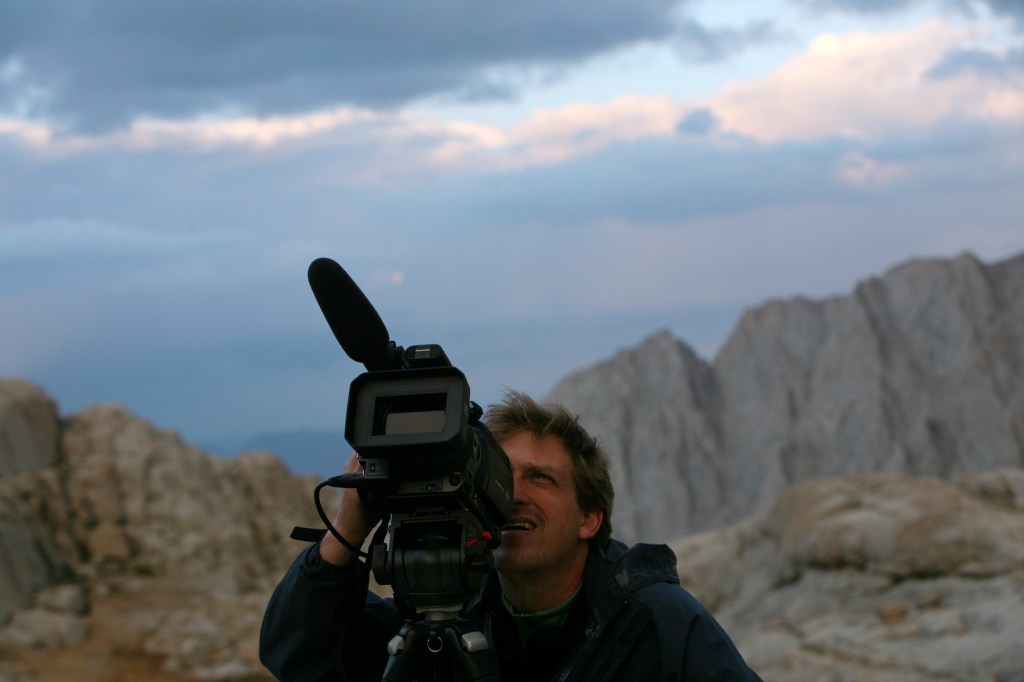
Filming during an expedition to summit Mt. Whitney for The New York Times. (Photo: Heidi Schumann for the New York Times.)
There’s a real joy in living somewhere so rich in natural beauty and ecological complexity, and in being able to pause, maybe pull out your phone, snap a photo, record a bird call, or look something up and start learning. If there’s one thread that has followed me throughout my life, even while living in many other places, it’s the sense that the world is filled with wonder, and that paying attention to it, learning from it, and staying curious about it is one of the things that makes life feel most meaningful.
California Curated grew out of that kind of crazy restlessness.
California feels like a living laboratory. The Sierra Nevada rise as a tilted slice of Earth’s crust, revealing granites that formed in fiery violence miles beneath the surface. The San Gabriels are growing a tiny, tiny bit each day as movement along the San Andreas system shears the landscape. Parts of today’s deserts were once seafloor, and the Central Valley held vast inland waters. The geology alone tells stories on a scale that is hard to fathom.
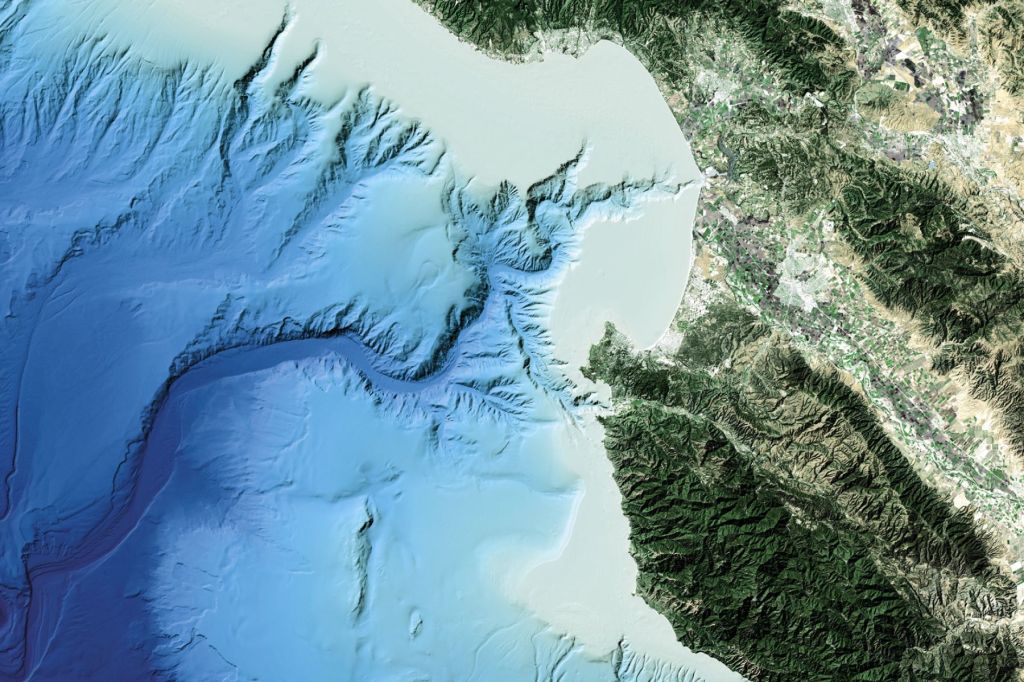
Monterey Canyon cuts into the continental shelf and descends more than 3,000 meters, forming one of the largest submarine canyons in North America. (MBARI)
And then there is the coast. California has roughly 840 miles of shoreline, and just offshore the seafloor drops away into one of the most extraordinary underwater landscapes on the planet. Monterey Canyon cuts into the continental shelf and descends more than 3,000 meters, forming one of the largest submarine canyons in North America. Because it begins so close to land, it has become a natural laboratory for ocean science. Institutions like Monterey Bay Aquarium Research Institute and Scripps Institution of Oceanography have spent decades studying the life and physics of these waters, leading to a much better understanding of how climate change is affecting the seas.
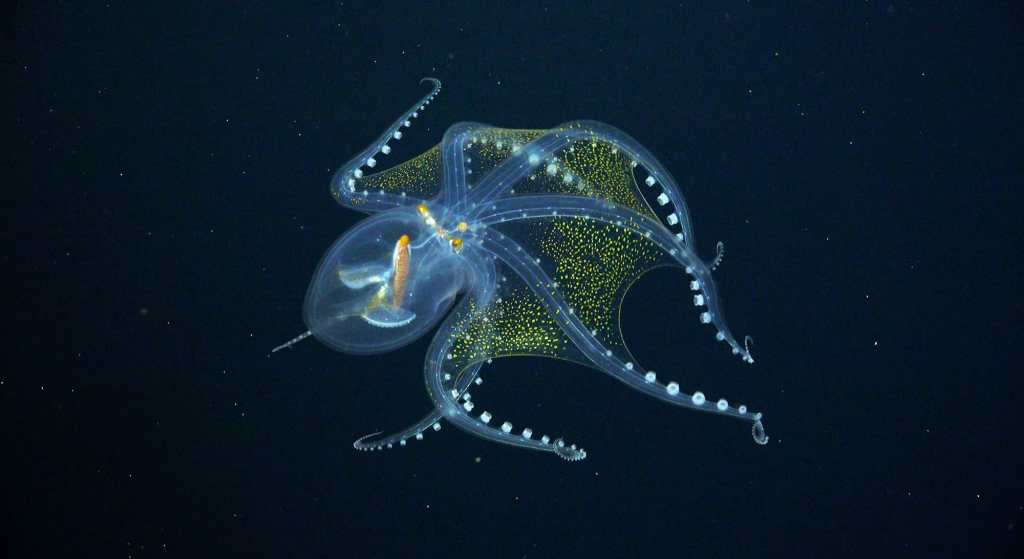
I’ve had the privilege of joining several major ocean expeditions around the world, including a submersible dive to more than 2,000 feet, as well as watching robotic vehicles descend into the twilight zone. On an expedition near Kiribati, I was one of the first people ever to witness a glass octopus floating like an alien in space. Experiences like these make it clear just how much of the deep ocean remains unknown. Few places, too, is that more true than off our own coast.
Glass octopus in the Phoenix Islands (Photo: Schmidt Ocean)
In the high Eastern Sierra, there is a supervolcano, a caldera, that once unleashed massive eruptions, blanketing much of the West in ash and reshaping the landscape we see today. You can not only still see its remnants up there, but you can luxuriate in hot springs that are heated by the same lingering geothermal energy beneath the surface. What could be better than being out in a place like that, and also understanding a little more about what you’re experiencing while you’re there?
That tension between wonder and ignorance is what drives this project.
Long Valley Caldera in the Eastern Sierra. (Photo: Erik Olsen)
California is rich in scientific discovery. Our universities are world-class. Our scientists and researchers are awash in Nobel prizes. California scientists have long shaped global conversations about health, biology, chemistry, physics, and on and on. Yet much of this work remains abstract, locked behind the expensive paywalls of scientific journals or lost in headlines that never quite connect back to the landscapes around us.
California Curated exists to close that gap.
The goal is not just to provide answers, but to make you look around differently. To give you enough context that the next time you hike a ridge, paddle a bay, or walk along a beach, you see a little more than before. Where does all that sand come from anyway? To spark the kind of curiosity that leads you to ask your own questions and even to seek your own answers.
I really don’t cover politics. I spent a few years doing that at ABC News in New York and quickly realized it wasn’t for me. Much of what fills our information feeds today is meant to provoke fear, anger, or to deliver a quick burst of dopamine, but it’s so often transient, fleeting, disposable. That isn’t what California Curated is about. I research and write these stories with the hope that they remain just as interesting and meaningful ten years from now as they are today.
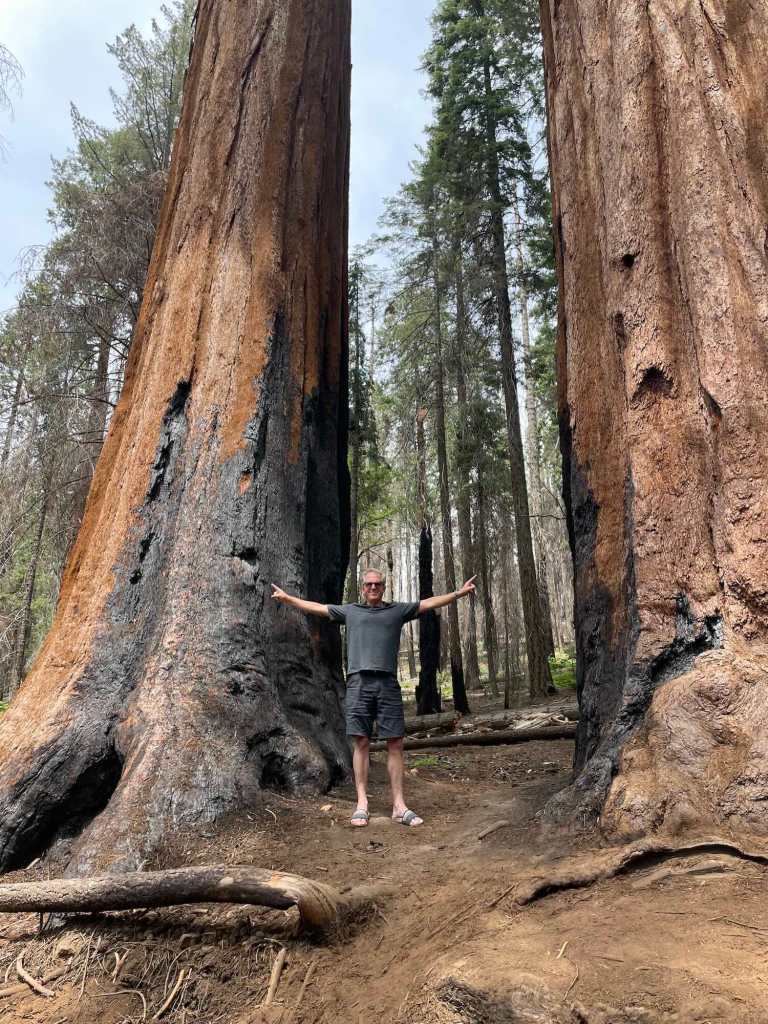
Burned sequoias. (Photo: Finley Olsen)
Every story begins with something small, a sighting, a conversation, an otherwise tangential paragraph in a bigger story, a nagging thought. From there, I get to dig in, read papers, call scientists, visit sites, and try to condense a complicated tumult of information into something more singular and compelling. It is a privilege to do that work. It’s fun.
That is what California Curated is about. Paying attention. Following the questions. And sharing what we find.
If there’s one thing our increasingly digital world has pushed me toward, it’s a desire to reconnect with the natural one. At a moment when AI, deepfakes, and synthetic media blur the line between real and artificial, I find myself drawn more strongly to things that are undeniably, stubbornly real. So I spend a lot of time turning away from screens and paying closer attention to the world around me, searching for things in nature that are touchable, tangible, and timeless.
It turns out California is full of those opportunities, and I want to call your attention to just one: a plant.
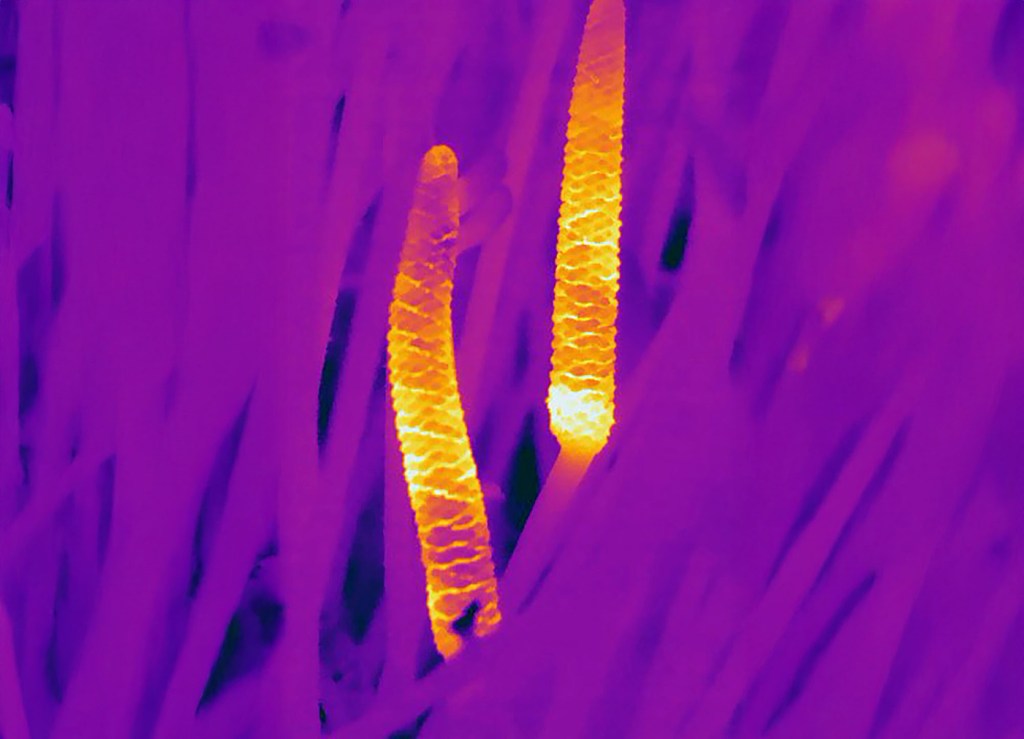
Thermal image of a male cone of the cycad Zamia furfuracea during pollen release. (Photo by Wendy Valencia-Montoya)
The New York Times ran a fascinating piece recently about a type of plant that is both ancient and highly unusual, and one that I suspect most people know very little about: cycads. Many cycads resemble palm trees at first glance, but that’s misleading. Cycads are only distantly related to palms, belonging instead to one of the oldest surviving lineages of seed plants on Earth, the gymnosperms. Palms, by contrast, are angiosperms, or flowering plants, making them evolutionary newcomers compared to cycads, which were already thriving long before flowers existed at all. In fact, cycads and palms diverged from a common ancestor approximately 300 to 350 million years ago. Their apparent similarity in form is not a sign of close kinship but a classic case of convergent evolution, in which unrelated organisms independently arrived at a similar form because of adaptation in similar environments.
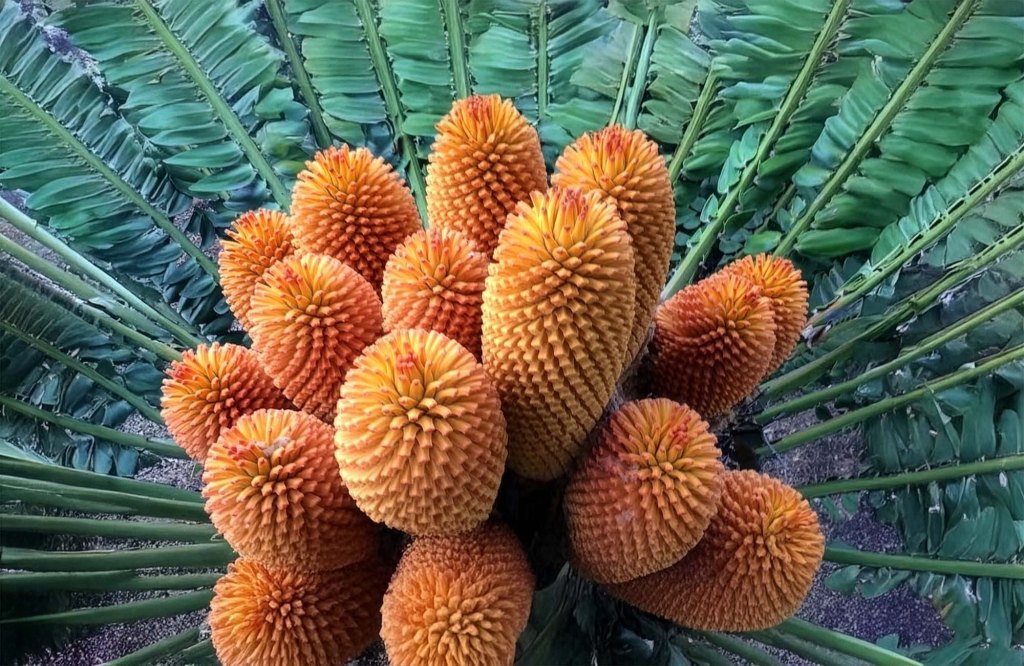
Cycad cone (Dioon edule) at Descanso Gardens. Built for an ancient world: Cycad cones are among the largest and oldest seed structures on Earth, evolving long before the first flower bloomed. Their rugged design helped cycads thrive alongside dinosaurs — and survive into the modern day. (Erik Olsen)
I have always found cycads really cool, in part because they are some of the closest living things we have to connect us to the era of the dinosaurs, and because they just look — and feel — incredibly bizarre compared to most other plants. And the Times piece made clear that we are still actively learning how they work, which I find fascinating.
The Times piece explains that cycads attract insect pollinators not through color or flowers, but by heating their cones at dusk and emitting infrared radiation. The process is known as thermogenesis and its rare in plants. (It turns out the female Skunk Cabbage, for example, warms up to melt away snow in the winter.) Specialized beetles, equipped with infrared-sensing antennae, detect this warmth and are guided from male cones to female cones (more on this in a sec) in a precisely timed sequence that ensures pollination. The relationship is so ancient, stretching back hundreds of millions of years, that some researchers now suspect heat-based signaling may lie at the very foundation of pollination, long before flowers evolved petals, color, and scent. However, this is controversial.
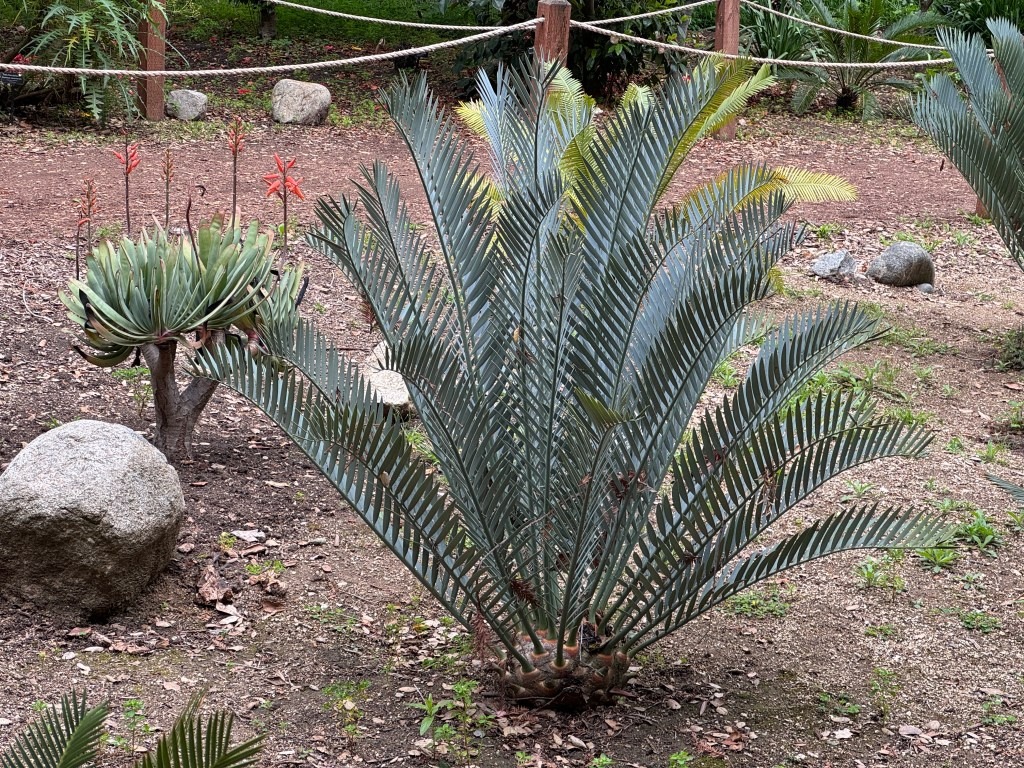
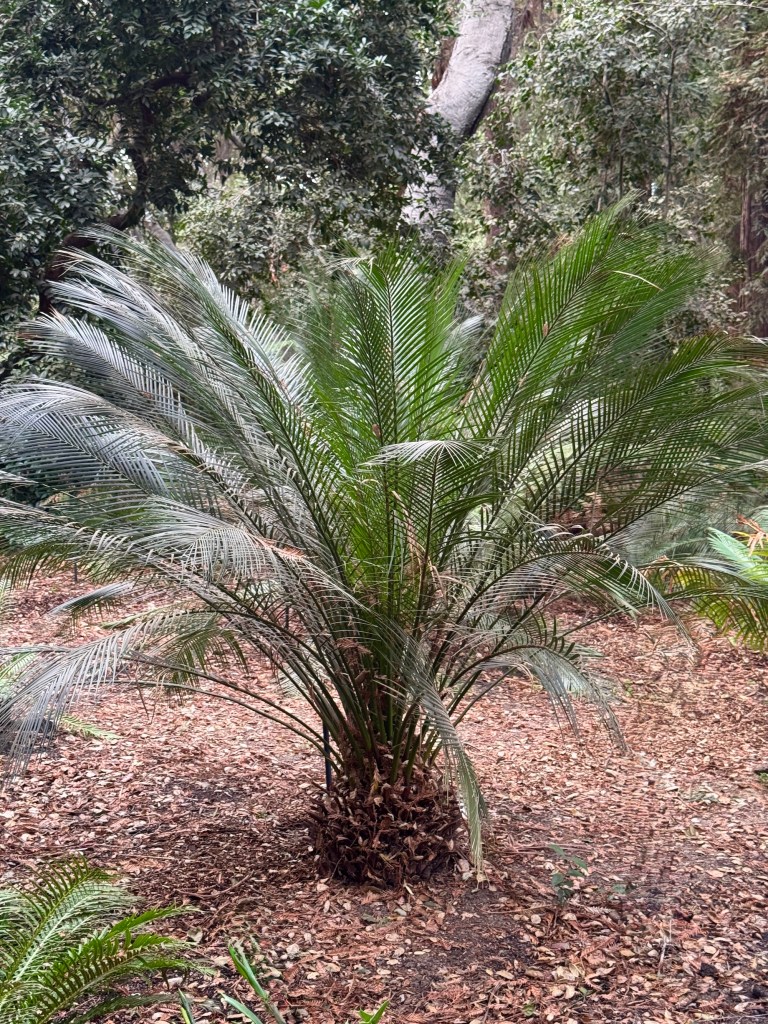
A Zamia cycad, one of roughly 66 cycad species growing at Descanso Gardens. (Photo: Erik Olsen)
Fascinating, right? That’s just the beginning.
My interest in cycads grew out of the many visits I have made to two major botanical gardens in Southern California that I return to again and again: Descanso Gardens and the Huntington. While The Huntington features a world-renowned, massive scientific collection of over 1,500 plants sprawling across a specialized hillside Cycad Walk, Descanso Gardens offers a boutique, immersive “Ancient Forest” experience that replicates a prehistoric Jurassic environment beneath a canopy of redwoods. Both are really excellent to walk through. And these collections, unlike most museum encounters you might encounter with ancient life (i.e. dinosaur bones), consist of live plants you can actually walk among and touch.
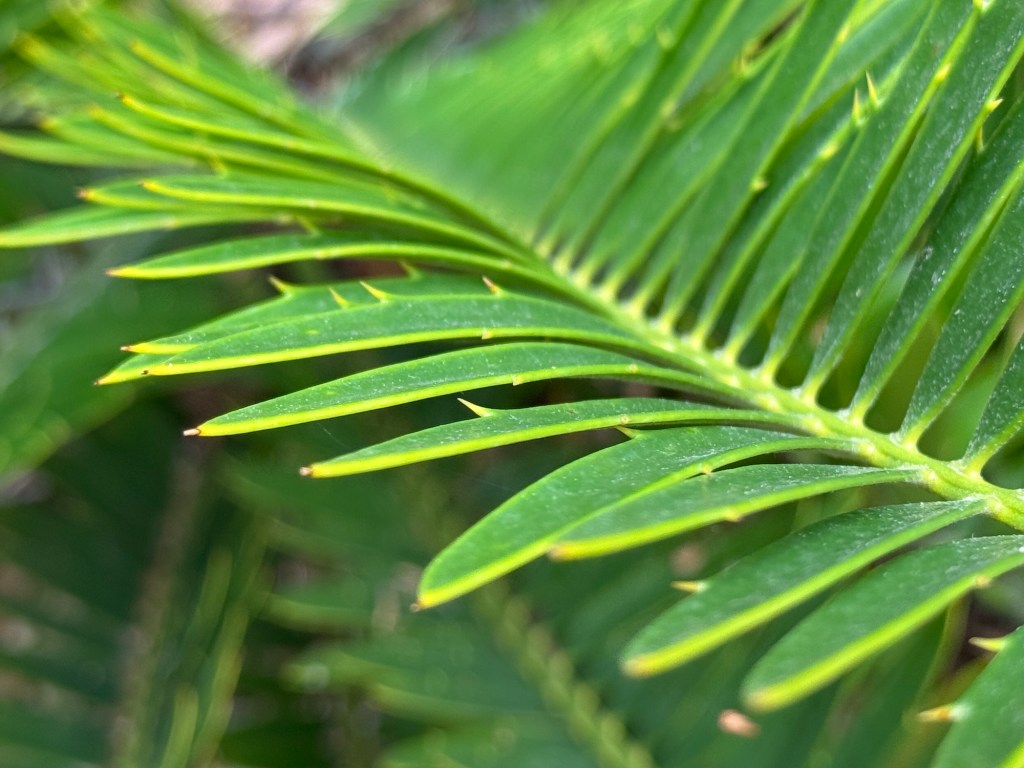
Cycad leaves are thick and very rigid, much different from most other plants. (Photo: Erik Olsen)
One of the most remarkable features of cycads is the toughness of their leaves. They are much stiffer and heavier than other plants. Almost plastic and fake. It turns out cycads invest in a thick, waxy cuticle that has some key benefits: it reduces water loss, reflects harsh sunlight, and protects them against insects and grazing animals. In other words, they are both survivors and a difficult meal, offering a key evolutionary advantage during a time when giant plant-eating dinosaurs roamed the Earth.
(That said, there is evidence that some dinosaurs actually did feed on cycads. There are telltale signs of cycad cellular material in dinosaur coprolites, or fossilized poop, but scientists don’t think it was common.)
And then there are the cones.
A cycad in full cone, displaying one of the largest and most unusual reproductive structures in the plant world. These massive cones can weigh many pounds, grow for months or even years, and play an active role in pollination, sometimes heating up and releasing strong odors to attract specialized insects. (Photo: Erik Olsen)
Cycad cones are among the strangest reproductive structures in the plant world. They are often massive, sometimes weighing many pounds, tightly packed, and so symmetrical they look almost engineered, as if they were 3D printed. They are also unusual because each individual cycad plant is strictly male or female, a condition known as dioecy. A male cycad will only ever produce pollen-bearing cones, while a female will only produce seed-bearing cones. Pines and firs, which are also gymnosperms, typically produce both male and female cones on the same plant. Cycads do not. There is no overlap between the sexes, no ability to self-fertilize, and no natural fallback mechanism if a partner is missing. (Cycads can be “bred” using off-shoots or pups, which is how many of the plants in these gardens came to be.)
That odd rigidity is on display at The Huntington in San Marino, which has one of the earth’s few specimens of Encephalartos woodii, often called “the loneliest plant in the world”. Only a single wild male was ever found, in South Africa in the late 1800s, and no female has ever been discovered (although scientists are using drones and AI to find one). There are a few other specimens alive today outside the Huntington, but they are all clones propagated from that one original plant. There’s a great Instagram from the Huntington on this.
So, the male cycad cones produce pollen and the female cycads make seeds. In several species of cycad, those seeds are big and glossy and plump and bright red or orange. They look temptingly like fruit, although remember that true fruits didn’t evolve until much later, with flowering plants. They do have a fleshy outer layer called a sarcotesta that looks and feels fruit-like, but it’s not. That’s weird.
In another bizarre twist, those seeds are loaded with potent toxins that are very dangerous to animals, including humans. They can damage the liver and the nervous system, and even kill. (So even though I urged you to touch the leaves, maybe don’t handle the seeds…or at least wash your hands afterwards, and certainly don’t try to cook and eat them.)
Cycad with large cone at Descanso Gardens in La Canada Flintridge. (Photo: Erik Olsen)
Why make a seed dressed in bright, attractive colors if it’s toxic? That question has long puzzled scientists. Bright colors usually signal an edible reward, but in cycads the fleshy outer layer of the seed, the sarcotesta, is not toxic and does contain nutrients. The toxins are concentrated deeper inside the seed, suggesting the sarcotesta may have served as a non-fruit mechanism for seed dispersal, encouraging animals to handle or partially consume the seed while the embryo itself remained protected.
Cycads are not indigenous to California. In nature, they are found almost entirely in tropical and subtropical regions, growing in parts of Africa, Australia, Asia, and the Americas, often in warm, stable landscapes that long predate California’s modern climate. That said, Southern California turns out to be an unusually good place to grow cycads. We have mild winters, dry summers, and a long growing season, which mimic the conditions in which cycads evolved across Africa, Australia, and parts of the Americas. That made the region attractive to collectors early on in the 20th century, when botanical gardens were expanding their missions from display to preservation.
“We are in a actually in a biodiversity hot spot here in California,” Sean C. Lahmeyer Associate Director, Botanical Collections, Conservation and Research at the Huntington told me. “Because of our climate in California we’re able to grow so many different types of plants. If you were to compare this garden to, say, one in England or at Kew, they have to grow things inside of greenhouses.”
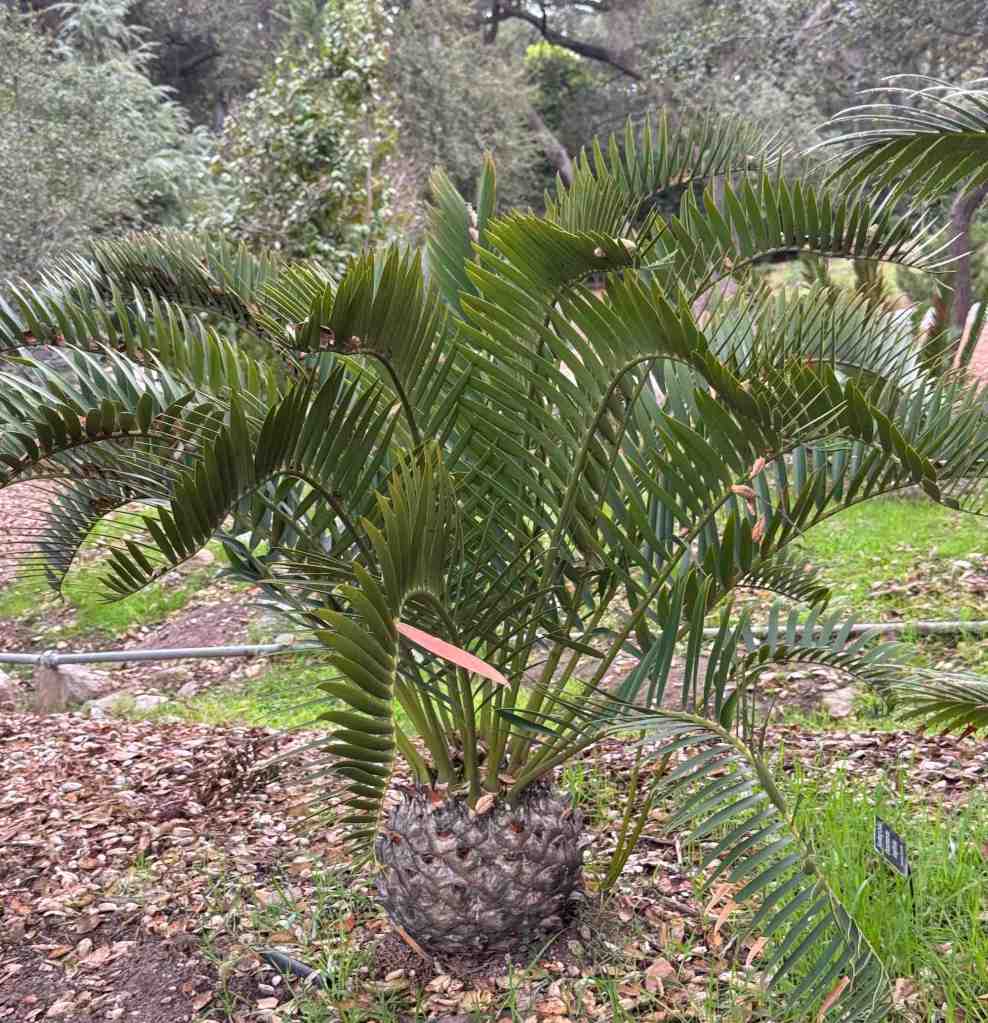
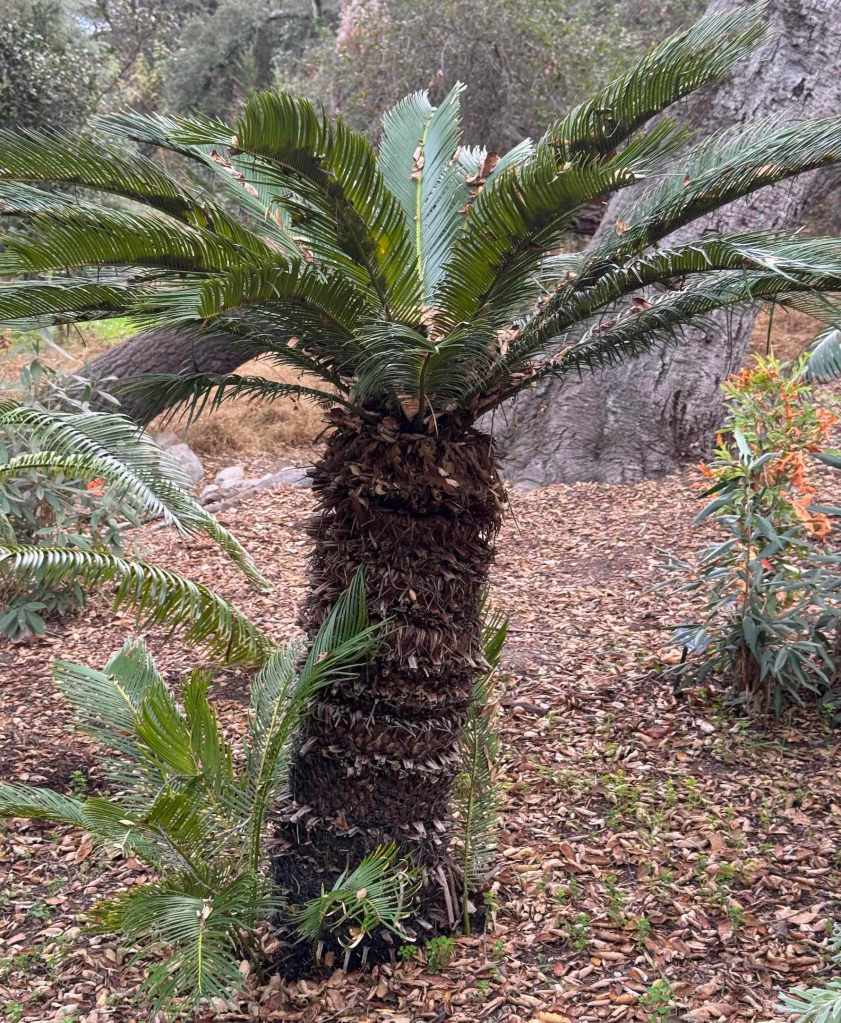
A cycad in the genus Dioon, an ancient seed plant often mistaken for a palm. Its stiff, feather-like leaves and armored trunk reflect a lineage that dates back more than 250 million years, long before flowers. (Photo: Erik Olsen)
At The Huntington, cycads arrived largely through early plant collecting and exchange. Henry Huntington’s gardeners were building a world-class botanical collection at the same time as explorers and botanists were (controversially) bringing rare plants back from around the globe. Over decades, the Huntington expanded its cycad holdings, recognizing both their horticultural appeal and their scientific importance. Today, it houses one of the most significant cycad collections anywhere, including that famous Encephalartos woodii.
Descanso Gardens’ story, meanwhile, is more personal and more recent. In 2014, local residents in La Canada Flintridge, Katia and Frederick Elsea donated their private cycad collection, more than 180 plants representing dozens of species, to the garden. Many were rare, endangered, or extinct in the wild. Descanso said yes, of course, and built the Ancient Forest around them, and suddenly one of the most important cycad collections in the country was open to the public in La Cañada Flintridge.
A mature cycad, its trunk layered with old leaf bases and topped by a crown of stiff, palm-like fronds. (Photo: Erik Olsen)
Cycads are not all rare. You may even notice certain common specimens growing in people’s yards around California. But precisely because they are so ancient and so different from most plants we’re used to, I’d urge you to see them in person at places like Descanso Gardens and The Huntington. Touch the leaves. Study the symmetry. Marvel at the massive cones. (Just don’t put anything in your mouth.) Take a moment to consider just how unusual these plants are. And if you feel the need to pull out your phone to learn more, go ahead, but then put it away and spend a little time with the plants themselves.
You can scroll endlessly through TikTok and Instagram for quick bursts of California’s beauty, but to truly sink into a subject, and to savor the craft of a great writer, you need a book. I’m an avid reader, and over the past decade I’ve dedicated a large section of my bookshelf to books about California: its wild side, its nature, and its scientific wonders.
There are surely many other books that could be included in this top ten list, but these are the finest I’ve come across in the years since returning to live in the state.They capture the extraordinary diversity of California’s landscapes and wildlife, found nowhere else on Earth, and many also explore issues and themes that hold deep importance for the state and its people. Although I’ve read some of these titles digitally, I love having many of them in print, because there are few things more satisfying than settling into a beach, a forest campsite, or a favorite chair at home with a beautifully made book in hand.
I first discovered Rosanna Xia’s work through her stunning exposé on the thousands of DDT barrels found dumped on the seafloor near Catalina Island. It remains one of the most shocking, and yet not technically illegal, environmental scandals in California’s history.
Her recent book, California Against the Sea: Visions for Our Vanishing Coastline, is a beautifully written and deeply reported look at how California’s coastal communities are confronting the realities of climate change and rising seas. Xia travels the length of the state, from Imperial Beach to Pacifica, weaving together science, policy, and personal stories to show how erosion, flooding, and climate change are already reshaping lives. What makes the book stand out is its relative balance; it’s not a screed, nor naïvely hopeful. It nicely captures the tension between human settlement — our love and need to be near the ocean — and the coast’s natural (and unnatural, depending on how you look at it) cycles of change.
Xia is at her best when exploring adaptation and equity. She reminds us that even if emissions stopped today, the ocean will keep rising, and that not all communities have equal means to respond. The stories of engineers, Indigenous leaders, and ordinary residents highlight how resilience and adaptation must be rooted in local realities. I was especially drawn to Xia’s account of the California Coastal Commission, a wildly controversial agency that wields immense power over the future of the shoreline. Yet it was the commission and its early champions, such as Peter Douglas, who ensured that California’s coast remained open and accessible to all, a decision I consider one of the greatest legislative achievements in modern conservation history.
Thoughtful, accessible, and rooted in the coast we all care about, California Against the Sea challenges us to ask a pressing question: how can we live wisely, and with perspective, at the edge of a changing world?
Kim Stanley Robinson’s The High Sierra: A Love Story is an expansive, heartfelt tribute to California’s most iconic mountain range. Because of the Sierra’s vast internal basins, which are missing from many of the world’s other great mountain ranges, Robinson argues they are among the best mountains on Earth. His point is hard to refute. He makes a convincing case that the Sierra Nevada may be the greatest range in the world, formed from the planet’s largest single block of exposed granite and lifted over millions of years into its dramatic present shape.
Blending memoir, geology (my favorite part of the book), and adventure writing, Robinson chronicles his own decades of exploration in the Sierra Nevada while tracing the forces — glacial, tectonic, and emotional, that shaped both the landscape and his own life.
Considered one of our greatest living science fiction writers (I’ve read Red Mars — long, but superb — and am currently reading The Ministry for the Future — the opening chapter is gripping and terrifying), Robinson might seem an unlikely guide to the granite heights of California. Yet reading The High Sierra: A Love Story reveals how naturally his fascination with imagined worlds extends into this very real one. The drama of the range, with its light, vastness, and sculpted peaks and basins, feels like raw material for his other universes.
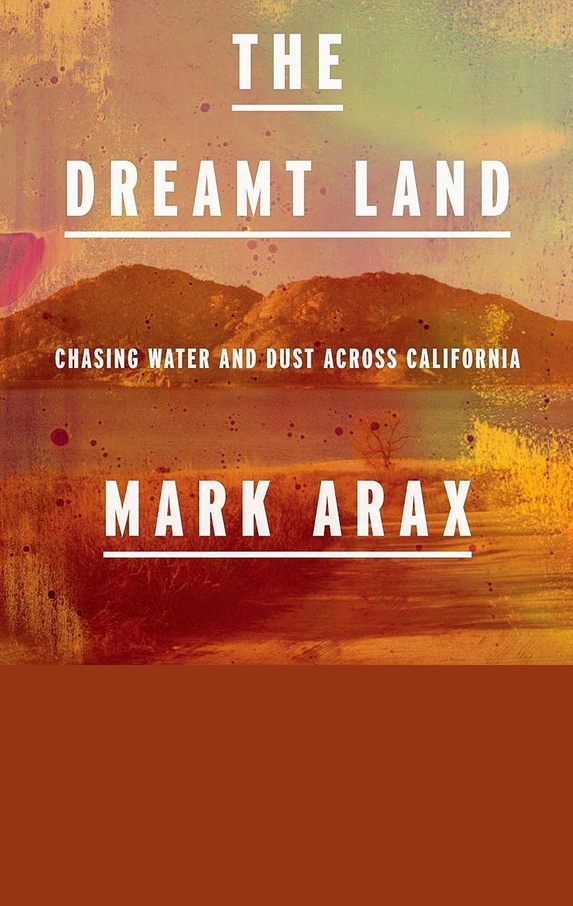
The Dreamt Land is a portrait of California’s Central Valley, where the control of water has defined everything from landscape to power (power in the form of hydroelectric energy and human control over who gets to shape and profit from the valley’s vast resources). Blending investigative journalism, history, and memoir, Arax explores how the state’s rivers, dams, and aqueducts turned desert into farmland and how that transformation came at immense ecological and social cost.
I’ve read several Arax books, but this one is my favorite. He’s one of the finest writers California has produced. He writes with passion and clarity, grounding his ideas in decades of firsthand experience with California’s land and water. His focus on the fertile Central Valley, where he grew up as a reporter and farmer’s son, gives the book both intimacy and authority, revealing how decisions about water shape not just the landscape but the people who depend on it. There are heroes and villains, plenty of the latter, and all of them unmistakably real. Yet Arax’s prose is so fluid and eloquent that you’ll keep reading not only for the story, but for the sheer pleasure of his writing.
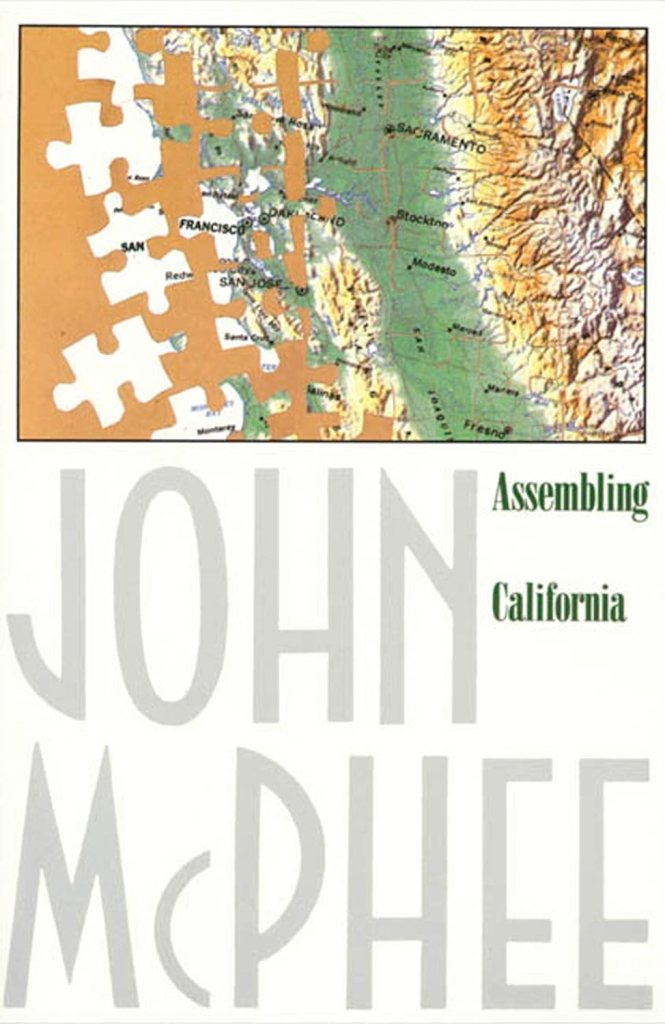
If you’re at all fascinated by California’s wild geology — and it truly is wild, just ask any geologist — this classic from one of the finest nonfiction writers alive is a must-read. McPhee takes readers on a geological road-trip through California, from the uplifted peaks of the Sierra Nevada to the fault-riven terrain of the San Andreas zone. He teams up with UC Davis geologist Eldridge Moores to explain how oceanic plates, island arcs, and continental blocks collided over millions of years to “assemble” the landmass we now call California. His prose is classic McPhee: clean, vivid, perhaps sometimes overly technical, as he turns terms like “ophiolite” and “batholith” into aspects of a landscape you can picture and feel.
What makes the book especially rewarding, especially for someone interested in earth systems, mapping, and the deep time, is how McPhee seamlessly links everyday places with deep-time events. You’ll read about gold-rush mining camps and vineyard soils, but all of it is rooted in tectonics, uplift, erosion, and transformation. I’ve gotten some of my favorite stories here on California Curated from the pages of this book. It can be ponderous at times, but you’ll not regret giving it a try.
Obi Kaufman’s California Lands Trilogy is one of the most visually stunning and ambitious projects in California natural history publishing. Beginning with The Forests of California, the first of three volumes that reimagine the state not through its highways or cities but through its living systems, Kaufman invites readers to see California as a vast and interconnected organism, a place defined by its natural rhythms rather than human boundaries. Each book is filled with delicate watercolor maps and diagrams by the author himself. The result is part art book and part ecological manifesto, a celebration of the interconnectedness of California’s natural world. Kaufman’s talents as an artist are breathtaking. If he ever offered his original watercolors for sale, I’d be among the first in line to buy them. Taken together, the series forms a panoramic vision of the state’s natural environments.
That said, Kaufman’s books can be dense, filled with data, maps, and cross-references that reward slow reading more than quick browsing. If I’m honest, I tend to dip in and out of them, picking them up when I’m bored or need a break from the latest political bombshell. Every page offers something to linger over, whether it’s a river system painted like a circulatory map or a meditation on the idea of rewilding. For anyone fascinated by California’s natural systems, all Kaufman’s Field Atlases are invaluable companions endlessly worth revisiting.
My first job out of college was with the Department of the Interior in Washington, D.C., by far by the nation’s largest land management agency. A big part of that work involved traveling to sites managed by Interior across the country. I came to understand just how vast America’s public lands are and how much of that expanse, measured in millions of acres, is under the care of the Bureau of Land Management (BLM).
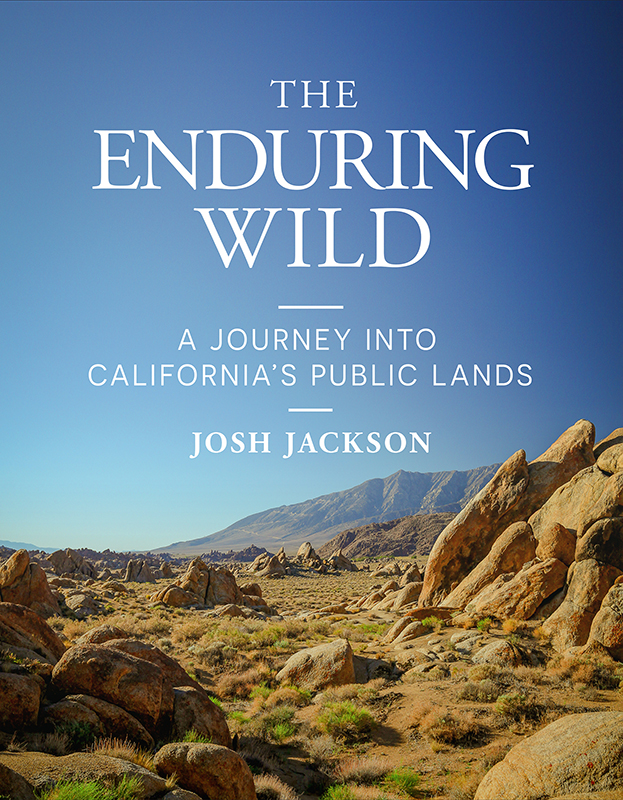
Josh Jackson takes readers on a road trip across California’s often overlooked public wilderness, focusing on the lands managed by the BLM, an agency once jokingly referred to as the Bureau of Livestock and Mining. He shows how these so-called “leftover lands” hold stories of geology, Indigenous presence, extraction, and conservation.
His prose and photography (he has a wonderful eye for landscapes) together invite the reader to slow down, look closely at the subtleties of desert mesas, sagebrush plains, and coastal bluffs, and reckon with what it means to protect places many people have never heard of. His use of the environmental psychology concept of “place attachment” struck a chord with me. The theory suggests that people form deep emotional and psychological bonds with natural places, connections that shape identity, memory, and a sense of belonging. As a frequent visitor to the Eastern Sierra, especially around Mammoth Lakes and Mono Lake, I was particularly drawn to Jackson’s chapter on that region. His account of the lingering impacts of the Mining Act of 1872, and how its provisions still allow for questionable practices today, driven by high gold prices, was eye-opening. I came away with new insights, which is always something I value in a book.
I should mention that I got my copy of the book directly from Josh, who lives not far from me in Southern California. We spent a few hours at a cafe in Highland Park talking about the value and beauty of public lands, and as I sat there flipping through the book, I couldn’t help but acknowledge how striking it is. Part of that comes from Heyday Books’ exceptional attention to design and production. Heyday also publishes Obi Kaufman’s work and they remain one of California’s great independent publishers. But much my appreciation for the book also comes from from Jackson himself, whose photographs are simply outstanding.
Get California wildlife gifts at our Etsy store. It helps support us!
What makes this book especially compelling is its blend of adventure and stewardship. Jackson doesn’t simply celebrate wildness; he also lays out the human and institutional connections that shape (and threaten) these public lands, from grazing rights to mining to climate-change impacts. Some readers may find the breadth of landscapes and stories a little ambitious for a first book, yet the richness of the journey and the accessibility of the writing make it a strong addition for anyone interested in California’s endless conflict over land use: what should be used for extraction and what should be preserved? While I don’t fully agree with Jackson on the extent to which certain lands should be preserved, I still found the book a wonderful exploration of that question.
Amy Tan’s The Backyard Bird Chronicles is a charming and unexpectedly personal journal of bird-watching, set in the yard of Tan’s Bay Area home. Tan is an excellent writer, as one would expect from a wildly successful novelist (The Joy Luck Club, among others). But she also brings a curiosity and wonder to the simple act of looking across one’s backyard. I loved it. Who among us in California doesn’t marvel at the sheer diversity of birds we see every day? And who hasn’t wondered about the secret lives they lead? A skilled illustrator as well as a writer, she studies the birds she observes by sketching them, using art as a way to closely connect with the natural world around her.
What begins as a peaceful retreat during the Covid catastrophe becomes an immersive odyssey of observation and drawing. Tan captures the comings and goings of more than sixty bird species, sketches their lively antics, as she reflects on how these small winged neighbors helped calm her inner world when the larger world felt unsteady.
My only quibble is that I was hoping for more scientific depth; the book is more of a meditation than a field study. Still, for anyone who loves birds, sketching, or the quiet beauty of everyday nature, it feels like a gentle invitation to slow down and truly look.
California is the most botanically diverse state in the U.S. (by a long shot), home to more than 6,500 native plant species, about a third of which exist nowhere else on Earth. Jared Farmer’s Trees in Paradise: A California History follows four key tree species in California: the redwood, eucalyptus, orange, and palm. Through these examples, Farmer reveals how Californians have reshaped the state’s landscape and its identity. It’s rich in scientific and historical detail. I have discovered several story ideas in the book for California Curated and learned a great deal about the four trees that we still see everywhere in the California landscape.
In telling the story of these four trees (remember, both the eucalyptus and the palm were largely brought here from other places), Farmer avoids easy sentimentality or harsh judgment, instead exploring how the creation of a “paradise” in California came with ecological costs and profoundly shaped the state’s identity. While the book concentrates on those four tree categories, its detailed research and insight make it a compelling read for anyone interested in the state’s environment, history, and the ways people shape and are shaped by land.
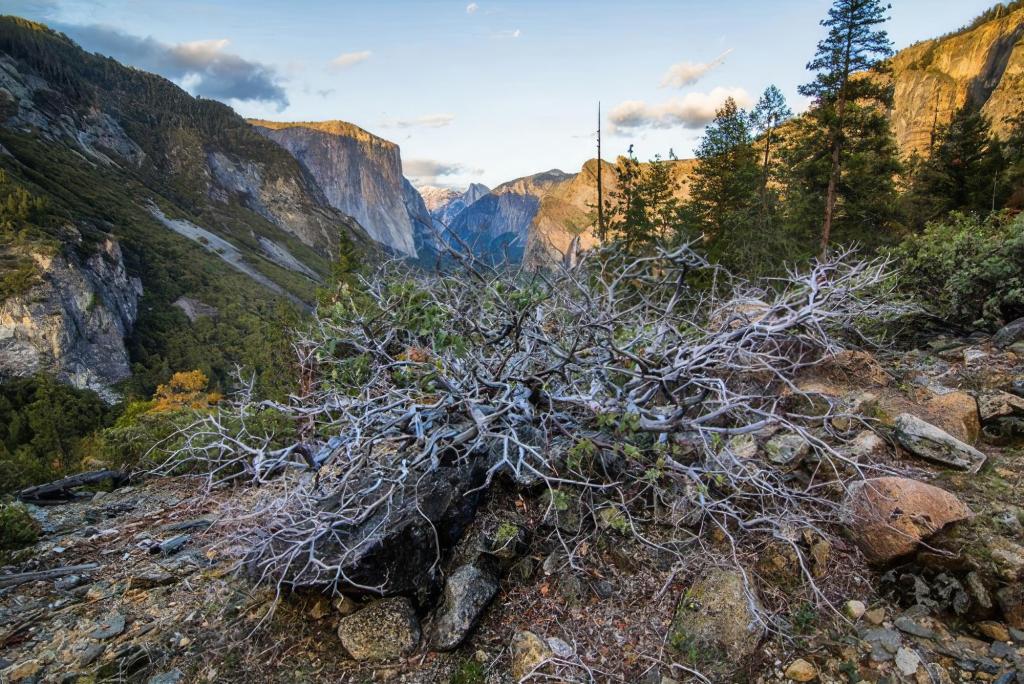
At Inspiration Point, Yosemite, sticky whiteleaf manzanita tends to occupy south slopes, greenleaf manzanita tends to occupy north slopes. (Photo: NPS)
As an avid hiker in Southern California, I’ve become a deep admirer of the chaparral that carpets so many of the hills and mountains in the region. When I was younger, I didn’t think much of these plants. They seemed dry, brittle, and uninviting, and they’d often leave nasty red scrapes on your legs if you ever ventured off-trail.
But I’ve come to respect them, not only because they’ve proven to be remarkably hardy, but because when you look closer, they reveal a kind of beauty I failed to appreciate when I was younger. I’ve written here and elsewhere about a few of them: the fascinating history of the toyon (Heteromeles arbutifolia), also known as California holly, which likely inspired the name Hollywood and is now officially recognized as Los Angeles’ native city plant; the incredible durability of creosote bush, featured in a recent Green Planet episode with David Attenborough; and the laurel sumac, whose taco-shaped leaves help it survive the region’s brutal summer heat.
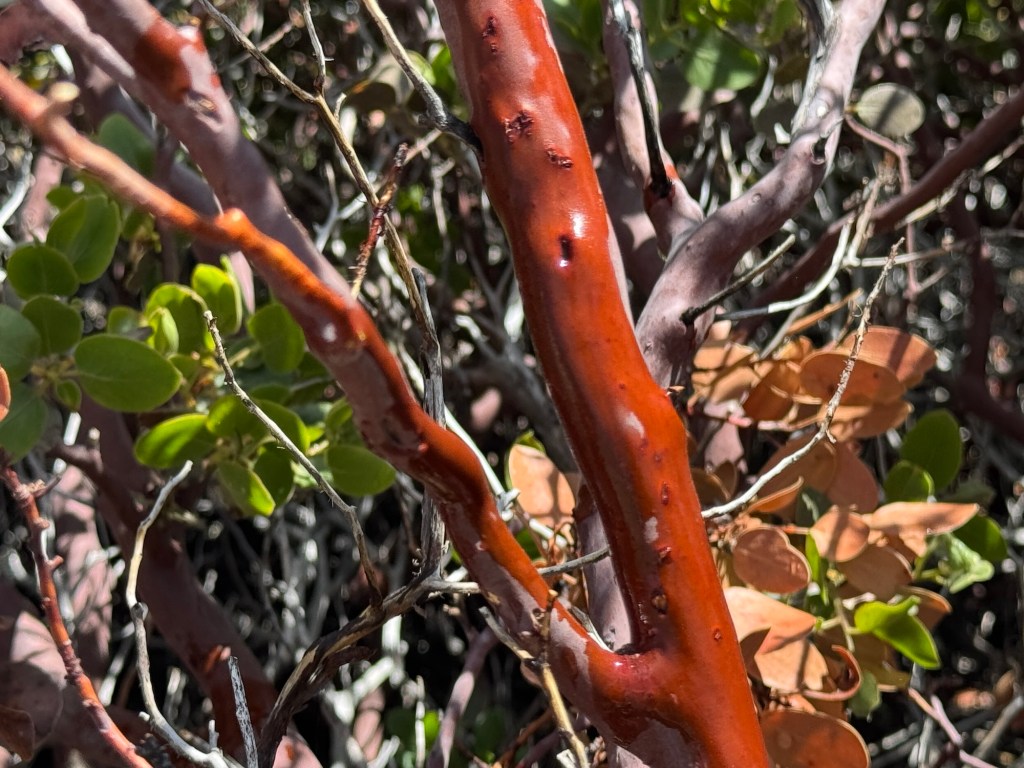
Manzanita branches in the high Sierra. The deep red colored bark enhanced by water. (Photo: Erik Olsen)
But there’s another plant I’ve come to admire, one that stands out not just for its resilience but for its deep red bark and often gnarled, sculptural form. It’s manzanita, sometimes called the Jewel of the Chaparral, and it might be one of the most quietly extraordinary plants in California.
If you’ve ever hiked a sun-baked ridge or wandered a chaparral trail, chances are you’ve brushed past a manzanita. With twisting, muscular limbs the color of stained terra cotta and bark so smooth it looks hand-polished, manzanita doesn’t just grow. It sculpts itself into the landscape, twisting and bending with the contours of hillsides, rocks, and other plants.
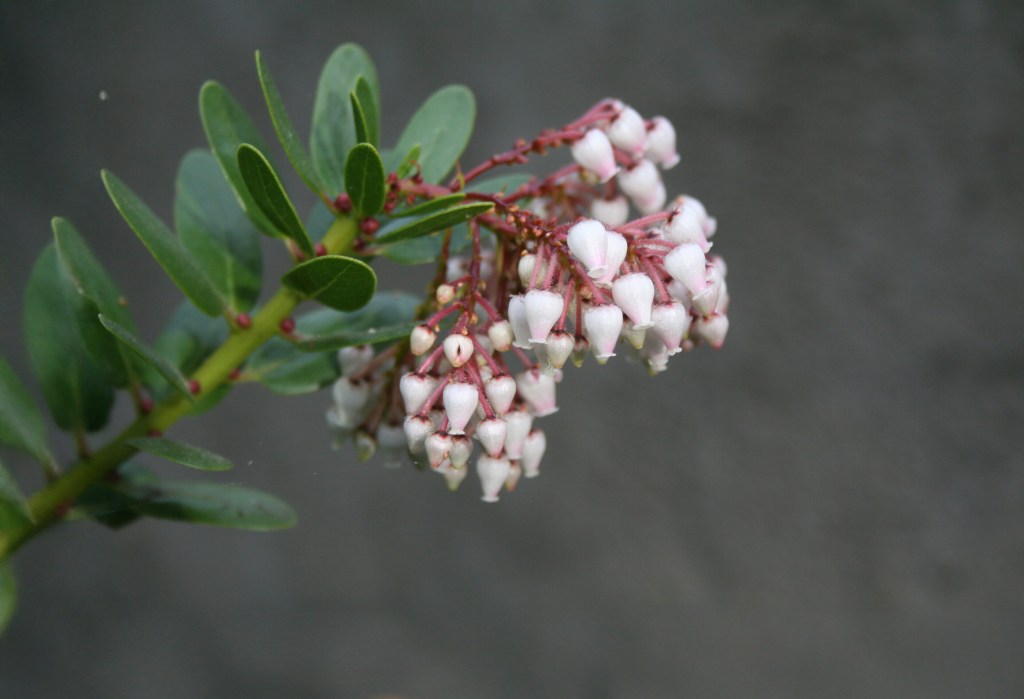
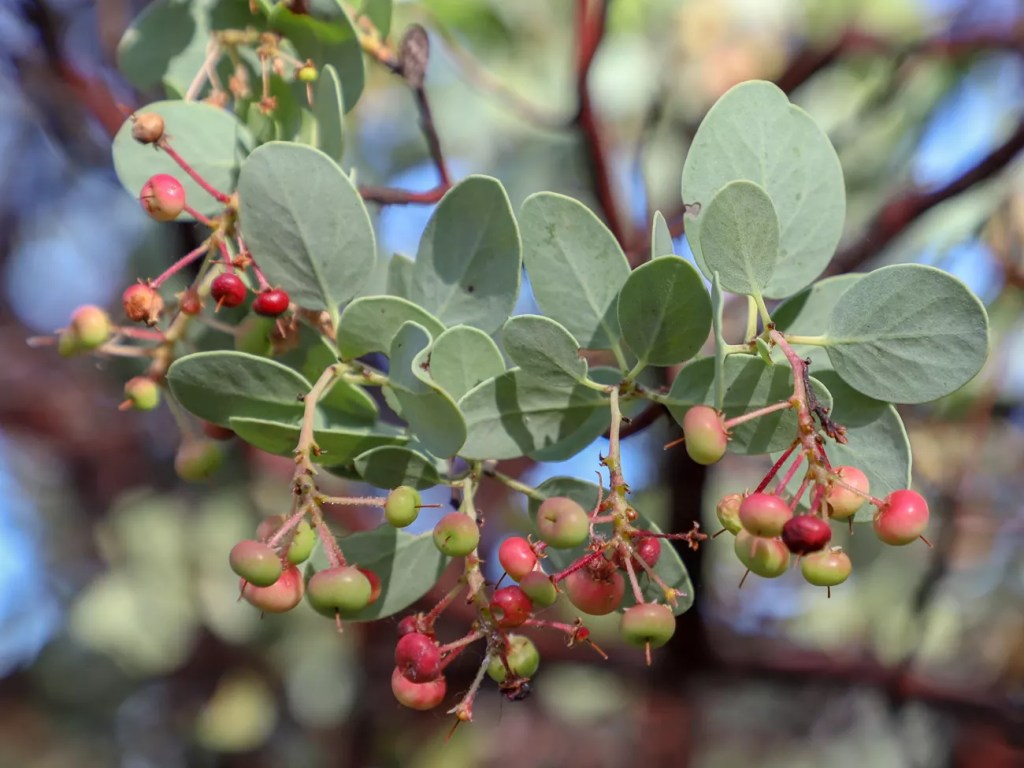
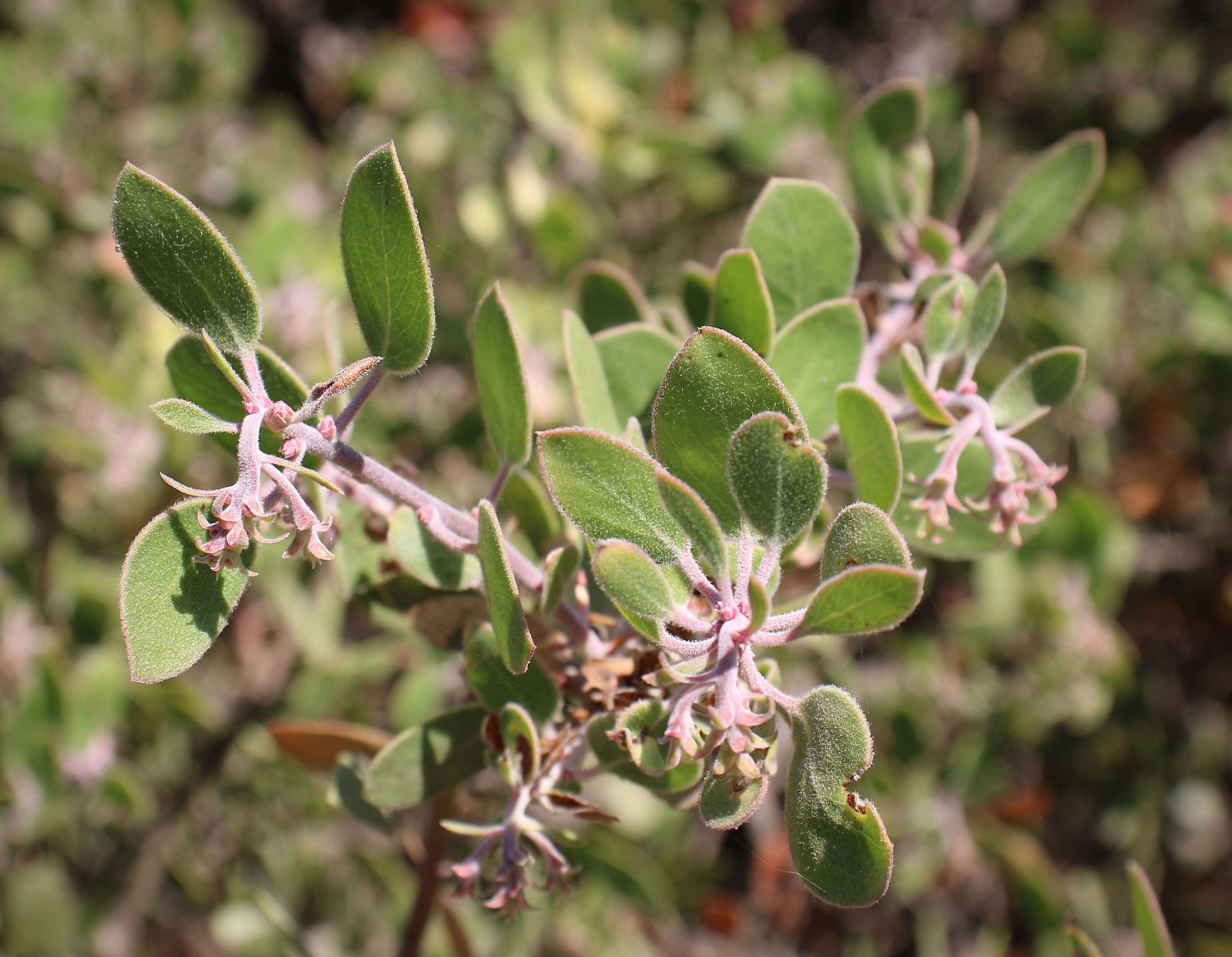
There are more than 60 species and subspecies of manzanita (Arctostaphylos), and most are found only in California. Some stand tall like small trees as much as 30 feet high; others crawl low along rocky slopes. But all of them are masters of survival. Their small, leathery leaves are coated with a waxy film to lock in moisture during the long dry seasons. They bloom in late winter with tiny pink or white bell-shaped flowers, feeding early pollinators when little else is flowering. By springtime, those flowers ripen into red fruits: the “little apples” that give the plant its name.
Manzanita flowers (Santa Barbara Botanical Garden)
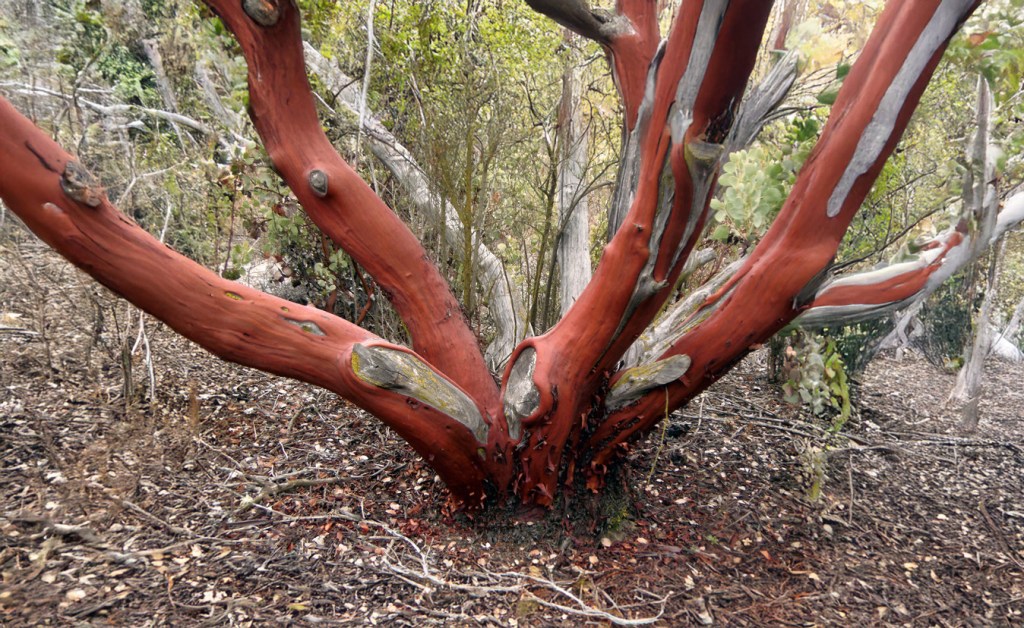
One of manzanita’s more fascinating traits is how it deals with dead wood. Instead of dropping old branches, it often retains them, letting new growth seal off or grow around the dead tissue. You’ll see branches striped with gray and red, or dead limbs still anchored to the plant. It’s a survival strategy, conserving water, limiting exposure, and creating the twisted, sculptural forms that make manzanita distinctive.
And fire is key to understanding manzanita’s world. Like many California plants, many manzanita species are fire-adapted: some die in flames but leave behind seeds that only germinate after exposure to heat or smoke. Others resprout from underground burls after burning. Either way, manzanita is often one of the first plants to return to the land after a wildfire, along with laurel sumac, stabilizing the soil, feeding animals (and people), and shading the way for the next wave of regrowth.
Manzanita’s astonishing red bark The reddish color of manzanita bark is primarily due to tannins, naturally occurring compounds that also contribute to the bark’s bitter taste and deter insects and other organisms from feeding on it. (Photo: NPS)
Botanically, manzanitas are a bit of a mystery. They readily hybridize and evolve in isolation, which means there are tiny populations of hyper-local species, some found only on a single hill or canyon slope. That makes them incredibly interesting to scientists and especially vulnerable to development and climate change.
Their red bark is the result of high concentrations of tannins, bitter compounds that serve as a natural defense. Tannins are present in many plants like oaks, walnuts and grapes, and in manzanitas, they make the bark unpalatable to insects and animals and help resist bacteria, fungi, and decay. The bark often peels away in thin sheets, shedding microbes and exposing fresh layers underneath. It’s a protective skin, both chemical and physical, built for survival in the dry, fire-prone landscapes of California.
Whiteleaf manzanita leaves and berries (Photo: NPS)
The plants still have mysteries that are being uncovered. For example, a new species of manzanita was only just discovered in early 2024, growing in a rugged canyon in San Diego County. Named Arctostaphylos nipumu to honor the Nipomo Mesa where it was discovered and its indigenous heritage, it had gone unnoticed despite being located just 35 miles from the coast and not far from populated areas. The discovery, announced by botanists at UC Riverside, highlights that unique species localization, as the plants are found sometimes growing only on a single ridge or in a specific type of soil. Unfortunately, this newly identified species is already at risk due to development pressures and habitat loss. According to researchers, only about 50 individuals are known to exist in the wild, making A. nipumu one of California’s rarest native plants, and a reminder that the story of manzanita is still unfolding, even in places we think we know well.
A new species of manzanita – A. nipumu – was discovered in San Diego County last year (2024), surprising reserachers. (Photo: UCR)
For hikers, photographers, and anyone with an eye for the unusual, manzanita is a cool plant to stumble upon. I will often stop and admire a particularly striking plant. I love when its smooth bark peels back in delicate curls, looking like sunburned skin or shavings of polished cinnamon. It’s hard to walk past a manzanita without reaching out to touch that smooth, cool bark. That irresistible texture may not serve any evolutionary purpose for the plant, but it’s one more reason to wander into California’s fragrant chaparral, where more species of manzanita grow than anywhere else on Earth.
The recent fires that swept through sections of Los Angeles will be remembered as some of the most destructive natural disasters in the city’s history—a history already marked by earthquakes, floods, and the potential for tsunamis. Yet, even a week later, confusion persists about what happened. Predictably, the finger-pointing has begun, with political opportunism often overshadowing rational analysis. This is, unfortunately, emblematic of our current climate, where facts are sometimes twisted to suit individual agendas. What we need now is a sound, scientific examination of the factors that led to this catastrophe—not just to better prepare for future disasters, but to deepen our understanding of the natural forces that shape our world.
One fact is indisputable: the fires were unusual in their ferocity and destruction. While studies, debates, and expert analyses following the disaster are inevitable, the immediate aftermath offers one clear conclusion—this fires were driven, in large part, by the extraordinary winds that descended on Los Angeles that night. On January 8th, Santa Ana winds roared through the chaparral-covered canyons of the San Gabriel Mountains like a relentless tidal wave of warm air. I witnessed this firsthand, standing outside on my porch as 100-foot trees bent under the gale forces, their massive branches snapped like twigs and flung into streets, homes, and vehicles. A few of them toppled entirely. Having lived in Los Angeles for most of my life, I can confidently say I had never experienced winds of this intensity.
Altadena Community Church. The church was a progressive Christian and open and affirming church and was the thirteenth church in the United Church of Christ that openly accepted LGBTQ people. (Erik Olsen)
The conditions were ripe for disaster. Southern California had not seen significant rainfall since May, leaving the chaparral bone dry. According to Daniel Swain, a climate scientist at UCLA and the University of California Agriculture and Natural Resources, this year marks either the driest or second-driest start to the rainy season in over a century. Dry chaparral burns quickly, and with the powerful winds driving the flames, the fire transitioned from a wildland blaze to an urban inferno. When the flames reached residential areas, entire neighborhoods of mostly wood-frame homes became fuel for the firestorm. In the lower foothills, it wasn’t just the vegetation burning—it was block after block of homes reduced to ash.
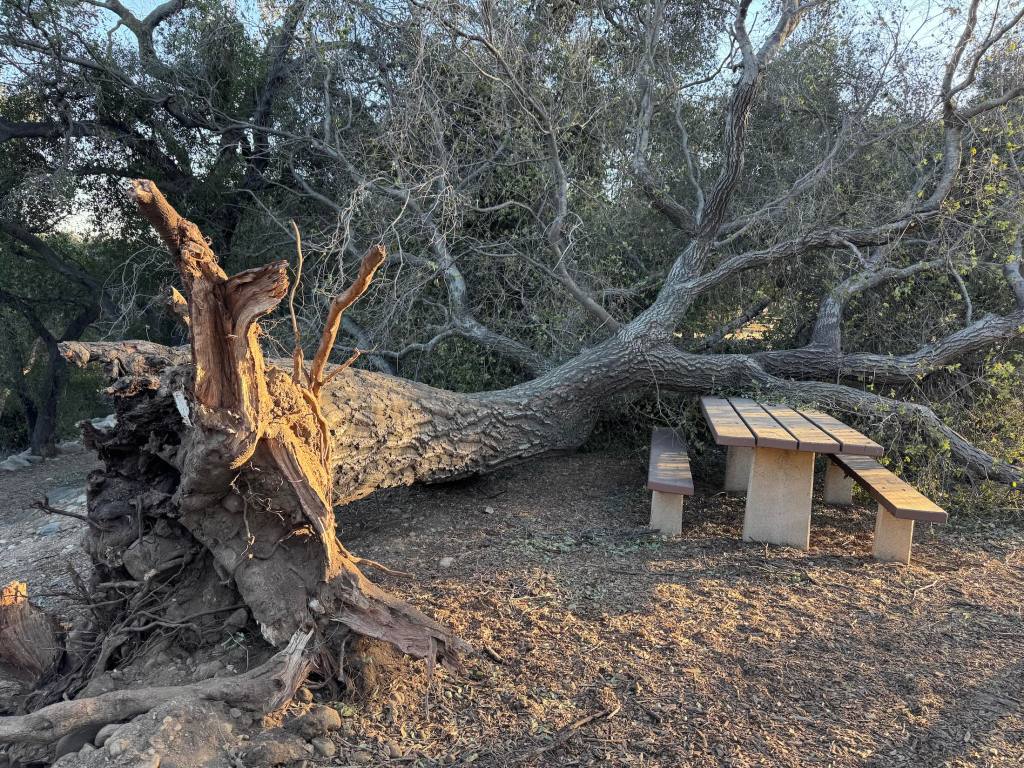
The wind was the true accelerant of this tragedy. Yesterday, I walked through the Hahamongna Watershed Park, formerly known as Oak Grove Park, renamed in the late 20th century to honor the Tongva people. In just 15 minutes, I passed more than a dozen massive oaks—centuries-old trees ripped from the ground, their intricate root systems exposed like nerves. These trees had withstood centuries of Southern California’s extremes—droughts, floods, heat waves—only to be toppled by this extraordinary wind event. Climate change undoubtedly influences fire conditions, but the immediate culprit here was the unrelenting, pulsating winds.
Downed oak tree after the Eaton Fire in Hahamonga watershed park (Erik Olsen)
Meteorologists had accurately predicted the intensity of this event, issuing warnings days in advance. Many residents took those warnings seriously, evacuating their homes before the fire reached its peak destruction. While the loss of 25+ lives is tragic, it is worth noting how many lives were saved by timely evacuations—a stark contrast to the devastating loss of life in the Camp Fire in Paradise a few years ago. Though the terrain and infrastructure of the two locations differ, the success of the evacuations in Los Angeles deserves recognition.
The winds of January 8th and 9th were exceptional, even by the standards of Southern California’s fire-prone history. They tore through canyons, uprooted trees, and transformed a wildfire into an urban disaster. Understanding these winds—their causes, their predictability, and their impacts—is essential not only to prevent future tragedies but to grasp the powerful natural forces that define life in Southern California. As the city rebuilds, let us focus on learning from this disaster, guided by science, reason, and a determination to adapt to a future where such events may become increasingly common.
Southern Californians know the winds by many names: the “devil winds,” the “Santa Anas,” or simply the harbingers of fire season. Dry, relentless, and ferocious, Santa Ana winds have long been a defining feature of autumn and winter in the region. This past season, they roared to life with exceptional vigor, whipping through Altadena and the Pacific Palisades, fanning flames that turned neighborhoods into tinderboxes. As these winds carried ash and terror across Southern California, a question lingered in the smoky air: what made this Santa Ana event so severe, and was climate change somehow to blame?
Home destroyed in Eaton Fire in Altadena (Erik Olsen)
To understand the recent fires, one must first understand the mechanics of the Santa Ana winds. They begin far inland, in the arid Great Basin, a sprawling high-altitude desert region encompassing parts of Nevada, Utah, and eastern California. Here, in the shadow of towering mountain ranges, a high-pressure system often takes hold in the fall and winter. This system is driven by cold, dense air that sinks toward the ground and piles up over the desert. When a contrasting low-pressure system develops offshore over the Pacific Ocean, it creates a steep pressure gradient that propels the cold air westward, toward the coast.
The high-pressure system over the Great Basin in January, which fueled the devastating fires in Los Angeles, was unusual in several ways. While these systems often dominate in the fall and winter, this particular event stood out for its intensity, prolonged duration, and timing. High-pressure systems in the Great Basin drive Santa Ana winds by forcing cold, dense air to sink and flow toward lower-pressure areas along the coast. In this case, the pressure gradient between the Great Basin and the coast was extraordinarily steep, generating winds of unprecedented strength. As the air descended, it warmed through compression, becoming hotter and drier than usual, amplifying fire risks in an already parched landscape.
Winds ravage a McDonalds in Altadena (Instagram)
As this air moves, it descends through mountain passes and canyons, accelerating and compressing as it drops to lower altitudes. This compression heats the air, causing it to become warmer and drier. By the time the winds reach urban areas like Altadena or the Pacific Palisades, they are hot, parched, and moving with hurricane-force gusts. The result is a perfect storm of conditions for wildfire: low humidity, high temperatures, and gale-force winds that can carry embers miles from their source.
In the case of the recent fires, these dynamics played out in particularly dramatic fashion. Winds clocked in at speeds exceeding 70 miles per hour, snapping tree branches and downing power lines—common ignition sources for wildfires.
The cold air over the Great Basin didn’t appear out of nowhere. Its origins lay in the Arctic, where polar air was funneled southward by a wavering jet stream. The jet stream, a high-altitude ribbon of fast-moving air that encircles the globe, has become increasingly erratic in recent years, a phenomenon many scientists attribute to climate change. The Arctic is warming faster than the rest of the planet, reducing the temperature difference between the poles and the equator. This weakening of the temperature gradient slows the jet stream, allowing it to meander in large, looping patterns. One such loop likely brought Arctic air into the Great Basin, setting the stage for the ferocious winds. While much is known about these patterns, it’s an emerging area of research with compelling evidence but not yet universal consensus.
As these winds swept across Southern California, they encountered vegetation primed for combustion. Years of drought, exacerbated by rising temperatures, had left the region’s chaparral and scrubland desiccated. When embers landed in this brittle fuel, the flames spread with devastating speed, aided by the winds that acted as bellows.
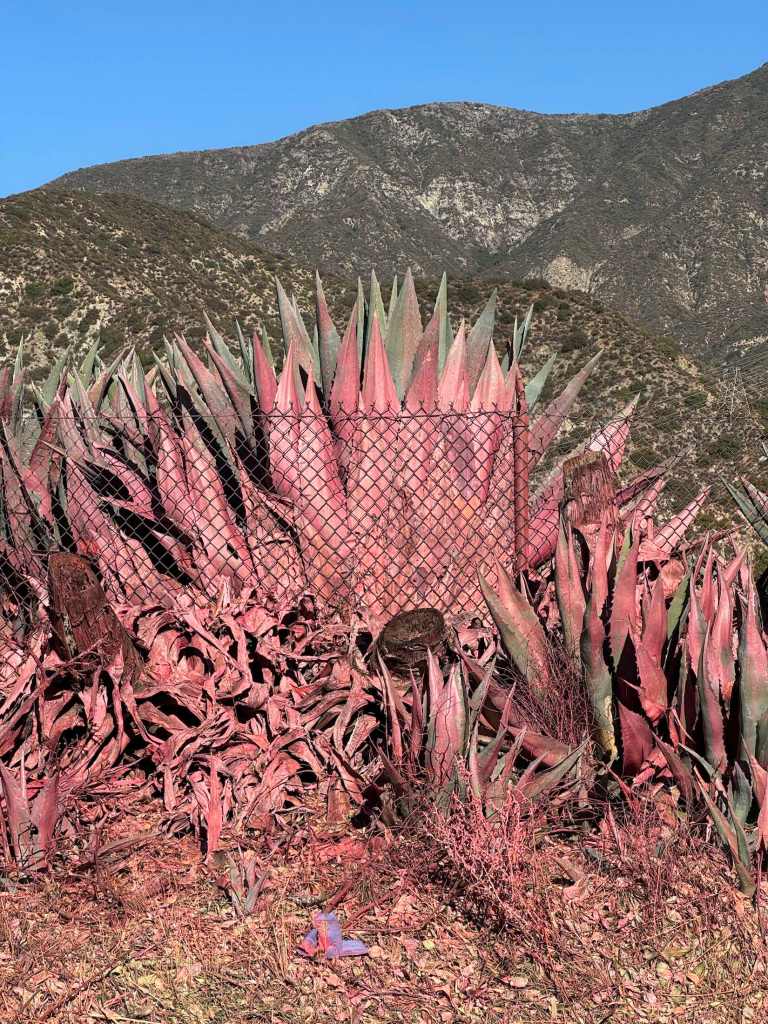
Agave covered in Phos Chek fire retardant (Erik Olsen)
While the direct cause of the fires was likely human—downed power lines or another ignition source—the conditions that turned a spark into an inferno were shaped by the interplay of natural and human-influenced factors. Climate change didn’t create the Santa Ana winds, but it likely amplified their effects. Warmer global temperatures have extended droughts, dried out vegetation, and created longer, more intense fire seasons. Meanwhile, the erratic jet stream may make extreme high-pressure events over the Great Basin more likely, intensifying the winds themselves.
This intersection of natural weather patterns and climate change creates a troubling new normal for Southern California. The Santa Ana winds, once a predictable seasonal nuisance, are now agents of destruction in an era of heightened fire risk. Their devilish power, long mythologized in Southern California lore, is now being reframed as a warning sign of a climate in flux.
As the smoke clears and communities begin to rebuild, the lessons from these fires are stark. Reducing fire risk will require not only better management of power lines and vegetation but also a reckoning with the larger forces at play. The Santa Anas will continue to howl, but their fury need not be a death sentence. To live in harmony with these winds, Californians must confront the deeper currents shaping their world. The question is whether we can act before the next spark ignites the next inferno.
In the sun-drenched orchards of late 19th-century California, a crisis was unfolding that threatened to decimate the state’s burgeoning citrus industry. The culprit was a small sap-sucking insect native to Australia called the cottony cushion scale (Icerya purchasi). First identified in New Zealand in 1878, this pest had made its way to California by the early 1880s, wreaking havoc on citrus groves. The pest is believed to have arrived in the United States through the global trade of plants, a common vector for invasive species during the 19th century. As horticulture expanded globally, ornamental plants and crops were frequently shipped between countries without the quarantine measures we have today. Once established in the mild climate of California, the cottony cushion scale found ideal conditions to thrive, spreading rapidly and wreaking havoc on the citrus industry.
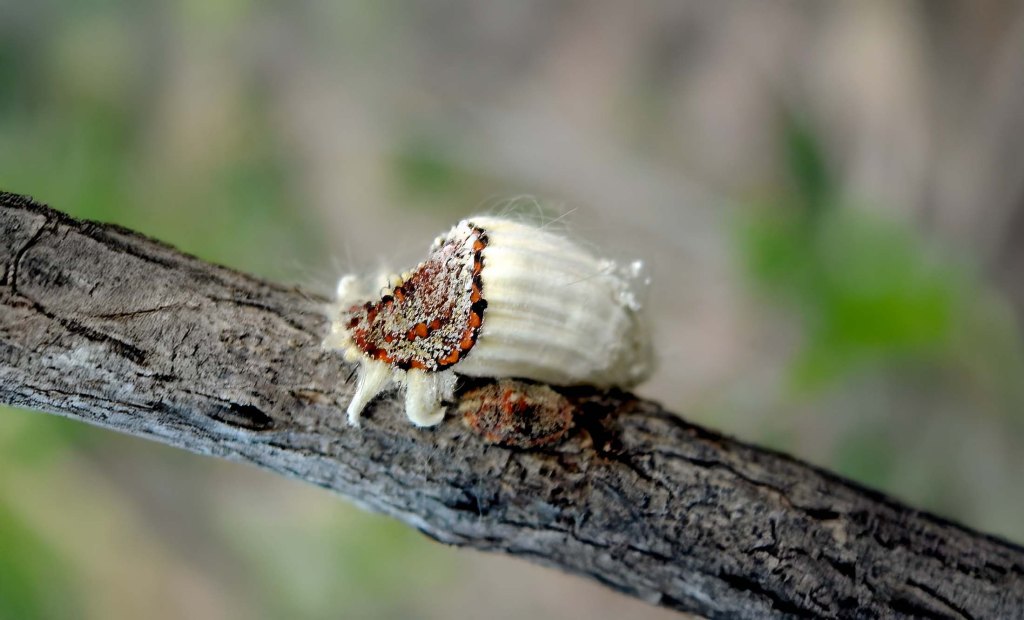
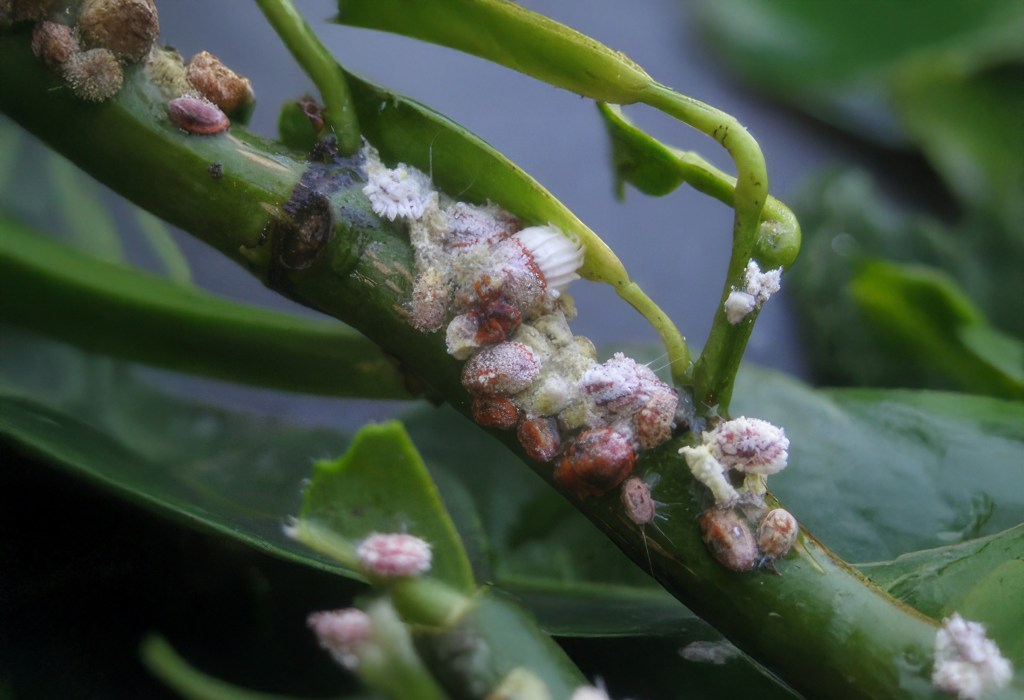
The cottony cushion scale infested trees with a vengeance, covering branches and leaves with a white, cotton-like secretion. This not only weakened the trees by extracting vital sap but also led to the growth of sooty mold on the honeydew excreted by the insects, further impairing photosynthesis. Growers employed various methods to combat the infestation, including washing trees with whale oil, applying blistering steam, and even detonating gunpowder in the orchards. Despite these efforts, the pest continued its relentless spread, causing citrus exports to plummet from 2,000 boxcars in 1887 to just 400 the following year. This decline translated to millions of dollars in lost revenue, threatening the livelihoods of countless farmers and jeopardizing the state’s citrus economy, which was valued at over $10 million annually (approx. $627 million in today’s dollars) during this period.
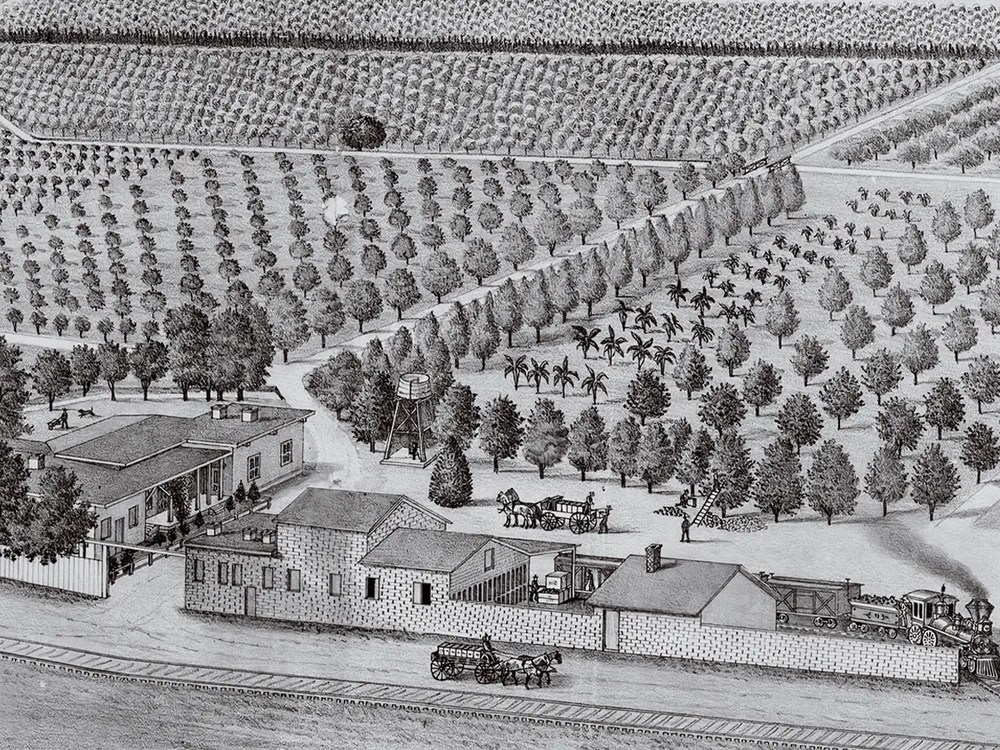
Orange and lemon groves, along with the home of citrus pioneer William Wolfskill, circa 1882. (California Historical Society)
In 1885, the independent growers across Southern California banded together in response to the insect invasion and the broader difficulties facing citrus growers at the time, forming the state’s first fruit cooperative, which would later become Sunkist. Despite their efforts, homemade mixtures of kerosene, acids, and other chemicals failed to halt the relentless spread of Icerya purchasi. The pests, with an endless supply of citrus trees to feed on, continued to multiply unchecked. New laws mandated growers to uproot and burn infected orange trees, but the devastation was widespread. By 1888, real estate values, which had soared by 600 percent since 1877, had plummeted.
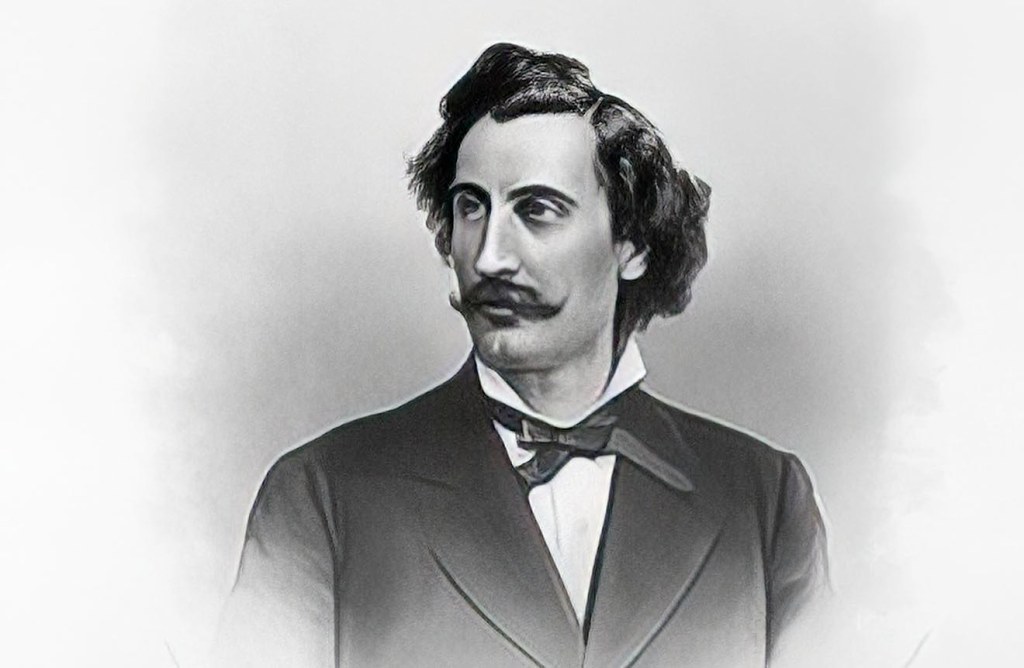
Enter Charles Valentine Riley, the Chief Entomologist for the U.S. Department of Agriculture. A visionary in the field of entomology, Riley had previously attempted biological control by introducing predatory mites to combat grape phylloxera in France, albeit with limited success. Undeterred, he proposed a similar strategy for the cottony cushion scale crisis. In 1888, Riley dispatched his trusted colleague, a fellow entomologist named Albert Koebele, to Australia to identify natural enemies of the pest.
The cottony cushion scale infestations were so severe that citrus trees appeared as though they had been coated with artificial snow, resembling Christmas flocking. Fruit production sharply declined, and many trees succumbed to the damage. (UC Riverside)
Interestingly, Valentine resorted to subterfuge to send an entomologist to Australia despite Congress’s objections. Lawmakers had prohibited foreign travel by the Agriculture Department to curb Riley’s frequent European excursions. However, Riley, well-versed in navigating political obstacles, cleverly arranged for an entomologist to join a State Department delegation heading to an international exposition in Melbourne.
Charles Valentine Riley (Wikipedia)
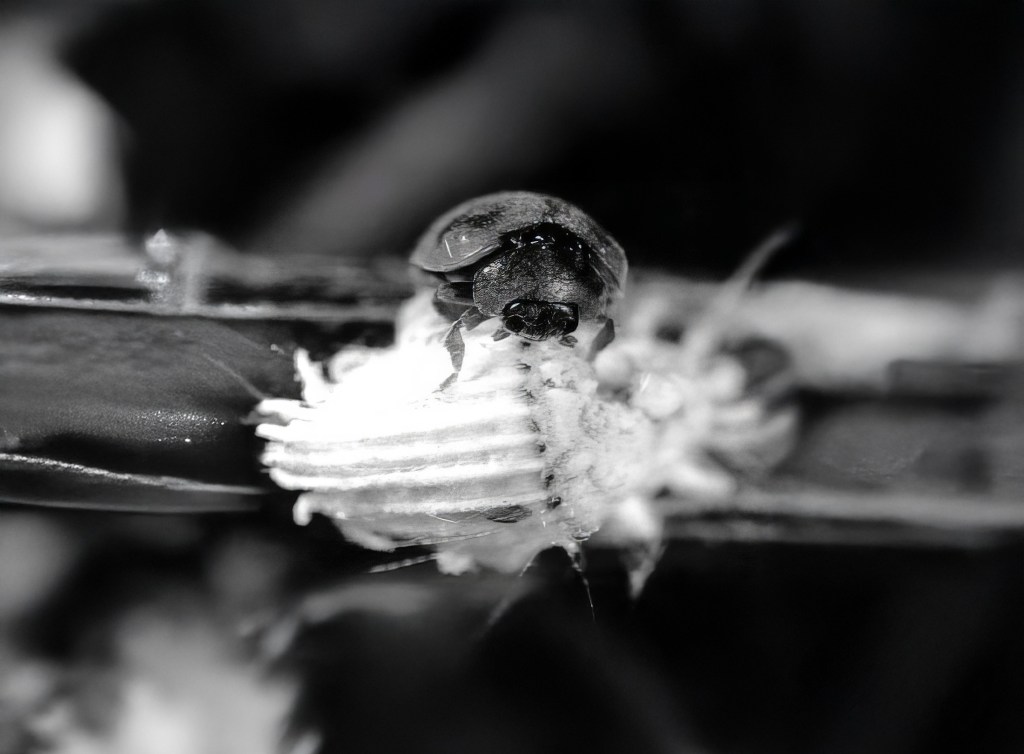
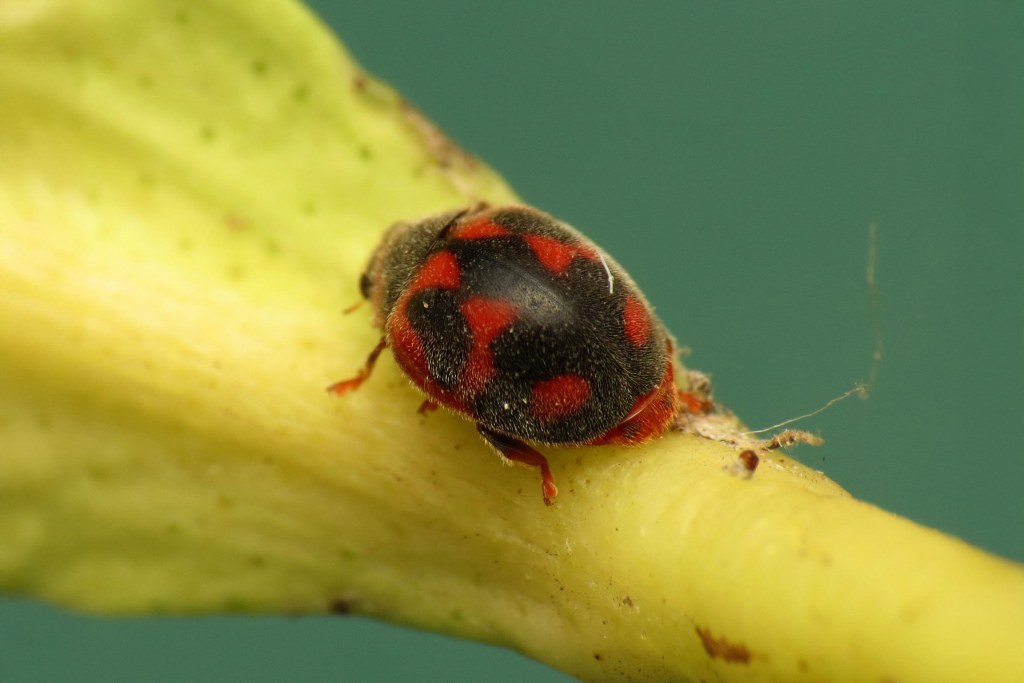
Koebele’s expedition proved fruitful. He worked with Australian experts to locate the pest in its rare habitats along with its natural enemies, including a parasitic fly and approximately the Vedalia beetle. The vedalia beetle (Rodolia cardinalis) is a small ladybird with a voracious appetite for the cottony cushion scale. Koebele collected and shipped hundreds of these beetles back to California. Upon their release into infested orchards, the vedalia beetles rapidly established themselves, feasting on the scales and reproducing prolifically. Within months, the cottony cushion scale populations had diminished dramatically, and by 1890, the pest was largely under control across the state. This 1888-89 campaign marked the beginning of biological control in the United States, a strategy involving the introduction of natural predators to manage invasive pests.
In her 1962 classic Silent Spring, Rachel Carson described the Novius beetle’s work in California as “the world’s most famous and successful experiment in biological control.”
Novius ladybug devours an Icerya. (UC Riverside)
This was far from the last time California employed such measures. It became a relatively common practice to introduce new species to control those that posed threats to the state’s economically vital crops, but not always successfully.
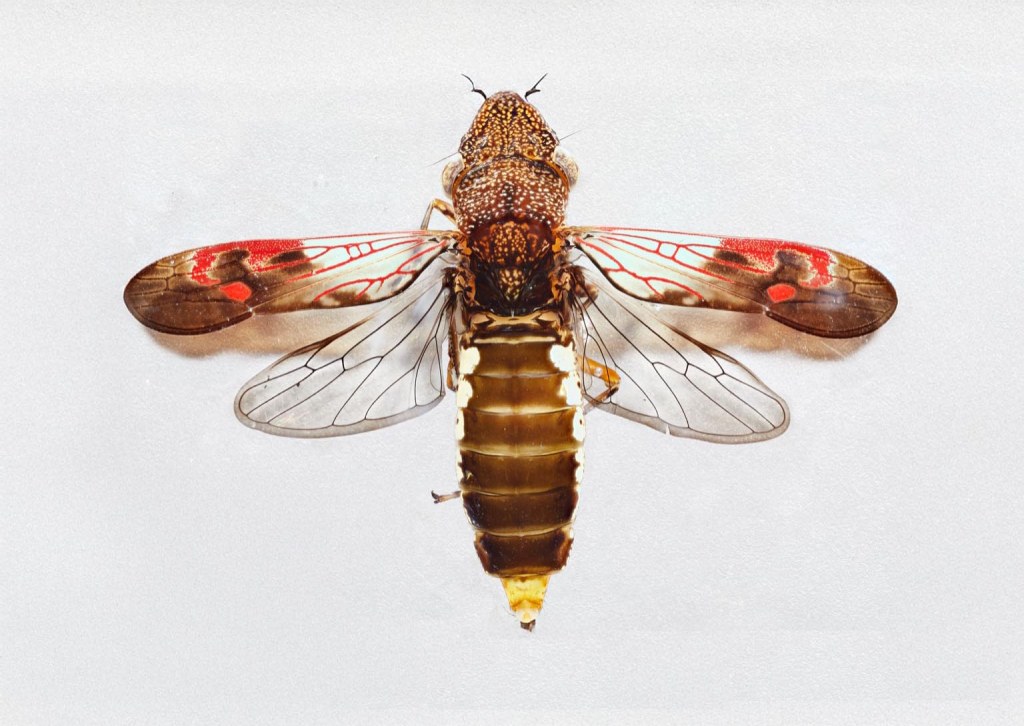
In the 1940s, California introduced parasitic wasps such as Trioxys pallidus to control the walnut aphid, a pest threatening the state’s walnut orchards. These tiny wasps laid their eggs inside the aphids, killing them and dramatically reducing infestations, saving the industry millions of dollars. Decades later, in the 1990s, the state faced an invasive glassy-winged sharpshooter, a pest that spread Pierce’s disease in grapevines. (Interesting fact: The glassy-winged sharpshooter drinks huge amounts of water and thus pees frequently, expelling as much as 300 times its own body weight in urine every day.) To combat this, scientists introduced Gonatocerus ashmeadi, a parasitic wasp that targets the pest’s eggs. This biological control effort helped protect California’s wine industry from devastating losses.
The Vedalia beetle (novius cardinalis) also known as the cardinal ladybird (Katja Schulz Wikipedia)
While the introduction of the vedalia beetle was highly effective and hailed as a groundbreaking success, biological control efforts are not without risks, often falling prey to the law of unintended consequences. Although no major ecological disruptions were recorded in the case of the cottony cushion scale, similar projects have shown how introducing foreign species can sometimes lead to unforeseen negative impacts. For example, the cane toad in Australia, introduced to combat beetles in sugarcane fields, became a notorious ecological disaster as it spread uncontrollably, preying on native species and disrupting ecosystems. Similarly, the mongoose introduced to control rats in sugarcane fields in Hawaii also turned predatory toward native birds. These examples highlight the need for meticulous study and monitoring when implementing biological control strategies. Today, regulatory frameworks require rigorous ecological assessments to minimize such risks.
The glassy-winged sharpshooter (Georgia Tech)
In the case of the Vedalia beetle, its precise and targeted predation led to a highly successful outcome in California. Citrus quickly became one of the state’s most dominant and profitable crops, helping to establish California as a leader in agricultural production—a position it continues to hold firmly today.
This groundbreaking use of biological control not only rescued California’s citrus industry but also established a global precedent for environmentally sustainable pest management. The success of the Vedalia beetle’s introduction showcased the power of natural predators in managing agricultural pests, offering an alternative to chemical pesticides. While pesticides remain widely used in California and across the world, this effort underscores the value of understanding ecological relationships, evolutionary biology, and the benefits of international scientific collaboration.
The story of the Vedalia beetle and the cottony cushion scale highlights human ingenuity and the effectiveness of nature’s own checks and balances. It stands as an early example of integrated pest management, a method that continues to grow and adapt to meet modern agricultural challenges. This successful intervention underscores the importance of sustainable practices in protecting both our food systems and the environment.
Here’s another article exploring some of California’s native plants. With a remarkable abundance of flora, California is home to over 6,500 species that play a vital role in shaping its diverse and iconic landscapes.
While hiking through the chaparral-covered hills of Southern California, from the Santa Monica to the San Bernardino and San Gabriel Mountains, you’ll encounter a rich variety of plants, each adapted to thrive in the harsh, dry conditions. Some of them will inevitably be foreign, as California’s mild Mediterranean climate is a perfect incubator for invasive species. But there are many indigenous plants (aka: endemic) that are touchstones of resilience, survivors that thrive here and help make the California chaparral ecosystem incredibly diverse and hearty. Among these is the laurel sumac, a stalwart of the coastal sage scrub, its waxy, aromatic leaves adapted to withstand the sun-baked hillsides and dry seasons that define so much of California’s natural landscape.
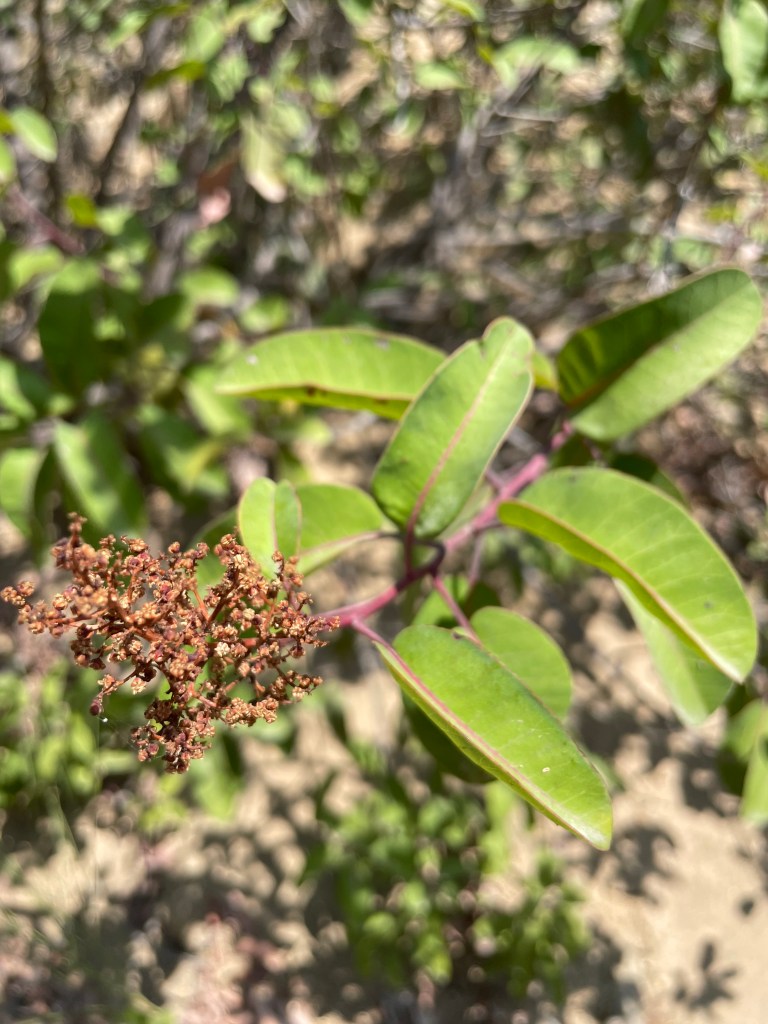
Laurel sumac (Malosma laurina) is a large, rounded evergreen shrub or small tree that can grow up to 20 feet tall and wide. When in bloom (late spring through summer), it gives off a strong, aromatic scent that can be very pleasant. The plant is native to southern California and Baja California, and is also found on the southern Channel Islands.
The plant is characterized by lance-shaped leaves with reddish veins and stems, adding a touch of color to the landscape. Laurel sumac has a unique ability to curl its leaves upward when exposed to extreme heat. This reduces the surface area exposed to the sun, minimizing water loss and preventing overheating. This trait has earned the plant the nickname “taco plant,” as its leaves often fold up like a taco shell. The clusters of small white flowers that bloom at the tips of its branches resemble lilac blossoms. After blooming, the small, creamy-white flowers develop into clusters of tiny, reddish-brown, berry-like fruits known as drupes. Each drupe contains a single seed and is covered with a thin, leathery skin.
From a hike in the San Gabriel Mountains. Most of the large clumpy bushes are Laurel sumac (Erik Olsen)
Although named “laurel” for its resemblance to bay laurel, laurel sumac actually belongs to the cashew family (Anacardiaceae). This family includes other well-known plants like poison oak, mango, and pistachio, highlighting the diverse characteristics within this botanical group. Laurel sumac is a vital species in the coastal sage scrub and chaparral ecosystems, offering habitat and food for wildlife. Its berries are particularly enjoyed by songbirds, including warblers. The plant blooms from late spring to early summer, producing clusters of small, white flowers that attract various pollinators, including bees and butterflies.
After flowering, it produces small, reddish-brown fruits that are a food source for birds and other wildlife. Interestingly, the shrub’s ability to thrive in the arid conditions of Southern California, combined with its distinctive red stems and fragrant blooms, make it a key contributor to the region’s natural beauty and biodiversity.
Laurel sumac along a trail in the San Gabriel Mountains (Erik Olsen)
The plant is amazingly drought-tolerant, with deep roots that allow it to access water during dry periods, making it a critical species in fire-prone environments. In fact, its ability to quickly resprout after fire is one reason it’s so prevalent in chaparral communities.
Laurel sumac is also notable for its role in traditional indigenous practices. Native peoples of the region used various parts of the plant for medicinal purposes, including treating skin conditions and respiratory ailments. Known as “ektii” by the Kumeyaay people, Laurel sumac held a prominent place in their traditional practices. The Kumeyaay are indigenous to the region that spans southern California, including San Diego County, and northern Baja California, Mexico. After childbirth, a tea or wash made from the plant was used for its soothing and medicinal properties, demonstrating its role in maternal care.
Laurel sumac with its fragrant white blossoms.
Beyond its medicinal uses, the sturdy wood of laurel sumac was utilized in construction, reflecting its practical value to the Kumeyaay. In a modern twist, the dried flower clusters of the plant have found a niche in model railroading, where enthusiasts often paint them and use them as miniature trees to create realistic landscapes.
Laurel sumac is just one of the many incredible native plant species that contribute to California’s rich biodiversity. Its abundance in some of the southern mountain ranges makes it a quintessential part of the landscape and an essential topic when exploring native flora. Stay tuned as we continue to highlight more species that make California such a unique and extraordinary place.