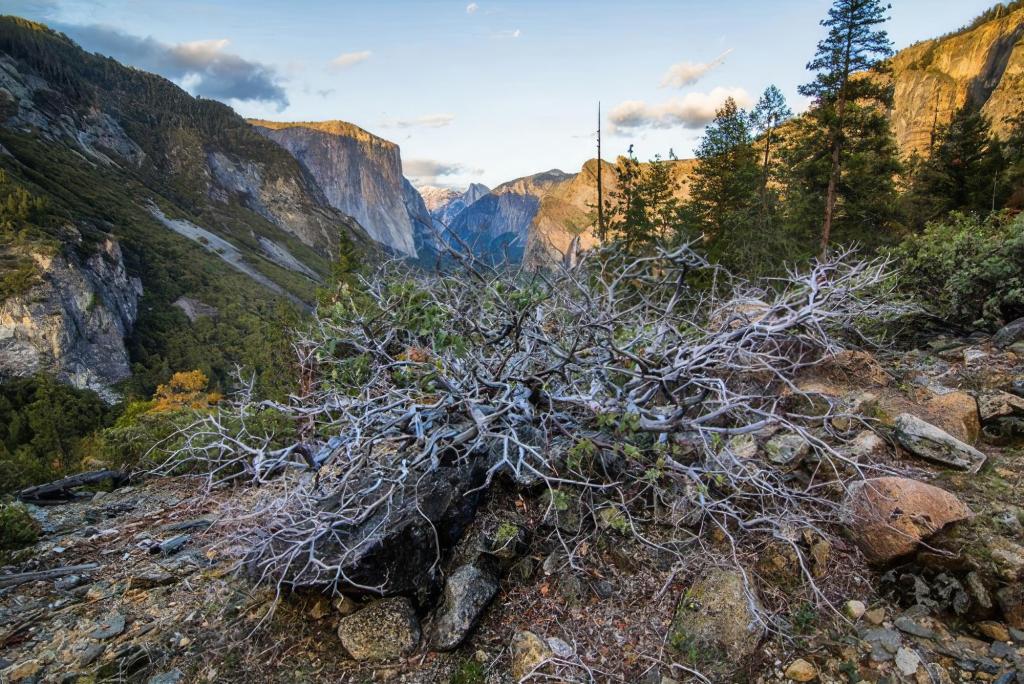
As an avid hiker in Southern California, I’ve become a deep admirer of the chaparral that carpets so many of the hills and mountains in the region. When I was younger, I didn’t think much of these plants. They seemed dry, brittle, and uninviting, and they’d often leave nasty red scrapes on your legs if you ever ventured off-trail.
But I’ve come to respect them, not only because they’ve proven to be remarkably hardy, but because when you look closer, they reveal a kind of beauty I failed to appreciate when I was younger. I’ve written here and elsewhere about a few of them: the fascinating history of the toyon (Heteromeles arbutifolia), also known as California holly, which likely inspired the name Hollywood and is now officially recognized as Los Angeles’ native city plant; the incredible durability of creosote bush, featured in a recent Green Planet episode with David Attenborough; and the laurel sumac, whose taco-shaped leaves help it survive the region’s brutal summer heat.
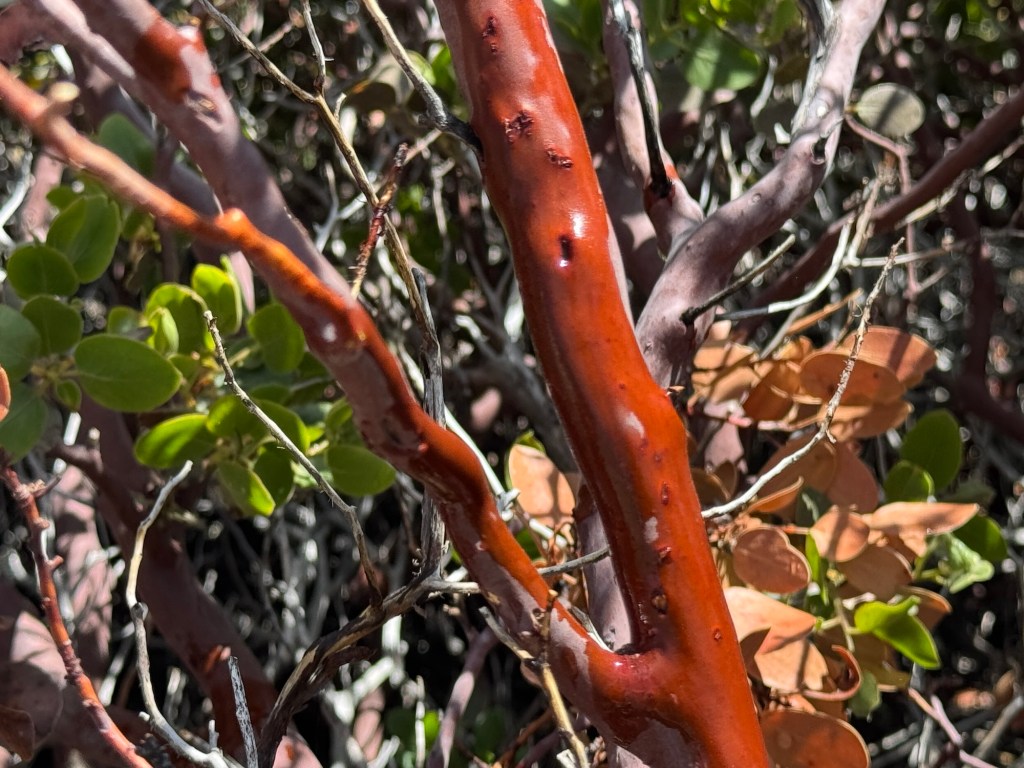
But there’s another plant I’ve come to admire, one that stands out not just for its resilience but for its deep red bark and often gnarled, sculptural form. It’s manzanita, sometimes called the Jewel of the Chaparral, and it might be one of the most quietly extraordinary plants in California.
If you’ve ever hiked a sun-baked ridge or wandered a chaparral trail, chances are you’ve brushed past a manzanita. With twisting, muscular limbs the color of stained terra cotta and bark so smooth it looks hand-polished, manzanita doesn’t just grow. It sculpts itself into the landscape, twisting and bending with the contours of hillsides, rocks, and other plants.

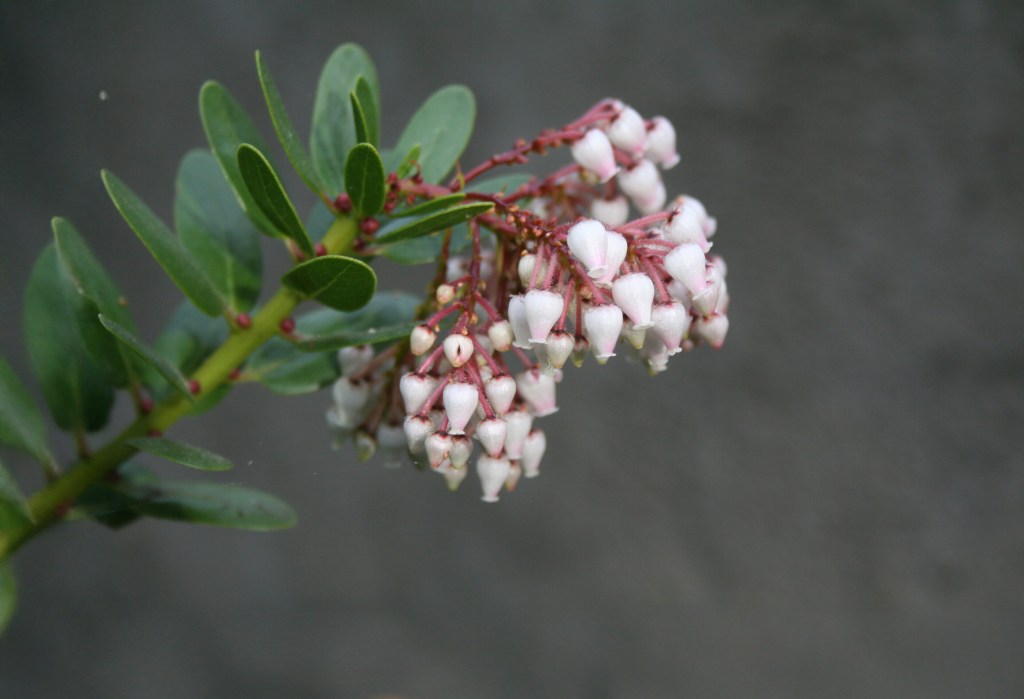
There are more than 60 species and subspecies of manzanita (Arctostaphylos), and most are found only in California. Some stand tall like small trees as much as 30 feet high; others crawl low along rocky slopes. But all of them are masters of survival. Their small, leathery leaves are coated with a waxy film to lock in moisture during the long dry seasons. They bloom in late winter with tiny pink or white bell-shaped flowers, feeding early pollinators when little else is flowering. By springtime, those flowers ripen into red fruits: the “little apples” that give the plant its name.
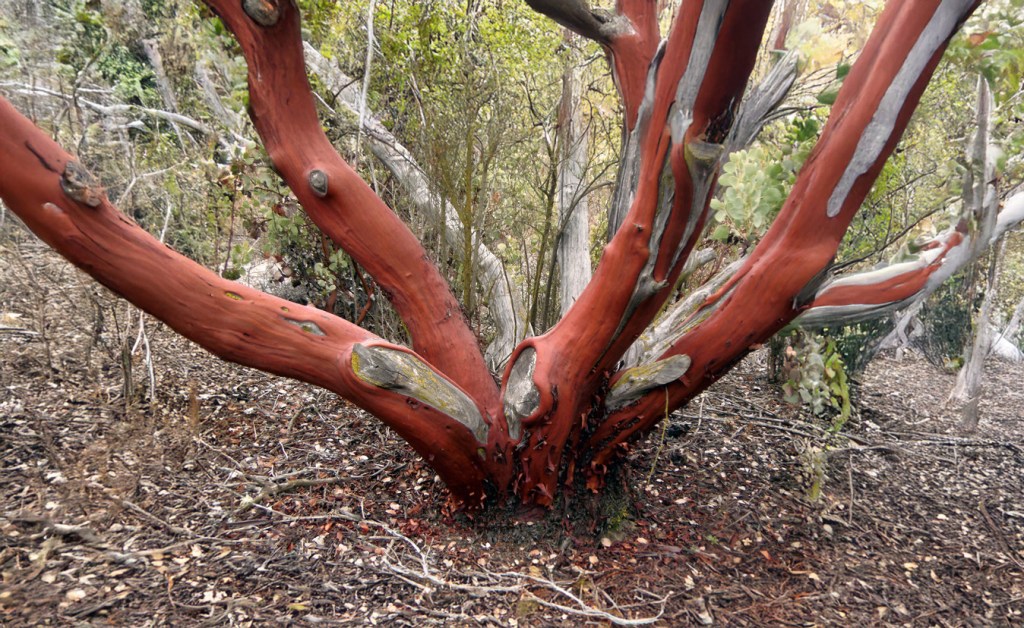
One of manzanita’s more fascinating traits is how it deals with dead wood. Instead of dropping old branches, it often retains them, letting new growth seal off or grow around the dead tissue. You’ll see branches striped with gray and red, or dead limbs still anchored to the plant. It’s a survival strategy, conserving water, limiting exposure, and creating the twisted, sculptural forms that make manzanita distinctive.
And fire is key to understanding manzanita’s world. Like many California plants, many manzanita species are fire-adapted: some die in flames but leave behind seeds that only germinate after exposure to heat or smoke. Others resprout from underground burls after burning. Either way, manzanita is often one of the first plants to return to the land after a wildfire, along with laurel sumac, stabilizing the soil, feeding animals (and people), and shading the way for the next wave of regrowth.
Botanically, manzanitas are a bit of a mystery. They readily hybridize and evolve in isolation, which means there are tiny populations of hyper-local species, some found only on a single hill or canyon slope. That makes them incredibly interesting to scientists and especially vulnerable to development and climate change.
Their red bark is the result of high concentrations of tannins, bitter compounds that serve as a natural defense. Tannins are present in many plants like oaks, walnuts and grapes, and in manzanitas, they make the bark unpalatable to insects and animals and help resist bacteria, fungi, and decay. The bark often peels away in thin sheets, shedding microbes and exposing fresh layers underneath. It’s a protective skin, both chemical and physical, built for survival in the dry, fire-prone landscapes of California.
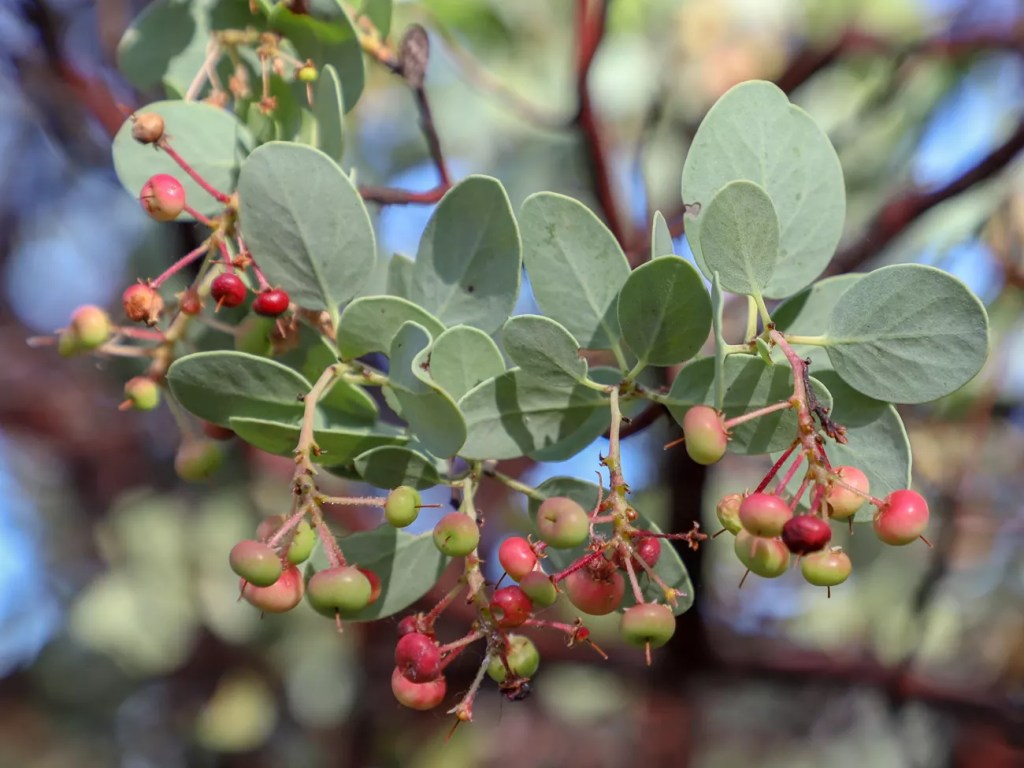
The plants still have mysteries that are being uncovered. For example, a new species of manzanita was only just discovered in early 2024, growing in a rugged canyon in San Diego County. Named Arctostaphylos nipumu to honor the Nipomo Mesa where it was discovered and its indigenous heritage, it had gone unnoticed despite being located just 35 miles from the coast and not far from populated areas. The discovery, announced by botanists at UC Riverside, highlights that unique species localization, as the plants are found sometimes growing only on a single ridge or in a specific type of soil. Unfortunately, this newly identified species is already at risk due to development pressures and habitat loss. According to researchers, only about 50 individuals are known to exist in the wild, making A. nipumu one of California’s rarest native plants, and a reminder that the story of manzanita is still unfolding, even in places we think we know well.
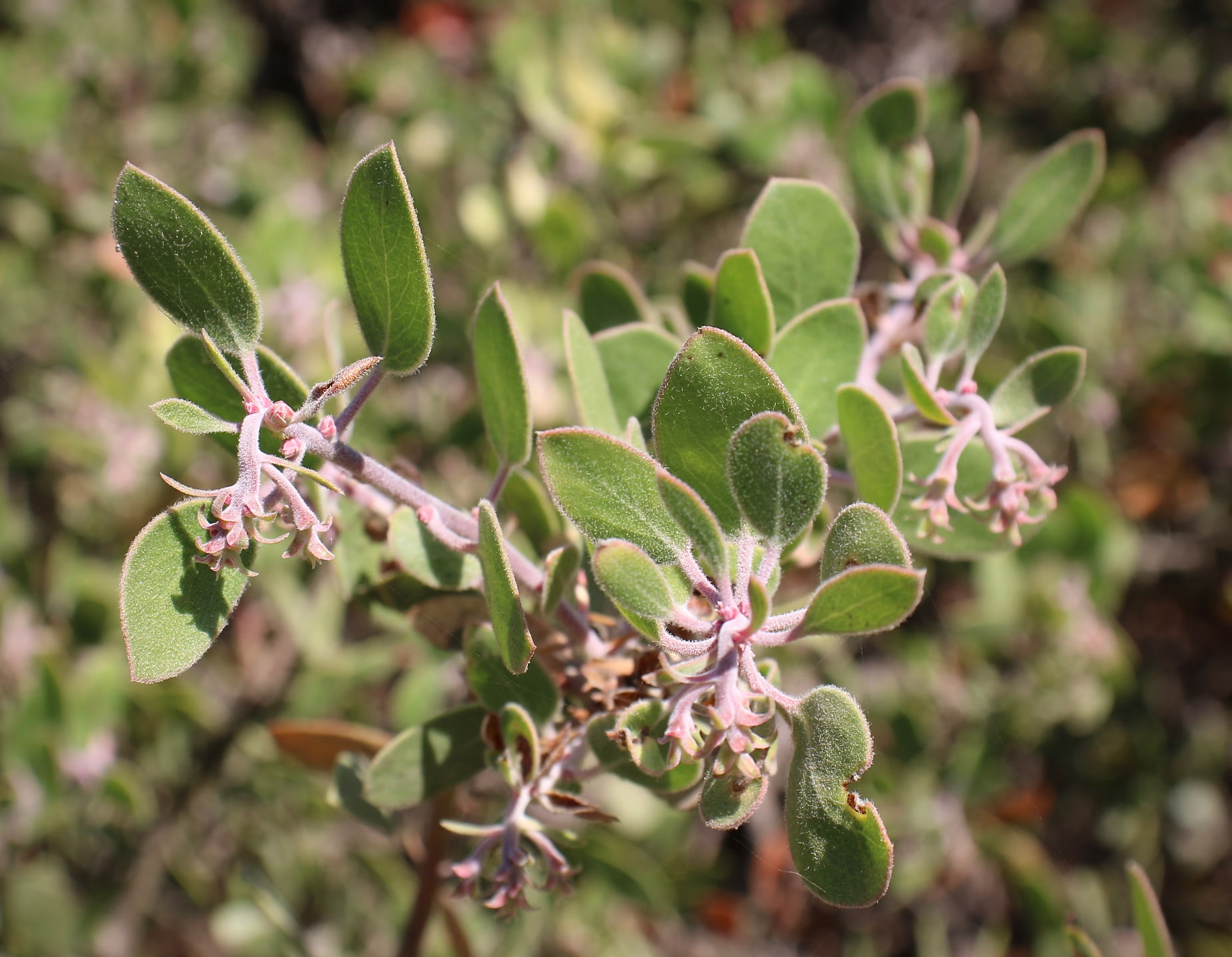
For hikers, photographers, and anyone with an eye for the unusual, manzanita is a cool plant to stumble upon. I will often stop and admire a particularly striking plant. I love when its smooth bark peels back in delicate curls, looking like sunburned skin or shavings of polished cinnamon. It’s hard to walk past a manzanita without reaching out to touch that smooth, cool bark. That irresistible texture may not serve any evolutionary purpose for the plant, but it’s one more reason to wander into California’s fragrant chaparral, where more species of manzanita grow than anywhere else on Earth.
Discover more from California Curated
Subscribe to get the latest posts sent to your email.

