Turning the steady motion of the Pacific into clean electricity, Eco Wave Power’s pilot at the Port of Los Angeles tests whether wave energy can become a real piece of California’s renewable future.
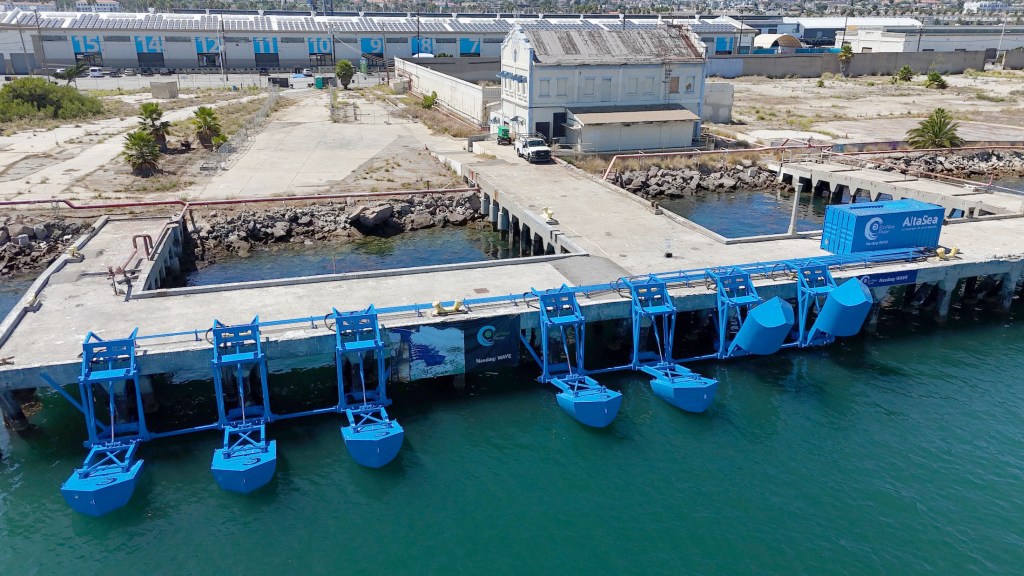
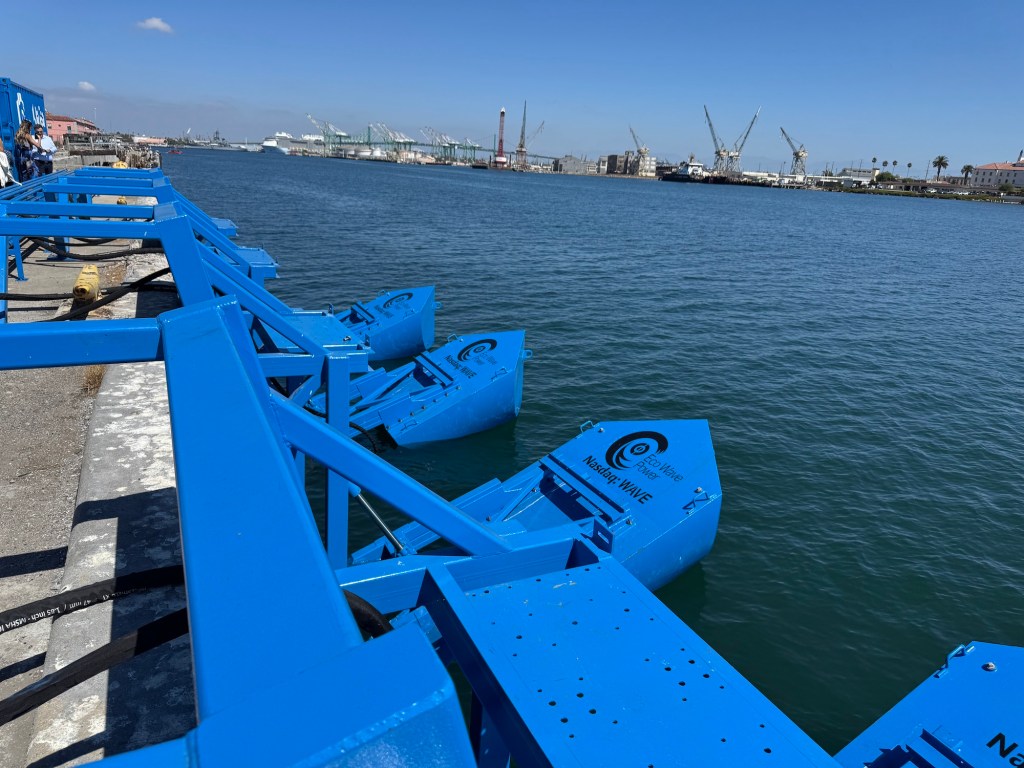
Earlier this week at the Port of Los Angeles, I stood with my colleague Tod Mesirow as a blue ribbon was cut and seven steel floaters dipped into the tide at AltaSea Marine Center in San Pedro. It was a milestone moment: the first onshore wave-energy project in the United States.
Wave energy is the process of converting the up-and-down motion of ocean waves into electricity. Engineers have been experimenting with the idea for decades, with pilot projects around the world, but very little major success. While no country has yet deployed wave power at large scale, efforts like this onshore wave-energy project in the United States aim to prove it can become a reliable part of the renewable mix.
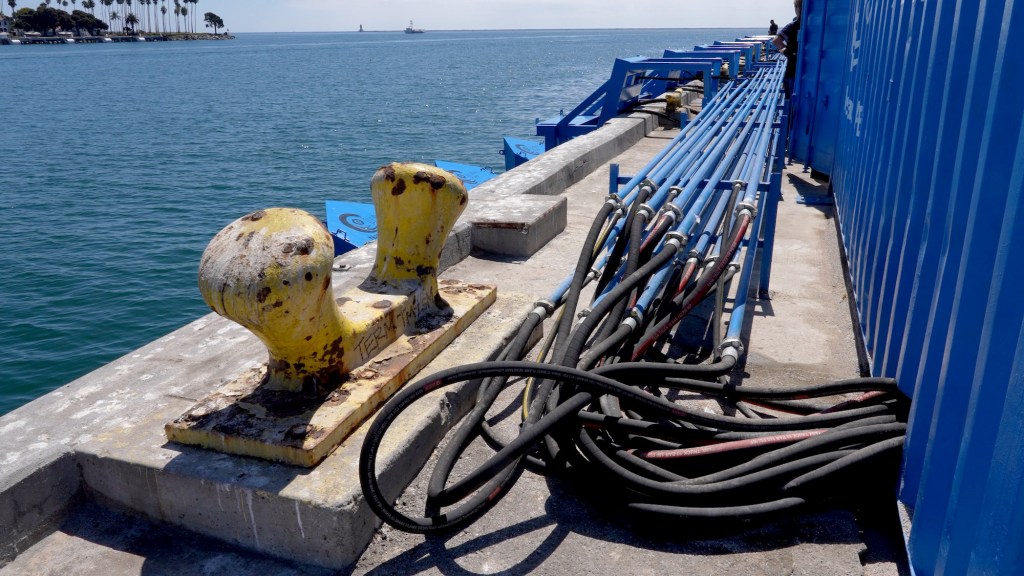
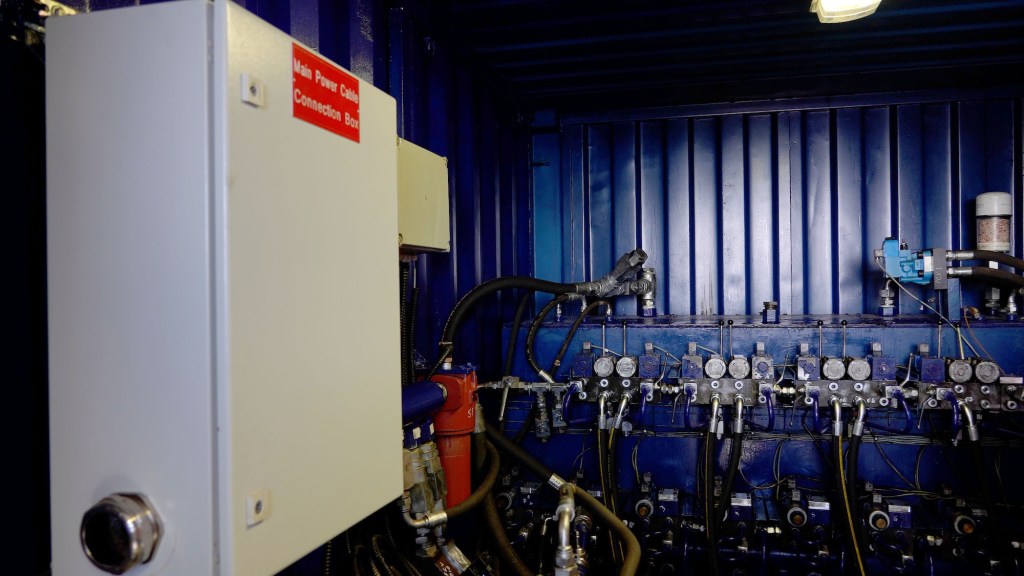
Eco Wave Power, the company behind the technology, framed the event as the beginning of a new chapter in renewable energy, one that could eventually bring the restless motion of the sea onto the grid on a meaningful scale. As my instagram feed will attest, big waves contain a lot of power (the algorithm knows I love big wave surfing). But that’s not what this project is about. Instead, it relies on the small, steady waves that are almost always present along the California coast. Each rise and fall pushes eco-friendly hydraulic fluid through a system of pistons and pipes, building pressure that drives a motor connected to a generator. The process transforms the ocean’s rhythm into electricity, which can then be fed into the nearby grid. This approach doesn’t depend on dramatic swells, but on the reliable pulse of the sea.
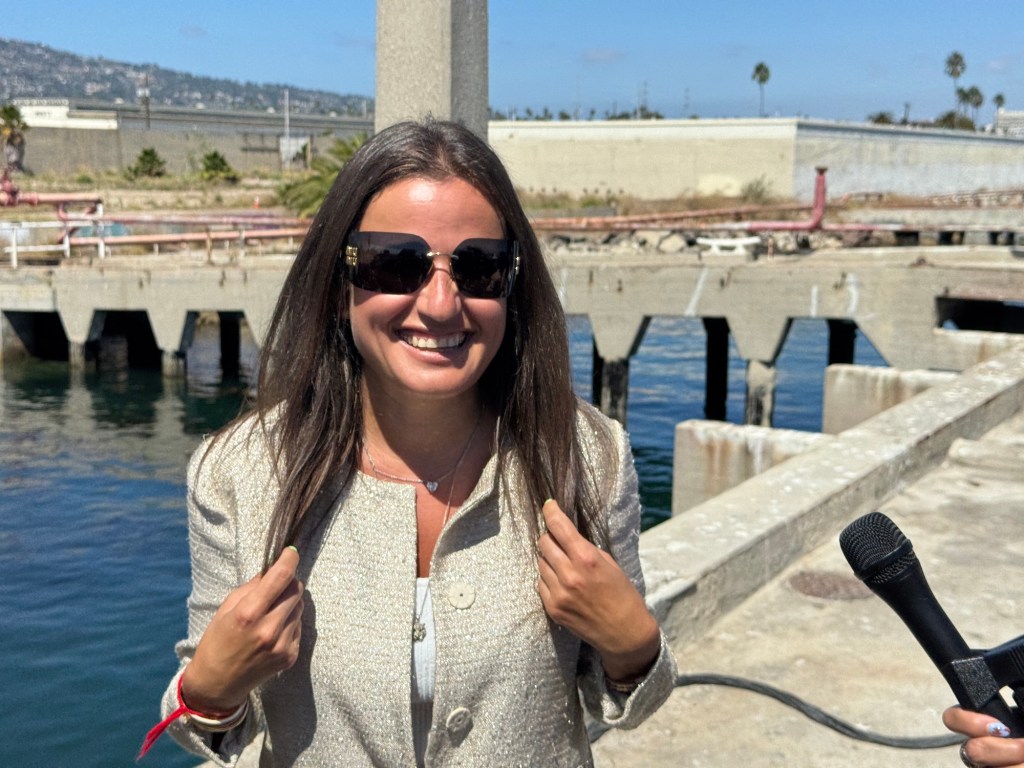
Inna Braverman, the CEO of Eco-Wave told me that the pilot project’s small capacity is a proof of concept for a much larger series of installations along the California coast. “The installed capacity of this conversion unit is 100 kilowatts,” Braverman says. “The amount of power actually generated depends on the height and the weight period of the waves. So, 100 kilowatt installed capacity is up to 100 households.”
The choice of location is not incidental. The Port of Los Angeles is one of the busiest harbors in the world, lined with piers, breakwaters, and aging industrial structures that provide ideal platforms for attaching wave-energy devices. Unlike offshore wind, which requires building foundations in open water, Eco Wave Power’s design capitalizes on existing waterfront infrastructure, keeping costs lower and operations more accessible. The port also happens to be surrounded by electrical infrastructure, with substations and transmission lines nearby. That means energy generated by the floaters can be quickly sent into the grid, without the long and costly buildouts often required for renewable projects in remote places. And perhaps most importantly, this demonstration is unfolding at the doorstep of greater Los Angeles, a region of nearly 19 million people where clean energy demand is immense. To test wave power here is to bring it directly into the heart of a major population center, where its success or failure will matter on a national scale.
Congresswoman Nanette Díaz Barragán called the project “history in the making” and tied it to her proposed $1 billion Marine Energy Technologies Acceleration Act, aimed at scaling up wave and tidal systems nationwide. California has already passed Senate Bill 605, directing the creation of a wave-energy roadmap, and local leaders like Port of Los Angeles officials spoke of the technology as a key tool to help the San Pedro Bay port complex reach its zero-emission goal within the next decade.
For Eco Wave Power, this was not just a ribbon cutting but the opening of a U.S. market that has long been cautious about marine renewables. Braverman announced future projects in Taiwan, India, and Portugal, while partners from Africa described feasibility studies in South Africa and Kenya. Taiwan’s pilot at Suao Port could grow to 400 megawatts, while the Port of Ngqura in South Africa is being studied as a showcase for diversifying away from coal.
The optimism is real, but the facts are more sobering. Wave energy has been tested in several places around the globe, often with promising beginnings but mixed long-term outcomes. The Mutriku plant in Spain has generated steady power for more than a decade, but at modest efficiency. Sweden’s Sotenäs project closed after just a few years of operation. The ocean is brutal on hardware: salt, storms, and marine growth wear down even the best-engineered devices. Costs remain high, and grid-scale capacity is far from proven.

Still, the potential is undeniable. The International Energy Agency estimates that global wave and tidal power could, in theory, supply a significant fraction of the world’s electricity needs. Unlike solar or wind, waves are relatively constant, offering a stable, predictable form of renewable generation. That reliability could make wave energy an important complement to other renewables, especially as grids grow more complex and storage remains expensive.
But honesty requires saying wave power will not, on its own, solve the climate crisis. It is a piece of the puzzle, not the whole picture. The bulk of clean energy in the near term will continue to come from solar and wind, with geothermal, hydropower, and nuclear filling important roles. If wave energy finds its footing, it will likely be as a regional player, most valuable in countries with long, energetic coastlines and strong political will to diversify.
Watching the floaters rise and fall yesterday, we could sense the tension between ambition and reality. This pilot is small, but it demonstrates a willingness to try something new, to take the step from research tank to open water. Braverman called it “opening the door to a new era of clean energy.” That door may open slowly, and perhaps only partway, but the act of trying matters. The ocean is vast and restless, and if we can learn to work with it, wave energy could one day be one of the many forces nudging us toward a sustainable future.
Discover more from California Curated
Subscribe to get the latest posts sent to your email.

