In 1975, amidst the California coastal dunes of Asilomar near Monterey, a groundbreaking conference was held that would influence the direction of biotechnology and the course of scientific research for decades to come. This was the Asilomar Conference on Recombinant DNA, an assembly marked by both controversy and consensus. Its aim was not just to debate the scientific merits of a new and potentially groundbreaking technology but also to discuss its potential impacts on society and the environment. (Berg and others had met as Asilomar before in 1973, but that initial meeting resulted in little more than a realization there would have to be more discussion).
DNA
Among the seventy-five participants from sixteen countries were Paul Berg, a Nobel laureate, Maxine Singer, a prominent molecular biologist, and many others, each bringing their own perspective and expertise to the table. They recognized the vast potential that recombinant DNA (rDNA) technology, the process of combining DNA from different species, had to offer but were equally cognizant of the potential risks involved.
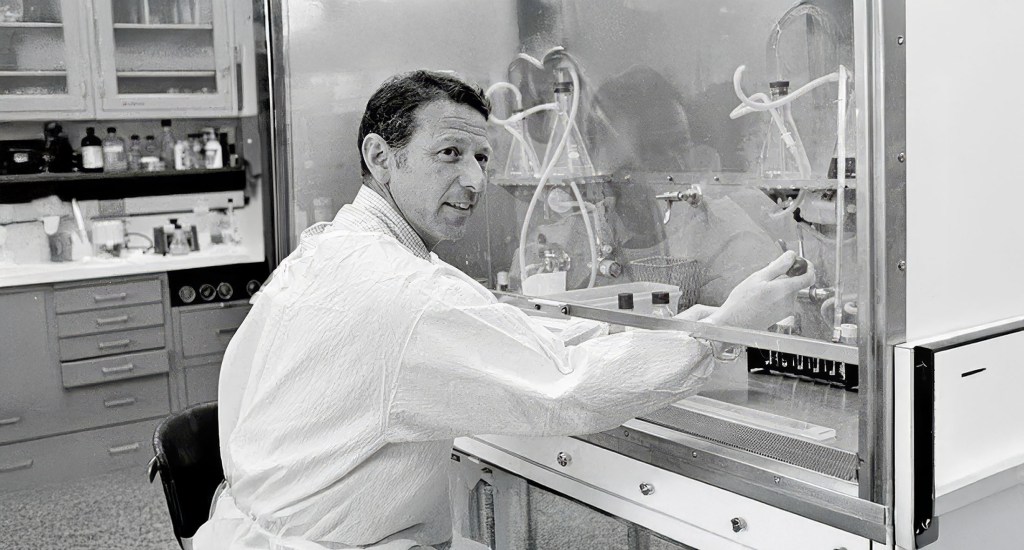
Berg was awarded the Nobel Prize in Chemistry for his work on nucleic acids, with a focus on recombinant DNA. Berg had first-hand experience with the transformative potential and risks of the technology. His ground-breaking experiments with recombinant DNA in 1972 and subsequent calls for a moratorium on such work had spurred the idea of the conference.
Maxine Singer, another significant contributor, was known for her advocacy for scientific responsibility and ethical considerations. She played a crucial role in drafting the initial letter to the journal “Science” advocating for a voluntary halt on certain types of rDNA research until its potential risks could be better understood. In 2002, Discover magazine recognized her as one of the 50 most important women in science.
The conference was the outcome of dramatic advances in molecular biology that took place mid-century. In the atomic age of the 1950s and ’60s, biology was not left behind in the wave of transformation. A pioneering blend of structural analysis, biochemical investigation, and informational decoding began to crack open the mystery of classical genetics. Central to this exploration was the realization that genes were crafted from DNA, and that this intricate molecular masterpiece held the blueprints for replication and protein synthesis.
Paul Berg (Photo: Stanford University)
This was a truth beautifully crystallized in the DNA model, a triumph of scientific collaboration that arose from the minds of James Watson, Francis Crick, and the often under-appreciated Rosalind Franklin. Their collective genius propelled a cascade of theoretical breakthroughs that nudged our understanding from mere observation to the brink of manipulation.
The crowning achievement of this era was the advent of recombinant DNA technology – a tool with the potential to rearrange life’s building blocks at our will. As the curtain lifted on this new stage of biological exploration, the promise and peril of our increasing control over life’s code started to unfurl.
Asilomar Conference Building
The ability to manipulate genes marked nothing less than a seismic shift in the realm of genetics. We had deciphered a new language. Now, it was incumbent upon us to assure ourselves and all others that we possessed the requisite responsibility to utilize it.
As Siddhartha Mukherjee put it in his excellent book The Gene: An Intimate History, “There is an illuminated moment in the development of a child when she grasps the recursiveness of language: just as thoughts can be used to generate words, she realizes, words can be used to generate thoughts. Recombinant DNA had made the language of genetics recursive.”
The conference served as a forum to deliberate the safety measures that would be needed to prevent accidental release of genetically modified organisms (GMOs) into the environment, the ethical considerations of manipulating the genetic code, and the potential implications for biological warfare. It was as much about the science as it was about its potential impact on society, mirroring aspects of the Pugwash Conferences that discussed nuclear arms control during the Cold War.
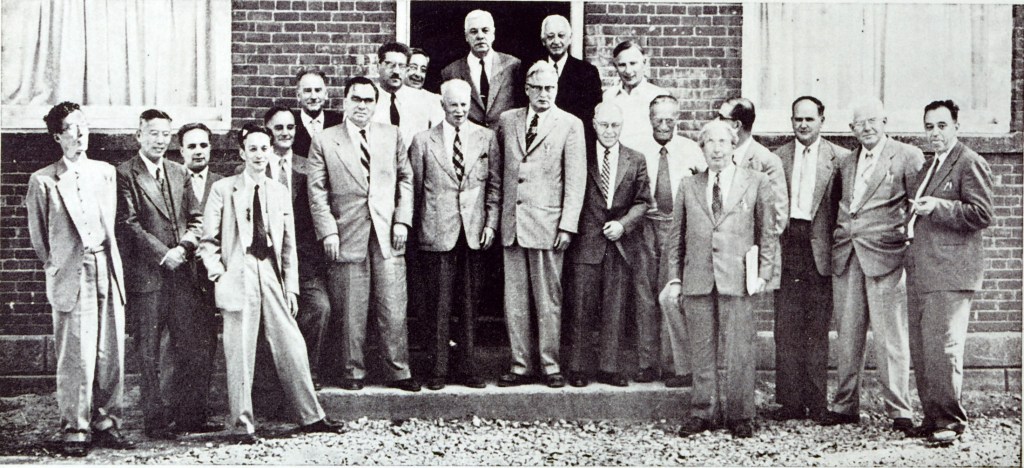
Participants in the First Pugwash Conference in 1957 in Pugwash, Nova Scotia, Canada. Notable figures included Joseph Rotblat, Bertrand Russell, Leo Szilard, Igor Tamm (pugwash.org)
Much like the Pugwash Conferences in Pugwash, Nova Scotia, Canada, brought together scientists from both sides of the Iron Curtain to discuss the implications of nuclear technology, the Asilomar Conference sought to bridge the divide between the proponents and critics of genetic engineering. Just as nuclear technology held the promise of unlimited power and the threat of unparalleled destruction, recombinant DNA offered the allure of potential solutions for numerous diseases and the specter of unforeseen consequences.
Another analogy might be the two-page letter written in August 1939 by Albert Einstein and Leo Szilard to alert President Roosevelt to the alarming possibility of a powerful war weapon in the making. A “new and important source of energy” had been discovered, Einstein wrote, through which “vast amounts of power . . . might be generated.” “This new phenomenon would also lead to the construction of bombs, and it is conceivable . . . that extremely powerful bombs of a new type may thus be constructed. A single bomb of this type, carried by boat and exploded in a port, might very well destroy the whole port.”
The Einstein–Szilard letter
The Asilomar Conference reached a consensus that with proper containment measures, most rDNA experiments could be conducted safely. This resulted in a set of guidelines that differentiated experiments based on their potential biohazards and suggested appropriate containment measures. This framework, later adopted by the National Institutes of Health (NIH) in the United States, provided the bedrock for the safe and ethical use of rDNA technology.
The decisions made at Asilomar had far-reaching implications for both science and society. By promoting a culture of responsibility and precaution, the conference effectively prevented a public backlash against the nascent field of genetic engineering, allowing it to flourish. Moreover, it set a precedent for scientists to take an active role in the ethical and societal implications of their work.
“The most important lesson of Asilomar,” Berg said, “was to demonstrate that scientists were capable of self-governance.” Those accustomed to the “unfettered pursuit of research” would have to learn to fetter themselves.
CRISPR
Today, the spirit of Asilomar lives on in the field of synthetic biology and discussions around emerging technologies such as CRISPR and gene drives. It underscores the importance of scientific self-regulation, public dialogue, and transparent communication in navigating the ethical minefields that technological advancements often present.
The Asilomar Conference was a milestone in scientific history, a demonstration that scientists are not merely the creators of knowledge but also its stewards. It showed that with open dialogue, proactive self-regulation, and a deep sense of responsibility, we can both harness the promise of scientific breakthroughs and mitigate their potential risks.
In the expansive and diverse landscape of California, many iconic animals are an integral part of the state’s reputation for natural beauty and untamed wilderness. Yet, one particular creature looms larger in the Californian narrative than many others – a species that has been extinct for nearly a century, but lives on as a powerful symbol: the California Grizzly Bear (Ursus arctos californicus).
The California Grizzly Bear, a subspecies of the Grizzly Bear, was a formidable presence in the wild terrains of California. This remarkable beast could grow up to 8 feet tall when standing on its hind legs, and adult males often weighed in excess of 2000 pounds. They sported a lustrous fur coat that varied in color from blond to dark brown, making them a striking, and sometimes terrifying, sight in the California wilderness.
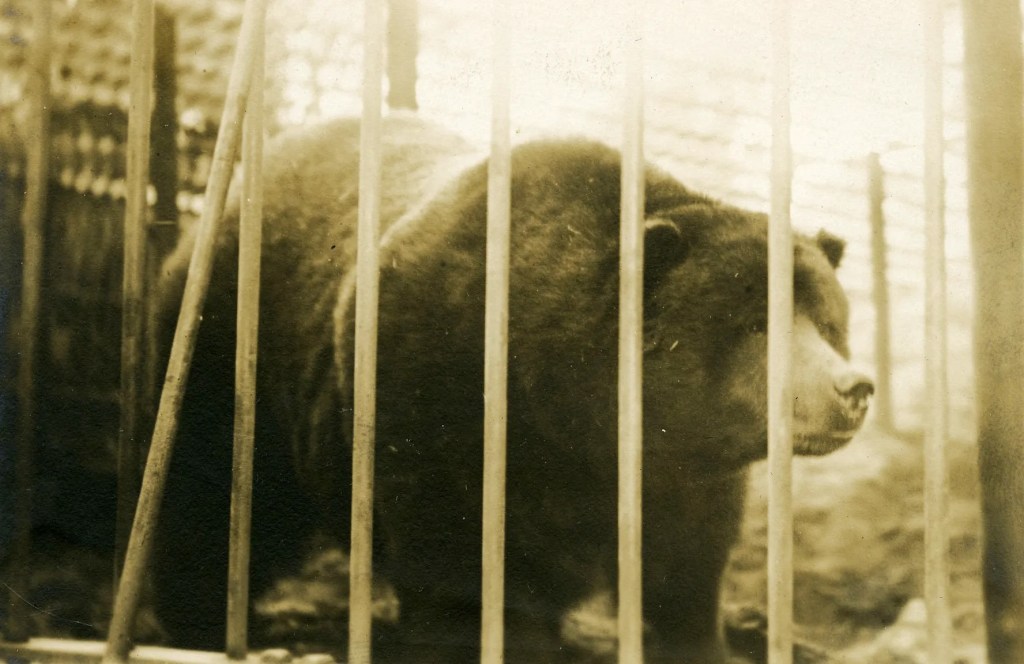
The famous California Grizzly “Monarch” was housed in an enclosure at Golden Gate Park around 1910. It passed away the following year. (California State Archives)
The name “Grizzly” could have meant “grizzled,” a term referring to the animal’s golden and grey tips of hair. Or quite possibly it meant “fear-inspiring” (as a phonetic spelling of “grisly”). The naturalist George Ord formally classified it in 1815 as Ursus horribilis (“terrifying bear”).
This giant was an omnivore with a varied diet that changed with the seasons. The bear’s dietary staples included seeds, berries, roots, fish, and small mammals. But the California Grizzly was also known to take down larger prey, such as deer and elk, when the opportunity presented itself. The first recorded encounters with California grizzly bears are found in diaries kept by several members of the 1769 Portola expedition, the first European land exploration of the southern stretch of the West Coast. Several place names that include the Spanish word for bear (oso) trace their origins back to that first overland expedition. For example, the city of Los Osos.
Stories about the California Grizzly Bear echo throughout the annals of California’s history and literature. In his book “The Mountains of California,” renowned naturalist John Muir recounted his encounters with these awe-inspiring creatures, stating, “When I discovered him, he was standing in a narrow strip of meadow, and I was concealed behind a tree on the side of it.”
California State Flag featuring the California Grizzly
As enduring as any mountain or redwood forest, the legacy of the California Grizzly Bear persists in the emblem of the state flag.
The inclusion of the grizzly bear on the California flag traces its roots back to a revolt in 1846, before California was a part of the United States. At the time, California was under Mexican rule and a group of American settlers staged a revolt known as the Bear Flag Revolt, in which they declared California to be an independent republic.
The settlers needed a flag to represent their new republic, so they designed a simple flag that included a grizzly bear, a single red star (inspired by the lone star of Texas), and the words “California Republic.” The grizzly bear was chosen because it was seen as a powerful and formidable creature, much like the settlers saw themselves. It was intended to represent strength, unyielding resistance, and independence. The republic was short-lived, however, because soon after the Bear Flag was raised, the U.S. military began occupying California, which went on to join the union in 1850.
The man who drew the bear on the original flag, William L. Todd, was a cousin of Mary Todd Lincoln, the wife of Abraham Lincoln. Unfortunately, Todd was not a great artist, and his bear looked more like a pig, which led to some ridicule and a new design.
The original California state flag, as designed by William L. Todd
In 1911, the design of the flag was standardized, and the grizzly bear became the central figure that we recognize today. The bear depicted on the flag is named “Monarch” after the last California grizzly bear captured and held in captivity. Monarch was captured in 1889 by newspaper reporter Allan Kelly, at the behest of William Randolph Hearst. Monarch’s remaining life was not pleasant. He spent his remaining 22 years in captivity, and was moved to Woodwards Gardens in San Francisco, and then to the zoo at Golden Gate Park. After the bear’s death in 1911, it was mounted and preserved (ahem, poorly) at the Academy of Sciences at Golden Gate Park.
Monarch on display. (Wikipedia)
Despite its iconic status, the California Grizzly Bear could not withstand the pressures of expanding human civilization. The arrival of settlers during the California Gold Rush in the mid-19th century marked the beginning of the end for the bear. As the human population exploded, the bears’ natural habitats were destroyed to make way for towns and agriculture. Additionally, the bear, seen as a threat to livestock and a danger to humans, was hunted extensively.
By the early 20th century, the California Grizzly Bear was on the brink of extinction. The last confirmed sighting of a California grizzly bear occurred in 1924 within Sequoia National Park. This marked the end of the species’ presence in the state, following decades of hunting and habitat loss. Prior to this, the last known grizzly in Southern California was killed in 1916 near Sunland, in the San Fernando Valley. The California grizzly, once abundant throughout the region, was declared extinct in the wild by the mid-1920s. The California Grizzly was declared extinct in 1924.
In recent years, discussions have emerged about the feasibility of reintroducing grizzly bears to California. Research indicates that the state possesses substantial suitable habitat for grizzlies, particularly in the Sierra Nevada and other mountainous regions. Some studies suggest that California could support a population of approximately 500 grizzly bears.
In 2014, the Center for Biological Diversity filed a legal petition urging the U.S. Fish and Wildlife Service to expand grizzly bear recovery efforts across the American West, including California. The petition identified 110,000 square miles of potential grizzly habitat in areas such as the Sierra Nevada. However, the U.S. Fish and Wildlife Service rejected this petition, citing concerns about habitat suitability and potential human-bear conflicts.
The following year, in 2015, the Center for Biological Diversity initiated a petition directed at the California state legislature to reintroduce grizzly bears to the state. This effort aimed to raise public awareness and encourage state officials to explore the possibility of reintroduction. Despite these initiatives, the California Department of Fish and Wildlife has expressed reservations, emphasizing the significant changes in the state’s landscape and human population density since the grizzly’s extirpation. Officials have highlighted the potential challenges of human-bear interactions, given California’s current population of nearly 40 million people.
The debate over reintroducing grizzly bears to California continues, balancing ecological restoration goals with concerns about human safety and land use. While the state retains areas that could potentially support grizzlies, the complexities of modern coexistence present significant challenges to reintroduction efforts.
Amid the barren, high-altitude desert of California’s White Mountains, the Bristlecone Pines stand as enduring sentinels, their gnarled forms chronicling millennia of survival in one of the planet’s most unforgiving landscapes. For thousands of years, these ancient organisms have endured drought, freezing temperatures, and brutal winds. Each twisted trunk and weathered branch tells a story of resilience. Yet in a bitter twist, one of the oldest among them, a tree known as Prometheus that once grew in the nearby Great Basin National Park, met its end not from the slow violence of nature but from a single human decision. And it wasn’t the result of malice or careless destruction, like the foolish vandals who felled the U2 Joshua Tree. It was a mistake, made in the name of science.
The Prometheus stump. All that is left of one of the oldest organisms on Earth.
Prometheus, named after the Titan who defied the gods in Greek mythology, was an extraordinary specimen of the Pinus longaeva species, or the Great Basin Bristlecone Pine. It is believed to have germinated around the time of the Bronze Age, making it likely older than the Great Pyramids of Giza. By the 1960s, when its existence was noted by researchers, it was already around 4900 years old. Unfortunately, that’s when tragedy struck.
In 1964, a young geographer named Donald Rusk Currey was studying climate dynamics of the Little Ice Age. He was especially drawn to Bristlecone pines because their rings hold valuable records of past climate conditions, a core focus of dendrochronology, the study of tree rings, which continues to be an important scientific tool today. Some details of the story vary, but Currey had supposedly been coring several trees in the area to measure their age, but he encountered difficulties with Prometheus. He was unaware that the tree was not only ancient, but likely the oldest non-clonal organism on the planet. The coring tool broke, and unable to get the data he needed, Currey believed that cutting down the tree was the only way to continue his research. The Forest Service, unaware of the tree’s significance, approved the request.
And so he cut it down.
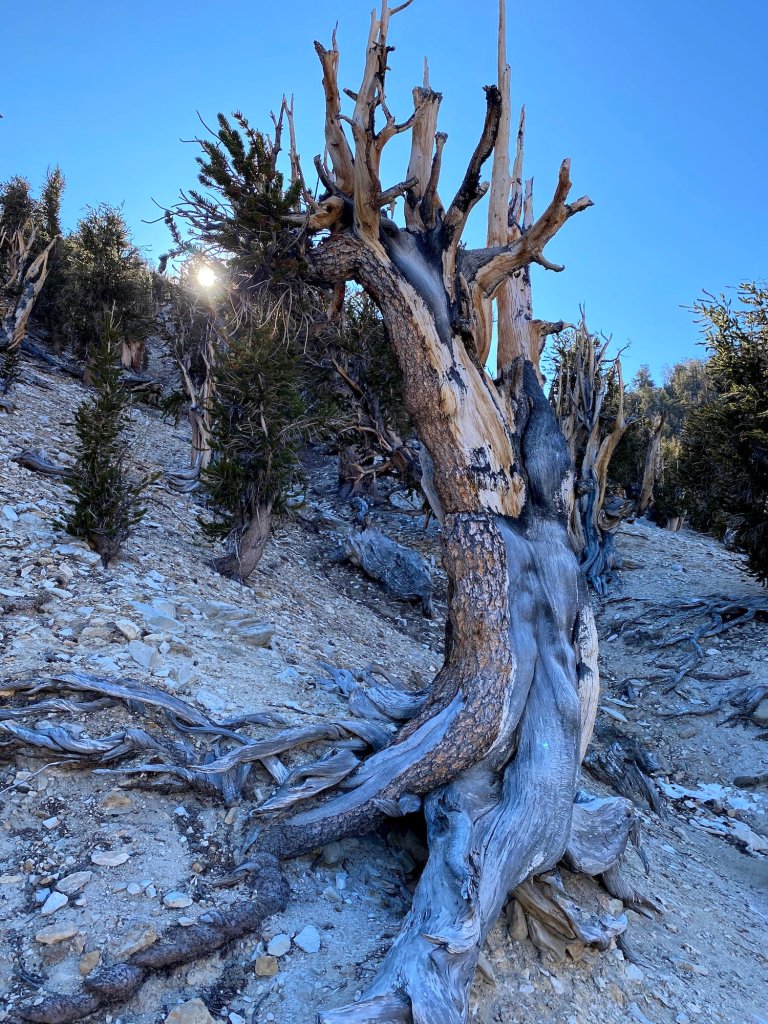
Bristlecone forest in the White Mountains of California (Erik Olsen)
Once Prometheus was cut down, its extraordinary age became clear. By counting its growth rings, Currey estimated that Prometheus was at least 4,844 years old, making it the oldest known tree in the world at the time. A few years later, this age was increased to 4,862 by Donald Graybill of the University of Arizona‘s Laboratory of Tree-Ring Research.
The scientific community and general public were outraged at the unnecessary loss, sparking conversations about the protection of these ancient trees. In the words of one writer-activist, Currey had “casually killed (yes, murdered!)” the world’s oldest tree. As if a curse had been unleashed, a year after Prometheus was cut down, a young Forest Service employee died of a heart attack while trying to remove a slab from the tree. Currey was obviously beside himself. Whoops.
Whether Prometheus should be considered the oldest organism ever known depends on how we define “oldest” and “organism.” Some clonal species may claim even more ancient origins when we consider the entire genetic individual rather than a single stem or trunk. The creosote bush ring known as King Clone, located in the Mojave Desert in California, is estimated to be nearly 12,000 years old. Similarly, the massive aspen colony known as Pando in Utah spans over 100 acres and may be more than 14,000 years old. Unlike Prometheus, which was a single, ancient tree, these clonal colonies persist by continuously regenerating themselves, allowing the larger organism to survive for tens of thousands of years.
Creosote growing in the Mojave Desert (Photo: Erik Olsen)
Prometheus’s death brought global attention to the incredible age and ecological value of Bristlecone Pines, sparking a deeper appreciation for their role in Earth’s history. In the years since, increased protections have been put in place to preserve these ancient trees. Today, they are part of the Inyo National Forest’s Ancient Bristlecone Pine Forest, a protected area in the White Mountains that draws scientists and visitors from around the world.
California is home to the oldest, tallest, and largest trees on the planet, not just the ancient Bristlecone Pines, but also the sky-scraping coast redwoods and the enormous giant sequoias. It’s also the most biodiverse state in the U.S., making it one of the most ecologically exceptional places on Earth.
Even as we mourn Prometheus, it’s important to remember that it is not the end of the story for the Bristlecone Pines. There are still many of these ancient trees alive today. One of them, named Methuselah, is known to be 4,851 years old and is often considered the oldest living tree in the world. While it is known to live somewhere in the White Mountains of California, its exact location is kept a secret to protect it. The tree’s name refers to the biblical patriarch Methuselah, who ostensibly lived to 969 years of age.
There’s also the potential for even older specimens. Given the harsh, remote habitats these trees often occupy, it is likely that there are older Bristlecones yet to be discovered.
California’s White Mountains (Photo: Erik Olsen)
The cutting of Prometheus was a mistake, an irreversible loss. But its story became a turning point, highlighting the need to treat ancient and rare life with more care. While Prometheus is gone, many other long-lived and fragile organisms still exist. Its fate is a reminder that our curiosity should always be balanced by a responsibility to protect what can’t be replaced.
Today, a cross-section of Prometheus is on display at the Great Basin National Park visitor center in Nevada, as well as the U.S. Forest Service’s Institute of Forest Genetics in Placerville, California. The tree’s thousands of growth rings are a reminder of its incredible longevity and a sobering memory of the tree that had survived for millennia. The region’s diverse landscapes are home to an incredible abundance of life, from ancient trees to unique coastal ecosystems. Protecting and understanding these natural treasures ensures they remain for future generations to study, appreciate, and enjoy.
California is known for its sunny beaches, bustling cities, and iconic landmarks such as the Golden Gate Bridge and Hollywood sign. However, the state is also home to a wealth of scientific discoveries and phenomena that are not as well-known. From ancient fossils to cutting-edge research, California has a lot to offer in the realm of science. In this list, we’ll explore ten of the most fascinating scientific things that you probably didn’t know about California. Get ready to be amazed by the natural wonders and innovative research that make this state such a unique and exciting place for science enthusiasts.
California is home to the tallest tree in the world, a coastal redwood named Hyperion that measures 379.7 feet (115.7 meters) in height. The state is also home to the largest (by volume) tree, named General Sherman in Sequoia National Park. General Sherman is 274.9 feet high and has a diameter at its base of 36 feet, giving it a circumference of 113 feet. General Sherman’s estimated volume is around 52,508 cubic feet (1,487 cubic meters), which would correspond to an estimated weight of around 2.7 million pounds.
The Salton Sea, a large inland lake in southern California, is actually an accidental body of water that was created by a flood in 1905 when Colorado River floodwater breached an irrigation canal being constructed in the Imperial Valley and flowed into the Salton Sink.
TheSan Andreas Fault, the state’s best-known and most dangerous fault that runs through the middle of California and to the coast, moves about 2 inches (5 centimeters) per year (or, so they say, the speed that a fingernail grows).
The state of California has more national parks than any other state in the US, with nine in total. Among them is one of the crown jewels of the National Park system: Yosemite National Park.
California is one of the only places in the world where you can find naturally occurring asphalt, at the La Brea Tar Pits in Los Angeles.
The oldest living organism on Earth, a bristlecone pine tree named Methuselah, can be found in the White Mountains of California and is over 4,800 years old.
TheMonterey Bay Aquarium in Monterey, California was the first aquarium to successfully keep a great white shark in captivity for more than 16 days. The first great white that the aquarium tried to display died after 11 days in 1984 because it would not eat.
The Joshua Tree, a type of yucca plant (NOT a tree) found in the Mojave Desert, is named after the biblical figure Joshua because of its outstretched branches that resemble a person reaching up to the sky in prayer.
The California grizzly bear, which appears on the state flag, went extinct in the early 1900s due to hunting and habitat loss. The last California grizzly was seen near Yosemite in 1924, going extinct after decades of hunting. Fossils of the California grizzly can be seen at the La Brea tar Pits.
The California Institute of Technology, also known as Caltech, is one of the world’s leading scientific research institutions and has produced 39 Nobel laureates, more than any other university in the world.
A Pacific White-Sided Dolphin swims alongside a boat off Newport Beach, California
For those who are fortunate enough to live near the coast of California, Dolphin sightings are a frequent delight. Dolphins are a diverse group of marine mammals found in all of the world’s oceans, but they are especially abundant in California. The California coast is home to numerous species of dolphins, each with their own unique characteristics and behaviors. An afternoon spent at the beach will very often result in a sighting of these magnificent and majestic animals frolicking in the waves.
For those who may not know, dolphins and porpoises are toothed whales. Both porpoises and dolphins are members of the same scientific order, Cetacea, which includes all whales, including the magnificent blues, grey whales and humpbacks that also ply the California coast.
The exact number of dolphins off the California coast is impossible to know since many species migrate and no authoritative study of their total numbers has ever been published. But one estimate of the dolphin population in Southern California suggests that well over half a million live between the frigid, rocky coastal waters of Monterey and San Diego. Scientists have documented 11 species of dolphins in California’s waters alone. We take a look at a few of those here.
One of the most common, and beautiful, dolphins found off the coast of California is the Pacific White-Sided Dolphin (Lagenorhyncus obliquidens). These dolphins are easily recognized by their distinctive markings, which include a white underbelly and gray and white stripes along the sides. White-Sided Dolphins can reach up to 400 pounds and can grow to 8 feet in length, with males typically being larger than females. They are also known for their energetic and playful behavior, often bow-riding the waves alongside boats and performing wonderful acrobatics in the air. Boaters and whale watchers can witness pods of these animals following their boat for half an hour or more, often swimming on their sides near the surface and gazing up with attentive eyes.
White-sided dolphins feed on a variety of prey, but mostly consume fish and squid. They are skilled hunters and have been known to work together in groups to corral and capture their meals.
Another species found off the California coast is the Common Dolphin (Delphinus delphis). These dolphins have a distinctive sleek, hydrodynamic shape, with a dark gray or black dorsal region and a light gray or white underbelly. Common Dolphins are also known for their high level of activity, often seen jumping and playing in the water. Common dolphins can travel 100 miles in a single day.
This species is one of the most well-known and widely distributed marine mammals, and is often associated with playful acrobatics and a high level of intelligence. California is home to several large “super pods” or “megapods” of Common Dolphins that are often seen by boaters or whale-watching tours. As the American Cetacean Society explains, common dolphins typically travel and hunt in large herds of hundreds or even thousands. One resident megapod frequently forages between Ventura and Dana Point.
A Pacific White-Sided Dolphin
Common dolphins have been the subject of numerous studies examining their cognitive abilities. They are known to have complex social relationships and to exhibit behaviors that suggest a high level of problem-solving ability and adaptability. In addition, they are capable of using tools, such as seaweed, to herd fish and protect themselves from predators. They also have excellent memories and are able to recognize individual dolphins and remember past experiences.
The Bottlenose Dolphin (Tursiops truncatus) is another species that can be found off the coast of California. This species is easily recognizable due to its large size and beak-like snout. Bottlenose Dolphins are known for their intelligence and playful nature, and are often (unfortunately) used in marine mammal shows and research programs.
Bottlenose dolphins have a complex mating system that involves a variety of behaviors, including courtship displays, vocalizations, and physical contact. Female Bottlenose dolphins give birth to a single calf every three to five years, and the calves are nursed by their mothers for up to a year. Male Bottlenose dolphins compete for access to females, and the strongest and most dominant males are the most successful at mating.
A lesser-known (and seen) species found in the waters of California is the Risso’s Dolphin (Grampus griseus). These dolphins are identified by their tall, curved, sickle-shaped dorsal fin located mid-way down their back. Often they also have distinctive scars and scratches, which are believed to be caused by “teeth raking” between other dolphins. They also frequently have circular markings, likely from encounters with squid or lampreys. Risso’s Dolphins are generally less active than the other species found in the area, and are often seen alone or in small groups.
Finally, the Dall’s Porpoise (Phocoenoides dalli) is another species that can be found in the waters off the California coast. These dolphins are identified by their short, stocky bodies and small triangular dorsal fins. Dall’s Porpoises are known for their speed and agility, and are often seen riding the bow waves of boats.
Few places on earth match the coast of California for the sheer number and variety of dolphins that swim in the cool, nutrient-rich waters that well up from the state’s deep canyons. So next time you’re near the coast, keep an eye out for these incredible creatures and enjoy the show!
It started by asking one of the biggest questions of them all: how old is the earth?
One might think that we’ve known the answer to this question for a long time, but the truth is that a definitive age for our planet was not established until 1953, and it happened right here in California.
Some of the earliest estimates of the earth’s age were derived from the Bible. Religious scholars centuries ago did some simple math, synthesizing a number of passages of Biblical scripture and calculated that the time to their present-day from the story of Genesis was around 6,000 years. That must have seemed like a really long time to people back then.
Of course, once science got involved, the estimated age changed dramatically, but even into the 18th century, people’s sense of geologic time was still on human scales, largely incapable of comprehending an age into the billions of years. In 1779, the Comte du Buffon tried to obtain a value for the age of Earth using an experiment: He created a small globe that resembled Earth in composition and then measured its rate of cooling. His conclusion: Earth was about 75,000 years old.
But in 1907, scientists developed the technique of radiometric dating, allowing scientists to compare the amount of uranium in rock with the amount of lead, the radioactive decay byproduct of uranium. If there was more lead in a rock, then there was less uranium, and thus the rock was determined to be older. Using this technique in 1913, British geologist Arthur Holmes put the Earth’s age at about 1.6 billion years, and in 1947, he pushed the age to about 3.4 billion years. Not bad. That was the (mostly) accepted figure when geochemist Clair Patterson arrived at the California Institute of Technology in Pasadena from the University of Chicago in 1952. (Radiometric dating remains today the predominant way geologists measure the age of rocks.)
By employing a much more precise methodology, and using samples from the Canyon Diablo meteorite, Patterson was able to place the creation of the solar system, and its planetary bodies such as the earth, at around 4.6 billion years. (It is assumed that the meteorite formed at the same time as the rest of the solar system, including Earth). Subsequent studies have confirmed this number and it remains the accepted age of our planet.
Patterson’s discovery and the techniques he developed to extract and measure lead isotopes led one Caltech colleague to call his efforts “one of the most remarkable achievements in the whole field of geochemistry.”
But Patterson was not done.
In the course of his work on lead isotopes, Patterson began to realize that lead was far more prevalent in the environment that people imagined. In the experiments he was doing at Caltech, lead was everywhere.
Clair Patterson at CalTech (Courtesy of the Archives, California Institute of Technology)
“There was lead there that didn’t belong there,” Patterson recalled in a CalTech oral history. “More than there was supposed to be. Where did it come from?”
Patterson’s discovery was “one of the most remarkable achievements in the whole field of geochemistry.”
Barclay Kamb, California Institute of Technology
Patterson was flummoxed by the large amounts of environmental lead he was seeing in his experiments. It seemed to be everywhere: in the water, air and in people’s hair, skin and blood. Figuring out why this was the case took him the rest of his career.
He found it so hard to get reliable measurements for his earth’s age experiments that he built one of the first scientific “clean rooms”, now an indispensable part of many scientific disciplines, and a precursor to the ultra-clean semiconductor fabrication plants (so-called “fabs”) where microprocessor chips are made. In fact, at that time, Patterson’s lab was the cleanest laboratory in the world.
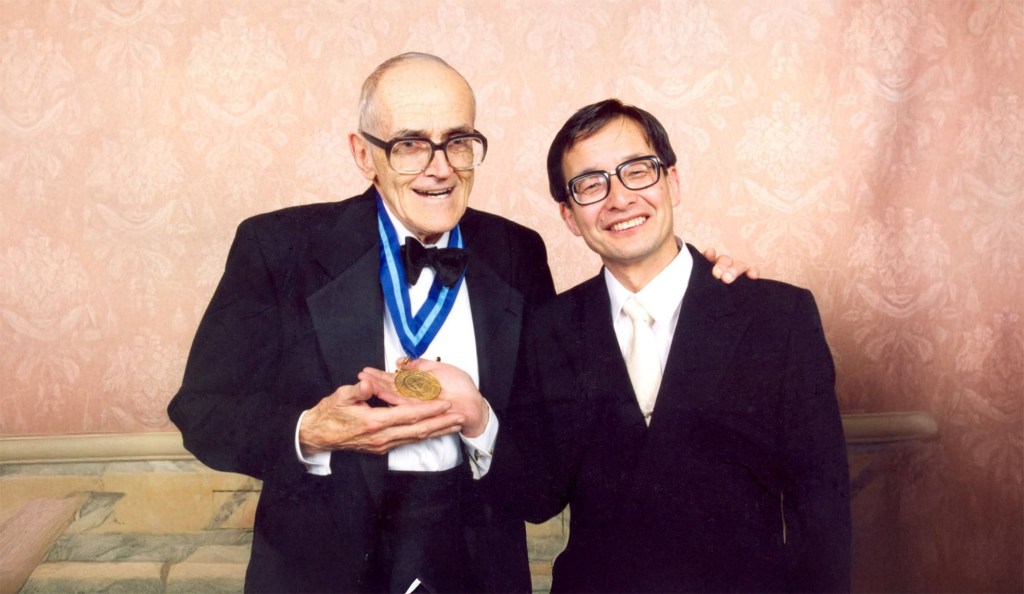
On the occasion of Clair Patterson receiving the Tyler Prize. The Tyler Prize is awarded for environmental achievement. (Courtesy of the Archives, California Institute of Technology)
To better understand this puzzle, Patterson turned to the oceans, and what he found astonished him. He knew that if he compared the lead levels in shallow and deep water, he could determine how oceanic lead had changed over time. In his experiments, he discovered that in the ocean’s oldest columns of water, down deep, there was little lead, but towards the surface, where younger water circulates, lead values spiked by 20 times.
Then, going back millions of years, he analyzed microscopic plant and animal life from deep sediments and discovered that they contained 1/10 to 1/100th the amount of lead found at the time around the globe.
Smog in Los Angeles in 1970. (Courtesy of UCLA Library Special Collections – Los Angeles Times Photographic Archive)
He decided to look in places far from industrial centers, ice caves in Greenland and Antarctica, where he would be able to see clearly how much lead was in the environment many years ago. He was able to show a dramatic increase in environmental lead beginning with the start of lead smelting in Greek and Roman times. Historians long ago documented the vast amounts of lead that were mined in Rome. Lead pipes connected Roman homes, filled up bathtubs and fountains and carried water from town to town. Many Romans knew of lead’s dangers, but little was done. Rome, we all know, collapsed. Jean David C. Boulakia, writing in the American Journal of Archaeology, said: “The uses of lead were so extensive that lead poisoning, plumbism, has sometimes been given as one of the causes of the degeneracy of Roman citizens. Perhaps, after contributing to the rise of the Empire, lead helped to precipitate its fall.”
In his Greenland work, Patterson’s data showed a “200- or 300-fold increase” in lead from the 1700s to the present day; and, most astonishing, the largest concentrations occurred only in the last three decades. Were we, like the Romans, perhaps on the brink of an environmental calamity that could hasten the end of our civilization? Not if Patterson could help it.
California Institute of Technology. Credit: Erik Olsen
That may be far too grandiose and speculative, but there was no doubting that there was so much more lead in the modern world, and it seemed to have appeared only recently. But why? And how?
In a Eureka moment, Patterson realized that the time frame of atmospheric lead’s rise he was seeing in his samples seemed to correlate perfectly with the advent of the automobile, and, more specifically, with the advent of leaded gasoline.
Leaded gas became a thing in the 1920s. Previously, car engines were plagued by a loud knocking sound made when pockets of air and fuel prematurely exploded inside an internal combustion engine. The effect also dramatically reduced the engine’s efficiency. Automobile companies, seeking to get rid of the noise, discovered that by adding tetraethyl lead to gasoline, they could stop the knocking sound, and so-called Ethyl gasoline was born. “Fill her up with Ethyl,” people used to say when pulling up to the pump.
Despite what the Romans may have known about lead, it was still an immensely popular material. It was widely used in plumbing well into the 20th century as well as in paints and various industrial products. But there was little action taken to remove lead from our daily lives. The lead in a pipe or wall paint is one thing (hey, don’t eat it!), but pervasive lead in our air and water is something different.
After World War I, every household wanted a car and the auto sales began to explode. Cars were perhaps the most practical invention of the early 20th century. They changed everything: roads, cities, work-life and travel. And no one wanted their cars to make that infernal racket. So the lead additive industry boomed, too. By the 1960s, leaded gasoline accounted for 90% of all fuel sold worldwide.
But there signs even then that something was wrong with lead.
A New York Times story going back to 1924 documented how one man was killed and another driven insane by inhaling gases released in the production of the tetraethyl lead at the Bayway plant of the Standard Oil Company at Elizabeth, N.J. Many more cases of lead poisoning were documented in ensuing years, with studies showing that it not only leads to physical illness but also to serious mental problems and lower IQs. No one, however, was drawing the connection between all the lead being pumped into the air by automobiles and the potential health impacts. Patterson saw the connection.
Ford Model T. Credit: Harry Shipler
When Patterson published his findings in 1963, he was met with both applause and derision. The billion-dollar oil and gas industry fought his ideas vigorously, trying to impugn his methods and his character. They even tried to pay him off to study something else. But it soon became apparent that Patterson was right. Patterson and other health officials realized that If nothing was done, the result could be a global health crisis that could end up causing millions of human deaths. Perhaps the decline of civilization itself.
Patterson was called before Congress to testify on his findings, and while his arguments made little traction, they caught the attention of the nascent environmental movement in America, which had largely come into being as a result of Rachel Carson’s explosive 1962 book Silent Spring, which documented the decline in bird and other wildlife as a result of the spraying of DDT for mosquito control. People were now alert to poisons in the environment, and they’d come to realize that some of the industrial giants that were the foundation of our economy were also having serious impacts on the planet’s health.
Downtown Los Angeles today. (Erik Olsen)
Patterson was unrelenting in making his case, but he still faced serious opposition from the Ethyl companies and from Detroit. The government took half-hearted measures to address the problem. The EPA suggested reducing lead in gasoline step by step, to 60 to 65 percent by 1977. This enraged industry, but also Patterson, who felt that wasn’t nearly enough. Industry sued and the case to the courts. Meanwhile, Patterson continued his research, collecting samples around Yosemite, which showed definitely that the large rise in atmospheric lead was new and it was coming from the cities (in this case, nearby San Francisco and Los Angeles). He analyzed human remains from Egyptian mummies and Peruvian graves and found they contained far less lead than modern bones, nearly 600 times less.
Years would pass with more hearings, more experiments, and the question of whether the EPA should regulate leaded gas more heavily went to U.S. Court of Appeals. The EPA won, 5-4. “Man’s ability to alter his environment,” the court ruled, “has developed far more rapidly than his ability to foresee with certainty the effects of his alterations.”
The Clean Air Act of 1970 initiated the development of national air-quality standards, including emission controls on cars.
Drone over Los Angeles. (Credit: Erik Olsen)
In 1976, the EPA’s new rules went into effect and the results were almost immediate: environmental lead plummeted. The numbers continued to plummet as lead was further banned as a gasoline additive and from other products like canned seafood (lead was used as a sealant). Amazingly, there was still tremendous denial within American industry.
Although the use of leaded gas declined dramatically beginning with the Clear Air Act, it wasn’t until 1986, when the EPA called for a near ban of leaded gasoline that we seemed to finally be close to ridding ourselves of the scourge of atmospheric lead. With the amendment of the Clean Air Act four years later, it became unlawful for leaded gasoline to be sold at all at service stations beginning December 31, 1995. Patterson died just three weeks earlier at the age of 73.
Clair Patterson is a name that few people know today, yet his work not only changed our understanding of the earth itself, but also likely saved millions of lives. When Patterson was finally accepted into the National Academy of Science in 1987, Barclay Kamb, a Caltech colleague, summed his career up thusly: “His thinking and imagination are so far ahead of the times that he has often gone misunderstood and unappreciated for years, until his colleagues finally caught up and realized he was right.”
Clair Patterson is one of the most unsung of the great 20th-century scientists, and his name deserves to be better known.
We also have the world’s tallest and biggest trees.
California’s giant sequoias and redwoods are nature’s skyscrapers. Redwoods exist in a few narrow pockets in Northern and Central California and into Southern Oregon. Sequoias live exclusively in small groves in central and Northern California with the largest grouping of them found in Sequoia National Park. These two tree species are wonders of the biological world. They are also some of the most magnificent things to behold on the planet.
I have personally climbed the Stagg tree for a New York Times story years ago (see photo below, that’s me). The Stagg is the fifth-largest sequoia in the world, and I will forever remember the experience…even though I chickened out a bit and didn’t make it to the top.
The author climbs the Stagg tree, the fifth-largest tree in the world. (Erik Olsen)
We are lucky to still have our big trees, what’s left of them, anyway. Just a century and a half ago, old-growth redwoods and sequoias were remarkably plentiful. People marveled at them, with some early settlers in California spinning unbelievable yarns of trees that rise from the earth “like a great tower“. They also saw them as a bounteous resource, ripe for plunder (mankind, sigh).
By 1900, nearly all of California’s tall trees had been purchased by private landowners who saw in the trees not beauty, but dollar signs. By 1950, an estimated 95% of California’s original old-growth coast redwood forests had been logged, particularly along the coast from Big Sur to the Oregon border. For giant sequoias, about one-third of the original groves had been cut down, largely in the late 19th and early 20th centuries before protections were put in place.
Between 1892–1918, the Sanger Lumber Company logged the Converse Basin Grove, one of the largest stands of sequoia in the world, using ruinous clearcutting practices. They cut down 8,000 giant sequoias, some of them over 2000 years old, in a decade-long event that has been described as “the greatest orgy of destructive lumbering in the history of the world.” Only 60-100 large specimens in the grove survived. We wrote about that awful event here.
Today, only a small fraction of the old-growth coast redwood forest remains. The largest surviving stands of ancient coast redwoods are found in Humboldt Redwoods State Park, Redwood National and State Parks and Big Basin Redwoods State Park. It’s a wonder and a blessing that there are some left. And even then, they face an uncertain future thanks to climate change.
The remarkable size and height of these incredible organisms are largely due to California’s unique geography, though genetics likely play a significant role as well. Before diving into those factors, let’s take a moment to appreciate just how extraordinary these trees truly are.
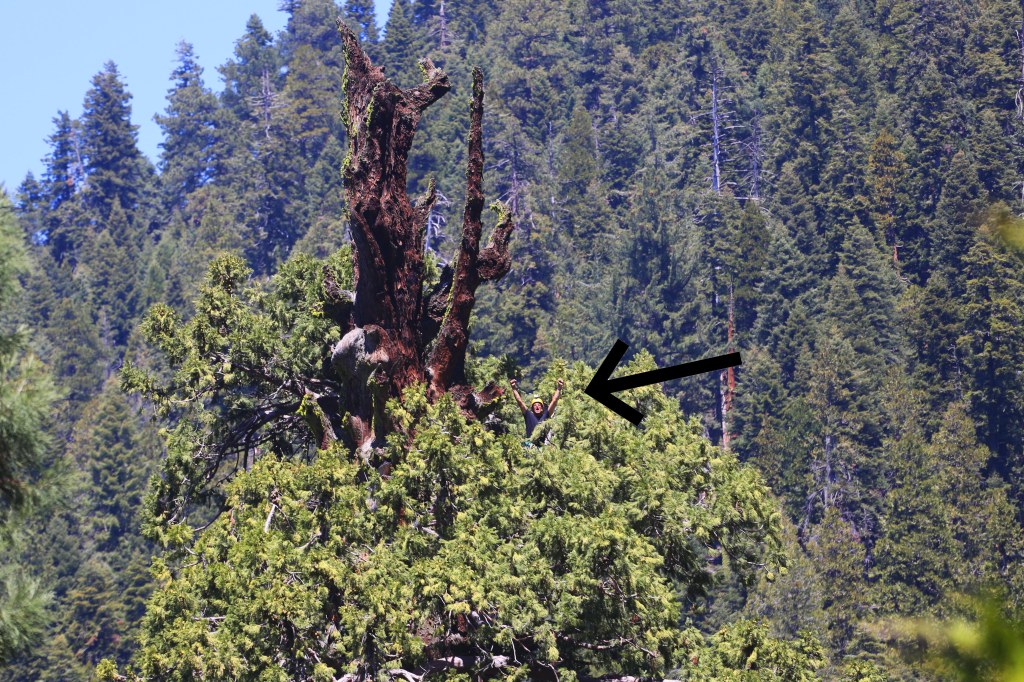
Professional tree climber Rip Thompkins at the top of the Stagg tree, a giant sequoia. (Photo: Erik Olsen)
Sequoias and redwoods are closely related. Both belong to the cypress family (Cupressaceae). The primary difference between sequoias and redwoods is their habitat. Redwoods live near the moist, foggy coast, while sequoias thrive in higher-elevation subalpine zones of the Sierra Nevada. Redwoods are the tallest trees in the world. Sequoias are the biggest, if measured by circumference and volume. Redwoods can grow over 350 feet (107 m). The tallest tree in the world that we know of is called the Hyperion, and it tickles the sky at 379.7 feet (115.7 m). But it is quite possible another tree out there is taller than Hyperion. Redwoods are growing taller all the time, and many of the tallest trees we know of are in hard-to-reach areas in Northern California. Hyperion was only discovered about a decade ago, on August 25, 2006, by naturalists Chris Atkins and Michael Taylor. The exact location of Hyperion is a secret to protect the tree from damage.
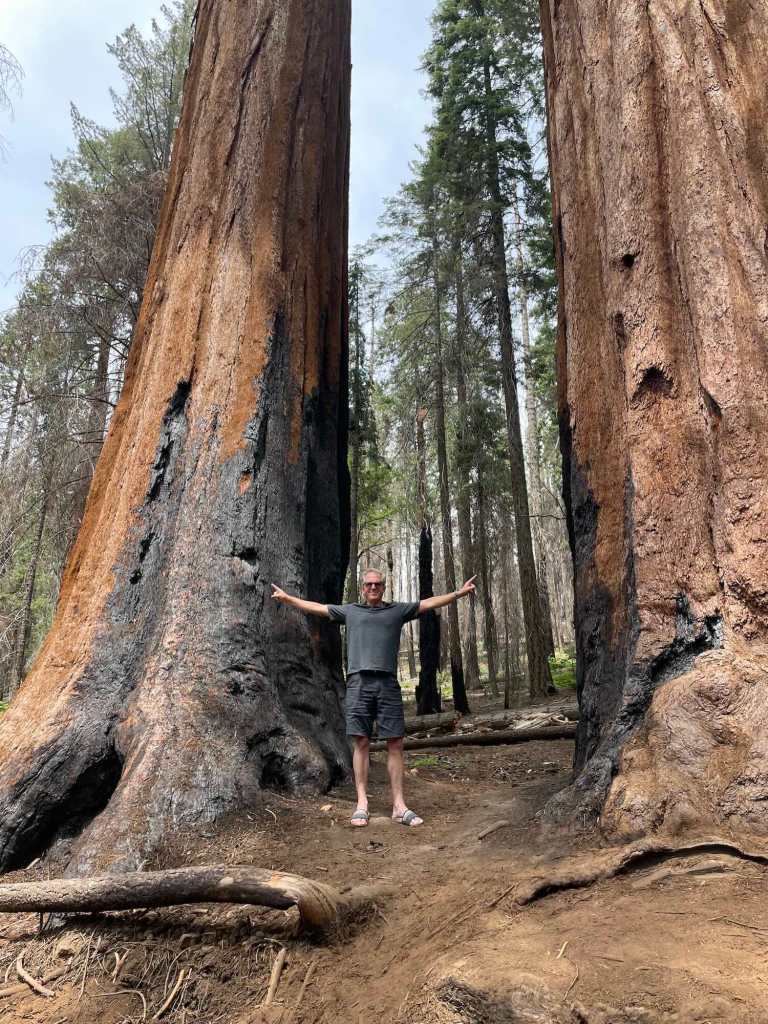
The giant sequoia (Sequoiadendron giganteum) is Earth’s most massive living organism. While they do not grow as tall as redwoods – the average size of old-growth sequoias is from 125-275 feet – they can be much larger, with diameters of 20–26 feet. Applying some basic Euclidean geometry (remember C = πd?), that means that the average giant sequoia has a circumference of over 85 feet.
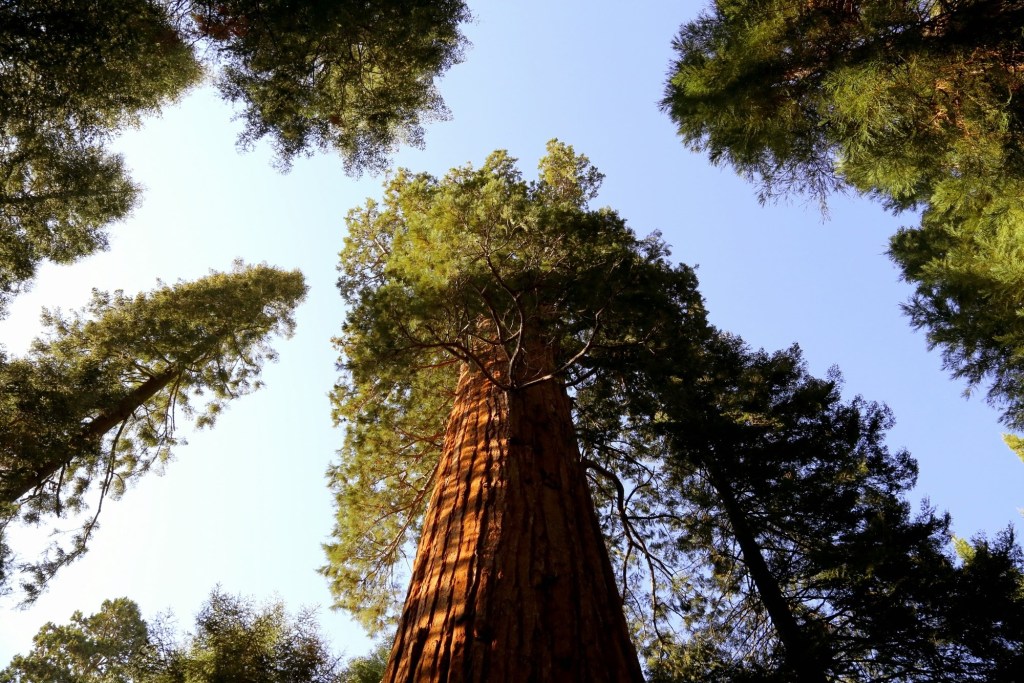
Giant sequoia and man for scale (Photo: Erik Olsen)
Sequoias grow naturally along the western slope of the Sierra Nevada mountain range at an altitude of between 5,000 and 7,000 feet. They tend to grow further inland where the dry mountain air and elevation provide a comfortable environment for their cones to open and release seeds. They consume vast amounts of runoff from Sierra Nevada snowpack, which provides groves with thousands of gallons of water every day. But some say the majestic trees face an uncertain future. Many scientists are deeply concerned about how climate change might affect the grand trees, as drought conditions potentially deprive them of water to survive.
The General Sherman tree in Sequoia National Park. (Photo: Erik Olsen)
The world’s largest sequoia, thus the world’s largest tree, is General Sherman, in Sequoia National Park. General Sherman is 274.9 feet high and has a diameter at its base of 36 feet, giving it a circumference of 113 feet. Scientists estimate that General Sherman weighs some 642 tons, about as much as 107 elephants. The tree is thought to be 2,300 to 2,700 years old, making it one of the oldest living things on the planet. (To learn more about the oldest thing in the world, also in California, see our recent feature on Bristlecone pines.) Interesting fact: in 1978, a branch broke off General Sherman that was 150 feet long and nearly seven feet thick. Alone, it would have been one of the tallest trees east of the Mississippi.
Many sequoias exist on private land. Just last month, one of the largest remaining private stands of Sequoias in the world – the Alder Creek Grove of giant sequoias – was bought by the Save the Redwoods League conservation group for nearly $16 million. The money came from 8,500 contributions from individual donors around the world. The property includes both the Stagg Tree mentioned above and the Waterfall Tree, another gargantuan specimen. The grove is considered “the Crown Jewel” of remaining giant Sequoia forests.
Redwoods (Sequoia sempervirens), also known as coast redwoods, generally live about 500 to 700 years, although some have been documented at more than 2,000 years old. While wood from sequoias was found to be too brittle for most kinds of construction, the redwoods were a godsend for settlers and developers who desperately needed raw material to build homes and city buildings, to lay railroads, and erect bridge trestles. The construction and subsequent reconstruction of San Francisco following the 1906 earthquake heavily relied on redwood timber, prized for its strength, resilience, and natural resistance to decay, making it a foundational resource for the city’s growth and recovery after the earthquake.
The timber companies who profited from redwoods only began to cut them down in earnest a bit over a century ago. But cut them down they did, with vigor and little regard for the preservation of such an amazing organism. After World War II, California experienced an unprecedented building boom, and the demand for redwood (and Douglas fir) soared. Coastal sawmills more than tripled between 1945 and 1948. By the end of the 1950s, only about 10 percent of the original two-million-acre redwood range remained untouched.
The author standing by burned sequoias. (Photo: Erik Olsen)
OK, you got this far. I hope. So how did these trees get so big and tall? Most scientists agree it has to do with climate. Sequoias benefit from California’s often prodigious snowpack, mentioned above, which seeps into the ground, constantly providing water to the roots of the trees. In addition to the snowpack, the thick (up to 2 feet), fire-resistant bark of sequoias helps protect them from wildfires. This forest ecology helps as well, since the fires themselves clear competing vegetation, allowing more sunlight and nutrients to reach the trees. The temperate climate of California, with its relatively mild winters and summer fog, also helps sustain these giants by moderating temperatures and reducing water loss, creating an environment where sequoias can thrive for centuries.
Conversely, Redwoods get much of their water from the air, when dense fog rolls in from the coast and is held firm by the redwoods themselves and the steep terrain. Because of the unique interplay of ocean currents and climate in California, the amount of fog that is available to trees is highly unusual. The trees’ leaves actually consume water in fog, particularly in their uppermost shoots. According to scientists who study the trees using elaborate climbing mechanisms to reach the treetops, in summer, coast redwoods can get more than half of their moisture from fog. (In fact, fog plays a central role in sustaining several of California’s coastal ecosystems.) The reason is that fog is surprisingly dense with water. One study from scientists Daniel Fernandez of California State University, Monterey Bay, showed that a one-square-meter fog collector could harvest some 39 liters, or nearly 10 gallons, of water from fog in a single day.
Giant sequoia – family for scale (Erik Olsen)
Another possible explanation for the coast redwood’s remarkable size lies in its extraordinary genome. According to research from the Redwood Genome Project, the coast redwood (Sequoia sempervirens) is hexaploid, meaning it carries six copies of each chromosome in every cell, an extremely rare feature in trees. In contrast, humans and most other plants and animals are diploid, carrying only two sets of chromosomes.
The coast redwood genome is indeed massive, estimated at around 27 billion base pairs, which is approximately nine times larger than the human genome (which has about 3 billion base pairs). While not exactly ten times larger, the general comparison holds and highlights the tree’s genetic complexity.
By comparing the coast redwood’s genome with those of other conifers, researchers have found hundreds of unique gene families, many of which are associated with stress tolerance, wound repair, fungal resistance, toxin metabolism, and the biosynthesis of flavonoids, all compounds that help mitigate cellular stress.
This rich genetic toolkit may contribute to the tree’s legendary resilience, longevity, and ability to grow to extraordinary heights, though the full relationship between genome size and physical traits in redwoods is still being studied.
Yet another factor may be the trees remarkable longevity. They are survivors. The Sierra Nevadas have long experienced dramatic swings in climate, and this age may be yet another of those swings that the trees will simply endure. Or maybe not. For most of the time that redwoods and sequoias have existed, they have done a remarkable job fighting off fires, swings in climate, as well as disease and bug infestations. Because their bark and heartwood are rich in compounds called polyphenols, bugs and decay-causing fungi don’t like them. Many trees, not just redwoods and sequoias, have genes that help them resist the typical aging processes that limit the lifespan of animals. For instance, trees can compartmentalize and isolate damaged or diseased wood, preventing the problem from spreading to the rest of the tree.
Giant sequoias in California. (Photo: Erik Olsen)
As the air heats up due to global warming, there is a rising threat to the trees’ survival. Warm air pulls moisture from leaves, and the trees often close their pores, or stomata, to maintain their water supply. When the pores close, that prevents carbon dioxide from nourishing the tree, slowing or even halting photosynthesis. The climate in areas where the trees grow hasn’t yet experienced the kind of temperatures that might kill them, but we are really just at the beginning of this current era of global warming, and some scientists warn hotter temperatures could doom many trees.
That said, other studies that show the increased carbon that causes warming could actually be good for the trees. According to an ongoing study from Redwoods Climate Change Initiative, California’s coast redwood trees are now growing faster than ever. As most people know, trees consume carbon dioxide from the air, so, the scientists argue, more carbon means more growth. However, scientists caution that climate change is not a net benefit. Increased drought, fire risk, and ecosystem stress may ultimately outweigh these temporary growth gains.
We will see. While coast redwoods have shown resilience during recent droughts, with no widespread mortality observed, giant sequoias have not fared as well. In the past decade, drought, bark beetles, and intense wildfires have killed nearly 20% of all mature giant sequoias, a sharp and alarming decline for such a long-lived species.
Redwood grove in Northern California (Photo: Erik Olsen)
It all comes down to some kind of balance. Trees may benefit from more carbon, but if it gets too hot, trees could start to perish. That’s a bit of a conundrum, to say the least.
The prospect of losing these magnificent trees to climate change is a double whammy. Not only would a mass die-off of trees be terrible for tourism and those who simply love and study them, but trees are some of the best bulwarks we have on the planet to fight climate change. Redwoods are among the fastest-growing trees on earth; they can grow three to ten feet per year. In fact, a redwood achieves most of its vertical growth within the first 100 years of its life. Among trees that do the best job taking carbon out of the atmosphere, you could hardly do better than redwoods and sequoias.
The Archangel Ancient Tree Archive, an organization out of Copemish, Michigan, has been “cloning” California’s big trees for nearly a decade. They take snippets of the trees from the top canopy and replant them, essentially creating genetically identical copies of the original tree. It’s more like propagating than cloning, but that’s what they call it. The group’s founder, David Milarch, believes fervently that planting large trees is our best bet in stopping climate change. This is the video story I produced about Milarch back in 2013. It’s worth a watch. He’s an interesting character with a lot of passion.
Preserving and protecting what’s left of these amazing organisms should be a priority in California. These trees are not only part of the state’s rich natural legacy, but they offer ample opportunities for tourism and strengthening the economies of the regions where they grow. It’s hard to visit Redwood National and State Parks or Sequoia & Kings Canyon National Parks and to come away with anything but awe at these magnificent organisms. California is special, and we are blessed to have these trees and the places where they grow in our state.