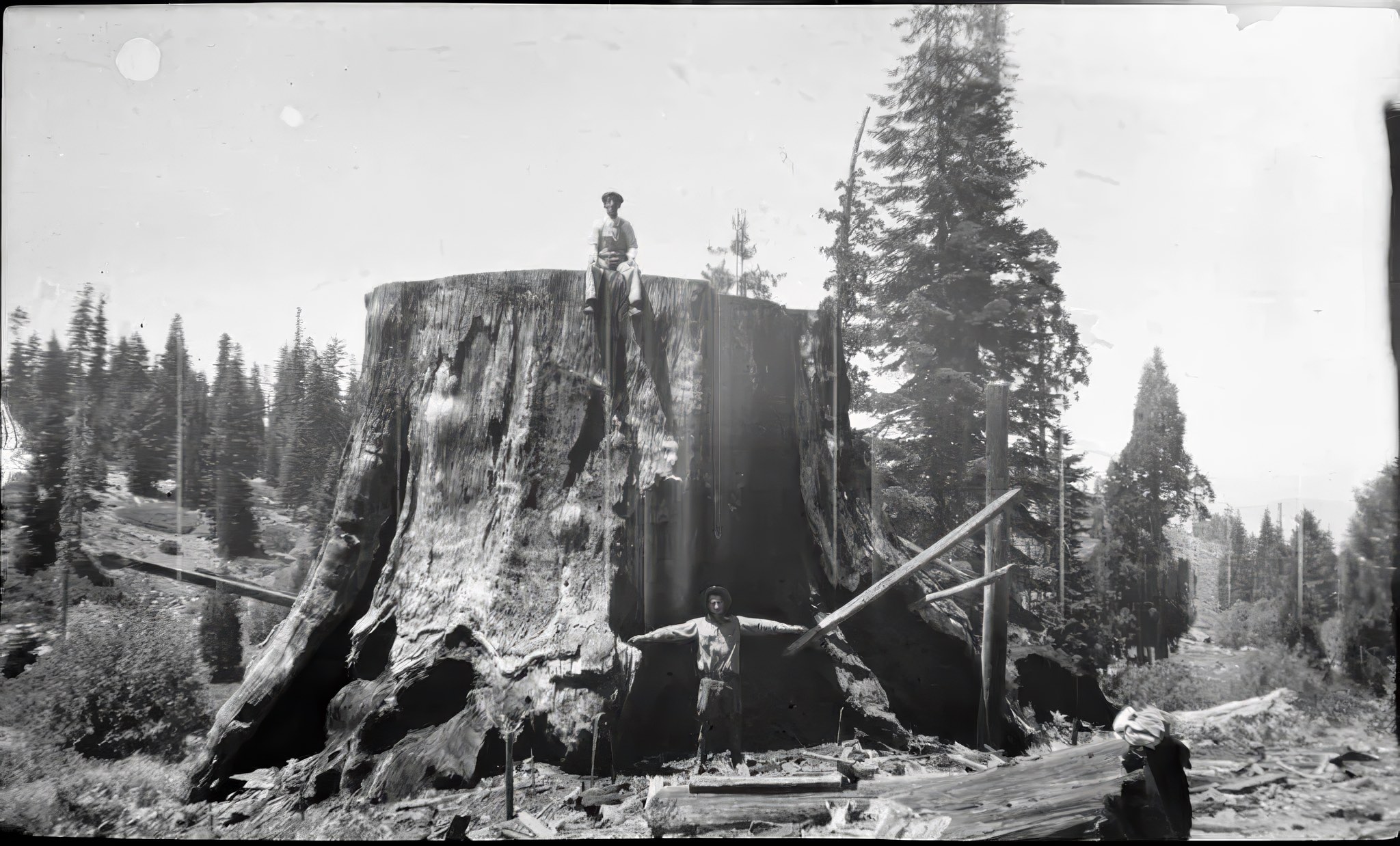
Giants Fallen: The Destruction of Converse Basin Grove and its Giant Sequoias
The true tragic story of one of the worst environmental crimes in California history.
Updated
California has faced its share of environmental calamities. We’ve experienced wildfires that have denuded the landscape, destroying valuable forests and homes, and taking human lives. Oil spills have soiled coastlines and killed wildlife. But of all the great environmental crimes the state has faced, perhaps few rank as high as the destruction of Converse Basin Grove in the late 1800s. And yet very few people have ever heard of it.
Located in the southern part of the Sierra Nevada Mountains east of Fresno, just outside Kings Canyon National Park, Converse Basin covers thousands of acres, and it was once home to what may have been the largest and densest grove of Giant Sequoia (Sequoiadendron giganteum) on the planet.
Conditions there were perfect for sequoias: deep, well-drained granite soils, plenty of winter snow that melted slowly into summer and regular, low-intensity fires that cleared out competing trees and opened the sequoias’ cones so their seeds could sprout in the bare, ashy soil.
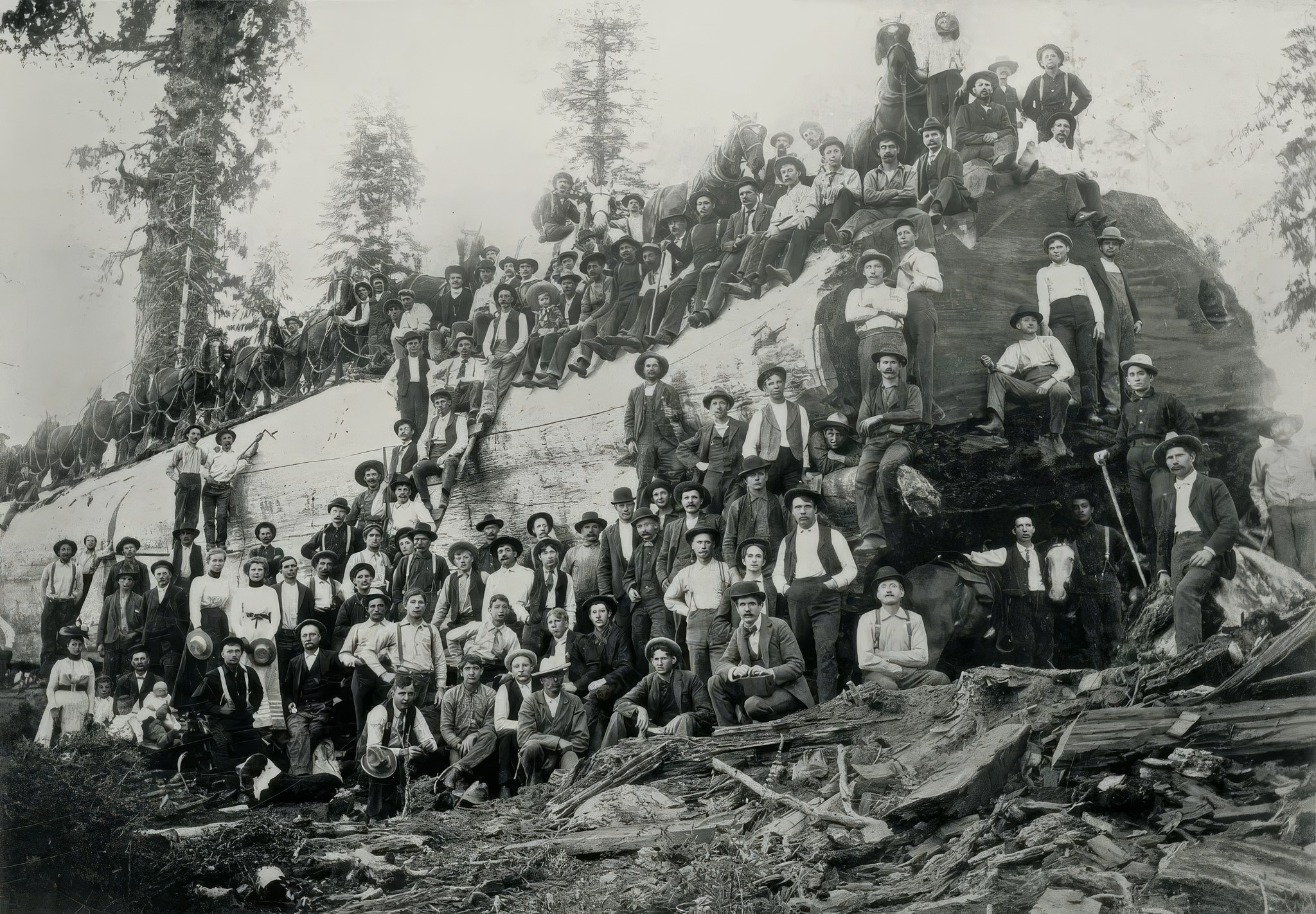 Loggers and a team of horses pose on a fallen sequoia 26 feet in diameter. Converse Grove, California 1917. (Wikipedia)
Between 1892–1918, the Sanger Lumber Company and its successors clear-cut the grove, felling about 8,000 giant sequoias, some more than 2,000 years old, in what has been called “the greatest orgy of destructive lumbering in the history of the world.” Only a handful of big trees were left standing.
The biggest remaining grove today is the Giant Forest in Sequoia National Park, with an estimated 8,400 giant sequoias more than a foot across at the base, including the world’s biggest tree, the General Sherman.
(See our feature on the biology behind the immense size of redwoods and sequoias here.)
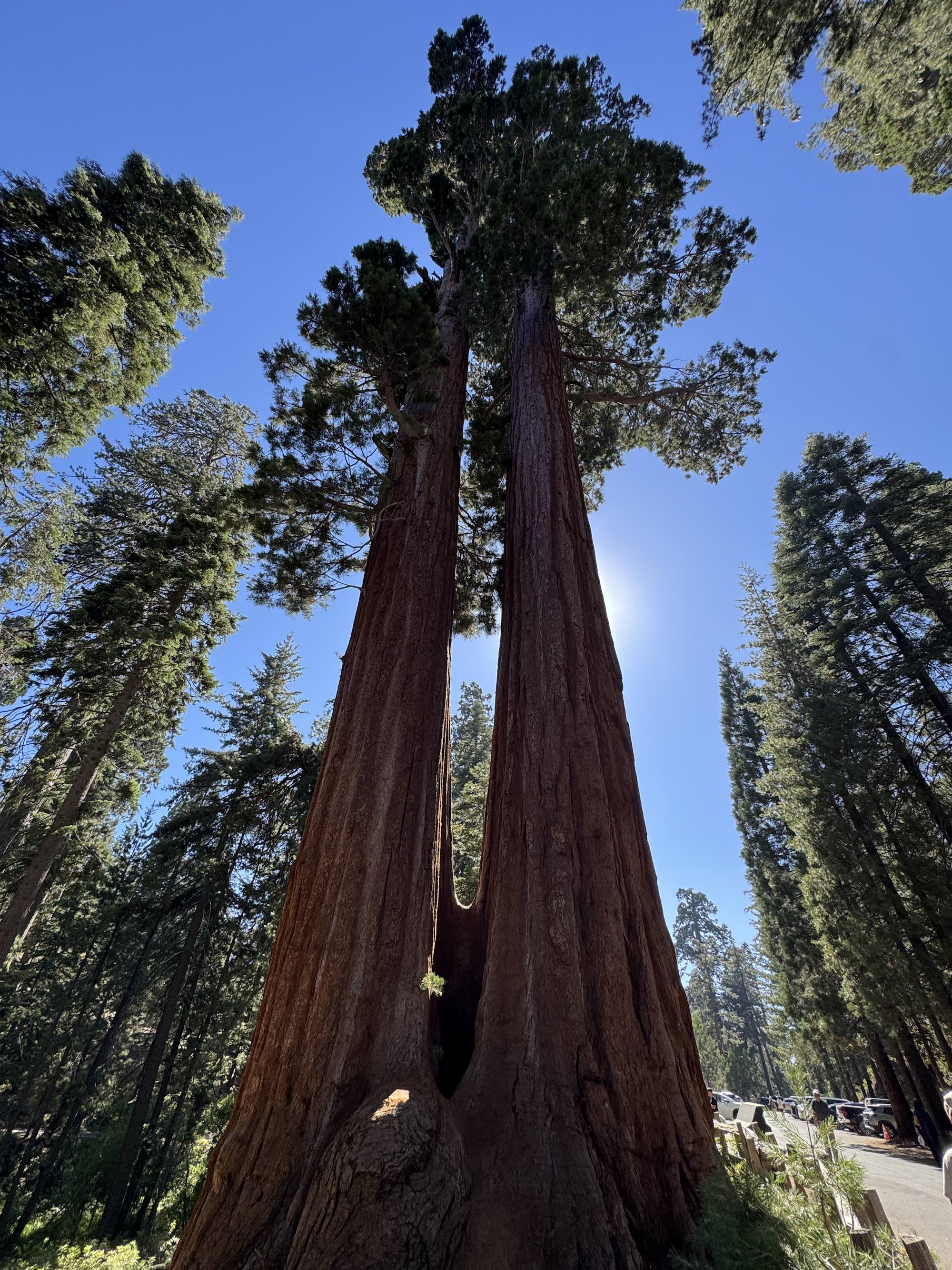 Sequoia Trees, Sequoia National Park (Photo: Erik Olsen)
So how did this happen? Converse Basin was “discovered” by loggers just as demand for lumber exploded after California’s Gold Rush and the population boom that followed. Coast redwood was the main building material in 19th-century California, and San Francisco was practically a redwood city.
Loggers turned to the giant sequoias next, led by the Kings River Lumber Company, formed in 1888, which got hold of the basin by both legal and shady means. It was the first industrial-scale assault on the Sierra’s big trees, and it took a lot of money, because the company had to build a mill in the mountains and then figure out how to get giant logs down to the valley.
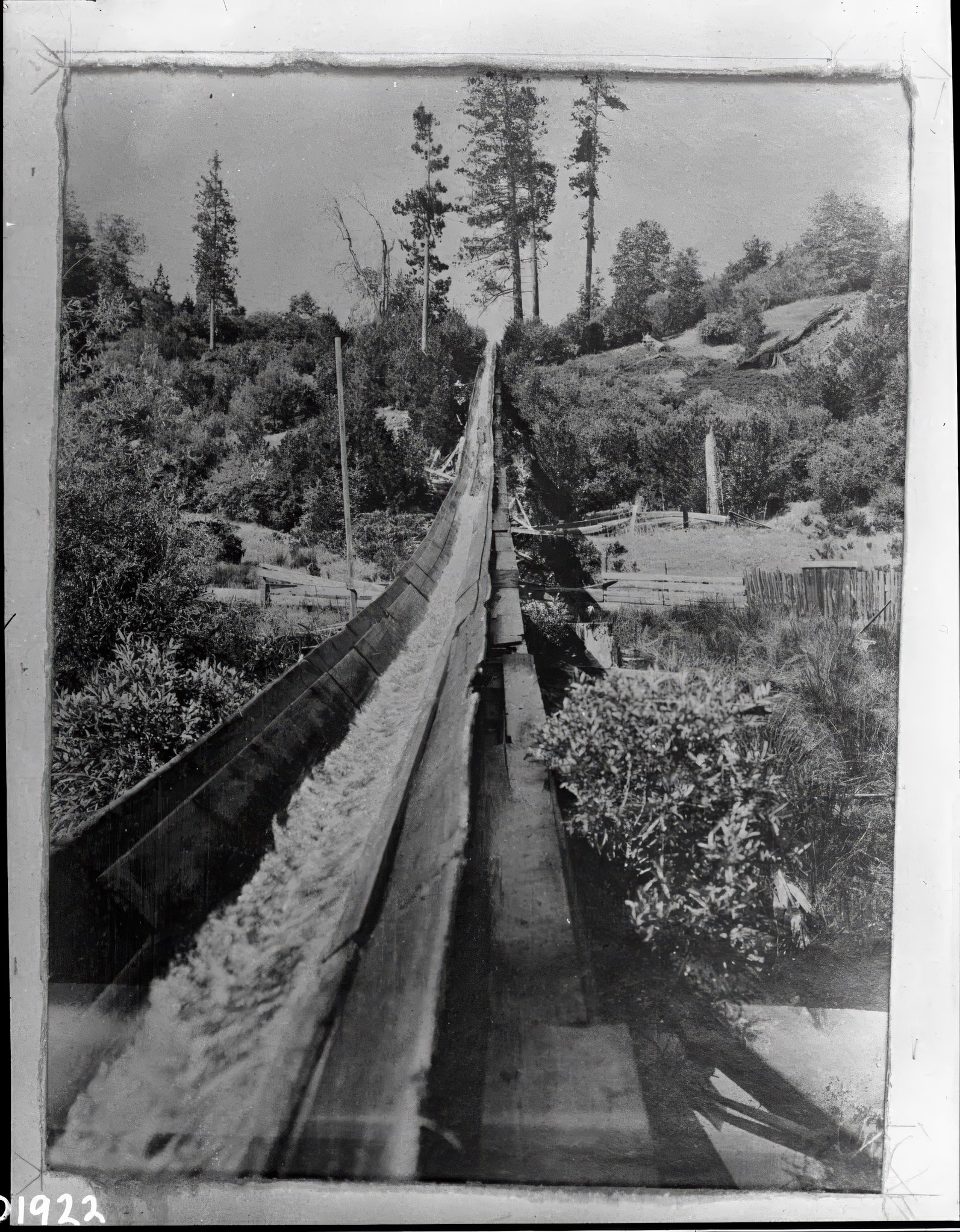 The 54-mile-long flume, or log conveyor, from Converse Basin Grove to the town of Sanger, about 20 miles from Fresno.
(Photo: National Park Service)
The 54-mile-long flume, or log conveyor, from Converse Basin Grove to the town of Sanger, about 20 miles from Fresno.
(Photo: National Park Service)
The San Francisco-based company’s solution was a 54-mile-long flume, a giant wooden waterslide, from Converse Basin down to the town of Sanger, near Fresno. Perched on trestles along steep canyon walls, it could carry cut lumber all the way down to the railroad in about half a day. Sanger, which called itself the “Flumeopolis of the West,” dried and finished the lumber and shipped it by rail across California.
Fun fact: flumes like this one helped inspire amusement park log rides like the Timber Mountain Log Ride at Knotts Berry Farm in Southern California.
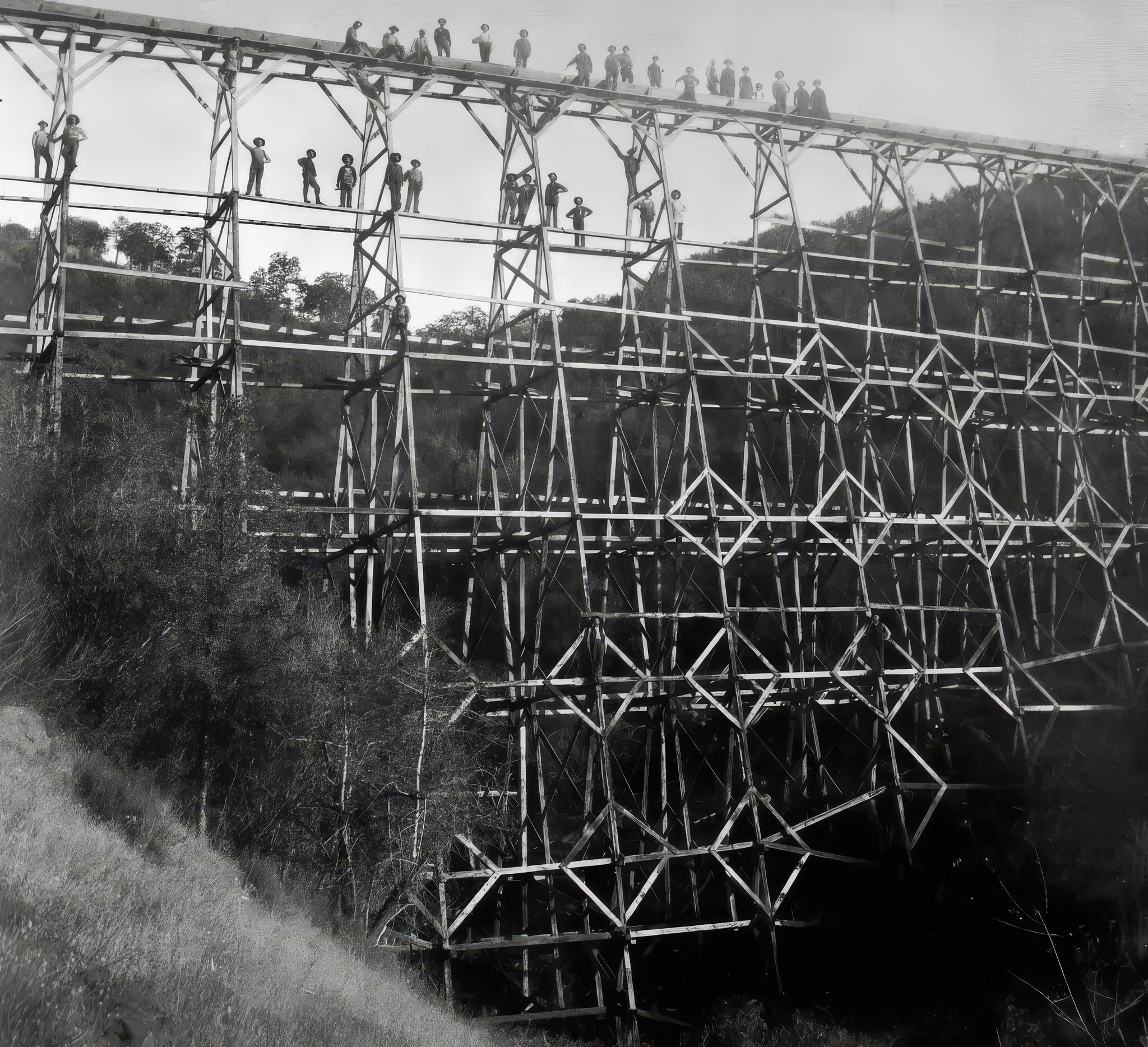 High trestle under construction on the Sanger Flume 1905. (Public Domain)
But how did this happen in the first place?
Rugged terrain had protected these trees for thousands of years. What opened them up was a federal law that may be one of the most destructive environmental laws the U.S. ever passed, even if nobody intended it that way.
In 1878, the United States Congress enacted the Timber and Stone Act to get public timberland into private hands. It let individuals buy 160-acre parcels of federal land in California and a few other Western states for very little, as long as they filed a claim. Like other land laws of the time, it was meant to encourage settlement of the West.
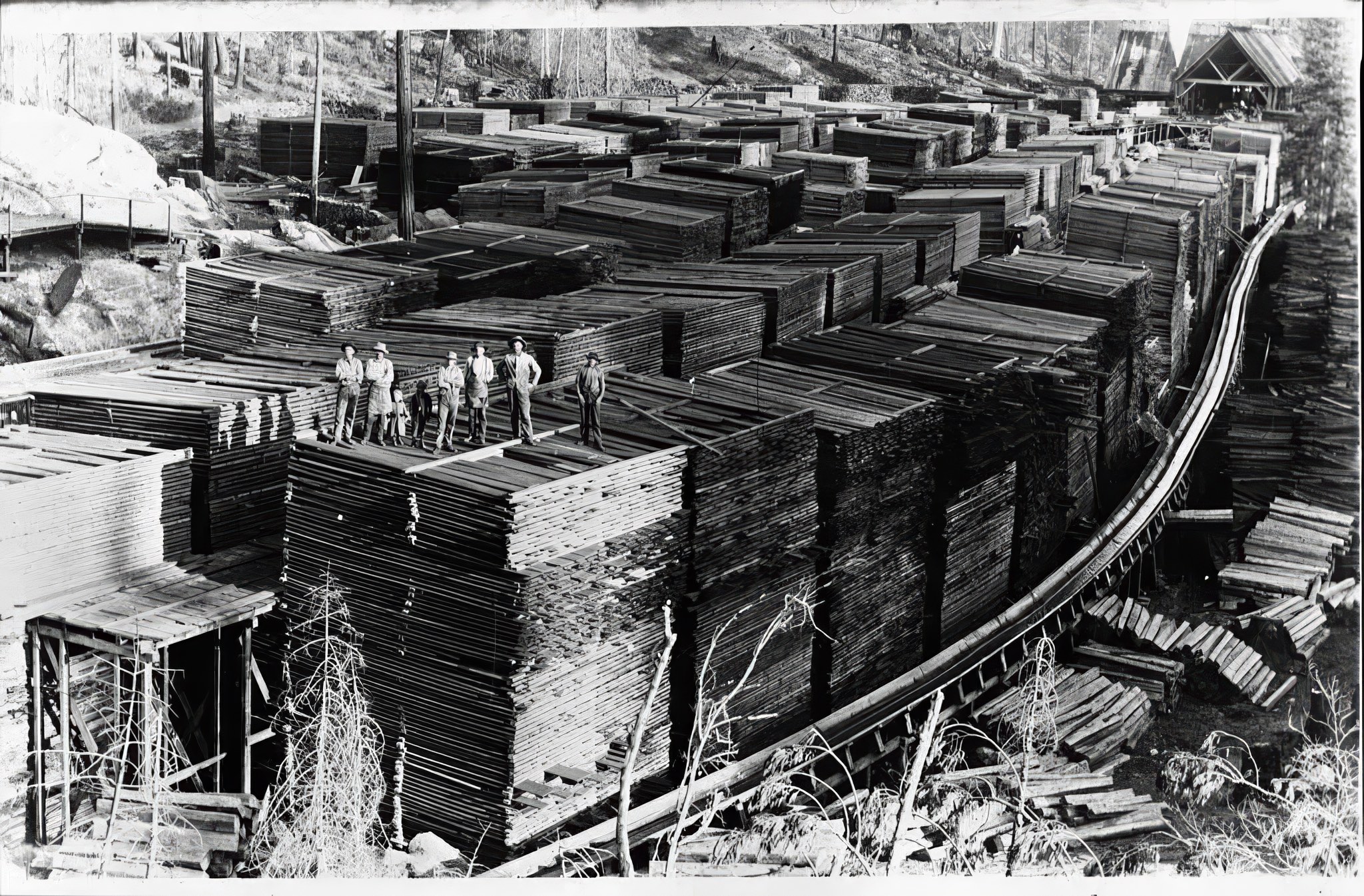 Stacks of lumber with workers at Converse Basin (Public Domain)
Before that, there was no way to buy public timberland just to log it. After 1878, anyone could buy land that wasn’t good for farming or mining for $2.50 an acre. All they had to do was swear they wanted it for their own use, not to resell.
That oath was easy to get around, and huge amounts of public forest flowed to lumber companies. The Kings River Lumber Company bought some of its land legally and a lot of it not.
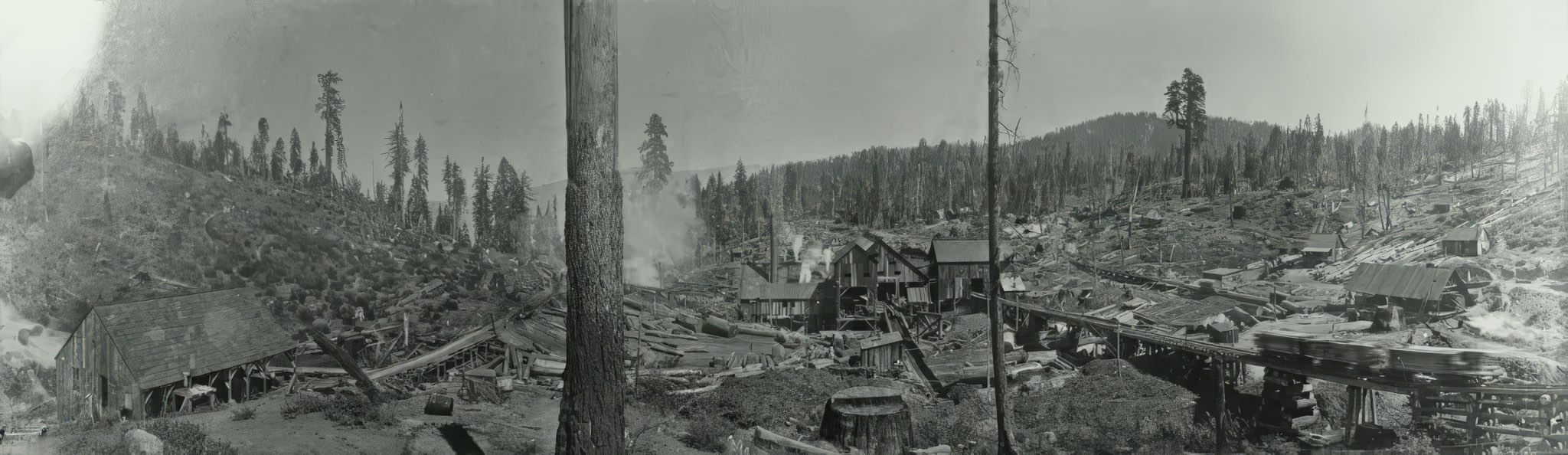 Converse Basin Panorama from 1900. (Photo: National Park Service)
The trick was called “dummying.” The company paid people to file claims on parcels in Converse Basin, swearing the land was for their own use, then had them sign it over to the company. Parcel by parcel, it assembled a huge block of old-growth sequoia forest.
Logging started in 1891, with 20 million board feet of timber going down the flume that first season. But the company was built on huge debts and needed to cut fast to pay them off, and the flume kept breaking down. In 1895, creditors took over and renamed it the Sanger Lumber Company. The new managers pushed even harder, running a narrow-gauge railroad deeper into the basin and building a new sawmill in 1897.
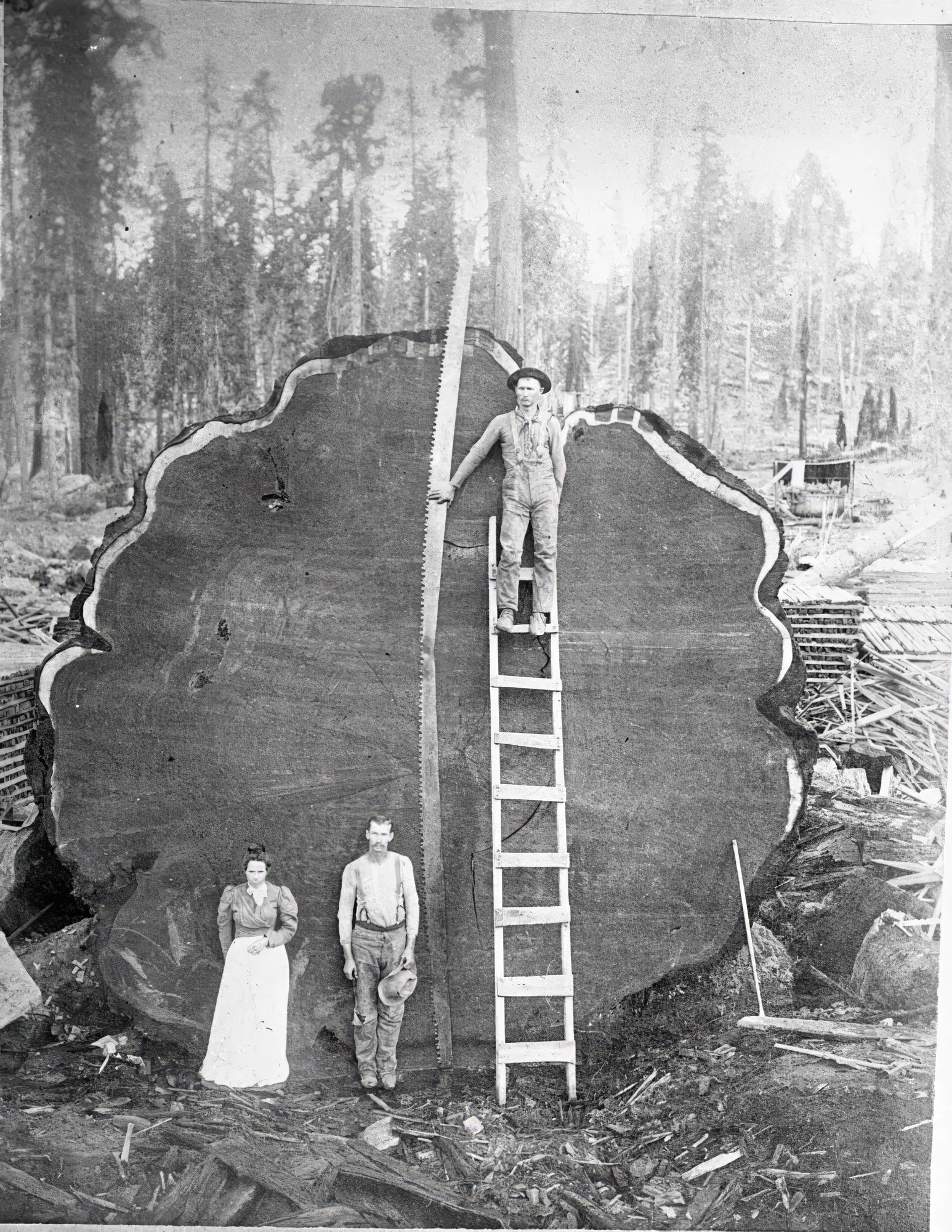 Cut end of tree showing welded crosscut saws. (Photo: National Park Service)
By the end, the loggers had cut down about 8,000 mature sequoias. The most famous survivor stands at the north edge of the grove, overlooking Kings Canyon. Loggers spared it and named it after their foreman, Frank Boole. The Boole Tree is one of the ten largest trees in the world and has the biggest base of any known sequoia, 112 feet around. It’s more than 2,000 years old and the largest tree in any U.S. national forest. Standing alone among the stumps, it feels less like a monument to the sequoias than to what was done to them.
At its peak, the operation employed up to 700 men. It was dangerous and incredibly wasteful. Sequoia wood is brittle, and many giant trees shattered when they hit the ground. Huge numbers of logs were never even hauled out, left to rot where they fell.
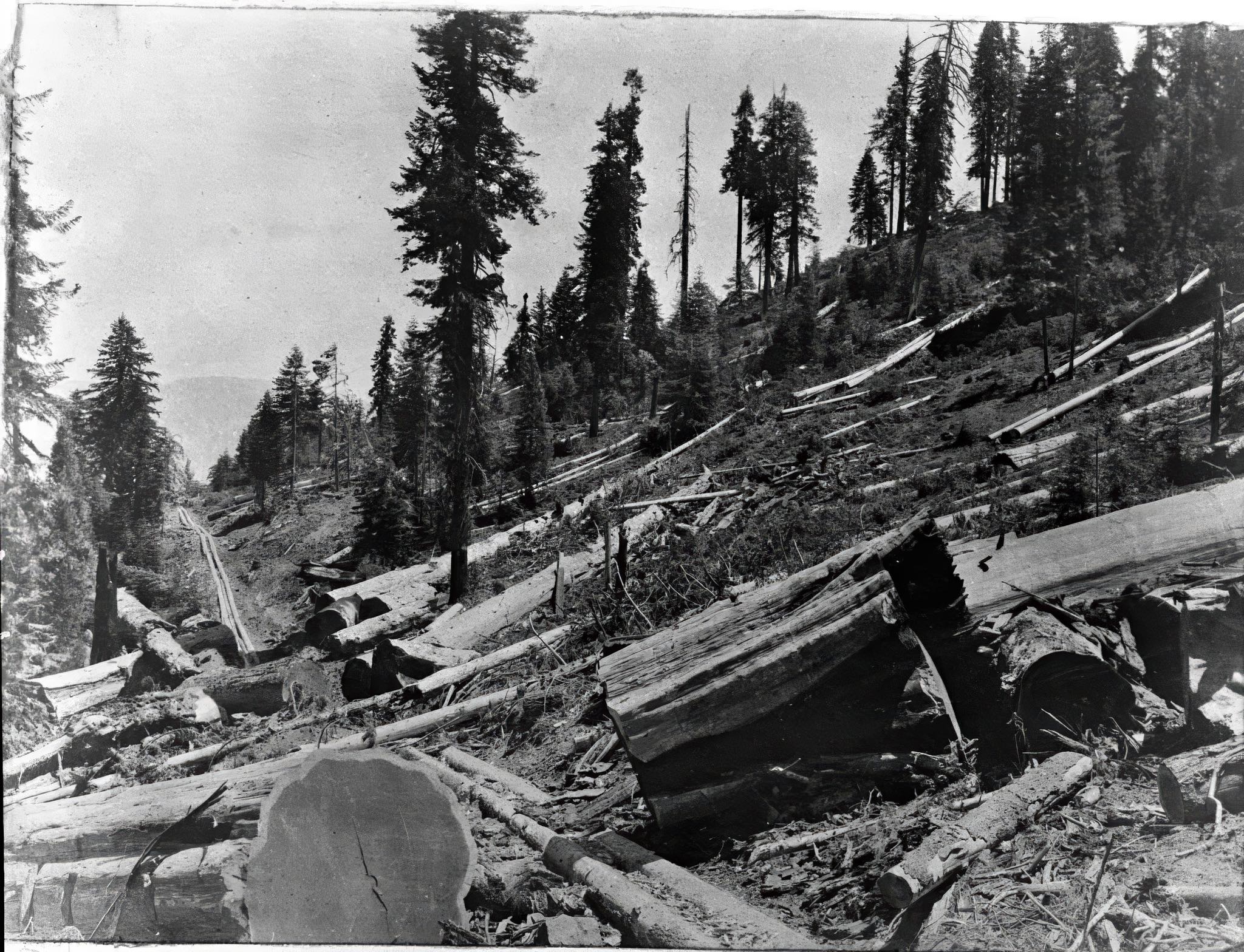 Logging, Converse Basin, near Boole Tree. (Photo: National Park Service)
And after all that, it never made money. The company was sold in 1905. In a Harper’s essay titled The Last Stand of the Redwoods, the Yale English professor Henry Seidel Canby described what he saw as “a vast and lonely cemetery.”
The new owner, a Michigan lumberman, moved on to a lower-elevation, mixed forest. The old buildings at Converse Basin were burned, and smaller-scale logging, more like scavenging, went on there into the 1910s.
In 1935, the federal government bought the ravaged land back for $15 an acre. It’s now part of Giant Sequoia National Monument. You can still walk among the giant stumps, some of them wide enough to dance on, surrounded by young trees.
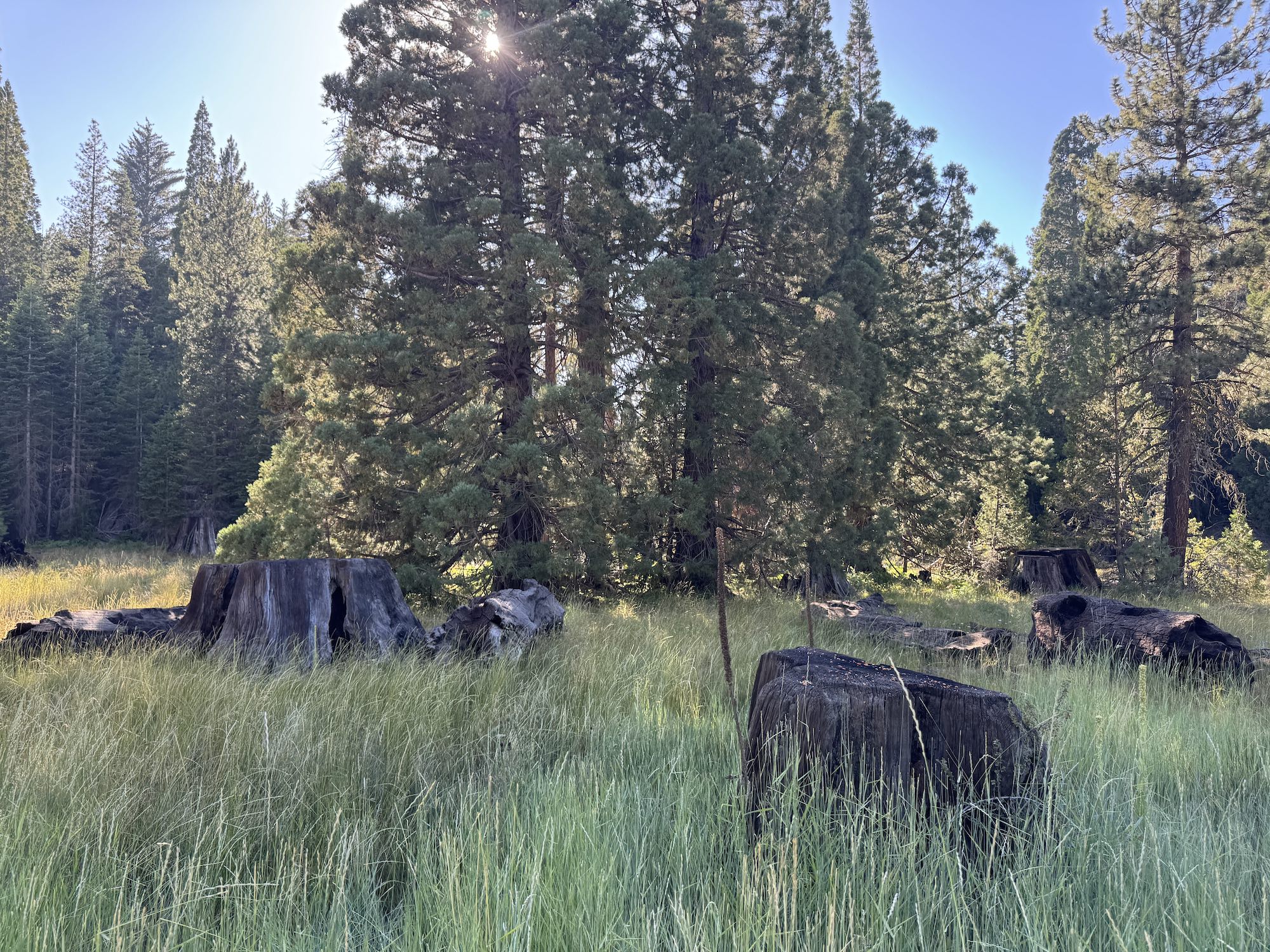 Converse Basin Grove today (Photo: Erik Olsen)
Destruction like this helped spark the conservation movement. John Muir and others fought to protect the remaining big trees, and their efforts helped create the national parks and forests that saved most of the other groves.
Today, most sequoia groves are publicly owned and protected. But they face a new threat. A century of putting out every fire let fuel pile up and kept sequoias from reproducing, since they need regular, gentle fires. Add the long-term Sierra snowpack reduction, hotter temperatures and millions of trees killed by drought and bark beetles, and you get fires hot enough to kill even giant sequoias.
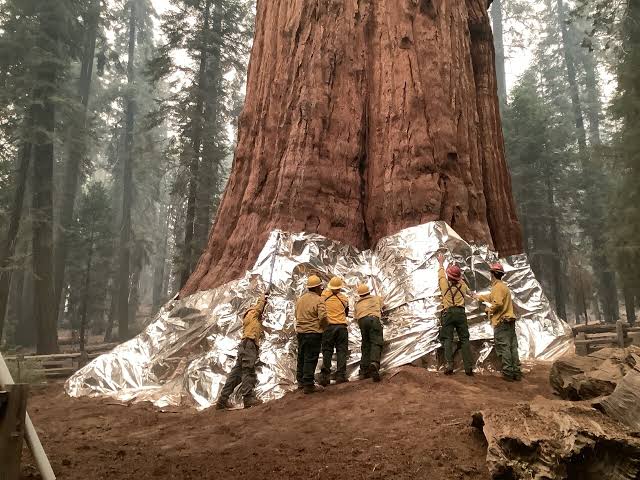 U.S. Forest Service wildland firefighters protect Giant Sequoia tree during the Castle Fire in August 2020.
(Photo: US Forest Service)
U.S. Forest Service wildland firefighters protect Giant Sequoia tree during the Castle Fire in August 2020.
(Photo: US Forest Service)
The 2020 Castle Fire was the worst. It killed an estimated 7,500 to 10,600 large sequoias, 10 to 14 percent of all the big sequoias on Earth, in a single fire. That’s more than the loggers cut in Converse Basin.
If you go to Converse Basin, walk out to the Boole Tree and look around at the stumps. It took thousands of years to grow that forest and about a decade to cut it down. The sequoias that survived the loggers now need us to protect them from fire.
More California science, photography and wild places on Instagram @californiacuratedus