The Mystical Sentinels of the Mojave: Unraveling the Secrets of the Joshua Tree

Standing tall against the backdrop of the sun-scorched Mojave Desert, the Joshua Tree (Yucca brevifolia) is an emblematic figure of resilience and beauty. With its twisted, bristled limbs reaching towards the sky, this iconic species is not just a tree but a symbol of the untamed wilderness that is California’s desert landscape.

The Joshua Tree’s biology is as unique as its silhouette. It’s often considered to be a member of the Agavaceae family (along with agaves), more closely related to the asparagus than to other trees. This desert dweller is an arborescent, or tree-like, species of yucca, characterized by its stout, shaggy trunk and a crown of spiky leaves. Unlike most trees, the Joshua Tree doesn’t have growth rings, making it difficult to determine their age. However, these trees can live for hundreds of years, with some ancient sentinels estimated to be over a millennium old. The tallest trees reach about 15 m (49 ft). New plants can grow from seed, but in some populations, new stems grow from underground rhizomes that spread out around the parent tree.

Joshua Tree National Park (Erik Olsen)

The Joshua tree is also known as izote de desierto (Spanish for “desert dagger”). It was first formally described in the botanical literature as Yucca brevifolia by George Engelmann in 1871 as part of the famous Geological Exploration of the 100th meridian (or “Wheeler Survey“).

The moniker “Joshua tree” is believed to originate from Mormon pioneers traversing the expanses of the Mojave Desert around the mid-1800s. They found the tree’s distinctive shape—with its limbs persistently outstretched—reminiscent of the biblical tale where Joshua extends his hands for a prolonged period, assisting the Israelites in their capture of Canaan, as recounted in the Book of Joshua. The tree’s tangled leaves also contributed to this image, giving it the semblance of a beard.

Nevertheless, this charming story lacks direct historical evidence from the period and the name “Joshua tree” doesn’t appear in records until after the Mormons had already settled in the area. Interestingly, the tree’s unique form may bear a stronger resemblance to narratives associated with Moses rather than Joshua. The absence of contemporary accounts leaves the true origin of the name enshrouded in the mystery of the past, adding to the tree’s allure and the folklore of the American West.

Joshua Trees burned in the 2020 Dome fire. (Photo: Erik Olsen)

The habitat of the Joshua Tree is as unforgiving as it is beautiful. They are found primarily in the Mojave Desert, the highest and coldest desert in the United States. These trees have adapted to the extremes, flourishing at elevations between 2,000 and 6,000 feet where the temperatures can plummet below freezing at night and soar during the day.

One of the most fascinating aspects of the Joshua Tree is its symbiotic relationship with the yucca moth. In a marvelous evolutionary dance, the moth is the tree’s sole pollinator, and in turn, the tree provides the moth a place to lay its eggs. This mutualistic relationship underscores the delicate balance of desert ecosystems.

Joshua Tree National Park was established as a national monument in 1936 and later upgraded to a national park in 1994, largely to protect the distinctive Joshua Trees and the unique desert ecosystem they epitomize. The effort to safeguard this landscape was driven by citizens and supporters who were passionate about the conservation of its otherworldly terrain and the diverse life forms that inhabit it.

Despite their hardy appearance, Joshua Trees harbor secrets that are only now being fully understood by scientists. Their root systems, for instance, can extend vertically to 30 feet and horizontally to 36 feet, a testament to their search for water in arid soils. Moreover, these trees are a keystone species, providing critical habitat for a host of desert organisms, from the Scott’s Oriole that nests in its branches to the black-tailed jackrabbit seeking shade under its canopy.

Joshua Trees burned in the 2020 Dome Fire (Photo: Erik Olsen)

However, the stability of the Joshua Tree’s future is uncertain. Climate change poses a significant threat to its survival. Rising temperatures and altered precipitation patterns are projected to shrink the suitable habitat for Joshua Trees by up to 90% by the end of the century. Efforts are underway to understand and mitigate these impacts, with conservationists advocating for policies to reduce carbon emissions and protect the Joshua Tree’s habitat from development and resource exploitation.

In August 2020, a devastating blaze known as the Dome Fire swept through the Mojave National Preserve, scorching over 43,000 acres of one of the most extensive Joshua tree forests on the planet, located at Cima Dome​​​​. The inferno, which was one of the most destructive in recent history, decimated an estimated 1 million to 1.3 million Joshua trees, transforming a once thriving ecosystem into a haunting landscape of charred remains​​​​.

Joshua Trees burned in the 2020 Dome Fire (Photo: Erik Olsen)

This catastrophic event not only altered the physical landscape but also raised urgent questions about the future of these iconic trees in the face of escalating climate change threats. The resilience of Joshua trees to fire is typically low, and the recovery of these forests could be severely hampered by the changing climate, with hotter, drier conditions becoming more common. The loss of these trees in such vast numbers is a stark reminder of the vulnerability of desert ecosystems and the need for immediate action to mitigate the impacts of climate change and protect these natural treasures for future generations.

Although California came out of drought in 2023, there is no guarantee that dry, hot conditions won’t continue. If they do, Joshua trees could lose 90 percent of their range by the end of the century, Dr. Cameron Barrows, a research ecologist with the University of California Riverside’s Center for Conservation Biology told Outside magazine

The Joshua Tree’s importance to California’s landscape is indelible. It’s not only an ecological mainstay but also a cultural and historical icon, inspiring artists, musicians, and nature lovers alike. The trees’ spiky profiles are a testament to the unrivaled beauty of the American West.

Autumn’s Alchemy: Unveiling the Science Behind California’s High Sierra Fall Foliage

Fall colors changing in the Eastern Sierra (Photo: Erik Olsen)

Ah, the changing of the leaves—a hallmark of autumn that heralds the end of long summer days and the arrival of crisp, cool weather. The spectacle is especially captivating in the high Sierra region of California, where deciduous trees put on a breathtaking show every year. This year’s show began in early October with an explosion of gold, persimmon, and vibrant orange blanketing the granite crags of the Eastern Sierra.

For years, the Eastern Sierra Fall Color Report has dutifully documented the arrival of Autumn and the magnificent changing hues of millions of trees. But have you ever stopped to wonder why the leaves change color? Why do leaves go from a robust green to vibrant hues of orange, red, and yellow? Well, it’s not just nature’s way of getting all dressed up for Halloween; there’s a complex interplay of biological, chemical, and physical processes at work.

(Photo: Erik Olsen)

Let’s start with the basics: chlorophyll. During the growing season, leaves are green due to chlorophyll, the molecule that helps plants photosynthesize. Photosynthesis is the process by which plants convert sunlight, water, and carbon dioxide into sugar and oxygen. Chlorophyll’s structure is such that it absorbs blue and red light well but reflects green light, making leaves appear green. However, as the days shorten and temperatures drop, it becomes a signal to the trees that it’s time to get ready for winter.

Structurally, chlorophyll is a complex molecule with a central magnesium ion surrounded by a long hydrocarbon tail. This structure is particularly adept at capturing and utilizing photons from sunlight for photosynthesis. Yet, chlorophyll is also a bit delicate, getting easily damaged by factors like intense light, exposure to oxygen, and even its own activity. That’s why plants are continuously synthesizing it during the growing season. In a sense, chlorophyll is both the engine and the fuel of the plant world, driving the processes that sustain not just the trees themselves but also the ecosystems that rely on them.

Seen through a microscope, chlorophyll is concentrated within organisms in structures called chloroplasts – shown here grouped inside plant cells. By Kristian Peters — Fabelfroh – Self-photographed, CC BY-SA 3.0

As autumn approaches, the biological clock inside trees ticks toward a season of preservation. Photosynthesis slows down, partly because there’s less sunlight but also because the plant is actively throttling this process. As a result, chlorophyll begins to break down and isn’t replenished. Other pigments present in leaves then take center stage, like carotenoids and anthocyanins. Carotenoids are always there, hanging out alongside chlorophyll, but are usually overshadowed by it. They are the ones that give leaves their yellow and orange hues, and are also the molecules that give the pink flamingo its rosy color.

Drone view of changing Fall colors in the Eastern Sierras

Anthocyanins are another class of pigments, but these are a little more high-maintenance; they form only when certain conditions are met. You see, anthocyanins are created through chemical reactions that are influenced by the pH levels in the leaf cells and the amount of sugar that is present. That’s why some years, when conditions are just so—like a warm, sunny fall following a cooler period—you’ll see a dazzling display of red leaves. Anthocyanins absorb light at both the blue and green ends of the spectrum and reflect red light, giving leaves their gorgeous red and purple shades. Anthocyanins are what help give boysenberries their deep purple color.

In California’s high Sierra region, where the elevation provides a unique set of environmental factors, the changing of the leaves can be particularly spectacular. Deciduous trees like the Black Oak, Quaking Aspen, and Dogwood populate these areas. The interplay of sunlight, soil acidity, and temperature variations at higher elevations creates an ideal stage for the full spectrum of fall colors to be displayed. Even within the same species of tree, or sometimes even on the same tree, you can see a diversity of colors due to slight variations in soil composition, moisture, and sunlight exposure.

Changing aspens in the Eastern Sierra (Erik Olsen)

It’s all a spectacular display, but it doesn’t last forever; in fact, the most vibrant colors only last a few weeks. And then the leaves die and fall off. It’s not gravity doing its thing, but rather a biological process called “abscission.” As winter approaches, a layer of specialized cells grows between the leaf stem and the tree, severing the vessels that supply nutrients and water to the leaf. This triggers the leaf to die and eventually fall, making way for new growth in the spring.

While the fall colors in California’s Eastern Sierra are an annual marvel, they’re not immune to the sweeping hand of climate change. Rising temperatures and shifting precipitation patterns have started to tinker with the timing and intensity of the autumnal display. For instance, warmer conditions could delay the onset of the color changes and potentially shorten the duration of peak colors, while altered moisture levels might impact the vibrancy of hues. Even subtle shifts in climate can affect the complex chemistry of leaf coloration. As much as the changing leaves are a symbol of nature’s constancy, they also serve as a barometer for the environmental changes unfolding on a global scale.

CALIFORNIA CURATED ON ETSY

Purchase stunning art prints of iconic California scenes.
Check out our Etsy store.

The transformation of leaves in the high Sierra is far more than a seasonal aesthetic; it’s a vivid illustration of how meticulously nature has calibrated life to adapt and thrive. As the leaves cycle through shades of green, orange, red, and finally brown, they tell a tale of survival and renewal, a complex story scripted in their very cells. This fall spectacle is a fleeting moment of brilliance, orchestrated by an array of biological, chemical, and physical processes, each contributing to the grand narrative of life on Earth. In essence, each leaf is a microcosm of resilience and change, characteristics not just of a California autumn, but of life itself.

The California Gull is the Unsung Hero of Feathered Adaptability and Ecological Balance

Imagine a bird that’s not only a reliable fixture on both coastal and inland landscapes, but also a winged hero with a knack for saving ecosystems and crops alike. Meet the California gull, a seemingly unassuming creature that’s the avian equivalent of a Toyota Camry: dependable, middle-of-the-road, and surprisingly full of stories. Far from just another seabird scrounging for scraps, this versatile gull is a fascinating study in adaptability, ecological impact, and even historical significance.

Birdwatching might be dismissed as a pedestrian hobby, but when you dive into the details, it’s a riveting blend of science, art, and natural history. Take the task of identifying a gull, for instance. You might think all gulls are created equal, but you’d be sorely mistaken. From the curvature of the bill to the tint of the feathers, each species presents its own unique set of traits. And in this realm, the California gull is the embodiment of middle-of-the-road reliability..

The California gull’s bill is a case study in avian averageness: not too long, not too short, but just right. Then there’s the back—a shade of gray that’s neither too dark nor too light. Size-wise, it’s comfortably nestled between the imposing giants and the pint-sized runts of the gull family. Even its legs are a kind of Goldilocks yellow—nothing too flashy or understated. The same goes for its migration pattern. This bird isn’t setting any long-distance records like the ambitious Arctic terns, nor is it stubbornly clinging to a single geographical point year-round. It moves around a reasonable amount—perhaps 500 to 1,000 miles—but always makes it back to familiar territory in good time.

California gull. (Larus californicus) Image: Wikipedia

And where might you spot this paragon of mediocrity? Well, in winter, they’re pretty much where you’d expect any self-respecting gull to be: on beaches, in harbors, hanging around landfills, playgrounds, and fields, or perhaps looking for morsels in tide pools and kelp beds. Come early summer, many venture inland to breed, but they generally make it back to their stomping grounds before the first school bell rings in September.

Yet for a bird that’s so unassuming, the California gull enjoys a surprising level of fame. Case in point: it’s the state bird of Utah, not California. That honor was bestowed upon it for its historical role during the initial Mormon settlement. The Sea Gull Monument in Salt Lake City honors the gull, who saved the people of Utah by consuming the Rocky Mountain crickets which were destroying all the crops in 1848. Quote from monument:

“The Mormon pioneers planted crops in the spring of 1848, after suffering great hunger during their first winter in the Salt Lake Valley. As the crops ripened, hordes of devouring crickets descended upon them from the foothills east of the valley. The Saints fought them with clubs, fire, and water. As they despaired of saving the next winter’s food, their prayers for deliverance from almost sure starvation were answered when thousands of sea gulls came to feed on the crickets. The Sea Gull Monument commemorates this modern-day miracle. The sea gull is now the Utah State bird.”

Sea Gull Monument in Salt Lake City (Wikipedia)

Moreover, the California gull has been an ecological hero in other ways. At Mono Lake in the Eastern Sierras of California, the gull has had a significant impact on bringing the lake back to life. (The lake is also known for its microbial aliens.) In the early part of the 20th century, Los Angeles’ voracious appetite for water led to shady deals by William Mulholland to secure access to Owens Lake. Declining water levels at Mono Lake threatened the gull population that nested there. But a decisive legal victory by the Save the Mono Lake Committee has ensured the lake is now maintained at healthier water levels, benefiting not just gulls but the entire ecosystem.

Mono Lake Photo: Erik Olsen

However, it’s not all sunny skies for this winged wonder. In the salt pans of South San Francisco Bay, the number of nesting California gulls has exploded—from a mere 24 nests in 1980 to a staggering 45,000 today. It’s a population boom that’s become a double-edged sword. With so many beaks to feed, the California gulls have taken to dining on their neighbors, including baby terns. This poses an ethical conundrum: when is it time to intervene and cull one species to protect another? A tough question—it’s a slippery slope that could eventually loop back to us humans, as we ponder our role in this intricately balanced web of life.

Hey there! If you enjoy California Curated, consider donating the price of a coffee to support its creation!

Through the Looking Glass Head: The Enigmatic World of the Barreleye Fish

The barreleye (Macropinna microstoma)
(Courtesy: Monterey Bay Aquarium Research Institute MBARI)

Off the coast of Monterey, California, researchers captured rare footage of one of the deep sea’s strangest residents: the Barreleye fish. With a see-through head and upward-facing, tube-shaped eyes, it looks like something dreamt up for a sci-fi film. Officially called Macropinna microstoma, this bizarre little fish is a real reminder of how much mystery still lies beneath the surface of the ocean and how otherworldly life can get down there.

First described in 1939, the fish astonished scientists who were stunned by its unique optical anatomy. The barreleye is found in the Pacific Ocean, with sightings ranging from the coasts of California, particularly around Monterey Canyon, to the mid-Pacific near Hawaii. Most commonly, it resides between 400 to 2,500 feet below the surface, a region known as the mesopelagic or “twilight” zone. At these depths, little light penetrates, making the area a seemingly inhospitable place for most life forms. But the Barreleye fish thrives here, adapting to its surroundings in the most bizarre ways.

Its most distinctive features, and the ones that give it its name, are its transparent head and barrel-shaped eyes that are usually directed upwards. These eyes are extremely sensitive to light, which is a scarce commodity where it lives. Interestingly, the eyes are encased in a dome-shaped, transparent head. This clear cranium allows the fish to capture as much light as possible, increasing its visual field. The upward-facing eyes allow the Barreleye fish to see silhouettes of prey or predators against the faint light filtering down from the surface. It’s like a built-in periscope for scanning the world above, allowing it to spot the bioluminescent glow of jellies or small fish that meander above it.

In 2009, researchers at the Monterey Bay Aquarium Research Institute elucidated a longstanding mystery surrounding the barreleye. For many years, marine biologists were under the impression that these specialized eyes were immobile and only provided the fish with a limited, tunnel-vision perspective, focused solely on the waters above its transparent head. Such a constraint would significantly limit the fish’s situational awareness, making it highly dependent on what occurs directly above it for both prey detection and predator evasion.

However, a groundbreaking paper by researchers Bruce Robison and Kim Reisenbichler overturned this conventional wisdom. Their findings reveal that the eyes of the barreleye fish are not static but can actually rotate within a transparent protective shield that envelops the fish’s head. This adaptation enables the fish not only to look upwards to identify potential prey but also to focus forward, thereby expanding its field of vision and facilitating more effective foraging.

A remotely operated vehicle or ROV named Doc Ricketts (MBARI)

Robison and Reisenbichler conducted their research using footage obtained from the Monterey Bay Aquarium Research Institute’s remotely operated vehicles (ROVs) to investigate the barreleye fish in the deep-sea regions adjacent to Central California. Situated at depths ranging from 600 to 800 meters (approximately 2,000 to 2,600 feet) beneath the ocean’s surface, the ROVs’ cameras typically captured images of these fish in a state of immobility, floating like zeppelins with their eyes radiating an intense green hue due to the illumination provided by the ROV’s powerful lighting system. The remotely captured video data also divulged a hitherto undocumented anatomical feature—namely, that the eyes of the barreleye fish are encased in a transparent, fluid-filled protective shield that encompasses the upper region of the fish’s cranial structure.

CALIFORNIA CURATED ON ETSY

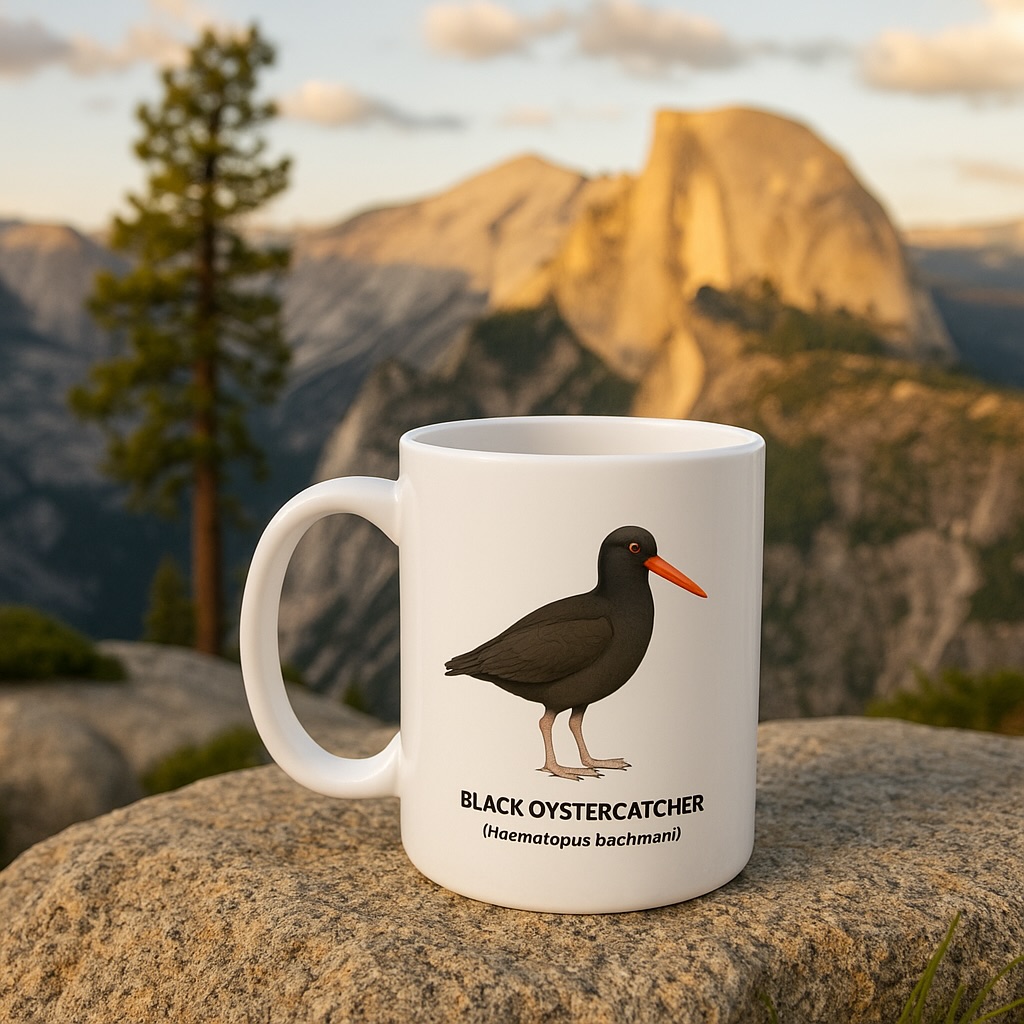
Celebrate California’s incredible birdlife one mug at a time. Each design features a native species illustrated in vivid detail,
Check out our Etsy store.

The implications of this discovery extend beyond mere academic curiosity. Understanding the unique visual system of the barreleye fish provides crucial insights into the mechanisms of evolutionary adaptation. It showcases how even seemingly minor anatomical modifications can result in significant survival advantages in the highly competitive and challenging marine environment. Moreover, it challenges our existing perceptions and encourages scientists to revisit and reevaluate other long-standing assumptions in marine biology.

The Barreleye isn’t just a pair of eyes swimming around in the ocean, though. It has a suite of other adaptations to its challenging environment. For instance, it has large, flat fins that let it remain almost motionless in the water, conserving energy in an environment where every calorie counts. Also, it’s got a small mouth. This mouth is adapted to consume tiny organisms, like zooplankton, that are abundant in the deep ocean. So while the Barreleye may not be the apex predator down there, it has carved out its own unique niche.

Monterey Bay Aquarium Research Institute (MBARI) in Moss Landing, California

The fish also has what are called “lateral line canals” that are filled with fluid and are sensitive to changes in pressure. This allows the Barreleye to detect movement in the water, effectively giving it a “sixth sense” to sense prey or predators around it. Imagine you’re trying to navigate a pitch-black room—every little bit of extra information helps.

Despite its enigmatic nature, we know relatively little about its breeding habits, lifespan, or social interactions. Part of the reason is the difficulty in studying a creature that lives in such an extreme environment. Researchers have managed to capture only a few specimens, and observations in their natural habitat are relatively scarce.

While the Barreleye fish might look like a figment of a wild imagination, it’s very much a real creature, adeptly adapted to its harsh surroundings. It represents the myriad ways life can evolve to meet the unique challenges of extreme environments. As we continue to explore the depths of our oceans, who knows what other fantastical creatures we might find? That said, the Barreleye fish remains one of the most compelling arguments for the strange and wondrous biodiversity hidden in the ocean’s twilight zone, a testament to the endless creativity of evolution.

The Ocean’s Invisible Elevator: How Upwelling Fuels California’s Marine Bounty

The Vital Role of Upwelling in California’s Rich Ocean Life

Few marine processes have been as impactful on the abundance of sea life off the coast of California as upwelling. It may not be a term you’ve heard before, but the natural oceanic process of upwelling is one of the most important engines driving climate, biological diversity, and the ocean’s food web. It’s time to pay attention.

In simple terms, upwelling happens when deep, cold, nutrient-laden water moves toward the ocean surface, replacing the warm surface water. Along the California coast, it’s fueled by the California Current, which flows southward, and by prevailing northerly winds. The wind pushes surface water offshore, allowing the deeper water to well up and take its place. This isn’t just an abstract idea; it’s been studied extensively.

In California, upwelling occurs year-round off the northern and central coast. It’s strongest in the spring and summer when northwesterly winds are at their most powerful. Upwelling is reduced in the fall and winter when winds are more variable.

Killer whales benefit from upwelling because the nutrient-rich waters fuel a surge in phytoplankton, which triggers an increase in the populations of smaller prey fish and marine mammals that orcas rely on for sustenance. (Photo: NOAA)

Researchers from institutions like the Scripps Institution of Oceanography and Stanford University have used a variety of methods, including satellite observations and computer modeling, to study upwelling. One of the groundbreaking studies was the CalCOFI program (California Cooperative Oceanic Fisheries Investigations), which began in the late 1940s. It was a joint venture between Scripps and state and federal agencies to investigate the collapse of the sardine fishery. Over decades, it has expanded its scope and now provides invaluable long-term datasets that help scientists understand the dynamics of upwelling and its effects on marine populations.

CALIFORNIA CURATED ART ON ETSY

Purchase stunning art prints of iconic California scenes.
Check out our Etsy store.

The key to understanding the phenomenon of upwelling off the California coast begins with the importance of cold water. In colder regions, nutrients from the deeper layers of the ocean are more readily brought to the surface through various oceanic processes like upwelling, tidal action, and seasonal mixing.

Think of a well-fertilized garden versus a nutrient-poor one. In the former, you’d expect a lush array of plants that not only thrive, but also support a diversity of insect and animal life. Similarly, the nutrient-rich cold waters support “blooms” of phytoplankton, a critical component of the oceanic food web. Phytoplankton are microscopic, photosynthetic organisms that form the foundation of aquatic food webs, producing oxygen and serving as a primary food source for marine life. When these primary producers flourish, it sets off a chain reaction throughout the ecosystem. Zooplankton (tiny ocean-borne animals like krill) feast on phytoplankton, small fish feast on zooplankton, and larger predators, including larger fish, marine mammals, and seabirds, find an abundant food supply in these teeming waters.

Moreover, cold water has a higher capacity to hold dissolved gases like oxygen compared to warm water (one of the reasons that warming seas could be a problem in the future). Oxygen is a key factor for respiration in marine animals. In cold, oxygen-rich environments, organisms can efficiently carry out metabolic processes, which often results in higher rates of feeding, growth, and reproduction, thereby further boosting biological productivity.

A recent study has also shed light on how California’s rich marine ecosystem responds to climate patterns, particularly the El Niño and La Niña phases of the El Niño/Southern Oscillation (ENSO). Scientists found that during El Niño events, warmer waters and weaker upwelling lead to reduced nutrient levels in the California Current, which supports less phytoplankton and affects the entire food web, including fish populations. In contrast, La Niña conditions boost upwelling, bringing nutrient-rich waters to the surface and enhancing marine productivity. This research highlights the far-reaching impacts of climate cycles on ocean life and could help in forecasting changes that affect fisheries and marine biodiversity in California.

Sardines off the coast of California (Photo: NOAA)

Studies have also shown the direct correlation between the intensity of upwelling and the success of fish populations. A study published in the journal “Science Advances” in 2019 explored how variations in upwelling affect the foraging behavior and success of California sea lions. Researchers found that in years with strong upwelling, sea lions didn’t have to travel as far to find food, which, in turn, positively impacted their population’s health.

Upwelling is a critical oceanic process that helps maintain the stable and immensely productive California marine ecosystem, but there are serious concerns that the dynamics behind upwelling could be changing due to climate change.

Of course, upwelling isn’t just a California thing; it’s a global phenomenon that occurs in various parts of the world, from the coasts of Peru to the Canary Islands. But California is like the poster child, thanks to extensive research and its vital role in a multi-billion dollar fishing industry that includes coveted species like albacore tuna, swordfish, Dungeness crab, squid, and sardines.

Inspiration Point Channel Islands (Photo: NPS)

The Channel Islands provide an excellent example of a place off the California coast where the impacts of upwelling and ocean currents are particularly significant. Channel Islands National Park is uniquely located in a “transition zone” of less than 100 km where many ocean currents converge. This results in strikingly different ocean conditions at individual islands and affects where different species are found and how abundant they are.

Long-term studies of upwelling and the California Current system have shed further light on the importance of these complex and ever changing phenomenon. For example, the annual California Current Ecosystem Status Report captures the big picture of the biology, climate, physical, and social conditions of the marine ecosystem. In 2021, the California Current continued a recent cooling trend, with researchers recording the coldest conditions on the continental shelf in nearly a decade. These cooler coastal waters resulted from strong wind-driven upwelling—nutrient-rich, deep ocean water coming to the surface.

Sea surface temperature anomalies across the northeastern Pacific in August, 2019. A marine heat wave spread across the northeastern Pacific Ocean from 2014 to 2016 and the expanse of warm surface water returned to the region in 2019. (NASA Earth Observatory)

But things have grown more precarious in the north and out to sea. For the last ten years, the northeast Pacific Ocean has been a hotspot for marine heatwaves. Just this past year, scientists monitored the seventh most intense marine heatwave in this region since records began in 1982. However, there was a twist in the tale: unlike in previous years, the elevated water temperatures remained further offshore, a phenomenon partly attributable to stronger-than-average coastal upwelling. As a result, the strip of waters closer to the coast was able to maintain its cooler temperatures, thereby preserving a productive environment for marine life.

Visit the California Curated store on Etsy for original prints showing the beauty and natural wonder of California.

Upwelling is a critical oceanic process that helps maintain the stable and immensely productive California marine ecosystem, but there are serious concerns that the dynamics behind upwelling could be changing due to climate change. Warming ocean temperatures and changes in wind patterns could potentially disrupt the timing and intensity of upwelling, putting the bounty of California’s coast at risk.

Understanding these shifts is imperative for devising strategies to mitigate adverse effects on marine life and commercial fisheries. Therefore, sustained research efforts must continue to dissect this complex (and incredibly important) oceanic process and its increasingly uncertain future.

Navigating the Unseen Current: How the California Current System Shapes Our Ocean, Climate, and Future

The stretch of water hugging the western shores of North America is a biological powerhouse, teeming with life and considered one of the most fertile marine environments on the planet. The California Current, originating from the colder regions up near British Columbia, sweeps its way down toward Baja California, extending laterally several hundred miles offshore into deep oceanic waters off the continental shelf. The current brings with it not just frigid waters but also a richness of life. As if choreographed, winds usually gust from the land towards the ocean, nudging surface waters away from the coastline. This displacement makes room for deeper, nutrient-packed waters to ascend, in a phenomenon aptly termed upwelling. Coastal upwelling is the dominant physical forcing affecting production in the California Current System.

This blend of icy waters and nutrient wealth sparks a bloom of marine vegetation, ranging from minuscule phytoplankton to sprawling underwater forests of kelp. These plants, often dubbed the “primary producers,” act as the nucleus of an intricate food web. The bounty includes thriving fisheries, generous populations of marine mammals like whales, seals, and dolphins, as well as a multitude of seabirds. The breadth of this fecund ecosystem can span an astonishing distance—up to 300 miles from the shoreline, enveloping a rich diversity of life within its aquatic embrace.

Phytoplankton are a critical part of the ocean’s food web.

The California Current System (CCS) is one of those natural phenomena that don’t often make headlines but quietly shape life as we know it on the West Coast. It’s like the unsung hero of the Pacific, affecting everything from marine biodiversity to our climate, even having a say in whether you’ll need to pack sunscreen or an umbrella for your beach day.

At its core, the California Current is a cold, southward-flowing oceanic current that starts from the Gulf of Alaska and hugs the western coastline of North America. Picture a river within the ocean, except this river is carrying cold, nutrient-rich water from the North Pacific all the way down to the southern tip of Baja California in Mexico. The California Current is part of a broader gyre system that also includes the North Pacific Current, the California Undercurrent, and the Davidson Current. Together, they create a dynamic dance of currents that provide a lifeline to a host of marine species and play a significant role in weather patterns.

The dynamics of the California Current result in abundant wildlife, like these common dolphins, off the coast of California.

The CCS owes its formation to a combination of factors like Earth’s rotation, the prevailing westerly winds, and the shape of the coastline. These elements work in concert to set up a sort of “conveyor belt” for water, funneling it down from higher latitudes. Over millions of years, this system has become a finely tuned natural mechanism that has shaped the ecology and climate of the region in profound ways.

The cold, nutrient-rich waters of the California Current serve as a veritable buffet for marine life. When we talk about nutrients, we’re primarily talking about nitrates and phosphates that act like fertilizer for phytoplankton, the microscopic plants at the base of the marine food web. As phytoplankton bloom, they become a food source for zooplankton, which in turn are gobbled up by larger fish. This cascade effect supports a rich, biodiverse ecosystem that includes everything from sardines and anchovies to humpback whales and even great white sharks. Even seabirds get in on the action, relying on the abundant marine life for nourishment.

The cold, nutrient-rich waters of the California Current serve as a veritable buffet for marine life.

But the California Current doesn’t stop at influencing marine biology; it’s a key player in regional climate as well. For example, the current helps moderate coastal temperatures by funneling cooler air inland. This has a ripple effect on weather patterns and even contributes to the famous “June Gloom” that Angelenos love to lament. Ever wonder why California’s coastal cities have relatively mild, Mediterranean climates while just a short drive inland can bring you much hotter conditions? Tip your hat to the CCS.

CALIFORNIA CURATED ON ETSY

Purchase stunning coffee mugs and art prints of Californian icons.
Check out our Etsy store.

Climate change is, of course, the elephant in the room. A study published in the journal “Geophysical Research Letters” in 2019 highlighted a gradual weakening of the California Current due to warming ocean temperatures. As the current weakens, there’s potential for less upwelling, which means fewer nutrients reaching the surface. Less nutrient-rich water could be a gut punch to the marine food web, affecting fish populations and, by extension, the larger predators and human industries that rely on them.

The cold, nutrient-rich waters of the California Current serve as a veritable buffet for marine life.

Another concern is ocean acidification. The same cold, nutrient-rich waters that make the CCS a hotspot for marine life also make it more susceptible to acidification as they absorb more CO2 from the atmosphere. According to a 2020 study in the journal “Nature,” this could have far-reaching consequences for shell-forming organisms like mollusks and some types of plankton, which play crucial roles in the ecosystem.

So why is all of this important? Well, the California Current is a vital cog in the machinery of our planet. It supports rich biodiversity, influences climate, and even has economic implications, given the commercial fisheries that rely on its abundant marine life. A healthy CCS is good news for everyone, from the weekend beachgoer to scientists concerned about biodiversity.

But as we confront a changing climate, the CCS is a poignant reminder that even the most stable and established natural systems are not immune to disruption. Therefore, understanding it is not just an academic exercise, but a necessary step in safeguarding the fragile balance of life along the western edge of North America.

Davidson Seamount and the Unseen Mountains and Hidden Treasures Off California’s Coast

California’s coast is home to dozens of seamounts, each harboring diverse ecosystems and geological mysteries waiting to be explored.

The Octopuses Garden on Davidson Seamount in California. Photo Credit: Chad King / OET, NOAA

If you’ve ever looked out at the vastness of the ocean, you might think it’s a uniformly barren and flat landscape below the tranquil or tempestuous waves. But you’d be mistaken. Imagine for a moment a hidden world of underwater mountains, volcanoes that never broke the water’s surface, all lying in the mysterious depths of the ocean. These enigmatic formations are known as seamounts, and off the coast of California, they constitute an environment as fascinating as it is vital. 

Interestingly, a lot of these seamounts off California are actually relatively new to science. According to Robert Kunzig and his book Mapping the Deep: “In 1984, a sidescan survey off southern California revealed a hundred uncharted seamounts, or undersea volcanoes, in a region that had been thought to be flat.”

The genesis of these structures begins with a geologic process known as plate tectonics. As tectonic plates move beneath the Earth’s crust, they create hotspots of molten rock. This magma escapes through weak points in the crust and solidifies as it reaches the cold seawater, gradually building up into an undersea mountain. After thousands of years, a seamount is born. Most of California’s seamounts are conical in shape, though erosion and other geological forces can turn them into more complex formations over time. 

Each seamount is a world unto itself, with distinct mineral compositions, shapes, and ecosystems. Recent research has energized the scientific community. For instance, the Davidson Seamount is the most well-known of these volcanoes and was the first underwater peak to be named a seamount. The seamount is named for George Davidson, a British pioneering scientist and surveyor. Located about 80 km (50 miles) off the coast of Big Sur, it’s shaped like an elongated arrowhead made up of several parallel ridges of sheer volcanic cones. Most of these erupted about 10-15 million years ago, and are made up 320 cubic km of hawaiite, mugearite, and alkalic basalt, the basalt types commonly found along spreading ridges like the Mid-Atlantic Ridge. 

Davidson Seamount, Wikipedia

The sheer number of seamounts only began to emerge when new detection methods were developed, including the ability to spot them from space. These underwater mountains are so massive that they create a gravitational pull, drawing seawater slightly toward their center of mass, much like the moon’s pull generates tides. Since seawater is incompressible, it doesn’t compress around the seamounts but instead forms slight bulges on the ocean surface. Satellites can detect these bulges, helping locate the hidden, basaltic peaks below. Satellite studies suggest that the largest seamounts—those over 5,000 feet—may number anywhere from thirty thousand to over one hundred thousand worldwide, with high concentrations in the central Pacific, Indian, and Atlantic Oceans, around Antarctica, and in the Mediterranean. Each of these seamounts is an underwater volcano, typically lining mid-ocean ridges, subduction zones, or one of the forty to fifty oceanic hot spots where the earth’s crust is thin and magma rises from the mantle.

Davidson Seamount is by far the best-studied of the many seamounts off the California coast. Stretching a sprawling 26 miles in length and spanning 8 miles across, this colossal seamount ranks among the largest known formations of its kind in U.S. territorial waters. Towering at a remarkable 7,480 feet from its base to its peak, the mountain remains shrouded in the depths, with its summit situated a substantial 4,101 feet beneath the ocean’s surface. Studies have indicated that some seamounts contain deposits of rare earth elements, which could have potential economic importance in the future. 

A rorqual whale fall found near Davidson Seamount at a depth of 3,200 meters. Photo Credit: Chad King / OET, NOAA

Seamounts are biodiversity hotspots. Boasting an incredibly diverse range of deep-sea corals, Davidson Seamount serves as a kind of underwater Eden. Often referred to as “An Oasis in the Deep,” this submerged mountain is a bustling metropolis of marine life, featuring expansive coral forests and sprawling sponge fields. But it doesn’t stop there—crabs, deep-sea fishes, shrimp, basket stars, and a host of rare and still-unidentified bottom-dwelling creatures also call this place home. The seamount is more than just a biologically rich environment; it’s a treasure trove of national importance for its contributions to ocean conservation, scientific research, education, aesthetics, and even history.

Map of seamounts along the California coast. (Marine Conservation Institute)

Perhaps the most astonishing discovery at Davidson Seamount occurred in 2018, when scientists discovered the “Octopus Garden,” the largest known aggregation of octopuses in the world. The garden is about two miles deep and was discovered by researchers on the research vessel (RV) Nautilus. The team of scientists initially spotted a pair of octopuses through a camera on a remotely operated vehicle (ROV). Amanda Kahn, an ecologist at Moss Landing Marine Laboratories and San Jose State University, who was on the Nautilus during the discovery, told Scientific American that after observing the pair for a bit, the operators started to drift away from the rocks to move on, but immediately saw something unusual. “Up ahead of us were streams of 20 or more octopuses nestled in crevices,” Kahn says.

Typically lone wanderers of the ocean, octopuses aren’t known for their social gatherings. So, when researchers stumbled upon more than just one or two of these creatures, they knew something out of the ordinary was afoot. Swiftly pivoting from their original plans, the team zeroed in for a closer look. What they found was a community of these grapefruit-sized, opalescent octopuses, along with something even more mysterious—unusual shimmers in the surrounding water, hinting at the existence of some kind of underwater fluid seeps or springs. It turns out the octopuses migrate to deep-sea hydrothermal springs to breed. The females brood their eggs in the garden, where it is warmer than surrounding waters.

“This Octopus Garden is by far the largest aggregate of octopuses known anywhere in the world, deep-sea or not,” James Barry, a benthic ecologist at the Monterey Bay Aquarium Research Institute told Scientific American. Barry is the leader of the new study, published on in August in Science Advances, that reveals why the animals are gathering.  The researchers have observed over 5,700 Pearl octopuses (Muusoctopus robustus) breeding near Davidson Seamount, 3,200 meters below the ocean’s surface. In this deep-sea nursery, octopus mothers keep their eggs warm in 5°C waters flowing from a hydrothermal spring. The water is more than 3°C warmer than the surrounding ocean. This added warmth accelerates the embryos’ development, allowing them to fully mature in just under two years on average.

The Octopuses Garden was studied over the course of 14 dives with MBARI’s remotely operated vehicle (ROV) Doc Ricketts. It is within the Monterey Bay National Marine Sanctuary, so it is federally protected against exploitation and extraction., although many scientists are concerned that global warming could end up having a deleterious impact on the biological life found around seamounts.

So far scientists have discovered other octopus gardens around the globe. There are four deep-sea octopus gardens in total. Two are located off the coast of Central California and two are off the coast of Costa Rica.

New technological advancements like Remotely Operated Vehicles (ROVs) have recently opened doors to discoveries we never thought possible. Cutting-edge imaging technology has finally given us the ability to capture strikingly clear and high-resolution pictures from this enigmatic deep-sea habitat. These vivid images provide both the scientific community and the general public with unprecedented peeks into the lives of rare marine species inhabiting this mostly cold and dark underwater world.

Depth color-coded map of Monterey Canyon. (Monterey Bay Aquarium Research Institute)

Davidson Seamount’s proximity to the rich educational and research ecosystem in the Monterey Bay area. One of the world’s preeminent ocean research organizations, the Monterey Bay Research Institute (MBARI), is located in Moss Landing, California, right at the spot where the magnificent Monterey Canyon stretches away from the coast for hundreds of miles. This geographic boon makes it easier for interdisciplinary teams to join forces, enriching our understanding and educational outreach related to this uniquely captivating undersea landscape.

Beyond being hubs of biodiversity, seamounts also serve as waypoints for migratory species. Just like rest stops along a highway, these underwater mountains provide food and shelter for creatures like whales and tuna on their long journeys. This makes seamounts critical for the health of global marine ecosystems. Additionally, understanding seamounts could give us insights into climate change. They play a role in ocean circulation patterns, which, in turn, affect global weather systems. They are also excellent “archives” of long-term climate data, which could help us understand past climate variations and predict future trends.

Advances in underwater technology, like ROVs, autonomous submersibles and better remote sensing methods, are making it easier to study these mysterious mountains. But many questions still remain unanswered. For instance, how exactly do seamount ecosystems interact with surrounding marine environments? What are the long-term impacts of human activities, like deep-sea mining or overfishing, on these fragile habitats? And what untapped resources, both biological and mineral, lie waiting in these submerged summits?

A time-lapse camera designed by MBARI engineers allowed researchers to observe activity at the
Octopus Garden between research expeditions. (Photo: MBARI)

We can wax poetic about the mysteries of seamounts, but understanding them better is crucial for the preservation of marine ecosystems and for equipping ourselves with the knowledge to tackle environmental challenges. So, the next time you look out over the ocean, consider the hidden worlds lying beneath those waves—each a bustling metropolis of life and a potential goldmine of scientific discovery.

More information:

Video about California seamounts

Recent discovery of the Octopuses garden (MBARI).

.