Feathers on the Flyway: Unraveling Avian Mysteries at Bear Divide with the Moore Lab

Western tanager (Ryan Terrill)

“Personally, I really think it’s one of the best birding spots in the world,” Ryan Terrill, science director at the Klamath Bird Observatory.

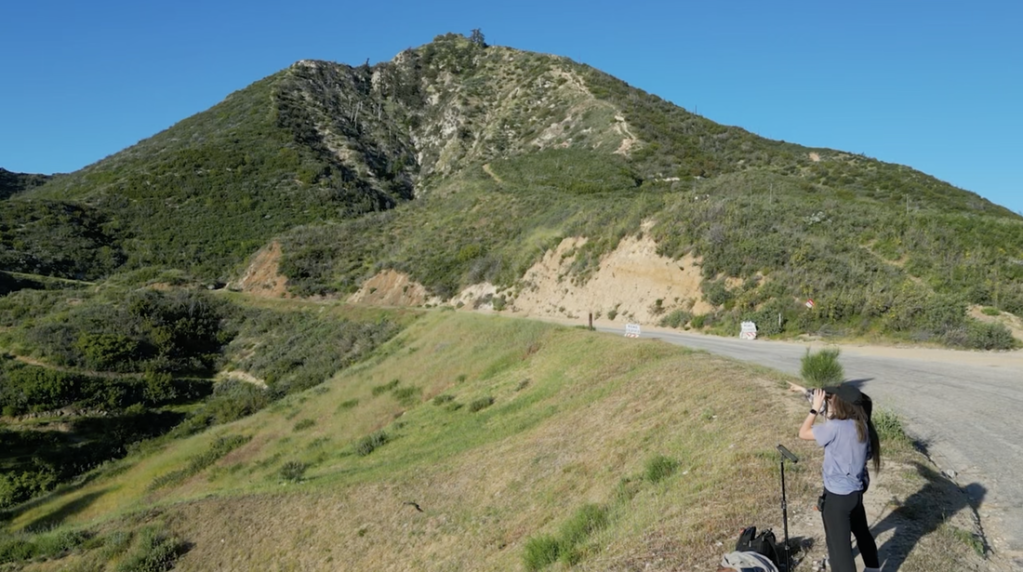
Within a 45 minute drive from the urban chaos of downtown Los Angeles, lies a natural, ornithological marvel: Bear Divide, a vital corridor for the annual migration of numerous bird species. Every year — roughly between March 15 and June 15, with peak migration between April 10 and May 20 — thousands of birds funnel through the narrow pass. The divide is a small dip in the otherwise impregnable San Gabriel mountains, allowing birds in the midst of their migration to pass through safely at relatively low altitudes. This area is not just a haven for bird enthusiasts but also a critical research site, especially for the team from the Moore Lab of Zoology at Occidental College, who have been delving into the intricacies of these migratory patterns.

The Moore Lab of Zoology is renowned for its extensive bird specimen collection, one of the largest of its kind in the world for Mexican birds.

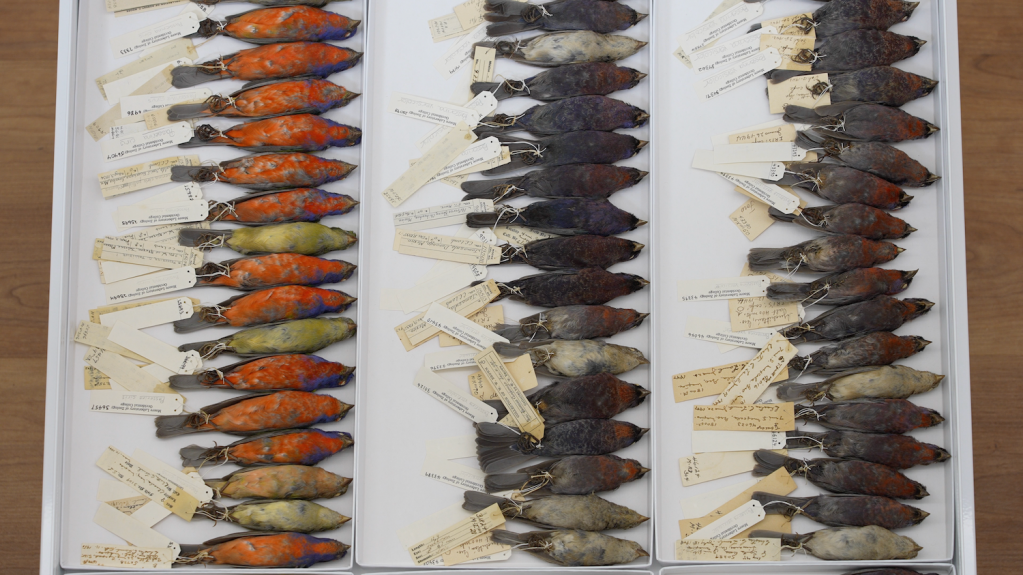
Part of the large bird collection at the Moore Lab at Occidental College in Pasadena (Erik Olsen)

Bear Divide is strategically positioned along the Pacific Flyway, a significant north-south migratory route used by birds traveling between Alaska and Patagonia. The geographical features of the San Gabriels provide an ideal resting and feeding ground for these birds, making Bear Divide a crucial stopover during their long journeys. It’s this unique combination of location and topography that makes Bear Divide an essential component of avian migration.

U.S. Fish and Wildlife Service

The discovery of Bear Divide was a lucky happenstance. A bird researcher was conducting overnight monitoring in the spring of 2016, and when morning came, he noticed legions of small songbirds whizzing past his monitoring spot. His report caught the attention of postdoc bird scientist Ryan Terrill at Moore Lab at the time, and he began an effort to monitor the birds. Terrill and his team would ultimately record as many as 20,000 birds in a single morning.

“It really is overwhelming to stand on the road and have 5,000 birds of 80 species fly by your knees in a morning,” Terrill said. The effort has continued to this day with startling results. Terrill has since left and is now the science director at the Klamath Bird Observatory.

CALIFORNIA CURATED ON ETSY

Purchase stunning coffee mugs and art prints of iconic California species.
Check out our Etsy store.

“Last year 2023 we counted 53,511 birds of 140 species from February to May,” said John McCormack, a professor of biology and the Director and Curator of the Moore Laboratory of Zoology. “And of course, we missed many thousands more because most travel at night. It’s easy to say that there are hundreds of thousands of birds passing through Bear Divide.”

Swainson’s Hawk (Marky Mutchler)

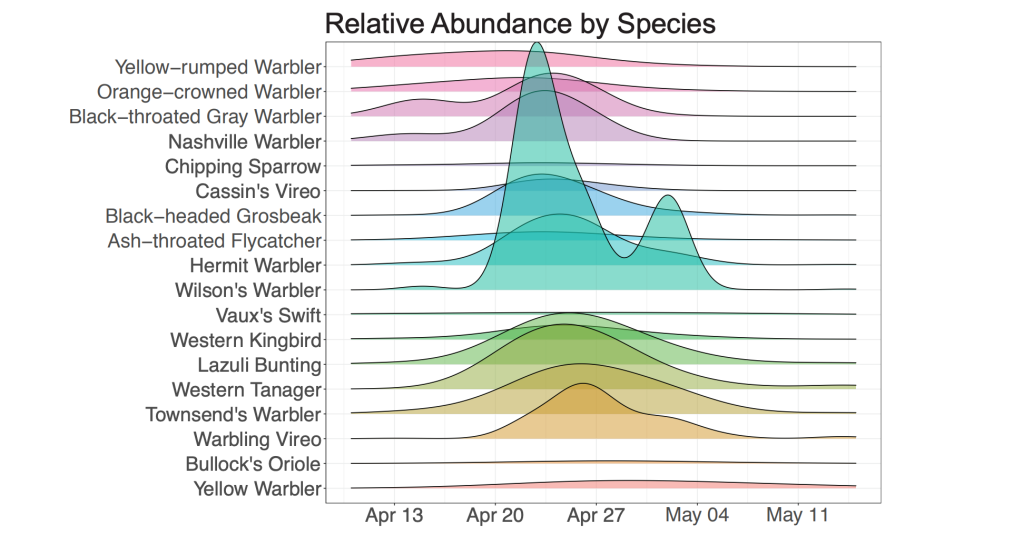
As many as 13,000 western tanagers, lazuli buntings, chipping sparrows, hermit warblers, orioles, grosbeaks and warblers pass through Bear Divide on a single day. Why they do so, is not entirely understood. The unusual topography of Bear Divide essentially serves as a funnel for the migrating birds, with many of them shooting through the gap just a meter or two above ground.

“Personally, I really think it’s one of the best birding spots in the world,” Terrill told the LA Times.

McCormack says that the “ultimate goal is to better understand the Pacific Flyway and how it’s used, especially by small terrestrial birds. Little is known about their movements because they are hard to see and usually travel at night.”

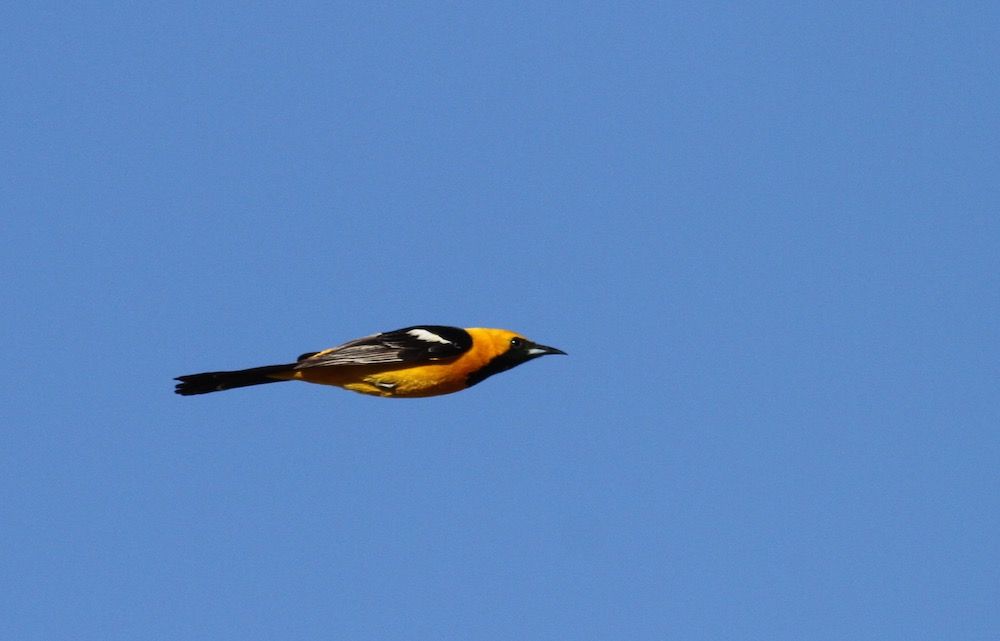
Hooded Oriole (Ryan Terrill)

Because many of the species sighted at Bear Divide are in steep decline. The lab says that year-to-year counts will help set a baseline for future trends that can be associated with weather, climate, and urbanization. “Tracking individual birds will give granular knowledge on how migratory birds use the landscape, which helps individuals and homeowners create corridors for them to travel,” says McCormack.

The best time to catch the show at Bear Divide is late winter early Spring. McCormack says Cliff Swallows and Lawrence’s Goldfinch are some of the early movers in March, and that by May, streaking by are Yellow Warblers, sunset-faced Western Tanagers, and bright blue Lazuli Buntings.

“There is so much we still don’t know about these birds and their world,” Lauren Hill, the site’s lead bird bander, told the Los Angeles Times. “For example, no one knows where they were before showing up here after sunrise.”

Lazuli Bunting zips past the camera at Bear Divide (Ryan Terrill)

The team is counting birds in order to establish a baseline of the populations coming through Bear Divide so they can understand how much we are changing the environment and what effect that may have on bird populations, many of which are in severe decline.

Their research spans a variety of topics, including how climate change is impacting migration routes and the effects of urbanization on bird populations. The lab has recently begun a program to put satellite trackers on birds at Bear Divide to follow individual birds, providing deep insight into their migration and resting patterns. This research is not only pivotal in understanding avian behavior but also crucial in shaping conservation policies.

One of the most fascinating aspects of Bear Divide is the sheer variety of bird species it attracts. From the diminutive hummingbirds to the impressive birds of prey, each species adds a unique dimension to the study of migration. The Moore lab’s findings have shed light on the varied responses of different species to environmental changes, offering a glimpse into the broader ecological shifts occurring across the globe.

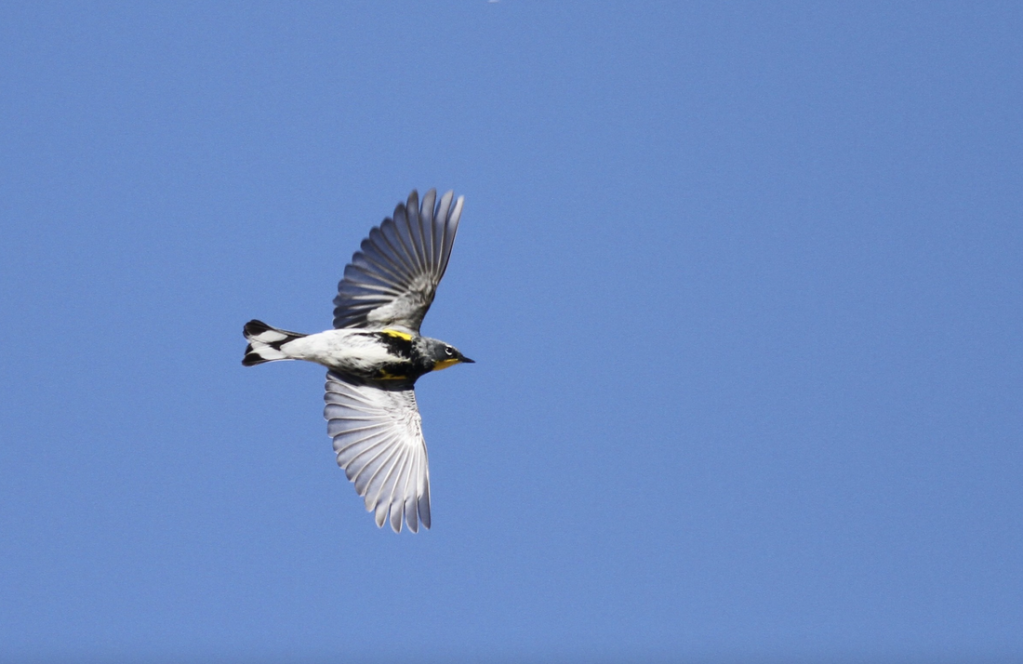
Yellow-rumped Warbler (Ryan Terrill)

One compelling result of the Moore Lab’s study at Bear Divide suggests that the peak of a particular species’ migration is correlated with the latitude of its breeding site. Species that breed at higher latitudes migrated through Bear Divide at later dates. It’s also unusual in the West for species to migrate during the day. Most species of birds using the Pacific Flyway are known to migrate at night.

The Moore Lab of Zoology

In addition to its scientific contributions, the Moore lab is also known for its involvement in citizen science. Collaborating with local birdwatchers and volunteers, the lab extends its research capabilities and cultivates a community actively engaged in bird conservation. This collaborative approach not only enhances the breadth of their research but also underscores the importance of community involvement in conservation efforts.

Bear Divide is on public land, so anyone with a legitimate research project can get permission to work there. UCLA graduate student Kelsey Reckling, who has worked as a counter at Bear Divide since the beginning, is leading the counting efforts this Spring to understand changes in numbers of birds and species across years. Cal State L.A. graduate student Lauren Hill lea ds the group of bird banders, who catch some of the birds and record data, attaching a lightweight metal band around one leg and releasing them. Her lab mate Tania Romero is putting small, lightweight tracking devices on Yellow Warblers, which send signals to a network of tracking (MOTUS) towers across the continent.

Many bird species are under serious threat around the globe from a number of different impacts, including climate change, pesticides and habitat loss. Birds play a critical role in the health of our planet. They regulate ecosystems by preying on insects, pollinating plants, and spreading seeds. Healthy ecosystems are important for breathable air, food, and a regulated climate.

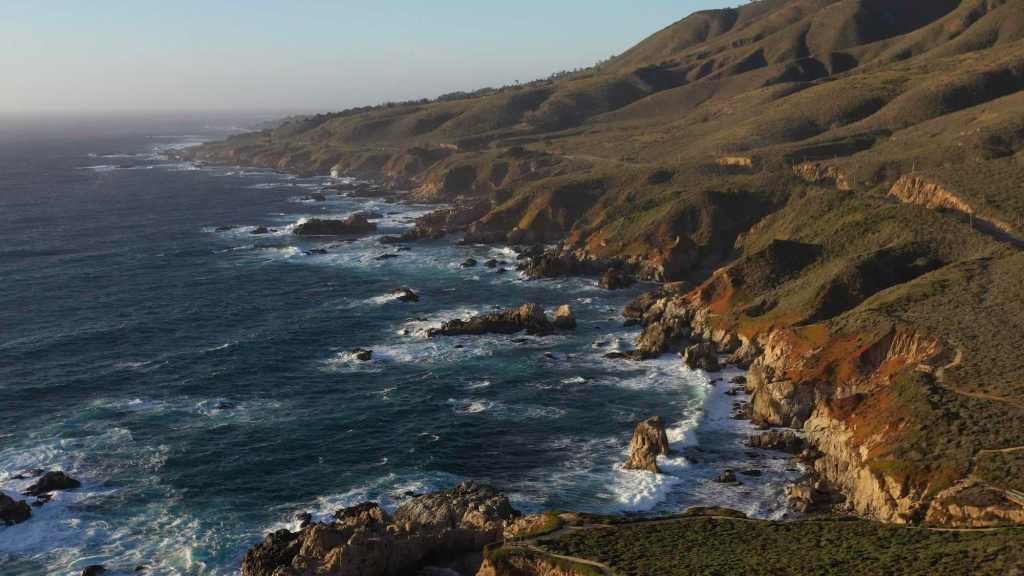
Bear Divide (Ian Davies)

According to a 2019 study, nearly 3 billion breeding birds have been lost in North America and the European Union since 1970. That’s about 30% of the bird population in North America. The 2022 State of the Birds Report for the United States found that bird declines are continuing in almost every habitat, except wetlands. Protecting birds’ habitats, and migration routes and reducing mortality through conservation efforts are crucial to ensuring the survival of these magnificent creatures.

The research conducted at Bear Divide by the Moore lab transcends academic interests, emphasizing the interconnectivity of ecosystems and underscoring the need to preserve natural migration corridors amid urban expansion. The insights gained here are invaluable to both the scientific community and conservation efforts, highlighting the need for a balanced approach to wildlife preservation and ecological sustainability.

Band-tailed Pigeon (Ryan Terrill)

“What’s magical about Bear Divide is that it’s the first real place to see small, migrating birds at eye level in daylight hours,” says McCormack. “I don’t want to oversell it: it’s still a lot of small birds zinging by in a wide open place and it takes a while to get good at identifying them. But by seeing them out there, struggling against the wind and the cold, but still making progress, it gives you a real sense of how amazing their journeys are–and how we shouldn’t make them harder if there’s anything we can do about it.”

California’s SLAC and the Mission to Unveil the Mysteries of Matter and the Cosmos

The BaBar Detector at SLAC with physicist Michael Kelsey inside wearing a red hard hat, 2002. 
(Peter Ginter/SLAC National Accelerator Laboratory)

The SLAC National Accelerator Laboratory in Menlo Park, California, is a testament to human curiosity and the pursuit of the unknown. Since its inception in 1962, originally as the Stanford Linear Accelerator Center (as it was previously known), it has been on the forefront of scientific discovery in numerous scientific disciplines. It is truly one of the nation’s great scientific institutions, being at the forefront of numerous major discoveries that have deeply impacted – and will impact – the world. 

Six scientists have received four Nobel prizes for their groundbreaking research conducted at SLAC, which led to the discovery of two elementary particles, confirmed that protons consist of quarks, and elucidated the process by which DNA orchestrates the synthesis of proteins in cells.

Stanford’s Roger Kornberg received the 2006 chemistry Nobel for work on RNA transcriptase, shown on screens.  
(Peter Ginter/SLAC National Accelerator Laboratory)

Administered by Stanford University and sponsored by the U.S. Department of Energy, SLAC has grown into a multifaceted research institution that explores a broad program in atomic and solid-state physics, chemistry, biology, and medicine. The lab employs the use of X-rays generated from synchrotron radiation and a free-electron laser, among other tools, to push the boundaries of our understanding in areas ranging from elementary particle physics to cosmology​​.

CALIFORNIA CURATED ART ON ETSY

Purchase stunning coffee mugs and art prints of iconic California species.
Check out our Etsy store.

SLAC’s roots can be traced back to the construction of the 3.2-kilometer Stanford Linear Accelerator in 1966, the world’s longest linear accelerator at the time. This remarkable structure has been pivotal in fundamental research that led to the discovery of the charm quark in 1976, the quark structure inside protons and neutrons in 1990, and the tau lepton in 1995, each discovery earning a Nobel Prize in Physics​​. This pioneering spirit is also embedded in SLAC’s cultural heritage, having provided a meeting space for the Homebrew Computer Club, which significantly contributed to the home computer revolution of the late 1970s and early 1980s​​. For example, Steve Wozniak debuted the prototype Apple-1 at the Homebrew Computer Club in 1976. 

Steve Jobs and Steve Wozniak
Apple 1

SLAC has also played a significant role in the digital age, hosting the first World Wide Web server outside of Europe in December 1991, a milestone that underscores its contribution beyond the realm of physics​​. In the 1990s, the Stanford Linear Collider delved into the properties of the Z boson, further cementing SLAC’s position at the cutting edge of particle physics research​​.

New projects and experiments are undertaken at SLAC all the time, and new discoveries are constantly being made to help us understand the nature of matter, biological processes and the evolution of the universe, as well as to help bring us into a greener future. In November 2023, a team at SLAC along with the Toyota Motor Company made significant advances in fuel cell efficiency.

The Linac Coherent Light Source (LCLS), a free-electron laser facility, has been a highlight of SLAC’s facilities, providing intense X-ray radiation for diverse research areas since 2009. In September 2023, SLAC fired up the world’s most powerful X-ray laser, the LCLS-II, to explore atomic-scale, ultrafast phenomena that are key to a broad range of applications, from quantum materials to clean energy technologies and medicine.

“This achievement marks the culmination of over a decade of work,” said LCLS-II Project Director Greg Hays. “It shows that all the different elements of LCLS-II are working in harmony to produce X-ray laser light in an entirely new mode of operation.”  

It was in the facility that scientists and researchers developed the first X-ray free-electron lasers (XFELs). XFELs are like X-ray microscopes, and generate exceptionally bright and fleeting bursts of X-ray light, enabling researchers to observe the dynamics of molecules, atoms, and electrons with unparalleled clarity, exactly as these events unfold in their native, rapid timescales—a realm where the intricacies of chemistry, biology, and materials science play out. These facilities have played a pivotal role in numerous scientific breakthroughs, such as producing the first “molecular movie” that reveals the intricacies of complex chemical reactions, capturing the precise moments when plants and algae harness solar energy to generate the oxygen we rely on, and probing the intense conditions that shape the formation of planets and extraordinary events like diamond precipitation.

Over the years, SLAC has evolved to support a growing community of scientists. As of 2021, the lab employs approximately 1,600 staff members from 55 different countries, in addition to 470 postdoctoral researchers and graduate students. The center welcomes over 3,000 visiting researchers annually​​. This community has access to facilities such as the Stanford Synchrotron Radiation Lightsource for materials science and biology experiments and the Fermi Gamma-ray Space Telescope for astrophysics research​​.

After decades of effort and help from SLAC’s X-ray laser, scientists have finally seen the process by which nature creates the oxygen we breathe. (SLAC)

The lab is also working at the forefront of astronomy and imaging. The SLAC National Accelerator Laboratory is at the helm of an ambitious project, crafting the world’s largest digital camera for the Vera Rubin Observatory’s Legacy Survey of Space and Time (LSST). Set to capture the southern sky from high on a mountaintop in Chile, this camera is a marvel of engineering and scientific collaboration. Its 3.2-gigapixel capacity allows it to snap detailed images every 15 seconds, offering an unprecedented window into the cosmos. The camera’s wide field of view can image an area 40 times larger than the full moon in one shot, and its advanced filters enable astronomers to probe the universe across a range of wavelengths. As part of the decade-long LSST, it will gather vast amounts of data, propelling our understanding of dark matter, dark energy, galaxy formation, and more​

SLAC has developed the world’s largest digital camera for the Vera Rubin Observatory’s Legacy Survey of Space and Time (LSST)

In 2008, the lab was renamed from the Stanford Linear Accelerator Center to SLAC National Accelerator Laboratory, reflecting a broader scientific mission. Since then, the lab has continued to receive significant funding, including $68.3 million in Recovery Act Funding in 2009​​. Notably, SLAC and Stanford University initiated the Bits and Watts project to develop better, greener electric grids, although SLAC later withdrew due to concerns over an industry partner​​.

SLAC’s current endeavors include the Facility for Advanced Accelerator Experimental Tests (FACET), where research on plasma acceleration continues to advance the field​​. Theoretical research at the lab spans quantum field theory, collider physics, astroparticle physics, and particle phenomenology​​. Moreover, SLAC has contributed to the development of the klystron, a high-power microwave amplification tube that amplifies high radio frequencies and has aided in archaeological discoveries such as revealing hidden text in the Archimedes Palimpsest​​.

Archimedes Palimpsest (Wikipedia)

Other recent updates from SLAC include a new system for turning seawater into hydrogen fuel​​​​. They have also made advancements in understanding the production of nitroxide, a molecule with potential biomedical applications, and the operation of superconducting X-ray lasers at temperatures colder than outer space​​​​.

The SLAC National Accelerator Laboratory’s legacy is rich with scientific triumphs, and its future beckons with the promise of unraveling more of the universe’s deepest secrets. Whether through peering into the atomic structure or probing the vast cosmos, SLAC remains a beacon of discovery and innovation.

The Mystical Sentinels of the Mojave: Unraveling the Secrets of the Joshua Tree

Standing tall against the backdrop of the sun-scorched Mojave Desert, the Joshua Tree (Yucca brevifolia) is an emblematic figure of resilience and beauty. With its twisted, bristled limbs reaching towards the sky, this iconic species is not just a tree but a symbol of the untamed wilderness that is California’s desert landscape.

The Joshua Tree’s biology is as unique as its silhouette. It’s often considered to be a member of the Agavaceae family (along with agaves), more closely related to the asparagus than to other trees. This desert dweller is an arborescent, or tree-like, species of yucca, characterized by its stout, shaggy trunk and a crown of spiky leaves. Unlike most trees, the Joshua Tree doesn’t have growth rings, making it difficult to determine their age. However, these trees can live for hundreds of years, with some ancient sentinels estimated to be over a millennium old. The tallest trees reach about 15 m (49 ft). New plants can grow from seed, but in some populations, new stems grow from underground rhizomes that spread out around the parent tree.

Joshua Tree National Park (Erik Olsen)

The Joshua tree is also known as izote de desierto (Spanish for “desert dagger”). It was first formally described in the botanical literature as Yucca brevifolia by George Engelmann in 1871 as part of the famous Geological Exploration of the 100th meridian (or “Wheeler Survey“).

The moniker “Joshua tree” is believed to originate from Mormon pioneers traversing the expanses of the Mojave Desert around the mid-1800s. They found the tree’s distinctive shape—with its limbs persistently outstretched—reminiscent of the biblical tale where Joshua extends his hands for a prolonged period, assisting the Israelites in their capture of Canaan, as recounted in the Book of Joshua. The tree’s tangled leaves also contributed to this image, giving it the semblance of a beard.

Nevertheless, this charming story lacks direct historical evidence from the period and the name “Joshua tree” doesn’t appear in records until after the Mormons had already settled in the area. Interestingly, the tree’s unique form may bear a stronger resemblance to narratives associated with Moses rather than Joshua. The absence of contemporary accounts leaves the true origin of the name enshrouded in the mystery of the past, adding to the tree’s allure and the folklore of the American West.

Joshua Trees burned in the 2020 Dome fire. (Photo: Erik Olsen)

The habitat of the Joshua Tree is as unforgiving as it is beautiful. They are found primarily in the Mojave Desert, the highest and coldest desert in the United States. These trees have adapted to the extremes, flourishing at elevations between 2,000 and 6,000 feet where the temperatures can plummet below freezing at night and soar during the day.

One of the most fascinating aspects of the Joshua Tree is its symbiotic relationship with the yucca moth. In a marvelous evolutionary dance, the moth is the tree’s sole pollinator, and in turn, the tree provides the moth a place to lay its eggs. This mutualistic relationship underscores the delicate balance of desert ecosystems.

Joshua Tree National Park was established as a national monument in 1936 and later upgraded to a national park in 1994, largely to protect the distinctive Joshua Trees and the unique desert ecosystem they epitomize. The effort to safeguard this landscape was driven by citizens and supporters who were passionate about the conservation of its otherworldly terrain and the diverse life forms that inhabit it.

Despite their hardy appearance, Joshua Trees harbor secrets that are only now being fully understood by scientists. Their root systems, for instance, can extend vertically to 30 feet and horizontally to 36 feet, a testament to their search for water in arid soils. Moreover, these trees are a keystone species, providing critical habitat for a host of desert organisms, from the Scott’s Oriole that nests in its branches to the black-tailed jackrabbit seeking shade under its canopy.

Joshua Trees burned in the 2020 Dome Fire (Photo: Erik Olsen)

However, the stability of the Joshua Tree’s future is uncertain. Climate change poses a significant threat to its survival. Rising temperatures and altered precipitation patterns are projected to shrink the suitable habitat for Joshua Trees by up to 90% by the end of the century. Efforts are underway to understand and mitigate these impacts, with conservationists advocating for policies to reduce carbon emissions and protect the Joshua Tree’s habitat from development and resource exploitation.

In August 2020, a devastating blaze known as the Dome Fire swept through the Mojave National Preserve, scorching over 43,000 acres of one of the most extensive Joshua tree forests on the planet, located at Cima Dome​​​​. The inferno, which was one of the most destructive in recent history, decimated an estimated 1 million to 1.3 million Joshua trees, transforming a once thriving ecosystem into a haunting landscape of charred remains​​​​.

Joshua Trees burned in the 2020 Dome Fire (Photo: Erik Olsen)

This catastrophic event not only altered the physical landscape but also raised urgent questions about the future of these iconic trees in the face of escalating climate change threats. The resilience of Joshua trees to fire is typically low, and the recovery of these forests could be severely hampered by the changing climate, with hotter, drier conditions becoming more common. The loss of these trees in such vast numbers is a stark reminder of the vulnerability of desert ecosystems and the need for immediate action to mitigate the impacts of climate change and protect these natural treasures for future generations.

Although California came out of drought in 2023, there is no guarantee that dry, hot conditions won’t continue. If they do, Joshua trees could lose 90 percent of their range by the end of the century, Dr. Cameron Barrows, a research ecologist with the University of California Riverside’s Center for Conservation Biology told Outside magazine

The Joshua Tree’s importance to California’s landscape is indelible. It’s not only an ecological mainstay but also a cultural and historical icon, inspiring artists, musicians, and nature lovers alike. The trees’ spiky profiles are a testament to the unrivaled beauty of the American West.

Underground Fury: The 1985 Methane Blast That Rocked Los Angeles and Rerouted Its Subways

A 1985 methane explosion in L.A.’s Fairfax district turned a Ross Dress for Less into a disaster scene.
Photo by Dean Musgrove, courtesy of the Herald-Examiner Collection – Los Angeles Public Library.

In the heart of Los Angeles, on a seemingly ordinary spring day in 1985, a sudden explosion tore through the Ross Dress for Less store at the corner of 3rd Street and Fairfax Avenue. This wasn’t an industrial accident nor was it an act of malice—it was a force of nature that had been lurking unseen beneath the city’s streets: methane gas.

The Fairfax District, a bustling area known for its shopping and historic Farmers Market, is also part of the larger Salt Lake Oil Field, a subterranean landscape rich in hydrocarbons. Over millions of years, decaying organic matter trapped in the earth’s crust had transformed into vast reservoirs of oil and methane gas. It was this methane that had stealthily migrated close to the surface, building up in closed spaces, waiting for an ignition source to set off a dramatic release.

On that day, as shoppers browsed through discounted apparel, an explosive mixture of methane, oxygen, and sewer gases found its spark. The blast shattered the storefront windows and caused a partial cave-in of the roof, turning the shop’s interior into a mangled wreck of metal debris. Twenty-three individuals were left with injuries severe enough to necessitate hospital care. In the aftermath, police cordoned off a four-block radius encompassing the bizarre spectacle of gas fires that jetted into the night sky, a haunting tableau that persisted until dawn.

The aftermath of the explosion was a scene of chaos and confusion. Emergency services sprang into action, addressing the immediate humanitarian concerns. But once the dust settled, a more profound issue loomed: the implications for the city’s ambitious underground Metro Rail project.

At the time, Los Angeles was in the throes of planning and constructing the Metro Red Line, a subway system that promised to link various parts of the sprawling city. Wilshire Boulevard, one of the busiest thoroughfares in Los Angeles, was to be a central artery in this new subterranean network. However, the explosion at Ross Dress for Less exposed the heretofore underestimated risk of tunneling through methane-rich zones.

The city of Los Angeles created a methane zone map showing shaded regions of the methane zone and methane buffer zones.

Fears quickly escalated about the potential for similar explosions occurring elsewhere, particularly along the planned subway routes. The public, already wary of the high costs and disruptions associated with the Metro line, grew increasingly concerned about the dangers of tunneling through methane pockets.

In the wake of the explosion, city officials and Metro Rail engineers faced a daunting challenge. They needed to ensure public safety without derailing the critical infrastructure project. This task required a multifaceted approach. First, there was a thorough scientific investigation. Experts from various fields, including geologists, engineers, and safety specialists, were brought in to assess the risks of methane gas in the Fairfax District and along the proposed Metro route.

In a comprehensive regulatory response, the city imposed stringent building codes and established the Methane Zone Ordinance, which required new constructions in certain areas to implement gas detection and venting systems.

But the blast also resulted in a measure of technological innovation. The Metro Rail project incorporated state-of-the-art methane detection systems and emergency ventilation procedures in its design, setting a new standard for subway safety. The process was aided to some extent by significant community engagement. Public meetings and forums were held to address community concerns, offer reassurances, and provide education on the measures being taken to prevent future incidents.

B Line train at Union Station (Wikipedia)

Despite these efforts, the fear of what lay beneath Los Angeles’ streets had a chilling effect on the Metro’s progress. The Red Line faced delays as policymakers and the public grappled with the cost and complexity of making the subway safe. It wasn’t until the early 2000s, with the introduction of advanced tunneling technologies and robust safety protocols, that the Metro expansion regained momentum.

The 1985 methane explosion, while a localized event, reverberated through time to shape the development of Los Angeles in profound ways. It brought to the forefront the invisible risks of urban growth, challenged engineers and city planners to innovate, and ultimately reaffirmed the resilience of a city determined to rise above its subterranean challenges.

1983 rendering for the planned subway station at Wilshire and Fairfax – a casualty of the Ross explosion.
\Courtesy of the Metro Transportation Library and Archive.

The dangers of methane beneath Los Angeles are far from gone. The Porter Ranch leak, also known as the Aliso Canyon gas leak, was a massive methane leak in the Santa Susana Mountains near the neighborhood of Porter Ranch in the northwest section of the San Fernando Valley.. Discovered on October 23, 2015, gas was discovered escaping from a well within the Aliso Canyon underground storage facility. On January 6, 2016, Governor Jerry Brown issued a state of emergency, and numerous media reports suggested that the methane could be dangerous to residents.  On February 11, the gas company reported that it had the leak under control, and finally  on February 18, state officials announced that the leak was permanently plugged. Still, an estimated 97,100 tonnes (95,600 long tons; 107,000 short tons) of methane and 7,300 tonnes (7,200 long tons; 8,000 short tons) of ethane were released into the atmosphere.

Today, as the Los Angeles Metro continues to expand, the lessons learned from that explosive day in 1985 continue to resonate, ensuring that safety remains at the core of the city’s march toward the future.

Hey there! If you enjoy California Curated, consider donating the price of a coffee to support its creation!

Autumn’s Alchemy: Unveiling the Science Behind California’s High Sierra Fall Foliage

Fall colors changing in the Eastern Sierra (Photo: Erik Olsen)

Ah, the changing of the leaves—a hallmark of autumn that heralds the end of long summer days and the arrival of crisp, cool weather. The spectacle is especially captivating in the high Sierra region of California, where deciduous trees put on a breathtaking show every year. This year’s show began in early October with an explosion of gold, persimmon, and vibrant orange blanketing the granite crags of the Eastern Sierra.

For years, the Eastern Sierra Fall Color Report has dutifully documented the arrival of Autumn and the magnificent changing hues of millions of trees. But have you ever stopped to wonder why the leaves change color? Why do leaves go from a robust green to vibrant hues of orange, red, and yellow? Well, it’s not just nature’s way of getting all dressed up for Halloween; there’s a complex interplay of biological, chemical, and physical processes at work.

(Photo: Erik Olsen)

Let’s start with the basics: chlorophyll. During the growing season, leaves are green due to chlorophyll, the molecule that helps plants photosynthesize. Photosynthesis is the process by which plants convert sunlight, water, and carbon dioxide into sugar and oxygen. Chlorophyll’s structure is such that it absorbs blue and red light well but reflects green light, making leaves appear green. However, as the days shorten and temperatures drop, it becomes a signal to the trees that it’s time to get ready for winter.

Structurally, chlorophyll is a complex molecule with a central magnesium ion surrounded by a long hydrocarbon tail. This structure is particularly adept at capturing and utilizing photons from sunlight for photosynthesis. Yet, chlorophyll is also a bit delicate, getting easily damaged by factors like intense light, exposure to oxygen, and even its own activity. That’s why plants are continuously synthesizing it during the growing season. In a sense, chlorophyll is both the engine and the fuel of the plant world, driving the processes that sustain not just the trees themselves but also the ecosystems that rely on them.

Seen through a microscope, chlorophyll is concentrated within organisms in structures called chloroplasts – shown here grouped inside plant cells. By Kristian Peters — Fabelfroh – Self-photographed, CC BY-SA 3.0

As autumn approaches, the biological clock inside trees ticks toward a season of preservation. Photosynthesis slows down, partly because there’s less sunlight but also because the plant is actively throttling this process. As a result, chlorophyll begins to break down and isn’t replenished. Other pigments present in leaves then take center stage, like carotenoids and anthocyanins. Carotenoids are always there, hanging out alongside chlorophyll, but are usually overshadowed by it. They are the ones that give leaves their yellow and orange hues, and are also the molecules that give the pink flamingo its rosy color.

Drone view of changing Fall colors in the Eastern Sierras

Anthocyanins are another class of pigments, but these are a little more high-maintenance; they form only when certain conditions are met. You see, anthocyanins are created through chemical reactions that are influenced by the pH levels in the leaf cells and the amount of sugar that is present. That’s why some years, when conditions are just so—like a warm, sunny fall following a cooler period—you’ll see a dazzling display of red leaves. Anthocyanins absorb light at both the blue and green ends of the spectrum and reflect red light, giving leaves their gorgeous red and purple shades. Anthocyanins are what help give boysenberries their deep purple color.

In California’s high Sierra region, where the elevation provides a unique set of environmental factors, the changing of the leaves can be particularly spectacular. Deciduous trees like the Black Oak, Quaking Aspen, and Dogwood populate these areas. The interplay of sunlight, soil acidity, and temperature variations at higher elevations creates an ideal stage for the full spectrum of fall colors to be displayed. Even within the same species of tree, or sometimes even on the same tree, you can see a diversity of colors due to slight variations in soil composition, moisture, and sunlight exposure.

Changing aspens in the Eastern Sierra (Erik Olsen)

It’s all a spectacular display, but it doesn’t last forever; in fact, the most vibrant colors only last a few weeks. And then the leaves die and fall off. It’s not gravity doing its thing, but rather a biological process called “abscission.” As winter approaches, a layer of specialized cells grows between the leaf stem and the tree, severing the vessels that supply nutrients and water to the leaf. This triggers the leaf to die and eventually fall, making way for new growth in the spring.

While the fall colors in California’s Eastern Sierra are an annual marvel, they’re not immune to the sweeping hand of climate change. Rising temperatures and shifting precipitation patterns have started to tinker with the timing and intensity of the autumnal display. For instance, warmer conditions could delay the onset of the color changes and potentially shorten the duration of peak colors, while altered moisture levels might impact the vibrancy of hues. Even subtle shifts in climate can affect the complex chemistry of leaf coloration. As much as the changing leaves are a symbol of nature’s constancy, they also serve as a barometer for the environmental changes unfolding on a global scale.

CALIFORNIA CURATED ON ETSY

Purchase stunning art prints of iconic California scenes.
Check out our Etsy store.

The transformation of leaves in the high Sierra is far more than a seasonal aesthetic; it’s a vivid illustration of how meticulously nature has calibrated life to adapt and thrive. As the leaves cycle through shades of green, orange, red, and finally brown, they tell a tale of survival and renewal, a complex story scripted in their very cells. This fall spectacle is a fleeting moment of brilliance, orchestrated by an array of biological, chemical, and physical processes, each contributing to the grand narrative of life on Earth. In essence, each leaf is a microcosm of resilience and change, characteristics not just of a California autumn, but of life itself.

Through the Looking Glass Head: The Enigmatic World of the Barreleye Fish

The barreleye (Macropinna microstoma)
(Courtesy: Monterey Bay Aquarium Research Institute MBARI)

Off the coast of Monterey, California, researchers captured rare footage of one of the deep sea’s strangest residents: the Barreleye fish. With a see-through head and upward-facing, tube-shaped eyes, it looks like something dreamt up for a sci-fi film. Officially called Macropinna microstoma, this bizarre little fish is a real reminder of how much mystery still lies beneath the surface of the ocean and how otherworldly life can get down there.

First described in 1939, the fish astonished scientists who were stunned by its unique optical anatomy. The barreleye is found in the Pacific Ocean, with sightings ranging from the coasts of California, particularly around Monterey Canyon, to the mid-Pacific near Hawaii. Most commonly, it resides between 400 to 2,500 feet below the surface, a region known as the mesopelagic or “twilight” zone. At these depths, little light penetrates, making the area a seemingly inhospitable place for most life forms. But the Barreleye fish thrives here, adapting to its surroundings in the most bizarre ways.

Its most distinctive features, and the ones that give it its name, are its transparent head and barrel-shaped eyes that are usually directed upwards. These eyes are extremely sensitive to light, which is a scarce commodity where it lives. Interestingly, the eyes are encased in a dome-shaped, transparent head. This clear cranium allows the fish to capture as much light as possible, increasing its visual field. The upward-facing eyes allow the Barreleye fish to see silhouettes of prey or predators against the faint light filtering down from the surface. It’s like a built-in periscope for scanning the world above, allowing it to spot the bioluminescent glow of jellies or small fish that meander above it.

In 2009, researchers at the Monterey Bay Aquarium Research Institute elucidated a longstanding mystery surrounding the barreleye. For many years, marine biologists were under the impression that these specialized eyes were immobile and only provided the fish with a limited, tunnel-vision perspective, focused solely on the waters above its transparent head. Such a constraint would significantly limit the fish’s situational awareness, making it highly dependent on what occurs directly above it for both prey detection and predator evasion.

However, a groundbreaking paper by researchers Bruce Robison and Kim Reisenbichler overturned this conventional wisdom. Their findings reveal that the eyes of the barreleye fish are not static but can actually rotate within a transparent protective shield that envelops the fish’s head. This adaptation enables the fish not only to look upwards to identify potential prey but also to focus forward, thereby expanding its field of vision and facilitating more effective foraging.

A remotely operated vehicle or ROV named Doc Ricketts (MBARI)

Robison and Reisenbichler conducted their research using footage obtained from the Monterey Bay Aquarium Research Institute’s remotely operated vehicles (ROVs) to investigate the barreleye fish in the deep-sea regions adjacent to Central California. Situated at depths ranging from 600 to 800 meters (approximately 2,000 to 2,600 feet) beneath the ocean’s surface, the ROVs’ cameras typically captured images of these fish in a state of immobility, floating like zeppelins with their eyes radiating an intense green hue due to the illumination provided by the ROV’s powerful lighting system. The remotely captured video data also divulged a hitherto undocumented anatomical feature—namely, that the eyes of the barreleye fish are encased in a transparent, fluid-filled protective shield that encompasses the upper region of the fish’s cranial structure.

CALIFORNIA CURATED ON ETSY

Celebrate California’s incredible birdlife one mug at a time. Each design features a native species illustrated in vivid detail,
Check out our Etsy store.

The implications of this discovery extend beyond mere academic curiosity. Understanding the unique visual system of the barreleye fish provides crucial insights into the mechanisms of evolutionary adaptation. It showcases how even seemingly minor anatomical modifications can result in significant survival advantages in the highly competitive and challenging marine environment. Moreover, it challenges our existing perceptions and encourages scientists to revisit and reevaluate other long-standing assumptions in marine biology.

The Barreleye isn’t just a pair of eyes swimming around in the ocean, though. It has a suite of other adaptations to its challenging environment. For instance, it has large, flat fins that let it remain almost motionless in the water, conserving energy in an environment where every calorie counts. Also, it’s got a small mouth. This mouth is adapted to consume tiny organisms, like zooplankton, that are abundant in the deep ocean. So while the Barreleye may not be the apex predator down there, it has carved out its own unique niche.

Monterey Bay Aquarium Research Institute (MBARI) in Moss Landing, California

The fish also has what are called “lateral line canals” that are filled with fluid and are sensitive to changes in pressure. This allows the Barreleye to detect movement in the water, effectively giving it a “sixth sense” to sense prey or predators around it. Imagine you’re trying to navigate a pitch-black room—every little bit of extra information helps.

Despite its enigmatic nature, we know relatively little about its breeding habits, lifespan, or social interactions. Part of the reason is the difficulty in studying a creature that lives in such an extreme environment. Researchers have managed to capture only a few specimens, and observations in their natural habitat are relatively scarce.

While the Barreleye fish might look like a figment of a wild imagination, it’s very much a real creature, adeptly adapted to its harsh surroundings. It represents the myriad ways life can evolve to meet the unique challenges of extreme environments. As we continue to explore the depths of our oceans, who knows what other fantastical creatures we might find? That said, the Barreleye fish remains one of the most compelling arguments for the strange and wondrous biodiversity hidden in the ocean’s twilight zone, a testament to the endless creativity of evolution.

The Ocean’s Invisible Elevator: How Upwelling Fuels California’s Marine Bounty

The Vital Role of Upwelling in California’s Rich Ocean Life

Few marine processes have been as impactful on the abundance of sea life off the coast of California as upwelling. It may not be a term you’ve heard before, but the natural oceanic process of upwelling is one of the most important engines driving climate, biological diversity, and the ocean’s food web. It’s time to pay attention.

In simple terms, upwelling happens when deep, cold, nutrient-laden water moves toward the ocean surface, replacing the warm surface water. Along the California coast, it’s fueled by the California Current, which flows southward, and by prevailing northerly winds. The wind pushes surface water offshore, allowing the deeper water to well up and take its place. This isn’t just an abstract idea; it’s been studied extensively.

In California, upwelling occurs year-round off the northern and central coast. It’s strongest in the spring and summer when northwesterly winds are at their most powerful. Upwelling is reduced in the fall and winter when winds are more variable.

Killer whales benefit from upwelling because the nutrient-rich waters fuel a surge in phytoplankton, which triggers an increase in the populations of smaller prey fish and marine mammals that orcas rely on for sustenance. (Photo: NOAA)

Researchers from institutions like the Scripps Institution of Oceanography and Stanford University have used a variety of methods, including satellite observations and computer modeling, to study upwelling. One of the groundbreaking studies was the CalCOFI program (California Cooperative Oceanic Fisheries Investigations), which began in the late 1940s. It was a joint venture between Scripps and state and federal agencies to investigate the collapse of the sardine fishery. Over decades, it has expanded its scope and now provides invaluable long-term datasets that help scientists understand the dynamics of upwelling and its effects on marine populations.

CALIFORNIA CURATED ART ON ETSY

Purchase stunning art prints of iconic California scenes.
Check out our Etsy store.

The key to understanding the phenomenon of upwelling off the California coast begins with the importance of cold water. In colder regions, nutrients from the deeper layers of the ocean are more readily brought to the surface through various oceanic processes like upwelling, tidal action, and seasonal mixing.

Think of a well-fertilized garden versus a nutrient-poor one. In the former, you’d expect a lush array of plants that not only thrive, but also support a diversity of insect and animal life. Similarly, the nutrient-rich cold waters support “blooms” of phytoplankton, a critical component of the oceanic food web. Phytoplankton are microscopic, photosynthetic organisms that form the foundation of aquatic food webs, producing oxygen and serving as a primary food source for marine life. When these primary producers flourish, it sets off a chain reaction throughout the ecosystem. Zooplankton (tiny ocean-borne animals like krill) feast on phytoplankton, small fish feast on zooplankton, and larger predators, including larger fish, marine mammals, and seabirds, find an abundant food supply in these teeming waters.

Moreover, cold water has a higher capacity to hold dissolved gases like oxygen compared to warm water (one of the reasons that warming seas could be a problem in the future). Oxygen is a key factor for respiration in marine animals. In cold, oxygen-rich environments, organisms can efficiently carry out metabolic processes, which often results in higher rates of feeding, growth, and reproduction, thereby further boosting biological productivity.

A recent study has also shed light on how California’s rich marine ecosystem responds to climate patterns, particularly the El Niño and La Niña phases of the El Niño/Southern Oscillation (ENSO). Scientists found that during El Niño events, warmer waters and weaker upwelling lead to reduced nutrient levels in the California Current, which supports less phytoplankton and affects the entire food web, including fish populations. In contrast, La Niña conditions boost upwelling, bringing nutrient-rich waters to the surface and enhancing marine productivity. This research highlights the far-reaching impacts of climate cycles on ocean life and could help in forecasting changes that affect fisheries and marine biodiversity in California.

Sardines off the coast of California (Photo: NOAA)

Studies have also shown the direct correlation between the intensity of upwelling and the success of fish populations. A study published in the journal “Science Advances” in 2019 explored how variations in upwelling affect the foraging behavior and success of California sea lions. Researchers found that in years with strong upwelling, sea lions didn’t have to travel as far to find food, which, in turn, positively impacted their population’s health.

Upwelling is a critical oceanic process that helps maintain the stable and immensely productive California marine ecosystem, but there are serious concerns that the dynamics behind upwelling could be changing due to climate change.

Of course, upwelling isn’t just a California thing; it’s a global phenomenon that occurs in various parts of the world, from the coasts of Peru to the Canary Islands. But California is like the poster child, thanks to extensive research and its vital role in a multi-billion dollar fishing industry that includes coveted species like albacore tuna, swordfish, Dungeness crab, squid, and sardines.

Inspiration Point Channel Islands (Photo: NPS)

The Channel Islands provide an excellent example of a place off the California coast where the impacts of upwelling and ocean currents are particularly significant. Channel Islands National Park is uniquely located in a “transition zone” of less than 100 km where many ocean currents converge. This results in strikingly different ocean conditions at individual islands and affects where different species are found and how abundant they are.

Long-term studies of upwelling and the California Current system have shed further light on the importance of these complex and ever changing phenomenon. For example, the annual California Current Ecosystem Status Report captures the big picture of the biology, climate, physical, and social conditions of the marine ecosystem. In 2021, the California Current continued a recent cooling trend, with researchers recording the coldest conditions on the continental shelf in nearly a decade. These cooler coastal waters resulted from strong wind-driven upwelling—nutrient-rich, deep ocean water coming to the surface.

Sea surface temperature anomalies across the northeastern Pacific in August, 2019. A marine heat wave spread across the northeastern Pacific Ocean from 2014 to 2016 and the expanse of warm surface water returned to the region in 2019. (NASA Earth Observatory)

But things have grown more precarious in the north and out to sea. For the last ten years, the northeast Pacific Ocean has been a hotspot for marine heatwaves. Just this past year, scientists monitored the seventh most intense marine heatwave in this region since records began in 1982. However, there was a twist in the tale: unlike in previous years, the elevated water temperatures remained further offshore, a phenomenon partly attributable to stronger-than-average coastal upwelling. As a result, the strip of waters closer to the coast was able to maintain its cooler temperatures, thereby preserving a productive environment for marine life.

Visit the California Curated store on Etsy for original prints showing the beauty and natural wonder of California.

Upwelling is a critical oceanic process that helps maintain the stable and immensely productive California marine ecosystem, but there are serious concerns that the dynamics behind upwelling could be changing due to climate change. Warming ocean temperatures and changes in wind patterns could potentially disrupt the timing and intensity of upwelling, putting the bounty of California’s coast at risk.

Understanding these shifts is imperative for devising strategies to mitigate adverse effects on marine life and commercial fisheries. Therefore, sustained research efforts must continue to dissect this complex (and incredibly important) oceanic process and its increasingly uncertain future.