California’s SLAC and the Mission to Unveil the Mysteries of Matter and the Cosmos

The BaBar Detector at SLAC with physicist Michael Kelsey inside wearing a red hard hat, 2002. 
(Peter Ginter/SLAC National Accelerator Laboratory)

The SLAC National Accelerator Laboratory in Menlo Park, California, is a testament to human curiosity and the pursuit of the unknown. Since its inception in 1962, originally as the Stanford Linear Accelerator Center (as it was previously known), it has been on the forefront of scientific discovery in numerous scientific disciplines. It is truly one of the nationโ€™s great scientific institutions, being at the forefront of numerous major discoveries that have deeply impacted – and will impact – the world. 

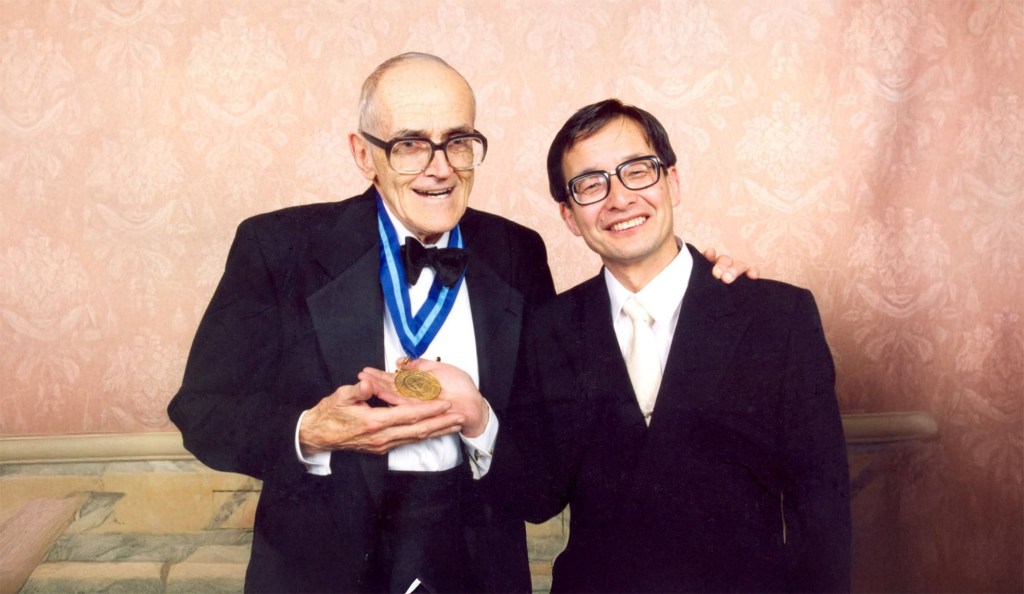
Six scientists have received four Nobel prizes for their groundbreaking research conducted at SLAC, which led to the discovery of two elementary particles, confirmed that protons consist of quarks, and elucidated the process by which DNA orchestrates the synthesis of proteins in cells.

Stanfordโ€™s Roger Kornberg received the 2006 chemistry Nobel for work on RNA transcriptase, shown on screens.  
(Peter Ginter/SLAC National Accelerator Laboratory)

Administered by Stanford University and sponsored by the U.S. Department of Energy, SLAC has grown into a multifaceted research institution that explores a broad program in atomic and solid-state physics, chemistry, biology, and medicine. The lab employs the use of X-rays generated from synchrotron radiation and a free-electron laser, among other tools, to push the boundaries of our understanding in areas ranging from elementary particle physics to cosmologyโ€‹โ€‹.

CALIFORNIA CURATED ART ON ETSY

Purchase stunning coffee mugs and art prints of iconic California species.
Check out our Etsy store.

SLAC’s roots can be traced back to the construction of the 3.2-kilometer Stanford Linear Accelerator in 1966, the world’s longest linear accelerator at the time. This remarkable structure has been pivotal in fundamental research that led to the discovery of the charm quark in 1976, the quark structure inside protons and neutrons in 1990, and the tau lepton in 1995, each discovery earning a Nobel Prize in Physicsโ€‹โ€‹. This pioneering spirit is also embedded in SLAC’s cultural heritage, having provided a meeting space for the Homebrew Computer Club, which significantly contributed to the home computer revolution of the late 1970s and early 1980sโ€‹โ€‹. For example, Steve Wozniak debuted the prototype Apple-1 at the Homebrew Computer Club in 1976. 

Steve Jobs and Steve Wozniak
Apple 1

SLAC has also played a significant role in the digital age, hosting the first World Wide Web server outside of Europe in December 1991, a milestone that underscores its contribution beyond the realm of physicsโ€‹โ€‹. In the 1990s, the Stanford Linear Collider delved into the properties of the Z boson, further cementing SLAC’s position at the cutting edge of particle physics researchโ€‹โ€‹.

New projects and experiments are undertaken at SLAC all the time, and new discoveries are constantly being made to help us understand the nature of matter, biological processes and the evolution of the universe, as well as to help bring us into a greener future. In November 2023, a team at SLAC along with the Toyota Motor Company made significant advances in fuel cell efficiency.

The Linac Coherent Light Source (LCLS), a free-electron laser facility, has been a highlight of SLAC’s facilities, providing intense X-ray radiation for diverse research areas since 2009. In September 2023, SLAC fired up the worldโ€™s most powerful X-ray laser, the LCLS-II, to explore atomic-scale, ultrafast phenomena that are key to a broad range of applications, from quantum materials to clean energy technologies and medicine.

โ€œThis achievement marks the culmination of over a decade of work,โ€ said LCLS-II Project Director Greg Hays. โ€œIt shows that all the different elements of LCLS-II are working in harmony to produce X-ray laser light in an entirely new mode of operation.โ€  

It was in the facility that scientists and researchers developed the first X-ray free-electron lasers (XFELs). XFELs are like X-ray microscopes, and generate exceptionally bright and fleeting bursts of X-ray light, enabling researchers to observe the dynamics of molecules, atoms, and electrons with unparalleled clarity, exactly as these events unfold in their native, rapid timescalesโ€”a realm where the intricacies of chemistry, biology, and materials science play out. These facilities have played a pivotal role in numerous scientific breakthroughs, such as producing the first “molecular movie” that reveals the intricacies of complex chemical reactions, capturing the precise moments when plants and algae harness solar energy to generate the oxygen we rely on, and probing the intense conditions that shape the formation of planets and extraordinary events like diamond precipitation.

Over the years, SLAC has evolved to support a growing community of scientists. As of 2021, the lab employs approximately 1,600 staff members from 55 different countries, in addition to 470 postdoctoral researchers and graduate students. The center welcomes over 3,000 visiting researchers annuallyโ€‹โ€‹. This community has access to facilities such as the Stanford Synchrotron Radiation Lightsource for materials science and biology experiments and the Fermi Gamma-ray Space Telescope for astrophysics researchโ€‹โ€‹.

After decades of effort and help from SLAC’s X-ray laser, scientists have finally seen the process by which nature creates the oxygen we breathe. (SLAC)

The lab is also working at the forefront of astronomy and imaging. The SLAC National Accelerator Laboratory is at the helm of an ambitious project, crafting the worldโ€™s largest digital camera for the Vera Rubin Observatory’s Legacy Survey of Space and Time (LSST). Set to capture the southern sky from high on a mountaintop in Chile, this camera is a marvel of engineering and scientific collaboration. Its 3.2-gigapixel capacity allows it to snap detailed images every 15 seconds, offering an unprecedented window into the cosmos. The camera’s wide field of view can image an area 40 times larger than the full moon in one shot, and its advanced filters enable astronomers to probe the universe across a range of wavelengths. As part of the decade-long LSST, it will gather vast amounts of data, propelling our understanding of dark matter, dark energy, galaxy formation, and moreโ€‹

SLAC has developed the worldโ€™s largest digital camera for the Vera Rubin Observatory’s Legacy Survey of Space and Time (LSST)

In 2008, the lab was renamed from the Stanford Linear Accelerator Center to SLAC National Accelerator Laboratory, reflecting a broader scientific mission. Since then, the lab has continued to receive significant funding, including $68.3 million in Recovery Act Funding in 2009โ€‹โ€‹. Notably, SLAC and Stanford University initiated the Bits and Watts project to develop better, greener electric grids, although SLAC later withdrew due to concerns over an industry partnerโ€‹โ€‹.

SLAC’s current endeavors include the Facility for Advanced Accelerator Experimental Tests (FACET), where research on plasma acceleration continues to advance the fieldโ€‹โ€‹. Theoretical research at the lab spans quantum field theory, collider physics, astroparticle physics, and particle phenomenologyโ€‹โ€‹. Moreover, SLAC has contributed to the development of the klystron, a high-power microwave amplification tube that amplifies high radio frequencies and has aided in archaeological discoveries such as revealing hidden text in the Archimedes Palimpsestโ€‹โ€‹.

Archimedes Palimpsest (Wikipedia)

Other recent updates from SLAC include a new system for turning seawater into hydrogen fuelโ€‹โ€‹โ€‹โ€‹. They have also made advancements in understanding the production of nitroxide, a molecule with potential biomedical applications, and the operation of superconducting X-ray lasers at temperatures colder than outer spaceโ€‹โ€‹โ€‹โ€‹.

The SLAC National Accelerator Laboratory’s legacy is rich with scientific triumphs, and its future beckons with the promise of unraveling more of the universe’s deepest secrets. Whether through peering into the atomic structure or probing the vast cosmos, SLAC remains a beacon of discovery and innovation.

Hannes Keller’s Deadly 1,000-Foot Descent off Catalina Island Was the Dive of the Century

An ambitious quest for underwater exploration that ended in tragedy beneath the Pacific waves.

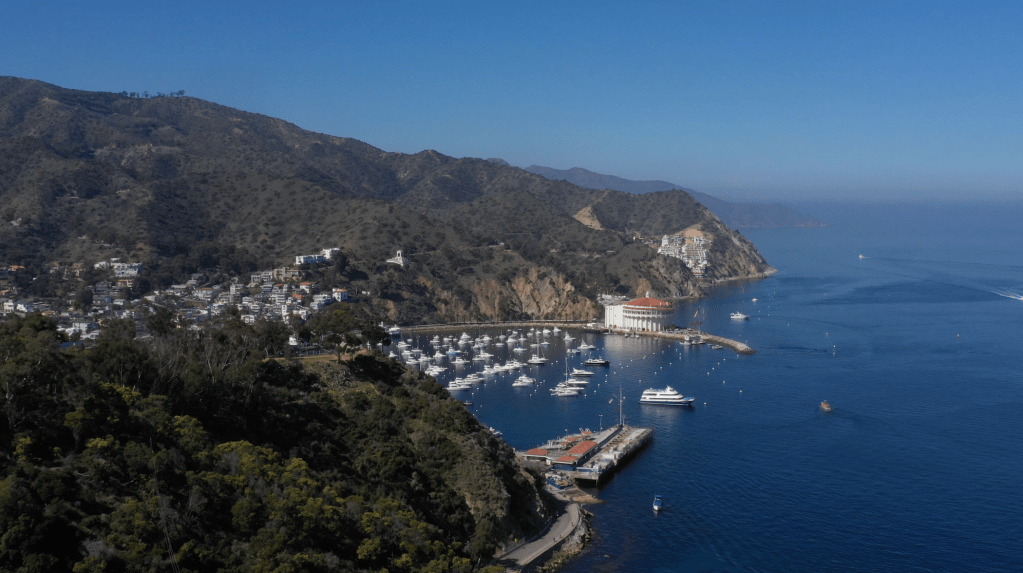
The city of Avalon on Catalina Island (Erik Olsen)

In 1962, Swiss physicist and deep-sea diving pioneer Hannes Keller embarked on an ambitious and perilous mission to push the boundaries of human endurance and underwater exploration. California, with its dramatic coastline and history of daring maritime ventures, became the setting for this bold effort to make history in diving. Partnered with British diver and journalist Peter Small, Keller aimed to descend inside a specially designed diving bell named Atlantis to an unprecedented depth of 1,000 feet off the coast of Catalina Island. Their plan involved exiting the pressurized diving bell once it reached the ocean floor, a groundbreaking and dangerous procedure that would allow them to perform tasks outside in the extreme depths. What promised to be a historic achievement, however, took a tragic turn.

Keller’s passion for deep-sea diving had recently garnered international attention, fueled by his record-breaking dives and groundbreaking research into advanced breathing gas mixtures. Working alongside Dr. Albert Bรผhlmann, a renowned physiologist specializing in respiration, Keller employed cutting-edge technology, including an IBM computer, to meticulously design gas formulas that could counteract the dangers of deep diving. Their innovative work addressed the twin challenges of nitrogen narcosis and decompression sickness, promising to revolutionize underwater exploration.

For Keller, diving was initially an unconventional pursuit. He was engaged in teaching mathematics to engineering students in his native town of Winterthur, close to Zurich, and had aspirations to become a pilot. However, the prohibitive cost of flying on a teacher’s salary led him to explore other avenues. Introduced to the burgeoning sport of scuba diving by a friend in the late 1950s, Keller applied his mathematical and scientific acumen to the field. He soon concluded that the existing techniques in deep-sea diving were outdated and ripe for revolutionary advancement.

โ€œIf a man could go, for instance, to 1,000 feet down and do practical work,โ€ Mr. Keller wrote in The Sydney Morning Herald, โ€œthen all the continental shelf zone could be explored, a total of more than 16 million square miles.โ€

Keller prepares for his May 1961 chamber dive at the United States Navy Experimental Diving Unit (NEDU). Photo: US Navy

Keller and Bรผhlmann worked collaboratively to expand their computerized concoction of breathing gases, ultimately selecting a dive site off near Avalon Bay at Catalina Island in Southern California. This location was chosen due to its dramatic underwater geography, where the ocean floor descends sharply from the coast into the deep ocean.

At the time, it was widely believed that no human being could safely dive to depths beyond three hundred feet. That was because, beginning at a depth of one hundred feet, a diver breathing normal air starts to lose his mind due to nitrogen narcosis.

Partnering with Peter Small, co-founder of the British Sub Aqua Club, Hannes Keller planned their historic descent using a specially designed diving bell named Atlantis. This advanced pressurized chamber, deployed from a surface support vessel, was staffed by a skilled technical crew tasked with monitoring gas levels and maintaining constant communication with the divers through a surface-to-bell phone link. The Atlantis diving bell represented a significant leap in underwater technology, providing a controlled environment that allowed divers to venture into previously unreachable depths. Its design and operational success revolutionized the field of deep-sea exploration, offering invaluable insights into human physiology under extreme pressure and laying the groundwork for future advancements in underwater science and technology.

Keller’s experimental dives piqued the interest of the U.S. Navy, as they saw the potential to revolutionize diving safety and practicality. If proven successful, Keller’s methods could transform existing dive tables and enable safer, more practical deep-sea exploration. Encouraged by the promising outcomes of Keller’s preliminary chamber tests and several less extreme open-sea trials, the Navy allowed him to perform a test dive at their primary experimental facility, adjacent to the Washington dive school. They also became a financial supporter of Keller’s ambitious thousand-foot dive.

To carefully scrutinize the operation, the Navy designated Dr. Robert Workman, one of their foremost decompression specialists, to be present on site. A few days after reaching Catalina in late November, Dr. Workman joined Dr. Bรผhlmann, the rest of Keller’s team, and various onlookers aboard Eureka, an experimental offshore drilling vessel provided by Shell Oil Co. Shell, like other oil and gas enterprises, had a vested interest in innovative techniques that could enhance the productivity of commercial divers. If the dive was successful, the company would receive Kellerโ€™s secret air mixture technology and thereby become an instant frontrunner in offshore oil exploration. Their interest was particularly relevant as offshore drilling initiatives were venturing into deeper waters, both off the California shore and in the Gulf of Mexico.

Resembling a huge can of soup, Atlantis stood seven feet tall and had a diameter slightly greater than four feet. Its structure featured an access hatch at the bottom and was adorned with an array of protruding pipes and valves, adding to its industrial appearance.

British journalist Peter Small (BSAC)

As a journalist, Peter Small intended to pen a first-hand narrative of the groundbreaking dive. On December 1, as part of a final preparatory dive, Small and Keller were lowered inside Atlantis to a depth of three hundred feet, where they spent an hour scuba diving outside the bell. During the decompression process within the bell, both divers experienced relatively mild symptoms of decompression sickness, commonly known as the bends. Keller felt the effects in his belly, while Small was afflicted in his right arm. Decompression sickness is still a relatively poorly understood phenomenon, and it remains unpredictable as to which part of the body it might affect.

Keller’s symptoms abated on their own that night, but Small’s discomfort lingered until he underwent recompression treatment. Despite this warning sign, Keller was determined to continue with the dive as planned, without conducting further incremental tests at increasing depths before the ambitious thousand-foot descent. His decision was likely influenced, at least in part, by the assembled crowd of journalists and other spectators eager to witness the historic dive. The constraints of time, finances, and equipment availability added to the pressure, compelling the team to proceed with the experimental dive as scheduled.

The diving bell Atlantis is lifted out of the water after Keller and the journalist Peter Small descended 1,020 feet to the Pacific Ocean floor in December 1962.

On Monday, December 3, around noon, Atlantis began its descent beneath the surface of the Pacific, enclosing its two divers within. The journey towards the ocean floor took under thirty minutes. Upon reaching the target depth of a thousand feet, a series of dark and chaotic moments ensued. Keller exited the bell to plant a Swiss flag and an American flag on the ocean floor. In the process, his breathing hoses became entangled with the flags, and after clambering back inside Atlantis, he lost consciousness.

The gas mixture had somehow become compromised. Peter Small also blacked out, despite never having left the diving bell. As Atlantis was hastily ascended to within two hundred feet of the surface, several support divers swam down to meet the bell. Tragically, one of these support divers, Christopher Whittaker, a young man of just nineteen, disappeared without a trace.

Pacific Ocean off Catalina Island (Erik Olsen)

Keller came to roughly a half-hour after the incident, and Small regained consciousness, but it took nearly two hours for him to do so. Upon awakening, Small engaged Keller in coherent questions about what had transpired. He reported feeling cold and, although he retained the ability to speak, see, and hear, he could not feel his legs. Despite not experiencing any pain, he was too weak to stand. Leaning against his Swiss counterpart, he drifted off to sleep as their decompression within the bell continued.

Several hours later, as Atlantis was being transported back to shore to Long Beach from the dive site near Catalina, Keller discovered that Small had ceased breathing and had no pulse. Desperate to revive him, Keller administered mouth-to-mouth resuscitation and cardiac massage, but to no avail. Small was cold and pallid. The remaining pressure inside the bell, about two atmospheres, was hastily released in a frantic effort to get Small to a hospital after being trapped inside Atlantis for eight hours. Tragically, upon arrival, he was promptly pronounced dead.

The Atlantis diving bell (Paul Tzimoulis)

The Los Angeles County coroner identified the cause of death as decompression sickness. An examination revealed that Small’s tissues and organs were filled with Nitrogen gas bubbles. However, Keller contended that other factors, such as a potential heart attack and the panic Small displayed upon reaching the thousand-foot mark, contributed to the tragedy.

Regardless of the underlying causes, the catastrophic dive to thirty atmospheres and the loss of two lives led to a rapid waning of interest in Keller’s previously sensational methods. The potential for failure of this magnitude had been a concern to many in the deep diving community and the dayโ€™s events set back research in the emerging field of saturation diving. Even before this event, saturation diving had only tepid support from the Navy, but this made some people loss faith in the technique. Of course, it would not be the end of saturation diving, not by a long shot. 

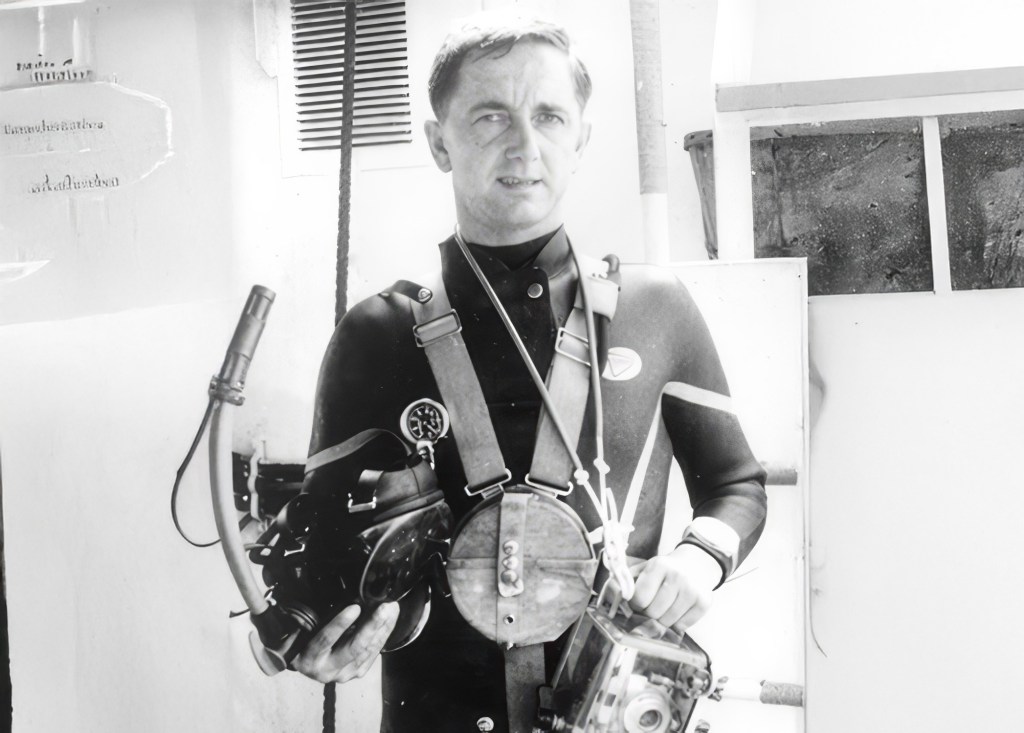
Hannes Keller in his later years. (Credit: Keller, Esther, Niederglatt, Switzerland)

Modern deep-water diving owes much to the groundbreaking experiments of Hannes Keller. His historic dive to 1,020 feet (311 meters) off Catalina Island was a remarkable achievement that captivated the world. Far from being a mere stunt, as some critics claimed, Kellerโ€™s dive was a meticulously planned scientific endeavor designed to push the boundaries of human exploration of the ocean depths. This Swiss adventurerโ€™s pioneering work laid the foundation for advances in deep-sea diving techniques, leaving an enduring legacy in the field.

CALIFORNIA CURATED ART ON ETSY

Purchase stunning art prints of iconic California scenes.
Check out our Etsy store.

Christopher Swann, a diving historian, said the dive โ€œwas a milepost in the sense that it was the first time something like that had been done.โ€

Keller ended up living a rich and long life, dying on December 1, 2022, at at a nursing home in Wallisellen, Switzerland, near his home in Niederglatt. He was 88.

Genetic Guardians: The Asilomar Conference and its DNA Diplomacy

How a gathering of the world’s top genetic scientists helped create a roadmap for responsible biology.

Asilomar Conference Grounds Interior

In 1975, amidst the California coastal dunes of Asilomar near Monterey, a groundbreaking conference was held that would influence the direction of biotechnology and the course of scientific research for decades to come. This was the Asilomar Conference on Recombinant DNA, an assembly marked by both controversy and consensus. Its aim was not just to debate the scientific merits of a new and potentially groundbreaking technology but also to discuss its potential impacts on society and the environment. (Berg and others had met as Asilomar before in 1973, but that initial meeting resulted in little more than a realization there would have to be more discussion).

DNA

Among the seventy-five participants from sixteen countries were Paul Berg, a Nobel laureate, Maxine Singer, a prominent molecular biologist, and many others, each bringing their own perspective and expertise to the table. They recognized the vast potential that recombinant DNA (rDNA) technology, the process of combining DNA from different species, had to offer but were equally cognizant of the potential risks involved.

Berg was awarded the Nobel Prize in Chemistry for his work on nucleic acids, with a focus on recombinant DNA. Berg had first-hand experience with the transformative potential and risks of the technology. His ground-breaking experiments with recombinant DNA in 1972 and subsequent calls for a moratorium on such work had spurred the idea of the conference.

Maxine Singer, another significant contributor, was known for her advocacy for scientific responsibility and ethical considerations. She played a crucial role in drafting the initial letter to the journal “Science” advocating for a voluntary halt on certain types of rDNA research until its potential risks could be better understood. In 2002, Discover magazine recognized her as one of the 50 most important women in science.

CALIFORNIA CURATED ON ETSY

Purchase stunning art prints of iconic California scenes.
Check out our Etsy store.

The conference was the outcome of dramatic advances in molecular biology that took place mid-century. In the atomic age of the 1950s and ’60s, biology was not left behind in the wave of transformation. A pioneering blend of structural analysis, biochemical investigation, and informational decoding began to crack open the mystery of classical genetics. Central to this exploration was the realization that genes were crafted from DNA, and that this intricate molecular masterpiece held the blueprints for replication and protein synthesis.

Paul Berg (Photo: Stanford University)

This was a truth beautifully crystallized in the DNA model, a triumph of scientific collaboration that arose from the minds of James Watson, Francis Crick, and the often under-appreciated Rosalind Franklin. Their collective genius propelled a cascade of theoretical breakthroughs that nudged our understanding from mere observation to the brink of manipulation.

The crowning achievement of this era was the advent of recombinant DNA technology – a tool with the potential to rearrange life’s building blocks at our will. As the curtain lifted on this new stage of biological exploration, the promise and peril of our increasing control over life’s code started to unfurl.

Asilomar Conference Building

The ability to manipulate genes marked nothing less than a seismic shift in the realm of genetics. We had deciphered a new language. Now, it was incumbent upon us to assure ourselves and all others that we possessed the requisite responsibility to utilize it.

As Siddhartha Mukherjee put it in his excellent book The Gene: An Intimate History, “There is an illuminated moment in the development of a child when she grasps the recursiveness of language: just as thoughts can be used to generate words, she realizes, words can be used to generate thoughts. Recombinant DNA had made the language of genetics recursive.”

The conference served as a forum to deliberate the safety measures that would be needed to prevent accidental release of genetically modified organisms (GMOs) into the environment, the ethical considerations of manipulating the genetic code, and the potential implications for biological warfare. It was as much about the science as it was about its potential impact on society, mirroring aspects of the Pugwash Conferences that discussed nuclear arms control during the Cold War.

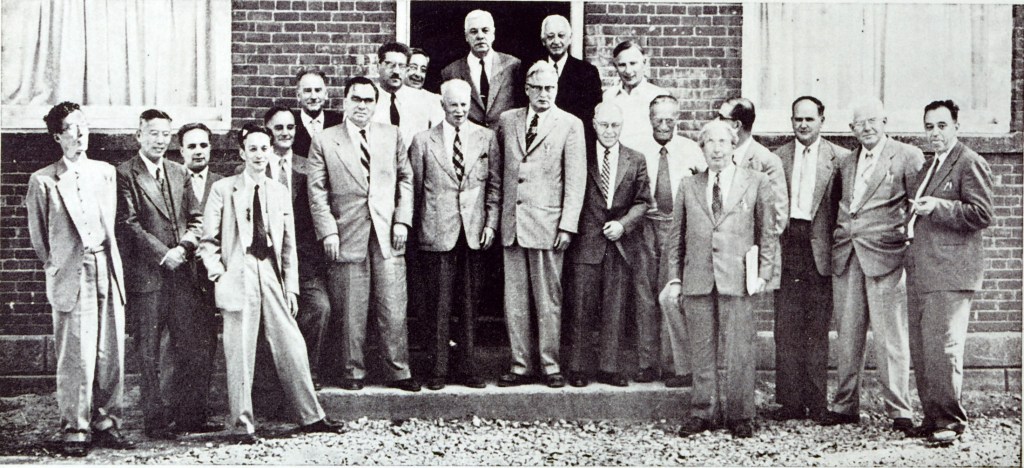
Participants in the First Pugwash Conference in 1957 in Pugwash, Nova Scotia, Canada. Notable figures included Joseph Rotblat, Bertrand Russell, Leo Szilard, Igor Tamm (pugwash.org)

Much like the Pugwash Conferences in Pugwash, Nova Scotia, Canada, brought together scientists from both sides of the Iron Curtain to discuss the implications of nuclear technology, the Asilomar Conference sought to bridge the divide between the proponents and critics of genetic engineering. Just as nuclear technology held the promise of unlimited power and the threat of unparalleled destruction, recombinant DNA offered the allure of potential solutions for numerous diseases and the specter of unforeseen consequences.

Another analogy might be the two-page letter written in August 1939 by Albert Einstein and Leo Szilard to alert President Roosevelt to the alarming possibility of a powerful war weapon in the making. A โ€œnew and important source of energyโ€ had been discovered, Einstein wrote, through which โ€œvast amounts of power . . . might be generated.โ€ โ€œThis new phenomenon would also lead to the construction of bombs, and it is conceivable . . . that extremely powerful bombs of a new type may thus be constructed. A single bomb of this type, carried by boat and exploded in a port, might very well destroy the whole port.โ€ 

The Einsteinโ€“Szilard letter

The Asilomar Conference reached a consensus that with proper containment measures, most rDNA experiments could be conducted safely. This resulted in a set of guidelines that differentiated experiments based on their potential biohazards and suggested appropriate containment measures. This framework, later adopted by the National Institutes of Health (NIH) in the United States, provided the bedrock for the safe and ethical use of rDNA technology.

The decisions made at Asilomar had far-reaching implications for both science and society. By promoting a culture of responsibility and precaution, the conference effectively prevented a public backlash against the nascent field of genetic engineering, allowing it to flourish. Moreover, it set a precedent for scientists to take an active role in the ethical and societal implications of their work.

โ€œThe most important lesson of Asilomar,โ€ Berg said, โ€œwas to demonstrate that scientists were capable of self-governance.โ€ Those accustomed to the โ€œunfettered pursuit of researchโ€ would have to learn to fetter themselves.

CRISPR

Today, the spirit of Asilomar lives on in the field of synthetic biology and discussions around emerging technologies such as CRISPR and gene drives. It underscores the importance of scientific self-regulation, public dialogue, and transparent communication in navigating the ethical minefields that technological advancements often present.

The Asilomar Conference was a milestone in scientific history, a demonstration that scientists are not merely the creators of knowledge but also its stewards. It showed that with open dialogue, proactive self-regulation, and a deep sense of responsibility, we can both harness the promise of scientific breakthroughs and mitigate their potential risks.

The Enduring Legacy of Hydraulic Mining in California

While the gold rush was an incredible boon for California, hydraulic miningโ€™s environmental tollโ€”eroded hillsides and choked riversโ€”remains a stark reminder of the cost of progress.

โ€œEarth provides enough to satisfy every manโ€™s needs, but not every manโ€™s greed.โ€ โ€” Mahatma Gandhi

โ€œGreed is a bottomless pit which exhausts the person in an endless effort to satisfy the need without ever reaching satisfaction.โ€ โ€” Erich Fromm

It was the tail end of the 19th century, a time of gunslingers and gold-diggers, of pioneers venturing forth into the vast expanse of the American West. The year was 1853, and the place was California. From the bustling seaports of San Francisco to the rugged mining towns dotting the Sierra Nevada foothills, the Golden State was witnessing an unprecedented phenomenon. This was the era of the California Gold Rush, a frenzy of ambition, adventure, and avarice that transformed the state and the nation.

The Gold Rush began in 1848 when gold nuggets were discovered at Sutter’s Mill in Coloma, near Sacramento. Soon after, miners from around the world rushed to California, lured by the promise of riches. But as the easily accessible placer deposits in river beds were quickly exhausted, the miners were forced to develop new, more efficient methods of extraction to mine the deeper and harder-to-reach gold seams. Thus, hydraulic mining – a form of mining that utilized high-pressure water jets to wash away soil and rock, revealing the precious metal underneath – was born.

CALIFORNIA CURATED ART ON ETSY

Purchase stunning art prints of iconic California scenes.
Check out our Etsy store.

Enter: The Innovators

Hydraulic mining in California is inextricably linked with two significant figures: Edward E. Matteson, an entrepreneurial miner, and Anthony Chabot, a young businessman turned water systems innovator. Matteson is credited as the originator of hydraulic mining in 1853, having invented the process out of necessity while trying to extract gold from the gravels of Nevada County, in a site later known as “Blue Tent.”

Matteson’s invention involved directing a powerful stream of water from a makeshift canvas hose onto a hillside, effectively washing away the dirt and gravel to expose the gold underneath. This crude but effective method marked a turning point in gold mining, facilitating the extraction of gold from areas previously deemed unprofitable or inaccessible.

University of California

However, it was Anthony Chabot who took Matteson’s idea and turned it into an industrial-scale operation. Chabot, known as the “Water King,” was a successful entrepreneur who had established multiple water systems in California. Intrigued by Matteson’s invention, he developed the hydraulic nozzle, or “monitor,” in 1855. With this high-pressure water cannon, miners could erode whole mountainsides in their search for gold, making hydraulic mining the most effective and popular method of gold extraction at that time.

The profits from hydraulic mining were enormous. As a result, the state economy boomed and many jobs were created. From 1860 to 1880, California’s mining operations yielded $170 million. San Francisco had more millionaires than New York or Boston. 

The Scourge of the Sierra

From the mid-1850s to the mid-1880s, hydraulic mining reigned supreme in California, especially in the counties of Nevada, Placer, and Yuba, where extensive networks of canals, reservoirs, and sluices were constructed to support the practice. Hydraulic mines became colossal operations, employing hundreds of workers and dislodging millions of tons of earth annually. But this progress came at a tremendous cost to the environment.

California State Library

The enormous water pressure used in hydraulic mining dislodged vast quantities of soil, rock, and debris, collectively referred to as “slickens.” These slickens were often laden with mercury, a neurotoxin used extensively in gold amalgamation processes. Water cannons, such as the one above, were used to wash away earth and mountains to access gold. In the early days of the gold rush, these cannons were small with canvas hoses, but more force was eventually needed. By the 1870s these cannons were anywhere from 13 to 18 feet long and could blast water 500 feet. The rivers of Northern California became choked with these toxic tailings, devastating local ecosystems.

 “I am at a loss to illustrate the tremendous force with which the water is projected from the pipes. The miners assert that they can throw a stream four hundred feet into the air. … Those streams directed upon an ordinary wooden building would speedily unroof and demolish it,” wrote a reporter for the San Francisco Daily Alta.

One notable example is the Yuba River. In its heyday, hydraulic mining along the Yuba generated approximately 685 million cubic yards of debris, enough to bury Manhattan under ten feet of waste. Much of this sediment still remains, hindering river navigation and threatening local wildlife to this day. The Feather and American rivers also bear the scars of this destructive practice.

The Aftermath and Lingering Effects

By the 1870s, the catastrophic consequences of hydraulic mining were impossible to ignore. Downstream communities, most notably Marysville and Sacramento, suffered frequent and devastating floods exacerbated by mining debris. Agricultural lands were rendered useless by layers of sterile slickens, and fish populations in rivers dwindled alarmingly. The long-term health impacts of widespread mercury contamination are still being understood today.

The tension between the mining industry and the downstream farming communities ultimately culminated in the landmark case of Woodruff vs. North Bloomfield Gravel Mining Company in 1884. This case, presided over by Judge Lorenzo Sawyer, resulted in the famous “Sawyer Decision,” which effectively banned hydraulic mining due to its destructive environmental impact.

But while the Sawyer Decision marked the end of large-scale hydraulic mining, the scars left on the landscape of Northern California are far from healed. The evidence of this destruction is still visible in the stark, eroded hillsides and vast debris fields of Malakoff Diggins State Historic Park in Nevada County, once the site of California’s largest hydraulic mine.

Wikipedia

Modern research is shedding new light on the enduring impacts of hydraulic mining. A study published in 2022 by the University of California, Davis, found that the mercury used in 19th-century mining operations has had far-reaching effects on the state’s ecosystems. Scientists discovered elevated levels of the neurotoxin in local wildlife, suggesting that the legacy of the Gold Rush continues to impact California’s environment and its inhabitants.

The Sierra Fund has introduced the Resilient Sierra Initiative to address the long-term impacts of mining in the Sierra Nevada. Their research estimates that around 26 million cubic yards of sediment remain trapped in reservoirs, which could be released as the climate changes, potentially increasing the frequency and severity of downstream flooding.

CALIFORNIA CURATED ART ON ETSY

Purchase stunning art prints of iconic California scenes.
Check out our Etsy store.

The advent of hydraulic mining during the California Gold Rush was undoubtedly a milestone in mining technology. It enabled the extraction of enormous amounts of gold and facilitated the growth and development of California. However, this innovation came with a heavy price. The ecological damage caused by hydraulic mining has left indelible marks on the landscape and continues to influence the state’s environment and communities.

Throughout history, humanity has often pursued wealth at the expense of the natural world. While some impacts are minor and fade over time, far too often, we cross a clear line without pausing to reflect on the damage weโ€™re inflicting. Hydraulic mining in California serves as a powerful reminder: that line exists.

More information: KQED Documentary

Clair Patterson: The little-known California scientist who may have saved millions of lives.

Clair Patterson. (Courtesy of the Archives, California Institute of Technology)

At Caltech, Clair Patterson’s relentless determination to understand the health impacts of atmospheric lead changed the world for the better.

It started by asking one of the biggest questions of them all: how old is the earth?

One might think that we’ve known the answer to this question for a long time, but the truth is that a definitive age for our planet was not established until 1953, and it happened right here in California.

Some of the earliest estimates of the earth’s age were derived from the Bible. Religious scholars centuries ago did some simple math, synthesizing a number of passages of Biblical scripture and calculated that the time to their present-day from the story of Genesis was around 6,000 years. That must have seemed like a really long time to people back then.

Of course, once science got involved, the estimated age changed dramatically, but even into the 18th century, people’s sense of geologic time was still on human scales, largely incapable of comprehending an age into the billions of years. In 1779, the Comte du Buffon tried to obtain a value for the age of Earth using an experiment: He created a small globe that resembled Earth in composition and then measured its rate of cooling. His conclusion: Earth was about 75,000 years old.

But in 1907, scientists developed the technique of radiometric dating, allowing scientists to compare the amount of uranium in rock with the amount of lead, the radioactive decay byproduct of uranium. If there was more lead in a rock, then there was less uranium, and thus the rock was determined to be older. Using this technique in 1913, British geologist Arthur Holmes put the Earthโ€™s age at about 1.6 billion years, and in 1947, he pushed the age to about 3.4 billion years. Not bad. That was the (mostly) accepted figure when geochemist Clair Patterson arrived at the California Institute of Technology in Pasadena from the University of Chicago in 1952. (Radiometric dating remains today the predominant way geologists measure the age of rocks.)

The Canyon Diablo meteorite was used by Clair Patterson to determine the age of the earth. Credit: Geoffrey Notkin
Canyon Diabloย meteorite. (Photo: Geoffrey Notkin)

By employing a much more precise methodology, and using samples from the Canyon Diablo meteorite, Patterson was able to place the creation of the solar system, and its planetary bodies such as the earth, at around 4.6 billion years. (It is assumed that the meteorite formed at the same time as the rest of the solar system, including Earth). Subsequent studies have confirmed this number and it remains the accepted age of our planet.

Patterson’s discovery and the techniques he developed to extract and measure lead isotopes led one Caltech colleague to call his efforts “one of the most remarkable achievements in the whole field of geochemistry.”

But Patterson was not done.

In the course of his work on lead isotopes, Patterson began to realize that lead was far more prevalent in the environment that people imagined. In the experiments he was doing at Caltech, lead was everywhere.

Image of Clair Patterson in his Caltech lab. Courtesy of the Archives, California Institute of Technology
Clair Patterson at CalTech (Courtesy of the Archives, California Institute of Technology)

โ€œThere was lead there that didnโ€™t belong there,โ€ Patterson recalled in a CalTech oral history. โ€œMore than there was supposed to be. Where did it come from?โ€

Patterson’s discovery was “one of the most remarkable achievements in the whole field of geochemistry.”

Barclay Kamb, California Institute of Technology

Patterson was flummoxed by the large amounts of environmental lead he was seeing in his experiments. It seemed to be everywhere: in the water, air and in people’s hair, skin and blood. Figuring out why this was the case took him the rest of his career.

He found it so hard to get reliable measurements for his earth’s age experiments that he built one of the first scientific “clean rooms”, now an indispensable part of many scientific disciplines, and a precursor to the ultra-clean semiconductor fabrication plants (so-called “fabs”) where microprocessor chips are made. In fact, at that time, Patterson’s lab was the cleanest laboratory in the world.

On the occasion of Clair Patterson receiving the Tyler Prize. The Tyler Prize is awarded for environmental achievement.
(Courtesy of the Archives, California Institute of Technology)

To better understand this puzzle, Patterson turned to the oceans, and what he found astonished him. He knew that if he compared the lead levels in shallow and deep water, he could determine how oceanic lead had changed over time. In his experiments, he discovered that in the ocean’s oldest columns of water, down deep, there was little lead, but towards the surface, where younger water circulates, lead values spiked by 20 times.

Then, going back millions of years, he analyzed microscopic plant and animal life from deep sediments and discovered that they contained 1/10 to 1/100th the amount of lead found at the time around the globe.

Smog in Los Angeles in 1970. (Courtesy of UCLA Library Special Collections – Los Angeles Times Photographic Archive)

He decided to look in places far from industrial centers, ice caves in Greenland and Antarctica, where he would be able to see clearly how much lead was in the environment many years ago. He was able to show a dramatic increase in environmental lead beginning with the start of lead smelting in Greek and Roman times. Historians long ago documented the vast amounts of lead that were mined in Rome. Lead pipes connected Roman homes, filled up bathtubs and fountains and carried water from town to town. Many Romans knew of lead’s dangers, but little was done. Rome, we all know, collapsed. Jean David C. Boulakia, writing in the American Journal of Archaeology, said: โ€œThe uses of lead were so extensive that lead poisoning, plumbism, has sometimes been given as one of the causes of the degeneracy of Roman citizens. Perhaps, after contributing to the rise of the Empire, lead helped to precipitate its fall.โ€

In his Greenland work, Patterson’s data showed a โ€œ200- or 300-fold increaseโ€ in lead from the 1700s to the present day; and, most astonishing, the largest concentrations occurred only in the last three decades. Were we, like the Romans, perhaps on the brink of an environmental calamity that could hasten the end of our civilization? Not if Patterson could help it.

Exterior shot of the California Institute of Technology. Credit: Erik Olsen
California Institute of Technology. Credit: Erik Olsen

That may be far too grandiose and speculative, but there was no doubting that there was so much more lead in the modern world, and it seemed to have appeared only recently. But why? And how?

In a Eureka moment, Patterson realized that the time frame of atmospheric lead’s rise he was seeing in his samples seemed to correlate perfectly with the advent of the automobile, and, more specifically, with the advent of leaded gasoline.

CALIFORNIA CURATED ON ETSY

Purchase stunning art prints of iconic California scenes.
Check out our Etsy store.

Leaded gas became a thing in the 1920s. Previously, car engines were plagued by a loud knocking sound made when pockets of air and fuel prematurely exploded inside an internal combustion engine. The effect also dramatically reduced the engine’s efficiency. Automobile companies, seeking to get rid of the noise, discovered that by adding tetraethyl lead to gasoline, they could stop the knocking sound, and so-called Ethyl gasoline was born. “Fill her up with Ethyl,” people used to say when pulling up to the pump.

Despite what the Romans may have known about lead, it was still an immensely popular material. It was widely used in plumbing well into the 20th century as well as in paints and various industrial products. But there was little action taken to remove lead from our daily lives. The lead in a pipe or wall paint is one thing (hey, don’t eat it!), but pervasive lead in our air and water is something different.

After World War I, every household wanted a car and the auto sales began to explode. Cars were perhaps the most practical invention of the early 20th century. They changed everything: roads, cities, work-life and travel. And no one wanted their cars to make that infernal racket. So the lead additive industry boomed, too. By the 1960s, leaded gasoline accounted for 90% of all fuel sold worldwide.

But there signs even then that something was wrong with lead.

A New York Times story going back to 1924 documented how one man was killed and another driven insane by inhaling gases released in the production of the tetraethyl lead at the Bayway plant of the Standard Oil Company at Elizabeth, N.J. Many more cases of lead poisoning were documented in ensuing years, with studies showing that it not only leads to physical illness but also to serious mental problems and lower IQs. No one, however, was drawing the connection between all the lead being pumped into the air by automobiles and the potential health impacts. Patterson saw the connection.

Ford Model T. Credit: Harry Shipler

When Patterson published his findings in 1963, he was met with both applause and derision. The billion-dollar oil and gas industry fought his ideas vigorously, trying to impugn his methods and his character. They even tried to pay him off to study something else. But it soon became apparent that Patterson was right. Patterson and other health officials realized that If nothing was done, the result could be a global health crisis that could end up causing millions of human deaths. Perhaps the decline of civilization itself.

Patterson was called before Congress to testify on his findings, and while his arguments made little traction, they caught the attention of the nascent environmental movement in America, which had largely come into being as a result of Rachel Carson’s explosive 1962 book Silent Spring, which documented the decline in bird and other wildlife as a result of the spraying of DDT for mosquito control. People were now alert to poisons in the environment, and they’d come to realize that some of the industrial giants that were the foundation of our economy were also having serious impacts on the planet’s health.

Downtown Los Angeles today. (Erik Olsen)

Patterson was unrelenting in making his case, but he still faced serious opposition from the Ethyl companies and from Detroit. The government took half-hearted measures to address the problem. The EPA suggested reducing lead in gasoline step by step, to 60 to 65 percent by 1977. This enraged industry, but also Patterson, who felt that wasn’t nearly enough. Industry sued and the case to the courts. Meanwhile, Patterson continued his research, collecting samples around Yosemite, which showed definitely that the large rise in atmospheric lead was new and it was coming from the cities (in this case, nearby San Francisco and Los Angeles). He analyzed human remains from Egyptian mummies and Peruvian graves and found they contained far less lead than modern bones, nearly 600 times less.

Years would pass with more hearings, more experiments, and the question of whether the EPA should regulate leaded gas more heavily went to U.S. Court of Appeals. The EPA won, 5-4. โ€œManโ€™s ability to alter his environment,โ€ the court ruled, โ€œhas developed far more rapidly than his ability to foresee with certainty the effects of his alterations.โ€

The Clean Air Act of 1970 initiated the development of national air-quality standards, including emission controls on cars.

Drone shot of rush-hour traffic over Los Angeles. Credit: Erik Olsen
Drone over Los Angeles. (Credit: Erik Olsen)

In 1976, the EPA’s new rules went into effect and the results were almost immediate: environmental lead plummeted. The numbers continued to plummet as lead was further banned as a gasoline additive and from other products like canned seafood (lead was used as a sealant). Amazingly, there was still tremendous denial within American industry.

Although the use of leaded gas declined dramatically beginning with the Clear Air Act, it wasn’t until 1986, when the EPA called for a near ban of leaded gasoline that we seemed to finally be close to ridding ourselves of the scourge of atmospheric lead. With the amendment of the Clean Air Act four years later, it became unlawful for leaded gasoline to be sold at all at service stations beginning December 31, 1995. Patterson died just three weeks earlier at the age of 73.

Clair Patterson is a name that few people know today, yet his work not only changed our understanding of the earth itself, but also likely saved millions of lives. When Patterson was finally accepted into the National Academy of Science in 1987, Barclay Kamb, a Caltech colleague, summed his career up thusly: “His thinking and imagination are so far ahead of the times that he has often gone misunderstood and unappreciated for years, until his colleagues finally caught up and realized he was right.”

Clair Patterson is one of the most unsung of the great 20th-century scientists, and his name deserves to be better known.


To learn more about Clair Patterson, read the fascinating oral history from Caltech Archives.

Beautiful, but Deadly: Painting the Coronavirus

Pandemic as art.

You’ve seen it. Probably a thousand or more times by now. It’s the image of a greyish sphere, hanging in space, barbed with blood-red spikes. It looks like an undersea Navy mine… or perhaps a dog’s chew toy. The Covid-19 coronavirus illustration is one of the best known and most viewed scientific illustrations in history. Released in early February by the Centers for Disease Control and Prevention, the image has been seen on news sites, in magazines, even on SNL.

That digital illustration, created by two medical illustrators at the CDC’s Graphic Services Branch — Alissa Eckert and Dan Higgins — will forever be the iconic image of the current pandemic. As a piece of digital art, it is lovely. As a piece of science, it is terrifying.

But another image of the virus was painted in watercolor by the San Diego-based scientist and biological artist David Goodsell, one of the most famous and accomplished scientific illustrators alive today. Goodsell has published several books of his illustrations, and many of his lavishly colored paintings can be found in medical school textbooks. A few have won awards. Some have even hung in museums. Goodsellโ€™s coronavirus image is not nearly as famous, but as a work of art — and a work of science — it is just as mesmerizing. And more lovely.

Goodsell is an Associate Professor in the Department of Integrative Structural and Computational Biology at the Scripps Research Institute in San Diego. Most of the time, he works as a scientific illustrator (or molecular artist), a growing field in science, with numerous university programs available around the country. While the CDC image was created entirely within a computer, Goodsell’s work tends to be done in watercolor, a much older medium, but one that gives his images a vibrant beauty, making terrible pathogens like E-coli, Ebola and HIV, not to mention coronavirus, look like a psychedelic dream or a candy-colored nightmare.

Ebola virus: David Goodsell

Goodsell says that creating images like these serve a very important purpose: allowing people to picture something that otherwise would be unseeable.

“I was trying to put a face on the virus, so it’s not invisible, so we can see what we’re fighting,” Goodsell told California Science Weekly.

Because there are so many other images out there of the virus, it might seem like creating an illustration of it would be simple, but Goodsell says that there’s a tremendous amount of science involved, and that he strives to be as technically accurate as possible, showing only the known proteins in the virus and how they might be organized within the virion, the technical term for a virus particle.

David Goodsell in his home studio.

At the time that the painting was made, says Goodsell, not much was known about the virus. Its genetic structure was still being figured out. But since the virus is so similar to the SARS virome, Goodsell used a lot of the information from existing data on that virus, to create his work of art. Like most molecular artists, Goodsell draws from existing information about the proteins that make up a virus, much of which is freely available in the Protein Data Bank, a global online repository of genetic and structural data on thousands of the proteins which make up all living things.

“I want it to be something that people want to look at. I don’t particularly want it to look scary or monsterish.”

David Goodsell

The Protein Data Bank contains “some really nice structures of the spike protein on the outside of the virus.” Those spike proteins (colored a deep blood-red in the CDC image, but a bubblegum pink in Goodsell’s painting) are the means by which the virus attaches itself to our own cells before injecting them with its RNA, which will rapidly replicate inside and potentially wreak havoc in our bodies.

“If you Google coronavirus, people are using a whole range of different amounts of data, and most of the pictures are total garbage. Somebody has heard there are spikes on the virus, so they put things that look like big nails on the surface,” says Goodsell. “The CDC’s and my picture are much more tied to the data.”

Since creating the image in February, however, more information has come out about the virus’s genetic composition, and Goodsell may revisit his image, although he thinks it remains accurate. Little was known, for example, about the RNA contents of the virus, the genetic information that invades human cells. He also notes that the virus’s shape is not as uniform as depicted in most illustrations, and that any effort to create an image of it requires a significant amount of artistic license. For example, the CDC image, while accurate in terms of various proteins pictured, is likely not the neatly organized spiked ball floating in space that most people have come to know.

“I was trying to put a face on the virus, so it’s not invisible, so we can see what we’re fighting.”

David Goodsell

“It’s not a perfect sphere and it comes in a range of different sizes,” says Goodsell. “All of my reading is that the spikes are arranged randomly on the surface.”

Another quality that is entirely up to the artist is color. None of the molecules in the virus have much color, so molecular artists like Goodsell (and Alissa Eckert and Dan Higgins at the CDC), choose colors that they believe will be both pleasing and informative, helping to differentiate the various structures within the virus particle. “Color is used to help improve the clarity of what the structures are. The CDC has used that bright red to show what they think is the most important part, the spike on the surface,” says Goodsell.

For Goodsell’s part, his palette is far less sinister. He favors delicate pastels and swooping forms over the stark primary colors and jagged spikes of most coronavirus images. “I want it to be something that people want to look at. I don’t particularly want it to look scary or monsterish.”

That said, Goodsell says he’s been getting a lot of comments about the painting on Twitter. “Invariably, they say it’s beautiful but deadly.”

California companies lead the effort to save the world with microbes, California connection: meet 2018 Nobel Prize winner in chemistry Frances Arnold, Carnegie Observatories and the GMT, Questioning “Disaster tourism” in California, Feeling the Force in Anaheim and more

Sign up for the California Science Weekly newsletter. Fresh California science every Friday!

Week of May 31, 2019

Biology

California companies are leading the effort to save the world with microbes

Wikipedia

Overfishing is arguably one of the most significant threats to the human food supply on the planet. Approximately three billion people in the world rely on both wild and farmed seafood as their primary source of protein, and ten percent of the worldโ€™s population depends on fisheries to make a living.

One the of dirty little secrets of the global commercial fish industry is that it takes fish to make fish. While many people see farmed fish as an ideal solution to meeting our protein needs in the future, the reality is that feeding farmed fish right now requires massive inputs of so-called forage fish, namely small fish like anchovies, herring, menhaden, capelin, anchovy, pilchard, sardines, and mackerel that occur in large numbers in the ocean, particularly the cold Southern and Northern latitudes. A multi-billion dollar industry is dedicated to using large ships that ply the ocean with nets to bring up millions of tons of forage fish every year.

So is there a way to feed farmed fish that reduces the need to trawl the seas for forage fish? It turns out that one California company is working on a solution, and it involves one of the most abundant organisms on earth: bacteria.

NovoNutrients is a Mountain View, California, startup, whose offices lie close to both Facebook and Google. The company is harnessing the new technology of synthetic biology or synbio to get bacteria to do our bidding, creating proteins using the same tiny organisms that curdle milk into yogurt and cause innumerable diseases.

California Science Weekly


Chemistry / Nobel Prizes

California connection: meet Frances Arnold, the 2018 Nobel Prize winner in chemistry

CalTech

The 2018 Nobel Prizes, announced in October, included a very special California name: Frances Arnold. Dr. Arnold is a professor of chemical engineering at the California Institute of Technology, an institution that has seen its share of Nobel winners: 39.  She calls La Canada Flintridge home, adding brain power to a city already loaded with brilliant minds (JPL is headquartered there).  

A wonderful profile of Dr. Arnold can be found in this week’s New York Times, written by the always witty and fun Natalie Angier. The piece does an admirable job of explaining directed evolution, the process she developed that is now widely used to generate novel enzymes and other biomolecules by harnessing cellular machinery. Her process is being used to develop biofuels, medicines, agricultural prodiucts and even in laundry detergent to remove stains. 

It is only the 52nd time in history that the Nobel prize was awarded to a female scientist. That’s out of a total of 892 awards (17%) given since the prize was created by Alfred Nobel, the inventor of dynamite, who established the prize in 1895. It should be noted that the brilliant French chemist Marie Curie won it twice. 

The Nobel site also has a wonderful series on women in science that’s worth reading in its entirety. It’s very well illustrated and put together. The piece on Dr. Arnold is particularly good. 


The New York Times   Nobel Prize


Astronomy / Space

Carnegie Observatories and the Giant Magellan Telescope 

Carnegie Observatories

While many science institutions in California are extremely well-known (we cover many of them here), one Pasadena organization gets little media attention, but is arguably one of the most important places in the world in astronomy.  

The Carnegie Observatories, located in Pasadena, is playing a leading role in humanity’s grasp of the origins of the cosmos. Scientists at the Carnegie are working at the Las Campanas Observatory in Chile’s Atacama desert, home to the twin Magellan telescopes, and site of the future Giant Magellan Telescope (GMT).  

The Giant Magellan Telescope is arguably one of the most important astronomic scientific instruments ever constructed. When completed in 2025, it stands to revolutionize our view and understanding of the universe. The GMT is a segmented mirror telescope using seven incredibly precise reflecting surfaces that have been shaped and polished to within a wavelength of light, approximately one-millionth of an inch. It will have a resolving power of almost 25 meters, dwarfing that of most other terrestrial-based telescopes. In fact, it will have ten times the resolution of the Hubble Space Telescope, NASA’s current workhorse for mirror-based astronomical observation. That means it will resolve points of light 10 times sharper than Hubble.

Construction of the Magellan is underway and you can follow its progress here.   
 

Carnegie Observatories


Environment

Questioning “Disaster tourism” in California

San Francisco Chronicle

The 2018 Camp Fire in Paradise, California fire wiped out a small community of mostly retired homeowners who sought out the quiet, forested glens in Northern California as a place to spend the waning years of their lives. The fire is considered the deadliest in California history and resulted in the death of 88 people and the destruction of 13,696 homes.  

The San Francisco Chronicle delves into the idea of “disaster tourism”, following several people who made a special effort to visit the destroyed town to see the damage for themselves, take pictures and video. They were not alone. Apparently, three cleanup workers were fired after posting insensitive images of the devastation on social media. And one artist spray-painted chilling images around Paradise.  

For the people who once called Paradise home, let alone for the relatives of the ones who lost their lives in the tragic fire, the idea of people poking around to gaze, paint and take selfies in the ruins might have distasteful quality. 

San Francisco Chronicle


Space / Companies

Feel the Force in Anaheim

Disney Theme Parks

It was 53 years ago this month that Disneyland delighted (or annoyed, depending on your tolerance for earworms) visitors with the opening of the It’s a Small World ride. Perhaps it’s fitting, or a sign of how much more commercialized the world has become, that this week (Friday, May 31, in fact) saw the opening of Star Wars: Galaxyโ€™s Edge, a new 14-acre addition to the theme park that capitalizes on Disney’s $4 billion, 2012 purchase of the Star Wars franchise from Lucasfilm. The centerpiece of the new addition is a 100-foot long Millennium Falcon.   

The New York Times gets a personalized tour of the new addition, and seemed to think it was both “jaw-dropping” and incomplete, since several of the marquee attractions still aren’t open. In the Los Angeles Times, the reporter both appreciated and questioned how interactive it is, as it forces people who don’t know each other to work together to achieve various goals. 

We can’t help pity the parents who will not only pay nearly $120 per person to enter the park, but will then have to shell out an additional $200 for a hand-built lightsaber. 

New York Times     Los Angeles Times


MORE

Could a drought in California be linked to a drought in the Midwest? A recent Stanford-led study looks at so-called “Domino droughts”. (Stanford Water in the West)

Some lovely shots, recently discovered, of California’s desert landscapes from the 1920s, all shot by two women.  (Atlas Obscura)

A bill making its way through the California legislature will allow “harvesting” of roadkill. With a permit. Didn’t know it was illegal, but apparently, it is.  (CalMatters)

Elephant seals speak in dialects, but they may be losing them. Wow, this is so interesting. Who knew? There are numerous rookeries of elephant seals around California.  (The Atlantic)

The Aquarium of the Pacific in Long Beach has a new wing called Pacific Visions that just opened. (Aquarium of the Pacific)

Hawthorne, California-based SpaceX’s internet-beaming Starlink satellites are totally bumming out astronomers. (Axios)

Saving pets is apparently a big – and expensive – thing near San Francisco. (Alta Online)

Spotting wildfires around California may get easier with an array of new cameras. (NY Times)

The Petersen Automotive Museum in Los Angeles has a new exhibit: โ€˜Hollywood Dream Machinesโ€™ with over 40 vehicles from cinema history, including Blade Runner, A Clockwork Orange, Mad Max: Fury Road, Back to the Future, and RoboCop. (Smith Journal)

Speaking of the Carnegie Observatories (see above) NASAโ€™s Transiting Exoplanets Survey Satellite discovered that a nearby system hosts the first Earth-sized planet. Carnegie scientists were involved in the discovery. (Carnegie Observatories)

A rare (and very smelly) corpse lily is set to bloom in Long Beach. (LA Times)

Excellent story on the decline of the vaquita porpoise, a marine mammal that is almost extinct in the Gulf of California. (Undark)

You may soon get a sandwich delivered to you by drone in San Diego.  (Freight Waves)

That’s it! Have a great week, and please send your friends an invitation to sign up for the California Science Weekly newsletter. 

Design by Luis Ramirez