Why Parkfield, California is the Nation’s Earthquake Capital

Parkfield, California

When Big Joe Turner sang “Shake, Rattle and Roll,” he probably wasn’t thinking about a dusty little town in Central California, but in Parkfield, it’s practically the town motto.

Parkfield, California, is a quiet, dusty farming town tucked into the rolling hills of the Cholame Valley, just off Highway 46 (worth the drive if you ever have the chance). A few miles down the road lies an historic intersection, the place where James Dean was killed in a near head on collision crash in his Porsche 550 Spyder on September 30, 1955. The collision ended a blazing young career just as it was taking off and cemented Dean’s image as a tragic icon of American cinema. While tourists still visit the nearby memorial, Parkfield itself is better known to scientists than to star-watchers.

Parkfield is an unremarkable town, with one exception: it lies directly atop the San Andreas Fault and is known as the Earthquake Capital of the World. This is not because there are so many earthquakes there, although there are, but because it has one of the highest densities of seismic technology anywhere. In addition to the larger magnitude 6.0 earthquakes that tend to strike about every 22 years, Parkfield also experiences a steady rhythm of smaller quakes. These minor tremors, often below magnitude 1.0, happen with such regularity, that scientists have compared them to “seismic pulsars” for their consistent, almost clock-like behavior. (And for what it’s worth, Petrolia, California actually has the most earthquakes).

Visit the California Curated store on Etsy for original prints showing the beauty and natural wonder of California.

The San Andreas Fault is one of the best known, and most active faults in the world. In the Parkfield area, the San Andreas Fault is constantly shifting—millimeter by millimeter, day by day. This continuous movement is unique to the region, as the fault remains relatively locked in both the northern section around San Francisco and the southern section near Palmdale. While the fault in these other areas stays immobile, the central part near Parkfield steadily creeps, creating a contrast that puts pressure on the locked sections to the north and south.

Parkfield’s main strip, stretching just a quarter mile, hosts a small collection of buildings, including a one-room elementary school, the USGS-Berkeley earthquake monitoring site, a Cal Fire station, and the Parkfield Cafe and Lodge. Outside the cafe, a row of mismatched mailboxes serves the dozen or so homes scattered along a few dirt roads branching off the main street. Parkfield might be a small, obscure town to most Californians, but to geologists fascinated by the workings of the Earth, it’s the epicenter of seismic research.

San Andreas Fault (Wikipedia)

Every hillside and valley, grassy nook and riverbed is home to some kind of instrument that measures earthquakes. Over the years, these instruments have become more sophisticated and expensive, making it necessary in many cases to fence them off with the threat of arrest.  These instruments monitor, hour by hour, or better, millisecond by millisecond, the stirrings of the earth. To geologists, it is ground zero for seismic measurement. 

The town is proud of its reputation. A water tower boasts the tourism slogan: BE HERE WHEN IT HAPPENS (see photo). There is also an iron bridge in the town that has the distinction of standing astride the San Andreas Fault. One one side of the creek that runs beneath the bridge is the North American tectonic plate. On the other is the Pacific tectonic plate. Those two plates are moving south and north respectively at a rate of about 2 inches a year. As we all know, that movement creates immense pressure as the two plates seem otherwise locked in place. That pressure will have to be released at some point. It always has. When that happens, we can expect a potentially devastating earthquake that will rock the state from top to bottom. 

Parkfield, CA (Photo: Wikipedia)

The writer Simon Winchester calls the fault an “ever-evolving giant that slumbers lightly under the earth’s surface and stirs, dangerously and often, according to its own whims and its own rules.” 

Since 1985, a focused earthquake prediction experiment has been in progress in Parkfield. Known as “The Parkfield Experiment“, the project’s stated purpose is to “better understand the physics of earthquakes — what actually happens on the fault and in the surrounding region before, during and after an earthquake.”

Since the mid-1980s, scientists have deployed an array of advanced monitoring devices, including seismometers, strainmeters, creepmeters, and GPS sensors, to capture detailed data on ground movement and strain accumulation. These instruments are designed to measure subtle changes in the Earth’s crust, helping researchers predict seismic events and understand the processes leading up to an earthquake. By continuously collecting data, the experiment has provided valuable insights into the mechanics of fault movement and the potential for earthquake prediction.

An art installation, known as the Parkfield Interventional EQ Fieldwork (PIEQF), used earthquake waves recorded by the USGS seismic network in California to trigger a hydraulic shake table which was installed in an excavated trench.  (USGS)

Experts also once bored a 10,000-foot-deep hole into the ground in Parkfield, into which they placed a large array of sensors to measure the earth’s movements. The goal of the $300 million project, called the San Andreas Fault Observatory at Depth, or SAFOD, was to allow scientists to study how faults work and how earthquakes happen. The drilling stopped in 2007, but Parkfield remains a hot spot for geologic research.

Additionally, the Berkeley Seismological Laboratory operates the High-Resolution Seismic Network (HRSN) in the Parkfield area. This network comprises geophone arrays aimed at monitoring microseismicity along the San Andreas Fault, providing valuable data on the fault’s behavior.

Parkfield remains critical to better understanding seismic dangers in California. The fault zone is poorly understood at depth and so far, the predictability of earthquakes in the near term is pretty limited. But devices like these could help improve prediction, especially if there is a large quake. But that’s the rub, really. We need to experience a large earthquake to get the best data to know how to predict later ones. So it is in California.  

How Theodore Roosevelt’s 1903 trip to California gave birth to modern conservation

Theodore Roosevelt and John Muir in Yosemite. Credit: National Park Service

Theodore Roosevelt is our hero. 

The 26th President of the United States was a soldier, a historian, an amateur scientist, a best-selling writer, an avid outdoorsman and much much more. He has been called the “father of conservation,” because, as president, he authorized the creation of 150 national forests, 18 national monuments, 5 national parks, 4 national game preserves, and 51 federal bird reservations. We think he deserves the moniker. 

President Roosevelt and John Muir at the base of the Grizzly Giant.
Credit: Photographer: Joseph Nisbet LeConte; Yosemite NP Archives

But many people may be unaware that TR has a very important California connection. 121 years ago, in 1903, just two years after becoming our nation’s youngest president at the age of forty-two, following the assassination of President William McKinley, Roosevelt embarked on one of the most important Presidential trips in the history of America. 

In 1903, President Theodore Roosevelt embarked on a grand tour of the western United States. At the time, Roosevelt was already known for his passion for the outdoors and his desire to protect the nation’s natural resources. This trip would cement his legacy as a conservationist and lead to the expansion of America’s national parks.

The impact of his trip to California is still being felt today. 

The trip, taken by railroad, took Roosevelt across the American continent. The 3,000-mile journey began in April from Washington D.C., and took TR through twenty-five states, and lasted nine weeks. He traveled through the American West and stopped at Yellowstone National Park for a hiking and camping trip with naturalist and essayist John Burroughs. He continued on and ended up touring a large swath of the state of California, including Yosemite, which had been declared a national park in 1890

Yellowstone National Park (National Park Service)

It was a tenuous time for the American environment. Millions of buffalo had been slaughtered across the plains, often for sport, their carcasses left to rot in the sun. The passenger pigeon, a bird that once filled the skies by the billions, had been exterminated. But America was also in the midst of a nature renaissance, and Roosevelt was one of its pivotal figures. The impact of his trip to California is still felt today. 

Millions of buffalo were slaughtered during the western expansion of the United States (Wikipedia)

In California, Teddy Roosevelt’s journey was a mix of official duties and personal exploration, reflecting his dual role as a statesman and an outdoorsman. After arriving in San Francisco, Roosevelt was greeted with great fanfare, delivering speeches to large crowds and meeting with local dignitaries. His visit to the city included a tour of its bustling port, symbolizing the growing importance of California as a gateway to the Pacific. Roosevelt also visited Stanford University, where he spoke about education, progress, and the future of the American West. His time in the urban centers highlighted California’s rapid development and its significance in the nation’s expansion.

However, the most profound part of Roosevelt’s time in California came during his visit to Yosemite National Park. He met with naturalist John Muir on May 15th, 1903. The meeting took place on a train in the dusty town of Raymond, California, the closest station to Yosemite.  From there, the men traveled 40 miles (about 8 hours) by stagecoach, which gave them the opportunity to get acquainted.  They stopped in Mariposa Grove, where TR saw his first sequoia and had his picture taken driving through the “Tunnel Tree,” which no longer stands.  

That first night, President Roosevelt dismissed his aides and the press, which was unusual for him because he was a publicity hound. In the wilds of Yosemite, he and Muir spent three days “roughing it,” camping beneath the stars and enjoying conversation around a campfire. It was during those conversations that Muir made the case for the preservation of forests and other natural resources. Likely, these talks created the impetus for Roosevelt’s support for the 1906 Antiquities Act, arguably one of the most important pieces of conservation law in the United States.  With the power to proclaim lands as monuments in the public interest, Roosevelt in 1908 set aside some 800,000 acres as Grand Canyon National Monument. Congress later gave it a national park status.

Arguably, no other President has had such a singular impact on protecting American lands, and it’s fair to say, we think, that his visit to California had a lot to do with it. 

Beyond the Beach: How Santa Monica Became Home to the RAND Corporation, America’s Premier Defense Think Tank

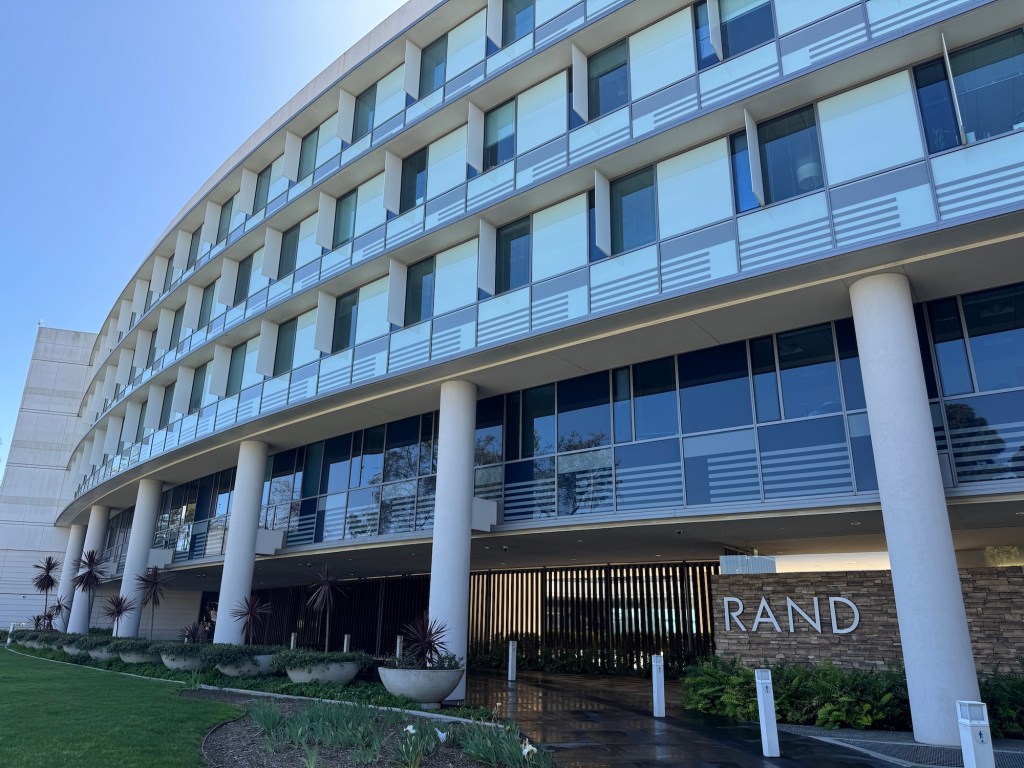
RAND’s current headquarters in Santa Monica (Erik Olsen)

When people think of Santa Monica, images of sun-soaked beaches, the iconic pier, and leisurely strolls along the Pacific Coast Highway often come to mind. It’s a city synonymous with surf, sand, and a laid-back California lifestyle. Yet, bunkered within this seaside haven is an institution far removed from the carefree spirit of the shore: RAND Corporation, one of the world’s most influential think tanks, with deep ties to the Department of Defense. While tourists flock to the hot sands and the 3rd Street Promenade, behind the walls of RAND’s headquarters, some of the nation’s brightest minds have quietly shaped U.S. policy and technology for decades.

The RAND Corporation, originally an acronym for “Research ANd Development,” is a think tank that has had a profound impact on policy and decision-making in various fields, including national security, science, technology, and social policy.

RAND emerged from the devastation of World War II, inspired by the success of the Manhattan Project, a $2 billion effort that produced the first atomic bomb. Seeing this achievement, five-star Air Force General Henry “Hap” Arnold recognized the need for a group of brilliant minds to keep America at the forefront of technological innovation. In 1946, Arnold assembled a small team of scientists with $10 million in funding to create RAND, short for Research and Development. He persuaded a family friend, aircraft mogul Donald Douglas, to host the project at his factory in Santa Monica.

Air Force General Henry “Hap” Arnold (USAF)

Within months, RAND captured the attention of academics, politicians, and military leaders with its groundbreaking report, “Preliminary Design of an Experimental World-Circling Spaceship.” At a time when rocket science was in its infancy, the think tank’s vision of an orbiting space station was revolutionary. The report not only detailed the type of fuel needed and the feasibility of constructing the station but also highlighted its potential to revolutionize weather forecasting, long-distance communication, and most crucially, its ability to intimidate America’s adversaries. If America could launch a satellite into space, what else might it achieve?

CALIFORNIA CURATED ART ON ETSY

Purchase stunning art prints of iconic California scenes.
Check out our Etsy store.

Although President Truman decided against pursuing the space station, the military quickly embraced RAND. Thanks to Hap Arnold’s connections, the Air Force became RAND’s primary contractor, and the think tank began consulting on a wide range of projects, from propeller turbines to missile defense systems. The influx of contracts soon overwhelmed RAND, prompting the need to hire hundreds of additional researchers. In its recruitment ads, RAND proudly highlighted its intellectual pedigree, even drawing a direct line from its president, Frank Collbohm, to Isaac Newton. Whether or not that claim held water, the institute rapidly earned a reputation as the go-to place for envisioning innovative strategies to wage wars and deter adversaries.

In fact, in 1960s the Soviet newspaper Pravda nicknamed RAND “the academy of science and death and destruction.” American media outlets preferred to call them the “wizards of Armageddon.” The Atlantic called them “the paramilitary academy of United States strategic thinking”.

RAND’s strategic theories, including the concept of Mutually Assured Destruction (MAD), were born from the devastating potential of atomic weapons, aiming to prevent nuclear war through deterrence.

But where is RAND located? When RAND was first established in 1946, it was housed in a building provided by Donald Douglas at his aircraft factory in Santa Monica. However, as RAND grew, it eventually moved to its own dedicated headquarters.

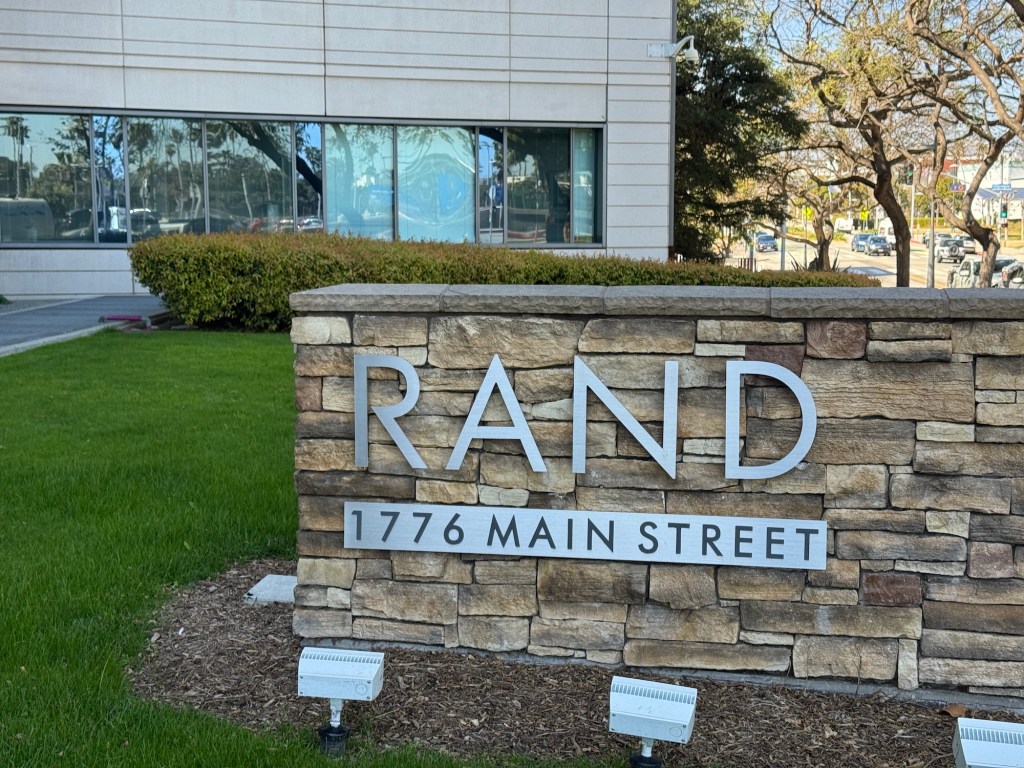
In 1953, RAND moved to a new building on a site provided by the city of Santa Monica. This building was designed specifically for RAND’s needs and became a recognizable landmark near the beach. In 2004, RAND moved again to a newly constructed headquarters in Santa Monica, located at 1776 Main Street. This modern facility was designed to better accommodate RAND’s evolving research activities and staff. So while RAND has always been in Santa Monica, it has moved to different buildings over the years.

Hand-tinted photo of the original RAND building at 1700 Main Street in Santa Monica, California, circa 1960s
RAND Archives

During the early years, RAND’s work was heavily focused on military and defense issues, reflecting the geopolitical climate of the Cold War. One of RAND’s most significant early contributions was the development of game theory and its application to military strategy. Pioneers like John Nash, who would later win the Nobel Prize in Economics, conducted seminal work at RAND during this period.

RAND’s analysts played a crucial role in the development of nuclear strategy, including the doctrine of mutually assured destruction (MAD). The think tank’s work on systems analysis, a method for evaluating complex systems, became a cornerstone of U.S. defense planning. RAND’s analysts developed strategies for deterrence, nuclear war scenarios, and the implications of various levels of nuclear arsenals.

“This was a very smart bunch,” said Ellsberg, just before his death on June 16, 2023. “The smartest group of people I ever did associate with. It turns out, by the way, intelligence is not a very good guarantee of wisdom.”

Daniel Ellsberg

Two key figures at the time, Albert Wohlstetter and Herman Kahn, were both pivotal figures at the RAND Corporation, where they contributed significantly to the development of U.S. nuclear strategy during the Cold War. Wohlstetter, known for his rigorous and analytical approach, emphasized the importance of maintaining a credible deterrent to Soviet aggression, which he articulated in his influential work, “The Delicate Balance of Terror.” Herman Kahn, another RAND was renowned for his work on nuclear warfare scenarios and is often credited with popularizing the concept of “mutual assured destruction” (MAD).

Albert Wohlstetter (Wikipedia)

Their paths intersected with Daniel Ellsberg, who also worked at RAND as an analyst. Ellsberg, who later became famous for leaking the Pentagon Papers, was influenced by both Wohlstetter’s strategic insights and Kahn’s scenarios, but the resulting plans for how America would manage a nuclear war with the Russians terrified Ellsberg. As he recounted in the Netflix Documentary Turning Point, Ellsberg revealed that serious plans at RAND estimated a nuclear war with Russia and China could result in 600 million casualties, highlighting the catastrophic consequences that were considered in Cold War strategic planning. These revelations, along with his evolving moral stance, eventually led Ellsberg to become a vocal critic of U.S. military policies.

“This was a very smart bunch,” said Ellsberg, before his death on June 16, 2023. “The smartest group of people I ever did associate with. It turns out, by the way, intelligence is not a very good guarantee of wisdom.”

RAND’s current headquarters in Santa Monica (Erik Olsen)

By the 1960s, RAND began to diversify its research agenda. The think tank started to tackle a wider array of issues, including healthcare, education, and social policy. In 1968, RAND established the Health Insurance Experiment, a landmark study that explored the effects of different levels of health insurance coverage on medical spending and health outcomes. This study had a lasting impact on health policy and remains one of the largest and most comprehensive studies of its kind.

Although Silicon Valley is given most of the credit, RAND also contributed to the development of the internet. In the 1960s, RAND researchers, including Paul Baran, were instrumental in developing the concept of packet-switching networks, which later became a fundamental technology underlying the internet. The key idea (which Baran worked on with others) was to develop a communication system that could withstand potential disruptions, such as those caused by a nuclear attack. His concept of breaking data into small packets and routing them through a decentralized network was groundbreaking, ensuring that information could still be transmitted even if parts of the network were compromised.

Paul Baran presents his work at a RAND in 2009
Photo by Diane Baldwin/RAND

In the 1980s and 1990s, RAND continued to expand its global influence. The organization opened offices in Europe and started collaborating with international governments and institutions. RAND’s research began to encompass global security, international development, and global health issues. RAND also pioneered the study of terrorism in the 1970s, well before the United Nations had even defined the term. Today, the RAND Terrorism Chronology Database, tracking all terrorist acts since 1968, is a crucial resource for the military and government.

One notable area of RAND’s recent work is in the field of education. RAND has conducted extensive research on educational policies and practices, including studies on school choice, teacher effectiveness, and the impacts of educational technology.

Despite its many contributions, RAND has faced criticisms and challenges. Some have argued that the think tank’s close ties to the military and government agencies may bias its research. Others have pointed out that, like any large organization, RAND’s influence can sometimes lead to the prioritization of certain agendas over others.

A British MQ-9A Reaper operating over Afghanistan in 2009 (Wikipedia)

One of RAND’s more controversial recent activities involved its research on U.S. drone warfare. Critics have raised concerns that RAND’s analyses have sometimes downplayed the ethical and civilian impact of drone strikes, focusing instead on the strategic advantages for the U.S. military. This has sparked debates about whether RAND’s close ties to the Department of Defense might influence the objectivity of its findings, particularly in areas where the moral and humanitarian implications are significant.

As of the most recent data, RAND Corporation employs approximately 1,950 people, including researchers, analysts, and support staff. The think tank operates with an annual budget of around $390 million, funding a wide array of research projects across various disciplines, including national security, health, education, and more. These figures can fluctuate based on the specific projects and funding sources in any given year.

Despite concerns about its influence, the RAND Corporation has remained a significant player in policy research. Its ability to adapt and broaden its focus has helped it stay relevant over the years. RAND’s work continues to inform policies that affect many aspects of public life, reflecting the ongoing role of independent research in policy-making.

So the next time you take a trip to the beach, take a moment to consider that just a short distance from the waves, some of the nation’s most critical and controversial policy decisions are being shaped at RAND’s headquarters in Santa Monica.

Caltech Fly Labs and a Century of Genetic Discovery

Fruit fly Drosophila melanogaster

Few organisms in the history of science have been as important to our understanding of life as the humble fruit fly. The genus Drosophila melanogaster holds a particularly esteemed spot among the dozens of model organisms that provide insight into life’s inner workings. For more than 100 years, this tiny, but formidable creature has allowed scientists to unwind the infinitesimal mechanisms that make every living creature on the planet what it is.

And much of the work to understand the fruit fly has taken place and is taking place now, right here in California at the Cal Tech fly labs.

CALIFORNIA CURATED ON ETSY

Purchase stunning art prints of iconic California scenes.
Check out our Etsy store.

Over the decades, Drosophila have been key in studying brain, behavior, development, flight mechanics, genetics, and more in many labs across the globe. These tiny, round-bodied, (usually) red-eyed flies might appear irrelevant, but their simplicity makes them ideal models. They’re easy to breed—mix males and females in a test tube, and in 10 days, you have new flies. Their 14,000-gene DNA sequence is relatively short, but extremely well-studied and there are some 8,000 genes which have human analogs. (The fly’s entire genome was fully sequenced in 2000.) Crucially, a century of fruit fly research, much of it led by Caltech, has produced genetic tools for precise genome manipulation and shed light on the act of flight itself.

But how did Drosophila become the darling of genetics?

In the early 20th century, the field of genetics was still in its infancy. Thomas Hunt Morgan, a biologist at Columbia University with a background in embryology and a penchant for skepticism began with an effort to find a simple, cheap, easy-to-breed model organism. At Columbia, he established a laboratory in room 613 of Schermerhorn Hall. This cramped space became famous for groundbreaking research in genetics, with Morgan making innovative use of the common fruit fly.

Thomas Hunt Morgan in the Fly Room at Columbia, 1922 (Cal Tech Archives)

Morgan, who joined Columbia University after teaching at Bryn Mawr College, chose the fruit fly for its ease of breeding and rapid reproduction cycle. Morgan observed a male fly with white eyes instead of the usual red. Curious about this trait’s inheritance, he conducted breeding experiments and discovered that eye color is linked to the X chromosome. He realized a male fly, with one X and one Y chromosome, inherits the white-eye trait from its mother, who provides the X chromosome. This led him to conclude that other traits might also be linked to chromosomes. His extensive experiments in this lab confirmed the chromosomal theory of inheritance, demonstrating that genes are located on chromosomes and that some genes are linked and inherited together.

After his groundbreaking research in genetics at Columbia University, Morgan moved to Pasadena and joined the faculty at CalTech in 1928, where he became the first chairman of its Biology Division and continued his influential work in the field of genetics establishing a strong genetics research program. Morgan’s work, supported by notable students like Alfred Sturtevant and Hermann Muller, laid the foundation for modern genetics and earned him the Nobel Prize in 1933.

CalTech then became a world center for genetics research using the fruit fly. Other notable names involved in fruit fly research at CalTech include Ed Lewis, a student of Morgan, who focused his research on the bithorax complex, a cluster of genes responsible for the development of body segments in Drosophila. His meticulous work over several decades revealed the existence of homeotic and Hox genes, which control the basic body plan of an organism (for which he won the 1995 Nobel Prize).

Novel prize winner Edward Lewis (Nobel Prize.org)

Seymour Benzer, another luminary at CalTech, shifted the focus from genes to behavior. Benzer’s innovative experiments in the 1960s and 1970s sought to understand how genes influence behavior. His work demonstrated that mutations in specific genes could affect circadian rhythms, courtship behaviors, and learning in fruit flies. Benzer’s approach was revolutionary, merging genetics with neurobiology and opening new avenues for exploring the genetic basis of behavior. His contributions are chronicled in Jonathan Weiner’s “Time, Love, Memory: A Great Biologist and His Quest for the Origins of Behavior,” a riveting account of Benzer’s quest to uncover the genetic roots of behavior. Lewis Wolpert in his review for the New York Times wrote, “Benzer has many gifts beyond cleverness. He has that special imagination and view of the world that makes a great scientist.”

Since Benzer’s retirement in 1991, new vanguard in genetics research has taken over at CalTech, which continues to be at the forefront of scientific discovery, driven by a new generation of researchers who are unraveling the complexities of the brain and behavior with unprecedented precision.

Elizabeth Hong is a rising star in biology, with her Hong lab investigating how the brain orders and encodes complex odors. Her research focuses on the olfactory system of Drosophila, which, despite its simplicity, shares many features with the olfactory systems of more complex organisms. Hong’s work involves mapping the synapses and neural circuits that process olfactory information, seeking to understand how different odors are represented in the brain and how these representations influence behavior. Her findings could have profound implications for understanding sensory processing and neural coding in general.

David Anderson, another prominent figure at Caltech, studies the neural mechanisms underlying emotions and behaviors. While much of Anderson’s work now focuses on mice as a model organism, the lab’s research explores how different neural circuits contribute to various emotional states, such as fear, aggression, and pleasure, essentially how emotions are encoded in the circuitry and chemistry of the brain, and how they control animal behavior. Using advanced techniques like optogenetics and calcium imaging, Anderson’s lab can manipulate specific neurons and observe the resulting changes in behavior. This work aims to bridge the gap between neural activity and complex emotional behaviors, providing insights into mental health disorders and potential therapeutic targets.

In 2018, the Anderson laboratory identified a cluster of just three neurons in the fly brain that controls a “threat display” — a specific set of behaviors male fruit flies exhibit when facing a male challenger. During a threat display, a fly will extend its wings, make quick, short lunges forward, and continually reorient itself to face the intruder.

California Institute of Technology (Photo: Erik Olsen)

Michael Dickinson is renowned for his studies on the biomechanics and neural control of flight in Drosophila. In the Dickenson Lab, researchers combine behavioral experiments with computational models and robotic simulations, seeking to understand how flies execute complex flight maneuvers with such precision. His work has broader applications in robotics and may inspire new designs for autonomous flying robots.

“He’s a highly original scientist,” Alexander Borst, a department director at the Max Planck Institute of Neurobiology in Germany, told the New York Times. 

Fruit fly scientific illustration

Dickinson’s investigations also delve into how sensory information is integrated and processed to guide flight behavior, offering insights into the general principles of motor control and sensory integration.

As science advances, Caltech’s Fly Lab’s remind us of the power of curiosity, perseverance, and the endless quest to uncover the mysteries of life. The tiny fruit fly, with its simple elegance, remains a powerful model organism, driving discoveries that illuminate the complexities of biology and behavior. Just recently, scientists (though not at CalTech) unveiled the first fully image of the fruit fly brain. Smaller than a poppy seed, the brain is an astonishingly complex tangle of 140,000 neurons, joined together by more than 490 feet of wiring.

In essence, the fruit fly remains a key to unlocking the wonders and intricacies of life, and in the Fly Labs at Caltech, that spirit of discovery thrives, ensuring that the legacy of Morgan, Lewis, Benzer, and their successors will continue to inspire generations of scientists to come.

Pasadena: City of Science

How Pasadena Became a Hub of Scientific Endeavor

Pasadena and Colorado Boulevard (Erik Olsen)

Yeah, yeah, you know the Rose Bowl.

But Pasadena isn’t just about pretty streets and historic buildings—it’s also a powerhouse of scientific discovery. Tucked between its tree-lined avenues and old-town charm is a city buzzing with innovation, home to some of the most groundbreaking research and brilliant minds in the world. Ask Einstein.

All right. Let’s keep going. While the climate of Southern California, with its mild weather and clear skies, was advantageous for astronomical observations and outdoor research, the city’s location also played a role in attracting scientists and researchers seeking a desirable living environment. The pleasant climate and natural beauty of the region were significant draws for many. But the city also owes much of its scientific prestige to the Second World War, when the city emerged as a pivotal intellectual and manufacturing hub for aeronautics and space, driven by its strategic location, advanced research institutions like the California Institute of Technology (Caltech), and an influx of skilled labor. The region’s aerospace industry, including companies such as Hughes Aircraft, Douglas Aircraft, Lockheed and North American Aviation, all of which played a crucial role in producing military aircraft and pioneering advancements in aerospace technology. By the end of World War II, 60 to 70 percent of the American aerospace industry was located in Southern California;

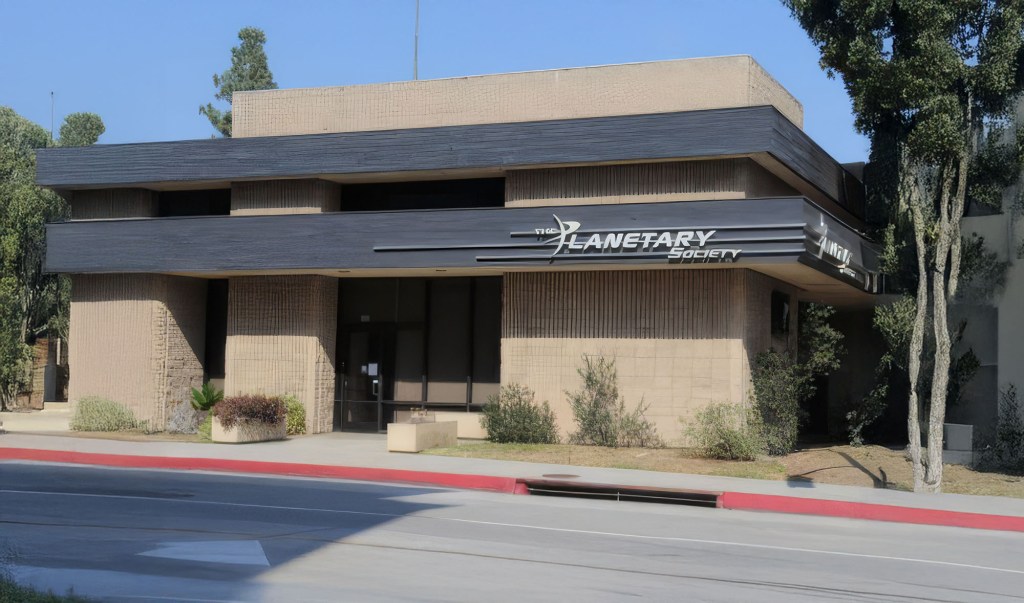
Planetary Society Headquarters in Pasadena (Erik Olsen)

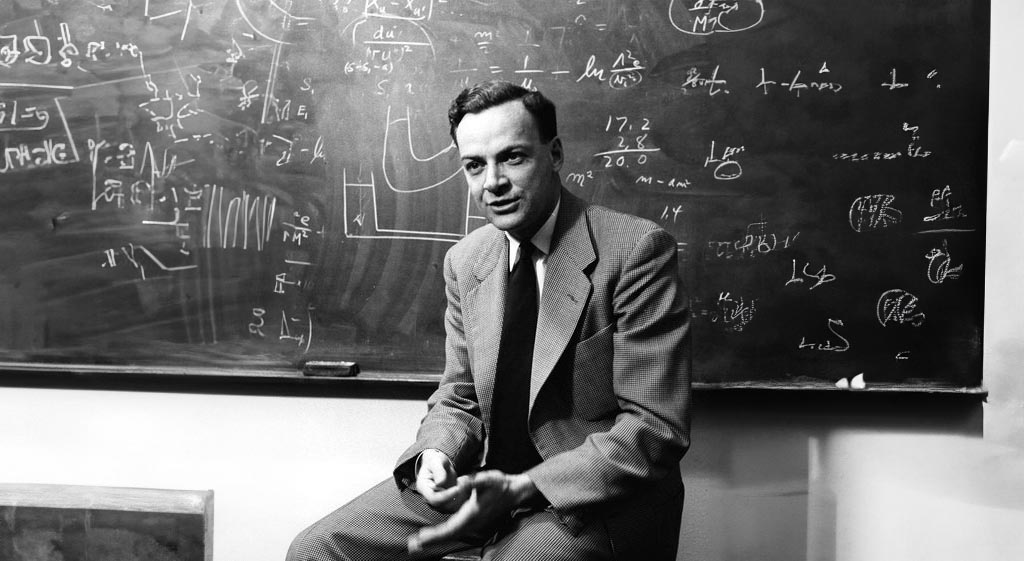
The scientific pedigree of Pasadena can be traced back to notable historical figures, among them the great Richard Feynman, a theoretical physicist known for his work in quantum mechanics and his Nobel Prize-winning contributions to quantum electrodynamics. Feynman was a long-time faculty member at the California Institute of Technology (Caltech) and left an indelible mark on both physics and science education. 

Richard Feynman (Caltech Archives)

In engineering, there is Theodore von Kármán, a Hungarian-American mathematician, aerospace engineer, and physicist, who is remembered for his pioneering work in aerodynamics and astronautics. He was responsible for crucial advances in aerodynamics characterizing supersonic and hypersonic airflow. He is best known for the von Kármán vortex street, a pattern of vortices caused by the unsteady separation of flow of a fluid around a cylinder, which has applications in meteorology, oceanography, and engineering. Von Kármán was also a key figure in the establishment of the Jet Propulsion Laboratory (JPL), which is managed by Caltech (see below).

Cal Tech (Erik Olsen)

In the mid-20th century, Albert Einstein spent several winters at CalTech, further solidifying the city’s reputation as a center of scientific thought. During his stays from 1931 to 1933, Einstein delivered lectures and collaborated with some of the brightest minds in physics, which had a lasting impact on the scientific community in Pasadena and beyond.

Albert Einstein in Pasadena (CalTech Archives)

CalTech itself is a cornerstone of Pasadena’s scientific community. As one of the premier science and engineering institutes globally, it has been at the forefront of numerous breakthroughs in various fields including physics, biology, and engineering. The university is not only a powerhouse of innovation but also a nurturing ground for future scientists, evidenced by its association with 39 Nobel laureates.

Similarly, the Jet Propulsion Laboratory (JPL), which is technically located in La Canada Flintridge (geographically), but has a Pasadena mailing address, is a unique collaboration between NASA and CalTech. JPL is the leading US center for the robotic exploration of the solar system. Its engineers and scientists have been behind some of the most successful interplanetary missions, including the Mars Rover landings, the Juno spacecraft currently exploring Jupiter, and the Voyager probes that have ventured beyond our solar system. 

NASA’s Jet Propulsion Laboratory (Erik Olsen)

Further enriching Pasadena’s scientific landscape is the Carnegie Observatories, part of the Carnegie Institution for Science. This establishment has been a pivotal site for astronomical discoveries since the early 20th century. Today, it continues to push the boundaries of astronomical science by managing some of the most advanced telescopes in the world and conducting cutting-edge research in cosmology and astrophysics.

Jupiter as captured by NASA JPL’s Juno spacecraft (NASA/JPL-Caltech/SwRI/MSSS/David Marriott)

Though in the mountains above Pasadena, the Mt. Wilson Observatory, founded by George Ellery Hale, was home to some of the world’s most powerful telescopes in the early 20th century, including the 60-inch and 100-inch Hooker telescopes. (See our feature). These instruments were integral to groundbreaking discoveries, such as Edwin Hubble’s revelation of the expanding universe, which was supported by data from Mt. Wilson’s telescopes.

The Planetary Society, also headquartered in Pasadena, adds to the city’s scientific aura. Co-founded by Carl Sagan, Bruce Murray, and Louis Friedman in 1980, this nonprofit organization advocates for space science and exploration. It engages the public and global community in space missions and the search for extraterrestrial life, demonstrating the city’s commitment to fostering a broader public understanding of science.

Mt. Wilson Observatory (Erik Olsen)

Pasadena’s prowess in scientific innovation is further amplified by the presence of numerous high-tech companies and startups that reside in the city. These range from aerospace giants to biotech firms, many of which collaborate closely with local institutions like CalTech and JPL. Moreover, incubators such as IdeaLab and Honeybee Robotics (there are numerous robotics companies…which I think we will do a stand alone story about in the future) have been instrumental in fostering a culture of innovation and entrepreneurship in the city. Founded in 1996 by Bill Gross, IdeaLab has helped launch companies that have had significant impacts on technology and science, from energy solutions to internet technologies.

Pasadena’s status as a city of science is not just rooted in its institutions but also in its history and the ongoing contributions of its residents and thinkers. The city continues to be a fertile ground for scientific discovery and technological innovation, reflecting a deep-seated culture that celebrates curiosity and the pursuit of knowledge. This environment not only attracts some of the brightest minds from around the globe but also supports them in pushing the boundaries of what is possible, making Pasadena a true city of science.

From Desert Treasures to Resilient Glass: How a California Boron Mine Transformed the World

U.S. Borax borate mine in California (Erik Olsen)

In the late 1800s, as California was emerging and gold fever captivated the public, a significant discovery in the vast, arid desert of modern-day Death Valley led to the development of a mining operation for one of the most versatile and useful materials on earth: borates.

With Hollywood and Silicon Valley dominating California’s identity, it’s easy to overlook the significant role extractive industries have played in shaping the state’s economic and industrial history. However, sites like the Rio Tinto Borax Mine in Boron, California, stand as enduring reminders of this often underappreciated chapter.

Despite the similar-sounding name, borates are far from boring. These indispensable compounds have a wide range of applications that significantly impact our daily lives. Remarkably, the mining operation in the desert of California is still active. In fact, it is one of the largest producers of borates in the world.

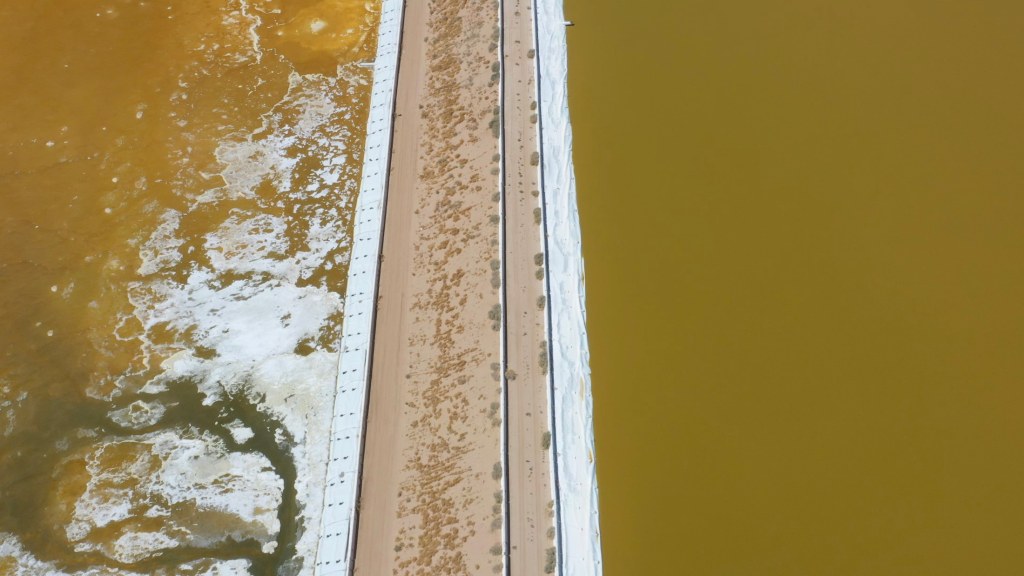
The evaporation ponds at the U.S. Borax Mine, used in the extraction of borates, have historically raised environmental concerns, including potential groundwater contamination and the management of hazardous waste byproducts. However, being located in a remote area far from major population centers has helped mitigate some of the risks associated with pollution, as the isolation reduces direct human exposure and minimizes immediate health impacts on surrounding communities. Additionally, the mine’s location in an arid climate helps slow the spread of contaminants in groundwater, though long-term environmental monitoring and mitigation remain critical. Efforts have also been made to manage waste responsibly and comply with environmental regulations to limit potential harm.

Rio Tinto U.S. Borax Mine in Boron, California (Erik Olsen)

U.S. Borax, part of the global mining company Rio Tinto, operates California’s largest open pit mine and the largest borax mine in the world, producing nearly half the world’s borates. It is located near Boron, California, just off California State Route 58 and North of Edwards Air Force Base. While the mine’s economic importance to California has been significant for decades, the critical contributions of borates to modern society remain a largely untold story.

U.S. Borax has roots stretching back to the late 19th century, when the company, then called The Pacific Coast Borax Company emerged as a leader in borate mining and production following the discovery of substantial boron deposits in California. Founded by Francis Marion Smith, known as the “Borax King,” the company initially gained fame for its iconic 20 Mule Team Borax brand. The brand originated from the company’s need for an efficient way to transport borates from the remote mines in Death Valley to the nearest railhead in Mojave, California, covering a distance of about 165 miles.

To accomplish this, the company used large wagons pulled by teams of 20 mules. Each team consisted of 18 mules and 2 horses, and the wagons carried loads of up to 10 tons of borax. These mule teams became legendary for their endurance and reliability, making the long and arduous journey through the harsh desert environment.

Smith’s innovative methods and relentless pursuit of high-quality borates propelled U.S. Borax to the forefront of the industry. Over the decades, U.S. Borax has evolved, focusing on sustainable mining practices and advanced technologies to maintain its status as a key player in the global market, providing essential borate products for various industrial and consumer applications. 

Evaporation pools at US Borax in Boron, California (Erik Olsen)

These versatile minerals are critical in agriculture where borates serve as micronutrients, essential for the healthy growth of crops. They are also key ingredients in detergents, where their stain-fighting power ensures cleaner, brighter clothes. Moreover, borates are used in insulation and fiberglass, contributing to energy efficiency and safety in buildings. The importance of borates extends to pharmaceuticals and cosmetics, where they serve as vital components in various formulations. But perhaps the most impactful use of borates is in the production of borosilicate glass

You’ve likely encountered borosilicate glass before, most recognizably under the brand name Pyrex, produced by Corning. This stable, clear, and robust material can withstand a wide range of temperatures, from the intense heat of a Bunsen burner to the extreme cold of deep space. 

Hale telescope mirror on its way to California

Corning brought the future of borosilicate glass into the present by casting what was, at the time, the world’s largest primary telescope mirror. The primary mirror for the 200-inch Hale Telescope in California was cast out of Pyrex borosilicate glass and delivered to Caltech in the spring of 1936. Since manufacturing the Hale Telescope primary mirror blank, Corning has supplied many mirror blanks for astronomy tools worldwide.

Test tubes made of borosilicate glass

Borosilicate glass is one of the unsung heroes of the modern age. Unlike regular glass, which can leach small particles into liquids when exposed to potent chemicals, borosilicate glass remains chemically inert, making it ideal for test tubes, lab beakers, and medical vials. Almost every medicine or vaccine in history, including those developed for COVID-19, has relied on borosilicate containers for their development, storage, and transport. However, we often overlook the importance of these materials until there’s a shortage. 

This was the case during the COVID-19 pandemic when concerns arose that the primary obstacle to vaccine distribution might not be the pharmaceuticals themselves, but the containers needed for shipping. In response, thousands of workers along a complex supply chain—from mines to refineries to factories—helped avert a crisis. Corning even introduced a new type of glass, made with aluminum, calcium, and magnesium, to meet the high demand for medicinal vials.

Evaporation ponds at the US Borax mine in Boron, California (Erik Olsen)

The invention of borosilicate glass is credited to German chemist Otto Schott in the late 19th century. Schott was driven by the need for a type of glass that could withstand extreme temperatures and resist chemical corrosion. In 1887, he succeeded in creating this revolutionary material by adding boron oxide to traditional silica-based glass, resulting in a product with exceptional thermal and chemical stability. This breakthrough led to the founding of the Jena Glassworks, where Schott’s borosilicate glass was produced and quickly found applications in scientific and industrial settings. Its remarkable properties made it indispensable for laboratory equipment, cookware, and a variety of other uses. The material’s resilience and reliability have ensured its place as a critical component in modern science and technology, solidifying Schott’s legacy as a pioneer in glassmaking. 

Borosilicate glass lenses.

Due to its low coefficient of thermal expansion, borosilicate glass maintains the same optical properties across a range of temperatures, making it an ideal material for scientific lenses and other high-precision optical components, including lenses and mirrors for telescopes and microscopes. 

It is also used in lighting, particularly for high-intensity lamps and projectors. Artists and craftspeople value borosilicate glass for its workability and durability in creating intricate glass sculptures and jewelry. Its robustness extends to the industrial sector, where it is used in chemical processing equipment, tubing, and sight glasses in high-temperature and corrosive environments. Overall, the unique properties of borosilicate glass make it indispensable across a wide range of applications, from everyday household items to specialized scientific and industrial equipment.

CALIFORNIA CURATED ART ON ETSY

Purchase stunning art prints of iconic California scenes.
Check out our Etsy store.

The abundance of boron in the California desert, particularly the Mojave Desert, is due to a combination of geological conditions and historical processes. Volcanic activity in the region has contributed boron-rich rocks, which, along with tectonic activity, has created basins and depressions where water could accumulate and evaporate. These conditions, coupled with the arid climate, led to the evaporation of ancient lakes and the formation of borate minerals in playas—flat, dry lakebeds that form in desert regions when water evaporates completely, leaving behind a layer of minerals. Hydrothermal activity also played a role by depositing borate minerals through fractures in the Earth’s crust. These factors collectively resulted in significant boron deposits, such as those found in the U.S. Borax boron mine, one of the world’s largest sources of boron.

The US Borax mine in Boron, California, is a fine example of some of the little-known places where California’s industrial history is laid out for all to see, even if few people probably visit. The mine highlights the ingenuity and perseverance of those who ventured into the state’s arid deserts to unearth one of the most versatile and indispensable materials known to modern industry.

The Pacific Coast Highway (PCH): Icon of American Scenic Roadways

Pacific Coast Highway near Big Sur (Erik Olsen)

The Pacific Coast Highway (PCH), also known as California State Route 1, is one of the most iconic roads in the United States, renowned for its breathtaking views of the Pacific Ocean and rugged coastline. This scenic highway stretches over 650 miles from Dana Point in Orange County in Southern California to Mendocino County in Northern California, offering travelers unparalleled vistas and a quintessential Californian road trip experience. While some suggest that PCH runs from Mexico to Canada, that is mistaken. U.S. Route 101 continues north from California, running along the coast through Oregon and Washington, up to the Olympic Peninsula. That said, it is still the longest state route in California and the second-longest in the US after Montana Highway 200. The story of its construction is as dramatic and intricate as the landscape it traverses.

CALIFORNIA CURATED ON ETSY

Purchase stunning art prints of iconic California scenes.
Check out our Etsy store.

The origins of the Pacific Coast Highway date back to the early 20th century, when the automobile was becoming an essential part of American life. The idea for a coastal highway was initially conceived to connect the state’s isolated coastal communities and improve access to California’s scenic beauty. The concept gained traction in the 1910s and 1920s, and construction began in earnest in the 1930s, to provide jobs during the Great Depression.

Lovely aerial of Pacific Coast Highway in Central California

“It took decades to get the highway built,” Carina Monica Montoya told the Los Angeles Times. Montoya is the author of, “Pacific Coast Highway In Los Angeles County” (The History Press, 2014). 

The construction of the PCH was an engineering marvel, given the challenging terrain it had to navigate. The road had to be carved out of steep cliffs, cross numerous rivers, and be supported by bridges spanning deep ravines. One of the most significant and iconic portions of the highway, the Big Sur section, presented formidable challenges. This stretch of the road, which runs between San Simeon and Carmel, required extensive blasting and drilling into the rugged coastal mountains. The effort was spearheaded by the California Division of Highways (now CalTrans), with a workforce comprising both state employees and workers from the Civilian Conservation Corps (CCC), a New Deal program.

PCH

Key figures in the design and construction of the PCH included engineers and architects who had to innovate continuously to address the formidable natural obstacles. One notable engineer was John D. Isaacs, a prominent builder who contributed to the design and construction of several key bridges along the PCH, including the famous Bixby Creek Bridge. His innovative approach to bridge engineering helped overcome the difficulties presented by the steep canyons and coastal bluffs.

The Pacific Coast Highway took decades to complete fully, with different sections being opened to the public at various times. The Big Sur segment, for example, was officially completed in 1937 after nearly 18 years of labor. The total cost of constructing the highway is difficult to pinpoint precisely, given its piecemeal development, but it ran into tens of millions of dollars—an immense sum at the time.

The Pacific Coast Highway near Santa Monica, California, circa 1930s.

Several colorful characters also play a role in the highway’s history. The Pacific Coast Highway might not exist today if May Rindge, a resolute landowner, had succeeded in her long battle against the county. Since at least the 1890s, a primitive road, often submerged at high tide, hugged the rocky coast between Santa Monica and Malibu, passing under a natural arch and ending at a locked gate on Rindge’s 17,000-acre ranch.

As the owner of Rancho Topanga Malibu Sequit, Rindge was determined to protect her property. She and her late husband had long fought to keep homesteaders off their land. In 1906, she even forced the Southern Pacific Railroad to divert its Santa Barbara line around Malibu and through the San Fernando Valley.

In 1907, when the county proposed extending the coastal road through Malibu, Rindge posted armed guards at the entrances to her ranch and contested the county’s power of eminent domain in court. A stalemate ensued for years, but the road’s prospects improved in the early 1920s when it was included in the planned Roosevelt Highway. In 1923, the U.S. Supreme Court upheld the county’s right to appropriate the land for the highway, and in 1925, a superior court judge granted the county title to the right-of-way in exchange for $107,289, finally ending the dispute.

The book “The King and Queen of Malibu: The True Story of the Battle for Paradise” by David K. Randall (2016) tells the story of Ringe and a wonderful history of Malibu.

Lexus on PCH

Today, the Pacific Coast Highway is one of the most famous and iconic strips of road in the world. Featured in countless commercials as well as movies and TV shoots, sections of PCH are immediately recognizable. Of course, it helps a lot that the highway in in such close proximity to legions of DPs (Directors of Photography) who live in Los Angeles and work in commercials and film. Shooting on the highway is an easy day trip from LA and Hollywood, although it can be difficult to get permits to film on the highway given it is such a busy working road.

That said, the highway faces significant challenges due to climate change and coastal erosion. Rising sea levels and increased storm activity are accelerating the natural erosion processes along California’s coast. This has led to frequent landslides and road closures, particularly in the Big Sur region. One notable event was the massive landslide in 2017 at Mud Creek, which buried a section of the highway under 40 feet of debris, closing it for over a year and requiring extensive repairs. A timelapse of the landslide produced by the United States Geological Service can be seen here

The Pacific Coast Highway in Newport Beach (Erik Olsen)

The New Yorker ran a piece on the concerns about the highway’s future viability as a means to travel long distances along the coast.

The Washington Post wrote back in 2021, “the engineering folly of a road built on sheer cliffs has meant that closures are annual events — the “whens,” not “ifs” — for the people and the economy it supports.”

The most recent slide to afflict the region took place in April 2024 following heavy rains, when large chunks of the road broke off, tumbling down a cliff and into the ocean near Rock Creek Bridge. Safety officials closed off about 40 miles of road as crews worked to assess the damage and stabilize the road.

Photo: Caltrans District 5

Rosanna Xia, a reporter for the Los Angeles Times, masterfully chronicles the problems facing PCH and the California coast in general due to climate change and erosion in her book California Against the Sea: Visions for Our Vanishing Coastline

Although the Pacific Coast Highway remains one of the greatest road trip routes of all time, the challenges in maintaining its full length are significant for the state and its residents. Despite its enduring popularity, the highway often operates in sections due to frequent closures and repairs caused by natural disasters like landslides, erosion, and wildfires. These ongoing issues demand substantial resources and effort to keep the entire highway operational, making its full-length service a constant struggle.

Still, it remains a pretty excellent place to take a drive. As the Boss once put it, roll down the window and let the wind blow back your hair.

Hey there! If you enjoy California Curated, consider donating the price of a coffee to support its creation!