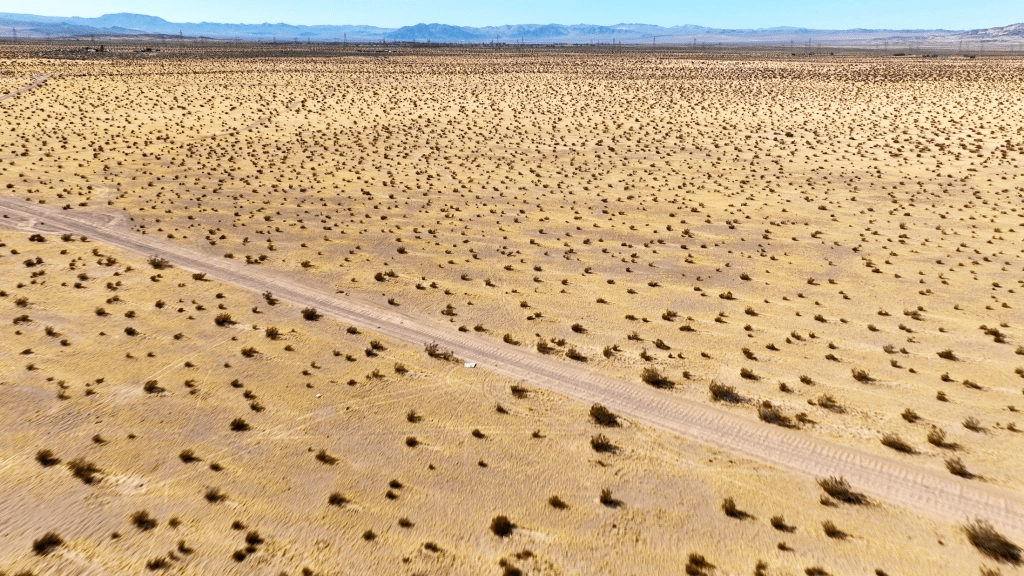
Baja California Is Slowly Breaking Away from the Mainland and May One Day Become an Island

Baja California and the Sea of Cortez (Photo: Erik Olsen)

Geological forces are always at work, reshaping the planet, just usually on a timescale too slow for us to notice. But over the long haul, they can completely transform places we think of as fixed and familiar, like Southern California and northern Mexico. I’ve been down to Baja a bunch of times, including a few unforgettable multi-day kayak trips in the Sea of Cortez. Paddling past sheer cliffs and sleeping on empty beaches under the stars, it’s easy to feel like the landscape has been frozen in time. But that sense of permanence? It’s an illusion.

Baja California stretches like a crooked finger pointing toward the tropics, wedged between the restless Pacific and the calm, warm waters of the Gulf of California. This long, skinny slice of land, more than 1,200 miles from Mexicali to Cabo, is full of contrasts: sun-blasted deserts, jagged mountains, hidden oases and mangroves. But it’s not just a finger of land: it’s a fracture. Baja was ripped from mainland Mexico by slow, grinding tectonic forces, the Pacific Plate dragging it north and leaving the Gulf in its wake. And it’s still on the move.
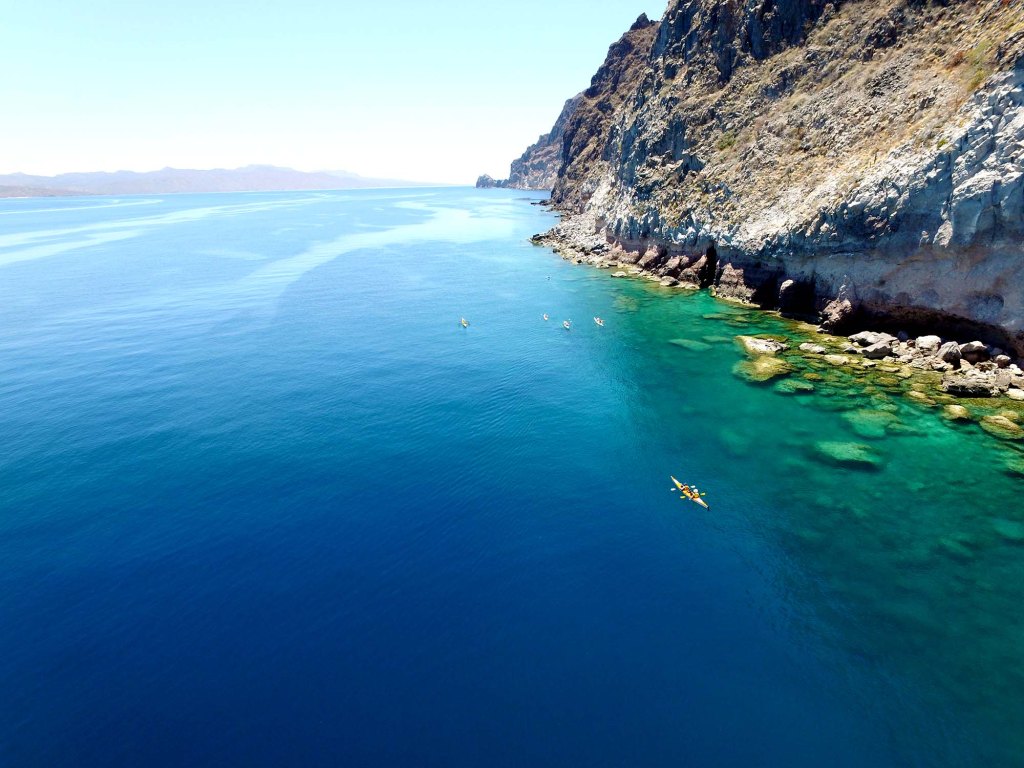
Kayaking the Sea of Cortez out of Loreto, Mexico on the Baja Peninsula (Photo: Erik Olsen)

Every year, Baja creeps a little farther away from the continent, slowly widening the gap. Some scientists think that, millions of years from now, the whole rift could flood, turning parts of northern Mexico into a vast inland sea. It’s the continent, cracking apart right under our feet. it’s just taking its time.

This process is linked to the activity of the San Andreas Fault and other associated fault systems, which collectively form a boundary between the Pacific Plate and the North American Plate. The movement of these tectonic plates is a slow but relentless process, occurring over millions of years. (Slow, and yet as we’ve documented, there’s been quite a bit of movement over that long period of time).

The Pacific Plate is moving northwest relative to the North American Plate, and the San Andreas Fault system primarily accommodates this movement. In essence, the Baja California Peninsula is moving with the Pacific Plate alongside and away from the North American Plate. 

The separation is taking place at an average rate of about 2 to 5 centimeters per year. Over millions of years, these movements accumulate, leading to significant shifts in the geography of regions like Baja California. According to some geologists, within the next 20-30 million years, this tectonic movement could eventually break Baja and the westernmost part of California off of North America to create a vast inland sea, if not an island.

The movement of the continental crust in the area is due in part to seafloor spreading at a massive underwater seam called the East Pacific Rise. This mid-ocean ridge stretches from the southeastern Pacific near Antarctica all the way north into the Gulf of California. Its northernmost extension, known as the Gulf of California Rift Zone, reaches close to the mouth of the Colorado River, helping drive the slow but steady separation of the Baja California Peninsula from mainland Mexico.

Check out our Etsy store for California wildlife gifts.

That geological rift didn’t just shape the land—it created an entirely new sea. The story of Baja California’s tectonic journey isn’t just about earthquakes and shifting plates, it’s also a story of water. The Gulf of California, also known as the Sea of Cortez, is a geologically young sea, having formed around 5.3 million years ago when the Baja Peninsula began drifting northwest. That rifting process continues today, slowly widening the gulf and redrawing the landscape of northwest Mexico.
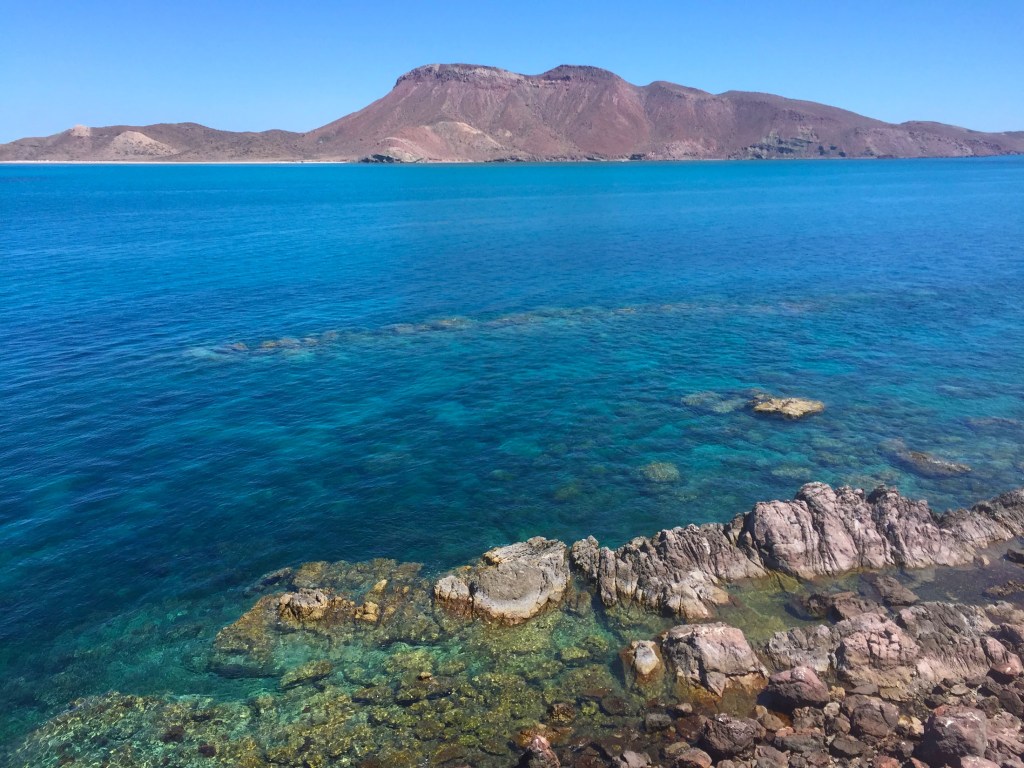
The azure waters of the Sea of Cortez (Photo: Erik Olsen)

This body of water is a critical habitat for marine life, including several species of whales and dolphins that depend on its warm waters. Jacques Cousteau, the famous French oceanographer, famously referred to the Gulf of California as “the world’s aquarium” due to its vast array of (declining) marine life.

The Sea of Cortez today is under threat from our short time so far on the planet. Unfortunately, overfishing and pollution, including nitrogen-rich runoff from the Colorado River, which (sort of) flows directly into the gulf, imperils wildlife. Nutrient flows can lead to a dramatic decrease in oxygen, depriving plants and animals of the life-giving gas. The potential extinction of the critically endangered vaquita (Phocoena sinus), represents one of the most urgent conservation crises in the region. The vaquita is the world’s most endangered marine cetacean, with estimates suggesting only a few individuals remain. This dire situation is primarily due to bycatch in illegal gillnets used for fishing another endangered species, the totoaba fish, whose swim bladder is highly valued in traditional Chinese medicine.

Habitat destruction is another growing concern, as mangroves, estuaries, and reefs, vital for the breeding and feeding of marine species, are increasingly destroyed to make way for tourism infrastructure and coastal development. Climate change intensifies these problems, with rising sea temperatures and ocean acidification threatening reefs and the broader ecosystem.

Baja California as seen in April 1984, from the bay of a Space Shuttle  (Photo: NASA)

The birth of the Sea of Cortez also has an intriguing connection to a body of water hundreds of miles to the north: the Salton Sea. The Salton Sea, California’s largest lake, sits in the Salton Trough, an area geologists consider a “rift zone,” an extension of the same tectonic forces at work in the Gulf of California.

As the North American and Pacific Plates continue their slow-motion dance, the area around the Salton Sea may sink further, eventually linking with the Gulf of California. If this occurs, seawater could flood the basin, creating a new body of water significantly opening the Sea of Cortez. As mentioned above, eventually this could lead to the full separation of the peninsula from the mainland. However, such a dramatic event is likely millions of years in the future, if it happens at all. Interestingly, the Salton Sea acts as a mirror, reflecting the past processes that led to the formation of the Sea of Cortez.

Salton Sea (Wikipedia)

The Sea of Cortez stands at a crossroads, shaped by both human impact and tectonic drift. Baja California is slowly pulling away from mainland Mexico, a process that could one day create a vast inland sea and dramatically reshape the region. While no one alive today will witness the full transformation, its ultimate impacts could be extreme—redrawing coastlines, shifting ecosystems, and isolating parts of southern California and Mexico in ways we can scarcely imagine.
Why Are Dinosaur Fossils So Scarce in California?

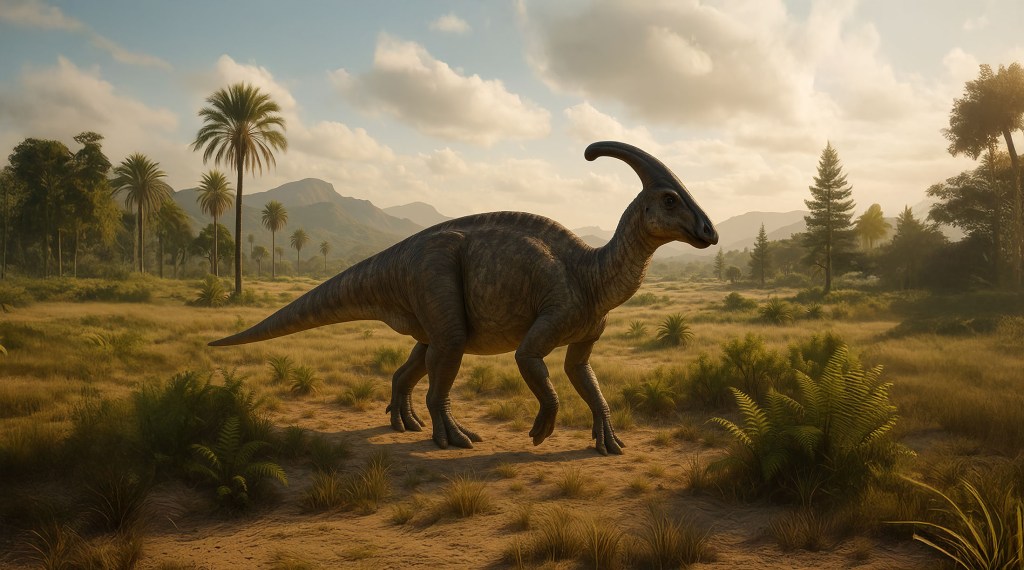
Hadrosaur on ancient California landscape. Hadrosaurs like this AI generated one are among the very few dinosaurs whose fossils have ever been found in California.

You’ve surely seen those dramatic museum displays: fearsome T-Rex skulls, triceratops horns, towering brachiosaur skeletons – tangible reminders of a world with giant animals that roamed our planet millions of years ago. Some states are rich in the fossils of ancient dinosaurs. Montana, Wyoming, Utah all have rich fossil records. But not California. Very few dinosaur fossils have ever been found in the Golden State.

But why? We’ve got Hollywood, Silicon Valley, lots of oil, and the Giant Redwoods, but where are our prehistoric dinosaur residents hiding?

To understand this prehistoric puzzle, we have to venture back into the geologic past, and also consider some unique aspects of California’s geographical and geologic evolution.

Dinosaurs were mostly present during the Mesozoic Era, from about 252 million to 66 million years ago. The Mesozoic is divided into three periods: the Triassic, Jurassic, and Cretaceous. The dinosaurs reign likely ended with a massive meteorite impact that caused a mass extinction, wiping out the dinosaurs and up to 80% of life on Earth.

(There’s a cool California story related to this discovery.)

While dinosaur fossils are found around the globe, their distribution is far from even. Fossilization itself is a relatively rare event that depends on several specific conditions. Generally, fossilization requires rapid burial to protect the remains from scavengers and environmental factors, as well as a lack of oxygen to slow down decay. Over time, minerals gradually replace organic material, preserving the structure and creating a fossil, but only a small fraction of organisms ever undergo this process.

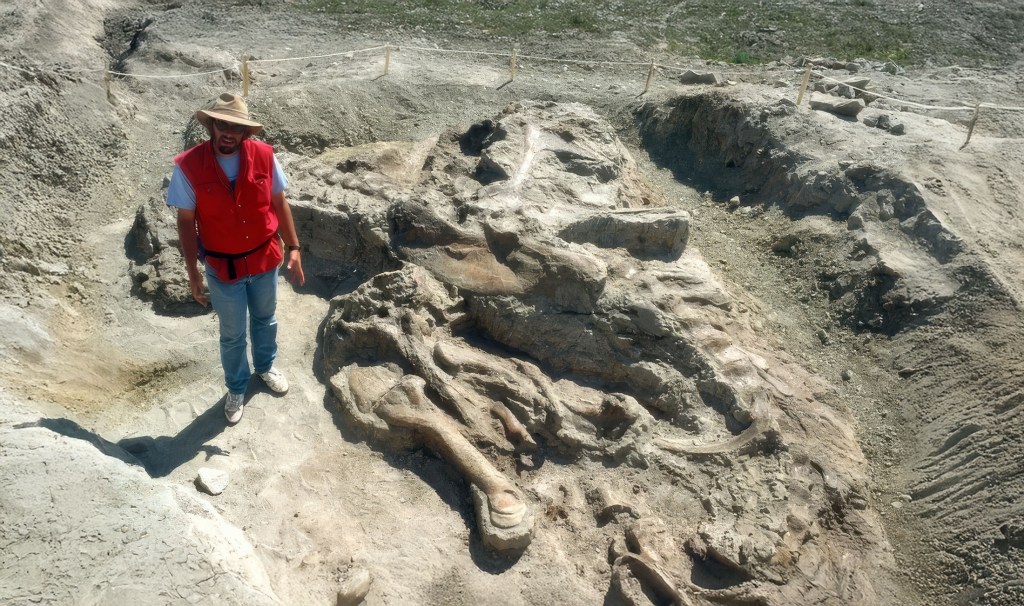
Jack Horner, Curator of Paleontology at Museum of the Rockies, provides scale for Tyrannosaurus rex fossils at excavation site near the Fort Peck Reservoir, Fort Peck, Mont., June 1990. (Photo: courtesy Museum of the Rockies

So, when a dinosaur died, its body needed to be quickly covered by sediment, like sand, mud, or volcanic ash. This prevented the remains from being scavenged or decomposed and allowed for the slow process of mineralization, where bones and teeth gradually turn to stone.

Even if these conditions were met, the resulting fossils had to survive millions of years of geologic processes, such as erosion, plate tectonics, and volcanic activity. To find dinosaur fossils today, the layers of rock in which they are embedded must be exposed at the Earth’s surface.

But now here’s where California’s unique geologic history comes into play. Most of the land we see today in California wasn’t even above sea level during the Mesozoic Era, instead it was submerged beneath the Pacific Ocean. Only small, scattered volcanic islands or bits of uplifted crust occasionally broke the surface, shaped by the intense movement of tectonic plates. That means there were no T. rexes or Stegosaurs ambling through Yosemite Valley…which, by the way, hadn’t even formed yet.

California’s active geology works against fossil preservation. The state sits on the boundary of tectonic plates (the Pacific and North American plates), resulting in significant geological activity including earthquakes, volcanic activity, mountain building, and erosion. These processes tend to destroy fossils rather than preserve them.

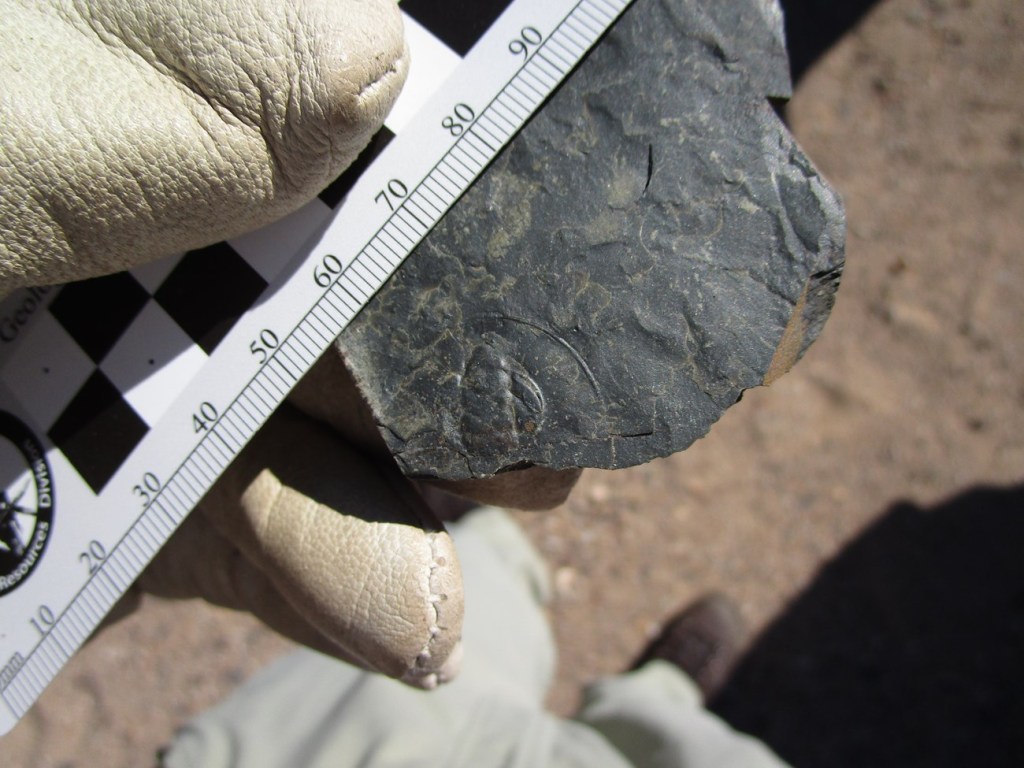
Head section of Olenellid trilobite in a Latham Shale slab. (Credit: National Park Service)

California, in the form we recognize today, is relatively new land that finally began rising out of the ocean near the end of the dinosaur age, as mountain ranges like the Sierra Nevada started to form and ancient sea basins uplifted. While these earlier conditions weren’t favorable for preserving land-dwelling dinosaur fossils, they did leave behind a rich marine fossil record, including ammonites, marine reptiles, and countless microfossils.

That said, there have been several discoveries of particular animals in California, representing animals much later in the dinosaur story. The majority of the dinosaur fossils found in California are the bones of hadrosaurs, duck-billed dinosaurs that lived during the Late Cretaceous period. These herbivorous dinosaurs thrived in what was once a coastal plain environment, and their remains have been uncovered in parts of California like the Point Loma Formation near San Diego, the Panoche Hills area near Fresno, and in Baja California.

Mosasaur artists rendering (Wikipedia)

While much of California was underwater during the Late Cretaceous, it was home to mosasaurs, large carnivorous marine reptiles that lived in oceans all over the world. These fearsome predators had long, streamlined bodies with powerful fins and jaws lined with sharp teeth. They hunted fish, ammonites, and possibly even other mosasaurs. Some species grew as big as modern whales and ruled the seas at the very end of the dinosaur age. Mosasaurs shared the world with creatures like Triceratops and Tyrannosaurus, but they vanished along with the dinosaurs during the mass extinction at the close of the Cretaceous. Today, paleontologists recognize mosasaur fossils by distinctive features on their skeletons, including unique muscle attachment scars and specialized bone knobs.

CALIFORNIA CURATED ART ON ETSY

Purchase stunning art prints of iconic California scenes.
Check out our Etsy store.

Back to hadrosaurs, however. There is the duck-billed plant-eater Augustynolophus, a member of the hadrosaur family, which recently was named the official state dinosaur of California. All known specimens of Augustynolophus have been found only in California, in particular the Moreno Formation in the San Joaquin Valley. Only two specimens have ever been found. The first fossil was uncovered in Fresno County in 1939. The second was discovered nearby in 1941 in San Benito County, according to the Natural History Museum of Los Angeles County website. Named after paleontologist William J. Morris and NHMLA patron Gretchen AugustynAugustynolophus remains one of few dinosaurs that have been discovered in the state.

Artists recreation of the hadrosaur Augustynolophus by the Natural History Museum of Los Angeles County

As mentioned above, the action of plate tectonics, the slow but powerful movements of sections of the Earth’s crust, has significantly affected California’s fossil record. Over millions of years, California has been built from pieces of the Earth’s crust that traveled here aboard tectonic plates.

Much of the rock we see at the surface today, especially along the coast and in the western mountains, arrived during the Cenozoic Era, after the age of dinosaurs. These younger rocks, while not bearing dinosaur fossils, have yielded rich caches of mammal fossils, including creatures like saber-toothed cats, mammoths, and dire wolves, which roamed California long after the dinosaurs.

In recent years, paleontologists have begun to find more dinosaur fossils in California, albeit still far fewer than in states like Utah, Montana, or Wyoming. These discoveries, often of marine animals or those who lived near the coast, are expanding our understanding the ancient Californian landscape.

Saber-toothed cat (State of California Capitol Museum)

In 2022, a remarkable fossil discovery was made during a construction project at San Pedro High School in Los Angeles. The excavation revealed a massive trove of marine fossils from the Miocene Epoch, dating back around 5 to 23 million years (so, not technically dinosaur fossils). Among the finds were the remains of ancient whales, sharks, fish, and mollusks, offering a rare glimpse into Southern California’s prehistoric past when the region was submerged under a warm, shallow sea. This discovery provided paleontologists with valuable insights into the marine ecosystems that once thrived in the area.

Among the fossils found under San Pedro High School are juvenile megalodon teeth, right, the great white shark’s ancestor; those from mako sharks, center; and from smaller sharks.
 (Wayne Bischoff / Envicom Corp.)

In addition to the marine fossils, a few terrestrial remains were also uncovered, hinting at a nearby coastline that once supported a variety of land animals. The discovery of such well-preserved fossils captured the attention of scientists and the local community alike, briefly turning the San Pedro High School campus into an unexpected center of scientific excitement. For students and residents, the find offered a cool reminder of the ancient worlds buried just beneath their everyday lives.

While California’s record of dinosaur fossils is relatively sparse, its mammal fossil record is nothing short of astonishing. Sites like the La Brea Tar Pits in Los Angeles preserve an incredible array of Ice Age mammals, from saber-toothed cats and mammoths to giant ground sloths. These fossils provide an unparalleled window into the vibrant ecosystems that thrived long after the age of dinosaurs ended, showcasing California’s rich and varied prehistoric past.

saber toothed cat
Saber-toothed cat fossil skeleton at the La Brea Tar Pits in Los Angeles (Photo: Erik Olsen)

While it might be tempting to feel a little disappointed that California doesn’t have an abundance of dinosaur fossils, that’s simply the way the landscape evolved. But there’s still plenty to celebrate. California’s unique geologic past has produced a vibrant fossil record of other ancient life — from towering prehistoric sequoias to tiny, long-lost plankton. Every fossil, big or small, offers a glimpse into the rich, complicated, and ever-changing story of this remarkable place we call California.

How Citrus Transformed California

A Look into the Roots and Ripened Impact of the Citrus Industry

You might associate California with Hollywood, Silicon Valley, or even its stunning coastline. However, a significant cornerstone in the Golden State’s development, prosperity, and identity was quite literally golden: zesty, golden orbs of citrus fruit. California’s citrus industry had a profound impact on the state’s economic, labor, and global landscape, particularly within Southern California. 

San Gabriel Mission

The citrus industry in California has surprisingly humble beginnings. Spanish missionaries brought orange seeds to California in 1769. The San Gabriel Mission was established in 1771 and had extensive gardens that included a variety of fruits and vegetables. The seeds for the Mission’s citrus trees are believed to have come from the Spanish missions in Baja California, Mexico, which in turn got them from the Spanish mainland. The original citrus varieties in Spain were likely brought over from Asia, as citrus trees are native to South Asia and the East Indies. 

But the true beginning of what became a multibillion-dollar industry can be attributed to one man. In 1841, William Wolfskill, an American-Mexican pioneer, cowboy, and agronomist in Los Angeles, planted the first commercial orange grove on a 100-acre ranch near what is now downtown Los Angeles. Wolfskill, a frontier entrepreneur, had initially tried his hand at vineyards, but saw potential in the rugged, fertile Californian soil for more than just grapes.

William Wolfskill

Obtaining his initial seeds from the orchards of the San Gabriel Mission, Wolfskill’s citrus venture started small. However, his methodical approach to farming and his adoption of innovative irrigation techniques allowed his grove to flourish in the Mediterranean-like climate of Southern California. Wolfskill’s oranges were renowned for their quality, gaining him a reputation that extended beyond the borders of California.

Known as the father of the California citrus industry, his foresight and innovation set the stage for the development of an industry that became a cornerstone of the state’s economy and identity. Wolfskill’s real legacy lies in his profound impact on California’s agricultural landscape. When William Wolfskill passed away in Los Angeles in 1866, citrus was booming, but it was mostly a local industry. 

Valencia Oranges

The real turning point for the Californian citrus industry was the completion of the transcontinental railroad in 1869. The railroad’s establishment allowed for the efficient transportation of his citrus crops to markets in the east, bringing the sweet, sun-kissed taste of California’s oranges to consumers across the country. This access to nationwide markets transformed local citrus farming into a profitable commercial industry.

The citrus boom in California reached its zenith in the late 19th and early 20th century. It was during this period that the citrus industry became a pivotal part of the state’s economy and helped shape its cultural identity. The industry’s growth was inextricably tied to specific regions, primarily Southern California, including Riverside, Los Angeles, and Orange counties.

Orange groves cover the Southern California landscape early in the 20th century.

Riverside, the city in which the iconic parent Washington navel orange tree still stands, was the epicenter of the navel orange industry. These sweet, seedless fruits were a hit across the nation, revolutionizing the American diet and transforming Riverside from a small town to a thriving city.

Characterized by its bright orange skin, seedless interior, and distinctive “navel” at the blossom end, the navel orange is a variety synonymous with California. But its journey to the Golden State began thousands of miles away, in the far-off city of Bahia, Brazil.

The navel orange is a natural mutation that occurred in a Selecta orange tree, a variety of sweet orange, in the early 19th century in Bahia. This mutation caused a secondary fruit to develop at the base of the primary fruit, giving the appearance of a ‘navel’. The resultant fruit was larger, sweeter, and seedless, distinguishing it from other orange varieties.

Navel Orange

But the navel orange is not the only variety that came to define California citrus. Orange County, aptly named, was a crucial player in the citrus game, its groves sprawling over thousands of acres. At one point, Orange County was the largest producer of Valencia oranges in the world.

Valencia oranges, named for the city of Valencia in Spain, are believed to have originally come from Southeast Asia, just like all other citrus varieties. Citrus trees are native to regions including present-day China, India, Myanmar, and surrounding countries. Over centuries, traders and explorers disseminated citrus fruits across the globe.

The Valencia orange was brought to the United States in the mid-19th century. In California, they found a new home in the perfect growing conditions of Southern California. The peak ripening season of Valencia oranges — late spring through mid-summer — complemented that of the navel oranges, which ripen in the winter. This made Valencia oranges an appealing addition for California citrus growers as they could provide fresh oranges to markets year-round by growing both varieties.

Los Angeles County, although now synonymous with the urban sprawl of the film industry, was once carpeted with citrus groves. The rolling, sun-dappled orchards were integral to the local economy and became an iconic image of the Golden State.

But the growth of the citrus industry brought about significant labor issues. As the demand for citrus surged, so did the need for labor. Initially, much of the work was done by Chinese immigrants. However, with the implementation of the Chinese Exclusion Act of 1882, growers turned to Japanese immigrants, then later to Mexican immigrants.

Working conditions in the citrus fields were often harsh, leading to numerous labor disputes and strikes, notably the Citrus Strike of 1936 by Mexican workers in Tulare County. The citrus industry thus played a significant role in the evolution of labor rights and immigration policy in California and the United States more broadly.

The golden fruits of California did not just revolutionize the state but also had far-reaching global impacts. California’s citrus industry significantly influenced agricultural practices worldwide. Its innovative irrigation systems, pest control methods, and marketing strategies were adopted by many other countries.

However, the industry also faced challenges on the global stage. Competition from other citrus-growing regions, like Florida and countries in the Mediterranean, put pressure on California’s growers. Additionally, changes in international trade policies and global consumer preferences continually shaped the trajectory of the state’s citrus industry.

Today, while the landscape has changed with urbanization and competition, California’s citrus industry remains a significant part of the state’s agriculture, generating billions of dollars annually. Moreover, the citrus industry’s historical and cultural impact is undeniably intertwined with California’s identity. Its echoes can still be seen in the names of places, like Orange County, or tasted in the sweet tang of a California navel orange.

The story of citrus in California is a tale of transformation, from a single orange grove in Los Angeles to a global industry that rippled through the state’s economy, workforce, and identity. It’s a testament to the power of agriculture to shape a region and its people and serves as a vivid reminder of California’s golden past.

California Citrus State Historical Park

Today, California Citrus State Historical Park preserves some of the rapidly vanishing cultural landscape of the citrus industry and tells the story of this industry’s role in the history and development of California. Furthermore, it recaptures the time when “Citrus was King” in California, recognizing the importance of the citrus industry in southern California.

Hey there! If you enjoy California Curated, consider donating the price of a coffee to support its creation!

J. Robert Oppenheimer: The Berkeley Era and The Birth of the Manhattan Project

With the release of the movie Oppenheimer, it’s worth taking a look at the role that California played in one of the most important technological developments of the 20th century: the making of the atomic bomb. The Manhattan Project, the prodigious scientific endeavor that produced the world’s first nuclear weapons, cast a long, dark shadow over the mid-20th century. But amid the mushroom clouds, there lies a tale of innovation and scientific genius that originated from an unlikely source—the University of California, Berkeley.

The film team filmed several scenes at Berkeley, adding a vintage car and 1940s-era lampposts to the campus. Oppenheimer taught at UC Berkeley from 1929 to 1943 — his office was on the third floor of Physics North (then named LeConte Hall) 

For years, America’s physics powerhouse resided in the East. But in the post-WWI era, the western horizon blazed with opportunity. Visionary administrators at Caltech and UC Berkeley threw financial muscle behind their bold mission: to make physics research a priority.

By the dawn of the 1930s, their investments bore fruit. The American Physical Society‘s president hailed California as a hotbed of physics innovation, equating it with the East in the academic landscape of the discipline. Universities played high-stakes poker for the talents of up-and-coming physicists like Oppenheimer and Ernest Lawrence, known for his groundbreaking work in photoelectricity and ionization.

Visit the California Curated store on Etsy for original prints showing the beauty and natural wonder of California.

J. Robert Oppenheimer, one of the leading physicists of the 20th century, is often remembered as the ‘father of the atomic bomb’. However, his journey toward this formidable title began at Berkeley, an intellectual crucible where his talent for theoretical physics was honed, ultimately leading him to oversee the Manhattan Project, a scientific endeavor that would change the world.

J. Robert Oppenheimer, Enrico Fermi and Ernest O. Lawrence at UC Berkeley in 1940. Courtesy: Lawrence Berkeley National Laboratory

Oppenheimer’s relationship with Berkeley began in 1929 when he joined as an Assistant Professor of Physics. This was an exciting period in the realm of science. Quantum mechanics was in its infancy and a new breed of scientists was emerging, eager to unlock the secrets of the universe. Oppenheimer, with his insatiable curiosity and infectious enthusiasm, was just the right person for this time of exploration.
During his years at Berkeley, Oppenheimer made significant contributions to quantum mechanics, notably his work on the Oppenheimer-Phillips process. This theory describes a particular type of nuclear reaction that occurs during the absorption of a neutron by a nucleus, an understanding that would later prove pivotal to the development of nuclear energy.

Outside the laboratory, Oppenheimer was an adored figure, known for his quick wit and charismatic teaching style. He was instrumental in building the physics program at Berkeley into perhaps the finest in the country by attracting some of the brightest minds of the time. Together, they would be known as dubbed the “luminaries”.

J. Robert Oppenheimer (Ed Westcott/U.S. Department of Energy via Bay City News)

“The group met secretly in his office at the northwest corner of the top floor of ‘old’ LeConte Hall. This office, like others on the top floor, has glass doors opening out onto a balcony,” wrote Raymond T. Birge, former chair of the Berkeley physics department at the time. “This balcony is readily accessible from the roof. To prevent this method of entry, a very heavy iron netting was placed over the balcony. A special lock was placed on the door to the office and only Oppenheimer had the key. No janitor could enter the office, nor could I, as chairman of the department,”

Hans Bethe, one of the great German-American theoretical physicists of the age said Oppenheimer established UC Berkeley as the “greatest school of theoretical physics the United States has ever known.”

Although he was increasingly recognized as a pivotal figure in theoretical physics, former students say he remained accessible, consistently urging his students to question norms and extend limits. He actively promoted a culture of inquiry among his students, even if his responses occasionally seemed harsh. However, Oppenheimer’s questions to his student speakers were meant to clarify rather than to humiliate, often aimed more at enlightening the audience than himself. His rapport with his students was unexpectedly casual. He provided an open-door policy, inviting his students to visit his office anytime to utilize the physics resources within his personal collection.

J. Robert Oppenheimer with Glenn T. Seaborg and Ernest O. Lawrence in early 1946. (Photo courtesy of Berkeley Lab)

Oppenheimer’s life at Berkeley wasn’t all physics. A man of varied interests, he was an avid hiker, horseback rider, and aficionado of literature, poetry, and art. These varied interests made him a multifaceted character and helped him foster connections with many prominent figures across different fields. His unique combination of scientific genius, humanity, and leadership qualities made him a standout candidate for the enormous task that lay ahead – the Manhattan Project.

While no major Manhattan Project facilities graced the Golden State, Berkeley, nestled in the heart of California, emerged as an unsung hero of the project. Berkeley offered more than a tranquil academic setting; it provided an assembly line of experts that would revolutionize nuclear science. Not only was Berkeley home to Oppenheimer the university also attracted other nuclear-era luminaries like Ernest Lawrence, and chemists Glenn Seaborg.

Berkeley had always been special. California’s first land-grant university, founded in 1868, Berkeley underwent a metamorphosis under the leadership of Robert Sproul. From 1930 to 1958, Sproul spearheaded the transformation of Berkeley into a hub of intellectual firepower. The University of California system burgeoned across the state, with Berkeley, the original campus, earning a reputation as one of the nation’s foremost research institutions. Its powerhouse physics department became a beacon in the dark world of the Manhattan Project.

Berkeley’s list of accomplishments in physics is long and distinguished, but one discovery stands out – the identification of plutonium. Edwin McMillan, a promising physicist at Berkeley, ventured into the wilderness of uranium fission products. In 1940, he stumbled upon an unknown substance – element 93, or as he named it, “neptunium,” a hat tip to the distant planet Neptune. McMillan predicted that neptunium decayed into plutonium, the elusive element 94.

Glenn Seabord – Wikipedia

Glenn Seaborg, another Berkeley savant, picked up where McMillan left off when the latter migrated east to work at MIT. Seaborg unveiled the heart of plutonium, exposing its fundamental chemical and nuclear properties, including its high propensity for fission. As the world’s leading expert on plutonium, Seaborg directed the ambitious effort to separate plutonium from uranium and other reactor products.

Meanwhile, Ernest Lawrence led a research group that broke boundaries with the cyclotrons at the Rad Lab. They used the 60-inch cyclotron to bombard uranium with neutrons, producing plutonium for scrutiny. But Lawrence had a revelation. In 1941, he realized the cyclotron could also operate as a mass spectrometer, effectively isolating uranium-235 from uranium-238. This technique was later adopted at Oak Ridge’s Y-12 Separation Plant, enabling large-scale separation. The cyclotron, rechristened as a “Calutron” in a nod to the University of California, had revolutionized nuclear science.

Recording of the “Rainier” shot, Nevada Test Site, Sept. 19, 1957.
Atomic Energy Commission/U.S. Department of Energy via Wikipedia Commons

While these figures were all played prominent roles in the development of the atomic bomb dropped on Hiroshima and Nagasaki in 1945, it is Oppenheimer who is best remembered. After fourteen years at Berkeley, Oppenheimer was plucked from the physics department at Berkeley by General Leslie Groves to assume leadership of the research program at Los Alamos. Even after his move, Oppenheimer fostered a close alliance between Berkeley and the Manhattan Project. In a shroud of secrecy, the University of California took on the management of the operations at Los Alamos. The university even set up a Los Angeles office that handled material logistics for the lab.

Despite decades passing and the veils of secrecy lifting, the legacy endures. The Los Alamos lab continues to operate under the University of California’s management, preserving Berkeley’s indelible imprint on the atomic age. It’s a testament to the institution’s groundbreaking contributions and a tribute to the remarkable scientists who once walked its hallowed halls.

Genetic Guardians: The Asilomar Conference and its DNA Diplomacy

How a gathering of the world’s top genetic scientists helped create a roadmap for responsible biology.

Asilomar Conference Grounds Interior

In 1975, amidst the California coastal dunes of Asilomar near Monterey, a groundbreaking conference was held that would influence the direction of biotechnology and the course of scientific research for decades to come. This was the Asilomar Conference on Recombinant DNA, an assembly marked by both controversy and consensus. Its aim was not just to debate the scientific merits of a new and potentially groundbreaking technology but also to discuss its potential impacts on society and the environment. (Berg and others had met as Asilomar before in 1973, but that initial meeting resulted in little more than a realization there would have to be more discussion).

DNA

Among the seventy-five participants from sixteen countries were Paul Berg, a Nobel laureate, Maxine Singer, a prominent molecular biologist, and many others, each bringing their own perspective and expertise to the table. They recognized the vast potential that recombinant DNA (rDNA) technology, the process of combining DNA from different species, had to offer but were equally cognizant of the potential risks involved.

Berg was awarded the Nobel Prize in Chemistry for his work on nucleic acids, with a focus on recombinant DNA. Berg had first-hand experience with the transformative potential and risks of the technology. His ground-breaking experiments with recombinant DNA in 1972 and subsequent calls for a moratorium on such work had spurred the idea of the conference.

Maxine Singer, another significant contributor, was known for her advocacy for scientific responsibility and ethical considerations. She played a crucial role in drafting the initial letter to the journal “Science” advocating for a voluntary halt on certain types of rDNA research until its potential risks could be better understood. In 2002, Discover magazine recognized her as one of the 50 most important women in science.

CALIFORNIA CURATED ON ETSY

Purchase stunning art prints of iconic California scenes.
Check out our Etsy store.

The conference was the outcome of dramatic advances in molecular biology that took place mid-century. In the atomic age of the 1950s and ’60s, biology was not left behind in the wave of transformation. A pioneering blend of structural analysis, biochemical investigation, and informational decoding began to crack open the mystery of classical genetics. Central to this exploration was the realization that genes were crafted from DNA, and that this intricate molecular masterpiece held the blueprints for replication and protein synthesis.

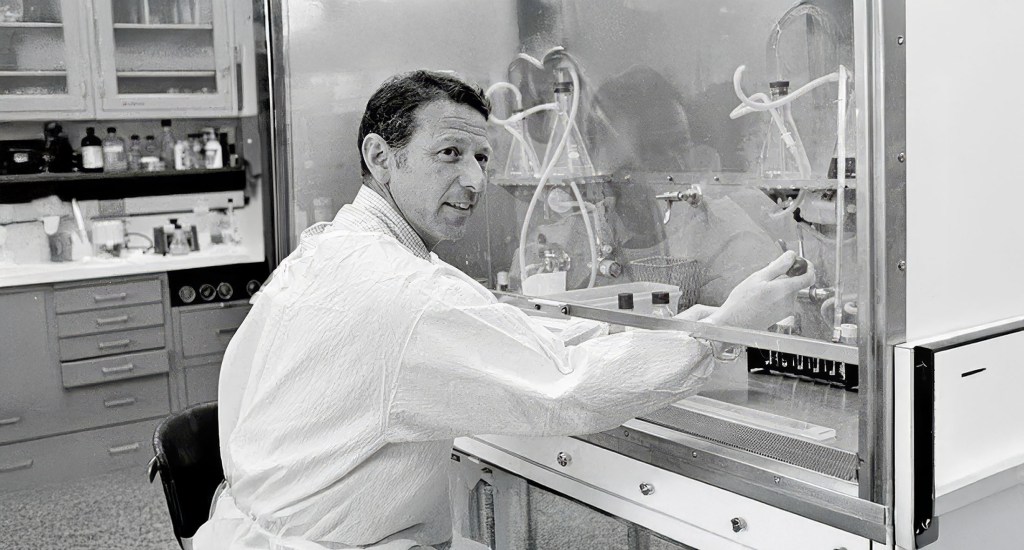
Paul Berg (Photo: Stanford University)

This was a truth beautifully crystallized in the DNA model, a triumph of scientific collaboration that arose from the minds of James Watson, Francis Crick, and the often under-appreciated Rosalind Franklin. Their collective genius propelled a cascade of theoretical breakthroughs that nudged our understanding from mere observation to the brink of manipulation.

The crowning achievement of this era was the advent of recombinant DNA technology – a tool with the potential to rearrange life’s building blocks at our will. As the curtain lifted on this new stage of biological exploration, the promise and peril of our increasing control over life’s code started to unfurl.

Asilomar Conference Building

The ability to manipulate genes marked nothing less than a seismic shift in the realm of genetics. We had deciphered a new language. Now, it was incumbent upon us to assure ourselves and all others that we possessed the requisite responsibility to utilize it.

As Siddhartha Mukherjee put it in his excellent book The Gene: An Intimate History, “There is an illuminated moment in the development of a child when she grasps the recursiveness of language: just as thoughts can be used to generate words, she realizes, words can be used to generate thoughts. Recombinant DNA had made the language of genetics recursive.”

The conference served as a forum to deliberate the safety measures that would be needed to prevent accidental release of genetically modified organisms (GMOs) into the environment, the ethical considerations of manipulating the genetic code, and the potential implications for biological warfare. It was as much about the science as it was about its potential impact on society, mirroring aspects of the Pugwash Conferences that discussed nuclear arms control during the Cold War.

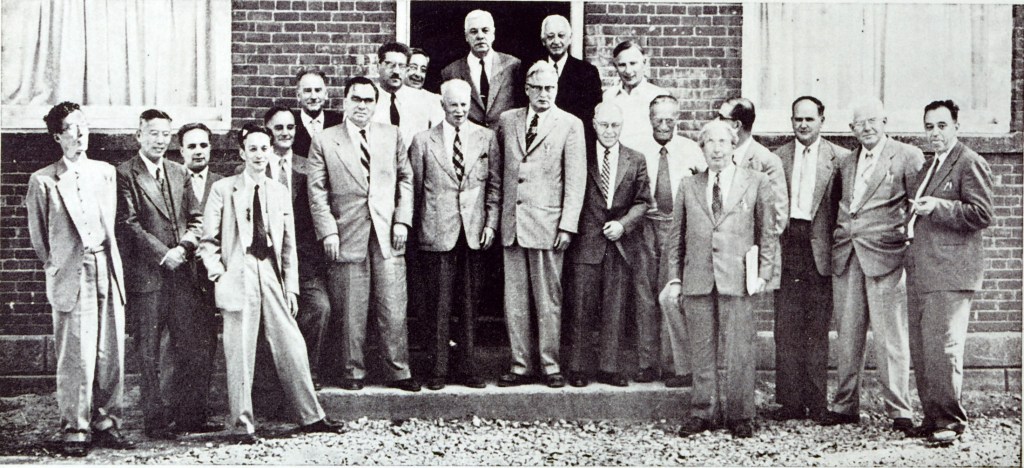
Participants in the First Pugwash Conference in 1957 in Pugwash, Nova Scotia, Canada. Notable figures included Joseph Rotblat, Bertrand Russell, Leo Szilard, Igor Tamm (pugwash.org)

Much like the Pugwash Conferences in Pugwash, Nova Scotia, Canada, brought together scientists from both sides of the Iron Curtain to discuss the implications of nuclear technology, the Asilomar Conference sought to bridge the divide between the proponents and critics of genetic engineering. Just as nuclear technology held the promise of unlimited power and the threat of unparalleled destruction, recombinant DNA offered the allure of potential solutions for numerous diseases and the specter of unforeseen consequences.

Another analogy might be the two-page letter written in August 1939 by Albert Einstein and Leo Szilard to alert President Roosevelt to the alarming possibility of a powerful war weapon in the making. A “new and important source of energy” had been discovered, Einstein wrote, through which “vast amounts of power . . . might be generated.” “This new phenomenon would also lead to the construction of bombs, and it is conceivable . . . that extremely powerful bombs of a new type may thus be constructed. A single bomb of this type, carried by boat and exploded in a port, might very well destroy the whole port.” 

The Einstein–Szilard letter

The Asilomar Conference reached a consensus that with proper containment measures, most rDNA experiments could be conducted safely. This resulted in a set of guidelines that differentiated experiments based on their potential biohazards and suggested appropriate containment measures. This framework, later adopted by the National Institutes of Health (NIH) in the United States, provided the bedrock for the safe and ethical use of rDNA technology.

The decisions made at Asilomar had far-reaching implications for both science and society. By promoting a culture of responsibility and precaution, the conference effectively prevented a public backlash against the nascent field of genetic engineering, allowing it to flourish. Moreover, it set a precedent for scientists to take an active role in the ethical and societal implications of their work.

“The most important lesson of Asilomar,” Berg said, “was to demonstrate that scientists were capable of self-governance.” Those accustomed to the “unfettered pursuit of research” would have to learn to fetter themselves.

CRISPR

Today, the spirit of Asilomar lives on in the field of synthetic biology and discussions around emerging technologies such as CRISPR and gene drives. It underscores the importance of scientific self-regulation, public dialogue, and transparent communication in navigating the ethical minefields that technological advancements often present.

The Asilomar Conference was a milestone in scientific history, a demonstration that scientists are not merely the creators of knowledge but also its stewards. It showed that with open dialogue, proactive self-regulation, and a deep sense of responsibility, we can both harness the promise of scientific breakthroughs and mitigate their potential risks.

Ghost of the West: The Tragic Story of the California Grizzly Bear’s Journey from Wilderness to State Flag

In the expansive and diverse landscape of California, many iconic animals are an integral part of the state’s reputation for natural beauty and untamed wilderness. Yet, one particular creature looms larger in the Californian narrative than many others – a species that has been extinct for nearly a century, but lives on as a powerful symbol: the California Grizzly Bear (Ursus arctos californicus).

The California Grizzly Bear, a subspecies of the Grizzly Bear, was a formidable presence in the wild terrains of California. This remarkable beast could grow up to 8 feet tall when standing on its hind legs, and adult males often weighed in excess of 2000 pounds. They sported a lustrous fur coat that varied in color from blond to dark brown, making them a striking, and sometimes terrifying, sight in the California wilderness.

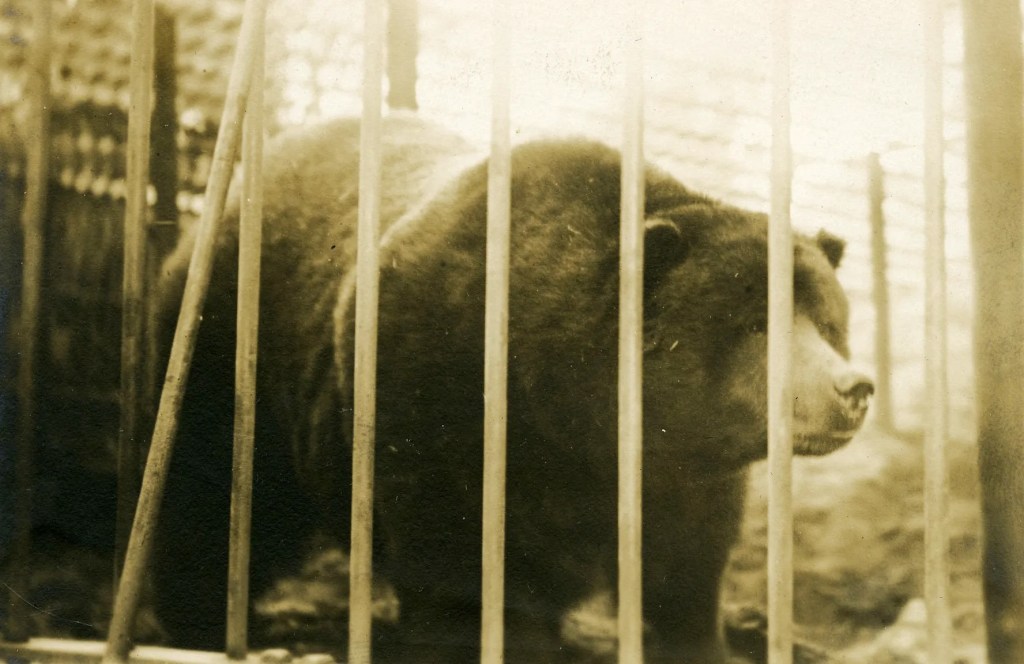
The famous California Grizzly “Monarch” was housed in an enclosure at Golden Gate Park around 1910.
It passed away the following year. (California State Archives)

The name “Grizzly” could have meant “grizzled,” a term referring to the animal’s golden and grey tips of hair. Or quite possibly it meant “fear-inspiring” (as a phonetic spelling of “grisly”). The naturalist George Ord formally classified it in 1815 as Ursus horribilis (“terrifying bear”).

This giant was an omnivore with a varied diet that changed with the seasons. The bear’s dietary staples included seeds, berries, roots, fish, and small mammals. But the California Grizzly was also known to take down larger prey, such as deer and elk, when the opportunity presented itself. The first recorded encounters with California grizzly bears are found in diaries kept by several members of the 1769 Portola expedition, the first European land exploration of the southern stretch of the West Coast. Several place names that include the Spanish word for bear (oso) trace their origins back to that first overland expedition. For example, the city of Los Osos

Prior to Spanish settlement in the second half of the 1700s, it is estimated that 10,000 grizzly bears inhabited what is today considered modern-day California.

CALIFORNIA CURATED ON ETSY

Purchase stunning art prints of iconic California scenes.
Check out our Etsy store.

Stories about the California Grizzly Bear echo throughout the annals of California’s history and literature. In his book “The Mountains of California,” renowned naturalist John Muir recounted his encounters with these awe-inspiring creatures, stating, “When I discovered him, he was standing in a narrow strip of meadow, and I was concealed behind a tree on the side of it.”

California State Flag featuring the California Grizzly

As enduring as any mountain or redwood forest, the legacy of the California Grizzly Bear persists in the emblem of the state flag.

The inclusion of the grizzly bear on the California flag traces its roots back to a revolt in 1846, before California was a part of the United States. At the time, California was under Mexican rule and a group of American settlers staged a revolt known as the Bear Flag Revolt, in which they declared California to be an independent republic.

The settlers needed a flag to represent their new republic, so they designed a simple flag that included a grizzly bear, a single red star (inspired by the lone star of Texas), and the words “California Republic.” The grizzly bear was chosen because it was seen as a powerful and formidable creature, much like the settlers saw themselves. It was intended to represent strength, unyielding resistance, and independence. The republic was short-lived, however, because soon after the Bear Flag was raised, the U.S. military began occupying California, which went on to join the union in 1850.

The man who drew the bear on the original flag, William L. Todd, was a cousin of Mary Todd Lincoln, the wife of Abraham Lincoln. Unfortunately, Todd was not a great artist, and his bear looked more like a pig, which led to some ridicule and a new design.

The original California state flag, as designed by William L. Todd

In 1911, the design of the flag was standardized, and the grizzly bear became the central figure that we recognize today. The bear depicted on the flag is named “Monarch” after the last California grizzly bear captured and held in captivity. Monarch was captured in 1889 by newspaper reporter Allan Kelly, at the behest of William Randolph Hearst. Monarch’s remaining life was not pleasant. He spent his remaining 22 years in captivity, and was moved to Woodwards Gardens in San Francisco, and then to the zoo at Golden Gate Park. After the bear’s death in 1911, it was mounted and preserved (ahem, poorly) at the Academy of Sciences at Golden Gate Park.

Monarch on display. (Wikipedia)

Despite its iconic status, the California Grizzly Bear could not withstand the pressures of expanding human civilization. The arrival of settlers during the California Gold Rush in the mid-19th century marked the beginning of the end for the bear. As the human population exploded, the bears’ natural habitats were destroyed to make way for towns and agriculture. Additionally, the bear, seen as a threat to livestock and a danger to humans, was hunted extensively.

By the early 20th century, the California Grizzly Bear was on the brink of extinction. The last confirmed sighting of a California grizzly bear occurred in 1924 within Sequoia National Park. This marked the end of the species’ presence in the state, following decades of hunting and habitat loss. Prior to this, the last known grizzly in Southern California was killed in 1916 near Sunland, in the San Fernando Valley. The California grizzly, once abundant throughout the region, was declared extinct in the wild by the mid-1920s. The California Grizzly was declared extinct in 1924.

In recent years, discussions have emerged about the feasibility of reintroducing grizzly bears to California. Research indicates that the state possesses substantial suitable habitat for grizzlies, particularly in the Sierra Nevada and other mountainous regions. Some studies suggest that California could support a population of approximately 500 grizzly bears. ​

In 2014, the Center for Biological Diversity filed a legal petition urging the U.S. Fish and Wildlife Service to expand grizzly bear recovery efforts across the American West, including California. The petition identified 110,000 square miles of potential grizzly habitat in areas such as the Sierra Nevada. However, the U.S. Fish and Wildlife Service rejected this petition, citing concerns about habitat suitability and potential human-bear conflicts. ​

California grizzly taxidermy specimen at the Santa Barbara Museum of Natural History (Vahe Martirosyan)

The following year, in 2015, the Center for Biological Diversity initiated a petition directed at the California state legislature to reintroduce grizzly bears to the state. This effort aimed to raise public awareness and encourage state officials to explore the possibility of reintroduction. Despite these initiatives, the California Department of Fish and Wildlife has expressed reservations, emphasizing the significant changes in the state’s landscape and human population density since the grizzly’s extirpation. Officials have highlighted the potential challenges of human-bear interactions, given California’s current population of nearly 40 million people.

The debate over reintroducing grizzly bears to California continues, balancing ecological restoration goals with concerns about human safety and land use. While the state retains areas that could potentially support grizzlies, the complexities of modern coexistence present significant challenges to reintroduction efforts.

The Long Life and Accidental Death of the Prometheus Bristlecone Pine

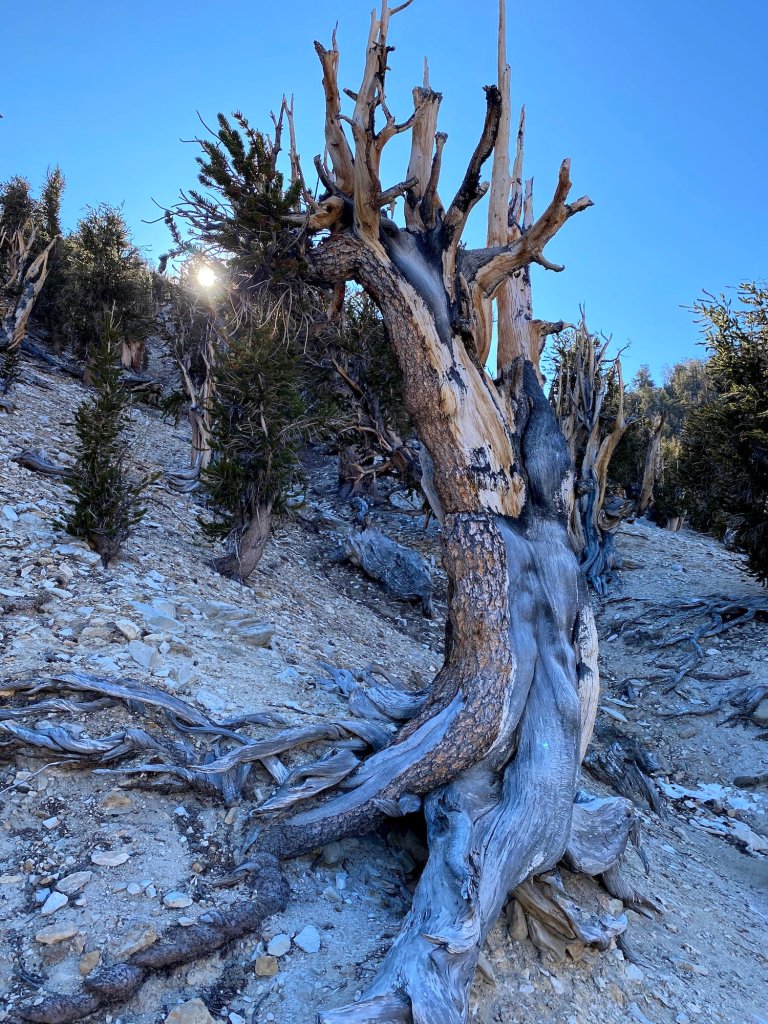
Bristlecone Pines in the White Mountains of California (Erik Olsen)

Amid the barren, high-altitude desert of California’s White Mountains, the Bristlecone Pines stand as enduring sentinels, their gnarled forms chronicling millennia of survival in one of the planet’s most unforgiving landscapes. For thousands of years, these ancient organisms have endured drought, freezing temperatures, and brutal winds. Each twisted trunk and weathered branch tells a story of resilience. Yet in a bitter twist, one of the oldest among them, a tree known as Prometheus that once grew in the nearby Great Basin National Park, met its end not from the slow violence of nature but from a single human decision. And it wasn’t the result of malice or careless destruction, like the foolish vandals who felled the U2 Joshua Tree. It was a mistake, made in the name of science.

The Prometheus stump. All that is left of one of the oldest organisms on Earth.

Prometheus, named after the Titan who defied the gods in Greek mythology, was an extraordinary specimen of the Pinus longaeva species, or the Great Basin Bristlecone Pine. It is believed to have germinated around the time of the Bronze Age, making it likely older than the Great Pyramids of Giza. By the 1960s, when its existence was noted by researchers, it was already around 4900 years old. Unfortunately, that’s when tragedy struck.

In 1964, a young geographer named Donald Rusk Currey was studying climate dynamics of the Little Ice Age. He was especially drawn to Bristlecone pines because their rings hold valuable records of past climate conditions, a core focus of dendrochronology, the study of tree rings, which continues to be an important scientific tool today. Some details of the story vary, but Currey had supposedly been coring several trees in the area to measure their age, but he encountered difficulties with Prometheus. He was unaware that the tree was not only ancient, but likely the oldest non-clonal organism on the planet. The coring tool broke, and unable to get the data he needed, Currey believed that cutting down the tree was the only way to continue his research. The Forest Service, unaware of the tree’s significance, approved the request.

And so he cut it down.

Bristlecone forest in the White Mountains of California (Erik Olsen)

Once Prometheus was cut down, its extraordinary age became clear. By counting its growth rings, Currey estimated that Prometheus was at least 4,844 years old, making it the oldest known tree in the world at the time. A few years later, this age was increased to 4,862 by Donald Graybill of the University of Arizona‘s Laboratory of Tree-Ring Research.

The scientific community and general public were outraged at the unnecessary loss, sparking conversations about the protection of these ancient trees. In the words of one writer-activist, Currey had “casually killed (yes, murdered!)” the world’s oldest tree. As if a curse had been unleashed, a year after Prometheus was cut down, a young Forest Service employee died of a heart attack while trying to remove a slab from the tree. Currey was obviously beside himself. Whoops.

Whether Prometheus should be considered the oldest organism ever known depends on how we define “oldest” and “organism.” Some clonal species may claim even more ancient origins when we consider the entire genetic individual rather than a single stem or trunk. The creosote bush ring known as King Clone, located in the Mojave Desert in California, is estimated to be nearly 12,000 years old. Similarly, the massive aspen colony known as Pando in Utah spans over 100 acres and may be more than 14,000 years old. Unlike Prometheus, which was a single, ancient tree, these clonal colonies persist by continuously regenerating themselves, allowing the larger organism to survive for tens of thousands of years.

Creosote growing in the Mojave Desert (Photo: Erik Olsen)

Prometheus’s death brought global attention to the incredible age and ecological value of Bristlecone Pines, sparking a deeper appreciation for their role in Earth’s history. In the years since, increased protections have been put in place to preserve these ancient trees. Today, they are part of the Inyo National Forest’s Ancient Bristlecone Pine Forest, a protected area in the White Mountains that draws scientists and visitors from around the world.

California is home to the oldest, tallest, and largest trees on the planet, not just the ancient Bristlecone Pines, but also the sky-scraping coast redwoods and the enormous giant sequoias. It’s also the most biodiverse state in the U.S., making it one of the most ecologically exceptional places on Earth.

CALIFORNIA CURATED ART ON ETSY

Purchase stunning art prints of iconic California scenes.
Check out our Etsy store.

Even as we mourn Prometheus, it’s important to remember that it is not the end of the story for the Bristlecone Pines. There are still many of these ancient trees alive today. One of them, named Methuselah, is known to be 4,851 years old and is often considered the oldest living tree in the world. While it is known to live somewhere in the White Mountains of California, its exact location is kept a secret to protect it. The tree’s name refers to the biblical patriarch Methuselah, who ostensibly lived to 969 years of age.

There’s also the potential for even older specimens. Given the harsh, remote habitats these trees often occupy, it is likely that there are older Bristlecones yet to be discovered.

California’s White Mountains (Photo: Erik Olsen)

The cutting of Prometheus was a mistake, an irreversible loss. But its story became a turning point, highlighting the need to treat ancient and rare life with more care. While Prometheus is gone, many other long-lived and fragile organisms still exist. Its fate is a reminder that our curiosity should always be balanced by a responsibility to protect what can’t be replaced.

Today, a cross-section of Prometheus is on display at the Great Basin National Park visitor center in Nevada, as well as the U.S. Forest Service’s Institute of Forest Genetics in Placerville, California. The tree’s thousands of growth rings are a reminder of its incredible longevity and a sobering memory of the tree that had survived for millennia. The region’s diverse landscapes are home to an incredible abundance of life, from ancient trees to unique coastal ecosystems. Protecting and understanding these natural treasures ensures they remain for future generations to study, appreciate, and enjoy.