California’s Elephant Seals are the Giants of the Golden Coast

Elephant seal in California.

Once teetering on the brink of extinction, the California elephant seal has made an astounding recovery thanks to stringent conservation efforts. But as you’ll read below, their recovery comes with an asterisk. These remarkable creatures, once hunted for their blubber, now thrive along California’s iconic coastline. With their distinctive trunk-like snouts and massive size (They really are huge. I’ve visited the beach near San Simeon several times to photograph them), elephant seals are an incredible sight.

Elephant seals can be seen along the California coast year-round, but specific times are better for different activities. The peak times to observe them are during their breeding season (December to March) and molting season (April to August). During these times, especially from January to March, beaches are filled with males battling for dominance and females giving birth. Outside these seasons, many seals are out at sea, but some can still be spotted during quieter months.
Even considering the animal’s unique appearance, the elephant seal is not just any ordinary seal. Its eating and mating habits are a riveting blend of deep-sea dives in pursuit of prey and intense beachfront battles for dominance during the breeding season.

The species has two main branches: the northern and southern elephant seal. The ones lolling on the California shores belong to the northern branch. Adult males can weigh as much as 2,300 kg (around 5,000 lbs) and can reach up to 14 feet in length. Females, though smaller, play a pivotal role in the seal’s lifecycle.

Baby elephant seal. Photo: NOAA

Elephant seals are deep-sea aficionados, embarking on two major foraging trips each year. To fuel the intense energy demands of mating season, they dive to impressive depths, often around 1,700 feet (518 m), but have been recorded reaching as deep as 5,015 feet (1,529 m). These long dives, sometimes lasting over an hour, help them hunt squids and fishes while also avoiding predators like great white sharks. Only sperm whales dive deeper and longer, showcasing the elephant seal’s mastery of the deep ocean.

The mating habits of the California elephant seal are a spectacle, a mix between The Biggest Loser and UFC. In wintertime, the beaches teem with activity. The males arrive first, establishing territories and preparing to woo potential mates. Skirmishes between rival males are like mixed martial arts battles between extreme heavyweights (ok, I’ll stop). As they fight for dominance and the right to mate, the elephant seal mating ritual can be quite intense. They engage in ferocious body slam battles, using their massive bodies and long proboscises to assert their strength. These skirmishes, often leading to visible scars and wounds, as well as broken bones, are all for the right to mate. The victor, having established his dominance, can then secure a harem of females, while the less dominant males must wait their turn or go without. This intense ritual underscores the seal’s primal drive to ensure its lineage in the face of fierce competition.

Mating battles between elephant seals can be brutal. Photo: NOAA

A 2023 study published in the Royal Society Open Science showed that the mating battles take their toll on the animals, revealing that males with large harems who fought the most, also lived markedly shorter lives.

By the end of the season, successful males might have a harem of up to 50 females. After the mating rituals, females give birth to pups from the previous year’s mating season. The shores become dotted with adorable seal pups, drawing gawkers and photographers from around the globe.

Elephant seal near San Simeon, California. Photo: National Park Service

To catch a glimpse of these magnificent creatures, the California coastline offers several attractive vantage points. Popular spots include Año Nuevo State Park, Point Reyes National Seashore, and Piedras Blancas near San Simeon. Further offshore, the Channel Islands serve as a remote sanctuary for these seals, away from the bustling mainland. Specifically, San Miguel Island and Santa Rosa Island, both part of the Channel Islands National Park, are known hotspots for elephant seal rookeries. These islands provide remote and undisturbed habitats, making them ideal locations for elephant seals to mate, give birth, and molt. 

Elephant seal rookery at Piedras Blancas near San Simeon

The elephant seal, despite its impressive size and strength, is not exempt from the challenges of predation. Great white sharks and orcas, or killer whales, are the primary natural predators of the elephant seal. While younger seals and females are more vulnerable due to their smaller size, even the massive adult males are not entirely safe. Great white sharks tend to target the seals when they’re in deep waters, ambushing them from below. Orcas, on the other hand, have been known to employ strategic hunting techniques to isolate and attack seals, especially near the shorelines. Several rather astonishing videos have been captured of orcas going after elephant seals in the wild.

The threat of these apex predators plays a significant role in shaping the behaviors and migratory patterns of the elephant seal, as they navigate the perilous waters of the Pacific in search of food and safe breeding grounds.

Elephant seals are known to be migratory, traveling thousands of miles across the Pacific. After their foraging trips, they return to their natal beaches to molt, shedding and replacing their fur and the outer layer of their skin.

Elephant seals on the beach at Piedras Blancas near San Simeon. (Erik Olsen)

However, the journey of the California elephant seal hasn’t always been smooth sailing. Over the past 50 years, there have been significant fluctuations in their population. In the late 19th century, they were nearly hunted to extinction for their blubber, which was valuable in oil production. By the end of the 1800s, only a small colony of fewer than 100 seals (some place the number closer to 25) was believed to exist. But here’s where the story takes a hopeful turn. Thanks to robust conservation efforts and protective legislation, their numbers began to rebound. Today, it’s estimated that the population is around 250,000, a testament to what protective measures can achieve. That said, an unknown proportion of elephant seal populations is always at sea, making accurate assessments of total population size is difficult. 

Recent research in 2024 reveals a deeper consequence of this near-extinction event. Genetic analyses show that Northern Elephant seals, while rebounding, still bear “genetic scars.” The dramatic population decline going into the 20th century led to the loss of genetic diversity, raising concerns about inbreeding and potential future vulnerabilities to environmental changes or diseases. However, despite reduced diversity, no immediate health issues have been observed in the species.

Given the many other biological and ecological riches of California (this magazine highlights many of them), the elephant seal owns a precious spot in the pantheon of California’s natural wonders. With their unique lifecycle, impressive size, and dramatic beach battles, elephant seals hold a special place alongside the state’s ancient redwoods, vast deserts, and diverse marine life. Their remarkable comeback from near extinction and the key role they play in coastal ecosystems make them a symbol of resilience and the enduring power of nature to regenerate when given the chance.

Squid Pro Quo: How the California Market Squid Gives Back to Nature and Economy

California Market Squid. The animal’s skin is covered with thousands of tiny chromatophores that change color and can dramatically transform the squid’s appearance.

The ocean’s depths are filled with mysterious and fascinating creatures, but few have made quite the splash in both nature and culture as the squid. Sleek, swift, and full of surprises, these little cephalopods are not only culinary favorites but also masters of survival in the ever-changing marine world.

The California market squid, scientifically known as Doryteuthis opalescens, is an integral component of the marine ecosystem and significantly contributes to California’s economy. Although these cephalopods may not captivate public imagination as vividly as their larger, more enigmatic cousins like the giant squid, or even California’s charismatic Two-Spotted Octopus, their role is both ecologically and economically invaluable.

In appearance, Doryteuthis opalescens is a relatively small squid, typically measuring up to a foot in length. It is characterized by its elongated tubular body and mantle. It has a set of eight shorter arms and two longer tentacles, all equipped with suckers for prey capture. The skin of the California market squid contains specialized pigment cells called chromatophores, which allow it to change color in mesmerizing ways. This is not just a display of beauty; the capability is used for camouflage from predators and likely communication with other squids. Their complex eyes are especially remarkable. These structures are highly developed and contain a lens that can focus, similar to the optical system in the human eye, allowing the squid to have keen vision—a trait essential for both hunting and avoiding predators.


The squid’s eyes contain a lens that can focus, similar to the optical system in the human eye, allowing the squid to have keen vision. (Wikipedia)

As for their reproductive habits, the mating and spawning of California market squid generally occur from April to November. The male deposits a spermatophore, or sperm packet, into the female’s mantle cavity. Post-fertilization, the female lays between 200 to 300 eggs, encapsulated in clusters, and attaches them to the substrate on the ocean floor. Neither parent plays a role in the post-fertilization life of these eggs. Both males and females often die shortly after mating, leading to a rather short life span for these creatures, usually between six to nine months.

CALIFORNIA CURATED ART ON ETSY

Purchase stunning art prints of iconic California scenes.
Check out our Etsy store.

The feeding behavior of the California market squid is best described as opportunistic. They primarily consume plankton, small fish, and other marine organisms. This diet situates them in a critical role within the food web, serving as both predator to smaller organisms and prey to larger marine animals. Typically, they inhabit depths less than 300 meters and are more active during nighttime, migrating vertically within the water column to follow prey and avoid predators.

Squid vessels at night, lights ablaze, looking for market squid in Monterey Bay. (Photo: CDFW)

Economically, the California market squid has an enormous impact. According to reports, it represents the largest fishery in California by volume. In 2022, commercial landings of market squid totaled 147 million pounds and were valued at $88 million, according to the NOAA Fisheries commercial fishing landings database. The fishery for this particular species accounts for nearly 25% of all commercial fishery landings by weight in the state. The significance of the market squid extends to the international sphere, as a considerable portion of the catch is exported to countries in Europe and Asia. In some years, the squid are abundant, but in other years, they are hard to find. Cyclical changes in ocean conditions can change the productivity of California waters and squid populations plummet. In some particularly bad years, the squid fishing industry suffers.

In California, the Fish and Game Commission collaborates with the Department of Fish and Wildlife to actively manage the market squid fishery in line with federal guidelines and the state’s Market Squid Fishery Management Plan.

California Market Squid (NOAA)

Changes in climate may end up having a major impact on the squid and the fishery. A 2020 paper from Stanford University published in The American Naturalist, details how climate change has likely ushered the squid north in the Gulf of Alaska, perhaps due to rising ocean temperatures causing the squid to move to more suitable habitats. The study highlights how the squid’s migration could impact local ecosystems, where their presence could alter food chains by competing with or preying on native species like young salmon. This research may predict broader marine species shifts in the future​. The squid’s populations are also clearly linked to El Niño cycles.

“As climate change progresses, there are bound to be other species like the California market squid that move to more suitable seas,”  Mark Denny, the John B. and Jean De Nault Professor in Marine Science at Hopkins Marine Station and senior author on the paper told Stanford’s Earth Matters Magazine. “Investigating what happens to this squid and the ecosystems around them right now will help researchers predict what could happen to other marine life later.”

As mentioned above, given its economic and ecological relevance, there are stringent regulations and monitoring programs in place to ensure sustainable fishing practices. Seasonal closures of the fishery, especially during peak spawning seasons, and restrictions on the type of fishing gear used are examples of such management strategies. The squid is considered a “smart seafood choice” by NOAA. These measures aim to minimize bycatch and preserve the squid population, thereby sustaining the ecological balance within the marine environment.

However, the agency notes: “Short- and long-term changes in the market squid population are poorly understood, The stock has not been assessed so there are no reliable estimates of the population size and the overfished and overfishing status are unknown.”

Despite being delicious, particularly when fried, the California market squid is far more than just an item on a seafood menu. It is a linchpin species that not only contributes to biodiversity in California, but also holds substantial economic value. Its role in the food web as both predator and prey, as well as its economic impact on both the local and global scales, positions it as a vital species deserving of ongoing scientific study and responsible management.

Buy us a cup of coffee?

Lots of work goes into writing California Curated. We’d appreciate it!

California’s Monterey Formation: Unraveling the Secrets of a Fossil-Rich, Oil-Bearing Geological Wonder

Monterey Formation rocks near Newport Beach (Erik Olsen)

California’s Monterey Formation is one of the most fascinating geological formations in the United States. Stretching along the California coast from San Francisco to Los Angeles, this formation is notable for its incredible diversity of siliceous rocks—rocks rich in silica, such as shale, chert, diatomite, and porcelanite. While these rocks are interesting to geologists, the Monterey Formation is also significant for its potential to explain the origins of petroleum deposits that have fueled California’s economy for over a century. NASA’s Jet Propulsion Laboratory once called it “California’s primary petroleum source rock.”

Fracture network of joints and cross-joints exposed on bedding surface of siliceous shale. Note linked, larger-aperture fracture in center with oxidation rim. Montaña de Oro State Park. (NASA JPL)

At the heart of the Monterey Formation’s geology is the unique composition of many different types of rock that come together in such a way that they create an ideal environment for trapping oil. The intricate layering of organic-rich shales, siliceous rocks, carbonates, and diatomites forms a complex network of porous and permeable spaces, allowing oil to migrate into these reservoirs. Over time, these rocks act like natural sponges, effectively capturing and holding large quantities of oil within their formations, making the Monterey Formation one of California’s most significant petroleum sources. It is estimated that over 38 billion barrels of oil have been produced to date from fields whose source rock is the Monterey.

CALIFORNIA CURATED ON ETSY

Purchase stunning art prints of iconic California scenes.
Check out our Etsy store.

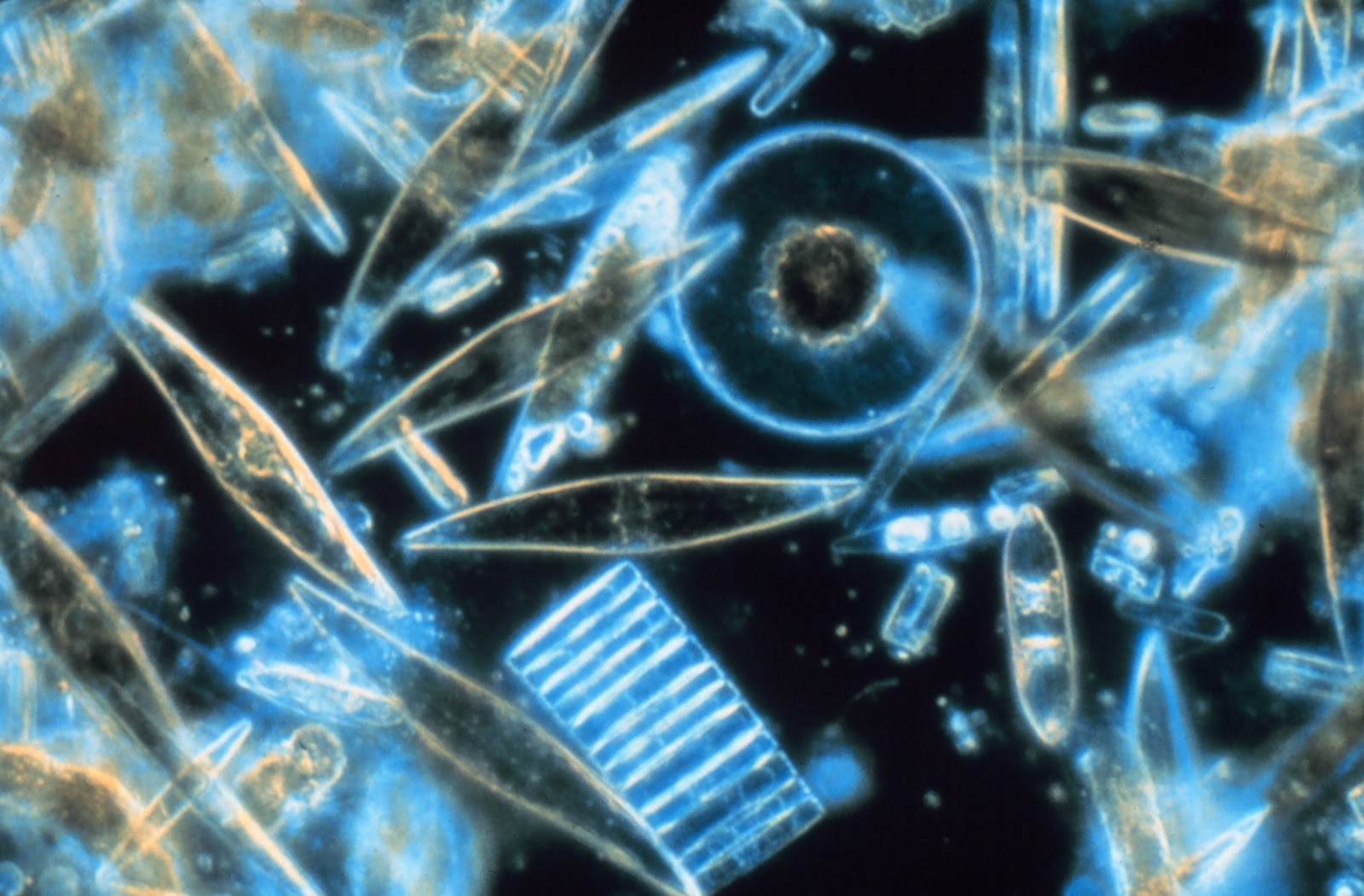
Diatomite, a light, porous rock formed from the fossilized remains of diatoms, is a dominant feature. Diatoms, microscopic algae with silica-based cell walls, thrived in nutrient-rich waters, leading to the thick layers of sediments that later became diatomite. Chert, another key rock type in the formation, is formed from the recrystallization of biogenic silica, adding to the complexity of the geological record. Interspersed with these are organic-rich shales, which contain substantial amounts of organic material called kerogen. Over millions of years, kerogen undergoes a biological transformation becoming the oil and gas that now serve as the backbone of California’s petroleum industry (see our story on the history of the Long Beach oil industry).

Diatoms (Wikipedia)

The Monterey Formation displays a fascinating and unusual mixture of geological deposits, from deep ocean basins to shallow continental shelves. During the Miocene, upwelling currents along the California coast brought nutrient-rich waters to the surface, fostering high biological productivity and depositing vast amounts of biogenic silica, a form of silicon dioxide (SiO₂) that is produced by living organisms. Periods of fluctuating sea levels, driven by climate changes and tectonic shifts, further shaped the environment. During low sea levels, parts of the continental shelf were exposed, allowing for erosion from wind and sun. These would shift to periods of high sea levels, which allowed for denser, deep-water sedimentation. In some layers, the presence of evaporites—minerals that form from the evaporation of water—suggests extensive episodes of arid conditions, similar to what we are experiencing now with California’s recurring periods of drought.

Offshore oil platforms along California’s coast drill into the Monterey Formation, either tapping directly into its fractured shale or extracting oil that has migrated into more porous sandstone reservoirs. (Photo: Erik Olsen)

Much of the pioneering research on the geology, formation, and unique composition of the Monterey Formation was conducted by the late Robert Garrison, a distinguished professor of oceanography at the University of California, Santa Cruz. Garrison was considered the foremost expert on the Monterey Foundation, and his work was instrumental in revealing how the Monterey Formation’s diatomaceous and phosphatic deposits were shaped by a combination of oceanographic upwelling, climatic shifts, and tectonic activity during the Miocene epoch.

Petroleum geologists find the Monterey Formation especially intriguing because it serves as both a source and a reservoir for oil and gas, allowing them to better understand the processes of oil and gas generation, migration, and accumulation, as well as to develop more efficient extraction methods to maximize its economic potential. They are also quite beautiful. Walk along the beach near Crystal Cove in Orange County, for example, and examples of Monterey Formation rocks abound.

Monterey Formation rocks near Little Corona in Newport Beach (Erik Olsen)

Oil is formed from the remains of ancient marine organisms, such as plankton and algae, that were buried under layers of sediment and subjected to heat and pressure over millions of years, transforming them into hydrocarbons. Some of these hydrocarbons migrated into more permeable rocks, creating substantial oil fields that have been exploited for decades in Southern California. Certain layers of the Monterey Formation, particularly the fractured chert and dolomitic sections, also serve as excellent reservoirs due to their porosity and permeability, allowing them to store oil and gas for long periods of time.

Beyond its geological and economic importance, the Monterey Formation is a treasure trove for paleontologists. Its layers preserve a variety of marine fossils, including diatoms, radiolarians, foraminifera, and coccolithophores. These microfossils offer a detailed look at past ocean conditions, helping scientists reconstruct the climatic and oceanographic history of the Miocene epoch. Additionally, the formation contains fossils of larger marine vertebrates, such as whales, seals, and fish, providing further insight into the ecosystems of ancient oceans.

Microscope image of microfossils and organic matter in Monterey rocks. (Cal State Long Beach)

However, the Monterey Formation is not just a source of knowledge and resources; it also presents challenges, particularly in terms of potential environmental harm and geohazards like landslides. The soft, diatomaceous earth layers within the formation are prone to landslides, especially when water-saturated or fractured by tectonic action. This makes some coastal areas of California, where the Monterey Formation is exposed, particularly vulnerable to slope instability, posing risks for construction and development. Many recent news stories have documented the increasing rate at which the California coast is tumbling into the sea. An excellent recent book on the subject is Rosanna Xia’s California Against the Sea: Visions for Our Vanishing Coastline.

California’s geology is a remarkable mosaic that tells a story of immense geological diversity and dynamic processes. Among its many treasures, the Monterey Formation stands out as a geological marvel—its intricate layers, rich fossil beds, and significant economic potential continue to captivate scientists and researchers from around the world. This unique formation is more than just rock; it is a time capsule that preserves millions of years of Earth’s history, from ancient marine ecosystems to dramatic shifts in climate and tectonic activity. As geologists, paleontologists, and environmental scientists delve deeper into its mysteries, the Monterey Formation reveals invaluable clues about the past while shaping our understanding of California’s ever-evolving landscape. It serves as a profound reminder of the powerful forces that have sculpted one of the most geologically varied regions on the planet and continues to inspire exploration and discovery in the fields of Earth science.

Why bringing back California’s kelp is so important

Sea urchins have devastated kelp forests in California.

Two centuries ago, the waters off the California coast were home to a vibrant ecosystem of plants and animals. Vast forests of kelp provided habitat for thousands of species of fish and invertebrates. Some of these kelp forests were so dense that light hardly penetrated to the seafloor. But now, along much of the coastline, the kelp is all but gone.

The tragedy here goes far beyond species loss and a troubling decline in overall biodiversity in our coastal waters. Kelp are also great at taking up carbon dioxide from the atmosphere and they help reduce acidification of the oceans, essentially cleaning the water and bringing balance to the entire ecosystem.

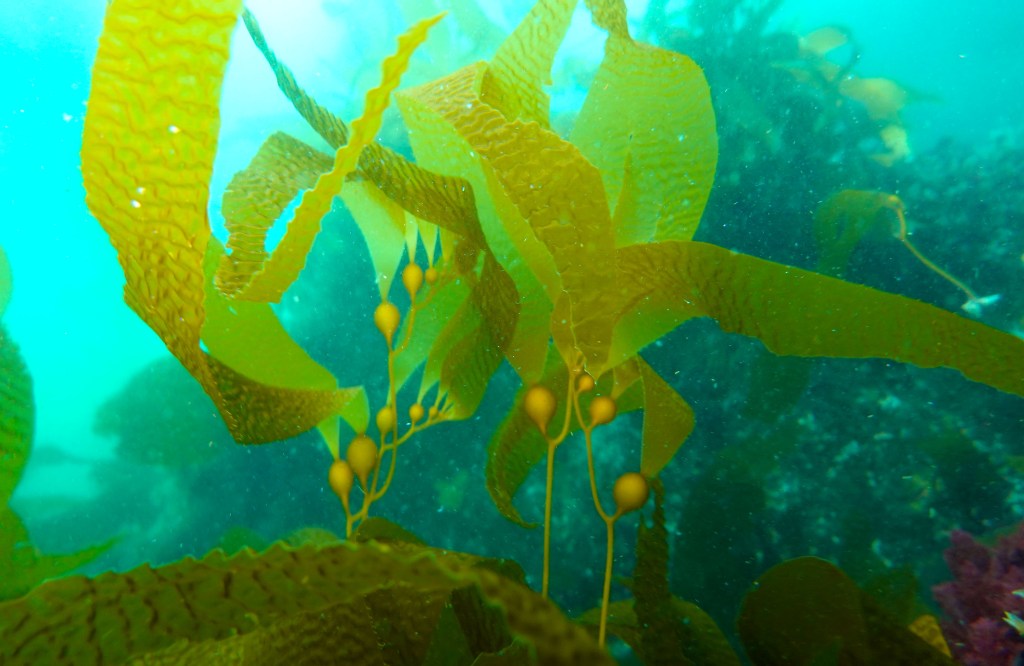
Kelp off the coast of Anacapa Island in California’s Channel Islands (Photo: Erik Olsen)

But now, that balance is has been disrupted. A recent study says that California’s bull kelp (Nereocytis luetkeana) forests (one of several species that are endemic here) have declined by 93% in just the last five years.

It’s difficult to fathom the scale of this loss, and we are only beginning to understand what it will mean for the overall health of our coastal waters. When the kelp disappears, the entire complex web of organisms that rely on it for habitat and food is disturbed. That is to say, large swaths of the near-shore California coastal ecosystem depend upon kelp.

So, what is happening? Well, first a little history.

A healthy kelp forest in Channel Islands National Park (NPS)

Two centuries ago, when kelp forests along the coast were so abundant they stretched for hundreds of miles with thick canopies that could be seen at the surface. At the time, urchins existed, but their populations were held in check by sea otters, which have been known to eat 1/4 of their body weight in urchins in a day. But unrestrained hunting by trappers (often Russian and British) in the early 1800s and into the mid-century brought sea otter populations down so low, at one point they were considered extinct in the wild. With the otters gone, urchins flourished and along certain stretches of coast, the kelp disappeared. Remember, this was 200 years ago, long before California was even a state.

Otters have come back to certain stretches of the California coast, especially near Monterey, and in some cases, the kelp has come back. And, in fact, even now, some places around the state, things aren’t nearly so bad. One-third of southern California’s kelp forests are found within Channel Islands National Park and Channel Islands National Marine Sanctuary, where no-take marine reserves prohibit all take of living, geological, or cultural resources. In the reserve, California sheephead, spiny lobsters, and sunflower stars eat sea urchins and keep their population from exploding.

Bust most other regions are not so lucky. And things have gotten even worse. This is where it gets more complicated.

A diver measures kelp growth (Kate Vylet/California Sea Grant) 

An intense ocean warming period between 2014 and 2017 is the likely culprit in causing a mass die-off of starfish. Starfish prey on native purple urchins, keeping their numbers in check. With mass numbers of sea stars dead, the urchins proliferated, eating their way through the kelp forests. The result: disaster.

“What we’re seeing now are millions and millions of purple sea urchins, and they’re eating absolutely everything,” said Laura Rogers-Bennett, an environmental scientist with UC Davis Karen C. Drayer Wildlife Health Center and California Department of Fish and Wildlife operating out of the UC Davis Bodega Marine Laboratory. “They can eat through all the anemones, the sponge, all the kelp, the fleshy red algae. They’re even eating through calcified alga and sand.”

The loss of kelp forests in California should be immediately recognized as a major ecological problem to solve, and while some projects are underway to do just that, much more needs to be done.

Several organizations, most of them California-based, are trying to reduce the number of urchins in Southern California. For example, UC Davis researchers are working with Bay Area shellfish company Urchinomics to explore “ranching urchins, removing them from the seafloor and fattening them up to be sold as sushi. Urchins are highly valued by Japanese consumers and are even sold in some California sushi restaurants. One problem is that purple urchins tend to be too small to harvest for human consumption, hence the need to increase their size via aquaculture. But will this be enough to stop the urchin’s march towards environmental saturation? Probably not.

The Bay Foundation in Santa Monica launched a program to restore kelp beds around 150 acres of urchin barrens along the rocky reefs off Palos Verdes. Scientists, recreational divers, and fishermen go down and smash the urchins with small hammers. The effort has shown promise, with kelp growing back in 46 acres of restored reef. Again, this is not nearly enough.

Kelp forest off Palos Verdes Peninsula (Erik Olsen)

Other strategies are outlined in the Sonoma-Mendocino Bull Kelp Recovery Plan, released last June by the Greater Farallones Association and California Department of Fish and Wildlife. It includes measures such as creating a kelp oasis to preserve seed stock and repopulate bull kelp when conditions are conducive to restoration.

This may all be too little too late. We believe state, local and federal agencies should redouble their efforts now to mitigate the loss of kelp in California waters. The implications for further, perhaps total, loss of California’s once-flourishing kelp forests are just too dire and action is required now. As the authors of the report write “it may take decades before the complex biological communities, associates, and the ecosystem services provided by macroalgal [seaweed] forests rebound.”

The California Sea Lion’s Story of Survival and Conservation

California Sea Lion (Photo: Erik Olsen)

Basking under the sun, barking from buoys, and sometimes tormenting boat owners, the California sea lion (Zalophus californianus) is a familiar, playful marine mammal common up and down the coast. Known for their intelligence, dog-like demeanor, and underwater agility, they are a symbol of the Golden State’s rich coastal biodiversity. Despite occasional years of periodic starvation and decline, the California sea lion has made a remarkable recovery over the last two decades and is now one the most common marine mammals seen along the California coast. It’s hard to go out in one of California’s many harbors and not see at least one prowling about, often poking their heads above water to take a loud breath.

California sea lions are part of the family Otariidae, which includes all eared seals. These agile marine mammals are well adapted for life in the ocean, with streamlined bodies, strong flippers, and a layer of blubber to help regulate body temperature. Male sea lions are larger than females, weighing up to 800 pounds (363 kg) and measuring around 8 feet (2.4 meters) in length. Females are slightly smaller, weighing around 250 pounds (113 kg) and measuring about 6 feet (1.8 meters) long. Although many people refer to them as seals, they are a different species, and it is fairly easy to tell them apart. Unlike true seals, sea lions have visible ear flaps and long front flippers that enable them to “walk” on land.

NOAA

Ranging from the Gulf of California to British Columbia, these marine mammals are a frequent sight around harbors, beaches, and offshore islands. These highly social creatures also congregate in large colonies on rocky shores, such as the Channel Islands off the coast of Southern California. During breeding season, males establish territories and compete fiercely for females, often engaging in vocal displays and physical battles. The females give birth to a single pup each year and provide maternal care for several months until the pup is ready to venture into the water.

California sea lions are opportunistic feeders, primarily preying on fish species such as anchovies, herring, salmon, and squid. With their excellent underwater vision and agile swimming abilities, they can dive to great depths, sometimes reaching over 900 feet (275 meters) to search for their prey. They are capable of consuming significant amounts of food, with adult males consuming up to 5-8% of their body weight each day.

Sea lions on a buoy in Orange County. (Erik Olsen)

Despite their formidable size and agility, California sea lions face predation from their most notorious adversary, the white shark (Carcharodon carcharias). White sharks are highly efficient hunters and occasionally target sea lions, particularly the young as well as inexperienced individuals. While these encounters are relatively rare, they underscore the ongoing struggle for survival that sea lions face in their natural habitat. Because of the resurgence in the sea lion population on the West Coast, white shark populations have also rebounded significantly, with a recent study suggesting that there can be as many as 40 juvenile white sharks just 50 feet from shore at some of the most popular beaches in SoCal. While this rise in the white shark population off California has made many people concerned about the potential for attacks on humans, records show that just 15 people have died by shark attacks in California since the 1950s.

The California sea lion population has experienced both remarkable recoveries and challenging times. In the early 20th century, they faced severe exploitation for their fur, resulting in significant declines in their numbers. However, conservation efforts and legal protection brought about a remarkable turnaround for these marine mammals.

Under the Marine Mammal Protection Act and state regulations, California sea lions are strictly protected, prohibiting hunting and harassment. Additionally, the establishment of marine protected areas and efforts to reduce pollution and fishery interactions have contributed to their recovery. As a result, the population rebounded, with estimates suggesting that there are now around 300,000 individuals along the coast of California.

Sea lions in Newport Beach. Credit Erik Olsen

Despite their resurgence, California sea lions face ongoing challenges, particularly during certain years when large-scale die-offs occur due to starvation. These events are often linked to El Niño weather patterns, which disrupt the marine ecosystem and cause shifts in fish populations. During such periods, the availability of prey may be limited, leading to malnutrition and high mortality rates among sea lion pups.

While California sea lions have made a remarkable recovery, ongoing conservation efforts are crucial to ensuring their long-term survival. Monitoring their populations, protecting their habitats, and addressing climate change impacts are vital steps to safeguarding these charismatic marine mammals. By raising awareness and promoting responsible stewardship of our coastal ecosystems, we can ensure a bright future for the California sea lion and the diverse marine life it represents.

There’s something quietly remarkable about living alongside California sea lions. They slip through the surf with ease, haul out on docks and rocks, and bring a sense of life and motion to the coastline. Like puppies of the sea, they’re curious, playful, and deeply social. But they’re also resilient animals that have weathered challenges and bounced back. Not that threats still don’t exist. But their presence is a reminder of the ocean’s complexity and beauty, and of how lucky we are in California to share our shores with them.

Saving California’s White Abalone is Part of a Much Bigger Story

The current effort to bring back the white abalone is one of numerous projects underway in California to revive the state’s once-thriving marine environment.

White abalone

If you grew up in Southern California in the 1970s, there were a few things that defined California: surfing, skateboarding, the Eagles (preferably on the radio while driving down the Pacific Coast Highway) and abalone.

The abalone was an icon of beach culture, celebrated in poetry and song, a wondrous gift from Mother Nature. Almost every house near the coast had upturned abalone shells on the coffee table or as decorative items in a garden, their opalescent mother-of-pearl interior shells glistening jewel-like beneath the warm California sun. They hung near front doors or in backyards by the half dozen from string or fishing line, acting as wind chimes when the cool breezes blew in from the Pacific. Our air, our light is different than other places.

They once numbered in the millions off the California coast, but now they are endangered. As the Los Angeles Times put it in 2019, “Abalone once were to California what lobster is to Maine and blue crab to Maryland, so plentiful they stacked one on top of another like colorful paving stones.” 

But then something terrible happened.

The white abalone (Haliotis sorenseni) fishery, in particular, went out of control. Commercial abalone fishing from 1969–1972 was so lucrative and so unrestrained that the catch went from roughly 143,000 pounds per year to just 5,000 pounds per year in less than a decade. Millions of pounds were harvested by commercial fishermen, and diving for abalone was a common and favored pastime. In 1997, state officials in California ceased all white abalone fishing because population levels had reached perilous lows. By 2001, the numbers of white abalone found along the coast were so low that they became the first marine invertebrate listed as endangered on the Endangered Species Act. But it was too late. The population had declined by almost 99 percent.

It is estimated that around 1,600 individuals remain, and at one point, it was feared the species would go extinct by 2010 without intervention. Currently, there is growing concern that the small populations still surviving in the wild may be highly vulnerable to withering syndrome disease.

California is home to seven species of abalone (red, pink, black, green, white, pinto, and flat), none of them are plentiful any longer in California waters, but it is the white abalone, in particular, that became the most prized for its tender, flavorful flesh. We loved white abalone. And then they were gone.

White abalone. Credit: NOAA

Despite a fishing ban for over two decades, wild populations of white abalone have not shown signs of recovery. Abalone reproduce through broadcast spawning, where they release their gametes into the water. This method requires a certain population density to be effective, but current wild populations of white abalone are too sparse for successful natural reproduction.

In 2019, scientists at UC Davis’ Bodega Marine Lab in Bodega Bay launched one of the most important species restoration efforts in the history of the state. On November 18, 2019, researchers from the marine lab, in cooperation with the National Oceanic and Atmospheric Administration (NOAA) carefully released thousands of baby white abalone into the waters of Southern California. Biologists measured and marked each one with a unique numbered tag affixed to their shell to distinguish them from wild white abalone (of which there are perilously few). This marked the first release of endangered white abalone into the wild in coastal waters. What’s crazy is that the white abalone that have been bred in the lab constitute the largest population of the slow-moving mollusks in the world. That’s right, there are more white abalone living in captivity than there are in the wild. Until now.

“Early on we knew that this species was really in danger of going extinct and that the only viable alternative to save it was starting a captive breeding program,” said Ian Taniguchi, a biologist with the California Department of Fish and Wildlife (CDFW) who has been involved in white abalone restoration since 1992.

The White Abalone Restoration Program in California has made significant progress in recent years, although challenges remain. The program, now led by a coalition of organizations including NOAA Fisheries, the University of California, Davis, and The Bay Foundation, focuses on restoring the population of this critically endangered species through captive breeding and outplanting efforts.

Currently, the program has successfully bred and outplanted thousands of juvenile white abalone into the wild, particularly along the Southern California coast. These efforts are part of a broader strategy that includes improving spawning techniques, monitoring wild populations, and enhancing habitat conditions. Despite these efforts, white abalone populations in the wild are still vulnerable due to factors like disease, warming waters, and low population densities that hinder natural reproduction.

The program’s ongoing efforts include monitoring environmental conditions that affect abalone habitats, such as oxygen levels and temperature, to optimize outplanting strategies. Additionally, the restoration efforts are expanding, with new techniques and partnerships aimed at increasing the resilience of outplanted populations and ultimately ensuring the species’ survival in the wild​

Cultured Abalone Farm (Photo: Jennifer Boyce)

“Early on we knew that this species was really in danger of going extinct and that the only viable alternative to save it was starting a captive breeding program.”

Ian Taniguchi, a biologist with the California Department of Fish and Wildlife (CDFW)

Abalone are far more valuable than merely as a food item. They are keepers of the kelp forest. According to scientists, the abalone eat kelp, but they also clear rocks of any dominant species and thus increase kelp diversity so that multiple kelp species can flourish. When the kelp is healthy and diverse, coastal waters see an explosion of diversity in fish and other animals that depend on kelp forest habitat.  

While the success of the abalone recovery program hangs in the balance, its mere existence needs to be recognized as part of a much larger tapestry of species and ecosystem recovery projects currently underway that are aimed at restoring California’s coastal ecosystem to some semblance of what it was centuries ago.

That is, of course, impossible. The numerous written accounts by early California settlers (many of them Spanish) describe plants and animals in such unfathomable abundances, the likes of which we will never be able to return. But we can reclaim some of it. And after decades of witnessing severe declines in fish species, kelp, water quality and coastal habitat, it seems we may be finally turning a corner. Maybe.

Some of the projects underway include bringing back white sea bass, protection of sea lions, whales and dolphins under the Marine Mammal Protection Act, a rise in white shark populations, kelp restoration, and, perhaps the most significant achievement of all, the creation of a vast (and enforced), network of Marine Protected Areas (MPAs).

White abalone shell

Alone, each of these efforts is a small step in the right direction in making our seas healthy and fruitful. Together, they represent the most significant set of achievements to reverse the impact of human settlement on the ocean environment in the history of the world. Of course, we are nowhere near done, and the growing (and terrifying) threats from climate change could render all of this moot. Warming seas, the spread of new diseases (and old ones), acidification, all these things together could unravel these accomplishments in mere decades.

There are still many challenges ahead. Recent kelp die-offs in Northern California due to the explosion in purple urchin populations are extremely worrisome. Phenomena like sea star wasting disease and the marine heatwave of 2013-2015 may have wrought permanent change to our marine ecosystem. But the fact that we are now acting so aggressively to apply science and ingenuity to solve the myriad problems we ourselves caused should give us some hope that positive change is possible.

There is no time for rest. If anything now is the time to redouble our efforts to make our oceans cleaner, to help species recover and to restore the lost balance so that future generations can experience the incredible beauty and bounty of the sea.

California Coastline Teems with Whale Skeletons

A whale fall recorded off the Coast of California. (Photo: Ocean Exploration Trust/NOAA)

In the depths of the ocean, when a whale dies, its carcass sinks to the seafloor, creating a unique and rich ecosystem known as a whale fall. Recently, scientists have discovered an extraordinary number of these whale falls off the coast of Los Angeles—over 60 skeletons, a number that surpasses the total found worldwide since 1977. This remarkable density of whale falls has turned the region into a hotspot for marine biologists and ecologists eager to study these deep-sea oases. A recent video (2019) from the Exploration Vessel (E/V) Nautilus captured the excitement as scientists came upon a whale fall on the Davidson Seamount off California.

(The Davidson Seamount, which we have written about before, is a hotbed of biological activity, a deep sea oasis of life, providing habitat for millions of creatures, including the famous gathering of brooding ocotpus (Muusoctopus robustus) known as the Octopus Garden, seen in video here.)

Photo: Ocean Exploration Trust

Whale falls provide a dramatic example of how death can foster life. When a whale carcass settles on the ocean floor, it becomes a feast for a variety of marine creatures. Initially, scavengers like hagfish, sharks, and crabs strip the soft tissues. Over time, the remaining bones support a succession of organisms, including bone-eating worms called Osedax, which bore into the bones and extract lipids. These processes can sustain life for decades, creating a complex and dynamic micro-ecosystem.

The discovery off Los Angeles is attributed to several factors. Detailed surveys of the area have been conducted, coupled with the region’s oxygen-poor waters, which slow decomposition and preserve the skeletons longer. Additionally, the lack of heavy sedimentation ensures that the whale bones remain exposed and easier to find. However, the proximity to busy shipping lanes raises concerns about the potential role of ship strikes in the high number of whale deaths.

Blue whale (Photo: Erik Olsen)

Eric Terrill and Sophia Merrifield, oceanographers from the Scripps Institution of Oceanography at UCSD, led surveys in 2021 and 2023 to assess waste spread across 135 square miles of seafloor in the San Pedro Basin. This area, twice the size of Washington, D.C., and located about 15 miles offshore, was used as an industrial dumping ground in the early to mid-1900s. Many of the objects discovered during the survey were barrels containing the banned pesticide DDT and its toxic byproducts.

Visit the California Curated store on Etsy for original prints showing the beauty and natural wonder of California.

Researchers consider it unlikely that the toxic waste and discarded weapons in the area are causing whale deaths. Instead, the high volume of ship traffic is a probable factor, as this area might see more whales killed by ship strikes compared to other regions. The Los Angeles and Long Beach ports, the two busiest in the United States, are located just northeast of the study site, with shipping lanes spreading throughout the area. Additionally, thousands of gray whales migrate through these waters each year, and blue whales regularly feed here, John Calambokidis, a marine biologist with Cascadia Research Collective, a nonprofit in Washington State, told The Atlantic.

Blue whale off the coast of Los Angeles (Photo: Erik Olsen)

Whale falls are crucial not only for the biodiversity they support but also for their role in carbon sequestration. When a whale dies and sinks, it transfers a significant amount of carbon to the deep sea, where it can be stored for centuries. This process helps mitigate the effects of climate change by reducing the amount of carbon dioxide in the atmosphere. The impact is not huge, but scientists say it is significant.

The size of whales plays a significant role in the extent of these ecosystems. Blue whales, the largest animals on Earth, are now seen regularly off the coast. The population of blue whales off the coast of California (as well as Oregon, Washington and Alaska) is known as the Eastern North Pacific blue whale population. This group is one of the largest populations of blue whales globally and migrates between feeding grounds off the coast of California and breeding grounds in the tropical waters of the Pacific Ocean. Their massive bodies provide an abundant food source, supporting a greater diversity and number of species at whale fall sites.

(It should be noted that many articles and Web sites regularly claim that blue whales often reach 100 feet or more. That is false. It is unlikely any blue whale over 80 feet has plied California waters in modern history. John Calambokidis told California Curated that the persistent use of the 100-foot figure can be misleading, especially when the number is used as a reference to all blue whales.)

Ocean Exploration Trust (OET) 

As many who spend time along the shore know, the waters off California are home to a variety of whale species, including blue whales, humpback whales, gray whales, and fin whales. Blue whale populations, although still endangered, have shown signs of recovery due to conservation efforts. Humpback whales, known for their acrobatic breaches and complex songs, undertake one of the longest migrations of any mammal, traveling between feeding grounds in the Arctic and breeding grounds in Mexico. Fin whales, the second-largest whale species, are also present in these waters, though their populations are also still recovering from historic whaling.

The newfound whale falls off Los Angeles offer a unique opportunity to study these deep-sea ecosystems in greater detail. Researchers are particularly interested in understanding the succession of species that colonize these sites and the overall impact on deep-sea biodiversity. Furthermore, studying whale falls can provide insights into the health of whale populations and the broader marine environment.

The discovery of whale falls in the deep sea reveals the remarkable interdependence of life in our oceans. These massive carcasses, sinking silently to the ocean floor, become rich oases that sustain a diverse array of creatures—from giant scavengers to microscopic bone-eating worms. This cycle of life and death highlights the ocean’s intricate balance, where even in the darkest depths, every organism contributes to a larger, interconnected web. Gaining a deeper understanding of these hidden processes is vital, not just for the sake of marine conservation, but for preserving the overall health and resilience of our planet’s ecosystems.