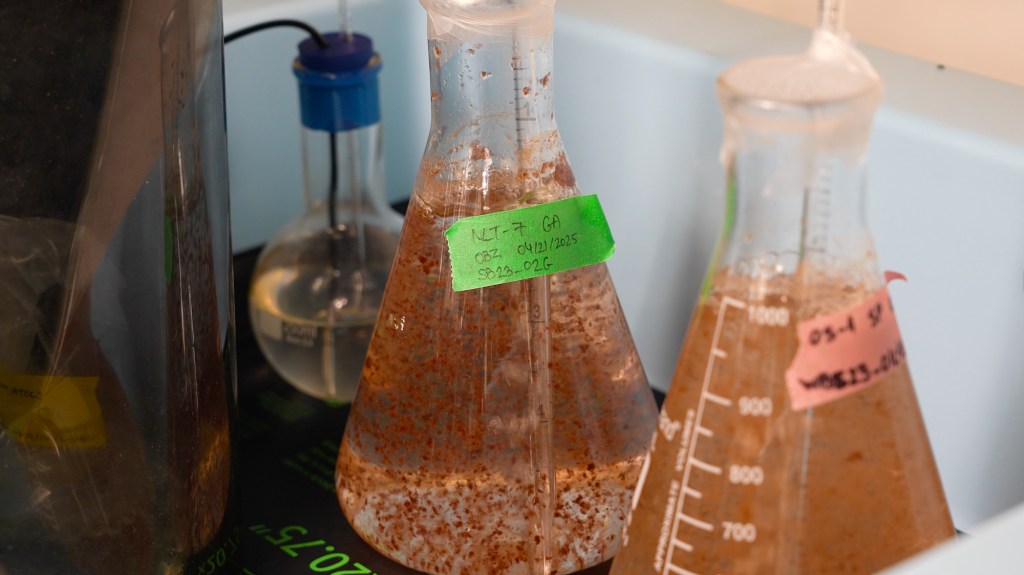
Flasks of Asparagopsis taxiformis growing at Scripps Institution of Oceanography. Researchers are studying this red seaweed for its potential to slash methane emissions from cattle when added in small amounts to their feed. (Photo: Erik Olsen)
Inside a long, brightly lit basement lab at the Scripps Institution of Oceanography at UC San Diego, a large aquarium filled with live corals sits against the wall, the vibrant shapes and colors of the coral standing out against the otherwise plain white surroundings. Nearby, in a side alcove, dozens of glass flasks bubble with aerated water, each holding tiny crimson clusters of seaweed swirling in suspension, resembling miniature lava lamps. These fragile red fragments, born in California and raised under tightly controlled conditions, are part of a global effort to harness seaweed to fight climate change.
Cattle and other ruminant livestock are among the largest contributors to methane emissions worldwide, releasing vast amounts of the gas through digestion and eructation. Burps, not farts. The distinction is not especially important, but it matters because critics of climate science often mock the idea of “cow farts” driving climate change. In reality, the methane comes primarily from cow burps, not flatulence.
But I digress.
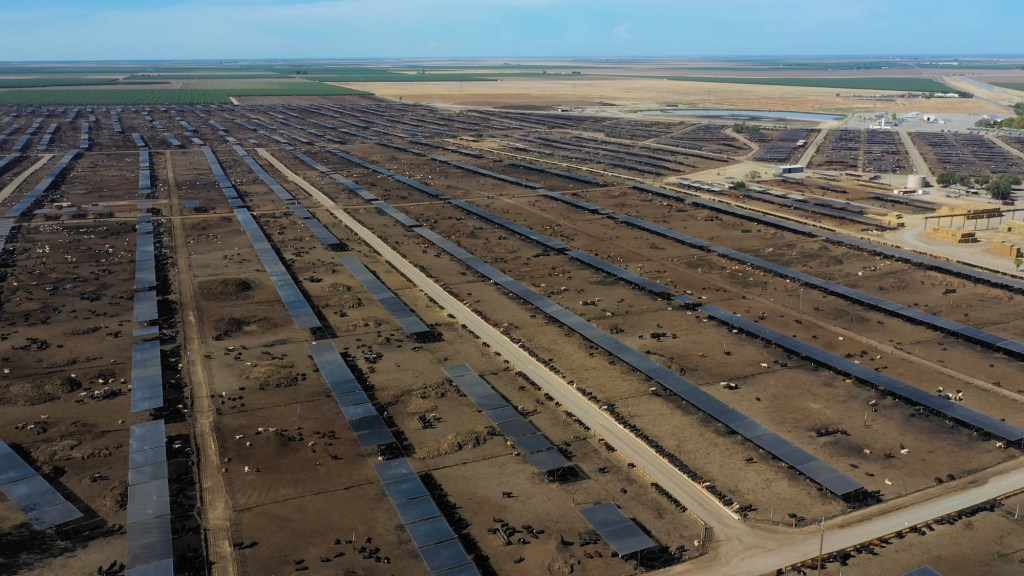
Cattle at Harris Ranch in California’s Central Valley, one of the largest beef producers in the United States. Livestock operations like this are a major source of methane emissions, a greenhouse gas more than 80 times as potent as carbon dioxide over a 20-year period. (Photo: Erik Olsen)
Globally, livestock are responsible for roughly 14 percent of all human-induced greenhouse gases, with methane from cattle making up a significant portion of that total. The beef and dairy industries alone involve more than a billion head of cattle, producing meat and milk that fuel economies but also generating methane on a scale that rivals emissions from major industrial sectors. Because methane is so potent, trapping more than 80 times as much heat as carbon dioxide over a 20-year period, the livestock industry’s footprint has become a central focus for climate scientists searching for solutions.
Enter Jennifer Smith and her colleagues at the Smith Lab at Scripps in beautiful La Jolla, California. Their team is tackling urgent environmental challenges, from understanding coral die-offs to developing strategies that reduce greenhouse gas emissions, among them, the cultivation of seaweed to curb methane from cattle.
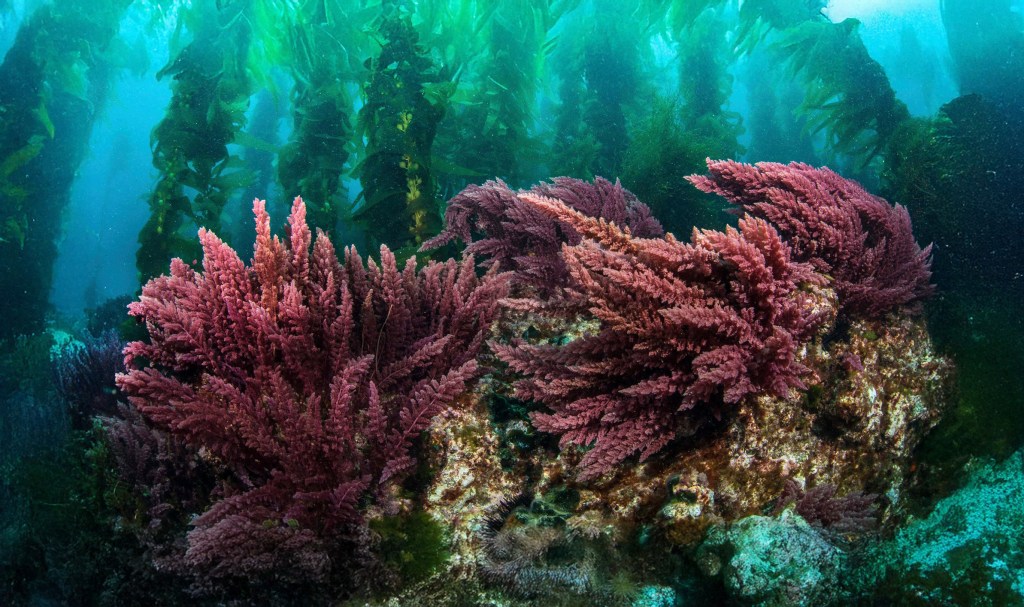
The seaweed species is Asparagopsis taxiformis. Native to tropical and warm temperate seas and found off the coast of California, in fact right here off the coast in San Diego, it produces natural compounds such as bromoform that interfere with the microbes in a cow’s stomach that generate methane gas, significantly reducing the production of methane and, of course, it’s exhalation by the animals we eat. It turns out the seaweed, when added to animal feed can be very effective:
Asparagopsis taxiformis, commonly known as red sea plume, a tropical red algae being studied for its ability to cut methane emissions from cattle. (Photo: Wikipedia)
“You need to feed the cows only less than 1% of their diet with this red algae and it can reduce up to 99% of their methane emissions,” said Dr. Or Ben Zvi, an Israeli postdoctoral researcher at Scripps who studies both corals and seaweeds.
Trials in Australia, California, and other regions have shown just how potent this seaweed can be. As Dr. Ben Zvi indicated, even at tiny doses, fractions of a percent of a cow’s feed, other studies have shown that it can reduce methane by 30 to 90 percent, depending on conditions and preparation. Such results suggest enormous potential, but only if enough of the seaweed can be produced consistently and sustainably.
“At the moment it is quite labor intensive,” says Ben Zvi. “We’re developing workflows to create a more streamlined and cost-effective industry.”
Which explains to bubbling flasks around me now.
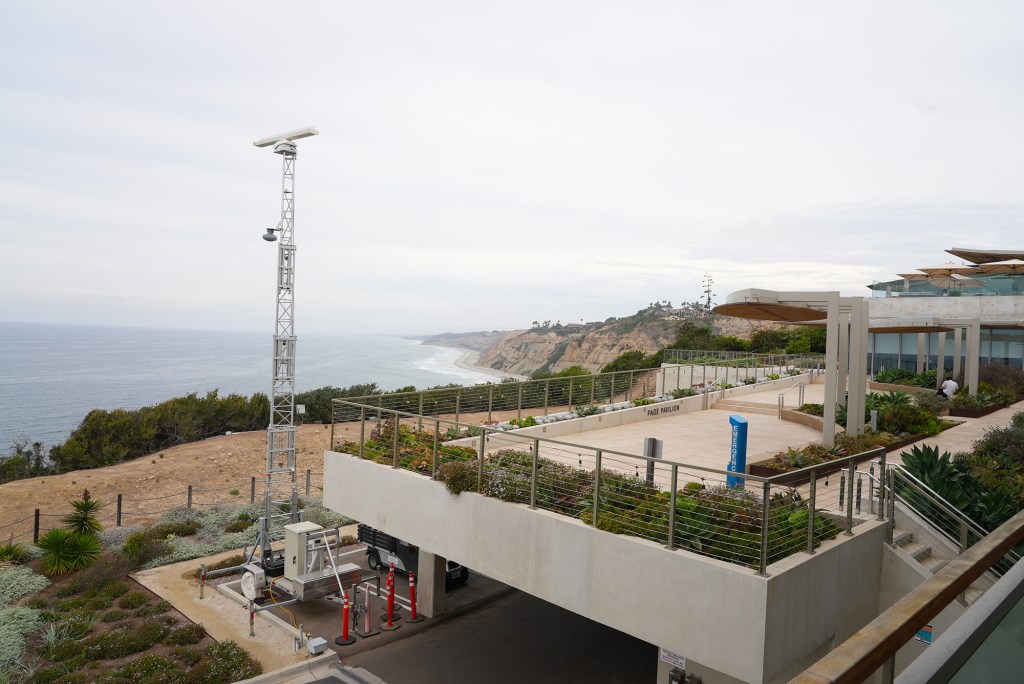
Scripps Institution of Oceanography at UC San Diego (Photo: Erik Olsen)
The Smith lab here at Scripps studies every stage of the process, from identifying which strains of Asparagopsis thrive locally to testing how temperature, light, and carbon dioxide affect growth and bromoform content. Dr. Ben Zvi is focused on the life cycle and photosynthesis of the species, refining culture techniques that could make large-scale cultivation possible. At Scripps, environmental physiology experiments show that local strains grow best at 22 to 26 °C and respond well to elevated CO₂, information that could guide commercial farming in Southern California.
The challenges, however, are considerable. Wild harvesting cannot meet demand, and cultivating seaweed at scale requires reliable methods, stable yields, and affordable costs. Bromoform content varies widely depending on strain and growing conditions, so consistency remains an issue. Some trials have noted side effects such as reduced feed intake or excess mineral uptake, and long-term safety must be established since we’re talking about animals that we breed and raise to eat.
“It’s still a very young area, and we’re working on the legislation of it,” says Ben Zvi. “We need to make it legal to feed to a cow that eventually we either drink their milk or eat their meat. We need for it to be safe for human consumption.”
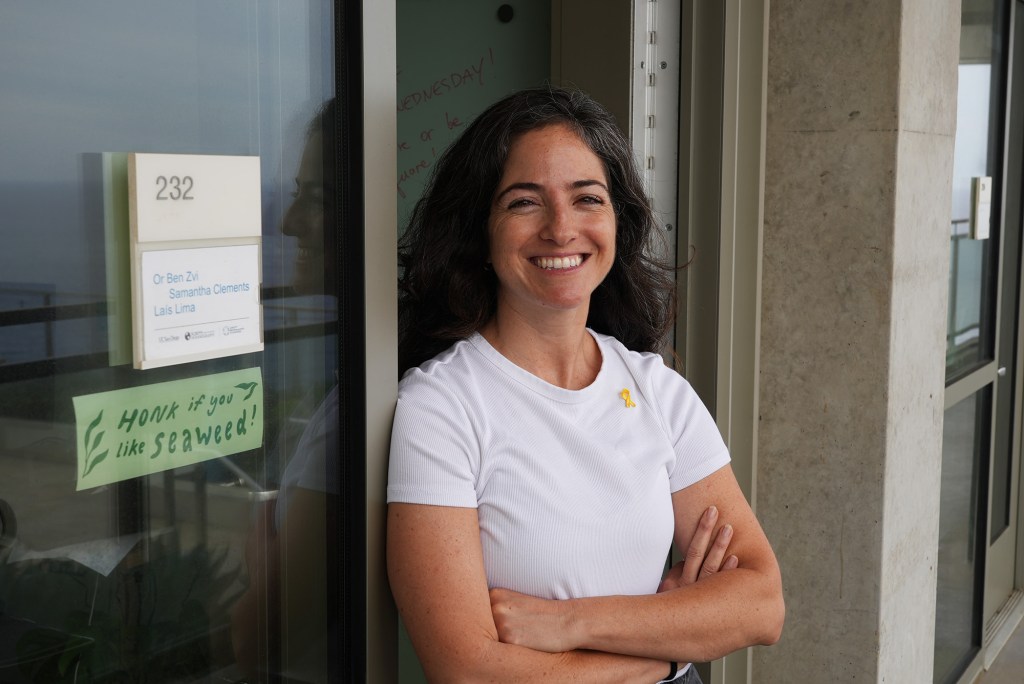
Dr. Or Ben Zvi (Photo: Erik Olsen)
And, of course, large-scale aquaculture raises ecological questions, from nutrient demands and pollution to the fate of volatile compounds like bromoform.
To overcome these obstacles, collaborations are underway. UC San Diego and UC Davis have launched a pilot project under the UC Carbon Neutrality Initiative to test production methods and carbon benefits. In 2024, CH4 Global, a U.S.-based company with operations in New Zealand and Australia that develops seaweed feed supplements to cut livestock methane, partnered with Scripps to design cultivation systems that are efficient, inexpensive, and scalable. Within the Smith Lab, researchers are continuing to probe the biology of Asparagopsis, mapping its genetics, fine-tuning its culture, and testing ways to maximize both growth and methane-suppressing compounds.
At a time when university-based science faces immense pressures, the Smith Lab at Scripps provides a glimpse of research that is making a real impact. The coral tanks against the wall belong to another project at the lab, and we have another story coming soon about the research that readers will find very interesting, but the bubbling flasks in the alcove reveal how breakthroughs often start with small details. In this case, the discovery that a chemical in a widely available seaweed could have such a dramatic, and apparently harmless, effect on the methane that animals make in their guts. These modest but powerful steps are shaping solutions to global challenges, and California, with its wealth of scientific talent and institutions, remains at the forefront. It is one of many other stories we want to share, from inside the labs to the wide open spaces of the state’s natural landscapes.
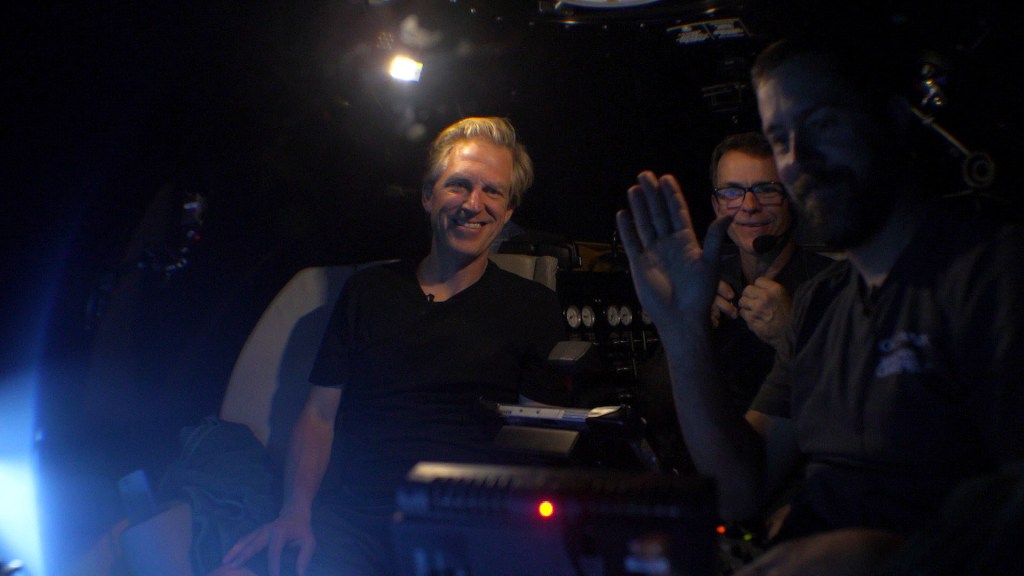
It’s time for California to put people back in the deep. A human-occupied submersible belongs in California waters, and we’ve waited long enough.
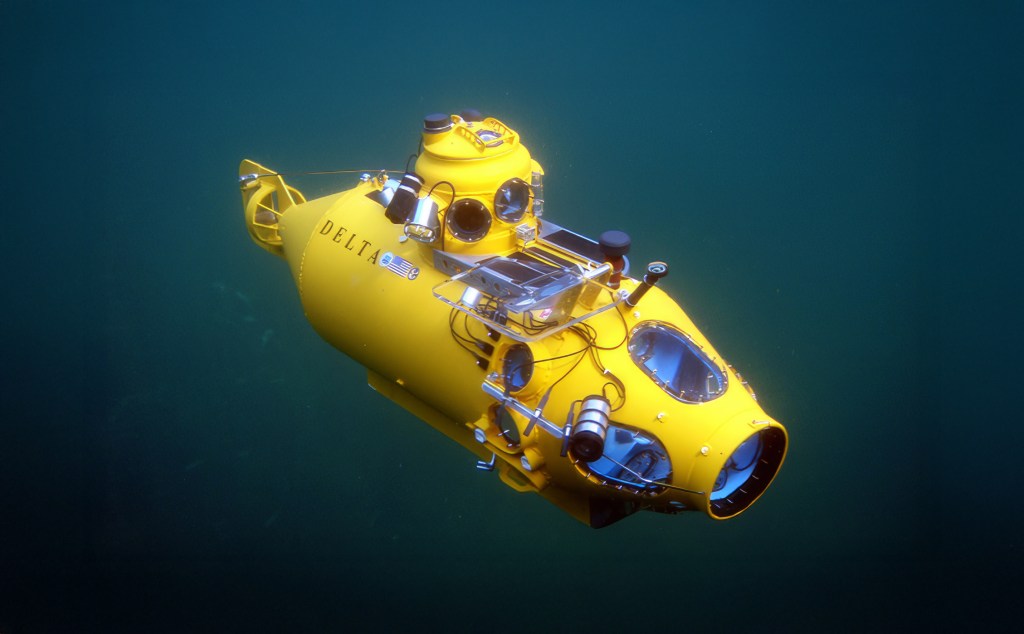
For decades, the state had a strong human-occupied submersible presence, from Navy test craft in San Diego to long-serving civilian science HOVs like the Delta. Those vehicles have been retired or relocated, leaving the West Coast without a single home-based, active human-occupied research submersible (I am not counting OceanGate’s Titan sub for numerous reasons, like the fact it was based in Seattle, but foremost is it was not “classed,” nor was it created for scientific use). Restoring that capability would not only honor California’s legacy of ocean exploration but also put the state back at the forefront of direct human observation in the deep sea. The time has come.
Side note: I’ve had the rare privilege of diving beneath the waves in a submersible three times in three different subs, including one descent to more than 2,000 feet with scientists from the Woods Hole Oceanographic Institution. Without exaggeration, it stands among the greatest experiences of my life.
The United States once had a small fleet of working research HOVs. Today it has essentially one deep-diving scientific HOV in regular service: Alvin, operated by Woods Hole Oceanographic Institution (WHOI) for the National Deep Submergence Facility. Alvin is magnificent, now upgraded to reach 6,500 meters, but it is based on the Atlantic (in Massachusetts) and scheduled years in advance at immense cost.
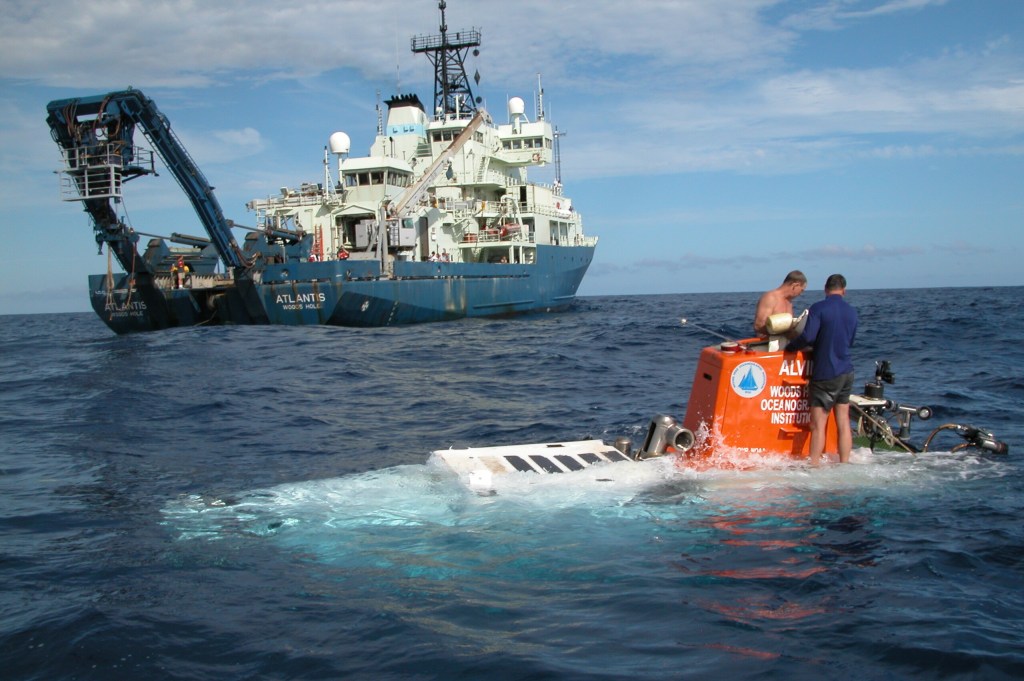
The human-occupied submersible Alvin surfaces during the 2004 “Mountains in the Sea” Expedition, returning from a dive to explore deep seamount habitats teeming with corals, sponges, and other rarely seen marine life. (Photo: NOAA, Public Domain)
It helps to remember how we got here. The Navy placed Alvin in service in 1964, a Cold War investment that later became a pillar of basic research, investigating hydrothermal vents, shipwrecks and underwater volcanoes, among many, many other accomplishments. Over six decades of safe operations, Alvin has logged thousands of dives and undergone multiple retrofits, each expanding its depth range. Now rated to 6,500 meters, it can reach 98 percent of the ocean floor. WHOI’s partnership model with the Navy and universities shows exactly how public investment and science can reinforce each other. But Alvin is based on the East Coast: all that capability, history, and expertise is thousands of miles away. California needs its own Alvin. Or something even better…and perhaps cheaper. Though by cheaper I do not mean less safe.
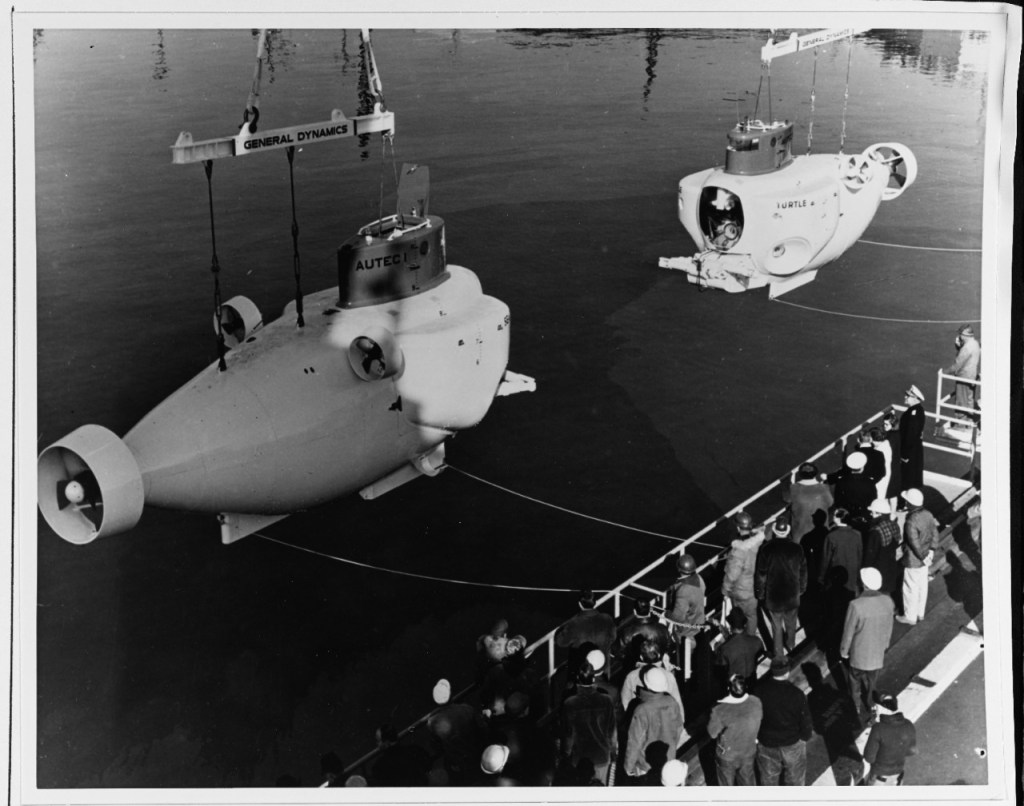
For a time, California actually had multiple HOVs. The Navy fielded sister craft to Alvin, including Turtle and Sea Cliff. Both Turtle and Sea Cliff spent their careers with Submarine Development Group ONE in San Diego. Turtle was retired in the late 1990s, and Sea Cliff, launched in 1968 and later upgraded for greater depths, also left service by the end of that decade, ending the Navy’s home-ported HOV presence on the West Coast.
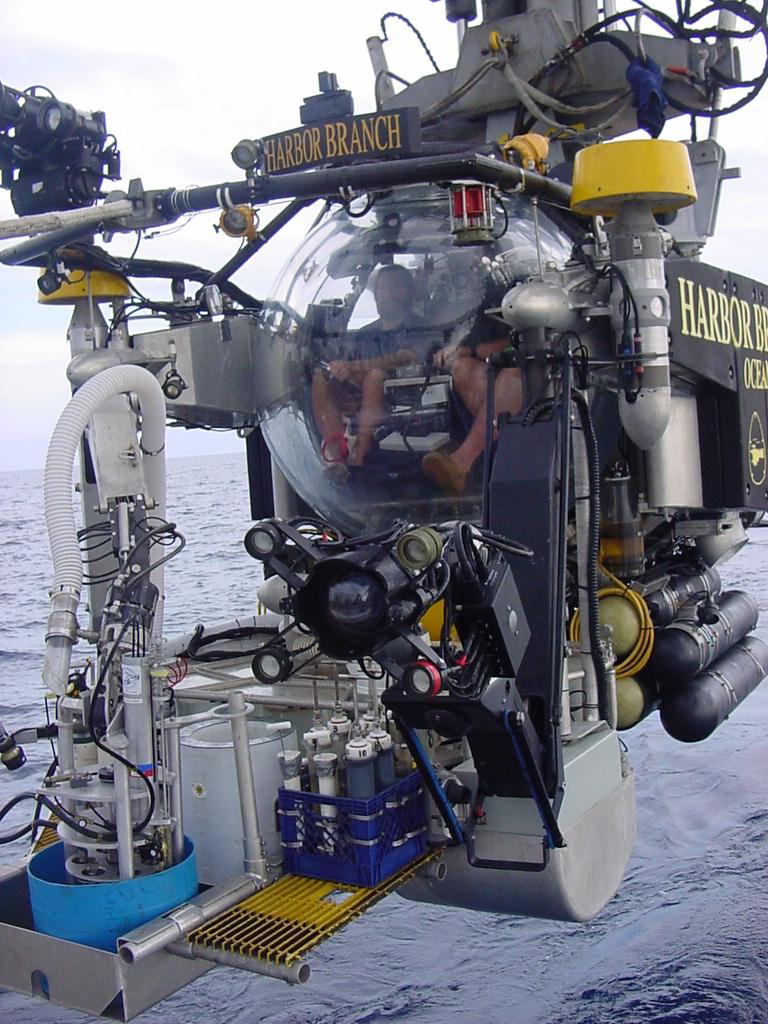
On the Atlantic side, Harbor Branch’s two Johnson Sea Link HOVs supported science and search-and-recovery work for decades before the program ended in 2011 due to funding constraints and shifting research priorities. I’ve interviewed renowned marine biologist Edith Widder several times, and she often speaks about how pivotal her dives in the Johnson Sea Link submersibles were to her career studying animal bioluminescence.
“Submersibles are essential for exploring the planet’s largest and least understood habitat, ” Widder told me. “A human-occupied, untethered submersible offers an unmatched window into ocean life, far surpassing what remotely operated vehicles can provide. ROVs, with their noisy thrusters and blazing lights, often scare away marine animals, and even the most advanced cameras still can’t match the sensitivity of the fully dark-adapted human eye for observing bioluminescence.”
In the central Pacific, the University of Hawaiʻi’s HURL operated Pisces IV and V for much of the 2000s and 2010s, then suspended operations amid funding and ship transitions. Through attrition and budget choices, the working U.S. fleet shrank from a handful to essentially one deep-diving research HOV today.
Manned submersibles are costly to build and operate, and they demand specialized crews, maintenance, and support ships or platforms. It’s easy to list reasons why California shouldn’t invest in a new generation of human-occupied subs. But that mindset has kept us out of the deep for far too long. It’s time to turn the conversation around and recognize why having one here would be a transformative asset for science, education, and exploration.
The Seacliff and Turtle submersibles (Photo: U.S. Naval History and Heritage Command photo. Public Domain)
California’s own human-occupied sub legacy is short, but notable. In addition to the Navy submersibles noted above, the Delta submersible, a compact, ABS-class HOV rated to about 1,200 feet, operated from Ventura and later Moss Landing, supporting dozens of fishery and habitat studies from the Southern California Bight to central California. Built by Delta Oceanographics in Torrance, Delta dives in the mid-1990s produced baseline data that still underpin rockfish management, MPA assessments, and predictive habitat maps. The sub’s ability to place scientists directly on the seafloor allowed for nuanced observations of species behavior, habitat complexity, and human impacts that remote tools often miss. Many of these datasets remain among the most detailed visual records of California’s deeper reef ecosystems.
The Monterey Bay Aquarium Research Institute (MBARI) operates a world-class research fleet with a robust remotely operated vehicle (ROV) program, but no human-occupied vehicle—a strategic decision the institute made years ago in favor of robotics over direct human dives. (Photo: Erik Olsen)
In the late 1990s, the program shifted north to Moss Landing, where it was operated in partnership with the Monterey Bay Aquarium Research Institute (MBARI) and other institutions. At the time, MBARI was still in the early years of exploring human-occupied vehicles, like Bruce Robison’s experience piloting the Deep Rover HOV in Monterey Canyon in 1985. To many at MBARI, human occupancy in submersibles began to seem more like a luxury than a necessity. If the goal was to maximize scientific output and engineering innovation, remotely operated vehicles offered longer bottom times, greater payload capacity, and fewer safety constraints. That realization drove MBARI to invest heavily in ROV technology, setting the stage for a long-term move away from human-occupied systems.
Which leads us to the present moment: California’s spectacular coast faces mounting environmental threats, just as public interest in ocean science wanes. And yet, we have no human-occupied research submersible, no way for scientists or the public to directly experience the deep ocean that shapes our state’s future.
The Delta submersible, once a workhorse of California’s deep-sea research with over 5,800 dives, operated from Ventura and later Moss Landing between the 1980s and 2000s. Sold in 2011 in a non-functional state, it remains out of service—symbolizing the end of the state’s home-ported human-occupied submersible era.
Look, robots are incredible. MBARI’s ROVs and AUVs set global standards, and they should continue to be funded and expanded. But if you talk to veteran deep-sea biologists and geologists, they will tell you that being inside the environment changes the science.
Dr. Adam Soule, chief scientist for Deep Submergence at the Woods Hole Oceanographic Institution (WHOI) agrees, “Having a human presence in the deep sea is irreplaceable. The ability for humans to quickly and efficiently process the inherently 3D world around them allows for really efficient operations and excellent sampling potential. Besides, there is no better experience for inspiring young scientists and for ensuring that any scientist can get the most out of unmanned systems than immersing themselves in the environment.”
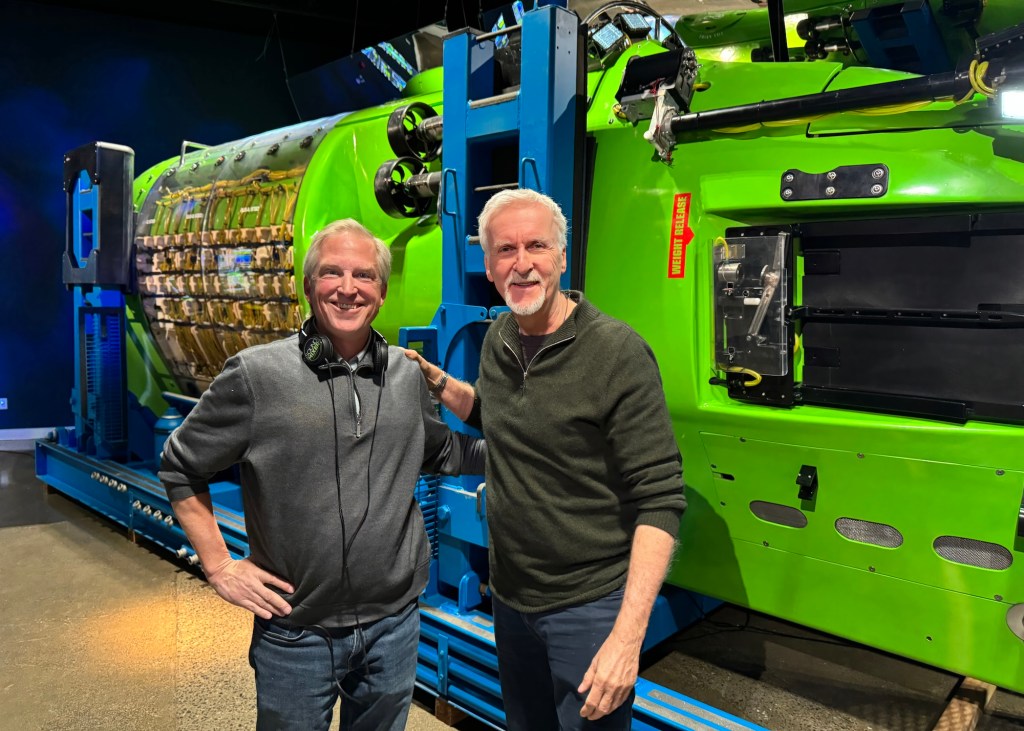
Some of our most prominent voices are also speaking out about the need to explore the ocean. I recently produced an hour-long episode of the PBS science program NOVA and one episode was about the new generation of submersibles being built right now by companies like Florida-based Triton Submarines. I had the privilege of talking to filmmaker and ocean explorer James Cameron, who was adamant that human participation in ocean exploration is critical to sustaining public interest and political will.
“The more you understand the ocean, the more you love the ocean, the more you’re fascinated by it, and the more you’ll fight to protect it,” Cameron told me.
The author with James Cameron in front of his submersible the Deepsea Challenger. (Erik Olsen)
Human eyes and brains pick up weak bioluminescence out of the corner of vision, pivot to follow a squid that just appeared at the edge of a light cone, or decide in the moment to pause and watch a behavior a diving team has never seen before. NOAA’s own materials explain the basic value of HOVs this way: you put scientists directly into the natural deep-ocean environment, which can improve environmental evaluation and sensory surveillance. Presence is a measurement instrument.
California is exactly where that presence would pay off. Think about Davidson Seamount, an underwater mountain larger than many national parks, added to the Monterey Bay National Marine Sanctuary because of its ancient coral gardens and extraordinary biodiversity. We know this place mostly through ROVs, and we should keep using them, but a California HOV could carry sanctuary scientists, MBARI biologists, and students from Hopkins Marine Station or Scripps into those coral forests to make fine-scale observations, sample with delicacy, and come home with stories that move the public. Put a student in that viewport and you create a career. Put a donor there and you create a program.
A time-lapse camera designed by MBARI engineers allowed researchers to observe activity at the Octopus Garden between research expeditions. (Photo: MBARI)
Cold seeps and methane ecology are another natural fit. Off Southern California and along the borderlands there are active methane seep fields with complex microbial and animal communities. Recent work near seeps has even turned up newly described sea spiders associated with methane-oxidizing bacteria, a striking reminder that the deep Pacific still surprises us. An HOV complements ROV sampling by letting observers linger, follow odor plumes by sight and instrument, and make rapid, in-situ decisions about fragile communities that are easy to miss on video. That kind of fine-grained exploration connects directly to California’s climate priorities, since methane processes in the ocean intersect with carbon budgets.
There are practical use cases all over the coast. A California HOV could support geohazard work on active faults and slope failures that threaten seafloor cables and coastal infrastructure. It could conduct pre- and post-event surveys at oil-and-gas seep sites in the Santa Barbara Channel to ground-truth airborne methane measurements. It could document deep-water MPA effectiveness where visual census by divers is impossible. It could make repeated visits to whale falls, oxygen minimum zone interfaces, or sponge grounds to study change across seasons.
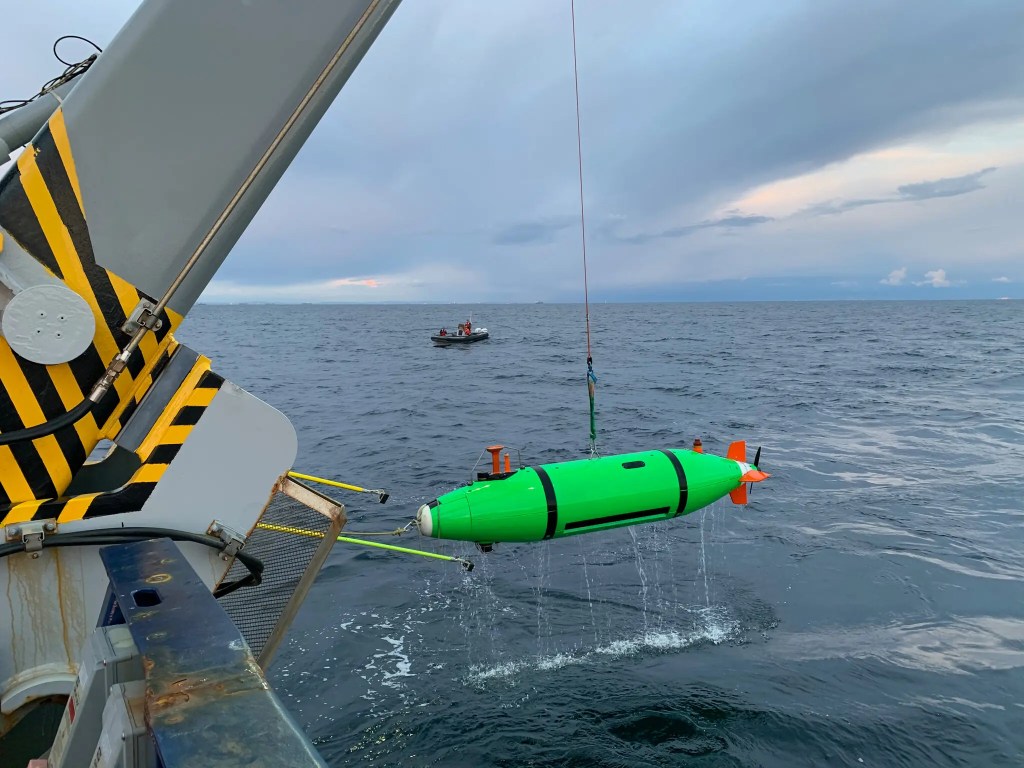
An autonomous underwater craft used to map DDT barrels on the seafloor off California. (Photo: Scripps Institution of Oceanography at U.C. San Diego)
It could also play a crucial role in high-profile discoveries like the recent ROV surveys that revealed thousands of corroding barrels linked to mid-20th-century DDT dumping off Southern California. Those missions produced stark imagery of the problem, but a human-occupied dive would have allowed scientists to make on-the-spot decisions about barrel sampling, trace-chemical measurements, and sediment core collection, as well as to inspect surrounding habitats for contamination impacts in real time. The immediacy of human observation could help shape quicker, more targeted responses to environmental threats of this scale.
And it’s not just the seafloor that matters. Some of the most biologically important parts of the ocean lie well above the bottom. The ocean’s twilight zone, roughly 200 to 1,000 meters deep, is a vast, dimly lit layer that contains one of the planet’s largest reservoirs of life by biomass. (My dive with WHOI was done to study the ocean’s twilight zone). Every day, trillions of organisms participate in the planet’s largest migration, the diel vertical migration, moving up toward the surface at night to feed and returning to depth by day. This zone drives global carbon cycling, supports commercial fish stocks, and is home to remarkable gelatinous animals, squid, and deepwater fishes that are rarely seen in situ.
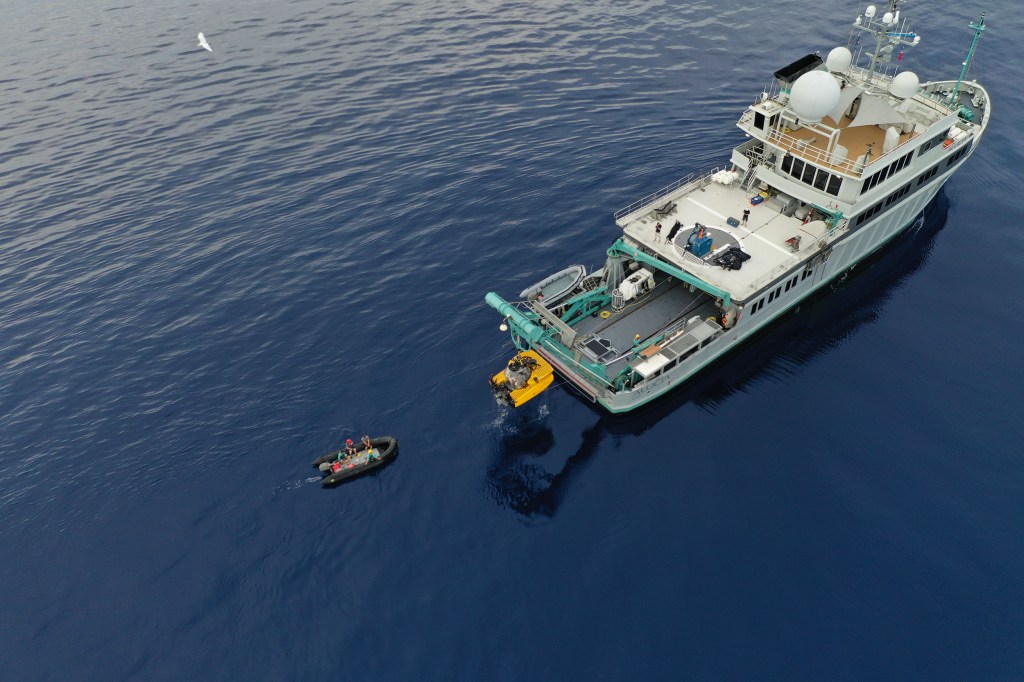
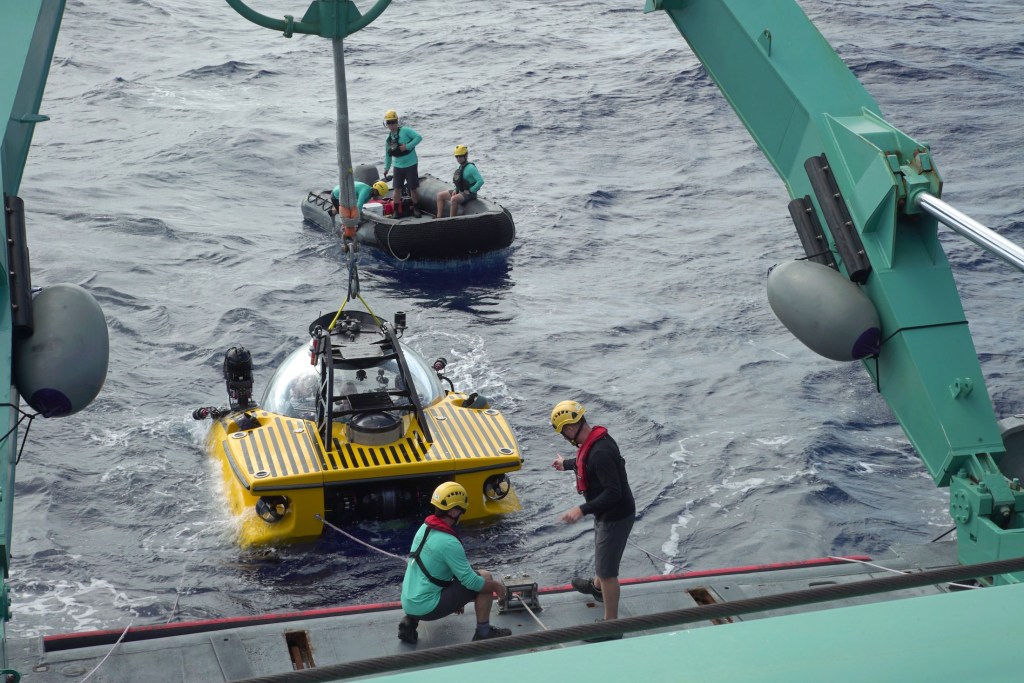
Launching the Triton 3300/3 (Photo: Erik Olsen)
The Triton 3300/3’s 1,000-meter depth rating (I’ve been in one twice) puts the entire twilight zone within reach, enabling direct observation of these daily movements, predator-prey interactions, and delicate species that often disintegrate into goo in nets. Human presence here allows scientists to make real-time decisions to follow unusual aggregations, sample with precision, and record high-quality imagery that captures how this midwater world works, something uncrewed systems alone rarely match.
It could even serve as a classroom at depth for carefully designed outreach dives, giving educators footage and first-person accounts that no livestream can quite match. Each of these missions is stronger with people on site, conferring, pointing, deciding, and noticing.
While Monterey Bay would be a natural fit because of MBARI, Hopkins, and the sanctuary’s deepwater treasures, Southern California could be just as compelling. Catalina Island, with its proximity to submarine canyons, coral gardens, and cold seeps of the Southern California Bight, offers rich science targets and the existing facilities of USC’s Wrigley Marine Science Center. Los Angeles or Long Beach would add the advantage of major port infrastructure and a vast urban audience, making it easier to combine high-impact research with public tours, donor events, and media outreach. And San Diego with its deep naval history, active maritime industry, Scripps Institution of Oceanography, and proximity to both U.S. and Mexican waters, could serve as a southern hub for exploration and rapid response to discoveries or environmental events. These regions could even share the vehicle seasonally: Monterey in summer for sanctuary work, Catalina/LA or San Diego in winter for Southern California Bight missions, spreading both benefits and funding responsibility.
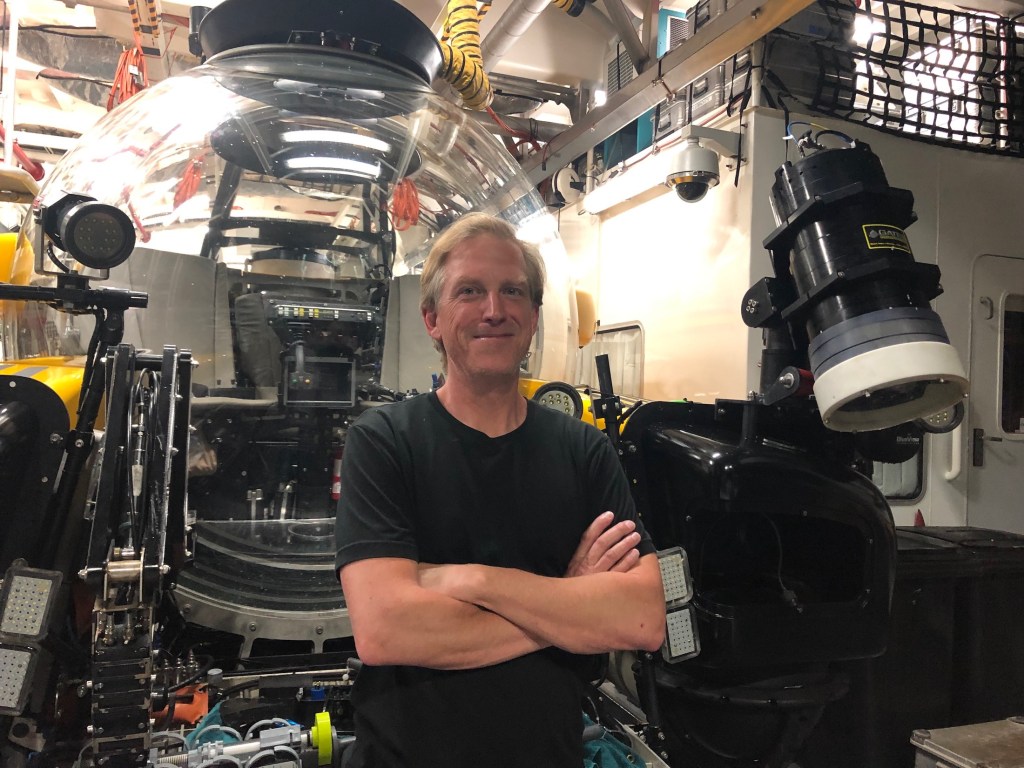
The author in front of the Triton 3300/3 in the Bahamas (Photo: Erik Olsen)
For budgeting, a proven benchmark is the Triton 3300/3, a three-person, 1,000-meter (3,300-foot) human-occupied vehicle used widely in science and filming. New units are quoted in the four to five million dollar range, with recent builds coming in around $4–4.75 million depending on specifications. Beyond the vehicle, launch and recovery systems such as a 25–30-ton A-frame or LARS and the deck integration required for a suitable support ship can run into the high six to low seven figures. Modern acrylic-sphere subs like the Triton are designed for predictable, minimized scheduled maintenance, but budgets still need to account for annual surveys, battery service, insurance, and ongoing crew training. Taken together, a California-based HOV program could be launched for an initial capital investment of roughly $6–7 million, with operating budgets scaled to the number of missions each year. So, not cheap. But doable for someone of means and purpose and curiosity. See below.
Who would benefit if California restored this capability? Everyone who already works here. MBARI operates a world-class fleet of ROVs and AUVs but has no resident HOV. Scripps Institution of Oceanography, Hopkins Marine Station, and USC’s Wrigley Marine Science Center train generations of ocean scientists who rarely get the option to do HOV work without flying across the country and waiting for a slot. NOAA and the sanctuaries need efficient ways to inspect resources and respond to events. A west-coast human-occupied research submersible based in Monterey Bay, Catalina, Los Angeles, or San Diego would plug into ship time on vessels already here, coordinate with ROV teams for hybrid dives, and cut mobilization costs for Pacific missions.
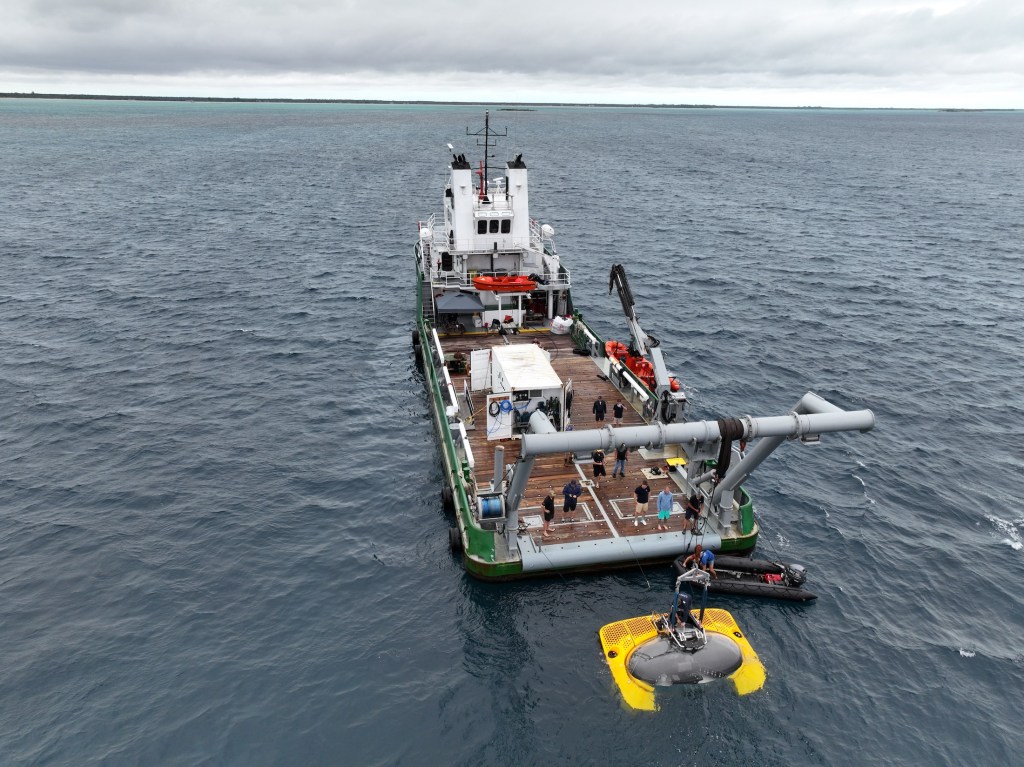
A new Triton 660 AVA submersible slips into the turquoise waters of the Bahamas, beginning its first voyage. Built for dives to 660 feet (200 meters), it offers passengers a front-row seat to reefs, shipwrecks, and marine life far beyond normal scuba limits, making it an ideal draw for high-end tourism. (Photo: Erik Olsen)
What would it take? A benefactor and a compact partnership. California has the donors (hello, curious billionaires!), companies, and public-private institutions to do this right. A philanthropic lead gift could underwrite acquisition of a proven, classed HOV and its support systems, while MBARI, Scripps, or USC could provide engineering, pilots, and safety culture within the UNOLS standards that govern HOV operations. No OceanGates. Alvin’s long record shows the model. Add a state match for workforce and student access, and a sanctuary partnership to guarantee annual science priorities, and you have a durable program that serves research, stewardship, and public engagement.
Skeptics will say that robots already do the job. They do a lot of it. They do not do all of it. If the U.S. is content to have only one deep research HOV based on the opposite coast, we will forego the unique perspectives and serendipity that only people bring, and we will keep telling California students to wait their turn or watch the ROV feed from their laptops or phones. California can do better. We did, for years, when the Delta sub spent long seasons quietly counting fish and mapping habitats off Ventura and the Channel Islands. Then that capability faded. If we rebuild it here, we restore a missing rung on the ladder from tidepools to trenches, and we align the state’s science, climate, and education missions with a tool that is both a laboratory and a conversion experience.
The author at more than 2000 feet beneath the surface of the ocean. (Photo: Erik Olsen)
Start with a compact, 1,000-meter-class HOV that can work daily in most of California’s shelf and slope habitats. Pair it with our ROVs for tandem missions and cinematography of the sub and its occupants in action. Commit a share of dives to student and educator participation, recorded and repackaged for museums and broadcast. Reserve another share for rapid-response science at seeps, landslides, unusual biological events, or contamination crises like the DDT dumpsite. Build a donor program around named expeditions to Davidson Seamount, Catalina’s coral gardens, and the Channel Islands. Then, if the community wants to go deeper, plan toward a second vehicle or an upgrade path. The science is waiting. The coast is ready. And the case is clear. California should restore its human-occupied submersible fleet.
Recently, I wrote a more personal essay than I usually would, one in which I reflected on the state of overfishing globally and the broader exploitation of our oceans.I hoped to draw attention to the new National Geographic documentary Oceans, featuring David Attenborough, which paints a broad and dire picture of the heath of the oceans and global fisheries…and it didn’t even cover deep sea mining which is a whole other megillah.
I’ve been following ocean conservation issues for decades, I’ve done numerous stories on the subject for major publications, and I’m deeply aware of the many threats facing the sea. These challenges extend to human society, too. Climate change, pollution, political instability, and species loss are just a few of the crises that fill our doom-scrolling feeds every day.
But not everything is lost.
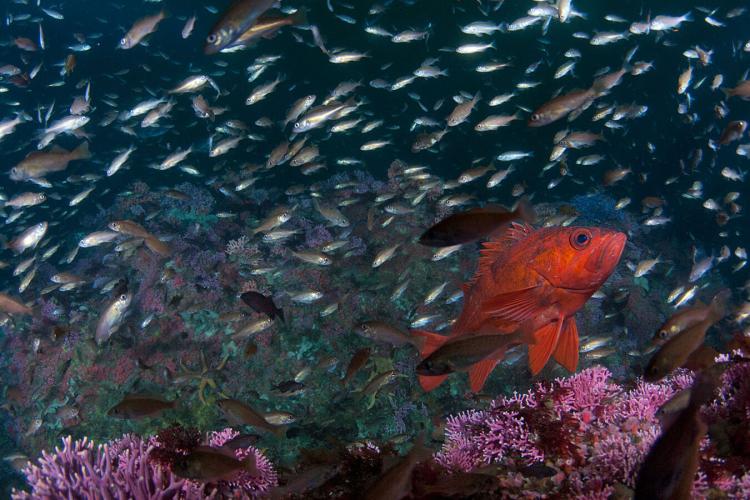
Vermilion rockfish. (Photo: Robert Lee/NOAA)
Despite the scale of these problems, there are reasons for hope. Around the world, we are beginning to better manage some of our natural resources. There is growing awareness about how to extract from the planet in ways that do not destroy it. Slowly, we are learning how to sustain a growing, hungry population without collapsing the ecosystems we rely on. At least, that’s the hope. If you look around a bit, there are a few positive signs. I cited California’s Marine Protected Area program, but there are others.
Another particularly hopeful development is unfolding just off the coast of California.
The story of groundfish in California and the West Coast is one of collapse, struggle, rebirth, as well as evolving policy. Following passage of the Magnuson-Stevens Fishery Conservation and Management Act in 1976, which was supposed to help the fishery by banning foreign commercial fishing, between 1976 and 1979, the West Coast groundfish fleet tripled in size, growing from about 300 to nearly 1,000 vessels. New technologies made those boats far more effective. By the mid-1980s, about half the fleet could electronically track their fishing paths and return to the same productive grounds again and again. Sophisticated fishfinders like the “Chromascope” gave vessels an unprecedented edge.
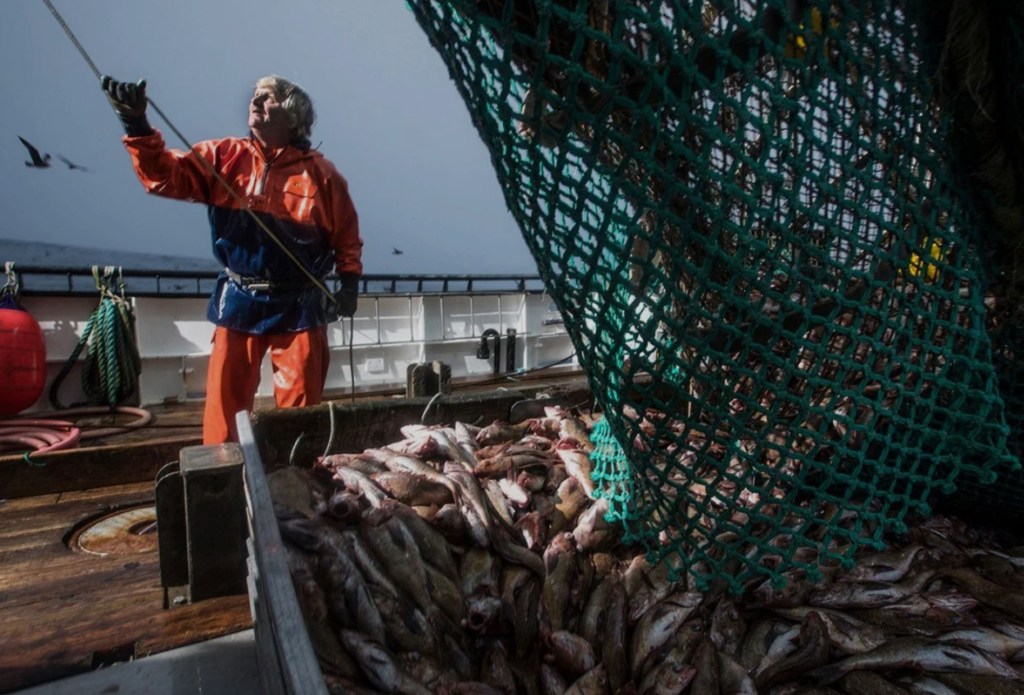
A fishermen tending a groundfish trawl net off the coast of Oregon in 2019. (Photo: John Rae/NOAA)
Groundfish catch soared. In 1976, domestic harvests (excluding Pacific whiting) totaled around 57,000 tons. By 1982, that number had more than doubled to 119,000 tons. Rockfish, barely counted in the earlier fishery, made up more than 40,000 tons of the catch by that year alone.
But the science hadn’t caught up.
Fishery managers at the time didn’t fully understand how slowly groundfish grow, how long they live, or how vulnerable they are to overfishing. As a result, catch limits were set too high. The boom quickly gave way to collapse.
In the late 1990s and early 2000s, rockfish, bocaccio, Pacific ocean perch and other deep‑dwelling species teetered on collapse. Overfishing, excessive trawling, and habitat damage from bottom nets stripped populations across hundreds of miles of West Coast shelf. Regulators sounded the alarm and declared fishery disasters.
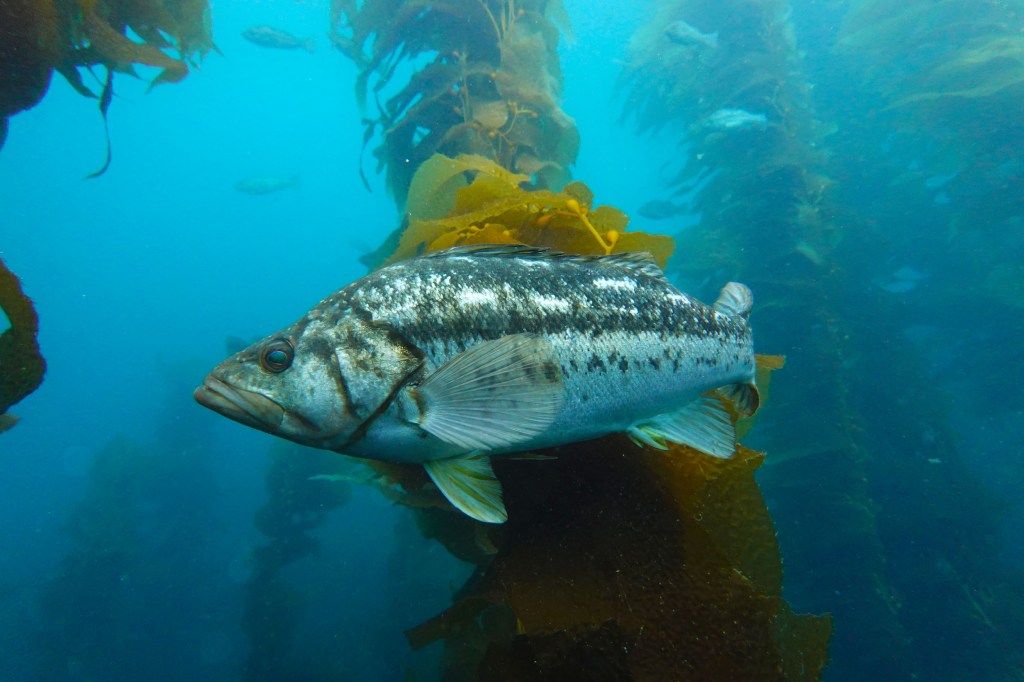
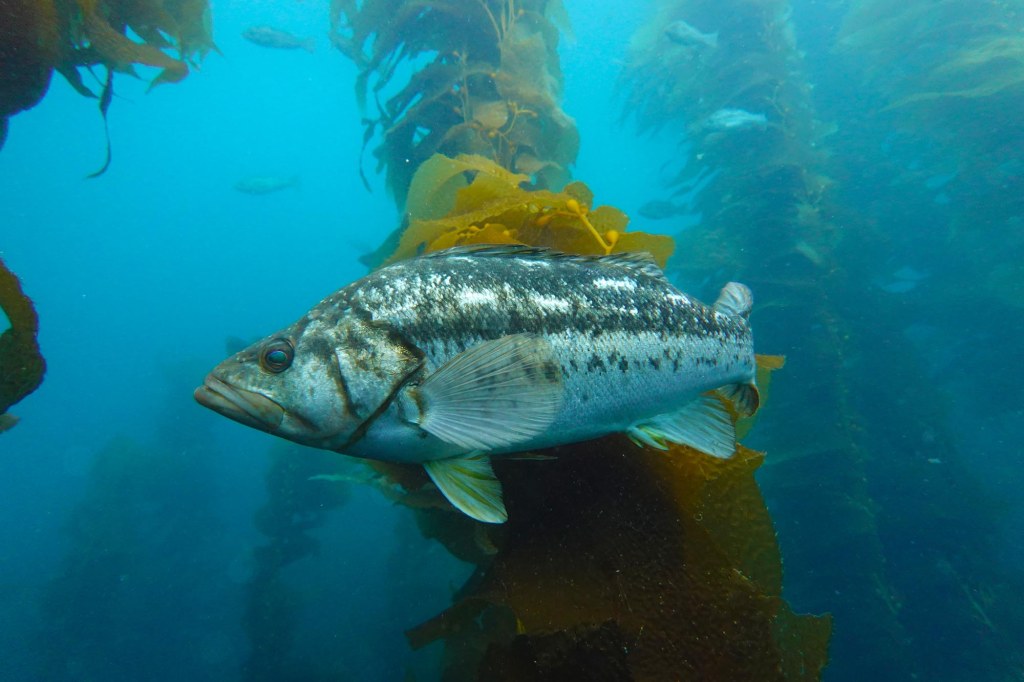
Sea bass in a California kelp forest (Photo: Erik Olsen)
Kenneth Weiss wrote in the Los Angeles Times, “Behind the sweeping action is a reluctant realization that the vast ocean has limits and cannot, as was long believed, provide an inexhaustible supply of fish.” Ya think?
To halt the decline, Congress and managers took bold, controversial steps. In 2003 a $46 million vessel‐buyback reduced the commercial trawl fleet by one‑third; by 2011 only about 108 vessels remained. That same year, the Pacific Fishery Management Council launched the groundbreaking Trawl Catch Share Program: individual fishing quotas based on historical catch and mandatory onboard observers. Within a year, discard rates plummeted from roughly 25 percent to below 5 percent.
In fact, California law explicitly prohibits bottom trawling in its state waters except under very limited conditions. Fish and Game Code § 8841 makes bottom trawling unlawful in state ocean waters unless a state commission determines that it is sustainable and low-impact. According to NOAA, commercial bottom trawling is only permitted within the California Halibut Trawl Grounds (CHTG), a small coastal zone from roughly 1 to 3 nautical miles offshore between Point Arguello and Point Mugu.
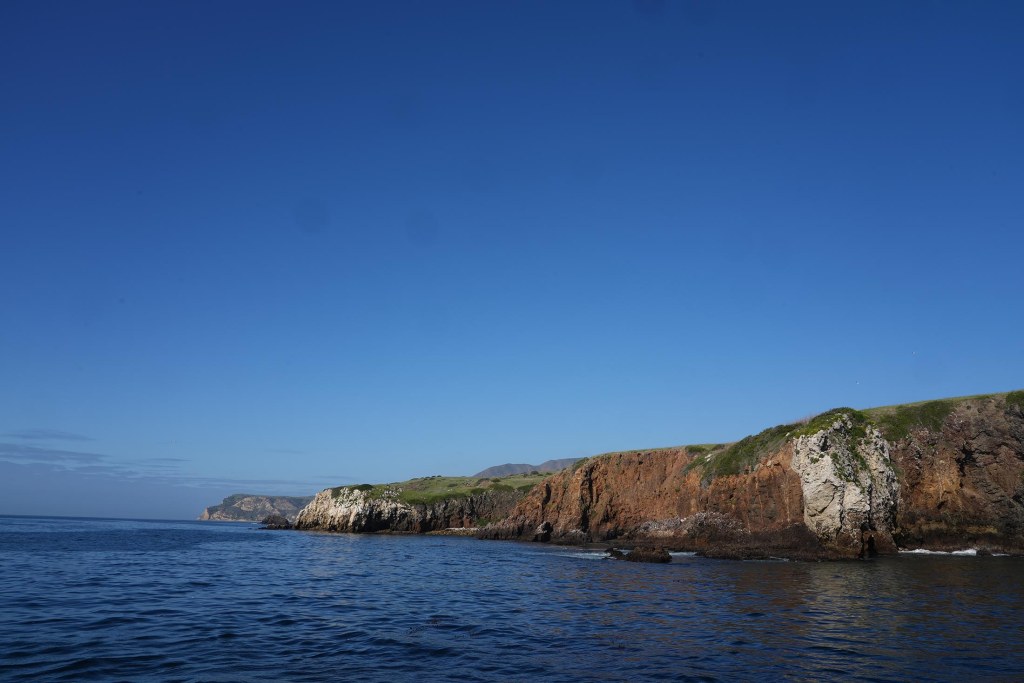
Santa Cruz Island in California’s Channel Islands (Photo: Erik Olsen)
There are gear restrictions, including bans on roller gear larger than eight inches and a requirement for bycatch reduction devices in shrimp and prawn trawl fisheries. Bycatch is nothing but pure waste, bordering on evil, and reducing it or stopping altogether should be a goal. The state also pushes more sustainable gear types and has phased out new permits for trawlers.
At the same time, an extensive system of area closures was put in place. As the documentary points out, if you protect a habitat, it can recover, and we’ve seen that in places like the Channel Islands. Since the early 2000s, Rockfish Conservation Areas and Cowcod Conservation Areas have helped protect critical habitat. Then, in 2020, new federal rules expanded essential fish habitat protections, closing nearly 90 percent of the seafloor off California, Oregon, and Washington to bottom trawling.
Fast forward: these measures have worked! By the mid‑2010s, most of the over‑90 managed groundfish stocks were recovering or rebuilt, some years ahead of earlier projections. Pacific ocean perch, for instance, had been declared rebuilt in 2017 after 17 years under rebuilding plans. The fishery earned sustainability certification from the Marine Stewardship Council in 2014. Today, only yelloweye rockfish remains overfished, with rebuilding projected by 2029.
According to John Field, who leads the Fisheries and Ecosystem Oceanography Team at NOAA’s Southwest Fisheries Science Center, this turnaround didn’t happen by accident. “The fleet, the scientists, the managers, and everyone else saw there was a serious problem, and worked together to make difficult choices and rebuild populations,” Field told California Curated. “The solution required restructuring the fishery to conserve the species, with many tough years for the fleet. Although the groundfish fishery still faces many challenges, most populations are thriving, market demand is recovering, and there is more domestic seafood on American dinner plates.”
Equipment and methods have evolved. Vessels switched from race‑to‑fish trawls to quota‑based systems, often fishing more selectively using non‑trawl fixed gear, longline, pots, hook‑and‑line for sablefish and flatfish. Electronic monitoring and observer programs help track catches closely (you gotta have enforcement).
Not all this has been smooth sailing. The shift to quotas and catch shares was controversial: many fishermen struggled with limited quotas, economic hardship, and uncertainty. Communities dependent on processors shrank as processors closed or consolidated. Some fishermen under‑caught allowable species to avoid hitting rockfish caps. Environmental groups have cautiously welcomed reopenings, but some expressed concerns that habitat recovery might still be fragile.
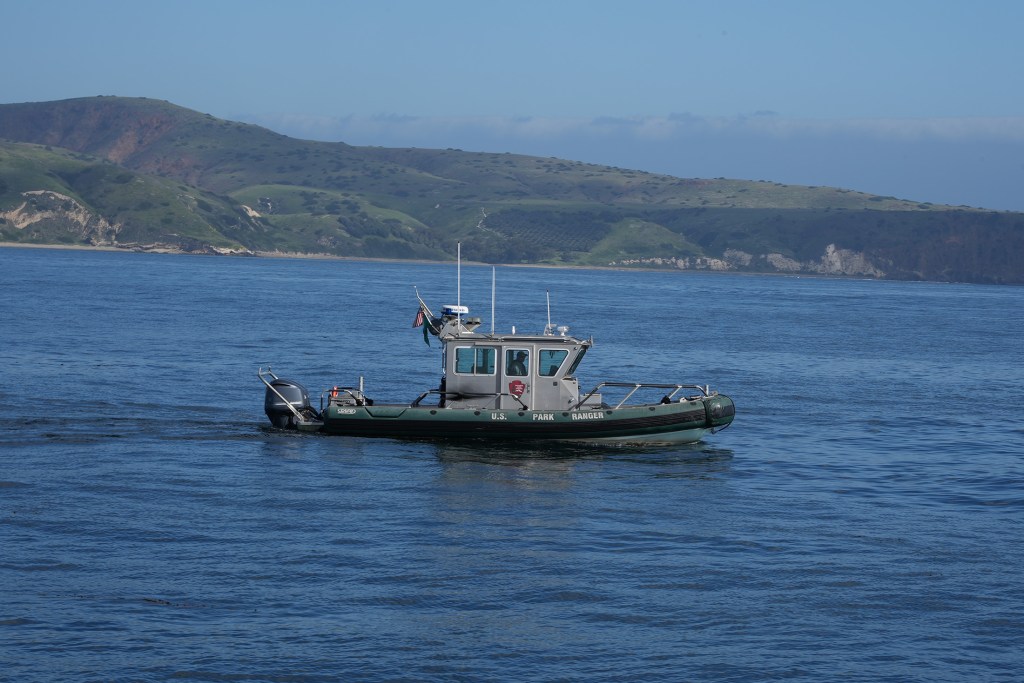
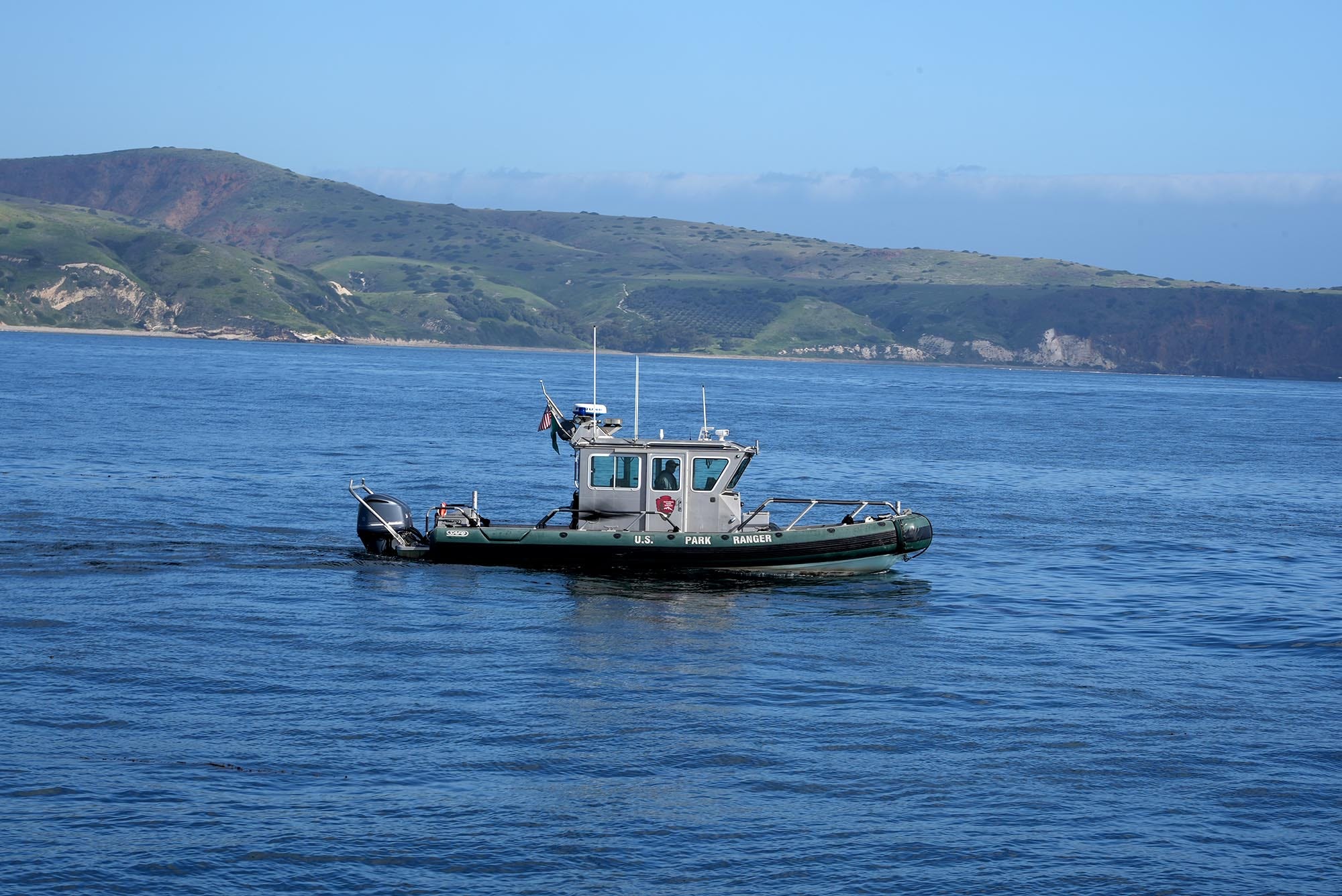
A ranger patrol boat off the coast of the Channel Islands in California (Photo: Erik Olsen)
So, looking back (and forward): policies over the past two decades, from trawl‐fleet reduction, gear rules, catch shares, quotas, habitat closures and strict rebuilding plans, not to mention MPAs, have turned the tide. Stocks are rebounding, many fisheries are sustainable, and management of the system is reviewed and changed if needed through amendments every two years. Of course, climate change and warming seas could render all this moot, so there’s still an element of keeping ones fingers crossed as we move forward.
This kind of drastic change takes time. And courage. And persistence. The long arc of recovery shows how science‑based regulation can bring back health to ocean ecosystems, and opportunity to coastal communities. Much of this work happens out of sight, in deep water and policy meetings alike, but its impact reaches every one of us: on our plates, in our economies, and in the resilience of the planet we all share.
I’m going to keep this week’s article shorter than usual. I want to talk about the ocean. I know I do this a lot; many articles on California Curated are ocean-related (please explore, I think you’ll enjoy them). But that’s because I honestly believe it’s the most important feature on the planet. Protecting the ocean is the most important thing we can do. Let me explain.
The ocean covers more than 70 percent of Earth’s surface. So why do we even call this place Earth? We should call it Planet Ocean. Or Thalassa, from the Greek word for sea.
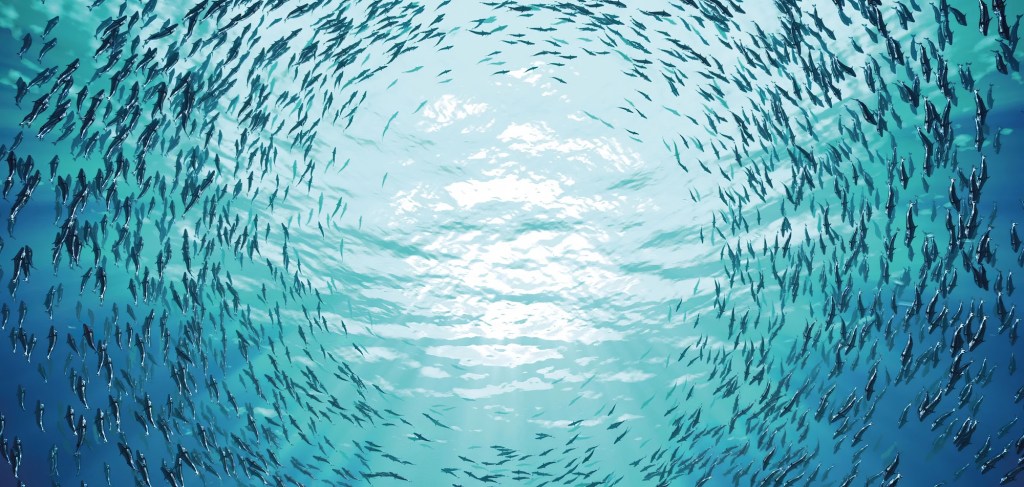
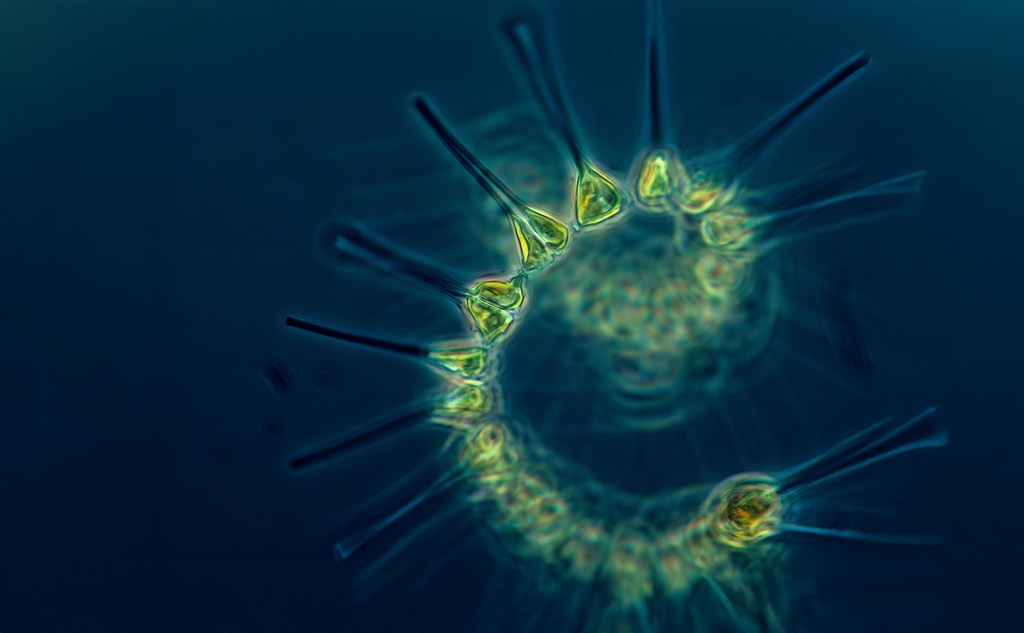
But it’s not just the size that matters, it’s the ocean’s vast, mysterious depth and the essential role it plays in sustaining life on Earth. The ocean is vital to all living things. Tiny organisms called phytoplankton absorb more carbon dioxide from the atmosphere than any other biological force on the planet. Through photosynthesis, they transform sunlight and carbon into organic matter, forming the base of the marine food web. Despite making up just a fraction of Earth’s plant biomass, phytoplankton are responsible for nearly half of all global carbon fixation. Zooplankton are tiny animals that eat phytoplankton. Zooplankton feed small fish, which feed bigger fish, which feed us. That’s the food chain. It’s literally a scaffolding for all life on earth. And a huge percentage of humanity depends on it to survive. If one link breaks, the whole thing risks collapse.
Phytoplankton (Photo: NOAA)
Which brings me to why I’m writing this. I recently watched the new National Geographic documentary Oceans, narrated by David Attenborough. I love Attenborough. His calm, British-inflected voice has been the backdrop to so much of my science education over the years. He feels like a wise grandfather. Kind, brilliant, and usually right.
In this film, he is absolutely right.
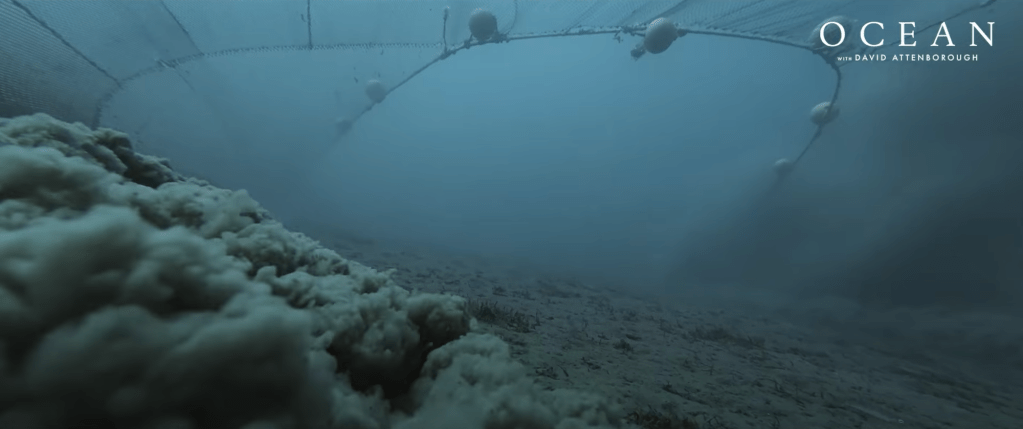
The documentary takes us to places no human has ever seen. In one scene, the team attaches cameras to a deep-sea trawling net. The footage is devastating. These massive nets kill everything in their path. Octopuses, fish, coral, entire ecosystems. Most of the species caught never even make it to market. They are bycatch, considered waste and tossed back into the sea. It’s wasteful, brutal, and legal. These trawlers are still out there, operating at scale, stripping the sea of life.
Bottom Trawling scene from Oceans with David Attenborough (National Geographic)
The film also shows how industrial fishing has hammered fish populations around the world. We are seeing species crash and food chains fracture. According to the Food and Agriculture Organization, nearly 35 percent of the world’s fish stocks are being overfished, a figure that has more than tripled since the 1970s. This kind of collapse has never happened before at this scale. And it is not getting better. We are talking about extinctions. We are talking about systems breaking down.
Friends often tell me the biggest threats to our planet are climate change, pollution, and microplastics. They’re not wrong. All this stuff is connected in a way. But if you ask me what really threatens human survival, it’s the breakdown of ocean ecosystems. If we lose one part of that chain for good, it won’t just be bad. It could be the beginning of the end. And I mean for humans, for organized society, not for all life on earth.
And yet, there is hope.
Kelp bed and bass in a marine protected area (MPA) in California’s Channel Islands (Photo: Erik Olsen)
Like any great documentary, Oceans ends with a sliver of optimism. It brings us back to California. Specifically, to the Channel Islands, one of my favorite places on Earth. I’ve been out there many times, several times recently reporting on ghost lobster traps and exploring. It’s stunning. And there is something very special going on.
Park rangers patrol the waters off the Channel Islands (Photo: Erik Olsen)
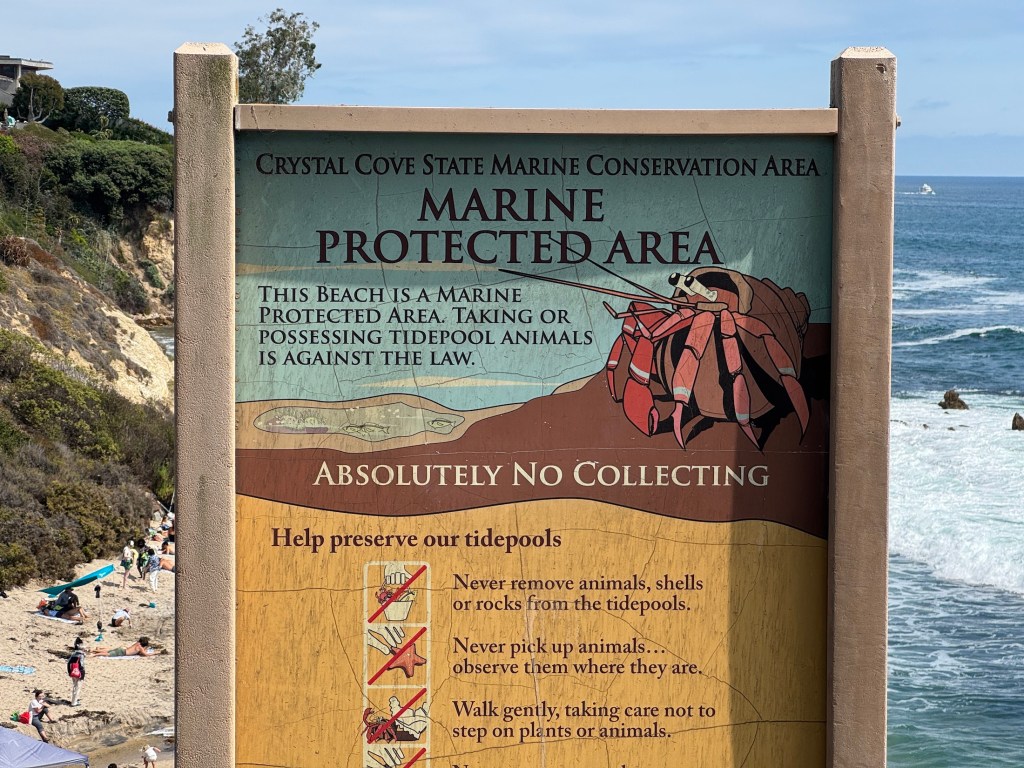
Much of the Channel Islands are protected as a Marine Protected Area, or MPA. You can’t fish. You can’t extract. And, most importantly, the rules are enforced. There are rangers out there at most all times patrolling. That part is key. I’ve done stories in places like Belize, Kiribati and Indonesia where the protections exist on paper but don’t work in practice. Kiribati, for instance, established the Phoenix Islands Protected Area, one of the largest MPAs on the planet. But it’s so vast and remote that enforcing its protections is nearly impossible. It’s a good idea on paper, but a cautionary tale in execution. But here in California, the rangers take it seriously. Because of that, the ecosystem is bouncing back. Twenty years after protection began, the kelp, the fish, the invertebrates, they’re thriving. These islands are alive.
California’s MPAs are a model for the world. They prove that if we give the ocean space and time, it will heal. But they remain the exception. They don’t have to be.
Marine Protected Area (MPA) sign in Corona del Mar, CA (Photo: Erik Olsen)
There’s a global movement right now to protect 30 percent of the world’s oceans by 2030. It’s called 30 by 30. Just recently, at the 2025 UN Ocean Conference in Nice, France, more than 70 countries reaffirmed their commitment to the 30 by 30 goal, calling for urgent action to protect ocean biodiversity and create well-managed, effectively enforced MPAs around the world. I’m not naive. I don’t think we’ll hit that goal perfectly. But we are finally moving in the right direction. And we don’t have another option. The ocean is too important.
So I’ll step off the soapbox now and let you enjoy your day. But before you click away, please take a moment to think about the ocean. Think about what it gives us. Think about how it restores us. As a diver, I can tell you there’s nothing like the world beneath the waves. It’s as strange, beautiful, and alien as any other planet we’ve imagined. The creatures there rival anything you’d find in Mos Eisley on Tatooine.
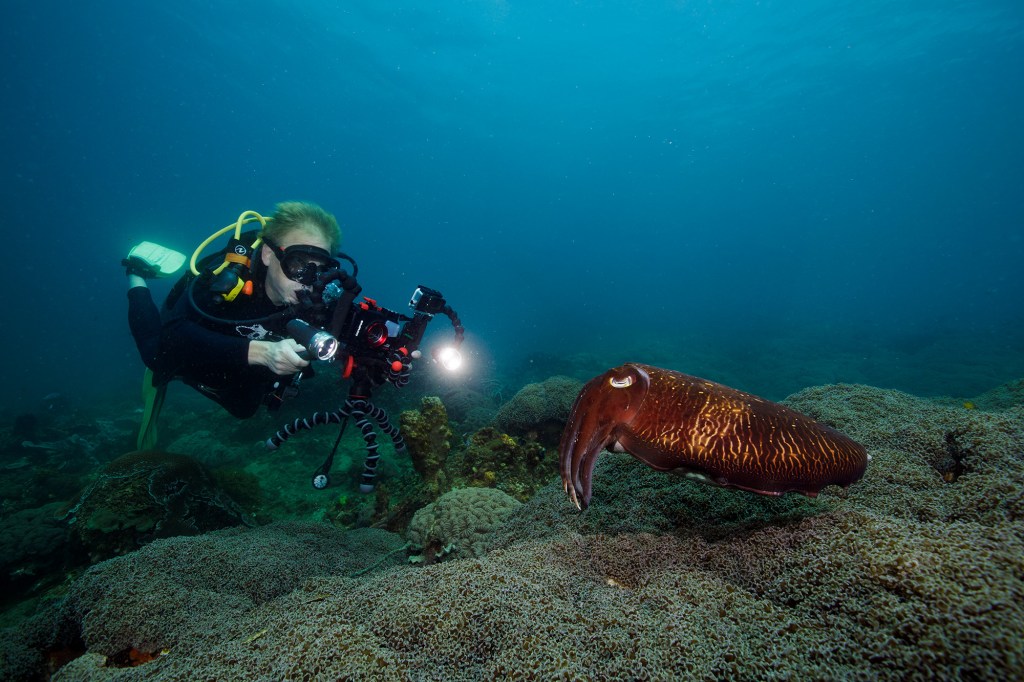
The author filming cuttlefish in Indonesia. Such strange creatures. (Photo: Erik Olsen)
Watch the documentary. Let it educate and inspire you. It might fill you with dread too. But in the end, its message is hopeful. And that message lands right here off the coast of California, the greatest state in the country. Or at least, that’s the opinion of one well-traveled guy with a newsletter about the state he loves.
I recently took two scuba diving trips out to the Channel Islands to investigate and help remove ghost lobster traps: abandoned or lost gear that poses a serious threat to marine life. While out there, I also had a chance to explore the marine protected areas surrounding Anacapa and Santa Cruz Islands, getting a firsthand look at how these underwater reserves are helping to restore ocean health and marine life (another story on that coming). Diving in the Channel Islands is a great way for certified divers to experience the incredible biodiversity of California’s coastal waters, even if the water is cold as hell.
The Channel Islands are actually relatively close to the California mainland, just 12 miles from Ventura in the case of Anacapa. But the wild and windswept chain feels like a world apart. On a clear day, you can see them from Ventura or Santa Barbara, but oddly, few people actually visit. Compared to other national parks, they remain relatively unknown, which only adds to their quiet allure. Sometimes called the “Galápagos of North America,” these eight islands are a refuge for wildlife and a place where evolution unfolds before your eyes.
U.S. Park Service rangers patrol the marine protected area off of Anacapa Island in California’s Channel Islands (Photo: Erik Olsen)
(Here’s a cool bit of history: there are eight Channel Islands today, but 20,000 years ago, during the last ice age when sea levels were much lower, four of them—San Miguel, Santa Rosa, Santa Cruz, and Anacapa—were connected as a single landmass called Santarosae.)
For scientists and nature lovers, the Channel Islands are more than just scenic, they’re a natural laboratory. Each island has its own shape, size, and ecological personality, shaped by millions of years of isolation. That makes them an ideal setting for the study of island biogeography, the branch of biology that looks at how species evolve and interact in isolated environments. What happens here offers insight into how life changes and adapts not just on islands, but across the planet.
Sea lions on the Channel Islands (NPS)
Island biogeography is anchored in the theory proposed by E.O. Wilson and Robert MacArthur in the 1960s. Their theory, focusing on the balance between immigration and extinction of species on islands, is brilliantly exemplified in the Channel Islands.
The Channel Islands’ rich mosaic of habitats, from windswept cliffs and rocky shores to chaparral-covered hillsides and dense offshore kelp forests, provides an ideal setting for studying how species adapt to varied and changing conditions. Each island functions like a separate ecological experiment, shaped by isolation, resource limits, and time. Evolution has had free rein here, tweaking species in subtle ways and, occasionally, producing striking changes.
One of the most significant studies conducted in the Channel Islands focused on the island fox (Urocyon littoralis), a species found nowhere else on Earth. Research led by the late evolutionary biologist Robert Wayne at UCLA and others showed that the fox populations on each of the six islands they inhabit have evolved in isolation, with distinct genetic lineages and physical traits. This makes them a remarkable example of rapid evolution and adaptive divergence, core processes in island biogeography.
Genetic analyses revealed that each island’s fox population carries unique genetic markers, shaped by long-term separation and adaptation to local environments. These differences aren’t just genetic, they’re physical and behavioral too. Foxes on smaller islands, for instance, tend to be smaller in body size, likely an evolutionary response to limited resources, a phenomenon known as insular dwarfism. Variations in diet, foraging behavior, and even coat coloration have been documented, offering scientists an unparalleled opportunity to study evolutionary processes in a real-world, relatively contained setting.
Excavation of pygmy mammoth bones on the Channel Islands (Photo: National Park Service)
This phenomenon of insular dwarfism isn’t unique to the island fox. One of the most striking examples from the Channel Islands is the pygmy mammoth (Mammuthus exilis), whose fossilized remains were discovered on Santa Rosa Island. Evolving from the much larger Columbian mammoth, these ancient giants shrank to about half their original size after becoming isolated on the islands during the last Ice Age. Limited food, reduced predation, and restricted space drove their dramatic transformation, a powerful illustration of how isolation and environmental pressures can reshape even the largest of species.
Furthermore, the Channel Islands have been instrumental in studying plant species’ colonization and adaptation. Due to their isolation, the islands host a variety of endemic plant species. Research by Kaius Helenurm, including genetic studies on species such as the Santa Cruz Island buckwheat (Eriogonum arborescens) and island mallow (Malva assurgentiflora), has shown how these plants have adapted to the islands’ unique environmental pressures and limited gene flow.
Island mallow (Malva assurgentiflora), a vibrant flowering plant found only on the Channel Islands, thrives in the harsh coastal environment—its striking blooms a testament to the power of isolation and adaptation. (Photo: Curtis Clark)
The islands have been a scientific boon to researchers over the decades because they are not only home to many diverse and endemic species, but their proximity to the urban centers and the universities of California make them amazingly accessible. It’s been suggested that if Darwin had landed on the Channel Islands, he arguably could have come up with the theory of natural selection off of California, rather than happening upon the Galapagos. A 2019 book about the islands, titled North America’s Galapagos: The Historic Channel Islands Biological Surveyrecounts the story of a group of researchers, naturalists, adventurers, cooks, and scientifically curious teenagers who came together on the islands in the late 1930s to embark upon a series of ambitious scientific expeditions never before attempted.
The Channel Islands are renowned for their high levels of endemism — species that are found nowhere else in the world. This is a hallmark of island biogeography, as isolated landmasses often lead to the development of unique species. Darwin’s On the Origin of Species was one of the first extensive efforts to describe this phenomenon. For example, as mentioned above, the Channel Islands are home to the island fox (Urocyon littoralis), a small carnivore found only here. Each island has its own subspecies of the fox, differing slightly in size and genetics, a striking example of adaptive radiation, where a single species gives rise to multiple different forms in response to isolation and environmental pressures. That said, the foxes are also incredibly cute, but can be rather annoying if you are camping on the islands because they will ransack your food stores if you do not keep them tightly closed.
Island Fox on Santa Cruz Island (photo: Erik Olsen)
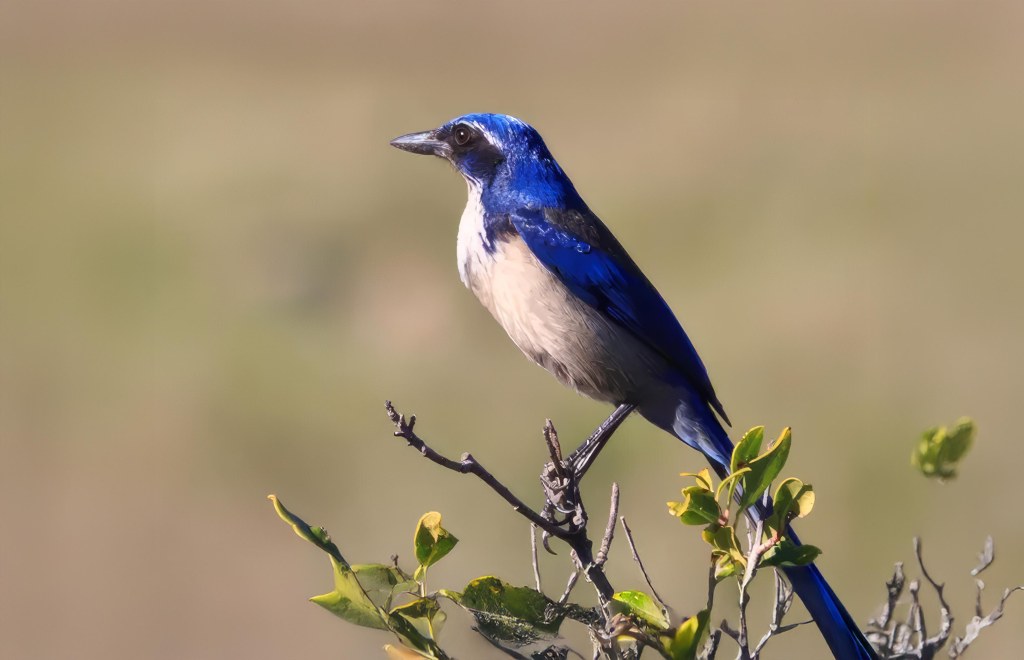
Bird life on the Channel Islands also reveals remarkable diversity and endemism. Much like the finches of the Galápagos, these islands are home to distinct avian species shaped by isolation and adaptation. The Santa Cruz Island Scrub Jay, for instance, is noticeably larger and more vividly colored than its mainland relatives, a reflection of its unique island habitat. Also, jays in pine forests tend to have longer, shallower bills, while those in oak woodlands have shorter, deeper bills. Evolutionary adaptations right out of the Darwinian playbook. Likewise, the San Clemente House Finch has evolved traits suited to its specific environment, illustrating how even common species can diverge dramatically when given time and separation.
The Island Scrub-Jay (Aphelocoma insularis), found only on Santa Cruz Island, is larger and more vividly colored than its mainland cousin—an unmistakable symbol of how isolation shapes evolution. (Photo: National Park Service)
The impacts of invasive species on island ecosystems, another critical aspect of island biogeography, are also evident in the Channel Islands. The islands have been an superb laboratory for the practice of conservation and human-driven species recovery. For example, efforts to remove invasive species, like pigs and rats, and the subsequent recovery of native species, like the island fox, provide real-time insights into ecological restoration and the resilience of island ecosystems.
These efforts at conservation and species recovery extend beyond the island fox. In 1997, the U.S. Fish and Wildlife Service identified that 13 plant species native to the northern Channel Islands in California were in dire need of protection under the Endangered Species Act. This need arose due to several decades of habitat degradation, primarily attributed to extensive sheep grazing. These conservation efforts have yielded good news. For instance, the island bedstraw (Galium buxifolium) expanded from 19 known sites with approximately 500–600 individuals in 1997 to 42 sites with over 15,700 individuals. Similarly, the Santa Cruz Island dudleya (Dudleya nesiotica) population stabilized at around 120,000 plants. As a result of these recoveries, both species were removed from the federal endangered species list in 2023, coinciding with the 50th anniversary of the Endangered Species Act.
Santa Cruz Island Dudleya (Photo: National Park Service)
Conservation efforts at the Channel Islands extend beneath the waves, where marine protected areas (MPAs) have played a crucial role in restoring the rich biodiversity of the underwater world. I’ve seen the rich abundance of sea life firsthand on several dives at the Channel Islands, where the biodiversity feels noticeably greater than at many mainland dive sites in Southern California.
The Channel Islands Marine Protected Areas (MPAs), established in 2003, were among the first of their kind in California. The MPAs around Anacapa, Santa Cruz, and other islands act as refuges where fishing and other extractive activities are limited or prohibited, allowing marine ecosystems to recover and thrive. Over the past two decades, scientists have documented increases in the size and abundance of key species such as kelp bass, lobsters, and sheephead, alongside the resurgence of lush kelp forests that anchor a vibrant web of marine life. These protections have not only benefited wildlife but have also created living laboratories for researchers to study ecological resilience, predator-prey dynamics, and the long-term impacts of marine conservation, all taking place in the context of island biogeography.
Kelp bass in the kelp forest at the Channel Islands (Photo: Erik Olsen)
What makes all of this possible is the remarkable decision to keep these islands protected and undeveloped. Unlike much of the California coast, the Channel Islands were set aside, managed by the National Park Service and NOAA as both a national park and a marine sanctuary. These protections have preserved not just the landscapes, but the evolutionary stories still unfolding in real time. It’s a rare and precious thing to have a living laboratory of biodiversity right in our backyard, and a powerful reminder of why preserving wild places matters.
Ghost lobster trap off Santa Cruz Island in California’s Channel Islands (Photo: Erik Olsen)
Lobster is delicious. Let’s just get that out of the way. Yes, I’m sure there are some who either don’t enjoy the taste of this prolific crustacean, or who are allergic, but for my part, lobster (with a small vial of melted butter) is ambrosia from the sea.
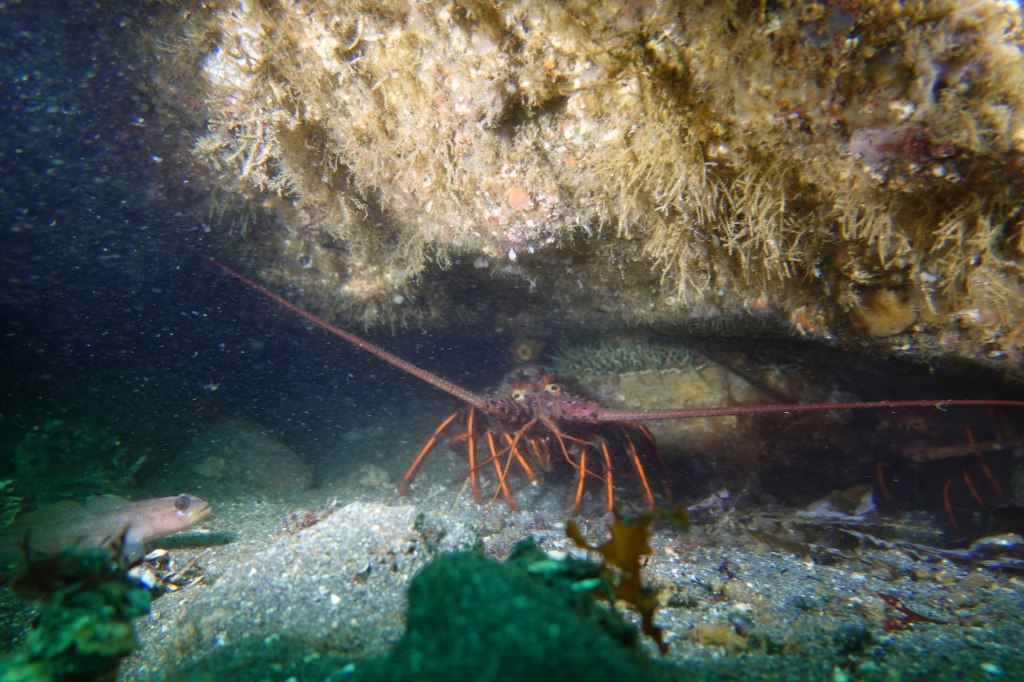
But beyond its place on the plate, the California spiny lobster plays a vital ecological role: hunting sea urchins, hiding in rocky reefs, and helping to keep kelp forests in balance. Its value extends far beyond what it fetches at market. But beneath the surface, particularly around the Channel Islands lurks a growing problem that doesn’t just threaten lobsters. It threatens the entire marine ecosystem: ghost traps.
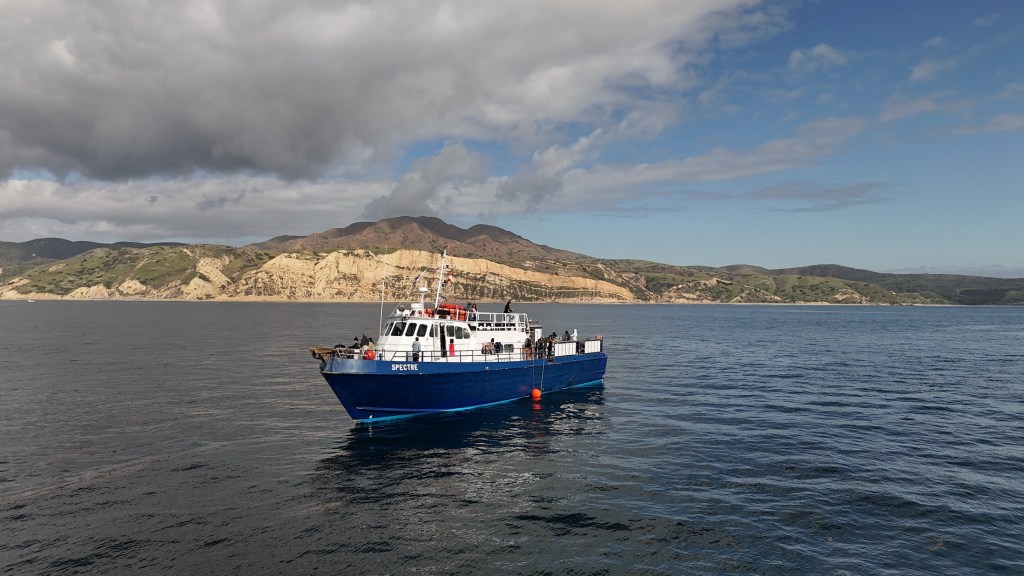
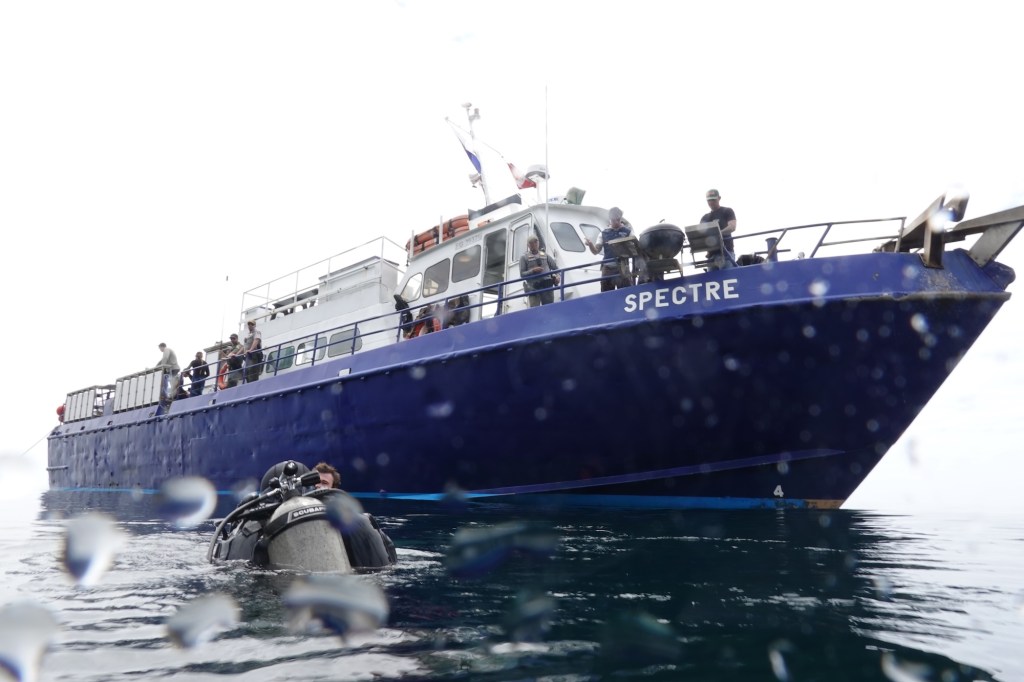
Dive ship Spectre off of Anacapa Island in California’s Channel Islands (Photo: Erik Olsen)
In Southern California, lobster fishing is both a cultural tradition and a thriving industry, worth an estimated $44 million annually to California’s economy from commercial landings as well as recreational fishing, tourism, and seafood markets.
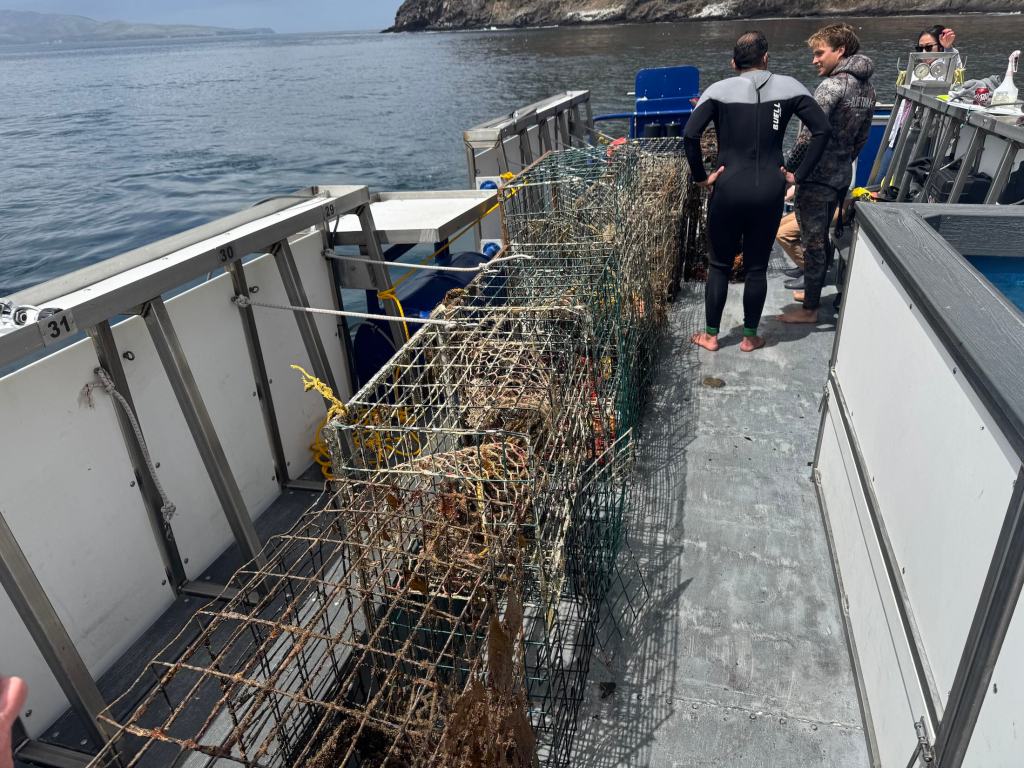
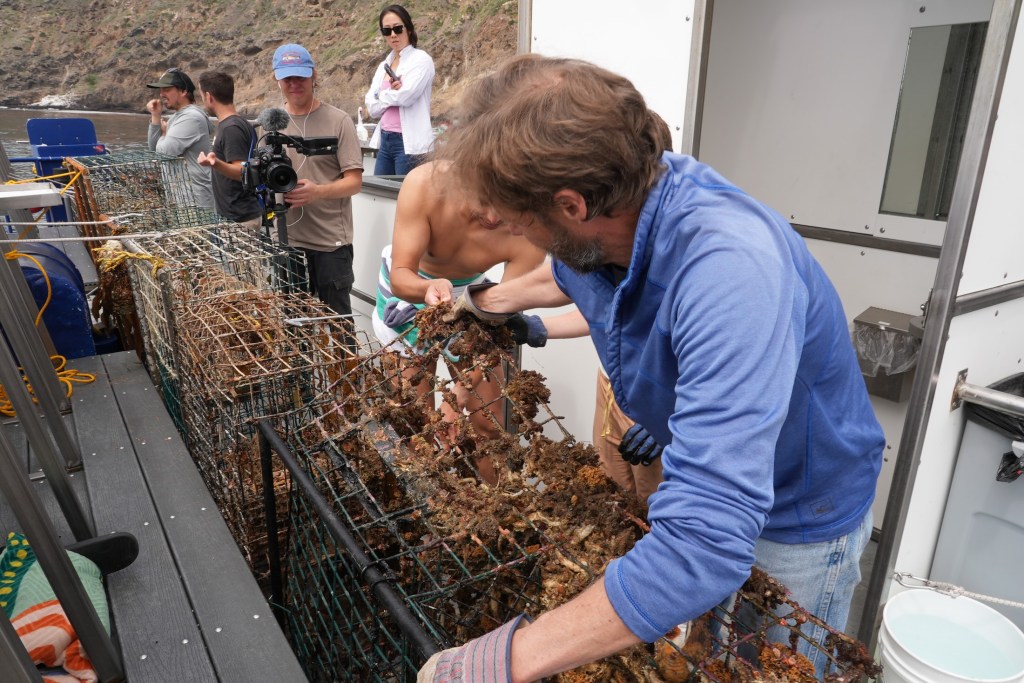
In late April, I traveled to the Channel Islands with my colleague Tod Mesirow to see the problem of ghost lobster traps firsthand. We were aboard the Spectre dive ship and pulled out of Ventura Harbor on an overcast morning, the sky a uniform gray that blurred the line between sea and cloud. The swell was gentle, but the air carried a sense of anticipati on. We were invited by the Benioff Ocean Science Laboratory, which is conducting research and outreach in the area. Our visit took us to Anacapa and Santa Cruz Islands, where I would be diving to observe the traps littering the sea floor. Tod, meanwhile, remained topside, capturing footage and speaking with marine scientists. Even before entering the water, we could see the toll: frayed lines tangled in kelp, buoys adrift, and entire areas where dive teams had marked clusters of lost gear.
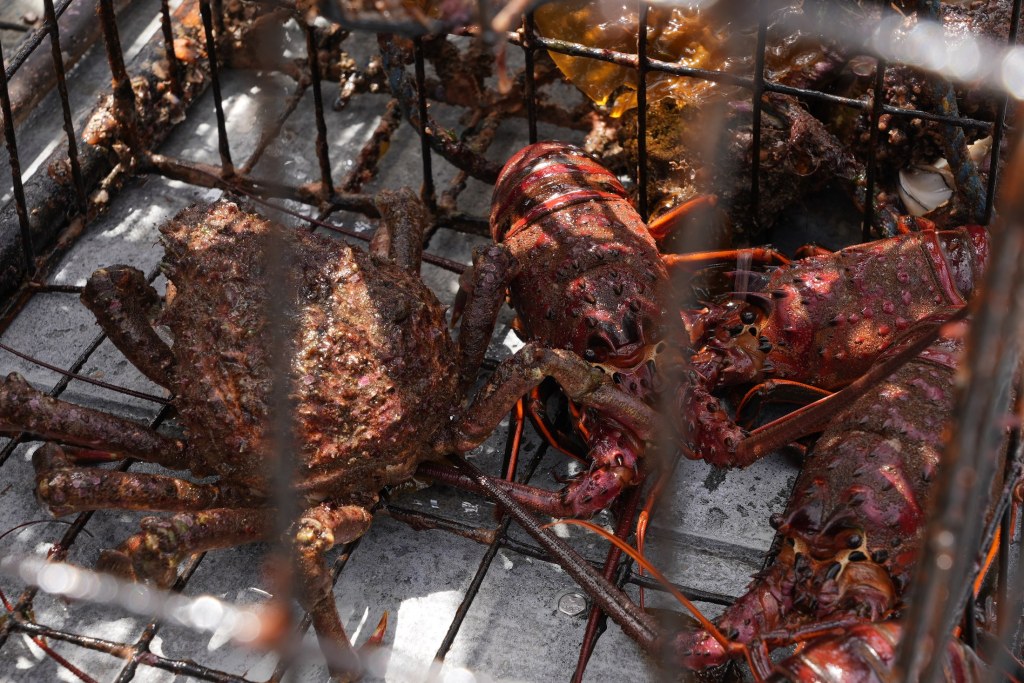
California spiny lobsters alive when the ghost trap was recovered (Photo: Erik Olsen)
Ghost traps are lobster pots that have been lost or abandoned at sea. Made of durable metal mesh and often outfitted with bait containers and strong ropes, these traps are built to last. And they do. For years. Sometimes decades. The problem is, even when their human operators are long gone, these traps keep fishing.
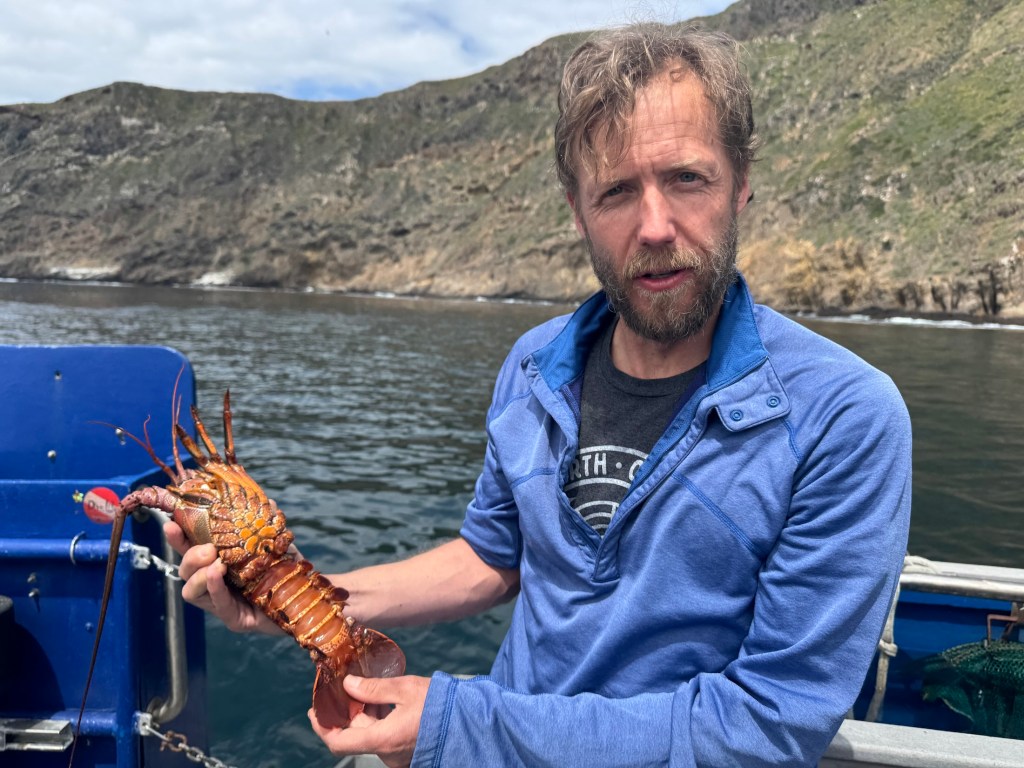
“It’s not uncommon to find multiple animals dead inside a single trap,” said Douglas McCauley, a marine science professor at UC Santa Barbara and director of the Benioff Ocean Science Laboratory who was onboard with us and leading the project. “It’s heartbreaking. These traps are still doing exactly what they were built to do, just without anyone coming back to check them.”
Douglas McCauley, director of the Benioff Ocean Science Laboratory at the University of California Santa Barbara holding a lobster caught in a ghost trap off the coast of the Channel Islands (Photo: Erik Olsen)
Around the Channel Islands National Marine Sanctuary, where fishing pressure is high and waters can be rough, thousands of traps are lost every season. Currents, storms, or boat propellers can sever buoys from their lines, leaving the traps invisible and unrecoverable. Yet they keep doing what they were designed to do: lure lobsters and other sea creatures inside, where they die and become bait for the next unfortunate animal. It’s a vicious cycle known as “ghost fishing.”
“They call them ghost traps because, like a ghost sailing ship, they keep doing their thing. They keep fishing.” said McCauley.
Statewide, the numbers are staggering. Approximately 6,500 traps are reported lost off the California coast each fishing season, according to The California Department of Fish and Wildlife. The folks at the Benioff Ocean Science Laboratory said as many as 6,000 may lie off the coast of the Channel Islands alone. Ocean Divers removing marine debris have found traps stacked three and four high in underwater ravines—rusting, tangled, but still deadly. These ghost traps don’t just catch lobsters; they also trap protected species like sheephead, cabezon, octopuses, and even the occasional sea turtle or diving seabird.
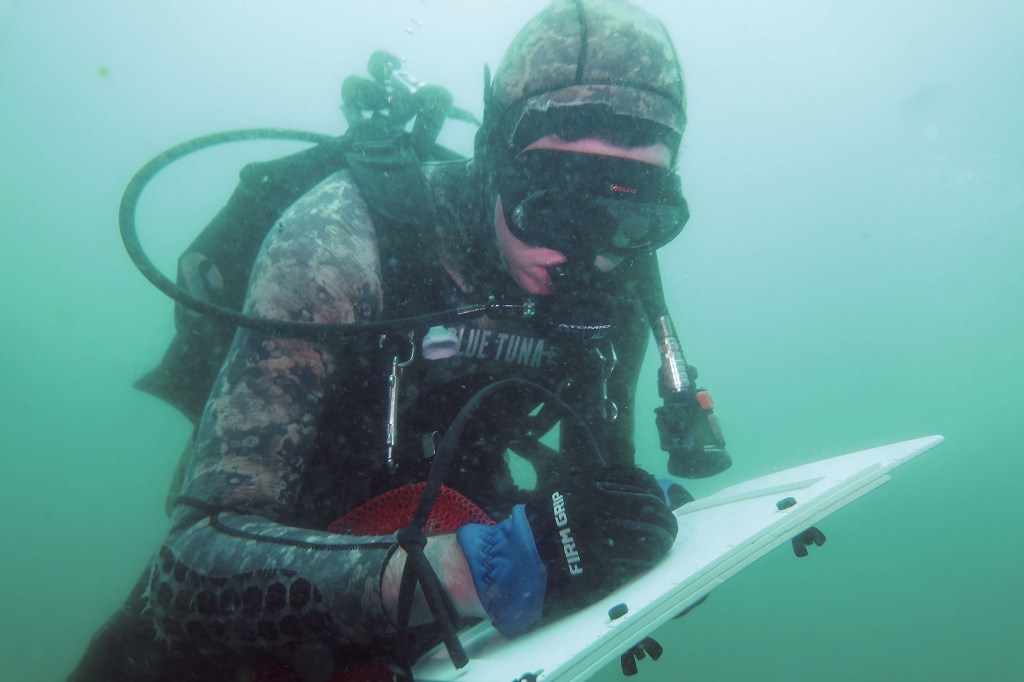
Diver and Project Scientist Chase Brewster of the Benioff Ocean Science Laboratory collecting data on ghost lobster traps near California’s Channel Islands (Photo: Erik Olsen)
Nowhere is this more evident than around the Channel Islands. These rugged islands are home to some of California’s richest kelp forests and underwater canyons. The islands and their surrounding waters are home to over 2,000 plant and animal species, with 145 of them being unique to the islands and found nowhere else on Earth. In fact, the Channel Islands are often referred to as North America’s Galapagos for the immense diversity of species here.
The islands are also the site of the state’s most productive spiny lobster fisheries. Every fall, hundreds of commercial and recreational fishers flood the area, setting thousands of traps in a race to catch California spiny lobsters (Panulirus interruptus). But rough swells and heavy gear mean traps go missing. Boats sometimes cut the lines of traps, making them near impossible to retrieve from the surface. And because this region is a patchwork of state waters, federal waters, and marine protected areas (MPAs), cleanup and regulation are anything but straightforward.
California Spiny Lobster off Anacapa Island (Photo: Erik Olsen)
The traps are often difficult to locate, partly because of their remote placement and the notoriously rough waters around the Channel Islands. But the Benioff Ocean Science Laboratory has a powerful asset: side scan sonar. From the ship, they can scan and map the seafloor, where the ghost traps often appear as dark, rectangular shapes against the sand. Once spotted, the team uses GPS to log their exact location.
“It’s creates a picture made of sound on the seafloor and you see these large lego blocks staring at you in bright yellow on the screen and those are your lobster traps,” sayd McCauley. “There’s nothing else except a ghost trap that looks like that.”
Plunging into the frigid waters off Santa Cruz Island was a jolt to the system. Visibility was limited, just 10 to 15 feet, but I followed two scientists from the Benioff Ocean Science Laboratory down to a depth of 45 feet. Their task: to attach a rope to the trap so it could be hauled up by the boat’s winch.
Dive ship Spectre off the coast of Santa Cruz Island in California’s Channel Islands (Photo: Erik Olsen)
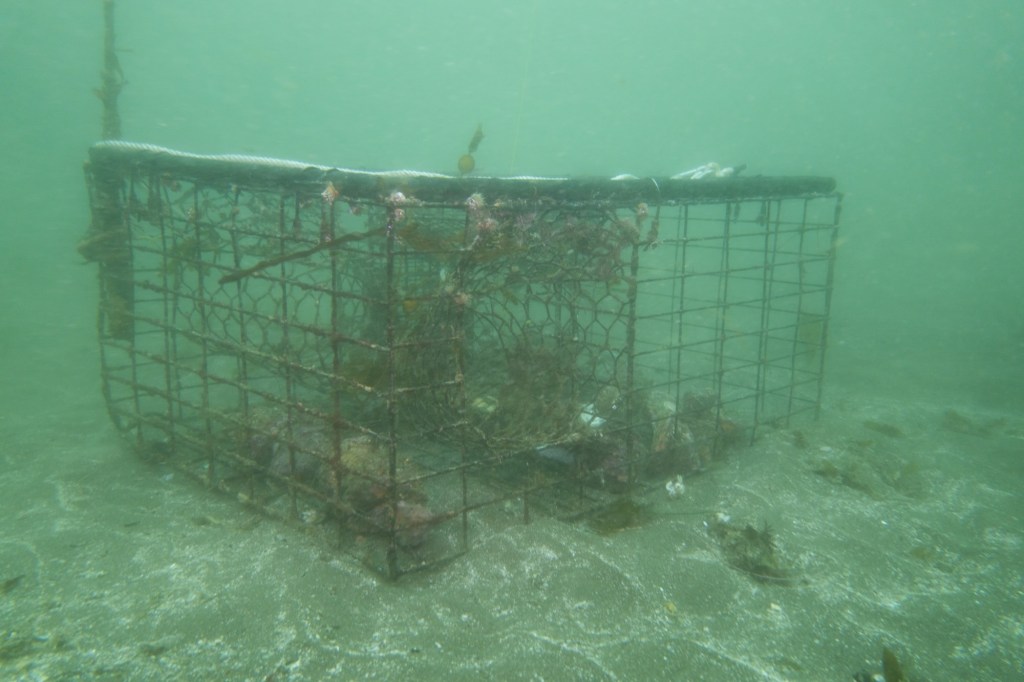
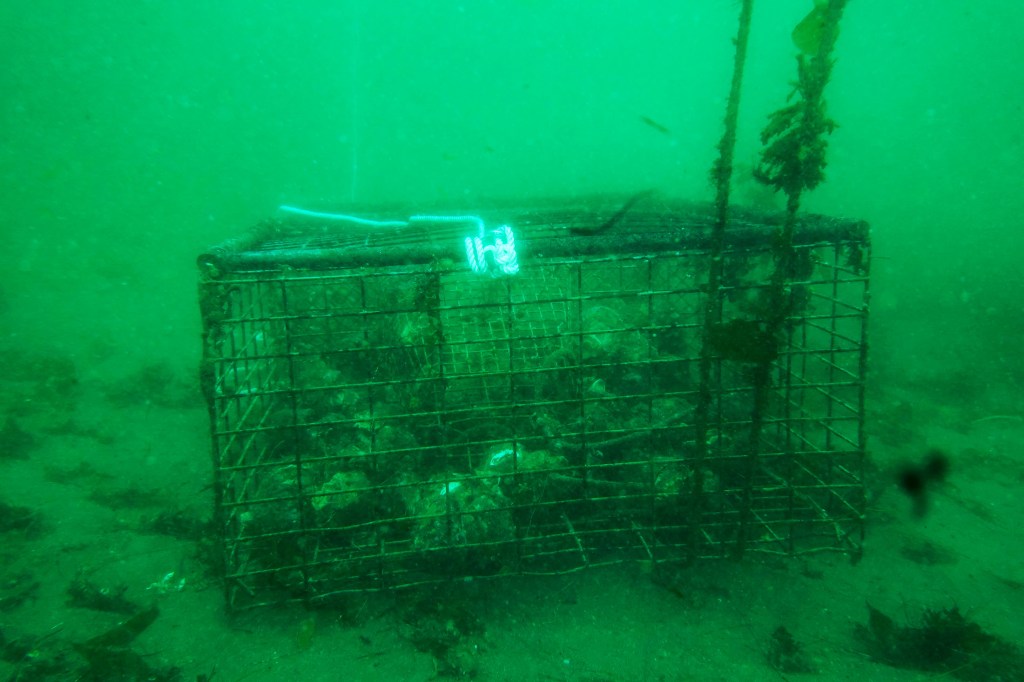
The water was thick with suspended particles, the light dimming quickly as we dropped lower. My 7mm wetsuit was just barely enough to stave off the cold. On the seafloor, the ghost trap emerged, a large rectangular cage resting dark and ominous in the sand. And it was teeming with life. Fish darted around its edges, lobsters clambered along the frame, and inside, several animals moved about, trapped and slowly dying. It was easy to see how a single trap could wreak quiet havoc for years.
California law technically requires all lobster traps to include biodegradable “escape panels” with zinc hinges that degrade over time, eventually allowing trapped animals to escape. But enforcement is tricky, and the panels don’t always work as intended. In practice, many traps, especially older or illegally modified ones, keep fishing long after they should have stopped. That’s what we were out here to find.
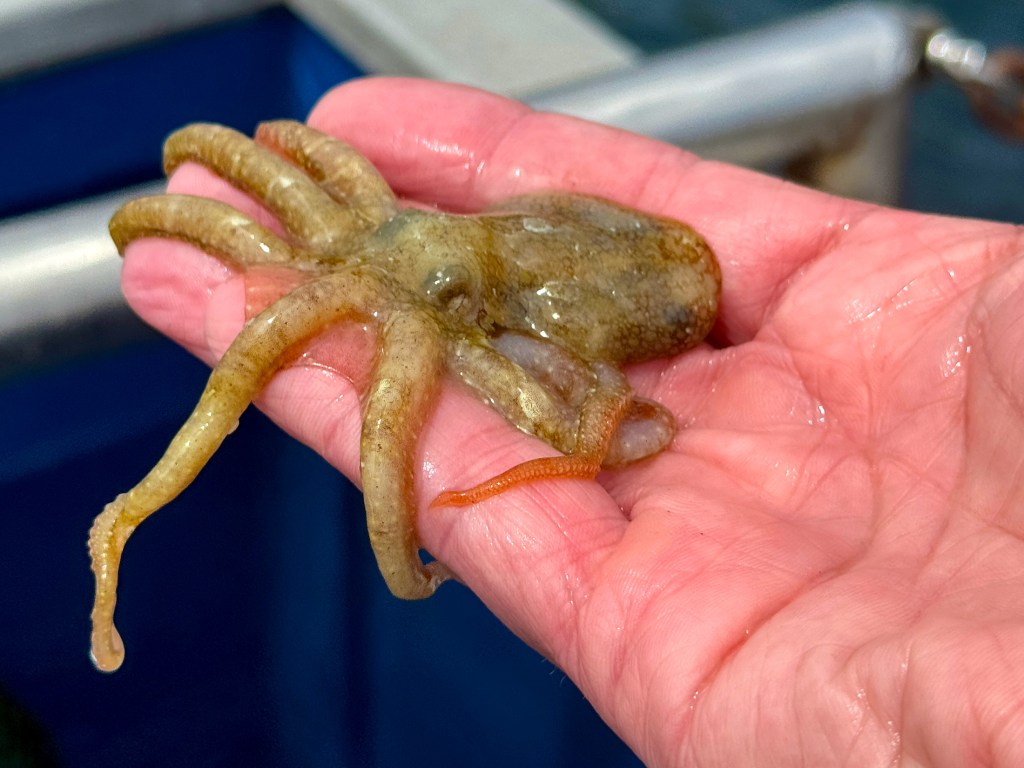
A baby octopus caught in a ghost trap in the waters off California’s Channel Islands (Photo: Erik Olsen)
Complicating matters is the fact that once a trap goes missing, there’s no easy way to retrieve it. Fishers are not legally allowed to touch traps that aren’t theirs, even if they’re obviously abandoned. And while a few small nonprofits and volunteer dive teams conduct periodic ghost gear removal missions, they can’t keep pace with the scale of the problem.
“At this fishery, we can’t get them all,” says McCauley. “But by going through and getting some species out and getting them back in the water, we’re making a difference. But in the process, we’re coming up with new ideas, new technologies, new research methods, which we think could play a role in and actually stopping this problem in the first instance.”
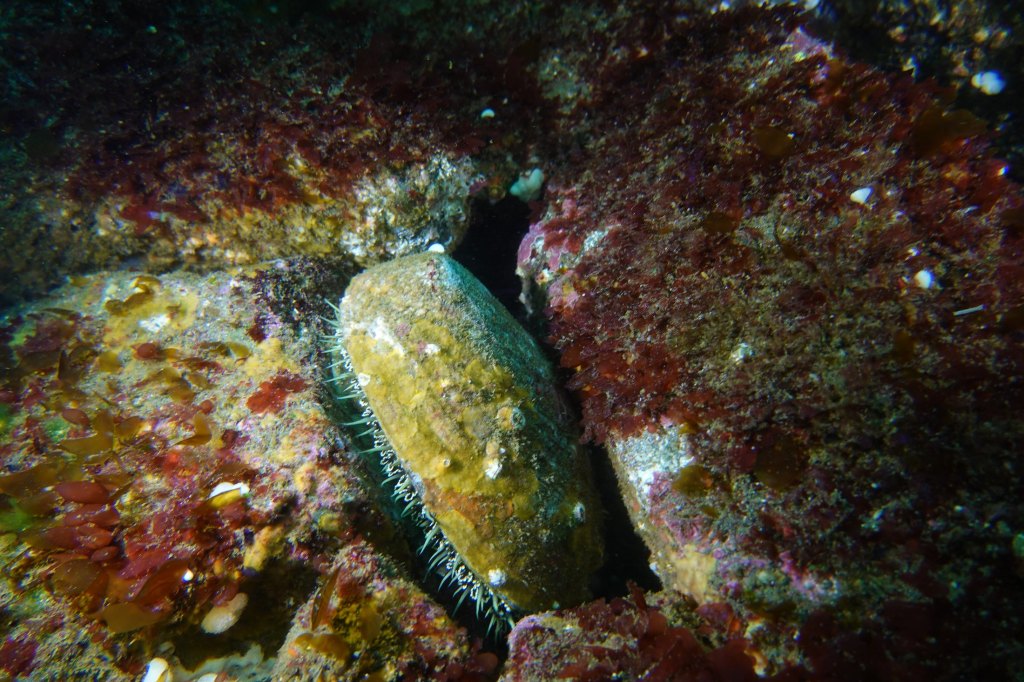
Once abundant along California’s coast, this large abalone spotted off Santa Cruz Island is a rare sight today—a quiet reminder of how overfishing, disease, and environmental change have decimated their populations. (Photo: Erik Olsen)
Back topside, the recovery team aboard the Spectre used a powerful hydraulic winch to haul the trap onto the deck. After climbing out of the cold water, still shivering, I joined the others to get a closer look. The trap was heavy and foul-smelling, but what stood out most was what was inside: lobsters, maybe ten or more. Some had perished, but many were alive and thrashed their tails when lifted by the scientists. Females could be identified by their broader, flatter tail fins—adapted to hold eggs. The team carefully measured each one before tossing them back into the sea, the lobsters flipping backward through the air and disappearing into the depths.
There were other animals, too. Large, rounded crabs known as Sheep crabs, common to these waters, scuttled at the bottom of the trap. Sea snails were clustered along the mesh, and in one cage, there were dozens of them, clinging and crawling with slow purpose. Even baby octopuses made appearances, slithering out onto the deck like confused aliens. I picked one up gently, marveling at its strange, intelligent eyes and soft, shifting forms, before tossing it back into the sea in hopes it would have another chance at life.
Ghost lobster trap lies on the seafloor off of Santa Cruz Island in California’s Channel Islands (Photo: Erik Olsen)
By then, the day had brightened and the sun had come out, easing the chill that lingered after the dive. The traps would be taken back to Ventura, where they’d likely be documented and disposed of. But this day wasn’t just about saving individual animals or pulling traps off the seafloor—it was about data. The Benioff team wants to understand just how big of a problem ghost traps really are. It’s not just about the number of traps lost each season, but the broader ecological toll: how many animals get caught, how many die, and how these traps alter the underwater food web. Every recovered trap adds a piece to the puzzle. This trip was about science as much as rescue.
State agencies, including the California Department of Fish and Wildlife (CDFW), have started pilot programs aimed at tackling ghost gear. In 2023, CDFW launched a limited recovery permit program that allows fishers to collect derelict traps at the end of the season, provided they notify the state. But participation is voluntary and poorly funded.
Elsewhere, states like Maine and Florida have created large-scale, state-funded programs to identify and remove ghost traps, often employing fishers in the off-season. California, despite having the nation’s fourth-largest lobster fishery, has yet to make a similar investment.
Ghost lobster traps recovered from the seafloor off the coast of California’s Channel Islands (Photo: Erik Olsen)
Some solutions are already within reach. Mandating GPS-equipped buoys for commercial traps could help track and retrieve gear before it’s lost. More robust escape hatch designs, made from materials that dissolve in weeks rather than months, would shorten the lifespan of a lost trap. And expanding retrieval programs with funding from fishing license fees or federal grants could make a big dent in ghost gear accumulation.
But even more powerful than regulation may be public awareness. Ghost traps are out of sight, but their damage is far from invisible. Every trap left behind in the Channel Islands’ waters becomes another threat to biodiversity, another source of plastic and metal waste, and another reminder that marine stewardship doesn’t stop when the fishing season ends.
Key to the whole effort is data:
“Every one of the animals that we put back in the water today, we’ll be taking a measure,” says McCauley. “After a little bit of crunching in the lab, we’ll be able to say, oh, actually, you know, every single trap undercuts the fishery by x percent for every single year that we don’t solve the problem.”
Doug McCauley with a lobster trap retrieved from the seafloor off the coast of California’s Channel Islands (Photo: Erik Olsen)
As we headed back toward Ventura, Tod and I talked with Douglas McCauley and Project Scientist Neil Nathan from the Benioff Ocean Science Laboratory. The team had collected a total of 13 traps that day alone, and 34 over the several days they’d been out. There was a sense of satisfaction on board, quiet but real. Each trap removed was a small win for the ecosystem, a little less pressure on an already strained marine environment.
“I would call today an incredible success, ” said Neil Nathan. “Feeling great about the number of traps we collected.”
California has long been a leader in ocean conservation. If it wants to stay that way, it needs to take ghost fishing seriously, not just around the Channel Islands, but up and down the coast. After all, we owe it to the lobsters, yes, but also to the underwater forests, reef communities, and countless species whose lives are tangled in the nets we leave behind.
The Unlikely Intersection of Military Training and Coastal Preservation
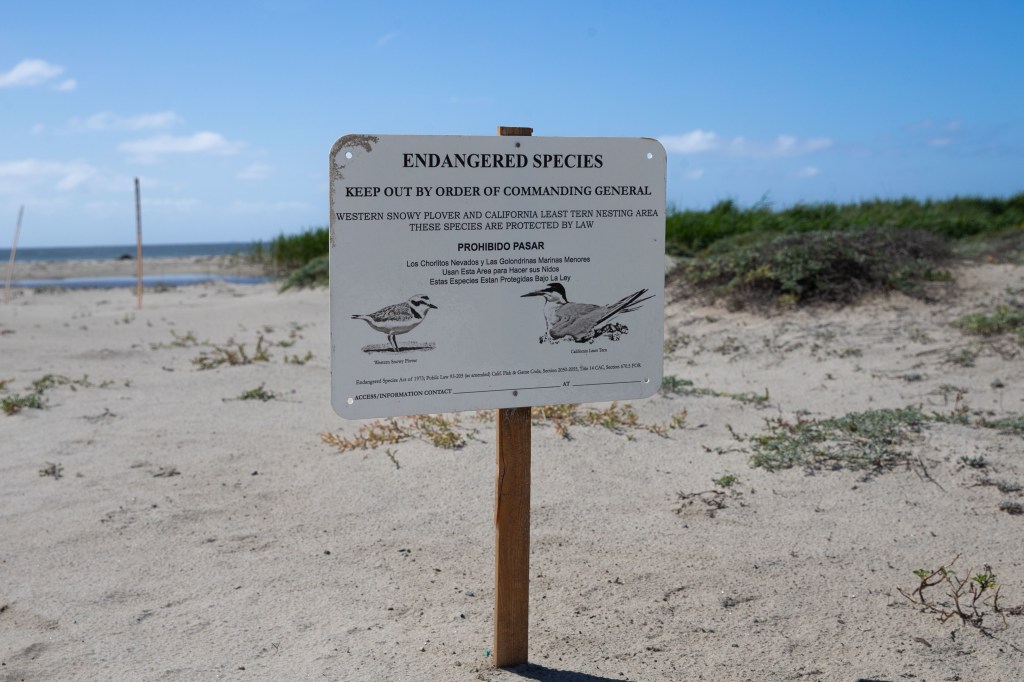
An endangered species sign is posted along the coastline on Marine Corps Base Camp Pendleton, California, March 29, 2022. (U.S. Marine Corps photo by Lance Cpl. Nataly Espitia)
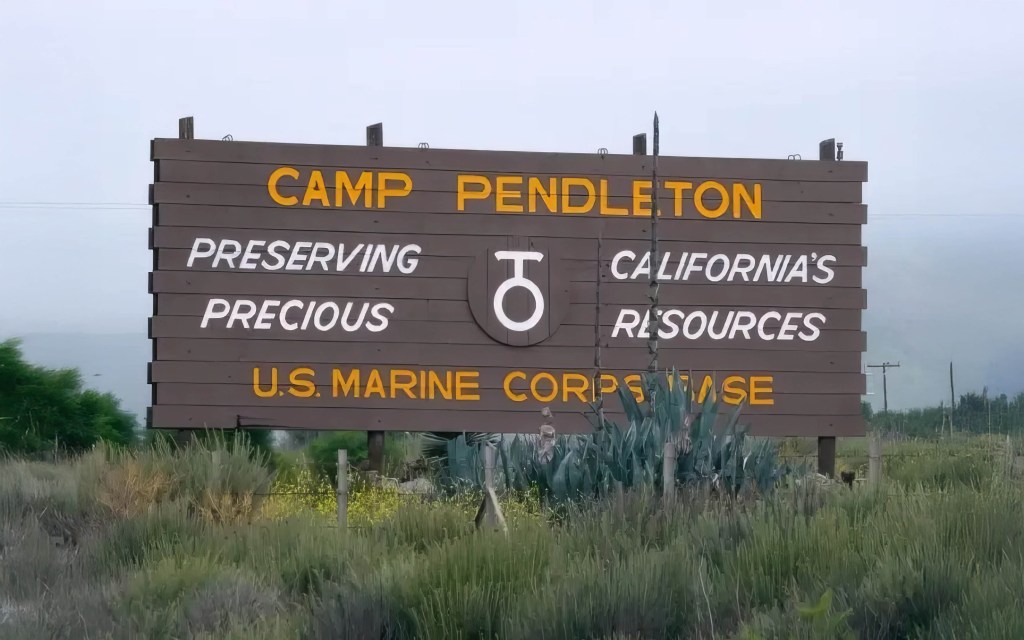
Driving along the Pacific Coast Highway, much of the Southern California coastline is a continuous stretch of development—expensive homes, commercial malls, and highways and railways built right up against the ocean. Then, unexpectedly, you reach Marine Corps Base Camp Pendleton, a vast, largely undeveloped expanse that starkly contrasts with the urban sprawl. This uninterrupted stretch of coastline offers a rare glimpse into what the region once looked like, a reminder of California’s natural beauty before widespread development.
We’re not suggesting that coastal development is inherently bad, but having stretches of coastline that preserve the coast’s natural state offers a valuable reminder of what it once looked like. One drawback of the base is that, as an active military installation, public access is highly restricted. However, this limited access has helped preserve the coastline in ways that might not have been possible otherwise. (Another well-known and much more accessible area with restricted development lies just to the north at Crystal Cove State Park in Orange County, a protected stretch of land established in 1979 that remains open to the public. It features some of the finest beaches in Southern California – IMHO.)
California least terns (Ernesto Gomez, Public Domain)
Marine Corps Base Camp Pendleton spans approximately 125,000 acres, including more than 17 miles of coastline in northwestern San Diego County. With less than 20% of the land developed, the base serves as a critical ecological buffer between the densely urbanized regions to its north and south. The base has served as a critical training ground for the U.S. Marine Corps since 1942. However, its restricted access and limited development have inadvertently preserved some of Southern California’s last remaining wild coastal terrain. As a result, the base has become an unlikely sanctuary for a rich array of plant and animal species, many of which are endangered or rare.
The base’s diverse ecosystems offer a window into California’s historical and biological landscapes prior to extensive development. Camp Pendleton’s coastal dunes, estuaries, chaparral, riparian woodlands, and sage scrub provide a range of habitats that are now scarce elsewhere. The base is home to 19 federally listed species, including the California least tern, a seabird that relies on the base’s protected beaches for nesting. The Santa Margarita River, one of the last free-flowing rivers in Southern California, cuts through the base, providing essential water resources for both wildlife and plant communities.
“Camp Pendleton is a biodiversity hotspot,” Melissa Vogt, a conservation law enforcement officer with Environmental Security said in a statement. “If it weren’t for Camp Pendleton existing, all this coastline would be condos and hotels.”
Camp Pendleton
Because of its ecological significance, Camp Pendleton has become a prime location for scientific study. Botanists have discovered species like the Pendleton button-celery (Eryngium pendletonense), a plant found only within the base. The relatively undisturbed nature of the land allows researchers to examine Southern California’s native ecosystems as they once were, offering insights into habitat conservation and restoration efforts beyond the base’s borders. There are few places left like it along the Southern California coast. Among other species benefiting from these efforts is the coast horned lizard (Phrynosoma blainvillii), a reptile that relies on sandy soils and native chaparral for shelter and food. The base’s protected status has helped sustain this lizard’s population, which has declined in many other parts of its range due to habitat loss.
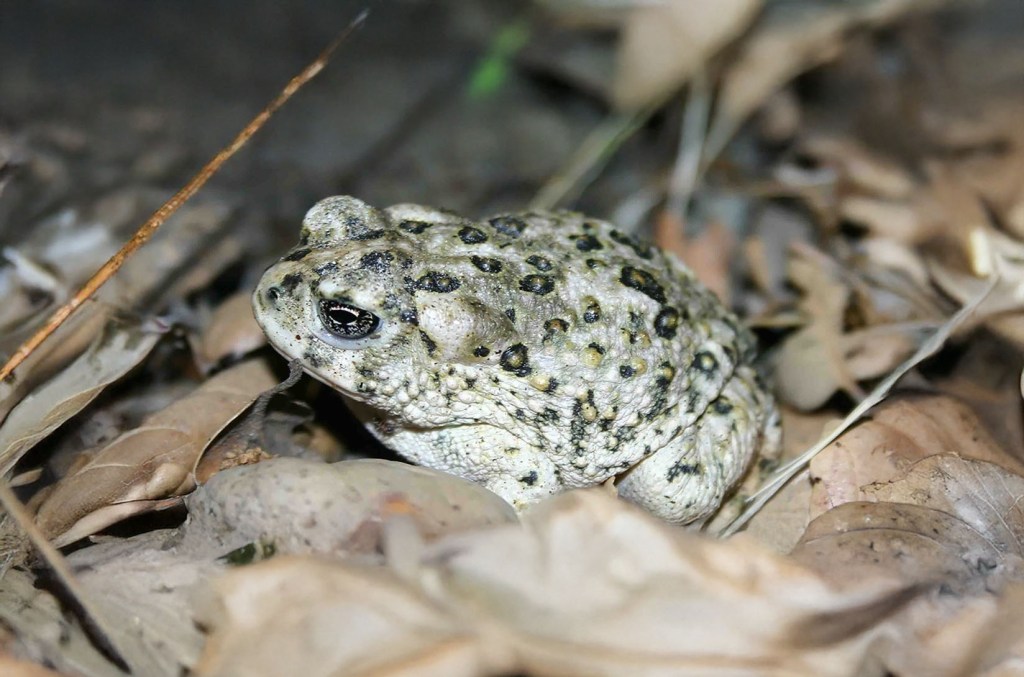
Arroyo toad – Anaxyrus californicus (US Fish and Wildlife Service)
The base’s management practices have contributed to the survival of species once thought to be on the brink of extinction. One of the most notable examples is the Pacific pocket mouse, a tiny rodent that was believed extinct until a population was rediscovered within Camp Pendleton in the 1990s. Conservationists, including the San Diego Zoo Wildlife Alliance, have since reintroduced captive-bred individuals to increase their numbers in protected areas on the base.
Similarly, the base’s wetlands and riparian zones serve as critical habitat for the southwestern willow flycatcher, an endangered songbird, as well as the arroyo toad, which depends on unspoiled riverbanks for breeding. Without the base’s restrictions on urban development, many of these species might have disappeared entirely from Southern California.
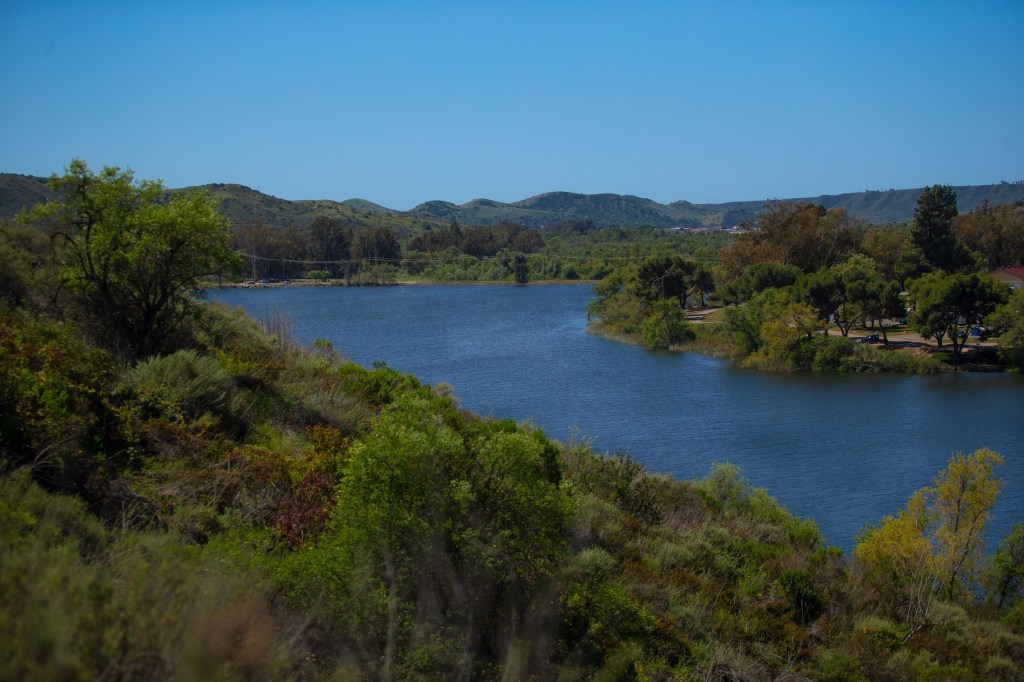
Lake O’Neill, located on Marine Corps Base Camp Pendleton, California, is a popular destination for fishing and camping and is a home to a wide variety of wildlife. (U.S. Marine Corps photo by Lance Cpl. Nataly Espitia)
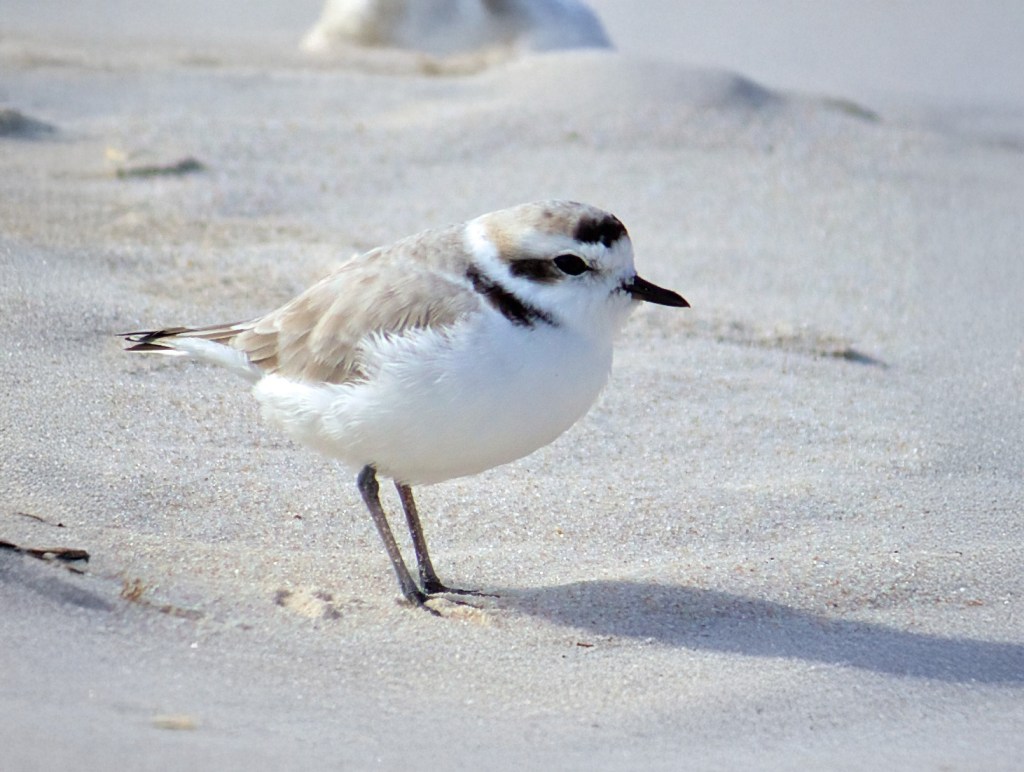
Recognizing the base’s ecological value, Camp Pendleton has taken significant steps toward wildlife preservation through proactive environmental management. The Environmental Security Department has worked closely with researchers to document biodiversity, implement habitat restoration efforts, and ensure compliance with the Endangered Species Act. A key part of these efforts includes protecting breeding grounds and restoring sensitive habitats, such as the coastal dune systems that support the California least tern and the western snowy plover. Entomologists from the San Diego Natural History Museum have conducted extensive surveys on the base, cataloging insect and spider species across six distinct vegetation zones. These studies not only provide valuable data on the health of Southern California’s ecosystems but also help track how climate change is affecting biodiversity in the region.
“For any wildlife biologist that’s working with a threatened or endangered species, the ultimate goal is getting the animal off the list and making sure the species is doing well,” Nate Redetzke, Environmental Security wildlife biologist, said on the official US Marines Website.
The base has also implemented a long-term natural resource management plan that balances military training with conservation efforts. It may seem unlikely for troop transport vehicles to operate alongside protected coastal wilderness, but the balance between military use and conservation has largely been seen as a success.
Western snowy plover (Wikipedia)
The efforts include extensive land management practices such as erosion control, invasive species removal, and water quality monitoring to sustain Camp Pendleton’s ecosystems. In recent years, conservation teams have also focused on restoring the estuary habitats along the Santa Margarita River to enhance biodiversity and ensure the resilience of species that depend on these wetlands. This includes seasonal restrictions in certain areas to protect breeding wildlife, habitat restoration projects, and collaborations with state and federal agencies to support species recovery programs. Again, it’s complicated, but it seems to be working. These efforts were recognized when the U.S. Fish and Wildlife Service awarded Camp Pendleton the Military Conservation Partner Award in 2022 for its leadership in environmental stewardship.
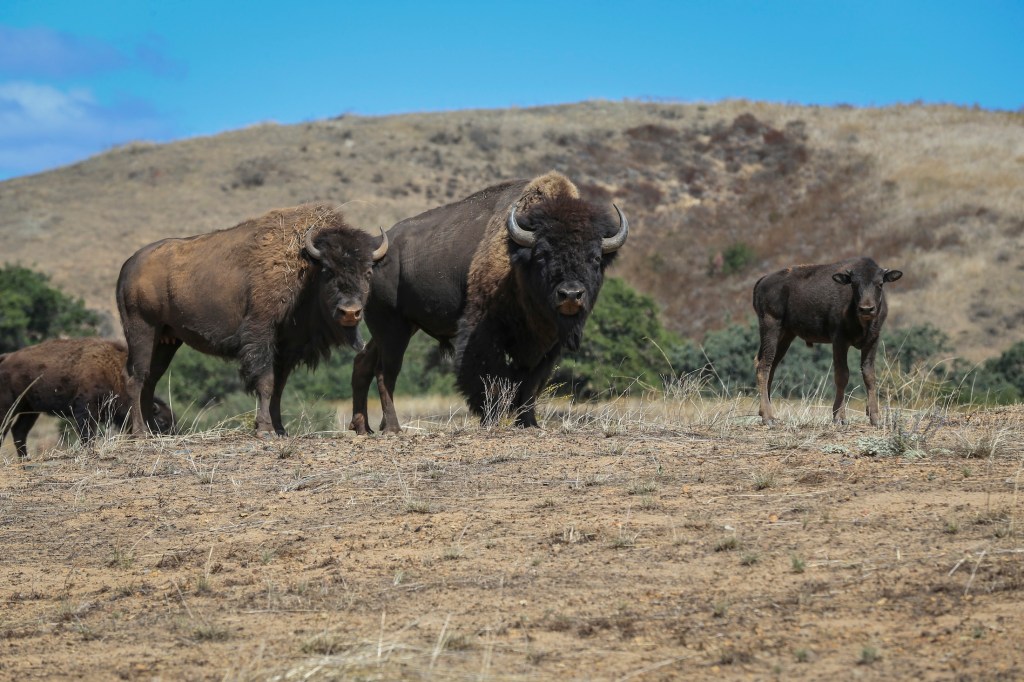
Remarkably, the base is also home to a small herd of American bison, which have roamed Camp Pendleton for decades. Originally introduced in the 1970s as part of a now-defunct recreational program, these bison have since adapted to the landscape, living largely undisturbed within the base’s remote areas. While not native to the region, their presence adds another layer of ecological interest to this protected land, demonstrating how species can persist in unexpected places.
An American bison herd roams the hills on Marine Corps Base Camp Pendleton, California. (Marine Corps Photo by Lance Cpl. Andrew Cortez)
Camp Pendleton’s example demonstrates that large-scale conservation can happen in unexpected places. While military training remains its primary function, the base has unintentionally preserved one of the last remaining stretches of undeveloped Southern California coastline. In doing so, it has provided scientists with a unique opportunity to study and protect a wide range of species that might have otherwise been lost.
Of course, Camp Pendleton isn’t the only place where government protection for reasons other than conservation has preserved a remarkably untouched stretch of California’s coastline. Vandenberg Space Force Base, further north, restricts public access due to its role in military space launches, but in doing so, it has safeguarded miles of rugged shoreline and sensitive habitats. Similarly, Point Reyes National Seashore, though managed primarily for recreation and historical preservation, remains a rare example of undeveloped coastal wilderness in the Bay Area. Off the coast, some of the Channel Islands, particularly those further out but within Channel Islands National Park, have remained largely untouched due to federal protection, while others have suffered from past military activity and invasive species. Like Camp Pendleton, these areas demonstrate how federal oversight, whether for military, scientific, or historical purposes, has unintentionally maintained some of California’s last truly wild coastal spaces.