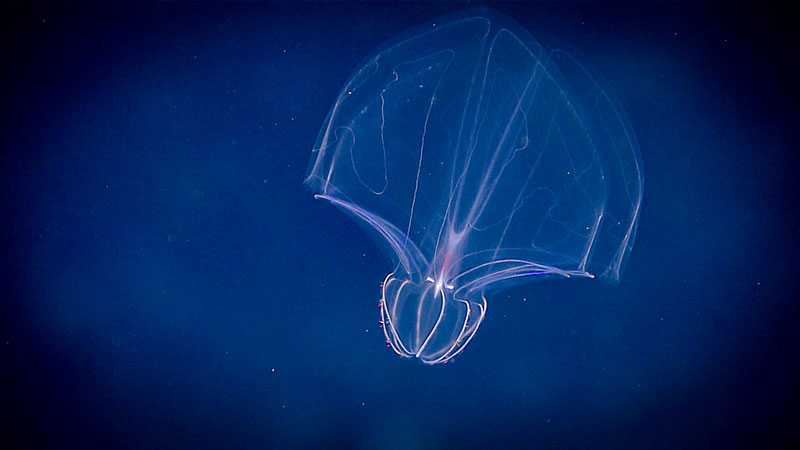
A lobate ctenophore in the ocean twilight zone. (Photo: NOAA)
If you’ve been reading this newsletter for a while, you already know I’m obsessed with submarines and undersea life. I believe we’re at the beginning of a new era of ocean discovery, driven by small personal submersibles, remotely operated vehicles (ROVS), and autonomous explorers (AUVs) that can roam the deep on their own. Add AI into the mix, and our ability to see, map, and understand the ocean is about to expand dramatically.
One phenomenon we are only beginning to fully understand also happens to be one of the most extraordinary animal events on Earth. It unfolds every single night, just a few miles offshore, in a region known as the ocean twilight zone about 650 to 3,300 feet below the ocean surface. Twice a day, billions of tons of marine organisms, from tiny crustaceans to massive schools of squid, traverse the water column in what researchers call the Diel Vertical Migration (DVM), the largest mass migration of animals on Earth. A heaving, planetary-scale pulse of biomass rising and falling through the dark.
It happens everywhere, in every ocean. But California is special for several reasons. California’s cold, southward-flowing current and seasonal upwelling flood coastal waters with nutrients that feed dense plankton blooms. These blooms provide food for thick layers of migrating animals. California has one of the most robust and productive ocean ecosystems on the planet. (Take a read of the piece I did about life on some of our oil rigs.) When you add Monterey Canyon into the mix, which funnels and concentrates life, this global phenomenon becomes more compressed and visible. In fact, with Monterey Bay Aquarium Research Institute (MBARI) based at Moss Landing near the head of the canyon, Monterey Bay has become one of the most intensively studied midwater ecosystems on the planet.
Monterey Bay Aquarium Research Institute (MBARI) in Moss Landing, perched at the edge of Monterey Canyon, one of the deepest submarine canyons in North America. (Photo: Erik Olsen)
This “tidal cycle of shifting biomass” is not driven by gravity, but by the rising and setting sun. Animals rise by the trillions during the evening to escape predation, then settle during the day, when light would otherwise make them visible to hungry predators.
The discovery of this phenomenon reads like a Tom Clancy novel and took place just off our coast. During World War II, U.S. Navy sonar operators working off San Diego and the Southern California Bight began detecting what looked like a “false seafloor” hovering 300 to 500 meters down during the day, only to sink or vanish each night. The mystery lingered for years, until the late 1940s, when scientist Martin Johnson and others at Scripps Institution of Oceanography showed that the phantom bottom was not seafloor, but vast layers of living animals rising and falling with the sun. We now know this as the Deep Scattering Layer (DSL), so named because the gas-filled swim bladders of millions of small fish, primarily lanternfish which number into the quadrillions around the globe, reflect sonar pings like a solid wall.
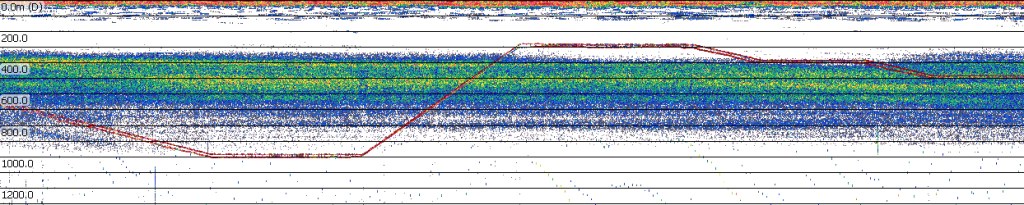
The deep-scattering layer (DSL) graphed as an echogram, or a plot of active acoustic data. Warmer colors indicate more backscatter, meaning that more (or stronger) echoes were received back from the organisms at that depth. The red line indicates the remotely operated vehicle (ROV) trajectory as it performs transects throughout the layer. (Source: NOAA)
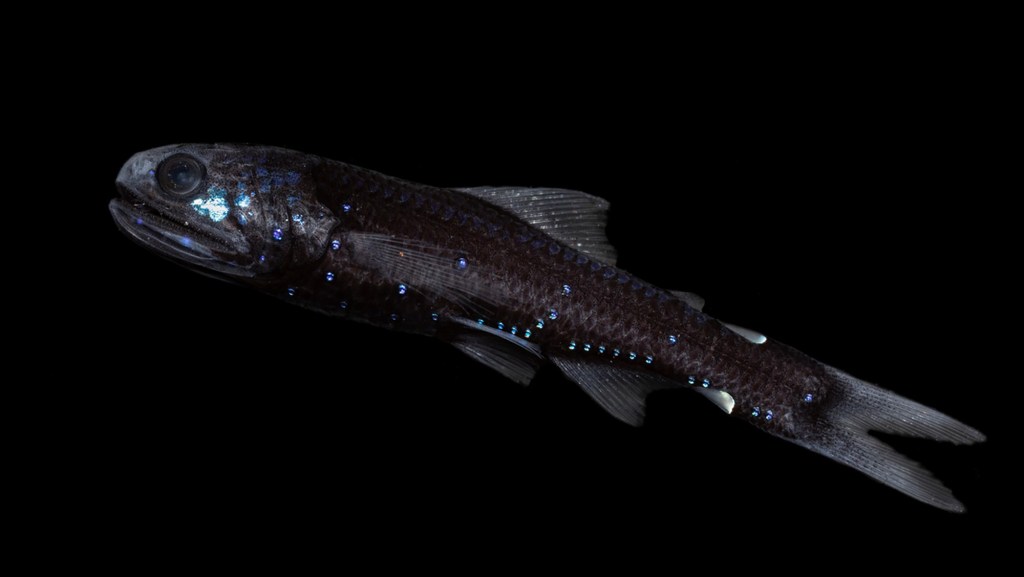
So let’s talk about those amazing lanternfish, aka myctophids, a species that many peole have likely never heard of. These small fish may make up as much as 65 percent of all deep-sea fish biomass and are a major food source for whales, dolphins, salmon, and squid. They use tiny light organs called photophores to match faint surface light, a camouflage strategy known as counterillumination that helps hide them from predators below. These are just one of the many different species that inhabit the twilight zone as part of the DVM.
A lanternfish photographed in the ocean twilight zone, its body dotted with tiny light organs called photophores that help it blend into faint surface light as it migrates toward the surface at night. (Photo: NOAA)
Monterey Bay is arguably the world’s most important laboratory for DVM research, thanks to the Monterey Canyon, and several ground-breaking discoveries have come out of MBARI. For example, scientists at MBARI, including the legendary Bruce Robison, have used ROVs to document what they call “running the gauntlet,” when these migrators pass through layers of hungry, waiting predators. They encounter giant siphonophores with stinging tentacles, squids snag lanternfish, and giant larvaceans that build sprawling mucus “houses” that trap smaller animals. It’s like an epic battle scene out of Lord of the Rings, every single day.
This migration is also a key part of the ocean’s carbon cycle, which includes a scientific process known as the biological pump. When larger animals eat carbon-rich plankton at the surface, they eventually defecate all that carbon into the water, aka the “active transport” mechanism. Much of that carbon sinks to the bottom, sequestering it for decades or even centuries. In some regions, DVM accounts for one-third of the total carbon transport to the deep ocean. MBARI has a very interesting, long-term deep-ocean observatory called the Station M research site and observatory located nearly 12,000 feet below the surface off Santa Barbara. This site has been continuously monitored for more than three decades to track how organic matter produced near the surface eventually reaches the abyssal seafloor and feeds deep communities. I did a video about it for MBARI a few years ago.
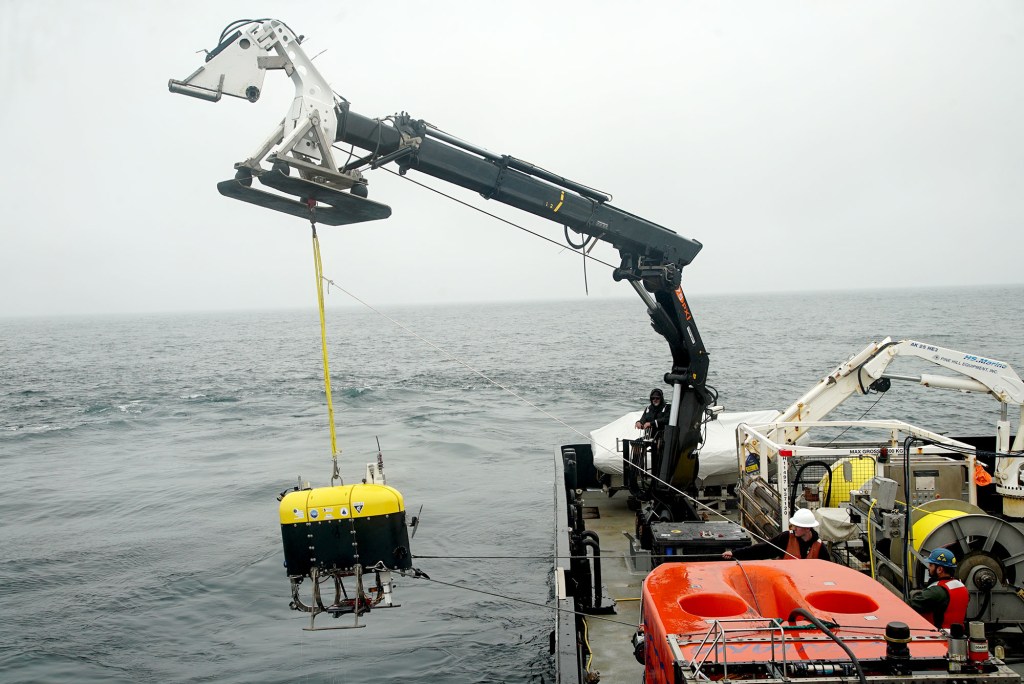
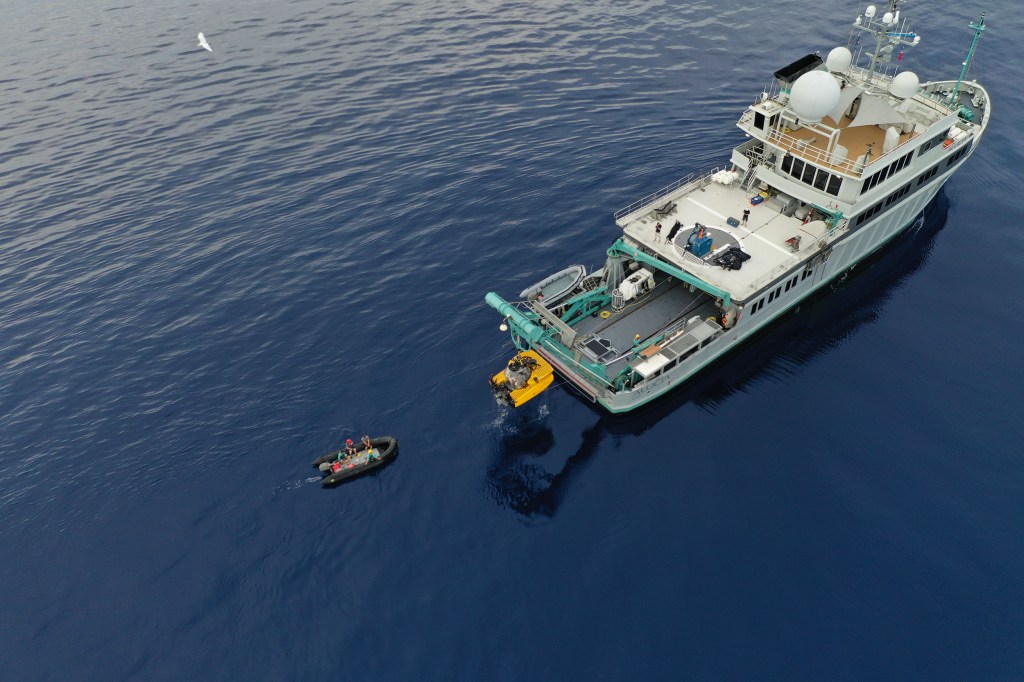
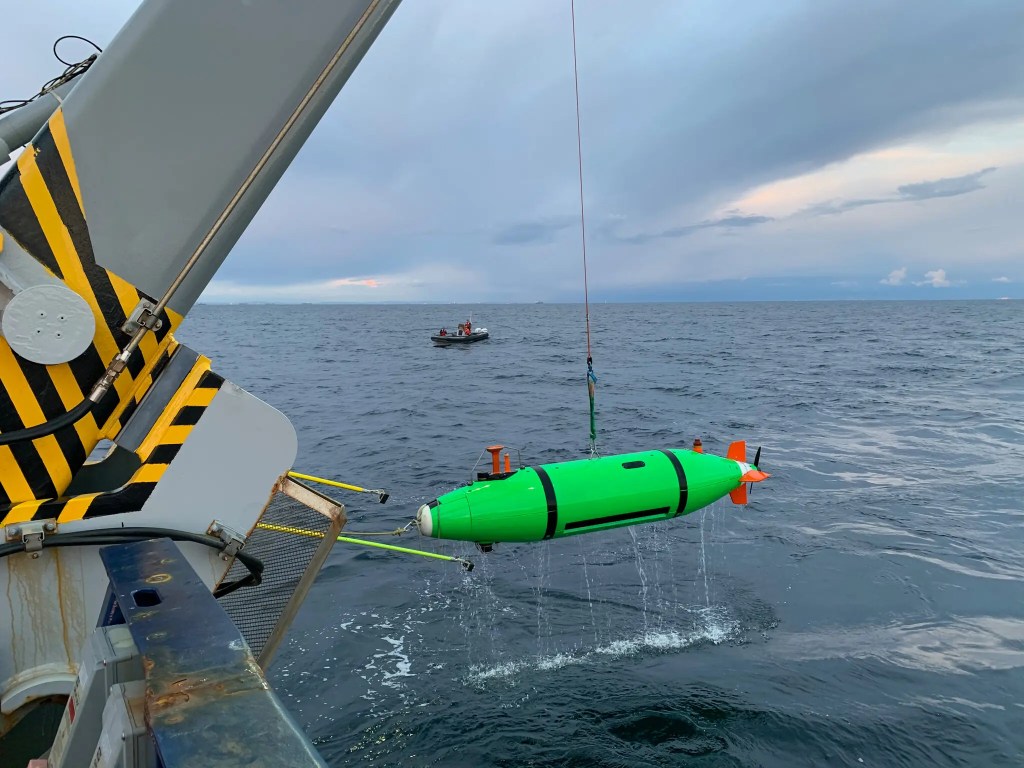
Deployment of Mesobot, an autonomous midwater robot developed by Monterey Bay Aquarium Research Institute and Woods Hole Oceanographic Institution, for exploration of the ocean twilight zone above Monterey Canyon, California. (Photo: Erik Olsen)
Other cutting-edge technology is being brought to bear as well to help us better understand what life exists in the deep waters off California. A UC San Diego study shows that we can now use low-volume environmental DNA (eDNA) to detect the genetic signatures of huge numbers of different animals, even if we can’t see them. This free-floating DNA moves with ocean currents and can be sequenced to identify species ranging from copepods to dolphins, allowing researchers to track who is participating in the migration even when organisms are too small, fragile, or fast for traditional nets.
All of this plays out each day and night off our coast, a vast symphony of animal movement and deadly combat that, until recently, was not only poorly understood but largely invisible to science. And it’s all happening right off our shores
It’s time for California to put people back in the deep. A human-occupied submersible belongs in California waters, and we’ve waited long enough.
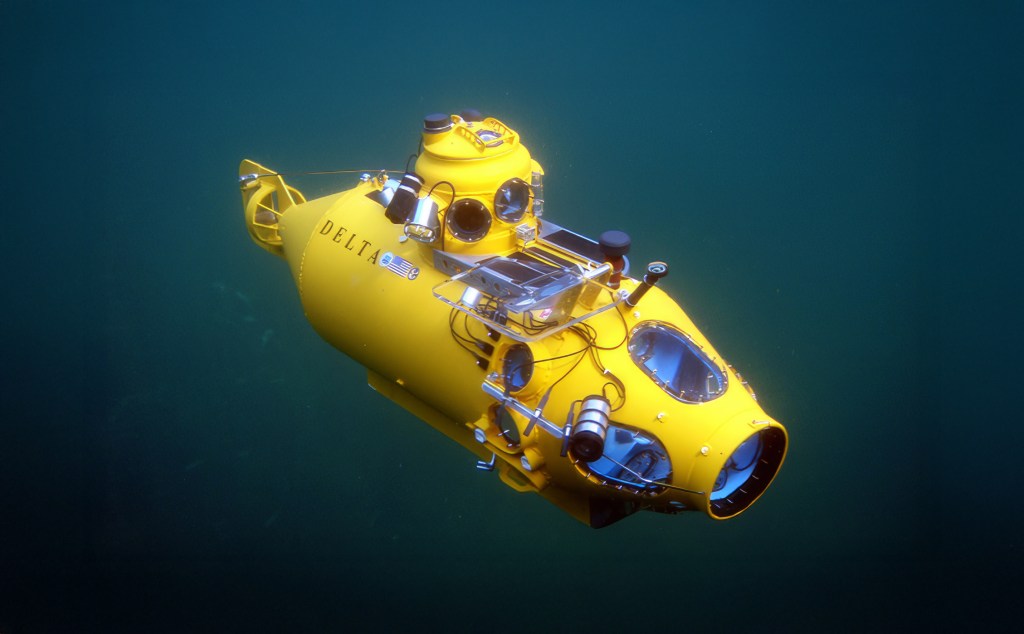
For decades, the state had a strong human-occupied submersible presence, from Navy test craft in San Diego to long-serving civilian science HOVs like the Delta. Those vehicles have been retired or relocated, leaving the West Coast without a single home-based, active human-occupied research submersible (I am not counting OceanGate’s Titan sub for numerous reasons, like the fact it was based in Seattle, but foremost is it was not “classed,” nor was it created for scientific use). Restoring that capability would not only honor California’s legacy of ocean exploration but also put the state back at the forefront of direct human observation in the deep sea. The time has come.
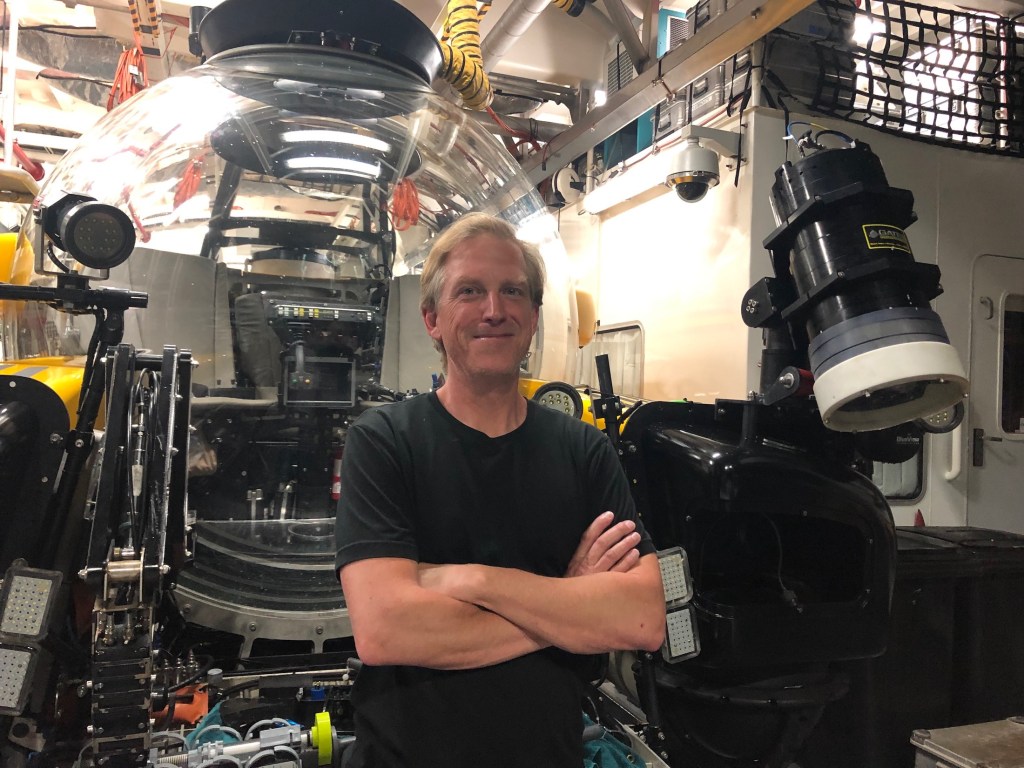
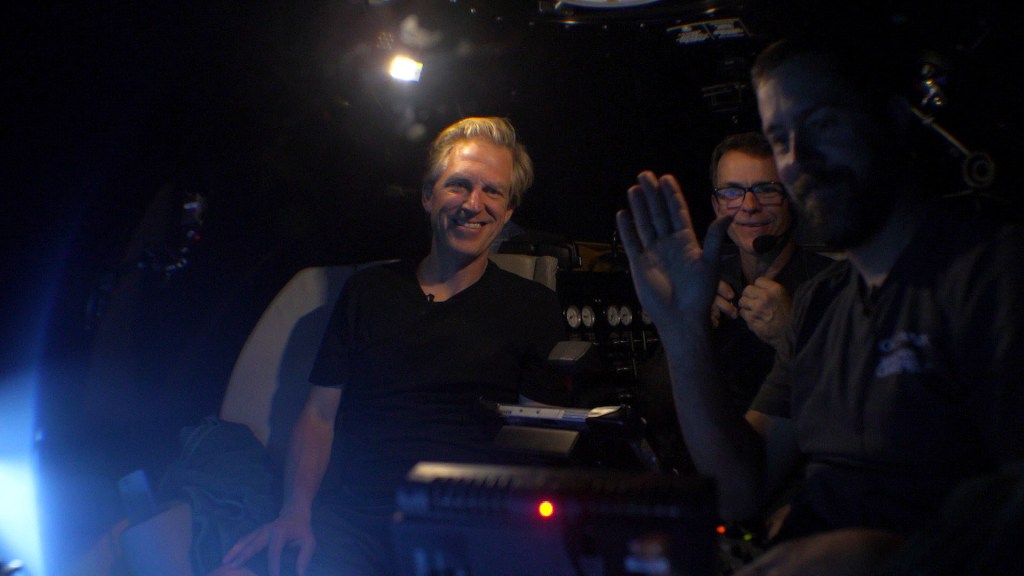
Side note: I’ve had the rare privilege of diving beneath the waves in a submersible three times in three different subs, including one descent to more than 2,000 feet with scientists from the Woods Hole Oceanographic Institution. Without exaggeration, it stands among the greatest experiences of my life.
The United States once had a small fleet of working research HOVs. Today it has essentially one deep-diving scientific HOV in regular service: Alvin, operated by Woods Hole Oceanographic Institution (WHOI) for the National Deep Submergence Facility. Alvin is magnificent, now upgraded to reach 6,500 meters, but it is based on the Atlantic (in Massachusetts) and scheduled years in advance at immense cost.
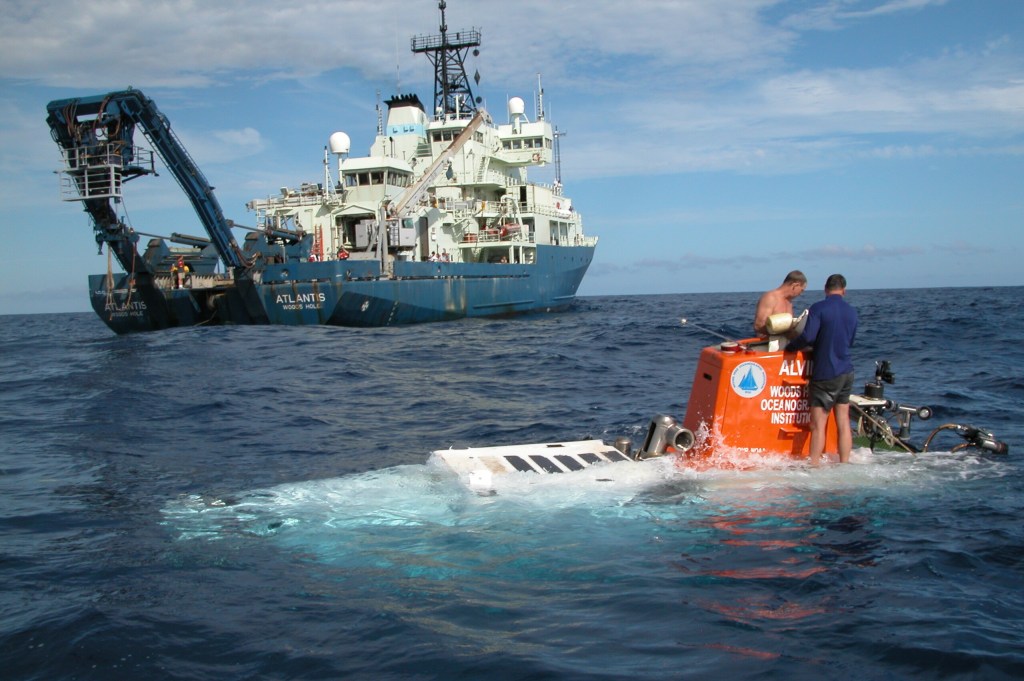
The human-occupied submersible Alvin surfaces during the 2004 “Mountains in the Sea” Expedition, returning from a dive to explore deep seamount habitats teeming with corals, sponges, and other rarely seen marine life. (Photo: NOAA, Public Domain)
It helps to remember how we got here. The Navy placed Alvin in service in 1964, a Cold War investment that later became a pillar of basic research, investigating hydrothermal vents, shipwrecks and underwater volcanoes, among many, many other accomplishments. Over six decades of safe operations, Alvin has logged thousands of dives and undergone multiple retrofits, each expanding its depth range. Now rated to 6,500 meters, it can reach 98 percent of the ocean floor. WHOI’s partnership model with the Navy and universities shows exactly how public investment and science can reinforce each other. But Alvin is based on the East Coast: all that capability, history, and expertise is thousands of miles away. California needs its own Alvin. Or something even better…and perhaps cheaper. Though by cheaper I do not mean less safe.
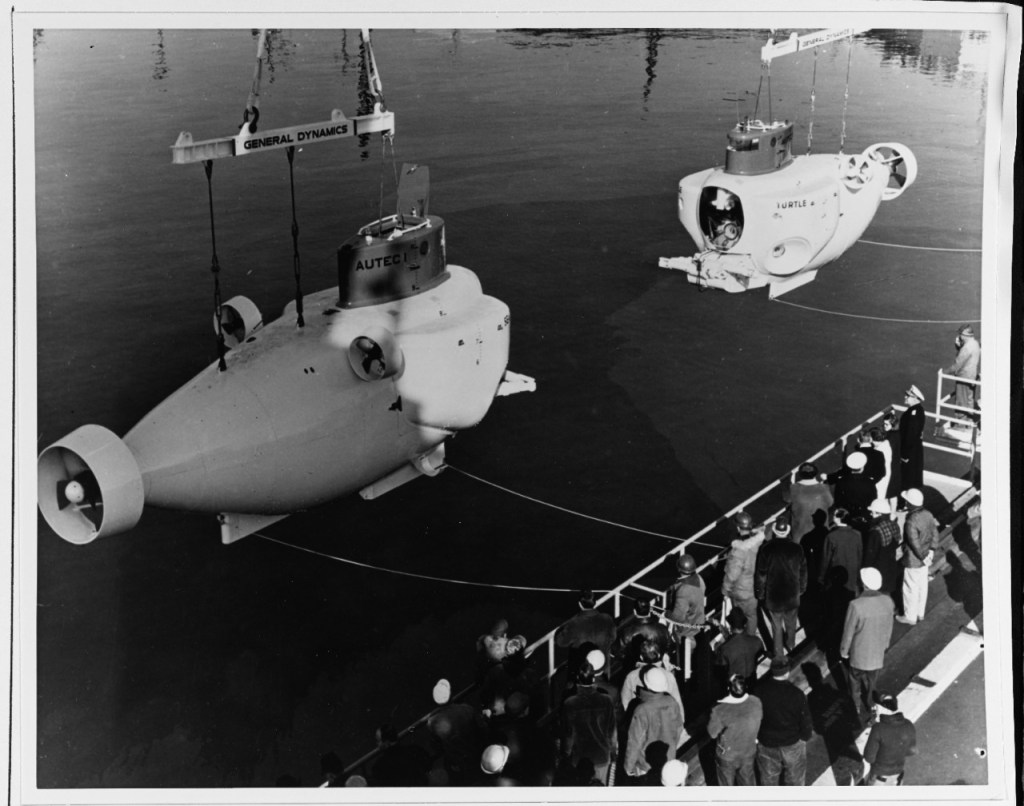
For a time, California actually had multiple HOVs. The Navy fielded sister craft to Alvin, including Turtle and Sea Cliff. Both Turtle and Sea Cliff spent their careers with Submarine Development Group ONE in San Diego. Turtle was retired in the late 1990s, and Sea Cliff, launched in 1968 and later upgraded for greater depths, also left service by the end of that decade, ending the Navy’s home-ported HOV presence on the West Coast.
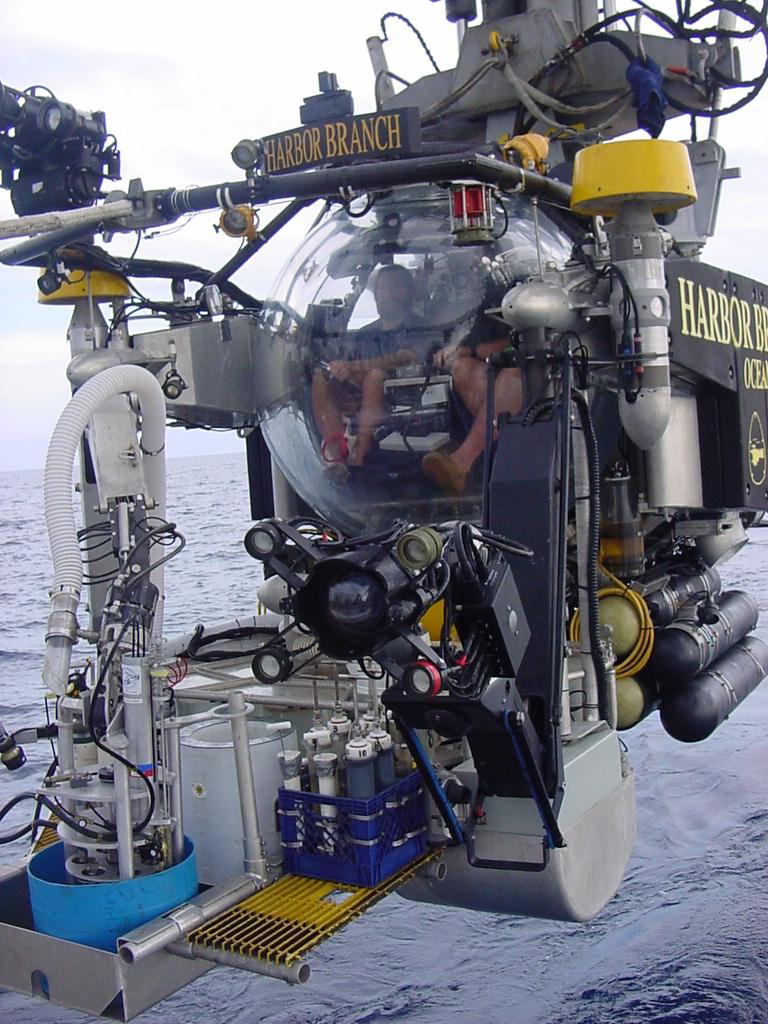
On the Atlantic side, Harbor Branch’s two Johnson Sea Link HOVs supported science and search-and-recovery work for decades before the program ended in 2011 due to funding constraints and shifting research priorities. I’ve interviewed renowned marine biologist Edith Widder several times, and she often speaks about how pivotal her dives in the Johnson Sea Link submersibles were to her career studying animal bioluminescence.
“Submersibles are essential for exploring the planet’s largest and least understood habitat, ” Widder told me. “A human-occupied, untethered submersible offers an unmatched window into ocean life, far surpassing what remotely operated vehicles can provide. ROVs, with their noisy thrusters and blazing lights, often scare away marine animals, and even the most advanced cameras still can’t match the sensitivity of the fully dark-adapted human eye for observing bioluminescence.”
In the central Pacific, the University of Hawaiʻi’s HURL operated Pisces IV and V for much of the 2000s and 2010s, then suspended operations amid funding and ship transitions. Through attrition and budget choices, the working U.S. fleet shrank from a handful to essentially one deep-diving research HOV today.
Manned submersibles are costly to build and operate, and they demand specialized crews, maintenance, and support ships or platforms. It’s easy to list reasons why California shouldn’t invest in a new generation of human-occupied subs. But that mindset has kept us out of the deep for far too long. It’s time to turn the conversation around and recognize why having one here would be a transformative asset for science, education, and exploration.
The Seacliff and Turtle submersibles (Photo: U.S. Naval History and Heritage Command photo. Public Domain)
California’s own human-occupied sub legacy is short, but notable. In addition to the Navy submersibles noted above, the Delta submersible, a compact, ABS-class HOV rated to about 1,200 feet, operated from Ventura and later Moss Landing, supporting dozens of fishery and habitat studies from the Southern California Bight to central California. Built by Delta Oceanographics in Torrance, Delta dives in the mid-1990s produced baseline data that still underpin rockfish management, MPA assessments, and predictive habitat maps. The sub’s ability to place scientists directly on the seafloor allowed for nuanced observations of species behavior, habitat complexity, and human impacts that remote tools often miss. Many of these datasets remain among the most detailed visual records of California’s deeper reef ecosystems.
The Monterey Bay Aquarium Research Institute (MBARI) operates a world-class research fleet with a robust remotely operated vehicle (ROV) program, but no human-occupied vehicle—a strategic decision the institute made years ago in favor of robotics over direct human dives. (Photo: Erik Olsen)
In the late 1990s, the program shifted north to Moss Landing, where it was operated in partnership with the Monterey Bay Aquarium Research Institute (MBARI) and other institutions. At the time, MBARI was still in the early years of exploring human-occupied vehicles, like Bruce Robison’s experience piloting the Deep Rover HOV in Monterey Canyon in 1985. To many at MBARI, human occupancy in submersibles began to seem more like a luxury than a necessity. If the goal was to maximize scientific output and engineering innovation, remotely operated vehicles offered longer bottom times, greater payload capacity, and fewer safety constraints. That realization drove MBARI to invest heavily in ROV technology, setting the stage for a long-term move away from human-occupied systems.
Which leads us to the present moment: California’s spectacular coast faces mounting environmental threats, just as public interest in ocean science wanes. And yet, we have no human-occupied research submersible, no way for scientists or the public to directly experience the deep ocean that shapes our state’s future.
The Delta submersible, once a workhorse of California’s deep-sea research with over 5,800 dives, operated from Ventura and later Moss Landing between the 1980s and 2000s. Sold in 2011 in a non-functional state, it remains out of service—symbolizing the end of the state’s home-ported human-occupied submersible era.
Look, robots are incredible. MBARI’s ROVs and AUVs set global standards, and they should continue to be funded and expanded. But if you talk to veteran deep-sea biologists and geologists, they will tell you that being inside the environment changes the science.
Dr. Adam Soule, chief scientist for Deep Submergence at the Woods Hole Oceanographic Institution (WHOI) agrees, “Having a human presence in the deep sea is irreplaceable. The ability for humans to quickly and efficiently process the inherently 3D world around them allows for really efficient operations and excellent sampling potential. Besides, there is no better experience for inspiring young scientists and for ensuring that any scientist can get the most out of unmanned systems than immersing themselves in the environment.”
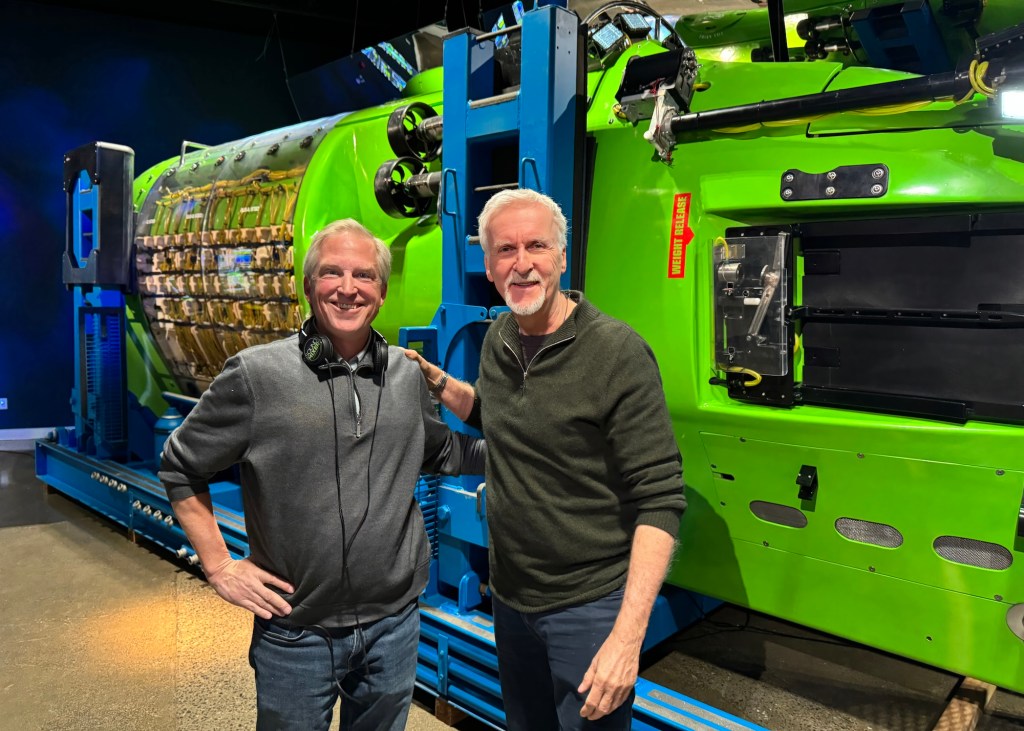
Some of our most prominent voices are also speaking out about the need to explore the ocean. I recently produced an hour-long episode of the PBS science program NOVA and one episode was about the new generation of submersibles being built right now by companies like Florida-based Triton Submarines. I had the privilege of talking to filmmaker and ocean explorer James Cameron, who was adamant that human participation in ocean exploration is critical to sustaining public interest and political will.
“The more you understand the ocean, the more you love the ocean, the more you’re fascinated by it, and the more you’ll fight to protect it,” Cameron told me.
The author with James Cameron in front of his submersible the Deepsea Challenger. (Erik Olsen)
Human eyes and brains pick up weak bioluminescence out of the corner of vision, pivot to follow a squid that just appeared at the edge of a light cone, or decide in the moment to pause and watch a behavior a diving team has never seen before. NOAA’s own materials explain the basic value of HOVs this way: you put scientists directly into the natural deep-ocean environment, which can improve environmental evaluation and sensory surveillance. Presence is a measurement instrument.
California is exactly where that presence would pay off. Think about Davidson Seamount, an underwater mountain larger than many national parks, added to the Monterey Bay National Marine Sanctuary because of its ancient coral gardens and extraordinary biodiversity. We know this place mostly through ROVs, and we should keep using them, but a California HOV could carry sanctuary scientists, MBARI biologists, and students from Hopkins Marine Station or Scripps into those coral forests to make fine-scale observations, sample with delicacy, and come home with stories that move the public. Put a student in that viewport and you create a career. Put a donor there and you create a program.
A time-lapse camera designed by MBARI engineers allowed researchers to observe activity at the Octopus Garden between research expeditions. (Photo: MBARI)
Cold seeps and methane ecology are another natural fit. Off Southern California and along the borderlands there are active methane seep fields with complex microbial and animal communities. Recent work near seeps has even turned up newly described sea spiders associated with methane-oxidizing bacteria, a striking reminder that the deep Pacific still surprises us. An HOV complements ROV sampling by letting observers linger, follow odor plumes by sight and instrument, and make rapid, in-situ decisions about fragile communities that are easy to miss on video. That kind of fine-grained exploration connects directly to California’s climate priorities, since methane processes in the ocean intersect with carbon budgets.
There are practical use cases all over the coast. A California HOV could support geohazard work on active faults and slope failures that threaten seafloor cables and coastal infrastructure. It could conduct pre- and post-event surveys at oil-and-gas seep sites in the Santa Barbara Channel to ground-truth airborne methane measurements. It could document deep-water MPA effectiveness where visual census by divers is impossible. It could make repeated visits to whale falls, oxygen minimum zone interfaces, or sponge grounds to study change across seasons.
An autonomous underwater craft used to map DDT barrels on the seafloor off California. (Photo: Scripps Institution of Oceanography at U.C. San Diego)
It could also play a crucial role in high-profile discoveries like the recent ROV surveys that revealed thousands of corroding barrels linked to mid-20th-century DDT dumping off Southern California. Those missions produced stark imagery of the problem, but a human-occupied dive would have allowed scientists to make on-the-spot decisions about barrel sampling, trace-chemical measurements, and sediment core collection, as well as to inspect surrounding habitats for contamination impacts in real time. The immediacy of human observation could help shape quicker, more targeted responses to environmental threats of this scale.
And it’s not just the seafloor that matters. Some of the most biologically important parts of the ocean lie well above the bottom. The ocean’s twilight zone, roughly 200 to 1,000 meters deep, is a vast, dimly lit layer that contains one of the planet’s largest reservoirs of life by biomass. (My dive with WHOI was done to study the ocean’s twilight zone). Every day, trillions of organisms participate in the planet’s largest migration, the diel vertical migration, moving up toward the surface at night to feed and returning to depth by day. This zone drives global carbon cycling, supports commercial fish stocks, and is home to remarkable gelatinous animals, squid, and deepwater fishes that are rarely seen in situ.
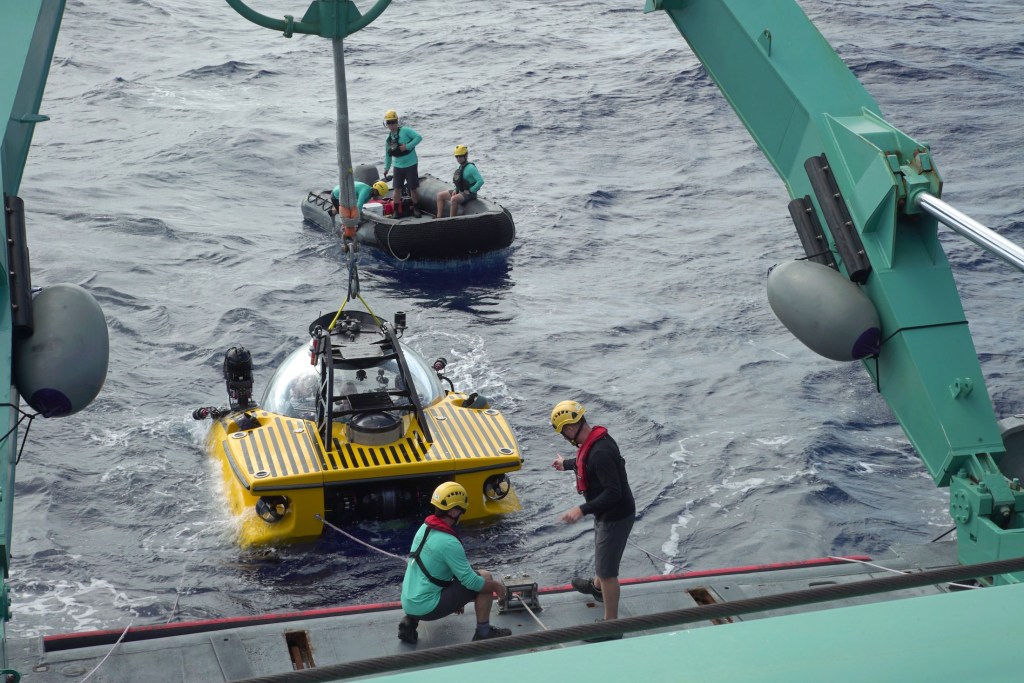
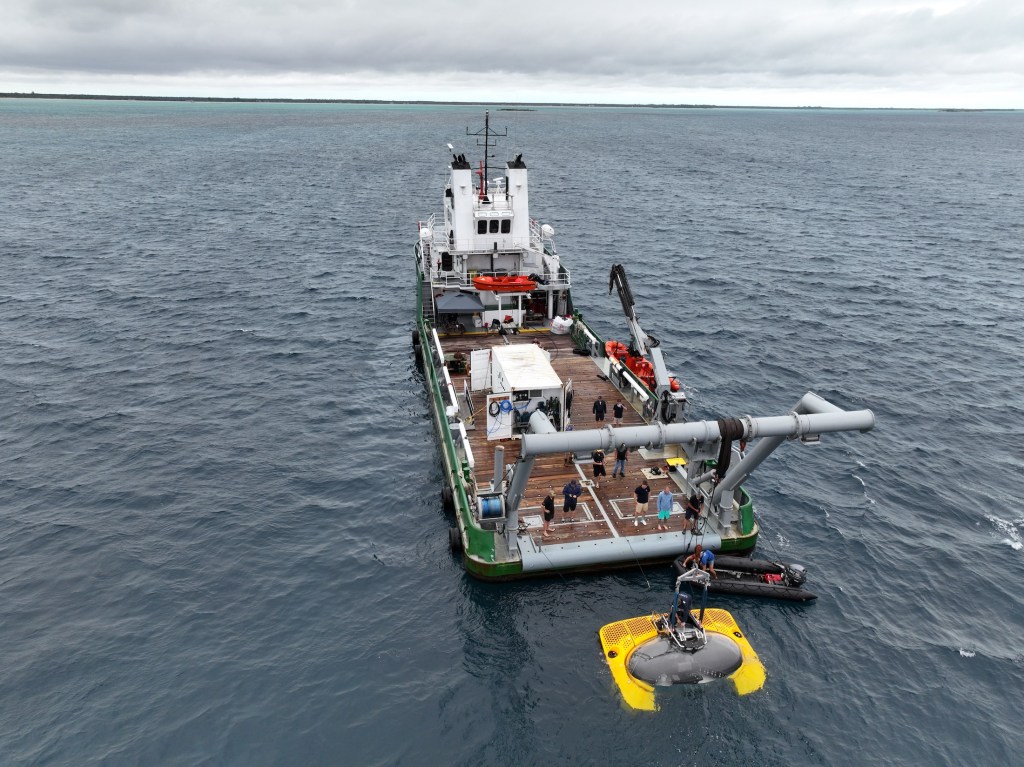
Launching the Triton 3300/3 (Photo: Erik Olsen)
The Triton 3300/3’s 1,000-meter depth rating (I’ve been in one twice) puts the entire twilight zone within reach, enabling direct observation of these daily movements, predator-prey interactions, and delicate species that often disintegrate into goo in nets. Human presence here allows scientists to make real-time decisions to follow unusual aggregations, sample with precision, and record high-quality imagery that captures how this midwater world works, something uncrewed systems alone rarely match.
It could even serve as a classroom at depth for carefully designed outreach dives, giving educators footage and first-person accounts that no livestream can quite match. Each of these missions is stronger with people on site, conferring, pointing, deciding, and noticing.
While Monterey Bay would be a natural fit because of MBARI, Hopkins, and the sanctuary’s deepwater treasures, Southern California could be just as compelling. Catalina Island, with its proximity to submarine canyons, coral gardens, and cold seeps of the Southern California Bight, offers rich science targets and the existing facilities of USC’s Wrigley Marine Science Center. Los Angeles or Long Beach would add the advantage of major port infrastructure and a vast urban audience, making it easier to combine high-impact research with public tours, donor events, and media outreach. And San Diego with its deep naval history, active maritime industry, Scripps Institution of Oceanography, and proximity to both U.S. and Mexican waters, could serve as a southern hub for exploration and rapid response to discoveries or environmental events. These regions could even share the vehicle seasonally: Monterey in summer for sanctuary work, Catalina/LA or San Diego in winter for Southern California Bight missions, spreading both benefits and funding responsibility.
The author in front of the Triton 3300/3 in the Bahamas (Photo: Erik Olsen)
For budgeting, a proven benchmark is the Triton 3300/3, a three-person, 1,000-meter (3,300-foot) human-occupied vehicle used widely in science and filming. New units are quoted in the four to five million dollar range, with recent builds coming in around $4–4.75 million depending on specifications. Beyond the vehicle, launch and recovery systems such as a 25–30-ton A-frame or LARS and the deck integration required for a suitable support ship can run into the high six to low seven figures. Modern acrylic-sphere subs like the Triton are designed for predictable, minimized scheduled maintenance, but budgets still need to account for annual surveys, battery service, insurance, and ongoing crew training. Taken together, a California-based HOV program could be launched for an initial capital investment of roughly $6–7 million, with operating budgets scaled to the number of missions each year. So, not cheap. But doable for someone of means and purpose and curiosity. See below.
Who would benefit if California restored this capability? Everyone who already works here. MBARI operates a world-class fleet of ROVs and AUVs but has no resident HOV. Scripps Institution of Oceanography, Hopkins Marine Station, and USC’s Wrigley Marine Science Center train generations of ocean scientists who rarely get the option to do HOV work without flying across the country and waiting for a slot. NOAA and the sanctuaries need efficient ways to inspect resources and respond to events. A west-coast human-occupied research submersible based in Monterey Bay, Catalina, Los Angeles, or San Diego would plug into ship time on vessels already here, coordinate with ROV teams for hybrid dives, and cut mobilization costs for Pacific missions.
A new Triton 660 AVA submersible slips into the turquoise waters of the Bahamas, beginning its first voyage. Built for dives to 660 feet (200 meters), it offers passengers a front-row seat to reefs, shipwrecks, and marine life far beyond normal scuba limits, making it an ideal draw for high-end tourism. (Photo: Erik Olsen)
What would it take? A benefactor and a compact partnership. California has the donors (hello, curious billionaires!), companies, and public-private institutions to do this right. A philanthropic lead gift could underwrite acquisition of a proven, classed HOV and its support systems, while MBARI, Scripps, or USC could provide engineering, pilots, and safety culture within the UNOLS standards that govern HOV operations. No OceanGates. Alvin’s long record shows the model. Add a state match for workforce and student access, and a sanctuary partnership to guarantee annual science priorities, and you have a durable program that serves research, stewardship, and public engagement.
Skeptics will say that robots already do the job. They do a lot of it. They do not do all of it. If the U.S. is content to have only one deep research HOV based on the opposite coast, we will forego the unique perspectives and serendipity that only people bring, and we will keep telling California students to wait their turn or watch the ROV feed from their laptops or phones. California can do better. We did, for years, when the Delta sub spent long seasons quietly counting fish and mapping habitats off Ventura and the Channel Islands. Then that capability faded. If we rebuild it here, we restore a missing rung on the ladder from tidepools to trenches, and we align the state’s science, climate, and education missions with a tool that is both a laboratory and a conversion experience.
The author at more than 2000 feet beneath the surface of the ocean. (Photo: Erik Olsen)
Start with a compact, 1,000-meter-class HOV that can work daily in most of California’s shelf and slope habitats. Pair it with our ROVs for tandem missions and cinematography of the sub and its occupants in action. Commit a share of dives to student and educator participation, recorded and repackaged for museums and broadcast. Reserve another share for rapid-response science at seeps, landslides, unusual biological events, or contamination crises like the DDT dumpsite. Build a donor program around named expeditions to Davidson Seamount, Catalina’s coral gardens, and the Channel Islands. Then, if the community wants to go deeper, plan toward a second vehicle or an upgrade path. The science is waiting. The coast is ready. And the case is clear. California should restore its human-occupied submersible fleet.
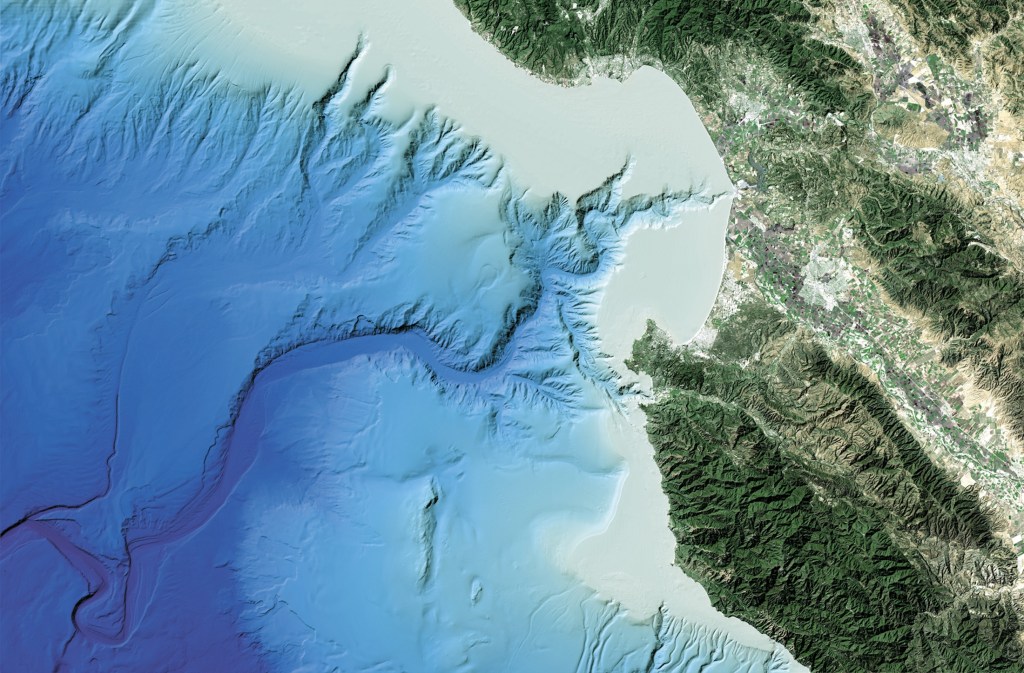
Monterey Canyon stretches nearly 95 miles out to sea, plunging over 11,800 feet into the depths—one of the largest submarine canyons on the Pacific Coast, hidden beneath the waves. (Courtesy: Monterey Bay Aquarium Research Institute MBARI)
Standing at Moss Landing, a quaint coastal town known for its fishing heritage, bustling harbor, and the iconic twin smokestacks of its power plant, you might never guess that a massive geological feature lies hidden beneath the waves. From this unassuming spot on the California coast, Monterey Canyon stretches into the depths, a colossal submarine landscape that rivals the grandeur of the Grand Canyon itself.
Monterey Canyon, often called the Grand Canyon of the Pacific, is one of the largest and most fascinating submarine canyons in the world. Stretching over 95 miles from the coast of Monterey, California, and plunging to depths exceeding 3,600 meters (11,800 feet), this underwater marvel rivals its terrestrial counterpart in size and grandeur. Beneath the surface of Monterey Bay, the canyon is a hotspot of geological, biological, and scientific exploration, offering a window into Earth’s dynamic processes and the mysterious ecosystems of the deep sea.
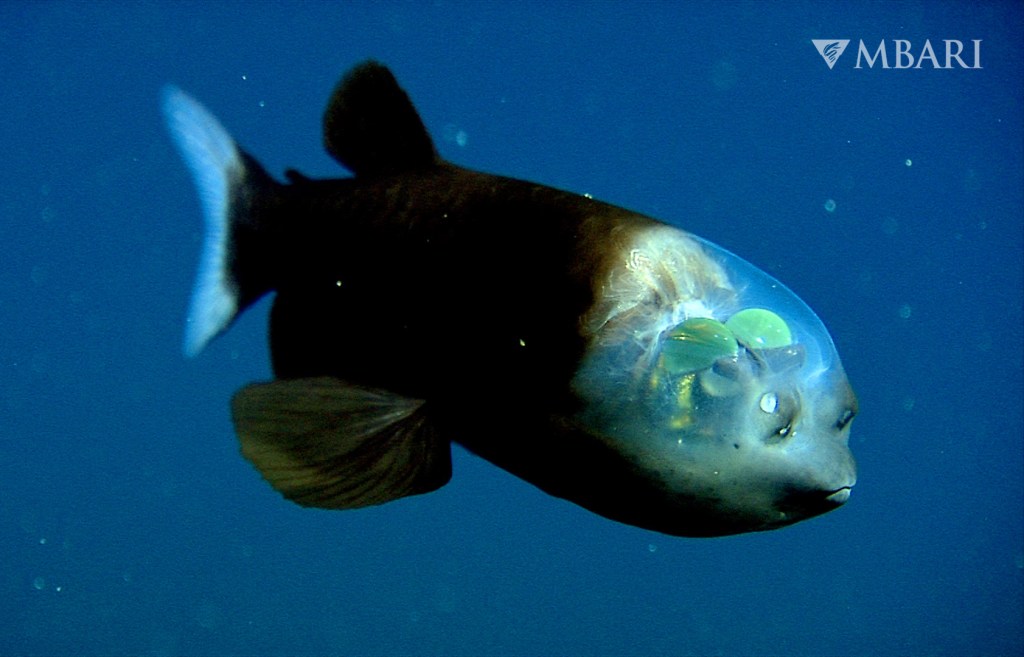
Drifting through the depths of Monterey Canyon, the elusive barreleye fish reveals its transparent head and tubular eyes—an evolutionary marvel perfectly adapted to the dark, mysterious waters off Monterey Bay. (Courtesy: Monterey Bay Aquarium Research Institute MBARI)
Monterey Canyon owes its impressive scale and structure to the patient yet powerful forces of geological time. Formed over millions of years, Monterey Canyon has been shaped by a range of geological processes. One prevailing theory is that the canyon began as a river channel carved by the ancestral Salinas River, which carried sediments from the ancient Sierra Nevada to the ocean. As sea levels fluctuated during ice ages, the river extended further offshore, deepening the canyon through erosion. Another hypothesis points to tectonic activity along the Pacific Plate as a significant factor, creating fault lines and uplifting areas around the canyon while subsidence allowed sediment to accumulate and flow into the deep. These forces, combined with powerful turbidity currents—underwater landslides of sediment-laden water—worked in tandem to sculpt the dramatic contours we see today. Together, one or several of these processes forged one of Earth’s most dramatic underwater landscapes.
While the geology is awe-inspiring, the biology of Monterey Canyon makes it a living laboratory for scientists. The canyon is teeming with life, from surface waters to its darkest depths. Near the top, kelp forests and sandy seafloors support a wide variety of fish, crabs, and sea otters, while the midwater region, known as the “twilight zone,” is home to bioluminescent organisms like lanternfish and vampire squid that generate light for survival. Lanternfish, for example, employ bioluminescence to attract prey and confuse predators, while vampire squid use light-producing organs to startle threats or escape unnoticed into the depths. In the canyon’s deepest reaches, strange and hardy creatures thrive in extreme conditions, including the ghostly-looking Pacific hagfish, the bizarre gulper eel, and communities of tube worms sustained by chemical energy from cold seeps.
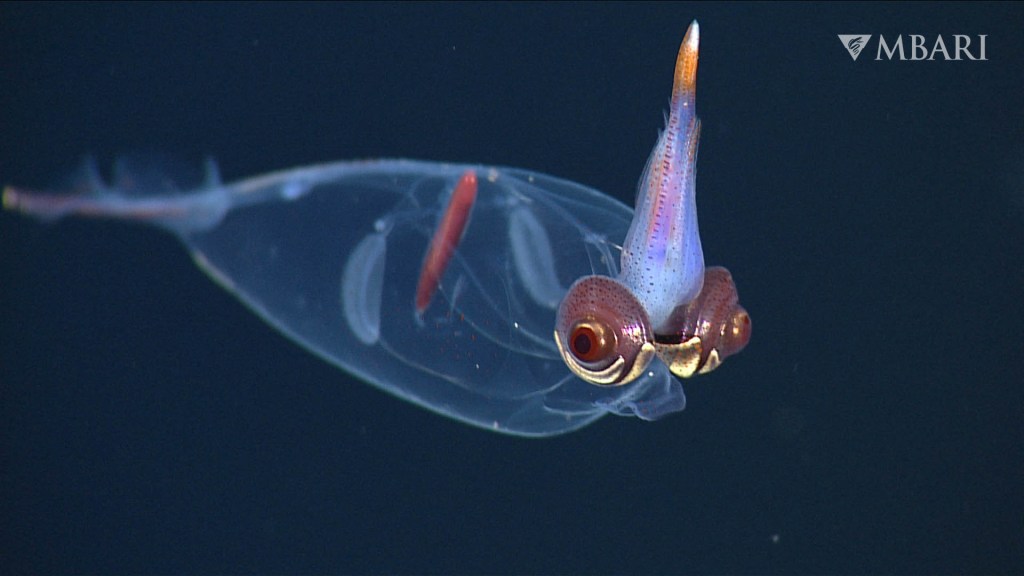
A vampire squid (Vampyroteuthis infernalis) observed by MBARI’s remotely operated vehicle (ROV) Tiburon in the outer Monterey Canyon at a depth of approximately 770 meters. (Courtesy: Monterey Bay Aquarium Research Institute MBARI)
The barreleye fish, captured in stunning video footage by MBARI, is one of the canyon’s most fascinating inhabitants. This deep-sea fish is known for its’ domed transparent head, which allows it to rotate its upward-facing eyes to track prey and avoid predators in the dimly lit depths. Its unique adaptations highlight the remarkable ingenuity of life in the deep ocean. Countless deep-sea creatures possess astonishing adaptations and behaviors that continue to amaze scientists and inspire awe. Only in recent decades have we gained the technology to explore the depths and begin to uncover their mysteries.
The canyon’s rich biodiversity thrives on upwelling currents that draw cold, nutrient-rich water to the surface, triggering plankton blooms that sustain a complex food web. This process is vital in California waters, where it supports an astonishing array of marine life, from deep-sea creatures to surface dwellers like humpback whales, sea lions, and albatrosses. As a result, Monterey Bay remains a crucial habitat teeming with life at all levels of the ocean.
A woolly siphonophore (Apolemia lanosa) observed by MBARI’s remotely operated vehicle (ROV) Tiburon in the outer Monterey Canyon at a depth of 1,200 meters. (Courtesy: Monterey Bay Aquarium Research Institute MBARI)
What sets Monterey Canyon apart is the sheer accessibility of this underwater frontier for scientific exploration. The canyon’s proximity to the shore makes it a prime research site for organizations like the Monterey Bay Aquarium Research Institute (MBARI). Using remotely operated vehicles (ROVs) and advanced oceanographic tools, MBARI scientists have conducted groundbreaking studies on the canyon’s geology, hydrology, and biology. Their research has shed light on phenomena like deep-sea carbon cycling, the behavior of deepwater species, and the ecological impacts of climate change.
This animation, the most detailed ever created of Monterey Canyon, combines ship-based multibeam data at a resolution of 25 meters (82 feet) with high-precision autonomous underwater vehicle (AUV) mapping data at just one meter (three feet), revealing the canyon’s intricate underwater topography like never before.
MBARI’s founder, the late David Packard, envisioned the institute as a hub for pushing the boundaries of marine science and engineering, and it has lived up to this mission. Researchers like Bruce Robison have pioneered the use of ROVs to study elusive deep-sea animals, capturing stunning footage of creatures like the vampire squid and the elusive giant siphonophore, a colonial organism that can stretch over 100 feet, making it one of the longest animals on Earth.
Bruce Robison, deep-sea explorer and senior scientist at MBARI, has spent decades uncovering the mysteries of the ocean’s twilight zone, revealing the hidden lives of deep-sea creatures in Monterey Canyon. (Photo: Erik Olsen)
Among the younger generations of pioneering researchers at MBARI, Kakani Katija stands out for her groundbreaking contributions to marine science. Katija has spearheaded the development of FathomNet, an open-source image database that leverages artificial intelligence to identify and count marine animals in deep-sea video footage, revolutionizing how researchers analyze vast datasets. Her work has also explored the role of marine organism movements in ocean mixing, revealing their importance for nutrient distribution and global ocean circulation. These advancements not only deepen our understanding of the deep sea but also showcase how cutting-edge technology can transform our approach to studying life in the deep ocean.
Two leading scientists at MBARI, Steve Haddock and Kyra Schlining, have made groundbreaking discoveries in Monterey Canyon, expanding our understanding of deep-sea ecosystems. Haddock, a marine biologist specializing in bioluminescence, has revealed how deep-sea organisms like jellyfish and siphonophores use light for communication, camouflage, and predation. His research has uncovered new species and illuminated the role of bioluminescence in the deep ocean. Schlining, an expert in deep-sea video analysis, has played a key role in identifying and cataloging previously unknown marine life captured by MBARI’s remotely operated vehicles (ROVs). Her work has helped map the canyon’s biodiversity and track environmental changes over time, shedding light on the delicate balance of life in this hidden world.
A peacock squid (Taonius sp.) observed by one of MBARI’s remotely operated vehicles. (Courtesy: Monterey Bay Aquarium Research Institute MBARI)
Monterey Canyon continues to inspire curiosity and collaboration. Its unique conditions make it a natural laboratory for testing cutting-edge technologies, from autonomous underwater vehicles to sensors for tracking ocean chemistry. The canyon also plays a vital role in education and conservation efforts, with institutions like the Monterey Bay Aquarium engaging visitors and raising awareness about the importance of protecting our oceans.
As we venture deeper into Monterey Canyon—an astonishing world hidden just off our coast—we find ourselves with more questions than answers. How far can life push its limits? How do geology and biology shape each other in the depths? And how are human activities altering this fragile underwater landscape? Yet with every dive and every discovery, we get a little closer to unraveling the mysteries of one of Earth’s last great frontiers: the ocean.
If you’ve ever looked out at the vastness of the ocean, you might think it’s a uniformly barren and flat landscape below the tranquil or tempestuous waves. But you’d be mistaken. Imagine for a moment a hidden world of underwater mountains, volcanoes that never broke the water’s surface, all lying in the mysterious depths of the ocean. These enigmatic formations are known as seamounts, and off the coast of California, they constitute an environment as fascinating as it is vital.
Interestingly, a lot of these seamounts off California are actually relatively new to science. According to Robert Kunzig and his book Mapping the Deep: “In 1984, a sidescan survey off southern California revealed a hundred uncharted seamounts, or undersea volcanoes, in a region that had been thought to be flat.”
The genesis of these structures begins with a geologic process known as plate tectonics. As tectonic plates move beneath the Earth’s crust, they create hotspots of molten rock. This magma escapes through weak points in the crust and solidifies as it reaches the cold seawater, gradually building up into an undersea mountain. After thousands of years, a seamount is born. Most of California’s seamounts are conical in shape, though erosion and other geological forces can turn them into more complex formations over time.
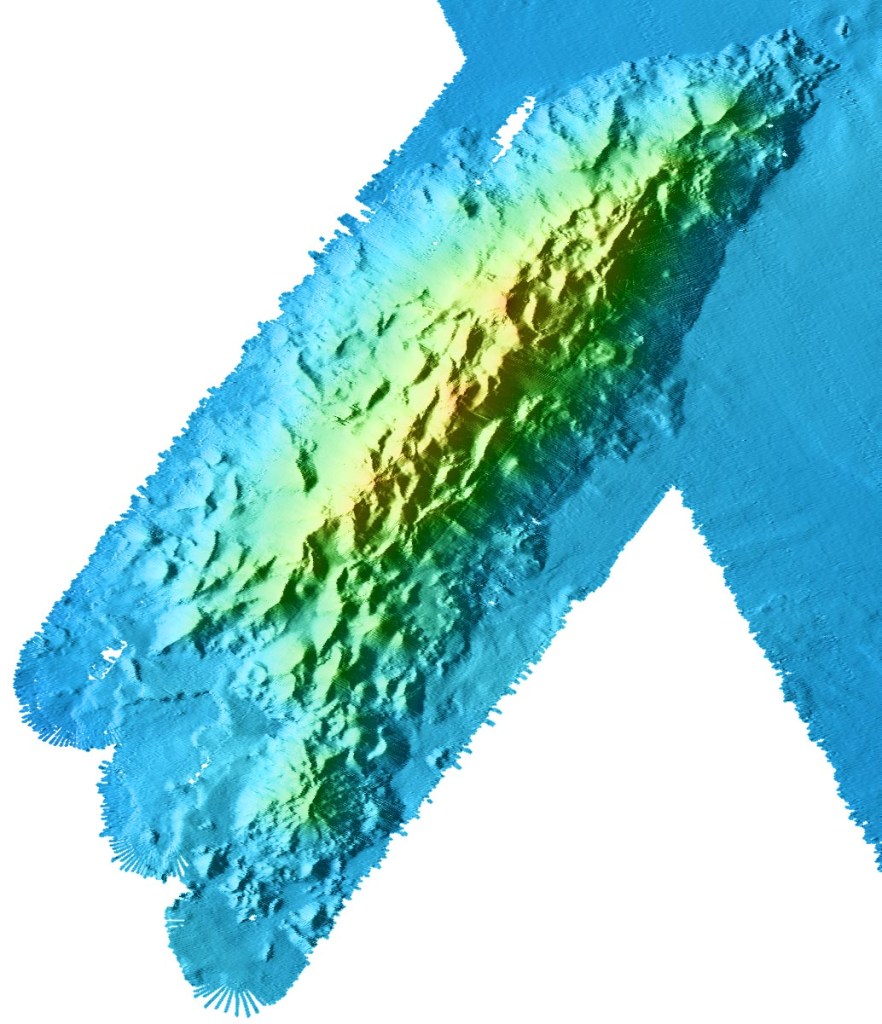
Each seamount is a world unto itself, with distinct mineral compositions, shapes, and ecosystems. Recent research has energized the scientific community. For instance, the Davidson Seamount is the most well-known of these volcanoes and was the first underwater peak to be named a seamount. The seamount is named for George Davidson, a British pioneering scientist and surveyor. Located about 80 km (50 miles) off the coast of Big Sur, it’s shaped like an elongated arrowhead made up of several parallel ridges of sheer volcanic cones. Most of these erupted about 10-15 million years ago, and are made up 320 cubic km of hawaiite, mugearite, and alkalic basalt, the basalt types commonly found along spreading ridges like the Mid-Atlantic Ridge.
Davidson Seamount, Wikipedia
The sheer number of seamounts only began to emerge when new detection methods were developed, including the ability to spot them from space. These underwater mountains are so massive that they create a gravitational pull, drawing seawater slightly toward their center of mass, much like the moon’s pull generates tides. Since seawater is incompressible, it doesn’t compress around the seamounts but instead forms slight bulges on the ocean surface. Satellites can detect these bulges, helping locate the hidden, basaltic peaks below. Satellite studies suggest that the largest seamounts—those over 5,000 feet—may number anywhere from thirty thousand to over one hundred thousand worldwide, with high concentrations in the central Pacific, Indian, and Atlantic Oceans, around Antarctica, and in the Mediterranean. Each of these seamounts is an underwater volcano, typically lining mid-ocean ridges, subduction zones, or one of the forty to fifty oceanic hot spots where the earth’s crust is thin and magma rises from the mantle.
Davidson Seamount is by far the best-studied of the many seamounts off the California coast. Stretching a sprawling 26 miles in length and spanning 8 miles across, this colossal seamount ranks among the largest known formations of its kind in U.S. territorial waters. Towering at a remarkable 7,480 feet from its base to its peak, the mountain remains shrouded in the depths, with its summit situated a substantial 4,101 feet beneath the ocean’s surface. Studies have indicated that some seamounts contain deposits of rare earth elements, which could have potential economic importance in the future.
A rorqual whale fall found near Davidson Seamount at a depth of 3,200 meters. Photo Credit: Chad King / OET, NOAA
Seamounts are biodiversity hotspots. Boasting an incredibly diverse range of deep-sea corals, Davidson Seamount serves as a kind of underwater Eden. Often referred to as “An Oasis in the Deep,” this submerged mountain is a bustling metropolis of marine life, featuring expansive coral forests and sprawling sponge fields. But it doesn’t stop there—crabs, deep-sea fishes, shrimp, basket stars, and a host of rare and still-unidentified bottom-dwelling creatures also call this place home. The seamount is more than just a biologically rich environment; it’s a treasure trove of national importance for its contributions to ocean conservation, scientific research, education, aesthetics, and even history.
Map of seamounts along the California coast. (Marine Conservation Institute)
Perhaps the most astonishing discovery at Davidson Seamount occurred in 2018, when scientists discovered the “Octopus Garden,” the largest known aggregation of octopuses in the world. The garden is about two miles deep and was discovered by researchers on the research vessel (RV) Nautilus. The team of scientists initially spotted a pair of octopuses through a camera on a remotely operated vehicle (ROV). Amanda Kahn, an ecologist at Moss Landing Marine Laboratories and San Jose State University, who was on the Nautilus during the discovery, told Scientific American that after observing the pair for a bit, the operators started to drift away from the rocks to move on, but immediately saw something unusual. “Up ahead of us were streams of 20 or more octopuses nestled in crevices,” Kahn says.
Typically lone wanderers of the ocean, octopuses aren’t known for their social gatherings. So, when researchers stumbled upon more than just one or two of these creatures, they knew something out of the ordinary was afoot. Swiftly pivoting from their original plans, the team zeroed in for a closer look. What they found was a community of these grapefruit-sized, opalescent octopuses, along with something even more mysterious—unusual shimmers in the surrounding water, hinting at the existence of some kind of underwater fluid seeps or springs. It turns out the octopuses migrate to deep-sea hydrothermal springs to breed. The females brood their eggs in the garden, where it is warmer than surrounding waters.
“This Octopus Garden is by far the largest aggregate of octopuses known anywhere in the world, deep-sea or not,” James Barry, a benthic ecologist at the Monterey Bay Aquarium Research Institute told Scientific American. Barry is the leader of the new study, published on in August in Science Advances, that reveals why the animals are gathering. The researchers have observed over 5,700 Pearl octopuses (Muusoctopus robustus) breeding near Davidson Seamount, 3,200 meters below the ocean’s surface. In this deep-sea nursery, octopus mothers keep their eggs warm in 5°C waters flowing from a hydrothermal spring. The water is more than 3°C warmer than the surrounding ocean. This added warmth accelerates the embryos’ development, allowing them to fully mature in just under two years on average.
The Octopuses Garden was studied over the course of 14 dives with MBARI’s remotely operated vehicle (ROV) Doc Ricketts. It is within the Monterey Bay National Marine Sanctuary, so it is federally protected against exploitation and extraction., although many scientists are concerned that global warming could end up having a deleterious impact on the biological life found around seamounts.
So far scientists have discovered other octopus gardens around the globe. There are four deep-sea octopus gardens in total. Two are located off the coast of Central California and two are off the coast of Costa Rica.
New technological advancements like Remotely Operated Vehicles (ROVs) have recently opened doors to discoveries we never thought possible. Cutting-edge imaging technology has finally given us the ability to capture strikingly clear and high-resolution pictures from this enigmatic deep-sea habitat. These vivid images provide both the scientific community and the general public with unprecedented peeks into the lives of rare marine species inhabiting this mostly cold and dark underwater world.
Depth color-coded map of Monterey Canyon. (Monterey Bay Aquarium Research Institute)
Davidson Seamount’s proximity to the rich educational and research ecosystem in the Monterey Bay area. One of the world’s preeminent ocean research organizations, the Monterey Bay Research Institute (MBARI), is located in Moss Landing, California, right at the spot where the magnificent Monterey Canyon stretches away from the coast for hundreds of miles. This geographic boon makes it easier for interdisciplinary teams to join forces, enriching our understanding and educational outreach related to this uniquely captivating undersea landscape.
Beyond being hubs of biodiversity, seamounts also serve as waypoints for migratory species. Just like rest stops along a highway, these underwater mountains provide food and shelter for creatures like whales and tuna on their long journeys. This makes seamounts critical for the health of global marine ecosystems. Additionally, understanding seamounts could give us insights into climate change. They play a role in ocean circulation patterns, which, in turn, affect global weather systems. They are also excellent “archives” of long-term climate data, which could help us understand past climate variations and predict future trends.
Advances in underwater technology, like ROVs, autonomous submersibles and better remote sensing methods, are making it easier to study these mysterious mountains. But many questions still remain unanswered. For instance, how exactly do seamount ecosystems interact with surrounding marine environments? What are the long-term impacts of human activities, like deep-sea mining or overfishing, on these fragile habitats? And what untapped resources, both biological and mineral, lie waiting in these submerged summits?
A time-lapse camera designed by MBARI engineers allowed researchers to observe activity at the Octopus Garden between research expeditions. (Photo: MBARI)
We can wax poetic about the mysteries of seamounts, but understanding them better is crucial for the preservation of marine ecosystems and for equipping ourselves with the knowledge to tackle environmental challenges. So, the next time you look out over the ocean, consider the hidden worlds lying beneath those waves—each a bustling metropolis of life and a potential goldmine of scientific discovery.