Turning the steady motion of the Pacific into clean electricity, Eco Wave Power’s pilot at the Port of Los Angeles tests whether wave energy can become a real piece of California’s renewable future.
Eco-Wave’s Wave Energy Station at the Port of Los Angeles (Photo: Erik Olsen)
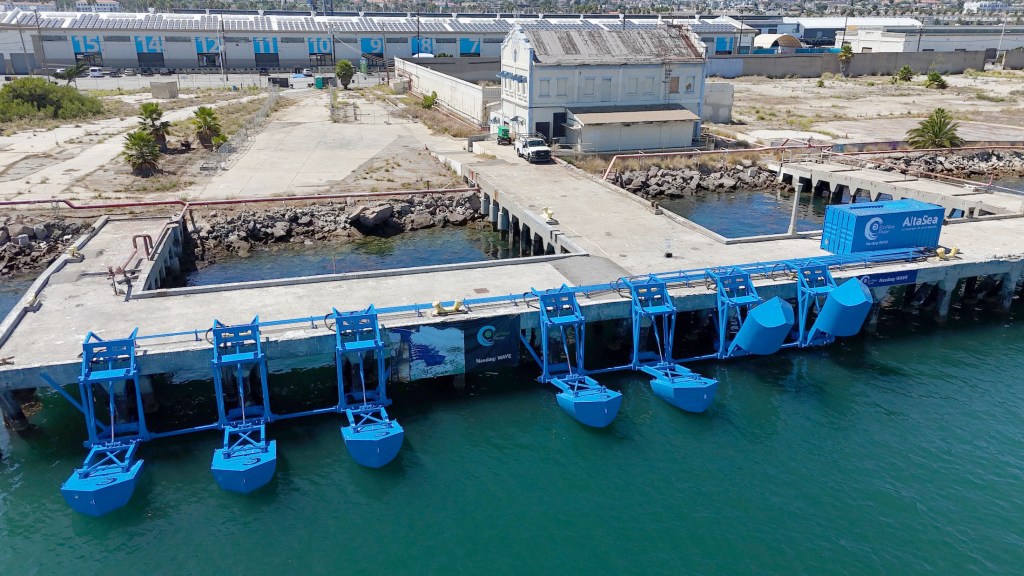
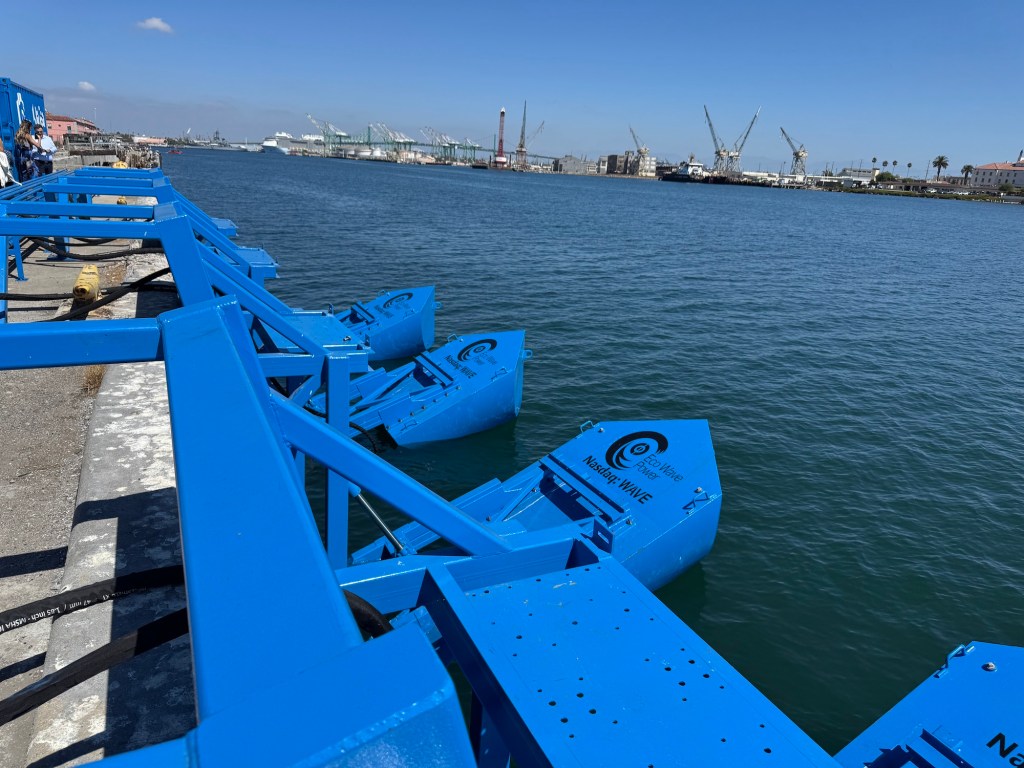
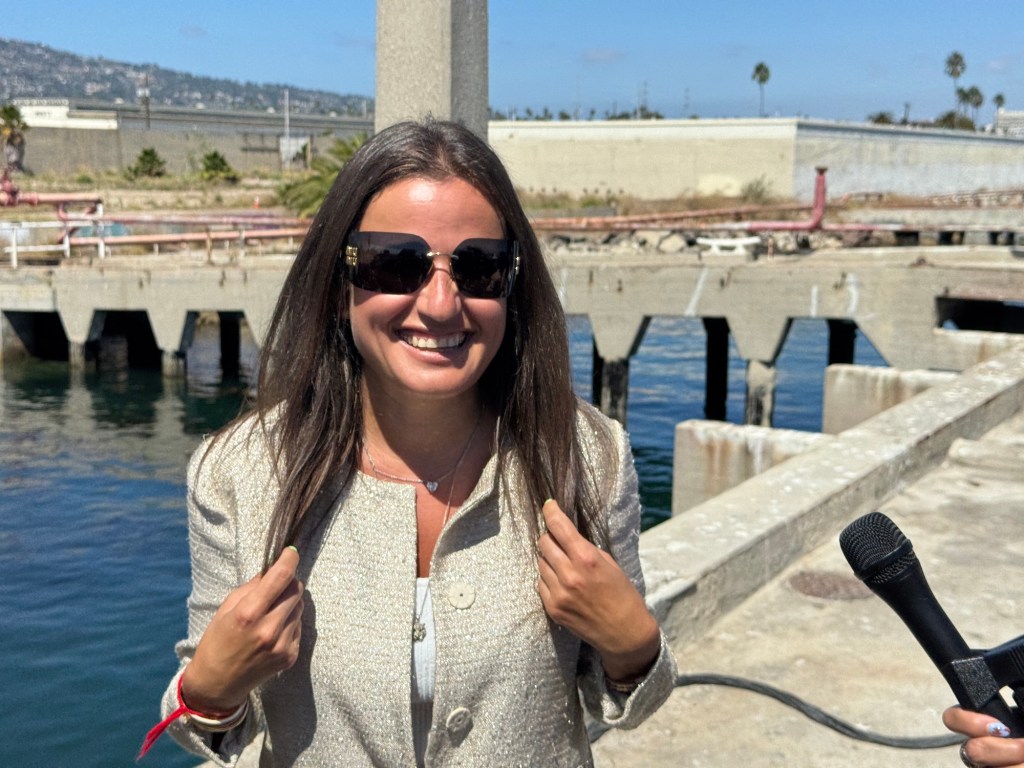
Earlier this week at the Port of Los Angeles, I stood with my colleague Tod Mesirow as a blue ribbon was cut and seven steel floaters dipped into the tide at AltaSea Marine Center in San Pedro. It was a milestone moment: the first onshore wave-energy project in the United States.
Wave energy is the process of converting the up-and-down motion of ocean waves into electricity. Engineers have been experimenting with the idea for decades, with pilot projects around the world, but very little major success. While no country has yet deployed wave power at large scale, efforts like this onshore wave-energy project in the United States aim to prove it can become a reliable part of the renewable mix.
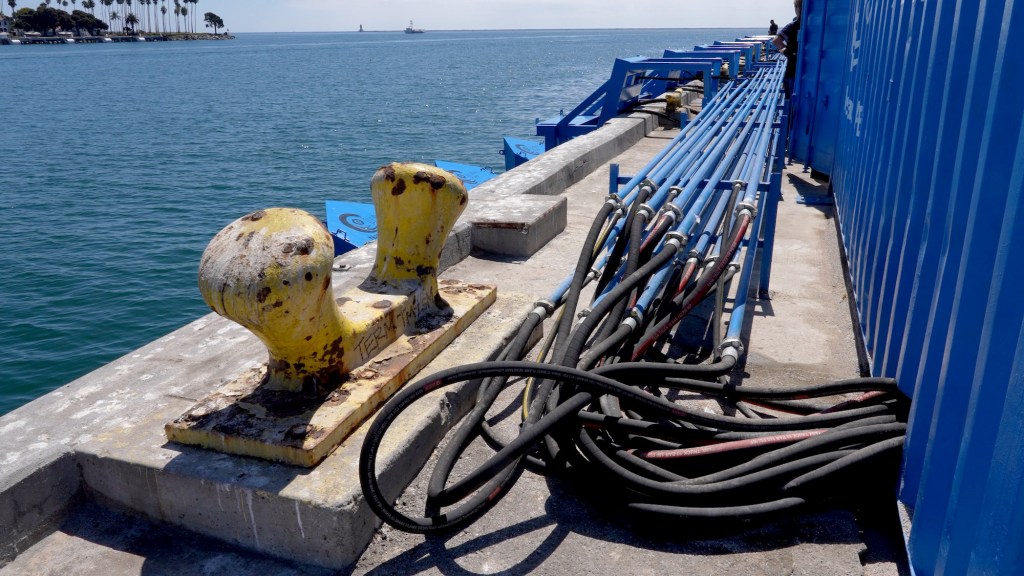
Hydraulic hoses outside the Eco Wave Power container channel pressurized, eco-friendly fluid from the rising and falling floats. This motion drives pistons that power a generator, turning the steady rhythm of small waves along the Port of Los Angeles into clean electricity ready for the grid. (Photo: Erik Olsen)
Eco Wave Power, the company behind the technology, framed the event as the beginning of a new chapter in renewable energy, one that could eventually bring the restless motion of the sea onto the grid on a meaningful scale. As my instagram feed will attest, big waves contain a lot of power (the algorithm knows I love big wave surfing). But that’s not what this project is about. Instead, it relies on the small, steady waves that are almost always present along the California coast. Each rise and fall pushes eco-friendly hydraulic fluid through a system of pistons and pipes, building pressure that drives a motor connected to a generator. The process transforms the ocean’s rhythm into electricity, which can then be fed into the nearby grid. This approach doesn’t depend on dramatic swells, but on the reliable pulse of the sea.
Inna Braverman, the CEO of Eco-Wave told me that the pilot project’s small capacity is a proof of concept for a much larger series of installations along the California coast. “The installed capacity of this conversion unit is 100 kilowatts,” Braverman says. “The amount of power actually generated depends on the height and the weight period of the waves. So, 100 kilowatt installed capacity is up to 100 households.”
The choice of location is not incidental. The Port of Los Angeles is one of the busiest harbors in the world, lined with piers, breakwaters, and aging industrial structures that provide ideal platforms for attaching wave-energy devices. Unlike offshore wind, which requires building foundations in open water, Eco Wave Power’s design capitalizes on existing waterfront infrastructure, keeping costs lower and operations more accessible. The port also happens to be surrounded by electrical infrastructure, with substations and transmission lines nearby. That means energy generated by the floaters can be quickly sent into the grid, without the long and costly buildouts often required for renewable projects in remote places. And perhaps most importantly, this demonstration is unfolding at the doorstep of greater Los Angeles, a region of nearly 19 million people where clean energy demand is immense. To test wave power here is to bring it directly into the heart of a major population center, where its success or failure will matter on a national scale.
Harnessing the Pacific’s rhythm, Eco Wave Power’s bright blue floats rise and fall along the Port of Los Angeles breakwater, marking the nation’s first onshore wave-energy project and a new experiment in turning ocean motion into clean electricity. (Photo: Erik Olsen)
Congresswoman Nanette Díaz Barragán called the project “history in the making” and tied it to her proposed $1 billion Marine Energy Technologies Acceleration Act, aimed at scaling up wave and tidal systems nationwide. California has already passed Senate Bill 605, directing the creation of a wave-energy roadmap, and local leaders like Port of Los Angeles officials spoke of the technology as a key tool to help the San Pedro Bay port complex reach its zero-emission goal within the next decade.
For Eco Wave Power, this was not just a ribbon cutting but the opening of a U.S. market that has long been cautious about marine renewables. Braverman announced future projects in Taiwan, India, and Portugal, while partners from Africa described feasibility studies in South Africa and Kenya. Taiwan’s pilot at Suao Port could grow to 400 megawatts, while the Port of Ngqura in South Africa is being studied as a showcase for diversifying away from coal.
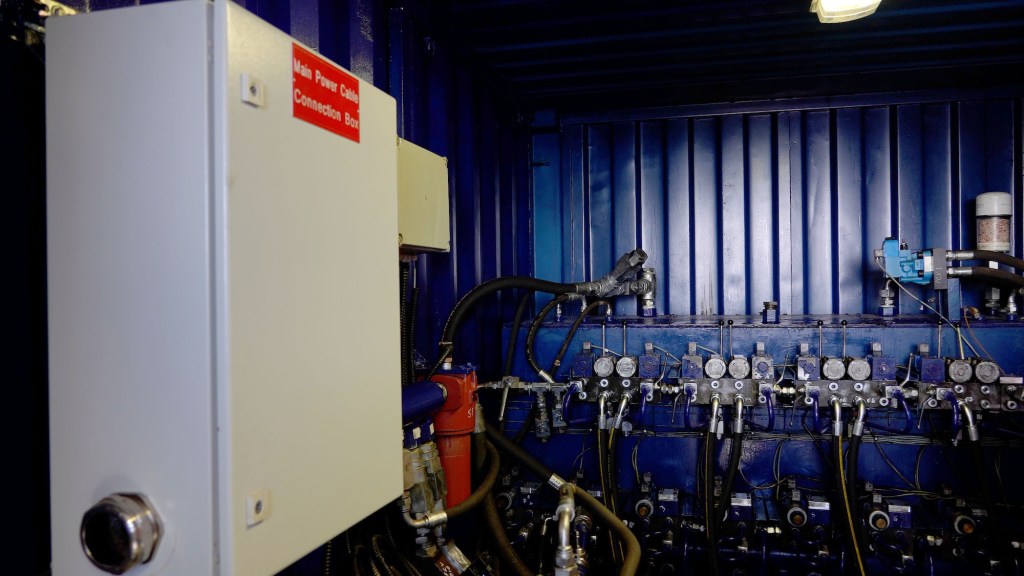
Inside the power container at the Port of Los Angeles, hydraulic fluid from the rising and falling floats is pressurized to drive a generator, transforming the steady rhythm of the ocean into clean electricity ready to be fed into the grid. (Photo: Erik Olsen)
The optimism is real, but the facts are more sobering. Wave energy has been tested in several places around the globe, often with promising beginnings but mixed long-term outcomes. The Mutriku plant in Spain has generated steady power for more than a decade, but at modest efficiency. Sweden’s Sotenäs project closed after just a few years of operation. The ocean is brutal on hardware: salt, storms, and marine growth wear down even the best-engineered devices. Costs remain high, and grid-scale capacity is far from proven.
Still, the potential is undeniable. The International Energy Agency estimates that global wave and tidal power could, in theory, supply a significant fraction of the world’s electricity needs. Unlike solar or wind, waves are relatively constant, offering a stable, predictable form of renewable generation. That reliability could make wave energy an important complement to other renewables, especially as grids grow more complex and storage remains expensive.
Inna Braverman, founder and CEO of Eco Wave Power, speaks at the ribbon-cutting ceremony at the Port of Los Angeles, celebrating the launch of the nation’s first onshore wave-energy project and highlighting the technology’s potential to turn the ocean’s motion into clean, renewable electricity (Photo: Erik Olsen)
But honesty requires saying wave power will not, on its own, solve the climate crisis. It is a piece of the puzzle, not the whole picture. The bulk of clean energy in the near term will continue to come from solar and wind, with geothermal, hydropower, and nuclear filling important roles. If wave energy finds its footing, it will likely be as a regional player, most valuable in countries with long, energetic coastlines and strong political will to diversify.
Watching the floaters rise and fall yesterday, we could sense the tension between ambition and reality. This pilot is small, but it demonstrates a willingness to try something new, to take the step from research tank to open water. Braverman called it “opening the door to a new era of clean energy.” That door may open slowly, and perhaps only partway, but the act of trying matters. The ocean is vast and restless, and if we can learn to work with it, wave energy could one day be one of the many forces nudging us toward a sustainable future.
The ocean covers about 70 percent of Earth’s surface and holds 96 percent of its water. But because it’s saturated with salt, it isn’t drinkable. Sailors have known this for centuries, and that’s a profound challenge for California, with more than 800 miles of coastline and a history of drought that has persisted for over two decades despite occasional relief from heavy rains.
Remember those rains?
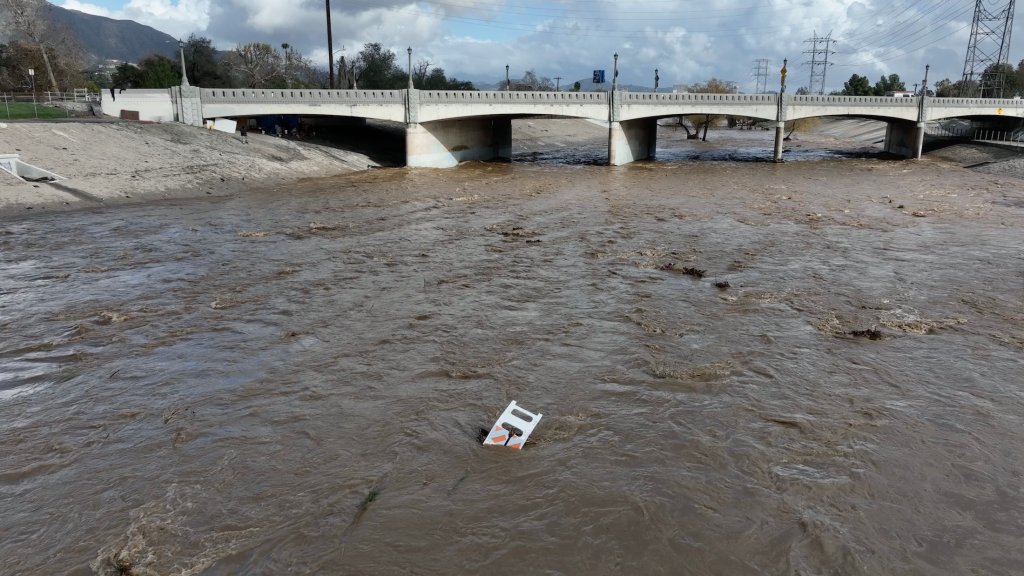
The atmospheric rivers of 2024 in California briefly filled reservoirs and restored snowpack, but drought has already returned to parts of the state, underscoring the state’s precarious water future and fueling renewed debate over desalination as a long-term water solution.
The Los Angeles Rifer flows high following atmospheric river storms in 2024 (Photo: Erik Olsen)
Several regions facing severe drought have turned to desalination with notable success. Israel now supplies up to 40 percent of its domestic water through desalination and is widely recognized as a global leader in technological innovation. In the Gulf, countries like Saudi Arabia, the United Arab Emirates, Kuwait, and Qatar depend heavily on desalinated water, with the region producing roughly 40 percent of the world’s supply of desal. Saudi Arabia’s Ras Al-Khair plant, for example, is the largest hybrid desalination facility in the world. Australia has also invested heavily, with Adelaide’s desalination plant able to provide up to half of the city’s water and ramping up to full capacity during the 2024–2025 drought.
By contrast, California, the world’s fourth-largest economy, continues to struggle with recurring droughts despite some relief from those recent rains.
Many new projects are underway to recycle and store water, but desalination remains an important option that could play a larger role in how California manages supplies for its residents and farmers. For now, the state has only a handful of desalination plants, with just two operating at significant scale, leaving California far behind global leaders.
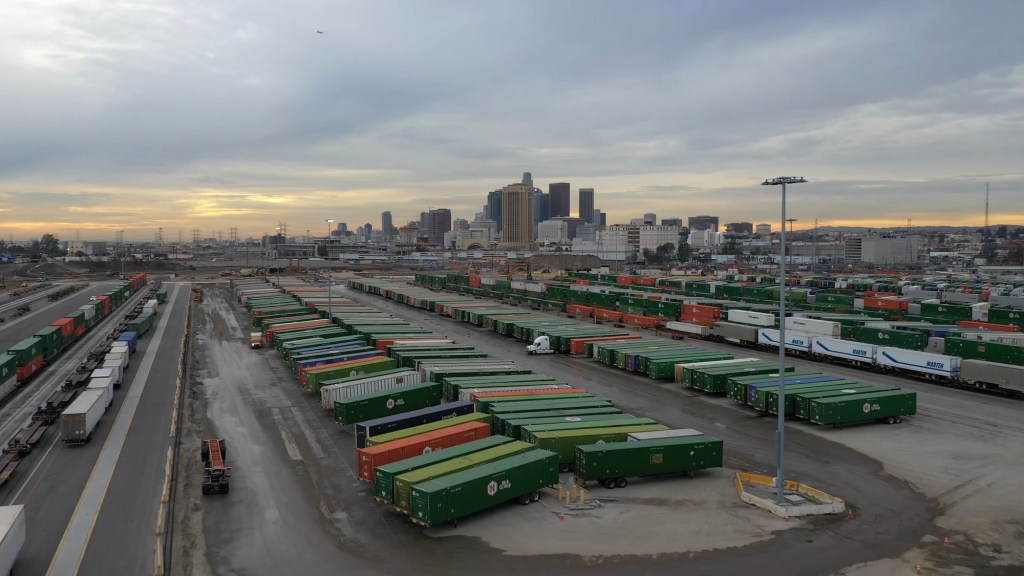
The Piggyback Yard rail site in Los Angeles, long used for freight operations, is now at the center of a proposal to transform the space into a massive stormwater capture and storage project. (Photo: Erik Olsen)
California will keep bouncing between wet and dry years, and that reality has pushed seawater and brackish-water desalination from a thought experiment into a real, if specialized, tool. It’s a big deal: The promise is reliable “drought-proof” supply. The tradeoffs are clear: high costs, heavy energy demands, and the challenge of careful siting. California has pushed the frontier of desalination technology, but it remains far from being an integral or dependable part of the state’s supply. Many observers doubt it ever will be.
But let’s take a look at where we are.
Desalination is already part of daily life in a few places. The 50-million-gallon-per-day Claude “Bud” Lewis Carlsbad Desalination Plant supplies roughly a tenth of the San Diego region’s potable demand, making it the largest seawater desalination facility in the United States. Water from Carlsbad is reliable during drought, but that reliability carries a premium: Recent public figures put its delivered cost in the low-to-mid $3,000s per acre-foot, higher than most imported supplies when those are plentiful. Even advocates frame the key tradeoff as price and energy intensity in exchange for certainty.
Rules matter as much as membranes. Since 2015, California has required new ocean desal plants to use the best available site, design, technology, and mitigation measures to minimize marine life mortality at intakes and to limit brine impacts at outfalls. These standards make facilities gentler on the ocean and they shape where plants can be built and what they cost. But it’s complicated.
The permitting bar is real, some say too onerous. In May 2022 the California Coastal Commission unanimously denied the proposed Huntington Beach seawater desalination plant after staff raised concerns about high costs, harm to marine life from an open-ocean intake, exposure to sea-level rise, and a lack of demonstrated local demand. That decision did not end desalination, but it clarified where and how it can pencil out. The same year, the Commission unanimously approved the smaller Doheny project in Dana Point because it uses subsurface intake wells and showed stronger local need and siting.
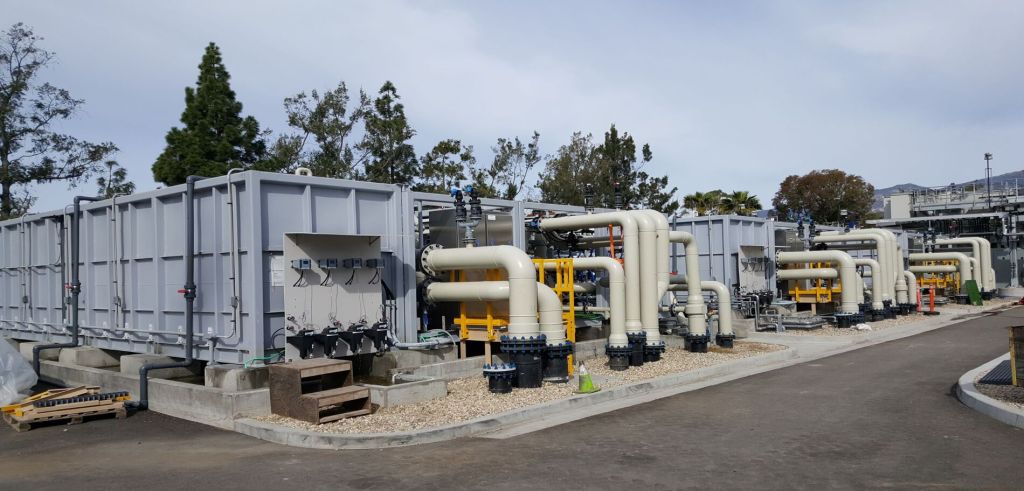
The Seawater Desalination Test Facility in Port Hueneme, Ventura. (Photo: John Chacon / California Department of Water Resources)
Doheny is frequently described as a late-2020s project, but its official timeline has slipped as partners and financing have taken longer to come together. That’s so California. The South Coast Water District has projected completion and operations in 2029, with key procurement milestones running through 2025. Given California’s regulatory climate, I’d say these dates are optimistic rather than bankable.
Elsewhere on the coast, the California American Water project for the Monterey Peninsula cleared a major hurdle in November 2022. Designed to add about 4.8 million gallons per day and pair with recycled water to replace over-pumping groundwater (a huge issue), it underscored desal’s role where other options are limited. In August 2025, the CPUC projected a 2050 supply deficit of 815 million gallons per year and cleared the way for construction to begin by year’s end. So, yeah. We’ll see.
Project site map of the Doheny Ocean Desalination Project (South Coast Water District)
Desalination is not only ocean-sourced. Several California systems quietly run on brackish water, which is less salty and cheaper to treat than seawater. Antioch’s brackish plant on the San Joaquin River is designed for about 6 million gallons per day to buffer the city against salinity spikes during drought. It was slated to come online this year, but operations have yet to begin (at least, I could not find any new info to this effect). Up the coast, Fort Bragg installed a small reverse-osmosis system in 2021 to deal with high-tide salt intrusion in the Noyo River during critically low flows, and it has piloted wave-powered desal buoys for emergency resilience.
Santa Barbara’s Charles E. Meyer plant was reactivated in 2017 after years in standby and now functions as a reliability supply the city can dial into. In 2024 it contributed a meaningful slice of deliveries.
These are targeted, local solutions, not silver bullets, and that is the point.
Energy remains the biggest driver of desalination costs. Even with modern technology cutting usage to 2.5 to 4 kilowatt-hours per cubic meter, desal still requires far more power and therefore higher expense than water recycling or imported supplies. Beyond cost, desalination also brings added challenges, from greenhouse gas emissions tied to electricity use to the disposal of concentrated brine back into the ocean.
Santa Barbara’s Charles E. Meyer plant (City of Santa Barbara)
But the reality today is that the biggest additions to statewide water supply are coming from large-scale potable reuse, aka recycling. San Diego’s Pure Water program begins adding purified water to the drinking system in 2026 and scales toward about 83 million gallons per day by 2035. Metropolitan Water District’s Pure Water Southern California is planning up to roughly 150 million gallons per day at full build-out. These projects do not replace desal everywhere, but they change the calculus in big metro areas by creating local, drought-resilient supplies with generally lower energy and environmental footprints.
With most desalination projects carrying steep costs, success may hinge on innovation. Several new approaches now being tested in California waters are showing early promise. In 2025, OceanWell began testing underwater desalination pods in a reservoir near Malibu. These cylindrical units are designed to test how membranes perform when microorganisms are present in the water, since bacteria and algae can grow on the surfaces and form biofilms that clog the system.
A drawing of OceanWell’s underwater desalination pod system (OceanWell)
The longer-term vision is “water farms” made up of subsea pods tethered 1,300 feet down, where natural hydrostatic pressure does much of the work. Each pod could produce up to a million gallons of fresh water per day with roughly 40 percent less energy than a conventional onshore plant. Because the brine would be released gradually at depth, the approach could also reduce ecological impacts. OceanWell has said its first commercial-scale project, called Water Farm 1, could be operating by 2030 if tests and permitting go as planned. It’s interesting, for sure, but in the end, we’re talking long-shot here.
Big picture, desalination works best as a specialty tool—it’s not the answer everywhere, but it can be a game-changer in the right spots. Think coastal towns with little groundwater, islands or peninsulas with fragile aquifers, or inland areas that get hit with salty water now and then. California’s rules now push projects toward gentler ocean intakes and better brine disposal, but the real strategy is a mix: conservation, stormwater capture, groundwater banking, recycled water, and just the right amount of desal. Those huge atmospheric river storms are not predictable. Who knows if we’ll get another next year or the year after that? The next drought will come, and the communities that invested in a full toolkit will be the ones that hold up the best.
Hey readers — we’re working on ways to keep California Curated going, and one new effort is our Etsy shop. It’s filled with science-inspired fish and bird designs that make great gifts for friends, family, or even yourself. Check it out and help support our work!
In California’s southeastern desert, the Salton Sea stretches across a wide, shimmering basin, a lake where there shouldn’t be one. At about 340 square miles, it’s the state’s largest lake. But it wasn’t created by natural forces. It was the result of a major engineering failure. I’ve long been fascinated with the place: its contradictions, its strangeness, its collision of nature and human ambition. It reflects so many of California’s tensions: water and drought, industry and wilderness, beauty and decay. And it was only relatively recently that I came to understand not just how the Salton Sea came to exist, but how remarkable the region’s geological past really is, and how it could play a major role in the country’s sustainable energy future.
In the early 1900s, the Imperial Valley was seen as promising farmland: its deep, silty soil ideal for agriculture, but the land was arid and desperately needed irrigation. To bring water from the Colorado River, engineers created the Imperial Canal, a massive infrastructure project meant to transform the desert into productive farmland. But the job was rushed. The canal had to pass through the Mexican border and loop back into California, and much of it ran through highly erodible soil. Maintenance was difficult, and by 1904, silt and sediment had clogged portions of the canal.
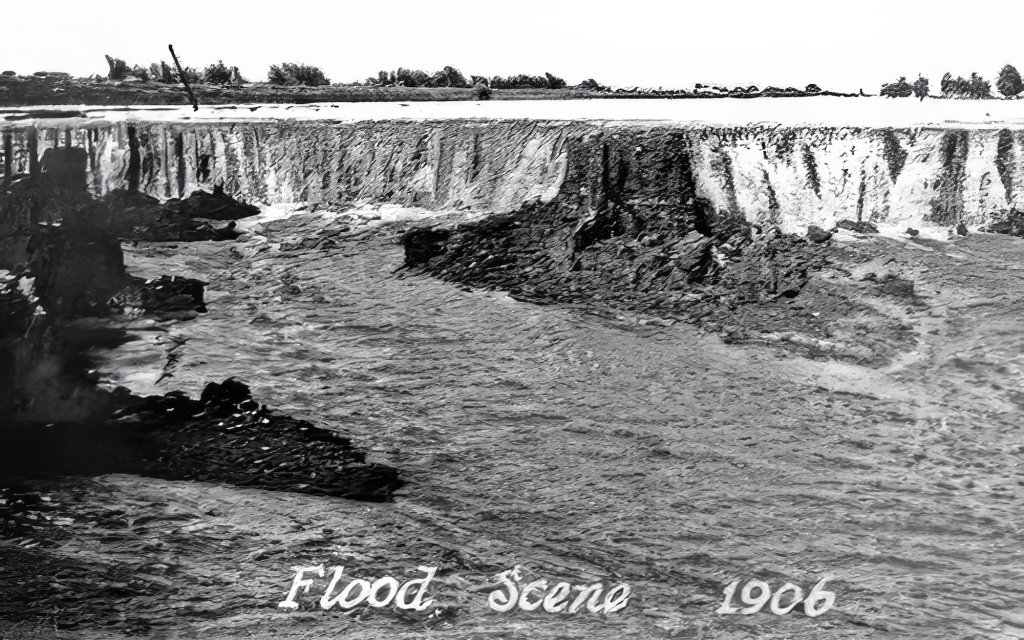
The Southern Pacific Railroad was forced to move it lines several times as the raging, unleashed Colorado River expanded the Salton Sea. (Credit: Imperial Irrigation District)
To keep water flowing, engineers hastily dug a temporary bypass channel south of the clogged area, hoping it would only be used for a few months. But they failed to build proper headgates, critical structures for controlling water flow. In 1905, an unusually heavy season of rain and snowmelt in the Rockies caused the Colorado River to swell. The torrent surged downriver and overwhelmed the temporary channel, carving it wider and deeper. Before long, the river completely abandoned its natural course and began flowing unchecked into the Salton Sink, an ancient, dry lakebed that had once held water during wetter epochs but had long since evaporated. (This has happened many times over in the region’s history).
For nearly two years, the Colorado River flowed uncontrolled into this depression, creating what is now known as the Salton Sea. Efforts to redirect the river back to its original course involved a frantic, expensive engineering campaign that included the Southern Pacific Railroad and U.S. government assistance. The breach wasn’t fully sealed until early 1907. By then, the sea had already formed: a shimmering, accidental lake nearly 35 miles long and 15 miles wide, with no natural outlet, in the middle of the California desert.
In the 1950s and early ’60s, the Salton Sea was a glamorous desert escape, drawing crowds with boating, fishing, and waterskiing. Resorts popped up along the shore, and celebrities like Frank Sinatra, Jerry Lewis, Rock Hudson, the Beach Boys, and the Marx Brothers came to visit and perform. It was billed as a new Palm Springs with water, until rising salinity and environmental decline ended the dream. There have been few if any similarly starge ecological accidents like it.
The erosive power of the floodwaters was immense. The river repeatedly scoured channels that created waterfalls, which cut back through the ground, eroding soil at a rate of about 1,200 meters per day and carving gorges 15 to 25 meters deep and more than 300 meters wide. (Credit: Imperial Irrigation District)
The creation of the Salton Sea was both a blessing and a curse for the people of the Imperial Valley. On the one hand, the lake provided a new source of water for irrigation, and the fertile soil around its shores proved ideal for growing crops. On the other hand, the water was highly saline, and the lake became increasingly polluted over time, posing a threat to both human health and the environment.
Recently, with most flows diverted from the Salton Sea for irrigation, it has begun to dry up and is now considered a major health hazard, as toxic dust is whipped up by heavy winds in the area. The disappearance of the Salton sea has also been killing off fish species that attract migratory birds.
The New York Times recently wrote about the struggles that farmers face as the Salton Sea disappears, and how the sea itself will likely disappear entirely at some point.
“There’s going to be collateral damage everywhere,” Frank Ruiz, a program director with California Audubon, told the Times. “Less water coming to the farmers, less water coming into the Salton Sea. That’s just the pure math.”
Salton Sea can be beautiful, if toxic (Photo: Wikipedia)
To me, the story of the Salton Sea is fascinating: a vivid example of how human intervention can radically reshape the environment. Of course, there are countless cases of humans altering the natural world, but this one feels particularly surreal: an enormous inland lake created entirely by accident, simply because a river, the Colorado, one of the most powerful in North America, was diverted from its course. It’s incredible, and incredibly strange. What makes the region even more fascinating, though, is that the human-made lake sits in a landscape already full of geological drama.
The area around the Salton Sea is located in a techtonically active region, with the San Andreas Fault running directly through it. The San Andreas Fault is a major plate boundary, where the Pacific Plate is moving north relative to the North American Plate (see our story about how fast it’s moving here). As pretty much every Californian knows, the legendary fault is responsible for the earthquakes and other tectonic activity across much of California.
If you look at a map of the area, you can see how the low lying southern portion of the Salton Sea basin goes directly into the Gulf of California. Over millions of years, the desert basin has been flooded numerous times throughout history by what is now the Gulf of California. As the fault system cuts through the region, the Pacific Plate is slowly sliding northwest, gradually pulling the Baja Peninsula away from mainland Mexico. Over millions of years, this tectonic motion is stretching and thinning the crust beneath the Imperial Valley and Salton Basin. If the process continues, geologists believe the area could eventually flood again, forming a vast inland sea, perhaps even making an island out of what is today Baja California. (We wrote about this earlier.)
Entrance to the Salton Sea Recreation Area (Wikipedia)
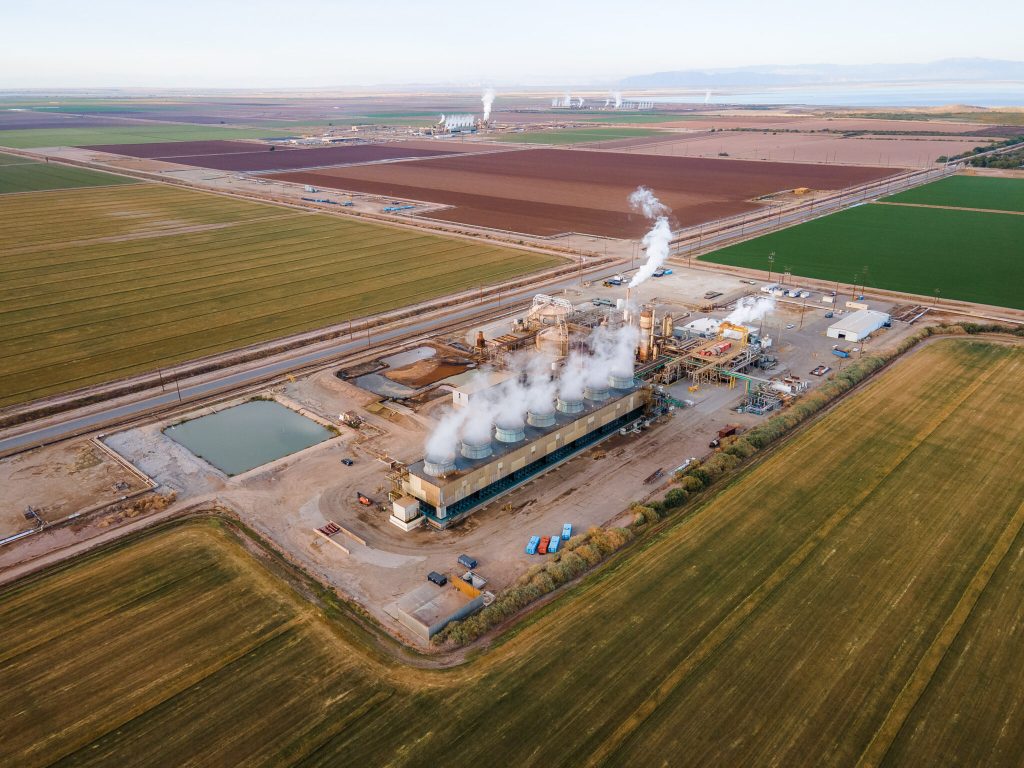
Yet even as the land shifts beneath it, the Salton Sea’s future may be shaped not just by geology, but by energy. Despite the ongoing controversy over the evaporating water body, the Salton Sea may play a crucial role in California’s renewable energy future. The region sits atop the Imperial Valley’s geothermal hotspot, where underground heat from all that tectonic activity creates ideal conditions for producing clean, reliable energy. Already home to one of the largest geothermal fields in the country, the area is now gaining attention for something even more strategic: lithium.
An aerial view of geothermal power plants among the farmland around the southern shore of the Salton Sea. (Credit: Courtesy Lawrence Berkeley National Lab)
Beneath the surface, the hot, mineral-rich brine used in geothermal energy production contains high concentrations of lithium, a critical component in electric vehicle batteries. Known as “Lithium Valley,” the Salton Sea region has become the focus of several ambitious extraction projects aiming to tap into this resource without the large environmental footprint of traditional lithium mining. Gov. Gavin Newsom called the area is “the Saudi Arabia of lithium.” Even the Los Angeles Times has weighed in, claiming that “California’s Imperial Valley will be a major player in the clean energy transition.”
Companies like Controlled Thermal Resources (CTR) and EnergySource are developing direct lithium extraction (DLE) technologies that pull lithium from brine as part of their geothermal operations. The promise is a closed-loop system that produces both renewable energy and battery-grade lithium on the same site. If it proves viable, the Salton Sea could significantly reduce U.S. dependence on foreign lithium and cement California’s role in the global shift to clean energy. That’s a big if…and one we’ll be exploring in depth in future articles.
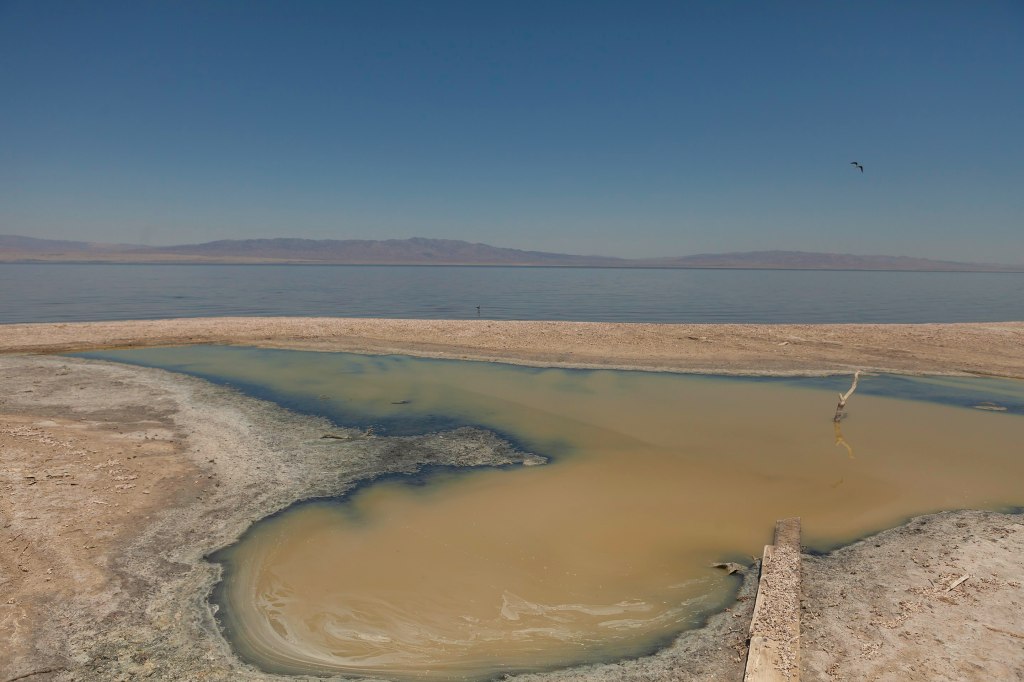
Toxic salt ponds along the Western shoreline (Photo: EmpireFootage)
Such projects could also potentially provide significant economic investment in the region and help power California’s green energy ambitions. So for a place that looks kind of wrecked and desolate, there actually a lot going on. We promise to keep an eye on what happens. Stay tuned.
As the world pivots toward renewable energy sources, the challenge of energy storage looms ever larger. The sun doesn’t always shine, and the wind doesn’t always blow — but the demand for electricity never stops. Currently, natural gas and coal are the primary ways we generate electricity. These are dirty, pollution-causing industries that will need to be phased out if we are to tackle the problems associated with climate change. Many different solutions to this problem are currently being investigated across the country and the world.
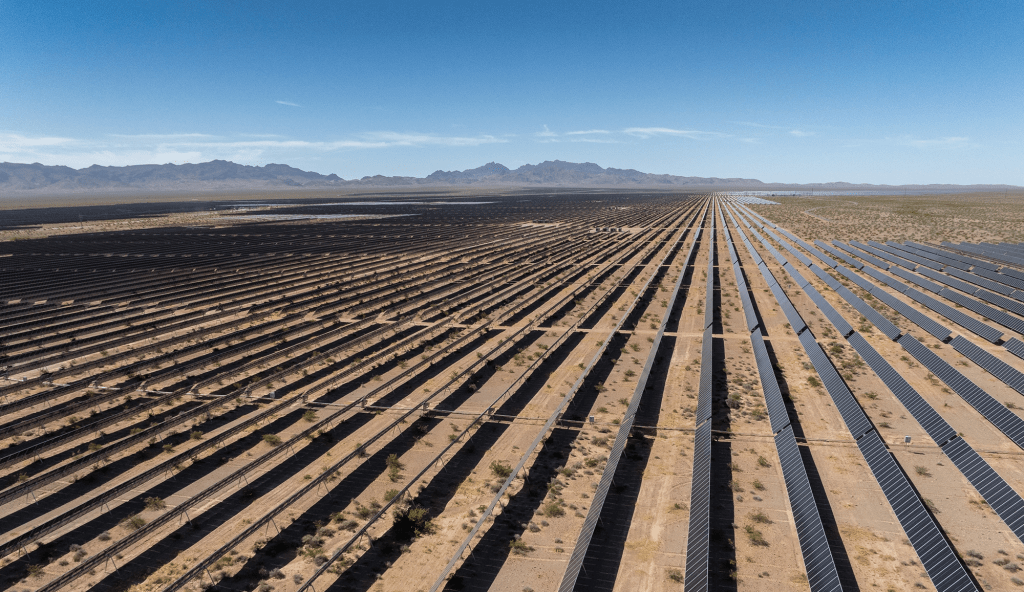
For example, the Gemini Solar + Battery Storage Project, located about 30 miles northeast of Las Vegas, is one of the largest solar battery facilities in the United States, launched in 2023. Spanning approximately 5,000 acres, it combines a 690-megawatt solar photovoltaic array with a 380-megawatt battery storage system, capable of powering about 50,000 homes and providing 10% of Nevada’s peak energy demand. By storing solar energy in massive batteries, the facility ensures a stable and reliable power supply even after the sun sets, addressing the intermittency challenges of renewable energy.
The Gemini Solar + Storage (“Gemini”) project in Clark County, Nevada is now fully operational. It uses lithium ion batteries from China to store solar power (Gemini Solar + Storage)
However, these facilities face significant challenges due to the inherent explosive potential of lithium batteries. The Moss Landing battery facility fire serves as a stark reminder of the challenges associated with large-scale energy storage. Housing one of the world’s largest lithium-ion battery systems, the facility experienced multiple fire incidents, raising concerns about the safety of these technologies. These fires were particularly alarming due to the potential for thermal runaway, a phenomenon where a single battery cell’s failure triggers a chain reaction in neighboring cells, leading to uncontrollable fires and explosions. While no injuries were reported, the incidents caused significant operational disruptions and prompted widespread scrutiny of fire safety protocols in energy storage systems. Investigations have pointed to the need for more robust cooling mechanisms, advanced monitoring systems, and comprehensive emergency response strategies to prevent similar events in the future.
Aside from the potential fire dangers of large battery facilities, building large-scale solar battery projects like Gemini is costly, often exceeding hundreds of millions of dollars, due to the expense of new lithium-ion batteries. A more sustainable and economical solution could involve repurposing old batteries, such as those from retired electric vehicles. These batteries, while unsuitable for cars, still retain enough capacity for energy storage, reducing costs, resource use, and electronic waste.
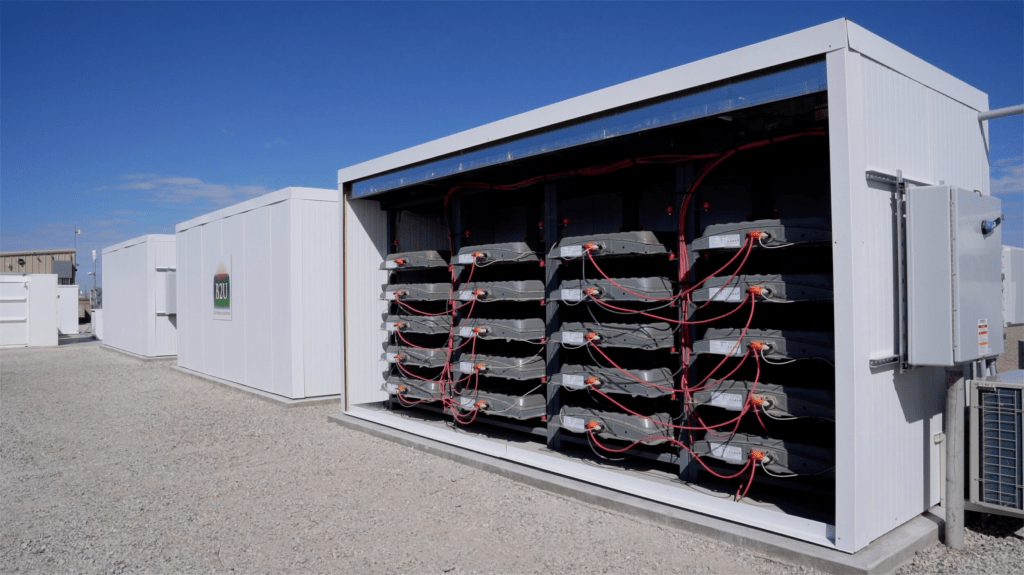
That’s where B2U Storage Solutions, a California-based company founded by Freeman Hall and Mike Stern, offers an innovative answer to this critical problem. By harnessing the power of old electric vehicle (EV) batteries to store renewable energy, B2U is giving these aging batteries a productive second life and helping enhance the viability of green energy grids. The effort could pave the way for not only improving solar storage but also reusing old batteries that might otherwise end up in landfills or pose environmental hazards.
According to Vincent Beiser in his wonderful new book Power Metal: The Race for the Resources That Will Shape the Future, “by 2030, used electric car batteries could store as much as two hundred gigawatt-hours of power per year. That’s enough to power almost two million Nissan Leafs.”
Founded in 2019, B2U emerged as a spin-off from Solar Electric Solutions (SES), a solar energy development company with a strong track record of success, having developed 100 megawatts across 11 projects in California since 2008. Freeman Hall, a seasoned renewable energy strategist, and Mike Stern, a veteran in solar project development, combined their expertise to address a growing challenge: how to create affordable and sustainable energy storage.
Leveraging their knowledge, B2U developed their patented EV Pack Storage (EPS) technology. This technology allows for the integration of second-life EV batteries without the need for costly repurposing, making large-scale energy storage more economically feasible. Their vision took shape in Lancaster, California, where they established the SEPV Sierra facility in 2020.
At the Lancaster site, B2U uses over 1,300 repurposed EV batteries to form a large-scale battery energy storage system (BESS). When solar farms generate more electricity than the grid can immediately use, the excess power is stored in these second-life batteries. Later, when the sun sets or demand peaks, that stored energy is released back into the grid. This process reduces waste and helps stabilize renewable energy supply.
B2U is not alone. The second-life market for EV batteries is projected to grow to $7 billion by 2033, according to a March report by market research firm IDTechEx. While most EVs rely on lithium-ion batteries, these typically lose viability for vehicle use after about eight to ten years. However, depending on their remaining capacity and “state of health”—a measure of cell aging—they can be repurposed for less demanding applications, such as stationary energy storage, the report notes.
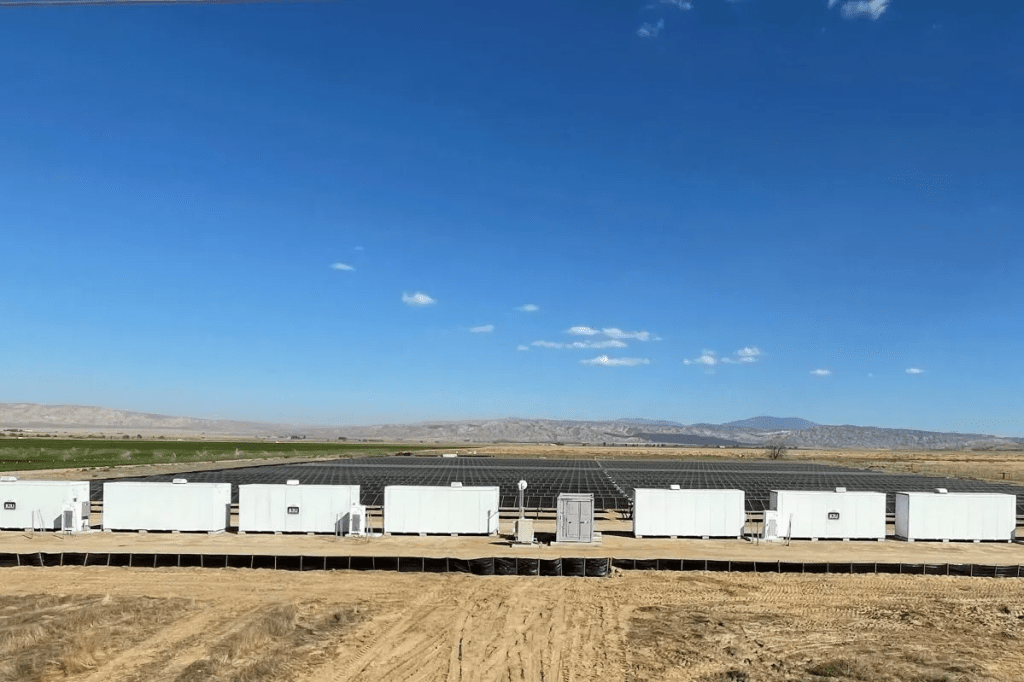
B2U Storage Solutions has launched its second hybrid battery storage facility near New Cuyama in Santa Barbara County, California. This innovative project uses approximately 600 repurposed electric vehicle batteries, primarily from Honda Clarity models, to provide 12 megawatt-hours of storage capacity. Charged by a 1.5-megawatt solar array and supplemental grid power, the facility supplies electricity and grid services to the California energy market. By employing patented technology, the system integrates second-life EV batteries in their original casings, reducing costs and enhancing sustainability. Building on the success of its first facility in Lancaster, this project demonstrates a scalable approach to energy storage while minimizing electronic waste and supporting renewable energy adoption.
2015 Honda Clarity FCV (Wikipedia)
B2U claims its technology enables batteries to be repurposed in a nearly “plug-and-play” manner, eliminating the need for disassembly. The system is compatible with units from multiple manufacturers, including Honda, Nissan, Tesla, GM, and Ford, allowing them to be seamlessly integrated into a single storage system.
Renewable energy is essential to combating climate change, but its intermittent nature poses challenges for maintaining a reliable power grid. Without effective storage, surplus renewable power generated during peak periods is wasted, and fossil fuels must often be burned to cover shortfalls. By using second-life EV batteries, B2U provides a sustainable, cost-effective solution to this problem.
Freeman Hall and Mike Stern’s innovative approach at B2U addresses the pressing need for affordable energy storage while giving EV batteries a second life. Their Lancaster facility and the one in New Cuyama demonstrate how smart storage solutions can make renewable power more reliable and accessible. By extending the lifecycle of EV batteries and supporting a resilient energy grid, B2U is at the forefront of sustainable energy innovation.
As California works toward ambitious renewable energy goals and the world increasingly embraces electric vehicles, companies like B2U could play a crucial role in shaping a cleaner, more sustainable future.
Update (February 2025): The Ivanpah Solar Electric Generating System, once a milestone in renewable energy, now faces possible closure. Pacific Gas & Electric has agreed to terminate its contracts, citing the higher cost of Ivanpah’s solar-thermal technology compared to photovoltaics. If approved, two of the plant’s three units could shut down by 2026. Southern California Edison is also considering a contract buyout, adding to uncertainty. Environmental concerns, including bird and tortoise deaths from intense solar radiation, have further complicated Ivanpah’s legacy, reflecting the challenges of large-scale clean energy projects.
In the heart of the Mojave Desert, a glittering sea of mirrors sprawls across 3,500 acres, harnessing the relentless desert sun to power homes and businesses across California. As you drive to or from Las Vegas to the West, the facility rises from the desert, resembling an alien spaceport in the distance. From the air, passengers on flights over the desert can easily spot the plant, with its three towering structures gleaming nearly as brilliantly as the sun.
This ambitious undertaking, known as the Ivanpah Solar Electric Generating System, stands as one of the largest concentrated solar power (CSP) plants in the world. Since its completion in 2014, Ivanpah has been celebrated as a major milestone in renewable energy innovation, while also facing considerable scrutiny and challenges.
The idea behind Ivanpah was born from the vision of BrightSource Energy, led by Arnold Goldman, who was an early pioneer of solar thermal technology. Goldman had previously been involved with Luz International, a company that attempted similar solar ventures in the 1980s. Those early projects struggled due to high costs and limited efficiency, eventually falling victim to the market forces of low fossil fuel prices and a lack of policy support. But by the mid-2000s, the winds had shifted. California, driven by its Renewable Portfolio Standard (RPS), began pushing aggressively for renewable energy sources, setting ambitious targets that mandated utilities procure a large percentage of their electricity from clean sources. This provided fertile ground for a revived effort in concentrated solar power.
Ivanpah Solar Power Facility, a glittering sea of mirrors sprawls across 3,500 acres, harnessing the relentless desert sun to power homes and businesses across California. (Erik Olsen)
With significant financial backing from NRG Energy, Google—which has a strong interest in promoting renewable energy as part of its sustainability goals—and the U.S. Department of Energy (which provided a $1.6 billion loan guarantee), the Ivanpah project broke ground in 2010 and began operation in 2014. By its completion, it had become a landmark renewable energy installation—a bold attempt to demonstrate the viability of CSP technology at scale, with a capacity of 392 megawatts (MW), enough to power around 140,000 homes at peak production.
Ivanpah’s CSP technology differs significantly from the more common photovoltaic (PV) solar panels that typically sprawl across rooftops and solar farms. Instead of directly converting sunlight into electricity, Ivanpah employs a central tower system that uses concentrated solar power to generate steam. The facility harnesses the reflections of 173,500 heliostats (large mirrors) spread across the desert floor, each of which tracks the sun throughout the day using computer algorithms, reflecting sunlight onto a central receiver at the top of Ivanpah’s three 450-foot towers.
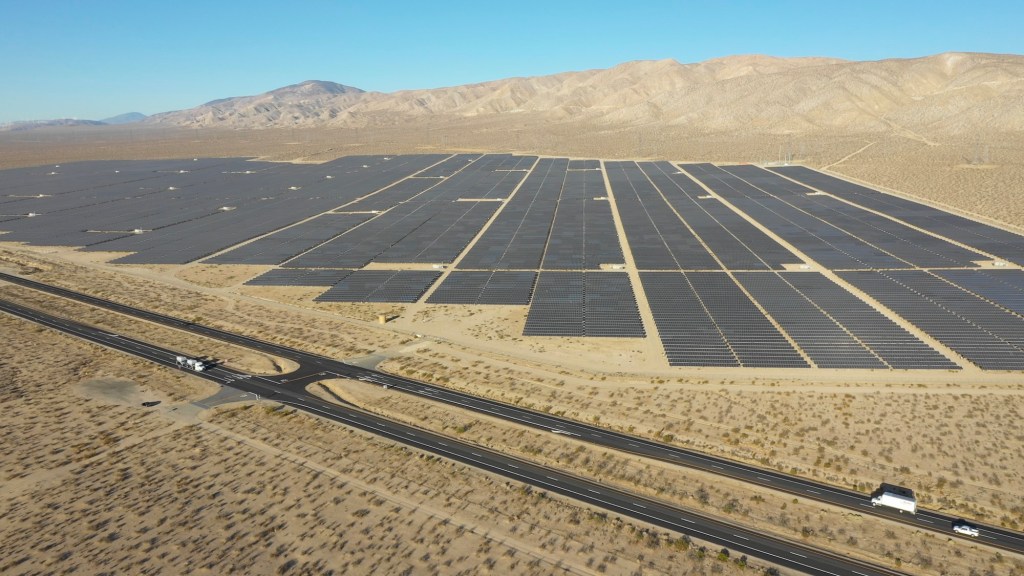
Photovoltaic solar array in the Mojave Desert in California (Erik Olsen)
Inside these towers, the intense, concentrated sunlight heats water to temperatures of over 1,000°F (537°C). This heat turns water into steam, which drives turbines to generate electricity. This process—turning solar energy into heat, then into steam, and finally into electricity—requires multiple stages of energy conversion, introducing inefficiencies along the way. While innovative, these conversions come with inherent energy losses that ultimately affect overall efficiency. Some of these inefficiencies and energy losses were unanticipated, demonstrating the complexities of scaling concentrated solar power to this level.
The theoretical efficiency of CSP systems like Ivanpah is generally around 15-20%. By comparison, modern PV panels convert sunlight directly into electricity, achieving efficiencies of 15-22%, with some high-end models exceeding 25%. The direct conversion of sunlight by PV systems avoids the multiple stages of transformation needed by CSP, making PV generally more efficient and cost-effective. That is not to say the project was not an unworthwhile effort, just that it has not yet met the early expectations for the technology.
Ivanpah Solar Power Facility from an airplane. (Erik Olsen)
While Ivanpah was a leap forward in solar technology, it has faced several challenges, both technical and environmental. One of the first issues arose in the initial years of operation: the plant produced less electricity than anticipated, often falling short of its projected targets. This shortfall was attributed to a combination of technical complications, lower-than-expected solar irradiance, and operational adjustments as engineers sought to optimize the plant’s complex systems.
In addition, Ivanpah relies on natural gas to preheat its boilers in the early morning or during cloudy weather, ensuring the turbines are ready to operate as soon as the sun provides enough energy. This auxiliary use of natural gas has sparked criticism, with some questioning whether Ivanpah can truly be considered a clean, renewable energy source. While the natural gas usage is minimal relative to the plant’s total output, it highlights a practical limitation of CSP systems, which need to overcome the intermittent nature of sunlight.
Environmental impacts have also drawn attention. Ivanpah’s vast array of mirrors produces a phenomenon known as solar flux, a concentrated field of heat that can reach temperatures high enough to injure or kill birds flying through it. Dubbed ‘streamers,’ because of the smoke that comes from their wings when they burn in midair, birds that enter this concentrated beam often die. (Here’s a video about it.) A report from the California Energy Commission refers to what they call a “megatrap,” where birds are drawn to insects that are attracted to the intense light emitted from the towers. This unintended effect on wildlife has been a significant concern for conservation groups, prompting Ivanpah to work on mitigation measures, including testing visual deterrents to keep birds away.
A burned MacGillivray’s Warbler found at the Ivanpah solar plant during a visit by U.S. Fish and Wildlife Service in October 2013. U.S. Fish and Wildlife Service/AP Photo
Moreover, the sheer size of Ivanpah, covering a significant area of desert land, has raised concerns about the impact on local ecosystems. The Mojave Desert is a delicate environment, and constructing such a large facility inevitably affected the flora and fauna, prompting debates about whether renewable energy projects should be balanced with efforts to preserve pristine habitats.
Ivanpah is just one of several large-scale CSP projects around the globe. Another notable example is the Noor Ouarzazate Solar Complex in Morocco, which is one of the largest CSP installations in the world. The Noor Complex uses both parabolic trough and solar tower technologies and, crucially, incorporates molten salt to store heat, allowing it to generate electricity even after the sun has set. The use of molten salt offers several advantages over water-based systems like Ivanpah. Molten salt can retain heat for longer periods, enabling the plant to continue generating power during periods of low sunlight or even after sunset, which greatly improves grid reliability and helps balance energy supply with demand.
The Crescent Dunes Solar Energy Project, once a symbol of cutting-edge solar technology with its 640-foot tower and field of over 10,000 mirrors, now stands as a cautionary tale of ambitious renewable energy efforts. Despite its initial promise, the project was plagued by technical issues and ultimately failed to meet its energy production goals, leading to its closure. (U.S. Department of Energy)
Similarly, the Crescent Dunes project in Nevada was another attempt to utilize molten salt for energy storage. It initially showed promise but struggled with technical setbacks and eventually ceased operation in 2019 due to persistent issues with the molten salt storage system and failure to meet performance expectations. The technology, although innovative, struggled with high maintenance costs, particularly with the heliostat mirrors and salt storage tanks. The company behind Crescent Dunes, SolarReserve, went bankrupt after being sued by NV Energy for failing to meet its contractual obligations.
Despite these setbacks, the project has not been fully decommissioned. ACS Cobra, the Spanish firm involved in its construction, now operates the plant at reduced capacity, mainly delivering energy during peak demand at night. Although Crescent Dunes has never reached its full potential, it continues to produce some electricity for Nevada’s grid, albeit far below the originally planned levels.
Crescent Dunes underscored the challenges associated with large-scale CSP projects, particularly the difficulty of balancing complexity, maintenance, and operational costs. However, the use of molten salt in Crescent Dunes demonstrated the significant potential for improving CSP efficiency through effective thermal storage, highlighting a critical advantage over water-based systems like Ivanpah that lack extensive storage capabilities.
While CSP holds the advantage of potential energy storage—something PV cannot inherently achieve without additional batteries—PV technology has seen a steep decline in cost and significant improvements in efficiency over the past decade. This rapid evolution has made PV panels more attractive, leading to widespread adoption across both utility-scale and residential projects. Hybrid projects, like Phase IV of the Mohammed bin Rashid Al Maktoum Solar Park in Dubai, are now combining PV and CSP technologies to maximize efficiency and output, utilizing each technology’s strengths.
Ivanpah remains operational, continuing to contribute renewable energy to California’s grid.
Photovoltaic solar array in the Mojave Desert in California (Erik Olsen)
Governor Gavin Newsom has commented on the importance of renewable projects like Ivanpah in meeting California’s ambitious clean energy goals. Newsom has praised Ivanpah as a vital component of the state’s effort to transition away from fossil fuels, emphasizing the need for innovative projects to meet California’s target of achieving 100% renewable energy by 2045. He has highlighted the symbolic value of Ivanpah, not only as a source of clean energy but as a testament to California’s leadership in renewable technology and environmental stewardship. Its story is one of both ambition and caution, highlighting the promise of concentrated solar power as well as its practical and environmental limitations. In many ways, Ivanpah serves as a testbed for CSP technology, providing valuable insights into the challenges of scaling such systems to utility-level production. It has also sparked discussions on the role of CSP compared to other forms of renewable energy, especially as battery technology advances to address PV’s storage challenges.
While CSP is unlikely to overtake PV in terms of widespread adoption due to its complexity and cost, it still has a role to play, particularly in regions with intense sunlight and a need for energy storage. The lessons learned at Ivanpah—both the successes and the setbacks—will inform the next generation of solar projects, driving innovation and helping policymakers, engineers, and investors make more informed decisions about the future of renewable energy infrastructure.
Mohammed bin Rashid Al Maktoum Solar Park (Government of Dubai)
California’s solar and renewable energy installations have seen remarkable success in recent years, as the state continues to push toward its ambitious goal of 100% clean electricity by 2045. In 2024, California achieved several milestones that highlight the effectiveness of its clean energy initiatives. For example, the state has more than 35,000 MW of renewable energy capacity already serving the grid, with 16,000 MW added just since 2020. A key component of this growth is the rapid expansion of battery storage, which has become essential for balancing the grid, especially during peak demand times when solar power diminishes in the evening. In 2024 alone, battery storage capacity grew by over 3,000 MW, bringing the total to more than 13,000 MW—a 30% increase in just six months
In addition to storage, new solar projects like the Blythe Solar Power Project, which generates 485 MW of photovoltaic power and adds 387 MW of battery storage, are powering over 145,000 homes, further demonstrating California’s leadership in clean energy development. This continued investment not only strengthens the grid but also ensures resilience during extreme weather events, which have become more frequent due to climate change.
Despite these successes, California still has a long way to go. The state will need to bring an additional 148,000 MW of renewable resources online by 2045 to fully meet its goals. However, with the state’s rapid advancements in storage technology, solar capacity, and governmental support, California is well on its way to achieving a cleaner, more sustainable energy future.
Google arranged the mirrors at Ivanpah to create a tribute to Margaret Hamilton, the pioneering computer scientist who led the software engineering efforts for the Apollo space missions. (Google)
Beyond its role in renewable energy, Ivanpah has also found itself at the intersection of technology and art. One notable example is when Google arranged the mirrors at Ivanpah to create a tribute to Margaret Hamilton, the pioneering computer scientist who led the software engineering efforts for the Apollo space missions. This artistic alignment of mirrors highlighted Ivanpah’s versatility—not just as an engineering marvel for energy generation but also as a symbol of human achievement. The intricate choreography of heliostats to form an image visible from above served as a powerful visual homage, merging art, science, and technology in a striking way. Such projects have helped broaden the cultural significance of Ivanpah, presenting it not only as a source of renewable energy but also as an inspirational platform that celebrates human creativity and accomplishment.
The next time you’re driving to Vegas and spot the three massive, sun-like objects glowing in the desert, give a thought to the immense power—and challenges—of harnessing the sun’s energy in such a dramatic way.