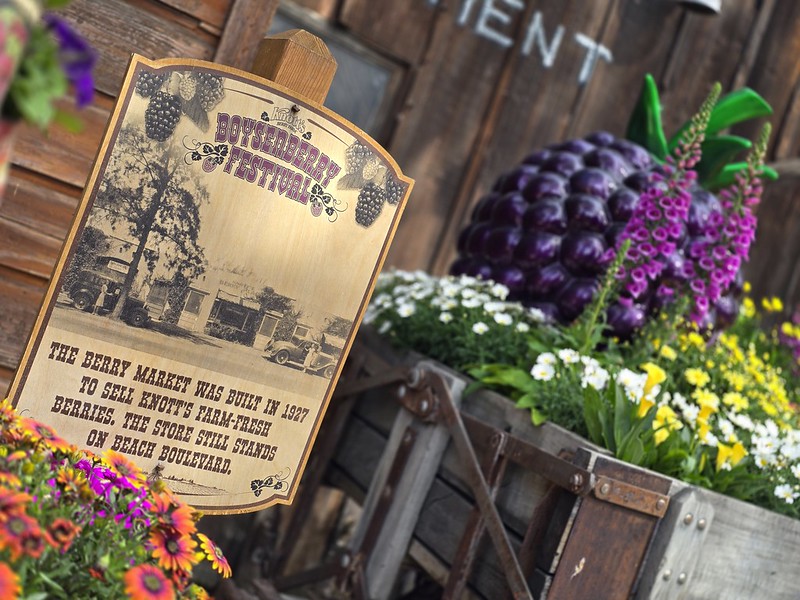
California has long been a hub for berry innovation, boasting a rich history of developing countless berry cultivars. While it’s tough to pin down an exact number, the state’s contributions span a wide range of fruits, from strawberries to blackberries to loganberries, raspberries, and even blueberries.
Somewhere in the pantheon of berries, tucked between the familiar blackberry and the enigmatic lingonberry (a Scandinavian staple, just ask the Swedes, or swing by IKEA), you’ll find the boysenberry. With its deep maroon color, plump size, and a flavor that dances between sweet and tart, the boysenberry is a delicious emblem of California’s horticultural creativity. (Who knew we needed yet another berry?) But how did this berry come to be, and what’s the story behind a Southern California amusement park helping to make it famous?
The journey of the boysenberry begins with its namesake, Rudolph Boysen. In the early 1920s, Boysen, a curious California-based farmer and horticulturist, began experimenting with berry plants at his home in Napa, California. His objective? To develop a new hybrid berry that combined the best attributes of the European raspberry, blackberry, American dewberry, and loganberry.
Rudolph Boysen
On relocating to Orange County, he didn’t leave his passion behind; instead, he brought along his precious berry vines, planting them on his in-law’s property in Anaheim, which at that time was a relatively unpopulated expanse dominated by vast orange and lemon groves, interspersed with small farms and ranches.
Between 1921 and 1950, Boysen dedicated his professional life to serving as the Anaheim City Parks superintendent. His persistent efforts bore fruit (ha) in 1923 when his hybrid successfully grafted and flourished. However, while Boysen was successful in creating the berry, he faced challenges in cultivating it on a larger scale. Some years after his initial success, a near-fatal accident sidelined him, and his boysenberry plants began to wither, seemingly destined for obscurity.
Enter Walter Knott, another farmer with an insatiable curiosity and a healthy dose of ambition,. Upon discovering that Boysen had given up his cultivation experiments and sold his property, Knott went in search of the delicious berry. Accompanied by George M. Darrow of the USDA, the duo ventured to Boysen’s former farm. There, amidst an overgrowth of weeds, they discovered a few withering vines clinging to life. Determined to give these vines a new lease on life, they carefully relocated them to Knott’s farm in Buena Park, California. With diligent care and attention, Knott revived these plants, enabling them to thrive and produce fruit once again. As a result, Walter Knott became the pioneering figure in the commercial cultivation of the berry in Southern California. Knott learned about Boysen’s creation and, understanding its potential, sought out the remaining withered vines.
Knott’s Berry Farm
With a blend of horticultural expertise and an entrepreneur’s spirit, Knott not only rescued the dying boysenberry vines but also began cultivating and selling the berries on his own farm, which was located in Buena Park, California.
As the berries grew in popularity, so did Knott’s business. By the 1940s, Knott’s farm had transformed into a bustling destination, offering visitors not just the chance to buy fresh boysenberries and boysenberry products, but also to experience the charm of a recreated ghost town and other attractions. As the business evolved, it gave birth to what is now known as Knott’s Berry Farm, one of the most popular amusement parks in Southern California.
Today, it’s a full-blown amusement park with high-speed roller coasters like GhostRider, a massive wooden coaster, and Silver Bullet, a looping steel ride that twists over the park’s lake. The Timber Mountain Log Ride, one of the park’s most beloved attractions, simulates a journey through a 19th-century logging camp, complete with animatronic lumberjacks and sawmills. It’s a tribute to the massive wooden flumes that loggers once built to move timber from deep in the forest down to the mills and markets. One of the largest of these flumes was at Converse Basin, once home to the biggest contiguous grove of giant sequoias on Earth. That same area became the site of one of the most devastating logging operations in American history, where thousands of ancient sequoias—some millenia old—were cut down in the rush to harvest timber. We did a story about it you can read here. It’s a sobering reminder of how quickly early California’s natural wonders were exploited in the name of progress.
But back to Boysenberries. Let’s finish this one up, shall we?
Biologically, the boysenberry is a testament to the wonders of plant hybridization, showcasing the ability to combine distinct plant species to produce something entirely new. And tasty. The boysenberry isn’t just a product of careful crossbreeding, it’s a classic California story of perseverance, partnership, and a dose of luck. Sunshine helps too. It’s about how a nearly forgotten berry was saved from obscurity by two determined farmers and went on to become a symbol of California itself, thanks in part to the magic of an amusement park.
A Look into the Roots and Ripened Impact of the Citrus Industry
You might associate California with Hollywood, Silicon Valley, or even its stunning coastline. However, a significant cornerstone in the Golden State’s development, prosperity, and identity was quite literally golden: zesty, golden orbs of citrus fruit. California’s citrus industry had a profound impact on the state’s economic, labor, and global landscape, particularly within Southern California.
San Gabriel Mission
The citrus industry in California has surprisingly humble beginnings. Spanish missionaries brought orange seeds to California in 1769. The San Gabriel Mission was established in 1771 and had extensive gardens that included a variety of fruits and vegetables. The seeds for the Mission’s citrus trees are believed to have come from the Spanish missions in Baja California, Mexico, which in turn got them from the Spanish mainland. The original citrus varieties in Spain were likely brought over from Asia, as citrus trees are native to South Asia and the East Indies.
But the true beginning of what became a multibillion-dollar industry can be attributed to one man. In 1841, William Wolfskill, an American-Mexican pioneer, cowboy, and agronomist in Los Angeles, planted the first commercial orange grove on a 100-acre ranch near what is now downtown Los Angeles. Wolfskill, a frontier entrepreneur, had initially tried his hand at vineyards, but saw potential in the rugged, fertile Californian soil for more than just grapes.
William Wolfskill
Obtaining his initial seeds from the orchards of the San Gabriel Mission, Wolfskill’s citrus venture started small. However, his methodical approach to farming and his adoption of innovative irrigation techniques allowed his grove to flourish in the Mediterranean-like climate of Southern California. Wolfskill’s oranges were renowned for their quality, gaining him a reputation that extended beyond the borders of California.
Known as the father of the California citrus industry, his foresight and innovation set the stage for the development of an industry that became a cornerstone of the state’s economy and identity. Wolfskill’s real legacy lies in his profound impact on California’s agricultural landscape. When William Wolfskill passed away in Los Angeles in 1866, citrus was booming, but it was mostly a local industry.
Valencia Oranges
The real turning point for the Californian citrus industry was the completion of the transcontinental railroad in 1869. The railroad’s establishment allowed for the efficient transportation of his citrus crops to markets in the east, bringing the sweet, sun-kissed taste of California’s oranges to consumers across the country. This access to nationwide markets transformed local citrus farming into a profitable commercial industry.
The citrus boom in California reached its zenith in the late 19th and early 20th century. It was during this period that the citrus industry became a pivotal part of the state’s economy and helped shape its cultural identity. The industry’s growth was inextricably tied to specific regions, primarily Southern California, including Riverside, Los Angeles, and Orange counties.
Orange groves cover the Southern California landscape early in the 20th century.
Riverside, the city in which the iconic parent Washington navel orange tree still stands, was the epicenter of the navel orange industry. These sweet, seedless fruits were a hit across the nation, revolutionizing the American diet and transforming Riverside from a small town to a thriving city.
Characterized by its bright orange skin, seedless interior, and distinctive “navel” at the blossom end, the navel orange is a variety synonymous with California. But its journey to the Golden State began thousands of miles away, in the far-off city of Bahia, Brazil.
The navel orange is a natural mutation that occurred in a Selecta orange tree, a variety of sweet orange, in the early 19th century in Bahia. This mutation caused a secondary fruit to develop at the base of the primary fruit, giving the appearance of a ‘navel’. The resultant fruit was larger, sweeter, and seedless, distinguishing it from other orange varieties.
Navel Orange
But the navel orange is not the only variety that came to define California citrus. Orange County, aptly named, was a crucial player in the citrus game, its groves sprawling over thousands of acres. At one point, Orange County was the largest producer of Valencia oranges in the world.
Valencia oranges, named for the city of Valencia in Spain, are believed to have originally come from Southeast Asia, just like all other citrus varieties. Citrus trees are native to regions including present-day China, India, Myanmar, and surrounding countries. Over centuries, traders and explorers disseminated citrus fruits across the globe.
The Valencia orange was brought to the United States in the mid-19th century. In California, they found a new home in the perfect growing conditions of Southern California. The peak ripening season of Valencia oranges — late spring through mid-summer — complemented that of the navel oranges, which ripen in the winter. This made Valencia oranges an appealing addition for California citrus growers as they could provide fresh oranges to markets year-round by growing both varieties.
Los Angeles County, although now synonymous with the urban sprawl of the film industry, was once carpeted with citrus groves. The rolling, sun-dappled orchards were integral to the local economy and became an iconic image of the Golden State.
But the growth of the citrus industry brought about significant labor issues. As the demand for citrus surged, so did the need for labor. Initially, much of the work was done by Chinese immigrants. However, with the implementation of the Chinese Exclusion Act of 1882, growers turned to Japanese immigrants, then later to Mexican immigrants.
Working conditions in the citrus fields were often harsh, leading to numerous labor disputes and strikes, notably the Citrus Strike of 1936 by Mexican workers in Tulare County. The citrus industry thus played a significant role in the evolution of labor rights and immigration policy in California and the United States more broadly.
The golden fruits of California did not just revolutionize the state but also had far-reaching global impacts. California’s citrus industry significantly influenced agricultural practices worldwide. Its innovative irrigation systems, pest control methods, and marketing strategies were adopted by many other countries.
However, the industry also faced challenges on the global stage. Competition from other citrus-growing regions, like Florida and countries in the Mediterranean, put pressure on California’s growers. Additionally, changes in international trade policies and global consumer preferences continually shaped the trajectory of the state’s citrus industry.
Today, while the landscape has changed with urbanization and competition, California’s citrus industry remains a significant part of the state’s agriculture, generating billions of dollars annually. Moreover, the citrus industry’s historical and cultural impact is undeniably intertwined with California’s identity. Its echoes can still be seen in the names of places, like Orange County, or tasted in the sweet tang of a California navel orange.
The story of citrus in California is a tale of transformation, from a single orange grove in Los Angeles to a global industry that rippled through the state’s economy, workforce, and identity. It’s a testament to the power of agriculture to shape a region and its people and serves as a vivid reminder of California’s golden past.
California Citrus State Historical Park
Today, California Citrus State Historical Park preserves some of the rapidly vanishing cultural landscape of the citrus industry and tells the story of this industry’s role in the history and development of California. Furthermore, it recaptures the time when “Citrus was King” in California, recognizing the importance of the citrus industry in southern California.
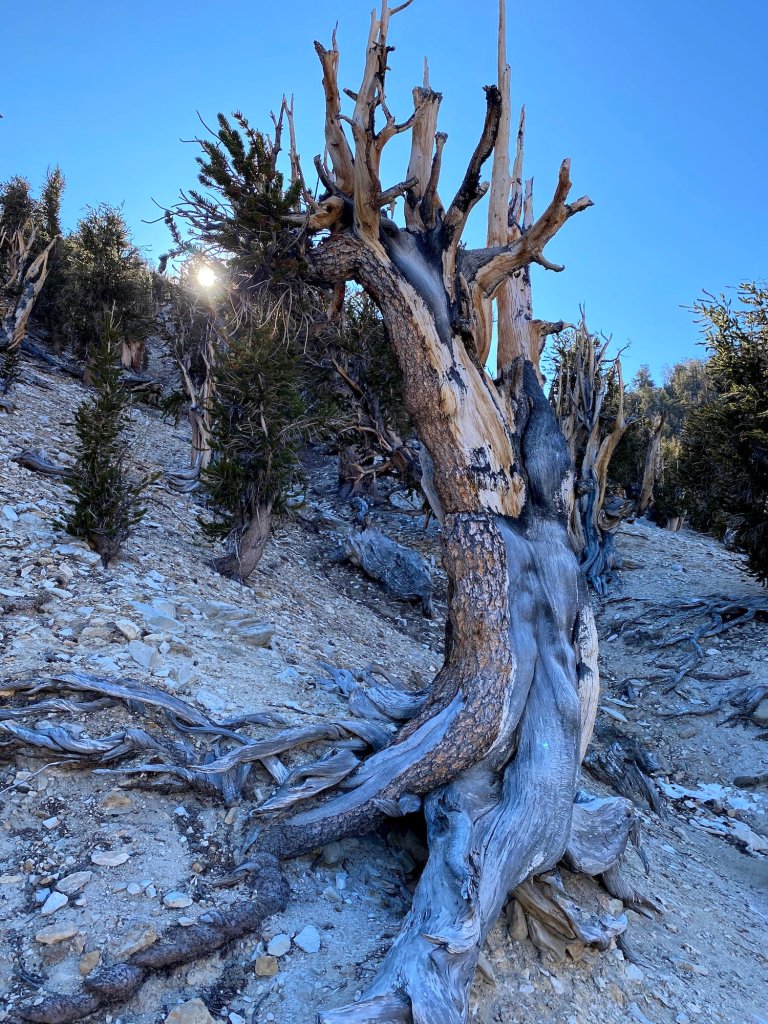
Amid the barren, high-altitude desert of California’s White Mountains, the Bristlecone Pines stand as enduring sentinels, their gnarled forms chronicling millennia of survival in one of the planet’s most unforgiving landscapes. For thousands of years, these ancient organisms have endured drought, freezing temperatures, and brutal winds. Each twisted trunk and weathered branch tells a story of resilience. Yet in a bitter twist, one of the oldest among them, a tree known as Prometheus that once grew in the nearby Great Basin National Park, met its end not from the slow violence of nature but from a single human decision. And it wasn’t the result of malice or careless destruction, like the foolish vandals who felled the U2 Joshua Tree. It was a mistake, made in the name of science.
The Prometheus stump. All that is left of one of the oldest organisms on Earth.
Prometheus, named after the Titan who defied the gods in Greek mythology, was an extraordinary specimen of the Pinus longaeva species, or the Great Basin Bristlecone Pine. It is believed to have germinated around the time of the Bronze Age, making it likely older than the Great Pyramids of Giza. By the 1960s, when its existence was noted by researchers, it was already around 4900 years old. Unfortunately, that’s when tragedy struck.
In 1964, a young geographer named Donald Rusk Currey was studying climate dynamics of the Little Ice Age. He was especially drawn to Bristlecone pines because their rings hold valuable records of past climate conditions, a core focus of dendrochronology, the study of tree rings, which continues to be an important scientific tool today. Some details of the story vary, but Currey had supposedly been coring several trees in the area to measure their age, but he encountered difficulties with Prometheus. He was unaware that the tree was not only ancient, but likely the oldest non-clonal organism on the planet. The coring tool broke, and unable to get the data he needed, Currey believed that cutting down the tree was the only way to continue his research. The Forest Service, unaware of the tree’s significance, approved the request.
And so he cut it down.
Bristlecone forest in the White Mountains of California (Erik Olsen)
Once Prometheus was cut down, its extraordinary age became clear. By counting its growth rings, Currey estimated that Prometheus was at least 4,844 years old, making it the oldest known tree in the world at the time. A few years later, this age was increased to 4,862 by Donald Graybill of the University of Arizona‘s Laboratory of Tree-Ring Research.
The scientific community and general public were outraged at the unnecessary loss, sparking conversations about the protection of these ancient trees. In the words of one writer-activist, Currey had “casually killed (yes, murdered!)” the world’s oldest tree. As if a curse had been unleashed, a year after Prometheus was cut down, a young Forest Service employee died of a heart attack while trying to remove a slab from the tree. Currey was obviously beside himself. Whoops.
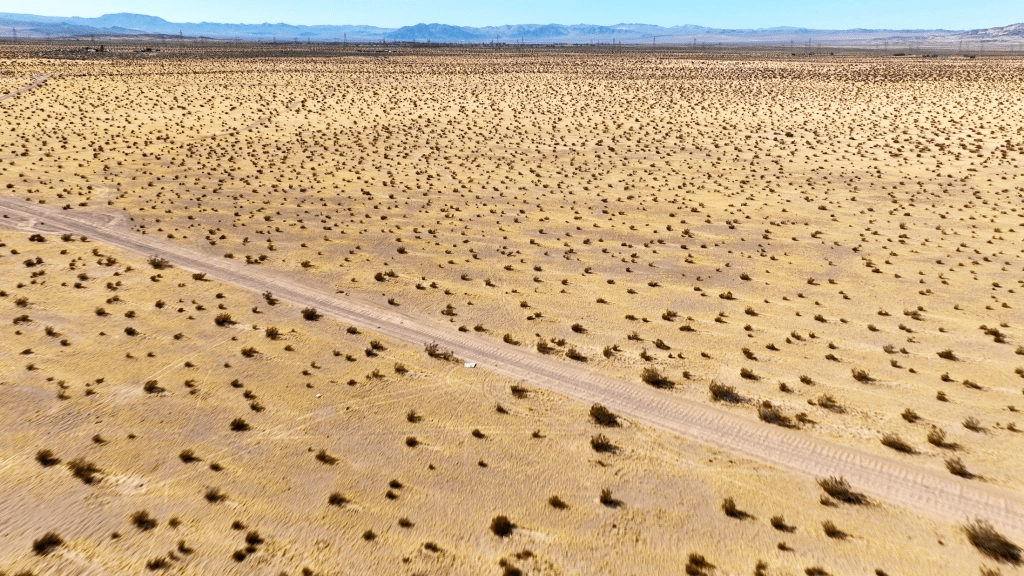
Whether Prometheus should be considered the oldest organism ever known depends on how we define “oldest” and “organism.” Some clonal species may claim even more ancient origins when we consider the entire genetic individual rather than a single stem or trunk. The creosote bush ring known as King Clone, located in the Mojave Desert in California, is estimated to be nearly 12,000 years old. Similarly, the massive aspen colony known as Pando in Utah spans over 100 acres and may be more than 14,000 years old. Unlike Prometheus, which was a single, ancient tree, these clonal colonies persist by continuously regenerating themselves, allowing the larger organism to survive for tens of thousands of years.
Creosote growing in the Mojave Desert (Photo: Erik Olsen)
Prometheus’s death brought global attention to the incredible age and ecological value of Bristlecone Pines, sparking a deeper appreciation for their role in Earth’s history. In the years since, increased protections have been put in place to preserve these ancient trees. Today, they are part of the Inyo National Forest’s Ancient Bristlecone Pine Forest, a protected area in the White Mountains that draws scientists and visitors from around the world.
California is home to the oldest, tallest, and largest trees on the planet, not just the ancient Bristlecone Pines, but also the sky-scraping coast redwoods and the enormous giant sequoias. It’s also the most biodiverse state in the U.S., making it one of the most ecologically exceptional places on Earth.
Even as we mourn Prometheus, it’s important to remember that it is not the end of the story for the Bristlecone Pines. There are still many of these ancient trees alive today. One of them, named Methuselah, is known to be 4,851 years old and is often considered the oldest living tree in the world. While it is known to live somewhere in the White Mountains of California, its exact location is kept a secret to protect it. The tree’s name refers to the biblical patriarch Methuselah, who ostensibly lived to 969 years of age.
There’s also the potential for even older specimens. Given the harsh, remote habitats these trees often occupy, it is likely that there are older Bristlecones yet to be discovered.
California’s White Mountains (Photo: Erik Olsen)
The cutting of Prometheus was a mistake, an irreversible loss. But its story became a turning point, highlighting the need to treat ancient and rare life with more care. While Prometheus is gone, many other long-lived and fragile organisms still exist. Its fate is a reminder that our curiosity should always be balanced by a responsibility to protect what can’t be replaced.
Today, a cross-section of Prometheus is on display at the Great Basin National Park visitor center in Nevada, as well as the U.S. Forest Service’s Institute of Forest Genetics in Placerville, California. The tree’s thousands of growth rings are a reminder of its incredible longevity and a sobering memory of the tree that had survived for millennia. The region’s diverse landscapes are home to an incredible abundance of life, from ancient trees to unique coastal ecosystems. Protecting and understanding these natural treasures ensures they remain for future generations to study, appreciate, and enjoy.
Imagine a world lost in deep time. The atmosphere held less oxygen than at any point since the Cambrian explosion, and the land was dominated by iconic dinosaurs like Allosaurus, Brachiosaurus, Archaeopteryx, and Stegosaurus. It was an era poised for a new type of plant life that would come to define the landscape—cycads. While Jurassic forests are often depicted as dense with ferns, with their coiled fronds and lush foliage, these plants were not the sole stars of the ancient botanical world.
The true giants of the Jurassic flora were the cycads, seed-bearing plants with stout, woody trunks and crowns of stiff, feather-like evergreen leaves. In fact, the Jurassic is often referred to as the “Age of Cycads”. Cycads thrived during this period, approximately 280 to 145 million years ago, as evidenced by abundant fossils. These resilient plants, which once dominated prehistoric landscapes, have remarkably endured the passage of time, remaining largely unchanged (although this is now disputed) and offering a living glimpse into a world ruled by dinosaurs.
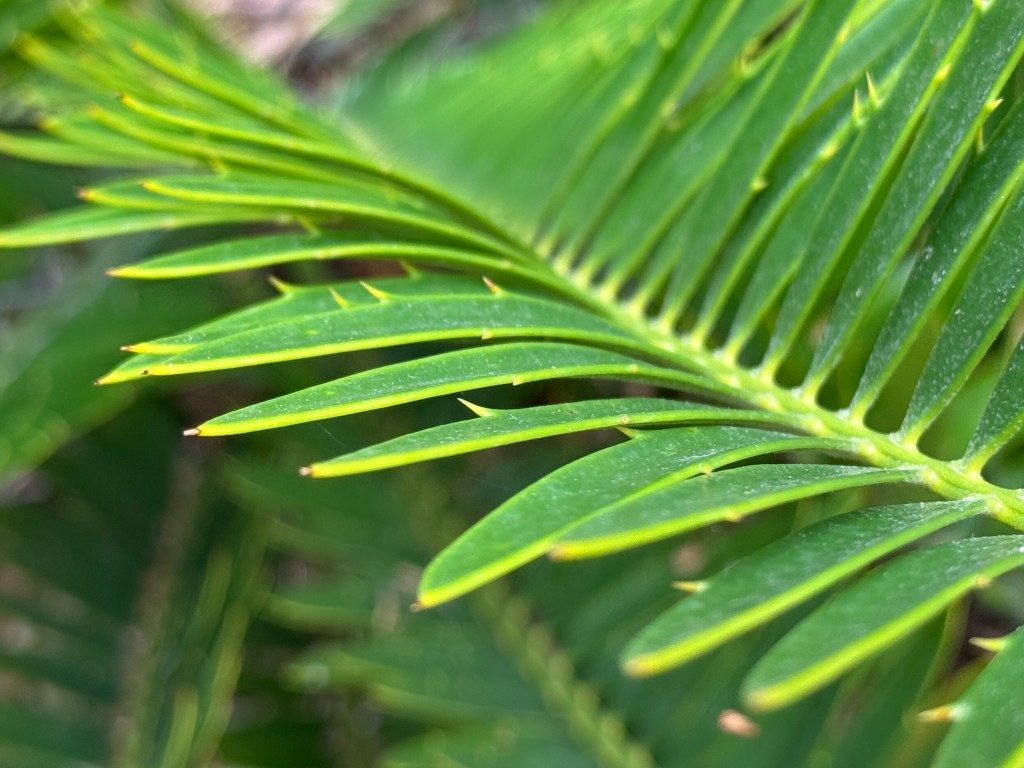
One of the most remarkable features of cycads is the toughness of their leaves. Touch them with your fingers. They have a much greater stiffness than most other plants. Cycad leaves are thick, leathery, and often waxy to the touch, with a heavy cuticle, a protective outer layer that makes them remarkably durable. Unlike the soft, broad leaves of many modern plants, cycad fronds are built to withstand intense sunlight, conserve water in dry environments, and deter herbivores. The stiff, sometimes spiny edges of the leaves would have made them a difficult meal, offering a critical evolutionary advantage during a time when giant plant-eating dinosaurs roamed the Earth.
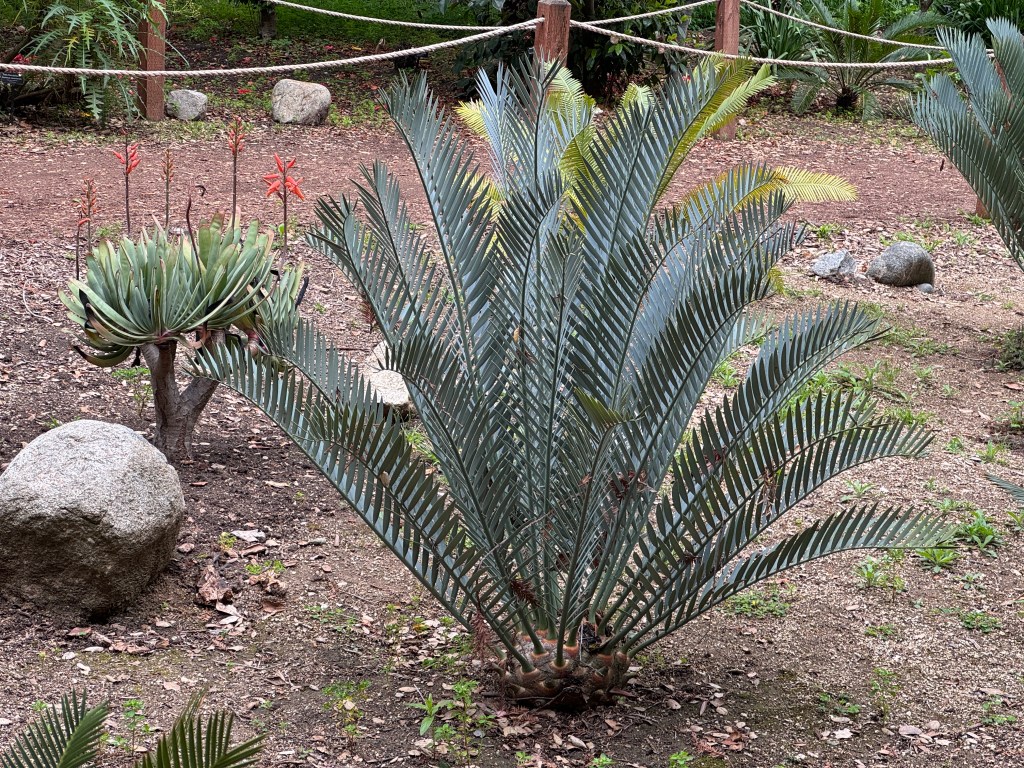
Cycad leaves are quite hard and resistant to insects. Evidence shows that dinosaurs ate cycad leaves regularly. (Photo: Erik Olsen)
Despite their formidable defenses, evidence shows that dinosaurs did in fact eat cycads. Fossilized dinosaur dung, known as coprolites, has been found containing fragments of cycad tissues and pollen. Some herbivorous dinosaurs like Stegosaurus and Ankylosaurus are believed to have browsed on cycads, along with other tough plants of the Mesozoic landscape. These animals likely evolved strong jaws and specialized teeth capable of grinding down fibrous, sturdy plant material. In turn, the resilience of cycad leaves helped the plants survive repeated grazing and harsh environmental stresses, allowing them to persist across millions of years into the present day. FYI: Flowering plants, or angiosperms, only came into being during the late reign of the dinosaurs, during the Cretaceous Period (145–66 million years ago).
Recent fossil discoveries are also reshaping how scientists view cycads. In 2023, researchers uncovered an 80-million-year-old fossilized cycad cone in Silverado Canyon, California, revealing that ancient cycads were far more diverse than their modern descendants. Previously thought to be “living fossils” that had remained largely unchanged since the dinosaur era, cycads now appear to have undergone significant evolutionary changes during the Cretaceous period. The find, assigned to a new genus called Skyttegaardia, highlights how much more dynamic and complex cycad history may be than once believed.
Cycads are cool to look at and examine closely, and it turns out that one of the best places in the United States to see actual living cycads in Descanso Gardens in La Canada Flintridge. But how’d they get there?
In 2014, La Canada Flintridge residents Katia and Frederick Elsea called the city’s Descanso Gardens with an odd proposal: would the famous horticultural center take their collection of over 180 rare cycads, a fern-like plant from the days of the dinosaurs?
The garden said yes, and now those plants are part of an effort to recreate a prehistoric landscape. Sixty-six species were transplanted from the Elsea collection to the garden’s Ancient Forest. Cycads form the heart of the forest, but there are also Tree ferns, with feathery fronds, and Ginkgo biloba, known for its distinctive fan-shaped leaves. This area, dedicated to showcasing some of the world’s oldest and most primitive plant species, highlights the remarkable resilience and beauty of plants that have survived for millions of years.
Cycads are a type of gymnosperm. Gymnosperms are a group of seed-producing plants that includes cycads, conifers, ginkgoes, and gnetophytes. Unlike angiosperms (flowering plants), gymnosperms do not produce flowers or fruits; instead, their seeds are exposed or “naked,” typically held in cones or on the surface of scales. They also have a unique structure, with a large crown of stiff, fern-like leaves arising from a stout trunk. They may look like palms or ferns, but they are actually their own distinct group of plants, with over 300 species in the world.
In contrast, flowering plants have been far more evolutionary successful. Angiosperms dominate most of the planet’s ecosystems, with an estimated 300,000 species, vastly outnumbering the gymnosperms. Their ability to form flowers and fruits has allowed them to diversify into nearly every terrestrial habitat on Earth.
Cycad cone (Dioon edule) at Descanso Gardens. Built for an ancient world: Cycad cones are among the largest and oldest seed structures on Earth, evolving long before the first flower bloomed. Their rugged design helped cycads thrive alongside dinosaurs — and survive into the modern day. (Erik Olsen)
The cycads at Descanso Gardens come from all over the globe, including Africa, Australia, and the Americas. They are part of the International Palm Society’s Cycad Collection, one of the largest and most diverse collections of cycads in the world. The collection at Descanso Gardens features over 200 cycad specimens, including rare and endangered species.
One of the fascinating plants showcased in the garden is the Sago Palm (not actually a palm), Cycas revoluta, a dioecious species, meaning it has separate male and female plants. Male Sago Palms produce multiple cones at their center, releasing pollen that insects carry to the female plants. The female plants develop a single, large cone in the center, which contains seeds. When the pollen fertilizes these seeds, a new plant can grow, continuing the cycle of this ancient species.
Another fitting addition to the Ancient Forest is the monkey puzzle tree, Araucaria araucana. This small, spiky tree is entirely covered with sharp, scale-like leaves that resemble thick, dense pine needles but are much tougher. Known as one of the earliest living conifers, the monkey puzzle tree stands as a living relic from the time when these ancient trees dominated prehistoric landscapes.
Cycads are fascinating not just for their ancient history, but also for their unique biology. Unlike most plants, which have a single apical meristem (a region of cell division at the growing tip), cycads have multiple meristems, which allows them to produce new leaves even if the growing tip is damaged. They also have a symbiotic relationship with cyanobacteria, which live in their roots and fix nitrogen from the air, allowing the plant to grow in nutrient-poor soils.
Despite their ancient origins, cycads are facing modern-day threats. Many species are endangered due to habitat loss and over-collection for the horticultural trade. The cycad collection at Descanso Gardens is not just a beautiful display, but also an important conservation effort to preserve these ancient plants for future generations.
Cycad at Descanso Gardens (Erik Olsen)
At Descanso Gardens, the cycads have been planted according to the geographic region where they originate: Africa, Asia, Madagascar, Australia and Mexico. Some of the plants no longer exist in the wild.
“For a really long time, this was plant life on Earth,” the former director, David R. Brown told the Los Angeles Times. “This helps remind me that, for as self-absorbed as we are often, we’re but a part of a story that has been going on for a very, very long time.”
If you’d like to learn more about Descanso Gardens, it’s collections and how it came into being check out this episode of Lost LA. And if you’re interested in seeing the cycad collection at Descanso Gardens for yourself, try visiting during the late afternoon, when the golden hour light heightens the beauty and mystery of these cool plants.
We also have the world’s tallest and biggest trees.
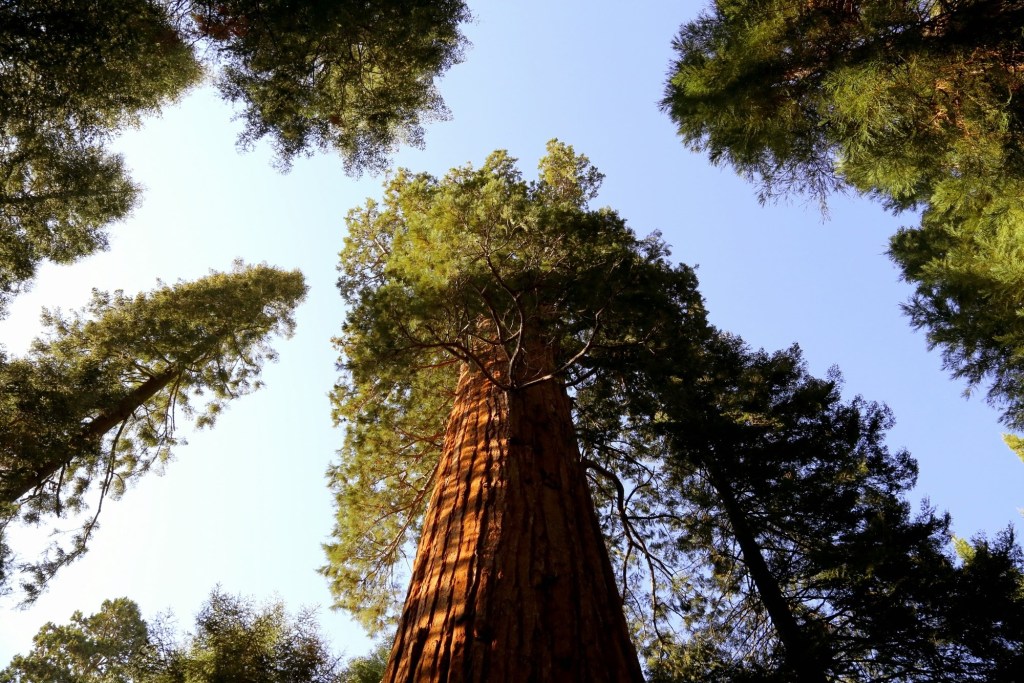
California’s giant sequoias and redwoods are nature’s skyscrapers. Redwoods exist in a few narrow pockets in Northern and Central California and into Southern Oregon. Sequoias live exclusively in small groves in central and Northern California with the largest grouping of them found in Sequoia National Park. These two tree species are wonders of the biological world. They are also some of the most magnificent things to behold on the planet.
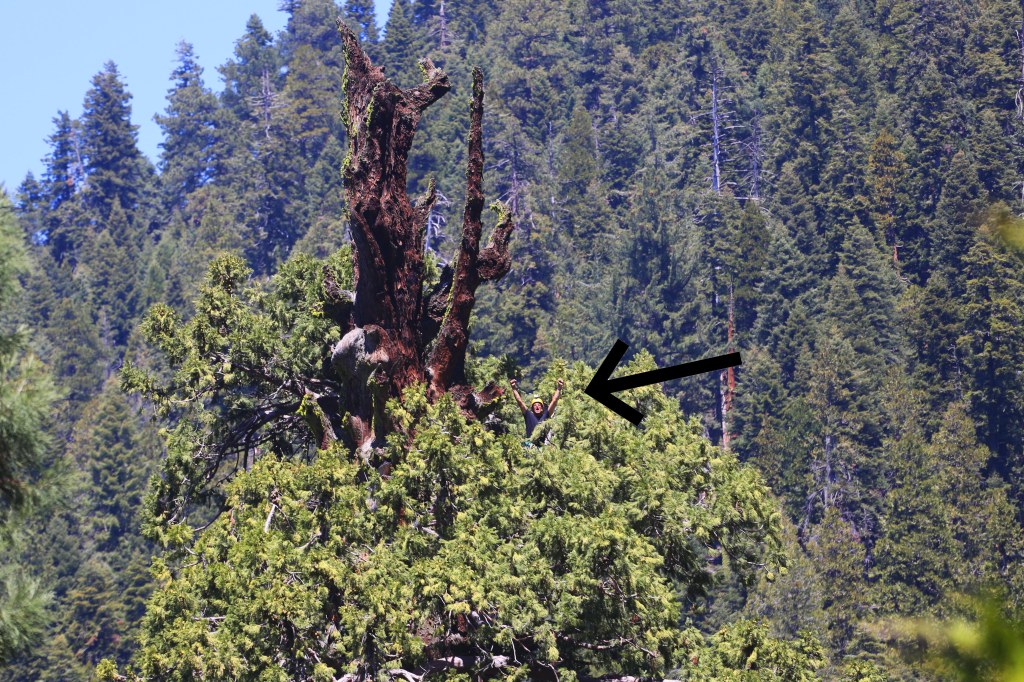
I have personally climbed the Stagg tree for a New York Times story years ago (see photo below, that’s me). The Stagg is the fifth-largest sequoia in the world, and I will forever remember the experience…even though I chickened out a bit and didn’t make it to the top.
The author climbs the Stagg tree, the fifth-largest tree in the world. (Erik Olsen)
We are lucky to still have our big trees, what’s left of them, anyway. Just a century and a half ago, old-growth redwoods and sequoias were remarkably plentiful. People marveled at them, with some early settlers in California spinning unbelievable yarns of trees that rise from the earth “like a great tower“. They also saw them as a bounteous resource, ripe for plunder (mankind, sigh).
By 1900, nearly all of California’s tall trees had been purchased by private landowners who saw in the trees not beauty, but dollar signs. By 1950, an estimated 95% of California’s original old-growth coast redwood forests had been logged, particularly along the coast from Big Sur to the Oregon border. For giant sequoias, about one-third of the original groves had been cut down, largely in the late 19th and early 20th centuries before protections were put in place.
Between 1892–1918, the Sanger Lumber Company logged the Converse Basin Grove, one of the largest stands of sequoia in the world, using ruinous clearcutting practices. They cut down 8,000 giant sequoias, some of them over 2000 years old, in a decade-long event that has been described as “the greatest orgy of destructive lumbering in the history of the world.” Only 60-100 large specimens in the grove survived. We wrote about that awful event here.
Today, only a small fraction of the old-growth coast redwood forest remains. The largest surviving stands of ancient coast redwoods are found in Humboldt Redwoods State Park, Redwood National and State Parks and Big Basin Redwoods State Park. It’s a wonder and a blessing that there are some left. And even then, they face an uncertain future thanks to climate change.
The remarkable size and height of these incredible organisms are largely due to California’s unique geography, though genetics likely play a significant role as well. Before diving into those factors, let’s take a moment to appreciate just how extraordinary these trees truly are.
Professional tree climber Rip Thompkins at the top of the Stagg tree, a giant sequoia. (Photo: Erik Olsen)
Sequoias and redwoods are closely related. Both belong to the cypress family (Cupressaceae). The primary difference between sequoias and redwoods is their habitat. Redwoods live near the moist, foggy coast, while sequoias thrive in higher-elevation subalpine zones of the Sierra Nevada. Redwoods are the tallest trees in the world. Sequoias are the biggest, if measured by circumference and volume. Redwoods can grow over 350 feet (107 m). The tallest tree in the world that we know of is called the Hyperion, and it tickles the sky at 379.7 feet (115.7 m). But it is quite possible another tree out there is taller than Hyperion. Redwoods are growing taller all the time, and many of the tallest trees we know of are in hard-to-reach areas in Northern California. Hyperion was only discovered about a decade ago, on August 25, 2006, by naturalists Chris Atkins and Michael Taylor. The exact location of Hyperion is a secret to protect the tree from damage.
The giant sequoia (Sequoiadendron giganteum) is Earth’s most massive living organism. While they do not grow as tall as redwoods – the average size of old-growth sequoias is from 125-275 feet – they can be much larger, with diameters of 20–26 feet. Applying some basic Euclidean geometry (remember C = πd?), that means that the average giant sequoia has a circumference of over 85 feet.
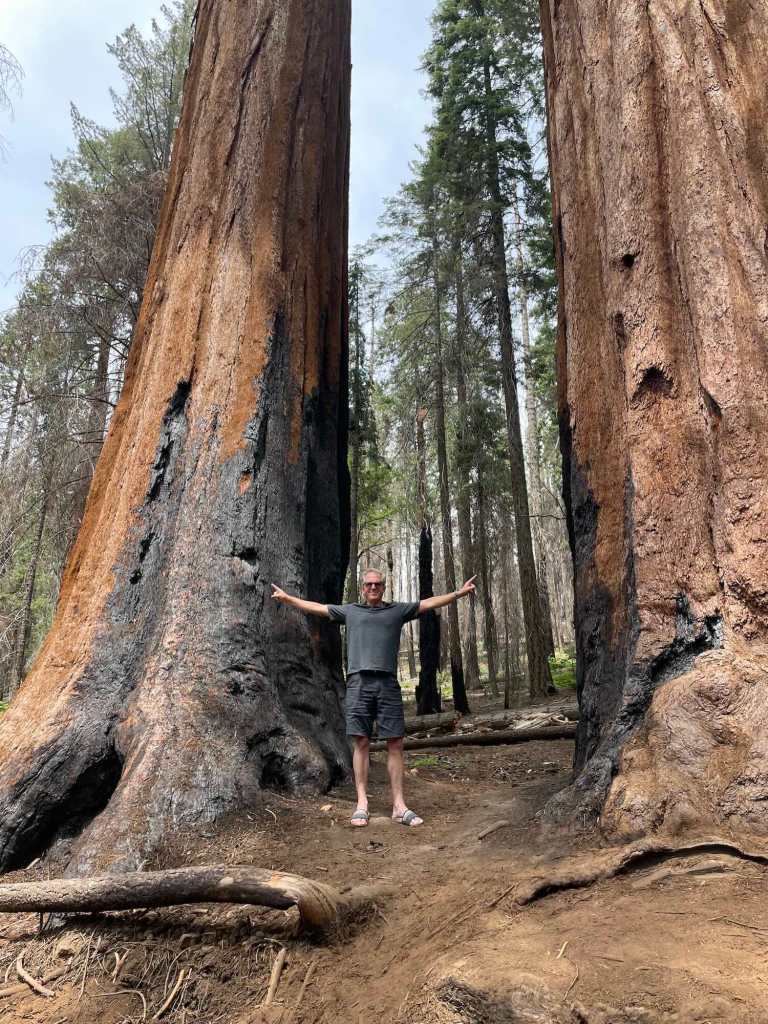
Giant sequoia and man for scale (Photo: Erik Olsen)
Sequoias grow naturally along the western slope of the Sierra Nevada mountain range at an altitude of between 5,000 and 7,000 feet. They tend to grow further inland where the dry mountain air and elevation provide a comfortable environment for their cones to open and release seeds. They consume vast amounts of runoff from Sierra Nevada snowpack, which provides groves with thousands of gallons of water every day. But some say the majestic trees face an uncertain future. Many scientists are deeply concerned about how climate change might affect the grand trees, as drought conditions potentially deprive them of water to survive.
The General Sherman tree in Sequoia National Park. (Photo: Erik Olsen)
The world’s largest sequoia, thus the world’s largest tree, is General Sherman, in Sequoia National Park. General Sherman is 274.9 feet high and has a diameter at its base of 36 feet, giving it a circumference of 113 feet. Scientists estimate that General Sherman weighs some 642 tons, about as much as 107 elephants. The tree is thought to be 2,300 to 2,700 years old, making it one of the oldest living things on the planet. (To learn more about the oldest thing in the world, also in California, see our recent feature on Bristlecone pines.) Interesting fact: in 1978, a branch broke off General Sherman that was 150 feet long and nearly seven feet thick. Alone, it would have been one of the tallest trees east of the Mississippi.
Many sequoias exist on private land. Just last month, one of the largest remaining private stands of Sequoias in the world – the Alder Creek Grove of giant sequoias – was bought by the Save the Redwoods League conservation group for nearly $16 million. The money came from 8,500 contributions from individual donors around the world. The property includes both the Stagg Tree mentioned above and the Waterfall Tree, another gargantuan specimen. The grove is considered “the Crown Jewel” of remaining giant Sequoia forests.
Redwoods (Sequoia sempervirens), also known as coast redwoods, generally live about 500 to 700 years, although some have been documented at more than 2,000 years old. While wood from sequoias was found to be too brittle for most kinds of construction, the redwoods were a godsend for settlers and developers who desperately needed raw material to build homes and city buildings, to lay railroads, and erect bridge trestles. The construction and subsequent reconstruction of San Francisco following the 1906 earthquake heavily relied on redwood timber, prized for its strength, resilience, and natural resistance to decay, making it a foundational resource for the city’s growth and recovery after the earthquake.
The timber companies who profited from redwoods only began to cut them down in earnest a bit over a century ago. But cut them down they did, with vigor and little regard for the preservation of such an amazing organism. After World War II, California experienced an unprecedented building boom, and the demand for redwood (and Douglas fir) soared. Coastal sawmills more than tripled between 1945 and 1948. By the end of the 1950s, only about 10 percent of the original two-million-acre redwood range remained untouched.
The author standing by burned sequoias. (Photo: Erik Olsen)
OK, you got this far. I hope. So how did these trees get so big and tall? Most scientists agree it has to do with climate. Sequoias benefit from California’s often prodigious snowpack, mentioned above, which seeps into the ground, constantly providing water to the roots of the trees. In addition to the snowpack, the thick (up to 2 feet), fire-resistant bark of sequoias helps protect them from wildfires. This forest ecology helps as well, since the fires themselves clear competing vegetation, allowing more sunlight and nutrients to reach the trees. The temperate climate of California, with its relatively mild winters and summer fog, also helps sustain these giants by moderating temperatures and reducing water loss, creating an environment where sequoias can thrive for centuries.
Conversely, Redwoods get much of their water from the air, when dense fog rolls in from the coast and is held firm by the redwoods themselves and the steep terrain. Because of the unique interplay of ocean currents and climate in California, the amount of fog that is available to trees is highly unusual. The trees’ leaves actually consume water in fog, particularly in their uppermost shoots. According to scientists who study the trees using elaborate climbing mechanisms to reach the treetops, in summer, coast redwoods can get more than half of their moisture from fog. (In fact, fog plays a central role in sustaining several of California’s coastal ecosystems.) The reason is that fog is surprisingly dense with water. One study from scientists Daniel Fernandez of California State University, Monterey Bay, showed that a one-square-meter fog collector could harvest some 39 liters, or nearly 10 gallons, of water from fog in a single day.
Giant sequoia – family for scale (Erik Olsen)
Another possible explanation for the coast redwood’s remarkable size lies in its extraordinary genome. According to research from the Redwood Genome Project, the coast redwood (Sequoia sempervirens) is hexaploid, meaning it carries six copies of each chromosome in every cell, an extremely rare feature in trees. In contrast, humans and most other plants and animals are diploid, carrying only two sets of chromosomes.
The coast redwood genome is indeed massive, estimated at around 27 billion base pairs, which is approximately nine times larger than the human genome (which has about 3 billion base pairs). While not exactly ten times larger, the general comparison holds and highlights the tree’s genetic complexity.
By comparing the coast redwood’s genome with those of other conifers, researchers have found hundreds of unique gene families, many of which are associated with stress tolerance, wound repair, fungal resistance, toxin metabolism, and the biosynthesis of flavonoids, all compounds that help mitigate cellular stress.
This rich genetic toolkit may contribute to the tree’s legendary resilience, longevity, and ability to grow to extraordinary heights, though the full relationship between genome size and physical traits in redwoods is still being studied.
Yet another factor may be the trees remarkable longevity. They are survivors. The Sierra Nevadas have long experienced dramatic swings in climate, and this age may be yet another of those swings that the trees will simply endure. Or maybe not. For most of the time that redwoods and sequoias have existed, they have done a remarkable job fighting off fires, swings in climate, as well as disease and bug infestations. Because their bark and heartwood are rich in compounds called polyphenols, bugs and decay-causing fungi don’t like them. Many trees, not just redwoods and sequoias, have genes that help them resist the typical aging processes that limit the lifespan of animals. For instance, trees can compartmentalize and isolate damaged or diseased wood, preventing the problem from spreading to the rest of the tree.
Giant sequoias in California. (Photo: Erik Olsen)
As the air heats up due to global warming, there is a rising threat to the trees’ survival. Warm air pulls moisture from leaves, and the trees often close their pores, or stomata, to maintain their water supply. When the pores close, that prevents carbon dioxide from nourishing the tree, slowing or even halting photosynthesis. The climate in areas where the trees grow hasn’t yet experienced the kind of temperatures that might kill them, but we are really just at the beginning of this current era of global warming, and some scientists warn hotter temperatures could doom many trees.
That said, other studies that show the increased carbon that causes warming could actually be good for the trees. According to an ongoing study from Redwoods Climate Change Initiative, California’s coast redwood trees are now growing faster than ever. As most people know, trees consume carbon dioxide from the air, so, the scientists argue, more carbon means more growth. However, scientists caution that climate change is not a net benefit. Increased drought, fire risk, and ecosystem stress may ultimately outweigh these temporary growth gains.
We will see. While coast redwoods have shown resilience during recent droughts, with no widespread mortality observed, giant sequoias have not fared as well. In the past decade, drought, bark beetles, and intense wildfires have killed nearly 20% of all mature giant sequoias, a sharp and alarming decline for such a long-lived species.
Redwood grove in Northern California (Photo: Erik Olsen)
It all comes down to some kind of balance. Trees may benefit from more carbon, but if it gets too hot, trees could start to perish. That’s a bit of a conundrum, to say the least.
The prospect of losing these magnificent trees to climate change is a double whammy. Not only would a mass die-off of trees be terrible for tourism and those who simply love and study them, but trees are some of the best bulwarks we have on the planet to fight climate change. Redwoods are among the fastest-growing trees on earth; they can grow three to ten feet per year. In fact, a redwood achieves most of its vertical growth within the first 100 years of its life. Among trees that do the best job taking carbon out of the atmosphere, you could hardly do better than redwoods and sequoias.
The Archangel Ancient Tree Archive, an organization out of Copemish, Michigan, has been “cloning” California’s big trees for nearly a decade. They take snippets of the trees from the top canopy and replant them, essentially creating genetically identical copies of the original tree. It’s more like propagating than cloning, but that’s what they call it. The group’s founder, David Milarch, believes fervently that planting large trees is our best bet in stopping climate change. This is the video story I produced about Milarch back in 2013. It’s worth a watch. He’s an interesting character with a lot of passion.
Preserving and protecting what’s left of these amazing organisms should be a priority in California. These trees are not only part of the state’s rich natural legacy, but they offer ample opportunities for tourism and strengthening the economies of the regions where they grow. It’s hard to visit Redwood National and State Parks or Sequoia & Kings Canyon National Parks and to come away with anything but awe at these magnificent organisms. California is special, and we are blessed to have these trees and the places where they grow in our state.
Lying east of the Owens Valley and the jagged crags of the Sierra Nevadas, the White Mountains rise high above the valley floor, reaching over 14,000 feet, nearly as high as their far better-known relatives, the Sierra Nevadas. Highway 168 runs perpendicular to Highway 395 out of Big Pine and leads up into the mountains to perhaps the most sacred place in California.
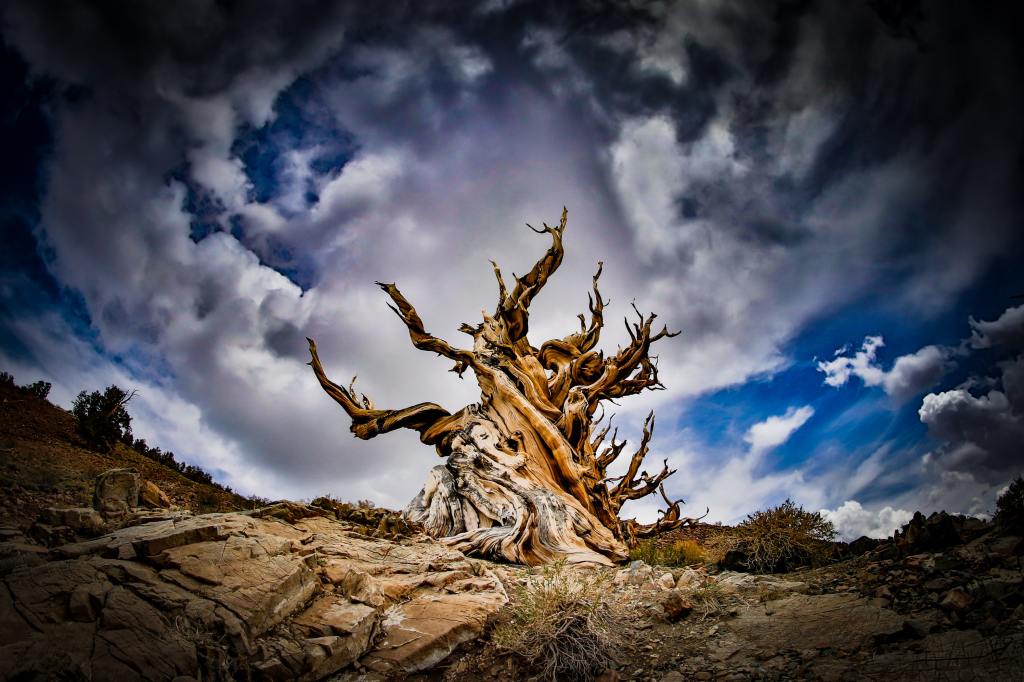
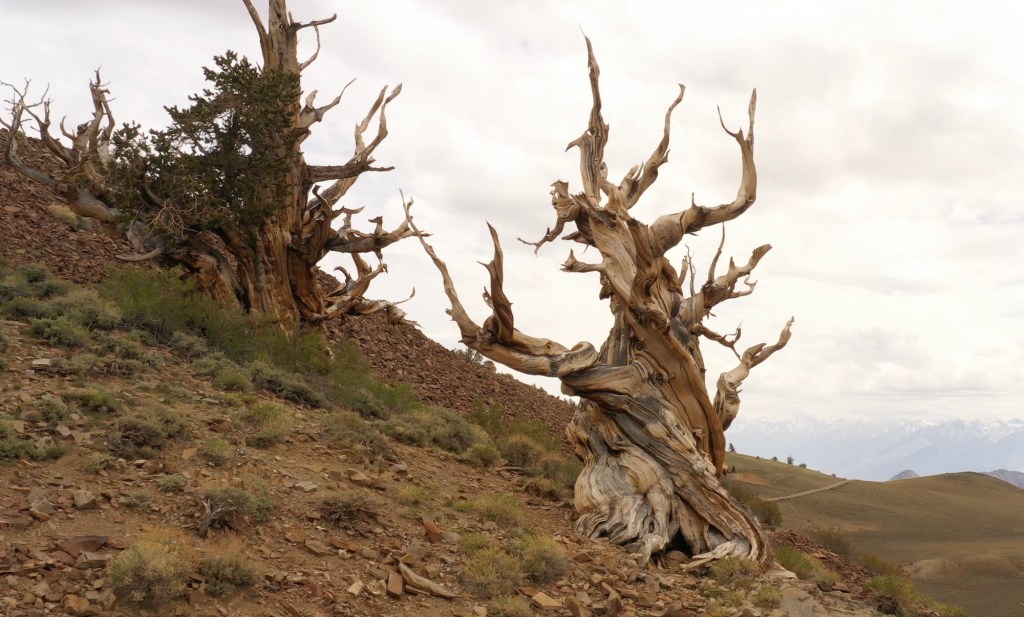
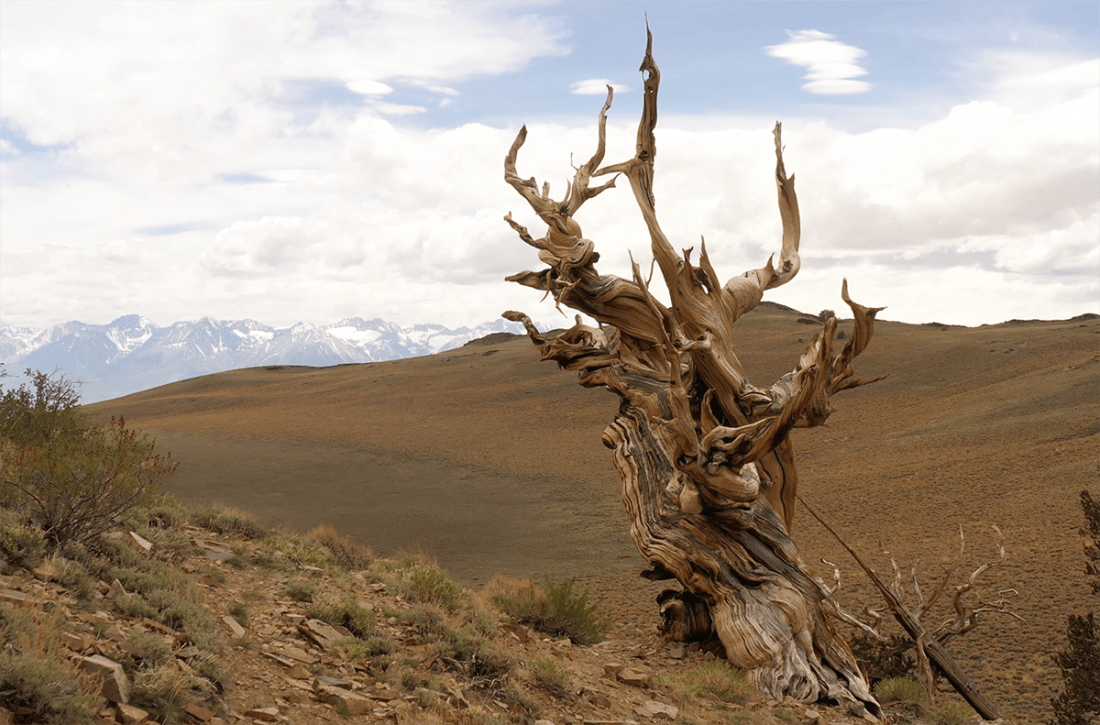
Far above sea level, where the air is thin, live some of the most amazing organisms on the planet: the ancient bristlecone pines. To the untrained eye, the bristlecone seems hardly noteworthy. Gnarled and oftentimes squat, especially when compared to the majestic coastal redwoods and giant sequoias living near the coast further west, they hardly seem like mythical beings. But to scientists, they are a trove of information, offering clues to near immortality and to the many ways that the earth’s climate has changed over the last 5,000 years.
In the January 20, 2020 edition of the New Yorker, music writer Alex Ross writes about the trees and the scientists who are trying to unlock the secrets of the bristlecone’s unfathomable endurance. The trees, he writes, “seem sentinel-like”.
Video of ancient bristlecone pine that I shot and put together.
Bristlecones are the longest living organism on earth. The tree’s Latin name is Pinus longaeva, and it grows exclusively in subalpine regions of the vast area known to geologists as the Great Basin, which stretches from the eastern Sierra Nevadas to the Wasatch Range, in Utah. Bristlecones grow between 9,800 and 11,000 feet above sea level, where some people get dizzy and there are few other plants or animals that thrive. The greatest abundance of bristlecones can be found just east of the town of Bishop, California in the Ancient Bristlecone Pine Forest. There, a short walk from where you park your car, you can stroll among these antediluvian beings as they imperceptibly twist, gnarl and reach towards the heavens.
While most of the bristlecones in the national Ancient Bristlecone Pine Forest are mere hundreds of years old, there are many that are far older. Almost ridiculously so. Methuselah, a Great Basin bristlecone, is 4,851 years old, as measured by its rings, taken by scientists decades ago using a drilled core. Consider that for a moment: this tree, a living organism, planted its tentacle-like roots into the soil some 2000 years before the birth of Christ, around the time that the Great Pyramids of Egypt were built. By contrast, the oldest human being we know of lived just 122 years. That’s 242 human generations passing in the lifetime of a single bristlecone that still stands along a well-trodden trail in the high Sierras.
National Park Service
That said, if you were to try and see Methuselah for yourself, you are out of luck. The Forest Service is so protective of its ancient celebrity that it will not even share its picture. What’s more, it’s probably the case that there are bristlecones that are even older than Methuselah. Scientists think there could be trees in the forest that are over 5,000 years old.
How the bristlecone has managed this incredible feat of endurance is a mystery to researchers. Many other tree species are prone to insect infestations, wildfires, climate change. In fact, over the last two decades, the vast lodgepole pine forests of the Western United States and British Columbia have been ravaged by the pine beetle. Millions of acres of trees have been lost, including more than 16 million of the 55 million acres of forest in British Columbia.
But insects don’t seem to be a problem for bristlecones. Bristlecone wood is so dense that mountain-pine beetles and other pests can rarely burrow their way into it. Further, the region where the bristlecones live tends to be sparse with vegetation, and thus far less prone to wildfire.
A recent study by scientists at the University of North Texas looked at the amazing longevity of the ginkgo tree, examining individuals in China and the US that have lived for hundreds, perhaps more than a thousand years. One thing they found is that the trees’ immune systems remain largely intact, even youthful, throughout their lives. It turns out the genes in the cambium, or the cylinder of tissue beneath the bark, contain no “program” for senescence, or death, but continue making defenses even after hundreds of years. Researchers think the same thing might be happening in the bristlecone. This is not the case in most organisms and certainly not humans. Like replicants in the movie Blade Runner, we seem to have a built-in clock in our cells that only allows us to live for so long. (I want more life, f$@$@!)
Scientists at the University of Arizona’s Laboratory of Tree-Ring Research (LTRR) have built up the world’s largest collection of bristlecone cross-sections, which they carefully examine under the microscope, looking for clues about how the trees have managed to survive so long, and how they can inform us of the many ways the earth’s climate has changed over the millennia.
The LTRR houses the nation’s only dendrochronology lab (the term for the study of tree rings), and the researchers there have made several discoveries using tree cores that have changed or confirmed climate models. For example, in 1998, the climatologist Michael E. Mann published the “hockey stick graph,” that revealed a steep rise in global mean temperature from about 1850 onward (i.e. the start of the industrial revolution). There was intense debate about this graph, with many scientists and climate change skeptics saying that Mann’s projections were too extreme. But numerous subsequent studies, some using the trees’ rings new models, confirmed the hockey-stick model.
Bristlecone Pine
The bristlecones will continue to help us understand the way the earth is changing and to see into the deep human past in a way few other living organisms can do. They also improve our understanding of possible future environmental scenarios and the serious consequences of allowing carbon levels in the atmosphere to continue to grow.
In this sense, they truly are sentinels.
Bristlecone pine in the White Mountains (Unsplash)
Interestingly, it wasn’t until 1953 that we found out just how ancient these trees are. Credit for this breakthrough goes to Edmund Schulman, a dendrochronologist. Schulman and his colleague Frits Went stumbled upon an ancient limber pine while conducting research in Sun Valley, Idaho. This tree, which they found to be around 1,650 years old, got them thinking: could there be even older trees hidden away in the mountains?
Shulman then traveled to the White Mountains and began a long-term exploration of the Bristlecone forest. He took core samples from many trees and made a startling discovery. At night, at his camp, he began counting the annual growth rings on a slender piece of wood. He counted and counted, not daring to believe what was unfolding before his eyes. When he finally put down his magnifying glass in the enveloping darkness, he had counted rings that went back past the year 2046 BCE. Schulman had stumbled upon a tree that had been alive for over four millennia. Not only alive, but continuing to grow!
Schulman had effectively expanded our understanding of how long a single tree can endure—providing key insights into environmental longevity, climate history, and even the resilience of life on Earth.
Bristlecone forest in the White Mountains of California (Erik Olsen)
In tribute to the momentous find, he dubbed the tree “Pine Alpha,” a name that’s as much a testament to the tree’s age as it is to the groundbreaking nature of Schulman’s work. Until then, no one knew a living tree could be that old. The discovery was a pivotal moment that opened up a new frontier in the study of dendrochronology, and it became a cornerstone example of how trees serve as living records of Earth’s history.
It should be said that the trees themselves, in their gnarled, frozen posture, are truly are beautiful. They should be protected and preserved, admired and adulated. Indeed, Federal law prohibits any attempt to damage the trees, including taking a mere splinter from the forest floor. The trees have also become an obsession for photographers, particularly those who favor astrophotography. A quick search on Instagram reveals a stunning collection of images showing the majesty and haunting beauty of these ancient trees.
So, if you are ever headed up Highway 395 into the Sierras, it is well worth the effort to make the right-hand turn out of Big Pine to visit the Ancient Bristlecone Pine Forest. The air is thin, but the views are spectacular. And where else can you walk among the oldest living things on the planet?
Last week we had the opportunity to head up Highway 395 into Big Pine where we made a left up to the Ancient Bristlecone Pine Forest. Because of the coronavirus, the place was empty. Not a soul to be seen anywhere.
We did a feature on bristlecones a few months ago in which we marveled at the majesty and seeming immortality of these incredible organisms, probably the longest living things on the planet. We brought along a drone to get some shots of these trees, whose gnarled, swirling branches are like something out of a fantasy novel. Take a minute (literally a minute) to enjoy.