Understanding the Impact of Santa Ana Winds in the Eaton Fire

Homes in Altadena destroyed by the Eaton Fire (Erik Olsen)

The recent fires that swept through sections of Los Angeles will be remembered as some of the most destructive natural disasters in the city’s history—a history already marked by earthquakes, floods, and the potential for tsunamis. Yet, even a week later, confusion persists about what happened. Predictably, the finger-pointing has begun, with political opportunism often overshadowing rational analysis. This is, unfortunately, emblematic of our current climate, where facts are sometimes twisted to suit individual agendas. What we need now is a sound, scientific examination of the factors that led to this catastrophe—not just to better prepare for future disasters, but to deepen our understanding of the natural forces that shape our world.

One fact is indisputable: the fires were unusual in their ferocity and destruction. While studies, debates, and expert analyses following the disaster are inevitable, the immediate aftermath offers one clear conclusion—this fires were driven, in large part, by the extraordinary winds that descended on Los Angeles that night. On January 8th, Santa Ana winds roared through the chaparral-covered canyons of the San Gabriel Mountains like a relentless tidal wave of warm air. I witnessed this firsthand, standing outside on my porch as 100-foot trees bent under the gale forces, their massive branches snapped like twigs and flung into streets, homes, and vehicles. A few of them toppled entirely. Having lived in Los Angeles for most of my life, I can confidently say I had never experienced winds of this intensity.

Altadena Community Church. The church was a progressive Christian and open and affirming church and was the thirteenth church in the United Church of Christ that openly accepted LGBTQ people. (Erik Olsen)

The conditions were ripe for disaster. Southern California had not seen significant rainfall since May, leaving the chaparral bone dry. According to Daniel Swain, a climate scientist at UCLA and the University of California Agriculture and Natural Resources, this year marks either the driest or second-driest start to the rainy season in over a century. Dry chaparral burns quickly, and with the powerful winds driving the flames, the fire transitioned from a wildland blaze to an urban inferno. When the flames reached residential areas, entire neighborhoods of mostly wood-frame homes became fuel for the firestorm. In the lower foothills, it wasn’t just the vegetation burning—it was block after block of homes reduced to ash.

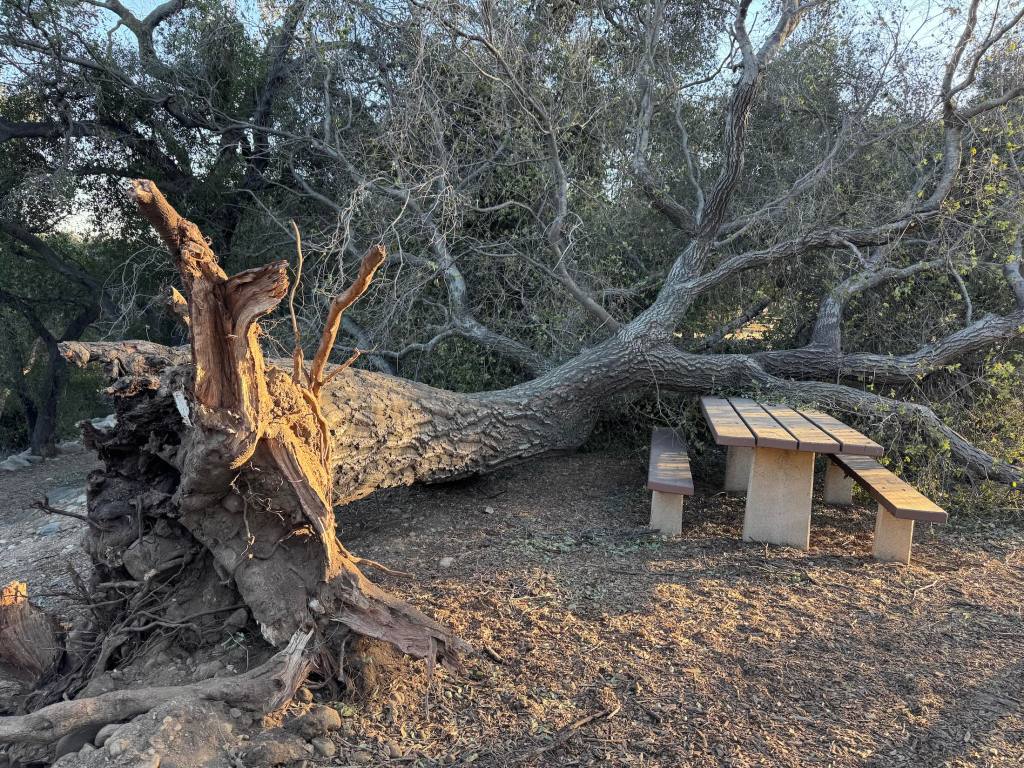
The wind was the true accelerant of this tragedy. Yesterday, I walked through the Hahamongna Watershed Park, formerly known as Oak Grove Park, renamed in the late 20th century to honor the Tongva people. In just 15 minutes, I passed more than a dozen massive oaks—centuries-old trees ripped from the ground, their intricate root systems exposed like nerves. These trees had withstood centuries of Southern California’s extremes—droughts, floods, heat waves—only to be toppled by this extraordinary wind event. Climate change undoubtedly influences fire conditions, but the immediate culprit here was the unrelenting, pulsating winds.

Downed oak tree after the Eaton Fire in Hahamonga watershed park (Erik Olsen)

Meteorologists had accurately predicted the intensity of this event, issuing warnings days in advance. Many residents took those warnings seriously, evacuating their homes before the fire reached its peak destruction. While the loss of 25+ lives is tragic, it is worth noting how many lives were saved by timely evacuations—a stark contrast to the devastating loss of life in the Camp Fire in Paradise a few years ago. Though the terrain and infrastructure of the two locations differ, the success of the evacuations in Los Angeles deserves recognition.

The winds of January 8th and 9th were exceptional, even by the standards of Southern California’s fire-prone history. They tore through canyons, uprooted trees, and transformed a wildfire into an urban disaster. Understanding these winds—their causes, their predictability, and their impacts—is essential not only to prevent future tragedies but to grasp the powerful natural forces that define life in Southern California. As the city rebuilds, let us focus on learning from this disaster, guided by science, reason, and a determination to adapt to a future where such events may become increasingly common.

Southern Californians know the winds by many names: the “devil winds,” the “Santa Anas,” or simply the harbingers of fire season. Dry, relentless, and ferocious, Santa Ana winds have long been a defining feature of autumn and winter in the region. This past season, they roared to life with exceptional vigor, whipping through Altadena and the Pacific Palisades, fanning flames that turned neighborhoods into tinderboxes. As these winds carried ash and terror across Southern California, a question lingered in the smoky air: what made this Santa Ana event so severe, and was climate change somehow to blame?

Home destroyed in Eaton Fire in Altadena (Erik Olsen)

To understand the recent fires, one must first understand the mechanics of the Santa Ana winds. They begin far inland, in the arid Great Basin, a sprawling high-altitude desert region encompassing parts of Nevada, Utah, and eastern California. Here, in the shadow of towering mountain ranges, a high-pressure system often takes hold in the fall and winter. This system is driven by cold, dense air that sinks toward the ground and piles up over the desert. When a contrasting low-pressure system develops offshore over the Pacific Ocean, it creates a steep pressure gradient that propels the cold air westward, toward the coast. 

The high-pressure system over the Great Basin in January, which fueled the devastating fires in Los Angeles, was unusual in several ways. While these systems often dominate in the fall and winter, this particular event stood out for its intensity, prolonged duration, and timing. High-pressure systems in the Great Basin drive Santa Ana winds by forcing cold, dense air to sink and flow toward lower-pressure areas along the coast. In this case, the pressure gradient between the Great Basin and the coast was extraordinarily steep, generating winds of unprecedented strength. As the air descended, it warmed through compression, becoming hotter and drier than usual, amplifying fire risks in an already parched landscape.

Winds ravage a McDonalds in Altadena (Instagram)

As this air moves, it descends through mountain passes and canyons, accelerating and compressing as it drops to lower altitudes. This compression heats the air, causing it to become warmer and drier. By the time the winds reach urban areas like Altadena or the Pacific Palisades, they are hot, parched, and moving with hurricane-force gusts. The result is a perfect storm of conditions for wildfire: low humidity, high temperatures, and gale-force winds that can carry embers miles from their source.

In the case of the recent fires, these dynamics played out in particularly dramatic fashion. Winds clocked in at speeds exceeding 70 miles per hour, snapping tree branches and downing power lines—common ignition sources for wildfires.

CALIFORNIA CURATED ON ETSY

Purchase stunning art prints of iconic California scenes.
Check out our Etsy store.

The cold air over the Great Basin didn’t appear out of nowhere. Its origins lay in the Arctic, where polar air was funneled southward by a wavering jet stream. The jet stream, a high-altitude ribbon of fast-moving air that encircles the globe, has become increasingly erratic in recent years, a phenomenon many scientists attribute to climate change. The Arctic is warming faster than the rest of the planet, reducing the temperature difference between the poles and the equator. This weakening of the temperature gradient slows the jet stream, allowing it to meander in large, looping patterns. One such loop likely brought Arctic air into the Great Basin, setting the stage for the ferocious winds. While much is known about these patterns, it’s an emerging area of research with compelling evidence but not yet universal consensus.

As these winds swept across Southern California, they encountered vegetation primed for combustion. Years of drought, exacerbated by rising temperatures, had left the region’s chaparral and scrubland desiccated. When embers landed in this brittle fuel, the flames spread with devastating speed, aided by the winds that acted as bellows.

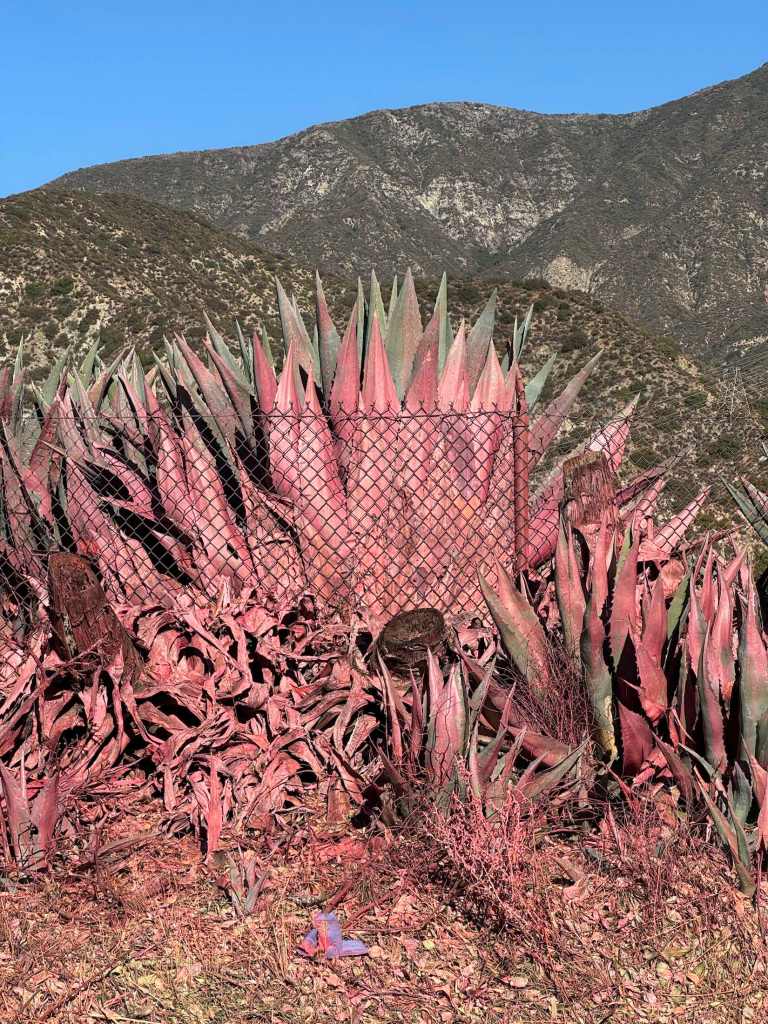
Agave covered in Phos Chek fire retardant (Erik Olsen)

While the direct cause of the fires was likely human—downed power lines or another ignition source—the conditions that turned a spark into an inferno were shaped by the interplay of natural and human-influenced factors. Climate change didn’t create the Santa Ana winds, but it likely amplified their effects. Warmer global temperatures have extended droughts, dried out vegetation, and created longer, more intense fire seasons. Meanwhile, the erratic jet stream may make extreme high-pressure events over the Great Basin more likely, intensifying the winds themselves.

This intersection of natural weather patterns and climate change creates a troubling new normal for Southern California. The Santa Ana winds, once a predictable seasonal nuisance, are now agents of destruction in an era of heightened fire risk. Their devilish power, long mythologized in Southern California lore, is now being reframed as a warning sign of a climate in flux.

As the smoke clears and communities begin to rebuild, the lessons from these fires are stark. Reducing fire risk will require not only better management of power lines and vegetation but also a reckoning with the larger forces at play. The Santa Anas will continue to howl, but their fury need not be a death sentence. To live in harmony with these winds, Californians must confront the deeper currents shaping their world. The question is whether we can act before the next spark ignites the next inferno.

California’s Two-Spot Octopus Combines Extraordinary Intelligence with Masterful Camouflage

A Model Organism Advancing Research in Genomics and Behavioral Science

California Two Spot Octopus (Photo: Erik Olsen)

(This post has been updated with new research on octopus neurology.)

While diving along the California coastline, spotting a California two-spot octopus is a rare and memorable experience. Nestled in rocky crevices or hidden among kelp, these octopuses are easily identified by their distinctive blue “eye-spots,” which are not actual eyes but mimicry patterns used to confuse predators. Such encounters provide a fascinating glimpse into the behavior of this remarkable marine species.

The California two-spot octopus (Octopus bimaculoides), found from Central California to Baja, is a master of adaptation. Its chromatophores—specialized skin cells—allow it to change color and pattern with precision, enabling camouflage, communication, and courtship displays. This ability, paired with its intelligence and problem-solving skills, highlights the octopus’s unique place in the marine ecosystem and makes it a subject of keen scientific interest.

The California two-spot octopus, Octopus bimaculoides, is a marine creature that not only captivates with its intelligence but also serves as a window into the complex tapestry of cephalopod behavior and genomics.

Their behavior is an orchestra of complexity; they are solitary creatures, favoring a reclusive life, with the exception of mating. Research has shown that they have a keen ability to learn and navigate mazes, unscrew jars, and engage in play, indicating a level of intelligence that is quite remarkable for an invertebrate. 

Santa Barbara Museum of Natural History Sea Center

The study of octopus intelligence, characterized by their remarkable problem-solving abilities and behavioral sophistication, has profound implications for our understanding of intelligence as a biological phenomenon. Octopuses, having diverged from the lineage that would lead to humans around 600 million years ago, share a common ancestor with us that was likely a simple, multicellular organism, a primitive flatworm. This vast evolutionary gulf highlights the fact that octopus intelligence developed along a trajectory entirely distinct from our own. Their decentralized nervous systems, capable of independently operating limbs and complex reflex actions, challenge the mammalian-centric view of brain-body coordination and cognitive processing, suggesting that intelligent behavior can arise from a variety of neural architectures.

Unlike humans and other vertebrates, where neural control is centralized in the brain, over two-thirds of this octopus’s neurons are located in its arms. This decentralized system allows each arm to function with remarkable independence, capable of exploring, tasting, and manipulating its environment without direct input from the brain. Recent studies reveal that octopus arm neurons are arranged in segmented clusters, enabling precise control of movement and the coordination of its powerful suckers. This unique adaptation not only enhances their hunting efficiency but also underscores the intricate evolutionary design of these intelligent marine creatures.

CALIFORNIA CURATED ON ETSY

Purchase stunning art prints of iconic California scenes.
Check out our Etsy store.

If you haven’t seen it yet, I highly recommend YouTuber Mark Rober’s recent video on octopus intelligence. His pet octopus Sashimi is a California Two Spot Octopus.

The ability of octopuses to adapt their skin color and texture in real-time, for purposes ranging from camouflage to communication, is a further testament to their cognitive prowess. This capability is controlled not just by their brains, but by the network of nerve cells spread across their body discussed above, showcasing a form of distributed intelligence. It indicates that cognition can be more holistic than previously thought, involving complex interactions between an organism’s nervous system and its environment. These findings prompt a reevaluation of intelligence, proposing that it is not a single trait but rather a spectrum of abilities that can manifest in diverse forms across different species.

Recent discoveries have shown the animal’s remarkable ability to actually see with its skin. A University of California at Santa Barbara study found that the skin of the California two-spot octopus can sense light even without input from the central nervous system. The animal does so by using the same family of light-sensitive proteins called opsins found in its eyes (and ours) — a process not previously described for cephalopods. The researchers’ findings appeared in the Journal of Experimental Biology.

California two-spot octopus hatchling (UCSB)

The independent evolutionary path of octopus intelligence highlights the remarkable plasticity and adaptability of cognitive systems. It implies that intelligence can evolve under a variety of ecological pressures and life histories. In the case of the octopus, their short lifespans and lack of social structures, which are generally seen as drivers of intelligence in vertebrates, have not prevented them from developing complex behaviors and learning capacities. This independence suggests that intelligence is not a linear or singular progression but a trait that can emerge in multiple forms across the tree of life, shaped by the specific challenges and opportunities an organism faces in its niche.

Octopus chromatophores

The California Two-Spot Octopus is increasingly recognized as a valuable model organism for scientific research due to its unique biology and evolutionary position. New studies, particularly in the field of genomics using the genome of the California Two Spot octopus, have unveiled the vastness of the octopus’s genetic blueprint. Its sequenced genome provides an unparalleled resource for studying cephalopod-specific innovations, including their advanced nervous systems, remarkable cognitive abilities, and capacity for complex behaviors such as camouflage and problem-solving. As a model organism, the two-spot octopus enables researchers to explore fundamental questions about neural development, learning, and adaptation in animals, offering insights that extend to broader biological and evolutionary contexts. The genome’s wealth of information, including expanded gene families linked to neural function and adaptive traits, makes this octopus an ideal subject for addressing critical questions in genomics, neurobiology, and evolutionary biology.

CALIFORNIA CURATED ON ETSY

Purchase stunning art prints of iconic California scenes.
Check out our Etsy store.

Their genome is large and contains a greater number of genes than that of a human, with a massive proliferation of gene families associated with neural development hinting at the biological underpinnings of their brainpower and behavior. These genetic insights could explain not only their sophisticated nervous systems but also their adaptability and the evolution of their unique traits.

For the California science enthusiast, the two-spot octopus represents not just a local marine inhabitant but also a subject of profound scientific intrigue. The more we delve into their world, the more we uncover about the possibilities of life’s evolutionary paths. Their genomic complexity challenges our understanding of intelligence and consciousness, making them not just a marvel of the deep but a mirror reflecting the enigma of life itself.

How a Tiny Beetle Helped Save California

California’s citrus industry confronted a deadly challenge, leading to a groundbreaking innovation in pest control.

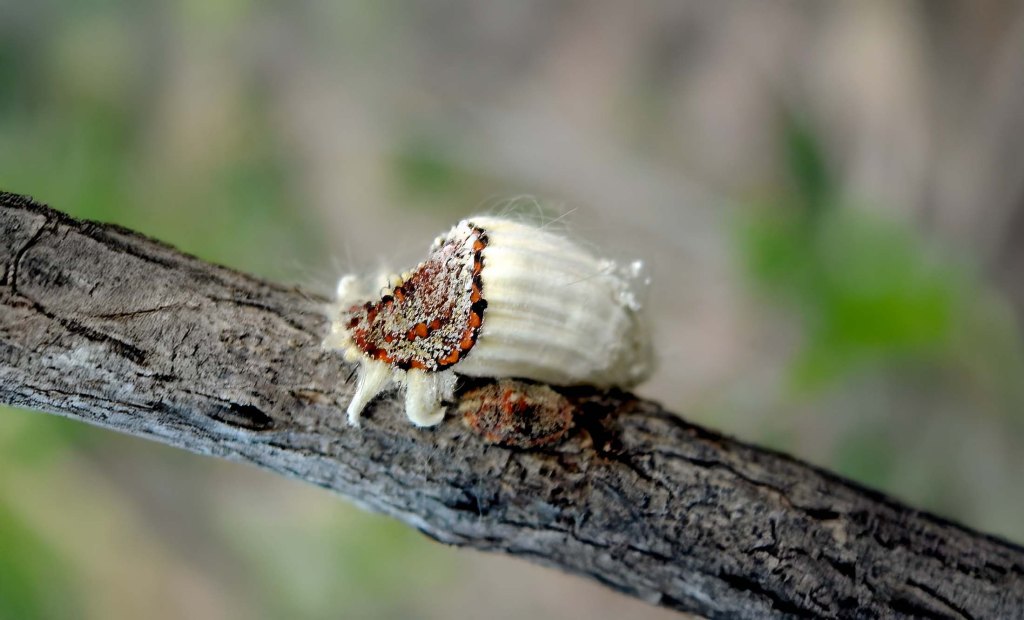
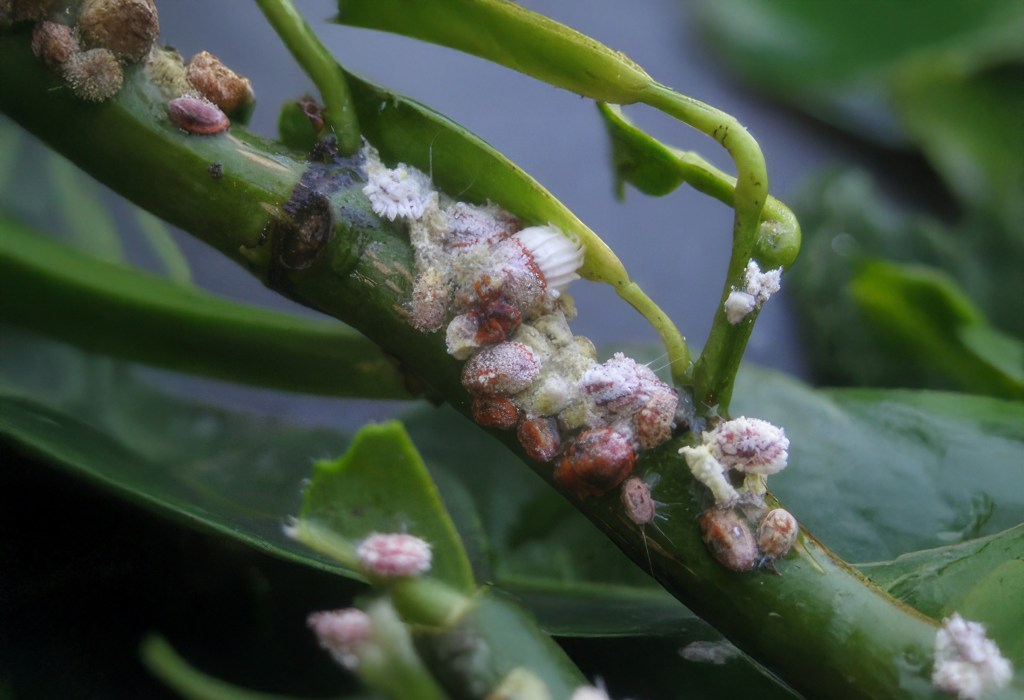
Cottony Cushion Scale (Public Domain)

In the sun-drenched orchards of late 19th-century California, a crisis was unfolding that threatened to decimate the state’s burgeoning citrus industry. The culprit was a small sap-sucking insect native to Australia called the cottony cushion scale (Icerya purchasi). First identified in New Zealand in 1878, this pest had made its way to California by the early 1880s, wreaking havoc on citrus groves. The pest is believed to have arrived in the United States through the global trade of plants, a common vector for invasive species during the 19th century. As horticulture expanded globally, ornamental plants and crops were frequently shipped between countries without the quarantine measures we have today. Once established in the mild climate of California, the cottony cushion scale found ideal conditions to thrive, spreading rapidly and wreaking havoc on the citrus industry.

The cottony cushion scale infested trees with a vengeance, covering branches and leaves with a white, cotton-like secretion. This not only weakened the trees by extracting vital sap but also led to the growth of sooty mold on the honeydew excreted by the insects, further impairing photosynthesis. Growers employed various methods to combat the infestation, including washing trees with whale oil, applying blistering steam, and even detonating gunpowder in the orchards. Despite these efforts, the pest continued its relentless spread, causing citrus exports to plummet from 2,000 boxcars in 1887 to just 400 the following year. This decline translated to millions of dollars in lost revenue, threatening the livelihoods of countless farmers and jeopardizing the state’s citrus economy, which was valued at over $10 million annually (approx. $627 million in today’s dollars) during this period.

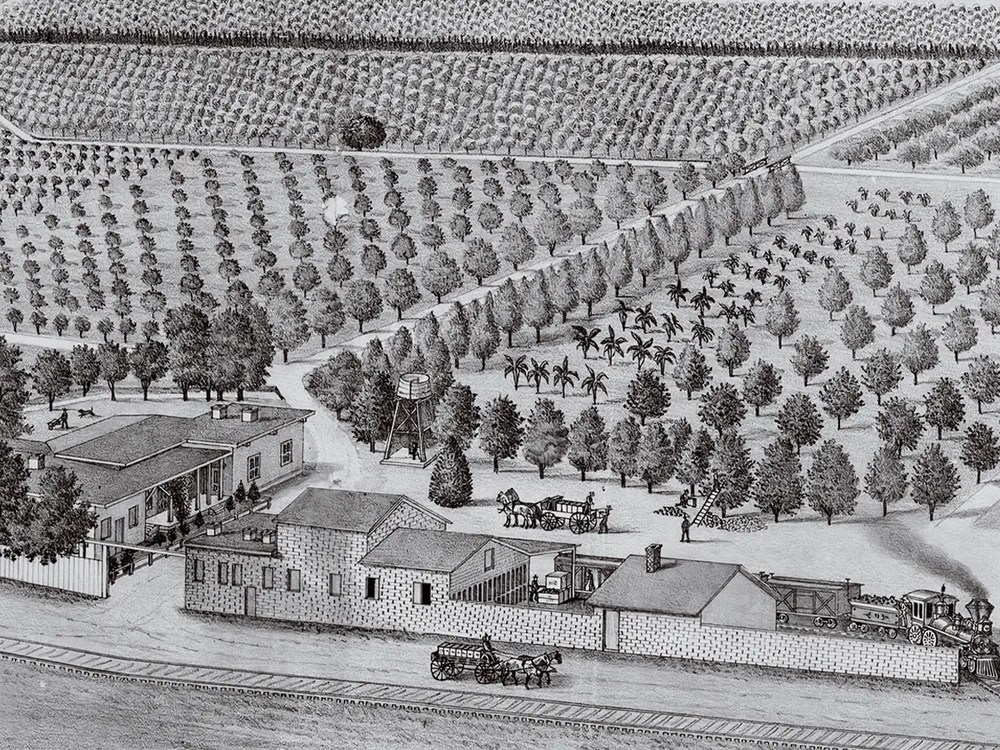
Orange and lemon groves, along with the home of citrus pioneer William Wolfskill, circa 1882. (California Historical Society)

In 1885, the independent growers across Southern California banded together in response to the insect invasion and the broader difficulties facing citrus growers at the time, forming the state’s first fruit cooperative, which would later become Sunkist. Despite their efforts, homemade mixtures of kerosene, acids, and other chemicals failed to halt the relentless spread of Icerya purchasi. The pests, with an endless supply of citrus trees to feed on, continued to multiply unchecked. New laws mandated growers to uproot and burn infected orange trees, but the devastation was widespread. By 1888, real estate values, which had soared by 600 percent since 1877, had plummeted.

Enter Charles Valentine Riley, the Chief Entomologist for the U.S. Department of Agriculture. A visionary in the field of entomology, Riley had previously attempted biological control by introducing predatory mites to combat grape phylloxera in France, albeit with limited success. Undeterred, he proposed a similar strategy for the cottony cushion scale crisis. In 1888, Riley dispatched his trusted colleague, a fellow entomologist named Albert Koebele, to Australia to identify natural enemies of the pest.

The cottony cushion scale infestations were so severe that citrus trees appeared as though they had been coated with artificial snow, resembling Christmas flocking. Fruit production sharply declined, and many trees succumbed to the damage. (UC Riverside)

Interestingly, Valentine resorted to subterfuge to send an entomologist to Australia despite Congress’s objections. Lawmakers had prohibited foreign travel by the Agriculture Department to curb Riley’s frequent European excursions. However, Riley, well-versed in navigating political obstacles, cleverly arranged for an entomologist to join a State Department delegation heading to an international exposition in Melbourne.

Charles Valentine Riley (Wikipedia)

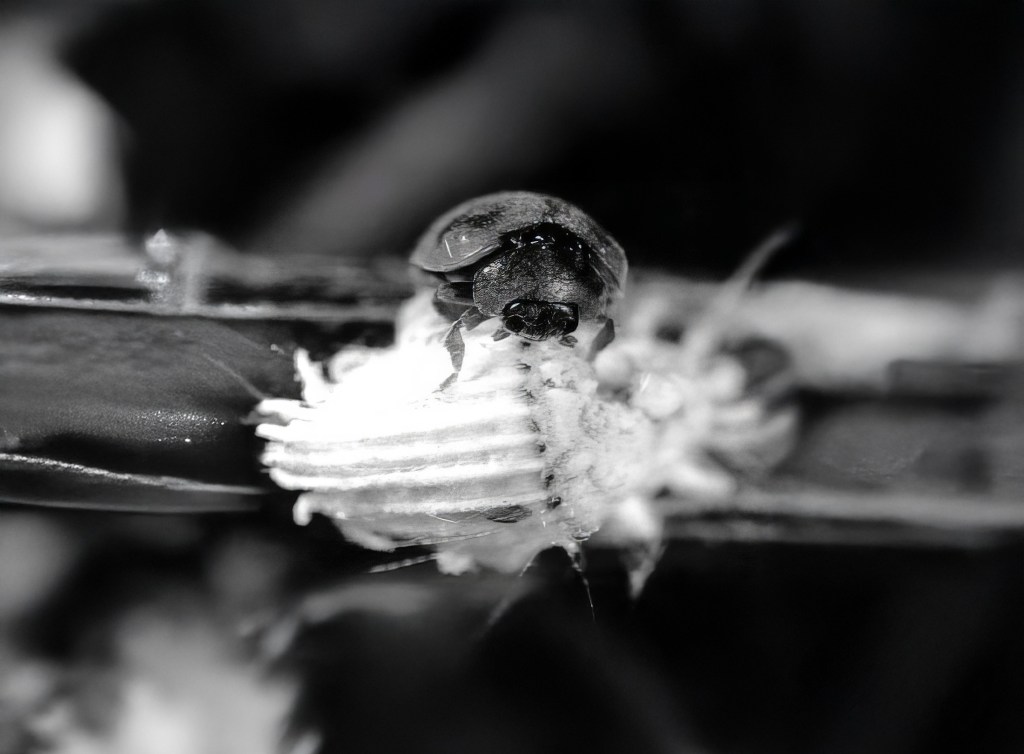
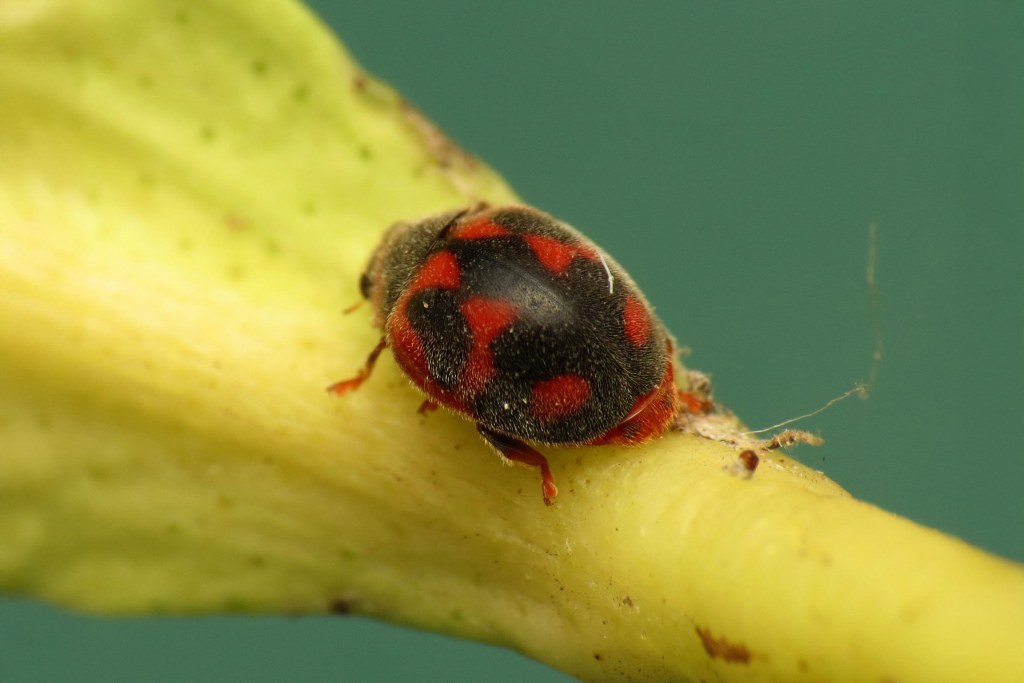
Koebele’s expedition proved fruitful. He worked with Australian experts to locate the pest in its rare habitats along with its natural enemies, including a parasitic fly and approximately the Vedalia beetle. The vedalia beetle (Rodolia cardinalis) is a small ladybird with a voracious appetite for the cottony cushion scale. Koebele collected and shipped hundreds of these beetles back to California. Upon their release into infested orchards, the vedalia beetles rapidly established themselves, feasting on the scales and reproducing prolifically. Within months, the cottony cushion scale populations had diminished dramatically, and by 1890, the pest was largely under control across the state. This 1888-89 campaign marked the beginning of biological control in the United States, a strategy involving the introduction of natural predators to manage invasive pests.

In her 1962 classic Silent Spring, Rachel Carson described the Novius beetle’s work in California as “the world’s most famous and successful experiment in biological control.”

Novius ladybug devours an Icerya.  (UC Riverside)

This was far from the last time California employed such measures. It became a relatively common practice to introduce new species to control those that posed threats to the state’s economically vital crops, but not always successfully.

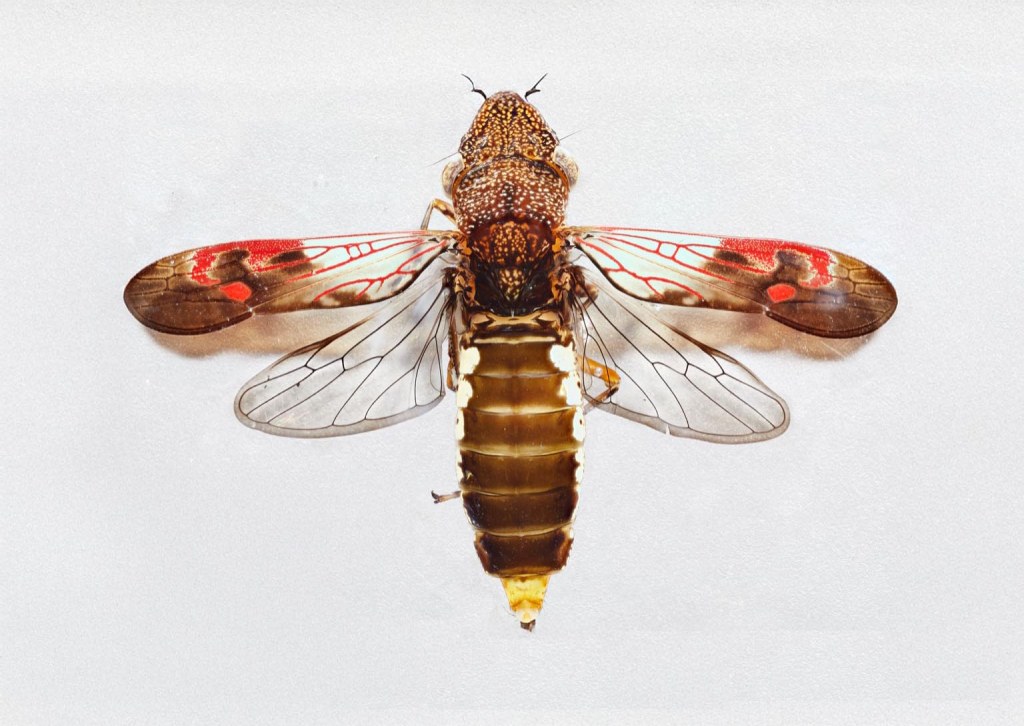
In the 1940s, California introduced parasitic wasps such as Trioxys pallidus to control the walnut aphid, a pest threatening the state’s walnut orchards. These tiny wasps laid their eggs inside the aphids, killing them and dramatically reducing infestations, saving the industry millions of dollars. Decades later, in the 1990s, the state faced an invasive glassy-winged sharpshooter, a pest that spread Pierce’s disease in grapevines. (Interesting fact: The glassy-winged sharpshooter drinks huge amounts of water and thus pees frequently, expelling as much as 300 times its own body weight in urine every day.) To combat this, scientists introduced Gonatocerus ashmeadi, a parasitic wasp that targets the pest’s eggs. This biological control effort helped protect California’s wine industry from devastating losses.

The Vedalia beetle (novius cardinalis) also known as the cardinal ladybird (Katja Schulz Wikipedia)

While the introduction of the vedalia beetle was highly effective and hailed as a groundbreaking success, biological control efforts are not without risks, often falling prey to the law of unintended consequences. Although no major ecological disruptions were recorded in the case of the cottony cushion scale, similar projects have shown how introducing foreign species can sometimes lead to unforeseen negative impacts. For example, the cane toad in Australia, introduced to combat beetles in sugarcane fields, became a notorious ecological disaster as it spread uncontrollably, preying on native species and disrupting ecosystems. Similarly, the mongoose introduced to control rats in sugarcane fields in Hawaii also turned predatory toward native birds. These examples highlight the need for meticulous study and monitoring when implementing biological control strategies. Today, regulatory frameworks require rigorous ecological assessments to minimize such risks.

The glassy-winged sharpshooter (Georgia Tech)

In the case of the Vedalia beetle, its precise and targeted predation led to a highly successful outcome in California. Citrus quickly became one of the state’s most dominant and profitable crops, helping to establish California as a leader in agricultural production—a position it continues to hold firmly today.

This groundbreaking use of biological control not only rescued California’s citrus industry but also established a global precedent for environmentally sustainable pest management. The success of the Vedalia beetle’s introduction showcased the power of natural predators in managing agricultural pests, offering an alternative to chemical pesticides. While pesticides remain widely used in California and across the world, this effort underscores the value of understanding ecological relationships, evolutionary biology, and the benefits of international scientific collaboration.

Visit the California Curated store on Etsy for original prints showing the beauty and natural wonder of California.

The story of the Vedalia beetle and the cottony cushion scale highlights human ingenuity and the effectiveness of nature’s own checks and balances. It stands as an early example of integrated pest management, a method that continues to grow and adapt to meet modern agricultural challenges. This successful intervention underscores the importance of sustainable practices in protecting both our food systems and the environment.

Laurel Sumac, the Resilient Beauty of Southern California’s Chaparral

Laurel sumac in the San Gabriel Mountains (Erik Olsen)

Here’s another article exploring some of California’s native plants. With a remarkable abundance of flora, California is home to over 6,500 species that play a vital role in shaping its diverse and iconic landscapes.

While hiking through the chaparral-covered hills of Southern California, from the Santa Monica to the San Bernardino and San Gabriel Mountains, you’ll encounter a rich variety of plants, each adapted to thrive in the harsh, dry conditions. Some of them will inevitably be foreign, as California’s mild Mediterranean climate is a perfect incubator for invasive species. But there are many indigenous plants (aka: endemic) that are touchstones of resilience, survivors that thrive here and help make the California chaparral ecosystem incredibly diverse and hearty. Among these is the laurel sumac, a stalwart of the coastal sage scrub, its waxy, aromatic leaves adapted to withstand the sun-baked hillsides and dry seasons that define so much of California’s natural landscape.

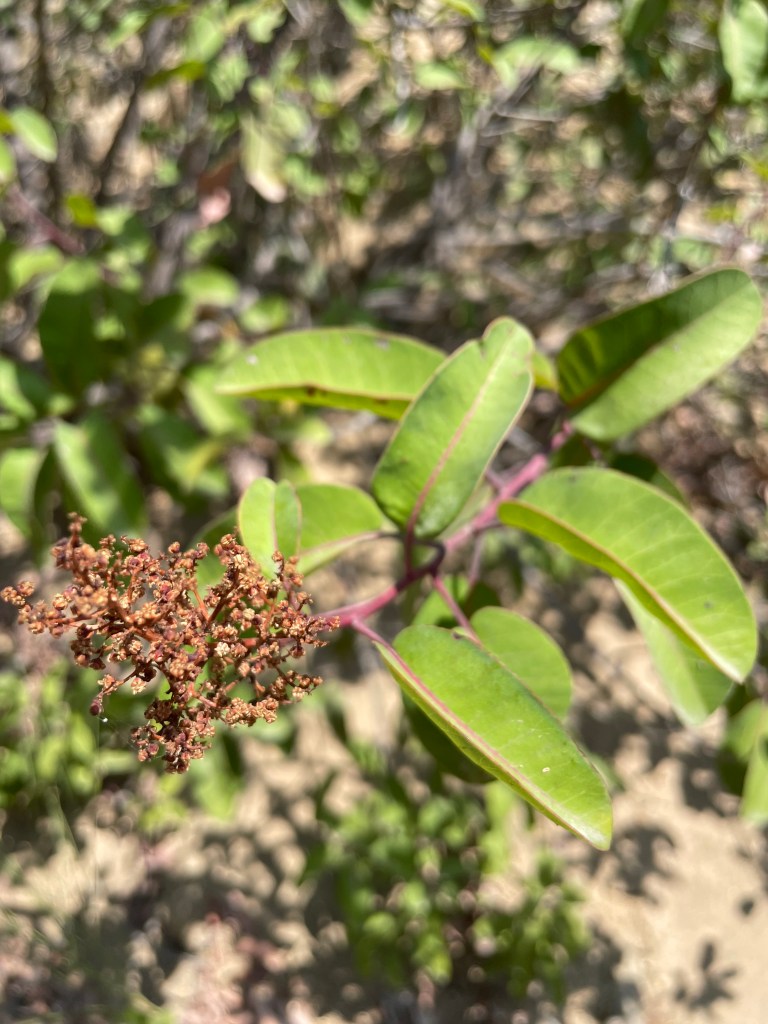
Laurel sumac (Malosma laurina) is a large, rounded evergreen shrub or small tree that can grow up to 20 feet tall and wide. When in bloom (late spring through summer), it gives off a strong, aromatic scent that can be very pleasant. The plant is native to southern California and Baja California, and is also found on the southern Channel Islands.

The plant is characterized by lance-shaped leaves with reddish veins and stems, adding a touch of color to the landscape. Laurel sumac has a unique ability to curl its leaves upward when exposed to extreme heat. This reduces the surface area exposed to the sun, minimizing water loss and preventing overheating. This trait has earned the plant the nickname “taco plant,” as its leaves often fold up like a taco shell. The clusters of small white flowers that bloom at the tips of its branches resemble lilac blossoms. After blooming, the small, creamy-white flowers develop into clusters of tiny, reddish-brown, berry-like fruits known as drupes. Each drupe contains a single seed and is covered with a thin, leathery skin.

From a hike in the San Gabriel Mountains. Most of the large clumpy bushes are Laurel sumac (Erik Olsen)

Although named “laurel” for its resemblance to bay laurel, laurel sumac actually belongs to the cashew family (Anacardiaceae). This family includes other well-known plants like poison oak, mango, and pistachio, highlighting the diverse characteristics within this botanical group. Laurel sumac is a vital species in the coastal sage scrub and chaparral ecosystems, offering habitat and food for wildlife. Its berries are particularly enjoyed by songbirds, including warblers. The plant blooms from late spring to early summer, producing clusters of small, white flowers that attract various pollinators, including bees and butterflies.

After flowering, it produces small, reddish-brown fruits that are a food source for birds and other wildlife. Interestingly, the shrub’s ability to thrive in the arid conditions of Southern California, combined with its distinctive red stems and fragrant blooms, make it a key contributor to the region’s natural beauty and biodiversity.

Laurel sumac along a trail in the San Gabriel Mountains (Erik Olsen)

The plant is amazingly drought-tolerant, with deep roots that allow it to access water during dry periods, making it a critical species in fire-prone environments. In fact, its ability to quickly resprout after fire is one reason it’s so prevalent in chaparral communities.

CALIFORNIA CURATED ART ON ETSY

Purchase stunning art prints of iconic California scenes.
Check out our Etsy store.

Laurel sumac is also notable for its role in traditional indigenous practices. Native peoples of the region used various parts of the plant for medicinal purposes, including treating skin conditions and respiratory ailments. Known as “ektii” by the Kumeyaay people, Laurel sumac held a prominent place in their traditional practices. The Kumeyaay are indigenous to the region that spans southern California, including San Diego County, and northern Baja California, Mexico. After childbirth, a tea or wash made from the plant was used for its soothing and medicinal properties, demonstrating its role in maternal care.

Laurel sumac with its fragrant white blossoms.

Beyond its medicinal uses, the sturdy wood of laurel sumac was utilized in construction, reflecting its practical value to the Kumeyaay. In a modern twist, the dried flower clusters of the plant have found a niche in model railroading, where enthusiasts often paint them and use them as miniature trees to create realistic landscapes.

Laurel sumac is just one of the many incredible native plant species that contribute to California’s rich biodiversity. Its abundance in some of the southern mountain ranges makes it a quintessential part of the landscape and an essential topic when exploring native flora. Stay tuned as we continue to highlight more species that make California such a unique and extraordinary place.

Walter Munk was a Californian Oceanographer Who Changed Our Understanding of the Seas

Photo: Erik Jepsen (UC San Diego)

Walter Munk, often referred to as the “Einstein of the Oceans,” was one of the most influential oceanographers of the 20th century. Over a career that spanned more than 70 years, Munk fundamentally altered how we think about the oceans, contributing to our understanding of everything from wave prediction during World War II to deep-sea drilling in California. His work at the Scripps Institution of Oceanography in La Jolla, California, was groundbreaking and continues to influence scientific thinking to this day.

Walter Heinrich Munk was born in Vienna, Austria, on October 19, 1917. At 14, he moved to New York, where he later pursued physics at Columbia University. He became a U.S. citizen in 1939 and earned a bachelor’s degree in physics from the California Institute of Technology the same year, followed by a master’s in geophysics in 1940. Munk then attended the Scripps Institution of Oceanography and completed his Ph.D. in oceanography from the University of California in 1947.

Dr. Walter Munk in 1952. (Scripps Institution of Oceanography Archives/UC San Diego Libraries)

In the early 1940s, Munk’s career took a defining turn when the United States entered World War II. At the time, predicting ocean conditions was largely guesswork, and this posed a significant challenge for military operations. Munk, a PhD student at Scripps at the time, was recruited by the U.S. Army to solve a problem that could make or break military strategy—accurate wave prediction for amphibious landings.

CALIFORNIA CURATED ART ON ETSY

Purchase stunning art prints of iconic California scenes.
Check out our Etsy store.

One of his most famous contributions during the war came in 1944, ahead of the Allied invasion of Normandy. Alongside fellow oceanographer Harald Sverdrup, Munk developed a method to predict the size and timing of ocean waves, ensuring that troops could land safely during the D-Day invasion. Using their model, the Allied forces delayed the invasion by one day, a move that proved crucial in reducing casualties and securing the beachhead. This same wave prediction work was used again in the Pacific theater, particularly for landings on islands like Iwo Jima and Eniwetok. Munk’s contributions not only helped win the war but also laid the foundation for modern oceanography. Wave forecasting is now a standard tool for naval operations, shipping, and even recreational surfers.

Landing craft pass supporting warships in the Battle of Eniwetok, 19 February 1944. (U.S. Army)

After the war, Munk returned to Scripps, a place that would remain central to his career. Established in 1903, Scripps had been growing into a major center for oceanographic research, and Munk’s work helped elevate it to new heights. Located in La Jolla, just north of San Diego, Scripps was perfectly positioned on the California coastline to be at the forefront of oceanographic studies. Scripps is one of the premier oceanographic institutions in the world.

During the post-war years, Munk helped pioneer several new areas of research, from the study of tides and currents to the mysteries of the deep sea. California, with its rich marine ecosystems and coastal access, became the perfect laboratory. In La Jolla, Munk studied the Southern California Current and waves that originated across the Pacific, bringing new understanding to local coastal erosion and long-term climate patterns like El Niño. His research had a direct impact on California’s relationship with its coastline, from naval operations to public policy concerning marine environments.

Walter Munk in 1963 with a tide capsule. The capsule was dropped to the seafloor to measure deep-sea tides before such measurements became feasible by satellite. Credit Ansel Adams, University of California

While Munk’s contributions to wave forecasting may be his most widely recognized work, one of his boldest projects came in the 1960s with Project Mohole. It was an ambitious scientific initiative to drill into the Earth’s mantle, the layer beneath the Earth’s crust. The project was named after the Mohorovičić Discontinuity (named after the pioneering Croatian seismologist Andrija Mohorovičić), the boundary between the Earth’s crust and mantle. The boundary is often referred to as the “Moho”. The goal was revolutionary: to retrieve a sample from the Earth’s mantle, a feat never before attempted.

The idea was to drill through the ocean floor, where the Earth’s crust is thinner than on land, and reach the mantle, providing geologists with direct insights into the composition and dynamics of our planet. The project was largely conceived by American geologists and oceanographers, including Munk, who saw this as an opportunity to leapfrog the Soviet Union in the ongoing Cold War race for scientific supremacy.

The Glomar Challenger, launched in 1968, was the drill ship for NSF’s Deep Sea Drilling Project. (Public Domain)

California was again the backdrop for this audacious project. The drilling took place off the coast of Guadalupe Island, about 200 miles from the Mexican coast, and Scripps played a key role in organizing and coordinating the scientific work. The project succeeded in drilling deeper into the ocean floor than ever before, reaching 600 feet into the seabed. However, funding issues and technical challenges caused the U.S. Congress to abandon the project before the mantle could be reached. Despite its early end, Project Mohole is considered a precursor to modern deep-sea drilling efforts, and it helped pave the way for initiatives like the Integrated Ocean Drilling Program, which continues to explore the ocean’s depths today. For example, techniques for dynamic positioning for ships at sea were largely developed for the Mohole Project.

Munk’s work was deeply tied to California, a state whose coastlines and oceanography provided a wealth of data and opportunities for study. Scripps itself is perched on a stunning bluff overlooking the Pacific Ocean, a setting that greatly inspired Munk and his colleagues. Throughout his career, Munk worked on understanding the coastal dynamics of California, from studying the erosion patterns of beaches to analyzing how global warming might impact the state’s famous coastal cliffs.

Scripps Institution of Oceanography

His legacy continues to shape how California manages its vast coastline. The methodologies and insights he developed in wave prediction are now used in environmental and civil engineering projects that protect harbors, beaches, and coastal infrastructure from wave damage. As climate change accelerates the rate of sea level rise, Munk’s work on tides, ocean currents, and wave dynamics is more relevant than ever for California’s future.

Walter Munk’s contributions to oceanography stretched well beyond his wartime work and Project Mohole. He was instrumental in shaping how we understand everything from deep-sea currents to climate patterns, earning him numerous awards and accolades. His work at Scripps set the stage for the institution’s current status as a world leader in oceanographic research.

One of the most notable examples of this work was an experiment led by Munk to determine whether acoustics could be used to measure ocean temperatures on a global scale, offering insights into the effects of global warming. In 1991, Munk’s team transmitted low-frequency underwater acoustic signals from a remote site near Heard Island in the southern Indian Ocean. This location was strategically chosen because sound waves could travel along direct paths to listening stations in both the Pacific and Atlantic Oceans. The experiment proved successful, with signals detected as far away as Bermuda, New Zealand, and the U.S. West Coast. The time it took for the sound to travel was influenced by the temperature of the water, confirming the premise of the study.

Walter Munk in 2010 after winning the Crafoord Prize. (Crafoord Prize)

Munk passed away in 2019 at the age of 101, but his influence lives on. His approach to science—marked by curiosity, boldness, and a willingness to take on complex, high-risk projects—remains an inspiration for generations of scientists. He was a giant not only in oceanography but also in shaping California’s role in global scientific innovation. As the state faces the challenges of a changing climate, Munk’s legacy as the “Einstein of the Oceans” continues to be felt along its shores and beyond.

The Remarkable Revival of the Giant Sea Bass in California: Catalina Island’s Growing Giants

National Park Service

If you’ve ever dived off Casino Point in Catalina, it’s possible you have encountered one of the most magnificent fish ever to ply the cold waters of California. The Giant Sea Bass, also known as Stereolepis gigas, has long been a majestic part of California’s coastal ecosystems. This behemoth of a fish can grow up to nearly 7 and a half feet long, weighing a whopping 560 pounds, and can live to the age of 75. These gigantic, slow-moving sea creatures were once a common sight in the coastal waters of Southern California, particularly around Catalina Island. However, overfishing in the 20th century dramatically reduced their populations to critically low levels. Now, thanks to conservation efforts, these gentle giants are making a triumphant, albeit precarious, return. This is their story of recovery and resilience.

Giant Sea Bass weighing over 400 pounds caught at Catalina in 1906

The plight of the Giant Sea Bass is a familiar story in the annals of marine conservation. Abundant in the early 1900s, they were targeted by both commercial and recreational fishers. Their large size and slow-moving nature made them an easy and attractive target. Overfishing led to a sharp decline in their numbers. By the 1970s, sightings had become rare, sparking concerns about the species’ survival.

However, the Giant Sea Bass was not ready to fade away into history. The California Department of Fish and Wildlife stepped in during the 1980s, implementing measures to protect the species. A ban was placed on commercial and recreational fishing, and a concerted effort was made to restore their habitat around the Southern California coast, especially around Catalina Island.

If you are a diver, Catalina Island is a hotspot to see Giant Sea Bass. (Erik Olsen)

The breeding population of giant sea bass — which is listed as critically endangered by the International Union for Conservation of Nature — is believed to be only about 500 individuals. But since the ban on fishing and the launch of habitat restoration projects, the Giant Sea Bass has been on a steady journey towards recovery. Research groups and marine scientists have been monitoring their numbers around Catalina Island, a critical habitat for the species. Much of the work has been done at the Wrigley Marine Science Center (WMSC), the USC Wrigley Institute for Environmental Studies’ satellite campus on Santa Catalina Island. They’ve been using a variety of methods, including underwater surveys and remotely operated vehicles (ROVs), to track the population.

Their work has yielded promising results. The number of Giant Sea Bass sightings has been steadily increasing over the years. Juvenile Giant Sea Bass have also been spotted, a positive sign that the species is breeding successfully. These observations suggest that their populations are recovering, albeit slowly.

In 2019 California State University, Northridge (CSUN), the Aquarium of the Pacific, and Cabrillo Marine Aquarium announced a successful joint effort involving raising and releasing juvenile giant sea bass into the ocean. For this project, CSUN shared giant sea bass eggs in an attempt to produce offspring. Three juveniles were raised at the Aquarium of the Pacific, and the Cabrillo Marine Aquarium successfully reared hundreds of baby giant sea bass babies from these eggs. In March 2020, 200 baby giant sea bass were released into the murky waters of Santa Monica Bay.

University of California Santa Barbara

Catalina Island, a jewel in Southern California’s marine landscape, is another big part of this conservation success. The island’s surrounding waters offer the perfect habitat for the Giant Sea Bass, with its ample kelp forests and rocky reefs, not to mention the ocean tends to be much cleaner around Catalina than along the mainland coast. The island’s commitment to marine conservation, exemplified by the Catalina Island Conservancy and its partners, has provided the ideal conditions for the species to rebound.

In addition to the protective regulations, the Island’s community has embraced their role as stewards of their marine environment. Local scuba divers often act as citizen scientists, providing valuable data through sightings and photographs of the Giant Sea Bass. We at California Curated have seen several of them while diving, gaping in awe as they hover like zeppelins in the kelp beds of Casino Point.

CALIFORNIA CURATED ART ON ETSY

Purchase stunning art prints of iconic California scenes.
Check out our Etsy store.

Researchers who have been studying large fish in Southern California for decades say persistence is key to successful conservation efforts for giant sea bass. Although their numbers have increased, they are only about 20% of what’s needed for long-term survival. Researchers understands fishers’ frustrations but believe the fishing ban must remain for 20-30 more years to prevent repeating past overfishing. Since giant sea bass take 11-13 years to reach maturity, their recovery is slow, and even a few boats could severely impact the current population.

The return of the Giant Sea Bass is a beacon of hope, reminding us of the resilience of nature when given a chance to recover. But the journey is far from over. While their numbers are increasing, the Giant Sea Bass still faces threats, including pollution, habitat degradation, and the looming challenges of climate change.

The Giant Sea Bass at the California Academy of Sciences.

Conservationists argue that the Giant Sea Bass’s recovery illustrates the importance of a multi-faceted approach to marine conservation. Protective legislation, habitat restoration, scientific research, and community engagement all played critical roles in this success story.

Although the story is far from over and recovery is incomplete, the story of the Giant Sea Bass stands as a testament to the impact of conservation, of thinking hard and acting on the protection of species and fragile environments. Continued research, monitoring, and community engagement will be essential to ensure the long-term survival of the giant sea bass. Their resurgence offers a valuable opportunity to learn from our past mistakes and work together to ensure a brighter future for these gentle giants and the marine ecosystems they call home.

California’s Dark-Eyed Juncos Are Quietly Evolving in Plain Sight

Dark-eyed junco in Southern California (Photo: Alex Fu)

When we step outside and see wildlife, we often think of it as unchanging. A bird on a branch, a crab in a tide pool, a lizard skittering across a sidewalk. It feels timeless. But in truth, these animals are evolving, slowly and steadily, right in front of us. As climates become more unpredictable, habitats shift, food sources change, and nature adapts. This is especially true in our cities. Built over just the past few centuries, these sprawling human environments are reshaping the natural world and pushing wildlife to adjust in new and often surprising ways.

As California’s cities have expanded and encroached upon natural landscapes, it turns out the state’s wildlife is adapting in fascinating ways. Studying these changes is central to urban evolution, or how species adapt over time, both genetically and behaviorally, to the unique pressures of city life. From coyotes navigating traffic to birds adjusting their songs to be heard over city noise, urban evolution reveals how nature is not just surviving in cities, but evolving with them. Darwin believed natural selection was too slow to observe in real time, but today we know evolution can happen rapidly, sometimes within just a few generations.

Thanks for reading California Curated Newsletter! Subscribe for free to receive new posts and support my work.

Dark-eyed junco in Southern California (Photo: Alex Fu)

One cool example of urban evolution in California is the story of the dark-eyed junco (Junco hyemalis), a small songbird traditionally found in mountainous forests that is now thriving in urban environments like San Diego and Los Angeles. If you’re a birder or simply someone who enjoys watching the wildlife in your backyard, you’ve almost certainly seen them. Dark-eyed juncos are small songbirds with distinctive dark heads, often spotted hopping around on the ground rather than perching at feeders. I see them all the time, pecking at the spilled seeds beneath my feeder (or, I should say feeders, as I have several…nerd alert!). It turns out they’re classic ground foragers, evolved to search for food by scratching through leaf litter or snow, uncovering seeds, insects, and other hidden bits.

Recent research has revealed that dark-eyed juncos are evolving in direct response to urban life. Traditionally migratory, these birds once spent summers breeding in cool mountain forests and winters at lower elevations. But in the early 1980s, a group of juncos broke from that pattern and settled year-round on the campus of UC San Diego. There, researchers began documenting striking behavioral shifts. The urban juncos were bolder, less fearful of humans, and had even altered their mating and nesting habits. These changes, observed over just a few decades, offer a vivid example of how quickly species can adapt to city environments, a real-time case study in urban evolution unfolding in human-shaped habitats.

University of California San Diego (Photo: Erik Olsen)

Similarly, at the University of California, Los Angeles (UCLA), a junco population has been thriving for decades, with numbers reaching approximately 300. This long-term success has provided the Yeh Lab at UCLA with a unique opportunity to study how urban environments influence the evolution and behavior of these adaptable songbirds. Their research sheds light on how juncos have adjusted to city life, offering broader insights into wildlife resilience in human-altered habitats.

“It’s impressive how rapidly these vertebrate species can evolve. In a matter of a handful of years, we can find some pretty significant changes,” Pamela Yeh, an associate professor in ecology and evolutionary biology at UCLA, told California Curated. Yeh studied the junco population at UC San Diego when she was an undergraduate student there and wanted to expand the research to the population at UCLA. Studying the two different populations may offer insights into how species evolve in urban environments.

“We want to know, does a city make you evolve?” asks Yeh. “Do the different cities make you evolve similarly? Do the birds all become smaller? Do they all become bigger? Do they all have different-sized beaks? Or is each city unique?”

Dark-eyed junco at UCLA (Photo: Sierra Glassman)

With decades of data, the work echoes the groundbreaking research of Princeton scientists Peter and Rosemary Grant, whose studies of Galápagos finches transformed our understanding of how swiftly natural selection can operate. Now, the junco studies are taking that idea further, showing evolution unfolding not on remote islands, but in the heart of our cities.

“I think it’s now really considered a model vertebrate system for urban evolution,” says Yeh.

In their natural forest environments, juncos breed in response to the changing seasons, triggered by increasing daylight hours and rising temperatures. But in urban areas like those around UCSD and UCLA, where food is plentiful year-round, juncos have begun breeding earlier than normal and throughout the year. They build nests higher off the ground, often on artificial structures, and have increased the number of clutches per breeding season. The availability of artificial light, abundant food from human sources, and fewer natural predators in the city all play roles in these behavioral shifts.

Yeh believes it’s no accident that junco populations have surged on college campuses in recent decades. In fact, she sees it as a direct response to the unique conditions these urban environments provide.

“We think it is is partially that [urban university environments] mimic the natural environment, which is a mix of meadows and tall trees. But the other thing that we think could be important is the irrigation in grassy areas that allow the juncos, even when it’s extremely hot, there are still small insects and worms to grab and feed their offspring.”

One of the most striking adaptations among urban juncos is their behavioral shift in regards to people. Unlike their shy mountain counterparts, urban juncos are much more tolerant of human presence. This is not only a matter of convenience; it’s a survival mechanism. In the city, humans are not a threat, and urban birds need to capitalize on the resources provided by their proximity to people. Their lack of fear “allows them to keep eating even when we walk by,” says Yeh.

Dark-eyed junco in Southern California (Photo: Alex Fu)

Studying junco evolution isn’t just a scientific curiosity. It has real conservation stakes. Things haven’t been looking good for birds. An October 2019 study published in Science by the Cornell Lab of Ornithology revealed that North America has lost nearly 3 billion birds over the past 50 years, with dark-eyed juncos alone declining by 168 million. Yet their ability to adapt to urban life suggests they may have the evolutionary tools needed to weather these dramatic changes.

Beyond behavior, there are physical differences between urban and rural populations of dark-eyed juncos. Urban juncos, for example, developed duller black plumage on their heads and showed reduced white markings in their tail feathers. Yeh and her team have also documented that the wings of urban juncos are smaller, an adaptation likely driven by the demands of maneuvering through a dense, built environment rather than long-distance flight.

Ellie Diamant, currently a Ph.D. candidate in the Department of Ecology and Evolutionary Biology at UCLA in the Yeh Lab, holding a dark-eyed junco. (Photo: Ellie Diamant)

“Juncos historically were migratory birds. The ones that live in the mountains still are. But in the urban environments, we see them year-round,” says Dr. Ellie Diamant, Visiting Assistant Professor at Bard College. “So the benefits are gone for the longer-distance flight, but there seems to be more benefit for these short wings.” Diamant completed her Ph.D. in the Department of Ecology and Evolutionary Biology at UCLA in the Yeh Lab.

The dark-eyed junco is just one example of the broader phenomenon of urban evolution, where species adjust to the challenges and opportunities posed by city life. In California, this phenomenon extends beyond birds. Coyotes, for example, have become fixtures in cities like Los Angeles, adapting to scavenge food from human waste. Coastal animals like sea lions and pelicans have also made urban waterfronts their home, thriving amid the bustle of human activity. Similarly, the Western Fence Lizard has swiftly adapted to life in an urbanized environment.

Junco hatchlings at UCLA. (Photo: Sierra Glassman)

In his book Darwin Comes to Town, Dutch evolutionary biologist Menno Schilthuizen highlights the junco as an exemplar of rapid evolution in urban settings, but it also goes much further, documenting how our manmade environments are accelerating and changing the evolution of the animals and plants around us. Of course, it’s not all good news. Not by a long shot.

Studies published in Evolutionary Applications, underscore that urbanization is a double-edged sword, offering opportunities for adaptation but also introducing serious threats. In Los Angeles, for instance, the fragmentation of habitat by highways has led to the deaths of countless animals, a problem now being tackled through the construction of wildlife bridges like the Wallis Annenberg Wildlife Crossing opening in 2026, designed to reconnect critical migration routes.

Wallis Annenberg Wildlife Crossing currently under construction (Photo: State of California)

The dark-eyed junco’s ability to adapt to city life is both encouraging and a bit sobering. It shows how some wildlife can adjust and find ways to thrive even as human development spreads. But it also reflects the growing pressure we’re putting on natural ecosystems. In other words, it’s not all good, and it’s not all bad. As scientists dig deeper into urban ecology in California and elsewhere, the junco stands out as a clear example of how life shifts and changes in response to the world we’re shaping.

For those of us who live in cities, the juncos flitting through parks, pecking in our yards, and hopping across college campuses offer a chance to see evolution happening right in front of us. Nature isn’t some distant thing beyond the city limits. It’s here, threaded into the daily patterns of urban life.