
The Mountain Pass Mine, America’s Only Rare Earth Mine, May Be the Key to Breaking China’s Grip
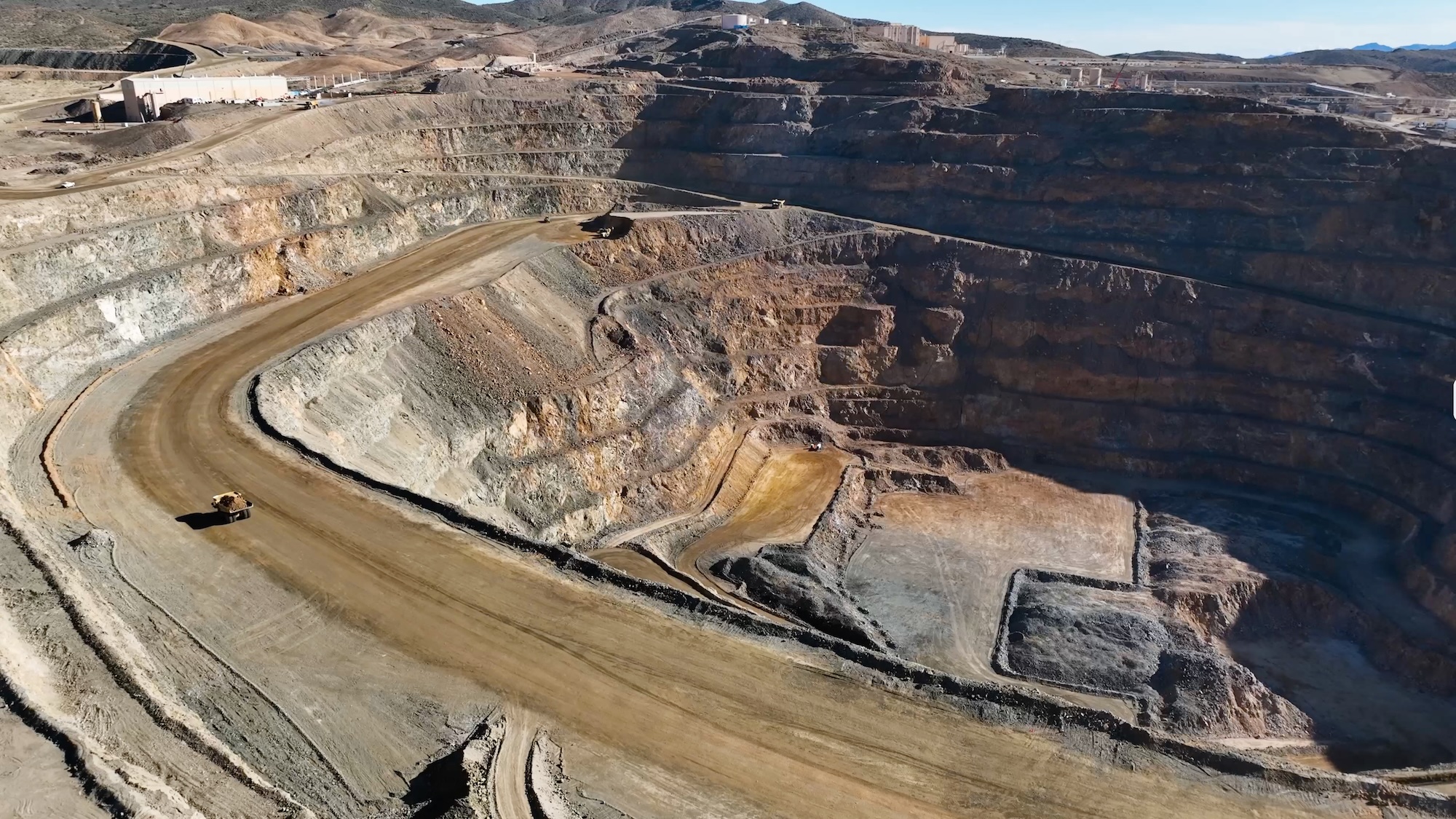
The Mountain Pass Mine in California’s Mojave Desert is America’s only rare earth mine, and it may be the key to breaking China’s near-total grip on the minerals powering the modern world.
Updated
Drive Interstate 15 from Los Angeles to Las Vegas, and just before the Nevada line, you’ll pass a big industrial complex carved into the desert hills. Most people don’t give it a second look. It’s the Mountain Pass mine, the only rare earth mine in the United States, and right now it may be one of the most strategically important holes in the ground in America.
Rare earth metals are in almost everything: phones, electric cars, wind turbines, fighter jets. China produces more than 70 percent of the world’s supply and does most of the processing, which gives it enormous leverage. The U.S. is scrambling to build its own supply of rare earths and other critical minerals like lithium and nickel, and Mountain Pass, which helped start the rare earth industry decades ago, is at the center of that effort.
Mining built California, from the Gold Rush to mercury, silver, copper, tungsten and boron. Some of that is gone, but some, like the Rio Tinto U.S. Borax Mine in Boron, California, is still a major global supplier.
MP Materials’ Mountain Pass mine is a comeback story. It sits in Mountain Pass, in the Mojave near the Nevada border, and since it opened in the mid-20th century, it has boomed, crashed and come back again, with geopolitics driving a lot of the swings.
 An aerial view of the MP Materials site in Mountain Pass, California, in the remote Mojave Desert near the Nevada border. (Photo: Erik Olsen)
The rock here averages 7 to 8 percent rare earth elements, which is extremely rich by industry standards and one of the best deposits in the world. Getting the elements out of the rock is the hard part.
Discovered in 1949 while prospectors searched for uranium, the deposit turned out to be full of bastnaesite, an ore rich in rare earths like neodymium, europium and dysprosium.
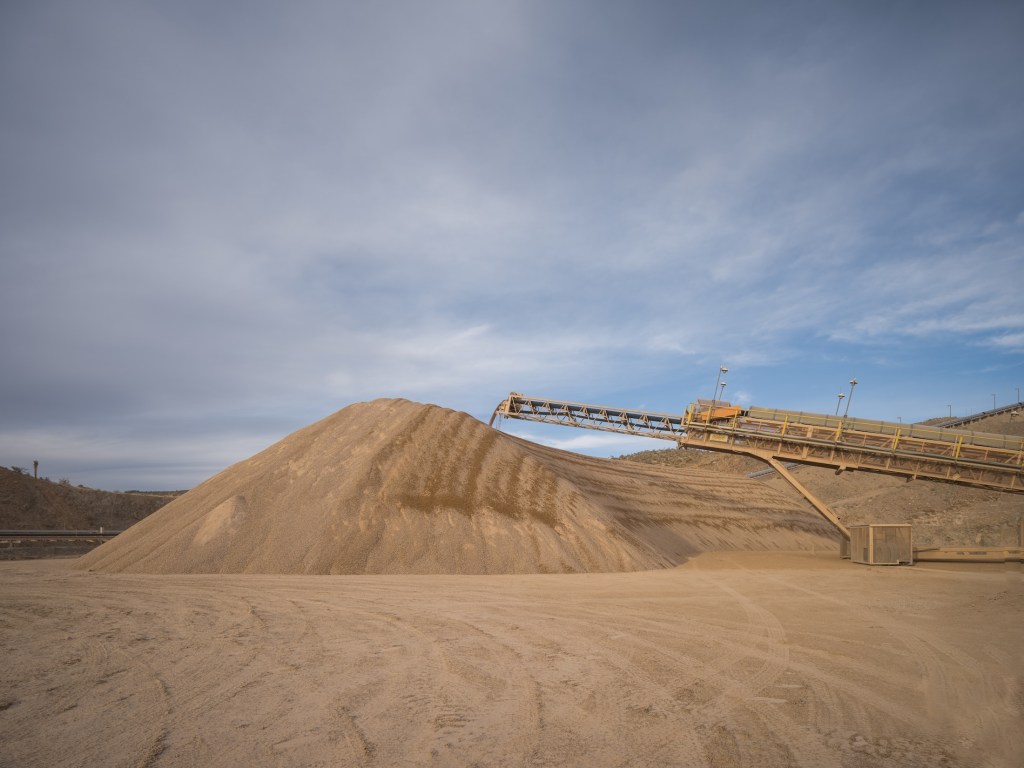 A computer-controlled arm deposits the raw crushed ore into a mound at the MP Materials mine and ore processing
site in Mountain Pass, CA. (Courtesy: MP Materials)
Your phone is full of them. Europium and gadolinium make the screen bright and colorful, lanthanum and praseodymium are in the circuitry, and terbium and dysprosium help make tiny, powerful speakers. But the biggest use is magnets. Because of the way their electrons are arranged, in a partially filled inner shell with lots of unpaired electrons spinning the same way, rare earths make far stronger magnets than iron alone.
Permanent magnets turn motion into electricity and electricity into motion. In the 1980s, scientists found that adding neodymium and a little dysprosium to iron and boron made incredibly strong magnets, and now they’re everywhere: tiny ones make your phone buzz, bigger ones turn the wheels of electric cars, and huge ones in wind turbines turn wind into electricity. A single wind turbine can use up to 500 pounds of rare earth metals.
 MP Materials Processing Facility in Mountain Pass, California (Courtesy: MP Materials)
Rare earths show up in other green tech, too. Cerium goes into catalytic converters, lanthanum helps purify water, and rare earth phosphors light up energy-efficient LED bulbs.
And then there’s the military, which is why this is a national security issue. Rare earths go into lasers, radar, night vision gear, missile guidance and jet engines. According the the Department of Defense, for example, each F-35 fighter jet needs more than 900 pounds of them. They also toughen armor, and lanthanum goes into camera lenses and night vision optics.
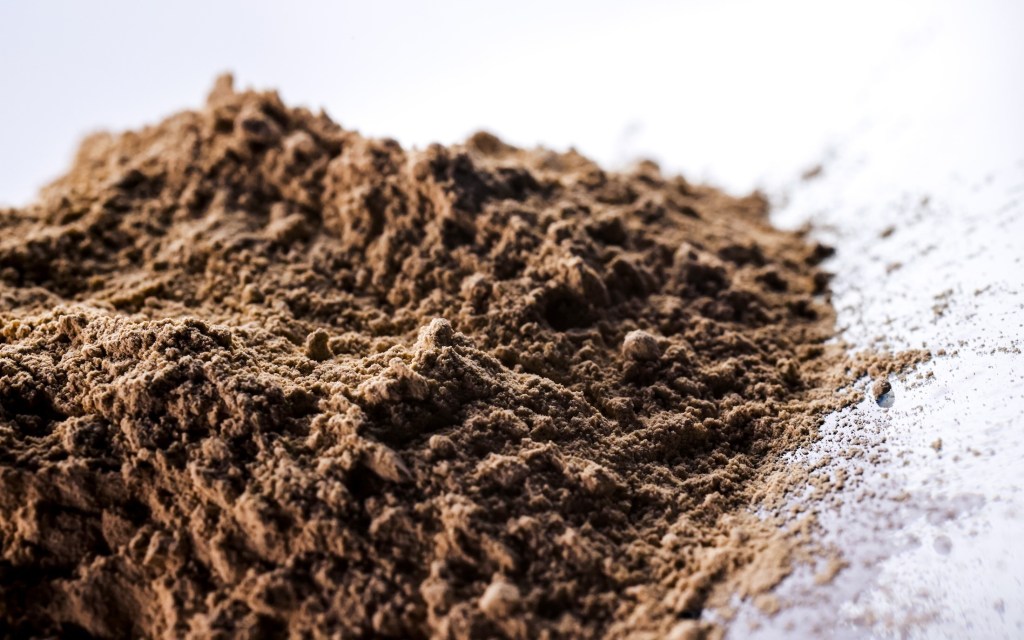 Bastnaesite concentrate, the raw material for rare earth metals.
(Courtesy of MP Materials)
The history of Mountain Pass is a bumpy one, and it’s also a lesson in what happens when mining and the environment collide.
The Molybdenum Corporation of America, later renamed Molycorp, bought the site in 1952. Its big break came in the 1960s with color TV, which needed europium to make red on the screen. For decades after that, Mountain Pass was the world’s top source of rare earths.
Then it went bad. In the 1990s, pipelines carrying radioactive wastewater and heavy metals leaked, bringing investigations and fines, and the mine eventually shut down. While it sat idle, China took over the rare earth business almost completely. Molycorp tried to restart Mountain Pass, but between high costs, low prices and Chinese competition, it couldn’t make it work, and the company went bankrupt. The mine went quiet again.
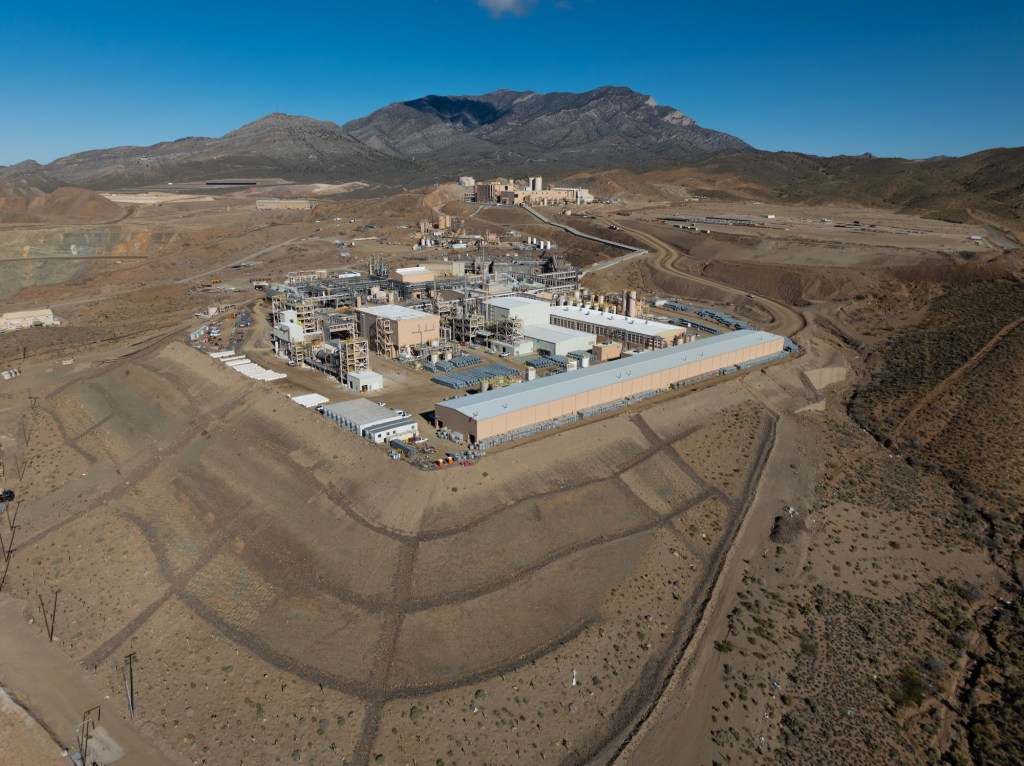 MP Materials Mine Facility (Photo: Erik Olsen)
In 2017, MP Materials, led by investors including Michael Rosenthal and Jim Litinsky, bought the shuttered mine. They expected to sell it to a big mining company. When no buyer showed up, and the permits were at risk of lapsing and the mine being closed for good, they decided to run it themselves. To get it going, they teamed up with Shenghe Resources, a Chinese state-backed company that put in early money and became MP’s main customer. In other words, America’s only rare earth mine was shipping its ore to China to be processed.
It worked better than anyone expected. By 2022, Mountain Pass was producing 42,000 metric tons of rare earth oxides, three times Molycorp’s best year and about 15 percent of world production. In 2024, the mine hit a U.S. production record with over 45,000 metric tons of REO in concentrate. But China was still at the center of the business. Shenghe bought most of the concentrate and owned about 8 percent of MP, and in 2024 roughly 80 percent of MP’s revenue came from that relationship. That changed in 2025, when China slapped on steep tariffs and new export restrictions. MP stopped shipping to China entirely and started processing much of its output domestically and selling to allies like Japan and South Korea. It has since put nearly $1 billion into building a domestic supply chain and started a joint venture with Saudi Arabia’s Ma’aden. The early numbers look good. In the first quarter of 2026, Mountain Pass produced 917 metric tons of NdPr oxide, up 63 percent from a year earlier, and sales more than doubled.
 A closer view of MP Materials’ processing complex at Mountain Pass, with rows of storage drums staged near the refining facility. (Photo: Erik Olsen)
Getting from rock to magnet takes a lot of steps. First you mine the ore. Then comes beneficiation, which concentrates it. Then separation and refining pull out the individual rare earth oxides, usually with chemical solvents. Then metallization, which turns the oxides into metal. The metal is alloyed with other elements, and finally it’s made into magnets. Every step is technically tricky, expensive and potentially dirty, which is a big reason so much of it ended up in China.
 MP Materials’ processing facility at Mountain Pass, where bastnaesite ore is refined into rare earth concentrate. (Photo: Erik Olsen)
For years, even as MP did more of the early processing at Mountain Pass, the later steps, making metal, alloys and magnets, happened overseas, mostly in China and Japan. Those steps are complicated and hard on the environment, and California’s strict environmental rules make them especially tough to do here. For the U.S., that dependence on foreign factories for materials that go into electric cars and weapons was a serious weak spot.
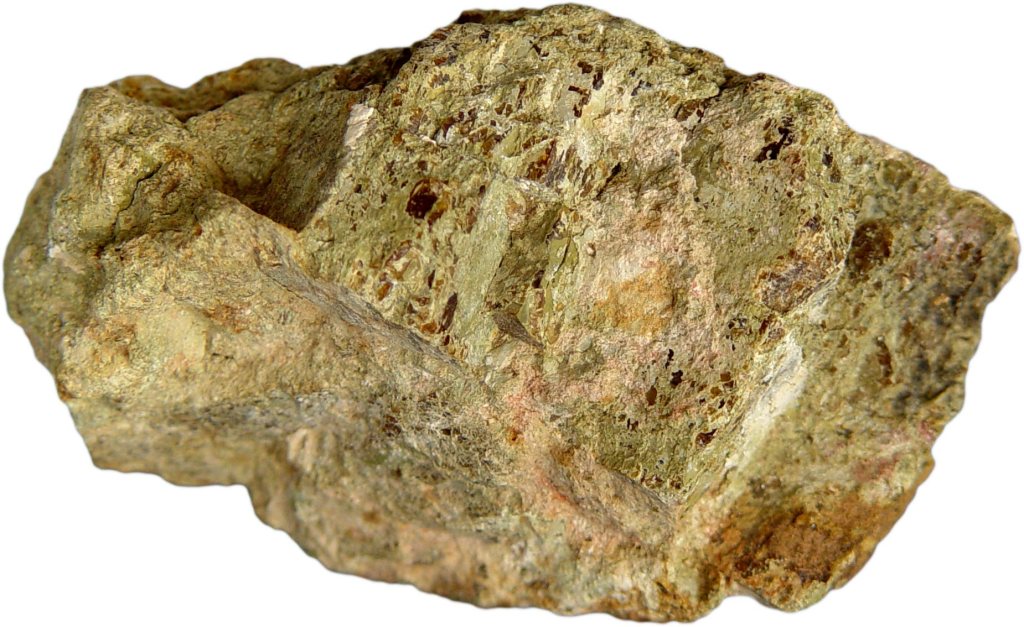 Bastnaesite ore (Wikipedia)
MP is now trying to close that gap. It’s expanding separation and refining at Mountain Pass, and at its new Independence plant in Fort Worth, Texas, MP Materials has begun producing neodymium-praseodymium (NdPr) metal and trialing sintered neodymium-iron-boron (NdFeB) magnets. It’s the first U.S. production of these materials in decades, with capacity for about 1,000 metric tons of magnets a year, enough for roughly half a million EV motors. In July 2025, Apple committed $500 million to source recycled rare earth magnets from Independence, with shipments expected to begin in 2027.
“This is our ultimate goal,” says Matt Sloustcher, EVP of Corporate Affairs for MP Materials. “To handle the entire separation and refining process on-site, but that ramp-up takes time.”
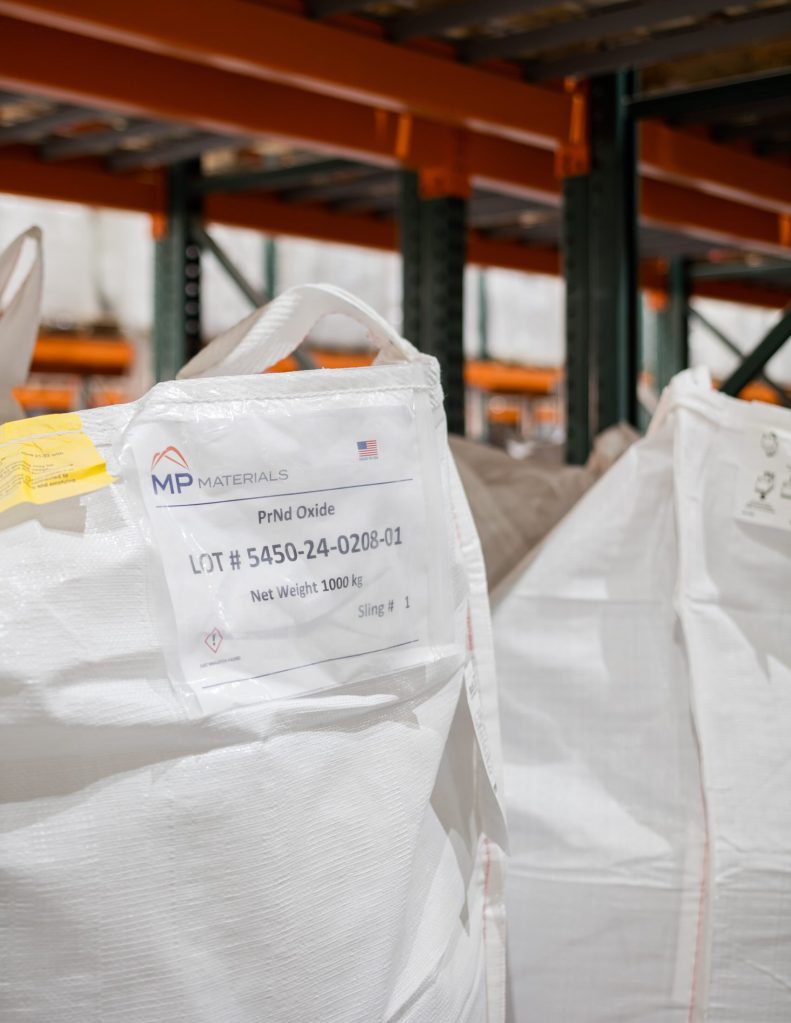 Individual slings of PrNd Oxide, the primary product produced at MP Materials. (Courtesy: MP Materials)
MP says its operation is “zero discharge,” meaning it recycles all its water and puts dry waste in lined landfills. If that holds up, it’s far cleaner than rare earth operations in Asia, some of which have caused severe pollution. MP Materials’ Sloustcher pointed California Curated to a Life Cycle Assessment (LCA) study published in the American Chemical Society which “found that NdFeB magnets produced from Mountain Pass ore have about one-third the environmental footprint of those from Bayan Obo, China’s largest rare earth mine.”
“With record-setting upstream and midstream production at Mountain Pass and both metal and magnet production underway at Independence , we have reached a significant turning point for MP and U.S. competitiveness in a vital sector,” said James Litinsky, Founder, Chairman, and CEO of MP Materials in a company release.
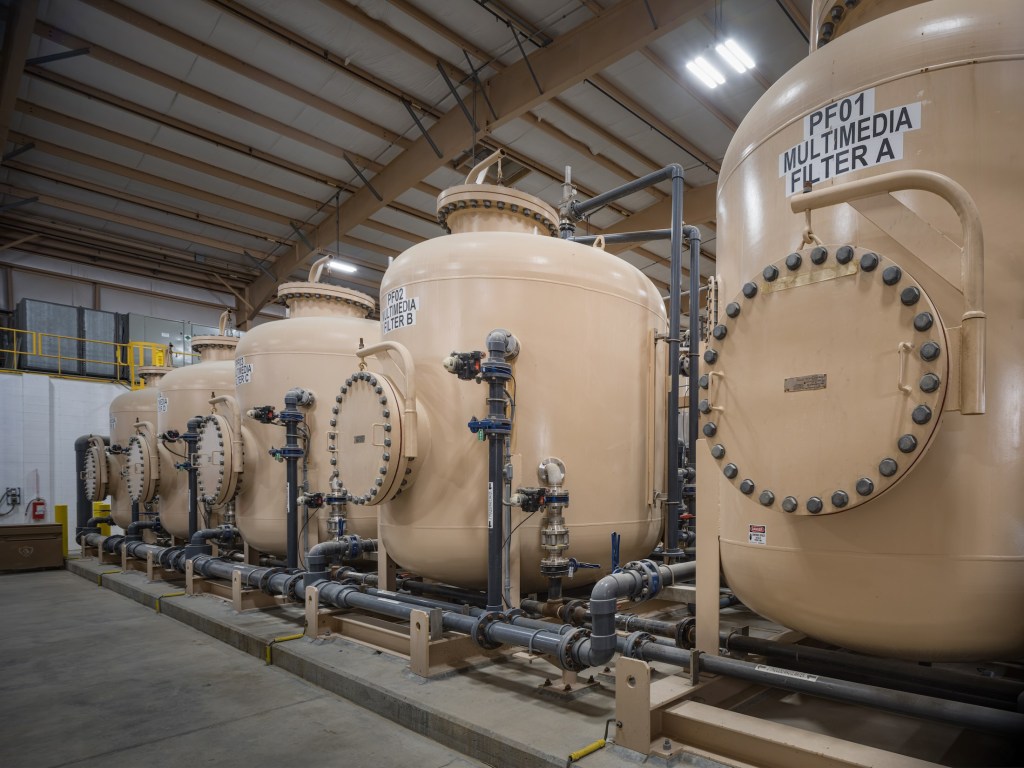 Interior view of the Water Treatment Plant at the MP Materials mine and ore processing site in
Mountain Pass, CA. (Courtesy: MP Materials)
MP is also making magnets for General Motors electric vehicles. Mining, refining and building closer to home also means less shipping ore and parts around the world.
Washington has gone all in. In July 2025, the Department of Defense agreed to invest $400 million in MP in exchange for preferred stock and warrants, making the Pentagon the company’s largest single shareholder at roughly 15 percent. The deal also includes a $150 million loan to expand heavy rare earth separation at Mountain Pass and a Pentagon offtake agreement to purchase 100% of the output from a new $1.25 billion magnet manufacturing campus, known as “10X”, that MP is building in Northlake, Texas, scheduled to begin commissioning in 2028. Together, Independence and 10X are expected to bring MP’s annual U.S. magnet capacity to 10,000 metric tons, a tenfold increase. Earlier government support, including a $35 million DoD heavy rare earth separation contract in 2022 and a $58.5 million Department of Energy magnet manufacturing award in 2024, now look like the opening moves in a much bigger bet.
None of this makes rare earth mining clean. Wastewater and tailings are still the big risks. MP says sustainability is a priority, but whether it can keep its environmental record clean while scaling up is something regulators, and the mine’s history, will be watching.
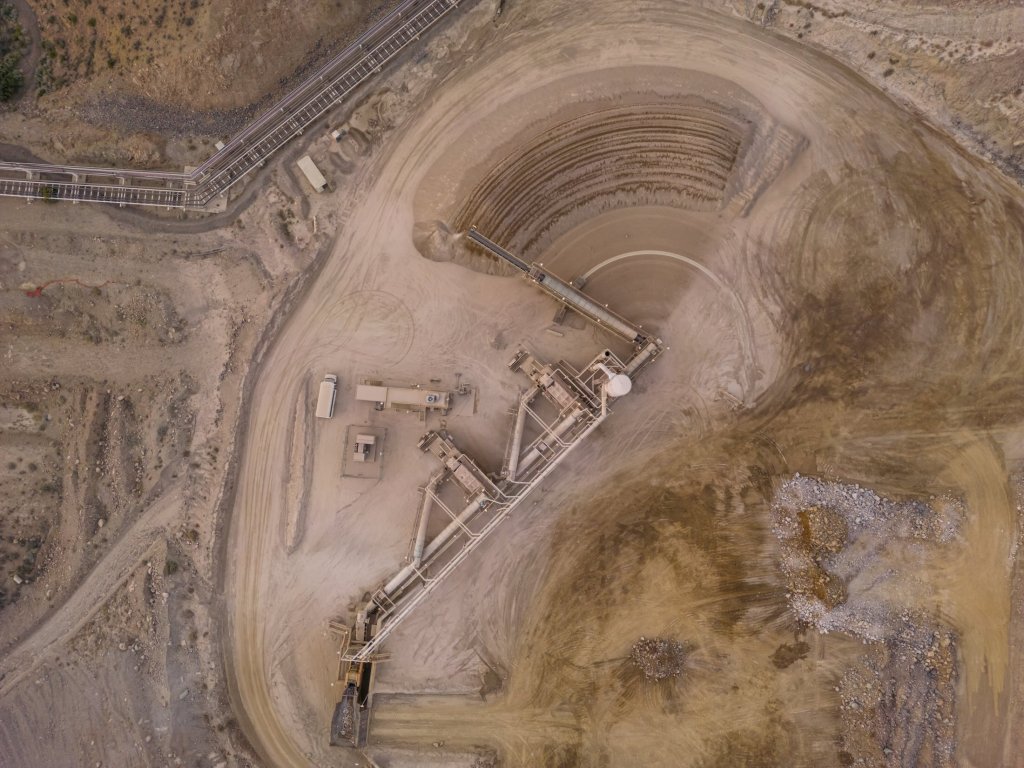 Overhead view of the Crusher at the MP Materials mine and ore processing site in Mountain Pass, CA. (Courtesy: MP Materials)
Mountain Pass has become the symbol of America’s attempt to get out from under China’s control of the minerals that run modern technology. Demand for rare earths is only going up, with more electric cars, more wind turbines and more of everything else that needs strong magnets.
Whether it works will come down to cost, cleanup and whether the U.S. can rebuild a manufacturing chain it gave away decades ago. For now, though, the most important rare earth mine in the Western world is sitting right off I-15, and most people driving to Vegas have no idea.
More California science, photography and wild places on Instagram @californiacuratedus