The Garibaldi’s Dance of Color and Character in California’s Coastal Ballet

California Garibaldi

Underwater photos of California’s coast featured in books and magazines almost always showcase a certain fish: the garibaldi. Within the underwater kaleidoscope of California’s coastal waters, the Garibaldi fish stands out with its fiery orange hue. The garibaldi, a member of the damselfish family, is the California State marine fish, and its possession is illegal.

The fish is likely named after the 19th-century Italian revolutionary Giuseppe Garibaldi, whose army wore bright red shirts, or after the “garibaldi”, a woman’s red blouse worn in the 1890’s.

Biologically speaking, the Garibaldi fish owe their orange coloring mainly to pigments called carotenoids. These carotenoids are pretty interesting; you’ll find them in many fruits and vegetables, like carrots, for example, where they give off that familiar orange glow. Garibaldi eat a diet rich in crustaceans, such as crabs and shrimps, which are packed with these pigments. When the fish ingest them, the carotenoids are absorbed and deposited into the skin tissues.

Carotenoids can also act as antioxidants, which means they might even play a role in protecting the fish’s cells from damage. This is a bit of a two-for-one deal: not only do they get to look good, but they also get some potential health benefits as well.

Interestingly, there’s a bit of a territorial aspect to the bright orange coloration. Garibaldi fish are known to be quite territorial, and the males are especially flashy. They use their bright coloration to ward off rivals and also to attract mates.

California Garibaldi

The color isn’t just a superficial beauty mark; it plays a significant role in the fish’s survival and reproductive strategies. The orange hue signals strength, dominance, and overall fitness. It’s like a badge of honor they wear to proclaim, “Look at me, I’m strong, healthy, and in charge here!”

The Garibaldi is more than just a pretty face in the crowd. This fish, found from Monterey Bay down to Baja California, displays behaviors and characteristics that make it a subject of intrigue for marine biologists and diving enthusiasts alike.

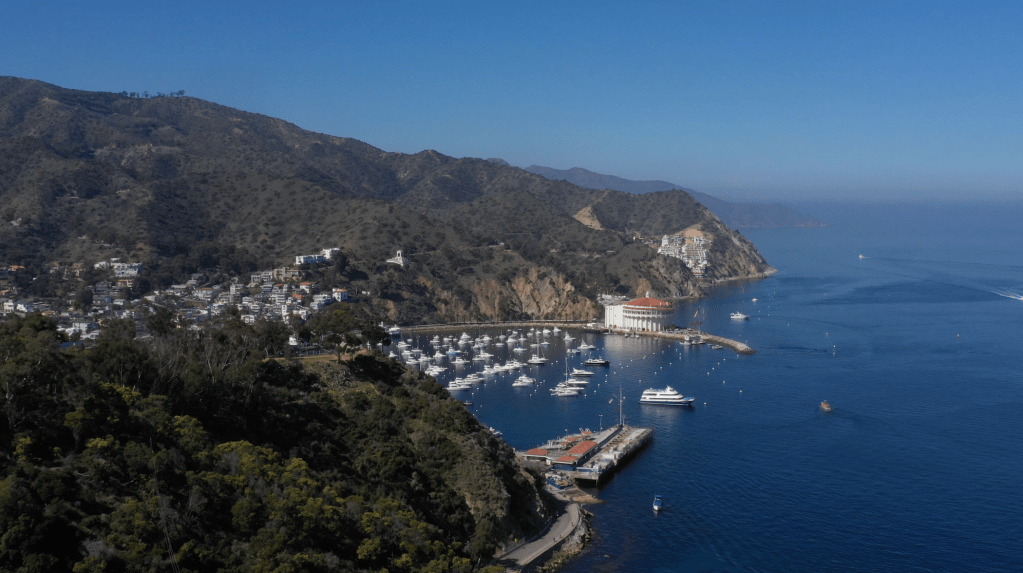
One of the best places to see Garibaldi if you are a diver or enjoy snorkeling is off the coast of Catalina Island, about 20 miles from Long Beach. One particularly popular spot is Casino Point in the city of Avalon on the island.

Known for being highly territorial, the male Garibaldi is an underwater homeowner, meticulously crafting nests from red algae during mating season. This homemaking process is not just about building; it’s about showmanship. The males showcase their algae-laden nests to prospective females in an underwater dance, swimming around their creation with pride, hoping to entice the females to lay their eggs there.

A California Garibaldi protecting its nest.

But the courtship doesn’t end with the dance. Once the female is wooed and the eggs are laid, the male Garibaldi takes on the role of a nurturing parent. He stands guard over the eggs, fanning them with his pectoral fins to ensure they are well-oxygenated. He even goes to the extent of confronting divers or other fish that venture too close to his precious brood.

The Garibaldi’s territorial nature also extends to a curious interaction with humans. Despite their fierceness in protecting their domain, these fish are known to approach divers, examining them with an inquisitive gaze. This friendliness, coupled with their radiant color, makes them a favorite subject among underwater photographers.

“The only thing that seems to affect their fearless behavior is the color of the animal that’s approaching them,” said Cabrillo Marine Aquarium (CMA) Research Curator Dr. Kiersten Darrow. “They will attack everybody else, but if they see that it’s a garibaldi fish of a certain type then they will back away.”

Female California Garibaldi

Perhaps even more fascinating is the Garibaldi’s voice – a distinctive thumping sound that some divers have reported hearing. Though the exact reason for this sound is not entirely understood, it’s believed to be related to their territorial behavior, adding another layer to the mystique of this remarkable fish.

Beyond its engaging behaviors, the Garibaldi’s story carries a note of triumph in conservation. Its popularity led to overfishing in the past, which spurred protective measures. Today, the Garibaldi enjoys protected status in California waters, safeguarding it from harm and allowing it to thrive.

A testament to resilience, the Garibaldi can live for over 20 years, growing slowly and reaching full maturity at about six years of age. This longevity, coupled with its unique characteristics, makes it a symbol of the diverse and vibrant marine life that graces California’s coastline.

Catalina Island and Casino Point (Erik Olsen)

In the world of marine biology, where hidden wonders often lie beneath the waves, the Garibaldi emerges as a charismatic star. With its bold color, intricate courtship rituals, protective parenting, and friendly curiosity, it captures the imagination, not just as a beautiful spectacle but as a complex character in the grand tapestry of ocean life. Whether seen during a dive or behind the glass of an aquarium, the Garibaldi remains a fascinating glimpse into the rich and often surprising world beneath the sea.

Hey there! If you enjoy California Curated, consider donating the price of a coffee to support its creation!

The Eucalyptus Tree’s Twisted Path to Californian Soil

Eucalyptus in Los Angeles (Erik Olsen)

The California landscape is dotted with numerous plant species, many of them native, but few have a story as rich and multi-faceted as the eucalyptus tree. Native to Australia, this tree has made California its home over the past century and a half, creating a blend of wonder, economic expectation, and ecological concerns.

The journey of the eucalyptus tree to California dates back to the mid-19th century. Attracted by tales of gold and prosperity, many Australians made their way to the Golden State. Along with them came seeds of the eucalyptus tree, which they believed had great potential value. By the 1870s and 1880s, California was amidst a timber crisis. Native woodlands were diminishing, and the state was in dire need of a rapidly growing timber source. The eucalyptus tree, known for its rapid growth and towering heights, appeared to be a promising solution. Its proponents, believing it would not only serve as an excellent timber source but also act as a windbreak and ornamental plant, began widespread plantations.

While the eucalyptus grew impressively fast, hopes for it being a top-tier lumber source were quickly dashed. Most species planted in California had wood that was prone to warping and splitting upon drying. The enthusiasm surrounding the eucalyptus as a miracle timber tree gradually waned. What was initially perceived as a solution turned out to be more of a decorative element in the landscape rather than an economic boon.

CALIFORNIA CURATED ART ON ETSY

Purchase stunning art prints of California icons.
Check out our Etsy store.

Despite its failure in the lumber industry, the eucalyptus managed to root itself firmly in the Californian soil. Over time, this rapid settler began to pose significant environmental concerns. Eucalyptus trees are thirsty plants. Their deep roots often outcompete native species for water, hindering the growth and survival of native Californian plants and altering the balance of local ecosystems. Furthermore, eucalyptus groves have become a concern for wildfires. Their oil-rich leaves and peeling bark make them exceptionally flammable, amplifying dangers during California’s fire-prone seasons.

While over 700 eucalyptus species exist, only a handful made it to California. The most commonly planted and now dominant species is the blue gum eucalyptus (Eucalyptus globulus). Towering over most trees, the blue gum can reach staggering heights, quickly establishing its dominance in the landscape. Other species like the red gum (Eucalyptus camaldulensis) and the sugar gum (Eucalyptus cladocalyx) have also found their way into California, albeit in smaller numbers. The sugar gum is particularly present around the campus of Stanford University.

Sugar gum pods Stanford

By the late 1900s, concerns over the eucalyptus’ impact on native habitats led to movements advocating for their removal. Environmentalists and local residents began to see the tree as an invasive species that hindered the natural balance. Efforts to cut down and manage the eucalyptus population intensified, often clashing with those who had come to admire the tree’s majestic presence and the unique ambiance it provided.

Considered among the thousand-plus established alien vascular plants in California—two-thirds of which originated in Eurasia—Eucalyptus seems relatively benign. Of the 374 species in the genus that have been introduced since the 1850s, only 18 have naturalized, and only one of those, E. globulus, has become a nuisance, and then only at the urban-wildland interface along the fog belt of the central coast and Bay Area, and there only after humans gave it an enormous head start with plantations.

Even in these locations, self-sustaining feral forests have not grown dramatically beyond the boundaries of the original plantings. In the Golden State the blue gum has never been especially invasive; rather, it used to be hugely desirable. Other vegetation imported to California for ornamental purposes has spread far more widely or densely—for example, English ivy, periwinkle, ice plant, and pampas grass. Unlike Saltcedar (Tamarix ramosissima), Tasmanian blue gum is not a true problem plant. It cannot be considered a paradigmatic invader, or even a noteworthy one. The authoritative Encyclopedia of Biological Invasions makes note of the “enigmatic” low invasiveness of eucalypts worldwide—“orders of magnitude less successful as invaders than pines.”

From the perspective of both ecology and fire safety, the blue gum eucalyptus is particularly concerning in California when plantations of a single species have transformed into dense, closed-canopy forests. This issue, though, is confined to a limited number of areas within the fog belt. Even within these regions, the eucalyptus thickets are far from being barren, hostile environments.

Eucalyptus grove in California

That said, a relatively recent event did not cast the tree in good light.

The East Bay firestorm of 1991 was a catastrophic event that claimed 25 lives and rendered thousands homeless. Extensive areas of eucalyptus were consumed by the flames. For 26 years, the East Bay Firestorm firestorm was considered the worst fire in California’s history. It was also America’s most costly fire in the wildland-urban interface (WUI).

“People at the time, I don’t think, associated that with a planted plantation; it was just a eucalyptus forest,” CalPoly botanist Jenn Yost told KQED. “And then when the fire came through — I mean that fire came through so fast and so hot and so many people lost their homes that it was a natural reaction to hate blue gums at that point.”

However, it is again important to point out that the density of trees in the area was unusual and not representative of many other areas where eucalyptus have taken root.

Those opposed to the trees argue that their tendency to shed large quantities of bark exacerbates the fire hazard, and hence, they should be removed. On the other hand, proponents highlight that many of California’s native plants are also prone to burning. The 2018 Camp Fire scorched an area 153,336 acres in size, and destroyed more than 18,000 structures, most of the destruction happened within the first four hours of the fire and most of the destruction was the result of pine forests that have long been improperly managed. Both factions claim that science supports their viewpoint, but as of now, no definitive study has been able to settle the argument conclusively.

Camp Fire of 2018

This ongoing debate has stirred deep emotions. A few years ago, an incident in the East Bay hills saw federal funding for cutting down trees withdrawn after protesters, in a dramatic display of support for the eucalyptus, got naked and literally embraced the trees on the Cal campus. While some have argued that California needs to return its natural environment to a more “pristine” state, meaning just California natives, others say that the eucalyptus poses no greater danger than many species of conifer, and that the effort to expunge eucalyptus from the landscape, given its contribution to the culture and beautification of the state is tantamount to discrimination against immigrant trees solely due to their origin, an idea which some have extended to the human population.

“We’re not natives either,” the San Diego County chief entomologist said in defense of the county’s signature tree genus.

One ecological study that compared a gathering of oaks to a blue gum grove in the neighboring areas, concluded that the blue gem eucalyptus has no major impact on animal life. In fact, the tree’s leaf litter is bustling with life, containing a complex array of microhabitats. In fact, while oaks tend to be home to more rodents, eucalyptus contains a greater number of below-ground invertebrates.

Fruit of Eucalyptus globulus

The complex relationship between Californians and the eucalyptus reflects deeper questions about nature, risk, and our connection to the landscape, and it’s a debate that shows no signs of resolution.

Among the thousand-plus non-native vascular plants that have made their home in California—two-thirds of which hail from Eurasia—the Eucalyptus is relatively mild-mannered. Since the 1850s, 374 species of Eucalyptus have been introduced to the state. Yet, of these, only 18 have successfully naturalized, and merely one, the E. globulus, has ever become problematic. This issue is isolated mainly to the WUI boundary along the fog belt of the central coast and Bay Area, and even there, only after humans heavily promoted its growth through plantation efforts.

Even within these specific regions, the self-sustaining “feral” forests haven’t expanded significantly beyond the original planting sites. In California, the blue gum eucalyptus has never been notorious for being particularly invasive; rather, it was once highly sought-after. Other non-native plants brought to California for decorative purposes, such as periwinkle, English ivy, ice plant, pampas grass, and tamarisk, have spread much more extensively or densely.

Pampas Grass

Unlike plants like Scotch and French broom, the Tasmanian blue gum eucalyptus doesn’t qualify as a genuine problem plant. It’s not viewed as a typical invader, nor is it even considered particularly noteworthy in that regard. A state survey that consulted floricultural experts produced a broad spectrum of opinions concerning the potential threat posed by eucalyptus to California’s wildlands. This contrasts sharply with the unified negative evaluation of salt cedar, which has bedeviled land managers from Southern California to Mexico.

CALIFORNIA CURATED ART ON ETSY

Purchase stunning coffee mugs and art prints of California icons.
Check out our Etsy store.

The final verdict on the fate of eucalyptus in Southern California has yet to be rendered. Many still think the trees have become an iconic symbol of the state, with so many trees proudly and elegantly lining pocketed and immensely Instagrammable stretches of California highway. Perhaps the key to the trees survivability and reputation is simply one of proper management. Where the trees have become too dense in fire-prone areas, maybe some measure of thinning is prudent. But to eliminate them entirely would be a great loss to the aesthetic visual appeal of California, an appeal that many Californians, even conservation-minded artists like Ansel Adams and Erin Hanson often summoned in their work.

The eucalyptus tree’s journey in California is a tale of expectations, surprises, and evolving perspectives. Whether viewed as an ornamental marvel or an ecological concern, the eucalyptus remains an integral part of California’s diverse tapestry.

The Sweet Journey of the Boysenberry from Family Farms to Theme Park Fame

Bowl of boysenberries on wooden table.

California has long been a hub for berry innovation, boasting a rich history of developing countless berry cultivars. While it’s tough to pin down an exact number, the state’s contributions span a wide range of fruits, from strawberries to blackberries to loganberries, raspberries, and even blueberries.

Somewhere in the pantheon of berries, tucked between the familiar blackberry and the enigmatic lingonberry (a Scandinavian staple, just ask the Swedes, or swing by IKEA), you’ll find the boysenberry. With its deep maroon color, plump size, and a flavor that dances between sweet and tart, the boysenberry is a delicious emblem of California’s horticultural creativity. (Who knew we needed yet another berry?) But how did this berry come to be, and what’s the story behind a Southern California amusement park helping to make it famous?

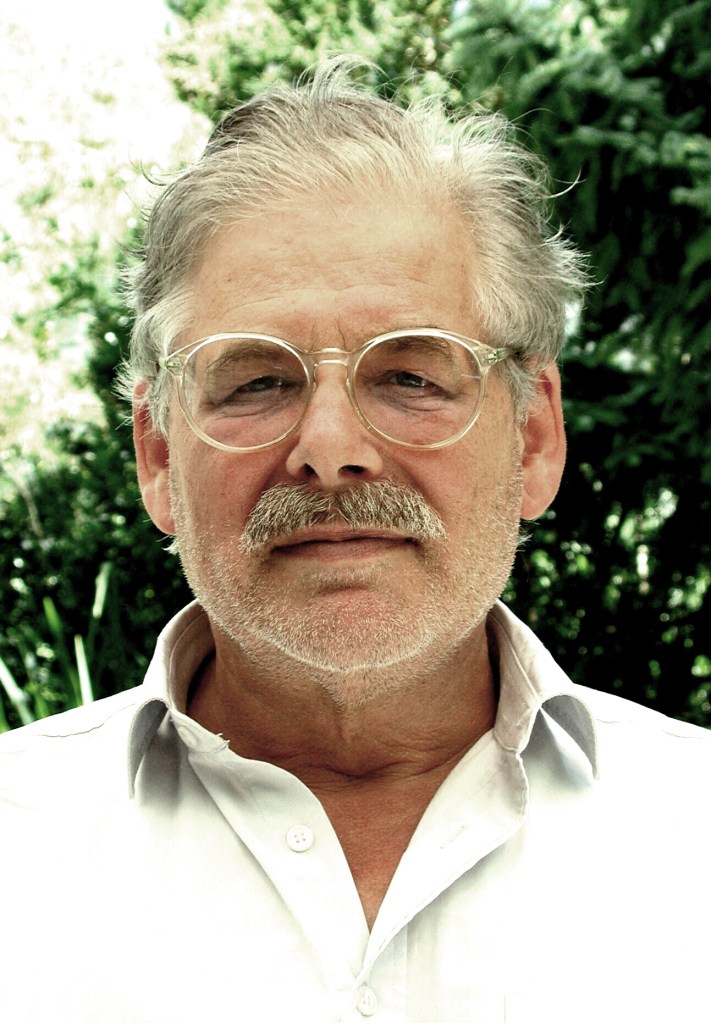
The journey of the boysenberry begins with its namesake, Rudolph Boysen. In the early 1920s, Boysen, a curious California-based farmer and horticulturist, began experimenting with berry plants at his home in Napa, California. His objective? To develop a new hybrid berry that combined the best attributes of the European raspberry, blackberry, American dewberry, and loganberry.

Rudolph Boysen

On relocating to Orange County, he didn’t leave his passion behind; instead, he brought along his precious berry vines, planting them on his in-law’s property in Anaheim, which at that time was a relatively unpopulated expanse dominated by vast orange and lemon groves, interspersed with small farms and ranches. 

Between 1921 and 1950, Boysen dedicated his professional life to serving as the Anaheim City Parks superintendent. His persistent efforts bore fruit (ha) in 1923 when his hybrid successfully grafted and flourished. However, while Boysen was successful in creating the berry, he faced challenges in cultivating it on a larger scale. Some years after his initial success, a near-fatal accident sidelined him, and his boysenberry plants began to wither, seemingly destined for obscurity.

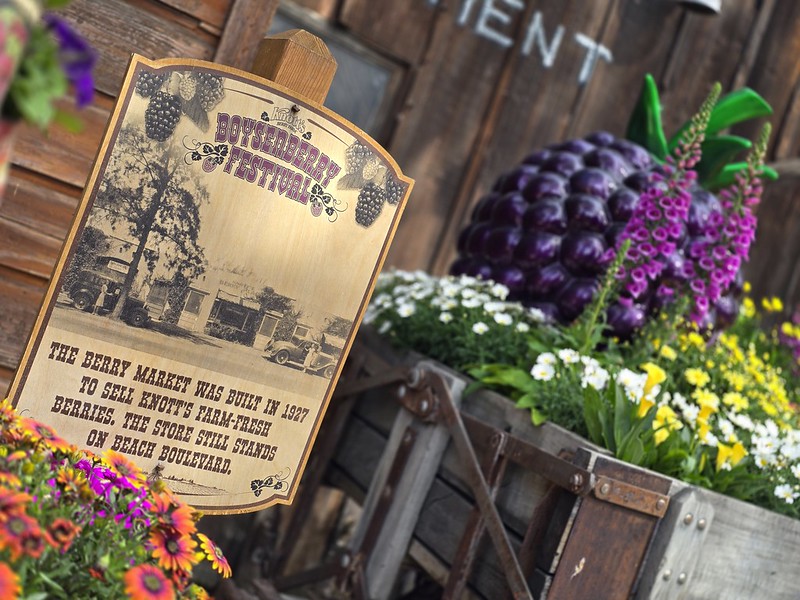
Enter Walter Knott, another farmer with an insatiable curiosity and a healthy dose of ambition,. Upon discovering that Boysen had given up his cultivation experiments and sold his property, Knott went in search of the delicious berry. Accompanied by  George M. Darrow of the USDA, the duo ventured to Boysen’s former farm. There, amidst an overgrowth of weeds, they discovered a few withering vines clinging to life. Determined to give these vines a new lease on life, they carefully relocated them to Knott’s farm in Buena Park, California. With diligent care and attention, Knott revived these plants, enabling them to thrive and produce fruit once again. As a result, Walter Knott became the pioneering figure in the commercial cultivation of the berry in Southern California. Knott learned about Boysen’s creation and, understanding its potential, sought out the remaining withered vines.

Knott’s Berry Farm

With a blend of horticultural expertise and an entrepreneur’s spirit, Knott not only rescued the dying boysenberry vines but also began cultivating and selling the berries on his own farm, which was located in Buena Park, California.

As the berries grew in popularity, so did Knott’s business. By the 1940s, Knott’s farm had transformed into a bustling destination, offering visitors not just the chance to buy fresh boysenberries and boysenberry products, but also to experience the charm of a recreated ghost town and other attractions. As the business evolved, it gave birth to what is now known as Knott’s Berry Farm, one of the most popular amusement parks in Southern California.

Today, it’s a full-blown amusement park with high-speed roller coasters like GhostRider, a massive wooden coaster, and Silver Bullet, a looping steel ride that twists over the park’s lake. The Timber Mountain Log Ride, one of the park’s most beloved attractions, simulates a journey through a 19th-century logging camp, complete with animatronic lumberjacks and sawmills. It’s a tribute to the massive wooden flumes that loggers once built to move timber from deep in the forest down to the mills and markets. One of the largest of these flumes was at Converse Basin, once home to the biggest contiguous grove of giant sequoias on Earth. That same area became the site of one of the most devastating logging operations in American history, where thousands of ancient sequoias—some millenia old—were cut down in the rush to harvest timber. We did a story about it you can read here. It’s a sobering reminder of how quickly early California’s natural wonders were exploited in the name of progress.

But back to Boysenberries. Let’s finish this one up, shall we?

Biologically, the boysenberry is a testament to the wonders of plant hybridization, showcasing the ability to combine distinct plant species to produce something entirely new. And tasty. The boysenberry isn’t just a product of careful crossbreeding, it’s a classic California story of perseverance, partnership, and a dose of luck. Sunshine helps too. It’s about how a nearly forgotten berry was saved from obscurity by two determined farmers and went on to become a symbol of California itself, thanks in part to the magic of an amusement park.

Hey there! If you enjoy California Curated, consider donating the price of a coffee to support its creation!

Hannes Keller’s Deadly 1,000-Foot Descent off Catalina Island Was the Dive of the Century

An ambitious quest for underwater exploration that ended in tragedy beneath the Pacific waves.

The city of Avalon on Catalina Island (Erik Olsen)

In 1962, Swiss physicist and deep-sea diving pioneer Hannes Keller embarked on an ambitious and perilous mission to push the boundaries of human endurance and underwater exploration. California, with its dramatic coastline and history of daring maritime ventures, became the setting for this bold effort to make history in diving. Partnered with British diver and journalist Peter Small, Keller aimed to descend inside a specially designed diving bell named Atlantis to an unprecedented depth of 1,000 feet off the coast of Catalina Island. Their plan involved exiting the pressurized diving bell once it reached the ocean floor, a groundbreaking and dangerous procedure that would allow them to perform tasks outside in the extreme depths. What promised to be a historic achievement, however, took a tragic turn.

Keller’s passion for deep-sea diving had recently garnered international attention, fueled by his record-breaking dives and groundbreaking research into advanced breathing gas mixtures. Working alongside Dr. Albert Bühlmann, a renowned physiologist specializing in respiration, Keller employed cutting-edge technology, including an IBM computer, to meticulously design gas formulas that could counteract the dangers of deep diving. Their innovative work addressed the twin challenges of nitrogen narcosis and decompression sickness, promising to revolutionize underwater exploration.

For Keller, diving was initially an unconventional pursuit. He was engaged in teaching mathematics to engineering students in his native town of Winterthur, close to Zurich, and had aspirations to become a pilot. However, the prohibitive cost of flying on a teacher’s salary led him to explore other avenues. Introduced to the burgeoning sport of scuba diving by a friend in the late 1950s, Keller applied his mathematical and scientific acumen to the field. He soon concluded that the existing techniques in deep-sea diving were outdated and ripe for revolutionary advancement.

“If a man could go, for instance, to 1,000 feet down and do practical work,” Mr. Keller wrote in The Sydney Morning Herald, “then all the continental shelf zone could be explored, a total of more than 16 million square miles.”

Keller prepares for his May 1961 chamber dive at the United States Navy Experimental Diving Unit (NEDU). Photo: US Navy

Keller and Bühlmann worked collaboratively to expand their computerized concoction of breathing gases, ultimately selecting a dive site off near Avalon Bay at Catalina Island in Southern California. This location was chosen due to its dramatic underwater geography, where the ocean floor descends sharply from the coast into the deep ocean.

At the time, it was widely believed that no human being could safely dive to depths beyond three hundred feet. That was because, beginning at a depth of one hundred feet, a diver breathing normal air starts to lose his mind due to nitrogen narcosis.

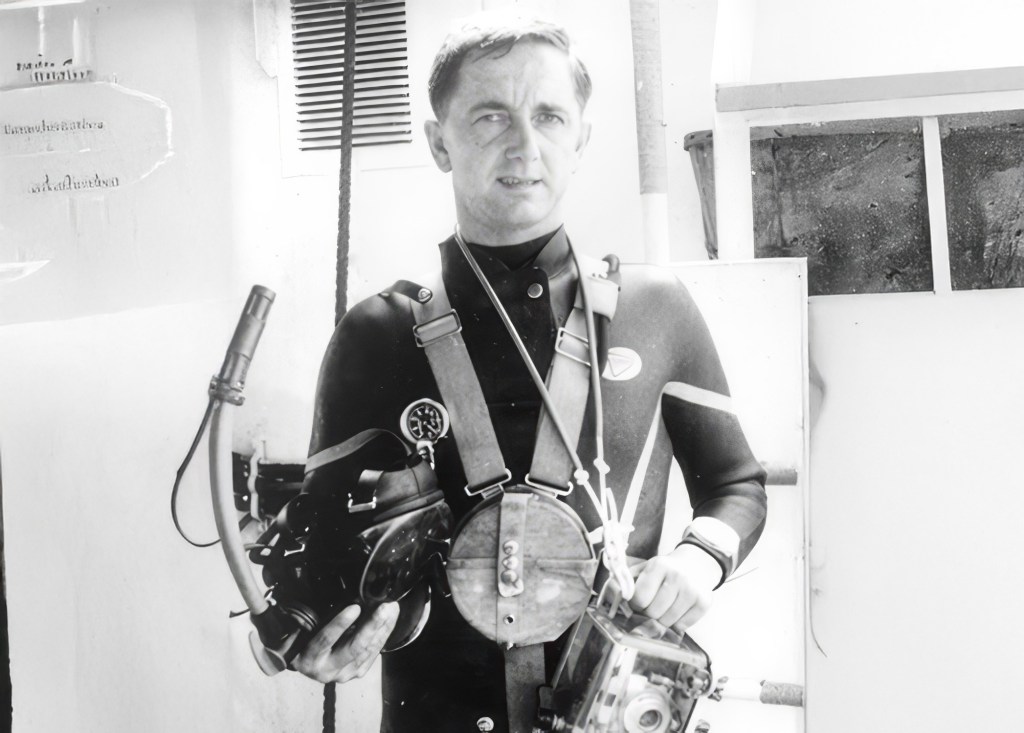
Partnering with Peter Small, co-founder of the British Sub Aqua Club, Hannes Keller planned their historic descent using a specially designed diving bell named Atlantis. This advanced pressurized chamber, deployed from a surface support vessel, was staffed by a skilled technical crew tasked with monitoring gas levels and maintaining constant communication with the divers through a surface-to-bell phone link. The Atlantis diving bell represented a significant leap in underwater technology, providing a controlled environment that allowed divers to venture into previously unreachable depths. Its design and operational success revolutionized the field of deep-sea exploration, offering invaluable insights into human physiology under extreme pressure and laying the groundwork for future advancements in underwater science and technology.

Keller’s experimental dives piqued the interest of the U.S. Navy, as they saw the potential to revolutionize diving safety and practicality. If proven successful, Keller’s methods could transform existing dive tables and enable safer, more practical deep-sea exploration. Encouraged by the promising outcomes of Keller’s preliminary chamber tests and several less extreme open-sea trials, the Navy allowed him to perform a test dive at their primary experimental facility, adjacent to the Washington dive school. They also became a financial supporter of Keller’s ambitious thousand-foot dive.

To carefully scrutinize the operation, the Navy designated Dr. Robert Workman, one of their foremost decompression specialists, to be present on site. A few days after reaching Catalina in late November, Dr. Workman joined Dr. Bühlmann, the rest of Keller’s team, and various onlookers aboard Eureka, an experimental offshore drilling vessel provided by Shell Oil Co. Shell, like other oil and gas enterprises, had a vested interest in innovative techniques that could enhance the productivity of commercial divers. If the dive was successful, the company would receive Keller’s secret air mixture technology and thereby become an instant frontrunner in offshore oil exploration. Their interest was particularly relevant as offshore drilling initiatives were venturing into deeper waters, both off the California shore and in the Gulf of Mexico.

Resembling a huge can of soup, Atlantis stood seven feet tall and had a diameter slightly greater than four feet. Its structure featured an access hatch at the bottom and was adorned with an array of protruding pipes and valves, adding to its industrial appearance.

British journalist Peter Small (BSAC)

As a journalist, Peter Small intended to pen a first-hand narrative of the groundbreaking dive. On December 1, as part of a final preparatory dive, Small and Keller were lowered inside Atlantis to a depth of three hundred feet, where they spent an hour scuba diving outside the bell. During the decompression process within the bell, both divers experienced relatively mild symptoms of decompression sickness, commonly known as the bends. Keller felt the effects in his belly, while Small was afflicted in his right arm. Decompression sickness is still a relatively poorly understood phenomenon, and it remains unpredictable as to which part of the body it might affect.

Keller’s symptoms abated on their own that night, but Small’s discomfort lingered until he underwent recompression treatment. Despite this warning sign, Keller was determined to continue with the dive as planned, without conducting further incremental tests at increasing depths before the ambitious thousand-foot descent. His decision was likely influenced, at least in part, by the assembled crowd of journalists and other spectators eager to witness the historic dive. The constraints of time, finances, and equipment availability added to the pressure, compelling the team to proceed with the experimental dive as scheduled.

The diving bell Atlantis is lifted out of the water after Keller and the journalist Peter Small descended 1,020 feet to the Pacific Ocean floor in December 1962.

On Monday, December 3, around noon, Atlantis began its descent beneath the surface of the Pacific, enclosing its two divers within. The journey towards the ocean floor took under thirty minutes. Upon reaching the target depth of a thousand feet, a series of dark and chaotic moments ensued. Keller exited the bell to plant a Swiss flag and an American flag on the ocean floor. In the process, his breathing hoses became entangled with the flags, and after clambering back inside Atlantis, he lost consciousness.

The gas mixture had somehow become compromised. Peter Small also blacked out, despite never having left the diving bell. As Atlantis was hastily ascended to within two hundred feet of the surface, several support divers swam down to meet the bell. Tragically, one of these support divers, Christopher Whittaker, a young man of just nineteen, disappeared without a trace.

Pacific Ocean off Catalina Island (Erik Olsen)

Keller came to roughly a half-hour after the incident, and Small regained consciousness, but it took nearly two hours for him to do so. Upon awakening, Small engaged Keller in coherent questions about what had transpired. He reported feeling cold and, although he retained the ability to speak, see, and hear, he could not feel his legs. Despite not experiencing any pain, he was too weak to stand. Leaning against his Swiss counterpart, he drifted off to sleep as their decompression within the bell continued.

Several hours later, as Atlantis was being transported back to shore to Long Beach from the dive site near Catalina, Keller discovered that Small had ceased breathing and had no pulse. Desperate to revive him, Keller administered mouth-to-mouth resuscitation and cardiac massage, but to no avail. Small was cold and pallid. The remaining pressure inside the bell, about two atmospheres, was hastily released in a frantic effort to get Small to a hospital after being trapped inside Atlantis for eight hours. Tragically, upon arrival, he was promptly pronounced dead.

The Atlantis diving bell (Paul Tzimoulis)

The Los Angeles County coroner identified the cause of death as decompression sickness. An examination revealed that Small’s tissues and organs were filled with Nitrogen gas bubbles. However, Keller contended that other factors, such as a potential heart attack and the panic Small displayed upon reaching the thousand-foot mark, contributed to the tragedy.

Regardless of the underlying causes, the catastrophic dive to thirty atmospheres and the loss of two lives led to a rapid waning of interest in Keller’s previously sensational methods. The potential for failure of this magnitude had been a concern to many in the deep diving community and the day’s events set back research in the emerging field of saturation diving. Even before this event, saturation diving had only tepid support from the Navy, but this made some people loss faith in the technique. Of course, it would not be the end of saturation diving, not by a long shot. 

Hannes Keller in his later years. (Credit: Keller, Esther, Niederglatt, Switzerland)

Modern deep-water diving owes much to the groundbreaking experiments of Hannes Keller. His historic dive to 1,020 feet (311 meters) off Catalina Island was a remarkable achievement that captivated the world. Far from being a mere stunt, as some critics claimed, Keller’s dive was a meticulously planned scientific endeavor designed to push the boundaries of human exploration of the ocean depths. This Swiss adventurer’s pioneering work laid the foundation for advances in deep-sea diving techniques, leaving an enduring legacy in the field.

CALIFORNIA CURATED ART ON ETSY

Purchase stunning art prints of iconic California scenes.
Check out our Etsy store.

Christopher Swann, a diving historian, said the dive “was a milepost in the sense that it was the first time something like that had been done.”

Keller ended up living a rich and long life, dying on December 1, 2022, at at a nursing home in Wallisellen, Switzerland, near his home in Niederglatt. He was 88.

Genetic Guardians: The Asilomar Conference and its DNA Diplomacy

How a gathering of the world’s top genetic scientists helped create a roadmap for responsible biology.

Asilomar Conference Grounds Interior

In 1975, amidst the California coastal dunes of Asilomar near Monterey, a groundbreaking conference was held that would influence the direction of biotechnology and the course of scientific research for decades to come. This was the Asilomar Conference on Recombinant DNA, an assembly marked by both controversy and consensus. Its aim was not just to debate the scientific merits of a new and potentially groundbreaking technology but also to discuss its potential impacts on society and the environment. (Berg and others had met as Asilomar before in 1973, but that initial meeting resulted in little more than a realization there would have to be more discussion).

DNA

Among the seventy-five participants from sixteen countries were Paul Berg, a Nobel laureate, Maxine Singer, a prominent molecular biologist, and many others, each bringing their own perspective and expertise to the table. They recognized the vast potential that recombinant DNA (rDNA) technology, the process of combining DNA from different species, had to offer but were equally cognizant of the potential risks involved.

Berg was awarded the Nobel Prize in Chemistry for his work on nucleic acids, with a focus on recombinant DNA. Berg had first-hand experience with the transformative potential and risks of the technology. His ground-breaking experiments with recombinant DNA in 1972 and subsequent calls for a moratorium on such work had spurred the idea of the conference.

Maxine Singer, another significant contributor, was known for her advocacy for scientific responsibility and ethical considerations. She played a crucial role in drafting the initial letter to the journal “Science” advocating for a voluntary halt on certain types of rDNA research until its potential risks could be better understood. In 2002, Discover magazine recognized her as one of the 50 most important women in science.

CALIFORNIA CURATED ON ETSY

Purchase stunning art prints of iconic California scenes.
Check out our Etsy store.

The conference was the outcome of dramatic advances in molecular biology that took place mid-century. In the atomic age of the 1950s and ’60s, biology was not left behind in the wave of transformation. A pioneering blend of structural analysis, biochemical investigation, and informational decoding began to crack open the mystery of classical genetics. Central to this exploration was the realization that genes were crafted from DNA, and that this intricate molecular masterpiece held the blueprints for replication and protein synthesis.

Paul Berg (Photo: Stanford University)

This was a truth beautifully crystallized in the DNA model, a triumph of scientific collaboration that arose from the minds of James Watson, Francis Crick, and the often under-appreciated Rosalind Franklin. Their collective genius propelled a cascade of theoretical breakthroughs that nudged our understanding from mere observation to the brink of manipulation.

The crowning achievement of this era was the advent of recombinant DNA technology – a tool with the potential to rearrange life’s building blocks at our will. As the curtain lifted on this new stage of biological exploration, the promise and peril of our increasing control over life’s code started to unfurl.

Asilomar Conference Building

The ability to manipulate genes marked nothing less than a seismic shift in the realm of genetics. We had deciphered a new language. Now, it was incumbent upon us to assure ourselves and all others that we possessed the requisite responsibility to utilize it.

As Siddhartha Mukherjee put it in his excellent book The Gene: An Intimate History, “There is an illuminated moment in the development of a child when she grasps the recursiveness of language: just as thoughts can be used to generate words, she realizes, words can be used to generate thoughts. Recombinant DNA had made the language of genetics recursive.”

The conference served as a forum to deliberate the safety measures that would be needed to prevent accidental release of genetically modified organisms (GMOs) into the environment, the ethical considerations of manipulating the genetic code, and the potential implications for biological warfare. It was as much about the science as it was about its potential impact on society, mirroring aspects of the Pugwash Conferences that discussed nuclear arms control during the Cold War.

Participants in the First Pugwash Conference in 1957 in Pugwash, Nova Scotia, Canada. Notable figures included Joseph Rotblat, Bertrand Russell, Leo Szilard, Igor Tamm (pugwash.org)

Much like the Pugwash Conferences in Pugwash, Nova Scotia, Canada, brought together scientists from both sides of the Iron Curtain to discuss the implications of nuclear technology, the Asilomar Conference sought to bridge the divide between the proponents and critics of genetic engineering. Just as nuclear technology held the promise of unlimited power and the threat of unparalleled destruction, recombinant DNA offered the allure of potential solutions for numerous diseases and the specter of unforeseen consequences.

Another analogy might be the two-page letter written in August 1939 by Albert Einstein and Leo Szilard to alert President Roosevelt to the alarming possibility of a powerful war weapon in the making. A “new and important source of energy” had been discovered, Einstein wrote, through which “vast amounts of power . . . might be generated.” “This new phenomenon would also lead to the construction of bombs, and it is conceivable . . . that extremely powerful bombs of a new type may thus be constructed. A single bomb of this type, carried by boat and exploded in a port, might very well destroy the whole port.” 

The Einstein–Szilard letter

The Asilomar Conference reached a consensus that with proper containment measures, most rDNA experiments could be conducted safely. This resulted in a set of guidelines that differentiated experiments based on their potential biohazards and suggested appropriate containment measures. This framework, later adopted by the National Institutes of Health (NIH) in the United States, provided the bedrock for the safe and ethical use of rDNA technology.

The decisions made at Asilomar had far-reaching implications for both science and society. By promoting a culture of responsibility and precaution, the conference effectively prevented a public backlash against the nascent field of genetic engineering, allowing it to flourish. Moreover, it set a precedent for scientists to take an active role in the ethical and societal implications of their work.

“The most important lesson of Asilomar,” Berg said, “was to demonstrate that scientists were capable of self-governance.” Those accustomed to the “unfettered pursuit of research” would have to learn to fetter themselves.

CRISPR

Today, the spirit of Asilomar lives on in the field of synthetic biology and discussions around emerging technologies such as CRISPR and gene drives. It underscores the importance of scientific self-regulation, public dialogue, and transparent communication in navigating the ethical minefields that technological advancements often present.

The Asilomar Conference was a milestone in scientific history, a demonstration that scientists are not merely the creators of knowledge but also its stewards. It showed that with open dialogue, proactive self-regulation, and a deep sense of responsibility, we can both harness the promise of scientific breakthroughs and mitigate their potential risks.

Ghost of the West: The Tragic Story of the California Grizzly Bear’s Journey from Wilderness to State Flag

In the expansive and diverse landscape of California, many iconic animals are an integral part of the state’s reputation for natural beauty and untamed wilderness. Yet, one particular creature looms larger in the Californian narrative than many others – a species that has been extinct for nearly a century, but lives on as a powerful symbol: the California Grizzly Bear (Ursus arctos californicus).

The California Grizzly Bear, a subspecies of the Grizzly Bear, was a formidable presence in the wild terrains of California. This remarkable beast could grow up to 8 feet tall when standing on its hind legs, and adult males often weighed in excess of 2000 pounds. They sported a lustrous fur coat that varied in color from blond to dark brown, making them a striking, and sometimes terrifying, sight in the California wilderness.

The famous California Grizzly “Monarch” was housed in an enclosure at Golden Gate Park around 1910.
It passed away the following year. (California State Archives)

The name “Grizzly” could have meant “grizzled,” a term referring to the animal’s golden and grey tips of hair. Or quite possibly it meant “fear-inspiring” (as a phonetic spelling of “grisly”). The naturalist George Ord formally classified it in 1815 as Ursus horribilis (“terrifying bear”).

This giant was an omnivore with a varied diet that changed with the seasons. The bear’s dietary staples included seeds, berries, roots, fish, and small mammals. But the California Grizzly was also known to take down larger prey, such as deer and elk, when the opportunity presented itself. The first recorded encounters with California grizzly bears are found in diaries kept by several members of the 1769 Portola expedition, the first European land exploration of the southern stretch of the West Coast. Several place names that include the Spanish word for bear (oso) trace their origins back to that first overland expedition. For example, the city of Los Osos

Prior to Spanish settlement in the second half of the 1700s, it is estimated that 10,000 grizzly bears inhabited what is today considered modern-day California.

CALIFORNIA CURATED ON ETSY

Purchase stunning art prints of iconic California scenes.
Check out our Etsy store.

Stories about the California Grizzly Bear echo throughout the annals of California’s history and literature. In his book “The Mountains of California,” renowned naturalist John Muir recounted his encounters with these awe-inspiring creatures, stating, “When I discovered him, he was standing in a narrow strip of meadow, and I was concealed behind a tree on the side of it.”

California State Flag featuring the California Grizzly

As enduring as any mountain or redwood forest, the legacy of the California Grizzly Bear persists in the emblem of the state flag.

The inclusion of the grizzly bear on the California flag traces its roots back to a revolt in 1846, before California was a part of the United States. At the time, California was under Mexican rule and a group of American settlers staged a revolt known as the Bear Flag Revolt, in which they declared California to be an independent republic.

The settlers needed a flag to represent their new republic, so they designed a simple flag that included a grizzly bear, a single red star (inspired by the lone star of Texas), and the words “California Republic.” The grizzly bear was chosen because it was seen as a powerful and formidable creature, much like the settlers saw themselves. It was intended to represent strength, unyielding resistance, and independence. The republic was short-lived, however, because soon after the Bear Flag was raised, the U.S. military began occupying California, which went on to join the union in 1850.

The man who drew the bear on the original flag, William L. Todd, was a cousin of Mary Todd Lincoln, the wife of Abraham Lincoln. Unfortunately, Todd was not a great artist, and his bear looked more like a pig, which led to some ridicule and a new design.

The original California state flag, as designed by William L. Todd

In 1911, the design of the flag was standardized, and the grizzly bear became the central figure that we recognize today. The bear depicted on the flag is named “Monarch” after the last California grizzly bear captured and held in captivity. Monarch was captured in 1889 by newspaper reporter Allan Kelly, at the behest of William Randolph Hearst. Monarch’s remaining life was not pleasant. He spent his remaining 22 years in captivity, and was moved to Woodwards Gardens in San Francisco, and then to the zoo at Golden Gate Park. After the bear’s death in 1911, it was mounted and preserved (ahem, poorly) at the Academy of Sciences at Golden Gate Park.

Monarch on display. (Wikipedia)

Despite its iconic status, the California Grizzly Bear could not withstand the pressures of expanding human civilization. The arrival of settlers during the California Gold Rush in the mid-19th century marked the beginning of the end for the bear. As the human population exploded, the bears’ natural habitats were destroyed to make way for towns and agriculture. Additionally, the bear, seen as a threat to livestock and a danger to humans, was hunted extensively.
By the early 20th century, the California Grizzly Bear was on the brink of extinction. The last confirmed sighting of a California grizzly bear occurred in 1924 within Sequoia National Park. This marked the end of the species’ presence in the state, following decades of hunting and habitat loss. Prior to this, the last known grizzly in Southern California was killed in 1916 near Sunland, in the San Fernando Valley. The California grizzly, once abundant throughout the region, was declared extinct in the wild by the mid-1920s. The California Grizzly was declared extinct in 1924.

In recent years, discussions have emerged about the feasibility of reintroducing grizzly bears to California. Research indicates that the state possesses substantial suitable habitat for grizzlies, particularly in the Sierra Nevada and other mountainous regions. Some studies suggest that California could support a population of approximately 500 grizzly bears. ​

In 2014, the Center for Biological Diversity filed a legal petition urging the U.S. Fish and Wildlife Service to expand grizzly bear recovery efforts across the American West, including California. The petition identified 110,000 square miles of potential grizzly habitat in areas such as the Sierra Nevada. However, the U.S. Fish and Wildlife Service rejected this petition, citing concerns about habitat suitability and potential human-bear conflicts. ​

California grizzly taxidermy specimen at the Santa Barbara Museum of Natural History (Vahe Martirosyan)

The following year, in 2015, the Center for Biological Diversity initiated a petition directed at the California state legislature to reintroduce grizzly bears to the state. This effort aimed to raise public awareness and encourage state officials to explore the possibility of reintroduction. Despite these initiatives, the California Department of Fish and Wildlife has expressed reservations, emphasizing the significant changes in the state’s landscape and human population density since the grizzly’s extirpation. Officials have highlighted the potential challenges of human-bear interactions, given California’s current population of nearly 40 million people.

The debate over reintroducing grizzly bears to California continues, balancing ecological restoration goals with concerns about human safety and land use. While the state retains areas that could potentially support grizzlies, the complexities of modern coexistence present significant challenges to reintroduction efforts.

The Long Life and Accidental Death of the Prometheus Bristlecone Pine

Bristlecone Pines in the White Mountains of California (Erik Olsen)

Amid the barren, high-altitude desert of California’s White Mountains, the Bristlecone Pines stand as enduring sentinels, their gnarled forms chronicling millennia of survival in one of the planet’s most unforgiving landscapes. For thousands of years, these ancient organisms have endured drought, freezing temperatures, and brutal winds. Each twisted trunk and weathered branch tells a story of resilience. Yet in a bitter twist, one of the oldest among them, a tree known as Prometheus that once grew in the nearby Great Basin National Park, met its end not from the slow violence of nature but from a single human decision. And it wasn’t the result of malice or careless destruction, like the foolish vandals who felled the U2 Joshua Tree. It was a mistake, made in the name of science.

The Prometheus stump. All that is left of one of the oldest organisms on Earth.

Prometheus, named after the Titan who defied the gods in Greek mythology, was an extraordinary specimen of the Pinus longaeva species, or the Great Basin Bristlecone Pine. It is believed to have germinated around the time of the Bronze Age, making it likely older than the Great Pyramids of Giza. By the 1960s, when its existence was noted by researchers, it was already around 4900 years old. Unfortunately, that’s when tragedy struck.

In 1964, a young geographer named Donald Rusk Currey was studying climate dynamics of the Little Ice Age. He was especially drawn to Bristlecone pines because their rings hold valuable records of past climate conditions, a core focus of dendrochronology, the study of tree rings, which continues to be an important scientific tool today. Some details of the story vary, but Currey had supposedly been coring several trees in the area to measure their age, but he encountered difficulties with Prometheus. He was unaware that the tree was not only ancient, but likely the oldest non-clonal organism on the planet. The coring tool broke, and unable to get the data he needed, Currey believed that cutting down the tree was the only way to continue his research. The Forest Service, unaware of the tree’s significance, approved the request.

And so he cut it down.

Bristlecone forest in the White Mountains of California (Erik Olsen)

Once Prometheus was cut down, its extraordinary age became clear. By counting its growth rings, Currey estimated that Prometheus was at least 4,844 years old, making it the oldest known tree in the world at the time. A few years later, this age was increased to 4,862 by Donald Graybill of the University of Arizona‘s Laboratory of Tree-Ring Research.

The scientific community and general public were outraged at the unnecessary loss, sparking conversations about the protection of these ancient trees. In the words of one writer-activist, Currey had “casually killed (yes, murdered!)” the world’s oldest tree. As if a curse had been unleashed, a year after Prometheus was cut down, a young Forest Service employee died of a heart attack while trying to remove a slab from the tree. Currey was obviously beside himself. Whoops.

Whether Prometheus should be considered the oldest organism ever known depends on how we define “oldest” and “organism.” Some clonal species may claim even more ancient origins when we consider the entire genetic individual rather than a single stem or trunk. The creosote bush ring known as King Clone, located in the Mojave Desert in California, is estimated to be nearly 12,000 years old. Similarly, the massive aspen colony known as Pando in Utah spans over 100 acres and may be more than 14,000 years old. Unlike Prometheus, which was a single, ancient tree, these clonal colonies persist by continuously regenerating themselves, allowing the larger organism to survive for tens of thousands of years.

Creosote growing in the Mojave Desert (Photo: Erik Olsen)

Prometheus’s death brought global attention to the incredible age and ecological value of Bristlecone Pines, sparking a deeper appreciation for their role in Earth’s history. In the years since, increased protections have been put in place to preserve these ancient trees. Today, they are part of the Inyo National Forest’s Ancient Bristlecone Pine Forest, a protected area in the White Mountains that draws scientists and visitors from around the world.

California is home to the oldest, tallest, and largest trees on the planet, not just the ancient Bristlecone Pines, but also the sky-scraping coast redwoods and the enormous giant sequoias. It’s also the most biodiverse state in the U.S., making it one of the most ecologically exceptional places on Earth.

CALIFORNIA CURATED ART ON ETSY

Purchase stunning art prints of iconic California scenes.
Check out our Etsy store.

Even as we mourn Prometheus, it’s important to remember that it is not the end of the story for the Bristlecone Pines. There are still many of these ancient trees alive today. One of them, named Methuselah, is known to be 4,851 years old and is often considered the oldest living tree in the world. While it is known to live somewhere in the White Mountains of California, its exact location is kept a secret to protect it. The tree’s name refers to the biblical patriarch Methuselah, who ostensibly lived to 969 years of age.

There’s also the potential for even older specimens. Given the harsh, remote habitats these trees often occupy, it is likely that there are older Bristlecones yet to be discovered.

California’s White Mountains (Photo: Erik Olsen)

The cutting of Prometheus was a mistake, an irreversible loss. But its story became a turning point, highlighting the need to treat ancient and rare life with more care. While Prometheus is gone, many other long-lived and fragile organisms still exist. Its fate is a reminder that our curiosity should always be balanced by a responsibility to protect what can’t be replaced.

Today, a cross-section of Prometheus is on display at the Great Basin National Park visitor center in Nevada, as well as the U.S. Forest Service’s Institute of Forest Genetics in Placerville, California. The tree’s thousands of growth rings are a reminder of its incredible longevity and a sobering memory of the tree that had survived for millennia. The region’s diverse landscapes are home to an incredible abundance of life, from ancient trees to unique coastal ecosystems. Protecting and understanding these natural treasures ensures they remain for future generations to study, appreciate, and enjoy.