The Happy Nut: Californiaโ€™s Rise to Pistachio Power

Pistachios grow on a tree in the Central Valley (Photo: Erik Olsen)

I just got back from a filming assignment in Californiaโ€™s Central Valley. That drive up I-5 and Highway 99 is always a strange kind of pleasure. After climbing over the Grapevine, the landscape suddenly flattens and opens into a vast plain where farmland and dry earth stretch endlessly in every direction. A pumpjack. A dairy farm. Bakersfield. Thereโ€™s a mysterious, almost bleak beauty to it. Then come the long stretches where the view shifts from dust to trees: pistachio trees. Especially through the San Joaquin Valley, miles of low, gray-green orchards extend to the horizon. At various points, I busted out a drone and took a look, and as far as I could see, it was pistachio trees. A colorful cluster of pistachios hung from a branch and I picked on and peeled off the fruity outer layer. There was that familiar nut with the curved cracked opening. The smiling nut.

California now grows more pistachios than any place on Earth, generating nearly $3 billion in economic value in the state. Nearly every nut sold in the United States, and most shipped abroad, comes from orchards in the Central Valley. The state produces about 99 percent of Americaโ€™s pistachios, and the U.S. itself accounts for roughly two-thirds of the global supply. And that all happened relatively quickly.

When the U.S. Department of Agriculture began searching for crops suited to the arid West in the early 1900s, the pistachio was an obvious choice. In 1929, a USDA plant explorer named William E. Whitehouse traveled through Persia collecting seeds. Most failed to germinate, but one, gathered near the city of Kerman, produced trees that thrived in Californiaโ€™s dry heat. The resulting Kerman cultivar, paired with a compatible male variety named Peters, became the foundation of the modern industry. Every commercial orchard in California today descends from those early seeds.

For decades, pistachios were sold mainly to immigrants from the Middle East and Mediterranean. It wasnโ€™t until the 1970s that California growers, backed by UC Davis researchers and improved irrigation, began planting on a large scale. By the early 1980s, they had found their perfect home in the southern San Joaquin Valleyโ€”Kern, Tulare, Kings, Fresno, and Madera Countiesโ€”a region with crazy hot summers, crisp winters…according to researchers, the kind of stress the trees need to flourish.
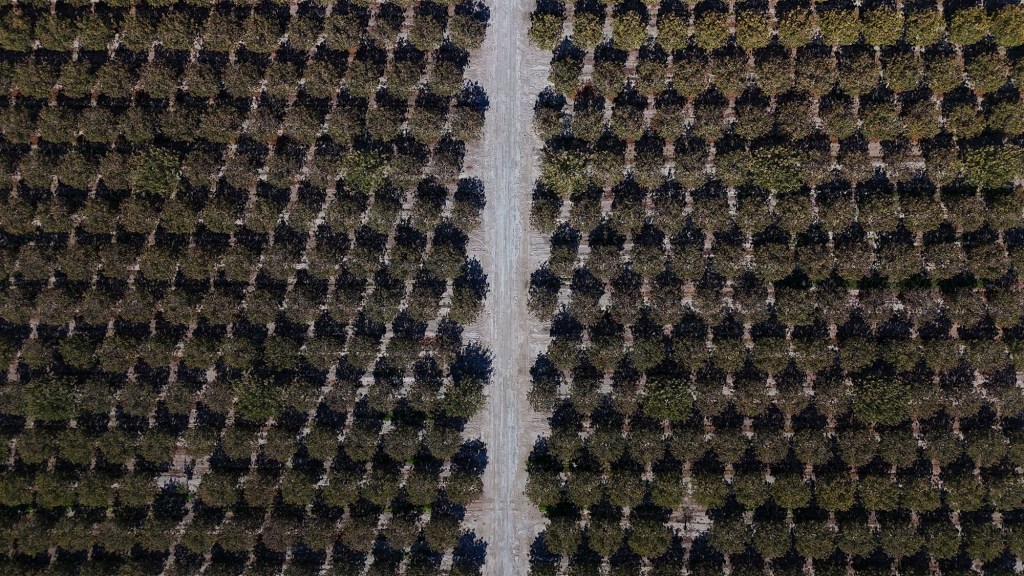
Pistachio trees in the Central Valley of California (Photo: Erik Olsen)

Then came The Wonderful Company, founded in 1979 by Los Angeles billionaires Stewart and Lynda Resnick. From a handful of orchards, they built an empire of more than 125,000 acres, anchored by a vast processing plant in Lost Hills. Their bright-green โ€œWonderful Pistachiosโ€ bags and silly โ€œGet Crackinโ€™โ€ ads turned what was once an exotic import into a billion-dollar staple.

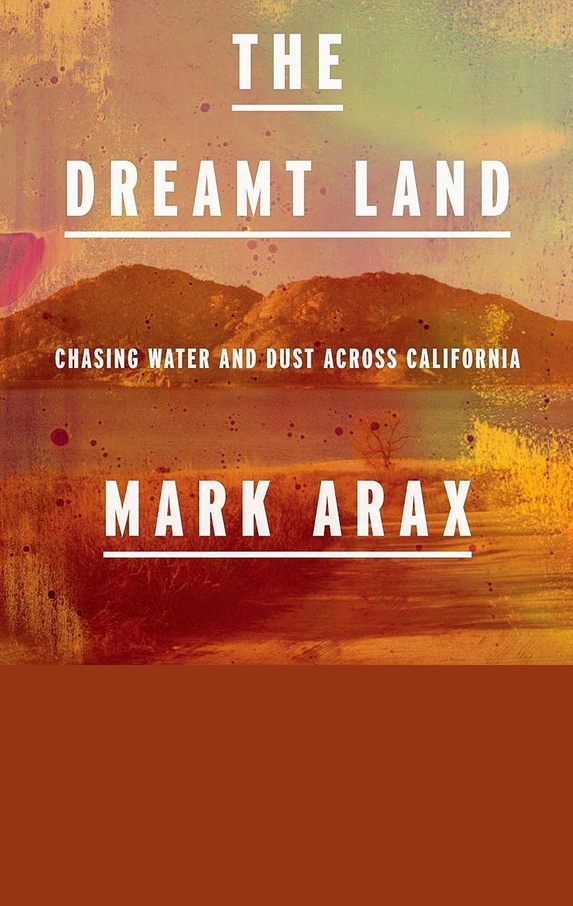
But the companyโ€™s success is riddled with controversy. Mark Arax wrote a scathing piece a few years ago about the Resnicks in the (now, sadly defunct) California Sunday Magazine. The Resnicks have been criticized for their immense control over Californiaโ€™s water and agriculture, using their political influence and vast network of wells to secure resources that many see as public goods. Arax described how the couple transformed the arid west side of the San Joaquin Valley into a private agricultural empire, while smaller farmers struggled through droughts and groundwater depletion. โ€œMost everything that can be touched in this corner of California belongs to Wonderful,โ€ Arax writes. (Side note: Araxโ€™s The Dreamt Land made our recent Ten Essential Books About Californiaโ€™s Nature, Science, and Sense of Place.)

And yes, pistachios have been immensely profitable for the Resnicks. Arax write: โ€œAll told, 36 men operating six machines will harvest the orchard in six days. Each tree produces 38 pounds of nuts. Typically, each pound sells wholesale for $4.25. The math works out to $162 a tree. The pistachio trees in Wonderful number 6 million. Thatโ€™s a billion-dollar crop.โ€

Pistachios at golden hour. (Photo: Erik Olsen)

Alas, Californiaโ€™s pistachio boom carries contradictions. The crop is both water-hungry and drought-tolerant, a paradox in a state defined by water scarcity. Each pound of nuts requires around 1,400 gallons of water, less than almonds, but still a heavy draw from aquifers and canals. Pistachio trees can survive in poor, salty soils and endure dry years better than most crops, yet once established, they canโ€™t be left unwatered without risking long-term damage. Growers call them a โ€œforever crop.โ€ Plant one, and youโ€™re committed for decades.

The pistachio has reshaped the Central Valleyโ€™s landscape. Once a patchwork of row crops and grazing land, vast acres are now covered in pistachio orchards, the ones I was recently driving through.

Pretty much everyone growing anything in California – pistachios, almonds, strawberries (especially strawberries) – can thank the University of California at Davis for help in improving their crops and managing problems like climate change and pests. Davis is a HUGE agricultural school and has many programs to help California farmers.
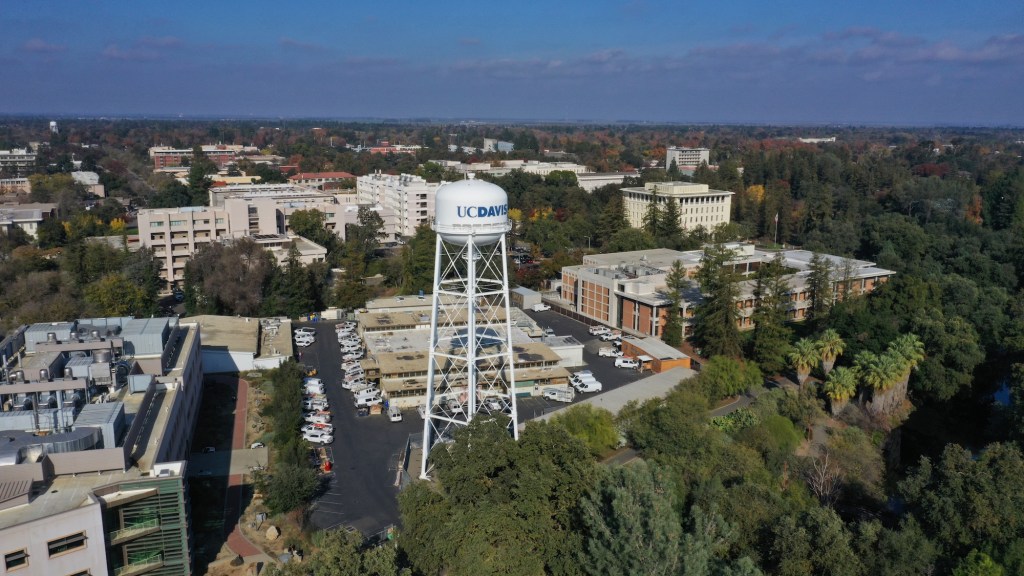
UC Davis is one of the worldโ€™s leading research centers for nuts, especially pistachios, almonds, and walnuts. Scientists here study everything from drought-tolerant rootstocks to disease resistance and pollination, making it the quiet engine behind Californiaโ€™s multibillion-dollar nut industry. (Photo: Erik Olsen)

In the case of the pistachio, recent research at UC Davis has shed new light on the treeโ€™s genetic makeup. Scientists there recently completed a detailed DNA map of the Kerman variety, unlocking the genetic controls of kernel size, flavor compounds, shell-splitting behaviour and climate resilience. The idea is to help growers by making pistachios adapt to hotter, drier conditions. UC Davis is now one of the worldโ€™s leading centers for pistachio and nut science.

Hereโ€™s something Iโ€™ll bet you didnโ€™t know: pistachios can spontaneously combust. Pistachios are rich in unsaturated oils that can slowly oxidize, generating enough heat to ignite large piles if ventilation is poor. Shipping manuals classify them as a โ€œspontaneous-combustion hazardโ€, a rare but real risk for warehouses and freighters hauling tons of California pistachios across the world. Encyclopedia Britannica notes they are often treated as โ€œdangerous cargoโ€ at sea.

Now, some pistachio biology: The pistachio is dioecious, meaning male and female flowers grow on separate trees. Almonds are not. Farmers plant one male for every eight to ten females, relying on wind for pollination. The trees follow an alternate-bearing cycle, heavy one season, light the next. They donโ€™t produce a profitable crop for about seven years, but once mature, they can keep producing for half a century or more.

California grows nearly all of Americaโ€™s pistachios, and most of them come from the empire built by Lynda and Stewart Resnick, the power couple behind the Wonderful Company. Their orchards stretch across hundreds of thousands of acres in the Central Valley, transforming a desert landscape into one of the most lucrative nut operations in the world.

Another strange quirk of pistachios is that they are green and, if you look closely, streaked with a faint violet hue. The green comes from chlorophyll, the same pigment that gives leaves their color, which in pistachios lingers unusually long into the nutโ€™s maturity. Most seeds lose chlorophyll as they ripen, but pistachios retain it, especially in the outer layers of the kernel. The purple tint, meanwhile, comes from anthocyanins, antioxidant pigments also found in blueberries and grapes.

As I walked among the pistachio trees recently, I marveled at how alone I was on one of the dirt roads off Highway 99. Not a soul in sight, only the hum of irrigation pumps and the rattle of dry leaves in the breeze. I like to write about the things we all see and experience in California but rarely stop to look at closely. Pistachios are one of those things. If youโ€™ve ever driven through the San Joaquin Valley, youโ€™ve seen how the landscape stretches for miles in orderly rows of pistachio trees. Itโ€™s easy to forget, amid the fame of Silicon Valley and Hollywood, that so much of Californiaโ€™s wealth still comes from the land itself, from agriculture and other extractive industries. The pistachio boom is a story of astonishing scale, but itโ€™s also riven with the contradictions and complexities of modern California itself, where innovation and exploitation often grow from the same soil.

Get California wildlife gifts at our Etsy store. It helps support us!

Ten Essential Books About Californiaโ€™s Nature, Science, and Sense of Place

You can scroll endlessly through TikTok and Instagram for quick bursts of Californiaโ€™s beauty, but to truly sink into a subject, and to savor the craft of a great writer, you need a book. Iโ€™m an avid reader, and over the past decade Iโ€™ve dedicated a large section of my bookshelf to books about California: its wild side, its nature, and its scientific wonders.

There are surely many other books that could be included in this top ten list, but these are the finest Iโ€™ve come across in the years since returning to live in the state.They capture the extraordinary diversity of Californiaโ€™s landscapes and wildlife, found nowhere else on Earth, and many also explore issues and themes that hold deep importance for the state and its people. Although Iโ€™ve read some of these titles digitally, I love having many of them in print, because there are few things more satisfying than settling into a beach, a forest campsite, or a favorite chair at home with a beautifully made book in hand.


California Against the Sea: Visions for Our Vanishing Coastline by Rosanna Xia

I first discovered Rosanna Xiaโ€™s work through her stunning exposรฉ on the thousands of DDT barrels found dumped on the seafloor near Catalina Island. It remains one of the most shocking, and yet not technically illegal, environmental scandals in Californiaโ€™s history.

Her recent book, California Against the Sea: Visions for Our Vanishing Coastline, is a beautifully written and deeply reported look at how Californiaโ€™s coastal communities are confronting the realities of climate change and rising seas. Xia travels the length of the state, from Imperial Beach to Pacifica, weaving together science, policy, and personal stories to show how erosion, flooding, and climate change are already reshaping lives. What makes the book stand out is its relative balance; itโ€™s not a screed, nor naรฏvely hopeful. It nicely captures the tension between human settlement — our love and need to be near the ocean — and the coastโ€™s natural (and unnatural, depending on how you look at it) cycles of change.

Xia is at her best when exploring adaptation and equity. She reminds us that even if emissions stopped today, the ocean will keep rising, and that not all communities have equal means to respond. The stories of engineers, Indigenous leaders, and ordinary residents highlight how resilience and adaptation must be rooted in local realities. I was especially drawn to Xiaโ€™s account of the California Coastal Commission, a wildly controversial agency that wields immense power over the future of the shoreline. Yet it was the commission and its early champions, such as Peter Douglas, who ensured that Californiaโ€™s coast remained open and accessible to all, a decision I consider one of the greatest legislative achievements in modern conservation history.

Thoughtful, accessible, and rooted in the coast we all care about, California Against the Sea challenges us to ask a pressing question: how can we live wisely, and with perspective, at the edge of a changing world?

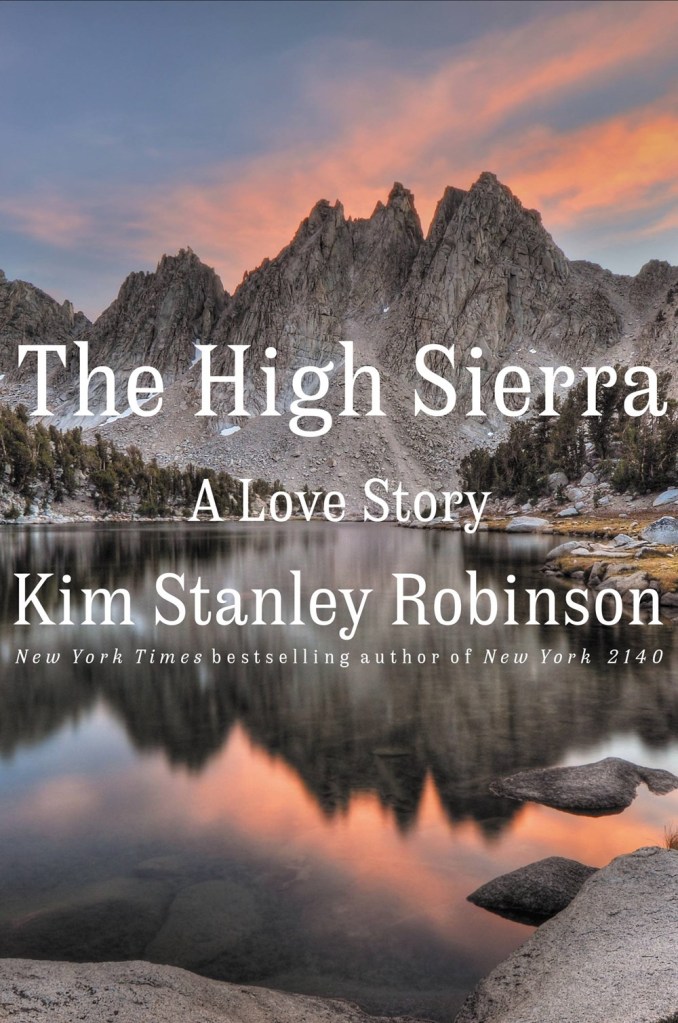
The High Sierra: A Love Story by Kim Stanley Robinson

Kim Stanley Robinsonโ€™s The High Sierra: A Love Story is an expansive, heartfelt tribute to Californiaโ€™s most iconic mountain range. Because of the Sierraโ€™s vast internal basins, which are missing from many of the worldโ€™s other great mountain ranges, Robinson argues they are among the best mountains on Earth. His point is hard to refute. He makes a convincing case that the Sierra Nevada may be the greatest range in the world, formed from the planetโ€™s largest single block of exposed granite and lifted over millions of years into its dramatic present shape.

Blending memoir, geology (my favorite part of the book), and adventure writing, Robinson chronicles his own decades of exploration in the Sierra Nevada while tracing the forces — glacial, tectonic, and emotional, that shaped both the landscape and his own life.

Considered one of our greatest living science fiction writers (Iโ€™ve read Red Mars — long, but superb — and am currently reading The Ministry for the Future — the opening chapter is gripping and terrifying), Robinson might seem an unlikely guide to the granite heights of California. Yet reading The High Sierra: A Love Story reveals how naturally his fascination with imagined worlds extends into this very real one. The drama of the range, with its light, vastness, and sculpted peaks and basins, feels like raw material for his other universes.

The Dreamt Land by Mark Arax

The Dreamt Land is a portrait of Californiaโ€™s Central Valley, where the control of water has defined everything from landscape to power (power in the form of hydroelectric energy and human control over who gets to shape and profit from the valleyโ€™s vast resources). Blending investigative journalism, history, and memoir, Arax explores how the stateโ€™s rivers, dams, and aqueducts turned desert into farmland and how that transformation came at immense ecological and social cost.

Iโ€™ve read several Arax books, but this one is my favorite. Heโ€™s one of the finest writers California has produced. He writes with passion and clarity, grounding his ideas in decades of firsthand experience with Californiaโ€™s land and water. His focus on the fertile Central Valley, where he grew up as a reporter and farmerโ€™s son, gives the book both intimacy and authority, revealing how decisions about water shape not just the landscape but the people who depend on it. There are heroes and villains, plenty of the latter, and all of them unmistakably real. Yet Araxโ€™s prose is so fluid and eloquent that youโ€™ll keep reading not only for the story, but for the sheer pleasure of his writing.

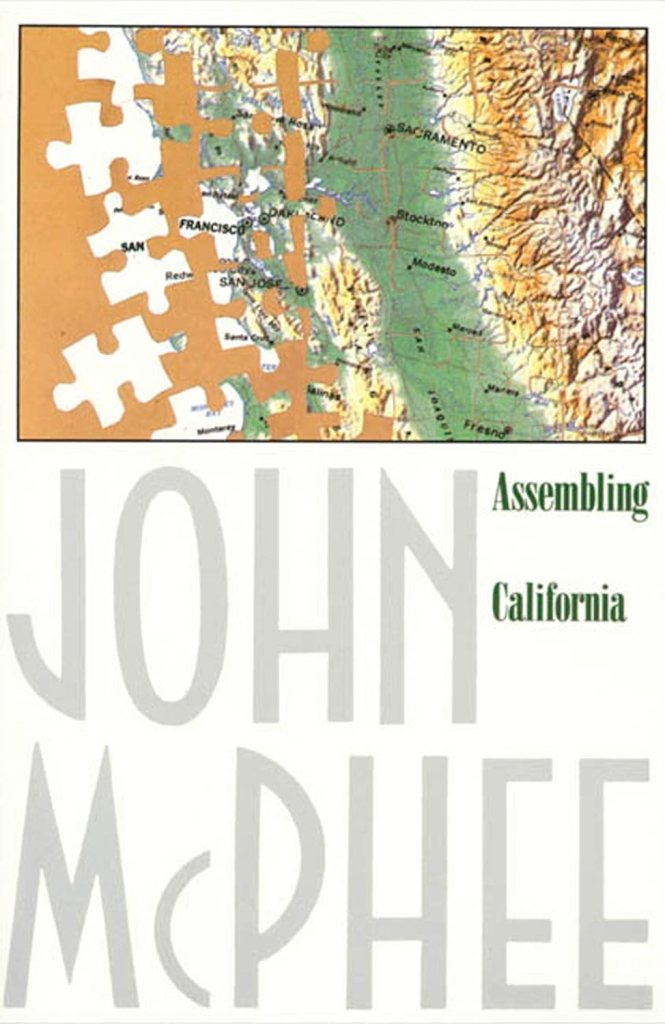
Assembling California by John McPhee (1993)

If youโ€™re at all fascinated by Californiaโ€™s wild geology — and it truly is wild, just ask any geologist — this classic from one of the finest nonfiction writers alive is a must-read. McPhee takes readers on a geological road-trip through California, from the uplifted peaks of the Sierra Nevada to the fault-riven terrain of the San Andreas zone. He teams up with UC Davis geologist Eldridge Moores to explain how oceanic plates, island arcs, and continental blocks collided over millions of years to โ€œassembleโ€ the landmass we now call California. His prose is classic McPhee: clean, vivid, perhaps sometimes overly technical, as he turns terms like โ€œophioliteโ€ and โ€œbatholithโ€ into aspects of a landscape you can picture and feel.

What makes the book especially rewarding, especially for someone interested in earth systems, mapping, and the deep time, is how McPhee seamlessly links everyday places with deep-time events. Youโ€™ll read about gold-rush mining camps and vineyard soils, but all of it is rooted in tectonics, uplift, erosion, and transformation. Iโ€™ve gotten some of my favorite stories here on California Curated from the pages of this book. It can be ponderous at times, but youโ€™ll not regret giving it a try.

The California Lands Trilogy by Obi Kaufman

The Forests of California (2020)

The Coasts of California (2022)

The Deserts of California (2023)

Obi Kaufmanโ€™s California Lands Trilogy is one of the most visually stunning and ambitious projects in California natural history publishing. Beginning with The Forests of California, the first of three volumes that reimagine the state not through its highways or cities but through its living systems, Kaufman invites readers to see California as a vast and interconnected organism, a place defined by its natural rhythms rather than human boundaries. Each book is filled with delicate watercolor maps and diagrams by the author himself. The result is part art book and part ecological manifesto, a celebration of the interconnectedness of Californiaโ€™s natural world. Kaufmanโ€™s talents as an artist are breathtaking. If he ever offered his original watercolors for sale, Iโ€™d be among the first in line to buy them. Taken together, the series forms a panoramic vision of the stateโ€™s natural environments.

That said, Kaufmanโ€™s books can be dense, filled with data, maps, and cross-references that reward slow reading more than quick browsing. If Iโ€™m honest, I tend to dip in and out of them, picking them up when Iโ€™m bored or need a break from the latest political bombshell. Every page offers something to linger over, whether itโ€™s a river system painted like a circulatory map or a meditation on the idea of rewilding. For anyone fascinated by Californiaโ€™s natural systems, all Kaufmanโ€™s Field Atlases are invaluable companions endlessly worth revisiting.

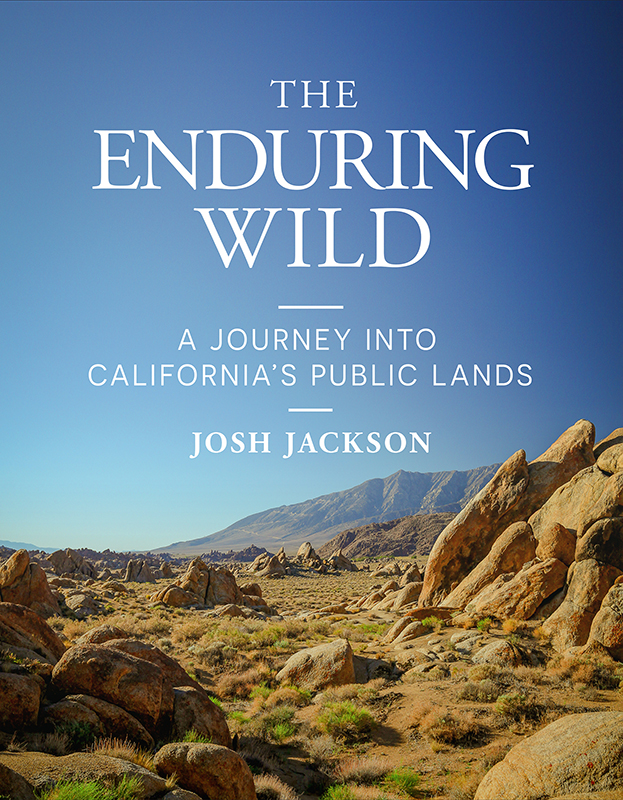
The Enduring Wild: A Journey Into Californiaโ€™s Public Lands by Josh Jackson

My first job out of college was with the Department of the Interior in Washington, D.C., by far by the nation’s largest land management agency. A big part of that work involved traveling to sites managed by Interior across the country. I came to understand just how vast Americaโ€™s public lands are and how much of that expanse, measured in millions of acres, is under the care of the Bureau of Land Management (BLM).

Josh Jackson takes readers on a road trip across Californiaโ€™s often overlooked public wilderness, focusing on the lands managed by the BLM, an agency once jokingly referred to as the Bureau of Livestock and Mining. He shows how these so-called โ€œleftover landsโ€ hold stories of geology, Indigenous presence, extraction, and conservation.

His prose and photography (he has a wonderful eye for landscapes) together invite the reader to slow down, look closely at the subtleties of desert mesas, sagebrush plains, and coastal bluffs, and reckon with what it means to protect places many people have never heard of. His use of the environmental psychology concept of โ€œplace attachmentโ€ struck a chord with me. The theory suggests that people form deep emotional and psychological bonds with natural places, connections that shape identity, memory, and a sense of belonging. As a frequent visitor to the Eastern Sierra, especially around Mammoth Lakes and Mono Lake, I was particularly drawn to Jacksonโ€™s chapter on that region. His account of the lingering impacts of the Mining Act of 1872, and how its provisions still allow for questionable practices today, driven by high gold prices, was eye-opening. I came away with new insights, which is always something I value in a book.

I should mention that I got my copy of the book directly from Josh, who lives not far from me in Southern California. We spent a few hours at a cafe in Highland Park talking about the value and beauty of public lands, and as I sat there flipping through the book, I couldnโ€™t help but acknowledge how striking it is. Part of that comes from Heyday Booksโ€™ exceptional attention to design and production. Heyday also publishes Obi Kaufmanโ€™s work and they remain one of Californiaโ€™s great independent publishers. But much my appreciation for the book also comes from from Jackson himself, whose photographs are simply outstanding.

Get California wildlife gifts at our Etsy store. It helps support us!

What makes this book especially compelling is its blend of adventure and stewardship. Jackson doesnโ€™t simply celebrate wildness; he also lays out the human and institutional connections that shape (and threaten) these public lands, from grazing rights to mining to climate-change impacts. Some readers may find the breadth of landscapes and stories a little ambitious for a first book, yet the richness of the journey and the accessibility of the writing make it a strong addition for anyone interested in Californiaโ€™s endless conflict over land use: what should be used for extraction and what should be preserved? While I donโ€™t fully agree with Jackson on the extent to which certain lands should be preserved, I still found the book a wonderful exploration of that question.

The Backyard Bird Chronicles by Amy Tan

Amy Tanโ€™s The Backyard Bird Chronicles is a charming and unexpectedly personal journal of bird-watching, set in the yard of Tanโ€™s Bay Area home. Tan is an excellent writer, as one would expect from a wildly successful novelist (The Joy Luck Club, among others). But she also brings a curiosity and wonder to the simple act of looking across oneโ€™s backyard. I loved it. Who among us in California doesnโ€™t marvel at the sheer diversity of birds we see every day? And who hasnโ€™t wondered about the secret lives they lead? A skilled illustrator as well as a writer, she studies the birds she observes by sketching them, using art as a way to closely connect with the natural world around her.

What begins as a peaceful retreat during the Covid catastrophe becomes an immersive odyssey of observation and drawing. Tan captures the comings and goings of more than sixty bird species, sketches their lively antics, as she reflects on how these small winged neighbors helped calm her inner world when the larger world felt unsteady.

My only quibble is that I was hoping for more scientific depth; the book is more of a meditation than a field study. Still, for anyone who loves birds, sketching, or the quiet beauty of everyday nature, it feels like a gentle invitation to slow down and truly look.

โ€œTrees in Paradiseโ€ by Jared Farmer

California is the most botanically diverse state in the U.S. (by a long shot), home to more than 6,500 native plant species, about a third of which exist nowhere else on Earth. Jared Farmerโ€™s Trees in Paradise: A California History follows four key tree species in California: the redwood, eucalyptus, orange, and palm. Through these examples, Farmer reveals how Californians have reshaped the stateโ€™s landscape and its identity. Itโ€™s rich in scientific and historical detail. I have discovered several story ideas in the book for California Curated and learned a great deal about the four trees that we still see everywhere in the California landscape.

In telling the story of these four trees (remember, both the eucalyptus and the palm were largely brought here from other places), Farmer avoids easy sentimentality or harsh judgment, instead exploring how the creation of a โ€œparadiseโ€ in California came with ecological costs and profoundly shaped the stateโ€™s identity. While the book concentrates on those four tree categories, its detailed research and insight make it a compelling read for anyone interested in the stateโ€™s environment, history, and the ways people shape and are shaped by land.

The Plate Tectonic Revolution and How California Became the Epicenter of a Scientific Breakthrough

How the 1969 Penrose Conference on plate tectonics at Asilomar in California transformed our understanding of Earth’s dynamic processes.

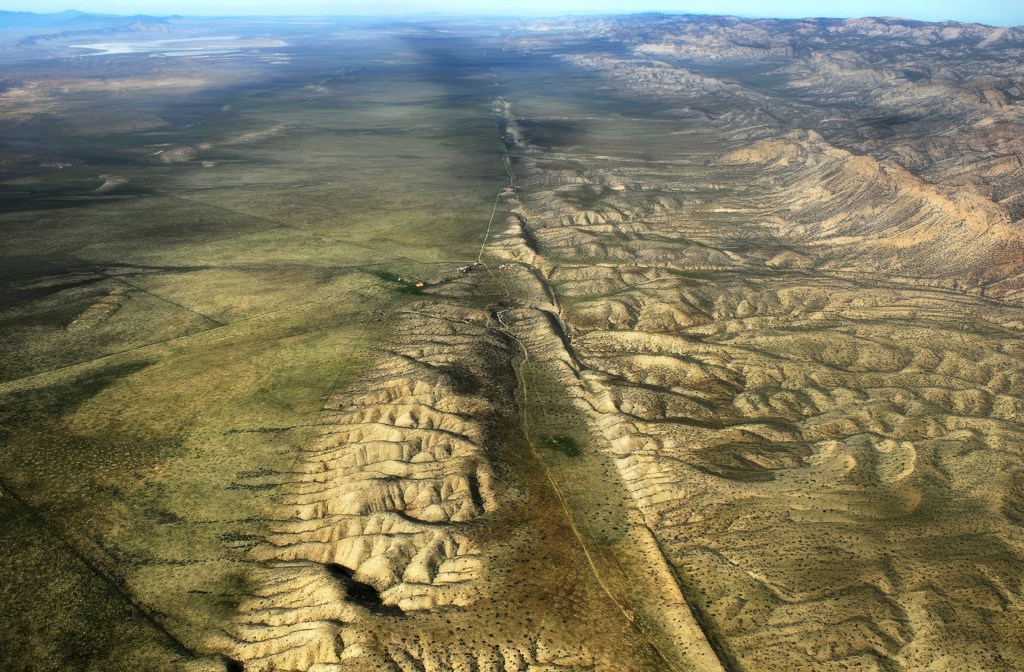
Aerial photo of San Andreas Fault looking northwest onto the Carrizo Plain with Soda Lake visible at the upper left. (Wikipedia)

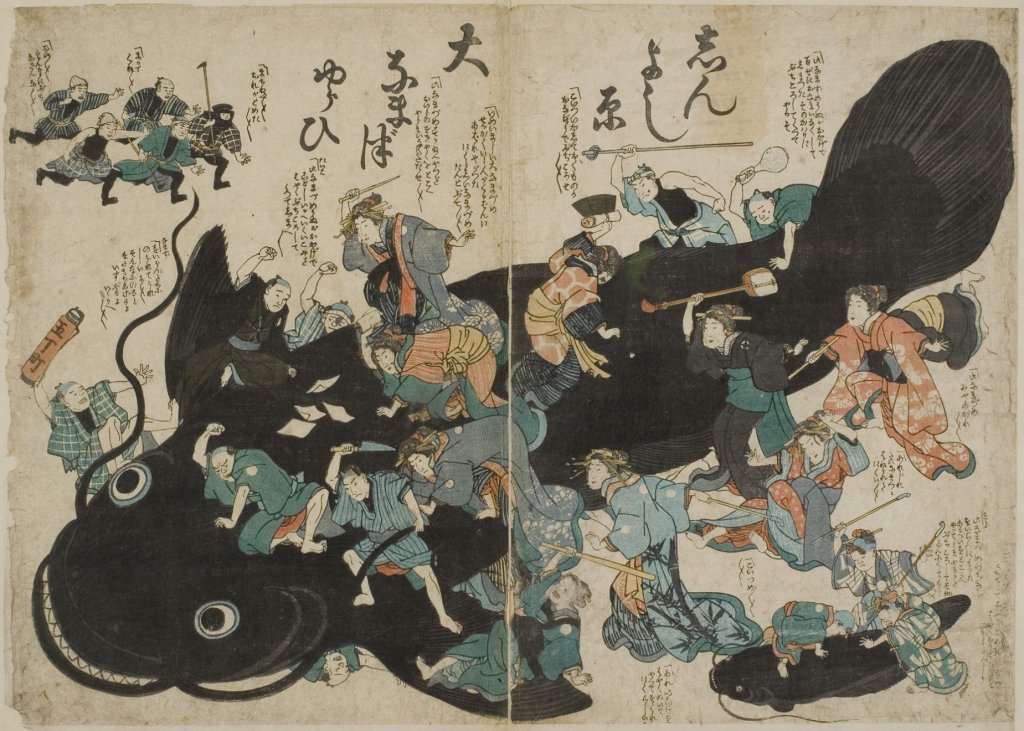
Before the late 1960s, understanding Earth’s shifting surface, particularly in a geologically active region like California, was a major scientific challenge. For most of human history, the causes of earthquakes remained an enigmaโ€”mysterious and terrifying, often attributed to supernatural forces. In Japan, for example, earthquakes were traditionally believed to be caused by Namazu, a giant catfish said to live beneath the earth and whose thrashing would shake the land. Many societies believed earthquakes were divine punishments or omens, while others considered them an essential part of creation, events necessary to form a world habitable by us humans.

The complexity of Californiaโ€™s landscape, its mountains, valleys, deserts, and intricate network of faults, posed difficulties for early geologists. The land appeared chaotically interwoven, with many different types of rock making up the gaping deserts and soaring peaks. As the great University of California at Davis geologist Eldridge Moores once put it, โ€œNature is messy. Donโ€™t expect it to be uniform and consistent.โ€

An image of humans battling a Namazu (Credit: Tokyo University Library. Public Domain)

But there was no overarching explanation for how these earthly features got there. Scientists could observe and record earthquakes, but without a unifying theory, they struggled to piece together the deeper mechanisms driving these powerful events.

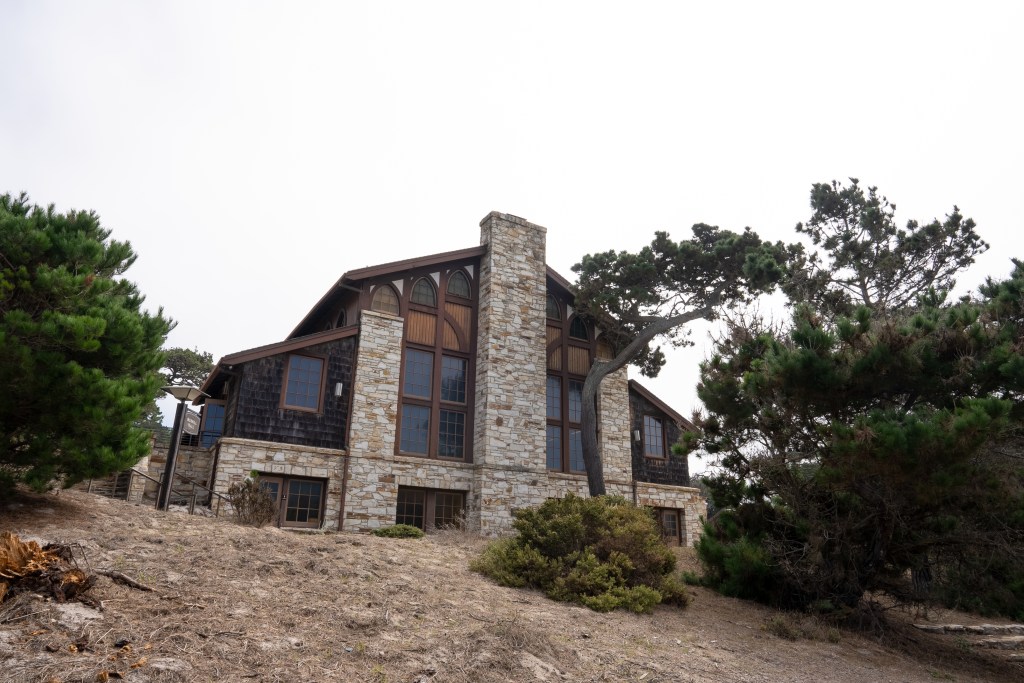
This frustration lingered until the late 1960s when an intellectual revolution in geology took shape. Despite the dawn of the space age and the rise of computing power, many earth scientists still clung to the belief that the continents were fixed, immovable features on the Earth’s surface. The breakthrough came with the acceptance of plate tectonicsโ€”a theory that elegantly explained not just earthquakes, but the entire dynamic nature of Earthโ€™s surface. And for many geologists, the moment this new understanding solidified was in December 1969, at a groundbreaking conference at the Asilomar Conference Center in California that reshaped the future of the field. (Notably, Asilomar was also the site of the historic 1975 conference on recombinant DNA, where scientists gathered to establish ethical guidelines for genetic research, an event we have explored previously.) This was the moment when plate tectonics, a concept that would fundamentally reshape our view of the planet, truly took hold in the Western American geological community.

At California’s Asilomar Conference Grounds, nestled amid Monterey pines and dramatic granite formations, scientists gathered to rewrite our understanding of tectonicsโ€”and reshape how we think about Earth’s restless surface. (Erik Olsen)

For centuries, explanations for Earthโ€™s features ranged from catastrophic events to gradual uplift and erosion, a debate that became known as uniformitarianism versus catastrophism. In California, the sheer complexity of the geology, with its links go far beyond the borders of the state, hinted at powerful forces at play. Scientists grappled with the origins of the Sierra Nevada, the formation of the Central Valley, and the persistent threat of earthquakes along the now-famous San Andreas Fault. The prevailing models, however, lacked the comprehensive framework to connect these disparate observations into a coherent narrative.

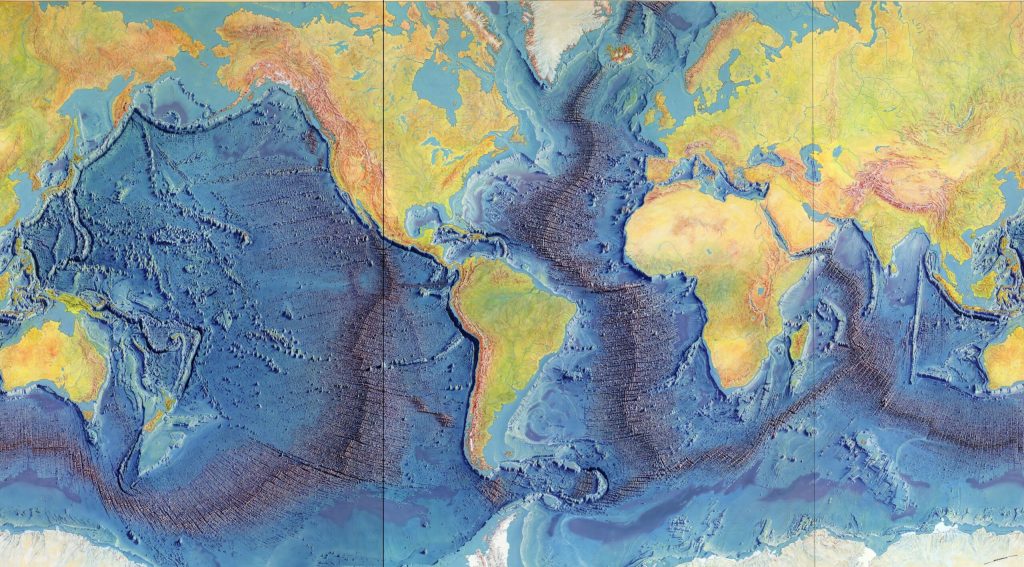
The seeds of the plate tectonic revolution had been sown earlier in the 20th century with Alfred Wegenerโ€™s theory of continental drift. Anyone looking at a world map or globe could see how the coastlines of certain continents, particularly South America and Africa, seemed to fit together like pieces of a puzzle, suggesting they were once joined. Wegener proposed that the continents were once joined together in a supercontinent called Pangaea and had gradually drifted apart over millions of years. While his ideas were initially met with skepticism, particularly regarding the mechanism that could drive such massive movements, compelling evidence from paleontology, glacial geology, and the jigsaw-like fit of continental coastlines slowly began to sway opinions. The discovery of seafloor spreading in the 1960s (itself a great story, featuring the brilliant geologist and cartographer Marie Tharp) which revealed that new oceanic crust was constantly being generated at mid-ocean ridges and that the ocean floor itself was moving like a conveyor belt, provided the crucial mechanism Wegener lacked.

Heinrich Berannโ€™s 1977 painting of the Heezen-Tharp โ€œWorld Ocean Floorโ€ map, a landmark in cartography that showed how the earths plates in some areas are pulling apart while others collide. (Library of Congress)

It was against this backdrop of burgeoning evidence that the Geological Society of America convened one of its annual Penrose Conferences in December 1969 at the Asilomar Conference Center in Pacific Grove, California. Titled โ€œThe Meaning of the New Global Tectonics,โ€ the event drew structural geologists from all over the world.  The geological world changed overnight. A key figure in the conference was William R. Dickinson, a leading structural geologist whose work helped bridge the gap between traditional geological interpretations and the emerging plate tectonic framework. Dickinson’s research on sedimentary basins and tectonic evolution provided critical insights into how plate movements shaped the western United States, further solidifying the new theory’s acceptance.

These conferences were designed to be intimate gatherings where geologists could engage in focused discussions on cutting-edge research. The 1969 meeting proved to be a pivotal one. As UC Davis’ Moores, then a youthful figure who would become a leading voice of the โ€œNew Geologyโ€ in the West, later wrote, โ€œthe full import of the plate tectonic revolution burst on the participants like a dam failureโ€.

The Palmdale Road Cut on Hwy 14 in Southern California is a 90-foot slice through swirling sediments that have spent millions of years being squeezed and twisted by the San Andreas fault. Some say that this view of the fault is one of the best in all of California.
(Photo: Erik Olsen)

Paper after paper presented at the conference demonstrated how the seemingly simple notion of large plates floating atop the Earthโ€™s plastic mantle (the asthenosphere) could explain a vast array of geological phenomena. The location of volcanoes, the folding of mountains (orogeny), the distribution of earthquakes, the shape of the continents, and the history of the oceans all suddenly found a compelling and unified explanation within the framework of plate tectonics. Geologist John Tuzo Wilson famously referred to plate tectonics as ‘the dance of the continents,’ a phrase that captured the excitement and transformative nature of this intellectual breakthrough.

For Moores, the conference was a moment of profound realization. “It was a very exciting time. I still get goosebumps even talking about it,” he told the writer John McPhee. “A turning point, I think it was, in the plate tectonic revolution, that was the watershed of geology.” Moores had been contemplating the perplexing presence of ophiolite sequences โ€“ distinctive rock assemblages consisting of serpentines, gabbro/lava, and sediments โ€“ found high in the mountains of the West, including California. He suddenly grasped that these strange and โ€œexoticโ€ rock sequences were remnants of ancient ocean floors that had been lifted on top of the continent through the collision of tectonic plates.

Asilomar Conference Grounds Interior (Erik Olsen)

Moores reasoned that the serpentines and coarsely crystalline igneous rocks at the base of these sequences were characteristic of the rocks underlying all the worldโ€™s oceans. The โ€œgreen rocksโ€ in the middle (now the state rock of California) showed evidence of moderate pressure and temperatures, indicating they had been subjected to significant geological forces. By connecting these ophiolite sequences to the processes of plate collision and obduction (where one plate rides over another), Moores provided a powerful piece of evidence for plate tectonics and offered a new lens through which to understand the complex geological architecture of the American West.

His deduction was in line with what is now known about plate tectonics. The geological โ€œconfusionโ€ apparent in the Rockies, the Sierra Nevada, and other western mountain chains was now understood as the result of neighboring plates bumping into each other repeatedly over vast geological timescales. The concept of terranes, foreign rock slabs or slices or sequences that have traveled vast distances and become accreted to continents, further illustrated the dynamic and assembly-like nature of Californiaโ€™s geological landscape.

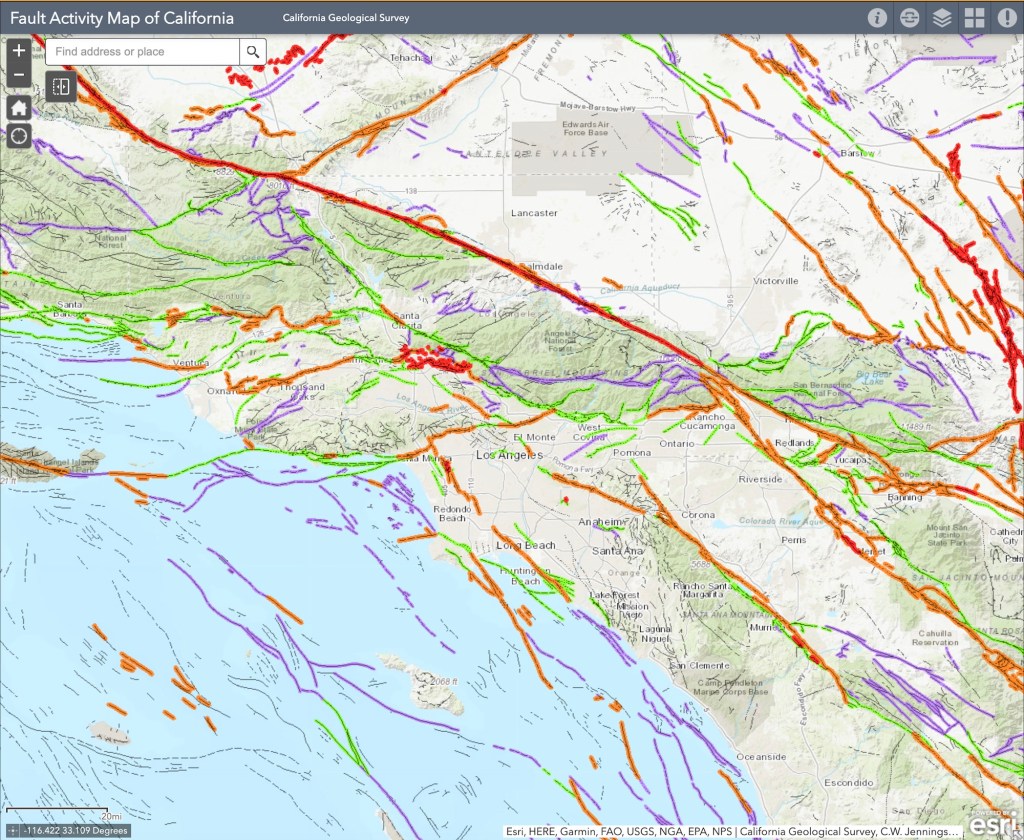
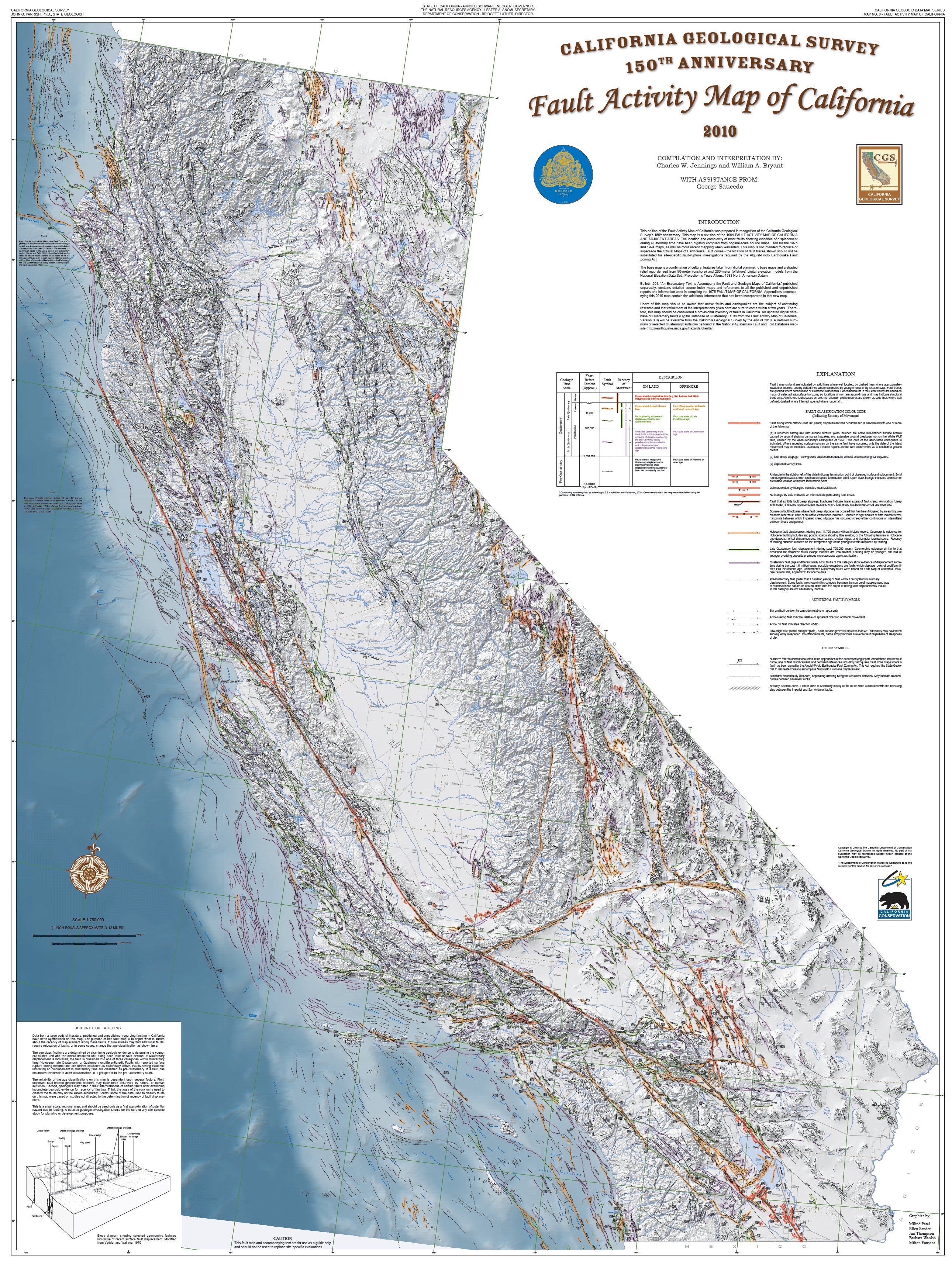
Fault Activity Map of LA Area in California (California Geological Survey)
)

California, situated at the active boundary between the massive Pacific Plate and the North American Plate, became a prime natural laboratory for studying the principles of plate tectonics. The San Andreas Fault, a โ€œright-lateral strike-slip faultโ€ where the Pacific Plate slides northward relative to the North American Plate, is a direct consequence of this ongoing tectonic interaction. Places like Parkfield, California, lying directly on the fault, became the center of the seismic universe, offering invaluable opportunities to study the processes of locking and unlocking that precede earthquakes.

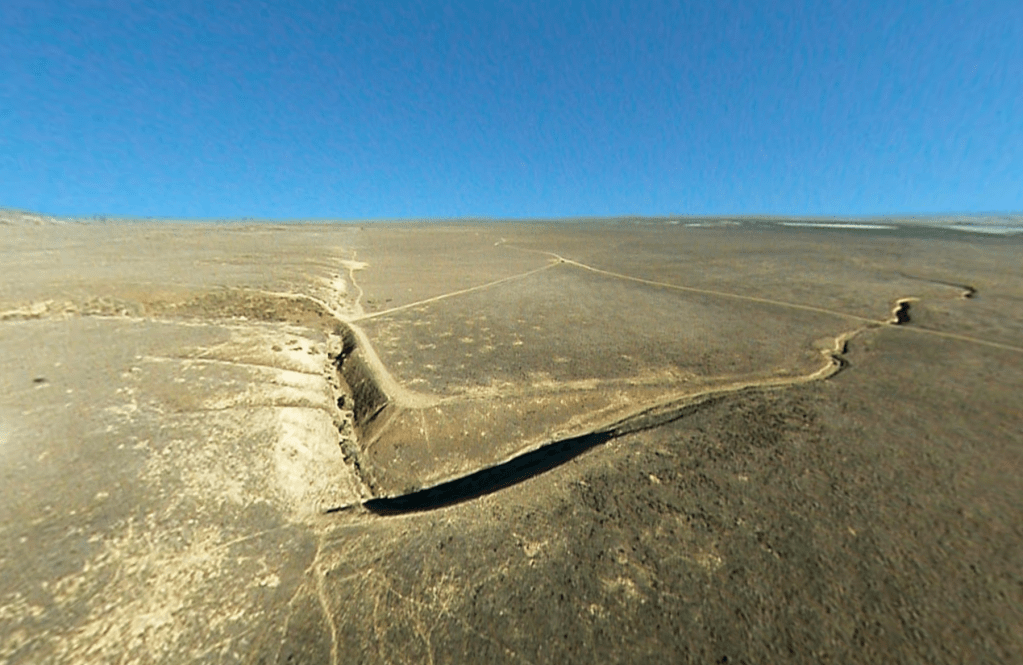
The San Andreas Fault at Wallace Creek. On January 9, 1857, the M 7.9 Fort Tejon earthquake occurred just north of the Carrizo Plain. Here, at Wallace Creek, the fault moved 30 feet (9m), forming the offset stream channel seen in the photo. (USGS)

The dramatic offsets of streams like Wallace Creek on the Carrizo Plain vividly demonstrate the horizontal movement along the fault. These offsets, where streams appear abruptly displaced, serve as clear, visual records of the faultโ€™s slip history, showing just how much the land has shifted over time. Further proof of the movement of plates along the fault was uncovered in a remarkable investigation by Thomas Dibblee Jr., a pioneering field geologist who meticulously mapped vast regions of California. One of his most compelling discoveries was the striking geological similarity between rocks found at Pinnacles National Park and those in the Neenach Volcanic Field, located more than 195 miles to the southeast. Dibblee determined that these formations were once part of the same volcanic complex but had been separated by the gradual (but pretty damn quick in geological time) movement of the Pacific Plate along the San Andreas Fault over millions of years.

The insights gained from the plate tectonic revolution, sparked in part by that pivotal conference in Pacific Grove, continue to inform our understanding of Californiaโ€™s geological hazards and history. The work of scientists like Eldridge Moores and the subsequent advancements in the field have provided a robust framework for interpreting the stateโ€™s complex and ever-evolving landscape. The 1969 Penrose Conference marked not just a shift in scientific thinking but a fundamental unlocking of some of the Earthโ€™s deep secrets, with California the place, once again, at the center of scientific advance.

Cadillac Desert: How Marc Reisner Changed the Way We See Water

Los Angeles Aqueduct passing through Palmdale, California (Photo: Erik Olsen)

Marc Reisnerโ€™s Cadillac Desert: The American West and Its Disappearing Water remains a towering achievement in environmental journalism, decades after its publication in 1986. Chronicling the history, politics, and ecological consequences of water management in the American West, Cadillac Desert is not just an exposรฉ of the pastโ€”itโ€™s a cautionary tale that resonates today. With precision and passion, Reisner unraveled the intricacies of an arid regionโ€™s improbable transformation into one of the worldโ€™s most agriculturally productive and densely populated areas. His work has had a profound and lasting impact on how we understand water politics and environmental sustainability in California and beyond.

Cadillac Desert stands as a fitting successor to Wallace Stegnerโ€™s Beyond the Hundredth Meridian, continuing the exploration of water’s defining role in the American West. While Stegner championed the visionary work of John Wesley Powell and exposed the folly of ignoring the regionโ€™s arid realities, Reisner picked up the torch decades later to chronicle how those warnings were systematically ignored. Where Stegner painted a historical narrative of ambition and hubris, Reisner delivered a scathing and urgent critique of water politics, detailing the environmental and economic consequences of massive dam-building projects and unsustainable resource exploitation.

Colorado River

Cadillac Desert is, at its core, a gripping investigation into the manipulation of water resources in the American West. Reisner meticulously details how the construction of massive dams, reservoirs, and aqueducts enabled the transformation of a naturally dry landscape into a gargantuan economic powerhouse. From the Colorado River to the Los Angeles Aqueduct to Californiaโ€™s Central Valley, Cadillac Desert paints a vivid picture of engineering triumphs and environmental sacrifices, revealing the cost of this development to natural ecosystems, Indigenous communities, and future generations.

One of Reisner’s central stories is the tale of the Owens Valley. In the early 20th century, this fertile agricultural region was drained dry when the Los Angeles Aqueduct diverted its water to fuel the growing metropolis of Los Angeles. The story, replete with backroom deals, broken promises, and outraged locals, serves as a symbol of the greed and ambition that defined water politics in the West. Reisner weaves this narrative with the larger saga of William Mulholland, the ambitious engineer whose name is synonymous with both the success and hubris of L.A.’s water empire. This saga of water, power, and betrayal would later inspire the dark and iconic tale of Chinatown, the Roman Polanski film that captured the moral ambiguities and human cost of Los Angelesโ€™ relentless thirst for growth.

Marc Reisner (Water Education Foundation)

Another cornerstone of the book is the story of the Colorado River, a waterway Reisner calls the most controlled and litigated river on Earth. He charts the creation of the Hoover Dam and the vast network of canals and reservoirs that distribute its water across seven states. The book reveals how over-allocation of the riverโ€™s resources, coupled with decades of drought, have pushed it to the brink of collapseโ€”an issue that has only grown more urgent since Cadillac Desert was published.

Hoover Dam in 1936 (United States Bureau of Reclamation)

Reisner also dissects the Central Valley Project and the State Water Project, two gargantuan efforts to turn California into an agricultural Eden. By moving water from Northern California to the arid south, these projects enabled Californiaโ€™s emergence as a global agricultural leader. But Reisner doesnโ€™t shy away from exposing the social and environmental consequences: drained wetlands, salt buildup in soils, and a system that prioritizes agribusiness over the needs of small farmers and urban residents.

CALIFORNIA CURATED ON ETSY

Purchase stunning art prints of iconic California scenes.
Check out our Etsy store.

What makes Cadillac Desert extraordinary is not just its scope but its style. Reisnerโ€™s journalistic rigor is matched by his ability to tell a compelling story. He brings characters like Mulholland and Floyd Dominy, the brash commissioner of the U.S. Bureau of Reclamation (part of the U.S. Department of the Interior), to life with vivid detail. At the same time, his writing is infused with moral urgency, challenging readers to question the sustainability of a society built on unsustainable water use.

Owens River in the Eastern Sierra (Erik Olsen)

The book’s legacy is immense. It galvanized environmentalists and policymakers, inspiring debates about water rights, conservation, and the future of development in the West. Documentaries, academic studies, and even contemporary water management policies owe much to the awareness Cadillac Desert raised. In California, where water battles continue to define politics and development, the book remains as relevant as ever.

As we face a future of intensifying droughts and climate change, Reisnerโ€™s insights grow more prescient by the day. California is still grappling with the overuse of groundwater, the challenges of aging infrastructure, and the inequities in water distribution. And while new technologies and policies offer hope, the central question Cadillac Desert posesโ€”how do we balance human ambition with the limits of nature?โ€”remains unanswered.

California Aqueduct (Erik Olsen)

Tragically, Reisner passed away in 2000 at the age of 51 from cancer, cutting short the life of a writer who had so much more to contribute to our understanding of environmental challenges. His death was a significant loss to the fields of journalism and environmental advocacy, but his legacy endures through his groundbreaking work. Cadillac Desert continues to inspire new generations to confront the urgent questions surrounding water use, conservation, and the future of the planet.

Marc Reisnerโ€™s Cadillac Desert is not just a history of water in the West; it is a call to rethink our relationship with one of the planetโ€™s most precious resources. At once an epic tale and an urgent warning, it stands as a monumental testament to the price we pay for bending nature to our will.

Looking back at John McPhee’s Assembling California: A Journey through Geology and Time

Sierra Nevada Mountains and Hot Creek Geological Site (Erik Olsen)

California’s diverse landscapes, rich history, and abundant natural phenomena have inspired many scientific-themed popular books, ranging from John Steinbeck’s “The Log from the Sea of Cortez,” with its focus on marine biology, to Mary Austin’s “The Land of Little Rain,” a lyrical examination of California’s desert environment, not to mention the late Marc Reisnerโ€™s Cadillac Desert, an epic history of Californiaโ€™s contentious relationship with water. (Iโ€™ve read it twice.)

But when it comes to exploring the state’s geology – its mountains, coastlines, and, most notably, its fault lines – few books can match the prowess and eloquence of John McPhee’s “Assembling California“. Part of his Pulitzer-winning series, “Annals of the Former World,” the book offers a comprehensive and accessible tour through the geological history of California, crafting a fascinating narrative that is as engaging as it is informative.

John McPhee is an acclaimed American writer and pioneer of creative nonfiction, renowned for his deeply researched and beautifully crafted works that often explore topics related to nature, science, and geography. A long-time staff writer for The New Yorker and the author of over 30 books, McPhee is celebrated for his ability to turn seemingly ordinary subjectsโ€”such as geology, oranges, or transportationโ€”into compelling narratives. His distinctive style blends meticulous research with accessible, often poetic prose that has been widely immitated. I’ve read several of McPhee’s books and while some of the work can be hard going, I’m usually very satisfied once I’m done. Assembling California is, in my opinion, one of his best.

Here’s an excerpt:

An old VW bus is best off climbing the Sierra from the west. Often likened to a raised trapdoor, the Sierra has a long and planar western slope andโ€”near the state lineโ€”a plunging escarpment facing east. The shape of the Sierra is also like an airfoil, or a woodshed, with its long sloping back and its sheer front. The nineteenth-century geologist Clarence King compared it to โ€œa sea-waveโ€โ€”a crested ocean roller about to break upon Nevada. The image of the trapdoor best serves the tectonics. Hinged somewhere beneath the Great Valley, and sharply faulted on its eastern face, the range began to rise only a very short geologic time agoโ€”perhaps three million years, or four million yearsโ€”and it is still rising, still active, continually at play with the Richter scale and occasionally driven by great earthquakes (Owens Valley, 1872). In geologic ages just before the uplift, volcanic andesite flows spread themselves over the terrain like butterscotch syrup over ice cream. Successive andesite flows filled in local landscapes and hardened flat upon them. As the trapdoor risesโ€”as this immense crustal block, the Sierra Nevada, tilts upwardโ€”the andesite flows tilt with it, and to see them now in the roadcuts of the interstate is to see the angle of the uplift.

John McPhee in Assembling California

The Sierra Nevada, a massive mountain range stretching like a spine nearly the length of California, provides the central geological narrative in “Assembling California”. Known for its stark beauty and dramatic peaks, the Sierras are also a textbook example of the immense forces that shape our planet. (We’ve written and will continue to write about them.) McPhee masterfully explicates how tectonic activity shaped this terrain over millions of years, giving readers a sense of the awe-inspiring age and dynamism of the Earth.

A brief bit about the man: Born in 1931, McPhee studied at Princeton University and Cambridge, and his writing straddles diverse topics from basketball to nuclear energy. His primary strength lies in his ability to seamlessly interweave complex scientific principles with engrossing human stories (there’s always an interesting character and the heart of his work), making the intricate world of science both comprehensible and enjoyable to the lay reader. His skill and prolificacy have earned him numerous accolades, including the Pulitzer Prize.

John McPhee (Wikipedia)

Assembling California stands out for its illuminating journey through California’s intricate geological history. Traveling with the late geologist Eldridge Moores of the University of California Davis, McPhee unpacks the layered story of California’s geology from its seismic activity to its unique rock formations. There is an excellent excerpt in a 1992 issue of the New Yorker.

Moores was a renowned geologist known for his significant contributions to understanding the geological history and structure of the Earth, particularly in relation to plate tectonics. Born in 1938 in Phoenix, Arizona, he spent the bulk of his career as a professor of geology at Davis, where his research significantly advanced the theory of plate tectonics. He was particularly interested in the geology of his adopted home state, California. Moores also held the position of President of the Geological Society of America in 1996. Apart from his boundless energy, Moores’ real gift was his vision: his ability to “see” geologic history in a pile of rocks.  His passionate teaching style and profound knowledge made him a beloved figure in the field of geology. Moores died in a tragic accident in 2018 while on a field trip in Greece, leaving a significant void in the geology world.

Eldridge Moores – UC Davis

Moores explains to McPhee how the Sierra Nevada range didnโ€™t just emerge from the Earthโ€™s crust, as geologists long thought. Instead, the building blocks bubbled up from faraway rifts in the ocean floor called โ€œspreading centers,” then transported thousands of miles on moving plates and piled up onto the North American continent.

Sierra Nevada Mountains and Owens River (Erik Olsen)

The movement of the Earth’s crust along fault lines, as in the well-known San Andreas Fault, is a central theme of the book. By explaining the shifting of tectonic plates, McPhee brings to life the reality of living in California: a landscape that is constantly, if imperceptibly, in motion. His descriptions of earthquakes, both historic and potential future ones, vividly underscore the seismic hazards associated with residing in the state. McPhee’s ability to humanize these impersonal geologic processes is a testament to his storytelling prowess. You will learn a lot about what happens to the California beneath your feet.

San Andreas fault and the Carrizo Plain

However, “Assembling California” is not just a tale of geological forces. McPhee also weaves in fascinating narratives about gold prospectors and vineyard owners, infusing the state’s human history into its ancient geological story. You really can’t tell the story of modern California without delving into the resource-driven economic narratives that are a fundamental part of the state’s history. We try to do a lot of that in this magazine.

For those who want to go beyond McPhee, another fine author is Simon Winchester, whose “Crack at the End of the World” picks up where McPhee left off, both in terms of theme and approach. Winchester, a British author and journalist known for his popular science writing, explores the devastating 1906 San Francisco earthquake. Like McPhee, Winchester expertly merges detailed geological explanations with human stories, providing a compelling account of one of the most significant natural disasters in American history. This is also a very fine book.

San Francisco earthquake

The legacy of “Assembling California” lies not just in its rich storytelling but also in the path it blazed for a new kind of popular science writing โ€“ one that’s engaging, comprehensive, and profoundly human. By understanding our planet’s past and the forces that shape it, we are better prepared to navigate its future. As readers, we owe a debt of gratitude to writers like McPhee and Winchester who, through their craft, help us appreciate the intricate dance between the Earth’s geological processes and human civilization.

Since McPhee wrote “Assembling California,” technology has made leaps and bounds in the field of geology. Advancements in technology like LIDAR (Light Detection and Ranging), which uses lasers to measure distances and can create high-resolution maps of the Earth’s surface, and improvements in seismograph technology and satellite imaging, have allowed scientists to study geological phenomena in greater detail and with better accuracy.

Geology, like all scientific disciplines, evolves over time as new techniques and technologies become available. This progress often refines our understanding of geological phenomena and can lead to new theories and models. We’re still learning a lot about how our state literally came together, with new research being done all the time that sheds light on our mountains, coasts and valleys.

More recent studies of the San Andreas Fault, for instance, have allowed us to better understand the fault’s behavior, including how frequently significant earthquakes occur and what triggers them. For example a 2022 study from Lamont-Doherty Earth Observatory suggests that the San Andreas Fault moves slowly in a process called “creep,” which was previously thought to release tectonic stress and reduce earthquake risk. However, this new research suggests that this creeping segment might instead be accumulating stress, potentially leading to larger and more destructive earthquakes than previously anticipated.

Not exactly good news, but it’s always better to know what’s happening and to have science that backs it up, and McvPhee was a master at helping us understand he way the world works.

Buy us a cup of coffee?

Lots of work goes into writing California Curated. We’d appreciate it!

Roadcut Revelations: Unearthing Californiaโ€™s Deep History Along the Highway

Roadcut in Southern California on Angeles Crest Highway (Photo: Erik Olsen)

โ€œMan is a geologic agent,โ€ the late California geologist Eldridge Moores.

Roadcuts in California, those slices through hills and mountainsides made during the construction of roads, are like open books to geologists. They reveal the intricate and often dramatic geological history of the state. When you drive along the highways of California, you’re likely to pass by these exposed cliffs of rock. To the everyday traveler, they might just be a part of the landscape, but to geologists, they are invaluable windows into the Earth’s past.

“โ€œGeologists on the whole are inconsistent drivers. When a roadcut presents itself, they tend to lurch and weave,” wrote the great geology (and many other topics) writer John McPhee in his excellent book Annals of the Former World. โ€œTo them, the roadcut is a portal, a fragment of a regional story, a proscenium arch that leads their imaginations into the earth and through the surrounding terrane.โ€

Glacier carved domes tell the story of thousands of years of glaciation in California. (Photo: Erik Olsen)

Roadcuts expose layers of rock that have been hidden from view for millions of years. Each layer, or stratum, tells a story of what the environment was like when that layer was deposited. By studying these layers, geologists can reconstruct a timeline of events that shaped the region. For example, they can identify periods of volcanic activity, times when the area was submerged under an ancient ocean, or epochs when massive glaciers were carving out the valleys.

California is especially interesting due to its active tectonic setting. It’s not just the San Andreas Fault that captivates geologists; there are numerous lesser-known faults that crisscross the state, and roadcuts can expose these hidden fractures. By studying the composition of rocks along these faults, geologists learn about the nature of past seismic activity and can make predictions about future earthquakes.

The rock composition in California varies widely, offering a rich tapestry of geological history. In the Sierra Nevada, granite roadcuts tell of a time when massive chambers of magma slowly cooled and crystallized deep beneath the Earth’s surface. Elsewhere, roadcuts through sedimentary rocks like sandstone and shale may contain fossils, giving clues about the life forms that once inhabited the region.

The San Gabriel Mountains consist of granite rocks of several kinds and a variety of other crystalline rocks, mainly schists, some of which were originally shales and sandstones but have been altered (metamorphosed) by great igneous intrusions and compression. (Photo: Erik Olsen)

These man-made artifacts also reveal the forces that have shaped California’s diverse landscapes. In roadcuts, geologists might find evidence of powerful geological processes such as metamorphism, where existing rock types are transformed into new types due to high pressure and temperature conditions. For instance, the presence of metamorphic rocks like schist and gneiss can indicate ancient collision zones where Earth’s tectonic plates have crashed together.

The value of California roadcuts is wonderfully illustrated in John McPhee’s “Assembling California.” The book is an excellent narrative that weaves the tale of California’s complex geology with the lives of the geologists who study it. Eldridge Moores, a late prominent geologist from the University of California, Davis (Moores died in 2018), played a significant role in deciphering the geological history of the region, particularly through his fieldwork involving roadcuts.

Roadcut in San Gabriel mountains. (Photo: Erik Olsen)

At the time Eldridge Moores entered the field, the theory of plate tectonics was only beginning to gain traction. In the early 1960s, the idea that continents drifted and that vast slabs of the Earth’s crust moved over the mantle was still controversial, met with skepticism by many geologists trained in older, fixist models. Moores, however, embraced the theory early, recognizing in it an explanation for the chaotic structures he saw in Californiaโ€™s mountain belts. As a young researcher, he studied the Troodos ophiolite in Cyprus, an exposed section of ancient oceanic crust, and realized that similar rock assemblagesโ€”serpentinized peridotites, deep-sea sediments, and basaltic lavasโ€”were scattered across California.

โ€œIt was a very exciting time. I still get goosebumps even talking about it,โ€ Moores told KQED in 2017. โ€œA turning point, I think it was, in the plate tectonic revolution, that was the watershed of geology.โ€

With plate tectonics as a guiding framework, Moores understood that these rocks were remnants of vanished oceans, relics of seafloor that had been uplifted and accreted onto the edge of North America. His work helped reveal that much of California had arrived in pieces, a geological patchwork of island arcs, deep-sea basins, and continental fragments welded together by subduction. While others were still debating the validity of plate tectonics, Moores was already applying it, using it to decode the assembly of an entire state.

Eldridge Moores at the Cordelia fault.  (Photo: UC Davis)

Moores was renowned for his work on ophiolites, sections of the ocean floor that have been thrust up onto the continent. One of his notable discoveries was the identification of ophiolite sequences in the roadcuts along the highways of the Sierra Nevada. These discoveries were crucial in understanding the ancient tectonic movements that shaped western North America.

Through roadcuts, Moores and his colleagues were able to observe and study the juxtaposition of different rock types, providing further evidence for the theory of plate tectonics. They could literally walk along the cuts and see how different terranesโ€”large packets of rock with a distinct geological historyโ€”were stitched together like a geological quilt, offering insight into the past locations of tectonic plates.

CALIFORNIA CURATED ON ETSY

Purchase stunning coffee mugs and art prints of iconic California species.
Check out our Etsy store.

โ€œNature is messy,โ€ Moores once told McPhee. โ€œDonโ€™t expect it to be uniform and consistent.โ€

There are thousands of roadcuts across California, each exposing a fragment of the stateโ€™s chaotic geology. The Palmdale Roadcut, a striking geological feature along the San Andreas Fault, has been an invaluable resource for geologists studying the dynamics of this infamous fault line. This natural cut exposes a cross-section of the earth, revealing layers of rock and sediment that have been shifted and shaped by seismic activity over millions of years. The rock here is a chaotic mรฉlangeโ€”fault gouge, shattered granite, and twisted layers of sedimentary rock that have been pulverized and ground together by the relentless motion of the Pacific and North American plates. By analyzing these layers, geologists can better understand the history and behavior of the San Andreas Fault, including the patterns of past earthquakes and the movements of tectonic plates. This, in turn, contributes significantly to the broader understanding of seismic risks and aids in preparing for future seismic events.

The Palmdale Road Cut on Hwy 14 in Southern California is a 90-foot slice through swirling sediments that have spent millions of years being squeezed and twisted by the San Andreas fault. Some say that this view of the fault is one of the best in all of California.
(Photo: Erik Olsen)

Another geologist, Garniss Curtis, used California roadcuts to study volcanic rocks and their embedded minerals, which allowed for the dating of geologic events with greater precision. His work on the potassium-argon dating method turned roadcuts into time machines, where the age of rocks could be determined with the help of exposed minerals.

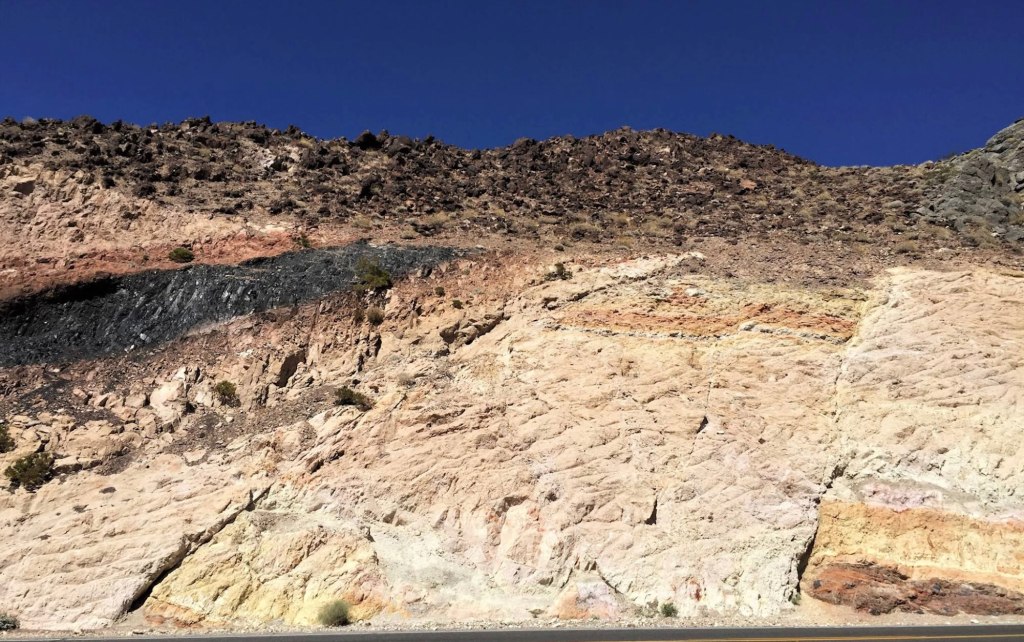
One of Californiaโ€™s most well-known roadcuts, the Charlie Brown Outcrop (map), is a favorite among geologists. Located along Highway 178 near the Nevada border, it has been highlighted by geology teacher Garry Hayes, author of the acclaimed Geotripper blog. Hayes says of the roadcut (also known as the Shoshone Roadcut):

“There are really three stories told in this exposure, that of distant ash eruptions, a violent eruption close by, and earthquakes with associated mountain-building.”

Charlie Brown outcrop along highway 178 in California. (Google Maps)

These geologists, among others, have used roadcuts as a means to peel back the layers of time, revealing the processes that have operated to create the state’s diverse geologic scenery. Roadcuts have provided the evidence for groundbreaking theories and have been instrumental in mapping the geological evolution of California. The work of these scientists exemplifies the roadcut’s role as a natural laboratory, a place where Earth’s geologic history is on full display for those who know how to read the rocks.

Moreover, roadcuts are crucial for educating the next generation of geologists. They serve as natural laboratories where students can practice identifying rock types, deciphering the sequence of geological events, and understanding the dynamic forces that continue to shape the Earth.

Roadcuts in California, those slices through hills and mountainsides made during the construction of roads, are like open books to geologists. They reveal the intricate and often dramatic geological history of the state. (Photo: Erik Olsen)

In Assembling California, McPhee remarked that “geologists are like dermatologists: they study, for the most part, the outermost two per cent of the earth. They crawl around like fleas on the worldโ€™s tough hide, exploring every wrinkle and crease, and try to figure out what makes the animal move.”

Manmade creations like roadcuts greatly assist geologists in their work. In essence, roadcuts are not just incidental byproducts of infrastructure development; they are key to understanding California’s complex geological evolution. They tell stories of ancient environments, tectonic upheavals, and the slow but inexorable forces that continue to mold the landscape. For geologists in California, the roadcut is a portal into the deep past, offering a tangible connection to the processes that have made the state what it is today.