Long Valley Caldera Discover the Science and Beauty of California’s Ancient Supervolcano

The Legacy of One of North America’s Largest Volcanic Eruptions

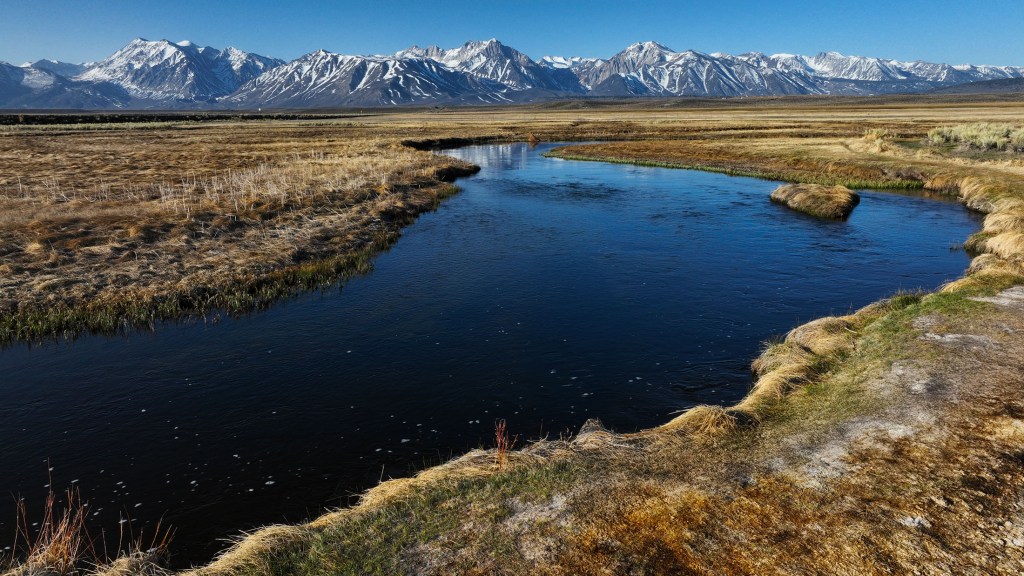
The Long Valley Caldera is one of the most active volcanic sites in the United States.
Here, the Owens River flows through it, winding south through Owens Valley. (Erik Olsen)

Driving up Highway 395 toward Mammoth Lakes is one of the most breathtaking road trips in California. The highway winds through the rugged Eastern Sierra, offering stunning views of snow-capped peaks, alpine meadows, and vast chaparral plains. But beneath this dramatic landscape lurks a hidden danger—an ancient volcanic giant that still stirs beneath the surface.

The Long Valley Caldera in eastern California is an extraordinary geological feature, spanning about 20 miles in length and 11 miles in width. It owes its existence to one of the most dramatic volcanic events in Earth’s history, a supereruption that occurred approximately 760,000 years ago. This event, known as the Bishop Tuff eruption, ejected an estimated 150 cubic miles of molten rock and ash into the atmosphere, far surpassing the 1980 eruption of Mount St. Helens, which released just 0.3 cubic miles of material. The magnitude of the Bishop Tuff eruption resulted in the collapse of the ground above the magma chamber, creating a massive depression known as a caldera. In other words, it’s hard to get your head around how big this eruption was.

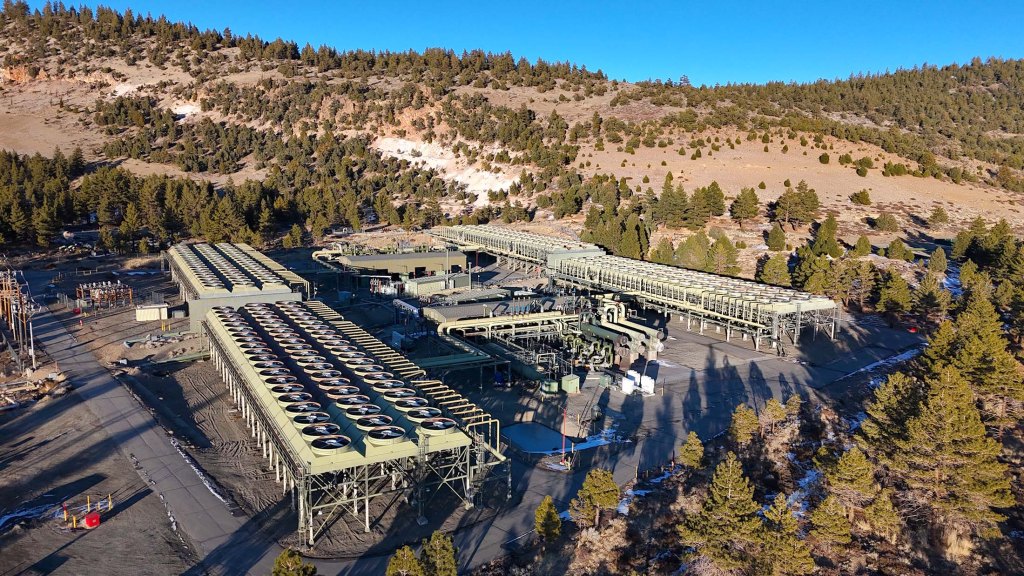
The Long Valley Caldera is a striking reminder of Earth’s immense, often hidden, volcanic power and its potential for destruction—located right here in California, near one of the nation’s most popular ski towns, Mammoth Lakes. Geothermal activity, visible in the form of hot springs, fumaroles, and hydrothermal systems, is a constant feature of the landscape. This activity has made the caldera a hub for geothermal energy production, with the Casa Diablo thermal power plant utilizing its subterranean heat to generate electricity. The energy produced at Casa Diablo is enough to power about 36,000 homes, making it an important renewable energy source for the region.

Casa Diablo Geothermal Facility, Long Valley Caldera, California (Erik Olsen)

The surface of the caldera is also marked by the Bishop Tuff, a layer of welded volcanic ash that provides a vivid record of the eruption’s intensity and the pyroclastic flows that reshaped the landscape. Pyroclastic flows are fast-moving, hot clouds of gas and volcanic material that can destroy everything in their path. Often they are considered more dangerous than the lava that pours forth from an erupting volcano. For example, pyroclastic flows killed far more people at Pompeii than lava, as the 79 AD eruption of Mount Vesuvius unleashed fast-moving clouds of superheated gas, ash, and volcanic debris that raced down the slopes at over 100 mph, reaching temperatures above 1,000°F, instantly asphyxiating and incinerating thousands, while the slower-moving lava played a minimal role in fatalities.

Geothermal features at the Long Valley Caldera commonly support microbial communities of thermophilic bacteria and algae, which thrive in the caldera’s hot springs and fumaroles. These organisms not only influence the terrain by contributing to mineral precipitation but also serve as models for studying life in extreme environments, offering analogs for early Earth and potential extraterrestrial ecosystems. Scientists are just beginning to understand how these bacteria live and thrive in deep ocean vent systems. In some areas around the Long Valley Caldera and Mono Lake, mats of thermophilic bacteria and algae thrive around the geothermal features, like the many hot tubs that dot the landscape, forming colorful, textured surfaces. These microbial communities contribute to the unique environment and can even make the ground feel crunchy underfoot, offering a tangible connection to the caldera’s dynamic, living systems.

The Owens River flows through the Long Valley Caldera near Mammoth Lakes, California (Erik Olsen)

While the caldera’s formation was sudden and catastrophic, its story stretches back millions of years. Scientific studies at the Long Valley Caldera have advanced our understanding of volcanic processes, crustal dynamics, and geothermal systems. The Long Valley Caldera sits within the Basin and Range Province, an area of North America characterized by extensional tectonics, where the Earth’s crust is being pulled apart, allowing magma to rise to the surface.

Using seismic tomography, researchers have mapped the magma chamber beneath the caldera, revealing a layered structure with a partially molten zone capped by solidified magma. This configuration, as highlighted in a 2023 study published in Science Advances, helps explain the periodic episodes of unrest observed in the caldera and provides a basis for assessing potential future activity. Before the eruption, the region experienced significant volcanic activity, with lava flows and smaller eruptions setting the stage for what was to come. Even after the formation of the caldera, volcanic activity continued in the area. Rhyolitic lava flows emerged within the caldera, and the nearby Mono-Inyo Craters volcanic chain has seen eruptions as recently as 600 years ago, underscoring the region’s enduring geological vitality.

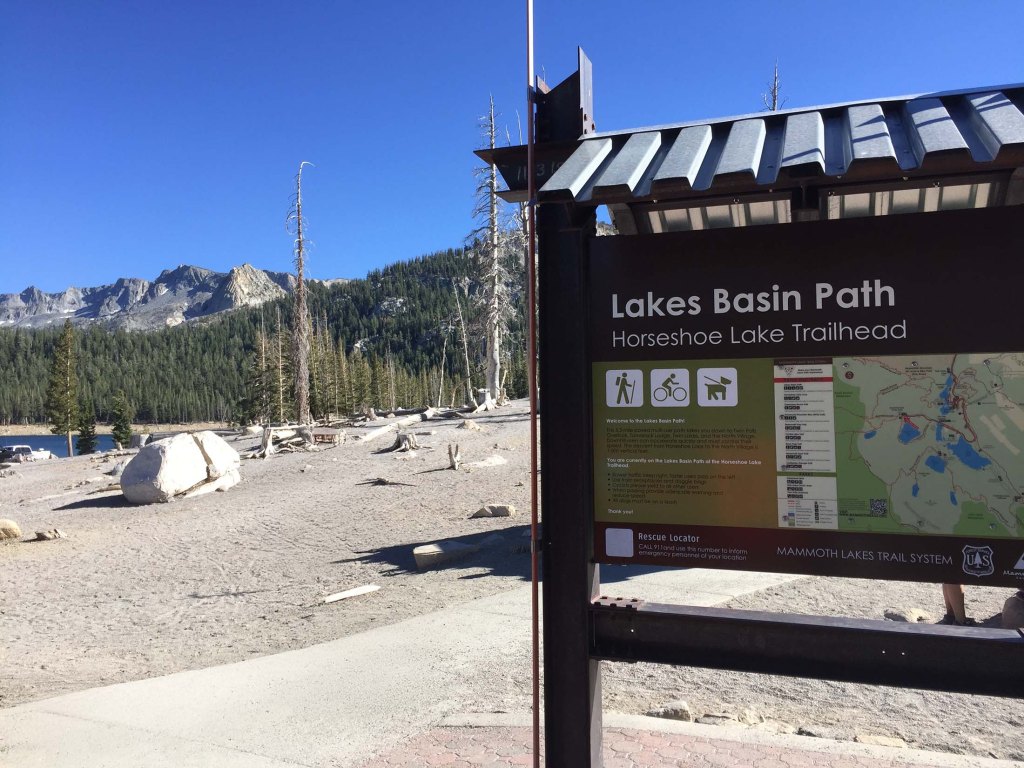
Horseshoe Lake in the Mammoth Lakes area, where underground carbon dioxide emissions have caused widespread tree die-off
(Photo: Erik Olsen)

Another place where the region’s volcanic activity can be experienced firsthand is Horseshoe Lake, where carbon dioxide continuously seeps from the ground, suffocating tree roots and causing a vast die-off of trees. The result is a barren, almost ghostly landscape of skeletal trunks and lifeless ground, a stark reminder that Long Valley’s volcanic system is still active beneath the surface. The area is not just eerie but also hazardous—high concentrations of CO₂ can accumulate in low-lying areas, posing a serious risk to humans and animals. Signs around the site warn visitors of the danger, as pockets of odorless, colorless gas can be lethal if inhaled in high enough doses.

Hot Springs geological site near Mammoth Lakes, California. (Erik Olsen)

The caldera has not been entirely quiet since its dramatic birth. Ground deformation studies, using GPS and InSAR technology (satellites), have tracked uplift in the caldera’s floor, offering critical data on magma movement and hydrothermal activity. In a 2016 study published in Geophysical Research Letters, researchers linked changes in uplift patterns to deeper magmatic processes, reinforcing the importance of continuous monitoring. In 1980, a series of magnitude 6 earthquakes occurred along its southern margin, drawing the attention of volcanologists from USGS. These earthquakes were accompanied by noticeable uplift in the caldera’s floor, a sign of magma movement beneath the surface. Since then, the region has experienced periodic episodes of ground deformation and seismic activity, reminding scientists that the volcanic system beneath Long Valley is far from dormant.

Recent research has provided valuable insights into the caldera’s potential for future activity. While there is currently no indication of an imminent eruption, the area is closely monitored by the United States Geological Survey (USGS). This surveillance includes the measurement of ground deformation, gas emissions, and seismic activity, all of which serve as indicators of changes within the magma chamber. The 1980s unrest heightened awareness of the need for vigilance, particularly in regions where volcanic hazards could affect human populations.

Mono Lake is home to thermophilic (heat-loving) and extremophilic (extreme-condition-loving) bacteria. These microorganisms thrive in the lake’s unusual environment, characterized by high alkalinity, high salinity, and elevated levels of carbonate. (Erik Olsen)

As a result of these studies, the town of Mammoth Lakes took proactive measures to ensure public safety. Local authorities constructed an emergency evacuation route to serve as an escape in the event of a volcanic eruption or other natural disaster stemming from the Long Valley Caldera. After local businesses and residents expressed concerns that the original name implied danger, it was changed to Mammoth Scenic Loop to emphasize the area’s beauty and appeal. The United States Geological Survey (USGS) also intensified its monitoring efforts, implementing a color-coded alert system to communicate volcanic activity risks.

Beyond its scientific significance, the Long Valley Caldera is a destination for outdoor enthusiasts and other researchers. Numerous hot springs dot the landscape and are immensely popular among tourists and residents. Mammoth Lakes is one of California’s top recreational spots, providing amazing opportunities to hike and fish during the summer and excellent skiing in the winter months. For geologists, the caldera serves as a natural laboratory, providing an opportunity to study volcanic processes in a setting shaped by one of the most powerful eruptions in recent geological history.

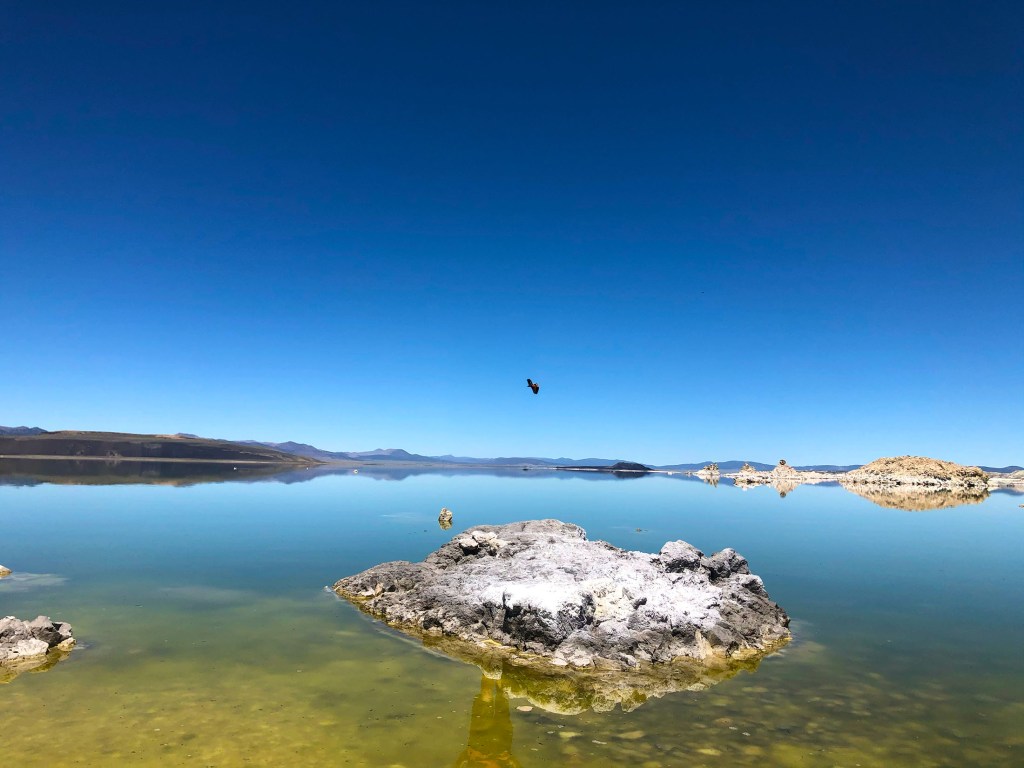
The eastern Sierra reflected in Little Alkali Lake near the Long Valley Caldera (Erik Olsen)

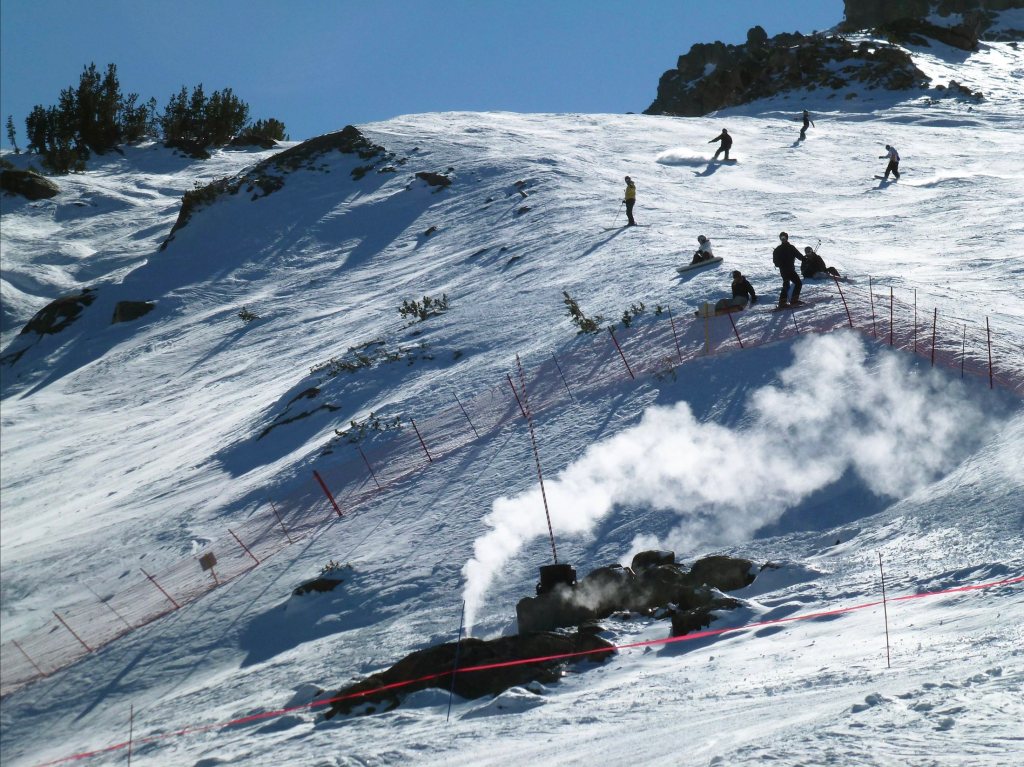
Of course, there remain certain dangers to all this volcanic activity. On April 6, 2006, three members of the Mammoth Mountain ski patrol tragically lost their lives after falling into a volcanic fumarole near the summit. The incident happened while they were conducting safety operations to secure a snow-covered geothermal vent following an unprecedented snowfall. If you’ve ever skied Mammoth before, there is a distinct sulphurous smell around the Christmas Bowl ski run at Chair 3 near McCoy Station.

Steam from an active fumarole near McCoy Station on Mammoth Mountain in 2012. (Flickr)

Standing at the center of the Long Valley Caldera, surrounded by the remnants of a prehistoric supereruption, offers a profound sense of scale and wonder. The vastness of the caldera, framed by the Sierra Nevada and dotted with geothermal vents, creates a landscape that feels alive yet ancient. It’s amazing place to be, both during the day and at night when the stars spread out across the gaping Sierra sky. The ground beneath your feet, shaped by cataclysmic forces, whispers of Earth’s power and the quiet persistence of geological time. Yet beneath the surface, the processes that shaped it continue to evolve, as magma slowly shifts and geothermal systems release heat from the planet’s interior. As research continues and technology advances, the Long Valley Caldera will undoubtedly yield further insights into the intricate workings of our planet’s volcanic systems.

Walter Munk was a Californian Oceanographer Who Changed Our Understanding of the Seas

Photo: Erik Jepsen (UC San Diego)

Walter Munk, often referred to as the “Einstein of the Oceans,” was one of the most influential oceanographers of the 20th century. Over a career that spanned more than 70 years, Munk fundamentally altered how we think about the oceans, contributing to our understanding of everything from wave prediction during World War II to deep-sea drilling in California. His work at the Scripps Institution of Oceanography in La Jolla, California, was groundbreaking and continues to influence scientific thinking to this day.

Walter Heinrich Munk was born in Vienna, Austria, on October 19, 1917. At 14, he moved to New York, where he later pursued physics at Columbia University. He became a U.S. citizen in 1939 and earned a bachelor’s degree in physics from the California Institute of Technology the same year, followed by a master’s in geophysics in 1940. Munk then attended the Scripps Institution of Oceanography and completed his Ph.D. in oceanography from the University of California in 1947.

Dr. Walter Munk in 1952. (Scripps Institution of Oceanography Archives/UC San Diego Libraries)

In the early 1940s, Munk’s career took a defining turn when the United States entered World War II. At the time, predicting ocean conditions was largely guesswork, and this posed a significant challenge for military operations. Munk, a PhD student at Scripps at the time, was recruited by the U.S. Army to solve a problem that could make or break military strategy—accurate wave prediction for amphibious landings.

CALIFORNIA CURATED ART ON ETSY

Purchase stunning art prints of iconic California scenes.
Check out our Etsy store.

One of his most famous contributions during the war came in 1944, ahead of the Allied invasion of Normandy. Alongside fellow oceanographer Harald Sverdrup, Munk developed a method to predict the size and timing of ocean waves, ensuring that troops could land safely during the D-Day invasion. Using their model, the Allied forces delayed the invasion by one day, a move that proved crucial in reducing casualties and securing the beachhead. This same wave prediction work was used again in the Pacific theater, particularly for landings on islands like Iwo Jima and Eniwetok. Munk’s contributions not only helped win the war but also laid the foundation for modern oceanography. Wave forecasting is now a standard tool for naval operations, shipping, and even recreational surfers.

Landing craft pass supporting warships in the Battle of Eniwetok, 19 February 1944. (U.S. Army)

After the war, Munk returned to Scripps, a place that would remain central to his career. Established in 1903, Scripps had been growing into a major center for oceanographic research, and Munk’s work helped elevate it to new heights. Located in La Jolla, just north of San Diego, Scripps was perfectly positioned on the California coastline to be at the forefront of oceanographic studies. Scripps is one of the premier oceanographic institutions in the world.

During the post-war years, Munk helped pioneer several new areas of research, from the study of tides and currents to the mysteries of the deep sea. California, with its rich marine ecosystems and coastal access, became the perfect laboratory. In La Jolla, Munk studied the Southern California Current and waves that originated across the Pacific, bringing new understanding to local coastal erosion and long-term climate patterns like El Niño. His research had a direct impact on California’s relationship with its coastline, from naval operations to public policy concerning marine environments.

Walter Munk in 1963 with a tide capsule. The capsule was dropped to the seafloor to measure deep-sea tides before such measurements became feasible by satellite. Credit Ansel Adams, University of California

While Munk’s contributions to wave forecasting may be his most widely recognized work, one of his boldest projects came in the 1960s with Project Mohole. It was an ambitious scientific initiative to drill into the Earth’s mantle, the layer beneath the Earth’s crust. The project was named after the Mohorovičić Discontinuity (named after the pioneering Croatian seismologist Andrija Mohorovičić), the boundary between the Earth’s crust and mantle. The boundary is often referred to as the “Moho”. The goal was revolutionary: to retrieve a sample from the Earth’s mantle, a feat never before attempted.

The idea was to drill through the ocean floor, where the Earth’s crust is thinner than on land, and reach the mantle, providing geologists with direct insights into the composition and dynamics of our planet. The project was largely conceived by American geologists and oceanographers, including Munk, who saw this as an opportunity to leapfrog the Soviet Union in the ongoing Cold War race for scientific supremacy.

The Glomar Challenger, launched in 1968, was the drill ship for NSF’s Deep Sea Drilling Project. (Public Domain)

California was again the backdrop for this audacious project. The drilling took place off the coast of Guadalupe Island, about 200 miles from the Mexican coast, and Scripps played a key role in organizing and coordinating the scientific work. The project succeeded in drilling deeper into the ocean floor than ever before, reaching 600 feet into the seabed. However, funding issues and technical challenges caused the U.S. Congress to abandon the project before the mantle could be reached. Despite its early end, Project Mohole is considered a precursor to modern deep-sea drilling efforts, and it helped pave the way for initiatives like the Integrated Ocean Drilling Program, which continues to explore the ocean’s depths today. For example, techniques for dynamic positioning for ships at sea were largely developed for the Mohole Project.

Munk’s work was deeply tied to California, a state whose coastlines and oceanography provided a wealth of data and opportunities for study. Scripps itself is perched on a stunning bluff overlooking the Pacific Ocean, a setting that greatly inspired Munk and his colleagues. Throughout his career, Munk worked on understanding the coastal dynamics of California, from studying the erosion patterns of beaches to analyzing how global warming might impact the state’s famous coastal cliffs.

Scripps Institution of Oceanography

His legacy continues to shape how California manages its vast coastline. The methodologies and insights he developed in wave prediction are now used in environmental and civil engineering projects that protect harbors, beaches, and coastal infrastructure from wave damage. As climate change accelerates the rate of sea level rise, Munk’s work on tides, ocean currents, and wave dynamics is more relevant than ever for California’s future.

Walter Munk’s contributions to oceanography stretched well beyond his wartime work and Project Mohole. He was instrumental in shaping how we understand everything from deep-sea currents to climate patterns, earning him numerous awards and accolades. His work at Scripps set the stage for the institution’s current status as a world leader in oceanographic research.

One of the most notable examples of this work was an experiment led by Munk to determine whether acoustics could be used to measure ocean temperatures on a global scale, offering insights into the effects of global warming. In 1991, Munk’s team transmitted low-frequency underwater acoustic signals from a remote site near Heard Island in the southern Indian Ocean. This location was strategically chosen because sound waves could travel along direct paths to listening stations in both the Pacific and Atlantic Oceans. The experiment proved successful, with signals detected as far away as Bermuda, New Zealand, and the U.S. West Coast. The time it took for the sound to travel was influenced by the temperature of the water, confirming the premise of the study.

Walter Munk in 2010 after winning the Crafoord Prize. (Crafoord Prize)

Munk passed away in 2019 at the age of 101, but his influence lives on. His approach to science—marked by curiosity, boldness, and a willingness to take on complex, high-risk projects—remains an inspiration for generations of scientists. He was a giant not only in oceanography but also in shaping California’s role in global scientific innovation. As the state faces the challenges of a changing climate, Munk’s legacy as the “Einstein of the Oceans” continues to be felt along its shores and beyond.

Cadillac Desert: How Marc Reisner Changed the Way We See Water

Los Angeles Aqueduct passing through Palmdale, California (Photo: Erik Olsen)

Marc Reisner’s Cadillac Desert: The American West and Its Disappearing Water remains a towering achievement in environmental journalism, decades after its publication in 1986. Chronicling the history, politics, and ecological consequences of water management in the American West, Cadillac Desert is not just an exposé of the past—it’s a cautionary tale that resonates today. With precision and passion, Reisner unraveled the intricacies of an arid region’s improbable transformation into one of the world’s most agriculturally productive and densely populated areas. His work has had a profound and lasting impact on how we understand water politics and environmental sustainability in California and beyond.

Cadillac Desert stands as a fitting successor to Wallace Stegner’s Beyond the Hundredth Meridian, continuing the exploration of water’s defining role in the American West. While Stegner championed the visionary work of John Wesley Powell and exposed the folly of ignoring the region’s arid realities, Reisner picked up the torch decades later to chronicle how those warnings were systematically ignored. Where Stegner painted a historical narrative of ambition and hubris, Reisner delivered a scathing and urgent critique of water politics, detailing the environmental and economic consequences of massive dam-building projects and unsustainable resource exploitation.

Colorado River

Cadillac Desert is, at its core, a gripping investigation into the manipulation of water resources in the American West. Reisner meticulously details how the construction of massive dams, reservoirs, and aqueducts enabled the transformation of a naturally dry landscape into a gargantuan economic powerhouse. From the Colorado River to the Los Angeles Aqueduct to California’s Central Valley, Cadillac Desert paints a vivid picture of engineering triumphs and environmental sacrifices, revealing the cost of this development to natural ecosystems, Indigenous communities, and future generations.

One of Reisner’s central stories is the tale of the Owens Valley. In the early 20th century, this fertile agricultural region was drained dry when the Los Angeles Aqueduct diverted its water to fuel the growing metropolis of Los Angeles. The story, replete with backroom deals, broken promises, and outraged locals, serves as a symbol of the greed and ambition that defined water politics in the West. Reisner weaves this narrative with the larger saga of William Mulholland, the ambitious engineer whose name is synonymous with both the success and hubris of L.A.’s water empire. This saga of water, power, and betrayal would later inspire the dark and iconic tale of Chinatown, the Roman Polanski film that captured the moral ambiguities and human cost of Los Angeles’ relentless thirst for growth.

Marc Reisner (Water Education Foundation)

Another cornerstone of the book is the story of the Colorado River, a waterway Reisner calls the most controlled and litigated river on Earth. He charts the creation of the Hoover Dam and the vast network of canals and reservoirs that distribute its water across seven states. The book reveals how over-allocation of the river’s resources, coupled with decades of drought, have pushed it to the brink of collapse—an issue that has only grown more urgent since Cadillac Desert was published.

Hoover Dam in 1936 (United States Bureau of Reclamation)

Reisner also dissects the Central Valley Project and the State Water Project, two gargantuan efforts to turn California into an agricultural Eden. By moving water from Northern California to the arid south, these projects enabled California’s emergence as a global agricultural leader. But Reisner doesn’t shy away from exposing the social and environmental consequences: drained wetlands, salt buildup in soils, and a system that prioritizes agribusiness over the needs of small farmers and urban residents.

CALIFORNIA CURATED ON ETSY

Purchase stunning art prints of iconic California scenes.
Check out our Etsy store.

What makes Cadillac Desert extraordinary is not just its scope but its style. Reisner’s journalistic rigor is matched by his ability to tell a compelling story. He brings characters like Mulholland and Floyd Dominy, the brash commissioner of the U.S. Bureau of Reclamation (part of the U.S. Department of the Interior), to life with vivid detail. At the same time, his writing is infused with moral urgency, challenging readers to question the sustainability of a society built on unsustainable water use.

Owens River in the Eastern Sierra (Erik Olsen)

The book’s legacy is immense. It galvanized environmentalists and policymakers, inspiring debates about water rights, conservation, and the future of development in the West. Documentaries, academic studies, and even contemporary water management policies owe much to the awareness Cadillac Desert raised. In California, where water battles continue to define politics and development, the book remains as relevant as ever.

As we face a future of intensifying droughts and climate change, Reisner’s insights grow more prescient by the day. California is still grappling with the overuse of groundwater, the challenges of aging infrastructure, and the inequities in water distribution. And while new technologies and policies offer hope, the central question Cadillac Desert poses—how do we balance human ambition with the limits of nature?—remains unanswered.

California Aqueduct (Erik Olsen)

Tragically, Reisner passed away in 2000 at the age of 51 from cancer, cutting short the life of a writer who had so much more to contribute to our understanding of environmental challenges. His death was a significant loss to the fields of journalism and environmental advocacy, but his legacy endures through his groundbreaking work. Cadillac Desert continues to inspire new generations to confront the urgent questions surrounding water use, conservation, and the future of the planet.

Marc Reisner’s Cadillac Desert is not just a history of water in the West; it is a call to rethink our relationship with one of the planet’s most precious resources. At once an epic tale and an urgent warning, it stands as a monumental testament to the price we pay for bending nature to our will.

A Massive Aircraft Carrier called the USS Independence Rests in Deep Waters off the Coast of California

From Battlefront to Atomic Legacy: The Journey of the USS Independence to Its Final Resting Place off Northern California

The U.S. Navy light aircraft carrier USS Independence (CVL-22) in San Francisco Bay (USA) on 15 July 1943. Note that she still carries Douglas SBD Dauntless dive bombers. Before entering combat the air group would only consist of Grumman F6F Hellcat fighters and TBF Avenger torpedo bombers. (Wikipedia)

The waters off California’s coast are scattered with relics of wartime history, each telling its own story of conflict and survival. Among these wrecks is the USS Independence, a WWII aircraft carrier whose journey took it from the heights of naval warfare to the depths of nuclear experimentation. Today, it lies as an underwater monument to both wartime heroics and the nascent atomic age.

Converted from the hull of a Cleveland-class light cruiser, the USS Independence was built by the New York Shipbuilding Corporation and commissioned in January 1943. She quickly became a key player in the Pacific Theater. She took part in early attacks on Rabaul and Tarawa before being torpedoed by Japanese aircraft, necessitating repairs in San Francisco from January to July 1944. After these repairs, the Independence launched strikes against targets in Luzon and Okinawa, and was part of the carrier group that sank remnants of the Japanese Mobile Fleet during the Battle of Leyte Gulf, as well as several other Japanese ships in the Surigao Strait.

Visit the California Curated store on Etsy for original prints showing the beauty and natural wonder of California.

It took part in pivotal operations such as those at Tarawa, Kwajalein, and the Marianas, contributing significantly to the success of Allied forces. Until the surrender of Japan, she was assigned to strike duties against targets in the Philippines and Japan, and she completed her operational duty off the coast of Japan, supporting occupation forces until being assigned to be a part of Operation Magic Carpet, an operation by the U.S. War Shipping Administration to repatriate over eight million American military personnel from the European, Pacific, and Asian theaters. The ship’s role in supporting invasions and launching strikes helped secure a strategic advantage in the Pacific, establishing the Independence as an integral part of the U.S. Navy’s war effort.

Aerial view of ex-USS Independence at anchor in San Francisco Bay, California, January 1951. There is visible damage from the atomic bomb tests at Bikini Atoll. (San Francisco Maritime National Historical Park)

After WWII ended, the Independence was not destined for a peaceful decommissioning like many of her sister ships. Instead, it was selected for an unprecedented mission: to test the effects of nuclear explosions on naval vessels. In 1946, the Independence became part of Operation Crossroads at Bikini Atoll, a series of nuclear tests aimed at understanding the power of atomic bombs. Positioned near ground zero for the “Able” and “Baker” detonations, the carrier survived but sustained heavy radioactive contamination. Towed back to the United States, it became the subject of further scientific study, focusing on radiation’s effects on naval ships.

Thermonuclear blast part of Operation Crossroads

Ultimately, in 1951, the Navy decided to scuttle the Independence off the coast of California, within what is now the Monterey Bay National Marine Sanctuary and near the Farallon Islands. The ship was intentionally sunk in deep waters, where it would remain hidden for over sixty years. In 2015, researchers from NOAA, in partnership with Boeing and other organizations, used advanced sonar technology to locate the wreck. Lying nearly 2,600 feet below the surface and approximately 30 miles off the coast of San Francisco, the Independence was found in remarkably good condition. The cold, dark waters of the Pacific had preserved much of its hull and flight deck, leaving a ghostly relic that continued to capture the imagination of historians and marine scientists alike.

The U.S. Navy light aircraft carrier USS Independence (CVL-22) afire aft, soon after the atomic bomb air burst test “Able”
at Bikini Atoll on 1 July 1946. (US NAVY)

In 2016, the exploration vessel Nautilus, operated by the Ocean Exploration Trust, conducted detailed dives to study the wreck. The exploration utilized remotely operated vehicles (ROVs), equipped with high-definition cameras and scientific tools, to capture extensive footage and data. The mission was led by a multidisciplinary team of researchers, including marine biologists, archaeologists, and oceanographers from NOAA and the Ocean Exploration Trust, highlighting the collaborative effort necessary for such an in-depth underwater expedition. Remotely operated vehicles (ROVs) provided stunning footage of the carrier, revealing aircraft remnants on the deck and bomb casings that hinted at its atomic test history.

Part of an aircraft on the USS Independence seen during the NOAA / Nautilus expedition off the coast of California. (NOAA)

Despite its radioactive past, the wreck had transformed into a thriving artificial reef. Marine life, including fish, crustaceans, and corals, had made the irradiated structure their home, providing researchers with a valuable opportunity to study how marine ecosystems adapt to and flourish on man-made, contaminated structures. Among the biological discoveries, researchers noted a variety of resilient species that had colonized the wreck, including deep-sea corals that appeared to be unaffected by the radiation levels. Additionally, biologists observed that some fish populations had become more abundant due to the complex structure offered by the wreck, which provided shelter and new breeding grounds. This adaptation indicates that artificial reefs—even those with a history of contamination—can become crucial havens for marine biodiversity. Studies also identified microorganisms capable of thriving in irradiated environments, which could help inform future research into bioremediation and the impact of radiation on biological processes. These findings collectively reveal the remarkable ability of marine life to adapt, demonstrating resilience even in challenging conditions shaped by human activities.

The shipwreck site of the former aircraft carrier, Independence, is located in the northern region of Monterey Bay National Marine Sanctuary. 

The ship’s resting place has also become an important case study for understanding the long-term effects of radiation in marine environments. Researchers have found that despite the contamination from the atomic tests, the marine life around the Independence has flourished, suggesting a remarkable resilience in the face of human-induced challenges. This has provided invaluable information on how marine ecosystems can adapt and endure even in seemingly inhospitable conditions, shedding light on ecological processes that could inform conservation efforts in other marine environments.

Guns on the USS Independence off the coast of California. An array of corals sponges and fish life are a remarkable testament to manmade reefs to attract sea life (NOAA)

The exploration of the Independence also stands as a technological achievement. The discovery and study of the wreck required advanced sonar imaging and remotely operated vehicle technology, showcasing the capabilities of modern marine archaeology. The collaboration between NOAA, the Ocean Exploration Trust, and other organizations has underscored the importance of interdisciplinary approaches in uncovering and preserving underwater cultural heritage.

Ultimately, the USS Independence is more than just a sunken warship—it is a chapter of American history frozen in time beneath the waves of the Pacific. As a subject of study, it bridges past conflicts with modern scientific inquiry, providing a rich narrative that combines warfare, innovation, and nature’s adaptability. Its story continues to evolve as researchers uncover more about the vessel and the surrounding ecosystem, making it not only a relic of history but also a symbol of discovery and resilience.

The Lost Island of Santarosae off California’s Coast

Santarosae Midjourney rendering

Imagine a massive island off the coast of California roughly thrice the size of Maui, a lush and wild place where miniature mammoths once roamed and ancient humans hunted in the shadows of towering trees. This island once existed and it’s called Santarosae, and while it is gone now, it was once a thriving ecosystem, teeming with life. Its story provides a captivating window into the ever-changing natural history of the California coast region.

During the last Ice Age, approximately 20,000 to 25,000 years ago, when sea levels were significantly lower, Santarosae Island was a single, expansive landmass that now comprises most of California’s Channel Islands. As the cooler Pleistocene climate transitioned into the warmer Holocene (the epoch we are in now), the Earth’s oceans heated and expanded. Continental ice sheets and glaciers melted, releasing vast amounts of water and causing sea levels to rise dramatically.

At its peak, Santarosae was massive—four of today’s Channel Islands (San Miguel, Santa Rosa, Santa Cruz, and Anacapa) were all connected into a single landmass. It spanned around 1,500 square miles, making it a significant feature of the Pacific coast landscape. Today, only remnants remain in the form of those four separate islands, but evidence of Santarosae’s ancient past continues to reveal itself to scientists.

Map depicting the reconstructed geography of Santarosae.

Anacapa was the first to break away, around 10,300 to 10,900 years ago, as rising waters gradually submerged the narrow isthmus that once connected it to the rest of Santarosae. This slow disintegration of the super island was witnessed by the humans already inhabiting the region. Having arrived between 12,710 and 13,010 years ago, possibly even earlier, these early settlers likely traveled by boat, following the “kelp highway“—a rich, coastal ecosystem of underwater seaweed forests stretching from northern Japan and Kamchatka, along the southern shores of Beringia, down the Pacific Northwest, and into Baja California. For these early explorers, Santarosae would have appeared as a land of abundant resources.

One of the island’s most captivating features was its population of pygmy mammoths, found exclusively on Santarosae. Standing between 4.5 to 7 feet tall at the shoulder and weighing around 2,000 pounds, these miniaturized versions of mainland Columbian mammoths were about the size of a large horse and evolved to suit their isolated island habitat (see our story on the island biogeography of the Channel Islands). The reasons for their dwarfism stem from a phenomenon called island rule, where species on islands often shrink due to limited resources and isolation, as well as a shortage of predators. Despite their smaller size, these island-dwelling mammoths likely shared many characteristics with their larger relatives, including a similar body shape, short fur, and a large head. These mammoths roamed Santarosae until they disappeared around 13,000 years ago, coinciding with both climate changes and the arrival of humans.

Pygmy Mammoth excavation on the Channel Islands (NPS)

The first discovery of “elephant” remains on Santa Rosa Island was reported in 1873. Over time, additional excavations provided insight into the island’s mammoth population, which gradually became smaller over generations, eventually disappearing at the end of the Pleistocene. Notably, paleontological digs conducted on Santa Rosa Island in 1927 and 1928 unearthed the remains of a new species, Mammuthus exilis. In the 1940s and 1950s, Philip Orr of the Santa Barbara Museum of Natural History recovered further specimens while conducting archaeological and geological work on the island.

CALIFORNIA CURATED ON ETSY

Purchase stunning art prints of iconic California scenes.
Check out our Etsy store.

Most pygmy mammoth remains have been discovered on Santa Rosa and San Miguel Islands, with fewer finds from Santa Cruz Island and even fewer from San Nicolas Island, which lies outside the Channel Islands National Park.

Santarosae was not just a wilderness for megafauna—it was home to some of the earliest known human settlers in North America. Archaeological discoveries, such as the remains of a 13,000-year-old woman unearthed on Santa Rosa Island, point to a sophisticated maritime culture. These ancient humans, likely ancestors of the Chumash people, navigated the waters around Santarosae in plank canoes, hunting seals, birds, and fish, while gathering plants and shellfish.

Archaeologists excavate a anthropological site at the Channel Islands (NPS)

The island provided ample resources, but it wasn’t isolated from the rest of the world. The people of Santarosae were part of a complex trade network that stretched across the California coast. Evidence of these connections can be seen in the tools and materials found on the island, some of which came from distant sources. As sea levels rose, however, these early inhabitants had to adapt to the shrinking island, eventually migrating to the mainland.

Santarosae’s landscape during the Ice Age was strikingly different from what we see on today’s Channel Islands. Dense forests of pines, oaks, and other vegetation covered much of the island, supporting a rich diversity of life. The island’s topography included hills, valleys, and freshwater sources, offering an ideal environment for both humans and animals. As the climate warmed and sea levels rose, the island’s ecology shifted. Forests retreated, and the landscape began to resemble the wind-swept, scrubby terrain seen on the modern Channel Islands.

Anacapa Island today (Erik Olsen)

The rise in sea levels didn’t just transform the landscape; it also altered the ecosystems. Many of the animals, like the pygmy mammoths, couldn’t survive the changing conditions (or human hunters), while new species adapted to the shrinking landmass. Birds, insects, and plant species began to dominate, and the island ecosystems became more specialized.

Today, the remnants of Santarosae offer an invaluable window into the past. The Channel Islands National Park protects much of the area, and researchers continue to uncover clues about the island’s history. Ongoing archaeological digs and ecological studies on the islands help piece together the story of Santarosae’s people, animals, and landscape.

Tourists now enjoy the natural beauty of the Channel Islands (Erik Olsen)

For those who visit the Channel Islands today, it’s hard to imagine the ancient world of Santarosae—a much larger island teeming with life. But the remnants of this lost island still hold secrets waiting to be uncovered, offering a fascinating glimpse into California’s distant past and a reminder of how the forces of nature continually reshape our world.

Though Santarosae is now submerged, its influence is still a significant part of California’s natural history.

Unraveling the Geology Behind Palos Verdes’ Ongoing Landslide Crisis

A neighborhood threatened by landslides at Portuguese Bend on Palos Verdes (Erik Olsen)

For decades, geologists and engineers have been aware that the Portuguese Bend region of Palos Verdes is prone to landslides. Early maps and aerial surveys from the 1930s show continuous movement from the upper hills towards the high cliffs and bluffs that reach the Pacific Ocean.

Over the years, with a few exceptions, the ground movement was relatively slow, averaging about a foot per year. However, after the intense rains of the past year or two, the land is now shifting much more rapidly—up to 9 to 12 inches per week—plunging neighborhoods and communities built on this unstable terrain into panic and disarray. This accelerated movement has caused irreparable damage to some homes and led California to declare a state of emergency.

Aerial survey from the 1930s showing landslide potential at Portuguese Bend in Palos Verdes (Ranch Palos Verdes city government)

People have been allowed to build homes at Portuguese Bend largely due to a combination of historical oversight, demand for coastal real estate, and limited understanding of the area’s geologic instability when development first began. In the 1950s and 1960s, when much of the residential development in the area took place, there was less awareness and fewer regulations regarding the risks of building on unstable ground. Additionally, the picturesque coastal views and desirable location made Portuguese Bend an attractive area for developers and homeowners. Despite known landslide risks, building permits were often issued because of insufficient geotechnical assessments, political and economic pressures, and a lack of stringent land-use policies at the time. Over the years, as the understanding of the area’s geologic hazards has grown, there have been more restrictions and efforts to mitigate risks, but many homes already exist on land prone to movement.

CALIFORNIA CURATED ON ETSY

Purchase stunning art prints of iconic California scenes.
Check out our Etsy store.

The situation is similar to building homes in fire-prone areas – well-known to Californians, of course – within the so-called Wildland-Urban Interface (WUI), where human development meets and mixes with natural landscapes, creating a high-risk zone for natural disasters.

Small landslide at Portuguese Bend in Palos Verdes (Erik Olsen)

Portuguese Bend is one of the most active landslide zones on the peninsula. Here, the earth moves continuously, almost imperceptibly at times, but the effects are undeniable. The land isn’t just sliding; it’s flowing—like a slow-moving river of rock and dirt—down a natural depression, a sort of bowl or gulch formed by the interplay of tectonic activity and erosion. This gradual yet relentless descent toward the sea is driven by a combination of factors: the underlying geology of ancient marine sediment layers, heavy rainfall, and the constant forces of gravity pulling on the steep slopes. As a result, roads buckle, homes crack, and entire sections of land shift over time.

The geological makeup of Palos Verdes is complex and varied. The most prominent rocks on the Palos Verdes Peninsula, and the most crucial in terms of slope stability, belong to the Miocene Monterey Formation, which we wrote about in a previous article. This formation, over 2,000 feet thick in some areas, has been divided into three distinct members based on their rock types: the Altamira Shale, the Valmonte Diatomite, and the Malaga Mudstone, arranged from oldest to youngest.

Portuguese Bend at Palos Verdes

The Altamira Shale primarily consists of thin-bedded sedimentary rocks formed from layers of clay, interspersed with numerous layers of tuff, or volcanic ash that has largely transformed into weak clays over time. Thick deposits of volcanic ash, laid down millions of years ago, have been compacted into a clay-like material known as bentonite. When bentonite comes into contact with water, it becomes extremely slippery, acting like a natural lubricant. This slippery nature has been a major factor in triggering landslides throughout the Rancho Palos Verdes area, where the land’s stability is continually undermined by these underlying geological conditions.

Another factor contributing to landslides is the region’s tectonic activity. Palos Verdes sits above several active faults, including the Palos Verdes Fault. The movement along these faults exerts stress on the rock formations, leading to fractures and cracks that weaken the slopes. These cracks often become pathways for water to seep into the ground, further destabilizing the already precarious terrain.

The road along the coast at Portuguese Point has been moving for decades, a slow but relentless reminder of the dynamic nature of California’s landscape. (Erik Olsen)

Water plays a crucial role in triggering landslides in this region. Heavy rains, especially those associated with El Niño events like the atmospheric rivers of the last few years, can lead to a rapid increase in groundwater levels. When water infiltrates the ground, it increases the pressure within the soil and rock, reducing the friction that holds everything together. In Palos Verdes, where irrigation, septic systems, and urban development are common, human activities can exacerbate this natural process by altering drainage patterns and increasing water saturation in vulnerable areas. This convergence of natural and human-made factors makes the slopes more prone to sliding, particularly during or after intense rainfall.

To combat this, construction teams have installed a series of dewatering wells and pumps to actively extract groundwater from deep within the hillside. By lowering the water table and reducing the amount of water that saturates the soil, these efforts help to decrease the pressure within the slope and mitigate the risk of further ground movement. This method of dewatering is a crucial element in stabilizing the land, as it helps prevent the soil from becoming too heavy and reduces the lubricating effect that water has on the bentonite clay layers.

Closed road at Portuguese Bend in Palos Verdes (Erik Olsen)

Coastal erosion is another critical factor. The rugged cliffs of Palos Verdes are constantly being eroded by the ocean’s waves, wind, and rain. Over time, wave action undercuts the base of the cliffs, removing the support for the upper layers and leaving them hanging precariously over the ocean. As the base erodes away, the upper cliffs become more susceptible to collapse. When combined with the weakened geology and increased groundwater levels, this coastal erosion sets the stage for dramatic landslides.

Portuguese Point cliffs are part of the constant coastal erosion process at Palos Verdes aerial photo (Erik Olsen)

Recent studies are shedding new light on why landslides in Palos Verdes continue to be a concern. Geologists are now using advanced technologies, such as ground-penetrating radar and satellite imagery, to better understand the underground conditions that contribute to landslides. A study from the University of California, Los Angeles, has explored how even minor shifts in groundwater levels, exacerbated by climate change and increasingly unpredictable weather patterns, can tip the balance and trigger significant slope failures. This research emphasizes that it’s not just the obvious heavy rainfall events that pose a threat; subtle changes in water content due to human irrigation, drought, or even slight variations in precipitation can also destabilize these slopes over time.

CALIFORNIA CURATED ON ETSY

Purchase stunning art prints of iconic California scenes.
Check out our Etsy store.

Moreover, new geological mapping and subsurface studies have provided a clearer picture of the fault lines and the fractured rock layers beneath Palos Verdes. These studies suggest that the interaction between multiple fault zones may be more significant than previously thought, potentially increasing the region’s susceptibility to movement. Understanding these interactions is crucial for predicting future landslides and developing mitigation strategies.

But in the end, nature will likely have the final say.

Portuguese Bend in Palos Verdes (Erik Olsen)

The picture that emerges from these studies is one of a region where natural geological processes and human activities are in a delicate balance. It’s an ongoing fight that really offers a precarious vision of the future for residents and others who use the area for recreation. The weak rock formations, intersecting fault lines, and relentless coastal erosion create an environment where the land is always moving and on the brink of collapse. Add to this the unpredictable impacts of climate change, which can bring more intense storms and alter precipitation patterns, and it becomes clear why Palos Verdes is so prone to landslides.

Efforts to mitigate the risk are ongoing. Local governments and geologists are working to develop more effective monitoring systems and better land-use planning guidelines to manage development in these sensitive areas. Understanding the complex geology and hydrology of Palos Verdes is critical to preventing future disasters and protecting the communities that call this beautiful but unstable coastline home.

Dark Parks in California Allow Us to Reconnect with the Universe

The Milky Way above the Eastern Sierra.

Despite its vast expanse (over 163,000 square miles) California offers surprisingly few places where one can truly gaze upon the night sky in all its glory. Urban light pollution has dimmed the stars across much of the state, making it a rare treat to see more than a handful of celestial points on a clear night. In California’s largest metropolitan areas, like Los Angeles and the Bay Area, the glow from light pollution is so intense that the Milky Way is almost entirely washed out, leaving just the brightest planets and stars visible.

Of course, this is not just a California problem. It’s a sobering reality that underscores a serious global issue: as of 2016, due to artificial lighting, about one-third of humanity could no longer see the Milky Way. Yikes. The problem has only worsened as many cities switch to LED lighting. While LEDs have revolutionized how we light our world and reduced the cost of illumination compared to incandescent bulbs, they have also diminished our ability to see the stars.

Light pollution in Los Angeles as seen from Angeles National Forest (Photo: Erik Olsen)

All that light at night also messes with our lives, interfering with circadian rhythms, leading to sleep disorders, increased stress, and potential long-term health issues such as obesity and cardiovascular disease, according to studies. Artificial light also disrupts ecosystems, affecting nocturnal wildlife by altering their natural behaviors and migration patterns, and can lead to decreased biodiversity. In fact, scientific evidence suggests that artificial light at night has negative and deadly effects on many creatures, including amphibians, reptiles, birds, mammals, insects, and plants.

CALIFORNIA CURATED ON ETSY

Purchase stunning art prints of iconic California scenes.
Check out our Etsy store.

Dark parks in California offer a refuge from light pollution, providing a glimpse into the cosmos that most urban dwellers rarely experience. These parks are sanctuaries for stargazers, astronomers, and anyone longing to witness the majesty of the night sky. Spend a night camping in the Eastern Sierra, and you will know what I mean. There are few experiences in the natural world as profound as gazing into a blanket of millions and billions of stars and pondering the number of other worlds that might exist in the cosmos (it’s pretty much guaranteed there’s more than one, more than just us).

If only there was an organized effort to create and protect areas where darkness reigns. Enter the DarkSky International.

DarkSky International (previously the International Dark-Sky Association), founded in 1988, is dedicated to combating light pollution and preserving night skies through advocacy, education, and promotion of responsible outdoor lighting practices. They designate Dark Sky Places, including parks, reserves, and communities that meet rigorous lighting standards. As of now, there are just two designated Dark Sky Parks in California (see below) and over 130 across the United States. The IDA also works with policymakers to develop lighting regulations, supports scientific research on light pollution, and raises public awareness about the benefits of preserving dark skies for human health, wildlife, and the environment.

Death Valley National Park (Photo: NPS)

Dark skies are categorized using the Bortle Dark-Sky Scale, a system developed by amateur astronomer John E. Bortle to measure how much light pollution affects the visibility of stars and celestial objects. The scale ranges from Class 1, where the sky is pristine and free from artificial light, to Class 9, where the glow of urban lights makes it nearly impossible to see even the brightest stars. In a Bortle Class 1 sky, found in the most remote wilderness areas, you can see the Milky Way as a bright, detailed arc across the sky, along with countless stars and deep-sky objects. By contrast, in a Bortle Class 9 sky, such as in the heart of Los Angeles or New York City, only the moon, a few planets, and a handful of the brightest stars are visible. This scale offers a standardized way for scientists, conservationists, and amateur stargazers to assess the impact of artificial lighting and advocate for the preservation of natural darkness.

The night sky has always been a source of wonder and inspiration. For centuries, humans have looked up at the stars to navigate, tell time, and dream. Dark skies allow us to see celestial phenomena such as meteor showers, the Milky Way, and distant planets. They also foster a connection to the universe, reminding us of our place in a vast and mysterious cosmos. Beyond their aesthetic and inspirational value, dark skies have practical benefits too. They aid scientific research, support wildlife, and even improve human health by regulating our circadian rhythms, say researchers.

California light pollution map.

Advances in technology have revolutionized astrophotography, enabling photographers to capture the night sky in unprecedented detail. High-sensitivity digital cameras, sophisticated telescopes, and powerful image processing software allow for breathtakingly detailed images of celestial phenomena, from the intricate structures of distant galaxies to the ethereal glow of the Milky Way. These advancements have also made time-lapse photography more accessible, leading to a surge in mesmerizing time-lapse videos of the night sky. These videos, widely shared online (I’ve watched scores of them), showcase the dynamic beauty of the cosmos as stars and planets traverse the heavens. They offer viewers an immersive experience that reveals the universe’s grandeur and motion in a way static images cannot. This booming genre draws in audiences and encourages a deeper appreciation for the night sky, as well as the technology that makes stunning visual storytelling possible. Which raises an odd and unsettling question: what does it mean when we can have a better experience of the night sky by looking at a screen than by looking up at the sky itself?

For a glimpse into the latest in astrophotography, the Milky Way Photographer of the Year awards showcase some of the genre’s best work. Now in its seventh year, the competition by Capture the Atlas highlights 25 stunning images selected from over 5,000 entries, offering breathtaking views of our star-studded galaxy from around the world.

But all is not lost dear California friends. Outside the blazing urban megalopolises of Los Angeles/San Diego and San Francisco/San Jose, California boasts numerous places where visitors can escape the pervasive glow of artificial light. Here are a few of the best:

1. Death Valley National Park: Known for its extreme conditions and vast desert landscapes, Death Valley is one of the darkest places in the United States. The park is one of the two designated dark parks in California and the only one in the state classified as a Gold Tier Dark Sky Park. Its remote location and low humidity create ideal conditions for stargazing.The top ranger suggestions for star gazing locations in Death Valley National Park are: Mesquite Flat Sand Dunes, Harmony Borax Works, Badwater Basin and Ubehebe Crater.

2. Joshua Tree National Park: Famous for its unique rock formations and Joshua trees, this park is also a haven for astronomy enthusiasts. This is the second of California’s official dark parks. The park’s rugged terrain and minimal light pollution offer excellent visibility of the night sky. There are four designated stargazing areas in the park. They are the parking lots of Quail Springs, Hidden Valley, Cap Rock, and Ryan Mountain

Night skies ablaze with stars and the Milky Way in Joshua Tree National Park (Unsplash)

3. Anza-Borrego Desert State Park: As California’s largest state park, the 600,000-acre Anza-Borrego Desert State Park provides expansive desert vistas perfect for stargazing. The park is the third and final designated dark park in the state and hosts regular star parties and events to educate the public about the night sky. If you’re looking for a guided tour, check out the Borrego Night Sky Tours.

4. Mount Shasta: If you’re able to go further north, Mount Shasta’s high elevation and clear skies make it a prime spot for observing the stars. The area’s natural beauty adds to the experience of a night under the stars. Everitt Vista Point and Bunny Flat at Mt. Shasta are prime spots for stargazing, along with Lake Siskiyou, Somes Bar, and Shafter Campground. Medicine Lake, near Lava Beds National Monument, also shines in this celestial line-up. Lake Siskiyou offers stunning reflections of the night sky, while Somes Bar and Shafter Campground are known for minimal light pollution and excellent visibility.

5. Pfeiffer Big Sur State Park: Stretching along the central coast, this park offers stunning views of the Pacific Ocean and a dark sky backdrop perfect for stargazing. The park’s coastal location can provide unique opportunities to see the stars reflected in the ocean below.

Pfeiffer Big Sur State Park (Photo: Reddit)

6. Mount Wilson Observatory: Perched atop a 1,740-meter peak in the San Gabriel Mountains, the Mount Wilson Observatory in Southern California, founded in 1904, boasts some of the largest telescopes available for public use. While primarily an educational venue, it offers an exceptional stargazing experience and a chance to delve into astronomy, appealing to both enthusiasts and experts. It’s just above Los Angeles, so, yeah, the skies aren’t that clear, but we have seen the Milky Way up there before. The observatory provides guided and self-guided tours year-round, making it an ideal destination for learning about the cosmos.

7. Oasis. Said to be the darkest place in California, this tiny little farming town tucked in between Death Valley National Park and the Nevada state line is the gateway to some of the best night gazing skies in the California desert. There’s a whole lot of wild area to the south, between Oasis and Ubehebe Crater in DVNP, that boasts skies as dark as any in the United States.

Photo: NASA

Dark parks in California, like Death Valley National Park and Anza-Borrego Desert State Park, offer incredible opportunities to reflect on your place in the cosmos. Beneath the inky blackness of a truly dark sky, the Milky Way stretches across the heavens in astonishing detail, and countless stars shimmer with a clarity that feels almost unreal. Just think about this for a moment: The Milky Way galaxy is home to an estimated 100 to 400 billion stars. And that’s just one galaxy! There are estimated to be between 100 billion and 2 trillion other galaxies out there. I mean, what?! It’s a scale so vast it’s almost impossible to comprehend.

And that’s what makes light pollution so sad and tragic. While we gain comfort and protection in our cities, the light we generate robs us of the chance to truly grasp our place in the universe. We are so small, and yet, as far as we know, we’re the only life out there. That’s a lot more thought-provoking than any Marvel movie (no offense to Marvel fans).

It’s true that the profound experience of stargazing fosters a deeper connection to the natural world and our place within it, reminding us of the wonder and mystery that lie beyond our planet. These are important things to remember. We owe it to ourselves to occasionally step away from the glow of our homes and cities and stand beneath a truly dark sky, where the universe stretches out above in a breathtaking display. In moments of reflection, we appreciate the invaluable gift of darkness, which not only preserves the nocturnal environment but also fuels our curiosity and sense of wonder—just as it has for our ancestors for thousands of years. By celebrating and protecting these dark parks, we ensure that future generations can continue to gaze up in awe, finding inspiration in the endless expanse of the cosmos.