
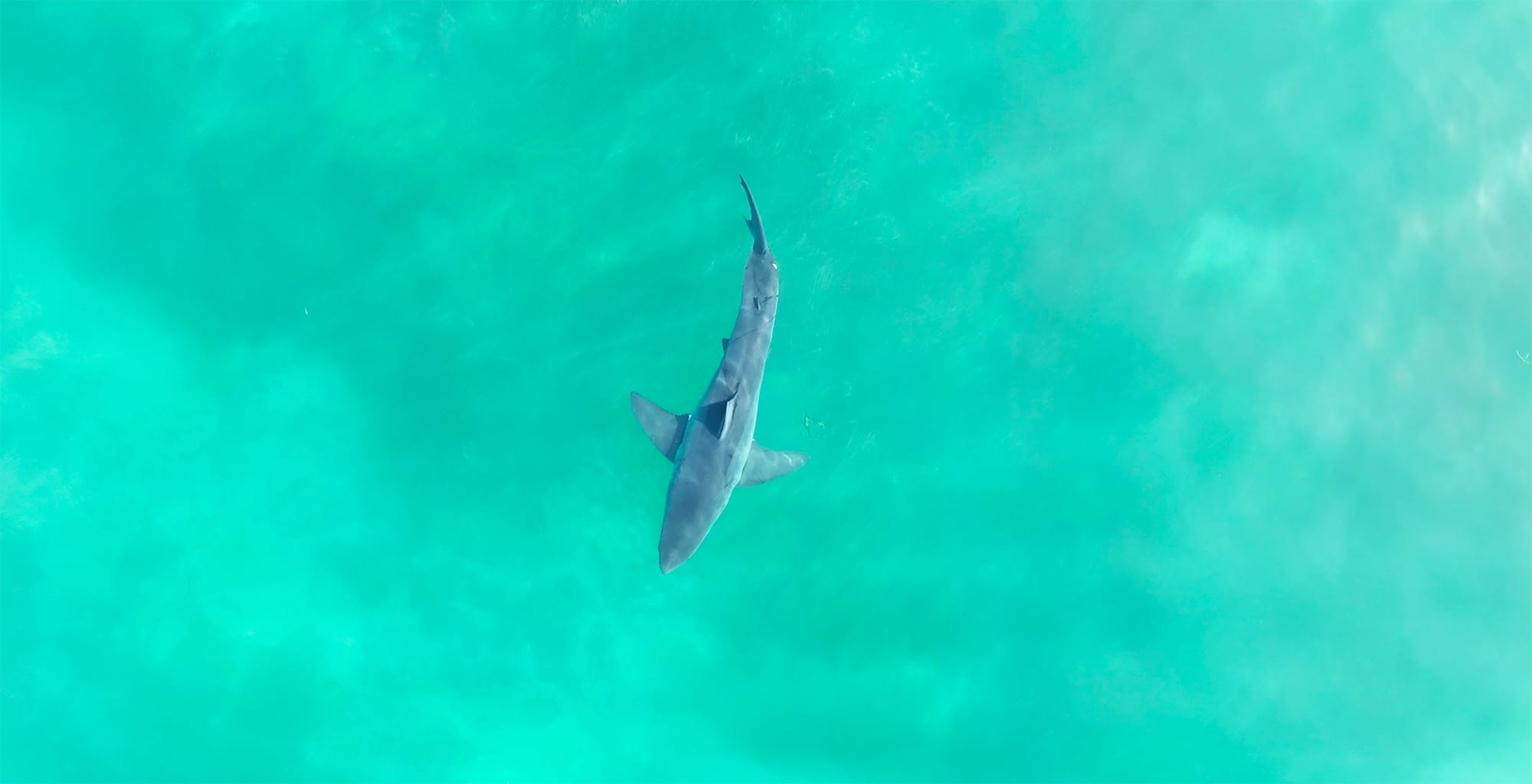
It’s Going to Be a Sharky Summer. Here’s Why That’s Okay.
Shark populations are rebounding along California’s coast, and the risks may be far lower than people think, says Chris Lowe, the director of the Shark Lab at Cal State Long Beach.
At the California State University Long Beach Shark Lab, which is landlocked though just a short drive from the beach, the vibe is part messy garage, part frontier science. A kiddie-pool-sized tank circles with small sharks and stingrays. Along the walls, rows of dried jaws hang open, rows of razor-sharp teeth, straight out of Jaws. On a nearby table, syringe-sized tagging devices sit ready, wired and waiting.
This is one of the country’s leading centers for studying elasmobranchs, the ancient group of cartilaginous fish that includes sharks, rays, skates, and chimaeras. And its director, Chris Lowe, has spent decades trying to answer a deceptively simple question: what are these animals actually doing just off California’s beaches, and what does that mean for the millions of people who share the water with them?
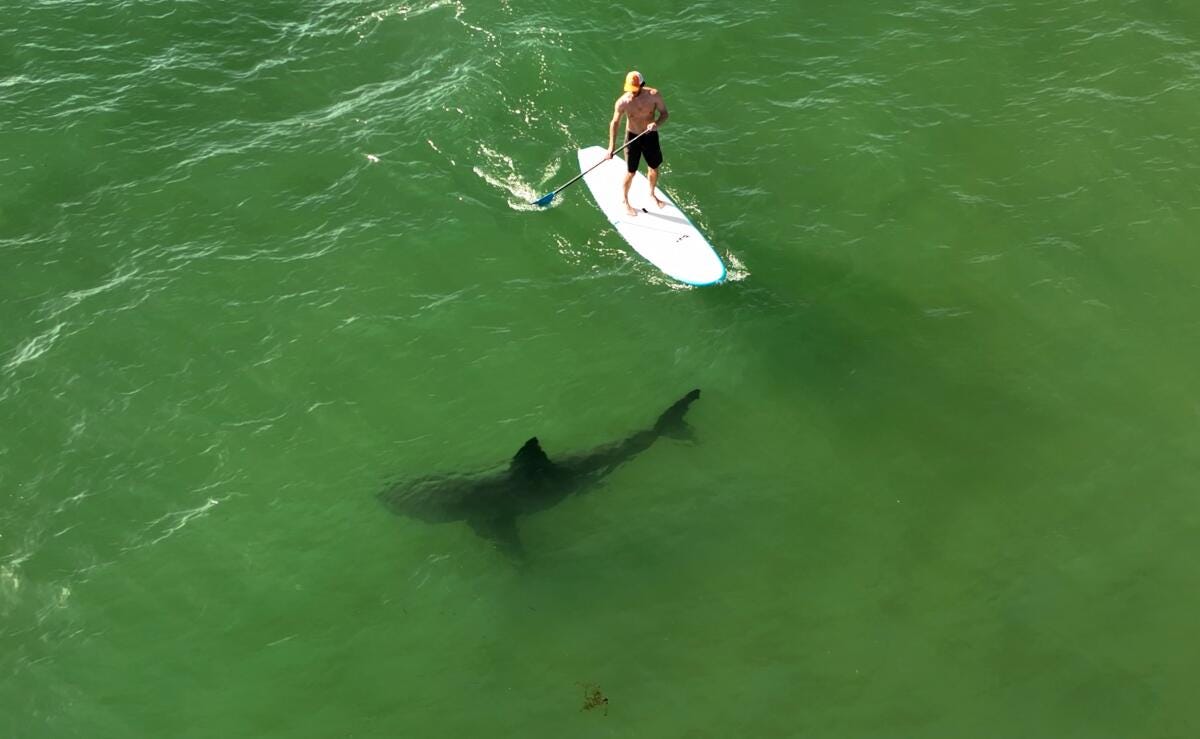 Researchers at the California State University Long Beach Shark Lab have found that sharks and people share the water at some California beaches far more often than anyone realized. (Photo: Carlos Gauna / Cal State Long Beach)
The answer starts with a shift in perspective.
California is not just a place where sharks pass through; it’s a core part of their world. “We’re seeing more along our coast than we’ve ever seen before,” Lowe says. In Southern California especially, juvenile white sharks gather in what scientists now recognize as busy nursery habitats, shallow, warm, food-rich zones close to shore.
And those sharks are not rare.
“I can tell people on any given day I could probably take them out and show them a white shark,” Lowe says. Twenty-five years ago, he would have laughed at that idea.
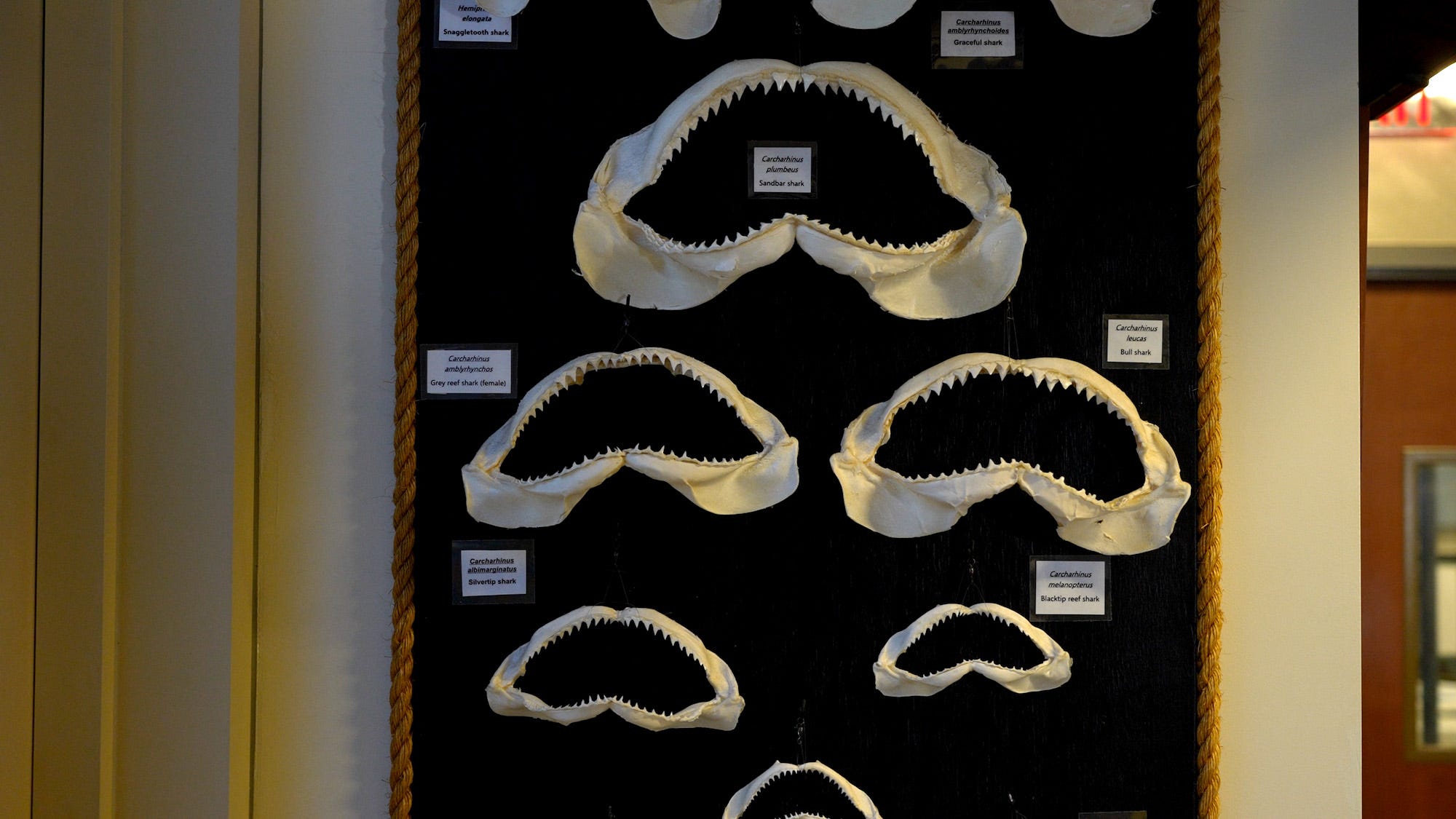 Shark jaws hang on the wall at the Shark Lab at Cal State Long Beach (Photo: Erik Olsen)
What changed is not just awareness, but the ocean itself. Decades of conservation, including protections that began in 1994, when the state made it illegal to target or land great white sharks, effectively gave them full protection in state waters. This has allowed white shark populations to recover. At the same time, their prey has rebounded. Also, thanks in part to the Marine Mammal Protection Act, “There are now more California sea lions on the planet than there may have ever been,” Lowe notes. Add in abundant stingrays, a favorite food for young sharks, and the result is a coastline that looks more like it did a century ago.
More sharks. More people. And the same water.
And yet the risks remain remarkably low.
Since 1950, California has recorded roughly 130 unprovoked shark bites, with just 10 fatalities, according to the International Shark Attack File and the California Department of Fish and Wildlife. In a state where tens of millions of people enter the ocean every year, that’s very small. But, still, it is non-zero.
“When you consider how many people use the ocean on a daily basis, the likelihood of being bitten by a shark is so infinitesimally small that it almost seems crazy to worry about,” Lowe says.
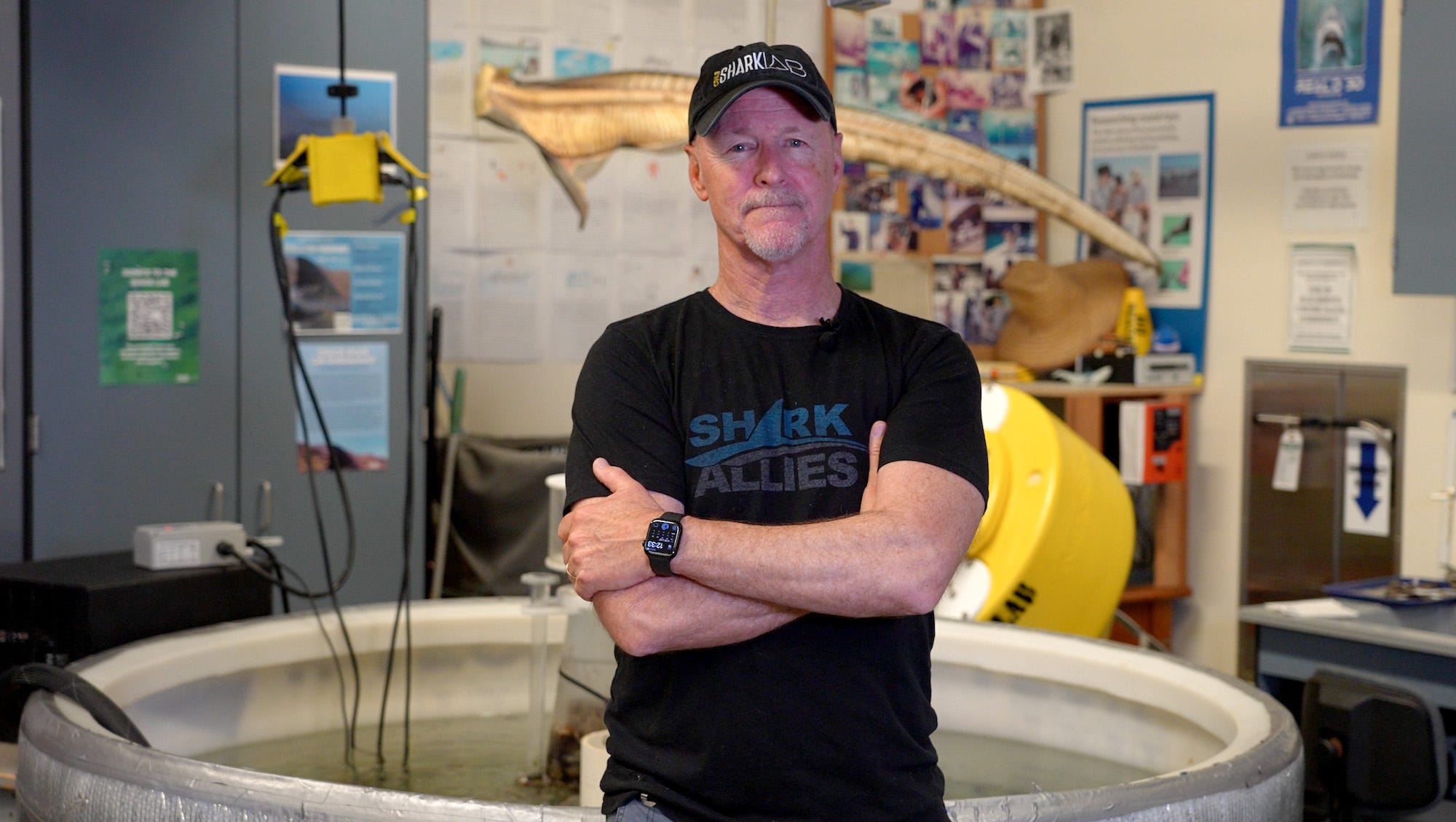 Dr. Chris Lowe is a professor of marine biology and director of the Shark Lab at Cal State, Long Beach. (Photo: Erik Olsen)
That doesn’t mean bites don’t happen. They do. But they are rare, and increasingly better understood, thanks to the Shark Lab. Even as shark numbers rise, the rate of attacks does not rise proportionally. “You put more people in the water with more sharks, you would expect shark bites on people to go up, but we’re not really seeing that,” says Lowe.
Why sharks bite people at all is still an open question. It could be mistaken identity, a swimmer silhouetted like a seal. It could be exploratory, a test bite. Or defensive, the shark feels threatened in some way. “As best we can tell those are probably accidents. The rate at which they’re making mistakes is incredibly low,” says Lowe.
In other words, sharks are not hunting us. If anything, they’re ignoring us.
“We have hours of footage of people in the water, sharks swimming right by them, sometimes right underneath them, and completely ignoring them,” Lowe says, pointing to drone footage of a sleek silhouette passing astonishingly close to a surfer.
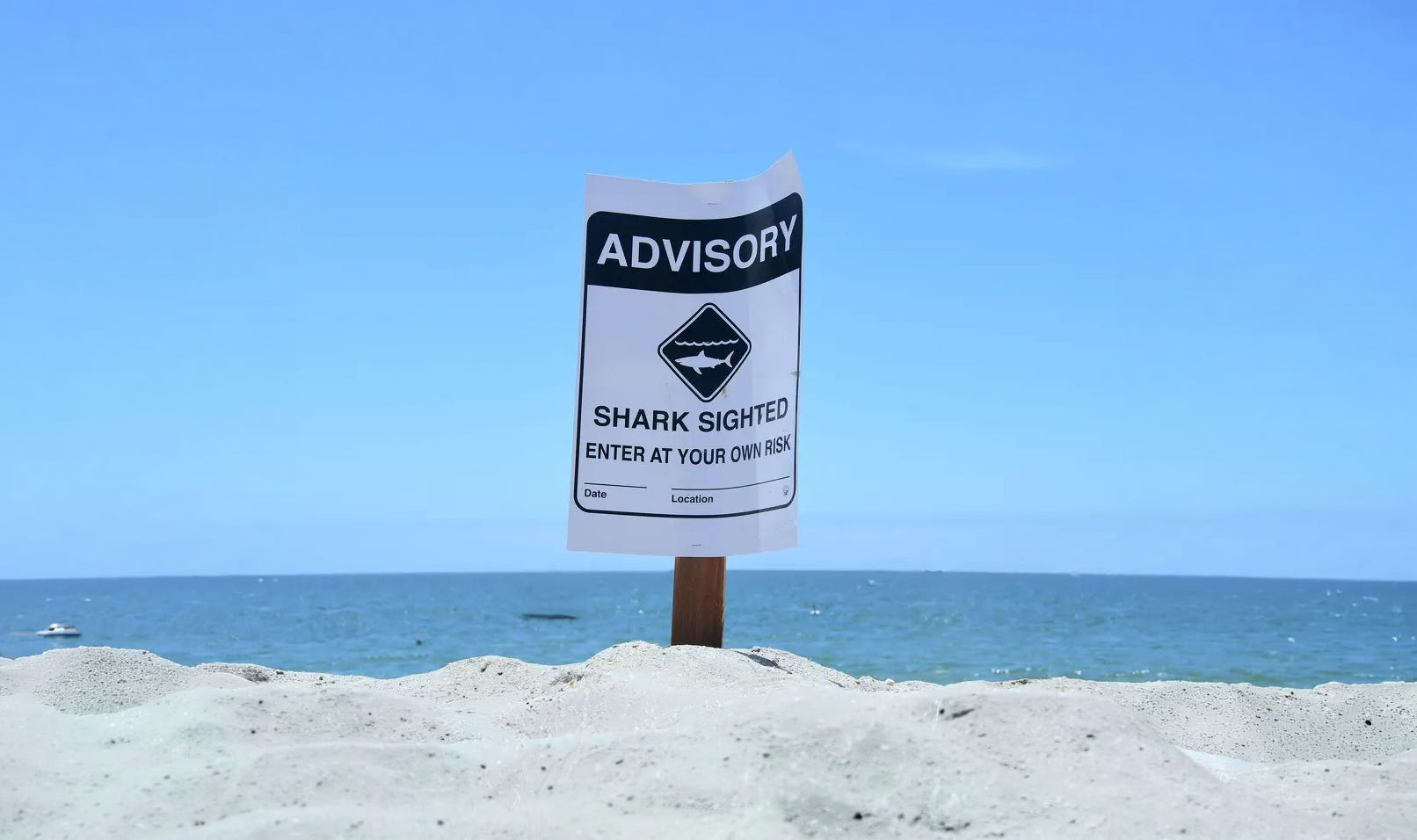 More sharks are showing up along California’s coast this summer. Not because something’s wrong, but because something’s working. Populations are recovering. The ocean is getting healthier. (Photo: Erik Olsen)
That gap between perception and reality is the foundation of the Shark Lab’s work. The team tags sharks with acoustic transmitters, tracks them across hundreds of miles, and feeds real-time data to lifeguards. The result is a system where beaches are no longer closed simply because a shark is nearby. In many cases, sharks are present every day.
Instagram accounts like that of Carlos Gauna, also known as Malibu Artist, have built large followings posting drone footage of Southern California beaches where juvenile white sharks cruise just beyond the break, weaving through crowds of surfers and swimmers who have no idea they’re there. Despite documenting dozens, even hundreds of these close encounters, he has yet to capture a single attack. Of course, if he ever does, that’ll be pretty nuts.
But as I wrote a few weeks ago, perhaps the fear over great white sharks is not only overblown, but misplaced. If you measure danger not by fear but by injuries, even mild ones, the most consequential animal in Southern California surf isn’t a shark. It’s a stingray. As I wrote, it is possible, if not likely, that Southern California, Seal Beach in particular, is the stingray capital of the world.
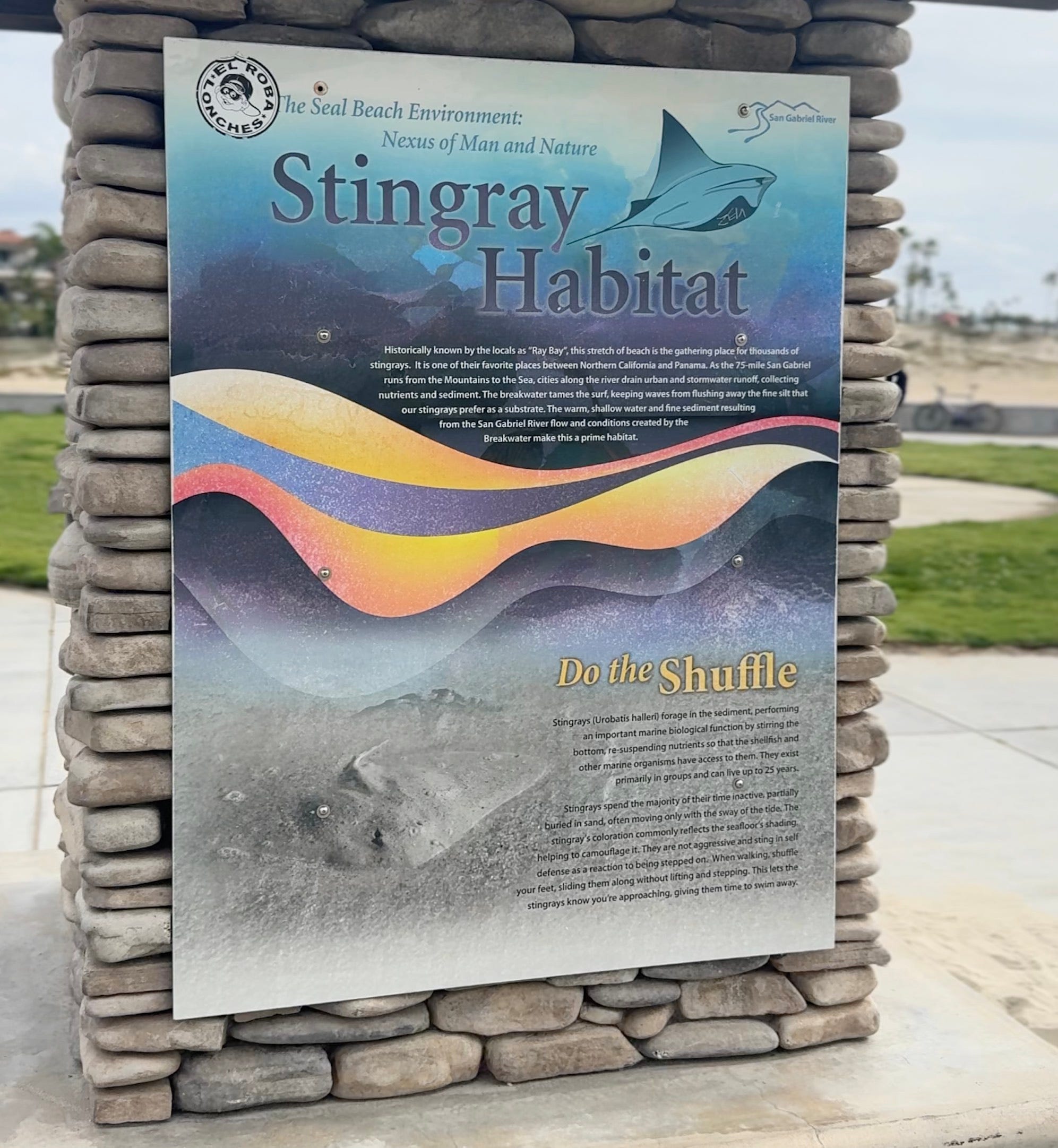 Stingray warning sign for beach tourists at Seal Beach. “Do the Shuffle” to help prevent stings. (Photo: Erik Olsen)
“We estimate that there are at least 10,000 people treated for stingray injuries per year in Southern California alone,” Lowe says. That number dwarfs shark incidents. The irony is that sharks may actually be part of the solution.
“Baby white sharks, their favorite things to eat are what we call stingray pancakes,” Lowe says.
In other words, you are probably not shark food, but it is shark food - stingrays - that are mostly hurting us, and sharks may be a means by which we significantly reduce the stingray population: “When there are a lot of white sharks off your beach, believe it or not, they’re keeping you safer, because they’re eating the stingrays that are far more likely to injure people than the sharks are themselves”.
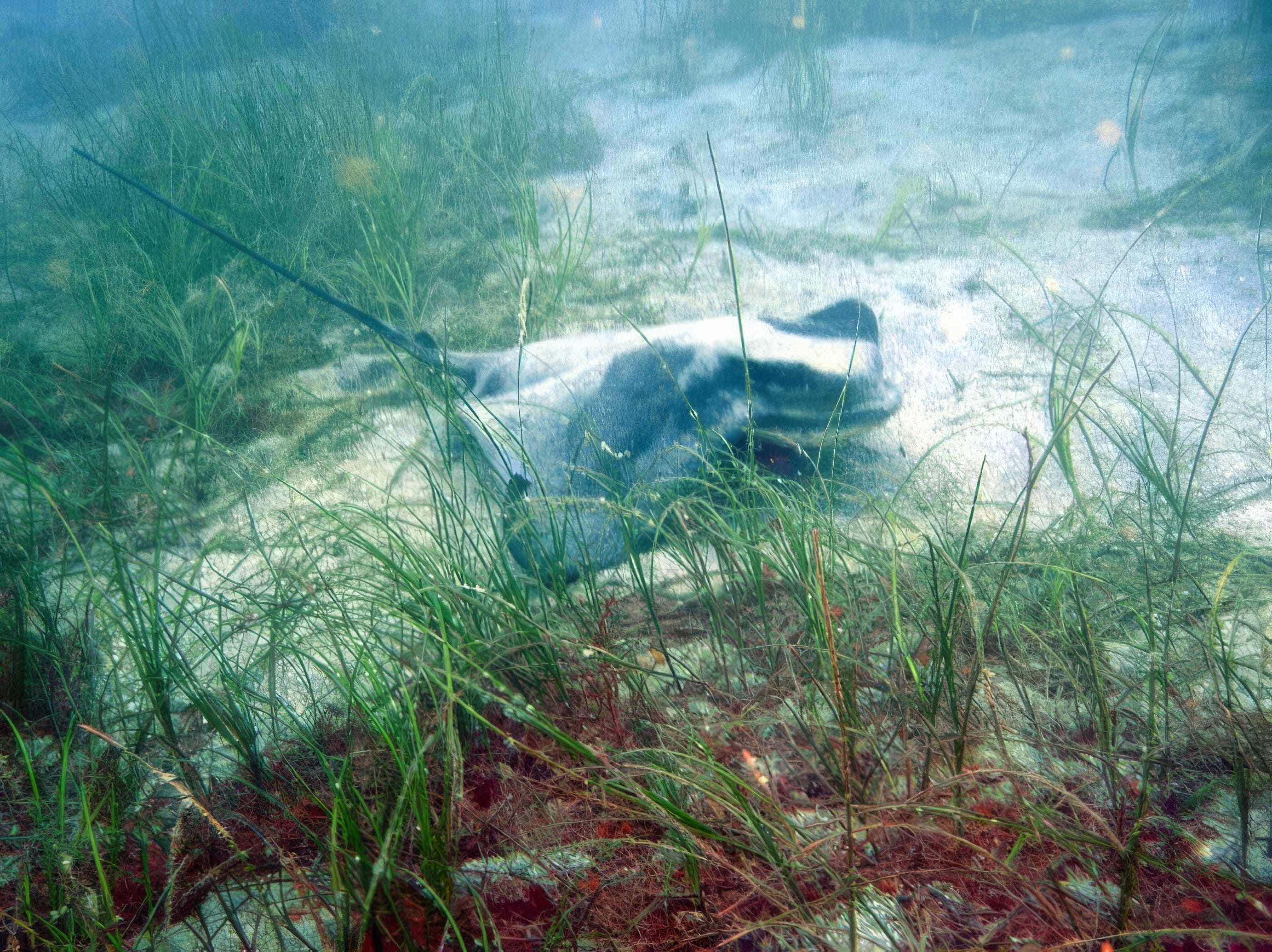 Round stingray off the California coast. (Photo: Cal State Long Beach Shark Lab)
In a way, it’s a classic ecological loop. Predators return and systems rebalance. Which brings us back to what’s coming: A sharky summer. Yes, Lowe says we’re likely to see more sharks this year. Warmer waters, rising populations, and lots of beachgoers. But as Lowe says, let’s not panic. Feel free to return to the water. Ignore the da-dum da-dum music playing in your head.
Because the reality is this: the water off California has always been a shared space with these animals, and for a long time, we tried to shove sharks out of it. Now they’re coming back.
“We have to learn to share the waves with them again,” Lowe says.
They were here first.
More California science, photography and wild places on Instagram @californiacuratedus