
Inside The Huntington’s Extraordinary Succulent Garden
At The Huntington, one of the world’s great succulent collections reveals how plants from some of Earth’s harshest climates evolved to survive, even as many species face threats from plant theft.
Fifteen years ago, if you had asked me about the plants in my yard, I probably could have named one or two. But as I’ve grown older, with a family and a home of my own, I’ve started paying more attention to the living things around me. Over that time, I’ve developed a particular fascination with succulents. The sheer diversity of their forms, colors, patterns and textures blows me away. I’ve long thought James Cameron could create an incredible alien world simply by studying succulent plants.
What fascinates me most is how these plants survive. Succulents have evolved remarkable strategies to endure punishing heat and prolonged drought. Some store water in leaves, others in swollen stems or roots. Many open their pores only at night, conserving moisture during the hottest hours of the day. The more I learned about them, the more I wanted to know.
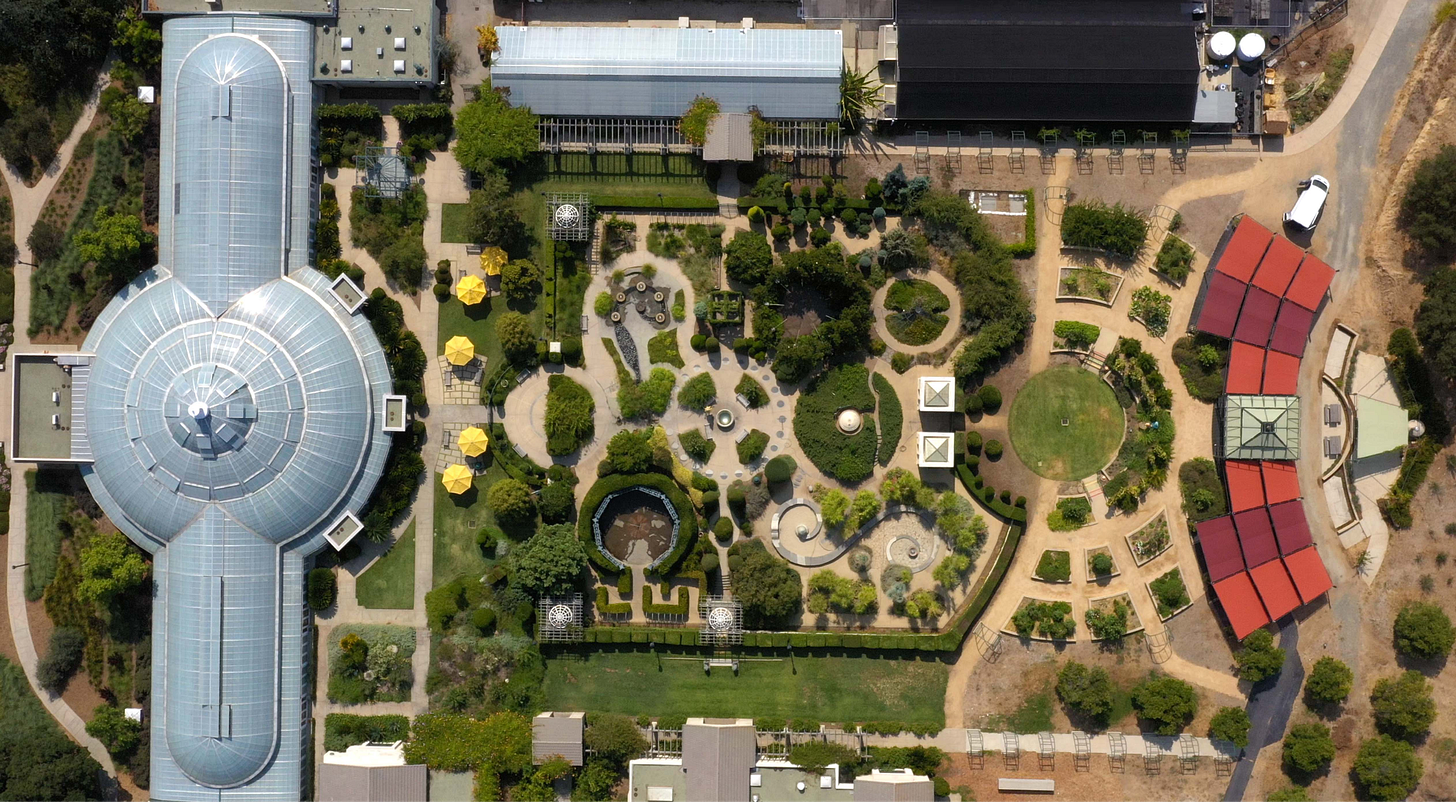 The Huntington Library, Art Museum and Botanical Gardens in San Marino. (Photo: Erik Olsen)
That fascination eventually led me to The Huntington, just a short drive from my home. (For years many people knew it as the Huntington Library, Art Museum, and Botanical Gardens, but the institution recently revamped its branding and is now known simply as The Huntington.) Over the years, I’ve spent countless hours wandering its Desert Garden, one of the most important succulent collections in the world. It’s a very special place.
Recently, while reporting this story and video there with my colleague Tod Mesirow, I met John Trager, the longtime curator of the Desert Garden. Trager has spent more than four decades studying and caring for these plants, and speaking with him helped me understand why succulents inspire such devotion among collectors and gardeners around the world
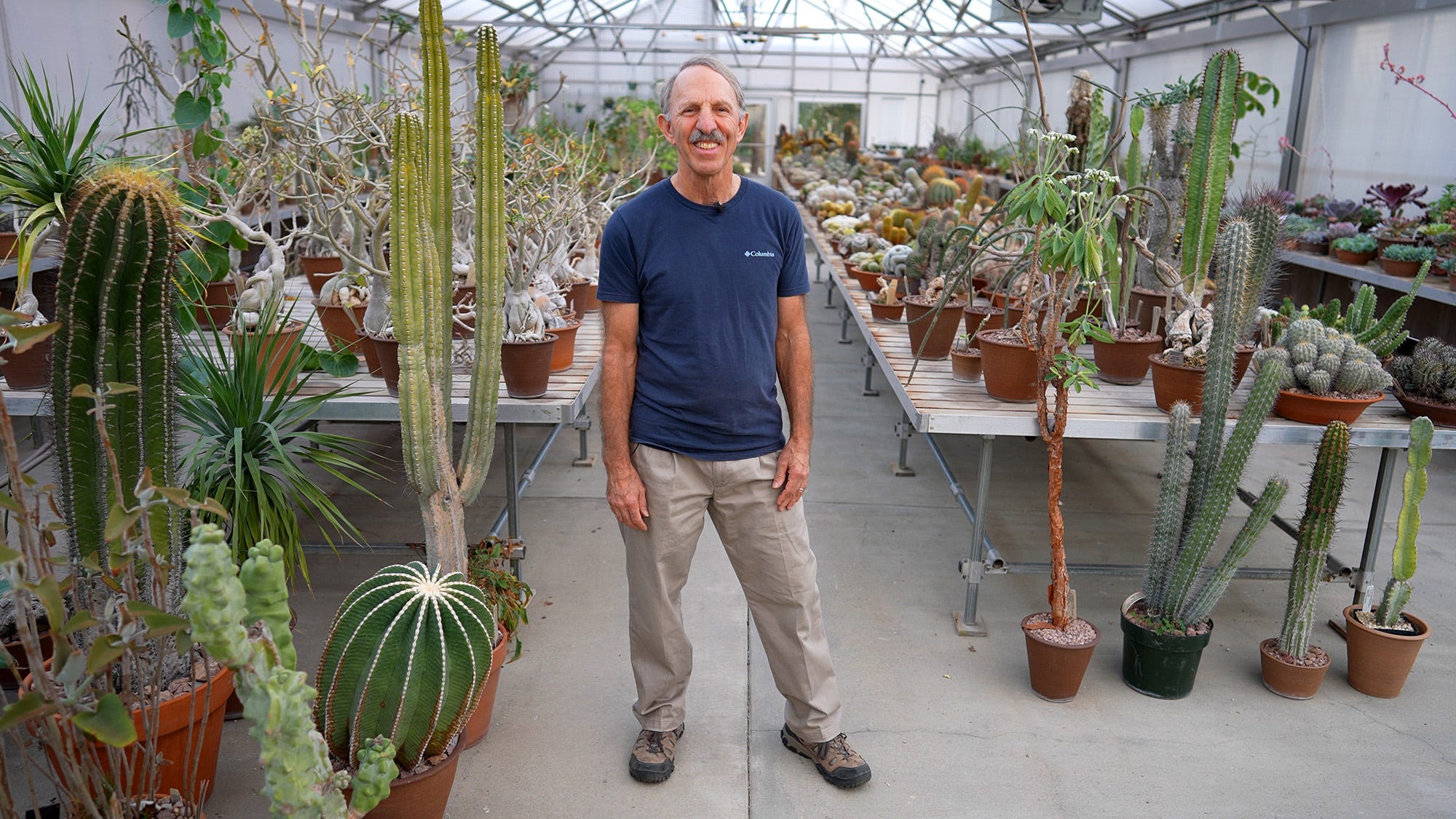 John Trager, curator of the desert garden at The Huntington in San Marino. (Photo: Erik Olsen)
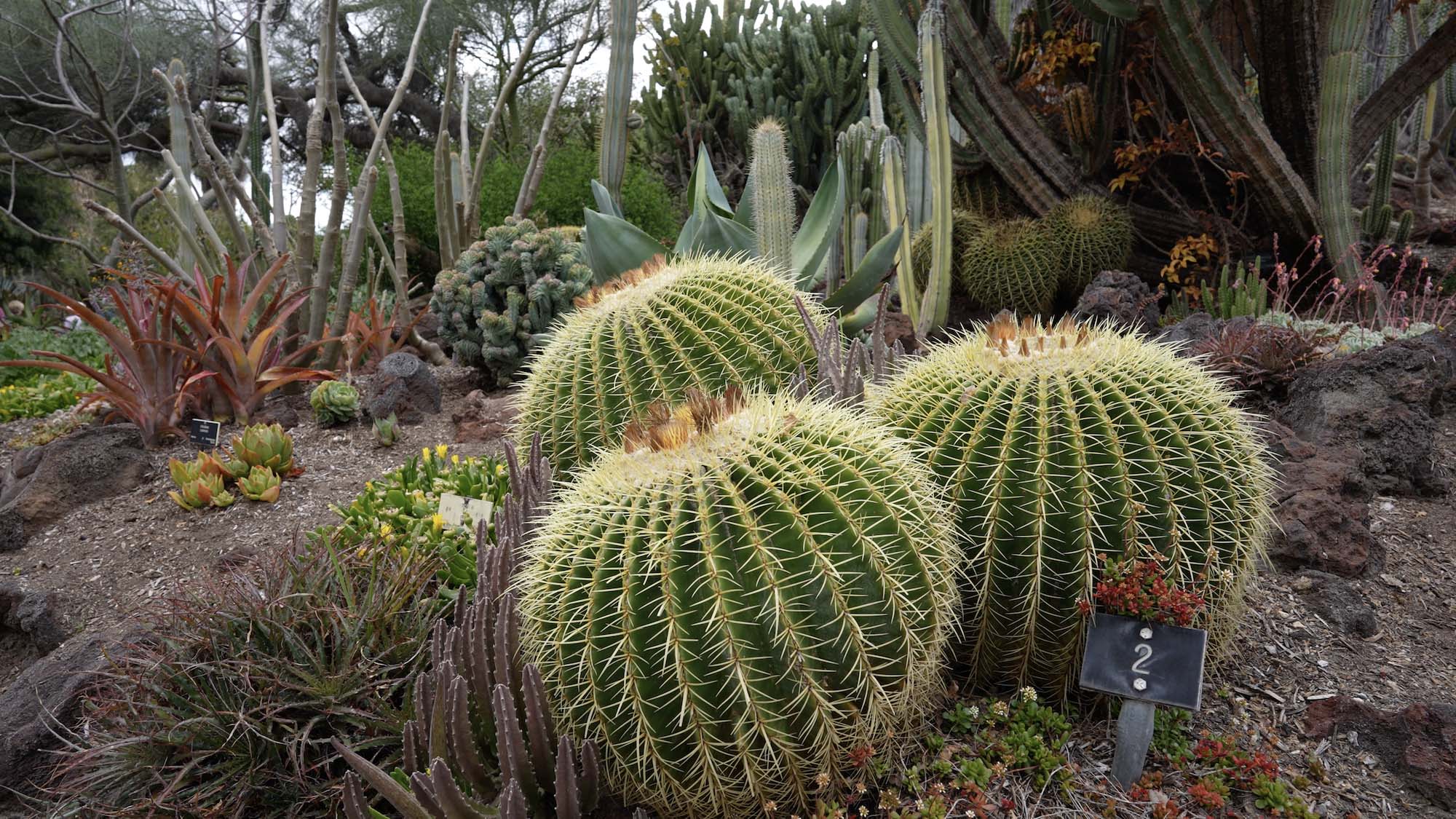
“Perhaps the thing that stands out the most about succulents is the unusual combination of form and flowers,” Trager told me. “You have these funny globular things with spines, yet they produce flowers that look delicate and familiar, like something that would attract a bee.”
The Desert Garden spans over 10 acres, and is one of the oldest and largest collections of cacti and succulents in the world, with over 2,000 species on display. Established in 1919 by Henry E. Huntington, it showcases plants from arid regions around the world, including unique specimens from North and South America, Africa, and Madagascar. Of course, most succulents are not native to California, and a few succulent species have become invasive in California (some folks I know HATE ice plant), but most are non-native ornamentals that have become deeply embedded into Southern California gardens and homes.
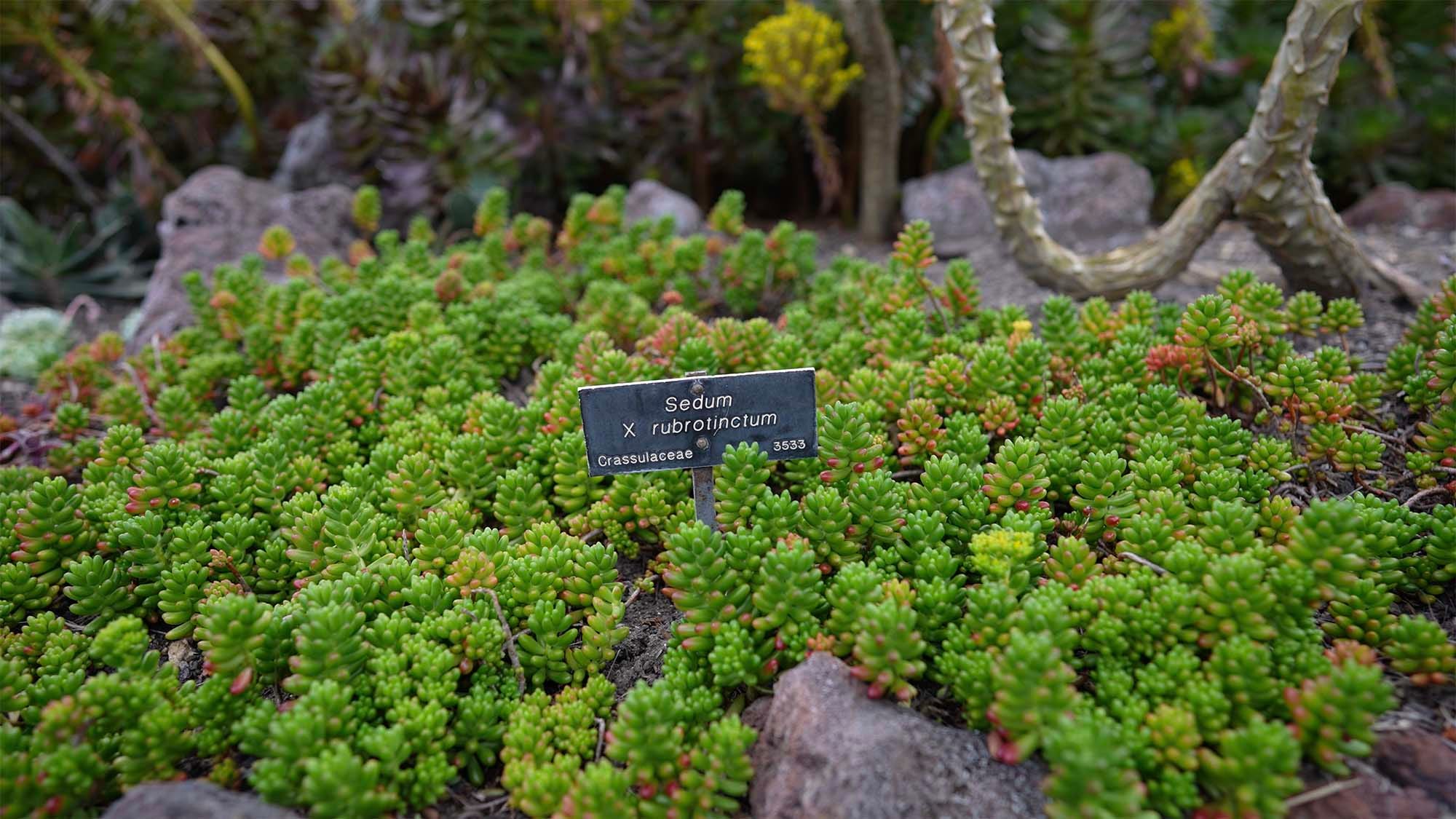 Succulent plants (Sedum rubrotinctum) at_ The Huntington Library, Art Museum and Botanical Gardens (Photo: Erik Olsen)_
Succulents are not a single plant family, but a form of adaptation. “Basically it’s water-storing tissue and the ability to survive prolonged periods of drought,” says Trager. For example, many species also use a specialized form of photosynthesis known as CAM metabolism, opening their pores at night instead of during the heat of the day to conserve water.
Unfortunately, the beauty and rarity that make these plants so fascinating have also made them targets.
Plant theft, especially of rare and exotic succulents, has become a significant concern for botanical gardens, nurseries, and natural landscapes worldwide. The growing popularity of certain species among collectors and hobbyists has fueled a thriving black market, now worth billions of dollars globally.
The Huntington is one of the institutions on the front lines of this battle against plant theft. At the upper end of the desert garden, a locked greenhouse shelters around 3,000 vulnerable succulents that are highly sensitive to excessive water or freezing temperatures. Many would-be thieves would love to get their hands on some of these specimens. Trager took us on a private tour of the greenhouse and we interviewed him inside for the video above. Trager also spoke candidly about the growing problem of plant theft at The Huntington and the challenge of protecting rare specimens that can fetch high prices among collectors.
“People don’t think of it as theft when they’re just taking a little piece here or there,” Trager told us. “But it’s most annoying, of course, when they take an entire plant, dig it out of the ground. Sometimes those are not that easy to replace.”
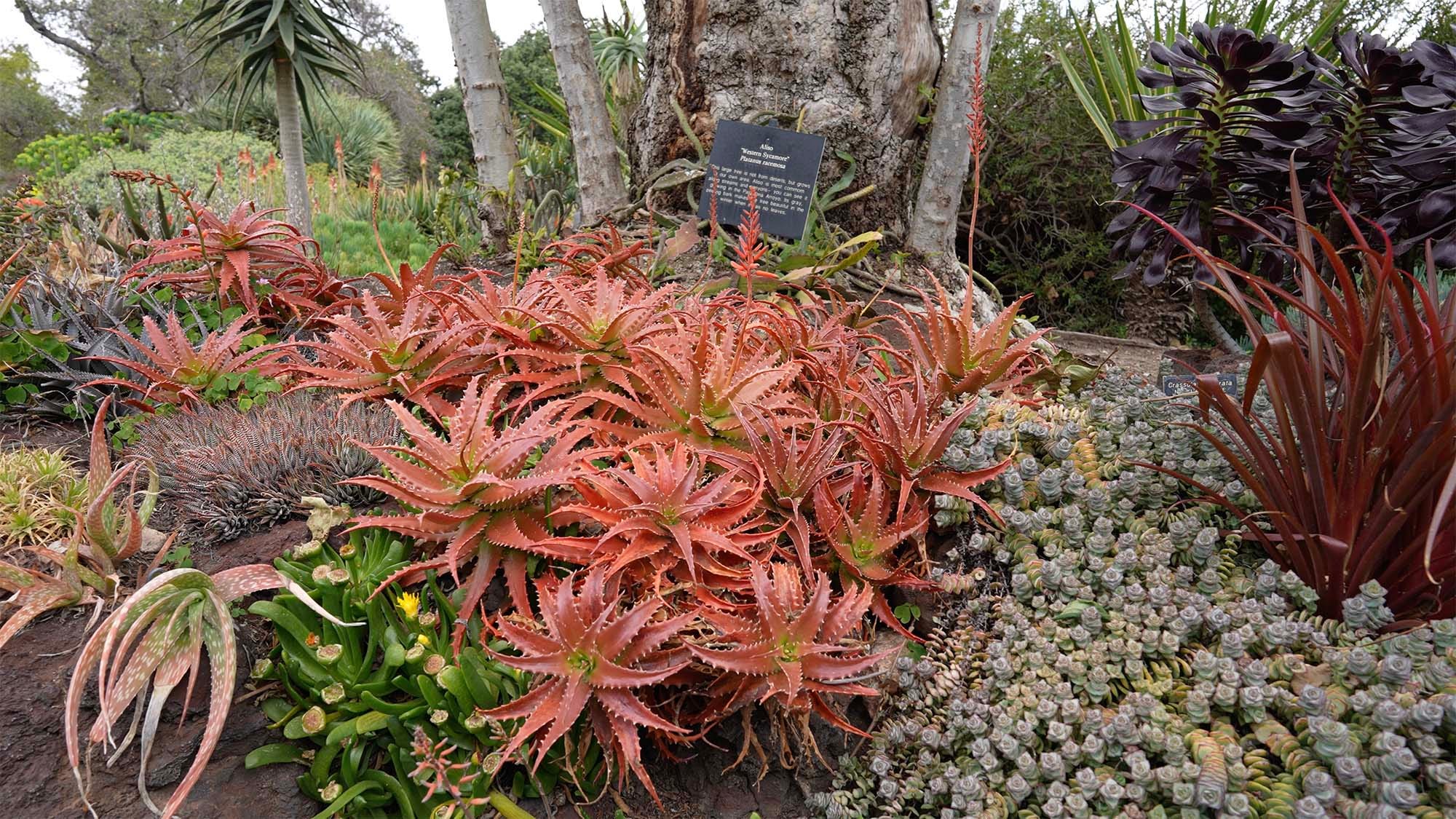 Aloe bussei in the Desert Garden at the_ The Huntington Library, Art Museum and Botanical Gardens (Photo: Erik Olsen)_
Trager reported that the garden recently suffered a significant theft involving a species of succulent called echeveria , a large genus of flowering plants from the Crassulaceae family, native to the semi-desert regions of Central America, Mexico, and northwestern South America. The Huntington had three documented specimens, each with known provenance, making them especially valuable for scientific research. Two of the three specimens were stolen.
“When the second one was taken, we’re left with a lone individual that can’t be self-pollinated and with no chance of being able to propagate that documented collection for perpetuity,” laments Trager.
Part of the institution’s response has been to make rare succulents more available through ethical propagation programs. “One of the nice things about most succulents is that they’re easy to propagate,” Trager said. “So we do propagate and sell plants. We make them readily available to the public. We prefer that you buy the ones that we propagated for you rather than take them from the garden.”
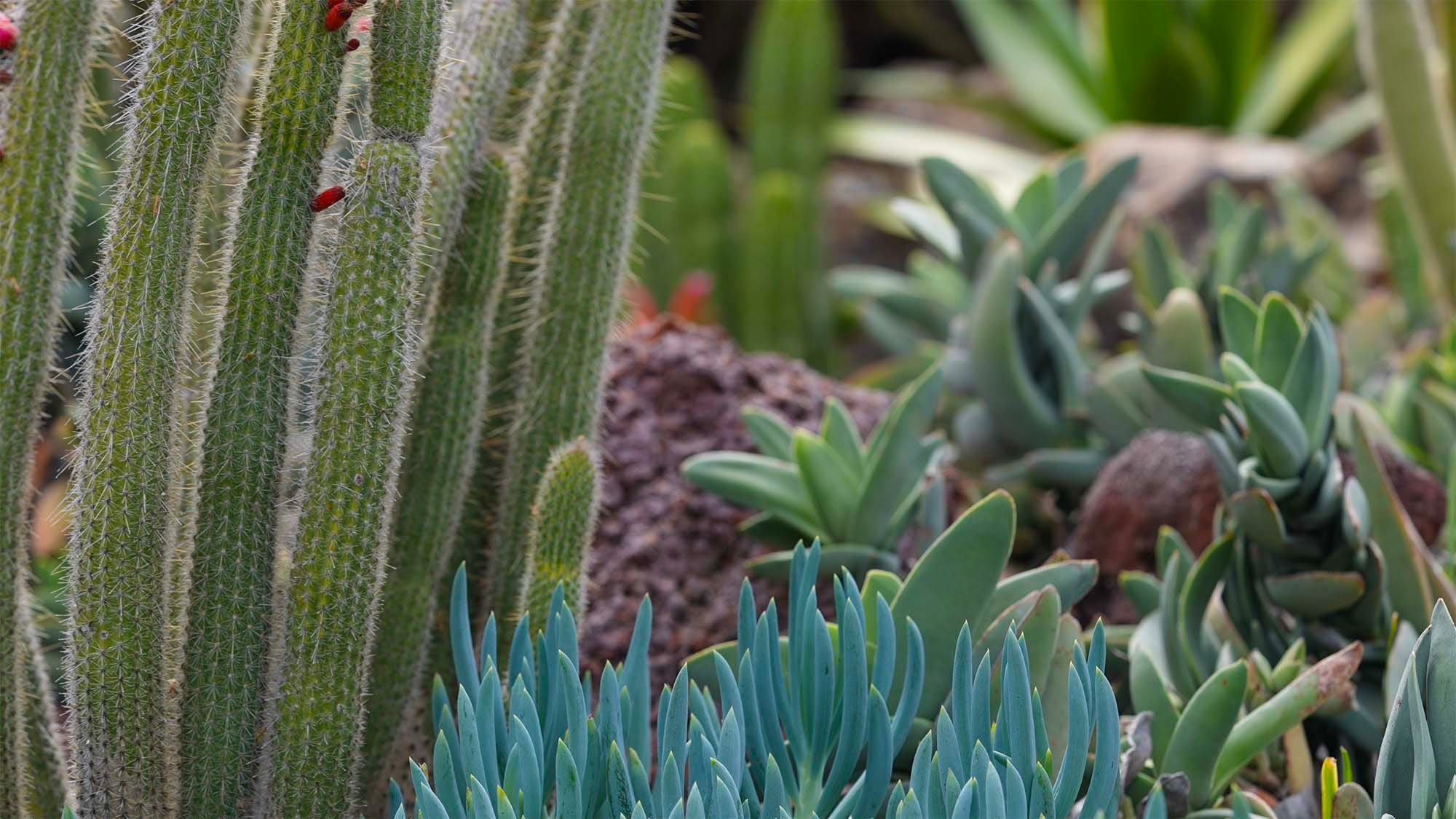 I love the various arrangements of succulents in the Desert Garden at_ The Huntington Library, Art Museum and Botanical Gardens (Photo: Erik Olsen)_
As one of the country’s leading institutions dedicated to the cultivation and conservation of succulents, The Huntington and Trager feel a responsibility not only to protect these plants, but also to help ensure their survival through education, research, and propagation.
“The purpose is to distribute new and interesting plants to collectors, institutions, researchers, et cetera, anyone who’s interested,” says Trager. “A lot of them are increasingly endangered, so there’s a conservation component, but we’re interested in both wild species and horticultural entities. So both of them are within our purview.”
The Covid pandemic led to a rise in interest in indoor gardening and houseplants, including succulents, as people spent more time at home and looked for ways to enhance their living spaces and alleviate stress (raises hand). Succulents, known for their low-maintenance care and unique aesthetic appeal, became particularly popular.
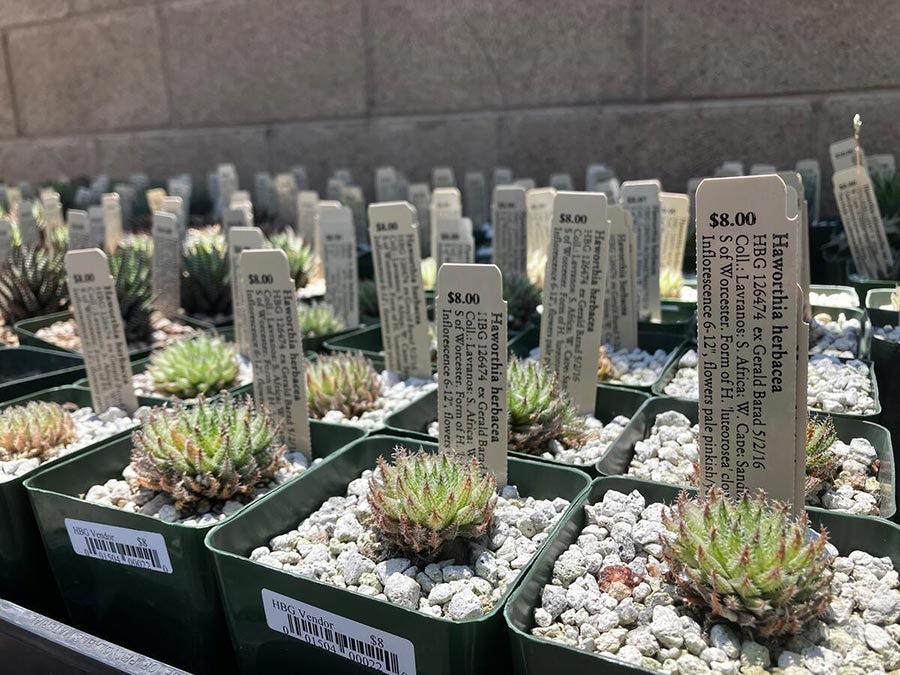 Succulent plants available to buy at the annual_ Cactus and Succulent Show and Sale. (Photo by Sandy Masuo. | © The Huntington Library, Art Museum, and Botanical Gardens.)_
Trager points out that since the program began at the Huntington, the garden has distributed over 1,480 species and cultivars, totaling approximately 74,000 plants. Given that many of these plants are endangered, the program functions as a kind of Noah’s Ark, protecting these rare species and helping to ensure their survival for the future.
For me, though, the appeal of succulents goes beyond conservation. I still find myself wandering the Desert Garden at The Huntington just to look at them. The bizarre geometry (Fibonacci spirals!). The crazy spines. Even after years of visiting, many of the plants still seem alien to me, cool reminders of just how inventive evolution can be.
More California science, photography and wild places on Instagram @californiacuratedus