
California Cut Too Much. Now It’s Learning to Cut Better.
A visit to the Humboldt Sawmill Company led me into California’s logging past and the changes making parts of today’s timber industry better managed.
I recently drove back to Los Angeles from Seattle, and spent over a week making my way through California from north to south, stopping to film and work on stories for California Curated.
I love writing about and filming places I get to visit. That comes from 25 years as a working journalist, having traveled around much of the world to report on subjects like the uprising in Ukraine in 2014 and the invasion of Crimea, the migration crisis in Greece, the earthquake in Haiti, blue whale populations in Sri Lanka, and on and on. I’ve been very lucky. As a visual journalist, one requirement of the job is simple: You have to be there. I once did a piece for the New York Times on that very idea.
So it has been good to get out and explore the state a bit. My time in the redwoods was soul-enriching. Those trees are among the most amazing things on the planet.
California has an unusual abundance of trees. And a stunning variety of them. I just got my hands on California Trees, by Matt Ritter and Michael Kauffmann, and have been thumbing through it. It covers 95 native species. Backcountry Press publishes it. This small California publisher has a terrific catalogue for anyone interested in the state’s natural world.
Our trees are a wonder, but they’ve also been a critical resource for more than a century and a half.
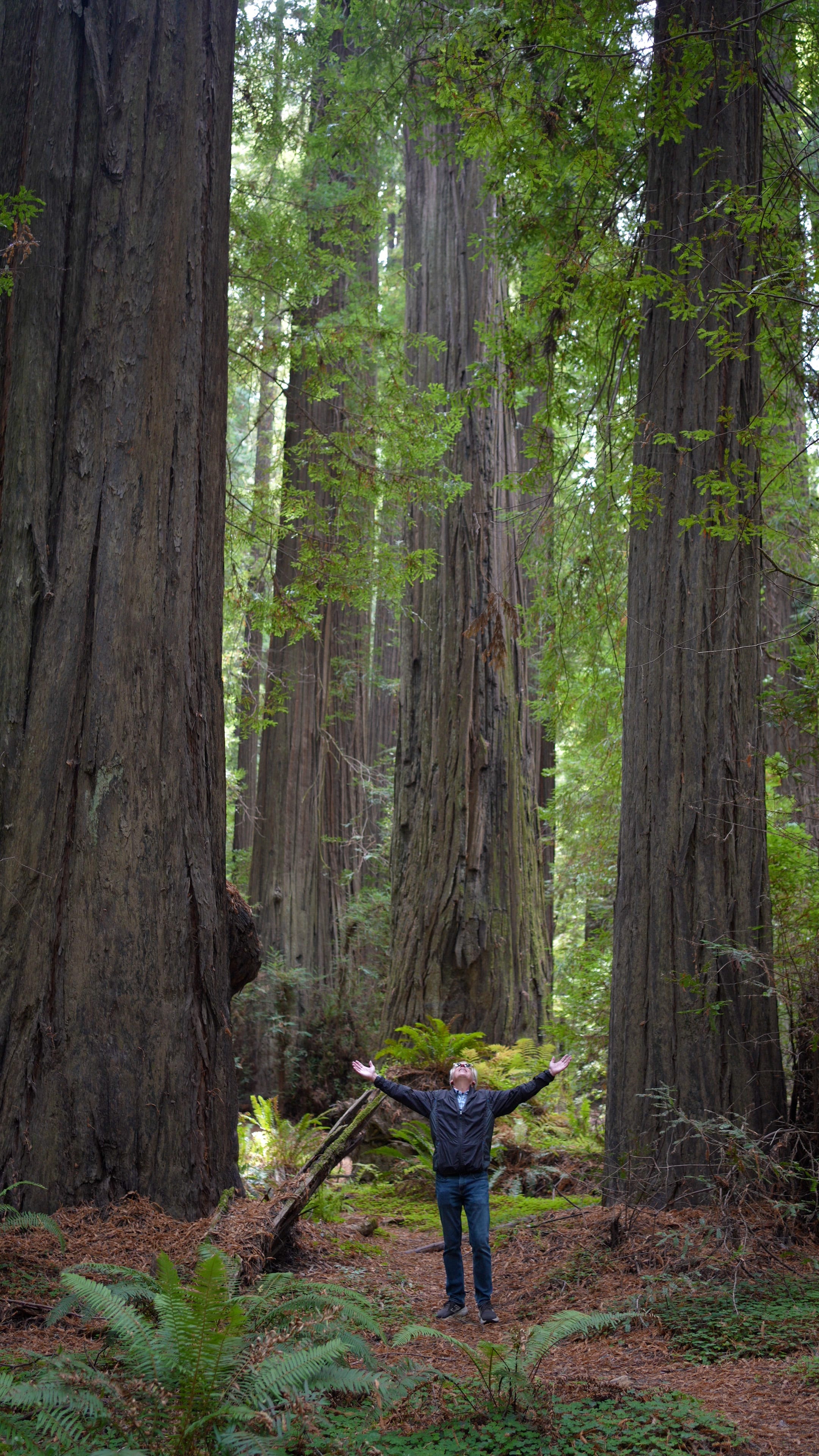 Among the redwoods, some of the most magnificent organisms on Earth. (Photo: Erik Olsen)
Redwood is uniquely resistant to decay and pests, making it an especially attractive building material. Redwoods helped create San Francisco. And after the earthquake and fire of 1906, redwood was a huge part of rebuilding it. The wood became houses, shingles, fences, and railroad ties. The native groups that lived here long before Europeans arrived also made extensive use of the state’s trees. California State Parks has an interesting history on the subject.
The railroads brought more people. More people needed more houses. Between 1870 and 1900, California’s population grew from about 560,000 to nearly 1.5 million. That’s a stunning increase of about 165 percent in just 30 years.
Trees supplied much of the material for that growth. And they still do.
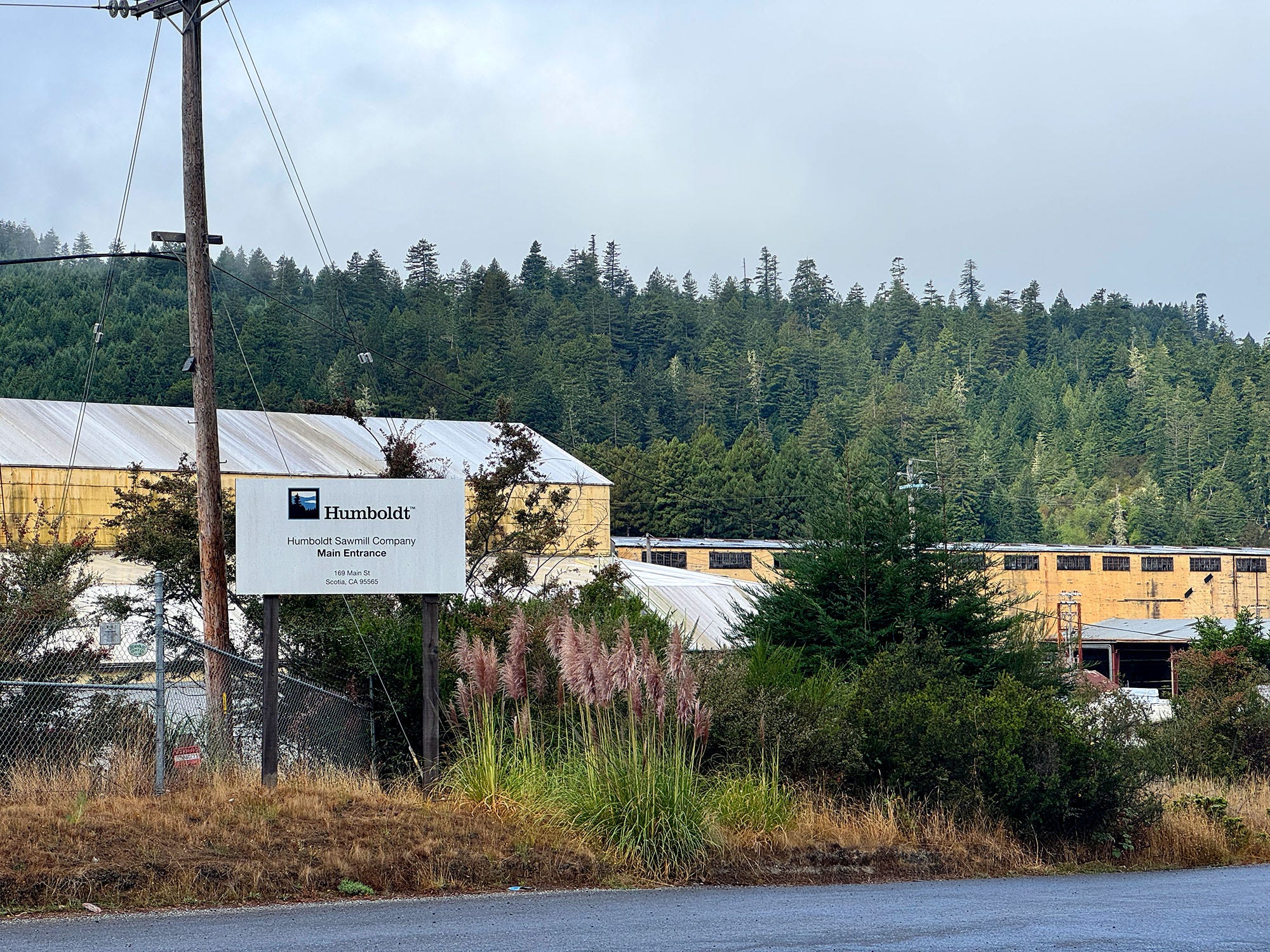 Outside the Humboldt Sawmill Company in Scotia, California. (Photo: Erik Olsen)
Douglas-fir, pine, and true fir account for the bulk of California’s timber harvest. They are quick-growing. Redwoods are still important on the North Coast. Oaks are part of the story, too, though conifers pretty much dominate the commercial lumber business. And the lumber business, although it’s had its ups and downs, is still a big industry in the state.
A UC Agriculture and Natural Resources report puts California’s forestry sector at about 80,000 jobs in 2024. That includes $6.4 billion in worker salaries and $26.9 billion in total sales. The sector includes logging and sawmills, as well as wood and paper manufacturing. Overall, California’s timber harvest totaled about 1.9 billion board feet in 2024. That’s roughly enough timber to build 120,000 single-family homes.
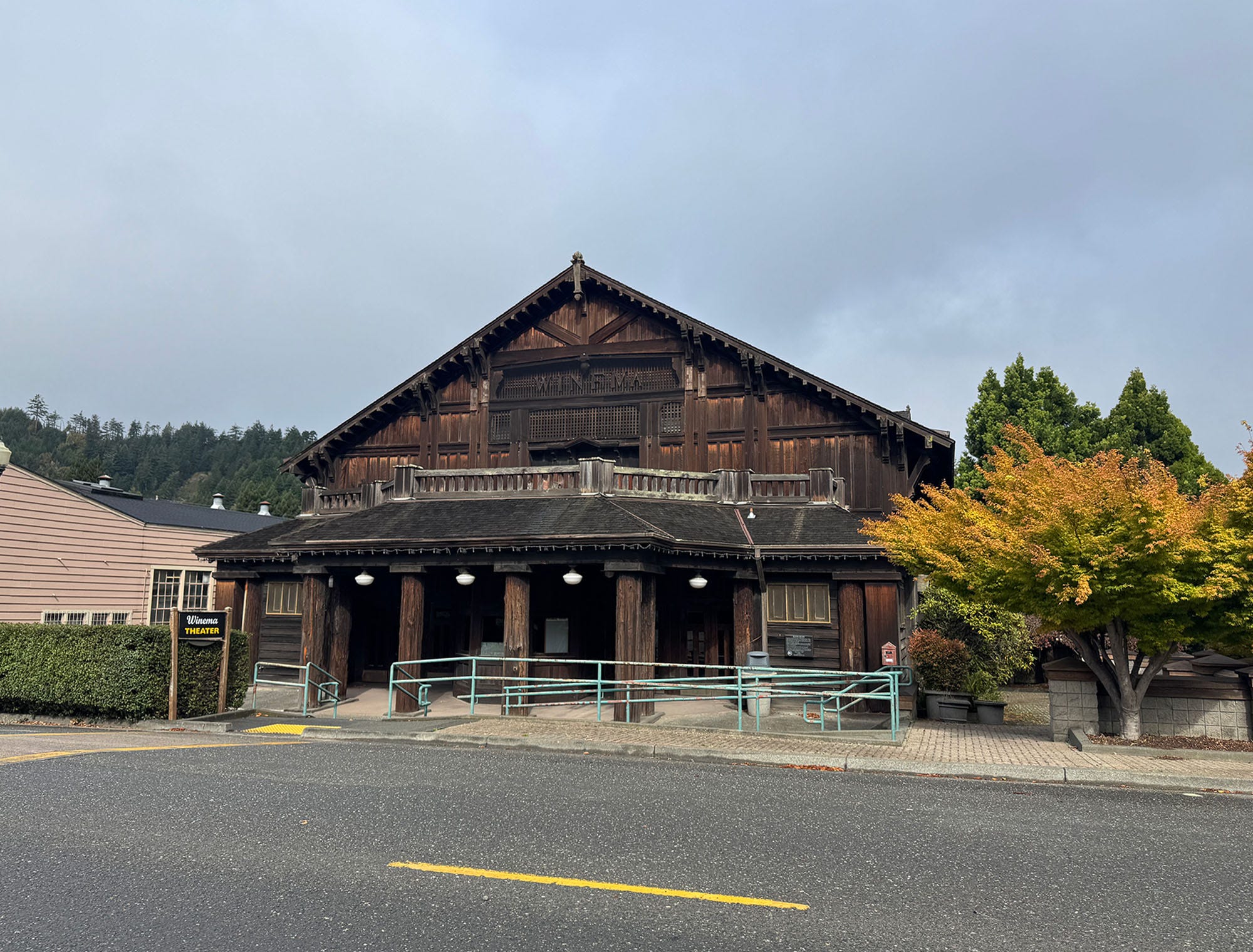 The Winema Theater in Scotia, built in 1920 when Pacific Lumber’s company town was booming. (Photo: Erik Olsen)
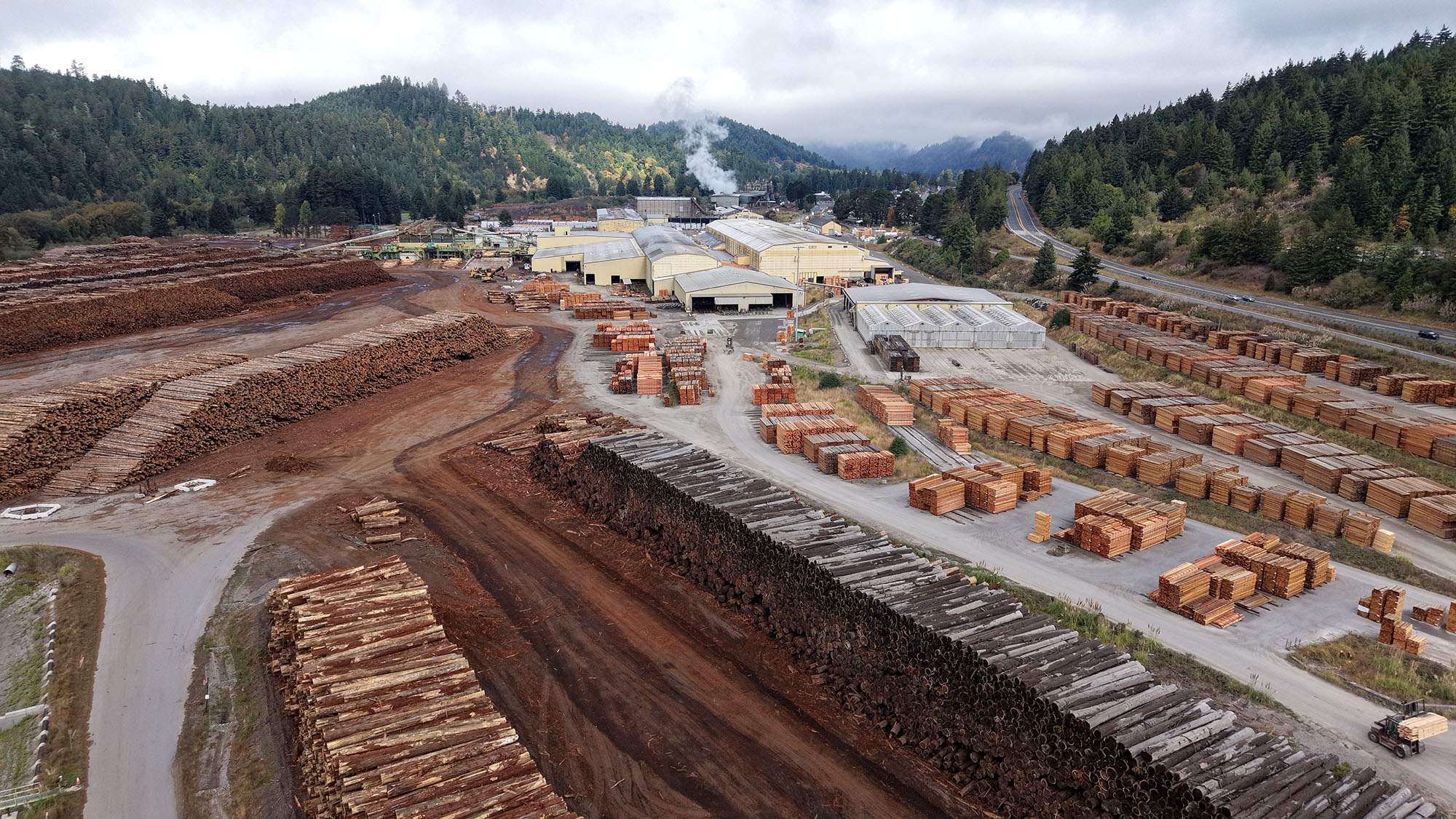
During my drive, I stopped at Scotia, the lumber town where the Humboldt Redwood Company is located. It’s a massive complex. Some of the old mill buildings are falling apart, even as the modern sawmill keeps turning out lumber nearby. Scotia sits beside the Eel River in Humboldt County, just off Highway 101. It grew as a company town for Pacific Lumber. Humboldt Redwood Company took over the timberlands and mill in 2008, following PL’s bankruptcy.
It’s nice, if a bit industrial and worn down. But there are signs of a richer past. I saw the Winema Theater and the former bank, now the Scotia Museum, which harken back to a time when lumber made this a more thriving place. By the 1920s, Scotia had a school, hospital, church, baseball teams. The mill was humming when I was there. Trucks hauled logs through the yard. Massive stacks of cut lumber towered three stories into the sky.
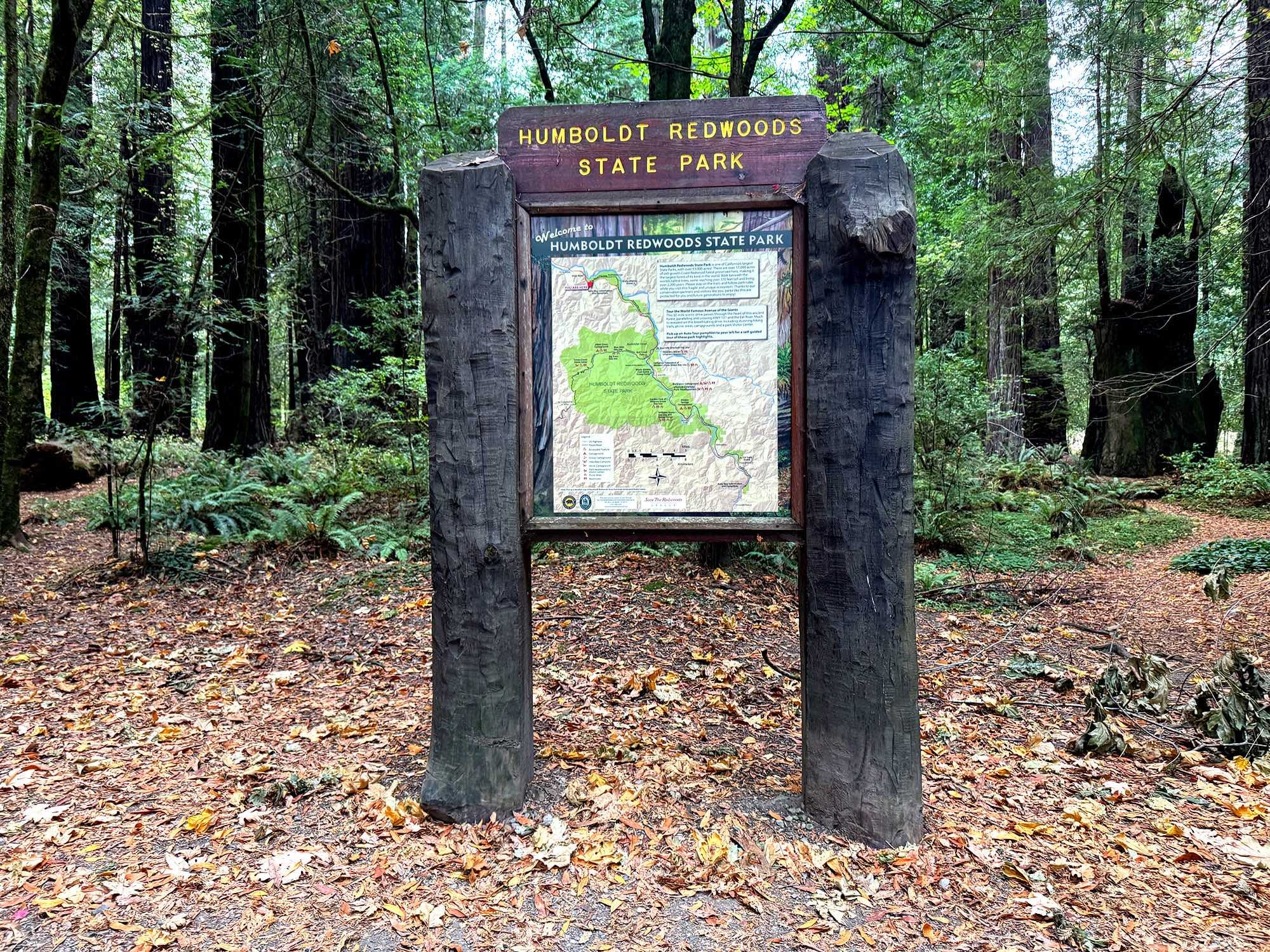 Humboldt Redwoods State Park, where some of the last remaining redwoods have been protected. (Photo: Erik Olsen)
The Humboldt Sawmill processes redwood and Douglas-fir products. That means framing lumber, decking, and large timbers. There are stacks of freshly-cut lumber everywhere. Homes are built with this stuff. Offices and stores. Towns. In a way, it’s amazing to ponder how much of our building still requires wood. The Scotia complex also uses wood byproducts to generate electricity.
Having just passed through a section of amazing old-growth redwood forest where the story I wanted to tell was about how many of the magnificent trees had once been felled, I was in a lousy state of mind, considering California’s extractive past. The National Park Service estimates that 96 percent of the original old-growth coast redwoods have been logged. To me, that’s crazy.
But I was curious how much had changed.
The more I read, the more encouraged I became. Its published practices and other documentation online suggest that we’ve moved on from the heavy cutting of the past. This may be obvious, but I still found it interesting once I dug in a little bit. I’m sure I missed a lot; there’s bound to be some unsavory practices still going on.
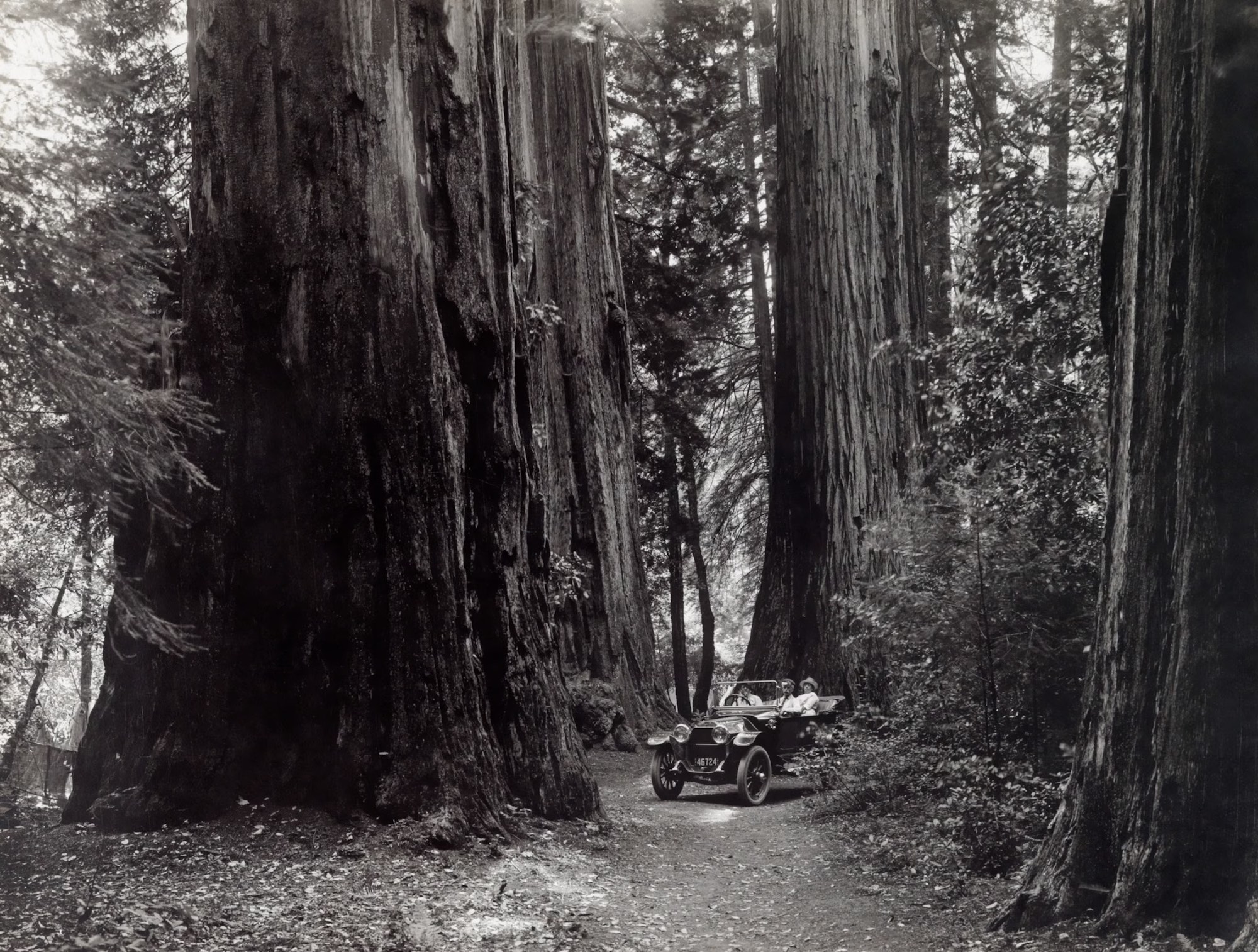 The redwoods have been a popular tourist destination for over a century. (Photo: NPS)
But from what I read, Humboldt Redwood Company is cutting less and letting more wood grow. Its annual harvest averaged 56 million board feet from 2011 through 2024, down from 187 million under the previous owner. Existing trees keep growing. New ones are planted. The company says it has planted more than two million seedlings since 2008.
There’s more.
Humboldt Redwood says it has eliminated traditional clearcutting. Most of its forests are managed through partial harvests that retain trees of different ages. Some places get hit harder under something called variable retention, which leaves groups of trees or scattered individuals standing.
Old growth has a lot more protections. There’s still a bit of cutting when certain criteria are met, but the rules are fairly strict. And there’s much more accountability.
For commercial logging on private and other nonfederal timberlands, CAL FIRE mandates harvest plans and various permits. They review wildlife impacts, water quality, and other things that were largely ignored a century ago. CAL FIRE conducts inspections and seems to enforce violations.
California’s wildlife agency also seems to recognize the progress. Discussing the Sierra Nevada’s forests in its 2025 State Wildlife Action Plan, the Department of Fish and Wildlife noted that: “Regulations governing current logging practices and advances in technology have substantially improved timber-harvest practices.”
All of this gives me some confidence that we’re kind of figuring things out. This is obviously just a cursory look at the industry. I’m not an expert, but what I found when I dug around lifted my spirits.
That said, I’ve still got some questions.
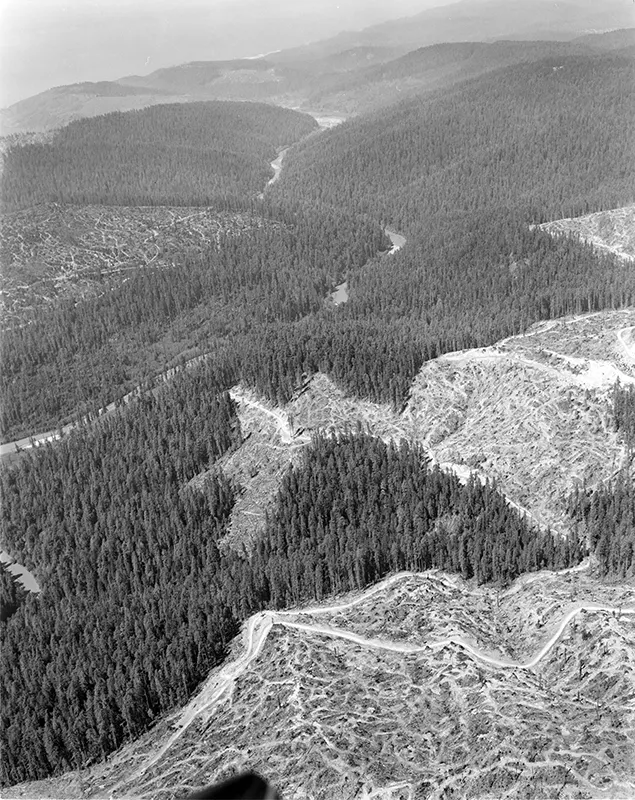
Aerial shot of clearcutting in California. (Public Domain)
California’s forest practice rules still allow clearcutting under certain conditions. Seeing large swaths of clearcut acreage along the highway is heartbreaking. Also, old-growth logging is not totally prohibited on private timberlands. That’s a shame.
Humboldt Redwood Company’s approach isn’t that of every company in the state, but it is one of the big ones.
Of course, the North Coast’s damaged watersheds haven’t fully recovered. The Elk River is still affected by sediment and pollution. Better logging practices don’t undo decades of erosion caused by the irresponsible acts of the past.
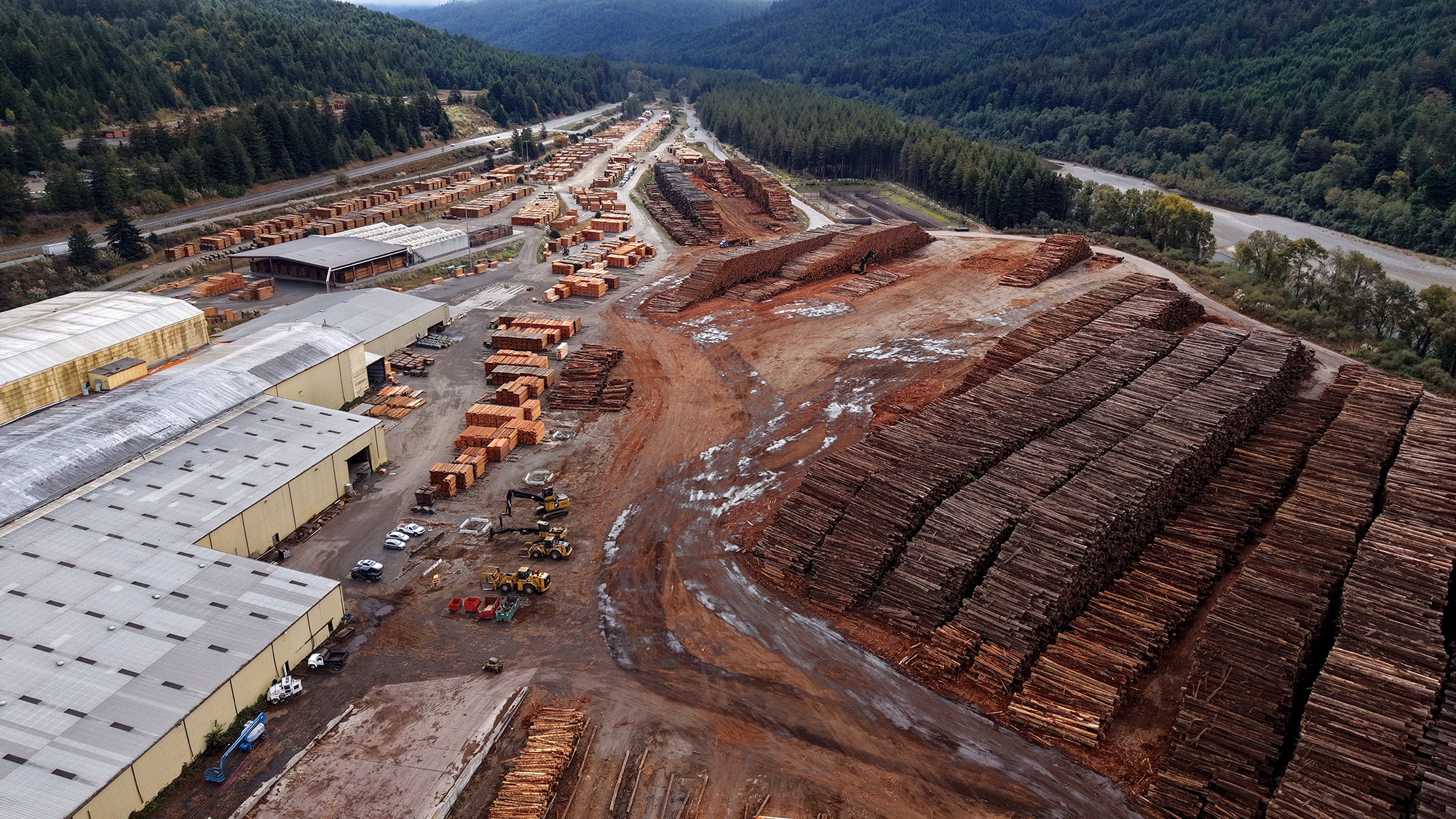
Another view of the Humboldt Sawmill Company’s complex in Scotia, California. (Erik Olsen)
Again, this is by no means a full account of the current state of the lumber industry in California, but I think these changes deserve attention.
I like to consider our industrial past because it’s a key part of how the state became what it is. Long before Hollywood and Silicon Valley, California’s economy depended heavily on mining, timber, agriculture, and, later, oil. These industries helped build the state. They also left damage we are still dealing with.
And, in fact, they remain a big part of California’s economy. In places like Scotia, the connection was palpable. Like me, you can stand there and watch the logs arrive.