The Night a Tidal Wave Erased Downtown Crescent City, California
Why California’s most northern town is a magnet for deadly tsunamis.
I just got back from a weeklong drive down almost the entire length of our lovely state, collecting stories for California Curated. I’ll post them here in this newsletter, plus videos on Instagram and TikTok. Much of the drive followed Interstate 5, about the most characterless highway the United States has to offer. But I made detours through the magnificent redwoods and spent a productive few days in Davis, where I got a profound sense of how much agriculture matters to California. So, there’s a lot of new stuff coming, where I actually visited the places I’m writing about and interviewed people in person. A lot of that is possible because some of you have paid for a subscription, and for that I am grateful.
So, here is the first story of the trip:
When I crossed the border from Oregon and arrived in Crescent City, California’s northernmost city, it was gloomy and overcast. But there were flashes of color, including a lovely seaside mural painted on a waterfront building. Front Street was under repair and the visitor center was closed. As I walked along the waterfront, I tried to imagine what had stood there 62 years ago, before a tsunami tore through downtown and killed 11 people.
It was the worst tsunami disaster in California’s recorded history.
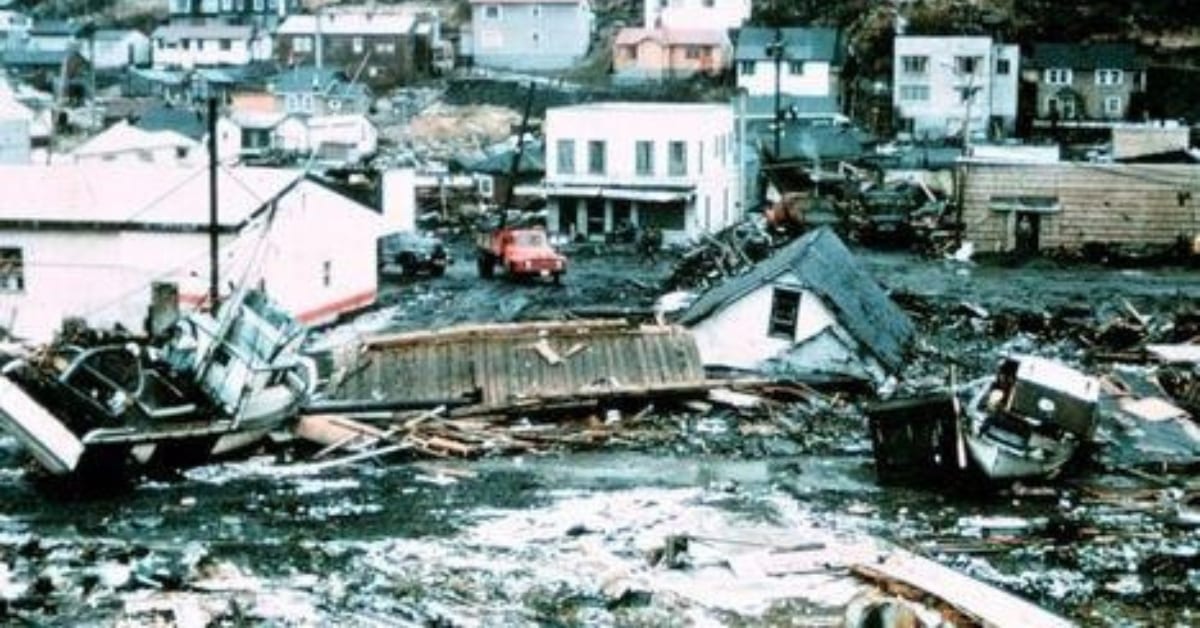 Collapsed buildings, wrecked vehicles and scattered debris fill downtown Crescent City after the March 1964 tsunami.
The disaster began more than a thousand miles away. On Good Friday, March 27, 1964, a magnitude 9.2 earthquake struck Alaska’s Prince William Sound region, about 75 miles east of Anchorage.
“The 1964 Alaskan earthquake was the most powerful earthquake ever recorded in North America, and still is to this day,” Henry Fountain, author of The Great Quake: How the Biggest Earthquake in North America Changed Our Understanding of the Planet, told me. (Henry is a former science writer and colleague from the New York Times).The shaking lasted nearly five minutes. Parts of the seafloor rose, displacing water across the Pacific. “When you raise the seafloor up, it pushes a lot of water and it pushed it outward into the Pacific and down the California coast,” Henry explained.
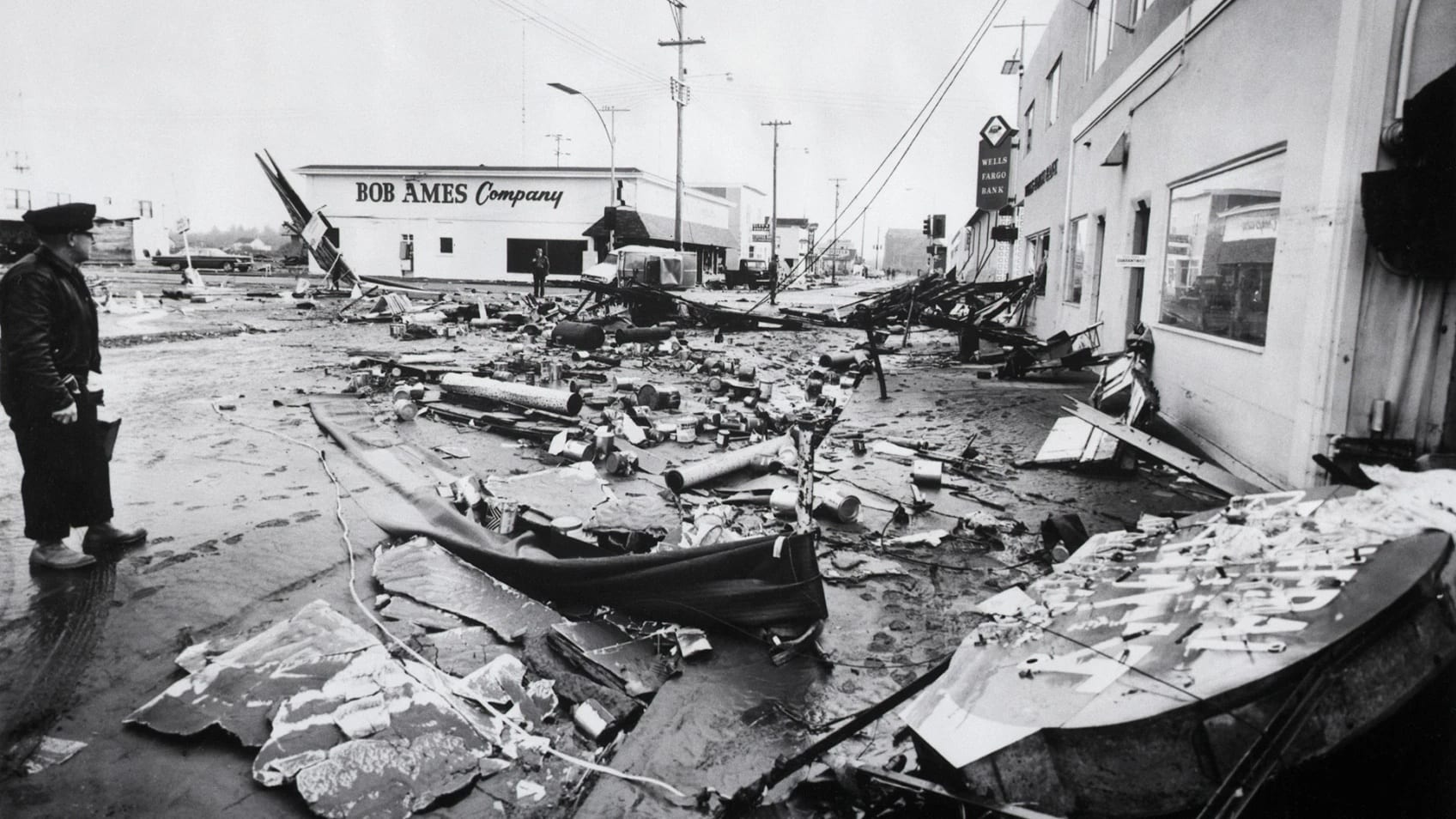
Crescent City knew waves might arrive, the earthquake was 1000 miles away, after all. The first surges pushed into waterfront businesses but caused relatively little damage. People began cleaning up and even went down to the waterfront. Then a much larger surge swept through downtown. The city puts its peak height at nearly 21 feet. Twenty-nine blocks were devastated, and more than 289 homes and buildings were damaged or destroyed. Water carried debris through the streets and knocked structures from their foundations. Again, 11 lives were lost.
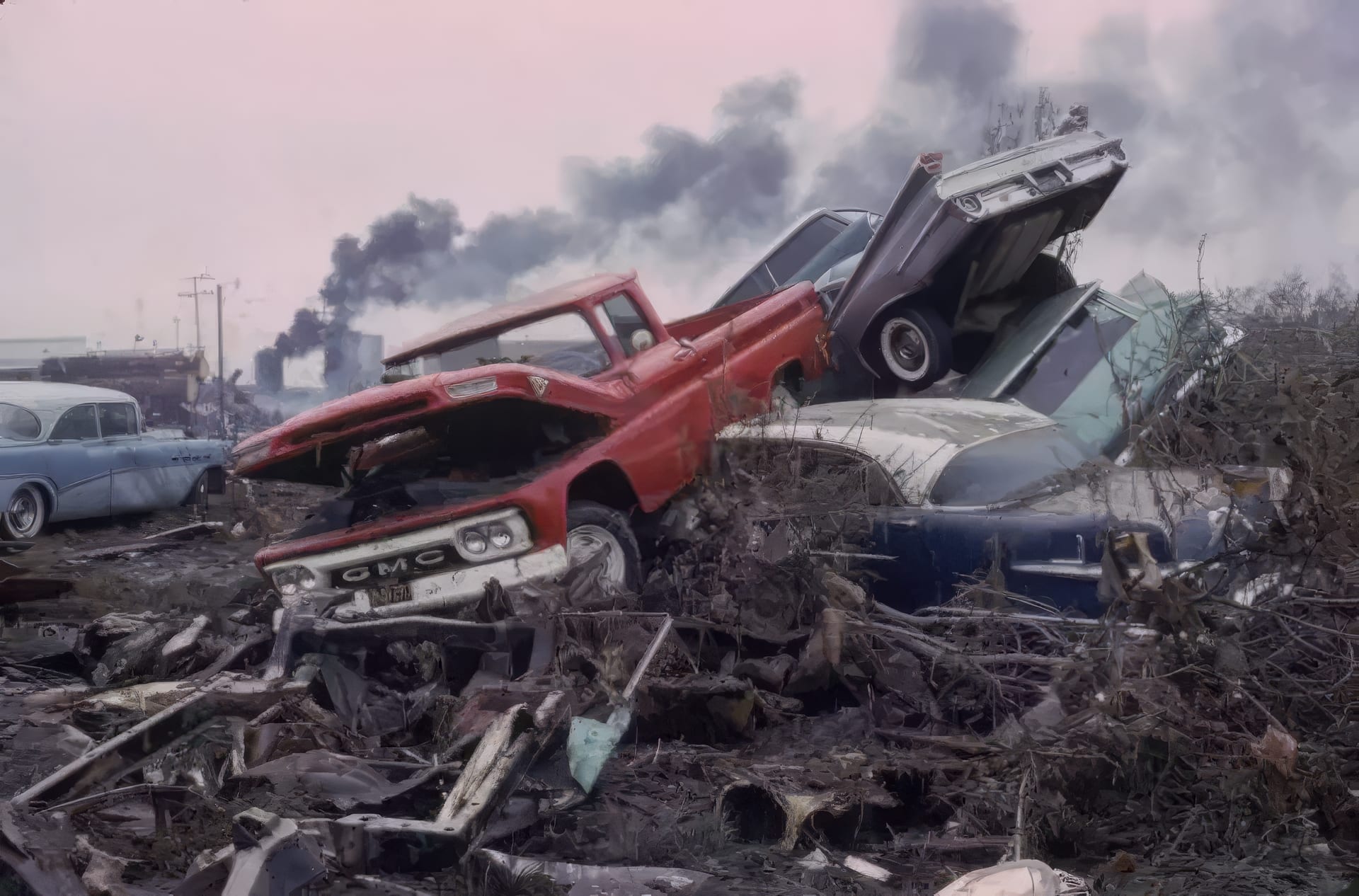 Wrecked cars and a crushed pickup lie piled amid debris in Crescent City after the March 1964 tsunami, with smoke rising in the background.
The before-and-after photographs here are stark, apocalyptic. The buildings along Front Street, where I recently stood, were gone. As we have seen in several major disasters around the world (and even another in California I wrote about two weeks ago), water can’t be stopped.
Why did an earthquake in Alaska hit this California harbor so hard? Henry pointed to the seafloor near the Mendocino Fracture Zone, just offshore: “the ridge tends to funnel tsunami waves down towards Crescent City.” Other features also directed energy into the harbor, whose curved shape further amplified the surges. A tsunami is often a succession of long surges, not one wave followed by safety. The largest may arrive well after the first.
Crescent City had already experienced a tsunami from the great Chilean earthquake in 1960, which flooded its waterfront. The 1964 disaster was far worse, but it was not the last. Tsunamis from the Kuril Islands in 2006, Japan in 2011, and Russia in 2025 all reached Crescent City and damaged its harbor. Arguably, Crescent City is the most tsunami-prone city in the United States. There are sure to be more big waves.
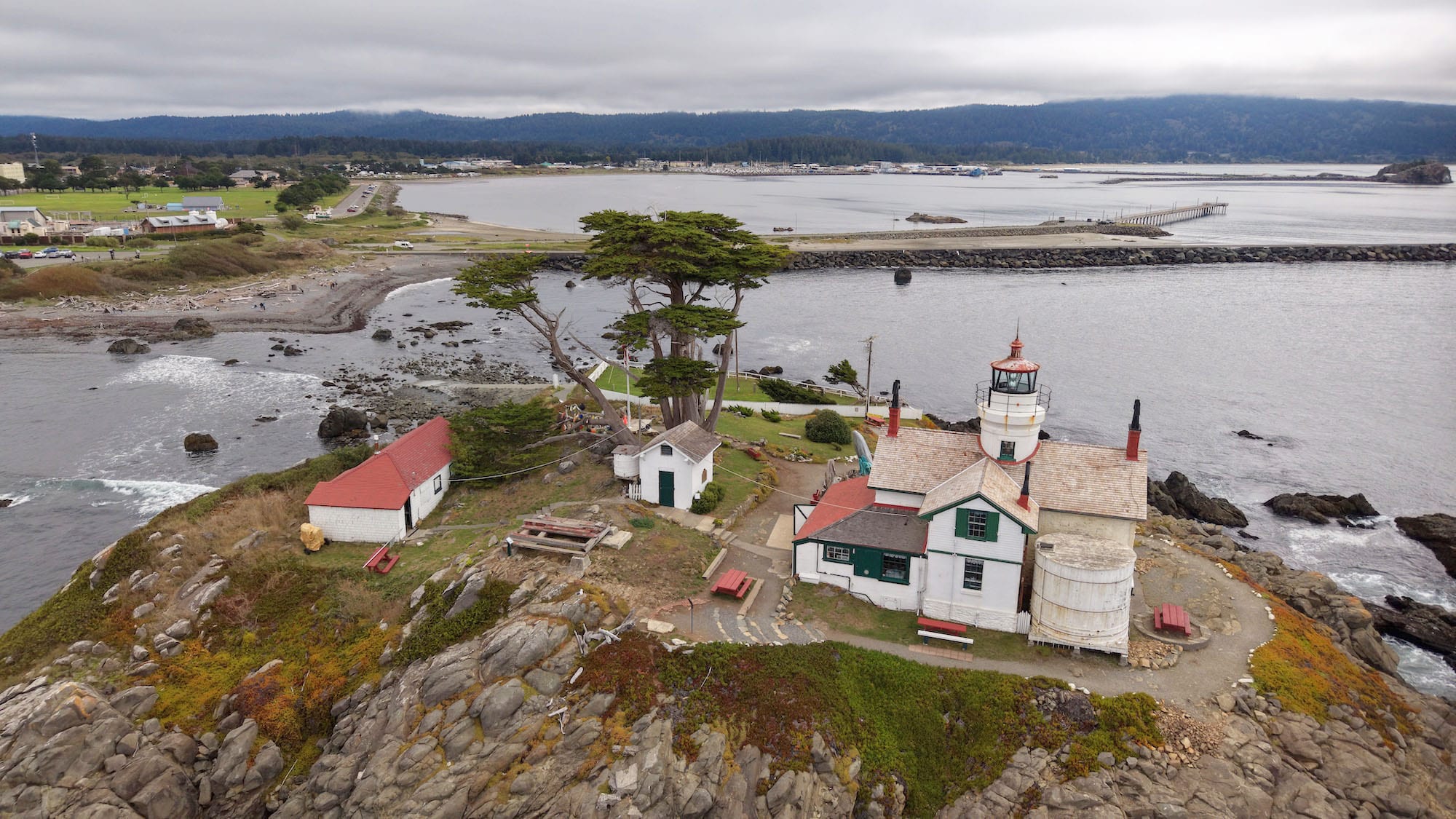 Battery Point Lighthouse in Crescent City, which survived the 1964 tsunami that devastated the nearby downtown. (Photo: Erik Olsen)
Henry and I also talked about a threat much closer to home: the Cascadia subduction zone, which runs offshore from Northern California to British Columbia. Kathryn Schulz wrote about it in her Pulitzer Prize-winning 2015 article, “The Really Big One”. A major rupture could send a tsunami toward Crescent City within minutes, leaving far less time to get to high ground than residents had in 1964, when the waves came from Alaska.
“That’s the one drawback in Seattle, is that someday there’s going to be a quake up there. And there’s a lot more than 250,000 people in that area,” Henry said.
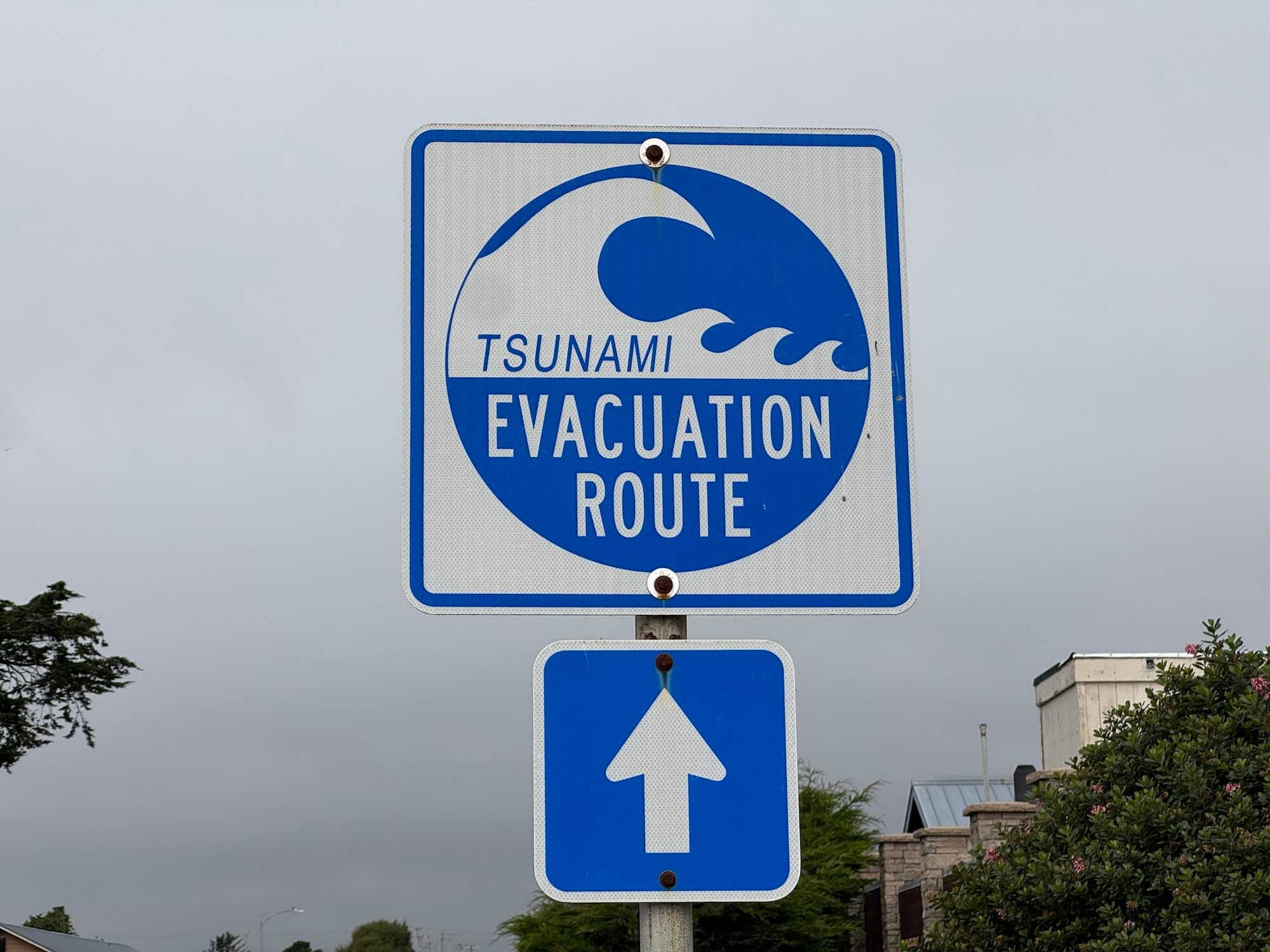 The city has prepared evacuation routes for residents should an alert be made for an incoming tsunami. (Photo: Erik Olsen)
Later, I flew my drone over the breakwater, where hundreds of huge, oddly beautiful concrete shapes are all carefully assembled like puzzle pieces. They are dolos. Their arms interlock, but also create spaces that dissipate the force of waves striking the breakwater. In 1986, the Army Corps of Engineers placed 680 new, steel-fiber-reinforced units along an exposed section. According to the Corps, they can weigh 42 tons each. They are effective, but they can’t stop a tsunami.
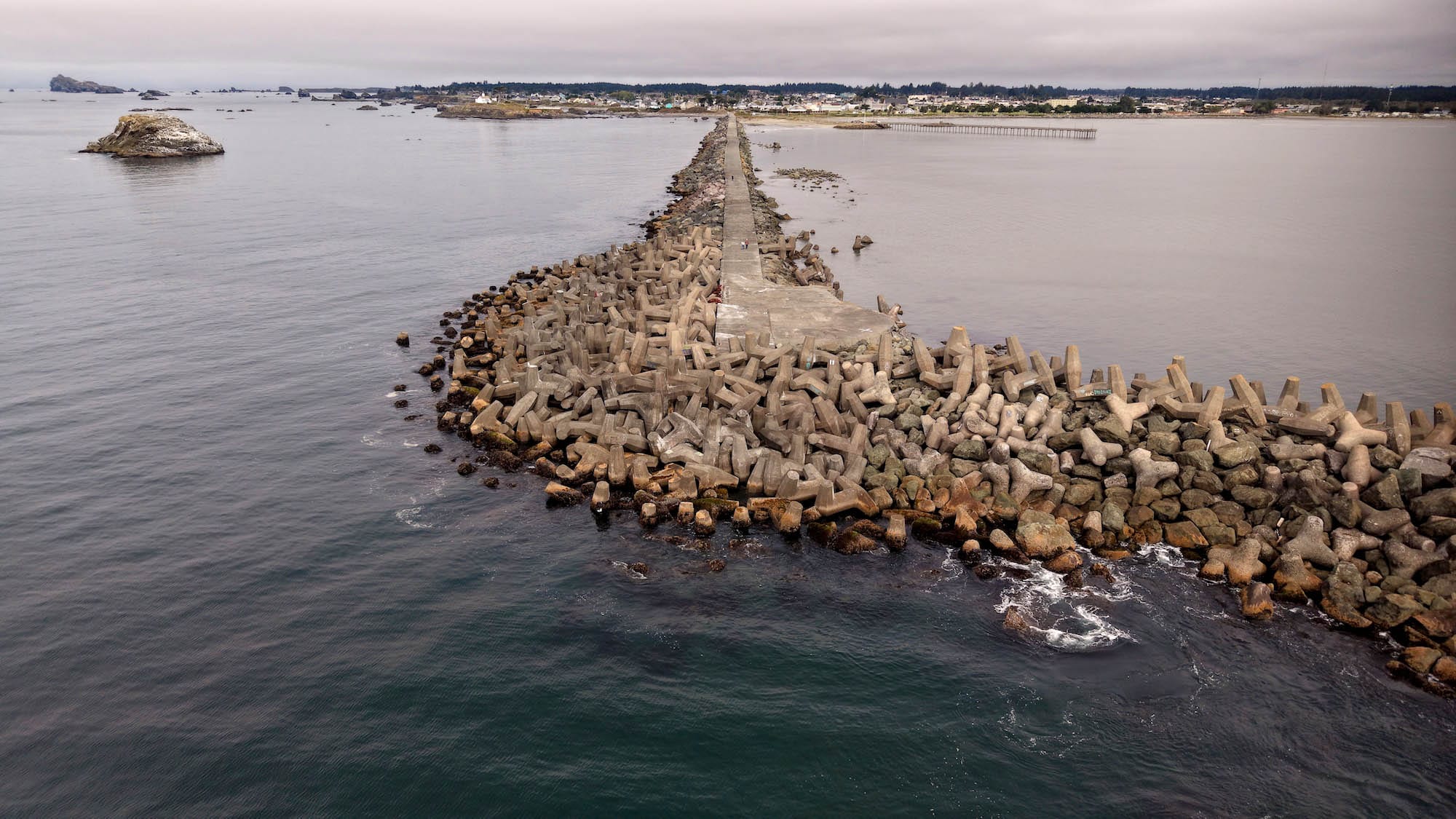 Dolosse line Crescent City’s breakwater, helping dissipate the force of waves and protect the harbor from surf and storms. (Photo: Erik Olsen)
When I headed out of Crescent City, the skies were still gray and heavy. I made a beeline south for the redwoods, but kept thinking about the tragedy that struck the town six decades ago. We face so many threats, both natural and of our own making, that it can make your head spin. Offshore earthquakes and/or the prospect of AI-driven annihilation. For a while, at least, I left those thoughts behind and walked among trees that had been alive for nearly 2,000 years. Creatures of exceptional scale and beauty that offered me the opportunity work on other stories for this newsletter. And to chill.